EP1029264B1 - Fernsteuersystem mit minimierung der bildschirm-aktualisierungszeit durch auswahl des kompressionsalgorithmus - Google Patents
Fernsteuersystem mit minimierung der bildschirm-aktualisierungszeit durch auswahl des kompressionsalgorithmus Download PDFInfo
- Publication number
- EP1029264B1 EP1029264B1 EP98957970A EP98957970A EP1029264B1 EP 1029264 B1 EP1029264 B1 EP 1029264B1 EP 98957970 A EP98957970 A EP 98957970A EP 98957970 A EP98957970 A EP 98957970A EP 1029264 B1 EP1029264 B1 EP 1029264B1
- Authority
- EP
- European Patent Office
- Prior art keywords
- compression
- time
- algorithm
- algorithms
- compression algorithm
- Prior art date
- Legal status (The legal status is an assumption and is not a legal conclusion. Google has not performed a legal analysis and makes no representation as to the accuracy of the status listed.)
- Expired - Lifetime
Links
Images


Classifications
-
- G—PHYSICS
- G06—COMPUTING OR CALCULATING; COUNTING
- G06F—ELECTRIC DIGITAL DATA PROCESSING
- G06F3/00—Input arrangements for transferring data to be processed into a form capable of being handled by the computer; Output arrangements for transferring data from processing unit to output unit, e.g. interface arrangements
- G06F3/14—Digital output to display device ; Cooperation and interconnection of the display device with other functional units
- G06F3/1454—Digital output to display device ; Cooperation and interconnection of the display device with other functional units involving copying of the display data of a local workstation or window to a remote workstation or window so that an actual copy of the data is displayed simultaneously on two or more displays, e.g. teledisplay
-
- G—PHYSICS
- G09—EDUCATION; CRYPTOGRAPHY; DISPLAY; ADVERTISING; SEALS
- G09G—ARRANGEMENTS OR CIRCUITS FOR CONTROL OF INDICATING DEVICES USING STATIC MEANS TO PRESENT VARIABLE INFORMATION
- G09G2340/00—Aspects of display data processing
- G09G2340/02—Handling of images in compressed format, e.g. JPEG, MPEG
Definitions
- This invention relates to the remote control of computers and more particularly to an emulation system in which screen refresh times associated with one computer controlling another computer are minimized taking into account the demographics of the network and the sending machine.
- One of the main problems for a consumer is oftentimes incompatibility of his equipment and the programs sought to be run.
- an individual may have a printer that is incompatible with the driver loaded to operate it.
- the user calls an administrator who telephonically instructs the individual as to how to program his computer in order to make the printer work. This may involve downloading printer drivers or other software in a time consuming process in which the administrator must ask the user questions.
- the user may be insufficiently knowledgeable to answer the administrator's questions, resulting in frustration on both the user's part and that of the administrator.
- emulation systems In an effort to minimize such frustrations, systems, referred to herein as emulation systems, have been developed so that the administrator can "see” what is happening at the user's terminal.
- remote control programs In order to do this in the past remote control programs have been developed which capture the low level graphic calls and send them to the administrator's computer for display. At the administrator's side these low level graphic calls are utilized to provide the screen at the administrator's side with an exact duplicate of the user's screen.
- Such a system is commercially available as model pcANYWHERE from Symantec of Cupertino, California. In this system the administrator can understand what is happening at the user's side and verbally instruct the user what to do.
- One of the problems with prior emulation systems is that the screen refresh at the administrator's side is slow, or in general not optimized to the demographics of the network and the users machine. For instance, if the user has a relatively slow modem connected to the network, but is utilizing a compression algorithm that emphasizes compression speed over efficiency, this would have a negative impact on the screen refresh rate. The result for the administrator is that the administrator would select or click on an icon and have to wait an inordinate amount of time for a response. The reason for such delays has to do with the demographics of the network and the two machines in that inappropriate compression algorithms are chosen.
- the artifacts are in general caused by the order in which the graphic calls are trapped, and the different levels of graphics calls which are available. These systems are also inferior in displaying bitmapped graphics and moving images. The largest problem with the above systems is that they can take as much as 10 megabytes of disk space on both sides, and require a reboot after installation before using.
- FR 2672707 describes a system in which screen refresh time at a receiving display is reduced by dividing the display into blocks of cells each containing a plurality of pixels, and transmitting only changed cells.
- EP 0468910 describes a system directed to reducing utilisation time of a processor in a data communications network. Depending upon processor utilisation, data is either compressed using one of two possible compression algorithms or not compressed at all.
- GB 2296114 describes a system that optionally transmits advance warning of.an update to part of a screen display copied from the sending station, before transmitting the update itself.
- a decision on whether to transmit the advance warning depends upon the size of the update region, link bandwidth, traffic volume, transmission time and effectiveness of the data compression performed.
- the present invention provides an apparatus and method for minimising screen refresh time of a display in communication with a first computer over a network, according to claims 1 and 13 respectively.
- low level drivers trapping graphics calls are eliminated in favor of increasing speed through the alteration of the compression and decompression algorithms used at the user and administrator sides to choose the appropriate ratio of transmission time and compression time which matches the demographics of the network and that of the user's computer.
- the speed of the refresh at the administrator's side is increased to maximum extent possible to eliminate delays in presenting the results of an operation on the user's computer.
- best compression algorithm would provide a full screen refresh in less than 0.7 seconds including compression and transmission. If an incorrect algorithm for modem speed were chosen at the user's side, such as 28 kilobytes per second, then the refresh time at the administrator's side would be 2.5 seconds, clearly 300% longer than that achievable if the appropriate compression rate were chosen.
- the subject invention there are four different compression algorithms from which to choose.
- the first is the lowest compression rate algorithm comprising a run length encoding algorithm. This algorithm converts a run of the same byte with a count of that byte.
- a second algorithm selectable by the subject system for the next higher compression rate is a Huffman compression algorithm preceded by run length encoding, or RLE.
- a third algorithm selectable by the subject system for the next higher compression rate is a modified adaptive Huffman compression algorithm using a 9 bit tree entry size, again preceded by RLE.
- a fourth compression algorithm is identical to the above but with 13 bit tree entry sixes, for the highest compression rate.
- the first algorithm is characterized by it's speed. Typically, this algorithm will compress a megabyte in less than 0.2 seconds. This algorithm is to be selected when network bandwidth is not a problem.
- the second algorithm is also characterized by it's speed, but with more resulting data size efficiency, and is to be used in high speed networks with heavy traffic.
- the third algorithm is characterized by its data size efficiency, in which a megabyte is compressed down to 4 kilobytes. This algorithm is useful for internet applications because of the internet's heavy traffic and latency.
- the fourth algorithm is characterized by its extreme data size efficiency in that it can compress a megabyte of screen data down to approximately 2 kilobytes or less. However, the last two algorithms are relatively slow, eg. 3 seconds vs. 0.2 seconds.
- the compression algorithm selected is based on the rate of send time to compression time, with the selection seeking to cause this ratio to equal one.
- the transmission from the user to the administrator is monitored and the transmission time is measured for every single refresh. In one embodiment, this involves measuring the start of the send and end of the send for a TCP network transmission.
- the actual compression is measured for every single refresh in which the CPU tick count is taken at the start of the compression and at the end of the compression; and the end of the compression; and the difference is used to calculate the compression speed in milliseconds.
- the screen is divided into grids and a checksum recorded for each grid. This check sum is compared to the previous check sum, and when it differs, the grid is marked as "dirty". Once the entire screen has been checked, all the dirty grids are collected and compressed. This is one refresh. This process is done on a grid by grid basis until the whole screen has been checked.
- the selection process operates as follows. After an initial measurement has been made of compression time and transmission time, the ratio is calculated, and if less than one, the algorithm having a lower compression rate is selected, thereby decreasing compression time.
- the first algorithm selected is the one having the highest compression rate, assuming the worst case scenario. Thereafter, through an iterative process the selection settles on the optimal algorithm given the demographics of the network and the user's computer.
- the compression time and the transmission time is averaged out from refresh to refresh so that the ratio reflects the overall demographics.
- the algorithm chosen is that for which the ratio is as close to one as possible.
- a system for the remote control of one computer from another in which selectable compression speeds are utilized to minimize overall screen refresh time.
- an algorithm selection module at one computer chooses the highest compression available, corresponding to a worst case scenario followed by measurement of the compression time and the transmission time, with the ratio of compression time to transmission time being used to decrease compression, thereby to lower compression time and consequently lower the overall screen refresh time.
- the above ratio can be made to be equal to one, which corresponds to the most efficient utilization of the available bandwidth and CPU power, which in turn translates into the quickest screen refresh time for the remote control operation.
- a network 10 is used to connect a terminal A, herein referred to as terminal 12, to terminal B, herein referred to as terminal 14.
- Each of these terminals has a CPU coupled, thereto referred to as 16 and 18, with keyboards 20 and 22 coupled to respective CPUs.
- Mice 24 and 26 are coupled to respective CPUs 16 and 18 as illustrated.
- terminal 14 transmits its screen 30 over network 10 to terminal 12, such that its screen is duplicated as 30' at terminal 12. It is the purpose of this transfer to alert the administrator to exactly what is displayed at the user's terminal so that corrective action can be taken by the user either through verbal instructions given to the user by the administrator or, as illustrated in Figure 3, by the transmission of modifications 34 from terminal 12 to terminal 14 over network 10.
- Factors which affect the screen refresh are the characteristics of the network, herein referred to as demographics, which includes bandwidth, transmission speed, traffic and other factors.
- demographics which includes bandwidth, transmission speed, traffic and other factors.
- the screen refresh rate at the administrator's side is intimately connected with the demographics of the user's computer, namely CPU speed, modem speed, available memory, and other factors.
- each of the CPUs 16 and 18 is provided with a selectable number of compression and decompression algorithms, with the compression algorithms at the user's side bearing reference characters 40, 42, 44 and 46. These algorithms, in one embodiment, are ordered from the highest to the lowest compression, the purpose of which will be hereinafter.
- the algorithm selected at the user's side is accomplished through the utilization of an algorithm selection module, 50, which is coupled not only to CPU 18, but also to each of the algorithms 40-46.
- corresponding decompression algorithms 52, 54, 56 and 58 are coupled with CPU 16 in accordance with algorithm selection module 60, upon detection at 62 of the compression algorithm carried by the transmitted data over network 10.
- each screen refresh cycle is provided with a header containing the type of compression algorithm selected at the users side by module 50.
- the data format of the transmitted data is illustrated in Figure 5 to indicate that as part of the header information the algorithm selected is identified, with the remainder of the data being that associated with a screen refresh cycle.
- This header is detected at 62 and the appropriate algorithm is introduced to CPU 16 for appropriate decompression.
- algorithm selection module 50 initially chooses for transmission that algorithm which possesses the highest compression. The reason this is done is to be able to accommodate the worst case scenario in which the transmission speed is limited to that of the slowest modem reasonably calculated to be included at the receiver's CPU. Algorithm select module 50 then computes how long it takes to compress a refresh cycle and how long it takes to send this refresh cycle. It does this each and every refresh cycle to permit a ratio of send time to compression time to be calculated for each refresh cycle.
- this highest compression algorithm is permitted to continue. If the ratio R of send time to compression time is less than 1 then the algorithm having the next lower compression is selected, which lowers the compression time while at the same time increasing the send time. Measurements are again taken for the next cycle and the ratio recomputed. This iterative process finally settles upon an algorithm which optimally minimizes screen refresh time at the administrator's side.
- the compression algorithms are ordered according to compression so that the iterative process can settle upon the optimal algorithm.
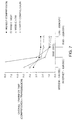
- the transfer time is off the chart for a modem and barely usable for the internet, while being satisfactory both for wide area networks and for local area networks, since the transfer time is under 1.0 seconds.
- the overall transfer time varies little such that few improvements can be made in terms of the type of network over which the data is transmitted.
- the chart indicates modest improvement in certain instances, significant improvement in refresh times can nonetheless be effectuated in certain circumstances. It will be appreciated that the graph shows averages, and that certain screen data compresses better with one or the other middle algorithms. The dynamic algorithm switching ensures that the most appropriate algorithm is always chosen.
Landscapes
- Engineering & Computer Science (AREA)
- Theoretical Computer Science (AREA)
- Human Computer Interaction (AREA)
- Physics & Mathematics (AREA)
- General Engineering & Computer Science (AREA)
- General Physics & Mathematics (AREA)
- Computer And Data Communications (AREA)
- Digital Computer Display Output (AREA)
- Selective Calling Equipment (AREA)
- Information Transfer Between Computers (AREA)
- Compression, Expansion, Code Conversion, And Decoders (AREA)
- Two-Way Televisions, Distribution Of Moving Picture Or The Like (AREA)
- Reduction Or Emphasis Of Bandwidth Of Signals (AREA)
- Details Of Television Systems (AREA)
- Transmission Systems Not Characterized By The Medium Used For Transmission (AREA)
- Compression Or Coding Systems Of Tv Signals (AREA)
- Compression Of Band Width Or Redundancy In Fax (AREA)
Claims (16)
- System zum Minimieren der Bildschirmauffrischzeit einer Anzeige (12) in Kommunikation mit einem ersten Computer (18) über ein Netzwerk (10), wobei das System umfaßt:
einen Kompressionsalgorithmus-Selektor (50) an dem ersten Computer (18), der einen einer Mehrzahl von Kompressionsalgorithmen (40...46) zum Komprimieren von Daten bei dem ersten Computer (18) vor der Übertragung der Daten über das Netzwerk (10) an die Anzeige (12) auswählt, wobei der Kompressionsalgorithmus-Selektor umfaßt:einen Computer, der die Kompressionszeit und die Übertragungszeit der Daten bestimmt und das Verhältnis der Kompressionszeit zu der Übertragungszeit für den ausgewählten der Mehrzahl von Kompressionsalgorithmen berechnet; undeinen Selektor, der den Kompressionsalgorithmus aus der Mehrzahl von Kompressionsalgorithmen auswählt, der dazu führt, daß sich das Verhältnis einem vorbestimmten Wert nähert. - System gemäß Anspruch 1, bei dem der vorbestimmte Wert Eins ist.
- System gemäß Anspruch 1 oder Anspruch 2, bei dem die Mehrzahl von Kompressionsalgorithmen gemäß der Kompressionsrate geordnet sind, und wobei der Kompressionsalgorithmus-Selektor (50) zuerst den Kompressionsalgorithmus (40...46) aus der Mehrzahl von Kompressionsalgorithmen aussucht, der die höchste Kompressionsrate aufweist.
- System gemäß Anspruch 3, bei dem der Kompressionsalgorithmus-Selektor (50) nacheinander einen Kompressionsalgorithmus auswählt, der die nächst niedrige Kompressionsrate aufweist, bis sich das Verhältnis dem vorbestimmten Wert nähert.
- System gemäß Anspruch 4, bei dem die Anzeige (12) einen Auffrischzyklus aufweist, und wobei der Kompressionsalgorithmus-Selektor (50) nacheinander aus der Mehrzahl von Kompressionsalgorithmen bei jedem Auffrischzyklus auswählt.
- System gemäß Anspruch 1 oder 2, bei dem die Anzeige (12) in eine Mehrzahl von Rastern aufgeteilt ist, und wobei der Kompressionsalgorithmus-Selektor (50) ferner umfaßt:einen Prüfsummengenerator zum Erzeugen einer Prüfsumme für jedes Raster der Mehrzahl von Rastern;einen Komparator, der eine jede Raster-Prüfsumme mit der vorherigen Raster-Prüfsumme der Mehrzahl von Rastern vergleicht und eine Änderung in der Prüfsumme für jedes Raster der Mehrzahl von Rastern erfaßt; undeine Datenkomprimierungseinheit, die Daten für jedes Raster sammelt und komprimiert, das eine Änderung in der Prüfsumme aufweist, für jedes Raster der Mehrzahl von Rastern.
- System gemäß Anspruch 1 oder 2, ferner mit einem veränderbaren Sender, der imstande ist, die Übertragungsrate zu ändern.
- System gemäß Anspruch 1 oder 2, wobei die Mehrzahl von Kompressionsalgorithmen (40...46) Lauflängencodierungsalgorithmen umfassen.
- System gemäß Anspruch 1, bei dem der Kompressionsalgorithmus mit der niedrigsten Kompressionsrate einen Lauflängencodierungsalgorithmus aufweist.
- System gemäß Anspruch 9, bei dem der Kompressionsalgorithmus mit der nächsthöheren Kompressionsrate einen Huffman-Kompressionsalgorithmus aufweist, dem eine Lauflängencodierung vorausgeht.
- System gemäß Anspruch 10, bei dem der Kompressionsalgorithmus mit der nächsthöheren Kompressionsrate einen modifizierten adaptiven Huffman-Kompressionsalgorithmus aufweist, der eine 9-Bit-Baum Eintragsgröße verwendet, wobei dem Huffman-Kompressionsalgorithmus eine Lauflängencodierung vorausgeht.
- System gemäß Anspruch 11, bei dem die Baum-Eintragsgröße eine 13-Bit-Baum-Eintragsgröße ist, die der höchsten Kompressionsrate entspricht.
- Verfahren zum Minimieren der Bildschirmauffrischzeit einer Anzeige (12) in Kommunikation mit einem ersten Computer (18) über ein Netzwerk (10), wobei das Verfahren folgende Schritte umfaßt:
anfängliches Auswählen eines einer Mehrzahl von Kompressionsalgorithmen (40...46) zum Komprimieren von Daten bei dem ersten Computer vor der Übertragung der Daten über das Netzwerk an die Anzeige;Bestimmen der Kompressionszeit und der Übertragungszeit der Daten;Berechnen des Verhältnisses der Kompressionszeit zu der Übertragungszeit für den ausgewählten der Mehrzahl von Kompressionsalgorithmen; undAuswählen des Kompressionsalgorithmus aus der Mehrzahl von Kompressionsalgorithmen, der zu dazu führt, daß sich das Verhältnis einem vorbestimmten Wert nähert. - Verfahren gemäß Anspruch 13, bei dem der vorbestimmte Wert Eins ist.
- Verfahren gemäß Anspruch 13, ferner mit folgenden Schritten:Ordnen der Mehrzahl von Kompressionsalgorithmen (40...46) gemäß der Kompressionsrate; undanfängliches Auswählen des Kompressionsalgorithmus aus der Mehrzahl von Kompressionsalgorithmen mit der höchsten Kompressionsrate.
- Verfahren gemäß Anspruch 15, ferner mit dem Schritt eines nacheinander Auswählens des Kompressionsalgorithmus mit der nächstniedrigeren Kompressionsrate, so daß sich das Verhältnis dem vorbestimmten Wert nähert.
Applications Claiming Priority (3)
| Application Number | Priority Date | Filing Date | Title |
|---|---|---|---|
| US970709 | 1978-12-18 | ||
| US08/970,709 US6138164A (en) | 1997-11-14 | 1997-11-14 | System for minimizing screen refresh time using selectable compression speeds |
| PCT/US1998/024342 WO1999026130A1 (en) | 1997-11-14 | 1998-11-13 | Remote control system which minimizes screen refresh time by selecting compression algorithm |
Publications (2)
| Publication Number | Publication Date |
|---|---|
| EP1029264A1 EP1029264A1 (de) | 2000-08-23 |
| EP1029264B1 true EP1029264B1 (de) | 2002-02-13 |
Family
ID=25517377
Family Applications (1)
| Application Number | Title | Priority Date | Filing Date |
|---|---|---|---|
| EP98957970A Expired - Lifetime EP1029264B1 (de) | 1997-11-14 | 1998-11-13 | Fernsteuersystem mit minimierung der bildschirm-aktualisierungszeit durch auswahl des kompressionsalgorithmus |
Country Status (8)
| Country | Link |
|---|---|
| US (2) | US6138164A (de) |
| EP (1) | EP1029264B1 (de) |
| JP (1) | JP2001523902A (de) |
| AT (1) | ATE213345T1 (de) |
| AU (1) | AU746654B2 (de) |
| DE (1) | DE69803871T2 (de) |
| IL (1) | IL136098A (de) |
| WO (1) | WO1999026130A1 (de) |
Families Citing this family (30)
| Publication number | Priority date | Publication date | Assignee | Title |
|---|---|---|---|---|
| US6304895B1 (en) * | 1997-08-22 | 2001-10-16 | Apex Inc. | Method and system for intelligently controlling a remotely located computer |
| US6624761B2 (en) * | 1998-12-11 | 2003-09-23 | Realtime Data, Llc | Content independent data compression method and system |
| US6601104B1 (en) * | 1999-03-11 | 2003-07-29 | Realtime Data Llc | System and methods for accelerated data storage and retrieval |
| US6604158B1 (en) * | 1999-03-11 | 2003-08-05 | Realtime Data, Llc | System and methods for accelerated data storage and retrieval |
| US6897833B1 (en) * | 1999-09-10 | 2005-05-24 | Hewlett-Packard Development Company, L.P. | Portable user interface |
| US7181608B2 (en) * | 2000-02-03 | 2007-02-20 | Realtime Data Llc | Systems and methods for accelerated loading of operating systems and application programs |
| US20030191876A1 (en) * | 2000-02-03 | 2003-10-09 | Fallon James J. | Data storewidth accelerator |
| US9143546B2 (en) | 2000-10-03 | 2015-09-22 | Realtime Data Llc | System and method for data feed acceleration and encryption |
| US8692695B2 (en) * | 2000-10-03 | 2014-04-08 | Realtime Data, Llc | Methods for encoding and decoding data |
| US7386046B2 (en) | 2001-02-13 | 2008-06-10 | Realtime Data Llc | Bandwidth sensitive data compression and decompression |
| US8026944B1 (en) | 2001-04-12 | 2011-09-27 | Sony Corporation | Method and apparatus for hosting a network camera with image degradation |
| US7076085B1 (en) | 2001-04-12 | 2006-07-11 | Ipix Corp. | Method and apparatus for hosting a network camera including a heartbeat mechanism |
| US7177448B1 (en) | 2001-04-12 | 2007-02-13 | Ipix Corporation | System and method for selecting and transmitting images of interest to a user |
| US7015949B1 (en) | 2001-04-12 | 2006-03-21 | Ipix Corporation | Method and apparatus for hosting a network camera with refresh degradation |
| US7024488B1 (en) | 2001-04-12 | 2006-04-04 | Ipix Corporation | Method and apparatus for hosting a network camera |
| US7203359B1 (en) * | 2003-02-18 | 2007-04-10 | Novell, Inc. | Split screen technique for improving bandwidth utilization when transferring changing images |
| US7305490B2 (en) * | 2003-07-29 | 2007-12-04 | Hewlett-Packard Development Company, L.P. | Preparing electronic data for transmission |
| US7599002B2 (en) * | 2003-12-02 | 2009-10-06 | Logitech Europe S.A. | Network camera mounting system |
| US20050120128A1 (en) * | 2003-12-02 | 2005-06-02 | Wilife, Inc. | Method and system of bandwidth management for streaming data |
| US7299300B2 (en) * | 2004-02-10 | 2007-11-20 | Oracle International Corporation | System and method for dynamically selecting a level of compression for data to be transmitted |
| US20060171453A1 (en) * | 2005-01-04 | 2006-08-03 | Rohlfing Thomas R | Video surveillance system |
| GB0508946D0 (en) * | 2005-04-30 | 2005-06-08 | Ibm | Method and apparatus for streaming data |
| US20060255931A1 (en) * | 2005-05-12 | 2006-11-16 | Hartsfield Andrew J | Modular design for a security system |
| CN100444110C (zh) * | 2005-12-15 | 2008-12-17 | 英业达股份有限公司 | 接口显示系统及方法 |
| US7898538B2 (en) | 2007-01-31 | 2011-03-01 | International Business Machines Corporation | Method and system for estimating screen refresh rates of computing units participating in an internet-based collaboration |
| US8607158B2 (en) * | 2010-12-09 | 2013-12-10 | International Business Machines Corporation | Content presentation in remote monitoring sessions for information technology systems |
| US8806360B2 (en) | 2010-12-22 | 2014-08-12 | International Business Machines Corporation | Computing resource management in information technology systems |
| US9066071B2 (en) * | 2012-11-12 | 2015-06-23 | Samsung Electronics Co., Ltd. | Method and apparatus for providing screen data |
| US10049002B2 (en) * | 2014-06-26 | 2018-08-14 | Intel Corporation | Display interface bandwidth modulation |
| JP6940771B2 (ja) | 2017-12-27 | 2021-09-29 | 富士通株式会社 | データ送信プログラム、データ送信装置、及びデータ送信方法 |
Family Cites Families (7)
| Publication number | Priority date | Publication date | Assignee | Title |
|---|---|---|---|---|
| US5276898A (en) * | 1990-07-26 | 1994-01-04 | International Business Machines Corporation | System for selectively compressing data frames based upon a current processor work load identifying whether the processor is too busy to perform the compression |
| FR2672707B1 (fr) * | 1991-02-13 | 1993-06-04 | Commande Electronique | Procede de telemaintenance d'un poste de travail informatique et systeme pour sa mise en óoeuvre. |
| US5745758A (en) * | 1991-09-20 | 1998-04-28 | Shaw; Venson M. | System for regulating multicomputer data transfer by allocating time slot to designated processing task according to communication bandwidth capabilities and modifying time slots when bandwidth change |
| US5315711A (en) * | 1991-11-01 | 1994-05-24 | Unisys Corporation | Method and apparatus for remotely and centrally controlling a plurality of host processors |
| EP0709009A1 (de) * | 1993-06-16 | 1996-05-01 | GOULD, Kim V.W. | System und verfahren zur übertragung von videodaten |
| GB2296114A (en) * | 1994-12-13 | 1996-06-19 | Ibm | Updating display screens of local and remote workstations |
| JPH08186503A (ja) * | 1994-12-28 | 1996-07-16 | Nippon Digital Kenkyusho:Kk | データ圧縮・伸張方式及びデータ圧縮・伸張処理装置 |
-
1997
- 1997-11-14 US US08/970,709 patent/US6138164A/en not_active Expired - Fee Related
-
1998
- 1998-11-13 AT AT98957970T patent/ATE213345T1/de not_active IP Right Cessation
- 1998-11-13 DE DE69803871T patent/DE69803871T2/de not_active Expired - Fee Related
- 1998-11-13 WO PCT/US1998/024342 patent/WO1999026130A1/en not_active Ceased
- 1998-11-13 JP JP2000521431A patent/JP2001523902A/ja active Pending
- 1998-11-13 EP EP98957970A patent/EP1029264B1/de not_active Expired - Lifetime
- 1998-11-13 AU AU14100/99A patent/AU746654B2/en not_active Ceased
- 1998-11-13 IL IL13609898A patent/IL136098A/xx unknown
-
2000
- 2000-10-16 US US09/688,149 patent/US6505239B1/en not_active Expired - Lifetime
Also Published As
| Publication number | Publication date |
|---|---|
| AU746654B2 (en) | 2002-05-02 |
| IL136098A (en) | 2005-05-17 |
| WO1999026130A1 (en) | 1999-05-27 |
| AU1410099A (en) | 1999-06-07 |
| DE69803871D1 (de) | 2002-03-21 |
| US6138164A (en) | 2000-10-24 |
| IL136098A0 (en) | 2001-05-20 |
| EP1029264A1 (de) | 2000-08-23 |
| JP2001523902A (ja) | 2001-11-27 |
| DE69803871T2 (de) | 2002-09-26 |
| ATE213345T1 (de) | 2002-02-15 |
| US6505239B1 (en) | 2003-01-07 |
Similar Documents
| Publication | Publication Date | Title |
|---|---|---|
| EP1029264B1 (de) | Fernsteuersystem mit minimierung der bildschirm-aktualisierungszeit durch auswahl des kompressionsalgorithmus | |
| US6430161B2 (en) | Client-optimized data transmission system and method | |
| US7188214B1 (en) | Efficient compression using differential caching | |
| US5726912A (en) | Control system monitor | |
| EP0468910B1 (de) | Verfahren und Vorrichtung zur Verwendung von dynamischer Datenverdichtung | |
| US5555377A (en) | System for selectively compressing data transferred in network in response to produced first output when network utilization exceeds first threshold and data length over limit | |
| US20090322674A1 (en) | Switch, image transmission apparatus, image transmission method, image display method, image transmitting program product, and image displaying program product | |
| JP4912401B2 (ja) | パフォーマンス情報およびイベント情報を適応的に収集するシステムおよび方法 | |
| US5673392A (en) | Method of executing communication program in modem apparatus | |
| CN110392098A (zh) | 一种自适应虚拟桌面传输方法及装置 | |
| US20050047418A1 (en) | Packet receiving method of mobile terminal | |
| US20200117544A1 (en) | Data backup system and data backup method | |
| CN113163008B (zh) | 网络服务系统的连接智能管理方法、装置及其相关设备 | |
| EP0901079B1 (de) | Emulation und emulierte Bildschirmgeschichte | |
| US20020101443A1 (en) | Method and apparatus for receiving image files in presentation system | |
| US20040083488A1 (en) | Receiving apparatus, data communication system, and method for data communication | |
| CN113760431B (zh) | 应用程序的控制方法、装置、电子设备及可读存储介质 | |
| JP2004187062A (ja) | 遠隔制御システム及びその画像転送方法 | |
| CN109361951B (zh) | 一种视频数据缓存方法、装置及用户终端 | |
| CN107734045A (zh) | 网络文件请求、处理方法、电视终端、文件服务器及系统 | |
| CN111290720B (zh) | 一种数据打印方法及设备 | |
| CN119402560B (zh) | 一种远程管理方法、装置、设备及存储介质 | |
| US20030023899A1 (en) | Data compression/transmission and restoration methods using IPC in switching system | |
| CN114007065B (zh) | 一种基于WebRTC实时音视频黑屏检测方法 | |
| JPH09223083A (ja) | 転送ファイルの圧縮復元方式 |
Legal Events
| Date | Code | Title | Description |
|---|---|---|---|
| PUAI | Public reference made under article 153(3) epc to a published international application that has entered the european phase |
Free format text: ORIGINAL CODE: 0009012 |
|
| 17P | Request for examination filed |
Effective date: 20000512 |
|
| AK | Designated contracting states |
Kind code of ref document: A1 Designated state(s): AT BE CH CY DE DK ES FI FR GB GR IE IT LI LU MC NL PT SE |
|
| 17Q | First examination report despatched |
Effective date: 20000906 |
|
| GRAG | Despatch of communication of intention to grant |
Free format text: ORIGINAL CODE: EPIDOS AGRA |
|
| GRAG | Despatch of communication of intention to grant |
Free format text: ORIGINAL CODE: EPIDOS AGRA |
|
| GRAH | Despatch of communication of intention to grant a patent |
Free format text: ORIGINAL CODE: EPIDOS IGRA |
|
| RAP1 | Party data changed (applicant data changed or rights of an application transferred) |
Owner name: ATABOK, INC. |
|
| GRAH | Despatch of communication of intention to grant a patent |
Free format text: ORIGINAL CODE: EPIDOS IGRA |
|
| GRAA | (expected) grant |
Free format text: ORIGINAL CODE: 0009210 |
|
| REG | Reference to a national code |
Ref country code: GB Ref legal event code: IF02 |
|
| AK | Designated contracting states |
Kind code of ref document: B1 Designated state(s): AT BE CH CY DE DK ES FI FR GB GR IE IT LI LU MC NL PT SE |
|
| PG25 | Lapsed in a contracting state [announced via postgrant information from national office to epo] |
Ref country code: NL Free format text: LAPSE BECAUSE OF FAILURE TO SUBMIT A TRANSLATION OF THE DESCRIPTION OR TO PAY THE FEE WITHIN THE PRESCRIBED TIME-LIMIT Effective date: 20020213 Ref country code: LI Free format text: LAPSE BECAUSE OF FAILURE TO SUBMIT A TRANSLATION OF THE DESCRIPTION OR TO PAY THE FEE WITHIN THE PRESCRIBED TIME-LIMIT Effective date: 20020213 Ref country code: IT Free format text: LAPSE BECAUSE OF FAILURE TO SUBMIT A TRANSLATION OF THE DESCRIPTION OR TO PAY THE FEE WITHIN THE PRESCRIBED TIME-LIMIT;WARNING: LAPSES OF ITALIAN PATENTS WITH EFFECTIVE DATE BEFORE 2007 MAY HAVE OCCURRED AT ANY TIME BEFORE 2007. THE CORRECT EFFECTIVE DATE MAY BE DIFFERENT FROM THE ONE RECORDED. Effective date: 20020213 Ref country code: GR Free format text: LAPSE BECAUSE OF FAILURE TO SUBMIT A TRANSLATION OF THE DESCRIPTION OR TO PAY THE FEE WITHIN THE PRESCRIBED TIME-LIMIT Effective date: 20020213 Ref country code: FR Free format text: LAPSE BECAUSE OF FAILURE TO SUBMIT A TRANSLATION OF THE DESCRIPTION OR TO PAY THE FEE WITHIN THE PRESCRIBED TIME-LIMIT Effective date: 20020213 Ref country code: FI Free format text: LAPSE BECAUSE OF FAILURE TO SUBMIT A TRANSLATION OF THE DESCRIPTION OR TO PAY THE FEE WITHIN THE PRESCRIBED TIME-LIMIT Effective date: 20020213 Ref country code: CH Free format text: LAPSE BECAUSE OF FAILURE TO SUBMIT A TRANSLATION OF THE DESCRIPTION OR TO PAY THE FEE WITHIN THE PRESCRIBED TIME-LIMIT Effective date: 20020213 Ref country code: BE Free format text: LAPSE BECAUSE OF FAILURE TO SUBMIT A TRANSLATION OF THE DESCRIPTION OR TO PAY THE FEE WITHIN THE PRESCRIBED TIME-LIMIT Effective date: 20020213 Ref country code: AT Free format text: LAPSE BECAUSE OF FAILURE TO SUBMIT A TRANSLATION OF THE DESCRIPTION OR TO PAY THE FEE WITHIN THE PRESCRIBED TIME-LIMIT Effective date: 20020213 |
|
| REF | Corresponds to: |
Ref document number: 213345 Country of ref document: AT Date of ref document: 20020215 Kind code of ref document: T |
|
| REG | Reference to a national code |
Ref country code: CH Ref legal event code: EP |
|
| REF | Corresponds to: |
Ref document number: 69803871 Country of ref document: DE Date of ref document: 20020321 |
|
| PG25 | Lapsed in a contracting state [announced via postgrant information from national office to epo] |
Ref country code: SE Free format text: LAPSE BECAUSE OF FAILURE TO SUBMIT A TRANSLATION OF THE DESCRIPTION OR TO PAY THE FEE WITHIN THE PRESCRIBED TIME-LIMIT Effective date: 20020513 Ref country code: PT Free format text: LAPSE BECAUSE OF FAILURE TO SUBMIT A TRANSLATION OF THE DESCRIPTION OR TO PAY THE FEE WITHIN THE PRESCRIBED TIME-LIMIT Effective date: 20020513 Ref country code: DK Free format text: LAPSE BECAUSE OF FAILURE TO SUBMIT A TRANSLATION OF THE DESCRIPTION OR TO PAY THE FEE WITHIN THE PRESCRIBED TIME-LIMIT Effective date: 20020513 |
|
| NLV1 | Nl: lapsed or annulled due to failure to fulfill the requirements of art. 29p and 29m of the patents act | ||
| PG25 | Lapsed in a contracting state [announced via postgrant information from national office to epo] |
Ref country code: ES Free format text: LAPSE BECAUSE OF FAILURE TO SUBMIT A TRANSLATION OF THE DESCRIPTION OR TO PAY THE FEE WITHIN THE PRESCRIBED TIME-LIMIT Effective date: 20020829 |
|
| REG | Reference to a national code |
Ref country code: CH Ref legal event code: PL |
|
| PG25 | Lapsed in a contracting state [announced via postgrant information from national office to epo] |
Ref country code: LU Free format text: LAPSE BECAUSE OF NON-PAYMENT OF DUE FEES Effective date: 20021113 Ref country code: IE Free format text: LAPSE BECAUSE OF NON-PAYMENT OF DUE FEES Effective date: 20021113 |
|
| EN | Fr: translation not filed | ||
| PG25 | Lapsed in a contracting state [announced via postgrant information from national office to epo] |
Ref country code: CY Free format text: LAPSE BECAUSE OF FAILURE TO SUBMIT A TRANSLATION OF THE DESCRIPTION OR TO PAY THE FEE WITHIN THE PRESCRIBED TIME-LIMIT Effective date: 20021130 |
|
| PLBE | No opposition filed within time limit |
Free format text: ORIGINAL CODE: 0009261 |
|
| STAA | Information on the status of an ep patent application or granted ep patent |
Free format text: STATUS: NO OPPOSITION FILED WITHIN TIME LIMIT |
|
| 26N | No opposition filed |
Effective date: 20021114 |
|
| PG25 | Lapsed in a contracting state [announced via postgrant information from national office to epo] |
Ref country code: MC Free format text: LAPSE BECAUSE OF NON-PAYMENT OF DUE FEES Effective date: 20030601 |
|
| REG | Reference to a national code |
Ref country code: IE Ref legal event code: MM4A |
|
| PGFP | Annual fee paid to national office [announced via postgrant information from national office to epo] |
Ref country code: GB Payment date: 20031105 Year of fee payment: 6 |
|
| PGFP | Annual fee paid to national office [announced via postgrant information from national office to epo] |
Ref country code: DE Payment date: 20031231 Year of fee payment: 6 |
|
| PG25 | Lapsed in a contracting state [announced via postgrant information from national office to epo] |
Ref country code: GB Free format text: LAPSE BECAUSE OF NON-PAYMENT OF DUE FEES Effective date: 20041113 |
|
| PG25 | Lapsed in a contracting state [announced via postgrant information from national office to epo] |
Ref country code: DE Free format text: LAPSE BECAUSE OF NON-PAYMENT OF DUE FEES Effective date: 20050601 |
|
| GBPC | Gb: european patent ceased through non-payment of renewal fee |
Effective date: 20041113 |