EP1026140A1 - Process of producing adamantanols - Google Patents
Process of producing adamantanols Download PDFInfo
- Publication number
- EP1026140A1 EP1026140A1 EP00100253A EP00100253A EP1026140A1 EP 1026140 A1 EP1026140 A1 EP 1026140A1 EP 00100253 A EP00100253 A EP 00100253A EP 00100253 A EP00100253 A EP 00100253A EP 1026140 A1 EP1026140 A1 EP 1026140A1
- Authority
- EP
- European Patent Office
- Prior art keywords
- ruthenium
- process according
- compound
- group
- butanol
- Prior art date
- Legal status (The legal status is an assumption and is not a legal conclusion. Google has not performed a legal analysis and makes no representation as to the accuracy of the status listed.)
- Granted
Links
- VLLNJDMHDJRNFK-UHFFFAOYSA-N adamantan-1-ol Chemical class C1C(C2)CC3CC2CC1(O)C3 VLLNJDMHDJRNFK-UHFFFAOYSA-N 0.000 title claims abstract description 37
- 238000000034 method Methods 0.000 title claims description 42
- ORILYTVJVMAKLC-UHFFFAOYSA-N adamantane Chemical class C1C(C2)CC3CC1CC2C3 ORILYTVJVMAKLC-UHFFFAOYSA-N 0.000 claims abstract description 68
- 239000012071 phase Substances 0.000 claims abstract description 51
- XLYOFNOQVPJJNP-UHFFFAOYSA-N water Substances O XLYOFNOQVPJJNP-UHFFFAOYSA-N 0.000 claims abstract description 49
- 150000003304 ruthenium compounds Chemical class 0.000 claims abstract description 36
- RVIZJROSQMQZCG-UHFFFAOYSA-N adamantane-1,2-diol Chemical class C1C(C2)CC3CC1C(O)C2(O)C3 RVIZJROSQMQZCG-UHFFFAOYSA-N 0.000 claims abstract description 33
- 239000003960 organic solvent Substances 0.000 claims abstract description 23
- 239000012074 organic phase Substances 0.000 claims abstract description 22
- 239000012295 chemical reaction liquid Substances 0.000 claims abstract description 20
- 150000003839 salts Chemical class 0.000 claims abstract description 20
- LFQSCWFLJHTTHZ-UHFFFAOYSA-N Ethanol Chemical compound CCO LFQSCWFLJHTTHZ-UHFFFAOYSA-N 0.000 claims abstract description 19
- QWPPOHNGKGFGJK-UHFFFAOYSA-N hypochlorous acid Chemical compound ClO QWPPOHNGKGFGJK-UHFFFAOYSA-N 0.000 claims abstract description 15
- 239000003513 alkali Substances 0.000 claims abstract description 9
- 230000033444 hydroxylation Effects 0.000 claims abstract description 9
- 238000005805 hydroxylation reaction Methods 0.000 claims abstract description 9
- XEKOWRVHYACXOJ-UHFFFAOYSA-N Ethyl acetate Chemical compound CCOC(C)=O XEKOWRVHYACXOJ-UHFFFAOYSA-N 0.000 claims description 27
- -1 adamantane compound Chemical class 0.000 claims description 23
- LRHPLDYGYMQRHN-UHFFFAOYSA-N N-Butanol Chemical compound CCCCO LRHPLDYGYMQRHN-UHFFFAOYSA-N 0.000 claims description 18
- WVDDGKGOMKODPV-UHFFFAOYSA-N Benzyl alcohol Chemical compound OCC1=CC=CC=C1 WVDDGKGOMKODPV-UHFFFAOYSA-N 0.000 claims description 15
- ZSIAUFGUXNUGDI-UHFFFAOYSA-N hexan-1-ol Chemical compound CCCCCCO ZSIAUFGUXNUGDI-UHFFFAOYSA-N 0.000 claims description 14
- BTANRVKWQNVYAZ-UHFFFAOYSA-N butan-2-ol Chemical compound CCC(C)O BTANRVKWQNVYAZ-UHFFFAOYSA-N 0.000 claims description 12
- AMQJEAYHLZJPGS-UHFFFAOYSA-N N-Pentanol Chemical compound CCCCCO AMQJEAYHLZJPGS-UHFFFAOYSA-N 0.000 claims description 10
- YBCAZPLXEGKKFM-UHFFFAOYSA-K ruthenium(iii) chloride Chemical compound [Cl-].[Cl-].[Cl-].[Ru+3] YBCAZPLXEGKKFM-UHFFFAOYSA-K 0.000 claims description 10
- KJTLSVCANCCWHF-UHFFFAOYSA-N Ruthenium Chemical compound [Ru] KJTLSVCANCCWHF-UHFFFAOYSA-N 0.000 claims description 8
- 125000004432 carbon atom Chemical group C* 0.000 claims description 8
- PHTQWCKDNZKARW-UHFFFAOYSA-N isoamylol Chemical compound CC(C)CCO PHTQWCKDNZKARW-UHFFFAOYSA-N 0.000 claims description 8
- ZXEKIIBDNHEJCQ-UHFFFAOYSA-N isobutanol Chemical compound CC(C)CO ZXEKIIBDNHEJCQ-UHFFFAOYSA-N 0.000 claims description 8
- 229910052707 ruthenium Inorganic materials 0.000 claims description 8
- MSXVEPNJUHWQHW-UHFFFAOYSA-N 2-methylbutan-2-ol Chemical compound CCC(C)(C)O MSXVEPNJUHWQHW-UHFFFAOYSA-N 0.000 claims description 6
- WOCIAKWEIIZHES-UHFFFAOYSA-N ruthenium(iv) oxide Chemical compound O=[Ru]=O WOCIAKWEIIZHES-UHFFFAOYSA-N 0.000 claims description 6
- WSLDOOZREJYCGB-UHFFFAOYSA-N 1,2-Dichloroethane Chemical group ClCCCl WSLDOOZREJYCGB-UHFFFAOYSA-N 0.000 claims description 5
- 235000019445 benzyl alcohol Nutrition 0.000 claims description 5
- KBPLFHHGFOOTCA-UHFFFAOYSA-N 1-Octanol Chemical compound CCCCCCCCO KBPLFHHGFOOTCA-UHFFFAOYSA-N 0.000 claims description 4
- BBMCTIGTTCKYKF-UHFFFAOYSA-N 1-heptanol Chemical compound CCCCCCCO BBMCTIGTTCKYKF-UHFFFAOYSA-N 0.000 claims description 4
- 125000004423 acyloxy group Chemical group 0.000 claims description 4
- 125000003545 alkoxy group Chemical group 0.000 claims description 4
- 150000001875 compounds Chemical class 0.000 claims description 4
- AQIXEPGDORPWBJ-UHFFFAOYSA-N pentan-3-ol Chemical compound CCC(O)CC AQIXEPGDORPWBJ-UHFFFAOYSA-N 0.000 claims description 4
- 229910021603 Ruthenium iodide Inorganic materials 0.000 claims description 3
- 125000000217 alkyl group Chemical group 0.000 claims description 3
- 150000001350 alkyl halides Chemical class 0.000 claims description 3
- 125000003118 aryl group Chemical group 0.000 claims description 3
- 150000001502 aryl halides Chemical class 0.000 claims description 3
- 125000004104 aryloxy group Chemical group 0.000 claims description 3
- 125000000753 cycloalkyl group Chemical group 0.000 claims description 3
- 150000002148 esters Chemical class 0.000 claims description 3
- 125000005843 halogen group Chemical group 0.000 claims description 3
- 150000004677 hydrates Chemical class 0.000 claims description 3
- 229930195733 hydrocarbon Natural products 0.000 claims description 3
- 150000002430 hydrocarbons Chemical class 0.000 claims description 3
- 230000000640 hydroxylating effect Effects 0.000 claims description 3
- WYRXRHOISWEUST-UHFFFAOYSA-K ruthenium(3+);tribromide Chemical compound [Br-].[Br-].[Br-].[Ru+3] WYRXRHOISWEUST-UHFFFAOYSA-K 0.000 claims description 3
- LJZVDOUZSMHXJH-UHFFFAOYSA-K ruthenium(3+);triiodide Chemical compound [Ru+3].[I-].[I-].[I-] LJZVDOUZSMHXJH-UHFFFAOYSA-K 0.000 claims description 3
- TZYRSLHNPKPEFV-UHFFFAOYSA-N 2-ethyl-1-butanol Chemical compound CCC(CC)CO TZYRSLHNPKPEFV-UHFFFAOYSA-N 0.000 claims description 2
- WVYWICLMDOOCFB-UHFFFAOYSA-N 4-methyl-2-pentanol Chemical compound CC(C)CC(C)O WVYWICLMDOOCFB-UHFFFAOYSA-N 0.000 claims description 2
- HPXRVTGHNJAIIH-UHFFFAOYSA-N cyclohexanol Chemical compound OC1CCCCC1 HPXRVTGHNJAIIH-UHFFFAOYSA-N 0.000 claims description 2
- DKNJHLHLMWHWOI-UHFFFAOYSA-L ruthenium(2+);sulfate Chemical compound [Ru+2].[O-]S([O-])(=O)=O DKNJHLHLMWHWOI-UHFFFAOYSA-L 0.000 claims 2
- VDRDGQXTSLSKKY-UHFFFAOYSA-K ruthenium(3+);trihydroxide Chemical compound [OH-].[OH-].[OH-].[Ru+3] VDRDGQXTSLSKKY-UHFFFAOYSA-K 0.000 claims 2
- 238000000605 extraction Methods 0.000 abstract description 9
- 239000002904 solvent Substances 0.000 abstract description 8
- 238000011084 recovery Methods 0.000 abstract description 3
- 239000002244 precipitate Substances 0.000 abstract 1
- 238000006243 chemical reaction Methods 0.000 description 52
- MOLCWHCSXCKHAP-UHFFFAOYSA-N adamantane-1,3-diol Chemical compound C1C(C2)CC3CC1(O)CC2(O)C3 MOLCWHCSXCKHAP-UHFFFAOYSA-N 0.000 description 17
- 239000007864 aqueous solution Substances 0.000 description 17
- HEMHJVSKTPXQMS-UHFFFAOYSA-M Sodium hydroxide Chemical compound [OH-].[Na+] HEMHJVSKTPXQMS-UHFFFAOYSA-M 0.000 description 15
- 239000003054 catalyst Substances 0.000 description 14
- 239000005708 Sodium hypochlorite Substances 0.000 description 11
- SUKJFIGYRHOWBL-UHFFFAOYSA-N sodium hypochlorite Chemical compound [Na+].Cl[O-] SUKJFIGYRHOWBL-UHFFFAOYSA-N 0.000 description 11
- 230000001276 controlling effect Effects 0.000 description 8
- 238000007254 oxidation reaction Methods 0.000 description 8
- IYKFYARMMIESOX-UHFFFAOYSA-N adamantanone Chemical compound C1C(C2)CC3CC1C(=O)C2C3 IYKFYARMMIESOX-UHFFFAOYSA-N 0.000 description 7
- 238000003756 stirring Methods 0.000 description 7
- SCYULBFZEHDVBN-UHFFFAOYSA-N 1,1-Dichloroethane Chemical compound CC(Cl)Cl SCYULBFZEHDVBN-UHFFFAOYSA-N 0.000 description 6
- KWYUFKZDYYNOTN-UHFFFAOYSA-M Potassium hydroxide Chemical compound [OH-].[K+] KWYUFKZDYYNOTN-UHFFFAOYSA-M 0.000 description 6
- 230000003647 oxidation Effects 0.000 description 6
- 229910019891 RuCl3 Inorganic materials 0.000 description 5
- 238000004587 chromatography analysis Methods 0.000 description 5
- 150000004683 dihydrates Chemical class 0.000 description 5
- 239000007789 gas Substances 0.000 description 5
- 239000013078 crystal Substances 0.000 description 4
- 238000007086 side reaction Methods 0.000 description 4
- YMWUJEATGCHHMB-UHFFFAOYSA-N Dichloromethane Chemical compound ClCCl YMWUJEATGCHHMB-UHFFFAOYSA-N 0.000 description 3
- WMFOQBRAJBCJND-UHFFFAOYSA-M Lithium hydroxide Chemical compound [Li+].[OH-] WMFOQBRAJBCJND-UHFFFAOYSA-M 0.000 description 3
- 230000007423 decrease Effects 0.000 description 3
- 238000001914 filtration Methods 0.000 description 3
- VLKZOEOYAKHREP-UHFFFAOYSA-N n-Hexane Chemical compound CCCCCC VLKZOEOYAKHREP-UHFFFAOYSA-N 0.000 description 3
- 238000005191 phase separation Methods 0.000 description 3
- 238000000926 separation method Methods 0.000 description 3
- UBOXGVDOUJQMTN-UHFFFAOYSA-N 1,1,2-trichloroethane Chemical compound ClCC(Cl)Cl UBOXGVDOUJQMTN-UHFFFAOYSA-N 0.000 description 2
- KJDRSWPQXHESDQ-UHFFFAOYSA-N 1,4-dichlorobutane Chemical compound ClCCCCCl KJDRSWPQXHESDQ-UHFFFAOYSA-N 0.000 description 2
- HEDRZPFGACZZDS-UHFFFAOYSA-N Chloroform Chemical compound ClC(Cl)Cl HEDRZPFGACZZDS-UHFFFAOYSA-N 0.000 description 2
- IMNFDUFMRHMDMM-UHFFFAOYSA-N N-Heptane Chemical compound CCCCCCC IMNFDUFMRHMDMM-UHFFFAOYSA-N 0.000 description 2
- KFSLWBXXFJQRDL-UHFFFAOYSA-N Peracetic acid Chemical compound CC(=O)OO KFSLWBXXFJQRDL-UHFFFAOYSA-N 0.000 description 2
- 230000015572 biosynthetic process Effects 0.000 description 2
- 238000004817 gas chromatography Methods 0.000 description 2
- 238000010438 heat treatment Methods 0.000 description 2
- 239000000203 mixture Substances 0.000 description 2
- 229920005862 polyol Polymers 0.000 description 2
- 150000003077 polyols Chemical class 0.000 description 2
- 239000007787 solid Substances 0.000 description 2
- VDZOOKBUILJEDG-UHFFFAOYSA-M tetrabutylammonium hydroxide Chemical compound [OH-].CCCC[N+](CCCC)(CCCC)CCCC VDZOOKBUILJEDG-UHFFFAOYSA-M 0.000 description 2
- VZGDMQKNWNREIO-UHFFFAOYSA-N tetrachloromethane Chemical compound ClC(Cl)(Cl)Cl VZGDMQKNWNREIO-UHFFFAOYSA-N 0.000 description 2
- WGTYBPLFGIVFAS-UHFFFAOYSA-M tetramethylammonium hydroxide Chemical compound [OH-].C[N+](C)(C)C WGTYBPLFGIVFAS-UHFFFAOYSA-M 0.000 description 2
- 125000004178 (C1-C4) alkyl group Chemical group 0.000 description 1
- 125000004169 (C1-C6) alkyl group Chemical group 0.000 description 1
- SEQRDAAUNCRFIT-UHFFFAOYSA-N 1,1-dichlorobutane Chemical compound CCCC(Cl)Cl SEQRDAAUNCRFIT-UHFFFAOYSA-N 0.000 description 1
- OVISMSJCKCDOPU-UHFFFAOYSA-N 1,6-dichlorohexane Chemical compound ClCCCCCCCl OVISMSJCKCDOPU-UHFFFAOYSA-N 0.000 description 1
- QMYGFTJCQFEDST-UHFFFAOYSA-N 3-methoxybutyl acetate Chemical group COC(C)CCOC(C)=O QMYGFTJCQFEDST-UHFFFAOYSA-N 0.000 description 1
- ZCYVEMRRCGMTRW-UHFFFAOYSA-N 7553-56-2 Chemical compound [I] ZCYVEMRRCGMTRW-UHFFFAOYSA-N 0.000 description 1
- WKBOTKDWSSQWDR-UHFFFAOYSA-N Bromine atom Chemical compound [Br] WKBOTKDWSSQWDR-UHFFFAOYSA-N 0.000 description 1
- ZAMOUSCENKQFHK-UHFFFAOYSA-N Chlorine atom Chemical compound [Cl] ZAMOUSCENKQFHK-UHFFFAOYSA-N 0.000 description 1
- XBDQKXXYIPTUBI-UHFFFAOYSA-M Propionate Chemical compound CCC([O-])=O XBDQKXXYIPTUBI-UHFFFAOYSA-M 0.000 description 1
- KXKVLQRXCPHEJC-UHFFFAOYSA-N acetic acid trimethyl ester Natural products COC(C)=O KXKVLQRXCPHEJC-UHFFFAOYSA-N 0.000 description 1
- JEQIZGAVCODPLP-UHFFFAOYSA-N adamantane-1,2,2,3-tetrol Chemical compound C1C(C2)CC3CC1(O)C(O)(O)C2(O)C3 JEQIZGAVCODPLP-UHFFFAOYSA-N 0.000 description 1
- IPRVKUPKUIJURA-UHFFFAOYSA-N adamantane-1,2,2-triol Chemical compound C1C(C2)CC3CC1C(O)(O)C2(O)C3 IPRVKUPKUIJURA-UHFFFAOYSA-N 0.000 description 1
- AUKWRHADVIQZRJ-UHFFFAOYSA-N adamantane-1,4-diol Chemical compound C1C(C2)CC3C(O)C1CC2(O)C3 AUKWRHADVIQZRJ-UHFFFAOYSA-N 0.000 description 1
- 150000001298 alcohols Chemical class 0.000 description 1
- QVGXLLKOCUKJST-UHFFFAOYSA-N atomic oxygen Chemical compound [O] QVGXLLKOCUKJST-UHFFFAOYSA-N 0.000 description 1
- RQPZNWPYLFFXCP-UHFFFAOYSA-L barium dihydroxide Chemical compound [OH-].[OH-].[Ba+2] RQPZNWPYLFFXCP-UHFFFAOYSA-L 0.000 description 1
- 229910001863 barium hydroxide Inorganic materials 0.000 description 1
- 238000009835 boiling Methods 0.000 description 1
- SXDBWCPKPHAZSM-UHFFFAOYSA-N bromic acid Chemical compound OBr(=O)=O SXDBWCPKPHAZSM-UHFFFAOYSA-N 0.000 description 1
- GDTBXPJZTBHREO-UHFFFAOYSA-N bromine Substances BrBr GDTBXPJZTBHREO-UHFFFAOYSA-N 0.000 description 1
- 229910052794 bromium Inorganic materials 0.000 description 1
- 125000000484 butyl group Chemical group [H]C([*])([H])C([H])([H])C([H])([H])C([H])([H])[H] 0.000 description 1
- 239000007795 chemical reaction product Substances 0.000 description 1
- 239000007810 chemical reaction solvent Substances 0.000 description 1
- 229910052801 chlorine Inorganic materials 0.000 description 1
- 239000000460 chlorine Substances 0.000 description 1
- KRVSOGSZCMJSLX-UHFFFAOYSA-L chromic acid Substances O[Cr](O)(=O)=O KRVSOGSZCMJSLX-UHFFFAOYSA-L 0.000 description 1
- 238000009833 condensation Methods 0.000 description 1
- 230000005494 condensation Effects 0.000 description 1
- 238000001816 cooling Methods 0.000 description 1
- 238000002425 crystallisation Methods 0.000 description 1
- 230000008025 crystallization Effects 0.000 description 1
- 125000000113 cyclohexyl group Chemical group [H]C1([H])C([H])([H])C([H])([H])C([H])(*)C([H])([H])C1([H])[H] 0.000 description 1
- 125000000640 cyclooctyl group Chemical group [H]C1([H])C([H])([H])C([H])([H])C([H])([H])C([H])(*)C([H])([H])C([H])([H])C1([H])[H] 0.000 description 1
- 238000000354 decomposition reaction Methods 0.000 description 1
- 230000003247 decreasing effect Effects 0.000 description 1
- 150000004844 dioxiranes Chemical class 0.000 description 1
- 238000004821 distillation Methods 0.000 description 1
- 125000001495 ethyl group Chemical group [H]C([H])([H])C([H])([H])* 0.000 description 1
- AWJWCTOOIBYHON-UHFFFAOYSA-N furo[3,4-b]pyrazine-5,7-dione Chemical compound C1=CN=C2C(=O)OC(=O)C2=N1 AWJWCTOOIBYHON-UHFFFAOYSA-N 0.000 description 1
- 239000011521 glass Substances 0.000 description 1
- CKAPSXZOOQJIBF-UHFFFAOYSA-N hexachlorobenzene Chemical compound ClC1=C(Cl)C(Cl)=C(Cl)C(Cl)=C1Cl CKAPSXZOOQJIBF-UHFFFAOYSA-N 0.000 description 1
- 125000004051 hexyl group Chemical group [H]C([H])([H])C([H])([H])C([H])([H])C([H])([H])C([H])([H])C([H])([H])* 0.000 description 1
- 125000003707 hexyloxy group Chemical group [H]C([H])([H])C([H])([H])C([H])([H])C([H])([H])C([H])([H])C([H])([H])O* 0.000 description 1
- 230000003301 hydrolyzing effect Effects 0.000 description 1
- 150000004679 hydroxides Chemical class 0.000 description 1
- 125000002887 hydroxy group Chemical group [H]O* 0.000 description 1
- 239000000543 intermediate Substances 0.000 description 1
- 229910052740 iodine Inorganic materials 0.000 description 1
- 239000011630 iodine Substances 0.000 description 1
- JMMWKPVZQRWMSS-UHFFFAOYSA-N isopropanol acetate Natural products CC(C)OC(C)=O JMMWKPVZQRWMSS-UHFFFAOYSA-N 0.000 description 1
- 229940011051 isopropyl acetate Drugs 0.000 description 1
- GWYFCOCPABKNJV-UHFFFAOYSA-N isovaleric acid Chemical compound CC(C)CC(O)=O GWYFCOCPABKNJV-UHFFFAOYSA-N 0.000 description 1
- 239000000314 lubricant Substances 0.000 description 1
- 238000004519 manufacturing process Methods 0.000 description 1
- 229910000000 metal hydroxide Inorganic materials 0.000 description 1
- 150000004692 metal hydroxides Chemical class 0.000 description 1
- 125000002496 methyl group Chemical group [H]C([H])([H])* 0.000 description 1
- GRVDJDISBSALJP-UHFFFAOYSA-N methyloxidanyl Chemical group [O]C GRVDJDISBSALJP-UHFFFAOYSA-N 0.000 description 1
- 125000001624 naphthyl group Chemical group 0.000 description 1
- TVMXDCGIABBOFY-UHFFFAOYSA-N octane Chemical compound CCCCCCCC TVMXDCGIABBOFY-UHFFFAOYSA-N 0.000 description 1
- 229910052760 oxygen Inorganic materials 0.000 description 1
- 239000001301 oxygen Substances 0.000 description 1
- KHIWWQKSHDUIBK-UHFFFAOYSA-N periodic acid Chemical compound OI(=O)(=O)=O KHIWWQKSHDUIBK-UHFFFAOYSA-N 0.000 description 1
- 125000000864 peroxy group Chemical group O(O*)* 0.000 description 1
- KHUXNRRPPZOJPT-UHFFFAOYSA-N phenoxy radical Chemical group O=C1C=C[CH]C=C1 KHUXNRRPPZOJPT-UHFFFAOYSA-N 0.000 description 1
- 125000001997 phenyl group Chemical group [H]C1=C([H])C([H])=C(*)C([H])=C1[H] 0.000 description 1
- 239000004014 plasticizer Substances 0.000 description 1
- 229920000642 polymer Polymers 0.000 description 1
- XAEFZNCEHLXOMS-UHFFFAOYSA-M potassium benzoate Chemical compound [K+].[O-]C(=O)C1=CC=CC=C1 XAEFZNCEHLXOMS-UHFFFAOYSA-M 0.000 description 1
- 125000001436 propyl group Chemical group [H]C([*])([H])C([H])([H])C([H])([H])[H] 0.000 description 1
- 239000002994 raw material Substances 0.000 description 1
- 230000035484 reaction time Effects 0.000 description 1
- 238000001953 recrystallisation Methods 0.000 description 1
- 230000001105 regulatory effect Effects 0.000 description 1
- 239000011369 resultant mixture Substances 0.000 description 1
- QQQRUHDQRQDWHW-UHFFFAOYSA-J ruthenium(4+);disulfate Chemical compound [Ru+4].[O-]S([O-])(=O)=O.[O-]S([O-])(=O)=O QQQRUHDQRQDWHW-UHFFFAOYSA-J 0.000 description 1
- RQPOMTUDFBZCHG-UHFFFAOYSA-N ruthenium;trihydrate Chemical compound O.O.O.[Ru] RQPOMTUDFBZCHG-UHFFFAOYSA-N 0.000 description 1
- 238000004062 sedimentation Methods 0.000 description 1
- 238000009958 sewing Methods 0.000 description 1
- 159000000000 sodium salts Chemical class 0.000 description 1
- 239000007858 starting material Substances 0.000 description 1
- 239000000126 substance Substances 0.000 description 1
- 125000001424 substituent group Chemical group 0.000 description 1
- 239000000725 suspension Substances 0.000 description 1
- 229940073455 tetraethylammonium hydroxide Drugs 0.000 description 1
- LRGJRHZIDJQFCL-UHFFFAOYSA-M tetraethylazanium;hydroxide Chemical compound [OH-].CC[N+](CC)(CC)CC LRGJRHZIDJQFCL-UHFFFAOYSA-M 0.000 description 1
- LPSKDVINWQNWFE-UHFFFAOYSA-M tetrapropylazanium;hydroxide Chemical compound [OH-].CCC[N+](CCC)(CCC)CCC LPSKDVINWQNWFE-UHFFFAOYSA-M 0.000 description 1
- 238000011282 treatment Methods 0.000 description 1
- GETTZEONDQJALK-UHFFFAOYSA-N trifluorotoluene Substances FC(F)(F)C1=CC=CC=C1 GETTZEONDQJALK-UHFFFAOYSA-N 0.000 description 1
Classifications
-
- C—CHEMISTRY; METALLURGY
- C07—ORGANIC CHEMISTRY
- C07C—ACYCLIC OR CARBOCYCLIC COMPOUNDS
- C07C29/00—Preparation of compounds having hydroxy or O-metal groups bound to a carbon atom not belonging to a six-membered aromatic ring
- C07C29/48—Preparation of compounds having hydroxy or O-metal groups bound to a carbon atom not belonging to a six-membered aromatic ring by oxidation reactions with formation of hydroxy groups
-
- C—CHEMISTRY; METALLURGY
- C07—ORGANIC CHEMISTRY
- C07C—ACYCLIC OR CARBOCYCLIC COMPOUNDS
- C07C29/00—Preparation of compounds having hydroxy or O-metal groups bound to a carbon atom not belonging to a six-membered aromatic ring
- C07C29/74—Separation; Purification; Use of additives, e.g. for stabilisation
- C07C29/76—Separation; Purification; Use of additives, e.g. for stabilisation by physical treatment
- C07C29/86—Separation; Purification; Use of additives, e.g. for stabilisation by physical treatment by liquid-liquid treatment
-
- C—CHEMISTRY; METALLURGY
- C07—ORGANIC CHEMISTRY
- C07C—ACYCLIC OR CARBOCYCLIC COMPOUNDS
- C07C2603/00—Systems containing at least three condensed rings
- C07C2603/56—Ring systems containing bridged rings
- C07C2603/58—Ring systems containing bridged rings containing three rings
- C07C2603/70—Ring systems containing bridged rings containing three rings containing only six-membered rings
- C07C2603/74—Adamantanes
Definitions
- the present invention relates to a process of producing adamantanols useful as raw materials for high performance polymers, synthetic lubricants and plasticizers, and as intermediates for preparing organic chemicals such as pharmaceutical compounds and agricultural compounds.
- Japanese Patent Application Laid-Open No. 2-104553 discloses a method using chromic acid.
- Japanese Patent Application Laid-Open No. 3-118342 and Japanese Patent No. 2678784 teach methods of hydrolyzing a brominated adamantane.
- Japanese Patent Application Laid-Open Nos. 8-38909, 9-327626 and 10-286467 disclose oxidization of adamantane compounds by oxygen in the presence of imide compound catalyst.
- Japanese Patent Application Laid-Open No. 9-87216 discloses a metalloporphyrin-catalyzed oxidization of adamantane compounds by air.
- An object of the present invention is to provide a method of selectively producing adamantanols from adamantane compounds in high yields.
- Another object of the present invention is to provide a method of selectively producing adamantanols from adamantane compounds in high yields, where the extraction of adamantanediols is easy.
- Still another object of the present invention is to provide a method of selectively producing adamantanols from adamantane compounds in high yields, where ruthenium compound is efficiently recovered.
- adamantanols are obtained with high selectivity and in high yields by hydroxylation of adamantane compounds catalyzed by a ruthenium compound in a specific two-phase solvent system of water and an organic solvent.
- the inventors have further found that the adamantanediols transfers into an organic phase to make the extraction operation easy by adding a specific alcohol to a reaction liquid after the hydroxylation of the adamantane compounds.
- it has been fount that the ruthenium compound catalyst is easily recovered from the reaction liquid by treating the reaction liquid with alkali prior to the addition of the alcohol.
- the present invention has been accomplished based on these findings.
- a process of producing adamantanols comprising a step of hydroxylating an adamantane compound in the presence of a ruthenium compound and hypochlorous acid or its salt.
- adamantanols in which the hydroxylation is carried out in two-phase solvent system of water and an organic solvent.
- a process of producing adamantanediols comprising a step of hydroxylating an adamantane compound in a two-phase solvent system of water and an organic solvent in the presence of a ruthenium compound and hypochlorous add or its salt to obtain a reaction liquid; and a step of adding an alcohol having 4 to 8 carbon atoms to the reaction liquid, thereby transferring adamantanediols into the organic phase.
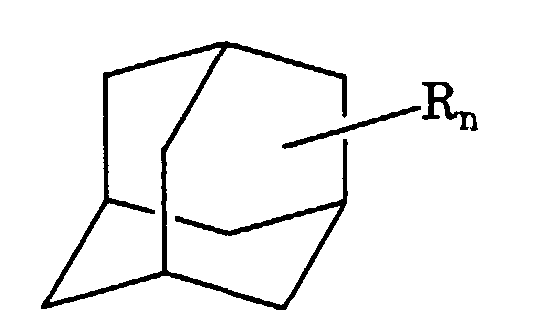
- Adamantane compounds used in the present invention as the starting materials are represented by the following formula: wherein R n is independently alkyl group, aryl group, cycloalkyl group, alkoxyl group, aryloxy group, acyloxy group or halogen atom, and suffix "n" is an integer from 0 to 14, with the proviso that at least two bridge-head carbons are not substituted by R n .
- the alkyl group may be C 1 -C 10 alkcyl such as methyl, ethyl, propyl, butyl and hexyl, preferably C 1 -C 6 alkyl and more preferably C 1 -C 4 alkyl.
- the aryl group may be phenyl and naphthyl, and the cycloalkyl may be cyclohexyl or cyclooctyl.
- the alkoxyl group may be C 1 -C 10 alkoxyl such as methoxyl, ethoxyl, propoxyl, butoxyl and hexyloxy.
- the aryloxy group may be phenoxyl.
- the acyloxy group may be C 2 -C 6 acyloxy such as acetyloxy, propionyloxy and butyryloxy.
- the halogen atom may be chlorine, bromine and iodine.
- the adamantanols referred to in the present invention may include adamantanemonol, adamantanediol, adamantanetriol and adamantanetetraol, and more specifically, 1-adamantanol, 1,3-adamantanediol, 1,2-adamantanediol, 1,4-adamantanediol, etc.
- the adamantanols may have substituent R n mentioned above.
- the adamantane compounds are hydroxylated by a ruthenium compound of high oxidation state of VI to VIII which is generated by the reaction of a ruthenium compound and hypochlorous acid or its salt.
- the ruthenium compound usable in the present invention may include metallic ruthenium, ruthenium dioxide(IV), ruthenium tetraoxide(VIII), ruthenium(III) hydroxide, ruthenium(III) chloride, ruthenium(III) bromide, ruthenium(III) iodide, ruthenium(IV) sulfate, and hydrates thereof.
- the ruthenium compound may be used alone or in combination of two or more.
- the ruthenium compound is used in an amount of 0.00 1 to 2 mol, preferably 0.01 to 2 mol, more preferably 0.01 to 0.4 mol, and particularly preferably 0.05 to 0.4 mol per one mol of the adamantane compound.
- An amount less than the above range decreases the reaction rate, and an amount more than the above range results in the use of a large amount of expensive ruthenium compound, each being undesirable for industrial process.
- the salt of hypochlorous acid may include sodium salt and potassium salt, and sodium hypochlorite is preferably used in view of easy availability and low cost.
- Hypochlorous acid and its salt are usually used in the form of aqueous solution having a concentration regulated within a range of 0.01 to 4.7 mmol/g, preferably 0.07 to 2 mmol/g.
- Commercially available is 12 % by weight (1.6 mmol/g) aqueous solution of sodium hypochlorite.
- concentration of aqueous solution of hypochlorous acid or its salt largely affects the selectivity of the adamantanediols.
- the concentration is lower than the above range, the extraction efficiency of the adamantanediols is poor due to a large amount of water phase.
- the increase in the concentration of the adamantanediols in the organic phase accelerates side reactions to reduce the yield.
- hypochlorous acid or its salt peracetic acid, periodic acid, bromic acid and salts thereof may be used.
- Hypochlorous acid or its salt is used in an amount of 0.5 to 4 mol, preferably 1 to 3 mol per one mol of the adamantane compound.
- the addition amount is larger than the above range, the selectivity from the adamantane compounds to the adamantanols is extremely low, and the reaction is inefficient due to a large amount of the adamantane compounds remaining unreacted when smaller than the above range.
- Hypochlorous acid or its salt may be added intermittently or continuously.
- the organic solvent usable in the present invention may be selected from solvents which are less compatible with water, capable of well dissolving the ruthenium compound with high oxidation state and inert to the reaction of the present invention. If highly compatible with water, the recovery of the solvent becomes costly, and the reaction hardly proceeds if the organic solvent is poor in dissolving the ruthenium compound with high oxidation state.
- organic solvent examples include alkyl halides such as dichloromethane, 1,2-dichloroethane, chloroform, carbon tetrachloride, 1,1,2-trichloroethane, 1,4-dichlorobutane, and 1,6-dichlorohexane; esters such as methyl acetate, ethyl acetate such as isopropyl acetate; aryl halides such as hexachlorobenzene and 1,1,1-trifluorotoluene; and hydrocarbons such as hexane, heptane and octane.
- alkyl halides such as dichloromethane, 1,2-dichloroethane, chloroform, carbon tetrachloride, 1,1,2-trichloroethane, 1,4-dichlorobutane, and 1,6-dichlorohexane
- esters such as methyl acetate, ethyl a
- 1,2-dichloroethane and ethyl acetate are preferable.
- the above organic solvent may be used alone or in combination of two or more.
- the amount of the solvent to be used is 0.1 to 20 parts by weight, preferably 1 to 10 parts by weight per one part by weight of the starting adamantane compound. When the amount is less than the above range, the reaction rate is extremely low because a major part of the adamantane compound is not dissolved in the organic phase. An amount exceeding the above range deteriorates the reaction efficiency.
- the weight ratio of water and organic solvent in two-phase solvent system is preferably 1:2 to 1:20.
- the reaction apparatus should have a pH controller to control the addition of an aqueous solution of hypochlorous add or its salt. If an aqueous solution of hypochlorous add or its salt is added at a constant rate without controlling the addition, side reactions frequently occur in later stage of the reaction due to increased concentration of hypochlorous acid or its salt in the water phase, this resulting in decrease of adamantanediols.
- the optimum reaction pH depends on reaction conditions such as the kind of ruthenium compound and the molar ratio of the adamantane compound to the ruthenium compound.
- the optimum reaction pH is around 3 when 15 g of ruthenium chloride(III) is used to 100 g of an adamantane compound, and around 7 when 5 g or ruthenium chloride(III) is used to 100 g of an adamantane compound.
- the reaction pH When the reaction pH is higher than the optimum pH in respective reaction conditions, the yield of adamantanediols decreases due to side reactions, while the reaction rate is low when the reaction pH is lower than the optimum pH because the formation of the ruthenium compound with high oxidation state is difficult due to lack of hypochlorous acid or its salt being added.
- the optimum pH range is 0.1 to 11 when the catalyst is used in the amount range mentioned above.
- the reaction temperature is 10 to 100°C, preferably 40 to 70°C.
- a reaction temperature lower than the above range extremely lowers the reaction rate.
- the reaction temperature is higher than the above range, the selectivity is decreased due to decomposition of hypochlorous acid or its salt and increased side reactions. Since the reaction is exothermic, the reaction apparatus is preferred to have a cooling device to maintain the reaction
- the reaction time is 200 to 500 minutes.
- the reaction may be carried out in any of known reaction apparatus equipped with a stirring device in either batch-wise or continuous manner.
- the organic solvent containing a large amount of the catalyst may be used, without separating the catalyst, in the next run of the reaction by allowing hypochlorous acid or its salt to remain in separating the water phase and the organic phase after the reaction.
- the catalyst may be reused after recovering from the organic solvent.
- a slight amount of the catalyst in the water phase may be recovered by extracting the water phase with an organic solvent usable as the reaction solvent. By the extraction, adamantanemonol in the water phase is also extracted. Then, crude adamantanediols are obtained by concentrating the resultant water phase.
- adamantanemonol is more soluble in the organic solvent than in water, whereas polyols such as adamantanediol, etc. is more soluble in water than in the organic solvent.
- the adamantanemonol and the polyols are separated in the reaction system. Namely, a substantial part of the adamantanemonol formed by the hydroxylation of the adamantane compound is dissolved in the organic phase.
- the adamantanemonol is further hydroxylated to form the adamantanediol to transfer into the water phase.
- the ruthenium in high oxidation state sewing as the catalyst is highly compatible with the organic solvent and a major part thereof is dissolved in the organic phase. Therefore, the adamantanediol transferred into the water phase is less subjected to further oxidation by the catalyst in the organic phase, thereby minimizing the formation of compounds having three or more hydroxyl groups. Thus, in the process of the present invention, the adamantanediol is produced in high selectivity.
- alcohol having 4 to 8 carbon atoms may be added to the reaction liquid to transfer the adamantanediols from the water phase into the organic phase.
- the hydroxylation of the adamantane compound is particularly preferred to be carried out in two-phase system of water and ethyl acetate. For example, when 12 % by weight aqueous solution of sodium hypochlorite is used, a part of the adamantanediols formed is not dissolved in the reaction liquid and suspended therein.
- the suspended adamantanediols come to be dissolved in the organic phase by the addition of alcohol, thereby making the adamantanediols extractable with organic solvent.
- the ruthenium compound remaking in the organic phase after the phase separation is reduced by the alcohol being added and precipitated.
- the precipitated ruthenium compound is recovered by centrifugal sedimentation. The recovered ruthenium compound is reused in the next run of reaction.
- the alcohol having 4 to 8 carbon atoms may include 1-butanol, 2-butanol, 2-methyl- 1-propanol, 1-pentanol, 3-pentanol, 3-methyl- 1-butanol, 2-methyl-2-butanol, 1-hexanol, 4-methyl-2-pentanol, 2-ethyl- 1-butanol, cyclohexanol, 1-heptanol, 1-octanol and benzyl alcohol.
- the alcohol is used in an amount of 4 to 50 parts by weight, preferably 5 to 30 parts by weight per one part by weight of the adamantanediols formed in the reaction liquid.
- amount is less than the above range, the adamantanediols are not completely dissolved to make the extraction inefficient.
- An amount exceeding the above range increases the amount of organic phase to result in a large energy cost for concentration to separate the adamantanediols.
- the extraction temperature is 10 to 80°C, preferably 20 to 70°C.
- the temperature is low than the above range, a larger amount of alcohol is required due to a reduced solubility of the adamantanediols.
- the temperature is higher than the above range, the extraction operation is impeded due to boiling of the organic solvent.
- the adamantanediols are separated from the organic phase by known methods such as filtration, condensation, distillation, crystallization and recrystallization.
- the ruthenium compound catalyst in the organic phase may be transferred into the water phase by adding alkali to the reaction liquid, thereby efficiently removing the ruthenium compound catalyst from the reaction liquid and facilitating the extraction of the adamantanediols.
- the ruthenium compound is transferred into the water phase by adding alkali to the reaction liquid in an amount sufficient for making the water phase pH 7 or more.
- the alkali usable may include metal hydroxides such as sodium hydroxide, potassium hydroxide, lithium hydroxide and barium hydroxide; and tetralkylammonium hydroxides such as tetramethylammonium hydroxide, tetraethylammonium hydroxide, tetrapropylammonium hydroxide and tetrabutylammonium hydroxide.
- metal hydroxides such as sodium hydroxide, potassium hydroxide, lithium hydroxide and barium hydroxide
- tetralkylammonium hydroxides such as tetramethylammonium hydroxide, tetraethylammonium hydroxide, tetrapropylammonium hydroxide and tetrabutylammonium hydroxide.
- tetralkylammonium hydroxides such as tetramethylammonium hydroxide, tetraethylammonium hydroxide, tetrapropyl
- the alcohol is added to the reaction liquid in the manner mentioned above.
- the adamantanediols and the ruthenium compound are separated into the organic phase and the water phase in the reaction system, respectively. From the organic phase, the adamantanediols are obtained. Since the ruthenium compound is reduced in the water phase and precipitated as black insolubles, the solid ruthenium compound is easily recovered by filtration and reused in the next run of reaction.
- the resultant reaction liquid was separated into the water phase and the dichloroethane phase by a separation funnel.
- the respective phases were analyzed by gas chromatography. The results showed that the water phase contained 0.03 g of 1-adamantanol and 2.25 g of 1,3-adamandanediol, and the dichloroethane phase contained 2.47 g of 1-adamantanol, 0.52 g of 1,3-adamantanediol and 0.14 g of 2-adamantanone.
- the conversion of adamantane was 100%, the selectivity of 1-adamantanol was 44% and the selectivity of 1,3-adamantanediol was 44%, each based on adamantane.
- Example 1 The procedures of Example 1 were repeated except that 100 g of aqueous solution of sodium hypochlorite (0.75 mmol/g) were added dropwise over 160 minutes while controlling the dropping speed so as to maintain the reaction pH not exceeding pH 7.
- the results of gas chromatographic analysis showed that the water phase contained 0.03 g of 1-adamantanol and 1.36 g of 1,3-adamandanediol, and the dichloroethane phase contained 2.01 g of 1-adamantanol, 0.43 g of 1,3-adamantanediol and 0.15 g of 2-adamantanone.
- the conversion of adamantane was 100%, the selectivity of 1-adamantanol was 36% and the selectivity of 1,3-adamantanediol was 28%, each based on adamantane.
- Example 1 The procedures of Example 1 were repeated except that the reaction temperature was changed to 40°C and 100 g of aqueous solution of sodium hypochlorite (0.75 mmol/g) were added dropwise over 242 minutes while controlling the dropping speed so as to maintain the reaction pH not exceeding pH 3.
- the results of gas chromatographic analysis showed that the water phase contained 0.04 g of 1-adamantanol and 1.38 g of 1,3-adamandanediol, and the dichloroethane phase contained 2.95g of 1-adamantanol, 0.40 g of 1,3-adamantanediol and 0.15 g of 2-adamantanone.
- the conversion of adamantane was 100%, the selectivity of 1-adamantanol was 53% and the selectivity of 1,3-adamantanediol was 29%, each based on adamantane.
- Example 1 The procedures of Example 1 were repeated except that 41.9 g of aqueous solution of sodium hypochlorite (1.79 mmol/g) were added dropwise over 100 minutes while controlling the dropping speed so as to maintain the reaction pH not exceeding pH 3. During the reaction, white solid matters attributable to 1,3-adamatanediol appeared.
- the results of gas chromatographic analysis showed that the water phase contained 0.02 g of 1-adamantanol and 0.83 g of 1,3-adamandanediol, and the dichloroethane phase contained 3.58 g of 1-adamantanol, 0.67 g of 1,3-adamantanediol and 0.17 g of 2-adamantanone.
- the conversion of adamantane was 100%, the selectivity of 1-adamantanol was 64% and the selectivity of 1,3-adamantanediol was 24%, each based on adamantane.
- Example 1 The procedures of Example 1 were repeated except that 33.4 g of 1,2-dichloroethane, 0.26 g (1.1 mmol as dihydrate) of RuCl 3 ⁇ n-hydrate and 3.2 g of water were used and 100 g of aqueous solution of sodium hypochlorite (0.75 mmol/g) were added dropwise over 176 minutes while controlling the dropping speed so as to maintain the reaction pH not exceeding pH 7.
- the results of gas chromatographic analysis showed that the water phase contained 0.07 g of 1-adamantanol and 2.30 g of 1,3-adamandanediol, and the dichloroethane phase contained 2.52 g of 1-adamantanol, 0.67 g of 1,3-adamantanediol and 0.35 g of 2-adamantanone.
- the conversion of adamantane was 100%, the selectivity of 1-adamantanol was 45% and the selectivity of 1,3-adamantanediol was 43%, each based on adamantane.
- the resultant reaction liquid was separated into the water phase and the ethyl acetate phase by a separation funnel.
- the respective phases are analyzed by gas chromatography.
- the results showed that the water phase contained 0.5 g of 1-adamantanol and 22.8 g of 1,3-adamandanediol, and the ethyl acetate phase contained 2.1 g of adamantane, 25.6 g of 1-adamantanol, 22.3 g of 1,3-adamantanediol and 3.1 g of 2-adamantanone.
- the conversion of adamantane was 97%, the selectivity of 1-adamantanol was 35% and the selectivity of 1,3-adamantanediol was 55%, each based on adamantane.
- Example 1 The procedures of Example 1 were repeated except that 29.8 g of 1,4-dichlorobutane, 0.14 g (0.58 mmol as dihydrate) of RuCl 3 ⁇ n-hydrate and 3.0 g of water were used and 203.3 g of aqueous solution of sodium hypochlorite (0.37 mmol/g) were added dropwise at 70°C over 125 minutes while controlling the dropping speed so as to maintain the reaction pH not exceeding pH 7.
- Example 8 The procedures of Example 8 were repeated except for using 1-pentanol in place of 1-hexanol to obtain 257 g of 1,3-adamantanediol crystals.
- Example 8 The procedures of Example 8 up to the addition of sodium hydroxide were repeated. Then, after adding 3200 ml of 1-butanol, the stirring was continued for 30 minutes at 40°C, followed by phase separation. The organic phase was concentrated and filtered to obtain 251 g of 1,3-admandanediol crystals.
- Example 10 The procedures of Example 10 were repeated except for using benzyl alcohol in place of 1-butanol to obtain 250 g of 1,3-adamantanediol crystals.
- the process of the present invention produces the adamatanols in high selectivity and high yields.
- the adamatanediols may be transferred into the organic phase and the catalyst may be transferred into the water phase. This enables the efficient separation and recovery of the adamantanediols and the catalyst by simplified operations and apparatus. Further, since the reaction products are separated in the reaction vessel, the number of components for the apparatus is reduced.
Landscapes
- Chemical & Material Sciences (AREA)
- Organic Chemistry (AREA)
- Chemical Kinetics & Catalysis (AREA)
- Organic Low-Molecular-Weight Compounds And Preparation Thereof (AREA)
Abstract
Description
Claims (17)
- A process of producing adamantanols comprising a step of hydroxylating an adamantane compound in the presence of a ruthenium compound and hypochlorous add or its salt.
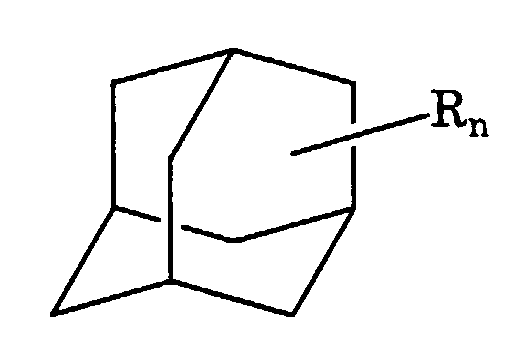
- The process according to claim 1, wherein said adamantane compound is represented by the following formula:wherein Rn is independently alkyl group, aryl group, cycloalkyl group, alkoxyl group, aryloxy group, acyloxy group or halogen atom, and suffix "n" is an integer from 0 to 14, with the proviso that at least two bridge-head carbons are not substituted by Rn.
- The process according to claim 1 or 2, wherein said hydroxylation is carried out in two-phase system of water and organic solvent.
- The process according to claim 3, wherein said organic solvent is selected from the group consisting of alkyl halides, aryl halides, esters and hydrocarbons.
- The process according to claim 3 or 4, said organic solvent is 1,2-dichloroethane or ethyl acetate.
- The process according to any one of claims 1 to 5, wherein said ruthenium compound is selected from the group consisting of metallic ruthenium, ruthenium dioxide, ruthenium hydroxide, ruthenium chloride, ruthenium bromide, ruthenium iodide, ruthenium sulfate, ruthenium tetraoxide and hydrates thereof.
- The process according to any one of claims 1 to 6, wherein said adamantane compound is hydroxylated at 10 to 100°C for 200 to 500 minutes in the presence of 0.001 to 2 mol of the ruthenium compound and 0.5 to 4 mol of hypochlorous acid or its salt, each based on one mol of said adamantane compound.
- The process according to claim 3, wherein an alcohol having 4 to 8 carbon atoms is added to a reaction liquid after the hydroxylation of the adamantane compound, thereby transferring adamantanediols into the organic phase.
- The process according to claim 8, wherein said organic solvent is selected from the group consisting of alkyl halides, aryl halides, esters and hydrocarbons.
- The process according to claim 8 or 9, said organic solvent is ethyl acetate.
- The process according to any one of claims 8 to 10, wherein said alcohol having 4 to 8 carbon atoms is selected from the group consisting of 1-butanol, 2-butanol, 2-methyl-1-propanol, 1-pentanol, 3-pentanol, 3-methyl-1-butanol, 2-methyl-2-butanol, 1-hexanol, 4-methyl-2-pentanol, 2-ethyl-1-butanol, cyclohexanol, 1-heptanol, 1-octanol and benzyl alcohol.
- The process according to any one of claims 8 to 11, said alcohol having 4 to 8 carbon atoms is selected from the group consisting of 1-butanol, 1-pentanol, 1-hexanol, 2-butanol, 2-methyl- 1-propanol, 3-methyl-1-butanol and benzyl alcohol.
- The process according to any one of claims 8 to 12, wherein an addition amount of said alcohol having 4 to 8 carbon atoms is 4 to 50 parts by weight based on one part by weight of the adamantanediols in the reaction liquid.
- The process according to any one of claims 8 to 13, wherein an alkali is added to the reaction liquid prior to the addition of said alcohol having 4 to 8 carbon atoms, thereby transferring the ruthenium compound into the water phase.
- The process according to claim 14, wherein said alkali is added in an amount sufficient for making the water phase to pH 7 or higher
- The process according to any one of claims 8 to 15, wherein said ruthenium compound is selected from the group consisting of metallic ruthenium, ruthenium dioxide, ruthenium hydroxide, ruthenium chloride, ruthenium bromide, ruthenium iodide, ruthenium sulfate, ruthenium tetraoxide and hydrates thereof.
- The process according to any one of claims 8 to 16, wherein said adamantane compound is hydroxylated at 10 to 100°C for 200 to 500 minutes in the presence of 0.001 to 2 mol of the ruthenium compound and 0.5 to 4 mol of hypochlorous acid or its salt, each based on one mol of said adamantane compound.
Applications Claiming Priority (4)
| Application Number | Priority Date | Filing Date | Title |
|---|---|---|---|
| JP02219899A JP4182307B2 (en) | 1999-01-29 | 1999-01-29 | Method for producing adamantanols |
| JP2219899 | 1999-01-29 | ||
| JP15345699 | 1999-06-01 | ||
| JP15345699A JP4386154B2 (en) | 1999-06-01 | 1999-06-01 | Method for producing adamantanediol |
Publications (2)
| Publication Number | Publication Date |
|---|---|
| EP1026140A1 true EP1026140A1 (en) | 2000-08-09 |
| EP1026140B1 EP1026140B1 (en) | 2003-09-24 |
Family
ID=26359378
Family Applications (1)
| Application Number | Title | Priority Date | Filing Date |
|---|---|---|---|
| EP00100253A Expired - Lifetime EP1026140B1 (en) | 1999-01-29 | 2000-01-18 | Process of producing adamantanols |
Country Status (3)
| Country | Link |
|---|---|
| US (1) | US6187967B1 (en) |
| EP (1) | EP1026140B1 (en) |
| DE (1) | DE60005417T2 (en) |
Cited By (3)
| Publication number | Priority date | Publication date | Assignee | Title |
|---|---|---|---|---|
| WO2003002496A1 (en) * | 2001-06-29 | 2003-01-09 | Idemitsu Petrochemical Co., Ltd. | Process for producing adamantanol and adamantanone |
| EP1191010A3 (en) * | 2000-09-22 | 2003-01-22 | Mitsubishi Gas Chemical Company, Inc. | Production of adamantanediols |
| CN103221369A (en) * | 2010-11-22 | 2013-07-24 | 三菱瓦斯化学株式会社 | Process for preparing adamantane polyol |
Families Citing this family (2)
| Publication number | Priority date | Publication date | Assignee | Title |
|---|---|---|---|---|
| JP4395926B2 (en) * | 1999-07-16 | 2010-01-13 | 三菱瓦斯化学株式会社 | Method for producing adamantanols |
| RU2448942C2 (en) * | 2010-07-28 | 2012-04-27 | Учреждение Российской Академии Наук Институт Нефтехимии И Катализа Ран | Method of producing adamantanol-1 |
Citations (2)
| Publication number | Priority date | Publication date | Assignee | Title |
|---|---|---|---|---|
| JPH0551334A (en) * | 1991-08-22 | 1993-03-02 | Sumitomo Chem Co Ltd | Production of ketone or tertiary alcohol |
| EP0844228A2 (en) * | 1996-11-21 | 1998-05-27 | Daicel Chemical Industries, Ltd. | Processes for separating adamantanols |
Family Cites Families (9)
| Publication number | Priority date | Publication date | Assignee | Title |
|---|---|---|---|---|
| JPH02104553A (en) | 1988-10-12 | 1990-04-17 | Idemitsu Kosan Co Ltd | Higher carboxylic acid triester of adamantanetriol and synthetic lubricating oil containing the same triester |
| JP2678784B2 (en) | 1989-01-26 | 1997-11-17 | 出光興産株式会社 | Method for producing adamantane triols |
| JPH03118342A (en) | 1989-10-02 | 1991-05-20 | Idemitsu Kosan Co Ltd | Production of adamantanediols |
| JP3118342B2 (en) | 1993-03-17 | 2000-12-18 | 新日本製鐵株式会社 | Method of heating titanium and titanium alloy rolled material |
| JP3434034B2 (en) | 1994-08-02 | 2003-08-04 | ダイセル化学工業株式会社 | Oxidation catalyst and oxidation method using the same |
| JPH0987216A (en) | 1995-09-21 | 1997-03-31 | Sumitomo Chem Co Ltd | Method for producing alcohols and ketones |
| JP3911060B2 (en) | 1996-02-07 | 2007-05-09 | ダイセル化学工業株式会社 | Oxidation catalyst system and oxidation method using the same |
| JPH10204014A (en) | 1996-11-21 | 1998-08-04 | Daicel Chem Ind Ltd | Separation of adamantanols |
| JP4756719B2 (en) | 1997-02-17 | 2011-08-24 | ダイセル化学工業株式会社 | Oxidation catalyst system, oxidation method and oxide production method |
-
2000
- 2000-01-18 EP EP00100253A patent/EP1026140B1/en not_active Expired - Lifetime
- 2000-01-18 DE DE60005417T patent/DE60005417T2/en not_active Expired - Lifetime
- 2000-01-28 US US09/493,207 patent/US6187967B1/en not_active Expired - Lifetime
Patent Citations (2)
| Publication number | Priority date | Publication date | Assignee | Title |
|---|---|---|---|---|
| JPH0551334A (en) * | 1991-08-22 | 1993-03-02 | Sumitomo Chem Co Ltd | Production of ketone or tertiary alcohol |
| EP0844228A2 (en) * | 1996-11-21 | 1998-05-27 | Daicel Chemical Industries, Ltd. | Processes for separating adamantanols |
Non-Patent Citations (2)
| Title |
|---|
| BRESSAN M ET AL: "Selective oxidation of alkanes and ethers mediated by ruthenium(II) complexes", J. CHEM. SOC., CHEM. COMMUN. (JCCCAT,00224936);1989; (7); PP.421-3, Univ. Padova;Dip. Chim. Inorg.; Padua; 35131; Italy (IT), XP002137291 * |
| DATABASE WPI Section Ch Week 199314, Derwent World Patents Index; Class B05, AN 1993-112726, XP002137292 * |
Cited By (7)
| Publication number | Priority date | Publication date | Assignee | Title |
|---|---|---|---|---|
| EP1191010A3 (en) * | 2000-09-22 | 2003-01-22 | Mitsubishi Gas Chemical Company, Inc. | Production of adamantanediols |
| US6570042B2 (en) | 2000-09-22 | 2003-05-27 | Mitsubishi Gas Chemical Company, Inc. | Production of adamantanediols |
| WO2003002496A1 (en) * | 2001-06-29 | 2003-01-09 | Idemitsu Petrochemical Co., Ltd. | Process for producing adamantanol and adamantanone |
| US6881870B2 (en) | 2001-06-29 | 2005-04-19 | Idemitsu Kosan Co., Ltd. | Process for producing adamantanol and adamantanone |
| CN103221369A (en) * | 2010-11-22 | 2013-07-24 | 三菱瓦斯化学株式会社 | Process for preparing adamantane polyol |
| EP2644586A4 (en) * | 2010-11-22 | 2014-04-30 | Mitsubishi Gas Chemical Co | Process for preparing adamantane polyol |
| CN103221369B (en) * | 2010-11-22 | 2015-07-22 | 三菱瓦斯化学株式会社 | Process for preparing adamantane polyol |
Also Published As
| Publication number | Publication date |
|---|---|
| US6187967B1 (en) | 2001-02-13 |
| EP1026140B1 (en) | 2003-09-24 |
| DE60005417T2 (en) | 2004-05-06 |
| DE60005417D1 (en) | 2003-10-30 |
Similar Documents
| Publication | Publication Date | Title |
|---|---|---|
| EP1770088B1 (en) | Process for preparing 5-methyl-2-furfural | |
| US7547777B2 (en) | Penam crystals and process for producing the same | |
| US6187967B1 (en) | Process of producing adamantanols | |
| US20140200355A1 (en) | Method for Preparing Optically Pure (-)-Clausenamide Compound | |
| JP4182307B2 (en) | Method for producing adamantanols | |
| JP4553091B2 (en) | Method for producing adamantanediol | |
| EP1069103B1 (en) | Process for producing adamantanols | |
| JP2001335519A (en) | Method for producing adamantane polyols | |
| JP2000344696A (en) | Method for producing adamantanediols | |
| EP1191010B1 (en) | Production of adamantanediols | |
| JP4171879B2 (en) | Method for producing adamantanediol | |
| JP4397990B2 (en) | Purification method of 3-alkylflavanonol derivatives | |
| JP4010078B2 (en) | Method for separating adamantane polyols | |
| EP1970369B1 (en) | Method for producing purified formylcyclopropane compound and intermediate of such formylcyclopropane compound | |
| JPH0678265B2 (en) | Process for producing 1,4-bis- (4-hydroxybenzoyl) -benzene | |
| JP4584625B2 (en) | Process for producing 1,2-cis-2-fluorocyclopropane-1-carboxylic acid esters | |
| EP1463706B1 (en) | Process for production of 3,3-dimethyl-2-formylcyclopropanecarboxylic acid derivatives | |
| JP2005320280A (en) | Method for producing adamantanediol | |
| GB2051067A (en) | Process for the Preparation of 3,3-dimethyl-allyl Alcohol | |
| JP2874963B2 (en) | Production method of allyl bromides | |
| EP4048657A1 (en) | Processes for making tetrazolinone compounds | |
| JP4825969B2 (en) | Method for producing tertiary alcohol | |
| JP2010265210A (en) | Method for producing adamantanols | |
| JP2005306802A (en) | Method for producing adamantanediol | |
| WO2005028449A1 (en) | Improved process for the manufacture of 1,2-disubstituted hexahydropyridazine-3-carboxylic acids and esters thereof |
Legal Events
| Date | Code | Title | Description |
|---|---|---|---|
| PUAI | Public reference made under article 153(3) epc to a published international application that has entered the european phase |
Free format text: ORIGINAL CODE: 0009012 |
|
| AK | Designated contracting states |
Kind code of ref document: A1 Designated state(s): DE FR GB IT |
|
| AX | Request for extension of the european patent |
Free format text: AL;LT;LV;MK;RO;SI |
|
| 17P | Request for examination filed |
Effective date: 20010115 |
|
| AKX | Designation fees paid |
Free format text: DE FR GB IT |
|
| 17Q | First examination report despatched |
Effective date: 20011002 |
|
| GRAH | Despatch of communication of intention to grant a patent |
Free format text: ORIGINAL CODE: EPIDOS IGRA |
|
| GRAS | Grant fee paid |
Free format text: ORIGINAL CODE: EPIDOSNIGR3 |
|
| GRAA | (expected) grant |
Free format text: ORIGINAL CODE: 0009210 |
|
| AK | Designated contracting states |
Kind code of ref document: B1 Designated state(s): DE FR GB IT |
|
| REG | Reference to a national code |
Ref country code: GB Ref legal event code: FG4D |
|
| REF | Corresponds to: |
Ref document number: 60005417 Country of ref document: DE Date of ref document: 20031030 Kind code of ref document: P |
|
| ET | Fr: translation filed | ||
| PLBE | No opposition filed within time limit |
Free format text: ORIGINAL CODE: 0009261 |
|
| STAA | Information on the status of an ep patent application or granted ep patent |
Free format text: STATUS: NO OPPOSITION FILED WITHIN TIME LIMIT |
|
| 26N | No opposition filed |
Effective date: 20040625 |
|
| PG25 | Lapsed in a contracting state [announced via postgrant information from national office to epo] |
Ref country code: IT Free format text: LAPSE BECAUSE OF NON-PAYMENT OF DUE FEES Effective date: 20080118 |
|
| REG | Reference to a national code |
Ref country code: FR Ref legal event code: PLFP Year of fee payment: 17 |
|
| REG | Reference to a national code |
Ref country code: FR Ref legal event code: PLFP Year of fee payment: 18 |
|
| REG | Reference to a national code |
Ref country code: FR Ref legal event code: PLFP Year of fee payment: 19 |
|
| PGFP | Annual fee paid to national office [announced via postgrant information from national office to epo] |
Ref country code: FR Payment date: 20181213 Year of fee payment: 20 |
|
| PGFP | Annual fee paid to national office [announced via postgrant information from national office to epo] |
Ref country code: IT Payment date: 20190121 Year of fee payment: 20 Ref country code: GB Payment date: 20190116 Year of fee payment: 20 Ref country code: DE Payment date: 20190108 Year of fee payment: 20 |
|
| REG | Reference to a national code |
Ref country code: DE Ref legal event code: R071 Ref document number: 60005417 Country of ref document: DE |
|
| REG | Reference to a national code |
Ref country code: GB Ref legal event code: PE20 Expiry date: 20200117 |
|
| PG25 | Lapsed in a contracting state [announced via postgrant information from national office to epo] |
Ref country code: GB Free format text: LAPSE BECAUSE OF EXPIRATION OF PROTECTION Effective date: 20200117 |