EP1024911B1 - Method for pneumatic isostatic processing of a workpiece - Google Patents
Method for pneumatic isostatic processing of a workpiece Download PDFInfo
- Publication number
- EP1024911B1 EP1024911B1 EP98945811A EP98945811A EP1024911B1 EP 1024911 B1 EP1024911 B1 EP 1024911B1 EP 98945811 A EP98945811 A EP 98945811A EP 98945811 A EP98945811 A EP 98945811A EP 1024911 B1 EP1024911 B1 EP 1024911B1
- Authority
- EP
- European Patent Office
- Prior art keywords
- workpiece
- pressure
- applying
- pressure vessel
- heating
- Prior art date
- Legal status (The legal status is an assumption and is not a legal conclusion. Google has not performed a legal analysis and makes no representation as to the accuracy of the status listed.)
- Expired - Lifetime
Links
- 238000000034 method Methods 0.000 title claims abstract description 127
- 238000012545 processing Methods 0.000 title claims abstract description 17
- 239000000463 material Substances 0.000 claims abstract description 31
- 238000005242 forging Methods 0.000 claims abstract description 28
- 238000010521 absorption reaction Methods 0.000 claims abstract description 5
- 238000010438 heat treatment Methods 0.000 claims description 38
- 238000000576 coating method Methods 0.000 claims description 31
- 239000007789 gas Substances 0.000 claims description 20
- PXHVJJICTQNCMI-UHFFFAOYSA-N Nickel Chemical compound [Ni] PXHVJJICTQNCMI-UHFFFAOYSA-N 0.000 claims description 18
- 239000011248 coating agent Substances 0.000 claims description 15
- 238000005266 casting Methods 0.000 claims description 14
- XKRFYHLGVUSROY-UHFFFAOYSA-N Argon Chemical compound [Ar] XKRFYHLGVUSROY-UHFFFAOYSA-N 0.000 claims description 12
- 229910052751 metal Inorganic materials 0.000 claims description 7
- 239000002184 metal Substances 0.000 claims description 7
- 238000003825 pressing Methods 0.000 claims description 7
- IJGRMHOSHXDMSA-UHFFFAOYSA-N Atomic nitrogen Chemical compound N#N IJGRMHOSHXDMSA-UHFFFAOYSA-N 0.000 claims description 6
- XEEYBQQBJWHFJM-UHFFFAOYSA-N Iron Chemical compound [Fe] XEEYBQQBJWHFJM-UHFFFAOYSA-N 0.000 claims description 6
- 229910052786 argon Inorganic materials 0.000 claims description 6
- 229910052759 nickel Inorganic materials 0.000 claims description 6
- RYGMFSIKBFXOCR-UHFFFAOYSA-N Copper Chemical compound [Cu] RYGMFSIKBFXOCR-UHFFFAOYSA-N 0.000 claims description 5
- 239000010949 copper Substances 0.000 claims description 5
- 239000011148 porous material Substances 0.000 claims description 5
- RTAQQCXQSZGOHL-UHFFFAOYSA-N Titanium Chemical compound [Ti] RTAQQCXQSZGOHL-UHFFFAOYSA-N 0.000 claims description 4
- 229910052802 copper Inorganic materials 0.000 claims description 4
- 239000012530 fluid Substances 0.000 claims description 4
- 239000000203 mixture Substances 0.000 claims description 4
- 239000010936 titanium Substances 0.000 claims description 4
- VYZAMTAEIAYCRO-UHFFFAOYSA-N Chromium Chemical compound [Cr] VYZAMTAEIAYCRO-UHFFFAOYSA-N 0.000 claims description 3
- 239000011651 chromium Substances 0.000 claims description 3
- 238000005056 compaction Methods 0.000 claims description 3
- 229910052742 iron Inorganic materials 0.000 claims description 3
- 229910052757 nitrogen Inorganic materials 0.000 claims description 3
- 239000012254 powdered material Substances 0.000 claims description 3
- 238000005245 sintering Methods 0.000 claims description 3
- 238000005229 chemical vapour deposition Methods 0.000 claims description 2
- 229910052804 chromium Inorganic materials 0.000 claims description 2
- 238000009694 cold isostatic pressing Methods 0.000 claims description 2
- 238000007723 die pressing method Methods 0.000 claims description 2
- 239000011888 foil Substances 0.000 claims description 2
- 238000001746 injection moulding Methods 0.000 claims description 2
- 229910044991 metal oxide Inorganic materials 0.000 claims description 2
- 150000004706 metal oxides Chemical class 0.000 claims description 2
- 238000005240 physical vapour deposition Methods 0.000 claims description 2
- 238000007750 plasma spraying Methods 0.000 claims description 2
- 238000007747 plating Methods 0.000 claims description 2
- 229910052719 titanium Inorganic materials 0.000 claims description 2
- 238000007789 sealing Methods 0.000 claims 3
- 239000007769 metal material Substances 0.000 claims 2
- 239000012467 final product Substances 0.000 claims 1
- 239000000047 product Substances 0.000 claims 1
- 230000002040 relaxant effect Effects 0.000 claims 1
- 230000000087 stabilizing effect Effects 0.000 claims 1
- 238000000280 densification Methods 0.000 abstract description 10
- 238000001513 hot isostatic pressing Methods 0.000 description 14
- 230000007547 defect Effects 0.000 description 11
- 230000035876 healing Effects 0.000 description 8
- 238000012546 transfer Methods 0.000 description 8
- 229910000851 Alloy steel Inorganic materials 0.000 description 7
- 238000004519 manufacturing process Methods 0.000 description 7
- 239000000843 powder Substances 0.000 description 6
- 229910001069 Ti alloy Inorganic materials 0.000 description 5
- 238000005538 encapsulation Methods 0.000 description 5
- 229910000990 Ni alloy Inorganic materials 0.000 description 4
- 238000007596 consolidation process Methods 0.000 description 4
- XAGFODPZIPBFFR-UHFFFAOYSA-N aluminium Chemical compound [Al] XAGFODPZIPBFFR-UHFFFAOYSA-N 0.000 description 3
- 239000002131 composite material Substances 0.000 description 3
- 238000010586 diagram Methods 0.000 description 3
- 238000011068 loading method Methods 0.000 description 3
- 239000012255 powdered metal Substances 0.000 description 3
- 238000005086 pumping Methods 0.000 description 3
- 229910000838 Al alloy Inorganic materials 0.000 description 2
- 229910001182 Mo alloy Inorganic materials 0.000 description 2
- 229910000691 Re alloy Inorganic materials 0.000 description 2
- 229910001362 Ta alloys Inorganic materials 0.000 description 2
- 230000001133 acceleration Effects 0.000 description 2
- 229910045601 alloy Inorganic materials 0.000 description 2
- 239000000956 alloy Substances 0.000 description 2
- 229910052782 aluminium Inorganic materials 0.000 description 2
- 238000005422 blasting Methods 0.000 description 2
- 238000009792 diffusion process Methods 0.000 description 2
- 238000011065 in-situ storage Methods 0.000 description 2
- 239000011156 metal matrix composite Substances 0.000 description 2
- 229920000642 polymer Chemical class 0.000 description 2
- 238000002203 pretreatment Methods 0.000 description 2
- WUAPFZMCVAUBPE-UHFFFAOYSA-N rhenium atom Chemical compound [Re] WUAPFZMCVAUBPE-UHFFFAOYSA-N 0.000 description 2
- 239000010959 steel Substances 0.000 description 2
- 238000003860 storage Methods 0.000 description 2
- 230000000153 supplemental effect Effects 0.000 description 2
- GUVRBAGPIYLISA-UHFFFAOYSA-N tantalum atom Chemical compound [Ta] GUVRBAGPIYLISA-UHFFFAOYSA-N 0.000 description 2
- 238000012360 testing method Methods 0.000 description 2
- 229910000599 Cr alloy Inorganic materials 0.000 description 1
- 229910000881 Cu alloy Inorganic materials 0.000 description 1
- ATJFFYVFTNAWJD-UHFFFAOYSA-N Tin Chemical compound [Sn] ATJFFYVFTNAWJD-UHFFFAOYSA-N 0.000 description 1
- 238000013459 approach Methods 0.000 description 1
- 239000000919 ceramic Substances 0.000 description 1
- 238000006243 chemical reaction Methods 0.000 description 1
- 238000007796 conventional method Methods 0.000 description 1
- 238000001816 cooling Methods 0.000 description 1
- 230000001351 cycling effect Effects 0.000 description 1
- 230000003247 decreasing effect Effects 0.000 description 1
- 238000011161 development Methods 0.000 description 1
- 230000018109 developmental process Effects 0.000 description 1
- 238000003618 dip coating Methods 0.000 description 1
- 230000000694 effects Effects 0.000 description 1
- 238000005265 energy consumption Methods 0.000 description 1
- 238000000462 isostatic pressing Methods 0.000 description 1
- 238000009533 lab test Methods 0.000 description 1
- 239000011159 matrix material Substances 0.000 description 1
- 238000009996 mechanical pre-treatment Methods 0.000 description 1
- 150000002739 metals Chemical class 0.000 description 1
- 238000012986 modification Methods 0.000 description 1
- 230000004048 modification Effects 0.000 description 1
- 239000012768 molten material Substances 0.000 description 1
- 230000003647 oxidation Effects 0.000 description 1
- 238000007254 oxidation reaction Methods 0.000 description 1
- RVTZCBVAJQQJTK-UHFFFAOYSA-N oxygen(2-);zirconium(4+) Chemical compound [O-2].[O-2].[Zr+4] RVTZCBVAJQQJTK-UHFFFAOYSA-N 0.000 description 1
- 238000009931 pascalization Methods 0.000 description 1
- 238000004663 powder metallurgy Methods 0.000 description 1
- 238000007493 shaping process Methods 0.000 description 1
- 239000007921 spray Substances 0.000 description 1
- 238000005507 spraying Methods 0.000 description 1
- 239000011135 tin Substances 0.000 description 1
- 229910052718 tin Inorganic materials 0.000 description 1
- 239000011800 void material Substances 0.000 description 1
- 229910001928 zirconium oxide Inorganic materials 0.000 description 1
Images
Classifications
-
- C—CHEMISTRY; METALLURGY
- C22—METALLURGY; FERROUS OR NON-FERROUS ALLOYS; TREATMENT OF ALLOYS OR NON-FERROUS METALS
- C22F—CHANGING THE PHYSICAL STRUCTURE OF NON-FERROUS METALS AND NON-FERROUS ALLOYS
- C22F1/00—Changing the physical structure of non-ferrous metals or alloys by heat treatment or by hot or cold working
- C22F1/10—Changing the physical structure of non-ferrous metals or alloys by heat treatment or by hot or cold working of nickel or cobalt or alloys based thereon
-
- B—PERFORMING OPERATIONS; TRANSPORTING
- B22—CASTING; POWDER METALLURGY
- B22D—CASTING OF METALS; CASTING OF OTHER SUBSTANCES BY THE SAME PROCESSES OR DEVICES
- B22D31/00—Cutting-off surplus material, e.g. gates; Cleaning and working on castings
- B22D31/002—Cleaning, working on castings
-
- B—PERFORMING OPERATIONS; TRANSPORTING
- B22—CASTING; POWDER METALLURGY
- B22F—WORKING METALLIC POWDER; MANUFACTURE OF ARTICLES FROM METALLIC POWDER; MAKING METALLIC POWDER; APPARATUS OR DEVICES SPECIALLY ADAPTED FOR METALLIC POWDER
- B22F3/00—Manufacture of workpieces or articles from metallic powder characterised by the manner of compacting or sintering; Apparatus specially adapted therefor ; Presses and furnaces
- B22F3/12—Both compacting and sintering
- B22F3/14—Both compacting and sintering simultaneously
- B22F3/15—Hot isostatic pressing
-
- C—CHEMISTRY; METALLURGY
- C21—METALLURGY OF IRON
- C21D—MODIFYING THE PHYSICAL STRUCTURE OF FERROUS METALS; GENERAL DEVICES FOR HEAT TREATMENT OF FERROUS OR NON-FERROUS METALS OR ALLOYS; MAKING METAL MALLEABLE, e.g. BY DECARBURISATION OR TEMPERING
- C21D10/00—Modifying the physical properties by methods other than heat treatment or deformation
-
- C—CHEMISTRY; METALLURGY
- C21—METALLURGY OF IRON
- C21D—MODIFYING THE PHYSICAL STRUCTURE OF FERROUS METALS; GENERAL DEVICES FOR HEAT TREATMENT OF FERROUS OR NON-FERROUS METALS OR ALLOYS; MAKING METAL MALLEABLE, e.g. BY DECARBURISATION OR TEMPERING
- C21D7/00—Modifying the physical properties of iron or steel by deformation
- C21D7/13—Modifying the physical properties of iron or steel by deformation by hot working
-
- C—CHEMISTRY; METALLURGY
- C22—METALLURGY; FERROUS OR NON-FERROUS ALLOYS; TREATMENT OF ALLOYS OR NON-FERROUS METALS
- C22F—CHANGING THE PHYSICAL STRUCTURE OF NON-FERROUS METALS AND NON-FERROUS ALLOYS
- C22F1/00—Changing the physical structure of non-ferrous metals or alloys by heat treatment or by hot or cold working
Definitions
- the present invention relates to the field of high pressure processing of materials and more specifically to the use of isostatic pressure in combination with high temperatures to densify materials and to form near net shape products. More specifically, this invention relates to a method for processing a workpiece using pneumatic isostatic forging techniques in-line with a conventional manufacturing process.
- HIP hot isostatic pressing
- Conventional hot isostatic pressing has been utilized to compact and/or densify powders, ceramics, composites and metal powder components.
- Conventional HIP processes generally combine high heat and isostatic pressure to compact and/or densify a particular workpiece.
- Significant drawbacks to HIP processes include at least the following: (1) the workpiece must be held at elevated temperatures and pressures for an extended amount of time; (2) the workpieces must occupy the HIP press for extended amounts of time thereby reducing throughput and increasing processing costs; and (3) in most cases, the final void closure is by creep and/or diffusion rather than plastic deformation resulting from stress.
- HIP processes, as well as other compaction processes are performed on workpieces after manufacture of the same. Thus, two separate processes are required to achieve a densified workpiece using conventional techniques.
- U.S. Patent 5,110,542 discloses a device for rapid densification of materials which utilizes heat elements to increase the pressure within the pressure vessel and separate heating elements to raise the temperature of the workpiece.
- the rapidity at which the workpiece is heated and subsequently cooled is limited by the constraints of what the equipment will practically allow.
- the useable capacity of the device is limited by the use of two chambers and an internal furnace. Further, the times for loading and unloading the workpiece are greater than the cycling times.
- Another object of the present invention is to provide a method as above whereby a workpiece is densified within a pressure vessel configured such that a substantial portion of the chamber therein is occupied by the workpiece.
- a coating is applied to the surfaces of the workpiece prior to the heating step.
- the surfaces of the workpiece are either mechanically pretreated or partially sealed using a flash microwave heating technique prior to the heating step.
- the process of the present invention may be used to pneumatically isostatically forge powdered materials and castings.
- the workpiece is transferred from a heating apparatus used to perform the heating step to the pressure vessel via a thermal baffle so as to minimize the loss of heat during the transfer step.
- the process of the present invention has the goal of consolidating materials so as to form near net shape products.
- the process known as pneumatic isostatic forging (PIF) utilizes high strain rate (plastic) deformation of the material forming the workpiece as the mechanism of consolidation or densification.
- high strain rate means a strain rate in the range of from about 10% to about 20% produced over a time in the range of from about 1 second to about 120 seconds, and most preferably over a time in the range of from about 1 second to about 20 seconds.
- the process utilizes a gaseous medium to generate triaxial compaction forces of substantially equal magnitude which are then applied to the workpiece to thereby substantially uniformly consolidate it.
- a pneumatic or gas pressure force permits excellent control of the rate of pressurization and therefore, the speed of deformation of the material.
- the use of a gas medium also provides a reliable, non-mechanical touching of the workpiece to provide final shaping.
- a gas pressing medium such as argon remains stable at temperatures in excess of 2000°C.
- the underlying principle of the present invention is to rapidly collapse the surface of the material in such a manner as not to lose the differential driving force as a result of gas absorption.
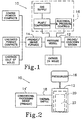
- the pneumatic isostatic forging process 10 of the present invention provides rapid input and output when processing a workpiece 22.
- the process 10 utilizes heat from a previous processing step 14, 14' in which the workpiece has been heated to reduce cycle time.
- the workpieces 22 to be forged may include coated powder compacts, uncoated powder compacts, and castings.
- the workpieces 22 to be forged are heated externally of a pressure vessel 12 where the forging operation is to take place.
- the source of heat may be a pre-sinter, debinder, or high temperature coating furnace 14.
- the source of heat may be a casting furnace (not shown) such as one utilized during the healing of defects.
- the pressure vessel 12 has a pressurizer 16 including a pump compressor (not shown) for pressurizing the pressure vessel with a gas.
- the pressure within the pressure vessel 12 may be variably controlled.
- the pressure vessel 12 is preferably constructed to withstand pressures of at least about 60,000 psi.
- a pumping system capable of generating pressures up to at least about 60,000 psi within about 8 to about 30 seconds has particular utility in the process of the present invention. It should be noted however that the present invention is not limited to these specifications as it is foreseeable that materials other than those mentioned herein will perform more efficiently at higher or lower pressures.
- the pressure vessel 12 has a chamber 20 which is configured such that the workpiece 22 and any fixture(s) (not shown) associated therewith occupy approximately eighty to ninety percent (80% - 90%) of the volume therein.
- temperature and pressure requirements are reduced. Most effected is the temperature requirement in that minimal surrounding gas is heated by the workpiece 22.
- the workpiece 22 is better able to retain its temperature and a more efficient process is obtained.
- the workpiece 22 is heated by the heating means external to the pressure vessel 12 to a temperature at which the flow stress requirement of the material forming the workpiece is reduced below the level of stress to be generated by the forging gas medium.
- the temperature to which the workpiece is heated in the external heating means should be such that the workpiece can be transferred, while in a heated condition, to the pressure vessel 12 and still have a residual temperature adequate to keep the flow stress below the driving stress of the gaseous medium until consolidation is achieved.
- the workpiece is held at the desired temperature for a time sufficient to heat fully through the workpiece, thermally stabilize the workpiece, and achieve thermal equilibrium. Obviously, the desired temperature will vary for each different material. Typical temperatures include 525°C for aluminum, 900°C for copper, and 1225°C for iron.
- the workpiece As previously mentioned, after the workpiece has been heated, it is transferred to a pressure vessel chamber 20. In certain situations, it may be desirable to transfer the heated workpiece 22 to the chamber 20 via a thermal baffle 18 as shown in Figure 2.
- the heated workpiece is subjected to a pneumatic gas pressure force having a target pressure in the range of from about 10,000 psi to about 60,000 psi. While resident in the pressure vessel chamber 20, the workpiece 22 is not subjected to any application of heat; thus distinguishing the process of the present invention from hot isostatic processes.
- the mechanism for consolidating or densifying the workpiece 22 is the production of a high strain rate in the material which results in plastic deformation thereof.
- the high strain rate is accomplished by rapid pressurization of the workpiece to pressure levels as high as 60,000 psi.
- pressure is applied to the surfaces of the workpiece 22 via a gaseous medium such as nitrogen, argon, and mixtures thereof. It has been found that rapid pressurization of the gaseous medium densifies it in such a manner that there is limited absorption of the gas by the workpiece. As a result, there is a net pressure force acting on the exterior surface(s) of the workpiece which consolidates the material forming the workpiece.
- pressure ramp rates ranging from about 300 to about 4000 psi/sec are useful in performing the process of the present invention.
- a typical HIP process utilizes an average pressure rate of 5 to 8 psi/sec. It is also desirable to reach the target pressure for the material being processed within about 15 seconds from the time gas flow begins.
- a particularly useful pressure ramp rate range has been found to be from about 300 psi/sec to about 1500 psi/sec.
- a most preferred pressure ramp rate is in the range of from about 300 psi/sec. to about 1200 psi/sec.
- the pressure ramp rate is accomplished by a combination of an initial pressure pulse resulting from initialization of the gas pumping system and a steep acceleration of pressure to a designated pressure level.
- the pressure rate curve during the acceleration of pressure phase is preferably in uniform segments, i.e. piecewise linear increasing from about 600 psi/sec to about 750 psi/sec.
- the pressure ramp rate be in the range of from about 650 psi/sec to about 800 psi/sec. At a pressure ramp rate in this range, the gas densifies and becomes less absorptive.
- the pressure in the vessel may be raised to a pressure in the range of from about 20,000 psi to about 60,000 psi.
- One approach which may be utilized to achieve rapid pressurization is to provide an accumulator to assist the pumping process.
- the pressure quickly rises to an offset condition with that of the gas storage system.
- Supplemental storage could be coupled as an accumulator that could be used to provide an additional pressure pulse at the beginning of the cycle. This would accelerate pressurization of the system, especially in terms of reaching 20,000 psi rapidly.
- a preferred target pressure range for the process of the present invention is from about 45,000 psi to about 60,000 psi.
- the pressure is relaxed.
- the pressure is relaxed within about 10 to about 60 seconds.
- An entire forging cycle involves the steps of (1) loading the workpiece 22 into the pressure vessel 12; (2) establishing a closure seal within the pressure vessel 12; (3) pressurizing the vessel 12 using rapid pressurization; (4) maintaining the pressure within the vessel 12; (5) depressurizing the vessel 12; and (6) unloading the densified workpiece 22.
- the entire cycle ranges from 1 to 5 minutes and is broken down as follows: step (1): approximately 10 - 45 seconds; step (2) approximately 15 - 20 seconds; steps (3) and (4) 10 - 120 seconds; step (5) 10 seconds; and step (6) approximately 20 - 30 seconds.
- the process described herein may utilize the latent heat from a previous processing step so that there is no need for heating the workpiece 22 within the pressure vessel 12.
- the useful capacity of the pressure vessel may be maximized.
- latent heat includes systems where the workpiece 22 is formed from molten material, where the workpiece is hot-rolled, annealed or otherwise heat treated.
- workpieces 22 that have been heat treated are first cooled before handling to remove excess material, to be shipped, or otherwise handled.
- the heated workpiece is transferred to the pressure vessel in a heated state.
- the workpiece 22 is at a homogeneous temperature throughout prior to the application of the isostatic forging pressure, permitting isostatic application of pressure and uniform plastic deformation of the workpiece, thereby permitting the use of temperatures ranging from 50 to 400°C lower than the temperatures required by other processes. Further, the hold times at the temperature and the high isostatic forging pressures are typically from about 8 to about 30 seconds. This permits microstructural control of the workpiece 22 and uniformity of optimized properties throughout the workpiece.
- the vessel 12 is pressurized using rapid pressurization which provides several benefits.
- rapid pressurization accomplishes a sufficiently high strain rate to assist in the final closure of voids within the workpiece 22.
- the high strain rate closes the voids so that the gaseous medium does not penetrate into the workpiece and upset the desired pressure differential.
- rapid pressurization serves to densify gas within the vessel 12, thereby increasing the viscosity of the gas in order to substantially reduce or altogether prevent absorption of the gas into the workpiece 22.
- a differential is maintained between the internal pressure and the surface pressure of the workpiece 22, thereby allowing plastic deformation to take place through a "collapsing" of the material, or removal of the voids.
- rapid pressurization forces heat from the workpiece 22 thereby reducing the cool-down time required before opening the vessel 12 to remove the densified workpiece 22.
- encapsulation and pressure transfer media are not ordinarily required. Conventionally, both encapsulation and pressure transfer media are required if the workpiece has surface connected porosity. Thin coatings and pre-treatment processes may be used to avoid encapsulation requirements. A variety of coatings have been developed for different materials and can be applied as metallic, organic, oxide and combination coatings. The combination of rapid processing and coating developments permit densification and defect healing that could not be accomplished by longer cycles or with workpieces 22 heated from the outside toward the center where the coatings may diffuse extensively into the workpiece 22 or fail during heating and pressurization due to thermal expansion mismatch.
- coatings are applied to lots of components in a separate operation prior to being partially sintered in the preheat furnace before densification by the present method.
- These coatings are thin metal coatings, such as nickel, applied in thicknesses of 0.001 inches or less, by an electroless nickel coating process or other conventional plating process.
- Other thin metal coatings of iron, chromium, titanium, copper, alloys of these metals; and mixtures thereof, and coatings of metal oxides may be applied by physical vapor deposition, chemical vapor deposition, or plasma spraying.
- Coatings such as oxide coatings may be applied in situ by a steam oxidation treatment, or by spray or dip coating, using zirconium oxide-based proprietary coatings.
- the in situ coatings may be applied on workpieces 22 as they are being fed to the sintering/preheat furnace 14.
- the coatings may be applied at temperatures of up to about 980°C during the pre-treatment of parts for pneumatic isostatic forging.
- the workpiece may be partially or completely wrapped in metal foil prior to heating.
- Mechanical pre-treatment processes including grit and shot blasting, may be used to reduce surface connected pore sizes prior to the heat treatment.
- Surfaces of the workpiece also may be treated by flash microwave heating to partially seal the surface pores prior to heat processing.
- Encapsulation is utilized when forging loose powder or low density "green" parts.
- neither pressure transfer media nor forging dies are required when forging with a very dense fluid, such as argon or nitrogen.
- the lack of any need for forging dies is particularly advantageous because forging dies degrade and are costly to replace.
- the pneumatic isostatic forging process 10 of the present invention may be utilized to densify many materials including copper, nickel, chromium, steel, titanium and aluminum alloys and metal matrix composites.
- the process 10 of the present invention may also be used to achieve densification of powdered metal materials, either as a pre-form or as an encapsulated, freestanding powder.
- the powdered metal material may be pressed to a near net shape workpiece by conventional die pressing, cold isostatic pressing or metal injection molding before being subjected to the process of the present invention.
- the process 10 may be utilized to heal casting defects in aluminum, titanium, nickel, and steel alloy, and polymer and polymer composites. It should be noted that the process 10 of the present invention is not limited to the densification and healing of castings of the above materials.
- the method 10 of the present invention has been found effective for densifying, for example, spinodal (a family of materials composed of copper, nickel and tin) powdered metal materials to one hundred percent (100%) density using a temperature of 1625°F and a pressure of 55,000 psi. The pressure was raised from atmospheric pressure to 55,000 psi in 50 seconds.
- the spinodal material densified using the present method 10 displays small grain size and other desirable mechanical properties.
- the combination of lower processing temperatures and short cycle times of the forging process 10 of the present invention minimizes or eliminates reaction between the matrix and the re-enforcement addition. This permits the fabrication of composites with enhanced properties.
- a particular use for the present invention is in healing casting defects in workpieces 22.
- the healing process is accomplished typically within several minutes and at lower temperatures, in most cases, than the temperatures required for defect healing by hot isostatic pressing.
- the pressures required to close the defects are a function of the shear-flow stress properties of the cast alloys at the forging temperatures.
- Defect healing for aluminum castings has been performed at pressures of 10,000 to 15,000 psi at 520°C, with a hold time of 10 to 20 seconds.
- the pressure in the pressure vessel was raised from atmospheric pressure to a pressure in the range of 10,000 to 15,000 psi in a time period of from 15 to 20 seconds.
- titanium alloy casting defects have been healed at a temperature of 845°C and a pressure of 10,000 psi for 1 to 5 minutes hold time.
- the pressure in the pressure vessel was raised from atmospheric pressure to 10,000 psi in a time period of 10 to 15 seconds.
- Nickel alloy casting defects are healed at pressures of 40,000-45,000 psi and 50°C below the HIP temperature.
- the pressure in the pressure vessel was raised from atmospheric pressure to a pressure in the range of 40,000 to 45,000 psi in a time period of from 45 to 50 seconds.
- Steel alloy casting defects are healed at pressures of 30,000-45,000 psi and at a temperature between 100 to 125°C below the HIP temperature.
- the pressure in the pressure vessel was raised from atmospheric pressure to a pressure in the range of 30,000 to 45,000 psi in a time period in the range of 30 to 50 seconds. Defect healing time for both the nickel and steel alloys is 10 to 60 seconds.
- the energy consumption of the pneumatic isostatic forging device using the process 10 of the present invention is significantly less in comparison to the amount of energy consumed using the hot isostatic processing devices of the prior art. More specifically, the energy costs are one-tenth to one-thousandth of that required by other processes. The energy savings are accomplished through short cycle times, reduced fabrication temperature requirements, use of latent heat from a prior step 14', conservation of heat by transfer of a workpiece 22 through a thermal baffle 18, and hold times as short as less than 10 seconds.
- the pneumatic, isostatic forging process of the present invention is performed in-line with other conventional steps in manufacturing to utilize the latent heat from a previous processing step. Further, the process provides a decreased cycle time to process a workpiece. Moreover, the process of the present invention utilizes surface pretreatment for surface connected porosity to avoid use of media and encapsulation. Also, the utilization of forging dies is not required.
Landscapes
- Chemical & Material Sciences (AREA)
- Engineering & Computer Science (AREA)
- Mechanical Engineering (AREA)
- Crystallography & Structural Chemistry (AREA)
- Materials Engineering (AREA)
- Metallurgy (AREA)
- Organic Chemistry (AREA)
- Physics & Mathematics (AREA)
- Thermal Sciences (AREA)
- Manufacturing & Machinery (AREA)
- Forging (AREA)
- Powder Metallurgy (AREA)
- Press Drives And Press Lines (AREA)
Applications Claiming Priority (3)
| Application Number | Priority Date | Filing Date | Title |
|---|---|---|---|
| US941709 | 1986-12-15 | ||
| US08/941,709 US5816090A (en) | 1995-12-11 | 1997-09-30 | Method for pneumatic isostatic processing of a workpiece |
| PCT/US1998/018007 WO1999016561A1 (en) | 1997-09-30 | 1998-08-31 | Method for pneumatic isostatic processing of a workpiece |
Publications (3)
| Publication Number | Publication Date |
|---|---|
| EP1024911A1 EP1024911A1 (en) | 2000-08-09 |
| EP1024911A4 EP1024911A4 (en) | 2001-11-07 |
| EP1024911B1 true EP1024911B1 (en) | 2004-03-24 |
Family
ID=25476946
Family Applications (1)
| Application Number | Title | Priority Date | Filing Date |
|---|---|---|---|
| EP98945811A Expired - Lifetime EP1024911B1 (en) | 1997-09-30 | 1998-08-31 | Method for pneumatic isostatic processing of a workpiece |
Country Status (8)
| Country | Link |
|---|---|
| US (1) | US5816090A (enExample) |
| EP (1) | EP1024911B1 (enExample) |
| JP (1) | JP2001522722A (enExample) |
| AT (1) | ATE262386T1 (enExample) |
| AU (1) | AU9296998A (enExample) |
| CA (1) | CA2305373A1 (enExample) |
| DE (1) | DE69822653D1 (enExample) |
| WO (1) | WO1999016561A1 (enExample) |
Families Citing this family (20)
| Publication number | Priority date | Publication date | Assignee | Title |
|---|---|---|---|---|
| US5997273A (en) * | 1995-08-01 | 1999-12-07 | Laquer; Henry Louis | Differential pressure HIP forging in a controlled gaseous environment |
| US5967248A (en) * | 1997-10-14 | 1999-10-19 | Camco International Inc. | Rock bit hardmetal overlay and process of manufacture |
| US5988947A (en) * | 1997-11-04 | 1999-11-23 | Bruso; Bruce L. | Multi-section soil remediation device |
| US6060016A (en) | 1998-11-11 | 2000-05-09 | Camco International, Inc. | Pneumatic isostatic forging of sintered compacts |
| US6135218A (en) * | 1999-03-09 | 2000-10-24 | Camco International Inc. | Fixed cutter drill bits with thin, integrally formed wear and erosion resistant surfaces |
| US20050163646A1 (en) * | 2001-10-31 | 2005-07-28 | Qingfa Li | Method of forming articles from alloys of tin and/or titanium |
| EP1460050B1 (en) * | 2001-12-26 | 2012-09-12 | Sumitomo Electric Industries, Ltd. | Method for producing ceramic optical parts |
| US20060237236A1 (en) * | 2005-04-26 | 2006-10-26 | Harold Sreshta | Composite structure having a non-planar interface and method of making same |
| US8296950B2 (en) * | 2005-12-08 | 2012-10-30 | Codonics, Inc. | Pre-aging of rollers, gaskets, or o-rings to improve material response to compression set and compression stress relaxation |
| GB0719873D0 (en) * | 2007-10-12 | 2007-11-21 | Rolls Royce Plc | Shape correcting components |
| US20100092328A1 (en) * | 2008-10-09 | 2010-04-15 | Glenn Thomas | High velocity adiabatic impact powder compaction |
| US9845520B2 (en) | 2009-03-31 | 2017-12-19 | Questek Innovations Llc | Beryllium-free high-strength copper alloys |
| US8945720B2 (en) * | 2009-08-06 | 2015-02-03 | National Oilwell Varco, L.P. | Hard composite with deformable constituent and method of applying to earth-engaging tool |
| US8997900B2 (en) | 2010-12-15 | 2015-04-07 | National Oilwell DHT, L.P. | In-situ boron doped PDC element |
| EP3057729A4 (en) * | 2013-10-17 | 2017-10-18 | The Exone Company | Three-dimensional printed hot isostatic pressing containers and processes for making same |
| CN104858430A (zh) | 2014-02-25 | 2015-08-26 | 通用电气公司 | 三维零件的制造方法 |
| FR3086565B1 (fr) * | 2018-10-02 | 2022-01-07 | Adm28 S Ar L | Procede de traitement d’une piece poreuse |
| US12496794B2 (en) | 2019-09-06 | 2025-12-16 | Quintus Technologies Ab | Method in a pressing arrangement |
| US12070881B2 (en) | 2019-09-19 | 2024-08-27 | Flow International Corporation | Systems and methods of interim and end of process treatment of manufactured articles using high pressure and waterjets |
| US20240279815A1 (en) * | 2023-02-20 | 2024-08-22 | Spirit Aerosystems, Inc. | Method to produce void-free ferrous & non-ferrous aerospace structural castings |
Family Cites Families (40)
| Publication number | Priority date | Publication date | Assignee | Title |
|---|---|---|---|---|
| US2878140A (en) * | 1957-05-01 | 1959-03-17 | Vitro Corp Of America | Densification of coating by use of isostatic hydraulic pressure |
| GB990589A (en) * | 1962-10-09 | 1965-04-28 | Shelley Electric Furnaces Ltd | Improvements relating to kilns and the like |
| US3284195A (en) * | 1963-06-26 | 1966-11-08 | John M Googin | Method of fabricating articles from powders |
| US3279917A (en) * | 1963-11-20 | 1966-10-18 | Ambrose H Ballard | High temperature isostatic pressing |
| US3363037A (en) * | 1965-07-01 | 1968-01-09 | Atomic Energy Commission Usa | High-temperature isostatic pressing of articles |
| US3419935A (en) * | 1966-12-19 | 1969-01-07 | Atomic Energy Commission Usa | Hot-isostatic-pressing apparatus |
| SE323179B (enExample) * | 1967-11-08 | 1970-04-27 | Asea Ab | |
| US3748196A (en) * | 1968-05-20 | 1973-07-24 | Westinghouse Electric Corp | Method of utilizing heat and pressure to cure flaws in metal pieces |
| US3562371A (en) * | 1968-10-16 | 1971-02-09 | Corning Glass Works | High temperature gas isostatic pressing of crystalline bodies having impermeable surfaces |
| US3571850A (en) * | 1969-04-15 | 1971-03-23 | Atomic Energy Commission | Hot-isostatic-pressing apparatus |
| US3765958A (en) * | 1970-04-20 | 1973-10-16 | Aeronautics Of Space | Method of heat treating a formed powder product material |
| US4245818A (en) * | 1978-03-16 | 1981-01-20 | Prolizenz Aktiengesellschaft | Apparatus for heat treatment of material to be worked on, especially of aluminum or magnesium alloys |
| US4359336A (en) * | 1979-07-16 | 1982-11-16 | Pressure Technology, Inc. | Isostatic method for treating articles with heat and pressure |
| JPS5857481B2 (ja) * | 1981-10-24 | 1983-12-20 | 株式会社神戸製鋼所 | 熱間静水圧成形方法および装置 |
| US4431605A (en) * | 1982-05-06 | 1984-02-14 | Roy C. Lueth | Metallurgical process |
| US4435213A (en) * | 1982-09-13 | 1984-03-06 | Aluminum Company Of America | Method for producing aluminum powder alloy products having improved strength properties |
| US4480882A (en) * | 1983-02-15 | 1984-11-06 | Poltash Lawrence M | Display case for jewelry and the like |
| JPS60116702A (ja) * | 1983-11-29 | 1985-06-24 | Kobe Steel Ltd | 高能率熱間静水圧成形方法および装置 |
| US4518441A (en) * | 1984-03-02 | 1985-05-21 | Hailey Robert W | Method of producing metal alloys with high modulus of elasticity |
| US4564501A (en) * | 1984-07-05 | 1986-01-14 | The United States Of America As Represented By The Secretary Of The Navy | Applying pressure while article cools |
| JPS6199605A (ja) * | 1984-10-18 | 1986-05-17 | Hitachi Zosen Corp | 熱間静水圧圧縮焼成法 |
| SE450095B (sv) * | 1984-11-09 | 1987-06-09 | Asea Ab | Sett att gora gjutgods av aluminium i det nemaste porfritt |
| DE3511220A1 (de) * | 1985-03-28 | 1986-10-09 | Fried. Krupp Gmbh, 4300 Essen | Hartmetall und verfahren zu seiner herstellung |
| US4591482A (en) * | 1985-08-29 | 1986-05-27 | Gorham International, Inc. | Pressure assisted sinter process |
| US4612162A (en) * | 1985-09-11 | 1986-09-16 | Gte Products Corporation | Method for producing a high density metal article |
| US4616499A (en) * | 1985-10-17 | 1986-10-14 | Lockheed Corporation | Isothermal forging method |
| US4743312A (en) * | 1987-04-20 | 1988-05-10 | Howmet Corporation | Method for preventing recrystallization during hot isostatic pressing |
| US4744943A (en) * | 1986-12-08 | 1988-05-17 | The Dow Chemical Company | Process for the densification of material preforms |
| US4856311A (en) * | 1987-06-11 | 1989-08-15 | Vital Force, Inc. | Apparatus and method for the rapid attainment of high hydrostatic pressures and concurrent delivery to a workpiece |
| US4961778A (en) * | 1988-01-13 | 1990-10-09 | The Dow Chemical Company | Densification of ceramic-metal composites |
| US4810289A (en) * | 1988-04-04 | 1989-03-07 | Westinghouse Electric Corp. | Hot isostatic pressing of high performance electrical components |
| US4942750A (en) * | 1989-01-23 | 1990-07-24 | Vital Force, Inc. | Apparatus and method for the rapid attainment of high hydrostatic pressures and concurrent delivery to a workpiece |
| DE3918585C1 (enExample) * | 1989-04-27 | 1990-08-16 | Jean-Louis Hermann Hauset Be Nieberding | |
| JPH0320588A (ja) * | 1989-06-16 | 1991-01-29 | Nkk Corp | 熱間静水圧プレス処理方法 |
| SE465358B (sv) * | 1990-01-15 | 1991-09-02 | Asea Brown Boveri | Varmisostatisk hoegtryckspress anordnad foer snabbkylning av lastutrymmet |
| US5009842A (en) * | 1990-06-08 | 1991-04-23 | Board Of Control Of Michigan Technological University | Method of making high strength articles from forged powder steel alloys |
| US5269830A (en) * | 1990-10-26 | 1993-12-14 | The United States Of America As Represented By The United States Department Of Energy | Process for synthesizing compounds from elemental powders and product |
| US5110542A (en) * | 1991-03-04 | 1992-05-05 | Vital Force, Inc. | Rapid densification of materials |
| US5445787A (en) * | 1993-11-02 | 1995-08-29 | Friedman; Ira | Method of extruding refractory metals and alloys and an extruded product made thereby |
| US5561834A (en) * | 1995-05-02 | 1996-10-01 | General Motors Corporation | Pneumatic isostatic compaction of sintered compacts |
-
1997
- 1997-09-30 US US08/941,709 patent/US5816090A/en not_active Expired - Lifetime
-
1998
- 1998-08-31 EP EP98945811A patent/EP1024911B1/en not_active Expired - Lifetime
- 1998-08-31 AU AU92969/98A patent/AU9296998A/en not_active Abandoned
- 1998-08-31 CA CA002305373A patent/CA2305373A1/en not_active Abandoned
- 1998-08-31 WO PCT/US1998/018007 patent/WO1999016561A1/en not_active Ceased
- 1998-08-31 DE DE69822653T patent/DE69822653D1/de not_active Expired - Lifetime
- 1998-08-31 AT AT98945811T patent/ATE262386T1/de not_active IP Right Cessation
- 1998-08-31 JP JP2000513685A patent/JP2001522722A/ja active Pending
Also Published As
| Publication number | Publication date |
|---|---|
| AU9296998A (en) | 1999-04-23 |
| WO1999016561A1 (en) | 1999-04-08 |
| EP1024911A1 (en) | 2000-08-09 |
| EP1024911A4 (en) | 2001-11-07 |
| JP2001522722A (ja) | 2001-11-20 |
| US5816090A (en) | 1998-10-06 |
| CA2305373A1 (en) | 1999-04-08 |
| DE69822653D1 (de) | 2004-04-29 |
| ATE262386T1 (de) | 2004-04-15 |
Similar Documents
| Publication | Publication Date | Title |
|---|---|---|
| EP1024911B1 (en) | Method for pneumatic isostatic processing of a workpiece | |
| Loh et al. | An overview of hot isostatic pressing | |
| US4673549A (en) | Method for preparing fully dense, near-net-shaped objects by powder metallurgy | |
| US4659546A (en) | Formation of porous bodies | |
| EP2374568B1 (en) | Billet or bar for a sputtering target with Molybdenum ; Corresponding sputtering target | |
| US5445787A (en) | Method of extruding refractory metals and alloys and an extruded product made thereby | |
| EP0219231B1 (en) | Method of sintering compacts | |
| US11219949B2 (en) | Method for promoting densification of metal body by utilizing metal expansion induced by hydrogen absorption | |
| CN111690925B (zh) | 一种钛及钛合金表面硬化以及表面功能化处理工艺 | |
| Ahlfors | Hot isostatic pressing for metal additive manufacturing | |
| CN109154040B (zh) | 包含钛金属的工件的处理方法和物品 | |
| US4904538A (en) | One step HIP canning of powder metallurgy composites | |
| Yang et al. | The preparation of TiAl-based intermetallics from elemental powders through a two-step pressureless sintering process | |
| CN111203531A (zh) | 一种高致密Ti-Nb-Mo系合金的粉末冶金常压多步烧结方法 | |
| US4980126A (en) | Process for HIP canning of composites | |
| CN111283203B (zh) | 一种利用含钛物质吸氢膨胀促进坯体致密化的方法 | |
| JPH0313506A (ja) | 熱間静水圧下加工装置および加工方法 | |
| CN110526718B (zh) | 一种B-Al-Ti系复相陶瓷及其低温致密化烧结制备方法 | |
| US5240691A (en) | High density crystalline boron prepared by hot isostatic pressing in refractory metal containers | |
| JPS5822307A (ja) | 液圧利用熱間静水圧プレス処理方法 | |
| US6077476A (en) | Autoclave operating method | |
| CN117340251A (zh) | 一种高致密度的钨合金及其制备方法 | |
| KR20230081817A (ko) | 캐닝 프리 열간 등방압 가압 분말야금 방법 | |
| JPH07242910A (ja) | 流動性粉体を用いた加圧焼結方法 | |
| KR20230081814A (ko) | 열간 등방압 가압 분말야금용 확산 오염 방지 캐닝용기 및 이를 이용한 열간 등방압 가압 분말야금 방법 |
Legal Events
| Date | Code | Title | Description |
|---|---|---|---|
| PUAI | Public reference made under article 153(3) epc to a published international application that has entered the european phase |
Free format text: ORIGINAL CODE: 0009012 |
|
| 17P | Request for examination filed |
Effective date: 20000404 |
|
| AK | Designated contracting states |
Kind code of ref document: A1 Designated state(s): AT CH DE FR GB IT LI LU NL SE |
|
| A4 | Supplementary search report drawn up and despatched |
Effective date: 20010920 |
|
| AK | Designated contracting states |
Kind code of ref document: A4 Designated state(s): AT CH DE FR GB IT LI LU NL SE |
|
| RIC1 | Information provided on ipc code assigned before grant |
Free format text: 7B 21D 26/02 A, 7B 22F 3/15 B |
|
| 17Q | First examination report despatched |
Effective date: 20030425 |
|
| GRAP | Despatch of communication of intention to grant a patent |
Free format text: ORIGINAL CODE: EPIDOSNIGR1 |
|
| GRAS | Grant fee paid |
Free format text: ORIGINAL CODE: EPIDOSNIGR3 |
|
| GRAA | (expected) grant |
Free format text: ORIGINAL CODE: 0009210 |
|
| AK | Designated contracting states |
Kind code of ref document: B1 Designated state(s): AT CH DE FR GB IT LI LU NL SE |
|
| PG25 | Lapsed in a contracting state [announced via postgrant information from national office to epo] |
Ref country code: NL Free format text: LAPSE BECAUSE OF FAILURE TO SUBMIT A TRANSLATION OF THE DESCRIPTION OR TO PAY THE FEE WITHIN THE PRESCRIBED TIME-LIMIT Effective date: 20040324 Ref country code: LI Free format text: LAPSE BECAUSE OF FAILURE TO SUBMIT A TRANSLATION OF THE DESCRIPTION OR TO PAY THE FEE WITHIN THE PRESCRIBED TIME-LIMIT Effective date: 20040324 Ref country code: IT Free format text: LAPSE BECAUSE OF FAILURE TO SUBMIT A TRANSLATION OF THE DESCRIPTION OR TO PAY THE FEE WITHIN THE PRE;WARNING: LAPSES OF ITALIAN PATENTS WITH EFFECTIVE DATE BEFORE 2007 MAY HAVE OCCURRED AT ANY TIME BEFORE 2007. THE CORRECT EFFECTIVE DATE MAY BE DIFFERENT FROM THE ONE RECORDED.SCRIBED TIME-LIMIT Effective date: 20040324 Ref country code: CH Free format text: LAPSE BECAUSE OF FAILURE TO SUBMIT A TRANSLATION OF THE DESCRIPTION OR TO PAY THE FEE WITHIN THE PRESCRIBED TIME-LIMIT Effective date: 20040324 Ref country code: AT Free format text: LAPSE BECAUSE OF FAILURE TO SUBMIT A TRANSLATION OF THE DESCRIPTION OR TO PAY THE FEE WITHIN THE PRESCRIBED TIME-LIMIT Effective date: 20040324 |
|
| REG | Reference to a national code |
Ref country code: GB Ref legal event code: FG4D |
|
| REG | Reference to a national code |
Ref country code: CH Ref legal event code: EP |
|
| REF | Corresponds to: |
Ref document number: 69822653 Country of ref document: DE Date of ref document: 20040429 Kind code of ref document: P |
|
| PG25 | Lapsed in a contracting state [announced via postgrant information from national office to epo] |
Ref country code: SE Free format text: LAPSE BECAUSE OF FAILURE TO SUBMIT A TRANSLATION OF THE DESCRIPTION OR TO PAY THE FEE WITHIN THE PRESCRIBED TIME-LIMIT Effective date: 20040624 |
|
| PG25 | Lapsed in a contracting state [announced via postgrant information from national office to epo] |
Ref country code: DE Free format text: LAPSE BECAUSE OF FAILURE TO SUBMIT A TRANSLATION OF THE DESCRIPTION OR TO PAY THE FEE WITHIN THE PRESCRIBED TIME-LIMIT Effective date: 20040625 |
|
| PG25 | Lapsed in a contracting state [announced via postgrant information from national office to epo] |
Ref country code: LU Free format text: LAPSE BECAUSE OF NON-PAYMENT OF DUE FEES Effective date: 20040831 Ref country code: GB Free format text: LAPSE BECAUSE OF NON-PAYMENT OF DUE FEES Effective date: 20040831 |
|
| NLV1 | Nl: lapsed or annulled due to failure to fulfill the requirements of art. 29p and 29m of the patents act | ||
| ET | Fr: translation filed | ||
| REG | Reference to a national code |
Ref country code: CH Ref legal event code: PL |
|
| PLBE | No opposition filed within time limit |
Free format text: ORIGINAL CODE: 0009261 |
|
| STAA | Information on the status of an ep patent application or granted ep patent |
Free format text: STATUS: NO OPPOSITION FILED WITHIN TIME LIMIT |
|
| 26N | No opposition filed |
Effective date: 20041228 |
|
| GBPC | Gb: european patent ceased through non-payment of renewal fee |
Effective date: 20040831 |
|
| PG25 | Lapsed in a contracting state [announced via postgrant information from national office to epo] |
Ref country code: FR Free format text: LAPSE BECAUSE OF NON-PAYMENT OF DUE FEES Effective date: 20050429 |
|
| REG | Reference to a national code |
Ref country code: FR Ref legal event code: ST |