EP1022929A2 - Lautsprecher mit einem ummantelten Magnetkern - Google Patents
Lautsprecher mit einem ummantelten Magnetkern Download PDFInfo
- Publication number
- EP1022929A2 EP1022929A2 EP00100968A EP00100968A EP1022929A2 EP 1022929 A2 EP1022929 A2 EP 1022929A2 EP 00100968 A EP00100968 A EP 00100968A EP 00100968 A EP00100968 A EP 00100968A EP 1022929 A2 EP1022929 A2 EP 1022929A2
- Authority
- EP
- European Patent Office
- Prior art keywords
- permanent magnet
- alloy
- core
- plastic layer
- loudspeaker according
- Prior art date
- Legal status (The legal status is an assumption and is not a legal conclusion. Google has not performed a legal analysis and makes no representation as to the accuracy of the status listed.)
- Granted
Links
Images

Classifications
-
- H—ELECTRICITY
- H04—ELECTRIC COMMUNICATION TECHNIQUE
- H04R—LOUDSPEAKERS, MICROPHONES, GRAMOPHONE PICK-UPS OR LIKE ACOUSTIC ELECTROMECHANICAL TRANSDUCERS; ELECTRIC HEARING AIDS; PUBLIC ADDRESS SYSTEMS
- H04R9/00—Transducers of moving-coil, moving-strip, or moving-wire type
- H04R9/02—Details
- H04R9/025—Magnetic circuit
-
- H—ELECTRICITY
- H01—ELECTRIC ELEMENTS
- H01F—MAGNETS; INDUCTANCES; TRANSFORMERS; SELECTION OF MATERIALS FOR THEIR MAGNETIC PROPERTIES
- H01F1/00—Magnets or magnetic bodies characterised by the magnetic materials therefor; Selection of materials for their magnetic properties
- H01F1/01—Magnets or magnetic bodies characterised by the magnetic materials therefor; Selection of materials for their magnetic properties of inorganic materials
- H01F1/03—Magnets or magnetic bodies characterised by the magnetic materials therefor; Selection of materials for their magnetic properties of inorganic materials characterised by their coercivity
- H01F1/032—Magnets or magnetic bodies characterised by the magnetic materials therefor; Selection of materials for their magnetic properties of inorganic materials characterised by their coercivity of hard-magnetic materials
- H01F1/04—Magnets or magnetic bodies characterised by the magnetic materials therefor; Selection of materials for their magnetic properties of inorganic materials characterised by their coercivity of hard-magnetic materials metals or alloys
- H01F1/047—Alloys characterised by their composition
- H01F1/053—Alloys characterised by their composition containing rare earth metals
- H01F1/055—Alloys characterised by their composition containing rare earth metals and magnetic transition metals, e.g. SmCo5
- H01F1/057—Alloys characterised by their composition containing rare earth metals and magnetic transition metals, e.g. SmCo5 and IIIa elements, e.g. Nd2Fe14B
- H01F1/0571—Alloys characterised by their composition containing rare earth metals and magnetic transition metals, e.g. SmCo5 and IIIa elements, e.g. Nd2Fe14B in the form of particles, e.g. rapid quenched powders or ribbon flakes
- H01F1/0575—Alloys characterised by their composition containing rare earth metals and magnetic transition metals, e.g. SmCo5 and IIIa elements, e.g. Nd2Fe14B in the form of particles, e.g. rapid quenched powders or ribbon flakes pressed, sintered or bonded together
- H01F1/0577—Alloys characterised by their composition containing rare earth metals and magnetic transition metals, e.g. SmCo5 and IIIa elements, e.g. Nd2Fe14B in the form of particles, e.g. rapid quenched powders or ribbon flakes pressed, sintered or bonded together sintered
-
- H—ELECTRICITY
- H01—ELECTRIC ELEMENTS
- H01F—MAGNETS; INDUCTANCES; TRANSFORMERS; SELECTION OF MATERIALS FOR THEIR MAGNETIC PROPERTIES
- H01F41/00—Apparatus or processes specially adapted for manufacturing or assembling magnets, inductances or transformers; Apparatus or processes specially adapted for manufacturing materials characterised by their magnetic properties
- H01F41/02—Apparatus or processes specially adapted for manufacturing or assembling magnets, inductances or transformers; Apparatus or processes specially adapted for manufacturing materials characterised by their magnetic properties for manufacturing cores, coils, or magnets
- H01F41/0253—Apparatus or processes specially adapted for manufacturing or assembling magnets, inductances or transformers; Apparatus or processes specially adapted for manufacturing materials characterised by their magnetic properties for manufacturing cores, coils, or magnets for manufacturing permanent magnets
- H01F41/026—Apparatus or processes specially adapted for manufacturing or assembling magnets, inductances or transformers; Apparatus or processes specially adapted for manufacturing materials characterised by their magnetic properties for manufacturing cores, coils, or magnets for manufacturing permanent magnets protecting methods against environmental influences, e.g. oxygen, by surface treatment
-
- H—ELECTRICITY
- H04—ELECTRIC COMMUNICATION TECHNIQUE
- H04R—LOUDSPEAKERS, MICROPHONES, GRAMOPHONE PICK-UPS OR LIKE ACOUSTIC ELECTROMECHANICAL TRANSDUCERS; ELECTRIC HEARING AIDS; PUBLIC ADDRESS SYSTEMS
- H04R9/00—Transducers of moving-coil, moving-strip, or moving-wire type
- H04R9/02—Details
-
- H—ELECTRICITY
- H04—ELECTRIC COMMUNICATION TECHNIQUE
- H04R—LOUDSPEAKERS, MICROPHONES, GRAMOPHONE PICK-UPS OR LIKE ACOUSTIC ELECTROMECHANICAL TRANSDUCERS; ELECTRIC HEARING AIDS; PUBLIC ADDRESS SYSTEMS
- H04R9/00—Transducers of moving-coil, moving-strip, or moving-wire type
- H04R9/06—Loudspeakers
Definitions
- the invention relates to a loudspeaker according to the dynamic Converter principle.
- Speakers according to the dynamic converter principle are very spread. These speakers are typically ring-shaped Voice coil movable in an air gap of a permanent magnet to arrange. If a stream that the audio signal represented, flows through this voice coil, so it generates a force that is perpendicular to the voice coil and the magnetic field acts and which sets the voice coil in motion. With the Coil moves with a membrane connected to it. Since the Current changes according to the audio signal, the Voice coil with the diaphragm moved according to the audio signal, whereby the electrical audio signal into a corresponding acoustic signal is converted.
- the invention has for its object a speaker to create according to the dynamic converter principle that one Permanent magnets with an alloy that is an element from the Group of rare earths contains, and which at high magnetic field strength, if possible, in particular against damage is protected by oxidation.
- this object is achieved by a loudspeaker with the features of claim 1 and a method of manufacture of a permanent magnet for such a speaker solved according to claim 8.
- a permanent magnet the core of which is made of a highly magnetic alloy with a Element from the rare earth group, in particular is formed from a neodymium alloy.
- This core is with encased in a plastic layer, which in turn particles a possibly the same highly magnetic alloy as the core contains. Due to this specific structure of the permanent magnet ensures that a very strong permanent magnet is created, its distance from the voice coil very can be kept small, reducing the effective magnetic field strength be kept very high in the area of the voice coil can. This is achieved in that the inventive Structure of the permanent magnet for the speaker on additional Layers that are not related to the magnetic field strength contribute between the magnetically active components of the magnet and the voice coil is dispensed with.
- the permanent magnet according to the invention proves to be as very strong because it is almost entirely made of materials, which contribute to the magnetic field strength.
- the plastic layer with the particles a highly magnetic alloy with an element from the Rare earth group, especially made of a neodymium alloy, achieved that on the one hand the core against external influences especially due to atmospheric oxygen or moisture is protected and on the other hand that in the plastic layer contained particles also by the surrounding Plastic matrix are protected. This makes the magnetic Maintain the properties of the permanent magnet.
- On an additional protective layer covering the distance between the voice coil and the magnet increases and thus the magnetic Field strength reduced at the location of the voice coil, can can thus be dispensed with according to the invention.
- the permanent magnet with the other components of the speaker in a simple, defined and safe way, for example to connect by gluing.
- This connection can be designed much simpler than in the state of Technique with a sintered neodymium alloy magnet because the connection now not with the brittle, difficult to handle Neodymium alloy takes place, but with the manufacturing technology easy to handle plastic of the plastic layer.
- the connections can also be made much more precisely train, whereby the quality of the invention Speaker is noticeably increased.
- the invention Building a speaker is particularly suitable for tweeters.
- the same is preferably highly magnetic to form the core Alloy with an element from the group of the rare Earth, especially made of a neodymium alloy, related to the the particles form in the plastic layer.
- This will achieve the greatest possible homogeneity of the permanent magnet, which has an advantageous effect on the formation of the magnetic field.
- By using the same high magnetic alloy can also be the cost of the permanent magnet and thus reducing the cost of the speaker because the number of used materials especially the very difficult to handling materials, is reduced.
- the particles which prove to be particularly advantageous preferably exclusively or largely from a neodymium alloy exist, largely evenly in the plastic layer to distribute. This makes it possible to use the magnetic field in the area of the voice coil as evenly as possible and also train as strong as possible. Through the even distribution it is possible to design the permanent magnet for the loudspeaker according to the invention on manufacturing technology easy way to make.
- the material thickness has turned out to be particularly advantageous to choose the plastic layer very low, whereby in particular a material thickness of a few tenths Millimeters and below have proven to be very suitable.
- This thin coating of the core of the permanent magnet is adequate protection against mechanical, chemical and other external influences on the highly magnetic alloy, especially the neodymium alloy.
- This is the Amount of material relevant for the generation of a magnetic field for a given size noticeably enlarges what to leads to an increased magnetic field strength.
- this training shows of the permanent magnet of the invention all the advantages, in particular the simple and defined connection possibility with the other components of the speaker.
- plastics for forming the plastic layer have hydrophobic plastics and the members of the epoxy resins.
- epoxy resins show their special properties good adhesive strength on the alloys like the neodymium alloys the possibility of a firm and lasting Connection between the core and the plastic layer as well the particles and the surrounding plastic matrix To create epoxy resin.
- the processing of the Epoxy resins as quite simple, what the integration in the Manufacturing process of the speaker facilitated.
- the invention also describes a method of manufacture of a permanent magnet for a loudspeaker according to the invention.
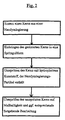
- the core of the permanent magnet is under pressure and temperature made of a highly magnetic alloy with one element from the group of rare earths, especially from one Neodymium alloy, sintered and then this core with one Coat made of a plastic layer, which particles a corresponding alloy, in particular a neodymium alloy, contains.
- This sheathing of the sintered Core is done by inserting the sintered core into a mold and the plastic layer by injection molding, pressing or pouring is applied around the core.
- other common methods are also possible.
- the shape is a specification of the final shape with a plastic layer coated core of the permanent magnet.
- the sintered core is used to manufacture a permanent magnet before coating with a plastic layer by a few, targeted shaping processing steps in the final Formed. Because the magnetic field of the finished permanent magnet essentially determined by the magnetic field of the core it comes with its outer shape Distribution and strength of the magnetic field are of particular importance to. Furthermore, the shaping of the sintered core created the opportunity to surface of the sintered core so that the plastic layer what sticks very evenly and firmly to the core the durability and uniformity of the manufactured Ensures permanent magnets.
- Fig. 1 shows a sectional representation of the radially symmetrical Structure of an exemplary invention Speaker.
- This speaker works on the dynamic Converter principle. It shows a permanent magnet 1, the one generated constant magnetic field in which a voice coil 2 a voice coil former 3 is arranged.
- the voice coil 2 is supplied with a tone-frequency alternating voltage signal, that corresponds to the audio signal to be displayed.
- the membrane 4 is funnel-shaped and over a Bead 5 connected to the chassis 6 of the speaker.
- This Chassis 6 connects the membrane 4 with the permanent magnet 1 so that a relative movement of the voice coil 2 to the chassis 6 is made possible with the permanent magnet 1.
- the chassis 6 is with connected to the voice coil former 3 via a centering membrane 12. This ensures that the voice coil 2 at a defined, largely constant distance from the permanent magnet 1 is axially movable. A movement outside of the axial direction is thereby prevented.
- the permanent magnet 1 is with the chassis 6 via the upper pole plate 7 and connected to the lower pole plate 8, which centrally in the middle of the circular recess of the annular Permanent magnet 1 opens into a pole core 9.
- the mutual Connection is made by gluing.
- the permanent magnet 1 shows a core 10 made of a neodymium alloy, which the components neodymium (Nd), iron (Fe) and boron (B) contains approximately in the ratios 29/70/1.
- This core 10 of the permanent magnet 1 is complete with a plastic layer 11 encased.
- the plastic layer 11 shows one Layer thickness of about 1/10 mm.
- the plastic layer 11 is formed from an epoxy resin or from a thermoplastic, in whose plastic matrix contains a large number of particles Neodymium alloy corresponding to the neodymium alloy of the core 10 are introduced.
- the particles of the plastic layer 11 are evenly distributed in the plastic layer. they provide a significant proportion of the volume of the plastic layer 11.
- An advantageous proportion is 10 to 40%.
- the neodymium alloys of the core 10 and the plastic layer 11 generate a magnetic field applied to the spaced voice coil 2 acts.
- the distance between the magnetic field generating Shares of the permanent magnet 1 to the voice coil 2 is essentially due to the necessary air gap between the Voice coil 2 and the permanent magnet 1 given. Additional distance-expanding components are not provided. Thereby enables the magnetic field strength at the location of the Voice coil 2 is very high, because on the one hand a neodymium alloy is used to form the permanent magnet 1 and others the volume of the permanent magnet 1 almost completely is filled by the neodymium alloy and the distance of the Magnetic field-active parts of the permanent magnet to the voice coil 2 is minimized.
- This speaker according to the invention shows a very good converter constant, which results from the magnetic Flux density at the location of the voice coil 2 and the length of the Voice coil 2 in the magnetic field results. This converter constant is a measure of the performance of a loudspeaker.
- this core 10 By coating the core 10 by means of the plastic layer 11 is this core 10 with the very sensitive neodymium alloy from external influences, in particular through the Atmospheric oxygen or protected by humidity and the like. This is the good properties of the permanent magnet 1 and thus the speaker thus formed also under given permanently unfavorable climatic conditions.
- the neodymium alloy is under Pressure and temperature to the core 10 of the permanent magnet 1 sintered.
- the core 10 already takes the intended one Shape of the core of the permanent magnet 1 for the invention Speaker on.
- a post-processing of the sintered Kerns 10 is regularly not required.
- the sintering process takes place under a protective gas atmosphere so that the neodymium alloy no damage from atmospheric oxygen or humidity or can take hydrogen or the like.
- the sintered core 10 is injected into an injection mold introduced with the help of the core 10 with a plastic layer 11 is to be encapsulated.
- This is done by Injection molding with a plastic that has hydrophobic properties and which has particles which have the same neodymium alloy included, from which the core 10 is formed.
- the injection mold is like this designed to match the final shape of the permanent magnet 1 corresponds to the loudspeaker according to the invention. Thereby is regularly ensured that a subsequent shaping Machining of the permanent magnet 1 with the Plastic layer 11 coated core 10 can be avoided can.
Landscapes
- Engineering & Computer Science (AREA)
- Power Engineering (AREA)
- Physics & Mathematics (AREA)
- Acoustics & Sound (AREA)
- Signal Processing (AREA)
- Environmental & Geological Engineering (AREA)
- Manufacturing & Machinery (AREA)
- Chemical & Material Sciences (AREA)
- Crystallography & Structural Chemistry (AREA)
- Inorganic Chemistry (AREA)
- Audible-Bandwidth Dynamoelectric Transducers Other Than Pickups (AREA)
- Hard Magnetic Materials (AREA)
Abstract
Description
- Fig. 1
- in einer geschnittenen Darstellung den Aufbau eines beispielhaften erfindungsgemäßen Lautsprechers und
- Fig. 2
- den Ablauf eines beispielhaften Herstellungsverfahrens eines Dauermagneten für einen erfindungsgemäßen Lautsprecher.
- 1
- Dauermagnet
- 2
- Schwingspule
- 3
- Schwingspulenträger
- 4
- Membran
- 5
- Sicke
- 6
- Chassis
- 7
- obere Polplatte
- 8
- untere Polplatte
- 9
- Polkern
- 10
- Kern
- 11
- Kunststoffschicht
- 12
- Zentriermembran
Claims (9)
- Lautsprecher nach dem dynamischen Wandlerprinzip mit einer mit einem elektrischen Audiosignal beaufschlagbaren Schwingspule (2) und mit einem Dauermagneten (1),
dadurch gekennzeichnet, dass der Dauermagnet (1) einen Kern (10) aus einer hochmagnetischen Legierung mit einem Element aus der Gruppe der Seltenen Erden aufweist, welcher mit einer Kunststoffschicht (11) ummantelt ist, wobei die Kunststoffschicht (11) Partikel einer Legierung mit einem Element aus der Gruppe der Seltenen Erden enthält. - Lautsprecher nach Anspruch 1, dadurch gekennzeichnet, dass die
Legierung eine Neodymlegierung darstellt. - Lautsprecher nach einem der vorstehenden Ansprüche,
dadurch gekennzeichnet, dass die Legierung des Kerns (10) der Legierung der Kunststoffschicht (11) entspricht. - Lautsprecher nach einem der vorstehenden Ansprüche,
dadurch gekennzeichnet, dass die Partikel in der Kunststoffschicht (11) weitgehend gleichverteilt sind. - Lautsprecher nach einem der vorstehenden Ansprüche,
dadurch gekennzeichnet, dass die Kunststoffschicht (11) eine Materialstärke von wenigen Zehntel Millimetern aufweist. - Lautsprecher nach Anspruch 2,
dadurch gekennzeichnet, dass die Neodymlegierung aus Neodym (Nd), Eisen (FE) und Bor (B) gebildet ist. - Lautsprecher nach einem der vorstehenden Ansprüche,
dadurch gekennzeichnet, dass die Kunststoffschicht (11) einen hydrophoben Kunststoff, insbesondere Epoxidharz, aufweist. - Verfahren zur Herstellung eines Dauermagneten für einen Lautsprecher nach Anspruch 1,
dadurch gekennzeichnet, dass ein Kern (10) aus einer hochmagnetischen Legierung mit einem Element aus der Gruppe der Seltenen Erden mittels eines Sinterverfahrens hergestellt wird und der Kern (10) anschließend mit einer Kunststoffschicht (11) ummantelt wird, welche Partikel einer hochmagnetischen Legierung mit einem Element aus der Gruppe der Seltenen Erden enthält. - Verfahren zur Herstellung eines Dauermagneten für einen Lautsprecher nach Anspruch 7,
dadurch gekennzeichnet, dass die Kunststoffschicht (11) des ummantelten Kerns (10) formgebend behandelt wird.
Applications Claiming Priority (2)
| Application Number | Priority Date | Filing Date | Title |
|---|---|---|---|
| DE19902679 | 1999-01-23 | ||
| DE1999102679 DE19902679C1 (de) | 1999-01-23 | 1999-01-23 | Lautsprecher |
Publications (3)
| Publication Number | Publication Date |
|---|---|
| EP1022929A2 true EP1022929A2 (de) | 2000-07-26 |
| EP1022929A3 EP1022929A3 (de) | 2007-06-13 |
| EP1022929B1 EP1022929B1 (de) | 2008-03-12 |
Family
ID=7895212
Family Applications (1)
| Application Number | Title | Priority Date | Filing Date |
|---|---|---|---|
| EP20000100968 Expired - Lifetime EP1022929B1 (de) | 1999-01-23 | 2000-01-19 | Lautsprecher mit einem ummantelten Magnetkern |
Country Status (2)
| Country | Link |
|---|---|
| EP (1) | EP1022929B1 (de) |
| DE (2) | DE19902679C1 (de) |
Cited By (2)
| Publication number | Priority date | Publication date | Assignee | Title |
|---|---|---|---|---|
| WO2013020794A1 (de) * | 2011-08-08 | 2013-02-14 | Sennheiser Electronic Gmbh & Co. Kg | Dynamischer elektroakustischer wandler |
| JP2013055415A (ja) * | 2011-09-01 | 2013-03-21 | Sumitomo Metal Mining Co Ltd | スピーカ用外磁型磁気回路ユニット及びその製造方法 |
Family Cites Families (6)
| Publication number | Priority date | Publication date | Assignee | Title |
|---|---|---|---|---|
| AT386554B (de) * | 1986-08-04 | 1988-09-12 | Treibacher Chemische Werke Ag | Verfahren zur herstellung korrosionsbestaendiger, hartmagnetischer pulver fuer die magneterzeugung, magnete aus hartmagnetischem pulver und verfahren zu deren herstellung |
| DE3730305C1 (de) * | 1987-09-10 | 1989-03-23 | Daimler Benz Ag | Lautsprecher |
| JP2970809B2 (ja) * | 1987-12-28 | 1999-11-02 | 信越化学工業株式会社 | 希土類永久磁石 |
| US5269855A (en) * | 1989-08-25 | 1993-12-14 | Dowa Mining Co., Ltd. | Permanent magnet alloy having improved resistance |
| EP0441616B1 (de) * | 1990-02-09 | 1994-11-02 | Matsushita Electric Industrial Co., Ltd. | Anisotroper Verbundmagnet auf Basis Nd-Fe-B und Verfahren zur Herstellung |
| JP3161673B2 (ja) * | 1994-05-30 | 2001-04-25 | 松下電器産業株式会社 | マイクロスピーカ用磁気回路ユニット及びその製造方法 |
-
1999
- 1999-01-23 DE DE1999102679 patent/DE19902679C1/de not_active Expired - Fee Related
-
2000
- 2000-01-19 EP EP20000100968 patent/EP1022929B1/de not_active Expired - Lifetime
- 2000-01-19 DE DE50015036T patent/DE50015036D1/de not_active Expired - Lifetime
Cited By (2)
| Publication number | Priority date | Publication date | Assignee | Title |
|---|---|---|---|---|
| WO2013020794A1 (de) * | 2011-08-08 | 2013-02-14 | Sennheiser Electronic Gmbh & Co. Kg | Dynamischer elektroakustischer wandler |
| JP2013055415A (ja) * | 2011-09-01 | 2013-03-21 | Sumitomo Metal Mining Co Ltd | スピーカ用外磁型磁気回路ユニット及びその製造方法 |
Also Published As
| Publication number | Publication date |
|---|---|
| DE50015036D1 (de) | 2008-04-24 |
| DE19902679C1 (de) | 2000-11-16 |
| EP1022929A3 (de) | 2007-06-13 |
| EP1022929B1 (de) | 2008-03-12 |
Similar Documents
| Publication | Publication Date | Title |
|---|---|---|
| EP1444706B1 (de) | Induktives bauelement und verfahren zu seiner herstellung | |
| DE69528725T2 (de) | Magnetische Schaltung für Lautsprecher und Verfahren zu ihrer Herstellung | |
| EP2984658A1 (de) | Anisotroper seltenerdfreier matrixgebundener hochperformanter permanentmagnet mit nanokristalliner struktur und verfahren zu dessen herstellung | |
| DE112011104619T5 (de) | Bogenförmiger Magnet mit polar-anisotroper Ausrichtung und Verfahren und Bildungsform zu seiner Herstellung | |
| DE102016203739A1 (de) | Paketsystem einer elektrischen Maschine, elektrische Maschine und Verfahren zur Herstellung des Paketsystems | |
| EP4292108B1 (de) | Verfahren zur herstellung eines rohmagneten | |
| DE102020130672A1 (de) | Magnete aus verbundwerkstoff und verfahren zur herstellung von magneten aus verbundwerkstoff | |
| EP0255613B1 (de) | Herstellungsverfahren für zwei- und mehrpolige Dauermagnete mit hoher magnetischer Energiedichte | |
| EP1022929B1 (de) | Lautsprecher mit einem ummantelten Magnetkern | |
| EP3244427A1 (de) | Verfahren zum fixieren einer spulenwicklung | |
| DE19942939A1 (de) | Weichmagnetische Folie und Verfahren zu deren Herstellung | |
| DE102007060895A1 (de) | Vorrichtung mit einem Elektromagneten, Kupplung und Verfahren zur Herstellung eines Elektromagneten | |
| DE102010063323A1 (de) | Verfahren zur Herstellung einer Maschinenkomponente für eine elektrische Maschine sowie eine Maschinenkomponente | |
| AT359572B (de) | Membran mit schwingspule fuer elektroakustische wandler | |
| DE102015206326A1 (de) | Weichmagnetischer Verbundwerkstoff und entsprechende Verfahren zum Herstellen eines weichmagnetischen Verbundwerkstoffs | |
| DE102021111660A1 (de) | Herstellung eines elektromagentisch abschirmenden Gehäuses | |
| WO2007122590A1 (de) | Alterungsbeständiger dauermagnet aus einem legierungspulver und verfahren zu seiner herstellung | |
| WO2001022439A1 (de) | Weichmagnetischer werkstoff und verfahren zu dessen herstellung | |
| WO2016034338A1 (de) | Anisotrop weichmagnetisches material mit mittlerer anisotropie und geringer koerzitivfeldstärke sowie dessen herstellungsverfahren | |
| EP1460881A2 (de) | Magnetsystem eines Schallwandlers | |
| DE102014112531A1 (de) | Verfahren zur Herstellung einer Lautsprechermembran | |
| DE102020119982A1 (de) | Geschlitzter statorkern und additives herstellungsverfahren zur produktion | |
| AT337303B (de) | Stator fur elektrische maschinen | |
| DE102013221965A1 (de) | Verfahren zur Herstellung eines Formteiles und elektrische Maschine mit einem solchen Formteil | |
| DE102021006524B4 (de) | Verfahren zur Herstellung eines Rohmagneten |
Legal Events
| Date | Code | Title | Description |
|---|---|---|---|
| PUAI | Public reference made under article 153(3) epc to a published international application that has entered the european phase |
Free format text: ORIGINAL CODE: 0009012 |
|
| AK | Designated contracting states |
Kind code of ref document: A2 Designated state(s): AT BE CH CY DE DK ES FI FR GB GR IE IT LI LU MC NL PT SE |
|
| AX | Request for extension of the european patent |
Free format text: AL;LT;LV;MK;RO;SI |
|
| RAP1 | Party data changed (applicant data changed or rights of an application transferred) |
Owner name: HARMAN BECKER AUTOMOTIVE SYSTEMS GMBH |
|
| PUAL | Search report despatched |
Free format text: ORIGINAL CODE: 0009013 |
|
| AK | Designated contracting states |
Kind code of ref document: A3 Designated state(s): AT BE CH CY DE DK ES FI FR GB GR IE IT LI LU MC NL PT SE |
|
| AX | Request for extension of the european patent |
Extension state: AL LT LV MK RO SI |
|
| 17P | Request for examination filed |
Effective date: 20070523 |
|
| GRAP | Despatch of communication of intention to grant a patent |
Free format text: ORIGINAL CODE: EPIDOSNIGR1 |
|
| GRAS | Grant fee paid |
Free format text: ORIGINAL CODE: EPIDOSNIGR3 |
|
| GRAA | (expected) grant |
Free format text: ORIGINAL CODE: 0009210 |
|
| AKX | Designation fees paid |
Designated state(s): DE FR GB IT |
|
| AK | Designated contracting states |
Kind code of ref document: B1 Designated state(s): DE FR GB IT |
|
| REG | Reference to a national code |
Ref country code: GB Ref legal event code: FG4D Free format text: NOT ENGLISH |
|
| REF | Corresponds to: |
Ref document number: 50015036 Country of ref document: DE Date of ref document: 20080424 Kind code of ref document: P |
|
| ET | Fr: translation filed | ||
| PLBE | No opposition filed within time limit |
Free format text: ORIGINAL CODE: 0009261 |
|
| STAA | Information on the status of an ep patent application or granted ep patent |
Free format text: STATUS: NO OPPOSITION FILED WITHIN TIME LIMIT |
|
| 26N | No opposition filed |
Effective date: 20081215 |
|
| PGFP | Annual fee paid to national office [announced via postgrant information from national office to epo] |
Ref country code: FR Payment date: 20140117 Year of fee payment: 15 Ref country code: IT Payment date: 20140124 Year of fee payment: 15 |
|
| REG | Reference to a national code |
Ref country code: FR Ref legal event code: ST Effective date: 20150930 |
|
| PG25 | Lapsed in a contracting state [announced via postgrant information from national office to epo] |
Ref country code: FR Free format text: LAPSE BECAUSE OF NON-PAYMENT OF DUE FEES Effective date: 20150202 |
|
| PG25 | Lapsed in a contracting state [announced via postgrant information from national office to epo] |
Ref country code: IT Free format text: LAPSE BECAUSE OF NON-PAYMENT OF DUE FEES Effective date: 20150119 |
|
| PGFP | Annual fee paid to national office [announced via postgrant information from national office to epo] |
Ref country code: GB Payment date: 20181219 Year of fee payment: 20 |
|
| PGFP | Annual fee paid to national office [announced via postgrant information from national office to epo] |
Ref country code: DE Payment date: 20181218 Year of fee payment: 20 |
|
| REG | Reference to a national code |
Ref country code: DE Ref legal event code: R071 Ref document number: 50015036 Country of ref document: DE |
|
| REG | Reference to a national code |
Ref country code: GB Ref legal event code: PE20 Expiry date: 20200118 |
|
| PG25 | Lapsed in a contracting state [announced via postgrant information from national office to epo] |
Ref country code: GB Free format text: LAPSE BECAUSE OF EXPIRATION OF PROTECTION Effective date: 20200118 |