EP1007558B1 - Gen des familiären mittelmeerfiebers - Google Patents
Gen des familiären mittelmeerfiebers Download PDFInfo
- Publication number
- EP1007558B1 EP1007558B1 EP98942740A EP98942740A EP1007558B1 EP 1007558 B1 EP1007558 B1 EP 1007558B1 EP 98942740 A EP98942740 A EP 98942740A EP 98942740 A EP98942740 A EP 98942740A EP 1007558 B1 EP1007558 B1 EP 1007558B1
- Authority
- EP
- European Patent Office
- Prior art keywords
- sequence seq
- gene
- sequence
- nucleic acid
- seq
- Prior art date
- Legal status (The legal status is an assumption and is not a legal conclusion. Google has not performed a legal analysis and makes no representation as to the accuracy of the status listed.)
- Expired - Lifetime
Links
- 108090000623 proteins and genes Proteins 0.000 title claims abstract description 146
- 206010016207 Familial Mediterranean fever Diseases 0.000 title abstract description 58
- 102000039446 nucleic acids Human genes 0.000 claims abstract description 68
- 108020004707 nucleic acids Proteins 0.000 claims abstract description 68
- 150000007523 nucleic acids Chemical class 0.000 claims abstract description 67
- 239000000523 sample Substances 0.000 claims abstract description 60
- 238000000034 method Methods 0.000 claims abstract description 43
- 102000004169 proteins and genes Human genes 0.000 claims abstract description 34
- 230000035772 mutation Effects 0.000 claims description 77
- 108020004705 Codon Proteins 0.000 claims description 39
- 235000018102 proteins Nutrition 0.000 claims description 32
- 239000002773 nucleotide Substances 0.000 claims description 31
- 125000003729 nucleotide group Chemical group 0.000 claims description 31
- 230000003321 amplification Effects 0.000 claims description 30
- 238000003199 nucleic acid amplification method Methods 0.000 claims description 30
- 230000000295 complement effect Effects 0.000 claims description 23
- 239000002299 complementary DNA Substances 0.000 claims description 23
- 238000001514 detection method Methods 0.000 claims description 23
- 239000012634 fragment Substances 0.000 claims description 17
- 108090000765 processed proteins & peptides Proteins 0.000 claims description 17
- 238000009396 hybridization Methods 0.000 claims description 16
- 102000004196 processed proteins & peptides Human genes 0.000 claims description 16
- KZSNJWFQEVHDMF-UHFFFAOYSA-N Valine Natural products CC(C)C(N)C(O)=O KZSNJWFQEVHDMF-UHFFFAOYSA-N 0.000 claims description 15
- 229920001184 polypeptide Polymers 0.000 claims description 14
- AGPKZVBTJJNPAG-WHFBIAKZSA-N L-isoleucine Chemical compound CC[C@H](C)[C@H](N)C(O)=O AGPKZVBTJJNPAG-WHFBIAKZSA-N 0.000 claims description 12
- FFEARJCKVFRZRR-BYPYZUCNSA-N L-methionine Chemical compound CSCC[C@H](N)C(O)=O FFEARJCKVFRZRR-BYPYZUCNSA-N 0.000 claims description 11
- 229930182817 methionine Natural products 0.000 claims description 11
- 101000927265 Hyas araneus Arasin 2 Proteins 0.000 claims description 9
- KZSNJWFQEVHDMF-BYPYZUCNSA-N L-valine Chemical compound CC(C)[C@H](N)C(O)=O KZSNJWFQEVHDMF-BYPYZUCNSA-N 0.000 claims description 8
- 229960000310 isoleucine Drugs 0.000 claims description 8
- AGPKZVBTJJNPAG-UHFFFAOYSA-N isoleucine Natural products CCC(C)C(N)C(O)=O AGPKZVBTJJNPAG-UHFFFAOYSA-N 0.000 claims description 8
- 239000004474 valine Substances 0.000 claims description 8
- 108091032973 (ribonucleotides)n+m Proteins 0.000 claims description 7
- QNAYBMKLOCPYGJ-REOHCLBHSA-N L-alanine Chemical compound C[C@H](N)C(O)=O QNAYBMKLOCPYGJ-REOHCLBHSA-N 0.000 claims description 4
- 235000004279 alanine Nutrition 0.000 claims description 4
- 239000012472 biological sample Substances 0.000 claims description 4
- 238000012986 modification Methods 0.000 claims description 3
- 230000004048 modification Effects 0.000 claims description 3
- 108091092584 GDNA Proteins 0.000 claims 1
- 230000001747 exhibiting effect Effects 0.000 claims 1
- 125000002924 primary amino group Chemical group [H]N([H])* 0.000 claims 1
- 230000001225 therapeutic effect Effects 0.000 abstract description 5
- 102000054766 genetic haplotypes Human genes 0.000 description 63
- 108020004414 DNA Proteins 0.000 description 37
- 108020004635 Complementary DNA Proteins 0.000 description 23
- 238000010804 cDNA synthesis Methods 0.000 description 22
- 210000000349 chromosome Anatomy 0.000 description 22
- 108700024394 Exon Proteins 0.000 description 20
- 230000004075 alteration Effects 0.000 description 19
- 230000000875 corresponding effect Effects 0.000 description 19
- 238000012163 sequencing technique Methods 0.000 description 16
- 210000004027 cell Anatomy 0.000 description 15
- 239000002253 acid Substances 0.000 description 14
- 150000001413 amino acids Chemical class 0.000 description 12
- 230000002068 genetic effect Effects 0.000 description 12
- UYTPUPDQBNUYGX-UHFFFAOYSA-N guanine Chemical compound O=C1NC(N)=NC2=C1N=CN2 UYTPUPDQBNUYGX-UHFFFAOYSA-N 0.000 description 12
- 108010059278 Pyrin Proteins 0.000 description 11
- 238000006467 substitution reaction Methods 0.000 description 11
- 229910052725 zinc Inorganic materials 0.000 description 11
- 239000011701 zinc Substances 0.000 description 11
- 208000037265 diseases, disorders, signs and symptoms Diseases 0.000 description 10
- 239000003550 marker Substances 0.000 description 10
- 238000004458 analytical method Methods 0.000 description 9
- 230000014509 gene expression Effects 0.000 description 9
- 229940024606 amino acid Drugs 0.000 description 8
- 235000001014 amino acid Nutrition 0.000 description 8
- OPTASPLRGRRNAP-UHFFFAOYSA-N cytosine Chemical compound NC=1C=CNC(=O)N=1 OPTASPLRGRRNAP-UHFFFAOYSA-N 0.000 description 8
- 201000010099 disease Diseases 0.000 description 8
- 239000000463 material Substances 0.000 description 8
- 230000007170 pathology Effects 0.000 description 8
- XYDVHKCVOMGRSY-UHFFFAOYSA-N 4-(4-benzylphenyl)-1,3-thiazol-2-amine Chemical compound S1C(N)=NC(C=2C=CC(CC=3C=CC=CC=3)=CC=2)=C1 XYDVHKCVOMGRSY-UHFFFAOYSA-N 0.000 description 7
- 108700028369 Alleles Proteins 0.000 description 7
- 101100298824 Caenorhabditis elegans rpt-1 gene Proteins 0.000 description 7
- 101100482085 Mus musculus Trim30a gene Proteins 0.000 description 7
- 108091034117 Oligonucleotide Proteins 0.000 description 7
- 102100039233 Pyrin Human genes 0.000 description 7
- 101100270106 Saccharomyces cerevisiae (strain ATCC 204508 / S288c) ARA2 gene Proteins 0.000 description 7
- JLCPHMBAVCMARE-UHFFFAOYSA-N [3-[[3-[[3-[[3-[[3-[[3-[[3-[[3-[[3-[[3-[[3-[[5-(2-amino-6-oxo-1H-purin-9-yl)-3-[[3-[[3-[[3-[[3-[[3-[[5-(2-amino-6-oxo-1H-purin-9-yl)-3-[[5-(2-amino-6-oxo-1H-purin-9-yl)-3-hydroxyoxolan-2-yl]methoxy-hydroxyphosphoryl]oxyoxolan-2-yl]methoxy-hydroxyphosphoryl]oxy-5-(5-methyl-2,4-dioxopyrimidin-1-yl)oxolan-2-yl]methoxy-hydroxyphosphoryl]oxy-5-(6-aminopurin-9-yl)oxolan-2-yl]methoxy-hydroxyphosphoryl]oxy-5-(6-aminopurin-9-yl)oxolan-2-yl]methoxy-hydroxyphosphoryl]oxy-5-(6-aminopurin-9-yl)oxolan-2-yl]methoxy-hydroxyphosphoryl]oxy-5-(6-aminopurin-9-yl)oxolan-2-yl]methoxy-hydroxyphosphoryl]oxyoxolan-2-yl]methoxy-hydroxyphosphoryl]oxy-5-(5-methyl-2,4-dioxopyrimidin-1-yl)oxolan-2-yl]methoxy-hydroxyphosphoryl]oxy-5-(4-amino-2-oxopyrimidin-1-yl)oxolan-2-yl]methoxy-hydroxyphosphoryl]oxy-5-(5-methyl-2,4-dioxopyrimidin-1-yl)oxolan-2-yl]methoxy-hydroxyphosphoryl]oxy-5-(5-methyl-2,4-dioxopyrimidin-1-yl)oxolan-2-yl]methoxy-hydroxyphosphoryl]oxy-5-(6-aminopurin-9-yl)oxolan-2-yl]methoxy-hydroxyphosphoryl]oxy-5-(6-aminopurin-9-yl)oxolan-2-yl]methoxy-hydroxyphosphoryl]oxy-5-(4-amino-2-oxopyrimidin-1-yl)oxolan-2-yl]methoxy-hydroxyphosphoryl]oxy-5-(4-amino-2-oxopyrimidin-1-yl)oxolan-2-yl]methoxy-hydroxyphosphoryl]oxy-5-(4-amino-2-oxopyrimidin-1-yl)oxolan-2-yl]methoxy-hydroxyphosphoryl]oxy-5-(6-aminopurin-9-yl)oxolan-2-yl]methoxy-hydroxyphosphoryl]oxy-5-(4-amino-2-oxopyrimidin-1-yl)oxolan-2-yl]methyl [5-(6-aminopurin-9-yl)-2-(hydroxymethyl)oxolan-3-yl] hydrogen phosphate Polymers Cc1cn(C2CC(OP(O)(=O)OCC3OC(CC3OP(O)(=O)OCC3OC(CC3O)n3cnc4c3nc(N)[nH]c4=O)n3cnc4c3nc(N)[nH]c4=O)C(COP(O)(=O)OC3CC(OC3COP(O)(=O)OC3CC(OC3COP(O)(=O)OC3CC(OC3COP(O)(=O)OC3CC(OC3COP(O)(=O)OC3CC(OC3COP(O)(=O)OC3CC(OC3COP(O)(=O)OC3CC(OC3COP(O)(=O)OC3CC(OC3COP(O)(=O)OC3CC(OC3COP(O)(=O)OC3CC(OC3COP(O)(=O)OC3CC(OC3COP(O)(=O)OC3CC(OC3COP(O)(=O)OC3CC(OC3COP(O)(=O)OC3CC(OC3COP(O)(=O)OC3CC(OC3COP(O)(=O)OC3CC(OC3COP(O)(=O)OC3CC(OC3CO)n3cnc4c(N)ncnc34)n3ccc(N)nc3=O)n3cnc4c(N)ncnc34)n3ccc(N)nc3=O)n3ccc(N)nc3=O)n3ccc(N)nc3=O)n3cnc4c(N)ncnc34)n3cnc4c(N)ncnc34)n3cc(C)c(=O)[nH]c3=O)n3cc(C)c(=O)[nH]c3=O)n3ccc(N)nc3=O)n3cc(C)c(=O)[nH]c3=O)n3cnc4c3nc(N)[nH]c4=O)n3cnc4c(N)ncnc34)n3cnc4c(N)ncnc34)n3cnc4c(N)ncnc34)n3cnc4c(N)ncnc34)O2)c(=O)[nH]c1=O JLCPHMBAVCMARE-UHFFFAOYSA-N 0.000 description 7
- 230000008859 change Effects 0.000 description 7
- 230000006798 recombination Effects 0.000 description 7
- 238000005215 recombination Methods 0.000 description 7
- YBJHBAHKTGYVGT-ZKWXMUAHSA-N (+)-Biotin Chemical compound N1C(=O)N[C@@H]2[C@H](CCCCC(=O)O)SC[C@@H]21 YBJHBAHKTGYVGT-ZKWXMUAHSA-N 0.000 description 6
- 102000004190 Enzymes Human genes 0.000 description 6
- 108090000790 Enzymes Proteins 0.000 description 6
- 101001050286 Homo sapiens Jupiter microtubule associated homolog 1 Proteins 0.000 description 6
- 101000928034 Homo sapiens Proteasomal ubiquitin receptor ADRM1 Proteins 0.000 description 6
- 102100023133 Jupiter microtubule associated homolog 1 Human genes 0.000 description 6
- 102100036915 Proteasomal ubiquitin receptor ADRM1 Human genes 0.000 description 6
- 244000007853 Sarothamnus scoparius Species 0.000 description 6
- 230000005856 abnormality Effects 0.000 description 6
- 230000027455 binding Effects 0.000 description 6
- 238000006243 chemical reaction Methods 0.000 description 6
- 239000013598 vector Substances 0.000 description 6
- 241001605679 Colotis Species 0.000 description 5
- 108091060211 Expressed sequence tag Proteins 0.000 description 5
- 101000611355 Homo sapiens Olfactory receptor 1F1 Proteins 0.000 description 5
- 101000836268 Homo sapiens U4/U6.U5 tri-snRNP-associated protein 1 Proteins 0.000 description 5
- 102100040769 Olfactory receptor 1F1 Human genes 0.000 description 5
- 108050002069 Olfactory receptors Proteins 0.000 description 5
- 102100027244 U4/U6.U5 tri-snRNP-associated protein 1 Human genes 0.000 description 5
- HCHKCACWOHOZIP-UHFFFAOYSA-N Zinc Chemical compound [Zn] HCHKCACWOHOZIP-UHFFFAOYSA-N 0.000 description 5
- 238000002474 experimental method Methods 0.000 description 5
- 108020004999 messenger RNA Proteins 0.000 description 5
- 208000011580 syndromic disease Diseases 0.000 description 5
- 210000001519 tissue Anatomy 0.000 description 5
- 230000002103 transcriptional effect Effects 0.000 description 5
- 229930024421 Adenine Natural products 0.000 description 4
- GFFGJBXGBJISGV-UHFFFAOYSA-N Adenine Chemical compound NC1=NC=NC2=C1N=CN2 GFFGJBXGBJISGV-UHFFFAOYSA-N 0.000 description 4
- 108091026890 Coding region Proteins 0.000 description 4
- ZHNUHDYFZUAESO-UHFFFAOYSA-N Formamide Chemical compound NC=O ZHNUHDYFZUAESO-UHFFFAOYSA-N 0.000 description 4
- 108091092878 Microsatellite Proteins 0.000 description 4
- 102000012547 Olfactory receptors Human genes 0.000 description 4
- 229960000643 adenine Drugs 0.000 description 4
- 239000000969 carrier Substances 0.000 description 4
- 229940104302 cytosine Drugs 0.000 description 4
- 238000012217 deletion Methods 0.000 description 4
- 230000037430 deletion Effects 0.000 description 4
- 238000011161 development Methods 0.000 description 4
- 230000000694 effects Effects 0.000 description 4
- 238000002509 fluorescent in situ hybridization Methods 0.000 description 4
- 230000004077 genetic alteration Effects 0.000 description 4
- 231100000118 genetic alteration Toxicity 0.000 description 4
- 238000012360 testing method Methods 0.000 description 4
- RWQNBRDOKXIBIV-UHFFFAOYSA-N thymine Chemical compound CC1=CNC(=O)NC1=O RWQNBRDOKXIBIV-UHFFFAOYSA-N 0.000 description 4
- 238000013518 transcription Methods 0.000 description 4
- 230000035897 transcription Effects 0.000 description 4
- 238000013519 translation Methods 0.000 description 4
- 230000014616 translation Effects 0.000 description 4
- -1 Acids nucleic acids Chemical class 0.000 description 3
- 108091092195 Intron Proteins 0.000 description 3
- 238000000636 Northern blotting Methods 0.000 description 3
- 238000012408 PCR amplification Methods 0.000 description 3
- 239000000427 antigen Substances 0.000 description 3
- 108091007433 antigens Proteins 0.000 description 3
- 102000036639 antigens Human genes 0.000 description 3
- 229960002685 biotin Drugs 0.000 description 3
- 235000020958 biotin Nutrition 0.000 description 3
- 239000011616 biotin Substances 0.000 description 3
- 238000010367 cloning Methods 0.000 description 3
- 238000004590 computer program Methods 0.000 description 3
- 230000002596 correlated effect Effects 0.000 description 3
- 230000002255 enzymatic effect Effects 0.000 description 3
- 239000000499 gel Substances 0.000 description 3
- 210000000265 leukocyte Anatomy 0.000 description 3
- 230000004807 localization Effects 0.000 description 3
- 238000013507 mapping Methods 0.000 description 3
- 230000007246 mechanism Effects 0.000 description 3
- 239000012528 membrane Substances 0.000 description 3
- 238000000302 molecular modelling Methods 0.000 description 3
- 102000054765 polymorphisms of proteins Human genes 0.000 description 3
- 230000008569 process Effects 0.000 description 3
- 238000012216 screening Methods 0.000 description 3
- 238000010200 validation analysis Methods 0.000 description 3
- IAKHMKGGTNLKSZ-INIZCTEOSA-N (S)-colchicine Chemical compound C1([C@@H](NC(C)=O)CC2)=CC(=O)C(OC)=CC=C1C1=C2C=C(OC)C(OC)=C1OC IAKHMKGGTNLKSZ-INIZCTEOSA-N 0.000 description 2
- 241000283690 Bos taurus Species 0.000 description 2
- 102000004555 Butyrophilins Human genes 0.000 description 2
- 108010017533 Butyrophilins Proteins 0.000 description 2
- 102000053602 DNA Human genes 0.000 description 2
- 241000588724 Escherichia coli Species 0.000 description 2
- 206010061218 Inflammation Diseases 0.000 description 2
- 102000010789 Interleukin-2 Receptors Human genes 0.000 description 2
- 108010038453 Interleukin-2 Receptors Proteins 0.000 description 2
- 101150065761 MEFV gene Proteins 0.000 description 2
- OAICVXFJPJFONN-OUBTZVSYSA-N Phosphorus-32 Chemical compound [32P] OAICVXFJPJFONN-OUBTZVSYSA-N 0.000 description 2
- 241000269635 Pleurodeles Species 0.000 description 2
- 108010071690 Prealbumin Proteins 0.000 description 2
- 206010037660 Pyrexia Diseases 0.000 description 2
- 229920005654 Sephadex Polymers 0.000 description 2
- 239000012507 Sephadex™ Substances 0.000 description 2
- 210000001744 T-lymphocyte Anatomy 0.000 description 2
- 101710185494 Zinc finger protein Proteins 0.000 description 2
- 102100023597 Zinc finger protein 816 Human genes 0.000 description 2
- 102100029504 Zinc finger protein RFP Human genes 0.000 description 2
- 101710110903 Zinc finger protein RFP Proteins 0.000 description 2
- 238000013459 approach Methods 0.000 description 2
- 238000012512 characterization method Methods 0.000 description 2
- 239000003153 chemical reaction reagent Substances 0.000 description 2
- 239000013601 cosmid vector Substances 0.000 description 2
- 125000004122 cyclic group Chemical group 0.000 description 2
- 238000004925 denaturation Methods 0.000 description 2
- 230000036425 denaturation Effects 0.000 description 2
- 238000003745 diagnosis Methods 0.000 description 2
- 230000029087 digestion Effects 0.000 description 2
- 238000004520 electroporation Methods 0.000 description 2
- 239000000835 fiber Substances 0.000 description 2
- 238000012239 gene modification Methods 0.000 description 2
- 230000005017 genetic modification Effects 0.000 description 2
- 235000013617 genetically modified food Nutrition 0.000 description 2
- 238000000338 in vitro Methods 0.000 description 2
- 230000004054 inflammatory process Effects 0.000 description 2
- 210000003734 kidney Anatomy 0.000 description 2
- 230000006651 lactation Effects 0.000 description 2
- 210000004072 lung Anatomy 0.000 description 2
- 210000004379 membrane Anatomy 0.000 description 2
- 230000036961 partial effect Effects 0.000 description 2
- 239000013612 plasmid Substances 0.000 description 2
- 230000008707 rearrangement Effects 0.000 description 2
- 238000011084 recovery Methods 0.000 description 2
- 230000000306 recurrent effect Effects 0.000 description 2
- 238000011160 research Methods 0.000 description 2
- 238000003757 reverse transcription PCR Methods 0.000 description 2
- 210000000952 spleen Anatomy 0.000 description 2
- 239000000126 substance Substances 0.000 description 2
- 238000002560 therapeutic procedure Methods 0.000 description 2
- 229940113082 thymine Drugs 0.000 description 2
- 102000040650 (ribonucleotides)n+m Human genes 0.000 description 1
- GOJUJUVQIVIZAV-UHFFFAOYSA-N 2-amino-4,6-dichloropyrimidine-5-carbaldehyde Chemical group NC1=NC(Cl)=C(C=O)C(Cl)=N1 GOJUJUVQIVIZAV-UHFFFAOYSA-N 0.000 description 1
- FWMNVWWHGCHHJJ-SKKKGAJSSA-N 4-amino-1-[(2r)-6-amino-2-[[(2r)-2-[[(2r)-2-[[(2r)-2-amino-3-phenylpropanoyl]amino]-3-phenylpropanoyl]amino]-4-methylpentanoyl]amino]hexanoyl]piperidine-4-carboxylic acid Chemical compound C([C@H](C(=O)N[C@H](CC(C)C)C(=O)N[C@H](CCCCN)C(=O)N1CCC(N)(CC1)C(O)=O)NC(=O)[C@H](N)CC=1C=CC=CC=1)C1=CC=CC=C1 FWMNVWWHGCHHJJ-SKKKGAJSSA-N 0.000 description 1
- 102000002260 Alkaline Phosphatase Human genes 0.000 description 1
- 108020004774 Alkaline Phosphatase Proteins 0.000 description 1
- 108010039224 Amidophosphoribosyltransferase Proteins 0.000 description 1
- 208000003808 Amyloid Neuropathies Diseases 0.000 description 1
- 241000894006 Bacteria Species 0.000 description 1
- KRKNYBCHXYNGOX-UHFFFAOYSA-K Citrate Chemical compound [O-]C(=O)CC(O)(CC([O-])=O)C([O-])=O KRKNYBCHXYNGOX-UHFFFAOYSA-K 0.000 description 1
- 108091035707 Consensus sequence Proteins 0.000 description 1
- 230000004544 DNA amplification Effects 0.000 description 1
- 108010008286 DNA nucleotidylexotransferase Proteins 0.000 description 1
- 102100029764 DNA-directed DNA/RNA polymerase mu Human genes 0.000 description 1
- 108090000288 Glycoproteins Proteins 0.000 description 1
- 102000003886 Glycoproteins Human genes 0.000 description 1
- 101000962053 Homo sapiens Pyrin Proteins 0.000 description 1
- 101000634977 Homo sapiens Zinc finger protein RFP Proteins 0.000 description 1
- 241000713772 Human immunodeficiency virus 1 Species 0.000 description 1
- 102100034343 Integrase Human genes 0.000 description 1
- PWKSKIMOESPYIA-BYPYZUCNSA-N L-N-acetyl-Cysteine Chemical compound CC(=O)N[C@@H](CS)C(O)=O PWKSKIMOESPYIA-BYPYZUCNSA-N 0.000 description 1
- 125000000415 L-cysteinyl group Chemical group O=C([*])[C@@](N([H])[H])([H])C([H])([H])S[H] 0.000 description 1
- 125000002435 L-phenylalanyl group Chemical group O=C([*])[C@](N([H])[H])([H])C([H])([H])C1=C([H])C([H])=C([H])C([H])=C1[H] 0.000 description 1
- 241000124008 Mammalia Species 0.000 description 1
- 241001465754 Metazoa Species 0.000 description 1
- 108700005084 Multigene Family Proteins 0.000 description 1
- 241000699729 Muridae Species 0.000 description 1
- 101100170937 Mus musculus Dnmt1 gene Proteins 0.000 description 1
- 101000634978 Mus musculus Zinc finger protein RFP Proteins 0.000 description 1
- 101100384865 Neurospora crassa (strain ATCC 24698 / 74-OR23-1A / CBS 708.71 / DSM 1257 / FGSC 987) cot-1 gene Proteins 0.000 description 1
- 108091028043 Nucleic acid sequence Proteins 0.000 description 1
- 108091005461 Nucleic proteins Proteins 0.000 description 1
- 239000004677 Nylon Substances 0.000 description 1
- 102000043276 Oncogene Human genes 0.000 description 1
- 108700020796 Oncogene Proteins 0.000 description 1
- 238000010222 PCR analysis Methods 0.000 description 1
- 102100040853 PRKC apoptosis WT1 regulator protein Human genes 0.000 description 1
- 101710162991 PRKC apoptosis WT1 regulator protein Proteins 0.000 description 1
- 108090000412 Protein-Tyrosine Kinases Proteins 0.000 description 1
- 102000004022 Protein-Tyrosine Kinases Human genes 0.000 description 1
- 108091008109 Pseudogenes Proteins 0.000 description 1
- 102000057361 Pseudogenes Human genes 0.000 description 1
- 108091034057 RNA (poly(A)) Proteins 0.000 description 1
- 108010092799 RNA-directed DNA polymerase Proteins 0.000 description 1
- 102000007056 Recombinant Fusion Proteins Human genes 0.000 description 1
- 108010008281 Recombinant Fusion Proteins Proteins 0.000 description 1
- 240000004808 Saccharomyces cerevisiae Species 0.000 description 1
- 238000012300 Sequence Analysis Methods 0.000 description 1
- 208000021386 Sjogren Syndrome Diseases 0.000 description 1
- FAPWRFPIFSIZLT-UHFFFAOYSA-M Sodium chloride Chemical compound [Na+].[Cl-] FAPWRFPIFSIZLT-UHFFFAOYSA-M 0.000 description 1
- 238000002105 Southern blotting Methods 0.000 description 1
- 108010006785 Taq Polymerase Proteins 0.000 description 1
- 102100023935 Transmembrane glycoprotein NMB Human genes 0.000 description 1
- 102000009190 Transthyretin Human genes 0.000 description 1
- 229920004890 Triton X-100 Polymers 0.000 description 1
- 239000013504 Triton X-100 Substances 0.000 description 1
- 240000008042 Zea mays Species 0.000 description 1
- 210000001015 abdomen Anatomy 0.000 description 1
- 210000004100 adrenal gland Anatomy 0.000 description 1
- 239000011543 agarose gel Substances 0.000 description 1
- 150000001412 amines Chemical class 0.000 description 1
- 238000012197 amplification kit Methods 0.000 description 1
- 206010002022 amyloidosis Diseases 0.000 description 1
- 238000000137 annealing Methods 0.000 description 1
- 238000007846 asymmetric PCR Methods 0.000 description 1
- 208000021024 autosomal recessive inheritance Diseases 0.000 description 1
- 230000033228 biological regulation Effects 0.000 description 1
- 210000004556 brain Anatomy 0.000 description 1
- 210000000481 breast Anatomy 0.000 description 1
- 230000001413 cellular effect Effects 0.000 description 1
- 238000004587 chromatography analysis Methods 0.000 description 1
- 230000002759 chromosomal effect Effects 0.000 description 1
- 238000003776 cleavage reaction Methods 0.000 description 1
- 229960001338 colchicine Drugs 0.000 description 1
- 210000001072 colon Anatomy 0.000 description 1
- 238000004891 communication Methods 0.000 description 1
- 238000012790 confirmation Methods 0.000 description 1
- 230000009073 conformational modification Effects 0.000 description 1
- 238000010276 construction Methods 0.000 description 1
- 238000012258 culturing Methods 0.000 description 1
- 238000007405 data analysis Methods 0.000 description 1
- 230000007812 deficiency Effects 0.000 description 1
- 230000002950 deficient Effects 0.000 description 1
- 238000010586 diagram Methods 0.000 description 1
- KAKKHKRHCKCAGH-UHFFFAOYSA-L disodium;(4-nitrophenyl) phosphate;hexahydrate Chemical compound O.O.O.O.O.O.[Na+].[Na+].[O-][N+](=O)C1=CC=C(OP([O-])([O-])=O)C=C1 KAKKHKRHCKCAGH-UHFFFAOYSA-L 0.000 description 1
- 208000035475 disorder Diseases 0.000 description 1
- 229940079593 drug Drugs 0.000 description 1
- 239000003814 drug Substances 0.000 description 1
- 230000009977 dual effect Effects 0.000 description 1
- 229940082150 encore Drugs 0.000 description 1
- 230000007717 exclusion Effects 0.000 description 1
- MHMNJMPURVTYEJ-UHFFFAOYSA-N fluorescein-5-isothiocyanate Chemical compound O1C(=O)C2=CC(N=C=S)=CC=C2C21C1=CC=C(O)C=C1OC1=CC(O)=CC=C21 MHMNJMPURVTYEJ-UHFFFAOYSA-N 0.000 description 1
- 230000003485 founder effect Effects 0.000 description 1
- 108020001507 fusion proteins Proteins 0.000 description 1
- 102000037865 fusion proteins Human genes 0.000 description 1
- 238000001415 gene therapy Methods 0.000 description 1
- 102000034356 gene-regulatory proteins Human genes 0.000 description 1
- 108091006104 gene-regulatory proteins Proteins 0.000 description 1
- 238000010353 genetic engineering Methods 0.000 description 1
- 210000002216 heart Anatomy 0.000 description 1
- 102000051001 human MEFV Human genes 0.000 description 1
- 102000044348 human TRIM27 Human genes 0.000 description 1
- 230000002209 hydrophobic effect Effects 0.000 description 1
- 230000001900 immune effect Effects 0.000 description 1
- 230000036039 immunity Effects 0.000 description 1
- 239000000411 inducer Substances 0.000 description 1
- 239000003999 initiator Substances 0.000 description 1
- 230000003834 intracellular effect Effects 0.000 description 1
- 238000002955 isolation Methods 0.000 description 1
- 208000017169 kidney disease Diseases 0.000 description 1
- 238000002372 labelling Methods 0.000 description 1
- 230000000670 limiting effect Effects 0.000 description 1
- 210000004185 liver Anatomy 0.000 description 1
- 210000001165 lymph node Anatomy 0.000 description 1
- 101150043924 metXA gene Proteins 0.000 description 1
- 229910052751 metal Inorganic materials 0.000 description 1
- 239000002184 metal Substances 0.000 description 1
- 150000002739 metals Chemical class 0.000 description 1
- 230000031864 metaphase Effects 0.000 description 1
- 108010071421 milk fat globule Proteins 0.000 description 1
- 239000000203 mixture Substances 0.000 description 1
- 210000003205 muscle Anatomy 0.000 description 1
- 239000013642 negative control Substances 0.000 description 1
- 230000030648 nucleus localization Effects 0.000 description 1
- 229920001778 nylon Polymers 0.000 description 1
- 230000008520 organization Effects 0.000 description 1
- PIRWNASAJNPKHT-SHZATDIYSA-N pamp Chemical compound C([C@@H](C(=O)N[C@@H](CCCNC(N)=N)C(=O)N[C@@H](CCCCN)C(=O)N[C@@H](CCCCN)C(=O)N[C@@H](CC=1C2=CC=CC=C2NC=1)C(=O)N[C@@H](CC(N)=O)C(=O)N[C@@H](CCCCN)C(=O)N[C@@H](CC=1C2=CC=CC=C2NC=1)C(=O)N[C@@H](C)C(=O)N[C@@H](CC(C)C)C(=O)N[C@@H](CO)C(=O)N[C@@H](CCCNC(N)=N)C(N)=O)NC(=O)[C@H](CCC(O)=O)NC(=O)[C@H](CO)NC(=O)[C@H](C)NC(=O)[C@@H](NC(=O)[C@H](CC(O)=O)NC(=O)[C@H](CC(C)C)NC(=O)[C@H](CCCNC(N)=N)NC(=O)[C@H](C)N)C(C)C)C1=CC=CC=C1 PIRWNASAJNPKHT-SHZATDIYSA-N 0.000 description 1
- 210000000496 pancreas Anatomy 0.000 description 1
- 230000008506 pathogenesis Effects 0.000 description 1
- 210000005259 peripheral blood Anatomy 0.000 description 1
- 239000011886 peripheral blood Substances 0.000 description 1
- 210000004303 peritoneum Anatomy 0.000 description 1
- 239000008194 pharmaceutical composition Substances 0.000 description 1
- 229940097886 phosphorus 32 Drugs 0.000 description 1
- 210000002826 placenta Anatomy 0.000 description 1
- 239000013600 plasmid vector Substances 0.000 description 1
- 210000004224 pleura Anatomy 0.000 description 1
- 238000003752 polymerase chain reaction Methods 0.000 description 1
- 239000002243 precursor Substances 0.000 description 1
- 238000002360 preparation method Methods 0.000 description 1
- 210000002307 prostate Anatomy 0.000 description 1
- 238000000746 purification Methods 0.000 description 1
- 230000002285 radioactive effect Effects 0.000 description 1
- 238000000163 radioactive labelling Methods 0.000 description 1
- 230000002829 reductive effect Effects 0.000 description 1
- 230000014493 regulation of gene expression Effects 0.000 description 1
- 230000001105 regulatory effect Effects 0.000 description 1
- 102000037983 regulatory factors Human genes 0.000 description 1
- 108091008025 regulatory factors Proteins 0.000 description 1
- 230000003252 repetitive effect Effects 0.000 description 1
- 230000000717 retained effect Effects 0.000 description 1
- 230000007017 scission Effects 0.000 description 1
- 238000005204 segregation Methods 0.000 description 1
- 210000000813 small intestine Anatomy 0.000 description 1
- 238000011895 specific detection Methods 0.000 description 1
- 210000000278 spinal cord Anatomy 0.000 description 1
- 210000002784 stomach Anatomy 0.000 description 1
- 208000024891 symptom Diseases 0.000 description 1
- 210000001258 synovial membrane Anatomy 0.000 description 1
- 238000003786 synthesis reaction Methods 0.000 description 1
- 230000009897 systematic effect Effects 0.000 description 1
- 210000001550 testis Anatomy 0.000 description 1
- MPLHNVLQVRSVEE-UHFFFAOYSA-N texas red Chemical compound [O-]S(=O)(=O)C1=CC(S(Cl)(=O)=O)=CC=C1C(C1=CC=2CCCN3CCCC(C=23)=C1O1)=C2C1=C(CCC1)C3=[N+]1CCCC3=C2 MPLHNVLQVRSVEE-UHFFFAOYSA-N 0.000 description 1
- 210000001541 thymus gland Anatomy 0.000 description 1
- 210000001685 thyroid gland Anatomy 0.000 description 1
- 210000003437 trachea Anatomy 0.000 description 1
- 238000001890 transfection Methods 0.000 description 1
- 108091007466 transmembrane glycoproteins Proteins 0.000 description 1
- 238000001926 trapping method Methods 0.000 description 1
- 210000004291 uterus Anatomy 0.000 description 1
- 108010088577 zinc-binding protein Proteins 0.000 description 1
Images
Classifications
-
- C—CHEMISTRY; METALLURGY
- C07—ORGANIC CHEMISTRY
- C07K—PEPTIDES
- C07K14/00—Peptides having more than 20 amino acids; Gastrins; Somatostatins; Melanotropins; Derivatives thereof
- C07K14/435—Peptides having more than 20 amino acids; Gastrins; Somatostatins; Melanotropins; Derivatives thereof from animals; from humans
- C07K14/46—Peptides having more than 20 amino acids; Gastrins; Somatostatins; Melanotropins; Derivatives thereof from animals; from humans from vertebrates
- C07K14/47—Peptides having more than 20 amino acids; Gastrins; Somatostatins; Melanotropins; Derivatives thereof from animals; from humans from vertebrates from mammals
Definitions
- the present invention relates to the field of genetics. It concerns more particularly new nucleic acids, including the gene responsible for Familial Mediterranean Fever (FMF), as well as the corresponding protein. She further relates to probes and primers for the detection and amplification of this gene, as well as FMF testing kits and methods. It relates to also any use of the gene and protein, in particular for purposes therapeutic.
- FMF Familial Mediterranean Fever
- Familial Mediterranean Fever is a communicable recessive disorder that mainly affects populations surrounding the Mediterranean Sea.
- this pathology affects in particular the Jewish populations of North Africa, Armenian, Vietnamese and Arab, among whom the frequency of the disease is around 1/250.
- the disease is characterized mainly by recurrent inflammation in the abdomen and lungs (including the peritoneum, synovium and pleura). In addition, complications Significant kidney disease is seen in the absence of effective treatment.
- haplotype Ethnic group S North African Jews ARM1 (MED) Armenians ARM2 Armenians ARM3 Armenians T (MED) Turks ARA1 (MED) Maghreb Arabs ARA2 Maghreb Arabs D Druze
- haplotype S, ARM1, T and ARA1 have a common ancestral origin, the Mediterranean founding haplotype designated MED (see table above). The frequency of these genetic alterations in the populations mentioned above is very high, the rate of carriers reaching 1/6 in the Jewish population of North Africa (ref 1) and 1/7 in the Armenian population (ref 2 ).
- the present invention results from the discovery and identification by inventors of the gene responsible for FMF.
- the present invention also results from the characterization of several mutations on this gene, which are present only in subjects with FMF.
- the present application also describes probes nucleic acids, specific for the normal or mutated FMF gene, allowing the detection of presence or absence of mutations in subjects.
- the invention also relates to a FMF detection method and kit comprising specific probes for this gene, and possibly specific primers for its amplification.
- the this application also provides a new FMF therapy strategy, based on the use of the native protein or gene. The use can be either direct, to restore the corresponding activity in subjects, or indirect, using these materials as targets for the development of more effective drugs (molecular modeling, combinatorial chemistry, search for partners, etc.).
- a first aspect of the invention therefore lies more particularly in the updating provision of new nucleic acids.
- a first object of the invention relates to an isolated nucleic acid encoding the acid sequence amines corresponding to the sequence SEQ ID 1.
- An object of the invention also resides in a nucleic acid comprising a sequence encoding all or part of the protein whose mutated form is responsible for Family Mediterranean Fever (FMF).
- FMF Family Mediterranean Fever
- nucleic acid denotes, within the meaning of the invention, any acid deoxyribonucleic (DNA) or ribonucleic (RNA).
- DNA can be more particularly complementary DNA (cDNA), genomic DNA (gDNA) or Synthetic DNA, including for example one or more of the DNA introns genomics.
- the RNA can preferably be a messenger RNA (mRNA).
- Acids nucleic acids of the invention can be of diverse origin, and in particular of origin mammal, synthetic or semi-synthetic. They can be isolated by all known techniques of Molecular Biology, using structural data and sequences provided by this application. So these nucleic acids can be isolated from banks, by hybridization techniques. They can also be chemically or genetically synthesized.
- the applicant carried out the complete sequencing of a 250 kb candidate region from a minimal contig, consisting of 8 cosmid clones and a 3 kb fragment obtained by PCR.
- SNP Single Nucleotide Polymorphism
- Table 2 shows the presence of the same mutation (ATG / GTG -> Met / Val) in different families with the founding haplotype MED (S, ARM1, T or ARA1), indicating that this mutation event is probably very old, and confirming the existence of a founder effect at the origin of a large fraction of the cases of FMF in the Mediterranean basin.
- the presence of a single mutation (GTT / GCT -> Val / Ala) common to the ARM3 and D haplotypes, which also share other alleles surrounding, also indicates that these chromosomes come from a haplotype common.
- the presence of different mutations in the other founding haplotypes also confirms the distinct origins of the corresponding chromosomes.
- an object of the invention resides in an acid nucleic acid comprising a sequence encoding all or part of the protein, the form of which mutée is responsible for Mediterranean Family Fever (FMF).
- FMF Mediterranean Family Fever
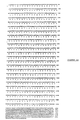
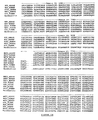
- a more particular object of the invention resides in a nucleic acid isolated coding for the amino acid sequence corresponding to the sequence SEQ ID1 ( Figure 4A), characterized in that it codes for marenostrine.
- a particular example of a nucleic acid according to the invention is a cDNA comprising the sequence SEQ n ° 1.
- nucleic acid according to the invention consists of human gene comprising the sequence SEQ ID 1 shown in Figure 4A (SEQ ID No. 1). A map of this gene is also given in Figure 3.
- nucleic acids of the invention are given in what follows and in the experimental part.
- Another aspect of the present application relates more particularly to probes and primers specific for the above identified gene, as well as a method and kit for the detection and / or amplification of this gene.
- the invention relates to methods for detecting the presence of mutation (s) in the above gene.
- a particular object of the invention therefore relates to a probe, allowing the detection of the Marenostrine gene corresponding to all or part of the sequence SEQ ID 1 or its complementary strand.
- probe means a single-stranded nucleic acid complementary to a target nucleic acid, and making it possible, by hybridization, to detect the presence of said target nucleic acid in a sample.
- the probe of the invention comprises at least part of the sequence SEQ ID No. 1. At least one part means at least 5 consecutive bases, of preferably at least 10, even more preferably at least 20. It may be a internal part of the sequence concerned (in particular SEQ ID n ° 1), or of a end of it.
- the probe can include in addition to the flanking genomic sequences of the sequence concerned (in particular the SEQ ID No. 1) in particular the genomic sequences of the Marenostrine gene.
- the probe according to the invention can advantageously comprise from 20 to 1000 nucleotides, preferably from 50 to 800. More preferably, the probes the invention comprise from 100 to 700 nucleotides. even more preferably from 100 to 500 nucleotides.
- the probes of the invention advantageously make it possible to detect so selective the nucleic acids defined above, in particular the gene for Manenostrine.
- the probes of the invention are capable of hybridizing in a way specific with these nucleic acids, preferably with the Marenostrin gene.
- hybridization conditions are the standard conditions known to those skilled in the art. job. These may be stringent conditions, such as in particular: Hybridization at 42 ° C, 50% formamide, 5 X SSC, 1 X Denhardt; Wash at 65 ° C in 0.1 X SSC, 0.1% SDS. Other specific hybridization conditions are given in the examples and materials and methods (see also Maniatis).
- Stringent conditions are particularly suitable when the acid test nucleic acid is present in small quantities and / or in poorly purified form.
- the stringent conditions make it possible to ensure the selectivity of the hybridization reaction, that is to say to significantly reduce the background noise (hybridization with sequences other than those defined above)
- Hybridization can also be carried out under non-stringent conditions, and in particular: Hybridization at 37 ° C, 40% formamide, 5 X SSC, 1 X Denhardt; Wash at 50 ° C in 1 X SSC, 0.1% SDS.
- Other specific hybridization conditions are given in the examples and materials and methods.
- test nucleic acid is present in larger quantities and is found in significantly shown in the test sample.
- An advantageous probe within the meaning of the invention is composed of 100 to 700 nucleotides, at least half of which is represented by a fragment of the sequence SEQ ID # 1.
- the entire probe of the invention is not represented by a fragment of the sequence SEQ ID No. 1, the rest is represented by the flanking sequence of the sequence SEQ ID 1 extending from residue 1433, or its complementary strand.
- a particular probe according to the invention is represented by the entire sequence SEQ ID n ° 1 or its complementary strand.
- a probe of the invention is composed of any acid nucleic acid to detect the presence of the Marenostrine gene (i.e., to hybridize with all or part of the Marenostrine gene). Even more preferably, a probe of the invention is composed of a nucleic acid to detect the presence of the last exon (exon 10) of the gene for Marenostrin. This exon is indeed carrying the genetic modifications described above, FMF officials, and therefore constitutes a privileged target region for detection experiments.
- a preferred probe of the invention comprises advantageously all or part of the sequence between the residues 1000 and 1400 of the sequence SEQ ID No. 1 or its complementary strand. Even more in particular, the probe of the invention covers at least one mutated residue in the case of the FMF.
- Probes according to the invention can be specific for each (or more) of these mutations and the non-mutated sequence, and so allow specific detection of native (non-mutated) sequences or one or more the other mutations (founding haplotypes).
- the present invention relates to a probe allowing the detection specific for the presence of a mutation on nucleotide 1170 of the gene for marenostrine as shown in SEQ ID No. 1. More particularly, this mutation is a substitution of an Adenine by a Guanine. Such a probe allows detect the presence of a genetic abnormality characteristic of the haplotype founder MED (S, ARM1, T, ARA1).
- the present invention also relates to any probe allowing detection specific for the presence of a mutation on nucleotide 1172 of the gene for the marenostrine as shown in SEQ ID No. 1. More particularly, this mutation is a substitution of a Guanine by an Adenine. Such a probe allows detect the presence of a genetic abnormality characteristic of the haplotype founder ARA2.
- the present invention also relates to any probe allowing detection specific for the presence of a mutation on nucleotide 1267 of the gene for the marenostrine as shown in SEQ ID No. 1. More particularly, this mutation is a substitution of a Thymine by a Cytosine. Such a probe allows detect the presence of a genetic abnormality characteristic of the haplotype founder ARM3 (or D).
- the present invention also relates to any probe allowing detection specific for the presence of a mutation on nucleotide 1130 of the gene for marenostrine as shown in SEQ ID No. 1. More particularly, this mutation is a substitution of a Guanine by a Cytosine. Such a probe allows detect the presence of a genetic abnormality characteristic of the haplotype founder ARM2.
- probes according to the invention are probes allowing the detection of any other mutation present on exon 10 of the marenostrine gene, such as for example an AAG-> AGG (Lys-> Arg) mutation on nucleotide 1174 or a deletion of AAT (position 1166) in the AT A.AT G codons of the marenostrine gene as represented in SEQ ID No. 1.
- the present invention also relates to any probe allowing detection specific for the absence of mutation at positions 1170, 1172, 1267 and 1130 of the gene marenostrine as shown in SEQ ID No. 1.
- the present invention also relates to any probe allowing the detection of the presence of exon 2 of the marenostrine gene.
- This is in particular any acid nucleic acid specifically hybridizing with all or part of exon 2, in particular with at least part of the exon, carrying a mutation observed in the disease FMF (E148Q mutation for example).
- Probes of the invention can also be constructed so as to detect the presence of several mutations simultaneously, which reduces the number of experiments.
- the probes according to the invention can also be marked, to allow their detection.
- the marking used can be any type of marking known to man of the trade, making it possible to generate a signal. It can be radioactive labeling, enzymatic, chemical, immunological, etc. These markings are for example a labeling with phosphorus 32, with biotin (16-dUTP), with digoxygenin (11-dUTP), etc.
- Another subject of the invention relates to a primer for the amplification of an acid nucleic acid as defined above.
- the invention relates to any primer usable for the specific amplification of the gene responsible for FMF. More in particular, the invention relates to any primer which can be used for the amplification of any or part of the Marenostrin gene.
- primer commonly refers to a single-stranded nucleic acid serving starting point for a nucleic acid amplification reaction.
- the primers of the invention allow the amplification of the gene Marenostrine.
- the primers of the invention are advantageously composed of from 3 to 50 bases, preferably from 3 to 40 and even more preferably from 3 to 35.
- the primers of the invention can in particular be derived from a nucleic acid such as defined above, or a nucleic acid whose map is shown in Figure 3.
- a primer according to the present invention is an acid single-stranded nucleic acid comprising from 3 to 50 nucleotides complementary to a part at least the marenostrin gene. More particularly, a preferred primer of the invention is a single-stranded nucleic acid comprising from 3 to 50 nucleotides complementary to at least part of the sequence ID n ° 1 or its strand complementary.
- the present invention relates more particularly to a primer characterized in that it comprises from 3 to 50 nucleotides and in that it is complementary to a region of the Marenostrine gene carrying a mutation on the nucleotide 1170 as shown in SEQ ID No. 1. More particularly, this mutation is a substitution of an Adenine by a Guanine.
- a primer allows, coupled with an appropriate primer, to amplify and detect the presence of an anomaly genetics characteristic of the founding haplotype MED (S, ARM1, T, ARA1).
- the present invention also relates to any primer characterized in that that it comprises from 3 to 50 nucleotides and that it is complementary to a region of the Marenostrine gene carrying a mutation on nucleotide 1172 such as depicted in SEQ ID No. 1. More particularly, this mutation is a substitution of a Guanine by an Adenine.
- a primer allows, coupled with a primer appropriate, amplify and detect the presence of a genetic abnormality characteristic of the founding haplotype ARA2.
- the present invention also relates to any primer characterized in that it comprises from 3 to 50 nucleotides and in that it is complementary to a region of the Marenostrine gene carrying a mutation on nucleotide 1267 as shown on SEQ ID No. 1. More particularly, this mutation is a substitution for a Thymine by a Cytosine.
- a primer allows, coupled with an appropriate primer, to amplify and detect the presence of a genetic anomaly characteristic of the founding haplotype ARM3 (or D).
- the present invention also relates to any primer characterized in that it comprises from 3 to 50 nucleotides and in that it is complementary to a region of the Marenostrine gene carrying a mutation on nucleotide 1130 as shown on SEQ ID No. 1. More particularly, this mutation is a substitution for a Guanine by a Cytosine.
- a primer allows, coupled with an appropriate primer, to amplify and detect the presence of a genetic anomaly characteristic of the ARM2 founding haplotype.
- the present invention also relates to any primer characterized in that that it comprises from 3 to 50 nucleotides and that it is complementary to a region of the Marenostrine gene comprising at least one of the nucleotides 1130, 1170, 1172 and 1267 as shown in SEQ ID No. 1, said nucleotides not having of mutation.
- primers allow, coupled with an appropriate primer, to amplify and detect the absence of genetic abnormality in the nucleic acid tested.
- the invention also relates to a starting couple, characterized in that it allows the amplification of a region comprising at least one of the mutations identified above, i.e. including at least one of the residues 1130, 1170, 1172 or 1267 as shown in SEQ ID No. 1. Even more preferably, the starting torque according to the invention allows the amplification of a region corresponding to nucleotides 1000 to 1400 approximately of the sequence SEQ ID No. 1, even more preferably around 1100 to 1300.
- the region amplified (i.e., delimited) by the couple of the invention comprises less than 1000 bp, more preferably less than 500 bp. In a particular embodiment, the amplified region comprises less than 250 bp.
- one of the primers of the couples defined above is a primer covering a mutation site in the Marenostrine gene, such as defined above.
- the provision of a sample comprises for example the taking a biological sample from a subject, or simply using a stored sample, so as to render the nucleic acid coding for Marenostrine detectable.
- this nucleic acid is contained in a cell, step a) will include the rupture of this cell to facilitate the detection of acid nucleic.
- Nucleic acid as defined in step a) can be a gDNA, a cDNA or an mRNA for example. most often it will be gDNA from a biological sample taken from a topic. Furthermore, as indicated, this nucleic acid codes all or part of the Marenostrin. It is indeed possible to use either a complete nucleic acid, in order to ability, if necessary, to detect the presence of mutations throughout the sequence, or a nucleic acid encoding only part of the protein, said party being likely to carry certain mutations.
- the acid nucleic acid encodes all of Marenostrine or a part comprising at least part of the last exon (exon 10) or exon 2. More particularly, the preferred part corresponds at least to the region between residues 1130 and 1267 of the sequence SEQ ID No. 1 (amino acids 376 to 423).
- the method of the invention comprises advantageously a step, prior or concomitant to step b), of amplification nucleic acid.
- This amplification can be achieved by all techniques known to those skilled in the art. It can in particular be an amplification by the PCR technique, using for example pairs of primers as defined previously, whether or not followed by a step of cloning the amplification products in a plasmid vector.
- the amplification is carried out in using a pair of primers, one of which covers one of the mutated positions identified above in the Marenostrine gene.
- amplification only occurs when the specific primer mutation is present in the nucleic acid.
- amplification and detection are concomitant, the presence or absence of a fragment amplified directly translating the presence or not of a corresponding mutation.
- kits which can be used for setting up work of a process as defined above, said kit comprising in particular a couple primer as defined above and the reagents necessary for the amplification of an acid nucleic.
- the kit of the invention may also include an additional reagent for the detection of a mutation, such as in particular a probe according to the invention.
- a kit of the invention can also include a support for the implementation of the process, for example a plate.
- polypeptide as encoded by a nucleic acid defined above.
- polypeptide means in the sense of the invention any molecule comprising a sequence of at least 2 amino acids. This term includes in particular peptides and proteins.
- polypeptide comprising all or part of the amino acid sequence presented in SEQ ID No. 1 or a variant thereof.
- a part includes in particular any fragment of this protein, comprising advantageously more than three consecutive residues, even more preferably more of 10.
- Such fragments can be prepared by techniques known to man of the profession (enzymatic cleavage, chemical synthesis, genetic engineering, etc.). Such fragments can be used as antigens or as competitors, or for molecular modeling experiments for example.
- One part preferably designates a fragment comprising more than 20 acids amines.
- a variant as indicated above corresponds to any polypeptide derived from the sequence SEQ ID n ° 1 by structural modifications. Preferably, these changes affect less than 10% of the sequence residues, even more preferably less than 5%. These changes may be genetic in nature, chemical or enzymatic. Variants as defined above are in particular the polypeptides carrying the mutations shown in Table 2.
- a particular object of the invention resides in a protein encoded by the gene comprising the sequence SEQ ID No. 1.
- Marenostrine could belong to a family of regulatory factors, binding DNA, and could thus regulate gene expression, possibly several genes.
- the rpt-1 protein has notably been implicated in regulating the expression of an interleukin-2 receptor chain. The members of this family of genes may therefore be involved in the regulation of expression protein that has a role in immunity, a finding that could be linked to recurrent inflammation observed in FMF.
- the BT protein butyrophyline
- the invention further relates to the therapeutic use of nucleic acids and polypeptides described above.
- a nucleic acid encoding Marenostrine human, or the corresponding protein can be used for the development of therapies for restoring deficient activity.
- the nucleic acid can in particular be used as part of gene therapy.
- Native recombinant protein i.e. not mutated
- the invention further relates to a process for producing the Recombinant marenostrine comprising culturing a cell comprising an acid nucleic acid encoding Marenostrine, and the recovery of the protein thus produced.
- said cell is for example a prokaryotic (bacteria) or eukaryotic (yeast, cell animal, etc.).
- the cell is a cell into which the nucleic acid has been introduced artificially, or a cell descended from such a cell.
- the invention further relates to a pharmaceutical composition
- a pharmaceutical composition comprising a nucleic acid or a polypeptide as defined above.
- nucleic acids and polypeptides of the invention can also be used for the search for active molecules, in particular capable molecules to act on the FMF. So the polypeptides can be used to generate, for example by molecular modeling, non-peptide or non-entirely products peptides, with the capacity to treat FMF.
- nucleic acids and polypeptides of the invention can also be used to generate, according to methods known to those skilled in the art, antibodies corresponding polyclonal or monoclonal. Such antibodies are for example usable for detecting the presence of Marenostrine in a sample, or for the purification of Marenostrine.
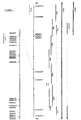
- the horizontal lines represent the extent of each YAC clone: 16Gh7, 633d12 and 26Fe7 (thick lines) and cosmid clones: BC2, BD6, AA6, 30c3, 30e1, 30g4, 30f9 and 30e10 (thin lines).
- the deletions in YAC 633d12 and in cosmid AA6 are represented by dotted lines.
- the gaps in the sequences are represented by double slashes (//).
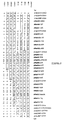
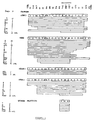
- the FMF carrier chromosomes found in North African Jewish subjects 68-3 and 91-3 and in Armenian subjects A26-3 and A28-1 are shown.
- the physical position of the microsatellite and biallelic markers is shown on the top.
- the extent of the Mediterranean founder haplotype is indicated by a box: as previously indicated (for D16S3275, the two alleles 9 and 18 were observed in this founder haplotype) the Mediterranean haplotypes S and ARM1 differ in distal markers D13S3082.
- the marker D16S3373 is at the same locus as AFMef43.
- x / y indicates non-phased heterozygous markers; genotypes not available have been left blank. Tel: telomeric side; Cen: centromeric side.
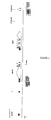
- FMF region transcription map The genomic structure of the Znfmf and Marenostrin genes is indicated by diagrams showing the exons (boxes) and the introns (lines). The horizontal arrows indicate the direction of transcription. The sequence is presented with the centrometer direction to the right. The location of EST sequences is indicated; when two ESTs represent two ends of the same clone, they are represented by boxes.
- FMF founding haplotypes observed in different affected populations.
- the haplotypes are grouped to schematize the segment of chromosomes retained from each of the four founding haplotypes associated with sequence variations of the Marenostrin. (N), number of haplotypes carrying the framed allelic combination.
- Ethnicity A: Armenians; NAJ: Non-Ashkenazi Jews (including Jews North Africa and Iraq); D: Druzes; T: Vietnamese; MA: Arabs from the Maghreb; O: other.
- YACs 16Gh7, 633d12 and 26Fe7 were partially digested with the enzyme Sau3A, dephosphorylated, and ligated into the BamHI site of the cosmid vector sCOGH2 or RH3. These vectors were then used to transfect the E. Coli STBL2 strain (according to the standard protocols).
- the cosmids derived from clones hybridizing with human DNA have been purified and spread using a Hybaid robot on nylon membranes (Hybond N +). Filters were then hybridized with synthesized non-radioactive probes from STS primers and the ends of the cosmid.
- the primers were labeled with biotin-16-dd-UTP (Boehringer Mannheim) using the terminal transferase, then hybridized to the filter according to standard protocols. Clone end probes were then generated by asymmetric PCR using a vector primer (hGHlink.up: ACAATGGGAGCTGGTCTC (SEQ ID NO: 2) or hGHlink.lo: TAGGAGAAGGACCGCCCA (SEQ ID NO: 3)) in a reaction volume 50 ⁇ l in the presence of 500 ng of cosmid DNA, 10 ⁇ M of digoxygenine-11-dUTP (Boehringer Mannheim), 90 ⁇ M of dDTP, 100 ⁇ M of each d (ACG) TP, 0.5 ⁇ M of primer, 100 ⁇ M Tris-HCI, pH 8.8, 50 mM Kcl, 1.5 mM MgCl 2 and 0.1% Triton X-100.
- a vector primer hGHlink.up: ACAATGGGAGCT
- a Taq DNA polymerase unit (Cetus) was added after 5 min at 90 ° C and the mixture was subjected to 30 amplification cycles, as follows: 25 seconds at 94 ° C, 30 seconds at 60 ° C, and 1 minute at 72 ° C.
- the probes were checked on a 0.8% agarose gel and purified on a G25 Sephadex column.
- Hybridizations on filters were carried out in a DIG Easy Hyb buffer (Boehringer Mannheim), in the presence of a competing DNA (cot1 DNA, Boehringer Mannheim).
- the CDP-StarTM alkaline phosphatase substrate was used (Boehringer Mannheim). Data analysis and assembly of the contigs were carried out using the Contigs Package (ref. 26).
- the fragments of a partial digestion by the enzyme CviJI were gel purified to a size of 8 to 10 kb, subcloned into the plasmid pBC-SK + (CmR, Stratagene) and sequenced on both ends.
- This procedure has proven to be very effective in solving highly repetitive or practically exact duplication region (ref. 8).
- the chimeric character of the YACs was checked by fluorescent in situ hybridization (FISH) on spread metaphases of healthy donors using the total DNA of YACs clones or the inter-Alu PCR as probe (ref. 27).
- FISH mapping was carried out by co-hybridization of certain cosmids selected as probes (labeled with biotin 16-dUTP and with digoxygenin 11-dUTP) on extended DNA prepared (i) from lymphoblastoid cell lines of healthy donors, (ii) from non-chimeric YAC 26Fe7 as a reference and (iii) from deleted YAC clone 633d12.
- the biotin and digoxygenin labeled probes were detected by Texas Red and FITC respectively and viewed simultaneously with a dual band filter using the Leica DMRB epifluorescence microscope. The images were recorded with a CCD camera. Successive co-hybridization cycles of three cosmids made it possible to cover the deletion of YAC 633d12.
- Fidelity to the human sequence was checked (i) by comparing the restriction map deduced from the sequence (for EcoRI, Bglll, NotI, Eagl, Mlul and BssHII) to the profile of restriction observed on all the cosmids assembled in the region of interest or to published data; (ii) by systematic Long Range PCR analysis of control DNA; (Iii) in certain critical situations, by Southern blot analysis, using digested DNA of control samples. In addition, for all the exons detected, more than half of the critical region sequence (over 35 kb in total) have been re-sequenced from "normal" and "affected" DNA.
- PCR fragments 3 to 8 kb in length
- the PCR-LA technique (Takara) was used to prepare corresponding DNA fragments from patient and healthy individuals of FMF families. These PCR matrices were then purified using the Microcon system (Amicon) and subjected to a cyclic sequencing step using fluorescent terminators. Sequence comparisons were made using the Staden96 system. The primers were generated with the Oligo 4.0 software (ref. 30). Precise information on the new markers is available from the Genome Data Base (GDB).
- GDB Genome Data Base
- GDB Genome Data Base Bank
- BLAST programs were used to determine the similarities and identities with known genes using a non-redundant compilation of bases EMBL and GenBank. Amino acid comparisons were made by translating the DNA sequences in the six potential reading frames and comparing these translations to protein sequences found in Swiss-Prot Databases and PIR using the BLASTX program. Protein homology domains have been identified by research in the PROSITE protein bank.
- the cosmid DNA was partially digested with the enzyme Sau3A and ligated to the vector pSPL3 (BRL).
- the ligation product was transferred to the E. coli XL1-blue host cell by electroporation.
- Plasmid DNA was harvested and introduced into COS-7 cells by electroporation.
- the RNA was isolated 48 hours after transfection and converted into single-stranded cDNA in the presence of SuperScript II reverse transcriptase (BRL).
- the single-stranded cDNA was then transformed into double-stranded DNA by six cycles of PCR amplification.
- the enzyme BstXI was added to the reaction and incubated overnight.
- the PCR RNA products were then cloned into the pAMP vector (BRL), and individual clones were sequenced.
- CDNA fragments corresponding to the Marenostrin and Znfmf genes were amplified from cDNA or Quick clone cDNA libraries (Clontech). Primers were generated from the Exon-trapping product sequences and used in standard PCR reactions. RACE analyzes were performed in 3 'and 5' to characterize the ends of these genes using the marathon cDNA amplification kit (Clontech) according to the manufacturer's recommendations. PCR reactions were then carried out using adapter oligonucleotides (AP1 and AP2) as well as oligonucleotides internal to the cDNA sequences. The products of these PCRs were cloned into the vector TA (Invitrogen) and recombinant clones were sequenced.
- TA Invitrogen
- the following conditions were used for the PCR: denaturation at 95 ° C for 10 min followed by 30 denaturation cycles at 95 ° C for 15 s, annealing at 55 ° C for 30 s, then elongation at 72 ° C for 3 min and final elongation at 72 ° C for 10 min.
- the PCR products were purified by chromatography on Sephadex P100 and directly sequenced using specific primers and the sequencing kit Cyclic AmpliTaq FS Dye Terminator using the ABI prism 377 sequencer.
- the Northern Blots (Clontech) were pre-hybridized in an ExpressHyb buffer (Clontech) and hybridized in the same solution containing the ADNC probe labeled with phosphorus 32 .
- the membranes were washed at 50 ° C with 0.1x standard citrate saline solution (SSC) and 0.1% SDS, then exposed on X-ray sensitive films at - 80 ° C for 7 days.
- SSC standard citrate saline solution
- a sequencing preparation card has been first established as follows: The candidate interval has been subcloned to from 16Gh7 and 633d12 YACs (isolated from ICI and CEPH banks respectively) in the cosmid vector sCOGH2 (ref. 7). The assembly of the cosmids in contig was made on the basis of the content in STS, from markers genetics and end probes of YACs and cosmids. The assembly corresponding to the minimum contig is shown in Figure 1. The continuity of the contig was controlled by the FISH technique on metaphasic chromosomes and on extended genomic DNA fibers.
- a total sequence of 239 kb was thus assembled in 5 contigs, separated by 4 sequencing gaps (200 to 650 bp), which were refractory to the techniques of sequencing used. After verifying the fidelity of this sequence to human DNA, this sequence was used for a more detailed study of the interval and to define the transcriptional units contained in it.
- patient A26-3 is homozygous for the MED haplotype in the portion distal of the D16S3373 marker.
- heterozygous variants observed for proximal markers indicate localization at least one ancestral recombination excluding the centromeric region at the marker D16S3373.
- the phase of D16S3373, afmef51, afmef52 and D16S3275 could be determined in patient A26-3 and indicates that the founder alleles (5, G, AAA and 9 respectively) are on the same chromosome, which therefore carries the founding haplotype extended to marker D16S3275.
- Patient A28-1 only presents a copy of the MED haplotype covering the markers D16S3124 to D16S2617, and potentially D16S3373. However, this latter marker does not exhibit linkage imbalance significant. Insofar as the markers afmef101 and afmef53 are homozygous for the non-founder allele (A / A and C / C respectively) in this patient, these markers can be excluded from the founding haplotype MED carried by this chromosome. In Consequently, the ancestral breakpoint defined in A28-1 seems to be located from the distal side of afmef101, which brings the centromeric limit closer to a few kb additional, from marker D16S3373 to afmef101. This allowed us to conclude that the candidate region is bordered by D16S2617 and afmef101- D16S3373 and, according to the sequence map, covers an interval of 60 kb ( Figures 1 and 3).
- Exon-trapping analyzes were carried out on the cosmids 30f9, 30g4 and 30e10, according to the protocol described in the materials and methods. These analyzes led to the identification of 32 putative exons, including 19 located between the markers D16S2617 and D16S3373. Comparing the sequence of these exons with genomic DNA made it possible to align and orient these fragments relative to the genomic clones. The sequences identified by Exon-Trapping were also compared to EST banks and the exons identified in 3. above. All of these data were then integrated to reconstruct the transcriptional units. These Units are shown in Figure 3.
- PCR experiments were performed. To this end, PCR amplification products from human cDNA libraries (Clontech), size consistent with predictions, have been sequenced.
- CDNA fragments corresponding to the Znfmf gene were then amplified to from a liver cDNA library, and assembled into a transcript of 3060 nucleotides length.
- This gene is composed of 5 exons, distributed over 14 kb of genomic DNA.
- Several ESTs are included in the most 3 'exon of the Znfmf gene, and the sequence AA375800 covers the second exon of this gene (Figure 3).
- a 1.9 kb cDNA sequence for the Marenostrine gene was obtained at from 8 overlapping sequences amplified from a cDNA library of leukocytes.
- the Marenostrine gene contains at least 10 exons, distributed over more 10 kb of genomic DNA ( Figure 3). No complementarity with TSEs has been found in public sequence banks.
- RNAs poly (A) isolated from different human tissues.
- results obtained show a weak band of about 4kb, in the MRNA of peripheral blood leukocytes.
- no expression was detected in the other tissues tested: spleen, thymus, prostate, testis, uterus, small intestine, colon, stomach, thyroid, spinal cord, lymph node, trachea, adrenal glands, heart, brain, placenta, lung, muscle, kidney and pancreas.
- gene expression was detected by PCR in spleen and leukocyte cDNA libraries, and by RT-PCR in synovia. The PCR products observed in these tissues had the expected size and their sequence is identical to that of fragments of the Marenostrine gene.
- the exons encoding the Olfmf, Znfmf and Marenostrine were sequenced in 7 patients with FMF, who were homozygous for one of the founding haplotypes, and in 11 unaffected control subjects.
- the sequencing was carried out on DNA amplification products genomics, to be able to analyze the entire coding region of these genes.
- haplotype Nucleotide change Position (SEQ ID # 1) Effect on codon MED A TG -> G TG 1170 Met -> Val ARA2 AT G -> AT A 1172 Met -> Island D G T T -> G C T 1267 Val -> Ala ARM3 G T T -> G C T 1267 Val -> Ala ARM2 AT G -> AT C 1130 Met -> Island
- the first sequence alteration (Med variation) consists of a change A -> G which replaces a methionine codon (ATG) with a valine codon (GTG). This mutation was found in families of different ethnic origins (Jewish, Armenian, Turks and Arabs) with the MED haplotype. This alteration is therefore characteristic of the founding haplotype MED.
- the second sequence alteration affects the same codon as the first and consists of a change G -> A which replaces the same codon methionine (ATG) to codon isoleucine (ATA).
- ATG codon methionine
- ATA codon isoleucine
- the third sequence alteration (variation Arm3) consists of a change T -> C which replaces a valine codon (GTT) with an alanine codon (GCT).
- GTT valine codon
- GCT alanine codon
- the fourth sequence alteration (variation Arm2) consists of a change G -> C which replaces another methionine codon (ATG) in isoleucine codon (ATC). This alteration was observed in the Armenian population group and Turkish carrying the founding haplotype ARM2. This alteration is therefore characteristic of the ARM2 founding haplotype.
Landscapes
- Chemical & Material Sciences (AREA)
- Health & Medical Sciences (AREA)
- Life Sciences & Earth Sciences (AREA)
- Organic Chemistry (AREA)
- General Health & Medical Sciences (AREA)
- Molecular Biology (AREA)
- Biochemistry (AREA)
- Biophysics (AREA)
- Zoology (AREA)
- Genetics & Genomics (AREA)
- Medicinal Chemistry (AREA)
- Gastroenterology & Hepatology (AREA)
- Proteomics, Peptides & Aminoacids (AREA)
- Toxicology (AREA)
- Measuring Or Testing Involving Enzymes Or Micro-Organisms (AREA)
- Micro-Organisms Or Cultivation Processes Thereof (AREA)
- Heterocyclic Carbon Compounds Containing A Hetero Ring Having Oxygen Or Sulfur (AREA)
- Peptides Or Proteins (AREA)
Claims (24)
- Isolierte Nukleinsäure, die für die der Sequenz SEQ ID 1 entsprechenden Aminosäurensequenz kodiert.
- Nukleinsäure nach Anspruch 1, dadurch gekennzeichnet, dass sie mindestens eine Mutation aufweist, ausgewählt aus den folgenden Mutationen:A → G (1170)G → A (1172)T → C (1267)G → C (1130)
- Nukleinsäure nach Anspruch 1, dadurch gekennzeichnet, dass es sich um gDNA oder cDNA handelt.
- Nukleinsäure nach Anspruch 1, dadurch gekennzeichnet, dass es sich um RNA handelt.
- Humanes Gen, umfassend die Sequenz SEQ ID 1.
- Polypeptid, das durch die Nukleinsäure nach einem der Ansprüche 1 bis 4 kodiert wird.
- Polypeptid, dadurch gekennzeichnet, dass es mehr als 10 aufeinanderfolgende Aminosäuren der Sequenz SEQ ID 1 umfasst.
- Polypeptid, dadurch gekennzeichnet, dass es mehr als 10 aufeinanderfolgende Aminosäuren der Sequenz SEQ ID 1 umfasst, wovon höchstens 10 % der Reste modifiziert sind.
- Protein, kodiert durch das Gen nach Anspruch 5.
- Sonde zum Nachweis des für FMF verantwortlichen Gens, die der gesamten oder einem Teil der Sequenz SEQ ID 1 oder ihrem komplementären Strang entspricht.
- Sonde zum Nachweis des für FMF verantwortlichen Gens, das aus 100 bis 700 Nukleotiden besteht, wovon mindestens die Hälfte durch ein Fragment der Sequenz SEQ ID 1 oder dem komplementären Strang dargestellt wird, wobei der Rest.durch die flankierende Sequenz der Sequenz SEQ ID 1 dargestellt wird, die sich von dem Rest 1433 erstreckt.
- Sonde nach Anspruch 10, dadurch gekennzeichnet, dass sie die Sequenz umfasst, die zwischen den Resten 1000 und 1400 der Sequenz SEQ ID 1 oder ihren komplementären Strang liegt
- Sonde nach Anspruch 10, dadurch gekennzeichnet, dass sie mindestens einen mutierten Rest im Fall von FMF erkennt, der ausgewählt ist aus der Gruppe, bestehend aus den Resten, die sich in den Positionen 1170, 1172, 1174, 1267, 1130 der Sequenz SEQ ID 1 befinden, oder einen deletierten Rest erkennt, die sich in Position 1166 der Sequenz SEQ ID1 befindet, oder des komplementären Strangs.
- Sonde nach Anspruch 10, dadurch gekennzeichnet, dass sie mindestens einen nicht mutierten Rest erkennt, der ausgewählt ist aus der Gruppe, bestehend aus den Resten, die sich in den Positionen 1170, 1172, 1174, 1267, 1130 der Sequenz SEQ ID 1 befinden, oder einen nicht deletierten Rest, der sich in Position 1166 der Sequenz SEQ ID1 befindet, oder des komplementären Strangs.
- Primer, der mindestens zu einem Teil der Sequenz SEQ ID 1 komplementär ist, der mindestens eine der folgenden Mutationen aufweist;A → G, ersetzt das Kodon Methionin ATG in Position 1170 in der Sequenz SEQ ID 1 durch ein Koden Valin GTG (Variation Med);G → A, ersetzt das Kodon Methionin (ATG) in Position 1172 in der Sequenz SEQ ID 1 durch ein Kodon Isoleucin (ATA) (Variation Ara2);T → C, ersetzt das Kodon Valin (GTT) in Position 1267 in der Sequenz SEQ ID1 durch ein Kodeon Alanin (GCT) (Variation Arm3);G → C, ersetzt das Kodeon Methionin (ATG) in Position 1130 in der Sequenz SEQ ID 1 durch ein Kodeon Isoleucin (ARC) (Variation Arm2).
- Primer, der zu einem Bereich der Sequenz SEQ ID 1 komplementär ist, der mindestens eines der Nucleotide 1130, 1170, 1172 und 1267 umfasst, wobei die Nukleotide keine Mutationen aufweisen.
- Primerpaar, umfassend;a) einen Primen, der unter stringenten Bedingungen an einen Bereich hybridisiert, der zwischen den Resten 1200 und 1900, vorteilhafter Weise 1300 und 1600 der Sequenz SEQ ID 1 liegt,b) einen Primer, der unter stringenten Bedingungen an den anderen Strang in einem Bereich hybridisiert, der zwischen den Resten 300 bis 1000, vorzugsweise 500 bis 1000, und noch bevorzugter 700 bis 1000 der Sequenz SEQ ID 1 liegt,c) wobei beide Primer die Amplifikation eines Bereichs von höchstens 500 bp ermöglichen, der den gesamten oder einen Teilbereich umfasst, der zwischen den Resten 300 bis 1900 der Sequenz SEQ ID 1 liegt.
- Primerpaar nach Anspruch 17, dadurch gekennzeichnet, dass einer der Primer a) oder b) mindestens einen mutierten Rest in Position 1130, 1170, 1172 oder 1267 der Sequenz SEQ ID 1 enthält.
- Verfahren zum Nachweis einer Mutation in dem Gen nach Anspruch 5, die FMF hervorrufen kann, umfassend;den Nachweis von einer oder mehrerer Mutationen in einer biologischen, Nukleinsäure-haltigen Probe durch Hybridisierung unter stringenten Bedingungen mit einer Sonde nach einem der Ansprüche 10 bis 14.
- Verfahren nach Anspruch 19, dadurch gekennzeichnet, dass die kodierende Nukleinsäure mindestens dem Bereich entspricht, der zwischen den Resten 1130 und 1267 der Sequenz SEQ ID 1 liegt.
- Verfahren nach einem der Ansprüche 19 oder 20, dadurch gekennzeichnet, dass es außerdem einen Schritt der Amplifikation der Nukleinsäure vor Schritt b oder während Schritt b umfasst.
- Verfahren nach Anspruch 21, dadurch gekennzeichnet, dass die Amplifikation durch die Verwendung eines Primerpaars nach Anspruch 18 erfolgt, wobei die Amplifikation nur stattfindet, wenn die spezifische Mutation des Primers in der Nukleinsäure vorhanden ist.
- Kit zur Durchführen des Verfahrens nach einem der Ansprüche 19 bis 22, umfassend mindestens ein Primerpaar nach einem der Ansprüche 17 oder 18.
- Kit nach Anspruch 23, dadurch gekennzeichnet, dass des weiteren eine Sonde nach einem der Ansprüche 10 bis 14 darin enthalten ist.
Applications Claiming Priority (3)
| Application Number | Priority Date | Filing Date | Title |
|---|---|---|---|
| FR9710487 | 1997-08-19 | ||
| FR9710487A FR2767536B1 (fr) | 1997-08-19 | 1997-08-19 | Gene de la fievre mediterraneenne familiale |
| PCT/FR1998/001805 WO1999009059A1 (fr) | 1997-08-19 | 1998-08-13 | Gene de la fievre mediterraneenne familiale |
Publications (2)
| Publication Number | Publication Date |
|---|---|
| EP1007558A1 EP1007558A1 (de) | 2000-06-14 |
| EP1007558B1 true EP1007558B1 (de) | 2003-04-23 |
Family
ID=9510383
Family Applications (1)
| Application Number | Title | Priority Date | Filing Date |
|---|---|---|---|
| EP98942740A Expired - Lifetime EP1007558B1 (de) | 1997-08-19 | 1998-08-13 | Gen des familiären mittelmeerfiebers |
Country Status (8)
| Country | Link |
|---|---|
| EP (1) | EP1007558B1 (de) |
| AT (1) | ATE238347T1 (de) |
| CA (1) | CA2300191A1 (de) |
| DE (1) | DE69813837T2 (de) |
| FR (1) | FR2767536B1 (de) |
| IL (2) | IL134563A0 (de) |
| TR (1) | TR200000435T2 (de) |
| WO (1) | WO1999009059A1 (de) |
Family Cites Families (1)
| Publication number | Priority date | Publication date | Assignee | Title |
|---|---|---|---|---|
| IE66125B1 (en) * | 1991-01-31 | 1995-12-13 | Zeneca Ltd | Detection method for variant nucleotides |
-
1997
- 1997-08-19 FR FR9710487A patent/FR2767536B1/fr not_active Expired - Lifetime
-
1998
- 1998-08-13 EP EP98942740A patent/EP1007558B1/de not_active Expired - Lifetime
- 1998-08-13 DE DE69813837T patent/DE69813837T2/de not_active Expired - Lifetime
- 1998-08-13 AT AT98942740T patent/ATE238347T1/de active
- 1998-08-13 WO PCT/FR1998/001805 patent/WO1999009059A1/fr not_active Ceased
- 1998-08-13 IL IL13456398A patent/IL134563A0/xx active IP Right Grant
- 1998-08-13 CA CA002300191A patent/CA2300191A1/fr not_active Abandoned
- 1998-08-13 TR TR2000/00435T patent/TR200000435T2/xx unknown
-
2000
- 2000-02-15 IL IL134563A patent/IL134563A/en not_active IP Right Cessation
Also Published As
| Publication number | Publication date |
|---|---|
| ATE238347T1 (de) | 2003-05-15 |
| CA2300191A1 (fr) | 1999-02-25 |
| IL134563A0 (en) | 2001-04-30 |
| DE69813837D1 (de) | 2003-05-28 |
| FR2767536B1 (fr) | 1999-10-22 |
| DE69813837T2 (de) | 2004-02-26 |
| TR200000435T2 (tr) | 2000-12-21 |
| WO1999009059A1 (fr) | 1999-02-25 |
| IL134563A (en) | 2006-08-20 |
| FR2767536A1 (fr) | 1999-02-26 |
| EP1007558A1 (de) | 2000-06-14 |
Similar Documents
| Publication | Publication Date | Title |
|---|---|---|
| French FMF Consortium et al. | A candidate gene for familial Mediterranean fever | |
| US5352775A (en) | APC gene and nucleic acid probes derived therefrom | |
| Sirotkin et al. | Identification of a New Human Catenin Gene Family Member (ARVCF) from the Region Deleted in Velo–Cardio–Facial Syndrome | |
| JP2001500366A (ja) | Cadasilに関与する遺伝子、診断方法および治療への適用 | |
| EP1268784B1 (de) | An entzündlichen darmerkrankungen beteiligte gene und deren verwendung | |
| JP4017672B2 (ja) | ヒト・ヘモクロマトーシス遺伝子の領域における多型および新規遺伝子 | |
| JPH06500688A (ja) | 神経線維腫遺伝子 | |
| US5777093A (en) | cDNAs associated with ataxia-telangiectasia | |
| JP3449419B2 (ja) | KVLQT1をコードするQT延長症候群遺伝子およびそのminKとの関連 | |
| Nothwang et al. | Identification of a novel Ran binding protein 2 related gene (RANBP2L1) and detection of a gene cluster on human chromosome 2q11–q12 | |
| EP1064306B1 (de) | Nephrin gen und protein | |
| US6368794B1 (en) | Detection of altered expression of genes regulating cell proliferation | |
| EP1007558B1 (de) | Gen des familiären mittelmeerfiebers | |
| US5756288A (en) | Ataxia-telangiectasai gene | |
| US5728807A (en) | Mutated proteins associated with ataxia-telangiectasia | |
| US6175000B1 (en) | Nucleic acids encoding human trithorax protein | |
| McGuire et al. | Localization and characterization of the human ADP-ribosylation factor 5 (ARF5) gene | |
| US20050118581A1 (en) | Novel brain expressed gene and protein associated with bipolar disorder | |
| EP1279733A1 (de) | Nukleinsäuren und Polypeptide, welche an der Veranlagung zur Infektion durch Menschlichen Papillomavirus, Epidermodysplasia verruciformis und/oder Psoriasis beteiligt sind | |
| US20030170627A1 (en) | cDNAs co-expressed with placental steroid synthesis genes | |
| US20030079236A1 (en) | Polymorphisms associated with internalizing disorders | |
| WO1999009169A1 (en) | The pyrin gene and mutants thereof, which cause familial mediterranean fever | |
| JP4495255B2 (ja) | 多発性嚢胞腎臓疾患遺伝子 | |
| McGuire | The story of RP10: A positional cloning approach to the identification of an autosomal dominant retinitis pigmentosa gene | |
| Olufemi | Construction of a cosmid contig and identification of candidate gene (s) within the MEN1 interval at 11q13 |
Legal Events
| Date | Code | Title | Description |
|---|---|---|---|
| PUAI | Public reference made under article 153(3) epc to a published international application that has entered the european phase |
Free format text: ORIGINAL CODE: 0009012 |
|
| 17P | Request for examination filed |
Effective date: 20000210 |
|
| AK | Designated contracting states |
Kind code of ref document: A1 Designated state(s): AT BE CH CY DE DK ES FI FR GB GR IE IT LI LU MC NL PT SE |
|
| 17Q | First examination report despatched |
Effective date: 20010720 |
|
| RAP1 | Party data changed (applicant data changed or rights of an application transferred) |
Owner name: GENETHON III |
|
| GRAG | Despatch of communication of intention to grant |
Free format text: ORIGINAL CODE: EPIDOS AGRA |
|
| GRAG | Despatch of communication of intention to grant |
Free format text: ORIGINAL CODE: EPIDOS AGRA |
|
| GRAH | Despatch of communication of intention to grant a patent |
Free format text: ORIGINAL CODE: EPIDOS IGRA |
|
| GRAH | Despatch of communication of intention to grant a patent |
Free format text: ORIGINAL CODE: EPIDOS IGRA |
|
| GRAA | (expected) grant |
Free format text: ORIGINAL CODE: 0009210 |
|
| GRAH | Despatch of communication of intention to grant a patent |
Free format text: ORIGINAL CODE: EPIDOS IGRA |
|
| AK | Designated contracting states |
Designated state(s): AT BE CH CY DE DK ES FI FR GB GR IE IT LI LU MC NL PT SE |
|
| PG25 | Lapsed in a contracting state [announced via postgrant information from national office to epo] |
Ref country code: NL Free format text: LAPSE BECAUSE OF FAILURE TO SUBMIT A TRANSLATION OF THE DESCRIPTION OR TO PAY THE FEE WITHIN THE PRESCRIBED TIME-LIMIT Effective date: 20030423 Ref country code: IT Free format text: LAPSE BECAUSE OF FAILURE TO SUBMIT A TRANSLATION OF THE DESCRIPTION OR TO PAY THE FEE WITHIN THE PRE;WARNING: LAPSES OF ITALIAN PATENTS WITH EFFECTIVE DATE BEFORE 2007 MAY HAVE OCCURRED AT ANY TIME BEFORE 2007. THE CORRECT EFFECTIVE DATE MAY BE DIFFERENT FROM THE ONE RECORDED.SCRIBED TIME-LIMIT Effective date: 20030423 Ref country code: IE Free format text: LAPSE BECAUSE OF NON-PAYMENT OF DUE FEES Effective date: 20030423 Ref country code: GB Free format text: LAPSE BECAUSE OF FAILURE TO SUBMIT A TRANSLATION OF THE DESCRIPTION OR TO PAY THE FEE WITHIN THE PRESCRIBED TIME-LIMIT Effective date: 20030423 Ref country code: FI Free format text: LAPSE BECAUSE OF FAILURE TO SUBMIT A TRANSLATION OF THE DESCRIPTION OR TO PAY THE FEE WITHIN THE PRESCRIBED TIME-LIMIT Effective date: 20030423 |
|
| REG | Reference to a national code |
Ref country code: GB Ref legal event code: FG4D Free format text: NOT ENGLISH |
|
| REG | Reference to a national code |
Ref country code: CH Ref legal event code: EP |
|
| REF | Corresponds to: |
Ref document number: 69813837 Country of ref document: DE Date of ref document: 20030528 Kind code of ref document: P |
|
| REG | Reference to a national code |
Ref country code: IE Ref legal event code: FG4D Free format text: FRENCH |
|
| PG25 | Lapsed in a contracting state [announced via postgrant information from national office to epo] |
Ref country code: SE Free format text: LAPSE BECAUSE OF FAILURE TO SUBMIT A TRANSLATION OF THE DESCRIPTION OR TO PAY THE FEE WITHIN THE PRESCRIBED TIME-LIMIT Effective date: 20030723 Ref country code: PT Free format text: LAPSE BECAUSE OF FAILURE TO SUBMIT A TRANSLATION OF THE DESCRIPTION OR TO PAY THE FEE WITHIN THE PRESCRIBED TIME-LIMIT Effective date: 20030723 Ref country code: GR Free format text: LAPSE BECAUSE OF FAILURE TO SUBMIT A TRANSLATION OF THE DESCRIPTION OR TO PAY THE FEE WITHIN THE PRESCRIBED TIME-LIMIT Effective date: 20030723 Ref country code: DK Free format text: LAPSE BECAUSE OF FAILURE TO SUBMIT A TRANSLATION OF THE DESCRIPTION OR TO PAY THE FEE WITHIN THE PRESCRIBED TIME-LIMIT Effective date: 20030723 |
|
| PG25 | Lapsed in a contracting state [announced via postgrant information from national office to epo] |
Ref country code: LU Free format text: LAPSE BECAUSE OF NON-PAYMENT OF DUE FEES Effective date: 20030813 Ref country code: CY Free format text: LAPSE BECAUSE OF FAILURE TO SUBMIT A TRANSLATION OF THE DESCRIPTION OR TO PAY THE FEE WITHIN THE PRESCRIBED TIME-LIMIT Effective date: 20030813 |
|
| PG25 | Lapsed in a contracting state [announced via postgrant information from national office to epo] |
Ref country code: MC Free format text: LAPSE BECAUSE OF NON-PAYMENT OF DUE FEES Effective date: 20030831 Ref country code: BE Free format text: LAPSE BECAUSE OF NON-PAYMENT OF DUE FEES Effective date: 20030831 |
|
| NLV1 | Nl: lapsed or annulled due to failure to fulfill the requirements of art. 29p and 29m of the patents act | ||
| GBV | Gb: ep patent (uk) treated as always having been void in accordance with gb section 77(7)/1977 [no translation filed] |
Effective date: 20030423 |
|
| PG25 | Lapsed in a contracting state [announced via postgrant information from national office to epo] |
Ref country code: ES Free format text: LAPSE BECAUSE OF FAILURE TO SUBMIT A TRANSLATION OF THE DESCRIPTION OR TO PAY THE FEE WITHIN THE PRESCRIBED TIME-LIMIT Effective date: 20031030 |
|
| REG | Reference to a national code |
Ref country code: IE Ref legal event code: FD4D Ref document number: 1007558E Country of ref document: IE |
|
| REG | Reference to a national code |
Ref country code: FR Ref legal event code: CD |
|
| PLBE | No opposition filed within time limit |
Free format text: ORIGINAL CODE: 0009261 |
|
| STAA | Information on the status of an ep patent application or granted ep patent |
Free format text: STATUS: NO OPPOSITION FILED WITHIN TIME LIMIT |
|
| BERE | Be: lapsed |
Owner name: *GENETHON III Effective date: 20030831 |
|
| RAP2 | Party data changed (patent owner data changed or rights of a patent transferred) |
Owner name: GENETHON |
|
| 26N | No opposition filed |
Effective date: 20040126 |
|
| REG | Reference to a national code |
Ref country code: CH Ref legal event code: PFA Owner name: GENETHON Free format text: GENETHON III#1, RUE DE L'INTERNATIONALE, BOITE POSTALE 60#91002 EVRY CEDEX (FR) -TRANSFER TO- GENETHON#1, RUE DE L'INTERNATIONALE BOITE POSTALE 60#91002 EVRY CEDEX (FR) |
|
| REG | Reference to a national code |
Ref country code: FR Ref legal event code: PLFP Year of fee payment: 19 |
|
| REG | Reference to a national code |
Ref country code: FR Ref legal event code: PLFP Year of fee payment: 20 |
|
| PGFP | Annual fee paid to national office [announced via postgrant information from national office to epo] |
Ref country code: DE Payment date: 20170822 Year of fee payment: 20 Ref country code: CH Payment date: 20170821 Year of fee payment: 20 Ref country code: FR Payment date: 20170830 Year of fee payment: 20 |
|
| PGFP | Annual fee paid to national office [announced via postgrant information from national office to epo] |
Ref country code: AT Payment date: 20170822 Year of fee payment: 20 |
|
| REG | Reference to a national code |
Ref country code: DE Ref legal event code: R071 Ref document number: 69813837 Country of ref document: DE |
|
| REG | Reference to a national code |
Ref country code: CH Ref legal event code: PL |
|
| REG | Reference to a national code |
Ref country code: AT Ref legal event code: MK07 Ref document number: 238347 Country of ref document: AT Kind code of ref document: T Effective date: 20180813 |