EP1003536B1 - Immunostimulatory and metastasis inhibiting fermented material from wheat germ - Google Patents
Immunostimulatory and metastasis inhibiting fermented material from wheat germ Download PDFInfo
- Publication number
- EP1003536B1 EP1003536B1 EP98940483A EP98940483A EP1003536B1 EP 1003536 B1 EP1003536 B1 EP 1003536B1 EP 98940483 A EP98940483 A EP 98940483A EP 98940483 A EP98940483 A EP 98940483A EP 1003536 B1 EP1003536 B1 EP 1003536B1
- Authority
- EP
- European Patent Office
- Prior art keywords
- fermented
- immunostimulatory
- dried
- lyophilisate
- dried material
- Prior art date
- Legal status (The legal status is an assumption and is not a legal conclusion. Google has not performed a legal analysis and makes no representation as to the accuracy of the status listed.)
- Expired - Lifetime
Links
Images



Classifications
-
- A—HUMAN NECESSITIES
- A23—FOODS OR FOODSTUFFS; TREATMENT THEREOF, NOT COVERED BY OTHER CLASSES
- A23L—FOODS, FOODSTUFFS OR NON-ALCOHOLIC BEVERAGES, NOT OTHERWISE PROVIDED FOR; PREPARATION OR TREATMENT THEREOF
- A23L7/00—Cereal-derived products; Malt products; Preparation or treatment thereof
- A23L7/20—Malt products
- A23L7/25—Fermentation of cereal malt or of cereal by malting
-
- A—HUMAN NECESSITIES
- A23—FOODS OR FOODSTUFFS; TREATMENT THEREOF, NOT COVERED BY OTHER CLASSES
- A23L—FOODS, FOODSTUFFS OR NON-ALCOHOLIC BEVERAGES, NOT OTHERWISE PROVIDED FOR; PREPARATION OR TREATMENT THEREOF
- A23L33/00—Modifying nutritive qualities of foods; Dietetic products; Preparation or treatment thereof
- A23L33/10—Modifying nutritive qualities of foods; Dietetic products; Preparation or treatment thereof using additives
- A23L33/14—Yeasts or derivatives thereof
-
- A—HUMAN NECESSITIES
- A23—FOODS OR FOODSTUFFS; TREATMENT THEREOF, NOT COVERED BY OTHER CLASSES
- A23L—FOODS, FOODSTUFFS OR NON-ALCOHOLIC BEVERAGES, NOT OTHERWISE PROVIDED FOR; PREPARATION OR TREATMENT THEREOF
- A23L7/00—Cereal-derived products; Malt products; Preparation or treatment thereof
- A23L7/10—Cereal-derived products
- A23L7/152—Cereal germ products
-
- A—HUMAN NECESSITIES
- A61—MEDICAL OR VETERINARY SCIENCE; HYGIENE
- A61K—PREPARATIONS FOR MEDICAL, DENTAL OR TOILETRY PURPOSES
- A61K36/00—Medicinal preparations of undetermined constitution containing material from algae, lichens, fungi or plants, or derivatives thereof, e.g. traditional herbal medicines
- A61K36/06—Fungi, e.g. yeasts
- A61K36/062—Ascomycota
- A61K36/064—Saccharomycetales, e.g. baker's yeast
-
- A—HUMAN NECESSITIES
- A61—MEDICAL OR VETERINARY SCIENCE; HYGIENE
- A61K—PREPARATIONS FOR MEDICAL, DENTAL OR TOILETRY PURPOSES
- A61K36/00—Medicinal preparations of undetermined constitution containing material from algae, lichens, fungi or plants, or derivatives thereof, e.g. traditional herbal medicines
- A61K36/18—Magnoliophyta (angiosperms)
- A61K36/88—Liliopsida (monocotyledons)
- A61K36/899—Poaceae or Gramineae (Grass family), e.g. bamboo, corn or sugar cane
-
- A—HUMAN NECESSITIES
- A61—MEDICAL OR VETERINARY SCIENCE; HYGIENE
- A61P—SPECIFIC THERAPEUTIC ACTIVITY OF CHEMICAL COMPOUNDS OR MEDICINAL PREPARATIONS
- A61P35/00—Antineoplastic agents
-
- A—HUMAN NECESSITIES
- A61—MEDICAL OR VETERINARY SCIENCE; HYGIENE
- A61P—SPECIFIC THERAPEUTIC ACTIVITY OF CHEMICAL COMPOUNDS OR MEDICINAL PREPARATIONS
- A61P35/00—Antineoplastic agents
- A61P35/04—Antineoplastic agents specific for metastasis
-
- A—HUMAN NECESSITIES
- A61—MEDICAL OR VETERINARY SCIENCE; HYGIENE
- A61P—SPECIFIC THERAPEUTIC ACTIVITY OF CHEMICAL COMPOUNDS OR MEDICINAL PREPARATIONS
- A61P37/00—Drugs for immunological or allergic disorders
-
- A—HUMAN NECESSITIES
- A61—MEDICAL OR VETERINARY SCIENCE; HYGIENE
- A61P—SPECIFIC THERAPEUTIC ACTIVITY OF CHEMICAL COMPOUNDS OR MEDICINAL PREPARATIONS
- A61P37/00—Drugs for immunological or allergic disorders
- A61P37/02—Immunomodulators
- A61P37/04—Immunostimulants
-
- A—HUMAN NECESSITIES
- A23—FOODS OR FOODSTUFFS; TREATMENT THEREOF, NOT COVERED BY OTHER CLASSES
- A23V—INDEXING SCHEME RELATING TO FOODS, FOODSTUFFS OR NON-ALCOHOLIC BEVERAGES AND LACTIC OR PROPIONIC ACID BACTERIA USED IN FOODSTUFFS OR FOOD PREPARATION
- A23V2002/00—Food compositions, function of food ingredients or processes for food or foodstuffs
-
- A—HUMAN NECESSITIES
- A23—FOODS OR FOODSTUFFS; TREATMENT THEREOF, NOT COVERED BY OTHER CLASSES
- A23V—INDEXING SCHEME RELATING TO FOODS, FOODSTUFFS OR NON-ALCOHOLIC BEVERAGES AND LACTIC OR PROPIONIC ACID BACTERIA USED IN FOODSTUFFS OR FOOD PREPARATION
- A23V2200/00—Function of food ingredients
- A23V2200/30—Foods, ingredients or supplements having a functional effect on health
- A23V2200/308—Foods, ingredients or supplements having a functional effect on health having an effect on cancer prevention
Definitions
- the invention relates to an immunostimulatory and metastasis inhibiting fermented and dried material, pharmaceutical compositions containing thereof, to the process for the preparation of the material and the use of the dried material as a dietary supplement and in the production of immunostimulatory and especially metastasis inhibiting pharmaceutical compositions.
- metastases As the primary tumour caused by the malignant growth of the cells spreads via metastases to the neighbouring cells and organs and causes in the latter secondary tumours, which cannot be removed surgically and may also become resistant to chemotherapy.
- quinone derivatives are to be found in plants, like ubiquinones, plastoquinones, menaquinones, which play a role in photosynthesis, but also in the cell respiratory system of vertebrata, thus also humans and in the coagulation of blood etc.
- benzoquinone derivatives are also used for medicinal purposes. Adriamycin, daunorubicin and mitomycin C, are quinone derivatives with a cytostatic effect, while other benzo- and hydroquinones have an antimicrobal effect and are the active components of antibiotics suitable for treatments of bacterial infections like Tetran-B. Metacyclin and Doxycyclin.
- the present invention concerns an immunostimulatory and metastasis inhibiting fermented, dried material derived from the fermented liquid obtainable by fermenting wheat germ with Saccharomyces cerevisiae in an aqueous medium.
- the present invention also relates to an immunostimulatory and metastasis inhibiting pharmaceutical composition the active agent of which contains the fermented, dried material described in the invention.
- the present invention also concerns the use of the above mentioned fermented and dried material in the production of immunostimulatory and metastasis inhibiting pharmaceutical compositions.
- the fermented and dried material according to the invention can be used in processes of treating mammals for the stimulation of the immune system and inhibition of metastases.
- the invention further concerns a dietary supplement comprising the fermented, dried material described in the invention and maltodextrin.
- the fermented, dried material has been identified and examined on the basis of its 2.6-DMBQ content.
- full identification of the chemical composition of the extract was not possible with the available methods, so all data concern the 2.6-DMBQ contents as a basis.
- wheat germ - which is a by-product of flour milling and available in large quantities - ground to flour quality, either in its original state or defatted.
- the use of defatted wheat germ has no specific advantages. Fermentation was done with baker's yeast (Saccharomyces cerevisiae). This type of yeast is commercially available. The period of fermentation was about 10-24 hours, preferably 15-20 hours or about 18 hours. The temperature of the fermentation is about 25 - 35 °C, preferably about 30 °C.
- the weight ratio of the wheat germ and the yeast is 4:1 - 2:1, preferably about 3:1, the weight ratio of the dry matter and water is 1:6 - 1:12, preferably about 1: 9.
- the fermentation -on a laboratory scale - can be e.g. effected by adding in a glass fermentor to the freshly ground wheat germ the yeast suspension in water, and by stirring or shaking the mixture.
- the fermented liquid gets foamy.
- the mixture is centrifuged for 5-15 minutes at 2000 - 4500 / min, preferably about 3000 / min.
- the supernatant is boiled, cooled and dried in an appropriate manner, e. g. by lyophilisation or spray-drying.
- the product, a reddish-brown powder is the material according to the invention. It is expedient to keep the material until further use cooled, and because of its hygroscopic character in sealed containers.
- the 2.6-DMBQ contents of the resulting dry material is about 0.4 mg/g.
- the fermented liquid is filtered sharp, and the quality of the filtering is checked by a microscope.
- the filtered fermented liquid contains practically no cells, which means that no more than 1 yeast cell is found per 10 sights.
- the resulting fermented liquid which contains about 1.5 % by weight dry material is evaporated in a vacuum condenser, preferably at a temperature of about 40 - 50°C and after terminating the vacuum is boiled at atmospheric pressure for about 15 minutes. This results in a decrease of harmful enzyme activities. Subsequently the mixture is dried by spray drying, e.g. in a rotating spray apparatus.
- the 2.6 DMBQ content of the resulting fermented, dried material is 0.12-0.52 mg/g dry material and the 2 MBQ content is 0.05 - 0.28 mg/g dry material - depending on the benzoquinone content of the wheat germ used.
- maltodextrin As the final product is hygroscopic in order to enhance the effectiveness of the spray drying and the use of the final product one of the usual additives, e. g. maltodextrin, acacia gum, guar gum, xanthan, locust bean flour etc. can be used during spray drying. It is preferable to use maltodextrin.
- the suitable process is to determine the dry material content of the mixture evaporated in the vacuum condenser and boiled and add so much maltodextrin that the dry material content of the mixture to be dried is about 30% by weight. It is suitable to dissolve the maltodextrin in hot water and add it cooled to the condensed mixture. After drying the final product - a powder - contains about 60% by weight fermented, dried material and about 40% by weight maltodextrin.
- the stability of the obtained material can be checked by monitoring the changes of the 2.6 DMBQ concentration. Quantitative analysis can be done by HPLC.
- the powder produced according to the above described process remains stable for about 3 years at room temperature.
- the fermented, dried material according to the invention can be used as the active agent of immunostimulatory and metastasis inhibiting pharmaceutical compositions.
- the pharmaceutical composition may also contain ascorbic acid or other cytostatic materials beside the said active agent.
- the fermented, dried material can be processed to the usual solid or liquid pharmaceutical compositions for peroral or parenteral administration. During the production of the pharmaceutical compositions the hygroscopic character of the fermented, dried material must be taken into account.
- a suitable form is a capsule which protects the active agent from the humidity of the air.
- auxiliary materials usually applied in pharmaceutical practice can be used.
- the selection and preparation of the suitable form is a routine task.
- the one time dosage of the effective agent can vary between wide limits depending on the state of the patient, and the selection of the suitable effective dosage must always be the responsibility of the doctor.
- suitable results can be obtained if the dosage is 0.001 - 100 g, preferably 0.01 - 50 g, even more preferably 0.1 -40 g per kg of body weight, e. g. in dosages of 0.1 -10, 1 - 25 or 10 - 30 g.
- the fermented, dried material according to the invention can also be mixed with ascorbic acid (Vitamin C). According to our experiments ascorbic acid may enhance the metastasis inhibiting effect of the material according to the invention.
- the weight ratio of the fermented, dried material and ascorbic acid can be e. g. 10:1 - 1:1, preferably 6:1 - 2:1, more preferably 3:1, 4:1 or 5:1.
- the fermented, dried material according to the invention can be used in the immunostimulatory and/or metastasis inhibiting treatment.
- the point of the treatment is to give the patient an effective dose of the fermented, dried material.
- the fermented, dried material can also be used as a dietary supplement for mammals.
- the mixture containing maltodextrin and the usual auxiliary materials applied in food industry e.g. aromatic materials, sweeteners, colouring agents etc.
- the dietary supplement can e.g. be produced by granulating the mixture containing 60 % by weight dried matter and 40 % by weight maltodextrin plus aromatic materials and sweeteners in a fluid bed, and packing the instant granulate in e.g. bags.
- a suspension of 33.3 g yeast (Saccharomyces cerevisiae) and 1000 ml of drinking water have been added to 100 g fresh wheat germ (according to the Hungarian standard MSZ-081361-80) ground to flour quality.
- the mixture was shaken in a shaker for 18 hours at 30°C. During this period the fermented liquid got foamy and reached about three times its original volume.
- After fermentation the mixture was centrifuged for 15 minutes at 3000 /min. After boiling and cooling the supernatant was dried by lyophilisation, and the resulting lyophilised matter was kept until further use in the freezer (-10°C).
- the 2.6 DMBQ content of the resulting lyophilisate was 0.4 mg/g dry material (0.04 % by weight).
- the filtered fermented liquid contained practically no cells, which meant that maximum 1 yeast cell was found per 10 sights.
- the resulting fermented liquid which contained about 1.5 % by weight dry material was evaporated in a vacuum condenser, at a temperature of 40 - 50°C and after discontinuing the vacuum boiled at atmospheric pressure for about 15 minutes. After this the dry material content of the solution was determined and so much maltodextrin -first solved in hot water and then cooled - was added that the dry matter content of the solution became about 30 mass%. After this the solution was spray dried in a shear nozzle rotating spray drier in which the temperature of the outgoing air was 90°C.
- the resulting final product - a powder - contained 60 % by weight of the fermented material according to the invention and 40 % by weight maltodextrin.
- the 2.6 DMBQ content was -determined by HPLC according to the method described in the following example - 0.4 mg/g dry material.
- the material according to the invention can be characterised in two ways, either by determining its 2.6. DMBQ content or by the so-called fingerprint chromatogram. In both cases HPLC chromatography is used.
- the applied HPLC equipment consists of a Beckman model 114 M pump, a LaborMim UV respectively a Merck-Hitachi-DAD mod. 4500 diode array detector, and a Waters 740 type integrator unit.
- a Chromsil C18 (250 x 4 mm) 10 ⁇ column was used for measurements. UV detection was performed at a frequency of 290 mm, the flow rate was 2 ml/min.
- Figure 2 shows the HPLC chromatogram of the chloroform sample prepared as described above.
- the chromatogram shows only one peak characteristic for 2.6 DMBQ.
- the 2.6 DMBQ contents of the sample was determined on the basis of the latter.
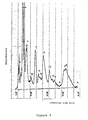
- Figure 3 shows the resulting HPLC chromatogram. It is shown that under these conditions two characteristic peaks appeared, one at about 4.7 minutes (5) and one at 5.8 minutes (6). At a retention time of 7.3. resp. 7.7 minutes two peaks (7, 8) followed each other quickly, which cannot be separated completely. A peak of smaller intensity appeared at 9.8 minutes (9), followed by a characteristic intensive peak (11) at about 13.1 minutes. At about 15 minutes a smaller peak (12) and another intensive peak (14) at 18 minutes. At 21.8 minutes the chromatogram showed a smaller peak (15) and at around 31 minutes a flatter peak, containing several materials.
- the decomposition of the material according to the invention was checked via the chances in concentration of the 2.6-dimethoxy-p-benzoquinone.
- We conducted storage experiments at three different temperatures room temperature 20 °C, 40 °C and 60°C.
- the lyophilisate - about 1 g - was stored in test-tubes which were sealed air-tight.
- the duration of the experiments was 8 weeks, every week three parallel measurements were conducted on samples taken from all three series kept at different temperatures.
- the quantitative analysis of benzoquinone derivatives was conducted by HPLC.
- tumour types growing in mice or rats were used: a highly metastasis forming variant (3LL-HH) of Lewis lung carcinoma (mouse lung cancer), B16 mouse melanoma and HCR-25 human colon carcinoma xenograft.
- 3LL-HH highly metastasis forming variant of Lewis lung carcinoma
- B16 mouse melanoma human colon carcinoma xenograft.
- the 3LL-HH (LLT-HH) and B16 tumours were sustained in C57B1/6 inbred mice.
- the HCR-25 xenograft was injected into CBA/CA mice, previously immunesuppressed by thymectomy and complete body irradiation.
- the tumour cells were transplanted into the spleen, in the case of B16 melanoma into the muscles of the left lower extremity.
- a treated and a control group of the animals injected with HCR-25 tumour were also splenectomized 21 days after the transplantation of the tumour.
- Treatment with the lyophilisate described in the invention was started 24 hours after injection of the tumour.
- Daily dosages of 3g/body weight kg were administered per os, with a stomach probe, in the form of 0.6g/ml aqueous suspension.
- the tests were terminated 14 days after transplantation in the case of the 3LL-HH tumour, 21 days after transplantation in case of the B16 tumour and 51 days after transplantation in the case of HCR-25 5 tumour by bleeding the animals to death under narcosis.
- the lyophilisate described in the invention can decrease significantly metastases of malignant tumours
- the effects of the products on the different phases of the forming of metastases were also examined.
- the forming of metastases consists of several phases, in which besides the proliferation and apoptotic activity of the cells of the primary tumour, the adhesion potential of the tumour cells and the protective mechanisms of the organism against the tumour cells play a role.
- the effect of the lyophilisate on cell proliferation and apoptosis and adhesion were studied.
- this tumour was used to test the lyophilisate.
- the adhesion of the tumour cells was tested on a 96-hole microplate.
- the dosages of the lyophilisate were 300, 3000 and 30000 ⁇ g/ml.
- RPMI culture-medium was used, both in the absence of serum and in the presence of 10% FCS.
- the adhesion was tested 10, 30, 60, 90 and 120 minutes after incubation in usual circumstances. Evaluation was performed by colorimetry process on the basis of the SRB assay.(Mossmann, T.: J. Immunol. Neth. 65 , 55-63 /1983/). The test is based on sulforhodamine B-colouring of the total protein content of the culture, absorbency was read at 570 nm with a spectrophotometer.
- tumour cells were placed 24 hours before treatment on the 96-hole microplate. After treatment with appropriate dosages of the lyophilisate the proliferation activity of the cells was also tested by the SRB assay, 24, 48 and 72 hours after treatment. The results of the repeated tests have shown that as effect of the treatment in the 900 - 15 000 ⁇ g/ml range the tumour cells come to the surface of the monolayer and - as shown by the trypan-blue dye exclusion method - died. (Kaltenbach. J. P. et al.: Exp. Cell Res. 15 , 112-117/1985/). ( Figure 5.)
- the colour reaction which is proportional to the activity, can be read by a spectrophotometer at 570 nm.
- the MTT assay has shown clearly that functional activity of the tumour cells decreased even if the dosage was 300 ⁇ g/ml ( Figure 4.).
- the apoptotic activity of the complete cell population was tested by flow cytometric (FACS) analysis ( Figure 7.). As Figure 7 shows the tumour cells were in apoptosis - depending on the dosage - to an unusually great extent.
- the effect of the lyophilisate described in the invention was examined in two different models. In one series of tests the possibility of blast transformation of mononuclear cells gained from the spleen of animals treated with the lyophilisate was studied, while in the other, in the allograft skin transplantation model the total binding of skin transplanted in the back region of mice was studied.
- Treatment with the lyophilisate described in the invention significantly increases blast transplantation of the T-lymphocytes playing an important role in immune reaction. This was shown by the following experiment.
- C 57 Bl 16 mice were treated for six weeks five times per week per os, with a stomach probe with the lyophilisate described in the invention in a 3 g/kg dosage (0.6 g/ml aqueous suspension).
- the lymphocytes gained by perfusion from the spleen of the animals were transferred into a cell culture, treated with 1 ⁇ g/ml Con A.
- the cells performing DNS synthesis were marked by 0.4 ⁇ Ci 3 H timidin. The degree of marking was defined with a liquid scintillation counter. (Beckman).
- Table 6. shows treatment with Con A significantly increased - as compared to the control - the incorporation of 3 H-TdR, that is, blast transformation.
- the best model for the illustration of the restitution of deficient immune reaction is the allograft skin transplantation test in mice made partly immune deficient by thymectomy (operational removal of the thymus).
- the C 57 Bl 10 and B 10 LP mouse stocks only differ in the H-3 locus, so the skin transplanted from members of one stock onto the other is not rejected within 7 days, but only after about 3 weeks. If the recipient had been thymectomized, rejection occurs after an average of 50 days. All materials which advance the ripening and differentiating of the lymphocytes of the medulla, like the hormones of the thymus, decrease the time necessary for rejection of the transplanted skin. (J. Immunpharmacology 7 , 67-78 /1985/). The same effect could be observed in our tests when treatment with the lyophilisate described in the invention was applied.
- mice C 57 Bl 10 mice were used as recipient, and B 10 LP mice as donor.
- the recipient mice were thymectomized and skin transplantation followed after 7 weeks. Per os -5 times per week, 30 mg/kg - treatments with the lyophilisate were started one week after thymectomy. Treatment was concluded 70 days after skin transplantation. Eventual rejection of the skin was observed daily.
- Table 7 shows that rejection time in non-thymectomized mice was 21 (males) resp. 28.7 (females) days. In thymectomized mice rejection time was lengthened to 52.4 resp. 41.6 days.
- Treatment with the lyophilisate according to the invention shortened significantly in thymectomized and treated mice the survival of the skin transplants (grafts). This shows that immune deficiency caused by thymectomy was reduced significantly as a result of the treatment. which means that the lyophilisate has an immune stimulant effect.
- the radical binding activity of the lyophilisate described in the invention was also tested. Both the superoxide (SSA) and hydroxyl radical binding (OH-SA) were measured with the electron spin resonance method.
- the lyophilisate has a significant SSA, the clean radical binding activity of 1 mg corresponds to the activity of 5.64 ⁇ g superoxide dismutase (SOD).
- SOD superoxide dismutase
- the lyophilisate has no OH-SA activity, but it disrupts the hydrogen-peroxide/Fe hydroxyl radical forming system, so it can be supposed that it has so-called non-chelator activity.
- the 77 day toxicological tests were performed according to the recommendations of the Registry of Industrial Toxicology Animal-data (RITA). (Exp. Toxic. Pathol. 47 , 247-266 /1995/) on F344 rats and C 57 Bl 16 mice. The animals were treated daily with a dosage of 3 g/kg (0.6 g/ml aqueous suspension). During treatment the changes of weight of the animals, eventual pathological physical changes, spontaneous perishing of the animals were observed. On concluding the test the weight of the heart, lungs, thymus, spleen, liver, kidneys and testicles were measured and the 34 organs prescribed by the RITA were pathologically examined. No spontaneous perishing was observed, the weight of the animals changed like that of the control group. On conclusion of the test the weight of the different organs showed no changes as compared to the control group. During pathological processing of the treated animals no changes were observed, which could have been caused by the lyophilisate.
Landscapes
- Health & Medical Sciences (AREA)
- Life Sciences & Earth Sciences (AREA)
- Natural Medicines & Medicinal Plants (AREA)
- Chemical & Material Sciences (AREA)
- Mycology (AREA)
- Engineering & Computer Science (AREA)
- Medicinal Chemistry (AREA)
- Veterinary Medicine (AREA)
- Public Health (AREA)
- Animal Behavior & Ethology (AREA)
- Pharmacology & Pharmacy (AREA)
- General Health & Medical Sciences (AREA)
- Microbiology (AREA)
- Biotechnology (AREA)
- Nutrition Science (AREA)
- Epidemiology (AREA)
- Medical Informatics (AREA)
- Botany (AREA)
- Alternative & Traditional Medicine (AREA)
- Food Science & Technology (AREA)
- Polymers & Plastics (AREA)
- Nuclear Medicine, Radiotherapy & Molecular Imaging (AREA)
- Chemical Kinetics & Catalysis (AREA)
- General Chemical & Material Sciences (AREA)
- Immunology (AREA)
- Organic Chemistry (AREA)
- Bioinformatics & Cheminformatics (AREA)
- Oncology (AREA)
- Medicines Containing Material From Animals Or Micro-Organisms (AREA)
- Medicines Containing Plant Substances (AREA)
- Coloring Foods And Improving Nutritive Qualities (AREA)
- Acyclic And Carbocyclic Compounds In Medicinal Compositions (AREA)
- Pharmaceuticals Containing Other Organic And Inorganic Compounds (AREA)
- Medicinal Preparation (AREA)
- Compounds Of Unknown Constitution (AREA)
- Grain Derivatives (AREA)
- Steroid Compounds (AREA)
- Medicines That Contain Protein Lipid Enzymes And Other Medicines (AREA)
Abstract
Description
- The invention relates to an immunostimulatory and metastasis inhibiting fermented and dried material, pharmaceutical compositions containing thereof, to the process for the preparation of the material and the use of the dried material as a dietary supplement and in the production of immunostimulatory and especially metastasis inhibiting pharmaceutical compositions.
- One of the main objectives of the treatment of tumours is the inhibition of metastases, as the primary tumour caused by the malignant growth of the cells spreads via metastases to the neighbouring cells and organs and causes in the latter secondary tumours, which cannot be removed surgically and may also become resistant to chemotherapy.
- Researchers concentrate more and more on the development of immunomodulatory materials, and materials of natural - mainly of vegetable - origin have been studied intensively.
- It is a well known fact that compounds with a quinone structure play an important biological role. Several quinone derivatives are to be found in plants, like ubiquinones, plastoquinones, menaquinones, which play a role in photosynthesis, but also in the cell respiratory system of vertebrata, thus also humans and in the coagulation of blood etc. Several benzoquinone derivatives are also used for medicinal purposes. Adriamycin, daunorubicin and mitomycin C, are quinone derivatives with a cytostatic effect, while other benzo- and hydroquinones have an antimicrobal effect and are the active components of antibiotics suitable for treatments of bacterial infections like Tetran-B. Metacyclin and Doxycyclin.
- Literature reports that 2.6-dimethoxy-p-benzoquinone (2.6-DMBQ) and 2-methoxy-p-benzoquinone (2-MBQ) have a fungicidal and bacteriostatic effect, and they are also cytotoxic for malignant tumour cells. [ Int. J. Quant, chem.: Quant. Biol. Symp. 7., 217-222 (1980), 9.. 27-30 (1982) and 12., 257-261 (1985); Phytochemistry 27., 225 (1971) and J. Agric. Food Chem. 39., 266 (1991)]. It has been shown that a mixture of 2.6-dimethoxy-p-benzoquinone and ascorbic acid inhibits the growth of Ehrlich ascites tumour cells in mice. [Proc. Natl. Acad. Sci. USA 81., 2088-2091(1984) and 82, 1439-1442 (1985)]. 2.6-dimethoxy-p-benzoquinone and 2-methoxy-p-benzoquinone have been found and isolated in several plants [Magy. Kém. Folyóirat 102/7., 320-325 (1996)]. These two compounds can be found in the largest quantities in glucoside form in wheat (Tricitum vulgaris), to be more exact in wheat germ. The compounds were isolated in the fifties from wheat germs fermented with yeast and identified for the purpose of examination of quality deterioration of bread to which wheat germ has been added. [Helv. Him. Acta 33., 433 (1950); J. Chem. Soc. London 1952, 4821-4823].
- According to the literature in wheat germ the quantity of 2-MBQ is about 0.05 weight%, that of 2.6-DMBQ about 0,01 weight% (as glucoside). The presence of quinones as glucosides is explained by the fact that quinones, especially methoxy-substituted p-benzoquinones are reactive while their hydroquinone-glucosides are more stable and inert.
- During our experiments relating to the study of the fermentation of wheat germ we concluded that the dry extract deriving from the fermented liquid produced while fermenting wheat germ with baker's yeast (Saccharomices cerevisiae) has a surprising immunostimulatory and metastasis inhibiting effect, and it can be applied successfully as the active agent of immunostimulatory and metastasis inhibiting pharmaceutical compositions.
- This finding is surprising, because although the literature reports [Proc. Natl. Acad. Sci. USA 80., 129 (1983)] that a mixture of 2.6-DMBQ and ascorbic acid inhibits the growth of Ehrlich ascites tumour cells - these are eminently suitable for quantitative analysis of the growth of tumours and for the study of their biochemical functions - the extract described in the invention, which contains besides unidentifiable components 2.6-DMBQ and 2-MBQ - proved to be practically ineffective on these primary tumour cells, even combined with ascorbic acid -generally on all primary tumours, and proved only very effective in the treatment of metastases. The aspects of the treatment of primary tumours and the metastases developing from the former are basically different, so it was not self-evident for the researcher that a plant extract containing components which are known to be effective in the treatment of primary tumours and not yet fully identifiable as to its chemical composition should have an immunostimulatory and metastasis inhibiting effect. [Cancer, Principles and Practice of Oncology,
Vol 1. 4th edition. J. B. Lippincott Company, Philadelphia 1993.] - Thus, the present invention concerns an immunostimulatory and metastasis inhibiting fermented, dried material derived from the fermented liquid obtainable by fermenting wheat germ with Saccharomyces cerevisiae in an aqueous medium.
- The present invention also relates to an immunostimulatory and metastasis inhibiting pharmaceutical composition the active agent of which contains the fermented, dried material described in the invention.
- The present invention also concerns the use of the above mentioned fermented and dried material in the production of immunostimulatory and metastasis inhibiting pharmaceutical compositions.
- The fermented and dried material according to the invention can be used in processes of treating mammals for the stimulation of the immune system and inhibition of metastases.
- The invention further concerns a dietary supplement comprising the fermented, dried material described in the invention and maltodextrin.
- According to the invention the fermented, dried material has been identified and examined on the basis of its 2.6-DMBQ content. We would like to note here that full identification of the chemical composition of the extract was not possible with the available methods, so all data concern the 2.6-DMBQ contents as a basis.
- It proved suitable to use for the production of the fermented, dried material described in the present invention wheat germ - which is a by-product of flour milling and available in large quantities - ground to flour quality, either in its original state or defatted. The use of defatted wheat germ has no specific advantages. Fermentation was done with baker's yeast (Saccharomyces cerevisiae). This type of yeast is commercially available. The period of fermentation was about 10-24 hours, preferably 15-20 hours or about 18 hours. The temperature of the fermentation is about 25 - 35 °C, preferably about 30 °C. The weight ratio of the wheat germ and the yeast is 4:1 - 2:1, preferably about 3:1, the weight ratio of the dry matter and water is 1:6 - 1:12, preferably about 1: 9.
- The fermentation -on a laboratory scale - can be e.g. effected by adding in a glass fermentor to the freshly ground wheat germ the yeast suspension in water, and by stirring or shaking the mixture. The fermented liquid gets foamy.
- After fermentation the mixture is centrifuged for 5-15 minutes at 2000 - 4500 / min, preferably about 3000 / min. The supernatant is boiled, cooled and dried in an appropriate manner, e. g. by lyophilisation or spray-drying.
- The product, a reddish-brown powder is the material according to the invention. It is expedient to keep the material until further use cooled, and because of its hygroscopic character in sealed containers. The 2.6-DMBQ contents of the resulting dry material is about 0.4 mg/g.
- In case of large scale fermentation (e.g. 4 cubic meters) it is suitable to apply continuous creating, e.g. 0.5 l air/l of fermented liquid/minute, and slow stirring. The period of fermentation is about 18 hours. In order to inhibit foaming the usual additives can be applied - it is preferable to use sunflower oil. At the end of the fermentation process areating and stirring are discontinued and the fermented liquid is separated from the wheat germ - yeast suspension in the usual manner, for example in a screw decanter, subsequently in a separator and a filter press. If necessary a filter aid material can be added. It is suitable to use 5-10 kg filtering perlite per cubic meter of fermented liquid. The fermented liquid is filtered sharp, and the quality of the filtering is checked by a microscope. The filtered fermented liquid contains practically no cells, which means that no more than 1 yeast cell is found per 10 sights. The resulting fermented liquid, which contains about 1.5 % by weight dry material is evaporated in a vacuum condenser, preferably at a temperature of about 40 - 50°C and after terminating the vacuum is boiled at atmospheric pressure for about 15 minutes. This results in a decrease of harmful enzyme activities. Subsequently the mixture is dried by spray drying, e.g. in a rotating spray apparatus. If the above fermentation process is used the 2.6 DMBQ content of the resulting fermented, dried material is 0.12-0.52 mg/g dry material and the 2 MBQ content is 0.05 - 0.28 mg/g dry material - depending on the benzoquinone content of the wheat germ used.
- As the final product is hygroscopic in order to enhance the effectiveness of the spray drying and the use of the final product one of the usual additives, e. g. maltodextrin, acacia gum, guar gum, xanthan, locust bean flour etc. can be used during spray drying. It is preferable to use maltodextrin. The suitable process is to determine the dry material content of the mixture evaporated in the vacuum condenser and boiled and add so much maltodextrin that the dry material content of the mixture to be dried is about 30% by weight. It is suitable to dissolve the maltodextrin in hot water and add it cooled to the condensed mixture. After drying the final product - a powder - contains about 60% by weight fermented, dried material and about 40% by weight maltodextrin.
- The stability of the obtained material can be checked by monitoring the changes of the 2.6 DMBQ concentration. Quantitative analysis can be done by HPLC. The powder produced according to the above described process remains stable for about 3 years at room temperature.
- The fermented, dried material according to the invention can be used as the active agent of immunostimulatory and metastasis inhibiting pharmaceutical compositions. The pharmaceutical composition may also contain ascorbic acid or other cytostatic materials beside the said active agent.
- The fermented, dried material can be processed to the usual solid or liquid pharmaceutical compositions for peroral or parenteral administration. During the production of the pharmaceutical compositions the hygroscopic character of the fermented, dried material must be taken into account. A suitable form is a capsule which protects the active agent from the humidity of the air.
- In the production of the pharmaceutical compositions auxiliary materials usually applied in pharmaceutical practice can be used. As these materials and their possible uses are described in the pharmaceutical literature in detail, the selection and preparation of the suitable form is a routine task. The one time dosage of the effective agent can vary between wide limits depending on the state of the patient, and the selection of the suitable effective dosage must always be the responsibility of the doctor. Generally suitable results can be obtained if the dosage is 0.001 - 100 g, preferably 0.01 - 50 g, even more preferably 0.1 -40 g per kg of body weight, e. g. in dosages of 0.1 -10, 1 - 25 or 10 - 30 g.
- The fermented, dried material according to the invention can also be mixed with ascorbic acid (Vitamin C). According to our experiments ascorbic acid may enhance the metastasis inhibiting effect of the material according to the invention. The weight ratio of the fermented, dried material and ascorbic acid can be e. g. 10:1 - 1:1, preferably 6:1 - 2:1, more preferably 3:1, 4:1 or 5:1.
- The fermented, dried material according to the invention can be used in the immunostimulatory and/or metastasis inhibiting treatment. The point of the treatment is to give the patient an effective dose of the fermented, dried material.
- The fermented, dried material can also be used as a dietary supplement for mammals. In this case it is preferable to apply the mixture containing maltodextrin and the usual auxiliary materials applied in food industry, e.g. aromatic materials, sweeteners, colouring agents etc. The dietary supplement can e.g. be produced by granulating the mixture containing 60 % by weight dried matter and 40 % by weight maltodextrin plus aromatic materials and sweeteners in a fluid bed, and packing the instant granulate in e.g. bags.
- The attached figures are described below:
- Figure 1.
- Calibration diagram of the HPLC measurement of 2.6 DMBQ
- Figure 2.
- HPLC chromatogram of the chloroform extract of the material
- Figure 3.
- HPLC chromatogram of the ethanol extract of the material
- Figure 4.
- Binding of B16 tumour cells in the presence of lyophilisate of different concentrations in the 60th and 90th minute after placing. (Every value represents the average of 8 parallel measurements ± SD, evaluation by spectrophotometric measurement)
- Figure 5.
- The effect of different dosages of lyophilisate on the proliferation of B16 cells after 24 and 48 hours after the commencement of the treatment. (Every value represents the average of 8 parallel measurements ± SD, evaluation by spectrophotometric measurement)
- Figure 6.
- The development of A2058 human melanoma in the presence of different dosages of lyophilisate 24 hours after the commencement of the treatment. The evaluation of the cultures was performed on the basis of protein (SRB) and dehydrogenase activity (MTT) by parallel spectrophotometric measurements. (Every value represents the average of 8 parallel measurements ± SD)
- Figure 7.
- Ration of apoptotic cells (FACS analysis) in the A2058 human melanoma in vitro cultures after treatment with different dosages of the lyophilisate.
- The following examples serve to illustrate the fermented, dried material according to the invention, its production and pharmacological effects.
- A suspension of 33.3 g yeast (Saccharomyces cerevisiae) and 1000 ml of drinking water have been added to 100 g fresh wheat germ (according to the Hungarian standard MSZ-081361-80) ground to flour quality. The mixture was shaken in a shaker for 18 hours at 30°C. During this period the fermented liquid got foamy and reached about three times its original volume. After fermentation the mixture was centrifuged for 15 minutes at 3000 /min. After boiling and cooling the supernatant was dried by lyophilisation, and the resulting lyophilised matter was kept until further use in the freezer (-10°C). The 2.6 DMBQ content of the resulting lyophilisate was 0.4 mg/g dry material (0.04 % by weight).
- 300 kg wheat germ ground to flour quality (according to the Hungarian standard) and 100 kg yeast were placed in a 5 cubic m fermentor, and drinking water was added until the volume became 4000 l. The fermentation period was 18 hours, during which continuous areating (0.5, 1 air/l fermented liquid/minute) and slow stirring ( 30 rev./min) was used. In order to inhibit foaming 1 l/cubic m sunflower oil was added to the mixture. After fermentation areating and stirring were discontinued, and the fermented liquid was separated first in a screw decanter, then in a separator and finally in a filter press with textile filter. As
auxiliary material 10 kg filtering perlite/cubic m was added. The fermented liquid was filtered sharp and the sharpness was checked by microscope. The filtered fermented liquid contained practically no cells, which meant thatmaximum 1 yeast cell was found per 10 sights. The resulting fermented liquid, which contained about 1.5 % by weight dry material was evaporated in a vacuum condenser, at a temperature of 40 - 50°C and after discontinuing the vacuum boiled at atmospheric pressure for about 15 minutes. After this the dry material content of the solution was determined and so much maltodextrin -first solved in hot water and then cooled - was added that the dry matter content of the solution became about 30 mass%. After this the solution was spray dried in a shear nozzle rotating spray drier in which the temperature of the outgoing air was 90°C. The resulting final product - a powder - contained 60 % by weight of the fermented material according to the invention and 40 % by weight maltodextrin. The 2.6 DMBQ content was -determined by HPLC according to the method described in the following example - 0.4 mg/g dry material. - The material according to the invention can be characterised in two ways, either by determining its 2.6. DMBQ content or by the so-called fingerprint chromatogram. In both cases HPLC chromatography is used.
- Analysis has been performed both on the material produced as described in Example 1 and on that obtained as described in Example 2., and the results were in both cases identical.
- Before analysis it became necessary to increase the concentration of benzoquinones in the lyophilisate. In order to achieve this the lyophilisate was diluted to the original concentration with distilled water (1 weight% dry matter content) - (0.5 g lyophilisate, 50 ml distilled water). The solution was extracted with 3 x 25 ml chloroform in three steps. Eventual humidity remaining in the chloroform phase was removed with water-free Na sulphate. After filtering the chloroform phase was evaporated, to the rest chloroform was added to a total volume of 5 ml. This sample was injected during the HPLC analysis.
- Qualitative and quantitative analysis of the benzoquinone derivatives was performed by the HPLC method.
- The applied HPLC equipment consists of a Beckman model 114 M pump, a LaborMim UV respectively a Merck-Hitachi-DAD mod. 4500 diode array detector, and a Waters 740 type integrator unit. A Chromsil C18 (250 x 4 mm) 10 µ column was used for measurements. UV detection was performed at a frequency of 290 mm, the flow rate was 2 ml/min.
- The composition of the applied eluent was the following: Na2HPO4 25 mmol. NaH2PO4 25 mmol, Na2EDTA 25 mmol. NH2OH.HCl 20 mmol, 10 volume % methanol, pH =6.05.
- Three different benzo- and hydroquinones were analysed by the method described above. There is but a small difference between the retention time of the compounds. By decreasing the strength of the eluent - the organic phase to 10% - selectivity was enhanced to a great extent. Analysis of the retention data has shown that p-benzoquinones show a greater retention than the corresponding hydroquinones and retention increases with the number of methoxy groups. The concentration of all three standards was 0.1 mg/ml. Table 2. shows the retention times (tR) of the standards and the capacity factor (k') data. The aim of the measurements was detection and quantitative definition of 2.6-dimethoxy-p-benzoquinone, so in the following this part of the measurements will be discussed in detail. It was examined whether the elaborated method is suitable for quantitative analysis of 2.6-dimethoxy-p-benzoquinone. The calibration diagram used is shown in Figure 1. With a correlation coefficient of 0.99 the result is a straight line. It was also checked whether the measurements can be reproduced, on every sample three parallel measurements were conducted and the scattering of the results was calculated. Table 1, shows the parallel results of measurements conducted on samples during a period of six months and their scattering. Our results show that the measuring method is suitable for exact and reproducible measurement of 2.6-dimethoxy-p-benzoquinone.
Parallel values of the quantitative analysis of 2.6-DMBQ and the scattering of the results Date 2.6-DMBQ content (mg /50g of sample) (σ-%) 04.27. 3.45 3.54 3.66 0.08-2 04.28. 3.27 3.68 3.31 0.18-5 05.10. 1.56 1.49 1.48 0.03-1.9 05.10. 3.65 3.42 0.12-3 06.08. 3.00 2.98 2.86 0.06-2 06.09. 2.92 3.06 2.87 0.08-2.3 06.10. 3.34 3.23 3.36 0.05-1.5 Retention time (tR) and capacity factor (k') values of the examined materials Standard tR k' 2.6-DMBQ 13.4 5.0 2.6-DMHQ 5.1 1.2 2-MBQ 8.5 2.7 - Figure 2. shows the HPLC chromatogram of the chloroform sample prepared as described above. The chromatogram shows only one peak characteristic for 2.6 DMBQ. The 2.6 DMBQ contents of the sample was determined on the basis of the latter.
- 50 ml 96% of volume ethanol was added to 5 g of spray dried material (prepared as described in example 2.). The mixture was shaken for 30 minutes at a temperature of 50°C and 200 /min. After this the mixture was filtered, evaporated dry and the remaining material solved in 10 ml of methanol. The filtered solution was injected onto the column.
- The HPLC instruments, column and conditions described above were used here, too, but the composition of the eluent was the following: Na2HPO4 1.25 mmol, NaH2PO4 1.25 mmol. Na2EDTA 1.25 mmol, NH2OH.HCl 2.50 mmol, 5 volume% methanol.
- Figure 3. shows the resulting HPLC chromatogram. It is shown that under these conditions two characteristic peaks appeared, one at about 4.7 minutes (5) and one at 5.8 minutes (6). At a retention time of 7.3. resp. 7.7 minutes two peaks (7, 8) followed each other quickly, which cannot be separated completely. A peak of smaller intensity appeared at 9.8 minutes (9), followed by a characteristic intensive peak (11) at about 13.1 minutes. At about 15 minutes a smaller peak (12) and another intensive peak (14) at 18 minutes. At 21.8 minutes the chromatogram showed a smaller peak (15) and at around 31 minutes a flatter peak, containing several materials.
- The decomposition of the material according to the invention was checked via the chances in concentration of the 2.6-dimethoxy-p-benzoquinone. We conducted storage experiments at three different temperatures (
room temperature 20 °C, 40 °C and 60°C.) The lyophilisate - about 1 g - was stored in test-tubes which were sealed air-tight. The duration of the experiments was 8 weeks, every week three parallel measurements were conducted on samples taken from all three series kept at different temperatures. The quantitative analysis of benzoquinone derivatives was conducted by HPLC. - The tests have shown that the dried material according to the invention remained stable even after three years at room temperature, that is, the 2.6 DMBQ content remained practically unchanged. At the same time the material is not stable at 40°C - the 2.6 DMBQ decomposes in a few weeks, and at 60°C the 2.6 DMBQ contents decreases rapidly within a few days.
- The decomposition of 2-methoxy-p-benzoquinone was also studied in both series of measurements. This compound is more instable than 2.6-dimethoxy-p-benzoquinone, and as a consequence its presence could not be shown after one week of storage in the samples kept at 40 or 60 °C. At room temperature the concentration of this compound remained unchanged, too.
- Both the lyophilisate prepared as described in example 1, and the spray dried material prepared as described in example 2, have been tested for effectiveness. A standardised dried material was used with a 2.6 DMBQ content of 0.4 mg/g dry material and a HPLC curve as the one shown in Figure 2. Both materials gave the same results -so the material according to the invention will be called further simply lyophilisate. Below the results of the biological and toxicological tests concerning this lyophilisate will be discussed, with a special stress on the immune reconstitution and tumour growth and metastasis inhibiting effects.
- For the tests the following injectable tumour types growing in mice or rats were used: a highly metastasis forming variant (3LL-HH) of Lewis lung carcinoma (mouse lung cancer), B16 mouse melanoma and HCR-25 human colon carcinoma xenograft.
- The 3LL-HH (LLT-HH) and B16 tumours were sustained in C57B1/6 inbred mice. The HCR-25 xenograft was injected into CBA/CA mice, previously immunesuppressed by thymectomy and complete body irradiation. In the case of 3LL-HH and HCR-25 tumour the tumour cells were transplanted into the spleen, in the case of B16 melanoma into the muscles of the left lower extremity. A treated and a control group of the animals injected with HCR-25 tumour were also splenectomized 21 days after the transplantation of the tumour.
- Treatment with the lyophilisate described in the invention was started 24 hours after injection of the tumour. Daily dosages of 3g/body weight kg were administered per os, with a stomach probe, in the form of 0.6g/ml aqueous suspension.
- The tests were terminated 14 days after transplantation in the case of the 3LL-HH tumour, 21 days after transplantation in case of the B16 tumour and 51 days after transplantation in the case of HCR-25 5 tumour by bleeding the animals to death under narcosis.
- Tables 3., 4., and 5. summarise the results of the tests.
Effect of treatment with the lyophilisate according to the invention on the number of liver metastases in case of 3LL-HH mouse lung cancer injected into the spleen Treatment Number of injected cells Number of liver metastases Control 3 x 10³ 104,0 ± 28.2 Lyophilisate 3 x 10³ 29,8 ± 16,4* p<0.01
every test group contained 10 animalsEffect of treatment with the lyophilisate according to the invention on the number of liver metastases 51 days after the HCR-25 human colon carcinoma had been injected into the spleen of immunesuppressed CBA/CA mice Treatment Weight of spleen with tumour (g) Number of liver metastases Control, non-splenectomized 1,02 ± 0,59 42,0 ± 25,8 Lyophilisate, non-splenectomized 0,62 ± 0,47 19,5 ± 19,0 Control, splenectomized 0,10 ± 0,02 19,1 ± 13,5 Lyophilisate splenectomized 0,08 ± 0,02 10,6 ± 11,6 Effect of treatment with the lyophilisate according to the invention on the weight of the extremity injected with the tumour and on the number of lung metastases in the case of B16 melanoma injected into the muscles of the extremity 21 days after the tumour had been injectedTreatment Weight of the extremity with tumour (average) Number of lung metastases (average) Control 7,6 ± 0,43 42,4 ± 10,2 Lyophilisate 7,2 ± 0,38 6,2 ± 3,7 - The above results show that treatment with the lyophilisate described in the invention decreased significantly - by 71% - the number of lung metastases when 3LL-HH tumour had been injected into the spleen. (Table 3.)
- In case of HCR-25 human colon carcinoma the 50 day treatment decreased both the weight of the spleen with tumour and the number of liver metastases. The number of metastases as compared to the control group was about 50% both in the splenectomized and in the non-splenectomized groups. (Table 4.)
- In case of B16 melanoma injected into the muscle the weight of the tumour growing in the muscle did not change as an effect of the treatment, but the number of lung metastases decreased very significantly, by 85% as compared to the control group (Table 5.)
- As the above tests have shown unambiguously that the lyophilisate described in the invention can decrease significantly metastases of malignant tumours, the effects of the products on the different phases of the forming of metastases were also examined. The forming of metastases consists of several phases, in which besides the proliferation and apoptotic activity of the cells of the primary tumour, the adhesion potential of the tumour cells and the protective mechanisms of the organism against the tumour cells play a role. In the in vitro tests the effect of the lyophilisate on cell proliferation and apoptosis and adhesion were studied.
- As a great part of the in vivo tests was performed on B16 mouse melanoma cells, in the first step this tumour was used to test the lyophilisate.
- The adhesion of the tumour cells was tested on a 96-hole microplate. The dosages of the lyophilisate were 300, 3000 and 30000 µg/ml. RPMI culture-medium was used, both in the absence of serum and in the presence of 10% FCS. The adhesion was tested 10, 30, 60, 90 and 120 minutes after incubation in usual circumstances. Evaluation was performed by colorimetry process on the basis of the SRB assay.(Mossmann, T.: J. Immunol. Neth. 65, 55-63 /1983/). The test is based on sulforhodamine B-colouring of the total protein content of the culture, absorbency was read at 570 nm with a spectrophotometer. Figure 4, only shows two moments in time, which, however represent the effect of the lyophilisate adequately. It was shown that if the dosage of the lyophilisate was 3000 µg/ml or ten times higher, it decreased the adhesion of tumour cells dramatically, both in the presence and absence of serum. If the dosage is 300 µg/ml, no such effect can be observed.
- In this test the tumour cells were placed 24 hours before treatment on the 96-hole microplate. After treatment with appropriate dosages of the lyophilisate the proliferation activity of the cells was also tested by the SRB assay, 24, 48 and 72 hours after treatment. The results of the repeated tests have shown that as effect of the treatment in the 900 - 15 000 µg/ml range the tumour cells come to the surface of the monolayer and - as shown by the trypan-blue dye exclusion method - died. (Kaltenbach. J. P. et al.: Exp. Cell Res. 15, 112-117/1985/). (Figure 5.)
- Our tests on human amelanotic melanoma (A2058 tumour cells - Todaro, G. J. et al.: Proc. Natl. Acad. Sci. USA 77, 5258-5262 /1980/) have shown similar results to those on mouse melanotic melanoma (Figure 6.) In the case of this tumour parallel to the SRB assay the MTT assay representing the metabolic activity of the cell was also performed (Cole, S. P. C.: Cancer Chemother. Pharmacol. 17, 259-263 /1986/). The test is based on the phenomenon that a metabolically active cell transforms tetrasolium salt into a coloured formazan product, primarily via its dehydrogenase activity. The colour reaction, which is proportional to the activity, can be read by a spectrophotometer at 570 nm. the MTT assay has shown clearly that functional activity of the tumour cells decreased even if the dosage was 300 µg/ml (Figure 4.). As in case of the cells come to the surface the cause of apoptosis was unknown, the apoptotic activity of the complete cell population was tested by flow cytometric (FACS) analysis (Figure 7.). As Figure 7 shows the tumour cells were in apoptosis - depending on the dosage - to an unusually great extent.
- The effect of the lyophilisate described in the invention was examined in two different models. In one series of tests the possibility of blast transformation of mononuclear cells gained from the spleen of animals treated with the lyophilisate was studied, while in the other, in the allograft skin transplantation model the total binding of skin transplanted in the back region of mice was studied.
- Treatment with the lyophilisate described in the invention significantly increases blast transplantation of the T-lymphocytes playing an important role in immune reaction. This was shown by the following experiment.
- C57Bl16 mice were treated for six weeks five times per week per os, with a stomach probe with the lyophilisate described in the invention in a 3 g/kg dosage (0.6 g/ml aqueous suspension). After completion of the treatment the lymphocytes gained by perfusion from the spleen of the animals were transferred into a cell culture, treated with 1 µg/ml Con A. After 48 hours the cells performing DNS synthesis were marked by 0.4 µCi 3H timidin. The degree of marking was defined with a liquid scintillation counter. (Beckman). As Table 6. shows treatment with Con A significantly increased - as compared to the control - the incorporation of 3H-TdR, that is, blast transformation.
Incorporation of 3H-timidin into the spleen lymphocytes of the control and lyophilisate treated mice Treatment 1 µg/ml ConA average (cpm) SEM Control 3760,6 583,3 Lyophilisate 8041,8 957,1 - The best model for the illustration of the restitution of deficient immune reaction is the allograft skin transplantation test in mice made partly immune deficient by thymectomy (operational removal of the thymus). The C57Bl10 and B10LP mouse stocks only differ in the H-3 locus, so the skin transplanted from members of one stock onto the other is not rejected within 7 days, but only after about 3 weeks. If the recipient had been thymectomized, rejection occurs after an average of 50 days. All materials which advance the ripening and differentiating of the lymphocytes of the medulla, like the hormones of the thymus, decrease the time necessary for rejection of the transplanted skin. (J. Immunpharmacology 7, 67-78 /1985/). The same effect could be observed in our tests when treatment with the lyophilisate described in the invention was applied.
- C57Bl10 mice were used as recipient, and B10LP mice as donor. The recipient mice were thymectomized and skin transplantation followed after 7 weeks. Per os -5 times per week, 30 mg/kg - treatments with the lyophilisate were started one week after thymectomy. Treatment was concluded 70 days after skin transplantation. Eventual rejection of the skin was observed daily.
- Table 7 shows that rejection time in non-thymectomized mice was 21 (males) resp. 28.7 (females) days. In thymectomized mice rejection time was lengthened to 52.4 resp. 41.6 days. Treatment with the lyophilisate according to the invention shortened significantly in thymectomized and treated mice the survival of the skin transplants (grafts). This shows that immune deficiency caused by thymectomy was reduced significantly as a result of the treatment. which means that the lyophilisate has an immune stimulant effect.
The effect of treatment with the lyophilisate according to the invention on the rejection of skin grafts ( recipient C57Bl10 mice, donor B10LP mice) Treatment Rejection time Male Female average (days) SEM average (days) SEM Control (non-thymectomized) 21,0 3,1 28,7 4,5 Control
(thymectomized)52,4 5,0 41,6 5,5 Lyophilisate
(30 mg/kg)28,8 8,6 32,6 4,5 - In vivo and in vitro tests with the lyophilisate according to the invention show that this product has a significant antimetastatic effect in several animal test models. This effect is probably connected to the immunostimulatory effect observed both in the in vivo and in vitro tests, but it is possible that the decrease in the number of metastases is also influenced by the antiproliferative, apoptosis causing effects, the effect of the material on adhesion and the effect causing the creation of free radicals.
- As benzoquinones have got a well-known effect on the forming of free radicals, the radical binding activity of the lyophilisate described in the invention was also tested. Both the superoxide (SSA) and hydroxyl radical binding (OH-SA) were measured with the electron spin resonance method. The lyophilisate has a significant SSA, the clean radical binding activity of 1 mg corresponds to the activity of 5.64 µg superoxide dismutase (SOD). The lyophilisate has no OH-SA activity, but it disrupts the hydrogen-peroxide/Fe hydroxyl radical forming system, so it can be supposed that it has so-called non-chelator activity.
- The 77 day toxicological tests were performed according to the recommendations of the Registry of Industrial Toxicology Animal-data (RITA). (Exp. Toxic. Pathol. 47, 247-266 /1995/) on F344 rats and C57Bl16 mice. The animals were treated daily with a dosage of 3 g/kg (0.6 g/ml aqueous suspension). During treatment the changes of weight of the animals, eventual pathological physical changes, spontaneous perishing of the animals were observed. On concluding the test the weight of the heart, lungs, thymus, spleen, liver, kidneys and testicles were measured and the 34 organs prescribed by the RITA were pathologically examined. No spontaneous perishing was observed, the weight of the animals changed like that of the control group. On conclusion of the test the weight of the different organs showed no changes as compared to the control group. During pathological processing of the treated animals no changes were observed, which could have been caused by the lyophilisate.
- The above results show that the fermented material according to the invention is not toxic, and because of its immunostimulatory effect it is indicated in all states in which the immune system is damaged. Because of its above described biological characteristics it can have its complementary uses in the medical treatment of malignant tumours, mainly in the inhibition of metastases.
Claims (12)
- An immunostimulatory and metastasis inhibiting fermented, dried material derived from the fermented liquid obtainable by fermenting wheat germ with Saccharomyces cerevisiae in an aqueous medium.
- The material according to claim 1 having a HPLC chromatogram substantially corresponding to that shown in Figure 3.
- The material according to claim 1 or 2 the 2,6-dimethoxy-p-benzoquinone contents of which is 0,12-0,52 mg/g dry material and the 2-methoxy-p-benzoquinone contents of which is 0,05-0,28 mg/g dry material, determined by HPLC.
- The material according to claim 3 the 2,6-dimethoxy-p-benzoquinone contents of which is 0,4 mg/g dry material.
- A process for producing an immunostimulatory and metastasis inhibiting fermented, dried material characterised in that ground wheat germ is fermented in an aqueous medium in the presence of Saccharomyces cerevisiae and the fermented liquid is separated, filtered sharp, evaporated, boiled and dried as such or in the presence of auxiliary drying materials.
- The process according to claim 5, characterised in that the fermentation is carried out at a temperature of about 30°C, for about 18 hours under continuous areating and stirring.
- The process according to claim 5 or 6 characterised in that the drying is performed in the presence of maltodextrin.
- An immunostimulatory and metastasis inhibiting pharmaceutical product containing as active agent a dried material as defined in any one of claims 1 to 4.
- A dietary supplement for mammals, containing a dried material as defined in any one of claims 1 to 4.
- The dietary supplement according to claim 9 containing the dried material obtainable by the process of any one of claims 5 to 7 consisting of 60 % by weight fermented material and 40% by weight maltodextrin.
- Use of a dried material as defined in any one of claims 1 to 4 for production of a pharmaceutical composition for immunostimulation and inhibition of metastasis.
- Use of a dried material as defined in any one of claims 1 to 4 for the production of a dietary supplement for mammals.
Priority Applications (1)
| Application Number | Priority Date | Filing Date | Title |
|---|---|---|---|
| SI9830286T SI1003536T1 (en) | 1997-08-13 | 1998-08-11 | Immunostimulatory and metastasis inhibiting fermented material from wheat germ |
Applications Claiming Priority (5)
| Application Number | Priority Date | Filing Date | Title |
|---|---|---|---|
| HU9701392 | 1997-08-13 | ||
| HU9701392A HUP9701392D0 (en) | 1997-08-13 | 1997-08-13 | Immunostimulating and methastasis-inhibiting plant extract, pharmaceutical compositions containing thereof, process for production of plant extract and use for production of immunostimulating and metastasis-inhibiting pharmaceutical composition thereof |
| HU9801797 | 1998-08-05 | ||
| HU9801797A HU223344B1 (en) | 1997-08-13 | 1998-08-05 | Immunostimulating and metastasis-inhibited fermented dried substance containing pharmaceutical preparations, processes for its preparation and applications |
| PCT/HU1998/000077 WO1999008694A1 (en) | 1997-08-13 | 1998-08-11 | Immunostimulatory and metastasis inhibiting fermented vegetal material |
Publications (2)
| Publication Number | Publication Date |
|---|---|
| EP1003536A1 EP1003536A1 (en) | 2000-05-31 |
| EP1003536B1 true EP1003536B1 (en) | 2002-11-13 |
Family
ID=90014226
Family Applications (1)
| Application Number | Title | Priority Date | Filing Date |
|---|---|---|---|
| EP98940483A Expired - Lifetime EP1003536B1 (en) | 1997-08-13 | 1998-08-11 | Immunostimulatory and metastasis inhibiting fermented material from wheat germ |
Country Status (30)
| Country | Link |
|---|---|
| US (1) | US6355474B1 (en) |
| EP (1) | EP1003536B1 (en) |
| JP (3) | JP4387586B2 (en) |
| KR (2) | KR100544376B1 (en) |
| CN (1) | CN1192099C (en) |
| AT (1) | ATE227580T1 (en) |
| AU (1) | AU754815B2 (en) |
| BG (1) | BG64038B1 (en) |
| BR (1) | BR9811936B1 (en) |
| CA (1) | CA2300208C (en) |
| CZ (1) | CZ298654B6 (en) |
| DE (1) | DE69809434T2 (en) |
| DK (1) | DK1003536T3 (en) |
| EA (1) | EA003090B1 (en) |
| EE (1) | EE04222B1 (en) |
| ES (1) | ES2186208T3 (en) |
| GE (1) | GEP20032988B (en) |
| HU (1) | HU223344B1 (en) |
| ID (1) | ID25515A (en) |
| IL (1) | IL134493A (en) |
| ME (1) | ME00638B (en) |
| NO (1) | NO323562B1 (en) |
| PL (1) | PL191414B1 (en) |
| PT (1) | PT1003536E (en) |
| RS (1) | RS49692B (en) |
| SK (2) | SK282917B6 (en) |
| TR (1) | TR200000404T2 (en) |
| UA (1) | UA67747C2 (en) |
| WO (1) | WO1999008694A1 (en) |
| YU (1) | YU7200A (en) |
Families Citing this family (22)
| Publication number | Priority date | Publication date | Assignee | Title |
|---|---|---|---|---|
| EP0991687B1 (en) | 1998-04-24 | 2006-12-27 | Chemtura Corporation | Powder coatings or adhesives employing silanes or silane treated fillers |
| FR2815822B1 (en) * | 2000-10-30 | 2004-08-27 | Roquette Freres | CARBON ADDITIVE FOR FOOD FERMENTATIONS AND FOOD COMPOSITIONS CONTAINING THE SAME |
| FR2834718B1 (en) * | 2002-01-15 | 2004-12-24 | Cognis France Sa | COSMETIC AND / OR PHARMACEUTICAL ACTIVE SUBSTANCES |
| ES2375357T3 (en) * | 2002-05-02 | 2012-02-29 | E-L Management Corp. | PROCEDURE FOR IMPROVING BIOLOGICAL ACTIVITY OF VEGETABLE ORIGIN EXTRACTS. |
| HUP0202638A3 (en) * | 2002-08-09 | 2007-08-28 | Hidvegi Mate Dr | Use of fermented wheat-germ extract for preparation of antiphlogistic compositions |
| EA009170B1 (en) * | 2002-08-13 | 2007-10-26 | Мате Хидвеги | The use of fermented wheat-germ in the feeding and veterinary practice |
| CA2494258A1 (en) * | 2002-08-13 | 2004-02-19 | Mate Hidvegi | The use of fermented wheat-germ in the feeding and veterinary practice |
| WO2007140277A1 (en) | 2006-05-24 | 2007-12-06 | Vitality Concepts Corporation | Method for embedding and targeted release of micronutrients in activated dietary fibers |
| US7365102B1 (en) | 2007-02-26 | 2008-04-29 | Delphi Technologies, Inc. | Process for pre-reforming hydrocarbon fuels |
| HUP0900614A2 (en) | 2009-09-29 | 2011-05-30 | Mate Dr Hidvegi | Preparation comprising dehydrated, fermented material with amorphous crystaline structure and process for its production |
| EP2403513A2 (en) * | 2009-03-06 | 2012-01-11 | Maté Hidvégi | Fractions of wheat germ ferment |
| US20130122580A1 (en) * | 2010-01-08 | 2013-05-16 | Sumitomo Bakelite Co., Ltd. | Culture vessel for forming aggregated cell mass |
| US20120164132A1 (en) * | 2010-08-02 | 2012-06-28 | Mate Hidvegi | Anticancer and immunomodulating molecules and fractions containing said molecules, and process for preparing said fractions and said molecules from fermented vegetal material, and their uses |
| GB201108560D0 (en) | 2011-05-20 | 2011-07-06 | 3 Ch Ltd | Use of fermented wheat germ in the treatment of inflammatory bowel disease |
| GB201110746D0 (en) | 2011-06-23 | 2011-08-10 | Biropharma Uk Ltd | Wheat germ derived material |
| US11090353B2 (en) | 2013-04-22 | 2021-08-17 | David Wales | Gluten-free grain-concentrate substitute for fermented wheat germ drug product and method preparation |
| US11129389B2 (en) | 2013-04-22 | 2021-09-28 | David Wales | Gluten-free grain-concentrate substitute for fermented wheat germ food product and method of preparation |
| JP2017033691A (en) * | 2015-07-30 | 2017-02-09 | 三菱自動車工業株式会社 | On-vehicle battery pack, lithium ion replenishment device, and lithium ion replenishment method |
| CN107455551A (en) * | 2016-06-06 | 2017-12-12 | 铜陵安尔生物科技有限公司 | Wheat germ fermentation chromocor extract and preparation method thereof and the application in animal feeding |
| JP6739774B2 (en) | 2018-06-25 | 2020-08-12 | 学校法人立命館 | Composition for treating, preventing, improving, suppressing or metastasis of cancer |
| EP3659444B1 (en) | 2018-11-27 | 2023-12-06 | Gyula Bencze | Gluten-free grain-concentrate substitute for fermented wheat germ food product and method of preparation |
| WO2022091075A1 (en) * | 2020-11-01 | 2022-05-05 | Aili Life Sciences Ltd. | Combination compositions of probiotics with fermented wheat germ extract and uses thereof |
Family Cites Families (14)
| Publication number | Priority date | Publication date | Assignee | Title |
|---|---|---|---|---|
| JPS63230774A (en) * | 1987-03-19 | 1988-09-27 | Seinosuke Ueda | Manufacture of purplish blue coloring matter |
| JP2618286B2 (en) * | 1990-10-25 | 1997-06-11 | 免疫代謝薬製造株式会社 | Hypotensive yeast preparation and its production method |
| KR940001544B1 (en) * | 1990-11-21 | 1994-02-24 | 강권중 | Process for making food for good health from herbs by fermenting |
| JP3296433B2 (en) * | 1990-11-30 | 2002-07-02 | 日本食品化工株式会社 | Alcohol production method |
| US5231017A (en) | 1991-05-17 | 1993-07-27 | Solvay Enzymes, Inc. | Process for producing ethanol |
| WO1993016167A1 (en) * | 1992-02-06 | 1993-08-19 | Bio-Technical Resources | Concentrated beer flavor product |
| EP0726772B1 (en) * | 1993-08-09 | 2001-11-07 | Edward Baral | A method for sensitization of cancer cells for killer cell mediated lysis |
| JPH07155136A (en) * | 1993-12-03 | 1995-06-20 | Nippon Mektron Ltd | Preparation of fermented vegetable extract powder |
| PT659344E (en) * | 1993-12-24 | 2001-12-28 | Dsm Nv | DRY YEAST COMPOSITIONS DRY TRANSLATION |
| DK0738114T3 (en) * | 1994-01-06 | 2001-11-26 | Hyd Kutato Fejleszto Ktf | Food product for preventing disease development and methods for preparing it |
| JP3471879B2 (en) * | 1994-01-20 | 2003-12-02 | ルードヴィッヒ インスティテュート フォー キャンサー リサーチ | Method for inhibiting serine kinase activity, method for adjusting binding activity between PI3-kinase subunits, PI3-kinase subunit binding antibody, hybridoma cell line producing this antibody, nucleic acid molecule, plasmid, agonist, antagonist, PI3-kinase Subunit binding molecule that inhibits kinase activity, method for detecting presence of subunit, method for producing inhibitor of PI3-kinase activity, and inhibitor for PI3-kinase activity |
| JP2875739B2 (en) * | 1994-04-27 | 1999-03-31 | エーザイ株式会社 | NFκB activity inhibitor |
| DE69422159T3 (en) * | 1994-05-27 | 2004-05-13 | Agrano Ag | Process for obtaining a biomass from a medium of cereals, use of the products obtained and bread blowing agents |
| JP4167733B2 (en) * | 1996-12-16 | 2008-10-22 | 花王株式会社 | NF-κB activation inhibitor |
-
1998
- 1998-08-05 HU HU9801797A patent/HU223344B1/en active IP Right Grant
- 1998-08-11 YU YU7200A patent/YU7200A/en unknown
- 1998-08-11 TR TR2000/00404T patent/TR200000404T2/en unknown
- 1998-08-11 EA EA200000212A patent/EA003090B1/en not_active IP Right Cessation
- 1998-08-11 CZ CZ20000418A patent/CZ298654B6/en not_active IP Right Cessation
- 1998-08-11 ME MEP-2000-72A patent/ME00638B/en unknown
- 1998-08-11 CA CA002300208A patent/CA2300208C/en not_active Expired - Fee Related
- 1998-08-11 CN CNB988101254A patent/CN1192099C/en not_active Expired - Fee Related
- 1998-08-11 PT PT98940483T patent/PT1003536E/en unknown
- 1998-08-11 WO PCT/HU1998/000077 patent/WO1999008694A1/en not_active Ceased
- 1998-08-11 KR KR1020007001459A patent/KR100544376B1/en not_active Expired - Fee Related
- 1998-08-11 RS YUP-72/00A patent/RS49692B/en unknown
- 1998-08-11 DE DE69809434T patent/DE69809434T2/en not_active Expired - Lifetime
- 1998-08-11 BR BRPI9811936-2A patent/BR9811936B1/en not_active IP Right Cessation
- 1998-08-11 AU AU88802/98A patent/AU754815B2/en not_active Ceased
- 1998-08-11 IL IL13449398A patent/IL134493A/en not_active IP Right Cessation
- 1998-08-11 ES ES98940483T patent/ES2186208T3/en not_active Expired - Lifetime
- 1998-08-11 SK SK186-2000A patent/SK282917B6/en not_active IP Right Cessation
- 1998-08-11 PL PL338891A patent/PL191414B1/en unknown
- 1998-08-11 JP JP2000509431A patent/JP4387586B2/en not_active Expired - Lifetime
- 1998-08-11 EP EP98940483A patent/EP1003536B1/en not_active Expired - Lifetime
- 1998-08-11 GE GEAP19985247A patent/GEP20032988B/en unknown
- 1998-08-11 ID IDW20000424A patent/ID25515A/en unknown
- 1998-08-11 SK SK182-2000A patent/SK1822000A3/en unknown
- 1998-08-11 DK DK98940483T patent/DK1003536T3/en active
- 1998-08-11 AT AT98940483T patent/ATE227580T1/en active
- 1998-08-11 KR KR1020057013782A patent/KR100544377B1/en not_active Expired - Fee Related
- 1998-08-11 EE EEP200000078A patent/EE04222B1/en not_active IP Right Cessation
- 1998-08-13 US US09/485,221 patent/US6355474B1/en not_active Expired - Lifetime
- 1998-11-08 UA UA2000020979A patent/UA67747C2/en unknown
-
2000
- 2000-02-10 NO NO20000675A patent/NO323562B1/en not_active IP Right Cessation
- 2000-03-06 BG BG104220A patent/BG64038B1/en unknown
-
2009
- 2009-07-21 JP JP2009170505A patent/JP4861458B2/en not_active Expired - Fee Related
-
2011
- 2011-08-01 JP JP2011168726A patent/JP4886087B2/en not_active Expired - Fee Related
Also Published As
Similar Documents
| Publication | Publication Date | Title |
|---|---|---|
| CA2300208C (en) | Immunostimulatory and metastasis inhibiting fermented vegetal material | |
| Lai | Chlorophyll: The active factor in wheat sprout extract inhibiting the metabolic activation of carcinogens in vitro | |
| Olaleye et al. | Antioxidant properties of Myristica fragrans (Houtt) and its effect on selected organs of albino rats | |
| US4940725A (en) | Oxindole alkaloids having properties stimulating the immunologic system and preparation containing the same | |
| Hidvégi et al. | MSC, a new benzoquinone-containing natural product with antimetastatic effect | |
| KR102743638B1 (en) | Curcumin nanospheres, preparation method thereof and use thereof | |
| Chen et al. | Growth-inhibitory effects of the red alga Gelidium amansii on cultured cells | |
| Zeng et al. | Anti-lipid-oxidation effects and edible safety evaluation of the oil extracted by a supercritical CO2 process from coix seed fermented by Monascus purpureus | |
| KR101409194B1 (en) | Equol level regulator | |
| CN114470150B (en) | Application of chicken-derived small molecular peptide in preparation of product for preventing and improving liver injury and secondary symptoms thereof and product | |
| MXPA00001557A (en) | Immunostimulatory and metastasis inhibiting fermented vegetal material | |
| KR20100073275A (en) | Cosmetics comprising cistanche tubulosa extract and method of making the same | |
| Musk et al. | The clastogenic and mutagenic effects of ascorbigen and 1′-methylascorbigen | |
| Pandit et al. | Exploring the protective effect of Ascorbic acid on Amoxicillin and Clavulanic acid-induced lipid peroxidation in goat liver homogenate | |
| RU2275928C2 (en) | Pharmaceutical composition with immunotropic and adaptogenic activity for oral using | |
| KR20250123503A (en) | A composition for improving, preventing and treating of bone disease comprising microalgae extract | |
| KR20250145866A (en) | Extract of Molokhia having the effect of preventing or improving for sarcopenia and uses thereof | |
| CN117695323A (en) | Anti-aging composition and preparation method and application thereof | |
| Prònai et al. | MSC, A New Benzoquinone-containing Natural Product with Antimetastatic Effect | |
| KR20170119225A (en) | Pharmaceutical composition for preventing or treating acute renal failure comprising Carthamus tinctorius L. seed extract |
Legal Events
| Date | Code | Title | Description |
|---|---|---|---|
| PUAI | Public reference made under article 153(3) epc to a published international application that has entered the european phase |
Free format text: ORIGINAL CODE: 0009012 |
|
| 17P | Request for examination filed |
Effective date: 20000313 |
|
| AK | Designated contracting states |
Kind code of ref document: A1 Designated state(s): AT BE CH CY DE DK ES FI FR GB GR IE IT LI NL PT SE |
|
| AX | Request for extension of the european patent |
Free format text: LT PAYMENT 20000313;LV PAYMENT 20000313;RO PAYMENT 20000313;SI PAYMENT 20000313 |
|
| 17Q | First examination report despatched |
Effective date: 20010504 |
|
| GRAG | Despatch of communication of intention to grant |
Free format text: ORIGINAL CODE: EPIDOS AGRA |
|
| RIC1 | Information provided on ipc code assigned before grant |
Free format text: 7A 61K 35/78 A, 7A 23L 1/172 B, 7A 23L 1/30 B, 7A 61P 37/04 B |
|
| RTI1 | Title (correction) |
Free format text: IMMUNOSTIMULATORY AND METASTASIS INHIBITING FERMENTED MATERIAL FROM WHEAT GERM |
|
| GRAG | Despatch of communication of intention to grant |
Free format text: ORIGINAL CODE: EPIDOS AGRA |
|
| GRAH | Despatch of communication of intention to grant a patent |
Free format text: ORIGINAL CODE: EPIDOS IGRA |
|
| GRAH | Despatch of communication of intention to grant a patent |
Free format text: ORIGINAL CODE: EPIDOS IGRA |
|
| GRAA | (expected) grant |
Free format text: ORIGINAL CODE: 0009210 |
|
| AK | Designated contracting states |
Kind code of ref document: B1 Designated state(s): AT BE CH CY DE DK ES FI FR GB GR IE IT LI NL PT SE |
|
| AX | Request for extension of the european patent |
Free format text: LT PAYMENT 20000313;LV PAYMENT 20000313;RO PAYMENT 20000313;SI PAYMENT 20000313 |
|
| REF | Corresponds to: |
Ref document number: 227580 Country of ref document: AT Date of ref document: 20021115 Kind code of ref document: T |
|
| REG | Reference to a national code |
Ref country code: GB Ref legal event code: FG4D |
|
| REG | Reference to a national code |
Ref country code: CH Ref legal event code: EP |
|
| REG | Reference to a national code |
Ref country code: IE Ref legal event code: FG4D |
|
| REF | Corresponds to: |
Ref document number: 69809434 Country of ref document: DE Date of ref document: 20021219 |
|
| REG | Reference to a national code |
Ref country code: CH Ref legal event code: NV Representative=s name: BRAUN & PARTNER PATENT-, MARKEN-, RECHTSANWAELTE |
|
| REG | Reference to a national code |
Ref country code: GR Ref legal event code: EP Ref document number: 20020404101 Country of ref document: GR |
|
| REG | Reference to a national code |
Ref country code: PT Ref legal event code: SC4A Free format text: AVAILABILITY OF NATIONAL TRANSLATION Effective date: 20030109 |
|
| REG | Reference to a national code |
Ref country code: DK Ref legal event code: T3 |
|
| ET | Fr: translation filed | ||
| REG | Reference to a national code |
Ref country code: ES Ref legal event code: FG2A Ref document number: 2186208 Country of ref document: ES Kind code of ref document: T3 |
|
| PLBE | No opposition filed within time limit |
Free format text: ORIGINAL CODE: 0009261 |
|
| STAA | Information on the status of an ep patent application or granted ep patent |
Free format text: STATUS: NO OPPOSITION FILED WITHIN TIME LIMIT |
|
| 26N | No opposition filed |
Effective date: 20030814 |
|
| REG | Reference to a national code |
Ref country code: SI Ref legal event code: IF |
|
| REG | Reference to a national code |
Ref country code: CH Ref legal event code: NV Representative=s name: BRAUNPAT BRAUN EDER AG |
|
| REG | Reference to a national code |
Ref country code: DE Ref legal event code: R082 Ref document number: 69809434 Country of ref document: DE Representative=s name: STEPHAN GEZA BESZEDES, DE Ref country code: DE Ref legal event code: R082 Ref document number: 69809434 Country of ref document: DE Representative=s name: VOSSIUS & PARTNER, DE |
|
| REG | Reference to a national code |
Ref country code: ES Ref legal event code: PC2A Owner name: BIROPHARMA ELSOE MAGYAR BIOTECHNOLOGIAIA KFT Effective date: 20120210 |
|
| REG | Reference to a national code |
Ref country code: DE Ref legal event code: R088 Ref document number: 69809434 Country of ref document: DE |
|
| REG | Reference to a national code |
Ref country code: DE Ref legal event code: R082 Ref document number: 69809434 Country of ref document: DE Representative=s name: VOSSIUS & PARTNER, DE |
|
| REG | Reference to a national code |
Ref country code: GB Ref legal event code: 732E Free format text: REGISTERED BETWEEN 20130801 AND 20130807 |
|
| REG | Reference to a national code |
Ref country code: GB Ref legal event code: 732E Free format text: REGISTERED BETWEEN 20130808 AND 20130814 |
|
| REG | Reference to a national code |
Ref country code: CH Ref legal event code: PUEA Owner name: HIDVEGI, MATE, HU Free format text: FORMER OWNER: HIDVEGI, MATE, HU Ref country code: CH Ref legal event code: PLI Free format text: AUSSSCHLIESSLICHE LIZENZ Name of requester: BIROPHARMA ELSOE MAGYAR BIOTECHNOLOGIAI KFT., HU |
|
| REG | Reference to a national code |
Ref country code: NL Ref legal event code: SD Effective date: 20131007 Ref country code: NL Ref legal event code: PLED Effective date: 20131007 |
|
| REG | Reference to a national code |
Ref country code: DE Ref legal event code: R082 Ref document number: 69809434 Country of ref document: DE Representative=s name: VOSSIUS & PARTNER PATENTANWAELTE RECHTSANWAELT, DE Effective date: 20110725 Ref country code: DE Ref legal event code: R082 Ref document number: 69809434 Country of ref document: DE Representative=s name: VOSSIUS & PARTNER PATENTANWAELTE RECHTSANWAELT, DE Effective date: 20130910 Ref country code: DE Ref legal event code: R082 Ref document number: 69809434 Country of ref document: DE Representative=s name: VOSSIUS & PARTNER PATENTANWAELTE RECHTSANWAELT, DE Effective date: 20130823 Ref country code: DE Ref legal event code: R082 Ref document number: 69809434 Country of ref document: DE Representative=s name: VOSSIUS & PARTNER, DE Effective date: 20130910 Ref country code: DE Ref legal event code: R082 Ref document number: 69809434 Country of ref document: DE Representative=s name: VOSSIUS & PARTNER, DE Effective date: 20130823 Ref country code: DE Ref legal event code: R082 Ref document number: 69809434 Country of ref document: DE Representative=s name: VOSSIUS & PARTNER, DE Effective date: 20110725 Ref country code: DE Ref legal event code: R081 Ref document number: 69809434 Country of ref document: DE Owner name: TAPSZER ELELMISZERIPARI GYARTO ES KERESKEDELMI, HU Free format text: FORMER OWNERS: HIDVEGI, MATE, DR., BUDAPEST, HU; TAPSZER SZABADALOMHASZNOSITO KFT., BUDAPEST, HU Effective date: 20130910 Ref country code: DE Ref legal event code: R081 Ref document number: 69809434 Country of ref document: DE Owner name: HIDVEGI, MATE, DR., HU Free format text: FORMER OWNERS: BIROPHARMA ELSOE MAGYAR BIOTECHNOLOGIAI KFT., KUNFEHERTO, HU; HIDVEGI, MATE, DR., BUDAPEST, HU; TAPSZER SZABADALOMHASZNOSITO KFT., BUDAPEST, HU Effective date: 20130823 Ref country code: DE Ref legal event code: R081 Ref document number: 69809434 Country of ref document: DE Owner name: TAPSZER ELELMISZERIPARI GYARTO ES KERESKEDELMI, HU Free format text: FORMER OWNERS: BIROPHARMA ELSOE MAGYAR BIOTECHNOLOGIAI KFT., KUNFEHERTO, HU; HIDVEGI, MATE, DR., BUDAPEST, HU; TAPSZER SZABADALOMHASZNOSITO KFT., BUDAPEST, HU Effective date: 20130823 Ref country code: DE Ref legal event code: R081 Ref document number: 69809434 Country of ref document: DE Owner name: HIDVEGI, MATE, DR., HU Free format text: FORMER OWNERS: HIDVEGI, MATE, DR., BUDAPEST, HU; TAPSZER SZABADALOMHASZNOSITO KFT., BUDAPEST, HU Effective date: 20130910 Ref country code: DE Ref legal event code: R081 Ref document number: 69809434 Country of ref document: DE Owner name: TAPSZER ELELMISZERIPARI GYARTO ES KERESKEDELMI, HU Free format text: FORMER OWNER: BIROPHARMA ELSOE MAGYAR BIOTECHN,MATE HIDVEGI, TAPSZER SZABADALOMHASZNOSITO KF, , HU Effective date: 20130823 Ref country code: DE Ref legal event code: R081 Ref document number: 69809434 Country of ref document: DE Owner name: HIDVEGI, MATE, DR., HU Free format text: FORMER OWNER: MATE HIDVEGI, TAPSZER SZABADALOMHASZNOSITO KF, , HU Effective date: 20130910 Ref country code: DE Ref legal event code: R081 Ref document number: 69809434 Country of ref document: DE Owner name: HIDVEGI, MATE, DR., HU Free format text: FORMER OWNER: BIROPHARMA ELSOE MAGYAR BIOTECHN,MATE HIDVEGI, TAPSZER SZABADALOMHASZNOSITO KF, , HU Effective date: 20130823 Ref country code: DE Ref legal event code: R081 Ref document number: 69809434 Country of ref document: DE Owner name: TAPSZER ELELMISZERIPARI GYARTO ES KERESKEDELMI, HU Free format text: FORMER OWNER: MATE HIDVEGI, TAPSZER SZABADALOMHASZNOSITO KF, , HU Effective date: 20130910 |
|
| BECA | Be: change of holder's address |
Owner name: ROPPENTYUE U. 48,1139 BUDAPEST (HU) Effective date: 20131008 Owner name: HIDVEGI, MATE Effective date: 20131008 Owner name: HEGEDUS GY. U. 63,1133 BUDAPEST Effective date: 20131008 Owner name: TAPSZER ELELMISZERIPARI GYARTO ES KERESKEDELMI KFT Effective date: 20131008 |
|
| BECH | Be: change of holder |
Owner name: HEGEDUS GY. U. 63,1133 BUDAPEST Effective date: 20131008 Owner name: HIDVEGI, MATE Effective date: 20131008 Owner name: TAPSZER ELELMISZERIPARI GYARTO ES KERESKEDELMI KFT Effective date: 20131008 Owner name: ROPPENTYUE U. 48,1139 BUDAPEST (HU) Effective date: 20131008 |
|
| REG | Reference to a national code |
Ref country code: FR Ref legal event code: TQ Owner name: TAPSZER ELELMISZERIPARI GYARTO ES KERESKEDELMI, HU Effective date: 20131018 Ref country code: FR Ref legal event code: TQ Owner name: HIDVEGI, MATE Effective date: 20131018 Ref country code: PT Ref legal event code: PC4A Owner name: MATE HIDVEGI, HU Effective date: 20131115 Ref country code: PT Ref legal event code: PC4A Owner name: TAPSZER ELELMISZERIPARI GYARTO ES KERESKEDELMI, HU Effective date: 20131115 Ref country code: FR Ref legal event code: CL Name of requester: BIROPHARMA ELSO MAGYAR BIOTECHNOLOGIAI KFT., HU Effective date: 20131018 |
|
| REG | Reference to a national code |
Ref country code: PT Ref legal event code: QB4A Name of requester: BIROPHARMA ELSOE MAGYAR BIOTECHNOLOGIAI KFT., HU Effective date: 20131115 |
|
| REG | Reference to a national code |
Ref country code: ES Ref legal event code: PC2A Owner name: TAPSZER ELELMISZERIPARI GYARTO ES KERESKEDELMI KFT Effective date: 20131115 |
|
| REG | Reference to a national code |
Ref country code: ES Ref legal event code: PC2A Owner name: TAPSZER ELELMISZERIPARI GYARTO ES KERESKEDELMI KFT Effective date: 20131118 |
|
| REG | Reference to a national code |
Ref country code: SI Ref legal event code: SP73 Owner name: HIDVEGI MATE; HU Effective date: 20131011 Ref country code: SI Ref legal event code: LIQB Effective date: 20131010 |
|
| REG | Reference to a national code |
Ref country code: ES Ref legal event code: GD2A Effective date: 20140130 |
|
| REG | Reference to a national code |
Ref country code: AT Ref legal event code: PC Ref document number: 227580 Country of ref document: AT Kind code of ref document: T Owner name: (55% PATENTANTEIL) HIDVEGI, MATE, HU Effective date: 20140716 Ref country code: AT Ref legal event code: PC Ref document number: 227580 Country of ref document: AT Kind code of ref document: T Owner name: (45% PATENTANTEIL) TAER EELMISZERIPARI GYATO E, HU Effective date: 20140716 |
|
| PGFP | Annual fee paid to national office [announced via postgrant information from national office to epo] |
Ref country code: NL Payment date: 20150825 Year of fee payment: 18 |
|
| PGFP | Annual fee paid to national office [announced via postgrant information from national office to epo] |
Ref country code: CH Payment date: 20150825 Year of fee payment: 18 Ref country code: IE Payment date: 20150825 Year of fee payment: 18 Ref country code: PT Payment date: 20150730 Year of fee payment: 18 Ref country code: DK Payment date: 20150825 Year of fee payment: 18 Ref country code: FI Payment date: 20150821 Year of fee payment: 18 |
|
| PGFP | Annual fee paid to national office [announced via postgrant information from national office to epo] |
Ref country code: AT Payment date: 20150826 Year of fee payment: 18 Ref country code: GR Payment date: 20150824 Year of fee payment: 18 Ref country code: BE Payment date: 20150828 Year of fee payment: 18 Ref country code: SE Payment date: 20150825 Year of fee payment: 18 |
|
| PGFP | Annual fee paid to national office [announced via postgrant information from national office to epo] |
Ref country code: CY Payment date: 20150806 Year of fee payment: 18 |
|
| REG | Reference to a national code |
Ref country code: FR Ref legal event code: PLFP Year of fee payment: 19 |
|
| PG25 | Lapsed in a contracting state [announced via postgrant information from national office to epo] |
Ref country code: BE Free format text: LAPSE BECAUSE OF NON-PAYMENT OF DUE FEES Effective date: 20160831 |
|
| REG | Reference to a national code |
Ref country code: LT Ref legal event code: MM9D Effective date: 20160811 |
|
| REG | Reference to a national code |
Ref country code: DK Ref legal event code: EBP Effective date: 20160831 |
|
| REG | Reference to a national code |
Ref country code: SE Ref legal event code: EUG |
|
| REG | Reference to a national code |
Ref country code: CH Ref legal event code: PL |
|
| REG | Reference to a national code |
Ref country code: NL Ref legal event code: MM Effective date: 20160901 |
|
| REG | Reference to a national code |
Ref country code: AT Ref legal event code: MM01 Ref document number: 227580 Country of ref document: AT Kind code of ref document: T Effective date: 20160811 |
|
| PG25 | Lapsed in a contracting state [announced via postgrant information from national office to epo] |
Ref country code: FI Free format text: LAPSE BECAUSE OF NON-PAYMENT OF DUE FEES Effective date: 20160811 Ref country code: GR Free format text: LAPSE BECAUSE OF NON-PAYMENT OF DUE FEES Effective date: 20170309 Ref country code: CH Free format text: LAPSE BECAUSE OF NON-PAYMENT OF DUE FEES Effective date: 20160831 Ref country code: LI Free format text: LAPSE BECAUSE OF NON-PAYMENT OF DUE FEES Effective date: 20160831 Ref country code: SE Free format text: LAPSE BECAUSE OF NON-PAYMENT OF DUE FEES Effective date: 20160812 |
|
| REG | Reference to a national code |
Ref country code: GR Ref legal event code: ML Ref document number: 20020404101 Country of ref document: GR Effective date: 20170309 |
|
| PG25 | Lapsed in a contracting state [announced via postgrant information from national office to epo] |
Ref country code: CY Free format text: LAPSE BECAUSE OF NON-PAYMENT OF DUE FEES Effective date: 20160811 Ref country code: PT Free format text: LAPSE BECAUSE OF NON-PAYMENT OF DUE FEES Effective date: 20170213 Ref country code: AT Free format text: LAPSE BECAUSE OF NON-PAYMENT OF DUE FEES Effective date: 20160811 |
|
| REG | Reference to a national code |
Ref country code: IE Ref legal event code: MM4A Ref country code: SI Ref legal event code: KO00 Effective date: 20170418 |
|
| PG25 | Lapsed in a contracting state [announced via postgrant information from national office to epo] |
Ref country code: NL Free format text: LAPSE BECAUSE OF NON-PAYMENT OF DUE FEES Effective date: 20160901 |
|
| PG25 | Lapsed in a contracting state [announced via postgrant information from national office to epo] |
Ref country code: DK Free format text: LAPSE BECAUSE OF NON-PAYMENT OF DUE FEES Effective date: 20160831 Ref country code: IE Free format text: LAPSE BECAUSE OF NON-PAYMENT OF DUE FEES Effective date: 20160811 |
|
| REG | Reference to a national code |
Ref country code: FR Ref legal event code: PLFP Year of fee payment: 20 |
|
| PGFP | Annual fee paid to national office [announced via postgrant information from national office to epo] |
Ref country code: GB Payment date: 20170830 Year of fee payment: 20 Ref country code: IT Payment date: 20170825 Year of fee payment: 20 Ref country code: ES Payment date: 20170926 Year of fee payment: 20 Ref country code: FR Payment date: 20170828 Year of fee payment: 20 |
|
| PGFP | Annual fee paid to national office [announced via postgrant information from national office to epo] |
Ref country code: DE Payment date: 20171030 Year of fee payment: 20 |
|
| REG | Reference to a national code |
Ref country code: DE Ref legal event code: R071 Ref document number: 69809434 Country of ref document: DE |
|
| REG | Reference to a national code |
Ref country code: GB Ref legal event code: PE20 Expiry date: 20180810 |
|
| PG25 | Lapsed in a contracting state [announced via postgrant information from national office to epo] |
Ref country code: GB Free format text: LAPSE BECAUSE OF EXPIRATION OF PROTECTION Effective date: 20180810 |
|
| REG | Reference to a national code |
Ref country code: ES Ref legal event code: FD2A Effective date: 20210129 |
|
| PG25 | Lapsed in a contracting state [announced via postgrant information from national office to epo] |
Ref country code: ES Free format text: LAPSE BECAUSE OF EXPIRATION OF PROTECTION Effective date: 20180812 |