EP0994839B1 - Thermal conversion of volatile fatty acid salts to ketones - Google Patents
Thermal conversion of volatile fatty acid salts to ketones Download PDFInfo
- Publication number
- EP0994839B1 EP0994839B1 EP98926551A EP98926551A EP0994839B1 EP 0994839 B1 EP0994839 B1 EP 0994839B1 EP 98926551 A EP98926551 A EP 98926551A EP 98926551 A EP98926551 A EP 98926551A EP 0994839 B1 EP0994839 B1 EP 0994839B1
- Authority
- EP
- European Patent Office
- Prior art keywords
- salts
- heat transfer
- transfer agent
- ketones
- stream
- Prior art date
- Legal status (The legal status is an assumption and is not a legal conclusion. Google has not performed a legal analysis and makes no representation as to the accuracy of the status listed.)
- Expired - Lifetime
Links
Images

Classifications
-
- F—MECHANICAL ENGINEERING; LIGHTING; HEATING; WEAPONS; BLASTING
- F28—HEAT EXCHANGE IN GENERAL
- F28C—HEAT-EXCHANGE APPARATUS, NOT PROVIDED FOR IN ANOTHER SUBCLASS, IN WHICH THE HEAT-EXCHANGE MEDIA COME INTO DIRECT CONTACT WITHOUT CHEMICAL INTERACTION
- F28C3/00—Other direct-contact heat-exchange apparatus
- F28C3/10—Other direct-contact heat-exchange apparatus one heat-exchange medium at least being a fluent solid, e.g. a particulate material
- F28C3/12—Other direct-contact heat-exchange apparatus one heat-exchange medium at least being a fluent solid, e.g. a particulate material the heat-exchange medium being a particulate material and a gas, vapour, or liquid
- F28C3/14—Other direct-contact heat-exchange apparatus one heat-exchange medium at least being a fluent solid, e.g. a particulate material the heat-exchange medium being a particulate material and a gas, vapour, or liquid the particulate material moving by gravity, e.g. down a tube
-
- B—PERFORMING OPERATIONS; TRANSPORTING
- B01—PHYSICAL OR CHEMICAL PROCESSES OR APPARATUS IN GENERAL
- B01J—CHEMICAL OR PHYSICAL PROCESSES, e.g. CATALYSIS OR COLLOID CHEMISTRY; THEIR RELEVANT APPARATUS
- B01J8/00—Chemical or physical processes in general, conducted in the presence of fluids and solid particles; Apparatus for such processes
- B01J8/08—Chemical or physical processes in general, conducted in the presence of fluids and solid particles; Apparatus for such processes with moving particles
- B01J8/087—Heating or cooling the reactor
-
- C—CHEMISTRY; METALLURGY
- C07—ORGANIC CHEMISTRY
- C07C—ACYCLIC OR CARBOCYCLIC COMPOUNDS
- C07C45/00—Preparation of compounds having >C = O groups bound only to carbon or hydrogen atoms; Preparation of chelates of such compounds
- C07C45/45—Preparation of compounds having >C = O groups bound only to carbon or hydrogen atoms; Preparation of chelates of such compounds by condensation
- C07C45/48—Preparation of compounds having >C = O groups bound only to carbon or hydrogen atoms; Preparation of chelates of such compounds by condensation involving decarboxylation
Definitions
- This invention provides an improved process for thermally converting volatile fatty acid (VFA) salts (eg calcium acetate, propionate, butyrate) to ketones.
- VFA volatile fatty acid
- ketones may be prepared from fatty acids directly by passing them over a catalyst (e.g. MnO or ThO 2 ) at 300°C, according to Equation (1): 2RCOOH (g) - R 2 CO (g) + H 2 O (g) + CO 2 (g) According to this reaction, pure acetic acid yields only acetone, but a mixture of acids will yield mixed ketones. For example, if acetic acid and propionic acid were fed to such a reactor, the products will be acetone, methyl ethyl ketone, and diethyl ketone.
- a catalyst e.g. MnO or ThO 2
- ketones are produced from VFA salts, and no catalyst is necessary.
- Calcium or sodium salts of VFAs decompose at temperatures of 300-400°C, according to exemplary Equation (2): [RCOO] 2 Ca (s) ⁇ R 2 CO (g) + CaCO 3 (s)
- This reaction has a "fairly high” yield, as long as the ketone decomposition temperature is not exceeded (Hurd, "The Pyrolysis of Carbon Compounds, "The Chemical Catalog Co., New York, 1929).
- GB-A-277975 discloses a method of production of butyrone from viscous salts which comprises the addition of a solid material to the salt contained in a closed rotary retort and CH-A-132002 describes the use of an inactive substance such as sand/gravel, clay, limestone in decomposition reactions.
- a pure salt decomposes to form a single ketone species
- a mixture of different fatty acid salts yields a mixture of ketones (Lefrance, Actualit és Scientifique et Industrielles, 936 :3-27, 1943).
- this invention provides a method for thermally converting volatile fatty acid (VFA) salts to ketones which comprises the steps of mixing dry alkali metal or alkaline earth salts of VFAs with a preheated heat transfer agent selected from steel balls, glass balls, ceramic balls and hollow beads filled with a substance that melts at the reaction temperature, in an evacuated container, whereby the temperature of the alkali metal or alkaline earth salts of VFAs is raised sufficiently, above 200°C, to cause thermal decomposition of the alkali metal or alkaline earth salts of VFAs to form ketone-containing vapor and metal salt of carbonate; and then separating the ketone-containing vapor from the metal carbonate salt and heat transfer agent, and recovering ketones by condensing the ketone-containing vapor.
- VFA volatile fatty acid
- the temperature of the alkali metal or alkaline earth metal salts of VFAs is raised to between 350° and 450°C.
- the alkali metal or alkaline earth salts of VFAs are calcium salts.
- the metal carbonate and heat transfer agent are removed from the container and separated from each other, followed by reheating and recycling of the heat transfer agent back to the container.
- a vacuum is maintained in the container by condensing the ketones from the ketone-containing vapor and also removing non-condensable gas from the container; the ketone-containing vapour may be compressed prior to condensing.
- the preheated heat transfer agent as a particulate solid is preferably preheated by flow through a solid-gas heat exchanger.
- the solid-gas heat exchanger includes (1) means for directing a first stream of solid particles making up the heat transfer agent, the means including gas permeable walls, and (2) means for directing a second stream of gas transversely through the gas permeable walls so that gas in the second stream contacts particles in the first stream wherein the flow of the stream of gas is substantially transverse to the flow of the stream of solid particles and heat is transferred between the particles of the first stream and the gas of the second stream.
- the means for directing the first stream of solid particles includes at least one pair of parallel screens, at least a portion of the first stream being directed towards the parallel screens.
- gas impermeable plates connect at least one pair of parallel screens to a second pair of parallel screens, thereby forcing substantially all of the gas in the second stream to pass through at least one screen and contact particles in the first stream.
- the heat exchanger will be oriented so that the first stream of solid particles is directed through the exchanger by gravity-feed.
- this invention provides a method for thermally converting volatile fatty acid VFA salts to mixed aldehydes and ketones which comprises the steps of mixing dry alkali metal or alkaline earth salts of VFAs, at least one dry metal formate salt and a preheated heat transfer agent selected from steel balls, glass balls, ceramic balls and hollow beads filled with a substance that melts at the reaction temperature in an evacuated container, the temperature of the metal salts being sufficient, above 200°C, to cause thermal decomposition of the metal salts to form vapor and metal salt of carbonate; said vapor containing mixed aldehydes and ketones; and separating the vapor from the metal carbonate salt and heat transfer agent and condensing mixed aldehyde and ketone from the vapor.
- This invention is directed to an improved method for converting volatile fatty acids to ketones.
- Thermal conversion of metal salts of carboxylic acids to ketones is recognized to be a difficult reaction.
- Studies by the present inventors have shown a tendency to form unwanted byproducts (including degradation products) when VFA salts are heated to the temperatures necessary for conversion of the VFAs to ketones.
- the present process provides a way to avoid excessive side product formation while at the same time providing for highly efficient use of energy and recycling of intermediate components.
- a solid heat transfer agent e.g. steel balls
- the advantages of this process include its suitability for an industrial scale and elimination of the expense of large heat exchangers.
- Volatile fatty acids as contemplated by this invention are saturated aliphatic carboxylic acids with relatively low carbon number, such as acetic, propionic and butyric acids (carbon number 2-4).
- acetic, propionic and butyric acids carbon number 2-4
- all aliphatic carboxylic acids produced by "acid-forming" bacteria under anaerobic fermentation conditions are “volatile fatty acids.” These carboxylic acids boil at relatively low temperature, and are therefore, designated “volatile.”
- Table 1 showing the boiling points for normal alkyl carboxylic acids at atmospheric pressure, is given below: Carbon No. Acid B.P. (°C) 2 acetic 118 3 propionic 141 4 butyric 164 5 valeric 184 6 caproic 202 7 enthantic 223 8 caprylic 238 9 pelargonic 253 10 capric 268
- VFAs volatile fatty acids
- metal salts of VFAs the anion portion of the salt is provided by the VFAs, whereas the cations are usually alkali or alkaline earth metal cations.
- Preferred salts include, e.g., lithium, sodium, potassium, magnesium, calcium or barium salts, or a mixture of two or more of these salts.
- ketone-containing vapor is produced in a reaction chamber by thermal conversion of metal salts of two short-chain aliphatic acids to a ketone adduct leaving a metal carbonate salt.
- the reaction will occur at temperatures above 200°C, but the rate of the reaction increases as the reaction temperature increases.
- Industrially useful rates are achieved at temperatures above 350°C, preferably between 400°C and 450°C. Selection of suitable operating temperatures is within the skill in the art, in view of the guidance provided below and in Example 1.
- the size of the reactor required to accommodate the flow is reduced as the temperature is increased.
- Reduction in the size of the reaction vessel is beneficial to reduce the capital cost associated with the process and also to reduce the time required for the ketone-containing vapor to travel from the site of the reaction to a condenser where it is cooled and condensed. As the ketone product stream is cooled more quickly, fewer undesirable side products will be formed.
- Direct heating of the thermal conversion container to transfer reaction heat through the container wall to the VFA salt is disadvantageous because the heat transfer is so slow. This results in a large overall reactor size, and can lead to generation of substantial amounts of unwanted side-reactions because the reactants and products are at high temperature for an extended period.
- the reaction chamber could be heated by flushing with a hot, inert gas (e.g., N 2 ).
- This invention provides a novel heating method by injecting a preheated heat transfer agent of high heat capacity into the reaction vessel. Suitable heat transfer agents are inert particles with high heat capacity, such as glass or steel beads.
- the preheated heat transfer agent is mixed with dry metal-VFA salts to achieve intimate contact which provides rapid heating of the salt, and consequently rapid conversion to ketone (vapor) and metal carbonate salt.
- the heat transfer agent can be recovered, reheated and recycled into the reaction chamber.
- the ketone products are in vapor form at the temperature of the thermal conversion, and the ketone products are removed from the chamber by a vacuum generated by cooling and condensing the ketones found in the product vapor.
- the pressure in the thermal converter is determined in part by the temperature of the ketone condenser which is in vapor communication with the thermal convertor.
- non-condensable gases will accumulate in the chamber due to, for example, interstitial air trapped in the reactant powder feed for the chamber or side products of the VFAs (e.g., CO or methane). Therefore, a vacuum pump to remove non-condensables from the ketone condenser will usually be included in the process.
- the ketone vapor is rapidly transported out of the hot reaction chamber and into the cooler condensing section, thereby minimizing side product formation.
- the process according to this invention can be used to produce aldehydes by including calcium formate (or another metal formate salt) with the VFA salts introduced into the reaction chamber.
- This will usually produce mixed aldehyde/ketone product which can be separately by distillation.
- the mixed aldehyde/ketone product can be hydrogenated to produce mixed primary and secondary alcohols.
- Clay or sand has been added to a calcium butyrate charge prior to heating to prevent clumping during mixing in the reactor (Institut Lefranc et Cie, "An improved process for the manufacture of dipropylketone," British Patent No. 216120 (1925).) These materials could possibly serve as the heat transfer agent in the present process, but they are not easily separated from the calcium carbonate product. Both ordinary and smooth "frac" sand created problems in test reactions. The sand abraded a bronze bushing near the bottom of the agitator, causing the bushing to require replacement after each run. The sand was so heavy that it had to be loaded in two stages to prevent the agitator from being jammed. During operation, the sand produced fine powder which contributed to plugging.
- Preferred heat transfer agents are glass (eg, Pyrex) or ceramic (e.g., alumina) beads or beads of an inert metal or alloy (eg, carbon steel or stainless steel)
- these particles have smooth, non-catalytic surfaces to avoid catalysis of side reactions degrading ketones and decreasing yield.
- the particles should be small enough to provide rapid heat transfer to the metal-VFA salt powder; but too-small particles appear to provide excessive surface, and catalyze undesirable side reactions.
- the particles will have a surface-area-to-volume ratio of less than 10 mm -1 ; more preferably the surface-area-to-volume ratio will be in the range from 1-5 mm -1 . (The smooth surfaced "frac" sand had a surface-area-to-volume ratio of 12 mm -1 ).
- Relying on transfer of sensible heat from inert solid particles in intimate contact with the VFA salt facilitates rapid heating and allows adequate throughput with smaller process equipment.
- Making use of latent heat could further reduce the size of equipment (e.g. lock hoppers, screw conveyors, thermal convertor, heater) for a given throughput.
- This may be accomplished by using hollow beads filled with a substance (e.g. metal, salt) that melts at the desired reaction temperature. The substance would melt in the heater and solidify in the thermal convertor, transferring the heat of fusion to the metal salt.
- Substances with melting points in the desired range are listed in Table 2.
- a solution of the metal salts of volatile fatty acids is concentrated from fermentation broth.
- the pH is preferebly adjusted to neutrality to reduce the likelihood of undesirable reactions that may result from excess alkalinity. Then the salts are dried.
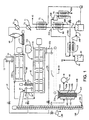
- FIG. 1 shows a schematic representation of a typical process for converting dry salts to ketones.
- Metal salts of volatile fatty acid 15 (VFA salts; eg calcium acetate, propionate, and butyrate) are added to the lock hopper 10 .
- a vacuum 20 is pulled on the salts to remove interstitial air which is vented into the atmosphere, and then the salts are fed into thermal convertor 40 .
- the VFA salts may be first introduced into preheater 300 , where they are contacted by hot ketone-containing vapors from the thermal convertor passing countercurrently.
- Agitator 330 ensures intimate contact of the hot ketone vapors with the VFA salt.
- Preheated VFA salts are then fed into the thermal convertor by solids conveyor 310 .
- hot heat transfer agent 25 eg steel balls, glass balls, ceramic balls
- a vacuum 20 is also pulled on lock hopper 30 containing hot heat transfer agent to remove interstitial air (which is vented into the atmosphere) so it too can be added to thermal convertor 40 .
- Thermal convertor 40 The contents of the two lock hoppers are added to an air-tight chamber (thermal convertor 40 ), where mixing impeller 50 ensures intimate contact of the heat transfer agent with the VFA salts, so that the temperature of the VFA salts increases, and they thermally decompose to form ketones (in a ketone-containing vapor) and metal carbonate salts as powder mixed with the heat transfer agent.
- Thermal convertor 40 preferably is partitioned into multiple chambers by dividers 320 to ensure that the solids progress through the convertor in approximately a plug-flow manner.
- reaction typically proceeds at approximately 430°C.
- thermal decomposition of organic acids to form ketones has been reported at temperatures as low as 160°C, higher temperatures are preferred for industrial-scale processing.
- Reactor temperatures will usually be above 350°C, more usually above 400°C.
- Preferred reaction temperatures are between 400°C and 450°C.
- calcium acetate does not melt, calcium butyrate does so below its decomposition temperature, and therefore must be agitated, as described above.
- the particularly preferred temperature for pyrolyzing a mixture of salts is about 430°C.
- the ketone product vapor is directed to cyclone 60 (optionally after transiting preheater 300 ) where entrained powder is removed and returned to the thermal convertor (or preheater) by screw conveyor 61, and then ketones are collected by cooling and condensing them from the vapor.
- Suitable operations include one or more of those shown in Figure 1.
- the hot ketone vapors are desuperheated in a desuperheater 70 where steam 73 is produced, and then in desuperheater 71 which is cooled by cooling water 74 . Vapors are further cooled in countercurrent heat exchanger 72 which is cooled by cold ketone product, and condensed in condenser 80 .
- Condensed ketones 45 are collected in a knock-out drum 90 .
- Noncondensibles 55 e.g. leakage or side-product gases
- the noncondensibles are sent through chiller 110 to condense remaining ketones 45 which are collected in knock-out drum 91 .
- the noncondensables are sent to a combustor 92 .
- Condenser 80 and chiller 110 are cooled by liquid refrigerant 400 which vaporizes to become refrigerant vapors 410 .
- the vapors are compressed by compressor 420 and condense in condenser 430 in which the heat is rejected to cooling water 74 .
- the thermal convertor 40 is operated under vacuum; the pressure is determined by the temperature of refrigerant 400 in condenser 80 .
- Lower temperatures in the condenser reduce the vapor pressure of the condensed ketones, which reduces the vapor density in the thermal convertor and hence reduces the residence time of the vapors in the thermal convertor.
- Low vapor density in the thermal convertor is important because excessively long residence times will cause the ketones to degrade.
- the heat transfer fluid in condenser 80 must be cold, thus requiring refrigeration.
- thermal convertor 40 Ideally, to ensure complete conversion, the solids would move through the thermal convertor in a plug flow manner. In actuality, there will be some backmixing due to the mixing impeller. The deleterious effects of backmixing can be reduced by making thermal convertor 40 long relative to its diameter. Additionally, back mixing can be reduced by partitioning thermal convertor 40 into chambers using dividers 320.
- metal carbonate residue and heat transfer agent can be removed to lock hopper 120 which has been previously evacuated to vacuum 20.
- the metal carbonate and heat transfer agent will have interstitial ketone vapors which are removed using vacuum pump 130 and sent to condenser 80 for recovery.
- Metal carbonate powder 85 is separated from heat transfer agent 25 prior to discharge of the solids into heater 140 . In the process shown in Figure 1, the separation is accomplished by employing vibrating screen 5 which retains heat transfer agent 25 , but allows metal carbonate powder 85 to drop through and be collected.
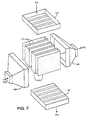
- Heat transfer agent 25 is returned to heater 140 , which is shown in greater detail in Figure 2.
- Cold heat transfer agent 25a is placed in upper distributor 141 which directs heat transfer agent 25 through parallel screens 142 .
- Heat transfer agent 25 flows by gravity between parallel screens 142 .
- Blower 66 forces hot gas 65a (eg. exhaust gases from a burner or lime kiln) to enter inlet gas distributor 143 .
- Solid panels 144 force the hot gas 65a through parallel screens 142 and through heat transfer agent 25 .
- Heat transfer agent 25 flows by gravity through lower distributor 145 and exits as hot heat transfer agent 25b .
- Cooled gases 65b are collected by outlet gas distributor 146 . Cooled gases 65b may be exhausted to the atmosphere, used to generate steam, or preheat combustion air. To aid the flow of heat transfer agent 25 through heater 140 , it may be necessary to vibrate heater 140 .
- Hot heat transfer agent 25 is removed by screw conveyor 160 and is introduced back into thermal convertor 40 .
- Figure 3 shows an alternative embodiment in which the ketones are condensed against cooling water rather than a refrigerant
- Primed reference numbers indicate elements with functions equivalent to those described for Figure 1.
- Compressor 500 compresses the low-pressure ketone vapors to a high pressure where they condense in condenser 80' .
- ketones produced according to this method may be inexpensive enough for use as motor fuel.
- the ketones would preferably be hydrogenated before use in a motor fuel.
- the liquid ketone product can be converted to alcohols by hydrogenation at approximately room temperature by contacting the ketone with hydrogen gas using a Raney nickel catalyst.
- the hydrogenation may be performed at 1 atm total pressure and near-ambient temperature using Raney nickel catalyst.
- the reaction proceeds more rapidly at higher temperatures, but the equilibrium becomes less favorable. Comparing the hydrogenation rates of low-molecular-weight ketones formed from volatile fatty acids at 40°C, they are all very similar and differ at most by a factor of two.
- Hydrogen could readily be derived from reformed natural gas, an abundant domestic energy source. In large-scale production, hydrogen costs about the same as gasoline per unit of energy, so there are no economic penalties associated with its use.
- the ketone may be viewed as a hydrogen carrier which avoids the need for high-pressure tanks to store gaseous hydrogen in automobiles.
- Thermogravametric analyses performed for each of six VFA salts show that the decomposition of calcium acetate and calcium butyrate begins above 360°C and that of calcium propionate above 320°C, and that the sodium salts decompose at a significantly higher temperature than the calcium salts (about 420°C)
- calcium salts would therefore be less expensive to decompose.
- calcium salts are more easily dewatered than sodium salts, and the lime (CaO) used in the dewatering process is less expensive than NaOH making calcium a preferred cation for the VFA salts used in the method of this invention.
- the decomposition temperatures are not significantly different for each species. If the decomposition behavior of each species remains roughly the same in a mixture of salts, it would be difficult to obtain a fractionated product by heating the mixture to different temperatures. For example, heating a mixture of calcium butyrate and calcium acetate to a temperature of 415°C, and maintaining this temperature while the sample decomposed, would be expected to produce a fairly even mixture of ketones, rather than a mixture dominated by acetone or 4-heptanone. The latter case could occur if the acetate decomposition rate were significantly faster than that of the butyrate, but thermogravametric analysis shows that this is not the case.
- Table 3 presents the observed ratios between the initial and final masses for each of six salt samples, and the theoretical ratios based on 100% conversion to the expected ketone product. All of the samples decomposed to the theoretical ratios except for the calcium butyrate sample, which may reflect experimental error.
- Decomposition ratios Salt Ca(Ac) 2 Ca(Pr) 2 Ca(Bu) 2 NaAc NaPr NaBu Actual: 0.634 0.546 0.685 0.644 0.560 0.480 Theor.: 0.633 0.537 0.467 0.646 0.552 0.481 %Diff: 0.16% 1.1% 46.7% 0.31% 1.4% 0.21%
- the thermal decomposition is quite selective to liquid products with theoretical yields over 93% for calcium acetate and butryate, and over 87% for calcium propionate. Gaseous products account for the remaining material. In the liquid product, over 90% is the primary product (2-propanone, 3-pentanone, 4-heptanone) with other ketones being the dominant by-products.
- the composition of the liquid product was remarkably independent of the temperature, even at very high temperatures (i.e., above 450°C), indicating that the products are stable at the reaction conditions.
- VFA salts were pyrolyzed in a laboratory-scale reactor which was evacuated through a dry ice condenser.
- VFA salts were added to the reactor, and the reactor was evacuated by a vacuum pump and allowed to approach a desired temperature.
- VFA salts decomposed, yielding gaseous and solid products.
- the gaseous products left the reactor, going through a filter and then the condenser tube, which was immersed in a dry ice/isopropanol bath. Condensible products were trapped in the tube, but non-condensible gases passed through the condenser and were collected in a large evacuated chamber.
- reaction rate with respect to temperature was determined from kinetic data for the amount of condensate obtained at a particular time, in view of the temperature at that time, using the Arrhenius equation and the first-order rate equation. Reaction rates are tabulated in Table 5, and Table 6 compares the time required for 90% conversion of each salt. For calcium propionate, the parameters for points below 399°C were different from the parameters for the rest of the data.
- Rates of ketone production with respect to temperature Salt Ca(Ac) 2 Ca(Pr) 2 Ca(Bu) 2 390°C: 2.76 x 10 -4 g acetone g salt-min 2.41 x 10 -4 g DEK g salt-min 8.40 x 10 -3 g DpK g salt-min 400°C: 1.56 x 10 -3 0.0367 0.0238 410°C: 8.37 x 10 -3 0.224 0.0655 420°C: 0.0429 1.30 0.175 430°C: 0.209 7.16 0.454 440°C: 0.979 37.7 1.15 Time required for 90% conversion Salt: Ca(Ac) 2 Ca(Pr) 2 Ca(Bu) 2 390°C: 2900.
- Example 2 the reactor of Example 2 was filled with various heat transfer media and brought to temperature before the VFA salt was added.
- the reactor was evacuated by a vacuum pump and allowed to approach a desired temperature.
- VFA salts added to the reactor at the appropriate temperature decomposed, yielding gaseous and solid products, which were quantitated as in Example 2.
- the slope of the plot mentioned above at 416°C which should equal the rate constant k at that temperature, is 0.01926 min -1 .
- the rate constant k at 416°C is calculated to be 0.06457 min -1 , which is 3.4 times greater than the rate calculated from the slope.
- the slope is 0.08281 min -1
- the kinetic parameters from the Arrhenius calculation give 0.9620 min -1 , which is 11.6 times greater.
- Yields were obtained for small sample decomposition runs over a range of temperatures (415°C-510°C). Yields for calcium propionate varied from 90-96% except for a yield of 80% at 416°C; yields for calcium butyrate varied between 72-75%, except for a yield of 60% at 509°C; and yields for calcium acetate varied between 60-65%.
- the propionate yields were much higher than the other two; this is probably because calcium propionate is not a hydrated salt, whereas the other two are.
- the water of hydration presents a problem for these runs, because when the sample is forced into the reactor at high temperature, the water is driven off quite rapidly, and causes a rush of vapor out of the reactor. As a result, significant amounts of unreacted salt may be blown out of the reactor and into the filter.
- Table 8 presents the advantages and disadvantages of each internal medium that was used.
- Media characteristics Medium Advantages Disadvantages None (Empty reactor) No problems associated with charging and cleaning medium; Poor mixing; inaccurate temperature measurement; char observed Regular sand Good mixing compared to calcium carbonate; less surface for catalysis Heavy abrasion; difficult to load; many fine particles Frac sand Good mixing compared to calcium carbonate; less surface for catalysis Heavy abrasion; many fine particles produced Calcium carbonate Can be reused many times Poor mixing; plugs tubes easily; catalyzes other reactions Soda glass beads Easily loaded and removed; excellent mixing; minimal surface for catalysis Easily ground up, frequent replacement required Pyrex glass beads Easily loaded, removed; excellent mixing; minimal surface for catalysis Must be cleaned with dilute acid solution
- ketones e.g. acetone, methyl ethyl ketone, diethyl ketone, etc.
- organic acid salts e.g. acetate, propionate, butyrate
- calcium acetate will be shown as an illustrative example. Calcium acetate can be converted almost stoichiometrically to acetone and calcium carbonate by pyrolyzing at 400 - 450° C. It is important to remove the acetone as soon as it is formed since it will decompose at those high temperatures.
- the dry calcium acetate is transported to the pyrolyzer lock hopper using a screw conveyor.
- the lock hopper opens, the calcium acetate enters the thermal convertor where it is mixed with a hot transfer medium (e.g., glass beads)
- the calcium acetate reacts to form calcium carbonate and acetone.
- the acetone is cooled by contacting it with incoming calcium acetate, then it is condensed and recovered.
- the vapor pressure of acetone is fairly low if the acetone is condensed at low temperatures, thus allowing the thermal convertor to operate under a vacuum. This ensures that the acetone has a short residence time in the thermal convertor.
- the required residence time of the solids is about 10 minutes (depending on the temperature for a complete reaction). Because some noncondensibles may enter the thermal convertor, a small vacuum pump will be needed to remove them.
- Calcium carbonate exiting the thermal convertor is separated from the heat transfer medium.
- the calcium carbonate may be sent to a lime kiln to convert it to lime.
- the heat transfer agent is heated by direct contact with hot gases, such as those exiting the lime kiln or a combustor.
- the methods are exemplified by single product (e.g. acetic acid, acetone), but the method is also suitable for mixtures of volatile fatty acids.
- it will be necessary to distill the products recovered from thermal conversion of mixed fatty acids if a pure product is desired. This may, or may not, be necessary.
- the ketone products are to be hydrogenated to alcohols that are blended into motor fuel, the mixed ketone products are sufficient.
- chemical-grade acetone is going to be sold, it will have to be separated from the higher ketones (e.g. methyl ethyl ketone, diethyl ketone) using distillation or other appropriate technologies.
Landscapes
- Chemical & Material Sciences (AREA)
- Organic Chemistry (AREA)
- Engineering & Computer Science (AREA)
- Chemical Kinetics & Catalysis (AREA)
- Mechanical Engineering (AREA)
- General Engineering & Computer Science (AREA)
- Organic Low-Molecular-Weight Compounds And Preparation Thereof (AREA)
- Fats And Perfumes (AREA)
- Devices And Processes Conducted In The Presence Of Fluids And Solid Particles (AREA)
- Heat Sensitive Colour Forming Recording (AREA)
- Acyclic And Carbocyclic Compounds In Medicinal Compositions (AREA)
Applications Claiming Priority (3)
| Application Number | Priority Date | Filing Date | Title |
|---|---|---|---|
| US885774 | 1997-06-30 | ||
| US08/885,774 US5969189A (en) | 1997-06-30 | 1997-06-30 | Thermal conversion of volatile fatty acid salts to ketones |
| PCT/US1998/012124 WO1999000348A2 (en) | 1997-06-30 | 1998-06-11 | Thermal conversion of volatile fatty acid salts to ketones |
Publications (2)
| Publication Number | Publication Date |
|---|---|
| EP0994839A2 EP0994839A2 (en) | 2000-04-26 |
| EP0994839B1 true EP0994839B1 (en) | 2003-09-24 |
Family
ID=25387667
Family Applications (1)
| Application Number | Title | Priority Date | Filing Date |
|---|---|---|---|
| EP98926551A Expired - Lifetime EP0994839B1 (en) | 1997-06-30 | 1998-06-11 | Thermal conversion of volatile fatty acid salts to ketones |
Country Status (11)
| Country | Link |
|---|---|
| US (1) | US5969189A (enExample) |
| EP (1) | EP0994839B1 (enExample) |
| JP (1) | JP4131571B2 (enExample) |
| AT (1) | ATE250568T1 (enExample) |
| AU (1) | AU750176B2 (enExample) |
| CA (2) | CA2294622C (enExample) |
| DE (1) | DE69818469T2 (enExample) |
| ES (1) | ES2209152T3 (enExample) |
| MX (1) | MXPA02011384A (enExample) |
| PT (1) | PT994839E (enExample) |
| WO (1) | WO1999000348A2 (enExample) |
Families Citing this family (30)
| Publication number | Priority date | Publication date | Assignee | Title |
|---|---|---|---|---|
| US6043392A (en) * | 1997-06-30 | 2000-03-28 | Texas A&M University System | Method for conversion of biomass to chemicals and fuels |
| US7074603B2 (en) * | 1999-03-11 | 2006-07-11 | Zeachem, Inc. | Process for producing ethanol from corn dry milling |
| CN100575331C (zh) | 1999-03-11 | 2009-12-30 | 齐凯姆公司 | 一种生产乙醇的方法 |
| MX279852B (es) * | 2004-01-29 | 2010-10-08 | Zeachem Inc | Recuperacion de acidos organicos. |
| US7682811B2 (en) * | 2006-01-27 | 2010-03-23 | University Of Massachusetts | Systems and methods for producing biofuels and related materials |
| US8323923B1 (en) | 2006-10-13 | 2012-12-04 | Sweetwater Energy, Inc. | Method and system for producing ethanol |
| US9499635B2 (en) | 2006-10-13 | 2016-11-22 | Sweetwater Energy, Inc. | Integrated wood processing and sugar production |
| US8153850B2 (en) | 2007-05-11 | 2012-04-10 | The Texas A&M University System | Integrated biofuel production system |
| AU2009219150A1 (en) * | 2008-02-27 | 2009-09-03 | Qteros, Inc. | Methods for the conversion of plant materials into fuels and chemicals by sequential action of two microorganisms |
| WO2009152362A2 (en) * | 2008-06-11 | 2009-12-17 | University Of Massachusetts | Methods and compositions for regulating sporulation |
| CA2781862C (en) * | 2008-12-09 | 2018-02-13 | Sweetwater Energy, Inc. | Ensiling biomass for biofuels production and multiple phase apparatus for hydrolyzation of ensiled biomass |
| US20100086981A1 (en) * | 2009-06-29 | 2010-04-08 | Qteros, Inc. | Compositions and methods for improved saccharification of biomass |
| CN102985550A (zh) * | 2009-04-20 | 2013-03-20 | 奎特罗斯公司 | 用于生物质发酵的组合物和方法 |
| US8362306B2 (en) * | 2009-10-26 | 2013-01-29 | University Of Maine System Board Of Trustees | Energy densification of biomass-derived organic acids |
| US20110183382A1 (en) * | 2009-12-15 | 2011-07-28 | Qteros, Inc. | Methods and compositions for producing chemical products from c. phytofermentans |
| CN102906229B (zh) * | 2010-03-19 | 2015-01-07 | Sk新技术株式会社 | 使用生物质制备运输燃料或润滑油基础油的方法 |
| GB2478791A (en) * | 2010-03-19 | 2011-09-21 | Qteros Inc | Ethanol production by genetically-modified bacteria |
| KR101748442B1 (ko) | 2010-10-21 | 2017-06-19 | 에스케이이노베이션 주식회사 | 바이오매스 혹은 유기성 폐기물로부터 탄화수소를 제조하는 방법 |
| CN103391987B (zh) | 2011-02-01 | 2015-05-13 | 缅因大学系统董事会 | 使用甲酸盐提高原料的能量密度的方法 |
| US8765430B2 (en) | 2012-02-10 | 2014-07-01 | Sweetwater Energy, Inc. | Enhancing fermentation of starch- and sugar-based feedstocks |
| EP2836602B1 (en) | 2012-04-13 | 2018-10-03 | Sweetwater Energy, Inc. | Methods and systems for saccharification of biomass |
| US8563277B1 (en) | 2012-04-13 | 2013-10-22 | Sweetwater Energy, Inc. | Methods and systems for saccharification of biomass |
| CA2906917A1 (en) | 2013-03-15 | 2014-09-18 | Sweetwater Energy, Inc. | Carbon purification of concentrated sugar streams derived from pretreated biomass |
| DK3230463T4 (da) | 2014-12-09 | 2025-09-15 | Apalta Patents Oue | Hurtig Forbehandling |
| JP6386949B2 (ja) * | 2015-03-17 | 2018-09-05 | 太平洋セメント株式会社 | 微小炭酸カルシウム中空粒子 |
| US11821047B2 (en) | 2017-02-16 | 2023-11-21 | Apalta Patent OÜ | High pressure zone formation for pretreatment |
| CN107723054A (zh) * | 2017-09-06 | 2018-02-23 | 吴江华威特种油有限公司 | 一种环保生物基润滑油制备方法 |
| US10428713B2 (en) | 2017-09-07 | 2019-10-01 | Denso International America, Inc. | Systems and methods for exhaust heat recovery and heat storage |
| GB201900553D0 (en) * | 2019-01-15 | 2019-03-06 | Norwegian Univ Sci & Tech Ntnu | Preparation of biofuel from biomass |
| BR112022012348A2 (pt) | 2019-12-22 | 2022-09-13 | Sweetwater Energy Inc | Métodos de fazer lignina especializada e produtos de lignina da biomassa |
Family Cites Families (10)
| Publication number | Priority date | Publication date | Assignee | Title |
|---|---|---|---|---|
| GB216120A (en) * | 1923-05-17 | 1925-02-26 | Lefranc & Cie Soc | An improved process for the manufacture of dipropylketone |
| GB277975A (en) * | 1926-09-23 | 1929-01-21 | Fernand Germain | Process for the production of butyrone |
| FR642698A (fr) * | 1927-03-23 | 1928-09-01 | H Gouthiere Et Cie Soc | Procédé de fabrication des cétones |
| CH132022A (fr) * | 1928-03-07 | 1929-03-31 | Ketol Sa L | Procédé pour la décomposition continue de substances par la chaleur. |
| US3079705A (en) * | 1959-01-20 | 1963-03-05 | Bauer Bros Co | Peanut cooler |
| FR2227830A1 (en) * | 1973-05-04 | 1974-11-29 | Guttridge Ltd David | Portable pellet processing appts - with air drying columns and screens for farm animal feed |
| US4384872A (en) * | 1979-03-05 | 1983-05-24 | Institute Of Gas Technology | Stabilized gasoline-alcohol fuel compositions |
| US4267397A (en) * | 1979-12-21 | 1981-05-12 | Uop Inc. | Hydration of olefinic compounds with dilute sulfuric acid and cobalt sulfate |
| AU7279981A (en) * | 1980-08-21 | 1982-02-25 | Koppers Company, Inc. | Method + apparatus for cooling pellets |
| EP0444338B1 (en) * | 1990-03-01 | 1993-06-02 | Cominco Ltd. | Method and apparatus for cooling particulate solids |
-
1997
- 1997-06-30 US US08/885,774 patent/US5969189A/en not_active Expired - Lifetime
-
1998
- 1998-06-11 MX MXPA02011384A patent/MXPA02011384A/es not_active IP Right Cessation
- 1998-06-11 DE DE69818469T patent/DE69818469T2/de not_active Expired - Lifetime
- 1998-06-11 PT PT98926551T patent/PT994839E/pt unknown
- 1998-06-11 CA CA002294622A patent/CA2294622C/en not_active Expired - Fee Related
- 1998-06-11 AU AU78364/98A patent/AU750176B2/en not_active Ceased
- 1998-06-11 AT AT98926551T patent/ATE250568T1/de not_active IP Right Cessation
- 1998-06-11 ES ES98926551T patent/ES2209152T3/es not_active Expired - Lifetime
- 1998-06-11 JP JP50556699A patent/JP4131571B2/ja not_active Expired - Fee Related
- 1998-06-11 WO PCT/US1998/012124 patent/WO1999000348A2/en not_active Ceased
- 1998-06-11 EP EP98926551A patent/EP0994839B1/en not_active Expired - Lifetime
- 1998-06-11 CA CA002648505A patent/CA2648505A1/en not_active Abandoned
Also Published As
| Publication number | Publication date |
|---|---|
| AU750176B2 (en) | 2002-07-11 |
| EP0994839A2 (en) | 2000-04-26 |
| ES2209152T3 (es) | 2004-06-16 |
| DE69818469T2 (de) | 2004-07-08 |
| WO1999000348A3 (en) | 1999-04-01 |
| DE69818469D1 (de) | 2003-10-30 |
| AU7836498A (en) | 1999-01-19 |
| CA2294622A1 (en) | 1999-01-07 |
| US5969189A (en) | 1999-10-19 |
| JP4131571B2 (ja) | 2008-08-13 |
| CA2648505A1 (en) | 1999-01-07 |
| PT994839E (pt) | 2004-02-27 |
| ATE250568T1 (de) | 2003-10-15 |
| JP2002507973A (ja) | 2002-03-12 |
| CA2294622C (en) | 2009-03-10 |
| MXPA02011384A (es) | 2003-04-25 |
| WO1999000348A2 (en) | 1999-01-07 |
Similar Documents
| Publication | Publication Date | Title |
|---|---|---|
| US5969189A (en) | Thermal conversion of volatile fatty acid salts to ketones | |
| US9994453B2 (en) | Process and system for producing commercial quality carbon dioxide from recausticizing process calcium carbonates | |
| US4442080A (en) | Fluid bed SOX/NOX process--"hydrated calcine absorption" | |
| EP0675854B1 (en) | Process and apparatus for drying and calcining sodium bicarbonate | |
| US4310501A (en) | Process for producing hydrogen fluoride | |
| CN1120098A (zh) | 黑液气化器 | |
| HU181469B (en) | Process for thermic destruction of aluminium chloride hydrate | |
| US3102787A (en) | Preparation of hydrogen fluoride | |
| US4160808A (en) | Pyrohydrolysis process for spent aluminum reduction cell linings | |
| GB2151150A (en) | Process for recovering heat of a tar-containing high temperature gas | |
| CA1220926A (en) | Wet calcination of alkali metal bicarbonates in hydrophobic media | |
| EP0307869B1 (en) | Process for producing ammonia and sulfur dioxide | |
| US4092128A (en) | Desulfurized gas production from vertical kiln pyrolysis | |
| US3929975A (en) | Selective recycle production of aluminum chloride | |
| US3207579A (en) | Process for producing hydrogen fluoride | |
| CN1038577C (zh) | 重质纯碱的制备方法及其所用的固定蒸汽分解反应炉 | |
| CN108892104B (zh) | 一种制备氟化氢工艺装置的使用方法 | |
| US2866681A (en) | Method and apparatus for the production of sodium bicarbonate | |
| KR830001540B1 (ko) | 불화 수소의 제법 | |
| US2755310A (en) | Production of organic chlorides by reaction of organic compound with ammonium chloride | |
| US4220769A (en) | Cyanuric acid manufacture | |
| US4223000A (en) | Decomposition of aluminum nitrate | |
| RU2188795C2 (ru) | Способ конверсии гексафторида урана в тетрафторид урана и безводный фтористый водород и устройство для его осуществления | |
| RU2211210C1 (ru) | Способ получения тетрафторметана и устройство для его осуществления | |
| US4643885A (en) | Method of processing sodium oxalate formed during the digestion of bauxite |
Legal Events
| Date | Code | Title | Description |
|---|---|---|---|
| PUAI | Public reference made under article 153(3) epc to a published international application that has entered the european phase |
Free format text: ORIGINAL CODE: 0009012 |
|
| 17P | Request for examination filed |
Effective date: 20000126 |
|
| AK | Designated contracting states |
Kind code of ref document: A2 Designated state(s): AT BE CH CY DE DK ES FI FR GB GR IE IT LI LU MC NL PT SE |
|
| 17Q | First examination report despatched |
Effective date: 20010511 |
|
| GRAH | Despatch of communication of intention to grant a patent |
Free format text: ORIGINAL CODE: EPIDOS IGRA |
|
| GRAS | Grant fee paid |
Free format text: ORIGINAL CODE: EPIDOSNIGR3 |
|
| GRAA | (expected) grant |
Free format text: ORIGINAL CODE: 0009210 |
|
| AK | Designated contracting states |
Kind code of ref document: B1 Designated state(s): AT BE CH CY DE DK ES FI FR GB GR IE IT LI LU MC NL PT SE |
|
| PG25 | Lapsed in a contracting state [announced via postgrant information from national office to epo] |
Ref country code: LI Free format text: LAPSE BECAUSE OF FAILURE TO SUBMIT A TRANSLATION OF THE DESCRIPTION OR TO PAY THE FEE WITHIN THE PRESCRIBED TIME-LIMIT Effective date: 20030924 Ref country code: FI Free format text: LAPSE BECAUSE OF FAILURE TO SUBMIT A TRANSLATION OF THE DESCRIPTION OR TO PAY THE FEE WITHIN THE PRESCRIBED TIME-LIMIT Effective date: 20030924 Ref country code: CY Free format text: LAPSE BECAUSE OF FAILURE TO SUBMIT A TRANSLATION OF THE DESCRIPTION OR TO PAY THE FEE WITHIN THE PRESCRIBED TIME-LIMIT Effective date: 20030924 Ref country code: CH Free format text: LAPSE BECAUSE OF FAILURE TO SUBMIT A TRANSLATION OF THE DESCRIPTION OR TO PAY THE FEE WITHIN THE PRESCRIBED TIME-LIMIT Effective date: 20030924 Ref country code: AT Free format text: LAPSE BECAUSE OF FAILURE TO SUBMIT A TRANSLATION OF THE DESCRIPTION OR TO PAY THE FEE WITHIN THE PRESCRIBED TIME-LIMIT Effective date: 20030924 |
|
| REG | Reference to a national code |
Ref country code: GB Ref legal event code: FG4D |
|
| REG | Reference to a national code |
Ref country code: CH Ref legal event code: EP |
|
| REG | Reference to a national code |
Ref country code: IE Ref legal event code: FG4D |
|
| REF | Corresponds to: |
Ref document number: 69818469 Country of ref document: DE Date of ref document: 20031030 Kind code of ref document: P |
|
| PG25 | Lapsed in a contracting state [announced via postgrant information from national office to epo] |
Ref country code: SE Free format text: LAPSE BECAUSE OF FAILURE TO SUBMIT A TRANSLATION OF THE DESCRIPTION OR TO PAY THE FEE WITHIN THE PRESCRIBED TIME-LIMIT Effective date: 20031224 Ref country code: GR Free format text: LAPSE BECAUSE OF FAILURE TO SUBMIT A TRANSLATION OF THE DESCRIPTION OR TO PAY THE FEE WITHIN THE PRESCRIBED TIME-LIMIT Effective date: 20031224 Ref country code: DK Free format text: LAPSE BECAUSE OF FAILURE TO SUBMIT A TRANSLATION OF THE DESCRIPTION OR TO PAY THE FEE WITHIN THE PRESCRIBED TIME-LIMIT Effective date: 20031224 |
|
| REG | Reference to a national code |
Ref country code: CH Ref legal event code: PL |
|
| REG | Reference to a national code |
Ref country code: ES Ref legal event code: FG2A Ref document number: 2209152 Country of ref document: ES Kind code of ref document: T3 |
|
| PG25 | Lapsed in a contracting state [announced via postgrant information from national office to epo] |
Ref country code: MC Free format text: LAPSE BECAUSE OF NON-PAYMENT OF DUE FEES Effective date: 20040630 |
|
| ET | Fr: translation filed | ||
| PLBE | No opposition filed within time limit |
Free format text: ORIGINAL CODE: 0009261 |
|
| STAA | Information on the status of an ep patent application or granted ep patent |
Free format text: STATUS: NO OPPOSITION FILED WITHIN TIME LIMIT |
|
| 26N | No opposition filed |
Effective date: 20040625 |
|
| PGFP | Annual fee paid to national office [announced via postgrant information from national office to epo] |
Ref country code: LU Payment date: 20080702 Year of fee payment: 11 |
|
| PG25 | Lapsed in a contracting state [announced via postgrant information from national office to epo] |
Ref country code: IT Free format text: LAPSE BECAUSE OF NON-PAYMENT OF DUE FEES Effective date: 20090611 |
|
| PG25 | Lapsed in a contracting state [announced via postgrant information from national office to epo] |
Ref country code: LU Free format text: LAPSE BECAUSE OF NON-PAYMENT OF DUE FEES Effective date: 20090611 |
|
| PGFP | Annual fee paid to national office [announced via postgrant information from national office to epo] |
Ref country code: ES Payment date: 20110628 Year of fee payment: 14 Ref country code: FR Payment date: 20110629 Year of fee payment: 14 Ref country code: IE Payment date: 20110627 Year of fee payment: 14 Ref country code: PT Payment date: 20110602 Year of fee payment: 14 |
|
| PGRI | Patent reinstated in contracting state [announced from national office to epo] |
Ref country code: IT Effective date: 20110616 |
|
| PGFP | Annual fee paid to national office [announced via postgrant information from national office to epo] |
Ref country code: GB Payment date: 20110628 Year of fee payment: 14 Ref country code: NL Payment date: 20110630 Year of fee payment: 14 |
|
| PGFP | Annual fee paid to national office [announced via postgrant information from national office to epo] |
Ref country code: BE Payment date: 20110627 Year of fee payment: 14 Ref country code: IT Payment date: 20110627 Year of fee payment: 14 |
|
| PGFP | Annual fee paid to national office [announced via postgrant information from national office to epo] |
Ref country code: DE Payment date: 20110629 Year of fee payment: 14 |
|
| REG | Reference to a national code |
Ref country code: PT Ref legal event code: MM4A Free format text: LAPSE DUE TO NON-PAYMENT OF FEES Effective date: 20121211 |
|
| BERE | Be: lapsed |
Owner name: THE TEXAS *A&M UNIVERSITY SYSTEM Effective date: 20120630 |
|
| REG | Reference to a national code |
Ref country code: NL Ref legal event code: V1 Effective date: 20130101 |
|
| GBPC | Gb: european patent ceased through non-payment of renewal fee |
Effective date: 20120611 |
|
| PG25 | Lapsed in a contracting state [announced via postgrant information from national office to epo] |
Ref country code: PT Free format text: LAPSE BECAUSE OF NON-PAYMENT OF DUE FEES Effective date: 20121211 Ref country code: IT Free format text: LAPSE BECAUSE OF NON-PAYMENT OF DUE FEES Effective date: 20120611 |
|
| REG | Reference to a national code |
Ref country code: IE Ref legal event code: MM4A |
|
| REG | Reference to a national code |
Ref country code: FR Ref legal event code: ST Effective date: 20130228 |
|
| REG | Reference to a national code |
Ref country code: DE Ref legal event code: R119 Ref document number: 69818469 Country of ref document: DE Effective date: 20130101 |
|
| PG25 | Lapsed in a contracting state [announced via postgrant information from national office to epo] |
Ref country code: IE Free format text: LAPSE BECAUSE OF NON-PAYMENT OF DUE FEES Effective date: 20120611 Ref country code: BE Free format text: LAPSE BECAUSE OF NON-PAYMENT OF DUE FEES Effective date: 20120630 Ref country code: NL Free format text: LAPSE BECAUSE OF NON-PAYMENT OF DUE FEES Effective date: 20130101 Ref country code: DE Free format text: LAPSE BECAUSE OF NON-PAYMENT OF DUE FEES Effective date: 20130101 Ref country code: FR Free format text: LAPSE BECAUSE OF NON-PAYMENT OF DUE FEES Effective date: 20120702 Ref country code: GB Free format text: LAPSE BECAUSE OF NON-PAYMENT OF DUE FEES Effective date: 20120611 |
|
| REG | Reference to a national code |
Ref country code: ES Ref legal event code: FD2A Effective date: 20131021 |
|
| PG25 | Lapsed in a contracting state [announced via postgrant information from national office to epo] |
Ref country code: ES Free format text: LAPSE BECAUSE OF NON-PAYMENT OF DUE FEES Effective date: 20120612 |