EP0976813A1 - Borate containing additive for manual transmission lubricant being stable to hydrolysis and providing high synchromesh durability - Google Patents
Borate containing additive for manual transmission lubricant being stable to hydrolysis and providing high synchromesh durability Download PDFInfo
- Publication number
- EP0976813A1 EP0976813A1 EP98401967A EP98401967A EP0976813A1 EP 0976813 A1 EP0976813 A1 EP 0976813A1 EP 98401967 A EP98401967 A EP 98401967A EP 98401967 A EP98401967 A EP 98401967A EP 0976813 A1 EP0976813 A1 EP 0976813A1
- Authority
- EP
- European Patent Office
- Prior art keywords
- oil
- extreme pressure
- water
- pressure additive
- alkyl
- Prior art date
- Legal status (The legal status is an assumption and is not a legal conclusion. Google has not performed a legal analysis and makes no representation as to the accuracy of the status listed.)
- Granted
Links
- 230000005540 biological transmission Effects 0.000 title claims abstract description 10
- 239000000654 additive Substances 0.000 title description 36
- 230000000996 additive effect Effects 0.000 title description 32
- 239000000314 lubricant Substances 0.000 title description 22
- 230000007062 hydrolysis Effects 0.000 title description 11
- 238000006460 hydrolysis reaction Methods 0.000 title description 11
- BTBUEUYNUDRHOZ-UHFFFAOYSA-N Borate Chemical compound [O-]B([O-])[O-] BTBUEUYNUDRHOZ-UHFFFAOYSA-N 0.000 title description 4
- XLYOFNOQVPJJNP-UHFFFAOYSA-N water Substances O XLYOFNOQVPJJNP-UHFFFAOYSA-N 0.000 claims abstract description 85
- 239000000203 mixture Substances 0.000 claims abstract description 48
- -1 alkali-metal borate Chemical class 0.000 claims abstract description 47
- 238000007254 oxidation reaction Methods 0.000 claims abstract description 33
- 230000003647 oxidation Effects 0.000 claims abstract description 28
- 239000002199 base oil Substances 0.000 claims abstract description 23
- 125000000217 alkyl group Chemical group 0.000 claims abstract description 22
- 239000010687 lubricating oil Substances 0.000 claims abstract description 22
- 229960001860 salicylate Drugs 0.000 claims abstract description 16
- 150000008116 organic polysulfides Chemical class 0.000 claims abstract description 14
- 229910052783 alkali metal Inorganic materials 0.000 claims abstract description 13
- 229920005862 polyol Polymers 0.000 claims abstract description 13
- 150000003077 polyols Chemical class 0.000 claims abstract description 13
- 230000001050 lubricating effect Effects 0.000 claims abstract description 10
- 238000000034 method Methods 0.000 claims description 35
- 239000005069 Extreme pressure additive Substances 0.000 claims description 20
- 239000003112 inhibitor Substances 0.000 claims description 18
- 239000006260 foam Substances 0.000 claims description 16
- KHFVGGRBRAHSFE-UHFFFAOYSA-N nonapotassium;triborate Chemical compound [K+].[K+].[K+].[K+].[K+].[K+].[K+].[K+].[K+].[O-]B([O-])[O-].[O-]B([O-])[O-].[O-]B([O-])[O-] KHFVGGRBRAHSFE-UHFFFAOYSA-N 0.000 claims description 15
- WXZMFSXDPGVJKK-UHFFFAOYSA-N pentaerythritol Chemical compound OCC(CO)(CO)CO WXZMFSXDPGVJKK-UHFFFAOYSA-N 0.000 claims description 15
- FALRKNHUBBKYCC-UHFFFAOYSA-N 2-(chloromethyl)pyridine-3-carbonitrile Chemical compound ClCC1=NC=CC=C1C#N FALRKNHUBBKYCC-UHFFFAOYSA-N 0.000 claims description 14
- 239000012141 concentrate Substances 0.000 claims description 14
- 229940014800 succinic anhydride Drugs 0.000 claims description 14
- NYLJHRUQFXQNPN-UHFFFAOYSA-N 2-(tert-butyltrisulfanyl)-2-methylpropane Chemical compound CC(C)(C)SSSC(C)(C)C NYLJHRUQFXQNPN-UHFFFAOYSA-N 0.000 claims description 13
- 239000007795 chemical reaction product Substances 0.000 claims description 12
- 230000000994 depressogenic effect Effects 0.000 claims description 11
- 239000006078 metal deactivator Substances 0.000 claims description 10
- QQVGEJLUEOSDBB-KTKRTIGZSA-N [3-hydroxy-2,2-bis(hydroxymethyl)propyl] (z)-octadec-9-enoate Chemical compound CCCCCCCC\C=C/CCCCCCCC(=O)OCC(CO)(CO)CO QQVGEJLUEOSDBB-KTKRTIGZSA-N 0.000 claims description 9
- 235000014113 dietary fatty acids Nutrition 0.000 claims description 7
- 239000003085 diluting agent Substances 0.000 claims description 7
- 229930195729 fatty acid Natural products 0.000 claims description 7
- 239000000194 fatty acid Substances 0.000 claims description 7
- BIGYLAKFCGVRAN-UHFFFAOYSA-N 1,3,4-thiadiazolidine-2,5-dithione Chemical class S=C1NNC(=S)S1 BIGYLAKFCGVRAN-UHFFFAOYSA-N 0.000 claims description 6
- CMPQUABWPXYYSH-UHFFFAOYSA-N phenyl phosphate Chemical class OP(O)(=O)OC1=CC=CC=C1 CMPQUABWPXYYSH-UHFFFAOYSA-N 0.000 claims description 6
- KOWVWXQNQNCRRS-UHFFFAOYSA-N tris(2,4-dimethylphenyl) phosphate Chemical compound CC1=CC(C)=CC=C1OP(=O)(OC=1C(=CC(C)=CC=1)C)OC1=CC=C(C)C=C1C KOWVWXQNQNCRRS-UHFFFAOYSA-N 0.000 claims description 6
- QRUDEWIWKLJBPS-UHFFFAOYSA-N benzotriazole Chemical compound C1=CC=C2N[N][N]C2=C1 QRUDEWIWKLJBPS-UHFFFAOYSA-N 0.000 claims description 3
- 239000012964 benzotriazole Substances 0.000 claims description 3
- 239000007788 liquid Substances 0.000 claims description 2
- 238000002156 mixing Methods 0.000 claims description 2
- FWAVAVCRVWBJRP-UHFFFAOYSA-N 3-(2-methylprop-1-enyl)oxolane-2,5-dione Chemical compound CC(C)=CC1CC(=O)OC1=O FWAVAVCRVWBJRP-UHFFFAOYSA-N 0.000 claims 1
- 125000003354 benzotriazolyl group Chemical class N1N=NC2=C1C=CC=C2* 0.000 claims 1
- 239000003921 oil Substances 0.000 description 76
- 238000012360 testing method Methods 0.000 description 59
- 229910052500 inorganic mineral Inorganic materials 0.000 description 21
- 239000011707 mineral Substances 0.000 description 21
- 229920000193 polymethacrylate Polymers 0.000 description 17
- 150000001875 compounds Chemical class 0.000 description 16
- 230000009429 distress Effects 0.000 description 15
- 238000006243 chemical reaction Methods 0.000 description 14
- 239000000839 emulsion Substances 0.000 description 13
- 229910001369 Brass Inorganic materials 0.000 description 12
- NINIDFKCEFEMDL-UHFFFAOYSA-N Sulfur Chemical compound [S] NINIDFKCEFEMDL-UHFFFAOYSA-N 0.000 description 12
- 239000010951 brass Substances 0.000 description 12
- 239000011593 sulfur Substances 0.000 description 12
- 229910052717 sulfur Inorganic materials 0.000 description 12
- 229910052799 carbon Inorganic materials 0.000 description 10
- XUIMIQQOPSSXEZ-UHFFFAOYSA-N Silicon Chemical compound [Si] XUIMIQQOPSSXEZ-UHFFFAOYSA-N 0.000 description 9
- 150000001565 benzotriazoles Chemical class 0.000 description 9
- 229910052710 silicon Inorganic materials 0.000 description 9
- 239000010703 silicon Substances 0.000 description 9
- 229920002367 Polyisobutene Polymers 0.000 description 8
- 239000008186 active pharmaceutical agent Substances 0.000 description 8
- 125000004432 carbon atom Chemical group C* 0.000 description 8
- 239000002480 mineral oil Substances 0.000 description 8
- 235000010446 mineral oil Nutrition 0.000 description 8
- 238000000926 separation method Methods 0.000 description 8
- 229910000831 Steel Inorganic materials 0.000 description 7
- 239000010959 steel Substances 0.000 description 7
- PEDCQBHIVMGVHV-UHFFFAOYSA-N Glycerine Chemical compound OCC(O)CO PEDCQBHIVMGVHV-UHFFFAOYSA-N 0.000 description 6
- YXFVVABEGXRONW-UHFFFAOYSA-N Toluene Chemical compound CC1=CC=CC=C1 YXFVVABEGXRONW-UHFFFAOYSA-N 0.000 description 6
- 239000000853 adhesive Substances 0.000 description 6
- 230000001070 adhesive effect Effects 0.000 description 6
- DHTAIMJOUCYGOL-UHFFFAOYSA-N 2-ethyl-n-(2-ethylhexyl)-n-[(4-methylbenzotriazol-1-yl)methyl]hexan-1-amine Chemical compound C1=CC=C2N(CN(CC(CC)CCCC)CC(CC)CCCC)N=NC2=C1C DHTAIMJOUCYGOL-UHFFFAOYSA-N 0.000 description 5
- KPYHSKSQWKIIHY-UHFFFAOYSA-N 2-ethyl-n-(2-ethylhexyl)-n-[(5-methylbenzotriazol-1-yl)methyl]hexan-1-amine Chemical compound CC1=CC=C2N(CN(CC(CC)CCCC)CC(CC)CCCC)N=NC2=C1 KPYHSKSQWKIIHY-UHFFFAOYSA-N 0.000 description 5
- 239000003795 chemical substances by application Substances 0.000 description 5
- VQTUBCCKSQIDNK-UHFFFAOYSA-N Isobutene Chemical compound CC(C)=C VQTUBCCKSQIDNK-UHFFFAOYSA-N 0.000 description 4
- OFBQJSOFQDEBGM-UHFFFAOYSA-N Pentane Chemical compound CCCCC OFBQJSOFQDEBGM-UHFFFAOYSA-N 0.000 description 4
- 125000003342 alkenyl group Chemical group 0.000 description 4
- 238000005260 corrosion Methods 0.000 description 4
- 230000007797 corrosion Effects 0.000 description 4
- 239000012530 fluid Substances 0.000 description 4
- 229920001577 copolymer Polymers 0.000 description 3
- 150000002148 esters Chemical class 0.000 description 3
- 125000004434 sulfur atom Chemical group 0.000 description 3
- OYPRJOBELJOOCE-UHFFFAOYSA-N Calcium Chemical compound [Ca] OYPRJOBELJOOCE-UHFFFAOYSA-N 0.000 description 2
- OKTJSMMVPCPJKN-UHFFFAOYSA-N Carbon Chemical compound [C] OKTJSMMVPCPJKN-UHFFFAOYSA-N 0.000 description 2
- RYGMFSIKBFXOCR-UHFFFAOYSA-N Copper Chemical compound [Cu] RYGMFSIKBFXOCR-UHFFFAOYSA-N 0.000 description 2
- FBPFZTCFMRRESA-FSIIMWSLSA-N D-Glucitol Natural products OC[C@H](O)[C@H](O)[C@@H](O)[C@H](O)CO FBPFZTCFMRRESA-FSIIMWSLSA-N 0.000 description 2
- FBPFZTCFMRRESA-JGWLITMVSA-N D-glucitol Chemical compound OC[C@H](O)[C@@H](O)[C@H](O)[C@H](O)CO FBPFZTCFMRRESA-JGWLITMVSA-N 0.000 description 2
- 239000002585 base Substances 0.000 description 2
- 239000011575 calcium Substances 0.000 description 2
- 229910052791 calcium Inorganic materials 0.000 description 2
- 230000000052 comparative effect Effects 0.000 description 2
- 229910052802 copper Inorganic materials 0.000 description 2
- 239000010949 copper Substances 0.000 description 2
- 238000002845 discoloration Methods 0.000 description 2
- 150000004665 fatty acids Chemical class 0.000 description 2
- 230000003301 hydrolyzing effect Effects 0.000 description 2
- 150000002462 imidazolines Chemical class 0.000 description 2
- 239000002245 particle Substances 0.000 description 2
- 229920000642 polymer Polymers 0.000 description 2
- 239000010802 sludge Substances 0.000 description 2
- 239000000600 sorbitol Substances 0.000 description 2
- 238000004901 spalling Methods 0.000 description 2
- 238000013112 stability test Methods 0.000 description 2
- 150000005846 sugar alcohols Polymers 0.000 description 2
- BDHFUVZGWQCTTF-UHFFFAOYSA-M sulfonate Chemical compound [O-]S(=O)=O BDHFUVZGWQCTTF-UHFFFAOYSA-M 0.000 description 2
- 239000002966 varnish Substances 0.000 description 2
- QQGRFMIMXPWKPM-UHFFFAOYSA-N 2,3,4-tributylphenol Chemical compound CCCCC1=CC=C(O)C(CCCC)=C1CCCC QQGRFMIMXPWKPM-UHFFFAOYSA-N 0.000 description 1
- QTWJRLJHJPIABL-UHFFFAOYSA-N 2-methylphenol;3-methylphenol;4-methylphenol Chemical compound CC1=CC=C(O)C=C1.CC1=CC=CC(O)=C1.CC1=CC=CC=C1O QTWJRLJHJPIABL-UHFFFAOYSA-N 0.000 description 1
- LRUDIIUSNGCQKF-UHFFFAOYSA-N 5-methyl-1H-benzotriazole Chemical group C1=C(C)C=CC2=NNN=C21 LRUDIIUSNGCQKF-UHFFFAOYSA-N 0.000 description 1
- 229910019142 PO4 Inorganic materials 0.000 description 1
- OAICVXFJPJFONN-UHFFFAOYSA-N Phosphorus Chemical compound [P] OAICVXFJPJFONN-UHFFFAOYSA-N 0.000 description 1
- 229920003171 Poly (ethylene oxide) Polymers 0.000 description 1
- UCKMPCXJQFINFW-UHFFFAOYSA-N Sulphide Chemical compound [S-2] UCKMPCXJQFINFW-UHFFFAOYSA-N 0.000 description 1
- 125000001931 aliphatic group Chemical group 0.000 description 1
- 150000001340 alkali metals Chemical class 0.000 description 1
- 150000001336 alkenes Chemical class 0.000 description 1
- 150000004945 aromatic hydrocarbons Chemical class 0.000 description 1
- 150000008378 aryl ethers Chemical class 0.000 description 1
- 125000003118 aryl group Chemical group 0.000 description 1
- 230000015572 biosynthetic process Effects 0.000 description 1
- 150000001642 boronic acid derivatives Chemical class 0.000 description 1
- 125000003178 carboxy group Chemical group [H]OC(*)=O 0.000 description 1
- 238000011109 contamination Methods 0.000 description 1
- 229930003836 cresol Natural products 0.000 description 1
- 239000002270 dispersing agent Substances 0.000 description 1
- 239000006185 dispersion Substances 0.000 description 1
- 230000000694 effects Effects 0.000 description 1
- 238000009472 formulation Methods 0.000 description 1
- 230000005764 inhibitory process Effects 0.000 description 1
- 239000003879 lubricant additive Substances 0.000 description 1
- FPYJFEHAWHCUMM-UHFFFAOYSA-N maleic anhydride Chemical compound O=C1OC(=O)C=C1 FPYJFEHAWHCUMM-UHFFFAOYSA-N 0.000 description 1
- 238000004519 manufacturing process Methods 0.000 description 1
- 238000010907 mechanical stirring Methods 0.000 description 1
- 238000005555 metalworking Methods 0.000 description 1
- 239000011859 microparticle Substances 0.000 description 1
- 239000003607 modifier Substances 0.000 description 1
- 235000021313 oleic acid Nutrition 0.000 description 1
- 150000002889 oleic acids Chemical class 0.000 description 1
- 150000002898 organic sulfur compounds Chemical class 0.000 description 1
- 239000012188 paraffin wax Substances 0.000 description 1
- 150000002989 phenols Chemical class 0.000 description 1
- 239000010452 phosphate Substances 0.000 description 1
- 150000003013 phosphoric acid derivatives Chemical class 0.000 description 1
- 239000011574 phosphorus Substances 0.000 description 1
- 229910052698 phosphorus Inorganic materials 0.000 description 1
- 229920000233 poly(alkylene oxides) Polymers 0.000 description 1
- 229920003229 poly(methyl methacrylate) Polymers 0.000 description 1
- 239000004926 polymethyl methacrylate Substances 0.000 description 1
- 229920000098 polyolefin Polymers 0.000 description 1
- 229920001296 polysiloxane Polymers 0.000 description 1
- 239000005077 polysulfide Substances 0.000 description 1
- 229920001021 polysulfide Polymers 0.000 description 1
- 150000008117 polysulfides Polymers 0.000 description 1
- 239000011591 potassium Substances 0.000 description 1
- 229910052700 potassium Inorganic materials 0.000 description 1
- 238000002360 preparation method Methods 0.000 description 1
- 230000002265 prevention Effects 0.000 description 1
- 239000000376 reactant Substances 0.000 description 1
- YGSDEFSMJLZEOE-UHFFFAOYSA-M salicylate Chemical compound OC1=CC=CC=C1C([O-])=O YGSDEFSMJLZEOE-UHFFFAOYSA-M 0.000 description 1
- YGSDEFSMJLZEOE-UHFFFAOYSA-N salicylic acid Chemical group OC(=O)C1=CC=CC=C1O YGSDEFSMJLZEOE-UHFFFAOYSA-N 0.000 description 1
- 239000002904 solvent Substances 0.000 description 1
- 238000003860 storage Methods 0.000 description 1
- 238000006467 substitution reaction Methods 0.000 description 1
- 150000003900 succinic acid esters Chemical class 0.000 description 1
- RINCXYDBBGOEEQ-UHFFFAOYSA-N succinic anhydride Chemical class O=C1CCC(=O)O1 RINCXYDBBGOEEQ-UHFFFAOYSA-N 0.000 description 1
- 150000003739 xylenols Chemical class 0.000 description 1
Classifications
-
- C—CHEMISTRY; METALLURGY
- C10—PETROLEUM, GAS OR COKE INDUSTRIES; TECHNICAL GASES CONTAINING CARBON MONOXIDE; FUELS; LUBRICANTS; PEAT
- C10M—LUBRICATING COMPOSITIONS; USE OF CHEMICAL SUBSTANCES EITHER ALONE OR AS LUBRICATING INGREDIENTS IN A LUBRICATING COMPOSITION
- C10M163/00—Lubricating compositions characterised by the additive being a mixture of a compound of unknown or incompletely defined constitution and a non-macromolecular compound, each of these compounds being essential
-
- C—CHEMISTRY; METALLURGY
- C10—PETROLEUM, GAS OR COKE INDUSTRIES; TECHNICAL GASES CONTAINING CARBON MONOXIDE; FUELS; LUBRICANTS; PEAT
- C10M—LUBRICATING COMPOSITIONS; USE OF CHEMICAL SUBSTANCES EITHER ALONE OR AS LUBRICATING INGREDIENTS IN A LUBRICATING COMPOSITION
- C10M125/00—Lubricating compositions characterised by the additive being an inorganic material
- C10M125/26—Compounds containing silicon or boron, e.g. silica, sand
-
- C—CHEMISTRY; METALLURGY
- C10—PETROLEUM, GAS OR COKE INDUSTRIES; TECHNICAL GASES CONTAINING CARBON MONOXIDE; FUELS; LUBRICANTS; PEAT
- C10M—LUBRICATING COMPOSITIONS; USE OF CHEMICAL SUBSTANCES EITHER ALONE OR AS LUBRICATING INGREDIENTS IN A LUBRICATING COMPOSITION
- C10M129/00—Lubricating compositions characterised by the additive being an organic non-macromolecular compound containing oxygen
- C10M129/02—Lubricating compositions characterised by the additive being an organic non-macromolecular compound containing oxygen having a carbon chain of less than 30 atoms
- C10M129/68—Esters
- C10M129/76—Esters containing free hydroxy or carboxyl groups
-
- C—CHEMISTRY; METALLURGY
- C10—PETROLEUM, GAS OR COKE INDUSTRIES; TECHNICAL GASES CONTAINING CARBON MONOXIDE; FUELS; LUBRICANTS; PEAT
- C10M—LUBRICATING COMPOSITIONS; USE OF CHEMICAL SUBSTANCES EITHER ALONE OR AS LUBRICATING INGREDIENTS IN A LUBRICATING COMPOSITION
- C10M129/00—Lubricating compositions characterised by the additive being an organic non-macromolecular compound containing oxygen
- C10M129/86—Lubricating compositions characterised by the additive being an organic non-macromolecular compound containing oxygen having a carbon chain of 30 or more atoms
- C10M129/95—Esters
-
- C—CHEMISTRY; METALLURGY
- C10—PETROLEUM, GAS OR COKE INDUSTRIES; TECHNICAL GASES CONTAINING CARBON MONOXIDE; FUELS; LUBRICANTS; PEAT
- C10M—LUBRICATING COMPOSITIONS; USE OF CHEMICAL SUBSTANCES EITHER ALONE OR AS LUBRICATING INGREDIENTS IN A LUBRICATING COMPOSITION
- C10M133/00—Lubricating compositions characterised by the additive being an organic non-macromolecular compound containing nitrogen
- C10M133/02—Lubricating compositions characterised by the additive being an organic non-macromolecular compound containing nitrogen having a carbon chain of less than 30 atoms
- C10M133/38—Heterocyclic nitrogen compounds
- C10M133/44—Five-membered ring containing nitrogen and carbon only
-
- C—CHEMISTRY; METALLURGY
- C10—PETROLEUM, GAS OR COKE INDUSTRIES; TECHNICAL GASES CONTAINING CARBON MONOXIDE; FUELS; LUBRICANTS; PEAT
- C10M—LUBRICATING COMPOSITIONS; USE OF CHEMICAL SUBSTANCES EITHER ALONE OR AS LUBRICATING INGREDIENTS IN A LUBRICATING COMPOSITION
- C10M135/00—Lubricating compositions characterised by the additive being an organic non-macromolecular compound containing sulfur, selenium or tellurium
- C10M135/20—Thiols; Sulfides; Polysulfides
- C10M135/22—Thiols; Sulfides; Polysulfides containing sulfur atoms bound to acyclic or cycloaliphatic carbon atoms
-
- C—CHEMISTRY; METALLURGY
- C10—PETROLEUM, GAS OR COKE INDUSTRIES; TECHNICAL GASES CONTAINING CARBON MONOXIDE; FUELS; LUBRICANTS; PEAT
- C10M—LUBRICATING COMPOSITIONS; USE OF CHEMICAL SUBSTANCES EITHER ALONE OR AS LUBRICATING INGREDIENTS IN A LUBRICATING COMPOSITION
- C10M135/00—Lubricating compositions characterised by the additive being an organic non-macromolecular compound containing sulfur, selenium or tellurium
- C10M135/32—Heterocyclic sulfur, selenium or tellurium compounds
- C10M135/36—Heterocyclic sulfur, selenium or tellurium compounds the ring containing sulfur and carbon with nitrogen or oxygen
-
- C—CHEMISTRY; METALLURGY
- C10—PETROLEUM, GAS OR COKE INDUSTRIES; TECHNICAL GASES CONTAINING CARBON MONOXIDE; FUELS; LUBRICANTS; PEAT
- C10M—LUBRICATING COMPOSITIONS; USE OF CHEMICAL SUBSTANCES EITHER ALONE OR AS LUBRICATING INGREDIENTS IN A LUBRICATING COMPOSITION
- C10M137/00—Lubricating compositions characterised by the additive being an organic non-macromolecular compound containing phosphorus
- C10M137/02—Lubricating compositions characterised by the additive being an organic non-macromolecular compound containing phosphorus having no phosphorus-to-carbon bond
- C10M137/04—Phosphate esters
-
- C—CHEMISTRY; METALLURGY
- C10—PETROLEUM, GAS OR COKE INDUSTRIES; TECHNICAL GASES CONTAINING CARBON MONOXIDE; FUELS; LUBRICANTS; PEAT
- C10M—LUBRICATING COMPOSITIONS; USE OF CHEMICAL SUBSTANCES EITHER ALONE OR AS LUBRICATING INGREDIENTS IN A LUBRICATING COMPOSITION
- C10M159/00—Lubricating compositions characterised by the additive being of unknown or incompletely defined constitution
- C10M159/12—Reaction products
- C10M159/20—Reaction mixtures having an excess of neutralising base, e.g. so-called overbasic or highly basic products
- C10M159/22—Reaction mixtures having an excess of neutralising base, e.g. so-called overbasic or highly basic products containing phenol radicals
-
- C—CHEMISTRY; METALLURGY
- C10—PETROLEUM, GAS OR COKE INDUSTRIES; TECHNICAL GASES CONTAINING CARBON MONOXIDE; FUELS; LUBRICANTS; PEAT
- C10M—LUBRICATING COMPOSITIONS; USE OF CHEMICAL SUBSTANCES EITHER ALONE OR AS LUBRICATING INGREDIENTS IN A LUBRICATING COMPOSITION
- C10M2201/00—Inorganic compounds or elements as ingredients in lubricant compositions
- C10M2201/087—Boron oxides, acids or salts
-
- C—CHEMISTRY; METALLURGY
- C10—PETROLEUM, GAS OR COKE INDUSTRIES; TECHNICAL GASES CONTAINING CARBON MONOXIDE; FUELS; LUBRICANTS; PEAT
- C10M—LUBRICATING COMPOSITIONS; USE OF CHEMICAL SUBSTANCES EITHER ALONE OR AS LUBRICATING INGREDIENTS IN A LUBRICATING COMPOSITION
- C10M2201/00—Inorganic compounds or elements as ingredients in lubricant compositions
- C10M2201/10—Compounds containing silicon
-
- C—CHEMISTRY; METALLURGY
- C10—PETROLEUM, GAS OR COKE INDUSTRIES; TECHNICAL GASES CONTAINING CARBON MONOXIDE; FUELS; LUBRICANTS; PEAT
- C10M—LUBRICATING COMPOSITIONS; USE OF CHEMICAL SUBSTANCES EITHER ALONE OR AS LUBRICATING INGREDIENTS IN A LUBRICATING COMPOSITION
- C10M2201/00—Inorganic compounds or elements as ingredients in lubricant compositions
- C10M2201/10—Compounds containing silicon
- C10M2201/102—Silicates
-
- C—CHEMISTRY; METALLURGY
- C10—PETROLEUM, GAS OR COKE INDUSTRIES; TECHNICAL GASES CONTAINING CARBON MONOXIDE; FUELS; LUBRICANTS; PEAT
- C10M—LUBRICATING COMPOSITIONS; USE OF CHEMICAL SUBSTANCES EITHER ALONE OR AS LUBRICATING INGREDIENTS IN A LUBRICATING COMPOSITION
- C10M2201/00—Inorganic compounds or elements as ingredients in lubricant compositions
- C10M2201/10—Compounds containing silicon
- C10M2201/105—Silica
-
- C—CHEMISTRY; METALLURGY
- C10—PETROLEUM, GAS OR COKE INDUSTRIES; TECHNICAL GASES CONTAINING CARBON MONOXIDE; FUELS; LUBRICANTS; PEAT
- C10M—LUBRICATING COMPOSITIONS; USE OF CHEMICAL SUBSTANCES EITHER ALONE OR AS LUBRICATING INGREDIENTS IN A LUBRICATING COMPOSITION
- C10M2203/00—Organic non-macromolecular hydrocarbon compounds and hydrocarbon fractions as ingredients in lubricant compositions
- C10M2203/10—Petroleum or coal fractions, e.g. tars, solvents, bitumen
-
- C—CHEMISTRY; METALLURGY
- C10—PETROLEUM, GAS OR COKE INDUSTRIES; TECHNICAL GASES CONTAINING CARBON MONOXIDE; FUELS; LUBRICANTS; PEAT
- C10M—LUBRICATING COMPOSITIONS; USE OF CHEMICAL SUBSTANCES EITHER ALONE OR AS LUBRICATING INGREDIENTS IN A LUBRICATING COMPOSITION
- C10M2207/00—Organic non-macromolecular hydrocarbon compounds containing hydrogen, carbon and oxygen as ingredients in lubricant compositions
- C10M2207/02—Hydroxy compounds
- C10M2207/023—Hydroxy compounds having hydroxy groups bound to carbon atoms of six-membered aromatic rings
- C10M2207/028—Overbased salts thereof
-
- C—CHEMISTRY; METALLURGY
- C10—PETROLEUM, GAS OR COKE INDUSTRIES; TECHNICAL GASES CONTAINING CARBON MONOXIDE; FUELS; LUBRICANTS; PEAT
- C10M—LUBRICATING COMPOSITIONS; USE OF CHEMICAL SUBSTANCES EITHER ALONE OR AS LUBRICATING INGREDIENTS IN A LUBRICATING COMPOSITION
- C10M2207/00—Organic non-macromolecular hydrocarbon compounds containing hydrogen, carbon and oxygen as ingredients in lubricant compositions
- C10M2207/26—Overbased carboxylic acid salts
- C10M2207/262—Overbased carboxylic acid salts derived from hydroxy substituted aromatic acids, e.g. salicylates
-
- C—CHEMISTRY; METALLURGY
- C10—PETROLEUM, GAS OR COKE INDUSTRIES; TECHNICAL GASES CONTAINING CARBON MONOXIDE; FUELS; LUBRICANTS; PEAT
- C10M—LUBRICATING COMPOSITIONS; USE OF CHEMICAL SUBSTANCES EITHER ALONE OR AS LUBRICATING INGREDIENTS IN A LUBRICATING COMPOSITION
- C10M2207/00—Organic non-macromolecular hydrocarbon compounds containing hydrogen, carbon and oxygen as ingredients in lubricant compositions
- C10M2207/28—Esters
- C10M2207/287—Partial esters
-
- C—CHEMISTRY; METALLURGY
- C10—PETROLEUM, GAS OR COKE INDUSTRIES; TECHNICAL GASES CONTAINING CARBON MONOXIDE; FUELS; LUBRICANTS; PEAT
- C10M—LUBRICATING COMPOSITIONS; USE OF CHEMICAL SUBSTANCES EITHER ALONE OR AS LUBRICATING INGREDIENTS IN A LUBRICATING COMPOSITION
- C10M2207/00—Organic non-macromolecular hydrocarbon compounds containing hydrogen, carbon and oxygen as ingredients in lubricant compositions
- C10M2207/28—Esters
- C10M2207/287—Partial esters
- C10M2207/288—Partial esters containing free carboxyl groups
-
- C—CHEMISTRY; METALLURGY
- C10—PETROLEUM, GAS OR COKE INDUSTRIES; TECHNICAL GASES CONTAINING CARBON MONOXIDE; FUELS; LUBRICANTS; PEAT
- C10M—LUBRICATING COMPOSITIONS; USE OF CHEMICAL SUBSTANCES EITHER ALONE OR AS LUBRICATING INGREDIENTS IN A LUBRICATING COMPOSITION
- C10M2207/00—Organic non-macromolecular hydrocarbon compounds containing hydrogen, carbon and oxygen as ingredients in lubricant compositions
- C10M2207/28—Esters
- C10M2207/287—Partial esters
- C10M2207/289—Partial esters containing free hydroxy groups
-
- C—CHEMISTRY; METALLURGY
- C10—PETROLEUM, GAS OR COKE INDUSTRIES; TECHNICAL GASES CONTAINING CARBON MONOXIDE; FUELS; LUBRICANTS; PEAT
- C10M—LUBRICATING COMPOSITIONS; USE OF CHEMICAL SUBSTANCES EITHER ALONE OR AS LUBRICATING INGREDIENTS IN A LUBRICATING COMPOSITION
- C10M2207/00—Organic non-macromolecular hydrocarbon compounds containing hydrogen, carbon and oxygen as ingredients in lubricant compositions
- C10M2207/28—Esters
- C10M2207/34—Esters having a hydrocarbon substituent of thirty or more carbon atoms, e.g. substituted succinic acid derivatives
-
- C—CHEMISTRY; METALLURGY
- C10—PETROLEUM, GAS OR COKE INDUSTRIES; TECHNICAL GASES CONTAINING CARBON MONOXIDE; FUELS; LUBRICANTS; PEAT
- C10M—LUBRICATING COMPOSITIONS; USE OF CHEMICAL SUBSTANCES EITHER ALONE OR AS LUBRICATING INGREDIENTS IN A LUBRICATING COMPOSITION
- C10M2215/00—Organic non-macromolecular compounds containing nitrogen as ingredients in lubricant Compositions
- C10M2215/22—Heterocyclic nitrogen compounds
-
- C—CHEMISTRY; METALLURGY
- C10—PETROLEUM, GAS OR COKE INDUSTRIES; TECHNICAL GASES CONTAINING CARBON MONOXIDE; FUELS; LUBRICANTS; PEAT
- C10M—LUBRICATING COMPOSITIONS; USE OF CHEMICAL SUBSTANCES EITHER ALONE OR AS LUBRICATING INGREDIENTS IN A LUBRICATING COMPOSITION
- C10M2215/00—Organic non-macromolecular compounds containing nitrogen as ingredients in lubricant Compositions
- C10M2215/22—Heterocyclic nitrogen compounds
- C10M2215/221—Six-membered rings containing nitrogen and carbon only
-
- C—CHEMISTRY; METALLURGY
- C10—PETROLEUM, GAS OR COKE INDUSTRIES; TECHNICAL GASES CONTAINING CARBON MONOXIDE; FUELS; LUBRICANTS; PEAT
- C10M—LUBRICATING COMPOSITIONS; USE OF CHEMICAL SUBSTANCES EITHER ALONE OR AS LUBRICATING INGREDIENTS IN A LUBRICATING COMPOSITION
- C10M2215/00—Organic non-macromolecular compounds containing nitrogen as ingredients in lubricant Compositions
- C10M2215/22—Heterocyclic nitrogen compounds
- C10M2215/223—Five-membered rings containing nitrogen and carbon only
-
- C—CHEMISTRY; METALLURGY
- C10—PETROLEUM, GAS OR COKE INDUSTRIES; TECHNICAL GASES CONTAINING CARBON MONOXIDE; FUELS; LUBRICANTS; PEAT
- C10M—LUBRICATING COMPOSITIONS; USE OF CHEMICAL SUBSTANCES EITHER ALONE OR AS LUBRICATING INGREDIENTS IN A LUBRICATING COMPOSITION
- C10M2215/00—Organic non-macromolecular compounds containing nitrogen as ingredients in lubricant Compositions
- C10M2215/22—Heterocyclic nitrogen compounds
- C10M2215/225—Heterocyclic nitrogen compounds the rings containing both nitrogen and oxygen
-
- C—CHEMISTRY; METALLURGY
- C10—PETROLEUM, GAS OR COKE INDUSTRIES; TECHNICAL GASES CONTAINING CARBON MONOXIDE; FUELS; LUBRICANTS; PEAT
- C10M—LUBRICATING COMPOSITIONS; USE OF CHEMICAL SUBSTANCES EITHER ALONE OR AS LUBRICATING INGREDIENTS IN A LUBRICATING COMPOSITION
- C10M2215/00—Organic non-macromolecular compounds containing nitrogen as ingredients in lubricant Compositions
- C10M2215/22—Heterocyclic nitrogen compounds
- C10M2215/225—Heterocyclic nitrogen compounds the rings containing both nitrogen and oxygen
- C10M2215/226—Morpholines
-
- C—CHEMISTRY; METALLURGY
- C10—PETROLEUM, GAS OR COKE INDUSTRIES; TECHNICAL GASES CONTAINING CARBON MONOXIDE; FUELS; LUBRICANTS; PEAT
- C10M—LUBRICATING COMPOSITIONS; USE OF CHEMICAL SUBSTANCES EITHER ALONE OR AS LUBRICATING INGREDIENTS IN A LUBRICATING COMPOSITION
- C10M2215/00—Organic non-macromolecular compounds containing nitrogen as ingredients in lubricant Compositions
- C10M2215/24—Organic non-macromolecular compounds containing nitrogen as ingredients in lubricant Compositions having hydrocarbon substituents containing thirty or more carbon atoms, e.g. nitrogen derivatives of substituted succinic acid
- C10M2215/30—Heterocyclic compounds
-
- C—CHEMISTRY; METALLURGY
- C10—PETROLEUM, GAS OR COKE INDUSTRIES; TECHNICAL GASES CONTAINING CARBON MONOXIDE; FUELS; LUBRICANTS; PEAT
- C10M—LUBRICATING COMPOSITIONS; USE OF CHEMICAL SUBSTANCES EITHER ALONE OR AS LUBRICATING INGREDIENTS IN A LUBRICATING COMPOSITION
- C10M2219/00—Organic non-macromolecular compounds containing sulfur, selenium or tellurium as ingredients in lubricant compositions
- C10M2219/08—Thiols; Sulfides; Polysulfides; Mercaptals
- C10M2219/082—Thiols; Sulfides; Polysulfides; Mercaptals containing sulfur atoms bound to acyclic or cycloaliphatic carbon atoms
-
- C—CHEMISTRY; METALLURGY
- C10—PETROLEUM, GAS OR COKE INDUSTRIES; TECHNICAL GASES CONTAINING CARBON MONOXIDE; FUELS; LUBRICANTS; PEAT
- C10M—LUBRICATING COMPOSITIONS; USE OF CHEMICAL SUBSTANCES EITHER ALONE OR AS LUBRICATING INGREDIENTS IN A LUBRICATING COMPOSITION
- C10M2219/00—Organic non-macromolecular compounds containing sulfur, selenium or tellurium as ingredients in lubricant compositions
- C10M2219/08—Thiols; Sulfides; Polysulfides; Mercaptals
- C10M2219/082—Thiols; Sulfides; Polysulfides; Mercaptals containing sulfur atoms bound to acyclic or cycloaliphatic carbon atoms
- C10M2219/083—Dibenzyl sulfide
-
- C—CHEMISTRY; METALLURGY
- C10—PETROLEUM, GAS OR COKE INDUSTRIES; TECHNICAL GASES CONTAINING CARBON MONOXIDE; FUELS; LUBRICANTS; PEAT
- C10M—LUBRICATING COMPOSITIONS; USE OF CHEMICAL SUBSTANCES EITHER ALONE OR AS LUBRICATING INGREDIENTS IN A LUBRICATING COMPOSITION
- C10M2219/00—Organic non-macromolecular compounds containing sulfur, selenium or tellurium as ingredients in lubricant compositions
- C10M2219/08—Thiols; Sulfides; Polysulfides; Mercaptals
- C10M2219/082—Thiols; Sulfides; Polysulfides; Mercaptals containing sulfur atoms bound to acyclic or cycloaliphatic carbon atoms
- C10M2219/087—Thiols; Sulfides; Polysulfides; Mercaptals containing sulfur atoms bound to acyclic or cycloaliphatic carbon atoms containing hydroxy groups; Derivatives thereof, e.g. sulfurised phenols
-
- C—CHEMISTRY; METALLURGY
- C10—PETROLEUM, GAS OR COKE INDUSTRIES; TECHNICAL GASES CONTAINING CARBON MONOXIDE; FUELS; LUBRICANTS; PEAT
- C10M—LUBRICATING COMPOSITIONS; USE OF CHEMICAL SUBSTANCES EITHER ALONE OR AS LUBRICATING INGREDIENTS IN A LUBRICATING COMPOSITION
- C10M2219/00—Organic non-macromolecular compounds containing sulfur, selenium or tellurium as ingredients in lubricant compositions
- C10M2219/08—Thiols; Sulfides; Polysulfides; Mercaptals
- C10M2219/082—Thiols; Sulfides; Polysulfides; Mercaptals containing sulfur atoms bound to acyclic or cycloaliphatic carbon atoms
- C10M2219/087—Thiols; Sulfides; Polysulfides; Mercaptals containing sulfur atoms bound to acyclic or cycloaliphatic carbon atoms containing hydroxy groups; Derivatives thereof, e.g. sulfurised phenols
- C10M2219/088—Neutral salts
-
- C—CHEMISTRY; METALLURGY
- C10—PETROLEUM, GAS OR COKE INDUSTRIES; TECHNICAL GASES CONTAINING CARBON MONOXIDE; FUELS; LUBRICANTS; PEAT
- C10M—LUBRICATING COMPOSITIONS; USE OF CHEMICAL SUBSTANCES EITHER ALONE OR AS LUBRICATING INGREDIENTS IN A LUBRICATING COMPOSITION
- C10M2219/00—Organic non-macromolecular compounds containing sulfur, selenium or tellurium as ingredients in lubricant compositions
- C10M2219/08—Thiols; Sulfides; Polysulfides; Mercaptals
- C10M2219/082—Thiols; Sulfides; Polysulfides; Mercaptals containing sulfur atoms bound to acyclic or cycloaliphatic carbon atoms
- C10M2219/087—Thiols; Sulfides; Polysulfides; Mercaptals containing sulfur atoms bound to acyclic or cycloaliphatic carbon atoms containing hydroxy groups; Derivatives thereof, e.g. sulfurised phenols
- C10M2219/089—Overbased salts
-
- C—CHEMISTRY; METALLURGY
- C10—PETROLEUM, GAS OR COKE INDUSTRIES; TECHNICAL GASES CONTAINING CARBON MONOXIDE; FUELS; LUBRICANTS; PEAT
- C10M—LUBRICATING COMPOSITIONS; USE OF CHEMICAL SUBSTANCES EITHER ALONE OR AS LUBRICATING INGREDIENTS IN A LUBRICATING COMPOSITION
- C10M2219/00—Organic non-macromolecular compounds containing sulfur, selenium or tellurium as ingredients in lubricant compositions
- C10M2219/10—Heterocyclic compounds containing sulfur, selenium or tellurium compounds in the ring
-
- C—CHEMISTRY; METALLURGY
- C10—PETROLEUM, GAS OR COKE INDUSTRIES; TECHNICAL GASES CONTAINING CARBON MONOXIDE; FUELS; LUBRICANTS; PEAT
- C10M—LUBRICATING COMPOSITIONS; USE OF CHEMICAL SUBSTANCES EITHER ALONE OR AS LUBRICATING INGREDIENTS IN A LUBRICATING COMPOSITION
- C10M2219/00—Organic non-macromolecular compounds containing sulfur, selenium or tellurium as ingredients in lubricant compositions
- C10M2219/10—Heterocyclic compounds containing sulfur, selenium or tellurium compounds in the ring
- C10M2219/102—Heterocyclic compounds containing sulfur, selenium or tellurium compounds in the ring containing sulfur and carbon only in the ring
-
- C—CHEMISTRY; METALLURGY
- C10—PETROLEUM, GAS OR COKE INDUSTRIES; TECHNICAL GASES CONTAINING CARBON MONOXIDE; FUELS; LUBRICANTS; PEAT
- C10M—LUBRICATING COMPOSITIONS; USE OF CHEMICAL SUBSTANCES EITHER ALONE OR AS LUBRICATING INGREDIENTS IN A LUBRICATING COMPOSITION
- C10M2219/00—Organic non-macromolecular compounds containing sulfur, selenium or tellurium as ingredients in lubricant compositions
- C10M2219/10—Heterocyclic compounds containing sulfur, selenium or tellurium compounds in the ring
- C10M2219/104—Heterocyclic compounds containing sulfur, selenium or tellurium compounds in the ring containing sulfur and carbon with nitrogen or oxygen in the ring
-
- C—CHEMISTRY; METALLURGY
- C10—PETROLEUM, GAS OR COKE INDUSTRIES; TECHNICAL GASES CONTAINING CARBON MONOXIDE; FUELS; LUBRICANTS; PEAT
- C10M—LUBRICATING COMPOSITIONS; USE OF CHEMICAL SUBSTANCES EITHER ALONE OR AS LUBRICATING INGREDIENTS IN A LUBRICATING COMPOSITION
- C10M2219/00—Organic non-macromolecular compounds containing sulfur, selenium or tellurium as ingredients in lubricant compositions
- C10M2219/10—Heterocyclic compounds containing sulfur, selenium or tellurium compounds in the ring
- C10M2219/104—Heterocyclic compounds containing sulfur, selenium or tellurium compounds in the ring containing sulfur and carbon with nitrogen or oxygen in the ring
- C10M2219/106—Thiadiazoles
-
- C—CHEMISTRY; METALLURGY
- C10—PETROLEUM, GAS OR COKE INDUSTRIES; TECHNICAL GASES CONTAINING CARBON MONOXIDE; FUELS; LUBRICANTS; PEAT
- C10M—LUBRICATING COMPOSITIONS; USE OF CHEMICAL SUBSTANCES EITHER ALONE OR AS LUBRICATING INGREDIENTS IN A LUBRICATING COMPOSITION
- C10M2219/00—Organic non-macromolecular compounds containing sulfur, selenium or tellurium as ingredients in lubricant compositions
- C10M2219/10—Heterocyclic compounds containing sulfur, selenium or tellurium compounds in the ring
- C10M2219/104—Heterocyclic compounds containing sulfur, selenium or tellurium compounds in the ring containing sulfur and carbon with nitrogen or oxygen in the ring
- C10M2219/108—Phenothiazine
-
- C—CHEMISTRY; METALLURGY
- C10—PETROLEUM, GAS OR COKE INDUSTRIES; TECHNICAL GASES CONTAINING CARBON MONOXIDE; FUELS; LUBRICANTS; PEAT
- C10M—LUBRICATING COMPOSITIONS; USE OF CHEMICAL SUBSTANCES EITHER ALONE OR AS LUBRICATING INGREDIENTS IN A LUBRICATING COMPOSITION
- C10M2223/00—Organic non-macromolecular compounds containing phosphorus as ingredients in lubricant compositions
- C10M2223/02—Organic non-macromolecular compounds containing phosphorus as ingredients in lubricant compositions having no phosphorus-to-carbon bonds
- C10M2223/04—Phosphate esters
-
- C—CHEMISTRY; METALLURGY
- C10—PETROLEUM, GAS OR COKE INDUSTRIES; TECHNICAL GASES CONTAINING CARBON MONOXIDE; FUELS; LUBRICANTS; PEAT
- C10M—LUBRICATING COMPOSITIONS; USE OF CHEMICAL SUBSTANCES EITHER ALONE OR AS LUBRICATING INGREDIENTS IN A LUBRICATING COMPOSITION
- C10M2223/00—Organic non-macromolecular compounds containing phosphorus as ingredients in lubricant compositions
- C10M2223/02—Organic non-macromolecular compounds containing phosphorus as ingredients in lubricant compositions having no phosphorus-to-carbon bonds
- C10M2223/04—Phosphate esters
- C10M2223/041—Triaryl phosphates
-
- C—CHEMISTRY; METALLURGY
- C10—PETROLEUM, GAS OR COKE INDUSTRIES; TECHNICAL GASES CONTAINING CARBON MONOXIDE; FUELS; LUBRICANTS; PEAT
- C10N—INDEXING SCHEME ASSOCIATED WITH SUBCLASS C10M RELATING TO LUBRICATING COMPOSITIONS
- C10N2040/00—Specified use or application for which the lubricating composition is intended
- C10N2040/02—Bearings
-
- C—CHEMISTRY; METALLURGY
- C10—PETROLEUM, GAS OR COKE INDUSTRIES; TECHNICAL GASES CONTAINING CARBON MONOXIDE; FUELS; LUBRICANTS; PEAT
- C10N—INDEXING SCHEME ASSOCIATED WITH SUBCLASS C10M RELATING TO LUBRICATING COMPOSITIONS
- C10N2040/00—Specified use or application for which the lubricating composition is intended
- C10N2040/04—Oil-bath; Gear-boxes; Automatic transmissions; Traction drives
-
- C—CHEMISTRY; METALLURGY
- C10—PETROLEUM, GAS OR COKE INDUSTRIES; TECHNICAL GASES CONTAINING CARBON MONOXIDE; FUELS; LUBRICANTS; PEAT
- C10N—INDEXING SCHEME ASSOCIATED WITH SUBCLASS C10M RELATING TO LUBRICATING COMPOSITIONS
- C10N2040/00—Specified use or application for which the lubricating composition is intended
- C10N2040/04—Oil-bath; Gear-boxes; Automatic transmissions; Traction drives
- C10N2040/042—Oil-bath; Gear-boxes; Automatic transmissions; Traction drives for automatic transmissions
-
- C—CHEMISTRY; METALLURGY
- C10—PETROLEUM, GAS OR COKE INDUSTRIES; TECHNICAL GASES CONTAINING CARBON MONOXIDE; FUELS; LUBRICANTS; PEAT
- C10N—INDEXING SCHEME ASSOCIATED WITH SUBCLASS C10M RELATING TO LUBRICATING COMPOSITIONS
- C10N2040/00—Specified use or application for which the lubricating composition is intended
- C10N2040/04—Oil-bath; Gear-boxes; Automatic transmissions; Traction drives
- C10N2040/044—Oil-bath; Gear-boxes; Automatic transmissions; Traction drives for manual transmissions
-
- C—CHEMISTRY; METALLURGY
- C10—PETROLEUM, GAS OR COKE INDUSTRIES; TECHNICAL GASES CONTAINING CARBON MONOXIDE; FUELS; LUBRICANTS; PEAT
- C10N—INDEXING SCHEME ASSOCIATED WITH SUBCLASS C10M RELATING TO LUBRICATING COMPOSITIONS
- C10N2040/00—Specified use or application for which the lubricating composition is intended
- C10N2040/04—Oil-bath; Gear-boxes; Automatic transmissions; Traction drives
- C10N2040/046—Oil-bath; Gear-boxes; Automatic transmissions; Traction drives for traction drives
-
- C—CHEMISTRY; METALLURGY
- C10—PETROLEUM, GAS OR COKE INDUSTRIES; TECHNICAL GASES CONTAINING CARBON MONOXIDE; FUELS; LUBRICANTS; PEAT
- C10N—INDEXING SCHEME ASSOCIATED WITH SUBCLASS C10M RELATING TO LUBRICATING COMPOSITIONS
- C10N2040/00—Specified use or application for which the lubricating composition is intended
- C10N2040/08—Hydraulic fluids, e.g. brake-fluids
-
- C—CHEMISTRY; METALLURGY
- C10—PETROLEUM, GAS OR COKE INDUSTRIES; TECHNICAL GASES CONTAINING CARBON MONOXIDE; FUELS; LUBRICANTS; PEAT
- C10N—INDEXING SCHEME ASSOCIATED WITH SUBCLASS C10M RELATING TO LUBRICATING COMPOSITIONS
- C10N2040/00—Specified use or application for which the lubricating composition is intended
- C10N2040/20—Metal working
-
- C—CHEMISTRY; METALLURGY
- C10—PETROLEUM, GAS OR COKE INDUSTRIES; TECHNICAL GASES CONTAINING CARBON MONOXIDE; FUELS; LUBRICANTS; PEAT
- C10N—INDEXING SCHEME ASSOCIATED WITH SUBCLASS C10M RELATING TO LUBRICATING COMPOSITIONS
- C10N2040/00—Specified use or application for which the lubricating composition is intended
- C10N2040/20—Metal working
- C10N2040/24—Metal working without essential removal of material, e.g. forming, gorging, drawing, pressing, stamping, rolling or extruding; Punching metal
-
- C—CHEMISTRY; METALLURGY
- C10—PETROLEUM, GAS OR COKE INDUSTRIES; TECHNICAL GASES CONTAINING CARBON MONOXIDE; FUELS; LUBRICANTS; PEAT
- C10N—INDEXING SCHEME ASSOCIATED WITH SUBCLASS C10M RELATING TO LUBRICATING COMPOSITIONS
- C10N2040/00—Specified use or application for which the lubricating composition is intended
- C10N2040/20—Metal working
- C10N2040/241—Manufacturing joint-less pipes
-
- C—CHEMISTRY; METALLURGY
- C10—PETROLEUM, GAS OR COKE INDUSTRIES; TECHNICAL GASES CONTAINING CARBON MONOXIDE; FUELS; LUBRICANTS; PEAT
- C10N—INDEXING SCHEME ASSOCIATED WITH SUBCLASS C10M RELATING TO LUBRICATING COMPOSITIONS
- C10N2040/00—Specified use or application for which the lubricating composition is intended
- C10N2040/20—Metal working
- C10N2040/242—Hot working
-
- C—CHEMISTRY; METALLURGY
- C10—PETROLEUM, GAS OR COKE INDUSTRIES; TECHNICAL GASES CONTAINING CARBON MONOXIDE; FUELS; LUBRICANTS; PEAT
- C10N—INDEXING SCHEME ASSOCIATED WITH SUBCLASS C10M RELATING TO LUBRICATING COMPOSITIONS
- C10N2040/00—Specified use or application for which the lubricating composition is intended
- C10N2040/20—Metal working
- C10N2040/243—Cold working
-
- C—CHEMISTRY; METALLURGY
- C10—PETROLEUM, GAS OR COKE INDUSTRIES; TECHNICAL GASES CONTAINING CARBON MONOXIDE; FUELS; LUBRICANTS; PEAT
- C10N—INDEXING SCHEME ASSOCIATED WITH SUBCLASS C10M RELATING TO LUBRICATING COMPOSITIONS
- C10N2040/00—Specified use or application for which the lubricating composition is intended
- C10N2040/20—Metal working
- C10N2040/244—Metal working of specific metals
-
- C—CHEMISTRY; METALLURGY
- C10—PETROLEUM, GAS OR COKE INDUSTRIES; TECHNICAL GASES CONTAINING CARBON MONOXIDE; FUELS; LUBRICANTS; PEAT
- C10N—INDEXING SCHEME ASSOCIATED WITH SUBCLASS C10M RELATING TO LUBRICATING COMPOSITIONS
- C10N2040/00—Specified use or application for which the lubricating composition is intended
- C10N2040/20—Metal working
- C10N2040/244—Metal working of specific metals
- C10N2040/245—Soft metals, e.g. aluminum
-
- C—CHEMISTRY; METALLURGY
- C10—PETROLEUM, GAS OR COKE INDUSTRIES; TECHNICAL GASES CONTAINING CARBON MONOXIDE; FUELS; LUBRICANTS; PEAT
- C10N—INDEXING SCHEME ASSOCIATED WITH SUBCLASS C10M RELATING TO LUBRICATING COMPOSITIONS
- C10N2040/00—Specified use or application for which the lubricating composition is intended
- C10N2040/20—Metal working
- C10N2040/244—Metal working of specific metals
- C10N2040/246—Iron or steel
-
- C—CHEMISTRY; METALLURGY
- C10—PETROLEUM, GAS OR COKE INDUSTRIES; TECHNICAL GASES CONTAINING CARBON MONOXIDE; FUELS; LUBRICANTS; PEAT
- C10N—INDEXING SCHEME ASSOCIATED WITH SUBCLASS C10M RELATING TO LUBRICATING COMPOSITIONS
- C10N2040/00—Specified use or application for which the lubricating composition is intended
- C10N2040/20—Metal working
- C10N2040/244—Metal working of specific metals
- C10N2040/247—Stainless steel
-
- C—CHEMISTRY; METALLURGY
- C10—PETROLEUM, GAS OR COKE INDUSTRIES; TECHNICAL GASES CONTAINING CARBON MONOXIDE; FUELS; LUBRICANTS; PEAT
- C10N—INDEXING SCHEME ASSOCIATED WITH SUBCLASS C10M RELATING TO LUBRICATING COMPOSITIONS
- C10N2070/00—Specific manufacturing methods for lubricant compositions
- C10N2070/02—Concentrating of additives
Definitions
- the present invention relates to extreme pressure (EP) additives for lubricating oils.
- EP extreme pressure
- Especially the invention relates to a lubricant additive (preferably phosphorus free) for a manual transmission gear box containing potassium triborate having very good gear distress prevention properties, high synchromesh durability performance, and good water stability performance.
- EP agents have been organic or metallo-organic compounds which are oil soluble or are easily incorporated as a stable dispersion in the oil.
- Alkali metal borate is well known to the industry for its usefulness as a wear inhibitor and extreme pressure agent.
- additives containing alkali metal borate may not be stable to hydrolysis.
- alkali metal borate itself is slightly unstable in presence of water, the other components of the package such as friction modifiers, wear inhibitors, and metal deactivators deteriorate the hydrolysis stability of the lubricant. It is an object of the present invention to provide a lubricant having improved hydrolysis stability, while preventing gear distress, protecting the gear against fatigue, and having a high synchromesh durability. This last property is of paramount importance for manual transmission fluids.
- the present invention provides an extreme pressure additive that improves the water stability, oxidation control, high synchromesh durability performance, and gear protection of a lubricating oil in a manual transmission gear box.
- That additive contains an alkali-metal borate, an organic polysulfide, an alkyl succinic acid ester of a polyol, and an overbased sulfurized alkyl or alkenyl salicylate.
- the alkali-metal borate is present at a level of from 30% to 70%.
- the alkali-metal borate is potassium triborate present at a level of from 40% to 66%.
- the organic polysulfide is present at a level of from 10% to 30%.
- the organic polysulfide is a di-tertiary-butyl-polysulfide present at a level of from 12% to 25%.
- the alkyl succinic acid ester of a polyol is present at a level of from 1% to 20%.
- the alkyl succinic acid ester is the reaction product of pentaerythritol and polyisobutenyl succinic anhydride, and the alkyl succinic acid ester is present at a level of from 5% to 15%.
- the overbased sulfurized alkyl or alkenyl salicylate is present at a level of from 0.5% to 20%.
- the overbased sulfurized alkyl or alkenyl salicylate is an overbased mixture of a sulfurized alkyl salicylate and a sulfurized alkyl phenate, present at a level of from 5% to 10%.
- the extreme pressure additive also has up to 20% of a fatty acid ester of a polyol, more preferably a pentaerythritol mono-oleate present at a level of from 5% to 10%.
- the extreme pressure additive also contains up to 20% of an alkyl substituted phenyl phosphate, up to 7% of at least one metal deactivator, and up to 0.1% foam inhibitor.
- the alkyl substituted phenyl phosphate is trixylenyl phosphate present at a level of from 5% to 10%.
- At least one metal deactivator is used, more preferably more than one metal deactivator.
- both 2,5-dimercapto-1,3,4-thiadiazole and benzotriazole derivative can be used.
- the extreme pressure additive can be used in a lubricating oil composition with a base oil of lubricating viscosity.
- That lubricating oil composition can also contain a viscosity index improver and a pour point depressant.
- the high synchromesh durability performance and gear protection of a manual transmission gear box can be improved by adding to the gear box that lubricating oil.
- the extreme pressure additive can also be used in a concentrate comprising a compatible organic liquid diluent and the extreme pressure additive.
- the present invention involves an extreme pressure additive comprising an alkali-metal borate, an organic polysulfide, an alkyl succinic acid ester of a polyol, and an overbased sulfurized alkyl or alkenyl salicylate.
- the additive can further comprise a fatty acid ester of a polyol.
- the additive can further comprise an alkyl substituted phenyl phosphate, at least one metal deactivator, and a foam inhibitor.
- the high synchromesh durability performance and gear protection of a manual transmission gear box can be provided by adding to the gear box a lubricating oil composition having improved water stability and oxidation control.
- That lubricating oil composition comprises a base oil of lubricating viscosity and the extreme pressure additive as described above.
- One method of producing the extreme pressure additive comprises blending together:
- the additive produced by that method might have a slightly different composition than the initial mixture, because the components may interact.
- the components can be blended in any order and can be blended as combinations of components.
- the additive contains from 30% to 70% of an alkali-metal borate, preferably from 40% to 66% potassium triborate.
- alkali-metal borates are well known in the art and are available commercially. Representative patents disclosing suitable borates and methods of manufacture include U.S. Patent Nos.: 3,313,727; 3,819,521; 3,853,772; 3,907,601; 3,997,454; and 4,089,790. Particularly preferred are the hydrated potassium triborate microparticles having a boron-to-potassium molar ratio of about 2.5 to 4.5. At least 90% of the borate particles generally have a particle size lower than 0.39 ⁇ m.
- Alkali metal borates are used for the protection of gears against wear (scoring, pitting, ridging, rippling), to provide an optimum friction coefficient, and to protect the synchronizer ring against wear.
- the additive contains from 10% to 30% of organic polysulfide, preferably from 12% to 25% di-tertiary-butyl-trisulfide.
- the organic polysulfide is characterized as having sulfide linkages from at least 2 to about 10 sulfur atoms, preferably 2 to 6 sulfur atoms, more preferably 2 to 4 sulfur atoms.
- the organic polysulfides are generally di, tri, or tetrasulfide compositions with trisulfide compositions preferred.
- the organic polysulfides contain from 10% to 60% sulfur, preferably from 20% to 50% sulfur, and more preferably around 44% sulfur.
- the organic polysulfide molecule may be defined by the formula: R 1 -S x -R 2 with x being from 2 to 10.
- R 1 and R 2 may be olefinic compounds or alkyl groups having from 3 to 30 carbon atoms.
- the organic polysulfide is di-tertiary-butyl-trisulfide which contains around 44% sulfur.
- Organic polysulfides are introduced in the formulation to provide extreme pressure properties to protect gears against distress.
- the alkyl succinic acid ester of a polyol is present at a level of from 1% to 20%.
- the alkyl succinic acid ester is the reaction product of pentaerythritol and polyisobutenyl succinic anhydride, and the alkyl succinic acid ester is present at a level of from 5% to 15%.
- alkenyl or alkyl substituted succinic anhydrides involving the reaction of a polyolefin and a maleic anhydride has been described in the art.
- the alkenyl or alkyl group has a number average molecular weight (Mn) of from 500 to 2500 and a Mw/Mn ratio of from 1 to 500.
- Mn number average molecular weight
- the alkenyl or alkyl substituent of the succinic anhydride reactant is preferably polymerized isobutene having a Mn of 500 to 1500. Most preferably, it is a polymerized isobutene having a Mn of from 850 to 1200.
- polyisobutenyl succinic anhydride The process for producing polyisobutenyl succinic anhydride has been described in the US Patent No. 3,381,022.
- the alkyl substituted succinic anhydride is reacted with polyhydric alcohol such as glycerol, pentaerythritol, and sorbitol.
- polyhydric alcohol such as glycerol, pentaerythritol, and sorbitol.
- the aliphatic polyhydric alcohol is pentaerythritol.
- This compound is used to improve the stability to hydrolysis and the compatibility/miscibility of the other parts of the additive.
- the overbased sulfurized alkyl or alkenyl salicylate is present at a level of from 0.5% to 20%.
- it is an overbased mixture of a sulfurized alkylsalicylate and a sulfurized alkylphenate, and the mixture is present at a level of from 5% to 10%.
- the salicylate part of that mixture is a single aromatic ring alkylsalicylate, as is described in the European Patent Application EP 0 786 448 A2.
- the alkylphenols used to prepare the overbased sulfurized alkyl or alkenyl salicylate contain up to 85% of linear alkylphenol in mixture with at least 15% of branched alkylphenol in which the branched alkyl radical contains at least nine carbon atoms.
- these alkylphenols contain from 35% to 85% of linear alkylphenol in mixture with from 15% to 65% of branched alkylphenol.
- the ratio of branched versus linear alkylphenol is given by weight.
- the linear alkyl radical contains 12 to 40 carbon atoms, more preferably from 18 to 30 carbon atoms, and the branched alkyl radical contains at least 9 carbon atoms, preferably from 9 to 24 carbon atoms, more preferably 10 to 15 carbon atoms.
- This compound is used to improve the stability to hydrolysis and to improve the thermal stability and the control of oxidation.
- the fatty acid ester of a polyol is present at a level of up to 20%.
- it is pentaerythritol mono-oleate present at a level of from 5% to 10%.
- esters useful for this invention are oil-soluble and are preferably prepared from C 8 to C 22 fatty acids of the formula R-COOH wherein R is alkyl or alkenyl.
- the preferred esters are obtained from oleic acids: C 16-18 and C 18 -unsaturated.
- the ester is synthesized from the previously described fatty acids and polyols such as pentaerythritol, glycerol, sorbitol, etc.
- This compound is used to have good friction properties, especially to provide good conditions for synchronization, and to improve the stability to hydrolysis.
- the alkyl substituted phenyl phosphate is present at a level of up to 20%. Preferably it is trixylenyl phosphate present at a level of from 5% to 10%.
- the phenol derivative used to obtain this phosphate may be cresol, xylenol, or tri-butyl-phenol.
- This compound is used for its wear inhibition properties, especially for the protection of the synchronizer ring.
- the metal deactivator is present at a level of up to 7%.
- it is a mixture of a 2,5-dimercapto-1,3,4-thiadiazole derivative and a benzotriazole.
- the 2,5-dimercapto-1,3,4-thiadiazole derivative is present at a level of up to 3.5% (preferably from 1% to 3%).
- the benzotriazole is present at a level of up to 3.5% (preferably from 0.5 to 1.5%).
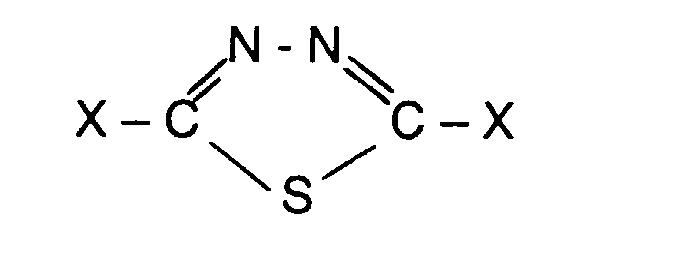
- the 2,5 dimercapto-1,3,4,-thiadiazole derivative has the following formula X may be an R - S or an R - S - S group with R being an alkyl group.
- the 2,5 dimercapto-1,3,4,-thiadiazole derivative is used as a metal deactivator to prevent copper corrosion and as an extreme pressure agent.
- the benzotriazole derivative is a mixture of the N,N-bis (2-ethylhexyl)-4-methyl-1H-benzotriazole-1-methylamine and N,N-bis (2-ethylhexyl)-5-methyl-1H-benzotriazole-1-methylamine. If desired, the benzotriazole derivative can be replaced with a tolutriazole derivative.
- the benzotriazole derivative is used as a metal deactivator to prevent the corrosion of copper.
- the foam inhibitor is present at a level of up to 0.1%.
- the foam inhibitor contains about 3.5% silicon.
- the additives produced by the process of this invention are useful for improving the water stability and oxidation control of lubricating oil compositions.
- the amount of the additive ranges from about 0.5% to 40% of the total lubricating oil composition, although preferably from about 1% to 25% of the total lubricating oil composition.
- the lubricating oil composition comprises a base oil of lubricating viscosity and the extreme pressure additive of the present invention.
- the lubricating oil composition can also comprise viscosity index improvers and pour point depressants.
- Examples of well-known viscosity index improvers include polymethacrylate type polymers, ethylene-propylene copolymers, styrene-isoprene copolymers, hydrated styrene-isoprene copolymers, polyisobutylene, and dispersant type viscosity index improvers.
- pour point depressant is polymethyl methacrylate.
- the oil of lubricating viscosity in which the extreme pressure additive is dispersed can be any fluid of low dielectric constant which is inert under the reaction conditions (particularly nonsaponiflable) and of lubricating viscosity.
- Fluids of lubricating viscosity generally have viscosities of from 35 to 50,000 Saybolt Universal Seconds (SUS) at 100°F (38°C).
- the fluid medium or oil may be derived from either natural or synthetic sources. Included among the natural hydrocarbonaceous oils are paraffin base, naphthenic base and mixed base oils. Synthetic oils include polymers of various olefins (generally from 2 to 6 carbon atoms), alkylated aromatic hydrocarbons, etc.
- Nonhydrocarbon oils include polyalkylene oxides such as polyethylene oxide, aromatic ethers, silicone, etc.
- the preferred media are the hydrocarbonaceous oils, both natural and synthetic.
- Preferred among the hydrocarbonaceous oils are those having SAE viscosity numbers of 5W to 20W and 20W to 250W, and especially those having SAE viscosity numbers in the range 75W to 250W.
- the content of the oil of lubricating viscosity in the lubricating oil composition will depend on the concentrations of the other components.
- the lubricating oil constitutes the balance of the composition after the concentrations of the borate, the antiwear agents and the organic sulfur compounds and any other desired additives have been specified.
- Additive concentrates are also included within the scope of this invention.
- the concentrates of this invention comprise sufficient organic diluent to make them easy to handle during shipping and storage.
- Suitable organic diluents which can be used include for example, solvent refined 100N, i.e., Cit-Con 100N, and hydrotreated 100N, i.e., RLOP 100N, and the like.
- the organic diluent preferably has a viscosity of from about 1 to about 20 cSt at 100°C.
- the organic diluent will constitute less than 10% of the concentrate.
- hydrolysis stability tests are to assess the stability of a fully formulated lubricant to hydrolysis. Up to 3% water may be introduced by accident in the gear box during car wash. The additive has to be stable enough to avoid chemical reactions with water. Two tests have been developed to measure the hydrolysis stability.
- 3% water is mixed up manually with a fully formulated lubricant in a graduated cylinder.
- the cylinder containing the oil and water is stored at ambient temperature for ten days. After ten days, the mixture is visually inspected looking at the aspect of the oil, and at the part of the additive which has reacted with water. This part has to be 1 ml or lower, and the lubricant has to remain clear, without haze or gel formation.
- the additive package contained the following compounds:
- the SAE grade was 75W-80W, the kinematic viscosity at 100°C was around 7.8 cSt, and the dynamic viscosity at -40°C was 45000 cP.
- the described package demonstrated a good oil and water separation with very limited reaction with water at ambient temperature (22°C and at 60°C), even when 3% of water is added into the package. There was slight deposit at the interface between water and oil which was essentially due to water and oil emulsion. This performance was evaluated with the previously described in-house procedures.
- the deposit was less than 1 ml, the free water was 2 ml, and the aspect of the oil was very clear.
- the FZG test rig (CEC L-07-A-95).
- API L-37 Gear tooth surface condition Pinion Ring gear Burnish Medium-bright Dull Wear Trace Trace-light Surface fatigue • Rippling None None • Ridging None None • Pitting None None • Spalling None None Scoring None None Discoloration Light Light-medium Corrosion None None Deposits Trace Trace Pass/Fail assessment Pass 9.95
- the described package has provided an effective protection of gears' teeth against surface fatigue (pitting).
- the protection against pitting was assessed through the FZG C pitting test run at 90°C. This test is well known in the industry.
- the described package provided an effective protection of synchronizer's ring against wear.
- the synchromesh durability performance of the described packages was measured with the FZG SSP 180 procedure using Audi B80 brass synchronizer. This procedure was run at twice the normal duration.
- FZG SSP 180 (Audi B80 brass synchronizer) Hürth test rig Pass (x2) >100000 Axial wear 0.57 - 0.57 mm Axial wear 0.36 - 0.81mm Friction coefficient: Beginning:0.108/0.11 End: 0.099/0.095 FZG SSP 180 (Audi B80 brass synchronizer) Hürth test rig (200000 cycles) Pass >200000 Axial wear: 0.42 - 0.88 mm Friction coefficient: Beginning: 0.11 100000: 0.095 End: 0.098 ZF synchro test (Mo/steel synchronizer) Pass >100000 Downshift: Friction coefficient: 0.079 - 0.085 Axial wear: 0.2 mm Ring wear: 0.1mm Upshift: Friction coefficient: 0.072 - 0.077 Axial wear: 0.25 mm Ring wear: 0.1mm
- the additive package contained the following compounds:
- the SAE grade was 75W-80W, the kinematic viscosity at 100°C was around 7.8 cSt, and the dynamic viscosity at -40°C is 45000 cP.
- the described package demonstrated a good oil and water separation with very limited reaction with water at ambient temperature (22°C and at 60°C), even when 3% of water is added into the package. There was slight deposit at the interface between water and oil which was essentially due to water and oil emulsion. This performance was evaluated with the previously described in-house procedures.
- the deposit In the first test (3% of water, oil stored at ambient temperature) the deposit was 1 ml, the free water was 2 ml, and the aspect of the oil was clear.
- the described package provided an effective protection of synchronizer's ring against wear.
- the synchromesh durability performance of the described packages was measured with the FZG SSP 180 procedure using Audi B80 brass synchronizer procedure.
- FZG SSP 180 (Audi B80 brass synchronizer) Hürth test rig Pass >100000 Axial wear 0.70 - 0.77 mm Friction coefficient: Beginning:0.107 End: 0.08
- the additive package contained the following compounds:
- the SAE grade was 75W-80W, the kinematic viscosity at 100°C was around 7.8 cSt, and the dynamic viscosity at -40°C is 45000 cP.
- the described package demonstrated a good oil and water separation with very limited reaction with water at ambient temperature (22°C and at 60°C), even when 3% of water is added into the package. There was slight deposit at the interface between water and oil which was essentially due to water and oil emulsion. This performance was evaluated with the previously described in-house procedures.
- the deposit In the first test (3% of water, oil stored at ambient temperature) the deposit was 1 ml, the free water was 2 ml, and the aspect of the oil was very clear.
- the additive package contained the following compounds:
- the SAE grade was 75W-80W, the kinematic viscosity at 100°C was around 7.8 cSt, and the dynamic viscosity at -40°C is 45000 cP.
- the described package demonstrated a good oil and water separation with very limited reaction with water at ambient temperature (22°C and at 60°C), even when 3% of water is added into the package. There was slight deposit at the interface between water and oil which was essentially due to water and oil emulsion. This performance was evaluated with the previously described in-house procedures.
- the deposit was less than 1 ml, the free water was 2 ml, and the aspect of the oil was clear.
- the described package has provided an effective protection of gears' teeth against surface fatigue (pitting).
- the protection against pitting was assessed through the FZG C pitting test run at 90°C. This test is well known in the industry.
- the described package provided an effective protection of synchronizer's ring against wear.
- the synchromesh durability performance of the described packages was measured with the FZG SSP 180 procedure using Audi B80 brass synchronizer. This procedure was run at twice the normal duration.
- FZG SSP 180 (Audi B80 brass synchronizer) Hürth test rig Pass >100000 Axial wear 0.34 - 0.8 mm Friction coefficient: Beginning:0.102 End: 0.111 ZF synchro test (Mo/steel synchronizer) Pass >100000 Downshift: Friction coefficient: 0.082 - 0.085 Axial wear: 0.15 mm Ring wear: 0.1mm Upshift: Friction coefficient: 0.085 - 0.076 Axial wear: 0.2 mm Ring wear: 0.15mm
- the additive package contained the following compounds:
- the SAE grade was 75W-80W, the kinematic viscosity at 100°C was around 7.8 cSt, and the dynamic viscosity at -40°C is 45000 cP.
- the described package demonstrated a good oil and water separation with very limited reaction with water at ambient temperature (22°C and at 60°C), even when 3% of water is added into the package. There was slight deposit at the interface between water and oil which was essentially due to water and oil emulsion. This performance was evaluated with the previously described in-house procedures.
- the deposit was less than 1 ml, the free water was 2 ml, and the aspect of the oil was very clear.
- the described package provided an effective protection of synchronizer's ring against wear.
- the synchromesh durability performance of the described packages was measured with the FZG SSP 180 procedure using Audi B80 brass synchronizer. This procedure was run at twice the normal duration.
- the additive package contained the following compounds:
- the SAE grade was 75W-80W, the kinematic viscosity at 100°C was around 7.2 cSt, and the dynamic viscosity at -40°C is 60000 cP.
- the described package demonstrated a good oil and water separation with very limited reaction with water at ambient temperature (22°C and at 60°C), even when 3% of water is added into the package. There was slight deposit at the interface between water and oil which was essentially due to water and oil emulsion. This performance was evaluated with the previously described in-house procedures.
- the deposit In the first test (3% of water, oil stored at ambient temperature) the deposit was 1 ml, the free water was 2 ml, and the aspect of the oil was very clear.
- the described package provided an effective protection of synchronizer's ring against wear.
- the synchromesh durability performance of the described packages was measured with the ZF synchromesh procedure.
- ZF synchro test Mo/steel synchronizer
- Axial wear 0.30 mm Ring wear: 0.15mm
- the additive package contained the following compounds:
- the SAE grade is 75W-80W
- the kinematic viscosity at 100°C is around 7.2 cSt
- the dynamic viscosity at -40°C is 60000 cP.
- the described package has demonstrated a poor oil and water separation with important reaction with water at ambient temperature 22°C and at 60°C. There was a lot of deposit at the interface between water and oil which was essentially due to the reaction of some compounds of the additive with water. This performance was evaluated with the previously described in-house procedures.
- the deposit In the first test (3% of water, oil stored at ambient temperature) the deposit was 4 ml, the free water was 0 ml, and the aspect of the oil was very hazy.
- the additive package contained the following compounds:
- the SAE grade was 75W-80W, the kinematic viscosity at 100°C was around 7.2 cSt and the dynamic viscosity at -40°C was 60000 cP.
- the described package had demonstrated a poor oil and water separation with important reaction with water at ambient temperature 22°C and at 60°C. There is a lot of deposit at the inter-face between water and oil which is essentially due to the reaction of some compounds of the additive with water. This performance was evaluated with the previously described in-house procedures.
- the deposit In the first test (3% of water, oil stored at ambient temperature) the deposit was 1.5 ml, the free water was 0 ml, and the aspect of the oil was very hazy.
- the described package provided an effective protection of synchronizer's ring against wear.
- the synchromesh durability performance of the described packages was measured with the FZG SSP 180 procedure using Audi B80 brass synchronizer. This procedure was run at twice the normal duration.
- FZG SSP 180 (Audi B80 brass synchronizer) Hürth test rig Pass (x2) >100000 Axial wear 0.1 - 0.1 mm >100000 Axial wear 0.40 - 0.90 mm ZF synchro test (Mo/steel synchronizer) pass >100000 Downshift: Friction coefficient: 0.078 - 0.091 Axial wear: 0.15 mm Ring wear: 0.1mm Upshift: Friction coefficient: 0.071 - 0.085 Axial wear: 0.2 mm Ring wear: 0.15mm
Landscapes
- Chemical & Material Sciences (AREA)
- Chemical Kinetics & Catalysis (AREA)
- General Chemical & Material Sciences (AREA)
- Oil, Petroleum & Natural Gas (AREA)
- Organic Chemistry (AREA)
- Inorganic Chemistry (AREA)
- Lubricants (AREA)
Abstract
Description
- 60.55%
- potassium tri-borate,
- 15.14%
- di-tertiary-butyl-trisulfide containing 44% sulfur,
- 6.06%
- the reaction product of a 950 Mw polyisobutene, succinic anhydride and pentaerythritol,
- 8.48%
- overbased sulfurized alkyl salicylate,
- 6.06%
- pentaerythritol mono-oleate,
- 2.42 %
- 2,5 dimercapto-1,3,4,-thiadiazole derivative,
- 1.21%
- benzotriazole derivative which is a mixture of N,N-bis (2-ethylhexyl)-4-methyl-1H-benzotriazole-1-methylamine and N,N-bis (2-ethylhexyl)-5-methyl-1H-benzotriazole-1-methylamine, and
- 0.08%
- silicon-containing foam inhibitor.
- 8.7%
- of a concentrate containing 95% of the above additive package and 5% of a 100N mineral oil,
- 9.0%
- polymethacrylate type viscosity index improver,
- 0.2%
- polymethacrylate type pour point depressant,
- 82.1%
- mixture of 65% of a 90N mineral base oil and 35% of a 600N mineral base oil.
- CEC L-07-A-95: pass 12
- CEC L-07-A-95 double speed: pass 12
- CEC L-07-A-95 after oxidation CEC L-48-A-95 160°C 192 hour: damage load stage = 10.
| API L-37 | ||
| Gear tooth surface condition | Pinion | Ring gear |
| Burnish | Medium-bright | Dull |
| Wear | Trace | Trace-light |
| Surface fatigue | ||
| • Rippling | None | None |
| • Ridging | None | None |
| • Pitting | None | None |
| • Spalling | None | None |
| Scoring | None | None |
| Discoloration | Light | Light-medium |
| Corrosion | None | None |
| Deposits | Trace | Trace |
| Pass/Fail assessment | Pass 9.95 |
| FZG SSP 180 (Audi B80 brass synchronizer) Hürth test rig | Pass (x2) |
| >100000 | |
| Axial wear 0.57 - 0.57 mm | |
| Axial wear 0.36 - 0.81mm | |
| Friction coefficient: | |
| Beginning:0.108/0.11 | |
| End: 0.099/0.095 | |
| FZG SSP 180 (Audi B80 brass synchronizer) Hürth test rig (200000 cycles) | Pass |
| >200000 | |
| Axial wear: 0.42 - 0.88 mm | |
| Friction coefficient: | |
| Beginning: 0.11 | |
| 100000: 0.095 | |
| End: 0.098 | |
| ZF synchro test (Mo/steel synchronizer) | Pass |
| >100000 | |
| Downshift: | |
| Friction coefficient: 0.079 - 0.085 | |
| Axial wear: 0.2 mm | |
| Ring wear: 0.1mm | |
| Upshift: | |
| Friction coefficient: 0.072 - 0.077 | |
| Axial wear: 0.25 mm | |
| Ring wear: 0.1mm |
| Oxidation CEC L-48-A-95 192 hours at 160°C | Pass |
| Viscosity Inc: 1.87 cSt | |
| TAN Inc: 1.4 mg KOH | |
| Deposit: none | |
| API L-60-1 | |
| 100°C Viscosity increase (%) | 55.89 |
| Pentane insoluble (wt. %) | 2.8 |
| Toluene insoluble (wt. %) | 1.41 |
| Carbon/varnish rating | 9.20 |
| Sludge merit rating | 9.50 |
| Pass/fail criteria | pass |
- 43.92%
- potassium tri-borate,
- 28.54%
- di-tertiary-butyl-trisulfide containing 44% sulfur,
- 10.98%
- the reaction product of a 950 Mw polyisobutene, succinic anhydride and pentaerythritol,
- 7.69%
- overbased sulfurized alkyl salicylate,
- 5.49%
- pentaerythritol mono-oleate,
- 3.29%
- 2,5 dimercapto-1 ,3,4,-thiadiazole derivative,
- 0.09%
- a silicon-containing foam inhibitor.
- 9.7%
- of a concentrate containing 94% of the above additive package and 6% of a 100N mineral oil,
- 9.0%
- polymethacrylate type viscosity index improver,
- 0.2%
- polymethacrylate type pour point depressant,
- 81.1%
- a mixture of 65% of a 90N mineral base oil and 35% of a 600N mineral base oil.
| FZG SSP 180 (Audi B80 brass synchronizer) Hürth test rig | Pass |
| >100000 | |
| Axial wear 0.70 - 0.77 mm | |
| Friction coefficient: | |
| Beginning:0.107 | |
| End: 0.08 |
| Oxidation CEC L-48-A-95 192 hours at 160°C | Pass |
| Viscosity Increase: 3.36 cSt | |
| TAN Increase: 2.7 mg KOH | |
| Deposit: none |
- 65.72%
- potassium tri-borate,
- 16.44%
- di-tertiary-butyl-trisulfide containing 44% sulfur,
- 6.57%
- the reaction product of a 950 Mw polyisobutene, succinic anhydride and pentaerythritol,
- 9.20%
- overbased sulfurized alkyl salicylate,
- 1.31%
- 2,5 dimercapto-1,3,4,-thiadiazole derivative,
- 0.66%
- benzotriazole derivative which is a mixture of N,N-bis (2-ethylhexyl)-4-methyl-1H-benzotriazole-1-methylamine and N,N-bis (2-ethylhexyl)-5-methyl-1H-benzotriazole-1-methylamine, and
- 0.10%
- silicon-containing foam inhibitor.
- 8.0%
- of a concentrate containing 95% of the above additive package and 5% of a 100N mineral oil,
- 9.0%
- polymethacrylate type viscosity index improver,
- 0.2%
- polymethacrylate type pour point depressant,
- 82.8%
- a mixture of 65% of a 90N mineral base oil and 35% of a 600N mineral base oil.
- 56.45%
- potassium tri-borate,
- 22.58%
- di-tertiary-butyl-trisulfide containing 44% sulfur,
- 5.65%
- the reaction product of a 950 Mw polyisobutene, succinic anhydride and pentaerythritol,
- 7.90%
- overbased sulfurized alkyl salicylate,
- 5.65%
- pentaerythritol mono-oleate
- 1.13%
- 2,5 dimercapto-1,3,4,-thiadiazole derivative,
- 0.57%
- benzotriazole derivative which is a mixture of N,N-bis (2-ethylhexyl)-4-methyl-1H-benzotriazole-1-methylamine and N,N-bis (2-ethylhexyl)-5-methyl-1H-benzotriazole-1-methylamine, and
- 0.07%
- silicon-containing foam inhibitor.
- 9.3%
- of a concentrate containing 95% of the above additive package and 5% of a 100N mineral oil,
- 9.0%
- polymethacrylate type viscosity index improver,
- 0.2%
- polymethacrylate type pour point depressant,
- 81.5%
- a mixture of 65% of a 90N mineral base oil and 35% of a 600N mineral base oil.
| FZG SSP 180 (Audi B80 brass synchronizer) Hürth test rig | Pass |
| >100000 | |
| Axial wear 0.34 - 0.8 mm | |
| Friction coefficient: | |
| Beginning:0.102 | |
| End: 0.111 | |
| ZF synchro test (Mo/steel synchronizer) | Pass |
| >100000 | |
| Downshift: | |
| Friction coefficient: 0.082 - 0.085 | |
| Axial wear: 0.15 mm | |
| Ring wear: 0.1mm | |
| Upshift: | |
| Friction coefficient: 0.085 - 0.076 | |
| Axial wear: 0.2 mm | |
| Ring wear: 0.15mm |
| Oxidation CEC L-48-A-95 192 hours at 160°C | Pass |
| Viscosity Increase: 2.02 cSt | |
| TAN Increase: 1.87 mg KOH | |
| Deposit: none |
- 60.55%
- potassium tri-borate,
- 15.14%
- di-tertiary-butyl-trisulfide containing 44% sulfur,
- 6.06%
- the reaction product of a 950 Mw polyisobutene, succinic anhydride and pentaerythritol,
- 8.48%
- overbased sulfurized alkyl salicylate,
- 6.06%
- trixylenyl phosphate
- 2.42%
- 2,5 dimercapto-1,3,4,-thiadiazole derivative,
- 1.21%
- benzotriazole derivative which is a mixture of N,N-bis (2-ethylhexyl)-4-methyl-1H-benzotriazole-1-methylamine and N,N-bis (2-ethylhexyl)-5-methyl-1H-benzotriazole-1-methylamine, and
- 0.08%
- silicon-containing foam inhibitor.
- 8.7%
- of a concentrate containing 95% of the above additive package and 5% of a 100N mineral oil,
- 9.0%
- polymethacrylate type viscosity index improver,
- 0.2%
- polymethacrylate type pour point depressant,
- 82.1%
- a mixture of 65% of a 90N mineral base oil and 35% of a 600N mineral base oil.
| FZG SSP 180 (Audi B80 brass synchronizer) Hürth test rig | Pass (x2) |
| >100000 | |
| Axial wear 0.2 - 0.46 mm | |
| Axial wear 0.2 - 0.52 mm | |
| Friction coefficient: | |
| Beginning: 0.11/0.11 | |
| End: 0.100/0.106 | |
| FZG SSP 180 (Audi B80 brass synchronizer) Hürth test rig | Pass |
| >200000 | |
| Axial wear: 0.23 - 0.52 mm | |
| Friction coefficient: | |
| Beginning: 0.11 | |
| 100000: 0.106 | |
| End: 0.101 |
| Oxidation CEC L-48-A-95 192hours at 160°C | Pass |
| Viscosity Increase: 1.64 cSt | |
| TAN Increase: 0.9 mg KOH | |
| Deposit: none |
- 59.94%
- potassium tri-borate,
- 13.32%
- di-tertiary-butyl-trisulfide containing 44% sulfur,
- 13.32%
- the reaction product of a 950 Mw polyisobutene, succinic anhydride and pentaerythritol,
- 6.66%
- overbased sulfurized alkyl salicylate,
- 6.66%
- pentaerythritol mono-oleate, and
- 0.10%
- silicon-containing foam inhibitor.
- 8.0%
- of a concentrate containing 94% of the above additive package and 6% of a 100N mineral oil,
- 5.0%
- polymethacrylate type viscosity index improver,
- 0.2%
- polymethacrylate type pour point depressant,
- 86.8%
- a mixture of 65% of a 90N mineral base oil and 35% of a 600N mineral base oil.
| API L-37 | ||
| Gear tooth surface condition | Pinion | Ring gear |
| Burnish | Medium-bright | Dull |
| Wear | Trace | Trace |
| Surface fatigue | ||
| • Rippling | None | None |
| • Ridging | None | None |
| • Pitting | None | Medium |
| • Spalling | None | None |
| Scoring | None | None |
| Discoloration | Light | Medium |
| Corrosion | None | None |
| Deposits | None | None |
| Pass/Fail assessment | Pass 9.89 |
| ZF synchro test (Mo/steel synchronizer) | Pass |
| >1 00000 | |
| Downshift: | |
| Friction coefficient: 0.090 - 0.074 | |
| Axial wear: 0.25 mm | |
| Ring wear: 0.15mm | |
| Upshift: | |
| Friction coefficient: 0.087 - 0.072 | |
| Axial wear: 0.30 mm | |
| Ring wear: 0.15mm |
| Oxidation CEC L-48-A-95 192 hours at 160°C | Pass |
| Viscosity Increase: 1.47 cSt | |
| TAN Inc: 1.4 mg KOH | |
| Deposit: none | |
| API L-60-1 | |
| 100°C Viscosity increase (%) | 40.50 |
| Pentane insoluble (wt. %) | 2.18 |
| Toluene insoluble (wt. %) | 1.60% |
| Carbon/varnish rating | 9.40 |
| Sludge merit rating | 9.75 |
| Pass/fail criteria | Pass |
- 57.09%
- potassium tri-borate,
- 21.40%
- di-tertiary-butyl-trisulfide containing 44% sulfur,
- 4.28%
- primary alcohol zinc dithiophosphate,
- 7.14%
- high molecular weight substituted imidazoline,
- 9.99%
- low over-based alkyl calcium sulfonate, and
- 0.10%
- silicon-containing foam inhibitor.
- 7.4%
- of a concentrate containing 95% of the above additive package and 5% of a 100N mineral oil,
- 5.0%
- polymethacrylate type viscosity index improver,
- 0.2%
- polymethacrylate type pour point depressant,
- 87.4%
- a mixture of 55% of a 90N mineral base oil and 45% of a 600N mineral base oil.
- 50.59%
- potassium tri-borate,
- 18.97%
- di-tertiary-butyl-trisulfide containing 44% sulfur,
- 12.65%
- the reaction product of a 950 Mw polyisobutene, succinic anhydride and pentaerythritol,
- 2.53%
- primary alcohol zinc dithiophosphate
- 6.32%
- high molecular weight substituted imidazoline,
- 8.85%
- high over-based alkyl calcium sulfonate, and
- 0.09%
- silicon-containing foam inhibitor.
- 8.3%
- of a concentrate containing 95% of the above additive package and 5% of a 100N mineral oil,
- 5.0%
- polymethacrylate type viscosity index improver,
- 0.2%
- polymethacrylate type pour point depressant,
- 86.5%
- a mixture of 55% of a 90N mineral base oil and 45% of a 600N mineral base oil.
| FZG SSP 180 (Audi B80 brass synchronizer) Hürth test rig | Pass (x2) |
| >100000 | |
| Axial wear 0.1 - 0.1 mm | |
| >100000 | |
| Axial wear 0.40 - 0.90 mm | |
| ZF synchro test (Mo/steel synchronizer) | pass |
| >100000 | |
| Downshift: | |
| Friction coefficient: 0.078 - 0.091 | |
| Axial wear: 0.15 mm | |
| Ring wear: 0.1mm | |
| Upshift: | |
| Friction coefficient: 0.071 - 0.085 | |
| Axial wear: 0.2 mm | |
| Ring wear: 0.15mm |
Claims (10)
- An extreme pressure additive comprising:(a) from 30% to 70% of an alkali-metal borate, preferably from 40% to 66% of potassium triborate;(b) from 10% to 30% of an organic polysulfide, preferably from 12% to 25% of a di-tertiary-butyl-trisulfide;(c) from 1% to 20% of an alkyl succinic acid ester of a polyol, preferably from 5% to 15% of the reaction product of pentaerythritol and poly-isobutenyl succinic anhydride; and(d) from 0.5% to 20% of an overbased sulfurized alkyl or alkenyl salicylate, preferably from 5% to 10% of an overbased mixture of a sulfurized alkylsalicylate and a sulfurized alkylphenate.
- An extreme pressure additive according to Claim 1 further comprising:
(e) up to 20% of a fatty acid ester of a polyol, preferably from 5% to 10% of pentaerythritol mono-oleate. - An extreme pressure additive according to Claim 1 or 2 further comprising:(f) up to 20% of an alkyl substituted phenyl phosphate, preferably 5 to 10% of trixylenyl phosphate;(g) up to 7% of at least one metal deactivator, preferably from 1% to 3% of 2,5-dimercapto-1,3,4-thiadiazole derivative and from 0.5% to 1.5% of a benzotriazole; and(h) up to 0.1% of a foam inhibitor.
- Application of the extreme pressure additive as claimed in any of Claims 1 to 3 to improve water stability, to improve oxidation control, to provide high synchromesh durability performance, and to provide gear protection of a lubricating oil in a manual transmission gear box.
- A lubricating oil composition comprising a base oil of lubricating viscosity and the extreme pressure additive as claimed in any of Claims 1 to 3.
- A lubricating oil composition according to Claim 5 further comprising a viscosity index improver and a pour point depressant.
- A concentrate comprising a compatible organic liquid diluent and the extreme pressure additive as claimed in any of Claims 1 to 3.
- A method of providing high synchromesh durability performance and providing gear protection of a manual transmission gear box, said method comprising adding to said gear box a lubricating oil composition having improved water stability and oxidation control, said lubricating oil composition comprising a base oil of lubricating viscosity and the extreme pressure additive as claimed in any of Claims 1 to 3.
- A method of producing an extreme pressure additive comprising blending together:(a) from 40% to 66% of potassium triborate;(b) from 12% to 25% of a di-tertiary-butyl-trisulfide;(c) from 5 to 15% of the reaction product of pentaerythritol and polyisobutenyl succinic anhydride;(d) from 5% to 10% of an overbased mixture of a sulfurized alkylsalicylate and a sulfurized alkylphenate;(e) from 5% to 10% of pentaerythritol mono-oleate;(f) from 5% to 10% of trixylenyl phosphate;(g) from 1% to 3% of 2,5-dimercapto-1,3,4-thiadiazole;(h) from 0.5% to 1.5% of benzotriazole derivative; and(a) up to 0.1% of a foam inhibitor.
- An extreme pressure additive produced by the method as claimed in Claim 9.
Priority Applications (5)
| Application Number | Priority Date | Filing Date | Title |
|---|---|---|---|
| DE69820429T DE69820429T2 (en) | 1998-07-31 | 1998-07-31 | Manual transmission lubricating oil additive containing borate resistant to hydrolysis to increase the durability of synchronous transmissions |
| EP98401967A EP0976813B1 (en) | 1998-07-31 | 1998-07-31 | Borate containing additive for manual transmission lubricant being stable to hydrolysis and providing high synchromesh durability |
| CA002273613A CA2273613C (en) | 1998-07-31 | 1999-06-02 | Borate containing additive for manual transmission lubricant being stable to hydrolysis and providing high synchromesh durability |
| SG1999003707A SG72973A1 (en) | 1998-07-31 | 1999-07-29 | Borate containing additive for manual transmission lubricant being stable to hydrolysis and providing high synchromesh durability |
| JP21762999A JP4460087B2 (en) | 1998-07-31 | 1999-07-30 | Borate-containing additive for manual transmission lubricants that provides stable and high synchromesh durability against hydrolysis |
Applications Claiming Priority (1)
| Application Number | Priority Date | Filing Date | Title |
|---|---|---|---|
| EP98401967A EP0976813B1 (en) | 1998-07-31 | 1998-07-31 | Borate containing additive for manual transmission lubricant being stable to hydrolysis and providing high synchromesh durability |
Publications (2)
| Publication Number | Publication Date |
|---|---|
| EP0976813A1 true EP0976813A1 (en) | 2000-02-02 |
| EP0976813B1 EP0976813B1 (en) | 2003-12-10 |
Family
ID=8235461
Family Applications (1)
| Application Number | Title | Priority Date | Filing Date |
|---|---|---|---|
| EP98401967A Expired - Lifetime EP0976813B1 (en) | 1998-07-31 | 1998-07-31 | Borate containing additive for manual transmission lubricant being stable to hydrolysis and providing high synchromesh durability |
Country Status (5)
| Country | Link |
|---|---|
| EP (1) | EP0976813B1 (en) |
| JP (1) | JP4460087B2 (en) |
| CA (1) | CA2273613C (en) |
| DE (1) | DE69820429T2 (en) |
| SG (1) | SG72973A1 (en) |
Cited By (21)
| Publication number | Priority date | Publication date | Assignee | Title |
|---|---|---|---|---|
| EP1298191A1 (en) * | 2001-09-28 | 2003-04-02 | Chevron Oronite Company LLC | Lubricant composition with improved water tolerance |
| EP1308496A3 (en) * | 2001-11-06 | 2003-05-28 | The Lubrizol Corporation (an Ohio corporation) | Tramsmission fluids exhibiting reduced pitting |
| US6617287B2 (en) | 2001-10-22 | 2003-09-09 | The Lubrizol Corporation | Manual transmission lubricants with improved synchromesh performance |
| WO2003076557A1 (en) * | 2002-03-04 | 2003-09-18 | The Lubrizol Corporation | Lubricating compositions with good thermal stability and demulsibility properties |
| EP1298188A3 (en) * | 2001-09-28 | 2003-10-08 | Chevron Oronite Company LLC | Hydrated sodium borate dispersions having improved properties in lubricating oil compositions |
| EP1378561A1 (en) * | 2002-06-28 | 2004-01-07 | Chevron Oronite Company LLC | Use of a dispersed hydrated sodium borate composition to inhibit gear damage |
| SG110087A1 (en) * | 2003-03-07 | 2005-04-28 | Chevron Oronite Co | Methods and compositions for reducing wear in heavy-duty diesel engines |
| EP1535987A1 (en) * | 2003-11-28 | 2005-06-01 | Chevron Oronite S.A. | Additive composition for transmission oil containing hexagonal boron nitride and a viscosity index improver |
| WO2005059068A3 (en) * | 2003-12-16 | 2005-08-11 | Chevron Oronite Sa | Additive composition for transmission oil containing hexagonal boron nitride and a viscosity index improver |
| WO2006115666A1 (en) * | 2005-04-22 | 2006-11-02 | Exxonmobil Chemical Patents Inc. | Improved corrosion protection for lubricants |
| WO2007042887A1 (en) * | 2005-10-12 | 2007-04-19 | Nalco Company | Composition and method for enhancing the stability of jet fuels |
| WO2009045979A1 (en) * | 2007-10-03 | 2009-04-09 | The Lubrizol Corporation | Lubricants that decrease micropitting for industrial gears |
| WO2010134044A2 (en) | 2009-05-20 | 2010-11-25 | Total Raffinage Marketing | Novel additives for transmission oils |
| WO2013012987A1 (en) | 2011-07-21 | 2013-01-24 | The Lubrizol Corporation | Overbased friction modifiers and methods of use thereof |
| WO2013013026A1 (en) | 2011-07-21 | 2013-01-24 | The Lubrizol Corporation | Carboxylic pyrrolidinones and methods of use thereof |
| WO2013148171A1 (en) * | 2012-03-26 | 2013-10-03 | The Lubrizol Corporation | Manual transmission lubricants with improved synchromesh performance |
| WO2017218654A1 (en) * | 2016-06-17 | 2017-12-21 | The Lubrizol Corporation | Lubricating compositions |
| WO2017218662A1 (en) * | 2016-06-17 | 2017-12-21 | The Lubrizol Corporation | Lubricating compositions |
| CN110079379A (en) * | 2019-05-24 | 2019-08-02 | 福建六九环保科技有限公司 | A kind of lubricant oil composite |
| US10907112B2 (en) | 2011-10-27 | 2021-02-02 | The Lubrizol Corporation | Lubricants with improved seal compatibility |
| EP3409751B1 (en) | 2016-01-27 | 2021-12-15 | ExxonMobil Research and Engineering Company | Lubricant composition |
Families Citing this family (10)
| Publication number | Priority date | Publication date | Assignee | Title |
|---|---|---|---|---|
| JP2002003877A (en) * | 2000-06-23 | 2002-01-09 | Nippon Mitsubishi Oil Corp | Lubricating oil composition |
| FR2818572B1 (en) † | 2000-12-22 | 2003-03-14 | Valeo | METHOD FOR MANUFACTURING A GEARBOX SYNCHRONIZATION RING, PARTICULARLY FOR A MOTOR VEHICLE |
| JP4673487B2 (en) * | 2001-02-02 | 2011-04-20 | Jx日鉱日石エネルギー株式会社 | Lubricating oil composition for metal belt type continuously variable transmission |
| ES2329446T3 (en) * | 2002-07-30 | 2009-11-26 | Chevron Oronite S.A. | ADDITIVE COMPOSITION FOR TRANSMISSION OIL CONTAINING A HYDRAATED ALKALINE METAL BORATE AND HEXAGONAL BORUS NITRIDE. |
| US9481841B2 (en) | 2004-12-09 | 2016-11-01 | The Lubrizol Corporation | Process of preparation of an additive and its use |
| US7919440B2 (en) * | 2005-05-04 | 2011-04-05 | Chevron U.S.A. Inc. | Lubricating composition containing non-acidic phosphorus compounds |
| CN100387696C (en) * | 2005-12-29 | 2008-05-14 | 上海交通大学 | Benzotriazole polysulfide extreme pressure anti-corrosion additive and preparation method thereof |
| JP6223312B2 (en) * | 2014-10-07 | 2017-11-01 | Jxtgエネルギー株式会社 | Lubricating oil composition |
| WO2017073748A1 (en) * | 2015-10-29 | 2017-05-04 | Jxエネルギー株式会社 | Lubricant composition |
| KR20250005355A (en) | 2022-04-27 | 2025-01-09 | 에프톤 케미칼 코포레이션 | High-sulfur additives for lubricating oil compositions |
Citations (7)
| Publication number | Priority date | Publication date | Assignee | Title |
|---|---|---|---|---|
| US3565802A (en) * | 1968-04-30 | 1971-02-23 | Chevron Res | Oil dispersible inorganic borate in combination with ep agents as lubricating oil additives |
| US3853772A (en) * | 1971-06-01 | 1974-12-10 | Chevron Res | Lubricant containing alkali metal borate dispersed with a mixture of dispersants |
| US3912643A (en) * | 1973-07-05 | 1975-10-14 | Chevron Res | Lubricant containing neutralized alkali metal borates |
| US4163729A (en) * | 1975-11-28 | 1979-08-07 | Chevron Research Company | Synergistic combinations of hydrated potassium borate, antiwear agents, and organic sulfide antioxidants |
| EP0695798A2 (en) * | 1994-08-03 | 1996-02-07 | The Lubrizol Corporation | Lubricating compositions, concentrates, and greases containing the combination of an organic polysulfide and an overbased composition or a phosphorus or boron compound |
| WO1997014771A1 (en) * | 1995-10-18 | 1997-04-24 | Exxon Chemical Patents Inc. | Power transmitting fluids with improved shift durability |
| JPH09137180A (en) * | 1995-11-16 | 1997-05-27 | Cosmo Sogo Kenkyusho:Kk | Automatic transmission oil composition |
-
1998
- 1998-07-31 EP EP98401967A patent/EP0976813B1/en not_active Expired - Lifetime
- 1998-07-31 DE DE69820429T patent/DE69820429T2/en not_active Expired - Lifetime
-
1999
- 1999-06-02 CA CA002273613A patent/CA2273613C/en not_active Expired - Lifetime
- 1999-07-29 SG SG1999003707A patent/SG72973A1/en unknown
- 1999-07-30 JP JP21762999A patent/JP4460087B2/en not_active Expired - Lifetime
Patent Citations (7)
| Publication number | Priority date | Publication date | Assignee | Title |
|---|---|---|---|---|
| US3565802A (en) * | 1968-04-30 | 1971-02-23 | Chevron Res | Oil dispersible inorganic borate in combination with ep agents as lubricating oil additives |
| US3853772A (en) * | 1971-06-01 | 1974-12-10 | Chevron Res | Lubricant containing alkali metal borate dispersed with a mixture of dispersants |
| US3912643A (en) * | 1973-07-05 | 1975-10-14 | Chevron Res | Lubricant containing neutralized alkali metal borates |
| US4163729A (en) * | 1975-11-28 | 1979-08-07 | Chevron Research Company | Synergistic combinations of hydrated potassium borate, antiwear agents, and organic sulfide antioxidants |
| EP0695798A2 (en) * | 1994-08-03 | 1996-02-07 | The Lubrizol Corporation | Lubricating compositions, concentrates, and greases containing the combination of an organic polysulfide and an overbased composition or a phosphorus or boron compound |
| WO1997014771A1 (en) * | 1995-10-18 | 1997-04-24 | Exxon Chemical Patents Inc. | Power transmitting fluids with improved shift durability |
| JPH09137180A (en) * | 1995-11-16 | 1997-05-27 | Cosmo Sogo Kenkyusho:Kk | Automatic transmission oil composition |
Non-Patent Citations (1)
| Title |
|---|
| DATABASE WPI Section Ch Week 9731, Derwent World Patents Index; Class E14, AN 97-337283, XP002083255 * |
Cited By (30)
| Publication number | Priority date | Publication date | Assignee | Title |
|---|---|---|---|---|
| EP1298188A3 (en) * | 2001-09-28 | 2003-10-08 | Chevron Oronite Company LLC | Hydrated sodium borate dispersions having improved properties in lubricating oil compositions |
| US6632781B2 (en) | 2001-09-28 | 2003-10-14 | Chevron Oronite Company Llc | Lubricant composition comprising alkali metal borate dispersed in a polyalkylene succinic anhydride and a metal salt of a polyisobutenyl sulfonate |
| EP1298191A1 (en) * | 2001-09-28 | 2003-04-02 | Chevron Oronite Company LLC | Lubricant composition with improved water tolerance |
| US6617287B2 (en) | 2001-10-22 | 2003-09-09 | The Lubrizol Corporation | Manual transmission lubricants with improved synchromesh performance |
| EP1308496A3 (en) * | 2001-11-06 | 2003-05-28 | The Lubrizol Corporation (an Ohio corporation) | Tramsmission fluids exhibiting reduced pitting |
| CN100334188C (en) * | 2002-03-04 | 2007-08-29 | 卢布里佐尔公司 | Lubricating compositions with good thermal stability and demulsibility properties |
| WO2003076557A1 (en) * | 2002-03-04 | 2003-09-18 | The Lubrizol Corporation | Lubricating compositions with good thermal stability and demulsibility properties |
| AU2003212452B2 (en) * | 2002-03-04 | 2008-01-10 | The Lubrizol Corporation | Lubricating compositions with good thermal stability and demulsibility properties |
| SG103925A1 (en) * | 2002-06-28 | 2004-05-26 | Chevron Oronite Co | Method for reducing wear and metal fatigue during high temperature operation of a gear set |
| EP1378561A1 (en) * | 2002-06-28 | 2004-01-07 | Chevron Oronite Company LLC | Use of a dispersed hydrated sodium borate composition to inhibit gear damage |
| SG110087A1 (en) * | 2003-03-07 | 2005-04-28 | Chevron Oronite Co | Methods and compositions for reducing wear in heavy-duty diesel engines |
| EP1535987A1 (en) * | 2003-11-28 | 2005-06-01 | Chevron Oronite S.A. | Additive composition for transmission oil containing hexagonal boron nitride and a viscosity index improver |
| WO2005059068A3 (en) * | 2003-12-16 | 2005-08-11 | Chevron Oronite Sa | Additive composition for transmission oil containing hexagonal boron nitride and a viscosity index improver |
| WO2006115666A1 (en) * | 2005-04-22 | 2006-11-02 | Exxonmobil Chemical Patents Inc. | Improved corrosion protection for lubricants |
| WO2007042887A1 (en) * | 2005-10-12 | 2007-04-19 | Nalco Company | Composition and method for enhancing the stability of jet fuels |
| WO2009045979A1 (en) * | 2007-10-03 | 2009-04-09 | The Lubrizol Corporation | Lubricants that decrease micropitting for industrial gears |
| WO2010134044A2 (en) | 2009-05-20 | 2010-11-25 | Total Raffinage Marketing | Novel additives for transmission oils |
| US9120076B2 (en) | 2009-05-20 | 2015-09-01 | Total Marketing Services | Additives for transmission oils |
| WO2013012987A1 (en) | 2011-07-21 | 2013-01-24 | The Lubrizol Corporation | Overbased friction modifiers and methods of use thereof |
| WO2013013026A1 (en) | 2011-07-21 | 2013-01-24 | The Lubrizol Corporation | Carboxylic pyrrolidinones and methods of use thereof |
| US9481848B2 (en) | 2011-07-21 | 2016-11-01 | The Lubrizol Corporation | Carboxylic pyrrolidinones and methods of use thereof |
| US9512379B2 (en) | 2011-07-21 | 2016-12-06 | The Lubrizol Corporation | Overbased friction modifiers and methods of use thereof |
| US10907112B2 (en) | 2011-10-27 | 2021-02-02 | The Lubrizol Corporation | Lubricants with improved seal compatibility |
| US11566199B2 (en) | 2011-10-27 | 2023-01-31 | The Lubrizol Corporation | Lubricants with improved seal compatibility |
| WO2013148171A1 (en) * | 2012-03-26 | 2013-10-03 | The Lubrizol Corporation | Manual transmission lubricants with improved synchromesh performance |
| CN104220571A (en) * | 2012-03-26 | 2014-12-17 | 卢布里佐尔公司 | Manual transmission lubricants with improved synchromesh performance |
| EP3409751B1 (en) | 2016-01-27 | 2021-12-15 | ExxonMobil Research and Engineering Company | Lubricant composition |
| WO2017218662A1 (en) * | 2016-06-17 | 2017-12-21 | The Lubrizol Corporation | Lubricating compositions |
| WO2017218654A1 (en) * | 2016-06-17 | 2017-12-21 | The Lubrizol Corporation | Lubricating compositions |
| CN110079379A (en) * | 2019-05-24 | 2019-08-02 | 福建六九环保科技有限公司 | A kind of lubricant oil composite |
Also Published As
| Publication number | Publication date |
|---|---|
| JP2000063870A (en) | 2000-02-29 |
| SG72973A1 (en) | 2000-05-23 |
| DE69820429D1 (en) | 2004-01-22 |
| EP0976813B1 (en) | 2003-12-10 |
| CA2273613C (en) | 2008-10-07 |
| CA2273613A1 (en) | 2000-01-31 |
| DE69820429T2 (en) | 2004-10-14 |
| JP4460087B2 (en) | 2010-05-12 |
Similar Documents
| Publication | Publication Date | Title |
|---|---|---|
| EP0976813B1 (en) | Borate containing additive for manual transmission lubricant being stable to hydrolysis and providing high synchromesh durability | |
| US6844300B2 (en) | Low phosphorus clean gear formulations | |
| US3923669A (en) | Antiwear hydraulic oil | |
| US7452851B2 (en) | Lubricant compositions | |
| US5750477A (en) | Lubricant compositions to reduce noise in a push belt continuous variable transmission | |
| JP3510630B2 (en) | Lubricating oil composition for high-speed gear | |
| JP5260829B2 (en) | Antiwear additive composition and lubricating oil composition containing the same | |
| CA2390748C (en) | Gas-fuelled engine lubricating oil compositions | |
| WO2006115666A1 (en) | Improved corrosion protection for lubricants | |
| EP0628623A1 (en) | Lubricant composition for limited slip differential of car | |
| CN111440652B (en) | Lubricant containing thiadiazole derivative | |
| JP2002275490A (en) | Automatic transmission fluid having improved abrasion resistance | |
| EP3683290B1 (en) | Lubricant containing thiadiazole derivatives | |
| WO2000063324A1 (en) | Lubricant composition containing alkali metal borate and polyalkylene succinic anhydride | |
| WO1995015368A1 (en) | Lubrication oil composition | |
| KR20250112239A (en) | Lubricating composition for automobile drive train | |
| CA1169845A (en) | Synthetic olefin oligomer base oil composition and its use in manual and automatic transmissions | |
| WO2011126736A1 (en) | Zinc salicylates for rust inhibition in lubricants | |
| KR20250112242A (en) | Lubricating composition for automobile transmission | |
| CN121866318A (en) | Method of lubricating a transmission | |
| CN122029261A (en) | Lubricating composition for automotive transmissions | |
| JP2016537454A (en) | Lubricating oil composition for protection of silver bearings in medium speed diesel engines | |
| EP1266953A1 (en) | Gas-fuelled engine lubricating oil compositions |
Legal Events
| Date | Code | Title | Description |
|---|---|---|---|
| PUAI | Public reference made under article 153(3) epc to a published international application that has entered the european phase |
Free format text: ORIGINAL CODE: 0009012 |
|
| AK | Designated contracting states |
Kind code of ref document: A1 Designated state(s): DE FR GB NL |
|
| AX | Request for extension of the european patent |
Free format text: AL;LT;LV;MK;RO;SI |
|
| 17P | Request for examination filed |
Effective date: 20000127 |
|
| AKX | Designation fees paid |
Free format text: DE FR GB NL |
|
| 18D | Application deemed to be withdrawn |
Effective date: 20010201 |
|
| 18RA | Request filed for re-establishment of rights before grant |
Effective date: 20010730 |
|
| RAP1 | Party data changed (applicant data changed or rights of an application transferred) |
Owner name: CHEVRON ORONITE S.A. |
|
| 18RR | Decision to grant the request for re-establishment of rights before grant |
Free format text: 20011109 ANGENOMMEN |
|
| D18D | Application deemed to be withdrawn (deleted) | ||
| 17Q | First examination report despatched |
Effective date: 20021029 |
|
| GRAH | Despatch of communication of intention to grant a patent |
Free format text: ORIGINAL CODE: EPIDOS IGRA |
|
| GRAS | Grant fee paid |
Free format text: ORIGINAL CODE: EPIDOSNIGR3 |
|
| GRAA | (expected) grant |
Free format text: ORIGINAL CODE: 0009210 |
|
| AK | Designated contracting states |
Kind code of ref document: B1 Designated state(s): DE FR GB NL |
|
| REF | Corresponds to: |
Ref document number: 69820429 Country of ref document: DE Date of ref document: 20040122 Kind code of ref document: P |
|
| ET | Fr: translation filed | ||
| PLBE | No opposition filed within time limit |
Free format text: ORIGINAL CODE: 0009261 |
|
| STAA | Information on the status of an ep patent application or granted ep patent |
Free format text: STATUS: NO OPPOSITION FILED WITHIN TIME LIMIT |
|
| 26N | No opposition filed |
Effective date: 20040913 |
|
| REG | Reference to a national code |
Ref country code: FR Ref legal event code: PLFP Year of fee payment: 19 |
|
| REG | Reference to a national code |
Ref country code: FR Ref legal event code: PLFP Year of fee payment: 20 |
|
| PGFP | Annual fee paid to national office [announced via postgrant information from national office to epo] |
Ref country code: FR Payment date: 20170613 Year of fee payment: 20 |
|
| PGFP | Annual fee paid to national office [announced via postgrant information from national office to epo] |
Ref country code: NL Payment date: 20170712 Year of fee payment: 20 |
|
| PGFP | Annual fee paid to national office [announced via postgrant information from national office to epo] |
Ref country code: GB Payment date: 20170726 Year of fee payment: 20 Ref country code: DE Payment date: 20170725 Year of fee payment: 20 |
|
| REG | Reference to a national code |
Ref country code: DE Ref legal event code: R071 Ref document number: 69820429 Country of ref document: DE |
|
| REG | Reference to a national code |
Ref country code: NL Ref legal event code: MK Effective date: 20180730 |
|
| REG | Reference to a national code |
Ref country code: GB Ref legal event code: PE20 Expiry date: 20180730 |
|
| PG25 | Lapsed in a contracting state [announced via postgrant information from national office to epo] |
Ref country code: GB Free format text: LAPSE BECAUSE OF EXPIRATION OF PROTECTION Effective date: 20180730 |