EP0974656B1 - Inhibitorprotein der dna-gyrase. - Google Patents
Inhibitorprotein der dna-gyrase. Download PDFInfo
- Publication number
- EP0974656B1 EP0974656B1 EP97911447A EP97911447A EP0974656B1 EP 0974656 B1 EP0974656 B1 EP 0974656B1 EP 97911447 A EP97911447 A EP 97911447A EP 97911447 A EP97911447 A EP 97911447A EP 0974656 B1 EP0974656 B1 EP 0974656B1
- Authority
- EP
- European Patent Office
- Prior art keywords
- dgi
- protein
- amino acid
- dna
- seq
- Prior art date
- Legal status (The legal status is an assumption and is not a legal conclusion. Google has not performed a legal analysis and makes no representation as to the accuracy of the status listed.)
- Expired - Lifetime
Links
Images
Classifications
-
- C—CHEMISTRY; METALLURGY
- C07—ORGANIC CHEMISTRY
- C07K—PEPTIDES
- C07K14/00—Peptides having more than 20 amino acids; Gastrins; Somatostatins; Melanotropins; Derivatives thereof
- C07K14/195—Peptides having more than 20 amino acids; Gastrins; Somatostatins; Melanotropins; Derivatives thereof from bacteria
- C07K14/24—Peptides having more than 20 amino acids; Gastrins; Somatostatins; Melanotropins; Derivatives thereof from bacteria from Enterobacteriaceae (F), e.g. Citrobacter, Serratia, Proteus, Providencia, Morganella, Yersinia
- C07K14/245—Escherichia (G)
-
- C—CHEMISTRY; METALLURGY
- C07—ORGANIC CHEMISTRY
- C07K—PEPTIDES
- C07K14/00—Peptides having more than 20 amino acids; Gastrins; Somatostatins; Melanotropins; Derivatives thereof
- C07K14/195—Peptides having more than 20 amino acids; Gastrins; Somatostatins; Melanotropins; Derivatives thereof from bacteria
- C07K14/24—Peptides having more than 20 amino acids; Gastrins; Somatostatins; Melanotropins; Derivatives thereof from bacteria from Enterobacteriaceae (F), e.g. Citrobacter, Serratia, Proteus, Providencia, Morganella, Yersinia
- C07K14/25—Shigella (G)
Definitions
- This invention relates to a method for screening and identifying an antimicrobial agent and the like, by assaying the action of compounds on the activity of DGI.
- antibiotics Since penicillin had been discovered, various antibiotics have been used for treating microbe infections and have a great contribution to medical treatments.
- Major antibiotics which have been used presently in clinical treatments are ⁇ -lactam antibiotics and new quinolone antibiotics.
- the action and mechanism of new quinolone antibiotics are found to be the inhibition of bacterial DNA gyrase.
- Bacterial DNA gyrase is an essential enzyme for replication and proliferation of bacteria, since the gyrase introduces a negative supercoiled structure into chromosomal DNA, or unravels and separates tangled daughter DNA just after completion of replication, and it is constituted of two subunits (A and B).
- DNA gyrase inhibitors compounds such as novobiocin and cyclothiazine are known in addition to new quinolone antibiotics, but proteinous inhibitors have not been known.
- An object of the present invention is to provide a method for screening and identifying an antimicrobial agent with new action and mechanism in which the activity of DGI and expression thereof are modulated using DGI or a gene therefor.
- the present inventors have found that, when the supercoiling activity of each fraction is measured and each fraction is analyzed with SDS-polyacrylamide electrophoresis in the course of carrying out the purification of Escherichia coli DNA gyrase using novobiocin-affinity column chromatography, there are present fractions which contain a holoenzyme of DNA gyrase, but they do not show the supercoiling activity and these fractions contain a protein with about 18 kDa in common.
- the present inventors have found the absolutely new finding that the about 18 kDa protein has the action of inhibiting the DNA gyrase activity (supercoiling activity), and named the 18 kDa protein "DNA gyrase-inhibiting protein" (DGI) (also referred to as GyrI). Further, the present inventors have cloned a gene encoding this protein (dgi gene) (also referred to as gyrI gene) from the chromosome of Escherichia coli to establish a process for preparing DGI. The present inventors have further constructed a system for measuring DGI activity using purified DGI, and a system for measuring expression of DGI using a promoter region of the dgi gene. Furthermore, the present inventors have found that the growth of bacteria can be controlled by modulating the activity or expression of DGI and thereby accomplished the invention.
- DGI DNA gyrase-inhibiting protein
- the present invention relates to a process for identifying a medical compound comprising assaying the action of modulating DNA gyrase-inhibiting activity that DGI has.
- Sequence ID NO:1 of Sequence listing set forth hereinafter shows the amino acid sequence of the N-terminus (16 residues) of DGI derived from Escherichia coli
- Sequence ID NOs:2 and 3 show the base sequences of synthetic primer DNAs used for cloning the dgi gene encoding Escherichia coli DGI
- Sequence ID NOs:4 and 5 show the base sequences of synthetic primer DNAs used for preparing an expression vector for Escherichia coli DGI
- Sequence ID NO:6 shows the base sequence of a DNA fragment containing an Escherichia coli dgi gene and the amino acid sequence of DGI encoded therein
- Sequence ID NO:7 shows the amino acid sequence of Escherichia coli DGI, respectively.
- Sequence ID NO:8 represents the base sequence of a DNA fragment containing dgi gene derived from a microorganism of Shigella genus and the amino acid sequence of DGI encoded therein
- Sequence ID NO:9 represents the amino acid sequence of DGI derived from a microorganism of Shigella genus, respectively.
- Escherichia coli As a bacterium that produces DGI of the invention, Escherichia coli can be suitably used. Specific strains may include Escherichia coli KL16 strain (National Institute of Genetics, Genetic Strain Research Center, Accession No. ME8002), ditto K-12 strain (Genetics, vol. 38, pp. 51-64, 1953), ditto ML1410 (Microbiology and Immunology, vol. 22, pp. 367-375, 1978), ditto ATCC25922, ditto NIHJ JC-2, ditto JM109 strain (ATCC 53323), ditto GI724 (Invitrogen Co., USA) and so on.
- Escherichia coli KL16 strain National Institute of Genetics, Genetic Strain Research Center, Accession No. ME8002
- ditto K-12 strain Genetics, vol. 38, pp. 51-64, 1953
- ditto ML1410 Merobiology and Immunology, vol. 22,
- DGI of the present invention is also present widely and universally in various bacteria other than E. coli , and examples of such bacteria may include microorganisms belonging to Shigella genus, Citrobacter genus, Pseudomonas genus, Bacillus genus, Enterococcus genus and Staphylococcus genus. Specific examples of strains include Shigella boydii IID627 (NIHJ 1130 Type 7)(Japanese Journal of Bacteriology, vol. 50, pp.
- Purification of DGI can be carried out from a bacterial culture by variously combining purification procedures, such as ammonium sulfate precipitation, affinity chromatography, ion exchange chromatography and gel filtration chromatography using its physiological activity (the action of inhibiting the supercoiling activity of DNA gyrase) as an index, e.g. as shown below.
- purification procedures such as ammonium sulfate precipitation, affinity chromatography, ion exchange chromatography and gel filtration chromatography using its physiological activity (the action of inhibiting the supercoiling activity of DNA gyrase) as an index, e.g. as shown below.
- nucleic acid removal, ammonium sulfate precipitation and fractionation using a novobiocin-affinity column are carried out from an extracted liquid from microbial cells in the logarithmic growth phase, according to the DNA gyrase-purifying method (Aoyama et al., Antimicrobial Agents and Chemotherapy, vol. 32, pp. 104-109, 1988). Since novobiocin bonds to DNA gyrase, novobiocin-affinity chromatography is used for fractionation and purification of DNA gyrase.
- the supercoiling activity of DNA gyrase is measured and SDS-polyacrylamide gel electrophoresis is carried out, and fractions are collected in which the presence of a protein corresponding to a DNA gyrase holoenzyme is confirmed by the SDS-polyacrylamide gel electrophoresis but which do not show supercoiling activity, namely in which DNA gyrase is coexistent with DGI.
- DGI can be isolated and purified from the fractions by gel filtration using Sephadex G-75 and the like.
- DGI can be also purified by ammonium sulfate precipitation, strong anion exchange chromatography using Q-Sepharose fast flow column (Pharmacia Co.), gel filtration using TSK gel Toyopearl HW-55 column (Toso Co.) and SDS polyacrylamide electrophoresis.
- the supercoiling activity of DNA gyrase can be measured in accordance with, e.g. the procedure described in Antimicrobial Agents and Chemotherapy, vol. 32, pp. 104-109, 1988.
- the DGI activity namely the action of inhibiting the supercoiling activity of DNA gyrase, can be measured utilizing the supercoiling activity measurement system.
- the purified DGI derived from Escherichia coli was a protein having a molecular weight of about 18 kDa. And, the amino acid sequence of its N-terminus is represented by Sequence ID NO:1 set forth hereinbelow.
- the homology search using a nucleic acid sequence data bank indicated that the N-terminal sequence of DGI was identical with the N-terminal amino acid sequence of an assumed product (hypothetical protein) YeeB in the sbcB region (EMBL Accession No. U00009) of chromosomal DNA of Escherichia coli K-12 strain.
- the molecular weight of DGI corresponded to that of the hypothetical protein YeeB.
- YeeB was DGI and a DGI-encoding gene ( dgi gene) was present in a part containing the translational region of YeeB and the inventors thus have cloned the Escherichia coli dgi gene based on the base sequence before and behind the translational region of yeeB gene.
- EMBL Accession No. U00009 describes the base sequence of the sbcB region of chromosomal DNA of Escherichia coli K-12 strain, and the amino acid primary sequence of a structural gene product supposed from the base sequence by the person entitled the registration.
- physiological activity and functions of such hypothetical products such as YeeB and the like
- the sbmC gene is reported which is present in the sbcB region and has the same sequence as the yeeB (EMBL Accession No. X84885 and Molecular Microbiology, vol. 18, pp.
- the dgi gene of Escherichia coli can be cloned by carrying out polymerase chain reaction (PCR) with Escherichia coli chromosomal DNA as a template using a primer which is designed and synthesized on the basis of the base sequence before and behind the yeeB translational region of the above-mentioned sbcB region (EMBL Accession No. U00009). After optional cleavage with a suitable restriction enzyme, PCR products may be ligated to a vector plasmid which is replicable in the Escherichia coli host.
- PCR polymerase chain reaction
- a dgi gene derived from Escherichia coli or a bacterium other than Escherichia coli can be easily cloned, for example, by preparing the library of a desired bacterial chromosomal DNA and screening it using a labeled DNA fragment containing part or all of the Escherichia coli dgi gene as a probe. For instance, it can be done by using as a probe a DNA fragment of dgi gene comprising the base sequence shown in Sequence ID NO:6 or Sequence ID NO:8 and selecting genes which hybridizes with the fragment in stringent conditions.
- the DNA base sequence of the positive clones thus obtained is determined, and thereby the DNA sequence of dgi gene can be determined and from its translational region, the amino acid sequence of DGI can be obtained.
- dgi genes derived from bacteria other than Escherichia coli generally have a homology of 70% or more, preferably 80% or more, more preferably 90% or more in the base sequence.
- DNA libraries may be prepared by, for example, the method described in "Molecular Cloning” (written by Sambrook, J., Fritsch, E.F. and Maniatis, T., published by Cold Spring Harbor Laboratory Press in 1989). Alternatively, if there are present commercially available libraries, these may be used.
- DGI may be expressed in a host cell by gene recombination techniques using a DGI-encoding DNA, such as dgi gene.
- An expression plasmid is constructed by connecting a DGI-encoding DNA to the downstream of a suitable promoter (e.g. ⁇ pL promoter, trp promoter, lac promoter or T7 promoter if Escherichia coli is used as a host), and inserting it into a vector capable of functioning in a host microorganism (e.g. pBR322, pUC18 or pUC19 if Escherichia coli is used as a host).
- a DGI-encoding DNA may be ligated to an expression vector containing a suitable promoter.
- a vector containing a promoter capable of controlling expression induction in order to express large amounts of DGI, which expression vector may include pLEX (available from Invitrogen Co.) and pET (available from Novagen Co.) if Escherichia coli is used as a host.
- a host cell transformed with the thus obtained expression vector i.e. a replicable expression vector containing a DGI-encoding DNA
- the desired DGI can be prepared from the culture broth or microbial cells thus obtained.
- DGI-encoding DNA there may be used a naturally occurring gene of a microorganism but it is not limited thereto.
- any DNA encoding the amino acid sequence shown by Sequence ID NO:7 may be used in the case of Escherichia coli DGI while any DNA encoding the amino acid sequence shown by Sequence ID NO:9 may be used in the case of DGI of a microorganism of Shigella genus.
- a codon corresponding to each amino acid is known, and thus a DNA can be designed corresponding to an amino acid sequence and it can be used as a polypeptide-encoding DNA, without limiting to any native dgi genes.
- codons are known to encode each amino acid and any one of these codons can be selected optionally; for example, a sequence with higher expression efficacy may be designed in consideration of frequency in use of codons of a host used for expression.
- a DNA with a designed base sequence may be obtained by, e.g., chemical synthesis or partial modification of a naturally occurring gene. Artificial partial modification of a base sequence and introduction thereinto of mutation can be carried out by the known site-specific mutation introducing method (Mark, D.F. et al., Proceedings of National Academy of Sciences, vol. 81, pp. 5662-5666 (1984)) using as a primer a synthetic oligonucleotide encoding a desired modification.
- a compound to be tested can be assayed as to whether or not it has the action to modulate the DGI activity (DNA gyrase-inhibiting activity). Furthermore, a compound to be tested can be assayed as to whether or not it has the action of modulating the expression of dgi gene, using a promoter of the dgi gene of the present invention.
- a medical compound useful for an antimicrobial agent can be screened and identified.
- a method for effectively assaying as to whether or not a compound to be tested has the action to modulate the DGI activity using a promoter of the dgi gene of the present invention there is exemplified a method comprising the use of a recombinant plasmid which is obtained by ligating an indicator gene to the downstream of a promoter region in the dgi gene and which is designed to express the indicator gene in the control of the promoter of the dgi gene.
- the promoter activity is efficiently measured using as an index the expression of an indicator protein in a transformed host cell by transforming the host cell with the thus obtained recombinant plasmid.
- indicator proteins there are exemplified ⁇ -tosidase (lacZ gene), luciferase (luc gene) and alkali phosphatase (phoA gene).
- Substances to modulate expression of the dgi gene may include, for example, an antisense DNA or RNA of the dgi gene.
- DNA or RNA may be obtained by chemical synthesis and the like.
- an antisense RNA can be obtained by expressing a plasmid in a host wherein a fragment containing part of the gene is inserted into an expression vector in a reverse direction (in an antisense direction).
- an antibody which specifically recognizes the DGI can be obtained using a purified DGI.
- polyclonal antibodies may be obtained by the conventional method, such as a method comprising inoculating a suitable host animal (such as a rabbit or mouse) with a purified DGI, its fragment or a synthetic peptide containing a partial sequence thereof, and collecting antiserum.
- Monoclonal antibodies can be prepared by technical procedures, such as the conventional hybridoma methods, using purified DGI, its fragment or a synthetic peptide containing a partial sequence thereof as an antigen. The thus obtained antibody may be used, for example, for detecting, quantifying or purifying the DGI.
- the DGI of the present invention may include its fragments and their homologues.
- Such fragments or homologues may be any material so long as it has either biological activity similar to that of DGI (of substantially the same type and efficacy as the DGI), or immunological equality thereto.
- DGIs there are exemplified, in addition to those comprising the amino acid sequence shown by Sequence ID NO:7 or 9, those comprising an amino acid sequence wherein one or several amino acids are deleted, substituted or added in the amino acid sequence shown by Sequence ID NO:7 or 9.
- the degree of deletion, substitution or addition of amino acids may be such that the potency to inhibit the DNA gyrase activity is not lost, and generally 1 to about 30, preferably 1 to about 15, more preferably 1 to about 7 are applied thereto.
- Such proteins have a homology of normally 80% or more, preferably 90% or more, more preferably 95% or more to the amino acid sequence represented by Sequence ID NO:7 or 9.
- genes encoding the DGI of the present invention there are exemplified, in addition to DNAs comprising the base sequence represented by Sequence ID NO:6 or 8, those capable of hybridizing with a DNA comprising the base sequence represented by Sequence ID NO:6 or 8 under stringent conditions. Any one of such hybridizable DNAs may be one having the potency that a protein encoded by the DNA inhibits the DNA gyrase activity. Such DNAs have a base sequence homology of normally 70% or more, preferably 80% or more, more preferably 90% or more to the base sequence represented by Sequence ID NO:6 or 8. These DNAs may include mutated genes naturally found, artificially modified mutated genes and homologous genes derived from heterogeneous organisms.
- the hybridization under stringent conditions in the present invention can be carried out in such a manner that hybridization is applied to a hybridization solution with 5XSSPE (5 times the concentration of SSPE) or an equal salt concentration thereto under the temperature condition of 37 to 42°C for about 12 to 18 hours, prewashing is carried out, if necessary, in 5XSSPE or a solution with an equal salt concentration thereto, and washing is carried out in 1XSSPE or a solution with an equal salt concentration thereto under the temperature condition of 50 to 65°C. In order to obtain higher stringency, washing is carried out in a solution with a lower salt concentration, such as 0.1XSSPE or a solution with an equal salt concentration thereto.
- Culture medium in the late logarithmic growth phase (about 1.0 of OD600) was rapidly cooled and thereafter centrifuged (5000 rpm X 10 min) at 4°C to collect the cells. It was washed twice with a TED buffer (10mM Tris-HCl (pH 7.5), 1mM EDTA and 1mM dithiothreitol) and it was, after measurement of the wet weight, suspended in an equal volume of the TED buffer and was apportioned to each about 20 ml and preserved at -80°C.
- a TED buffer (10mM Tris-HCl (pH 7.5), 1mM EDTA and 1mM dithiothreitol)
- DNA gyrase The purification of DNA gyrase was carried out in accordance with the method of Aoyama et al. (Antimicrobial Agents and Chemotherapy, vol. 32, pp. 104-109, 1989) as follows.
- the bacterial cells preserved at -80°C were thawed at room temperature and 0.5 ml of 0.5M dithiothreitol, 2 ml of 0.5M EDTA, 4 ml of 0.5M KCl and 2 ml of a lysozyme solution at 30 mg/ml were added successively per 20 ml thereof to perform slow shaking at room temperature for 15 minutes. Thereafter, Brij 58 (available from Sigma Co.) was added to 0.5% concentration and agitation was carried out in ice for 30 minutes. The reaction mixture was ultracentrifuged (35,000 rpm X 1 hour) at 4°C and a supernatant was separated.
- the crude extract was loaded on a novobiocin-Sepharose column (bed volume 30 ml) which had been previously equilibrated with a TED buffer.
- the novobiocin-Sepharose column was used which had been prepared by coupling novobiocin (available from Sigma Co.) to epoxy-activated Sepharose 6B (available from Pharmacia Co.) according to the method of Staudenbauer & Orr et al. (Nucleic Acids Research, vol. 9, pp. 3589-3603, 1989).
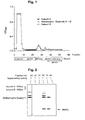
- the fractions whose activity had been found were collected as a fraction containing the holoenzyme of DNA gyrase (complex of subunits A and B). Part of fractions other than the active fractions was taken and a diluted active fraction was added thereto to assay as to whether the supercoiling activity was recovered or not. The fractions whose supercoiling activity was recovered were collected as roughly purified subunit A fractions. Next, part of this subunit A fraction was added to the other fractions to assay as to whether the supercoiling activity was recovered or not. The fractions whose activity was recovered were collected as roughly purified subunit B fractions. The elution pattern of proteins from the novobiocin-Sepharose column is shown in Fig. 1.
- DNA gyrase holoenzyme complex of subunits A and B
- subunit A and subunit B were found in fractions eluted with 5M urea, fractions eluted with 2M KCl and fractions eluted with 2M KCl + 5M urea, respectively.
- subunit B fraction 35 ml of subunit B fraction (diluted with TED buffer five times) obtained in the above (2) was loaded on a novobiocin-Sepharose column (bed volume 10 ml) which had been equilibrated with a 10% glycerin-containing TED buffer. After washing with the same buffer, it was eluted with 10% glycerin-containing TED buffers which contain 2M KCl, 2.5M urea, 5M urea, 2M KCl-5M urea and 2M KCl-5M urea (pH4.0), respectively, and fractionated. Each fraction to which the purified subunit A fraction was added was measured for the supercoiling activity and purified subunit B fractions were determined. Each of the purified subunit fractions was dialyzed using a 50% glycerin-containing TED buffer and preserved at -20°C.
- Fraction No. 32 (0.4 ml) was loaded on a Sephadex G-75 (column volume 3.5 ml) which had been equilibrated with a 10% glycerol-containing TED buffer and gel filtration was carried out. After fractionation by elution with a TED buffer, part of each fraction was taken and subjected to SDS-polyacrylamide electrophoresis to confirm the band of 18 kDa protein, and the protein in fractions wherein the 18 kDa protein, i.e. the DNA gyrase-inhibiting protein (DGI) became a single band, was collected as purified DGI. As a result, about 1.5 ⁇ g of purified DGI was obtained from 26.5 g of the wet bacterial cells.
- DGI DNA gyrase-inhibiting protein
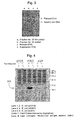
- No. 32 fraction (5 ⁇ l) was added to the measurement system for the supercoiling activity of DNA gyrase described in the below-mentioned Reference Examples, i.e. a reaction liquid (15 ⁇ l) containing relaxed pBR322 DNA (0.1 ⁇ g), subunit A (1 U) and subunit B (1 U). Reacted therewith, the relaxed plasmid DNA was not converted into the supercoiling form (Fig. 3). From this, it was confirmed that No. 32 fraction contained an inhibitor to the supercoiling activity of DNA gyrase. It was also confirmed that the purified DGI obtained in the above (4) perfectly inhibited the supercoiling activity of DNA gyrase at a concentration of 8 ⁇ g/ml.
- N-terminal amino acid sequence of the purified DGI obtained in the above (4) was determined using Peptide Sequencer LF3400 (available from Beckman Co.). The thus obtained amino acid sequence of N-terminal 16 residues was represented by Sequence ID NO:1 in Sequence Listing mentioned hereinafter.
- a region corresponding to the 189th-1370th bases from the 5'-end of the above-mentioned sbcB region was cloned from E. coli KL16 strain chromosomal DNA by polymerase chain reaction (PCR) as mentioned below.
- Oligonucleotide primers wherein BAMHI recognition sites were incorporated into the both ends of a concerned sequence were designed and synthesized with a DNA synthesizer (the sequence of the sense primer being shown in Sequence ID NO:2 and the sequence of the antisense primer in Sequence ID NO:3 of the below mentioned Sequence Listing, respectively).
- the PCR reaction was carried out in a PCR buffer (composition: 50 mM KCl, 10mM Tris-HCl (pH 9.0) and 1% Triton X-100) added with 0.5 mg/ml E. coli KL16 chromosomal DNA, 800 ⁇ M dNTP mixture, 0.66 ⁇ M the sense primer, 1 ⁇ M the antisense primer, 2mM MgCl 2 and 0.025 U/ ⁇ l Taq polymerase (30 cycles of 2 minutes at 94°C, 2 minutes at 51°C and 3 minutes at 72°C) to amplify DNA.
- a PCR buffer composition: 50 mM KCl, 10mM Tris-HCl (pH 9.0) and 1% Triton X-100
- the 1.2 kbp DNA fragment obtained by the PCR was cleaved with a suitable restriction enzyme and ligated to a vector plasmid pUC19 (available from Takara Shuzo Co.), and the thus obtained recombinant plasmid was introduced into E. coli JM109 strain.
- These recombinant plasmids were used to determine the base sequence of the 1.2 kbp DNA fragment by the dideoxy method with a fluorescent DNA sequencer (available from Hitachi Co.).
- the thus obtained base sequence and the amino acid sequence of a protein encoded by an open reading frame therein were shown in Sequence ID NO:6.
- the sequence was identical with the sequence ( yeeB gene) in the sbcB region (EMBL Accession No.
- Example 3 dgi genes of various bacterial chromosomes
- DGI was important to bacterial growth and presumed to be present universally.
- southern hybridization with various bacterial chromosomal DNAs was performed using a DNA fragment of the dgi gene obtained in the above Example 2.
- Southern hybridization was carried out in accordance with the method described in Molecular Cloning (vol. 2, 6.2-6.19 and 9.31-9.46, 1989). Chromosomes derived from various bacteria were used which was prepared by the conventional method and then digested with EcoRI. As a probe was used an NdeI-cleaved fragment which was in the gene derived from E. coli cloned in the above (6) of Example 2 and was labeled with 32 P. Hybridization was carried out under normal stringent conditions.
- fragments which hybridized under stringent conditions with the fragment of dgi gene (the NdeI fragment corresponding to the 225th-815th bases of Sequence ID NO:6) derived from Escherichia coli , in microorganisms of Shigella genus, Citrobacter genus, Pseudomonas genus, Bacillus genus , Enterococcus genus and Staphylococcus genus.
- DGI expression system was constructed using vector plasmid pLEX (available from Invitrogen Co.) for protein expression as follows.
- the system of the expression vector pLEX is to control expression of a concerned gene by transcriptional regulation with tryptophan as an inducer. That is, when tryptophan was absent, cl repressor protein was expressed from ⁇ l gene under trp promoter and bound to the operator region of P L promoter on the vector to repress the transcription of the concerned gene ligated to the downstream of P L promoter.
- tryptophan was present, there was formed a tryptophan-repressor complex, which was tightly bound to trp operator to inhibit expression of cl repressor protein, and thereby cl repressor was dissociated from P L promoter to start transcription of the concerned gene.
- a fragment in which the restriction enzyme Nde I-recognizing sites were added to the both ends of dgi gene region (a fragment corresponding to the 255th-815th bases of Sequence ID NO:6) whose base sequence was determined in Example 2 above was prepared by PCR.
- E. coli KL 16 strain chromosomal DNA was used as a template DNA for PCR and primers were synthesized using a DNA synthesizer.
- the sequences of the sense primer was shown by Sequence ID NO:4 and the sequence of the antisense primer was shown by Sequence ID NO:5.
- the thus obtained PCR product was ligated to a vector plasmid pT7BlueT (available from Novagen Co.) and introduced into E. coli JM109 to prepare a recombinant plasmid.
- the resulted recombinant plasmid was cleaved with NdeI and separated by agarose electrophoresis, and thereafter an NdeI fragment of 473 bp was purified from the gel, and was ligated to pLEX. It was introduced into E.
- Recombinant plasmid pCA17 was obtained wherein the insertion fragment containing the dgi gene was inserted in correct direction (sense direction). Electroporation was carried out using Electrocell Manipulator 600 (available from BM Kiki K. K.) under the conditions of potential difference 2.25 kV and electrical resistance 129 ⁇ .
- GI724 strain transformed by recombinant plasmid pCA17 wherein the insertion fragment containing the dgi gene was inserted into vector plasmid pLEX in positive direction i.e. E. coli GI724 (pCA17) strain
- NIBH National Institute of Bioscience and Human-Technology
- E. coli GI724 (pCA17) strain obtained in the previous item (1) was subjected to shake culture in RM medium containing 100 ⁇ g/ml of ampicillin (42mM Na 2 HPO 4 , 22mM KH 2 PO 4 , 8.5mM NaCl, 18mM NH 4 Cl (pH7.4), 2% Casamino acid, 1% glycerol and 1 mM MgCl 2 ).
- tryptophan was added to a final concentration of 100 ⁇ g/ml and thereby the expression of DGI protein was induced. Thereafter, shake culture was continued for 5 hours at 37°C.
- E. coli GI724 (pCA17) strain was cultured and subjected to expression induction with tryptophan.
- Bacterial cells obtained by centrifugation were suspended in 10 ml of Solution A (30mM Tris-HCl (pH 7.5) and 30 mM NaCl) and ultrasonically pulverized in ice. After pulverization, centrifugation (at 4°C, 8000 rpm for 20 minutes) was carried out and thus obtained supernatant was subjected to ammonium sulfate precipitation with 60% saturation followed by further centrifugation at 17000xG for 20 minutes.
- the obtained pellets were dissolved in 30 ml of a TED solution (10mM Tris-HCl (pH 7.5), 1mM EDTA and 1mM DTT) and dialyzed with the same solution. After dialysis, it was loaded to Q-Sepharose fast flow column (0.55 cm 2 x 9 cm)(available from Pharmacia Co.) which had been equilibrated with a TED solution and subjected to linear concentration gradient (from 0.025M to 0.8M) of NaCl and elution and fractionation for protein were carried out with 140 ml of a TED solution (linear velocity 150cm/hr). Each fraction was subjected to SDS-PAGE and fractions in which the 18kDa protein band was confirmed were collected.
- a TED solution 10mM Tris-HCl (pH 7.5), 1mM EDTA and 1mM DTT
- the collected fractions were fractionated by gel filtration using TSK gel Toyopearl HW-55 (2.25cm 2 X 32cm)(available from Toso Co.) which had been equilibrated with a TED solution and fractions in which the 18 kDa protein band was confirmed were centrifugally concentrated to 200 ⁇ l.
- the concentrate was subjected to SDS-PAGE, the concerned DGI protein was extracted from the gel and subjected to gel filtration again with TSK gel Toyopearl HW-55 to obtain purified DGI (600 ⁇ g).
- the amount of the protein was calculated from the absorbance measurement at 595nm using a solution of Coomassie Brilliant Blue dye for protein quantification.
- DGI activity i.e. the inhibiting activity against DNA gyrase activity (supercoiling activity)
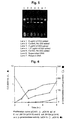
- Each 5 ⁇ l of DNA gyrase subunit A (1U) and subunit B (1U) were each added to a reaction mixture for activity measurement (20mM Tris-HCl (pH7.5), 20mM KCl, 4mM MgCl 2 , 4mM spermidine, 1.5mM ATP, 1mM DTT, 30 ⁇ g/ml t-RNA, 15 ⁇ g/ml BSA and 0.1 ⁇ g relaxed pBR322 DNA), and DGI (protein concentration 25, 12.5, 6.25, 3.13, 1.56, 0.78 or 0.39 ⁇ g/ml) was added thereto for the reaction for 1 hour at 37°C.
- DGI activity measurement system could be constructed.
- the DGI activity was compared by practicing the reaction in the presence or absence of a medical solution (or suspension)
- the action of medical agents to modulate activity-enhancing action or activity-inhibiting action
- screening or identification of a medical agent which modulates the DGI activity can be done.
- E. coli dgi gene In the 5' upstream region of E. coli dgi gene, there is a region ( yeeC gene) encoding a assumed product YeeC in the sbcB region (EMBL Accession No. U00009). Both of the genes are at a distance of about 122 bp and between these genes, there are recognized a palindrome structure which is considered to be a p factor-dependent terminator of yeeC , and a sequence typical in the -10 and -35 region assumed to be a promoter of dgi gene.
- a DNA fragment containing the promoter region of dgi gene was ligated to the lac gene to prepare a plasmid and a system capable of measuring the dgi promoter activity was constructed using ⁇ -galactosidase activity as an index.
- a DNA fragment to which BamHI recognition sites were added at the both ends of a 1.2 kbp DNA fragment (a fragment corresponding to the 3rd-1184th bases of Sequence ID NO:6) containing the promoter region of dgi gene, the transcription initiation region and the 5' side of the translational region was prepared by PCR.
- primers two kinds of oligonucleotides were used which were synthesized by adding the BamHI recognition site to each of the both ends of the concerned region.
- the chromosomal DNA of E. coli KL16 strain was used as templates.
- a fragment obtained by PCR was doubly cleaved with Bam HI and RsaI to prepare a 283 bp DNA fragment comprising the assumed promoter region, the transcription initiation region and the 33 bp of the 5' end of the translational region.
- Vector plasmid pLGlacZ7 (Plasmid, vol. 32, pp. 233-237, 1994) was cleaved with BamHI and thereafter terminally blunted together with the previously obtained 283 bp DNA fragment, and the both were ligated to prepare a recombinant plasmid.
- plasmid pCA15 which expresses a fused protein of the N-terminal 11 amino acid residues of DGI protein and ⁇ -galactosidase
- plasmid pCA16 wherein a dgi promoter-containing fragment was inserted in reverse direction was also obtained.
- the taken culture medium was diluted such that the OD 600 value became 0.1, and then 1 ml thereof was sampled and centrifuged (14000 rpm, 1 minute) to obtain bacterial cells, which were suspended in 1 ml of a Z buffer (60mM Na 2 HPO 4 , 40mM NaH 2 PO 4 , 10mM KCl, 1mM MgSO 4 and 50mM ⁇ -mercaptoethanol). After ultrasonic pulverization, it was centrifuged and the supernatant was taken in an amount of 600 ⁇ l as a sample solution, whose ⁇ -galactosidase activity was measured as follows.
- a Z buffer 60mM Na 2 HPO 4 , 40mM NaH 2 PO 4 , 10mM KCl, 1mM MgSO 4 and 50mM ⁇ -mercaptoethanol
- Fig. 6 showed a result of the change in dgi promoter activity with the lapse of time with growth (using expression of ⁇ -galactosidase as an index). It was found that the ⁇ -galactosidase activity per ⁇ g of the microbial protein showed the lowest value in the logarithmic growth phase (OD 600 : 0.5) 2 hours after culturing while it increased until 6 hours after where the resting phase (OD 600 : 1.2) was reached.
- the dgi promoter activity was measured for E. coli JM 109 strains into which each of plasmid pCA15, pCA16 and pLGlacZ7 was introduced.
- the ⁇ -galactosidase activities per ⁇ g of the microbial protein 18 hours after culturing were 216, 14 and 0 units/ ⁇ g, respectively.
- stronger expression of ⁇ -galactosidase was recognized in E. coli with pCA15 in comparison with the control plasmids (pCA16 and pLG lacZ7 ). From the fact, it was confirmed that the dgi promoter activity can be easily measured by using plasmid pCA15, with ⁇ -galactose activity as an index.
- the dgi promoter activity measurement system could be constructed.
- culturing is carried out with or without addition of a solution of a medical agent (or suspension), and, by comparing the dgi promoter activities, the action of the medical agents to modulate the expression of dgi gene (expression-enhancing action or expression-inhibiting action) can be detected.
- screening or identification of a medical agent which modulates the DGI expression can be done.
- An antisense expression vector was prepared by inserting a fragment containing the translation region of dgi gene (a fragment corresponding to the 255th-728th bases of Sequence ID NO:6) into the downstream of tryptophan ( trp ) promoter of vector plasmid pLEX (available from Invitrogen Co.).
- the vector was introduced into E. coli GI724 strain.
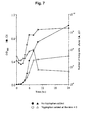
- the antisense RNA-expressing strain thus obtained was cultured under the condition of with or without adding tryptophan, and the change with the lapse of time in the number of living cells and turbidity (OD 600 ) was measured. The results thereof were shown in Fig. 7.
- the number of living cells and turbidity after 24 hours were increased up to 1 X 10 9 cfu/ml and 1.0, respectively.
- a new quinolone gyrase inhibitor Takeshi Nishino et al., Chemotherapy, vol. 41(s-5), pp. 50-66, 1993. From the above result, it is considered that in E. coli wherein expression of dgi antisense RNA is induced, expression of dgi gene is repressed and the normal growth of bacteria is inhibited. In other words, a medical agent which inhibits the expression of dgi gene is useful as an antimicrobial agent.
- Gerbu adjuvant available from NACALAI TESQUE INC.
- 200 ⁇ l corresponding to 100 ⁇ g
- a solution of the purified DGI obtained in the above Item (4) of Example 3 was shaken for 5 minutes at room temperature to thoroughly mix them, which was subcutaneously administered to the back of a rabbit to perform primary immunization.
- booster immunization was carried out in the same manner.
- a small amount of blood was taken from a vein of ear and its antibody titer was measured. At the time when the increase in titer of serum antibody was confirmed, about 50 ml of blood was taken from the artery of ear.
- the resulting blood was allowed to stand for 1 hour at 37°C and further for overnight at 4°C, and thereafter centrifuged to obtain a serum.
- the obtained antiserum was, after filter filtration (pore diameter 0.45 ⁇ m), apportioned to reserve at -80°C.
- E-Z-SEP Trade name, available from Pharmacia Co., a kit for purifying antibodies
- IgG concentration in the purified antibody was measured in accordance with the dilution dot blotting method (Experimental protocol for anti-peptide antibodies, Shujun Sha, written by Shinobu Omi et al., pp. 73 and 74) and was found to be 300 mg/ml.
- the minimal amount of antigen protein, which can be recognized with the antibody was assayed. That is, 0.5 ⁇ l of the purified DGI at a concentration of 20, 10, 5, 2.5 or 1.25 ⁇ g/ml was spotted on a nitrocellulose membrane and dried, and thereafter blocked in a 20 mg/ml BSA-containing TBS (0.15M NaCl and 20mM Tris-HCl (pH7.5)). The membrane was immersed in the anti-DGI antigen diluted with the BSA-containing TBS (1000 times dilution), and incubated for 1 hour at 37°C. After washing the resulting membrane, it was incubated together with an anti-rabbit IgG antibody (available from Gibco.
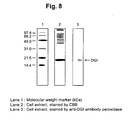
- E. coli which highly expressed DGI E. coli GI724 (pCA17) strain obtained in the above Example 4 was subjected to ultrasonic pulverization and successive centrifugation, and the resulting supernatant was separated by SDS-polyacrylamide gel electrophoresis.
- the gel after electrophoresis was transferred to a PVDF (polyvinylidene difluoride) membrane (available from Millipore Co.).
- the transferred PVDF membrane was stained with Coomassie Brilliant Blue and, after confirmation of the electrophoresis pattern of proteins, was decolorized with methanol and blocked in the 20 mg/ml BSA-containing TBS.
- the membrane was immersed in the anti-DGI antibody diluted with the BSA-containing TBS (1000 times dilution) for the reaction and was subjected to peroxidase staining using the HRP-labeled anti-rabbit IgG antibody and the substrate DAB, in the same manner as (2) described above.
- a protein having a molecular weight of 18 kDa corresponding to DGI can be specifically detected. From this, it was believed that the obtained anti-DGI antibody (IgG) could be used to detect or quantify the DGI.
- pBR322 DNA the supercoiled type, available from Takara Shuzo Co.
- topoisomerase I available from Takara Shuzo Co.
- 20 ⁇ l of a reaction liquid 35mM Tris-HCl (pH 8.0), 72mM KCl, 5mM MgCl 2 , 5mM DTT, 5mM spermidine and 0.01% bovine serum albumin
- a reaction liquid 35mM Tris-HCl (pH 8.0), 72mM KCl, 5mM MgCl 2 , 5mM DTT, 5mM spermidine and 0.01% bovine serum albumin
- 5 ⁇ l of a sample solution to be tested 5 ⁇ l of DNA gyrase subunit A (1 U/1.25 ⁇ l) and 5 ⁇ l of subunit B (1 U/1.25 ⁇ l) were added to 5 ⁇ l of a reaction liquid for measuring supercoiling activity (20mM Tris-HCl (pH 7.5), 20mM KCl, 4mM MgCl 2 , 4mM spermidine, 1.5mM ATP, 1mM dithiothreitol, 30 ⁇ g/ml t-RNA (derived from yeast) and 15 ⁇ g/ml bovine serum albumin) containing 0.1 ⁇ g of the relaxed pBR322 DNA, and the reaction was carried out for 1 hour at 37°C.
- a reaction liquid for measuring supercoiling activity 20mM Tris-HCl (pH 7.5), 20mM KCl, 4mM MgCl 2 , 4mM spermidine, 1.5mM ATP, 1mM dithiothre
- Sequences considered as promoter and ribosome-binding regions were observed upstream the ORF while a sequence assumed ⁇ -independent terminator was recognized following the ORF.
- the DNA sequence of 1444 bp fragment containing the dgi gene derived from Shigella dysenteriae and the amino acid sequence of DGI encoded therein were illustrated in Sequence ID NO:8.
- the amino acid sequence of the same was also shown in Sequence ID NO:9. It was assumed that DGI of Shigella dysenteriae was a polypeptide comprising 157 amino acids and had a molecular weight of about 18 kilodaltons, similarly as in E. coli DGI.
- the amino acid sequences of both the DGIs had a homology as high as 96.8%.
- the normal growth of bacteria can be inhibited by modulating the activity or expression of the DNA gyrase-inhibiting protein (DGI) of the present invention.
- DGI DNA gyrase-inhibiting protein
- the DGI activity or the promoter activity of dgi gene can be measured and these measuring methods are useful as methods for screening and identifying a medical agent capable of modulating the DGI activity and the expression of dgi gene.
- the screening method and identification method are useful for developing antimicrobial agents or agricultural chemicals based on new action and mechanism.
- antisense RNA or DNA to the dgi gene is useful as a medical agent which inhibits expression of DGI, and anti-DGI antibodies can be utilized for detecting or quantifying the DGI.
Landscapes
- Chemical & Material Sciences (AREA)
- Organic Chemistry (AREA)
- Health & Medical Sciences (AREA)
- Medicinal Chemistry (AREA)
- Proteomics, Peptides & Aminoacids (AREA)
- Biophysics (AREA)
- General Health & Medical Sciences (AREA)
- Genetics & Genomics (AREA)
- Life Sciences & Earth Sciences (AREA)
- Molecular Biology (AREA)
- Biochemistry (AREA)
- Gastroenterology & Hepatology (AREA)
- Micro-Organisms Or Cultivation Processes Thereof (AREA)
- Enzymes And Modification Thereof (AREA)
- Preparation Of Compounds By Using Micro-Organisms (AREA)
- Medicines That Contain Protein Lipid Enzymes And Other Medicines (AREA)
- Measuring Or Testing Involving Enzymes Or Micro-Organisms (AREA)
Claims (8)
- Verfahren zum Identifizieren einer medizinischen Verbindung, umfassend den Schritt des Testens der Wirkung des Modulierens der DNA-Gyraseinhibierenden Aktivität eines Proteins, ausgewählt aus der Gruppe, bestehend aus(i) einem Protein, das von einer DNA oder dem Komplement davon, welche mit einem DNA-Fragment, das die durch SEQ ID NR: 6 oder SEQ ID NR: 8 dargestellte Basensequenz umfaßt, unter stringenten Bedingungen hybridisiert, kodiert wird, wobei die Hybridisierung unter stringenten Bedingungen derart ausgeführt wird, daß die Hybridisierung in einer Hybridisierungslösung mit 5x SSPE oder einer mit entsprechender Salzkonzentration für 12 bis 18 Stunden unter der Temperaturbedingung von 37 bis 42°C angewandt wird, das Vorwaschen, wenn erforderlich, in 5x SSPE oder einer Lösung mit einer dem entsprechenden Salzkonzentration ausgeführt wird und das Waschen in 1x SSPE oder einer Lösung mit einer entsprechenden Salzkonzentration unter der Temperaturbedingung von 50 bis 65°C ausgeführt wird, und(ii) einem Protein, welches entweder(1) die durch SEQ ID NR: 7 dargestellte Aminosäuresequenz,(2) eine Aminosäuresequenz, worin 1 bis 30 Aminosäuren in der durch SEQ ID NR: 7 dargestellten Aminosäuresequenz deletiert, substituiert oder hinzugefügt sind,(3) die durch SEQ ID NR: 9 dargestellte Aminosäuresequenz oder(4) eine Aminosäuresequenz, worin 1 bis 30 Aminosäuren in der durch SEQ ID NR: 9 dargestellten Aminosäuresequenz deletiert, substituiert oder hinzugefügt sind, umfaßt.
- Verfahren nach Anspruch 1, wobei die medizinische Verbindung ein antimikrobielles Mittel ist.
- Verfahren nach einem der Ansprüche 1 bis 2, wobei das Protein ein Protein ist, das von einer DNA. welche die durch SEQ ID NR: 6 oder SEQ ID NR: 8 dargestellte Basensequenz umfaßt, kodiert wird.
- Verfahren nach einem der Ansprüche 1 bis 2, wobei das Protein ein Protein ist, das entweder (1) die durch SEQ ID NR: 7 dargestellte Aminosäuresequenz oder (2) die durch SEQ ID NR: 9 dargestellte Aminosäuresequenz umfaßt.
- Verfahren nach einem der Ansprüche 1 bis 2, wobei das Protein von einem Mikroorganismus, der zur Gattung Escherichia gehört, stammt.
- Verfahren nach einem der Ansprüche 1 bis 2, wobei das Protein von einem Mikroorganismus, der zur Gattung Shigella gehört, stammt.
- Verfahren nach einem der Ansprüche 1 bis 2, wobei das Protein von einem Mikroorganismus, der zur Gattung Citrobacter, zur Gattung Pseudomonas, zur Gattung Bacillus, zur Gattung Enterococcus oder zur Gattung Staphylococcus gehört, stammt.
- Verwendung eines Proteins, ausgewählt aus der Gruppe, bestehend auszur Herstellung einer medizinischen Verbindung zum Behandeln einer bakteriellen Infektion.(i) einem Protein, das von einer DNA oder dem Komplement davon, welche mit einem DNA-Fragment, das die durch SEQ ID NR: 6 oder SEQ ID NR: 8 dargestellte Basensequenz umfaßt, unter stringenten Bedingungen hybridisiert, kodiert wird, wobei die Hybridisierung unter stringenten Bedingungen derart ausgeführt wird, daß die Hybridisierung in einer Hybridisierungslösung mit 5x SSPE oder einer mit entsprechender Salzkonzentration für 12 bis 18 Stunden unter der Temperaturbedingung von 37 bis 42°C angewandt wird, das Vorwaschen, wenn erforderlich, in 5x SSPE oder einer Lösung mit einer dem entsprechenden Salzkonzentration ausgeführt wird und das Waschen in 1x SSPE oder einer Lösung mit einer entsprechenden Salzkonzentration unter der Temperaturbedingung von 50 bis 65°C ausgeführt wird, und(ii) einem Protein, welches entweder(1) die durch SEQ ID NR: 7 dargestellte Aminosäuresequenz,(2) eine Aminosäuresequenz, worin 1 bis 30 Aminosäuren in der durch SEQ ID NR: 7 dargestellten Aminosäuresequenz deletiert, substituiert oder hinzugefügt sind,(3) die durch SEQ ID NR: 9 dargestellte Aminosäuresequenz oder(4) eine Aminosäuresequenz, worin 1 bis 30 Aminosäuren in der durch SEQ ID NR: 9 dargestellten Aminosäuresequenz deletiert, substituiert oder hinzugefügt sind, umfaßt,
Applications Claiming Priority (3)
| Application Number | Priority Date | Filing Date | Title |
|---|---|---|---|
| JP29352296 | 1996-11-06 | ||
| JP29352296 | 1996-11-06 | ||
| PCT/JP1997/004019 WO1998020134A1 (fr) | 1996-11-06 | 1997-11-05 | Proteine inhibitrice de l'adn gyrase |
Publications (3)
| Publication Number | Publication Date |
|---|---|
| EP0974656A1 EP0974656A1 (de) | 2000-01-26 |
| EP0974656A4 EP0974656A4 (de) | 2002-01-23 |
| EP0974656B1 true EP0974656B1 (de) | 2004-07-21 |
Family
ID=17795838
Family Applications (1)
| Application Number | Title | Priority Date | Filing Date |
|---|---|---|---|
| EP97911447A Expired - Lifetime EP0974656B1 (de) | 1996-11-06 | 1997-11-05 | Inhibitorprotein der dna-gyrase. |
Country Status (6)
| Country | Link |
|---|---|
| US (1) | US6511816B1 (de) |
| EP (1) | EP0974656B1 (de) |
| AT (1) | ATE271608T1 (de) |
| AU (1) | AU4883897A (de) |
| DE (1) | DE69729961T2 (de) |
| WO (1) | WO1998020134A1 (de) |
-
1997
- 1997-11-05 EP EP97911447A patent/EP0974656B1/de not_active Expired - Lifetime
- 1997-11-05 AU AU48838/97A patent/AU4883897A/en not_active Abandoned
- 1997-11-05 WO PCT/JP1997/004019 patent/WO1998020134A1/ja not_active Ceased
- 1997-11-05 DE DE69729961T patent/DE69729961T2/de not_active Expired - Lifetime
- 1997-11-05 AT AT97911447T patent/ATE271608T1/de not_active IP Right Cessation
-
1999
- 1999-05-06 US US09/306,454 patent/US6511816B1/en not_active Expired - Lifetime
Also Published As
| Publication number | Publication date |
|---|---|
| ATE271608T1 (de) | 2004-08-15 |
| US6511816B1 (en) | 2003-01-28 |
| AU4883897A (en) | 1998-05-29 |
| DE69729961D1 (de) | 2004-08-26 |
| EP0974656A1 (de) | 2000-01-26 |
| WO1998020134A1 (fr) | 1998-05-14 |
| EP0974656A4 (de) | 2002-01-23 |
| DE69729961T2 (de) | 2005-08-25 |
Similar Documents
| Publication | Publication Date | Title |
|---|---|---|
| EP0721506B1 (de) | Bakterielle ausscheidungsproteine und darauf beruhende azelluläre impfstoffe | |
| JP4306802B2 (ja) | アミダーゼ | |
| Letoffe et al. | Protease secretion by Erwinia chrysanthemi: the specific secretion functions are analogous to those of Escherichia coli alpha‐haemolysin. | |
| Caldecott et al. | Characterization of the XRCC1-DNA ligase III complex in vitro and its absence from mutant hamster cells | |
| Fan et al. | The FliP and FliR proteins of Salmonella typhimurium, putative components of the type III flagellar export apparatus, are located in the flagellar basal body | |
| Lu et al. | Interactions of the components of the general secretion pathway: role of Pseudomonas aeruginosa type IV pilin subunits in complex formation and extracellular protein secretion | |
| US5004692A (en) | Cloning and expression of phosopholipase C genes | |
| US6809180B2 (en) | Compositions and methods for screening antimicrobials | |
| Härtlein et al. | Transport of hemolysin by Escherichia coli | |
| US5770361A (en) | Protein conferring an inducible resistance to glycopeptides, particularly in gram-positive bacteria | |
| Hu et al. | Morganella morganii urease: purification, characterization, and isolation of gene sequences | |
| US6329172B1 (en) | ABC transporter gene cluster in pseudomonas fluorescens for enhanced lipase secretion | |
| US6436409B1 (en) | Polynucleotide functionally coding for the LHP protein from Mycobacterium tuberculosis, its biologically active derivative fragments, as well as methods using the same | |
| WO1999052563A9 (en) | A method for the targeting of proteins produced by yersinia into the cytosol of eukaryotic cells | |
| US5858367A (en) | Methods for screening for antimicrobials utilizing AarC and compositions thereof | |
| Carlsson et al. | Genetic characterization of Bacillus subtilis odhA and odhB, encoding 2-oxoglutarate dehydrogenase and dihydrolipoamide transsuccinylase, respectively | |
| IL83324A (en) | Proteins useful in diagnosis of mycoplasma infections in swine, clones encoding them and a recombinant method for making the proteins | |
| EP0974656B1 (de) | Inhibitorprotein der dna-gyrase. | |
| JP3404533B2 (ja) | 特にグラム陽性バクテリアのグリコペプタイドに対する抵抗力の発現に係るポリペプタイド、ポリペプタイドをコードするヌクレオチドシーケンスおよび診断への使用 | |
| US7183077B2 (en) | Promoters and gene expression method by using the promoters | |
| US5871910A (en) | Probes for the detection of nucleotide sequences implicated in the expression of resistance to glycopeptides, in particular in gram-positive bacteria | |
| JP3486942B2 (ja) | 耐熱性エステラーゼ | |
| JP3525475B2 (ja) | 新規な ’mecAタンパク質、それをコードするDNA、およびそれを用いたメチシリン耐性黄色ブドウ球菌の検出方法 | |
| JP3484954B2 (ja) | Dnaジャイレース阻害蛋白質 | |
| RU2355769C1 (ru) | СПОСОБ ПОЛУЧЕНИЯ ФУНКЦИОНАЛЬНО АКТИВНОГО РЕКОМБИНАНТНОГО БЕЛКА ЛЕТАЛЬНОГО ФАКТОРА СИБИРСКОЙ ЯЗВЫ (LF), РЕКОМБИНАНТНАЯ ПЛАЗМИДНАЯ ДНК pETGST-LFmin, КОДИРУЮЩАЯ АКТИВНЫЙ БЕЛОК LF, И ШТАММ Escherichia coli BL-GSTLFmin, ПРОДУЦИРУЮЩИЙ АКТИВНЫЙ БЕЛОК ЛЕТАЛЬНОГО ФАКТОРА СИБИРСКОЙ ЯЗВЫ |
Legal Events
| Date | Code | Title | Description |
|---|---|---|---|
| PUAI | Public reference made under article 153(3) epc to a published international application that has entered the european phase |
Free format text: ORIGINAL CODE: 0009012 |
|
| 17P | Request for examination filed |
Effective date: 19990520 |
|
| AK | Designated contracting states |
Kind code of ref document: A1 Designated state(s): AT BE CH DE DK ES FI FR GB GR IE IT LI LU MC NL PT SE |
|
| A4 | Supplementary search report drawn up and despatched |
Effective date: 20011207 |
|
| AK | Designated contracting states |
Kind code of ref document: A4 Designated state(s): AT BE CH DE DK ES FI FR GB GR IE IT LI LU MC NL PT SE |
|
| 17Q | First examination report despatched |
Effective date: 20020730 |
|
| GRAP | Despatch of communication of intention to grant a patent |
Free format text: ORIGINAL CODE: EPIDOSNIGR1 |
|
| RIC1 | Information provided on ipc code assigned before grant |
Ipc: 7A 61K 48/00 B Ipc: 7C 12P 21/02 B Ipc: 7C 12N 1/21 B Ipc: 7C 07K 16/12 B Ipc: 7C 07K 14/315 B Ipc: 7C 07K 14/25 B Ipc: 7C 07K 14/245 B Ipc: 7C 12N 15/31 A |
|
| RIC1 | Information provided on ipc code assigned before grant |
Ipc: 7A 61K 48/00 B Ipc: 7C 12P 21/02 B Ipc: 7C 12N 1/21 B Ipc: 7C 07K 16/12 B Ipc: 7C 07K 14/315 B Ipc: 7C 07K 14/25 B Ipc: 7C 07K 14/245 B Ipc: 7C 12N 15/31 A |
|
| GRAS | Grant fee paid |
Free format text: ORIGINAL CODE: EPIDOSNIGR3 |
|
| GRAA | (expected) grant |
Free format text: ORIGINAL CODE: 0009210 |
|
| AK | Designated contracting states |
Kind code of ref document: B1 Designated state(s): AT BE CH DE DK ES FI FR GB GR IE IT LI LU MC NL PT SE |
|
| PG25 | Lapsed in a contracting state [announced via postgrant information from national office to epo] |
Ref country code: NL Free format text: LAPSE BECAUSE OF FAILURE TO SUBMIT A TRANSLATION OF THE DESCRIPTION OR TO PAY THE FEE WITHIN THE PRESCRIBED TIME-LIMIT Effective date: 20040721 Ref country code: LI Free format text: LAPSE BECAUSE OF FAILURE TO SUBMIT A TRANSLATION OF THE DESCRIPTION OR TO PAY THE FEE WITHIN THE PRESCRIBED TIME-LIMIT Effective date: 20040721 Ref country code: FI Free format text: LAPSE BECAUSE OF FAILURE TO SUBMIT A TRANSLATION OF THE DESCRIPTION OR TO PAY THE FEE WITHIN THE PRESCRIBED TIME-LIMIT Effective date: 20040721 Ref country code: CH Free format text: LAPSE BECAUSE OF FAILURE TO SUBMIT A TRANSLATION OF THE DESCRIPTION OR TO PAY THE FEE WITHIN THE PRESCRIBED TIME-LIMIT Effective date: 20040721 Ref country code: BE Free format text: LAPSE BECAUSE OF FAILURE TO SUBMIT A TRANSLATION OF THE DESCRIPTION OR TO PAY THE FEE WITHIN THE PRESCRIBED TIME-LIMIT Effective date: 20040721 Ref country code: AT Free format text: LAPSE BECAUSE OF FAILURE TO SUBMIT A TRANSLATION OF THE DESCRIPTION OR TO PAY THE FEE WITHIN THE PRESCRIBED TIME-LIMIT Effective date: 20040721 |
|
| REG | Reference to a national code |
Ref country code: GB Ref legal event code: FG4D |
|
| REG | Reference to a national code |
Ref country code: CH Ref legal event code: EP |
|
| REG | Reference to a national code |
Ref country code: IE Ref legal event code: FG4D |
|
| REF | Corresponds to: |
Ref document number: 69729961 Country of ref document: DE Date of ref document: 20040826 Kind code of ref document: P |
|
| PG25 | Lapsed in a contracting state [announced via postgrant information from national office to epo] |
Ref country code: SE Free format text: LAPSE BECAUSE OF FAILURE TO SUBMIT A TRANSLATION OF THE DESCRIPTION OR TO PAY THE FEE WITHIN THE PRESCRIBED TIME-LIMIT Effective date: 20041021 Ref country code: GR Free format text: LAPSE BECAUSE OF FAILURE TO SUBMIT A TRANSLATION OF THE DESCRIPTION OR TO PAY THE FEE WITHIN THE PRESCRIBED TIME-LIMIT Effective date: 20041021 Ref country code: DK Free format text: LAPSE BECAUSE OF FAILURE TO SUBMIT A TRANSLATION OF THE DESCRIPTION OR TO PAY THE FEE WITHIN THE PRESCRIBED TIME-LIMIT Effective date: 20041021 |
|
| PG25 | Lapsed in a contracting state [announced via postgrant information from national office to epo] |
Ref country code: ES Free format text: LAPSE BECAUSE OF FAILURE TO SUBMIT A TRANSLATION OF THE DESCRIPTION OR TO PAY THE FEE WITHIN THE PRESCRIBED TIME-LIMIT Effective date: 20041101 |
|
| PG25 | Lapsed in a contracting state [announced via postgrant information from national office to epo] |
Ref country code: LU Free format text: LAPSE BECAUSE OF NON-PAYMENT OF DUE FEES Effective date: 20041105 Ref country code: IE Free format text: LAPSE BECAUSE OF NON-PAYMENT OF DUE FEES Effective date: 20041105 |
|
| PG25 | Lapsed in a contracting state [announced via postgrant information from national office to epo] |
Ref country code: MC Free format text: LAPSE BECAUSE OF NON-PAYMENT OF DUE FEES Effective date: 20041130 |
|
| NLV1 | Nl: lapsed or annulled due to failure to fulfill the requirements of art. 29p and 29m of the patents act | ||
| REG | Reference to a national code |
Ref country code: CH Ref legal event code: PL |
|
| PLBE | No opposition filed within time limit |
Free format text: ORIGINAL CODE: 0009261 |
|
| STAA | Information on the status of an ep patent application or granted ep patent |
Free format text: STATUS: NO OPPOSITION FILED WITHIN TIME LIMIT |
|
| ET | Fr: translation filed | ||
| 26N | No opposition filed |
Effective date: 20050422 |
|
| REG | Reference to a national code |
Ref country code: IE Ref legal event code: MM4A |
|
| PG25 | Lapsed in a contracting state [announced via postgrant information from national office to epo] |
Ref country code: PT Free format text: LAPSE BECAUSE OF NON-PAYMENT OF DUE FEES Effective date: 20041221 |
|
| PGFP | Annual fee paid to national office [announced via postgrant information from national office to epo] |
Ref country code: GB Payment date: 20141105 Year of fee payment: 18 Ref country code: FR Payment date: 20141110 Year of fee payment: 18 Ref country code: DE Payment date: 20141029 Year of fee payment: 18 |
|
| PGFP | Annual fee paid to national office [announced via postgrant information from national office to epo] |
Ref country code: IT Payment date: 20141106 Year of fee payment: 18 |
|
| REG | Reference to a national code |
Ref country code: DE Ref legal event code: R119 Ref document number: 69729961 Country of ref document: DE |
|
| GBPC | Gb: european patent ceased through non-payment of renewal fee |
Effective date: 20151105 |
|
| PG25 | Lapsed in a contracting state [announced via postgrant information from national office to epo] |
Ref country code: IT Free format text: LAPSE BECAUSE OF NON-PAYMENT OF DUE FEES Effective date: 20151105 |
|
| REG | Reference to a national code |
Ref country code: FR Ref legal event code: ST Effective date: 20160729 |
|
| PG25 | Lapsed in a contracting state [announced via postgrant information from national office to epo] |
Ref country code: GB Free format text: LAPSE BECAUSE OF NON-PAYMENT OF DUE FEES Effective date: 20151105 Ref country code: DE Free format text: LAPSE BECAUSE OF NON-PAYMENT OF DUE FEES Effective date: 20160601 |
|
| PG25 | Lapsed in a contracting state [announced via postgrant information from national office to epo] |
Ref country code: FR Free format text: LAPSE BECAUSE OF NON-PAYMENT OF DUE FEES Effective date: 20151130 |