EP0963439B1 - Genetically modified cyanobacteria for the production of ethanol - Google Patents
Genetically modified cyanobacteria for the production of ethanol Download PDFInfo
- Publication number
- EP0963439B1 EP0963439B1 EP98903956A EP98903956A EP0963439B1 EP 0963439 B1 EP0963439 B1 EP 0963439B1 EP 98903956 A EP98903956 A EP 98903956A EP 98903956 A EP98903956 A EP 98903956A EP 0963439 B1 EP0963439 B1 EP 0963439B1
- Authority
- EP
- European Patent Office
- Prior art keywords
- cyanobacteria
- ethanol
- construct
- adh
- pdc
- Prior art date
- Legal status (The legal status is an assumption and is not a legal conclusion. Google has not performed a legal analysis and makes no representation as to the accuracy of the status listed.)
- Expired - Lifetime
Links
- LFQSCWFLJHTTHZ-UHFFFAOYSA-N Ethanol Chemical compound CCO LFQSCWFLJHTTHZ-UHFFFAOYSA-N 0.000 title claims abstract description 242
- 241000192700 Cyanobacteria Species 0.000 title claims abstract description 61
- 238000004519 manufacturing process Methods 0.000 title abstract description 19
- 241000192707 Synechococcus Species 0.000 claims abstract description 12
- 108010011939 Pyruvate Decarboxylase Proteins 0.000 claims abstract description 9
- 108010021809 Alcohol dehydrogenase Proteins 0.000 claims abstract description 8
- 102000007698 Alcohol dehydrogenase Human genes 0.000 claims abstract description 8
- 101150067366 adh gene Proteins 0.000 claims description 42
- 102000004190 Enzymes Human genes 0.000 claims description 33
- 108090000790 Enzymes Proteins 0.000 claims description 33
- 241000192589 Synechococcus elongatus PCC 7942 Species 0.000 claims description 23
- 239000012634 fragment Substances 0.000 claims description 22
- 241000588902 Zymomonas mobilis Species 0.000 claims description 15
- 230000001939 inductive effect Effects 0.000 claims description 13
- 238000000034 method Methods 0.000 claims description 12
- AVKUERGKIZMTKX-NJBDSQKTSA-N ampicillin Chemical compound C1([C@@H](N)C(=O)N[C@H]2[C@H]3SC([C@@H](N3C2=O)C(O)=O)(C)C)=CC=CC=C1 AVKUERGKIZMTKX-NJBDSQKTSA-N 0.000 claims description 9
- 229960000723 ampicillin Drugs 0.000 claims description 9
- 230000008569 process Effects 0.000 claims description 9
- 230000012010 growth Effects 0.000 claims description 8
- 229930002875 chlorophyll Natural products 0.000 claims description 6
- 235000019804 chlorophyll Nutrition 0.000 claims description 6
- ATNHDLDRLWWWCB-AENOIHSZSA-M chlorophyll a Chemical compound C1([C@@H](C(=O)OC)C(=O)C2=C3C)=C2N2C3=CC(C(CC)=C3C)=[N+]4C3=CC3=C(C=C)C(C)=C5N3[Mg-2]42[N+]2=C1[C@@H](CCC(=O)OC\C=C(/C)CCC[C@H](C)CCC[C@H](C)CCCC(C)C)[C@H](C)C2=C5 ATNHDLDRLWWWCB-AENOIHSZSA-M 0.000 claims description 6
- 239000001963 growth medium Substances 0.000 claims description 6
- 238000010367 cloning Methods 0.000 claims description 5
- 238000007747 plating Methods 0.000 claims description 3
- 238000012258 culturing Methods 0.000 claims description 2
- 238000003306 harvesting Methods 0.000 claims description 2
- 230000001131 transforming effect Effects 0.000 claims description 2
- 238000012239 gene modification Methods 0.000 abstract description 4
- 230000005017 genetic modification Effects 0.000 abstract description 4
- 235000013617 genetically modified food Nutrition 0.000 abstract description 4
- 230000002068 genetic effect Effects 0.000 abstract description 3
- 239000013612 plasmid Substances 0.000 description 28
- 108020004414 DNA Proteins 0.000 description 24
- 210000004027 cell Anatomy 0.000 description 23
- 108090000623 proteins and genes Proteins 0.000 description 23
- 230000015572 biosynthetic process Effects 0.000 description 18
- 238000003786 synthesis reaction Methods 0.000 description 17
- 230000000694 effects Effects 0.000 description 14
- 241000588724 Escherichia coli Species 0.000 description 11
- 244000005700 microbiome Species 0.000 description 11
- 239000013598 vector Substances 0.000 description 11
- 150000001720 carbohydrates Chemical class 0.000 description 10
- 235000014633 carbohydrates Nutrition 0.000 description 10
- 230000014509 gene expression Effects 0.000 description 9
- 230000000243 photosynthetic effect Effects 0.000 description 9
- 101100084627 Neurospora crassa (strain ATCC 24698 / 74-OR23-1A / CBS 708.71 / DSM 1257 / FGSC 987) pcb-4 gene Proteins 0.000 description 8
- 238000003752 polymerase chain reaction Methods 0.000 description 8
- LCTONWCANYUPML-UHFFFAOYSA-M Pyruvate Chemical compound CC(=O)C([O-])=O LCTONWCANYUPML-UHFFFAOYSA-M 0.000 description 7
- 108020004707 nucleic acids Proteins 0.000 description 7
- 102000039446 nucleic acids Human genes 0.000 description 7
- 150000007523 nucleic acids Chemical class 0.000 description 7
- 229940076788 pyruvate Drugs 0.000 description 7
- 235000000346 sugar Nutrition 0.000 description 7
- 239000002609 medium Substances 0.000 description 6
- 239000013605 shuttle vector Substances 0.000 description 6
- 239000000758 substrate Substances 0.000 description 6
- 239000002299 complementary DNA Substances 0.000 description 5
- 230000004927 fusion Effects 0.000 description 5
- 230000029553 photosynthesis Effects 0.000 description 5
- 238000010672 photosynthesis Methods 0.000 description 5
- 102000004169 proteins and genes Human genes 0.000 description 5
- 238000013519 translation Methods 0.000 description 5
- OSJPPGNTCRNQQC-UWTATZPHSA-N 3-phospho-D-glyceric acid Chemical compound OC(=O)[C@H](O)COP(O)(O)=O OSJPPGNTCRNQQC-UWTATZPHSA-N 0.000 description 4
- IKHGUXGNUITLKF-UHFFFAOYSA-N Acetaldehyde Chemical compound CC=O IKHGUXGNUITLKF-UHFFFAOYSA-N 0.000 description 4
- 108020004705 Codon Proteins 0.000 description 4
- 229920002527 Glycogen Polymers 0.000 description 4
- 108091081024 Start codon Proteins 0.000 description 4
- 230000001580 bacterial effect Effects 0.000 description 4
- 238000010353 genetic engineering Methods 0.000 description 4
- 229940096919 glycogen Drugs 0.000 description 4
- 230000034659 glycolysis Effects 0.000 description 4
- 230000037361 pathway Effects 0.000 description 4
- 241000894006 Bacteria Species 0.000 description 3
- OKTJSMMVPCPJKN-UHFFFAOYSA-N Carbon Chemical compound [C] OKTJSMMVPCPJKN-UHFFFAOYSA-N 0.000 description 3
- 102000004594 DNA Polymerase I Human genes 0.000 description 3
- 108010017826 DNA Polymerase I Proteins 0.000 description 3
- 108700039691 Genetic Promoter Regions Proteins 0.000 description 3
- 241000192560 Synechococcus sp. Species 0.000 description 3
- 229910052799 carbon Inorganic materials 0.000 description 3
- 238000006243 chemical reaction Methods 0.000 description 3
- 230000001419 dependent effect Effects 0.000 description 3
- 230000029087 digestion Effects 0.000 description 3
- 101150066555 lacZ gene Proteins 0.000 description 3
- 230000004048 modification Effects 0.000 description 3
- 238000012986 modification Methods 0.000 description 3
- 238000013518 transcription Methods 0.000 description 3
- 230000035897 transcription Effects 0.000 description 3
- FWMNVWWHGCHHJJ-SKKKGAJSSA-N 4-amino-1-[(2r)-6-amino-2-[[(2r)-2-[[(2r)-2-[[(2r)-2-amino-3-phenylpropanoyl]amino]-3-phenylpropanoyl]amino]-4-methylpentanoyl]amino]hexanoyl]piperidine-4-carboxylic acid Chemical compound C([C@H](C(=O)N[C@H](CC(C)C)C(=O)N[C@H](CCCCN)C(=O)N1CCC(N)(CC1)C(O)=O)NC(=O)[C@H](N)CC=1C=CC=CC=1)C1=CC=CC=C1 FWMNVWWHGCHHJJ-SKKKGAJSSA-N 0.000 description 2
- 108010029692 Bisphosphoglycerate mutase Proteins 0.000 description 2
- 241001464430 Cyanobacterium Species 0.000 description 2
- 102000004163 DNA-directed RNA polymerases Human genes 0.000 description 2
- 108090000626 DNA-directed RNA polymerases Proteins 0.000 description 2
- 241000701959 Escherichia virus Lambda Species 0.000 description 2
- TWRXJAOTZQYOKJ-UHFFFAOYSA-L Magnesium chloride Chemical compound [Mg+2].[Cl-].[Cl-] TWRXJAOTZQYOKJ-UHFFFAOYSA-L 0.000 description 2
- 102000011025 Phosphoglycerate Mutase Human genes 0.000 description 2
- 102000012288 Phosphopyruvate Hydratase Human genes 0.000 description 2
- 108010022181 Phosphopyruvate Hydratase Proteins 0.000 description 2
- 102000013009 Pyruvate Kinase Human genes 0.000 description 2
- 108020005115 Pyruvate Kinase Proteins 0.000 description 2
- LCTONWCANYUPML-UHFFFAOYSA-N Pyruvic acid Chemical compound CC(=O)C(O)=O LCTONWCANYUPML-UHFFFAOYSA-N 0.000 description 2
- 241000235070 Saccharomyces Species 0.000 description 2
- 240000004808 Saccharomyces cerevisiae Species 0.000 description 2
- 241000588901 Zymomonas Species 0.000 description 2
- HXXFSFRBOHSIMQ-VFUOTHLCSA-N alpha-D-glucose 1-phosphate Chemical compound OC[C@H]1O[C@H](OP(O)(O)=O)[C@H](O)[C@@H](O)[C@@H]1O HXXFSFRBOHSIMQ-VFUOTHLCSA-N 0.000 description 2
- 229940024606 amino acid Drugs 0.000 description 2
- 235000001014 amino acid Nutrition 0.000 description 2
- 150000001413 amino acids Chemical class 0.000 description 2
- 238000004113 cell culture Methods 0.000 description 2
- 230000010261 cell growth Effects 0.000 description 2
- 229920002678 cellulose Polymers 0.000 description 2
- 239000001913 cellulose Substances 0.000 description 2
- 150000001875 compounds Chemical class 0.000 description 2
- 238000000855 fermentation Methods 0.000 description 2
- 230000004151 fermentation Effects 0.000 description 2
- 229950010772 glucose-1-phosphate Drugs 0.000 description 2
- 238000011534 incubation Methods 0.000 description 2
- 230000006698 induction Effects 0.000 description 2
- 239000007788 liquid Substances 0.000 description 2
- 230000037353 metabolic pathway Effects 0.000 description 2
- 230000002231 mosquitocidal effect Effects 0.000 description 2
- 239000002773 nucleotide Substances 0.000 description 2
- 125000003729 nucleotide group Chemical group 0.000 description 2
- 101150074945 rbcL gene Proteins 0.000 description 2
- 239000011541 reaction mixture Substances 0.000 description 2
- 150000008163 sugars Chemical class 0.000 description 2
- NDVRKEKNSBMTAX-BTVCFUMJSA-N (2r,3s,4r,5r)-2,3,4,5,6-pentahydroxyhexanal;phosphoric acid Chemical compound OP(O)(O)=O.OC[C@@H](O)[C@@H](O)[C@H](O)[C@@H](O)C=O NDVRKEKNSBMTAX-BTVCFUMJSA-N 0.000 description 1
- NFBQIWJDUKFHJP-SQOUGZDYSA-N (2r,3s,4r,5r)-3,4,5,6-tetrahydroxy-2-phosphonooxyhexanoic acid Chemical compound OC[C@@H](O)[C@@H](O)[C@H](O)[C@H](C(O)=O)OP(O)(O)=O NFBQIWJDUKFHJP-SQOUGZDYSA-N 0.000 description 1
- LXJXRIRHZLFYRP-VKHMYHEASA-L (R)-2-Hydroxy-3-(phosphonooxy)-propanal Natural products O=C[C@H](O)COP([O-])([O-])=O LXJXRIRHZLFYRP-VKHMYHEASA-L 0.000 description 1
- QKNYBSVHEMOAJP-UHFFFAOYSA-N 2-amino-2-(hydroxymethyl)propane-1,3-diol;hydron;chloride Chemical compound Cl.OCC(N)(CO)CO QKNYBSVHEMOAJP-UHFFFAOYSA-N 0.000 description 1
- GXIURPTVHJPJLF-UWTATZPHSA-N 2-phosphoglycerate Natural products OC[C@H](C(O)=O)OP(O)(O)=O GXIURPTVHJPJLF-UWTATZPHSA-N 0.000 description 1
- GXIURPTVHJPJLF-UHFFFAOYSA-N 2-phosphoglyceric acid Chemical compound OCC(C(O)=O)OP(O)(O)=O GXIURPTVHJPJLF-UHFFFAOYSA-N 0.000 description 1
- 101100301006 Allochromatium vinosum (strain ATCC 17899 / DSM 180 / NBRC 103801 / NCIMB 10441 / D) cbbL2 gene Proteins 0.000 description 1
- DCXYFEDJOCDNAF-UHFFFAOYSA-N Asparagine Natural products OC(=O)C(N)CC(N)=O DCXYFEDJOCDNAF-UHFFFAOYSA-N 0.000 description 1
- 108091026890 Coding region Proteins 0.000 description 1
- 241000195493 Cryptophyta Species 0.000 description 1
- GUBGYTABKSRVRQ-CUHNMECISA-N D-Cellobiose Chemical compound O[C@@H]1[C@@H](O)[C@H](O)[C@@H](CO)O[C@H]1O[C@@H]1[C@@H](CO)OC(O)[C@H](O)[C@H]1O GUBGYTABKSRVRQ-CUHNMECISA-N 0.000 description 1
- GSXOAOHZAIYLCY-UHFFFAOYSA-N D-F6P Natural products OCC(=O)C(O)C(O)C(O)COP(O)(O)=O GSXOAOHZAIYLCY-UHFFFAOYSA-N 0.000 description 1
- NBSCHQHZLSJFNQ-GASJEMHNSA-N D-Glucose 6-phosphate Chemical compound OC1O[C@H](COP(O)(O)=O)[C@@H](O)[C@H](O)[C@H]1O NBSCHQHZLSJFNQ-GASJEMHNSA-N 0.000 description 1
- XPYBSIWDXQFNMH-UHFFFAOYSA-N D-fructose 1,6-bisphosphate Natural products OP(=O)(O)OCC(O)C(O)C(O)C(=O)COP(O)(O)=O XPYBSIWDXQFNMH-UHFFFAOYSA-N 0.000 description 1
- LXJXRIRHZLFYRP-VKHMYHEASA-N D-glyceraldehyde 3-phosphate Chemical compound O=C[C@H](O)COP(O)(O)=O LXJXRIRHZLFYRP-VKHMYHEASA-N 0.000 description 1
- YAHZABJORDUQGO-NQXXGFSBSA-N D-ribulose 1,5-bisphosphate Chemical compound OP(=O)(O)OC[C@@H](O)[C@@H](O)C(=O)COP(O)(O)=O YAHZABJORDUQGO-NQXXGFSBSA-N 0.000 description 1
- 241000588722 Escherichia Species 0.000 description 1
- 102000001390 Fructose-Bisphosphate Aldolase Human genes 0.000 description 1
- 108010068561 Fructose-Bisphosphate Aldolase Proteins 0.000 description 1
- VFRROHXSMXFLSN-UHFFFAOYSA-N Glc6P Natural products OP(=O)(O)OCC(O)C(O)C(O)C(O)C=O VFRROHXSMXFLSN-UHFFFAOYSA-N 0.000 description 1
- 102000007390 Glycogen Phosphorylase Human genes 0.000 description 1
- 108010046163 Glycogen Phosphorylase Proteins 0.000 description 1
- DCXYFEDJOCDNAF-REOHCLBHSA-N L-asparagine Chemical compound OC(=O)[C@@H](N)CC(N)=O DCXYFEDJOCDNAF-REOHCLBHSA-N 0.000 description 1
- 102000003855 L-lactate dehydrogenase Human genes 0.000 description 1
- 108700023483 L-lactate dehydrogenases Proteins 0.000 description 1
- JVTAAEKCZFNVCJ-UHFFFAOYSA-M Lactate Chemical compound CC(O)C([O-])=O JVTAAEKCZFNVCJ-UHFFFAOYSA-M 0.000 description 1
- BAWFJGJZGIEFAR-NNYOXOHSSA-O NAD(+) Chemical compound NC(=O)C1=CC=C[N+]([C@H]2[C@@H]([C@H](O)[C@@H](COP(O)(=O)OP(O)(=O)OC[C@@H]3[C@H]([C@@H](O)[C@@H](O3)N3C4=NC=NC(N)=C4N=C3)O)O2)O)=C1 BAWFJGJZGIEFAR-NNYOXOHSSA-O 0.000 description 1
- 108091028043 Nucleic acid sequence Proteins 0.000 description 1
- 108700026244 Open Reading Frames Proteins 0.000 description 1
- 101150034686 PDC gene Proteins 0.000 description 1
- 102000001105 Phosphofructokinases Human genes 0.000 description 1
- 108010069341 Phosphofructokinases Proteins 0.000 description 1
- 102000009569 Phosphoglucomutase Human genes 0.000 description 1
- 102000011755 Phosphoglycerate Kinase Human genes 0.000 description 1
- 101150076840 PolI gene Proteins 0.000 description 1
- 238000012300 Sequence Analysis Methods 0.000 description 1
- MTCFGRXMJLQNBG-UHFFFAOYSA-N Serine Natural products OCC(N)C(O)=O MTCFGRXMJLQNBG-UHFFFAOYSA-N 0.000 description 1
- 229920002472 Starch Polymers 0.000 description 1
- 241000135402 Synechococcus elongatus PCC 6301 Species 0.000 description 1
- 101001099217 Thermotoga maritima (strain ATCC 43589 / DSM 3109 / JCM 10099 / NBRC 100826 / MSB8) Triosephosphate isomerase Proteins 0.000 description 1
- 108700009124 Transcription Initiation Site Proteins 0.000 description 1
- 102000005924 Triose-Phosphate Isomerase Human genes 0.000 description 1
- 108700015934 Triose-phosphate isomerases Proteins 0.000 description 1
- 229920004890 Triton X-100 Polymers 0.000 description 1
- 239000013504 Triton X-100 Substances 0.000 description 1
- 230000009471 action Effects 0.000 description 1
- 238000005273 aeration Methods 0.000 description 1
- RNBGYGVWRKECFJ-ZXXMMSQZSA-N alpha-D-fructofuranose 1,6-bisphosphate Chemical compound O[C@H]1[C@H](O)[C@](O)(COP(O)(O)=O)O[C@@H]1COP(O)(O)=O RNBGYGVWRKECFJ-ZXXMMSQZSA-N 0.000 description 1
- 230000004075 alteration Effects 0.000 description 1
- BFNBIHQBYMNNAN-UHFFFAOYSA-N ammonium sulfate Chemical compound N.N.OS(O)(=O)=O BFNBIHQBYMNNAN-UHFFFAOYSA-N 0.000 description 1
- 229910052921 ammonium sulfate Inorganic materials 0.000 description 1
- 229960001230 asparagine Drugs 0.000 description 1
- 235000009582 asparagine Nutrition 0.000 description 1
- 238000003556 assay Methods 0.000 description 1
- 238000003149 assay kit Methods 0.000 description 1
- QVGXLLKOCUKJST-UHFFFAOYSA-N atomic oxygen Chemical compound [O] QVGXLLKOCUKJST-UHFFFAOYSA-N 0.000 description 1
- 230000037358 bacterial metabolism Effects 0.000 description 1
- 230000009286 beneficial effect Effects 0.000 description 1
- BGWGXPAPYGQALX-ARQDHWQXSA-N beta-D-fructofuranose 6-phosphate Chemical compound OC[C@@]1(O)O[C@H](COP(O)(O)=O)[C@@H](O)[C@@H]1O BGWGXPAPYGQALX-ARQDHWQXSA-N 0.000 description 1
- 230000005587 bubbling Effects 0.000 description 1
- 230000015556 catabolic process Effects 0.000 description 1
- 101150004101 cbbL gene Proteins 0.000 description 1
- 210000002421 cell wall Anatomy 0.000 description 1
- 238000005119 centrifugation Methods 0.000 description 1
- 210000000349 chromosome Anatomy 0.000 description 1
- 238000010924 continuous production Methods 0.000 description 1
- 230000008878 coupling Effects 0.000 description 1
- 238000010168 coupling process Methods 0.000 description 1
- 238000005859 coupling reaction Methods 0.000 description 1
- 238000006731 degradation reaction Methods 0.000 description 1
- 150000002085 enols Chemical class 0.000 description 1
- 230000004907 flux Effects 0.000 description 1
- 239000012737 fresh medium Substances 0.000 description 1
- RNBGYGVWRKECFJ-UHFFFAOYSA-N fructose-1,6-phosphate Natural products OC1C(O)C(O)(COP(O)(O)=O)OC1COP(O)(O)=O RNBGYGVWRKECFJ-UHFFFAOYSA-N 0.000 description 1
- 239000000446 fuel Substances 0.000 description 1
- 102000006602 glyceraldehyde-3-phosphate dehydrogenase Human genes 0.000 description 1
- 108020004445 glyceraldehyde-3-phosphate dehydrogenase Proteins 0.000 description 1
- 239000008187 granular material Substances 0.000 description 1
- 238000001727 in vivo Methods 0.000 description 1
- 238000010348 incorporation Methods 0.000 description 1
- 230000000977 initiatory effect Effects 0.000 description 1
- 238000003780 insertion Methods 0.000 description 1
- 230000037431 insertion Effects 0.000 description 1
- 239000000543 intermediate Substances 0.000 description 1
- 229910001629 magnesium chloride Inorganic materials 0.000 description 1
- 230000004060 metabolic process Effects 0.000 description 1
- 230000000813 microbial effect Effects 0.000 description 1
- 150000007522 mineralic acids Chemical class 0.000 description 1
- 238000010369 molecular cloning Methods 0.000 description 1
- 230000035772 mutation Effects 0.000 description 1
- 229930027945 nicotinamide-adenine dinucleotide Natural products 0.000 description 1
- BOPGDPNILDQYTO-NNYOXOHSSA-N nicotinamide-adenine dinucleotide Chemical compound C1=CCC(C(=O)N)=CN1[C@H]1[C@H](O)[C@H](O)[C@@H](COP(O)(=O)OP(O)(=O)OC[C@@H]2[C@H]([C@@H](O)[C@@H](O2)N2C3=NC=NC(N)=C3N=C2)O)O1 BOPGDPNILDQYTO-NNYOXOHSSA-N 0.000 description 1
- 235000015097 nutrients Nutrition 0.000 description 1
- 230000003647 oxidation Effects 0.000 description 1
- 238000007254 oxidation reaction Methods 0.000 description 1
- 229910052760 oxygen Inorganic materials 0.000 description 1
- 239000001301 oxygen Substances 0.000 description 1
- 239000002245 particle Substances 0.000 description 1
- 230000004108 pentose phosphate pathway Effects 0.000 description 1
- 150000002972 pentoses Chemical class 0.000 description 1
- 239000003208 petroleum Substances 0.000 description 1
- 229930029653 phosphoenolpyruvate Natural products 0.000 description 1
- DTBNBXWJWCWCIK-UHFFFAOYSA-N phosphoenolpyruvic acid Chemical compound OC(=O)C(=C)OP(O)(O)=O DTBNBXWJWCWCIK-UHFFFAOYSA-N 0.000 description 1
- 108091000115 phosphomannomutase Proteins 0.000 description 1
- 229920001282 polysaccharide Polymers 0.000 description 1
- 235000018102 proteins Nutrition 0.000 description 1
- 229940107700 pyruvic acid Drugs 0.000 description 1
- 239000011535 reaction buffer Substances 0.000 description 1
- 230000009467 reduction Effects 0.000 description 1
- 238000011160 research Methods 0.000 description 1
- 238000013341 scale-up Methods 0.000 description 1
- 239000002002 slurry Substances 0.000 description 1
- 239000000243 solution Substances 0.000 description 1
- 235000019698 starch Nutrition 0.000 description 1
- 239000008107 starch Substances 0.000 description 1
- 239000000126 substance Substances 0.000 description 1
- 230000004083 survival effect Effects 0.000 description 1
- 238000012360 testing method Methods 0.000 description 1
- 230000004102 tricarboxylic acid cycle Effects 0.000 description 1
- 239000002699 waste material Substances 0.000 description 1
- XLYOFNOQVPJJNP-UHFFFAOYSA-N water Substances O XLYOFNOQVPJJNP-UHFFFAOYSA-N 0.000 description 1
Images












Classifications
-
- C—CHEMISTRY; METALLURGY
- C12—BIOCHEMISTRY; BEER; SPIRITS; WINE; VINEGAR; MICROBIOLOGY; ENZYMOLOGY; MUTATION OR GENETIC ENGINEERING
- C12P—FERMENTATION OR ENZYME-USING PROCESSES TO SYNTHESISE A DESIRED CHEMICAL COMPOUND OR COMPOSITION OR TO SEPARATE OPTICAL ISOMERS FROM A RACEMIC MIXTURE
- C12P7/00—Preparation of oxygen-containing organic compounds
- C12P7/02—Preparation of oxygen-containing organic compounds containing a hydroxy group
- C12P7/04—Preparation of oxygen-containing organic compounds containing a hydroxy group acyclic
- C12P7/06—Ethanol, i.e. non-beverage
- C12P7/065—Ethanol, i.e. non-beverage with microorganisms other than yeasts
-
- A—HUMAN NECESSITIES
- A01—AGRICULTURE; FORESTRY; ANIMAL HUSBANDRY; HUNTING; TRAPPING; FISHING
- A01H—NEW PLANTS OR NON-TRANSGENIC PROCESSES FOR OBTAINING THEM; PLANT REPRODUCTION BY TISSUE CULTURE TECHNIQUES
- A01H13/00—Algae
-
- Y—GENERAL TAGGING OF NEW TECHNOLOGICAL DEVELOPMENTS; GENERAL TAGGING OF CROSS-SECTIONAL TECHNOLOGIES SPANNING OVER SEVERAL SECTIONS OF THE IPC; TECHNICAL SUBJECTS COVERED BY FORMER USPC CROSS-REFERENCE ART COLLECTIONS [XRACs] AND DIGESTS
- Y02—TECHNOLOGIES OR APPLICATIONS FOR MITIGATION OR ADAPTATION AGAINST CLIMATE CHANGE
- Y02E—REDUCTION OF GREENHOUSE GAS [GHG] EMISSIONS, RELATED TO ENERGY GENERATION, TRANSMISSION OR DISTRIBUTION
- Y02E50/00—Technologies for the production of fuel of non-fossil origin
- Y02E50/10—Biofuels, e.g. bio-diesel
Definitions
- This invention relates to the genetic modification of Cyanobacteria for the production of ethanol.
- this invention relates to the genetic modification of Synechococcus by incorporating the genetic information encoding for pyruvate decarboxylase ( pdc ) and alcohol dehydrogenase ( adh ) .
- Ethanol is an energy source which is particularly attractive because it can be utilized with little waste.
- ethanol derived from living organisms is an attractive alternative to petroleum based fuels because it is a renewable resource.
- ethanol by microorganisms has, in large part, been investigated using the yeast Saccharomyces and bacteria Zymomonas, which is a facultative anaerobic. Both of these microorganisms contain the genetic information to produce enzymes pdc and adh, which enzymes are used to produce ethanol from pyruvate, a product of the glycolytic pathway.
- U.S. Patent 4,242,455 to Muller et al. describes a continuous process in which an aqueous slurry of carbohydrate polymer particles, such as starch granules and/or cellulose chips, fibres, etc., are acidified with a strong inorganic acid to form a fermentable sugar. The fermentable sugar is then fermented to ethanol with at least two strains of Saccaromyces.
- U.S. Patent 4,350,765 to Chibata et al. describes a method of producing ethanol in a high concentration by using an immobilized Saccharomyces or Zymomonas and a nutrient culture broth containing a fermentative sugar.
- U.S. Patent 4,413,058 to Arcuri et al. describes a new strain of Zymomonas mobilis which is used to produce ethanol by placing the microorganism in a continuous reactor column and passing a stream of aqueous sugar through said column.
- PCT Application WO/88/09379 to Hartley et al. describes the use of facultative anaerobic thermophilic bacteria strains which produce ethanol by fermenting a wide range of sugars, including cellobiose and pentoses. These bacteria strains contain a mutation in lactate dehydrogenase. As a result, these strains which would normally produce lactate under anaerobic conditions, produce ethanol instead.
- Escherichia coli has been genetically altered to produce ethanol by inserting the genetic material encoding for the adh and pdc enzymes using the pLOI295 plasmid.
- the genetic material encoding thepdc enzyme was isolated from Zymomonas mobilis. This altered Escherichia coli produces ethanol; however, it still requires a variety of organic substrates for bacterial metabolism and growth. (Ingram, et al. (1987), "Genetic Engineering of Ethanol Production in Escherichia coli" (Appl. Environ Microbiol. 53: 2420-2425)
- the present invention there is provided genetically modified photosynthetic Cyanobacteria which are capable of producing ethanol.
- the Cyanobacteria are genetically modified by the insertion of DNA fragments encoding the enzymes pdc and adh. Consequently, the enzymes pdc and adh are produced in vivo by the genetically modified Cyanobacteria; which enzymes convert pyruvate to acetaldehyde and acetaldehyde to ethanol, respectively.
- Synechococcus is a preferred Cyanobacteria of the present invention.
- transformed Synechococcus produce ethanol in recoverable quantities of at least 1.7 ⁇ mol of ethanol per mg of chlorophyll per hour.
- the provided genetically modified Cyanobacteria contain constructs comprising a temperature inducible gene so that the ethanol is produced only once a particular temperature is reached.
- the construct comprises the CI857 temperature inducible gene.
- the CI857 temperature inducible gene maybe used in the form of the CI-PL promoter, EMBL Accessive No. L05669, SEQ. ID. No. 7.
- the provided genetically modified Cyanobacteria which contain constructs comprising DNA fragments encoding the pdc and adh enzymes obtained from Zymomonas mobilis.
- the Cyanobacteria is Synechococcus PCC 7942 or other transformable strains capable of producing ethanol when a construct comprising DNA fragments encoding pdc and adh enzymes from the pLOI295 plasmid is transformed into the Synechococcus.
- the provided genetically modified Cyanobacteria contain constructs comprising DNA fragments from the Zymomonas mobilis plasmid pLOI295 encoding thepdc and adh enzymes wherein the DNA fragment encoding the pdc enzyme is listed in the European Molecular Biology Laboratories ("EMBL") as Accession No. M15393 and as described in Conway et al (1987) J. Bacterial 169: 949-954 SEQ. ID. No. 5, or a gene sequence that encodes the pdc enzyme and is capable of expression in Cyanobacteria.
- EBL European Molecular Biology Laboratories
- the provided genetically modified Cyanobacteria contain constructs comprising DNA fragments from the Zymomonas mobilis plasmid pLOI295 encoding the pdc and adh enzymes wherein the DNA fragment encoding the adh enzyme is adh II listed in the EMBL as Accession No. M15394 and as described in Conway et al. (1987) J. Bacterial 169: 2591-2597, SEQ. ID. No. 6 or a gene sequence that encodes the adh enzyme and that is capable of expression in Cyanobacteria.
- the modified Cyanobacteria is a modified Synechococcus PCC 7942. Constructs produced according to these steps include the construct pCB4-CPpa.
- DNA fragments encoding the pdc and adh enzymes are listed in EMBL as Accession No. M15393 and M15394, SEQ. ID. Nos. 5 and 6, respectively, or analogous sequences thereof that include encoding for thepdc enzyme and the adh enzyme, respectively.
- the constructs include a temperature inducible gene CI857.
- the provided process for making genetically modified Cyanobacteria incorporate a construct including a CI-PL promoter and encoding the pdc and adh enzymes from the Zymomonas mobilis pL01295 plasmid, or other suitable source of pdc and adh enzymes, according to the following steps:
- the provided process for producing ethanol using genetically modified Cyanobacteria comprises the steps of: culturing in a culture medium Cyanobacteria, wherein the Cyanobacteria contains a construct comprising DNA fragments encodingpdc and adh enzymes obtained from the Zymomonas mobiles pLOI295 and accumulating ethanol in the culture medium.
- the process for producing ethanol includes a construct which comprises a temperature inducible gene and the process comprises the further step of increasing the temperature of the culture medium to induce expression of the p d c and adh genes.
- AMP R ampicillin resistant
- PDC pyruvate decarboxylase
- ADH alcohol dehydrogenase
- ATG start codon
- L lacZ promoter
- R rbcLS promoter
- R' EcoR I
- B Bam HI
- S Sal I
- X Xba I
- X/P Xba I/ Pvu II fusion
- Xh/B Xho I/ Bam HI fusion
- T transcription terminator
- CI-PL temperature inducible gene and bacterial phage left-ward promoter
- Cyanobacteria are photosynthetic bacteria which require light, inorganic elements, water and a carbon source, generally CO 2 , to metabolise and grow.
- Cyanobacteria are photosynthetic procaryotes which carry out oxygenic photosynthesis.
- the main product of the metabolic pathway of Cyanobacteria during aerobic conditions is oxygen and carbohydrate reserves.
- 3-phosphoglycerate is used in the Calvin Cycle to regenerate ribulose-1,5-biphosphate, which is the acceptor of CO 2 .
- ribulose-1,5-biphosphate which is the acceptor of CO 2 .
- fructose-6-phosphate is converted into glucose-6-phosphate and glucose-phosphate, which are the substrates for the pentose phosphate pathway, the synthesis of cellulose (a major component of the cell wall) and the synthesis of glycogen (the major form of carbohydrate reserve).
- 3-phosphoglycerate is converted into 2-phosphoglycerate, phosphoenolpyruvate and pyruvate in a sequence of reactions catalysed by phosphoglycerate mutase, enolase and pyruvate kinase, respectively.
- Pyruvate is directed to the partial TCA cycle for the synthesis of amino acids, nucleotides, etc. in aerobic conditions. Pyruvate is also the substrate for ethanol synthesis.
- the carbohydrate reserves must be diverted to the glycolytic pathway.
- the presumed pathway for carbohydrate reserve metabolism in Cyanobacteria is through both the glycolytic pathway and the phosphogluconate pathway.
- the glycolytic pathway is of primary importance.
- glycogen is presumed to be metabolized into glucose 1 - phosphate by a combination of glycogen phosphorylase and a 1,6-glycosidase.
- Phosphoglucomutase, phosphoglucoisomerase and phosphofructokinase convert glucose 1-phosphate into a molecule of fructose1,6-bisphosphate.
- This compound is cleaved by the action of aldolase and triose phosphate isomerase into two molecules of glyceraldehyde 3-phosphate.
- This compound is converted into pyruvate through sequential series of reactions catalysed by glyceraldehyde 3-phosphate dehydrogenase, phosphoglycerate kinase, phosphoglycerate mutase, enolase and pyruvate kinase, respectively.
- ethanol synthesis is not coupled with photosynthesis and can actually be inhibited by photosynthesis.
- Cyanobacteria do not utilize CO 2 to produce ethanol. Furthermore, there are no known photosynthetic microorganisms, including genetically engineered photosynthetic microorganisms, which produce ethanol in relatively substantial amounts. A further complication is that some photosynthetic organisms have been shown to be inhibited by ethanol such that the addition of ethanol to the culture medium inhibits the expression of genes involved in photosynthesis.
- Cyanobacteria can be successfully genetically engineered to utilize a direct flux of carbon from CO 2 to 3-phosphoglycerate, and to pyruvate, to produce a quantifiable amount of ethanol as opposed to utilizing a glycogen reserve as is done under anaerobic and dark conditions.
- Cyanobacteria can be genetically modified by introducing genes encoding for the enzymes pdc and adh to produce ethanol.
- a pathway for ethanol synthesis has been created in Synechococcus PCC 7942, and this pathway is directly coupled with photosynthesis.
- Synechococcus capable ofproducing ethanol. It was surprisingly found that pdc and adh enzymes from an obligate anaerobe, Z. mobilis, could be successfully inserted, expressed and be fully functional in Synechoccocus. Although pdc and adh enzymes from Z. mobilis had been transformed into E. coli. As described in Ingram, et al. (1987), "Genetic Engineering of Ethanol Production in Escherichia coli" (Appl. Environ Microbiol. 53: 2420-2425), E.
- E. coli is a facultative anaerobic, it has an inducible adh gene and it is grown in a carbohydrate medium and said carbohydrates are used to produce ethanol.
- Cyanobacteria are photosynthetic organisms and are recalcitrant to taking up organic substances for any purpose, including growth or ethanol production.
- E. coli is a very different system than Cyanobacteria.
- E. coli is more like Z. mobilis which depends on feed stock for growth and ethanol production.
- ethanol synthesis may compete with cell growth for the use of carbon. Therefore, it would be beneficial to have an inducible system for ethanol synthesis so that cell growth and ethanol synthesis could be carried out in two phases.
- Cyanobacteria cells are cultured under non-induced conditions, so that the cell culture can reach a high density and accumulate a large amount of carbohydrates. Ethanol synthesis is then induced in the second phase.
- a temperature inducible system could be successfully developed to induce the production of ethanol in Cyanobacteria.
- a pdc-adh operon with the bacterial phage left-ward promoter (P L ) and a temperature sensitive repressor gene CI857 were employed to produce a temperature inducible system for producing ethanol in Cyanobacteria.
- RNA polymerase can initiate the transcription of the pdc-adh gene.
- the DNA segment excised from the pLOI295 plasmid includes the pdc sequence starting at -46bp (relative to the transcription start site) to a position +27 bp after the translation stop codon and is listed in EMBL as Accession No. M15393 and the DNA adh sequence starting from -31 bp up from the ATG initiation codon to +164 bp after the translation stop codon, which is listed in EMBL as Accession No. M15394.
- the pCB4-Rpa construct is driven by a promoter obtained from the rbcLS operon of the cyanobacterium Synechococcus PCC 7942.
- the promoter sequence from the rbcLS operon was amplified from Synechococcus PCC 7942 by the polymerase chain reaction (PCR) using the forward primer identified as SEQ ID No. 1 (containing a Bam HI site) and the reverse primer identified as SEQ ID No. 2 (containing an Eco RI site). These primers were designed according to the rbcL gene sequence obtained from the cyanobacterium Anacystis nidulan 6301, a strain genetically similar to Synechococcus PCC 7942. (Shinozaki K.
- the PCR reaction mixture (100 ⁇ l) contained 0.5 ⁇ M of each primer, 0.4 mM dNTP, 10 ng genomic DNA from Synechococcus sp.
- PCC 7942 and 2 units of Vent R DNA plolymerase (New England Biolabs) in 1 x reaction buffer: 10mM KC1, 10mM (NH 4 ) 2 SO 4 , 20mM Tris-HCl (pH 8.8 at 25°C), 2mM MgCl 2 and 0.1% Triton X-100.
- PCR reactions were carried out in PTC-100TM Programmable Thermal Controller (MJ Research, Inc.) by using the temperature cycles as follows: 93°C/3 min; 30 cycles of 93 °C/1 min, 62°C/1.5 min, 72°C/0.5 min; 72°C/5.
- the PCR product of expected size was cloned into the Bam HI -Eco RI sites of the plasmid pBlueScript SK (Stratagene Inc.) to generate a plasmid designated pRBCp.
- a 3.2 kbp Eco RI -Sal I DNA fragment containing the pdc-adh sequence from Zymomonas mobilis was isolated from the pLOI295 plasmid and ligated into the corresponding sites of pRBCp to generate the plasmid pRpa.
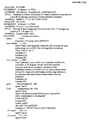
- the pLOI295 plasmid map is illustrated in the map in Figure 1.
- a 3.6 kbp Bam HI DNA fragment containing the rbcLS promoter region and the pdc-adh sequences were then excised from pRpa and ligated into the Bam HI site of the shuttle vector pCB4 (Gendel et al., (1983) "Shuttle Cloning Vectors for the Cyanobacterium Anacystis Nidulans", J. Bacteriol, 156: 148-154) resulting in the vector construct pCB4-Rpa.
- the shuttle vector pCB4 contains genes encoding ampicillan resistance.
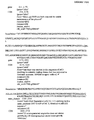
- the vector construct pCB4-Rpa is illustrated in Figure 2.
- a 3.6 kbp Bam HI DNA fragment from pRpa was ligated into a modified version of pCB4.
- the modified version of pCB4 is constructed by ligating a 220 bp Pvu II -Bam HI DNA fragment from the plasmid pBS (Stratagene Inc., 11011 North Torrey Pines Road, La Jolla, California, U.S.A. 92037), which fragment contains the lacZ promoter region from Escherichia coli, into the modified XbaI-BamHI sites of the pCB4 multi-cloning site. (Soltes-Rak E et al.
- the pdc-adh coding region is driven by a combination of the rbcLS and lacZ promoter regions, as in pCB4-LRpa, but in this construct the Zymomonas mobilis pdc ribosome binding site and start codon have been removed and replaced with the corresponding DNA region of the rbcL sequence from Synechococcus PCC 7942 to generate a translation fusion product.
- the pdc-adh DNA segment in pLOI295 plasmid is amplified and modified by PCR using the forward primer identified as SEQ ID No. 3 (containing an Eco RI site) and reverse primer identified as SEQ ID No. 4 (containing Bam HI and Xho I sites ) .
- the PCR reaction mixture was as described above for Example 1.
- the temperature cycles were as follows: 93 °C/5 min; 4 cycles of 93°C/1 min, 56°C/1.5 min, 72°C/3.5 min; 30 cycles of 93°C/1 min, 65°C/1.5°C, 72°C/3.5 min; 72 ° C/5 min.
- the 3.1 kbp PCR product was then ligated into pRBCp at the EcoRI-XhoI sites (double - cut) to generate plasmid pR(TF)pa (TF as in Translation Fusion).
- the cloning for translation fusion generated an extra codon AAT (asparagine) immediately after the initiation codon and the original second codon, AGT in pdc open reading frame was replaced by TCT to code the same amino acid (serine).
- This new plasmid was digested with Xho I , the cut sites blunt ended with Klenow fragment from DNA pol I , and then digested with Xba I.
- the vector pCB4-Rpa was digested with XbaI, end-filled with Klenow fragment of DNA polymerase I and re-digested with EcoRI to delete the rbcLS promoter.
- the vector was then ligated to a PstI-EcoRI fragment containing the CI857 repressor gene and P L promoter sequence, collectively termed the cI-PL gene sequence (EMBL Accession No. L05669; Sanger et al. Nucleotide sequence of the bacteriophage lambda DNA. 1982, J. Mole. Biol. 162: 729-773) and identified as SEQ. ID. No. 7.
- the P L promoter had been isolated from the plasmid pHUB2-CI857 (Gruber et al. (1991)) " Escherichia coli-Anacystis nidulans plasmid shuttle vectors containing the P L promoter from bacteriophage lambda.” Curr. Microbio. 22:15-19). The vector was litigated by digestion with PstI, end-filling with Klenow and a second digestion with EcoRI. The recombinant plasmid is designated as pCB4-CPpa.
- ml -1 Cells are incubated in the dark for 8 hours followed by a 16 h light incubation prior to plating on BG-11 plates containing 1 ⁇ g.ml -1 ampicillin. Plates are incubated under the standard growth conditions (30°C. light intensity of 100 ⁇ mol photons. m -2 .s -1 ). Ampicillin resistant colonies were visible in 7-10 days.
- Figures 6 and 7 illustrate the pdc activity and adh expression, respectively, for Example 4.
- the activity of pdc was measured by determining the rate of pyruvic acid dependent reduction of NAD + with yeast with adh as the coupling enzyme as previously described in Conway et al. , J. Bacteriology 169:2591-2597 (1987).
- Adh was measured for Examples 1, 2 and 3 by determining the rate of ethanol dependent NADH oxidation as described in Neale et. al., Eur. J. Biochem. 154: 119-124 (1986).
- Ethanol was assayed using a standard Ethanol Assay kit obtained from Boehringer Mannheim Canada, Laval, Quebec.
- Table 1 Constructs PDC Activity nmol.min. -1 .mg -1 SP 1 ADH Activity nmol.min. -1 .mg -1 SP Ethanol Conc. in medium ( ⁇ M) 3 Ethanol Conc. in ⁇ moL.mg -1 Chlorophyll pCB4 4 ND 2 ND ND ND pCB4-Rpa 130 168 1370 274 pCB4-LRpa 136 168 1540 308 pCB4-LR(TF)pa 234 168 1710 342 1 SP, soluble protein. 2 ND, not detectable.
- Synechococcus PCC 7942 cells were transformed with the vector pCB4-CPpa.
- the transformed cells were first grown at 30 degrees Celsius as set out above and then transferred to 42 degrees Celsius for 48 hours. Cells were harvested at intervals to assay pdc activity. As shown in Figure 6, pdc activity was induced at 42 degrees, reaching a 20-fold increase at 48 hours after the temperature shift. Surprisingly, the pdc activity induced at 42 degrees Celsius with the pCB4-CPpa vector after 48 hours was approximately 2000 nmol.min.
Landscapes
- Life Sciences & Earth Sciences (AREA)
- Chemical & Material Sciences (AREA)
- Engineering & Computer Science (AREA)
- Organic Chemistry (AREA)
- Zoology (AREA)
- Biotechnology (AREA)
- Health & Medical Sciences (AREA)
- Microbiology (AREA)
- Wood Science & Technology (AREA)
- General Chemical & Material Sciences (AREA)
- Chemical Kinetics & Catalysis (AREA)
- Biochemistry (AREA)
- Bioinformatics & Cheminformatics (AREA)
- General Engineering & Computer Science (AREA)
- General Health & Medical Sciences (AREA)
- Genetics & Genomics (AREA)
- Natural Medicines & Medicinal Plants (AREA)
- Botany (AREA)
- Developmental Biology & Embryology (AREA)
- Environmental Sciences (AREA)
- Micro-Organisms Or Cultivation Processes Thereof (AREA)
- Preparation Of Compounds By Using Micro-Organisms (AREA)
Abstract
Description
- This invention relates to the genetic modification of Cyanobacteria for the production of ethanol. In particular, this invention relates to the genetic modification of Synechococcus by incorporating the genetic information encoding for pyruvate decarboxylase (pdc) and alcohol dehydrogenase (adh).
- Ethanol is an energy source which is particularly attractive because it can be utilized with little waste. In addition, ethanol derived from living organisms is an attractive alternative to petroleum based fuels because it is a renewable resource.
- A number of alternatives for the production of ethanol from living organisms have been investigated using microorganisms.
- The production of ethanol by microorganisms has, in large part, been investigated using the yeast Saccharomyces and bacteria Zymomonas, which is a facultative anaerobic. Both of these microorganisms contain the genetic information to produce enzymes pdc and adh, which enzymes are used to produce ethanol from pyruvate, a product of the glycolytic pathway.
- U.S. Patent 4,242,455 to Muller et al. describes a continuous process in which an aqueous slurry of carbohydrate polymer particles, such as starch granules and/or cellulose chips, fibres, etc., are acidified with a strong inorganic acid to form a fermentable sugar. The fermentable sugar is then fermented to ethanol with at least two strains of Saccaromyces. U.S. Patent 4,350,765 to Chibata et al. describes a method of producing ethanol in a high concentration by using an immobilized Saccharomyces or Zymomonas and a nutrient culture broth containing a fermentative sugar. U.S. Patent 4,413,058 to Arcuri et al. describes a new strain of Zymomonas mobilis which is used to produce ethanol by placing the microorganism in a continuous reactor column and passing a stream of aqueous sugar through said column.
- PCT Application WO/88/09379 to Hartley et al. describes the use of facultative anaerobic thermophilic bacteria strains which produce ethanol by fermenting a wide range of sugars, including cellobiose and pentoses. These bacteria strains contain a mutation in lactate dehydrogenase. As a result, these strains which would normally produce lactate under anaerobic conditions, produce ethanol instead.
- In addition, Escherichia coli has been genetically altered to produce ethanol by inserting the genetic material encoding for the adh and pdc enzymes using the pLOI295 plasmid. The genetic material encoding thepdc enzyme was isolated from Zymomonas mobilis. This altered Escherichia coli produces ethanol; however, it still requires a variety of organic substrates for bacterial metabolism and growth. (Ingram, et al. (1987), "Genetic Engineering of Ethanol Production in Escherichia coli" (Appl. Environ Microbiol. 53: 2420-2425)
- All of the above prior art describe microorganisms which utilize a carbohydrate/sugar substrate to produce ethanol. As such, these processes are costly because a feed substrate of carbohydrates/sugars is required in order for the microorganisms to be able to produce ethanol. Hence, the cost of these systems is a deterrent to the refinement and scale up of such systems for the production of ethanol.
- It is highly desirable to find a microorganism which can effectively produce ethanol wherein said microorganism requires minimal feed substrate.
- In the present invention, there is provided genetically modified photosynthetic Cyanobacteria which are capable of producing ethanol. The Cyanobacteria are genetically modified by the insertion of DNA fragments encoding the enzymes pdc and adh. Consequently, the enzymes pdc and adh are produced in vivo by the genetically modified Cyanobacteria; which enzymes convert pyruvate to acetaldehyde and acetaldehyde to ethanol, respectively. In particular, Synechococcus is a preferred Cyanobacteria of the present invention. In a preferred embodiment, transformed Synechococcus produce ethanol in recoverable quantities of at least 1.7 µmol of ethanol per mg of chlorophyll per hour.
- The provided genetically modified Cyanobacteria contain constructs comprising a temperature inducible gene so that the ethanol is produced only once a particular temperature is reached. The construct comprises the CI857 temperature inducible gene. The CI857 temperature inducible gene maybe used in the form of the CI-PL promoter, EMBL Accessive No. L05669, SEQ. ID. No. 7.
- The provided genetically modified Cyanobacteria which contain constructs comprising DNA fragments encoding the pdc and adh enzymes obtained from Zymomonas mobilis.
- In a further aspect of the present invention, the Cyanobacteria is Synechococcus PCC 7942 or other transformable strains capable of producing ethanol when a construct comprising DNA fragments encoding pdc and adh enzymes from the pLOI295 plasmid is transformed into the Synechococcus.
- The provided genetically modified Cyanobacteria contain constructs comprising DNA fragments from the Zymomonas mobilis plasmid pLOI295 encoding thepdc and adh enzymes wherein the DNA fragment encoding the pdc enzyme is listed in the European Molecular Biology Laboratories ("EMBL") as Accession No. M15393 and as described in Conway et al (1987) J. Bacterial 169: 949-954 SEQ. ID. No. 5, or a gene sequence that encodes the pdc enzyme and is capable of expression in Cyanobacteria.
- The provided genetically modified Cyanobacteria contain constructs comprising DNA fragments from the Zymomonas mobilis plasmid pLOI295 encoding the pdc and adh enzymes wherein the DNA fragment encoding the adh enzyme is adh II listed in the EMBL as Accession No. M15394 and as described in Conway et al. (1987) J. Bacterial 169: 2591-2597, SEQ. ID. No. 6 or a gene sequence that encodes the adh enzyme and that is capable of expression in Cyanobacteria.
- In another aspect of the present invention there is provided genetically modified Cyanobacteria capable of producing ethanol produced according to the following steps:
- a. selecting Cl-PL promoter;
- b. ligating said promotor to pdc and adh encoding DNA sequence;
- c. cloning said ligated promoter and said pdc and adh encoding DNA into an appropriate construct;
- d. transforming the construct into the Cyanobacteria
- In a preferred embodimentthe modified Cyanobacteria is a modified Synechococcus PCC 7942. Constructs produced according to these steps include the construct pCB4-CPpa.
- In the provided construct the DNA fragments encoding the pdc and adh enzymes are listed in EMBL as Accession No. M15393 and M15394, SEQ. ID. Nos. 5 and 6, respectively, or analogous sequences thereof that include encoding for thepdc enzyme and the adh enzyme, respectively.
- In the provided constructs encoding the pdc and adh enzymes the constructs include a temperature inducible gene CI857.
- The provided process for making genetically modified Cyanobacteria incorporate a construct including a CI-PL promoter and encoding the pdc and adh enzymes from the Zymomonas mobilis pL01295 plasmid, or other suitable source of pdc and adh enzymes, according to the following steps:
- a. harvesting cells of the Cyanobacteria;
- b. adding the construct to the harvested Cyanobacteria cells;
- c. incubating the construct and the Cyanobacteria cells such that the construct is transformed into the Cyanobacteria cells;
- d. plating the incubated constructs and Cyanobacteria cells on plates containing ampicillin and incubating under appropriate growth conditions;
- e. selecting the transformed ampicillin resistant Cyanobacteria cells.
- The provided process for producing ethanol using genetically modified Cyanobacteria comprises the steps of: culturing in a culture medium Cyanobacteria, wherein the Cyanobacteria contains a construct comprising DNA fragments encodingpdc and adh enzymes obtained from the Zymomonas mobiles pLOI295 and accumulating ethanol in the culture medium. The process for producing ethanol includes a construct which comprises a temperature inducible gene and the process comprises the further step of increasing the temperature of the culture medium to induce expression of the p d c and adh genes.
- The invention will now be better understood with reference to the following figures and examples, and corresponding description, which are illustrative of preferred embodiments of the invention. The invention should not be limited by the drawings.
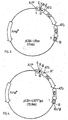
- Figure 1 is an illustration of the map of the plasmid pLOI295 containing the DNA fragments encoding forpdc and adh.
- Figure 2 is an illustration of the map of the plasmid construct pCB4-Rpa.
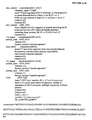
- Figure 3 is an illustration of the map of the plasmid construct pCB4-LRpa.
- Figure 4 is an illustration of the map of the plasmid construct pCB4-LR(TF)pa.
- Figure 5 is an illustration of the map of the plasmid construct pCB4-CPpa.
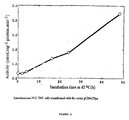
- Figure 6 is an illustration of a graph of the incubation time of Synechococcus PCC 7942 cells transformed with the vector pCB4-CPpa. at 42 degrees Celsius versus the activity of pyruvate decarboxylase.
- Figure 7 is an illustration of the induction of adh expression at 42 degrees Celsius for SynechococcusPCC 7942 as compared to E. coli and wild type Synechococcus.
- Figure 8 is an illustration of the induction time of Synechococcus PCC 7942 versus ethanol production in Synechococcus PCC 7942 in cells transformed with pCB4-Rpa.
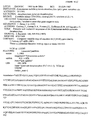
- Figure 9 is a description of the pdc gene identified as SEQ ID. No. 5.
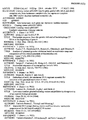
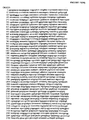
- Figure 10 is a description of the adh gene identified as SEQ. ID. No. 6.
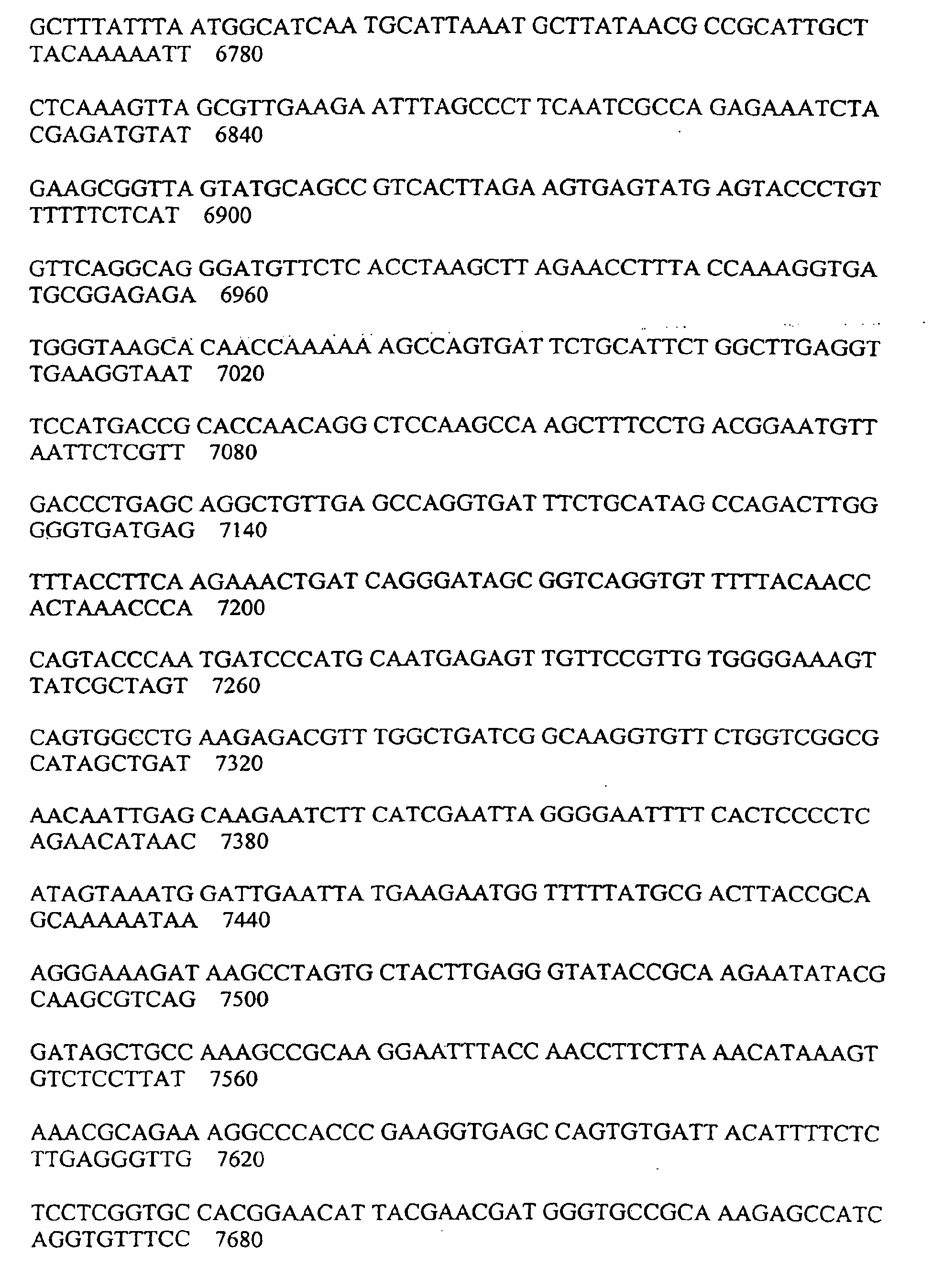
- Figure 11 is a description of the CI-PL promoter identified as SEQ. ID. No. 7.
- All like letter designations refer to the same sites on the different maps of the plasmid constructs in the figures as follows: AMPR (ampicillin resistant); PDC (pyruvate decarboxylase); ADH (alcohol dehydrogenase); ATG (start codon); L (lacZ promoter); R (rbcLS promoter); R' (EcoRI); B (BamHI); S (SalI); X (XbaI); X/P (XbaI/PvuII fusion); Xh/B (XhoI/BamHI fusion); T (transcription terminator) and CI-PL (temperature inducible gene and bacterial phage left-ward promoter).
- Cyanobacteria are photosynthetic bacteria which require light, inorganic elements, water and a carbon source, generally CO2, to metabolise and grow.
- Cyanobacteria are photosynthetic procaryotes which carry out oxygenic photosynthesis. The main product of the metabolic pathway of Cyanobacteria during aerobic conditions is oxygen and carbohydrate reserves.
- The initial product of photosynthetic fixation of CO2 is 3-phosphoglycerate. 3-phosphoglycerate is used in the Calvin Cycle to regenerate ribulose-1,5-biphosphate, which is the acceptor of CO2. There are two major branching points where the intermediates of the Calvin Cycle are connected to other metabolic pathways. At one point, fructose-6-phosphate is converted into glucose-6-phosphate and glucose-phosphate, which are the substrates for the pentose phosphate pathway, the synthesis of cellulose (a major component of the cell wall) and the synthesis of glycogen (the major form of carbohydrate reserve). At the other branching point, 3-phosphoglycerate is converted into 2-phosphoglycerate, phosphoenolpyruvate and pyruvate in a sequence of reactions catalysed by phosphoglycerate mutase, enolase and pyruvate kinase, respectively. Pyruvate is directed to the partial TCA cycle for the synthesis of amino acids, nucleotides, etc. in aerobic conditions. Pyruvate is also the substrate for ethanol synthesis.
- To convert the carbohydrate reserves into ethanol, the carbohydrate reserves must be diverted to the glycolytic pathway. The presumed pathway for carbohydrate reserve metabolism in Cyanobacteria is through both the glycolytic pathway and the phosphogluconate pathway. For the purposes of ethanol formation, the glycolytic pathway is of primary importance. Although not well characterized in Cyanobacteria, glycogen is presumed to be metabolized into glucose 1 - phosphate by a combination of glycogen phosphorylase and a 1,6-glycosidase. Phosphoglucomutase, phosphoglucoisomerase and phosphofructokinase convert glucose 1-phosphate into a molecule of fructose1,6-bisphosphate. This compound is cleaved by the action of aldolase and triose phosphate isomerase into two molecules of glyceraldehyde 3-phosphate. This compound is converted into pyruvate through sequential series of reactions catalysed by glyceraldehyde 3-phosphate dehydrogenase, phosphoglycerate kinase, phosphoglycerate mutase, enolase and pyruvate kinase, respectively.
- In some algae and Cyanobacteria strains, a small amount of ethanol is synthesized as a fermentation product under dark and anaerobic conditions (Van der Oost et al., 1989; Heyer and Krumbein, 1991). However, the dark-anaerobic fermentation process is generally operating at a very low level, only sufficient for the survival of the organisms under such stress conditions. The synthesis of ethanol under dark and anaerobic conditions is dependent on the degradation of glycogen reserve, as described above. Moreover, it has been found that ethanol synthesis under anaerobic conditions is totally inhibited by light. Thus, in photosynthetic microorganisms ethanol synthesis is not coupled with photosynthesis and can actually be inhibited by photosynthesis.
- Therefore, it has been observed that Cyanobacteria do not utilize CO2 to produce ethanol. Furthermore, there are no known photosynthetic microorganisms, including genetically engineered photosynthetic microorganisms, which produce ethanol in relatively substantial amounts. A further complication is that some photosynthetic organisms have been shown to be inhibited by ethanol such that the addition of ethanol to the culture medium inhibits the expression of genes involved in photosynthesis.
- In the present invention, it has been found that Cyanobacteria can be successfully genetically engineered to utilize a direct flux of carbon from CO2 to 3-phosphoglycerate, and to pyruvate, to produce a quantifiable amount of ethanol as opposed to utilizing a glycogen reserve as is done under anaerobic and dark conditions.
- It has been found that Cyanobacteria can be genetically modified by introducing genes encoding for the enzymes pdc and adh to produce ethanol. In particular, a pathway for ethanol synthesis has been created in Synechococcus PCC 7942, and this pathway is directly coupled with photosynthesis.
- By incorporating the genetic material encoding the pdc and adh enzymes into the Synechococcus genetic material, a Synechococcus capable ofproducing ethanol is created. It was surprisingly found that pdc and adh enzymes from an obligate anaerobe, Z. mobilis, could be successfully inserted, expressed and be fully functional in Synechoccocus. Although pdc and adh enzymes from Z. mobilis had been transformed into E. coli. As described in Ingram, et al. (1987), "Genetic Engineering of Ethanol Production in Escherichia coli" (Appl. Environ Microbiol. 53: 2420-2425), E. coli is a facultative anaerobic, it has an inducible adh gene and it is grown in a carbohydrate medium and said carbohydrates are used to produce ethanol. On the other hand, Cyanobacteria are photosynthetic organisms and are recalcitrant to taking up organic substances for any purpose, including growth or ethanol production. Hence, E. coli is a very different system than Cyanobacteria. E. coli is more like Z. mobilis which depends on feed stock for growth and ethanol production. There are other sources of pdc and adh enzymes, including Saccharomyces cerevisciae.
- It has also been found that ethanol synthesis may compete with cell growth for the use of carbon. Therefore, it would be beneficial to have an inducible system for ethanol synthesis so that cell growth and ethanol synthesis could be carried out in two phases. During the first phase, Cyanobacteria cells are cultured under non-induced conditions, so that the cell culture can reach a high density and accumulate a large amount of carbohydrates. Ethanol synthesis is then induced in the second phase.
- In particular it was discovered that a temperature inducible system could be successfully developed to induce the production of ethanol in Cyanobacteria. A pdc-adh operon with the bacterial phage left-ward promoter (PL) and a temperature sensitive repressor gene CI857 were employed to produce a temperature inducible system for producing ethanol in Cyanobacteria.
- It is believed that at a non-permissible temperature (low temperature, 30 degrees Celsius), the repressor binds to the operator sequence, and thus prevents RNA polymerase from initiating transcription at the PL promoter. Therefore, the expression of pdc-adh genes is repressed. When the cell culture is transferred to a permissible temperature (37-42 degrees Celsius), the repressor can not bind to the operator. Therefore, RNA polymerase can initiate the transcription of the pdc-adh gene.
- The Examples below exemplify the four different constructs: pCB4-Rpa, pCB4-LRpa, pCB4-LR(TF)pa and pCB4-CPpa: the synthesis of these constructs; the incorporation of these constructs into Synechococcus PCC 7942 and the production of ethanol from said genetically modified Synechococcus. Other transformable strains of Synechococcus which are capable of producing ethanol when a construct containing DNA encoding the adh and pdc enzyme is transformed into the Synechococcus may also be used.
- In the examples below, Synechococcus PCC 7942 , which is available from the Pasteur Culture Collection, Rue de Dr. Roux, Paris, France, was used. The genes encoding the pdc and adh enzymes of Zymomonas mobilis were excised from the pLOI295 plasmid, which is available from Dr. L. O. Ingram, Dept. of Microbiology and Cell Science, University of Florida, Gainsville, Florida, U.S.A. 32611. (See also: Ingram et al., (1987) "Genetic Engineering of Ethanol Production in Escherichia coli" Appl. Environ Microbial 53: 2420-2425). A map of the pLOI295 plasmid is illustrated in Figure 1. In particular, the DNA segment excised from the pLOI295 plasmid includes the pdc sequence starting at -46bp (relative to the transcription start site) to a position +27 bp after the translation stop codon and is listed in EMBL as Accession No. M15393 and the DNA adh sequence starting from -31 bp up from the ATG initiation codon to +164 bp after the translation stop codon, which is listed in EMBL as Accession No. M15394.
- The pCB4-Rpa construct is driven by a promoter obtained from the rbcLS operon of the cyanobacterium Synechococcus PCC 7942. The promoter sequence from the rbcLS operon was amplified from Synechococcus PCC 7942 by the polymerase chain reaction (PCR) using the forward primer identified as SEQ ID No. 1 (containing a BamHI site) and the reverse primer identified as SEQ ID No. 2 (containing an EcoRI site). These primers were designed according to the rbcL gene sequence obtained from the
cyanobacterium Anacystis nidulan 6301, a strain genetically similar to Synechococcus PCC 7942. (Shinozaki K. et al. (1983) "Molecular cloning and sequence analysis of the Cyanobacteria gene for the large subunit of ribulose-1,5-bisphosphate carboxylase-oxygenase." Proc Natl Acad Sci USA 80:4050-4054). The PCR reaction mixture (100µl) contained 0.5µM of each primer, 0.4 mM dNTP, 10 ng genomic DNA from Synechococcus sp.PCC 7942 and 2 units of VentR DNA plolymerase (New England Biolabs) in 1 x reaction buffer: 10mM KC1, 10mM (NH4)2SO4, 20mM Tris-HCl (pH 8.8 at 25°C), 2mM MgCl2 and 0.1% Triton X-100. PCR reactions were carried out in PTC-100TM Programmable Thermal Controller (MJ Research, Inc.) by using the temperature cycles as follows: 93°C/3 min; 30 cycles of 93 °C/1 min, 62°C/1.5 min, 72°C/0.5 min; 72°C/5. The PCR product of expected size was cloned into the BamHI-EcoRI sites of the plasmid pBlueScript SK (Stratagene Inc.) to generate a plasmid designated pRBCp. - A 3.2 kbp EcoRI-SalI DNA fragment containing the pdc-adh sequence from Zymomonas mobilis was isolated from the pLOI295 plasmid and ligated into the corresponding sites of pRBCp to generate the plasmid pRpa. The pLOI295 plasmid map is illustrated in the map in Figure 1. A 3.6 kbp BamHI DNA fragment containing the rbcLS promoter region and the pdc-adh sequences were then excised from pRpa and ligated into the BamHI site of the shuttle vector pCB4 (Gendel et al., (1983) "Shuttle Cloning Vectors for the Cyanobacterium Anacystis Nidulans", J. Bacteriol, 156: 148-154) resulting in the vector construct pCB4-Rpa. The shuttle vector pCB4 contains genes encoding ampicillan resistance. The vector construct pCB4-Rpa is illustrated in Figure 2.
- A 3.6 kbp BamHI DNA fragment from pRpa was ligated into a modified version of pCB4. The modified version of pCB4 is constructed by ligating a 220 bp PvuII-BamHI DNA fragment from the plasmid pBS (Stratagene Inc., 11011 North Torrey Pines Road, La Jolla, California, U.S.A. 92037), which fragment contains the lacZ promoter region from Escherichia coli, into the modified XbaI-BamHI sites of the pCB4 multi-cloning site. (Soltes-Rak E et al. (1993) "Effect of promoter modification on mosquitocidal cryIVB gene expression in Synechococcus sp. strain PCC 7942." Appl Environ Microbio. 59: 2404-2410). The 3.6 kbp DNA fragment is then ligated into the modified version of pCB4 resulting in the vector construct pCB4-LRpa. The vector construct pCB4-LRpa is illustrated in Figure 3.
- The pdc-adh coding region is driven by a combination of the rbcLS and lacZ promoter regions, as in pCB4-LRpa, but in this construct the Zymomonas mobilis pdc ribosome binding site and start codon have been removed and replaced with the corresponding DNA region of the rbcL sequence from Synechococcus PCC 7942 to generate a translation fusion product.
- The pdc-adh DNA segment in pLOI295 plasmid is amplified and modified by PCR using the forward primer identified as SEQ ID No. 3 (containing an EcoRI site) and reverse primer identified as SEQ ID No. 4 (containing BamHI and XhoI sites). The PCR reaction mixture was as described above for Example 1. The temperature cycles were as follows: 93 °C/5 min; 4 cycles of 93°C/1 min, 56°C/1.5 min, 72°C/3.5 min; 30 cycles of 93°C/1 min, 65°C/1.5°C, 72°C/3.5 min; 72 ° C/5 min. The 3.1 kbp PCR product was then ligated into pRBCp at the EcoRI-XhoI sites (double - cut) to generate plasmid pR(TF)pa (TF as in Translation Fusion). The cloning for translation fusion generated an extra codon AAT (asparagine) immediately after the initiation codon and the original second codon, AGT in pdc open reading frame was replaced by TCT to code the same amino acid (serine). This new plasmid was digested with XhoI, the cut sites blunt ended with Klenow fragment from DNA polI, and then digested with XbaI. This DNA fragment containing rbc-(TF)pdc-adh was then ligated into pCB4-lac which had been prepared by digestion with BamHI, blunt ended with Klenow, and redigested with XbaI. The resulting plasmid is designated pCB4-LR(TF)pa and is illustrated in Figure 4.
- The vector pCB4-Rpa was digested with XbaI, end-filled with Klenow fragment of DNA polymerase I and re-digested with EcoRI to delete the rbcLS promoter. The vector was then ligated to a PstI-EcoRI fragment containing the CI857 repressor gene and PL promoter sequence, collectively termed the cI-PL gene sequence (EMBL Accession No. L05669; Sanger et al. Nucleotide sequence of the bacteriophage lambda DNA. 1982, J. Mole. Biol. 162: 729-773) and identified as SEQ. ID. No. 7. The PL promoter had been isolated from the plasmid pHUB2-CI857 (Gruber et al. (1991)) "Escherichia coli-Anacystis nidulans plasmid shuttle vectors containing the PL promoter from bacteriophage lambda." Curr. Microbio. 22:15-19). The vector was litigated by digestion with PstI, end-filling with Klenow and a second digestion with EcoRI. The recombinant plasmid is designated as pCB4-CPpa.
- Each of the four constructs of Examples 1, 2, 3 and 4 were incorporated into the Synechococcus PCC 7942.
- The constructs of Examples 1, 2, 3 and 4 were incorporated into the Synechococcus PCC 7942 using a standard protocol as set out in Golden SS et al. (1987) "Genetic engineering of the Cyanobacteria chromosome" Methods Enzymol 153: 215-231 and in S.S. Golden and L.A. Sherman, J. Bacteriology 158:36 (1984), incorporated herein by reference. Briefly, cells of Synechococcus PCC 7942 are harvested by centrifugation and re-suspended in BG-11 medium at a concentration of 2-5
X 108 cells per ml. To one ml of this cell solution is added the appropriate plasmid construct DNA to a final concentration of 2µg. ml-1. Cells are incubated in the dark for 8 hours followed by a 16 h light incubation prior to plating on BG-11 plates containing 1 µg.ml-1 ampicillin. Plates are incubated under the standard growth conditions (30°C. light intensity of 100 µmol photons. m-2.s-1). Ampicillin resistant colonies were visible in 7-10 days. - The genetically modified Synechococcus PCC 7942 were grown, bubbling with air at 30 and a light intensity of 100 µE M-2.s-1 in liquid BG-11 medium containing 5 µg.ml-1 ampicillin (Soltes-Rak E et al. (1993) "Effect of promoter modification on mosquitocidal cryIVB gene expression in Synechococcus sp. strain PCC 7942." Appl Environ Microbio. 59: 2404-2410) The activity of pdc, adh and the production of ethanol were measured as set out in Table 1 below for Examples 1, 2 and 3. The ethanol production for Example 3 is also illustrated in Figure 8. Table 2 illustrates the ethanol production for Example 4. Figures 6 and 7 illustrate the pdc activity and adh expression, respectively, for Example 4. The activity of pdc was measured by determining the rate of pyruvic acid dependent reduction of NAD+ with yeast with adh as the coupling enzyme as previously described in Conway et al., J. Bacteriology 169:2591-2597 (1987). Adh was measured for Examples 1, 2 and 3 by determining the rate of ethanol dependent NADH oxidation as described in Neale et. al., Eur. J. Biochem. 154: 119-124 (1986). Ethanol was assayed using a standard Ethanol Assay kit obtained from Boehringer Mannheim Canada, Laval, Quebec. The results of the tests for pdc and adh activity and ethanol production for the constructs of Examples 1-3 are illustrated in Table 1.
Table 1 Constructs PDC Activity nmol.min.-1.mg-1 SP1 ADH Activity nmol.min.-1.mg-1 SP Ethanol Conc. in medium (µM)3 Ethanol Conc. in µmoL.mg-1 Chlorophyll pCB44 ND2 ND ND ND pCB4-Rpa 130 168 1370 274 pCB4-LRpa 136 168 1540 308 pCB4-LR(TF)pa 234 168 1710 342 1 SP, soluble protein.
2 ND, not detectable.
3 Represents ethanol concentration in medium following 21 days growth in batch culture at a final cell density of OD7301.5. This OD represents approximately 5x10⁸ cells.ml-1. Values in table are an underestimation of ethanol concentration as some ethanol is lost from the unsealed culture vessels during aeration. Concentrations approximating 5 mM can be achieved following 28 days of growth.
4 Synechococcus PCC 7942 cells transformed with the shuttle vector pCB4 alone. - Synechococcus PCC 7942 cells were transformed with the vector pCB4-CPpa. The transformed cells were first grown at 30 degrees Celsius as set out above and then transferred to 42 degrees Celsius for 48 hours. Cells were harvested at intervals to assay pdc activity. As shown in Figure 6, pdc activity was induced at 42 degrees, reaching a 20-fold increase at 48 hours after the temperature shift. Surprisingly, the pdc activity induced at 42 degrees Celsius with the pCB4-CPpa vector after 48 hours was approximately 2000 nmol.min.-1.mg-1 SP, which is about 20-fold higher than in the strain harboring the shuttle vector pCB4-Rpa which had a pdc activity of approximately 130 nmol.min.-1.mg-1 SP as can be seen in Figure 6 and Table 1, respectively.
- The impact of temperature shift on ethanol synthesis was studied in liquid batch culture. The rate of ethanol synthesis at 42 degrees Celsius was 1.7 µmol ethanol per mg of chlorophyll per hour. As such, it was 5-times higher at 42 degrees than at 30 degrees Celsius, as can be seen in Table 2.
Table 2 Effect of temperature shift on Ethanol Synthesis Synechococcus PCC 7942 cells transformed with the shuttle vector pCB4-CPpa were first grown at 30 deg. Celsius in the light, harvested at log phase and resuspended into a fresh medium at a cell density of 4.3 µg chlorophyll per ml. The resuspended cells were grown for 48 h in the light at 30 deg. Celsius and 42 deg. Celsius, respectively. The value in the brackets indicates the S.D. for 4 different samples. Temperature Ethanol Conc. (µmol.mg-1chlorophyll) Rate of Ethanol Synthesis (µmol.mg-1chlorophyll per hr) 30 16(0.9) 0.33 42 82(8.9) 1.70 - The above examples are intended to exemplify the invention. It is understood by the skilled workman in the art that various modifications and alterations may be made without departing from the scope of the invention and as set out in the claims attached hereto.
-
- (1) GENERAL INFORMATION:
- (i) APPLICANT:
- (A) NAME: Enol Energy Inc.
- (B) STREET: 202-80 Tiverton Court
- (C) CITY: Markham
- (D) STATE: Ontario
- (E) COUNTRY: CANADA
- (F) POSTAL CODE (ZIP): L3R 0G4
- (A) NAME: Robert Paul Woods
- (B) STREET: 11 Albert Street
- (C) CITY: Markham
- (D) STATE: Ontario
- (E) COUNTRY: CANADA
- (F) POSTAL CODE (ZIP): L3P 2T3
- (A) NAME: John Robert Coleman
- (B) STREET: 2 Glencrest Coulevard
- (C) CITY: Toronto
- (D) STATE: Ontario
- (E) COUNTRY: CANADA
- (F) POSTAL CODE (ZIP): M4B 1L3
- (A) NAME: Ming De Deng
- (B) STREET: 132 Hollyberry Trail
- (C) CITY: North York
- (D) STATE: Ontario
- (E) COUNTRY: CANADA
- (F) POSTAL CODE (ZIP): M2H 2P1
- (ii) TITLE OF INVENTION: Genetically Modified Cyanobacteria for the Production of Ethanol, the Constructs and Method Thereof
- (iii) NUMBER OF SEQUENCES: 7
- (iv) COMPUTER READABLE FORM:
- (A) MEDIUM TYPE: Floppy disk
- (B) COMPUTER: IBM PC compatible
- (C) OPERATING SYSTEM: PC-DOS/MS-DOS
- (D) SOFTWARE: Patentln Release #1.0, Version #1.30 (EPO)
- (i) APPLICANT:
- (2) INFORMATION FOR SEQ ID NO: 1:
- (i) SEQUENCE CHARACTERISTICS:
- (A) LENGTH: 29 base pairs
- (B) TYPE: nucleic acid
- (C) STRANDEDNESS: single
- (D) TOPOLOGY: linear
- (ii) MOLECULE TYPE: cDNA
- (xi) SEQUENCE DESCRIPTION: SEQ ID NO: 1:
GCTGAATTCA TGTCGTCTCT CCCTAGAGA 29
- (i) SEQUENCE CHARACTERISTICS:
- (2) INFORMATION FOR SEQ ID NO: 2:
- (i) SEQUENCE CHARACTERISTICS:
- (A) LENGTH: 29 base pairs
- (B) TYPE: nucleic acid
- (C) STRANDEDNESS: single
- (D) TOPOLOGY: linear
- (ii) MOLECULE TYPE: cDNA
- (xi) SEQUENCE DESCRIPTION: SEQ ID NO: 2:
GCTGAATTCA TGTCGTCTCT CCCTAGAGA 29
- (i) SEQUENCE CHARACTERISTICS:
- (2) INFORMATION FOR SEQ ID NO: 3:
- (i) SEQUENCE CHARACTERISTICS:
- (A) LENGTH: 25 base pairs
- (B) TYPE: nucleic acid
- (C) STRANDEDNESS: single
- (D) TOPOLOGY: linear
- (ii) MOLECULE TYPE: cDNA
- (xi) SEQUENCE DESCRIPTION: SEQ ID NO: 3:
GGACTCGAGG ATCCCCAAAT GGCAA 25
- (i) SEQUENCE CHARACTERISTICS:
- (2) INFORMATION FOR SEQ ID NO: 4:
- (i) SEQUENCE CHARACTERISTICS:
- (A) LENGTH: 29 base pairs
- (B) TYPE: nucleic acid
- (C) STRANDEDNESS: single
- (D) TOPOLOGY: linear
- (ii) MOLECULE TYPE: cDNA
- (xi) SEQUENCE DESCRIPTION: SEQ ID NO: 4:
GCATGAATTC TTATACTGTC GGTACCTAT 29
- (i) SEQUENCE CHARACTERISTICS:
- (2) INFORMATION FOR SEQ ID NO: 5:
- (i) SEQUENCE CHARACTERISTICS:
- (A) LENGTH: 1905 base pairs
- (B) TYPE: nucleic acid
- (C) STRANDEDNESS: single
- (D) TOPOLOGY: linear
- (ii) MOLECULE TYPE: cDNA
- (xi) SEQUENCE DESCRIPTION: SEQ ID NO: 5:


- (i) SEQUENCE CHARACTERISTICS:
- (2) INFORMATION FOR SEQ ID NO: 6:
- (i) SEQUENCE CHARACTERISTICS:
- (A) LENGTH: 1747 base pairs
- (B) TYPE: nucleic acid
- (C) STRANDEDNESS: single
- (D) TOPOLOGY: linear
- (ii) MOLECULE TYPE: DNA (genomic)
- (xi) SEQUENCE DESCRIPTION: SEQ ID NO: 6:


- (i) SEQUENCE CHARACTERISTICS:
- (2) INFORMATION FOR SEQ ID NO: 7:
- (i) SEQUENCE CHARACTERISTICS:
- (A) LENGTH: 7922 base pairs
- (B) TYPE: nucleic acid
- (C) STRANDEDNESS: single
- (D) TOPOLOGY: linear
- (ii) MOLECULE TYPE: DNA (genomic)
- (xi) SEQUENCE DESCRIPTION: SEQ ID NO: 7:



- (i) SEQUENCE CHARACTERISTICS:
Claims (8)
- Genetically modified Cyanobacteria containing a construct comprising DNA fragments encoding pyruvate decarboxylase (pdc) and alcohol dehydrogenase (adh) enzymes obtained from Zymomonas mobilis and a promoter comprising a cI-PL promoter which is temperature inducible, wherein said Cyanobacteria are capable of producing ethanol in recoverable quantities of at least 1.7 µmol ethanol per mg of chlorophyll per hour at a temperature of 42°C.
- Genetically modified Cyanobacteria according to claim 1, wherein said construct is pCB4-CPpa. according to fig. 5.
- The genetically modified Cyanobacteria according to any of the claims 1 to 2, wherein said Cyanobacteria are Synechococcus.
- The genetically modified Cyanobacteria according to claim 3, wherein said Cyanobacteria are Synechococcus PCC 7942.
- A process for producing genetically modified Cyanobacteria according to claim 1 comprising the following steps:a. selecting a cI-PL promoter which is temperature inducible,;b. ligating said promoter to said pyruvate decarboxylase (pdc) and alcohol dehydrogenase (adh) enzyme encoding DNA fragments andc. cloning said ligated sequences comprising the promoter, pdc and adh sequences into an appropriate construct;d. transforming said construct into said Cyanobacteria.
- The process according to claim 5, wherein said construct further contains DNA fragments encoding ampicillin resistance and step d. comprises the steps of:a. harvesting cells of said Cyanobacteria;b. adding said construct to said harvested Cyanobacteria cells;c. incubating said construct with said Cyanobacteria cells such that said construct is transformed into said Cyanobacteria cells;d. plating said incubated constructs and Cyanobacteria cells on plates containing ampicillin and incubating under appropriate growth conditions;e. selecting said transformed ampicillin resistant Cyanobacteria cells.
- A process for producing ethanol which comprises the steps of: culturing in a culture medium Cyanobacteria, said Cyanobacteria containing a construct comprising DNA fragments encoding pyruvate decarboxylase (pdc) and alcohol dehydrogenase (adh) enzymes from Zymomonas mobilis and a promoter comprising a CI-PL promoter which is temperature inducible,; and accumulating ethanol in the culture medium in recoverable quantities of at least 1.7 µmol ethanol per mg of chlorophyll per hour at a temperature of 42°C.
- The process according to claim 7, wherein said construct is pCB4-CPpa according to Fig.5.
Priority Applications (1)
| Application Number | Priority Date | Filing Date | Title |
|---|---|---|---|
| EP07007335A EP1854889A1 (en) | 1997-02-19 | 1998-02-19 | Genetically modified cyanobacteria for the production of ethanol |
Applications Claiming Priority (3)
| Application Number | Priority Date | Filing Date | Title |
|---|---|---|---|
| US801331 | 1985-11-25 | ||
| US80133197A | 1997-02-19 | 1997-02-19 | |
| PCT/CA1998/000118 WO1998039457A1 (en) | 1997-02-19 | 1998-02-19 | Genetically modified cyanobacteria for the production of ethanol |
Related Child Applications (1)
| Application Number | Title | Priority Date | Filing Date |
|---|---|---|---|
| EP07007335A Division EP1854889A1 (en) | 1997-02-19 | 1998-02-19 | Genetically modified cyanobacteria for the production of ethanol |
Publications (2)
| Publication Number | Publication Date |
|---|---|
| EP0963439A1 EP0963439A1 (en) | 1999-12-15 |
| EP0963439B1 true EP0963439B1 (en) | 2007-04-11 |
Family
ID=25180826
Family Applications (2)
| Application Number | Title | Priority Date | Filing Date |
|---|---|---|---|
| EP07007335A Withdrawn EP1854889A1 (en) | 1997-02-19 | 1998-02-19 | Genetically modified cyanobacteria for the production of ethanol |
| EP98903956A Expired - Lifetime EP0963439B1 (en) | 1997-02-19 | 1998-02-19 | Genetically modified cyanobacteria for the production of ethanol |
Family Applications Before (1)
| Application Number | Title | Priority Date | Filing Date |
|---|---|---|---|
| EP07007335A Withdrawn EP1854889A1 (en) | 1997-02-19 | 1998-02-19 | Genetically modified cyanobacteria for the production of ethanol |
Country Status (10)
| Country | Link |
|---|---|
| US (2) | US6306639B1 (en) |
| EP (2) | EP1854889A1 (en) |
| AT (1) | ATE359371T1 (en) |
| AU (1) | AU6201498A (en) |
| CA (1) | CA2281953C (en) |
| DE (1) | DE69837531T2 (en) |
| DK (1) | DK0963439T3 (en) |
| ES (1) | ES2285759T3 (en) |
| PT (1) | PT963439E (en) |
| WO (1) | WO1998039457A1 (en) |
Families Citing this family (82)
| Publication number | Priority date | Publication date | Assignee | Title |
|---|---|---|---|---|
| AU5217599A (en) * | 1998-07-27 | 2000-02-21 | Genotypes, Inc. | Automatic eukaryotic artificial chromosome vector |
| US6780318B2 (en) * | 2000-10-30 | 2004-08-24 | Jerome Jay Fife | Method for recovering a disposal trench with a biomat slime, and method for operating a waste treatment vessel |
| NZ529910A (en) * | 2001-05-04 | 2007-03-30 | Univ Florida | Cloning and sequencing of pyruvate decarboxylase (PDC) genes from bacteria and uses therefor |
| US7807427B2 (en) * | 2005-09-15 | 2010-10-05 | The Regents Of The University Of California | Methods and compositions for production of methane gas |
| CN101395273A (en) * | 2006-01-13 | 2009-03-25 | 夏威夷大学 | Methods and compositions for producing ethanol using cyanobacteria |
| US7527941B1 (en) | 2006-05-24 | 2009-05-05 | Clear Water Technologies, Inc. | Process for producing ethyl alcohol from cellulosic materials |
| AP2724A (en) | 2006-07-21 | 2013-08-31 | Xyleco Inc | Conversion systems for biomass |
| US20080085341A1 (en) * | 2006-08-31 | 2008-04-10 | Battelle Memorial Institute | Methods and microorganisms for forming fermentation products and fixing carbon dioxide |
| WO2008039450A2 (en) * | 2006-09-25 | 2008-04-03 | James Weifu Lee | Designer organisms for photosynthetic production of ethanol from carbon dioxide and water |
| US7803601B2 (en) * | 2006-10-04 | 2010-09-28 | Board Of Regents, The University Of Texas | Production and secretion of glucose in photosynthetic prokaryotes (cyanobacteria) |
| WO2008042975A2 (en) * | 2006-10-04 | 2008-04-10 | Board Of Regents, The University Of Texas System | Compositions, methods and systems for producing saccharides in photosynthetic prokaryotes (cyanobacteria) |
| US20080124767A1 (en) * | 2006-10-04 | 2008-05-29 | Board Of Regents, The University Of Texas At Austin | Production and Secretion of Sucrose in Photosynthetic Prokaryotes (Cyanobacteria) |
| US20080085536A1 (en) * | 2006-10-04 | 2008-04-10 | Board Of Regents, The University Of Texas System | Production of Cellulose in Halophilic Photosynthetic Prokaryotes (Cyanobacteria) |
| US20080090283A1 (en) * | 2006-10-13 | 2008-04-17 | Rowan Universtity | Ethanol resistant and furfural resistant strains of E. coli FBR5 for production of ethanol from cellulosic biomass |
| US8753840B2 (en) | 2006-10-20 | 2014-06-17 | Arizona Board Of Regents On Behalf Of Arizona State University | Modified cyanobacteria |
| KR20090114352A (en) * | 2006-10-20 | 2009-11-03 | 아리조나 보드 오브 리젠츠 퍼 앤 온 비하프 오브 아리조나 스테이트 유니버시티 | Systems and Methods for Growing Photosynthetic Cells |
| US8323958B2 (en) | 2006-11-02 | 2012-12-04 | Algenol Biofuels Switzerland GmbH | Closed photobioreactor system for continued daily in situ production of ethanol from genetically enhanced photosynthetic organisms with means for separation and removal of ethanol |
| WO2008055190A2 (en) | 2006-11-02 | 2008-05-08 | Algenol Biofuels Limited | Closed photobioreactor system for production of ethanol |
| US9284568B2 (en) * | 2007-04-03 | 2016-03-15 | Tabletop Energy | Methods for transforming eukaryotic algae |
| CN101372669B (en) * | 2007-08-23 | 2011-12-28 | 旭利尔生物技术有限公司 | Cyanobacteria modified by gene engineering and use thereof for producing ethanol |
| WO2009036095A1 (en) * | 2007-09-10 | 2009-03-19 | Joule Biotechnologies, Inc. | Engineered light-harvesting organisms |
| MX2010005061A (en) * | 2007-11-10 | 2010-09-09 | Joule Unltd Inc | Hyperphotosynthetic organisms. |
| MX2010006539A (en) | 2007-12-11 | 2011-02-23 | Synthetic Genomics Inc | Secretion of fatty aicds by photosynthetic microorganisms. |
| MX2010006679A (en) | 2007-12-17 | 2010-11-30 | Univ Amsterdam | Light-driven co2 reduction to organic compounds to serve as fuels or as industrial half products by an autotroph containing a fermentative gene cassette. |
| EP2238231B1 (en) | 2008-01-03 | 2016-03-23 | Proterro, Inc. | Transgenic photosynthetic microorganisms and photobioreactor |
| US9650642B2 (en) | 2008-02-08 | 2017-05-16 | Algenol Biotech LLC | Genetically modified cyanobacteria for the production of ethanol |
| WO2009105714A2 (en) * | 2008-02-22 | 2009-08-27 | James Weifu Lee | Designer oxyphotobacteria and greehouse distillation for photobiological ethanol phoduction from carbon dioxide and water |
| US9259662B2 (en) | 2008-02-22 | 2016-02-16 | James Weifu Lee | Photovoltaic panel-interfaced solar-greenhouse distillation systems |
| US10093552B2 (en) | 2008-02-22 | 2018-10-09 | James Weifu Lee | Photovoltaic panel-interfaced solar-greenhouse distillation systems |
| AU2009217293B2 (en) * | 2008-02-23 | 2014-11-20 | James Weifu Lee | Designer organisms for photobiological butanol production from carbon dioxide and water |
| US8986963B2 (en) * | 2008-02-23 | 2015-03-24 | James Weifu Lee | Designer calvin-cycle-channeled production of butanol and related higher alcohols |
| EP2285948B1 (en) * | 2008-03-03 | 2014-01-08 | Joule Unlimited Technologies, Inc. | Engineered co2 fixing microorganisms producing carbon-based products of interest |
| US8048654B2 (en) | 2010-06-09 | 2011-11-01 | Joule Unlimited Technologies, Inc. | Methods and compositions for the recombinant biosynthesis of fatty acids and esters |
| WO2010011754A2 (en) * | 2008-07-22 | 2010-01-28 | Board Of Regents, The University Of Texas System | Continuous production and excretion of waxy products from photosynthetic organisms |
| WO2010030337A1 (en) * | 2008-09-09 | 2010-03-18 | Ofra Chen | Method and system for protection and cross protection of algae and cyanobacteria from virus and bacteriophage infections |
| CN103725717A (en) * | 2008-10-17 | 2014-04-16 | 焦耳无限科技公司 | Method of producing Microbiological ethyl alcohol |
| WO2010048568A1 (en) | 2008-10-23 | 2010-04-29 | Targeted Growth, Inc. | Modified photosynthetic microorganisms for producing triglycerides |
| WO2010062707A1 (en) * | 2008-10-30 | 2010-06-03 | Joule Unlimited, Inc. | Methods and compositions for producing carbon-based products of interest in micro-organisms |
| BRPI0923323A2 (en) | 2008-12-11 | 2015-08-11 | Joule Unltd Inc | Solar biofactory, photobioreactors, passive thermal regulation systems and product production methods. |
| US8835137B2 (en) | 2008-12-23 | 2014-09-16 | Matrix Genetics, Llc | Modified photosynthetic microorganisms with reduced glycogen and their use in producing carbon-based products |
| KR100913825B1 (en) * | 2009-02-23 | 2009-08-26 | 강원대학교산학협력단 | Ethanol production method using cyanobacteria in fresh water |
| WO2010135742A1 (en) * | 2009-05-22 | 2010-11-25 | Merial Limited | Antibiotic-free plasmid |
| FR2948125B1 (en) | 2009-07-17 | 2011-08-26 | Zoran Dermanovic | METHODS FOR ESTABLISHING SYMBIOSES |
| US20110020867A1 (en) * | 2009-07-20 | 2011-01-27 | Joule Unlimited, Inc. | Constructs And Methods For Efficient Transformation Of Micro-Organisms For Production Of Carbon-Based Products Of Interest |
| WO2011018116A1 (en) * | 2009-08-13 | 2011-02-17 | Algenol Biofuels Inc. | Metabolically enhanced photoautotrophic ethanol producing host cells, method for producing the host cells, constructs for the transformation of the host cells, and method of producing ethanol using the host cells |
| JP5769715B2 (en) | 2009-09-07 | 2015-08-26 | カウンスィル オブ サイエンティフィック アンド インダストリアル リサーチCouncil Of Scientific & Industrial Research | Integrated production process of ethanol and seaweed sap extracted from KAPPAPHYCUSALVAREZII (carrageenan algae) |
| TW201118170A (en) * | 2009-11-20 | 2011-06-01 | Ind Tech Res Inst | Expression vector for expressing recombinant protein in cyanobacterium |
| BR112012020684A2 (en) | 2010-02-17 | 2017-08-08 | Algenol Biofuels Inc | steam stripping steam compression. |
| WO2011127069A1 (en) | 2010-04-06 | 2011-10-13 | Targeted Growth, Inc. | Modified photosynthetic microorganisms for producing lipids |
| EP2655605A1 (en) | 2010-12-20 | 2013-10-30 | Matrix Genetics, LLC | Modified photosynthetic microorganisms for producing lipids |
| AU2011349463B2 (en) | 2010-12-20 | 2016-10-27 | Lumen Bioscience, Inc. | Modified photosynthetic microorganisms for producing lipids |
| US8993303B2 (en) | 2011-02-24 | 2015-03-31 | South Dakota State University | Genetically engineered cyanobacteria |
| MX2013009620A (en) * | 2011-02-25 | 2014-05-27 | Algenol Biofuels Inc | Magnetically coupled system for mixing. |
| WO2013029027A1 (en) * | 2011-08-24 | 2013-02-28 | Algenol Biofuels Inc. | Separation of productive biomass from non-productive biomass in bioreactors and methods thereof |
| EP2798056A1 (en) | 2011-12-30 | 2014-11-05 | Algenol Biofuels Inc. | Genetically enhanced cyanobacteria for the production of a first chemical compound harbouring zn2+, co2+ or ni2+ -inducible promoters |
| CN103361375B (en) * | 2012-04-05 | 2018-02-09 | 中国科学院青岛生物能源与过程研究所 | Construct, bacterial strain and the method for cyanobacteria biosynthesis ethanol |
| US9212358B2 (en) | 2012-06-15 | 2015-12-15 | Microvi Biotech, Inc. | Biocatalyst compositions and processes for their use |
| WO2014052920A2 (en) * | 2012-09-28 | 2014-04-03 | The Regents Of The University Of California | Methods of producing acetoin and 2,3-butanediol using photosynthetic microorganisms |
| WO2014092562A1 (en) * | 2012-12-11 | 2014-06-19 | Photanol B.V. | Synthesis of acetoin, 2,3-butanediol and 2-butanol by cyanobacteria by heterologous expression of a catabolic pathway |
| US8846369B2 (en) | 2012-12-21 | 2014-09-30 | Algenol Biofuels Inc. | Cyanobacterium sp. host cell and vector for production of chemical compounds in cyanobacterial cultures |
| US9157101B2 (en) * | 2012-12-21 | 2015-10-13 | Algenol Biotech LLC | Cyanobacterium sp. for production of compounds |
| WO2014100798A1 (en) * | 2012-12-21 | 2014-06-26 | Algenol Biofuels, Inc. | Novel shuttle vector capable of transforming multiple genera of cyanobacteria |
| WO2014164232A1 (en) | 2013-03-13 | 2014-10-09 | Matrix Genetics, Llc | Cyanobacteria that produce lipid packaging proteins |
| WO2014164566A2 (en) | 2013-03-13 | 2014-10-09 | Matrix Genetics, Llc | Cyanobacteria having improved photosynthetic activity |
| US20140273132A1 (en) | 2013-03-15 | 2014-09-18 | Algenol Biofuels Inc. | Process for Inoculating a Bioreactor with Cyanobacteria |
| DE102013208228A1 (en) | 2013-05-06 | 2014-11-06 | Siemens Aktiengesellschaft | A method of cultivating a microorganism in an in vitro culture and a method of producing a secondary metabolite |
| DE102013208227A1 (en) | 2013-05-06 | 2014-11-06 | Siemens Aktiengesellschaft | Photobioreactor for immobilized microorganisms |
| US9127297B2 (en) | 2013-06-14 | 2015-09-08 | Algenol Biotech LLC | Metabolically enhanced cyanobacterial cell for the production of ethanol |
| WO2015090422A1 (en) | 2013-12-19 | 2015-06-25 | Algenol Biofuels Inc. | Chlorogloeopsis sp. host cell for producing ethanol and method for producing ethanol using the same |
| WO2015147644A1 (en) | 2014-03-27 | 2015-10-01 | Photanol B.V. | Erythritol production in cyanobacteria |
| AU2015254957A1 (en) * | 2014-04-27 | 2016-11-10 | Reliance Industries Limited | Method for increasing biomass synthesis capacity of microorganisms and modified microorganisms therefrom |
| US20180051057A1 (en) | 2014-09-15 | 2018-02-22 | Matrix Genetics, Llc | Cyanobacteria having improved photosynthetic activity |
| MX2017008289A (en) | 2014-12-23 | 2017-10-02 | Algenol Biotech LLC | Methods for increasing the stability of production of compounds in microbial host cells. |
| FR3053358A1 (en) | 2016-06-30 | 2018-01-05 | Metabolium | USE OF AT LEAST ONE COMPOUND SELECTED TO INCREASE THE ETHANOL CONTENT OF A COMPOSITION AND PROCESS OF ALCOHOLIC FERMENTATION USING A PARTICULAR SELENIE COMPOUND |
| US10138489B2 (en) | 2016-10-20 | 2018-11-27 | Algenol Biotech LLC | Cyanobacterial strains capable of utilizing phosphite |
| IL274682B2 (en) | 2017-11-20 | 2025-06-01 | Axxence Holding B V | Production of a flavor compound in a host cell |
| EP3794017A4 (en) | 2018-05-17 | 2022-03-09 | Lumen Bioscience, Inc. | ARTHROSPIRA PLATENSIS ORAL VACCINE DELIVERY PLATFORM |
| CN108504764A (en) * | 2018-05-30 | 2018-09-07 | 中国科学院城市环境研究所 | A kind of kit and its method of the detection cyanobacteria based on isothermal amplification technique |
| US12252513B2 (en) | 2018-07-16 | 2025-03-18 | Lumen Bioscience, Inc. | Thermostable phycobiliproteins produced from recombinant arthrospira |
| WO2020231426A1 (en) | 2019-05-15 | 2020-11-19 | Algenol Biotech LLC | Production of mycosporine-like amino acids employing enhanced production strains and novel enzymes |
| AU2020298626A1 (en) | 2019-07-03 | 2022-02-24 | Lumen Bioscience, Inc. | Arthrospira platensis non-parenteral therapeutic delivery platform |
| WO2025032068A1 (en) | 2023-08-07 | 2025-02-13 | Photanol B.V. | Propylene production in cyanobacteria |
Family Cites Families (6)
| Publication number | Priority date | Publication date | Assignee | Title |
|---|---|---|---|---|
| US4778759A (en) * | 1982-07-09 | 1988-10-18 | Boyce, Thompson Institute For Plant Research, Inc. | Genetic engineering in cyanobacteria |
| US5028539A (en) | 1988-08-31 | 1991-07-02 | The University Of Florida | Ethanol production using engineered mutant E. coli |
| US5000000A (en) * | 1988-08-31 | 1991-03-19 | University Of Florida | Ethanol production by Escherichia coli strains co-expressing Zymomonas PDC and ADH genes |
| US5482846A (en) * | 1988-08-31 | 1996-01-09 | University Of Florida | Ethanol production in Gram-positive microbes |
| US5270175A (en) * | 1991-07-12 | 1993-12-14 | Dna Plant Technology Corporation | Methods and compositions for producing metabolic products for algae |
| JPH0779782A (en) * | 1993-06-18 | 1995-03-28 | Kansai Electric Power Co Inc:The | Promoter sequence of rubisco (ribulose 1,5-bisphosphate carboxylase/oxygenase) gene originated from synechococcus pcc7002 |
-
1998
- 1998-02-19 CA CA2281953A patent/CA2281953C/en not_active Expired - Fee Related
- 1998-02-19 EP EP07007335A patent/EP1854889A1/en not_active Withdrawn
- 1998-02-19 PT PT98903956T patent/PT963439E/en unknown
- 1998-02-19 AU AU62014/98A patent/AU6201498A/en not_active Abandoned
- 1998-02-19 WO PCT/CA1998/000118 patent/WO1998039457A1/en not_active Ceased
- 1998-02-19 DK DK98903956T patent/DK0963439T3/en active
- 1998-02-19 AT AT98903956T patent/ATE359371T1/en not_active IP Right Cessation
- 1998-02-19 DE DE69837531T patent/DE69837531T2/en not_active Expired - Lifetime
- 1998-02-19 ES ES98903956T patent/ES2285759T3/en not_active Expired - Lifetime
- 1998-02-19 EP EP98903956A patent/EP0963439B1/en not_active Expired - Lifetime
- 1998-02-20 US US09/026,845 patent/US6306639B1/en not_active Expired - Lifetime
-
2001
- 2001-05-21 US US09/861,819 patent/US6699696B2/en not_active Expired - Lifetime
Non-Patent Citations (1)
| Title |
|---|
| MING-DE DENG; COLEMAN J.: "Ethanol synthesis by genetic engineering in Cyanobacteria", APPLIED AND ENVIRONMENTAL MICROBIOLOGY, vol. 65, 1 February 1999 (1999-02-01), pages 523 - 528 * |
Also Published As
| Publication number | Publication date |
|---|---|
| DE69837531T2 (en) | 2007-12-27 |
| ES2285759T3 (en) | 2007-11-16 |
| US6306639B1 (en) | 2001-10-23 |
| DK0963439T3 (en) | 2007-09-03 |
| US20020042111A1 (en) | 2002-04-11 |
| PT963439E (en) | 2007-06-22 |
| EP1854889A1 (en) | 2007-11-14 |
| CA2281953A1 (en) | 1998-09-11 |
| WO1998039457A1 (en) | 1998-09-11 |
| ATE359371T1 (en) | 2007-05-15 |
| AU6201498A (en) | 1998-09-22 |
| EP0963439A1 (en) | 1999-12-15 |
| US6699696B2 (en) | 2004-03-02 |
| DE69837531D1 (en) | 2007-05-24 |
| CA2281953C (en) | 2012-11-27 |
Similar Documents
| Publication | Publication Date | Title |
|---|---|---|
| CA2281953C (en) | Genetically modified cyanobacteria for the production of ethanol | |
| US5482846A (en) | Ethanol production in Gram-positive microbes | |
| JP5346808B2 (en) | Xylose-synthesizing mutant of xylose-utilizing zymomonas for ethanol production | |
| EP1979481B1 (en) | Methods and compositions for ethanol producing cyanobacteria | |
| JP5185940B2 (en) | Production of ethanol using a xylitol synthetic mutant of xylose-utilizing Zymomonas | |
| JP5232156B2 (en) | Improved ethanol production in fermentation of mixed sugars containing xylose in the presence of sugar alcohol | |
| US6102690A (en) | Recombinant organisms capable of fermenting cellobiose | |
| CN102421890B (en) | Recombinant bacteria for producing ethanol and its application | |
| EP2007897B1 (en) | Enhancement of microbial ethanol production | |
| EP0431047A1 (en) | Ethanol production by genetically engineered escherichia coli strains | |
| BRPI0618074A2 (en) | thermophilic organisms for converting lignocellulosic biomass to ethanol | |
| EA019482B1 (en) | A pentose sugar fermenting cell | |
| CN107709540A (en) | Novel Pichia wisteria strain NG7 and its application | |
| CN103429751A (en) | Genetically modified clostridium thermocellum engineered to ferment xylose | |
| KR20100061460A (en) | Thermophilic Microorganisms for Ethanol Production | |
| US6849434B2 (en) | Ethanol production in recombinant hosts | |
| JP2009502191A (en) | Expression of xylose active transporter in genetically modified yeast | |
| US20050158836A1 (en) | Ethanol production in gram-positive microbes | |
| CN102732426A (en) | Genetically engineered cyanobacteria for producing alternate energy source by using photosynthesis | |
| CN102994392A (en) | Photosynthetic microorganism for producing ethanol | |
| US8735160B2 (en) | Methods for targetted mutagenesis in gram-positive bacteria | |
| CN120118815B (en) | Engineered strains of *Fermentomonas motilityis* used for xyloic acid production, their construction methods and applications | |
| EP2397556A1 (en) | Thermophilic organisms for conversion of lignocellulosic biomass to ethanol | |
| CN114015634B (en) | Recombinant Escherichia coli with high succinic acid production and its construction method and application | |
| KR101814997B1 (en) | Recombinant microorganism using pentose and method for producing bioethanol using the same |
Legal Events
| Date | Code | Title | Description |
|---|---|---|---|
| PUAI | Public reference made under article 153(3) epc to a published international application that has entered the european phase |
Free format text: ORIGINAL CODE: 0009012 |
|
| 17P | Request for examination filed |
Effective date: 19990920 |
|
| AK | Designated contracting states |
Kind code of ref document: A1 Designated state(s): AT BE CH DE DK ES FI FR GB GR IE IT LI LU MC NL PT SE |
|
| 17Q | First examination report despatched |
Effective date: 20031126 |
|
| GRAP | Despatch of communication of intention to grant a patent |
Free format text: ORIGINAL CODE: EPIDOSNIGR1 |
|
| GRAJ | Information related to disapproval of communication of intention to grant by the applicant or resumption of examination proceedings by the epo deleted |
Free format text: ORIGINAL CODE: EPIDOSDIGR1 |
|
| RIC1 | Information provided on ipc code assigned before grant |
Ipc: C12N 1/12 20060101ALI20060621BHEP Ipc: C12N 15/56 20060101ALI20060621BHEP Ipc: C12N 15/53 20060101ALI20060621BHEP Ipc: C12P 7/06 20060101ALI20060621BHEP Ipc: C12N 15/74 20060101AFI20060621BHEP |
|
| GRAP | Despatch of communication of intention to grant a patent |
Free format text: ORIGINAL CODE: EPIDOSNIGR1 |
|
| GRAS | Grant fee paid |
Free format text: ORIGINAL CODE: EPIDOSNIGR3 |
|
| GRAA | (expected) grant |
Free format text: ORIGINAL CODE: 0009210 |
|
| AK | Designated contracting states |
Kind code of ref document: B1 Designated state(s): AT BE CH DE DK ES FI FR GB GR IE IT LI LU MC NL PT SE |
|
| REG | Reference to a national code |
Ref country code: GB Ref legal event code: FG4D |
|
| REG | Reference to a national code |
Ref country code: CH Ref legal event code: EP |
|
| REG | Reference to a national code |
Ref country code: IE Ref legal event code: FG4D |
|
| RAP2 | Party data changed (patent owner data changed or rights of a patent transferred) |
Owner name: ENOL ENERGY INC. |
|
| REF | Corresponds to: |
Ref document number: 69837531 Country of ref document: DE Date of ref document: 20070524 Kind code of ref document: P |
|
| REG | Reference to a national code |
Ref country code: PT Ref legal event code: SC4A Free format text: AVAILABILITY OF NATIONAL TRANSLATION Effective date: 20070612 |
|
| REG | Reference to a national code |
Ref country code: SE Ref legal event code: TRGR |
|
| REG | Reference to a national code |
Ref country code: CH Ref legal event code: NV Representative=s name: E. BLUM & CO. AG PATENT- UND MARKENANWAELTE VSP |
|
| NLT2 | Nl: modifications (of names), taken from the european patent patent bulletin |
Owner name: ENOL ENERGY INC. Effective date: 20070523 |
|
| ET | Fr: translation filed | ||
| REG | Reference to a national code |
Ref country code: DK Ref legal event code: T3 |
|
| REG | Reference to a national code |
Ref country code: GR Ref legal event code: EP Ref document number: 20070402134 Country of ref document: GR |
|
| REG | Reference to a national code |
Ref country code: FR Ref legal event code: CA |
|
| REG | Reference to a national code |
Ref country code: ES Ref legal event code: FG2A Ref document number: 2285759 Country of ref document: ES Kind code of ref document: T3 |
|
| PLBE | No opposition filed within time limit |
Free format text: ORIGINAL CODE: 0009261 |
|
| STAA | Information on the status of an ep patent application or granted ep patent |
Free format text: STATUS: NO OPPOSITION FILED WITHIN TIME LIMIT |
|
| 26N | No opposition filed |
Effective date: 20080114 |
|
| PGFP | Annual fee paid to national office [announced via postgrant information from national office to epo] |
Ref country code: MC Payment date: 20100208 Year of fee payment: 13 Ref country code: LU Payment date: 20100312 Year of fee payment: 13 Ref country code: IE Payment date: 20100224 Year of fee payment: 13 Ref country code: DK Payment date: 20100226 Year of fee payment: 13 |
|
| PGFP | Annual fee paid to national office [announced via postgrant information from national office to epo] |
Ref country code: FI Payment date: 20100301 Year of fee payment: 13 |
|
| PGFP | Annual fee paid to national office [announced via postgrant information from national office to epo] |
Ref country code: BE Payment date: 20100223 Year of fee payment: 13 Ref country code: AT Payment date: 20100203 Year of fee payment: 13 |
|
| PGFP | Annual fee paid to national office [announced via postgrant information from national office to epo] |
Ref country code: SE Payment date: 20100226 Year of fee payment: 13 |
|
| BERE | Be: lapsed |
Owner name: *ENOL ENERGY INC. Effective date: 20110228 |
|
| PG25 | Lapsed in a contracting state [announced via postgrant information from national office to epo] |
Ref country code: MC Free format text: LAPSE BECAUSE OF NON-PAYMENT OF DUE FEES Effective date: 20110228 |
|
| REG | Reference to a national code |
Ref country code: DK Ref legal event code: EBP |
|
| REG | Reference to a national code |
Ref country code: SE Ref legal event code: EUG |
|
| REG | Reference to a national code |
Ref country code: IE Ref legal event code: MM4A |
|
| PG25 | Lapsed in a contracting state [announced via postgrant information from national office to epo] |
Ref country code: FI Free format text: LAPSE BECAUSE OF NON-PAYMENT OF DUE FEES Effective date: 20110219 Ref country code: AT Free format text: LAPSE BECAUSE OF NON-PAYMENT OF DUE FEES Effective date: 20110219 Ref country code: BE Free format text: LAPSE BECAUSE OF NON-PAYMENT OF DUE FEES Effective date: 20110228 |
|
| PG25 | Lapsed in a contracting state [announced via postgrant information from national office to epo] |
Ref country code: IE Free format text: LAPSE BECAUSE OF NON-PAYMENT OF DUE FEES Effective date: 20110221 |
|
| PG25 | Lapsed in a contracting state [announced via postgrant information from national office to epo] |
Ref country code: SE Free format text: LAPSE BECAUSE OF NON-PAYMENT OF DUE FEES Effective date: 20110220 |
|
| PG25 | Lapsed in a contracting state [announced via postgrant information from national office to epo] |
Ref country code: LU Free format text: LAPSE BECAUSE OF NON-PAYMENT OF DUE FEES Effective date: 20110219 |
|
| REG | Reference to a national code |
Ref country code: FR Ref legal event code: PLFP Year of fee payment: 18 |
|
| PGFP | Annual fee paid to national office [announced via postgrant information from national office to epo] |
Ref country code: NL Payment date: 20150223 Year of fee payment: 18 |
|
| PGFP | Annual fee paid to national office [announced via postgrant information from national office to epo] |
Ref country code: CH Payment date: 20150223 Year of fee payment: 18 Ref country code: ES Payment date: 20150223 Year of fee payment: 18 Ref country code: PT Payment date: 20150212 Year of fee payment: 18 Ref country code: IT Payment date: 20150225 Year of fee payment: 18 Ref country code: DE Payment date: 20150223 Year of fee payment: 18 |
|
| PGFP | Annual fee paid to national office [announced via postgrant information from national office to epo] |
Ref country code: GB Payment date: 20150223 Year of fee payment: 18 Ref country code: FR Payment date: 20150217 Year of fee payment: 18 Ref country code: GR Payment date: 20150217 Year of fee payment: 18 |
|
| REG | Reference to a national code |
Ref country code: DE Ref legal event code: R119 Ref document number: 69837531 Country of ref document: DE |
|
| REG | Reference to a national code |
Ref country code: CH Ref legal event code: PL |
|
| GBPC | Gb: european patent ceased through non-payment of renewal fee |
Effective date: 20160219 |
|
| PG25 | Lapsed in a contracting state [announced via postgrant information from national office to epo] |
Ref country code: CH Free format text: LAPSE BECAUSE OF NON-PAYMENT OF DUE FEES Effective date: 20160229 Ref country code: LI Free format text: LAPSE BECAUSE OF NON-PAYMENT OF DUE FEES Effective date: 20160229 |
|
| REG | Reference to a national code |
Ref country code: NL Ref legal event code: MM Effective date: 20160301 |
|
| REG | Reference to a national code |
Ref country code: FR Ref legal event code: ST Effective date: 20161028 |
|
| PG25 | Lapsed in a contracting state [announced via postgrant information from national office to epo] |
Ref country code: GR Free format text: LAPSE BECAUSE OF NON-PAYMENT OF DUE FEES Effective date: 20160905 Ref country code: PT Free format text: LAPSE BECAUSE OF NON-PAYMENT OF DUE FEES Effective date: 20160819 |
|
| PG25 | Lapsed in a contracting state [announced via postgrant information from national office to epo] |
Ref country code: IT Free format text: LAPSE BECAUSE OF NON-PAYMENT OF DUE FEES Effective date: 20160219 |
|
| PG25 | Lapsed in a contracting state [announced via postgrant information from national office to epo] |
Ref country code: DE Free format text: LAPSE BECAUSE OF NON-PAYMENT OF DUE FEES Effective date: 20160901 Ref country code: FR Free format text: LAPSE BECAUSE OF NON-PAYMENT OF DUE FEES Effective date: 20160229 Ref country code: GB Free format text: LAPSE BECAUSE OF NON-PAYMENT OF DUE FEES Effective date: 20160219 Ref country code: NL Free format text: LAPSE BECAUSE OF NON-PAYMENT OF DUE FEES Effective date: 20160301 |
|
| REG | Reference to a national code |
Ref country code: GR Ref legal event code: ML Ref document number: 20070402134 Country of ref document: GR Effective date: 20160905 |
|
| PG25 | Lapsed in a contracting state [announced via postgrant information from national office to epo] |
Ref country code: ES Free format text: LAPSE BECAUSE OF NON-PAYMENT OF DUE FEES Effective date: 20160220 |