EP0945429B1 - Process for preparing lactamide - Google Patents
Process for preparing lactamide Download PDFInfo
- Publication number
- EP0945429B1 EP0945429B1 EP99104461A EP99104461A EP0945429B1 EP 0945429 B1 EP0945429 B1 EP 0945429B1 EP 99104461 A EP99104461 A EP 99104461A EP 99104461 A EP99104461 A EP 99104461A EP 0945429 B1 EP0945429 B1 EP 0945429B1
- Authority
- EP
- European Patent Office
- Prior art keywords
- lactonitrile
- reaction
- manganese
- catalyst
- group
- Prior art date
- Legal status (The legal status is an assumption and is not a legal conclusion. Google has not performed a legal analysis and makes no representation as to the accuracy of the status listed.)
- Expired - Lifetime
Links
- SXQFCVDSOLSHOQ-UHFFFAOYSA-N lactamide Chemical compound CC(O)C(N)=O SXQFCVDSOLSHOQ-UHFFFAOYSA-N 0.000 title claims description 28
- 238000004519 manufacturing process Methods 0.000 title claims description 8
- 238000006243 chemical reaction Methods 0.000 claims description 85
- WOFDVDFSGLBFAC-UHFFFAOYSA-N lactonitrile Chemical compound CC(O)C#N WOFDVDFSGLBFAC-UHFFFAOYSA-N 0.000 claims description 60
- 238000000034 method Methods 0.000 claims description 46
- 239000003054 catalyst Substances 0.000 claims description 42
- LELOWRISYMNNSU-UHFFFAOYSA-N hydrogen cyanide Chemical compound N#C LELOWRISYMNNSU-UHFFFAOYSA-N 0.000 claims description 37
- 230000000887 hydrating effect Effects 0.000 claims description 22
- 239000007800 oxidant agent Substances 0.000 claims description 22
- 125000004432 carbon atom Chemical group C* 0.000 claims description 17
- 150000002697 manganese compounds Chemical class 0.000 claims description 16
- GOPYZMJAIPBUGX-UHFFFAOYSA-N [O-2].[O-2].[Mn+4] Chemical class [O-2].[O-2].[Mn+4] GOPYZMJAIPBUGX-UHFFFAOYSA-N 0.000 claims description 14
- 229910052748 manganese Inorganic materials 0.000 claims description 14
- 239000011572 manganese Substances 0.000 claims description 14
- PWHULOQIROXLJO-UHFFFAOYSA-N Manganese Chemical compound [Mn] PWHULOQIROXLJO-UHFFFAOYSA-N 0.000 claims description 13
- 230000008569 process Effects 0.000 claims description 12
- 150000001875 compounds Chemical class 0.000 claims description 11
- 229910052751 metal Inorganic materials 0.000 claims description 11
- 150000003839 salts Chemical class 0.000 claims description 10
- 125000000217 alkyl group Chemical group 0.000 claims description 8
- 125000004435 hydrogen atom Chemical group [H]* 0.000 claims description 6
- 230000001590 oxidative effect Effects 0.000 claims description 6
- 125000004103 aminoalkyl group Chemical group 0.000 claims description 4
- 125000001188 haloalkyl group Chemical group 0.000 claims description 4
- 125000002768 hydroxyalkyl group Chemical group 0.000 claims description 4
- 150000004965 peroxy acids Chemical class 0.000 claims description 3
- 150000002978 peroxides Chemical class 0.000 claims description 2
- 150000002696 manganese Chemical class 0.000 claims 1
- NUJOXMJBOLGQSY-UHFFFAOYSA-N manganese dioxide Chemical compound O=[Mn]=O NUJOXMJBOLGQSY-UHFFFAOYSA-N 0.000 description 44
- 239000000243 solution Substances 0.000 description 31
- XLYOFNOQVPJJNP-UHFFFAOYSA-N water Substances O XLYOFNOQVPJJNP-UHFFFAOYSA-N 0.000 description 22
- 230000000052 comparative effect Effects 0.000 description 20
- 239000002994 raw material Substances 0.000 description 18
- 238000002156 mixing Methods 0.000 description 12
- 238000004458 analytical method Methods 0.000 description 10
- -1 and particularly Substances 0.000 description 10
- 230000000694 effects Effects 0.000 description 10
- JVTAAEKCZFNVCJ-UHFFFAOYSA-N lactic acid Chemical compound CC(O)C(O)=O JVTAAEKCZFNVCJ-UHFFFAOYSA-N 0.000 description 10
- 238000002360 preparation method Methods 0.000 description 9
- QVGXLLKOCUKJST-UHFFFAOYSA-N atomic oxygen Chemical compound [O] QVGXLLKOCUKJST-UHFFFAOYSA-N 0.000 description 8
- 239000001301 oxygen Substances 0.000 description 8
- 229910052760 oxygen Inorganic materials 0.000 description 8
- 239000012286 potassium permanganate Substances 0.000 description 7
- MUBZPKHOEPUJKR-UHFFFAOYSA-N Oxalic acid Chemical compound OC(=O)C(O)=O MUBZPKHOEPUJKR-UHFFFAOYSA-N 0.000 description 6
- ZMANZCXQSJIPKH-UHFFFAOYSA-N Triethylamine Chemical compound CCN(CC)CC ZMANZCXQSJIPKH-UHFFFAOYSA-N 0.000 description 6
- 230000006866 deterioration Effects 0.000 description 6
- 239000002245 particle Substances 0.000 description 6
- 238000003756 stirring Methods 0.000 description 6
- GETQZCLCWQTVFV-UHFFFAOYSA-N trimethylamine Chemical compound CN(C)C GETQZCLCWQTVFV-UHFFFAOYSA-N 0.000 description 6
- 230000003197 catalytic effect Effects 0.000 description 5
- 239000004310 lactic acid Substances 0.000 description 5
- 235000014655 lactic acid Nutrition 0.000 description 5
- QGZKDVFQNNGYKY-UHFFFAOYSA-N Ammonia Chemical compound N QGZKDVFQNNGYKY-UHFFFAOYSA-N 0.000 description 4
- IJGRMHOSHXDMSA-UHFFFAOYSA-N Atomic nitrogen Chemical compound N#N IJGRMHOSHXDMSA-UHFFFAOYSA-N 0.000 description 4
- QUSNBJAOOMFDIB-UHFFFAOYSA-N Ethylamine Chemical compound CCN QUSNBJAOOMFDIB-UHFFFAOYSA-N 0.000 description 4
- OAKJQQAXSVQMHS-UHFFFAOYSA-N Hydrazine Chemical compound NN OAKJQQAXSVQMHS-UHFFFAOYSA-N 0.000 description 4
- MHAJPDPJQMAIIY-UHFFFAOYSA-N Hydrogen peroxide Chemical compound OO MHAJPDPJQMAIIY-UHFFFAOYSA-N 0.000 description 4
- HPNMFZURTQLUMO-UHFFFAOYSA-N diethylamine Chemical compound CCNCC HPNMFZURTQLUMO-UHFFFAOYSA-N 0.000 description 4
- 239000000203 mixture Substances 0.000 description 4
- MWFMGBPGAXYFAR-UHFFFAOYSA-N 2-hydroxy-2-methylpropanenitrile Chemical compound CC(C)(O)C#N MWFMGBPGAXYFAR-UHFFFAOYSA-N 0.000 description 3
- JVTAAEKCZFNVCJ-UHFFFAOYSA-M Lactate Chemical compound CC(O)C([O-])=O JVTAAEKCZFNVCJ-UHFFFAOYSA-M 0.000 description 3
- QAOWNCQODCNURD-UHFFFAOYSA-L Sulfate Chemical compound [O-]S([O-])(=O)=O QAOWNCQODCNURD-UHFFFAOYSA-L 0.000 description 3
- 239000002253 acid Substances 0.000 description 3
- 229910052783 alkali metal Inorganic materials 0.000 description 3
- 150000001340 alkali metals Chemical class 0.000 description 3
- UAOMVDZJSHZZME-UHFFFAOYSA-N diisopropylamine Chemical compound CC(C)NC(C)C UAOMVDZJSHZZME-UHFFFAOYSA-N 0.000 description 3
- 239000007789 gas Substances 0.000 description 3
- 239000011521 glass Substances 0.000 description 3
- 238000004128 high performance liquid chromatography Methods 0.000 description 3
- 150000003893 lactate salts Chemical class 0.000 description 3
- 239000007788 liquid Substances 0.000 description 3
- QAOWNCQODCNURD-UHFFFAOYSA-N sulfuric acid Substances OS(O)(=O)=O QAOWNCQODCNURD-UHFFFAOYSA-N 0.000 description 3
- 229910052718 tin Inorganic materials 0.000 description 3
- 229910052725 zinc Inorganic materials 0.000 description 3
- 239000011701 zinc Substances 0.000 description 3
- IKHGUXGNUITLKF-UHFFFAOYSA-N Acetaldehyde Chemical compound CC=O IKHGUXGNUITLKF-UHFFFAOYSA-N 0.000 description 2
- ROSDSFDQCJNGOL-UHFFFAOYSA-N Dimethylamine Chemical compound CNC ROSDSFDQCJNGOL-UHFFFAOYSA-N 0.000 description 2
- MYMOFIZGZYHOMD-UHFFFAOYSA-N Dioxygen Chemical compound O=O MYMOFIZGZYHOMD-UHFFFAOYSA-N 0.000 description 2
- VEXZGXHMUGYJMC-UHFFFAOYSA-N Hydrochloric acid Chemical compound Cl VEXZGXHMUGYJMC-UHFFFAOYSA-N 0.000 description 2
- BAVYZALUXZFZLV-UHFFFAOYSA-N Methylamine Chemical compound NC BAVYZALUXZFZLV-UHFFFAOYSA-N 0.000 description 2
- CBENFWSGALASAD-UHFFFAOYSA-N Ozone Chemical compound [O-][O+]=O CBENFWSGALASAD-UHFFFAOYSA-N 0.000 description 2
- KFSLWBXXFJQRDL-UHFFFAOYSA-N Peracetic acid Chemical compound CC(=O)OO KFSLWBXXFJQRDL-UHFFFAOYSA-N 0.000 description 2
- ZLMJMSJWJFRBEC-UHFFFAOYSA-N Potassium Chemical compound [K] ZLMJMSJWJFRBEC-UHFFFAOYSA-N 0.000 description 2
- VYPSYNLAJGMNEJ-UHFFFAOYSA-N Silicium dioxide Chemical compound O=[Si]=O VYPSYNLAJGMNEJ-UHFFFAOYSA-N 0.000 description 2
- GWEVSGVZZGPLCZ-UHFFFAOYSA-N Titan oxide Chemical compound O=[Ti]=O GWEVSGVZZGPLCZ-UHFFFAOYSA-N 0.000 description 2
- MCMNRKCIXSYSNV-UHFFFAOYSA-N Zirconium dioxide Chemical compound O=[Zr]=O MCMNRKCIXSYSNV-UHFFFAOYSA-N 0.000 description 2
- 230000002378 acidificating effect Effects 0.000 description 2
- 230000032683 aging Effects 0.000 description 2
- 229910052784 alkaline earth metal Inorganic materials 0.000 description 2
- 150000001342 alkaline earth metals Chemical class 0.000 description 2
- 229910021529 ammonia Inorganic materials 0.000 description 2
- 239000007864 aqueous solution Substances 0.000 description 2
- 239000006227 byproduct Substances 0.000 description 2
- BVKZGUZCCUSVTD-UHFFFAOYSA-N carbonic acid Chemical compound OC(O)=O BVKZGUZCCUSVTD-UHFFFAOYSA-N 0.000 description 2
- 150000001732 carboxylic acid derivatives Chemical class 0.000 description 2
- 239000003795 chemical substances by application Substances 0.000 description 2
- 229910052804 chromium Inorganic materials 0.000 description 2
- 238000000975 co-precipitation Methods 0.000 description 2
- 239000013078 crystal Substances 0.000 description 2
- ZQMIGQNCOMNODD-UHFFFAOYSA-N diacetyl peroxide Chemical compound CC(=O)OOC(C)=O ZQMIGQNCOMNODD-UHFFFAOYSA-N 0.000 description 2
- ZBCBWPMODOFKDW-UHFFFAOYSA-N diethanolamine Chemical compound OCCNCCO ZBCBWPMODOFKDW-UHFFFAOYSA-N 0.000 description 2
- 238000001914 filtration Methods 0.000 description 2
- 229910052733 gallium Inorganic materials 0.000 description 2
- 229910052732 germanium Inorganic materials 0.000 description 2
- AMWRITDGCCNYAT-UHFFFAOYSA-L hydroxy(oxo)manganese;manganese Chemical compound [Mn].O[Mn]=O.O[Mn]=O AMWRITDGCCNYAT-UHFFFAOYSA-L 0.000 description 2
- 230000006872 improvement Effects 0.000 description 2
- 229910052738 indium Inorganic materials 0.000 description 2
- 239000011261 inert gas Substances 0.000 description 2
- 229910052745 lead Inorganic materials 0.000 description 2
- 229940099596 manganese sulfate Drugs 0.000 description 2
- 235000007079 manganese sulphate Nutrition 0.000 description 2
- 239000011702 manganese sulphate Substances 0.000 description 2
- SQQMAOCOWKFBNP-UHFFFAOYSA-L manganese(II) sulfate Chemical compound [Mn+2].[O-]S([O-])(=O)=O SQQMAOCOWKFBNP-UHFFFAOYSA-L 0.000 description 2
- ISPYRSDWRDQNSW-UHFFFAOYSA-L manganese(II) sulfate monohydrate Chemical compound O.[Mn+2].[O-]S([O-])(=O)=O ISPYRSDWRDQNSW-UHFFFAOYSA-L 0.000 description 2
- 239000000463 material Substances 0.000 description 2
- 238000005259 measurement Methods 0.000 description 2
- 229910052750 molybdenum Inorganic materials 0.000 description 2
- 229910052758 niobium Inorganic materials 0.000 description 2
- 229910052757 nitrogen Inorganic materials 0.000 description 2
- QJGQUHMNIGDVPM-UHFFFAOYSA-N nitrogen group Chemical group [N] QJGQUHMNIGDVPM-UHFFFAOYSA-N 0.000 description 2
- 235000006408 oxalic acid Nutrition 0.000 description 2
- VLTRZXGMWDSKGL-UHFFFAOYSA-N perchloric acid Chemical compound OCl(=O)(=O)=O VLTRZXGMWDSKGL-UHFFFAOYSA-N 0.000 description 2
- 229910052700 potassium Inorganic materials 0.000 description 2
- 239000011591 potassium Substances 0.000 description 2
- 239000002244 precipitate Substances 0.000 description 2
- 239000000047 product Substances 0.000 description 2
- 229910052706 scandium Inorganic materials 0.000 description 2
- 239000002002 slurry Substances 0.000 description 2
- JQWHASGSAFIOCM-UHFFFAOYSA-M sodium periodate Chemical compound [Na+].[O-]I(=O)(=O)=O JQWHASGSAFIOCM-UHFFFAOYSA-M 0.000 description 2
- 239000002904 solvent Substances 0.000 description 2
- 150000005846 sugar alcohols Polymers 0.000 description 2
- 238000003786 synthesis reaction Methods 0.000 description 2
- 229910052715 tantalum Inorganic materials 0.000 description 2
- 229910052721 tungsten Inorganic materials 0.000 description 2
- 229910052720 vanadium Inorganic materials 0.000 description 2
- 229910052726 zirconium Inorganic materials 0.000 description 2
- HZAXFHJVJLSVMW-UHFFFAOYSA-N 2-Aminoethan-1-ol Chemical compound NCCO HZAXFHJVJLSVMW-UHFFFAOYSA-N 0.000 description 1
- DRYMMXUBDRJPDS-UHFFFAOYSA-N 2-hydroxy-2-methylpropanamide Chemical compound CC(C)(O)C(N)=O DRYMMXUBDRJPDS-UHFFFAOYSA-N 0.000 description 1
- LJGHYPLBDBRCRZ-UHFFFAOYSA-N 3-(3-aminophenyl)sulfonylaniline Chemical compound NC1=CC=CC(S(=O)(=O)C=2C=C(N)C=CC=2)=C1 LJGHYPLBDBRCRZ-UHFFFAOYSA-N 0.000 description 1
- JYLNVJYYQQXNEK-UHFFFAOYSA-N 3-amino-2-(4-chlorophenyl)-1-propanesulfonic acid Chemical compound OS(=O)(=O)CC(CN)C1=CC=C(Cl)C=C1 JYLNVJYYQQXNEK-UHFFFAOYSA-N 0.000 description 1
- WSGYTJNNHPZFKR-UHFFFAOYSA-N 3-hydroxypropanenitrile Chemical compound OCCC#N WSGYTJNNHPZFKR-UHFFFAOYSA-N 0.000 description 1
- ZCYVEMRRCGMTRW-UHFFFAOYSA-N 7553-56-2 Chemical group [I] ZCYVEMRRCGMTRW-UHFFFAOYSA-N 0.000 description 1
- NIXOWILDQLNWCW-UHFFFAOYSA-M Acrylate Chemical compound [O-]C(=O)C=C NIXOWILDQLNWCW-UHFFFAOYSA-M 0.000 description 1
- QGZKDVFQNNGYKY-UHFFFAOYSA-O Ammonium Chemical compound [NH4+] QGZKDVFQNNGYKY-UHFFFAOYSA-O 0.000 description 1
- 239000004342 Benzoyl peroxide Substances 0.000 description 1
- OMPJBNCRMGITSC-UHFFFAOYSA-N Benzoylperoxide Chemical compound C=1C=CC=CC=1C(=O)OOC(=O)C1=CC=CC=C1 OMPJBNCRMGITSC-UHFFFAOYSA-N 0.000 description 1
- RPNUMPOLZDHAAY-UHFFFAOYSA-N Diethylenetriamine Chemical compound NCCNCCN RPNUMPOLZDHAAY-UHFFFAOYSA-N 0.000 description 1
- PIICEJLVQHRZGT-UHFFFAOYSA-N Ethylenediamine Chemical compound NCCN PIICEJLVQHRZGT-UHFFFAOYSA-N 0.000 description 1
- BDAGIHXWWSANSR-UHFFFAOYSA-M Formate Chemical compound [O-]C=O BDAGIHXWWSANSR-UHFFFAOYSA-M 0.000 description 1
- SPAGIJMPHSUYSE-UHFFFAOYSA-N Magnesium peroxide Chemical compound [Mg+2].[O-][O-] SPAGIJMPHSUYSE-UHFFFAOYSA-N 0.000 description 1
- 239000005708 Sodium hypochlorite Substances 0.000 description 1
- ATJFFYVFTNAWJD-UHFFFAOYSA-N Tin Chemical compound [Sn] ATJFFYVFTNAWJD-UHFFFAOYSA-N 0.000 description 1
- GSEJCLTVZPLZKY-UHFFFAOYSA-N Triethanolamine Chemical compound OCCN(CCO)CCO GSEJCLTVZPLZKY-UHFFFAOYSA-N 0.000 description 1
- HCHKCACWOHOZIP-UHFFFAOYSA-N Zinc Chemical compound [Zn] HCHKCACWOHOZIP-UHFFFAOYSA-N 0.000 description 1
- 239000003929 acidic solution Substances 0.000 description 1
- 238000006136 alcoholysis reaction Methods 0.000 description 1
- 239000003513 alkali Substances 0.000 description 1
- PNEYBMLMFCGWSK-UHFFFAOYSA-N aluminium oxide Inorganic materials [O-2].[O-2].[O-2].[Al+3].[Al+3] PNEYBMLMFCGWSK-UHFFFAOYSA-N 0.000 description 1
- 125000003277 amino group Chemical group 0.000 description 1
- 235000019400 benzoyl peroxide Nutrition 0.000 description 1
- SXDBWCPKPHAZSM-UHFFFAOYSA-N bromic acid Chemical compound OBr(=O)=O SXDBWCPKPHAZSM-UHFFFAOYSA-N 0.000 description 1
- 125000001246 bromo group Chemical group Br* 0.000 description 1
- 230000008859 change Effects 0.000 description 1
- 125000001309 chloro group Chemical group Cl* 0.000 description 1
- 125000004122 cyclic group Chemical group 0.000 description 1
- 125000000753 cycloalkyl group Chemical group 0.000 description 1
- 125000000113 cyclohexyl group Chemical group [H]C1([H])C([H])([H])C([H])([H])C([H])(*)C([H])([H])C1([H])[H] 0.000 description 1
- 125000000640 cyclooctyl group Chemical group [H]C1([H])C([H])([H])C([H])([H])C([H])([H])C([H])(*)C([H])([H])C([H])([H])C1([H])[H] 0.000 description 1
- 125000001511 cyclopentyl group Chemical group [H]C1([H])C([H])([H])C([H])([H])C([H])(*)C1([H])[H] 0.000 description 1
- 229920006237 degradable polymer Polymers 0.000 description 1
- 229940043279 diisopropylamine Drugs 0.000 description 1
- 229910001882 dioxygen Inorganic materials 0.000 description 1
- WEHWNAOGRSTTBQ-UHFFFAOYSA-N dipropylamine Chemical compound CCCNCCC WEHWNAOGRSTTBQ-UHFFFAOYSA-N 0.000 description 1
- 239000006185 dispersion Substances 0.000 description 1
- 125000001495 ethyl group Chemical group [H]C([H])([H])C([H])([H])* 0.000 description 1
- 125000001153 fluoro group Chemical group F* 0.000 description 1
- 239000007792 gaseous phase Substances 0.000 description 1
- QFWPJPIVLCBXFJ-UHFFFAOYSA-N glymidine Chemical compound N1=CC(OCCOC)=CN=C1NS(=O)(=O)C1=CC=CC=C1 QFWPJPIVLCBXFJ-UHFFFAOYSA-N 0.000 description 1
- 239000008187 granular material Substances 0.000 description 1
- 125000005843 halogen group Chemical group 0.000 description 1
- 238000010438 heat treatment Methods 0.000 description 1
- 125000003187 heptyl group Chemical group [H]C([*])([H])C([H])([H])C([H])([H])C([H])([H])C([H])([H])C([H])([H])C([H])([H])[H] 0.000 description 1
- 125000004051 hexyl group Chemical group [H]C([H])([H])C([H])([H])C([H])([H])C([H])([H])C([H])([H])C([H])([H])* 0.000 description 1
- 230000007062 hydrolysis Effects 0.000 description 1
- 238000006460 hydrolysis reaction Methods 0.000 description 1
- 125000002887 hydroxy group Chemical group [H]O* 0.000 description 1
- 238000005470 impregnation Methods 0.000 description 1
- 125000000959 isobutyl group Chemical group [H]C([H])([H])C([H])(C([H])([H])[H])C([H])([H])* 0.000 description 1
- 125000001449 isopropyl group Chemical group [H]C([H])([H])C([H])(*)C([H])([H])[H] 0.000 description 1
- JJWLVOIRVHMVIS-UHFFFAOYSA-N isopropylamine Chemical compound CC(C)N JJWLVOIRVHMVIS-UHFFFAOYSA-N 0.000 description 1
- 238000004898 kneading Methods 0.000 description 1
- 229960004995 magnesium peroxide Drugs 0.000 description 1
- 239000002184 metal Substances 0.000 description 1
- 229910044991 metal oxide Inorganic materials 0.000 description 1
- 125000002496 methyl group Chemical group [H]C([H])([H])* 0.000 description 1
- 238000012986 modification Methods 0.000 description 1
- 230000004048 modification Effects 0.000 description 1
- 125000004108 n-butyl group Chemical group [H]C([H])([H])C([H])([H])C([H])([H])C([H])([H])* 0.000 description 1
- 125000004123 n-propyl group Chemical group [H]C([H])([H])C([H])([H])C([H])([H])* 0.000 description 1
- 230000007935 neutral effect Effects 0.000 description 1
- 125000002347 octyl group Chemical group [H]C([*])([H])C([H])([H])C([H])([H])C([H])([H])C([H])([H])C([H])([H])C([H])([H])C([H])([H])[H] 0.000 description 1
- 125000001147 pentyl group Chemical group C(CCCC)* 0.000 description 1
- KHIWWQKSHDUIBK-UHFFFAOYSA-N periodic acid Chemical compound OI(=O)(=O)=O KHIWWQKSHDUIBK-UHFFFAOYSA-N 0.000 description 1
- 230000000737 periodic effect Effects 0.000 description 1
- 239000012071 phase Substances 0.000 description 1
- VKJKEPKFPUWCAS-UHFFFAOYSA-M potassium chlorate Chemical compound [K+].[O-]Cl(=O)=O VKJKEPKFPUWCAS-UHFFFAOYSA-M 0.000 description 1
- 239000000843 powder Substances 0.000 description 1
- WGYKZJWCGVVSQN-UHFFFAOYSA-N propylamine Chemical compound CCCN WGYKZJWCGVVSQN-UHFFFAOYSA-N 0.000 description 1
- 230000009257 reactivity Effects 0.000 description 1
- 125000002914 sec-butyl group Chemical group [H]C([H])([H])C([H])([H])C([H])(*)C([H])([H])[H] 0.000 description 1
- 239000000377 silicon dioxide Substances 0.000 description 1
- SUKJFIGYRHOWBL-UHFFFAOYSA-N sodium hypochlorite Chemical compound [Na+].Cl[O-] SUKJFIGYRHOWBL-UHFFFAOYSA-N 0.000 description 1
- PFUVRDFDKPNGAV-UHFFFAOYSA-N sodium peroxide Chemical compound [Na+].[Na+].[O-][O-] PFUVRDFDKPNGAV-UHFFFAOYSA-N 0.000 description 1
- 239000007790 solid phase Substances 0.000 description 1
- 238000001179 sorption measurement Methods 0.000 description 1
- 125000000999 tert-butyl group Chemical group [H]C([H])([H])C(*)(C([H])([H])[H])C([H])([H])[H] 0.000 description 1
- FAKFSJNVVCGEEI-UHFFFAOYSA-J tin(4+);disulfate Chemical compound [Sn+4].[O-]S([O-])(=O)=O.[O-]S([O-])(=O)=O FAKFSJNVVCGEEI-UHFFFAOYSA-J 0.000 description 1
- 230000007704 transition Effects 0.000 description 1
- RKBCYCFRFCNLTO-UHFFFAOYSA-N triisopropylamine Chemical compound CC(C)N(C(C)C)C(C)C RKBCYCFRFCNLTO-UHFFFAOYSA-N 0.000 description 1
- YFTHZRPMJXBUME-UHFFFAOYSA-N tripropylamine Chemical compound CCCN(CCC)CCC YFTHZRPMJXBUME-UHFFFAOYSA-N 0.000 description 1
Classifications
-
- C—CHEMISTRY; METALLURGY
- C07—ORGANIC CHEMISTRY
- C07C—ACYCLIC OR CARBOCYCLIC COMPOUNDS
- C07C231/00—Preparation of carboxylic acid amides
- C07C231/06—Preparation of carboxylic acid amides from nitriles by transformation of cyano groups into carboxamide groups
- C07C231/065—By hydration using metals or metallic ions as catalyst
Definitions
- the present invention relates to an improvement of a process for preparing lactamide. More specifically, the present invention relates to an industrially advantageous process for efficiently preparing lactamide, which can be used as a raw material for various kinds of organic products such as lactates and lactic acid which are useful as materials for organic synthesis and solvents, by a hydrating reaction of lactonitrile.
- lactamide can be converted into a lactate by an amide-ester exchange reaction with a formate or by an alcoholysis, and this lactate can then be subjected to a hydrolysis treatment to thereby prepare lactic acid.
- the above-mentioned lactate and lactic acid are useful as materials for organic synthesis and solvents, and particularly, lactic acid is useful as a mildewproofing agent and a raw material of a biologically degradable polymer.
- the lactate can be utilized as a raw material for manufacturing an acrylate with the aid of a dehydrating reaction, and so it is industrially important and applicable to many uses.
- lactamide is an extremely important compound as a raw material for the lactates, lactic acid and various organic products.
- manganese dioxide is used as a catalyst in a hydrating reaction of lactonitrile belonging to a cyanhydrin like acetone cyanhydrin mentioned above (specifications of Japanese Patent Publication No. 47822/1986 and U.S. Patent No. 5175366).
- a hydrating reaction of lactonitrile in the presence of a catalyst comprising manganese dioxide prepared by a method which comprises reducing a permanganate with a polyhydric alcohol, or a method which comprises reducing it with a polyvalent carboxylic acid or its salt (Japanese Patent Application Laid-Open Nos. 19637/1997 and 24275/1997).
- a process using a catalyst mainly comprising a manganese oxide in combination with a nitrogen-containing compound is described in EP-A-0 773 212.
- nitrogen-containing compounds are for instance ammonia, monoethylamine, diethylamine, triethylamine and diethanolamine.
- the present invention has been developed under such circumstances, and its object is to provide an industrially advantageous process for efficiently preparing lactamide by a hydrating reaction of lactonitrile with a high conversion and a high selectivity without the deterioration of a catalytic activity in a short time.
- the first aspect of the present invention is directed to a process for preparing lactamide which comprises the step of subjecting lactonitrile to a hydrating reaction in the presence of (A) a catalyst including an oxide of manganese as a main component , (B) an oxidizing agent and (C) a component comprising hydrogen cyanide (hereinafter referred to as "the first invention")
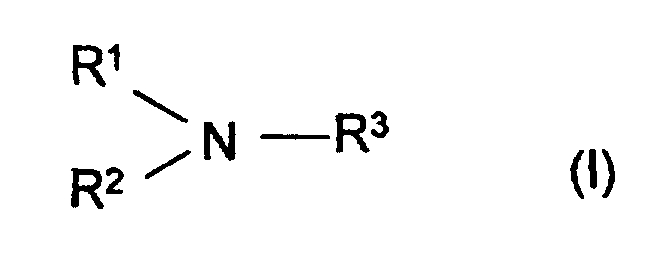
- the second aspect of the present invention is directed to a process for preparing lactamide which comprises the step of subjecting lactonitrile to a hydrating reaction in the presence of (A) a catalyst including an oxide of manganese as a main component, (B) an oxidizing agent and (C) further comprising at least one selected from the group consisting of compounds represented by the general formula (I) wherein R 1 , R 2 and R 3 are each a hydrogen atom, an alkyl group having 1 to 8 carbon atoms, a hydroxyalkyl group having 1 to 8 carbon atoms, an aminoalkyl group having 1 to 8 carbon atoms or a halogenoalkyl group having 1 to 8 carbon atoms, and they may be the same or different (hereinafter referred to as "the second invention").
- the present invention includes the first invention in which a hydrating reaction of lactonitrile is carried out in the presence of (A) a catalyst, (B) an oxidizing agent, and (C) a component comprising hydrogen cyanide and the second invention in which the hydrating reaction of lactonitrile is carried out in the presence of (A) a catalyst, (B) an oxidizing agent and (C) at least one selected from the group consisting of nitrogen-including compounds.
- lactonitrile which can be used as a raw material
- lactonitrile obtained in any manner is acceptable.
- lactonitrile can easily be prepared by reacting acetaldehyde with hydrogen cyanide in the presence of a basic catalyst.
- the catalyst which is the component (A) in the first and second inventions includes an oxide of manganese as a main component.
- a catalyst including manganese dioxide as the main component.
- Manganese dioxide is an oxide of manganese present as between MnO 1.7 and MnO 2 , and with regard to their crystal structures, ⁇ , ⁇ , ⁇ , ⁇ and the like are known. Since a transition between phases and a change of crystallinity occur, the extremely complex and various structures are present.
- Manganese dioxide also exists in nature, but in the case that it is used as the catalyst, manganese dioxide obtained by oxidizing a divalent manganese compound, and manganese dioxide obtained by reducing a heptavalent manganese compound are suitable.
- manganese dioxide obtained by the reaction of the divalent manganese compound with the heptavalent manganese compound is also suitable as the catalyst.
- the method for preparing manganese dioxide by oxidizing the divalent manganese compound there can be used a method which comprises electrolytically oxidizing an aqueous manganese sulfate solution.
- the method for preparing manganese dioxide by reducing the heptavalent manganese compound there can be used a method which comprises reducing a permanganic acid compound at a temperature of about 20 to 100°C in a neutral or an alkali range ["Zeit. Anorg. Allg. Chem.”, Vol. 309, p. 1-32 and p.
- the method for preparing manganese dioxide by the use of the divalent manganese compound and the heptavalent manganese compound there can be used a method which comprises mixing an aqueous potassium permanganate solution and an aqueous manganese sulfate solution ["J. Chem. Soc.”, p. 2189 (1953)].
- manganese dioxide prepared by any of the above-mentioned various methods can be used, but particularly, a modified manganese dioxide containing an alkaline metallic element is preferable.
- An advantageous method for preparing this kind of catalyst comprises simultaneously using the divalent manganese compound and the heptavalent manganese compound in that the type of crystals, the size of a specific surface area, and the kind and the amount of alkali metal can be controlled.
- the manganese dioxide catalyst or the modified manganese dioxide containing the alkaline metallic element can be added, as needed.
- the modified manganese dioxide containing the metallic element can be prepared in either of an acidic atmosphere and a basic atmosphere, but the preparation in the acidic atmosphere is preferable. In the case that the preparation is made in the basic atmosphere, the modified manganese dioxide is suitably washed with an acidic solution prior to its use as the catalyst.
- the divalent manganese compound which can be used for the above-mentioned preparation of the catalyst is preferably in the form of a water-soluble salt, particularly preferably a sulfate.
- the heptavalent manganese compound is particularly preferably a water-soluble potassium permanganate or sodium permanganate, and this compound can also be used as an alkali metal source.
- the source of the alkaline earth metal, Sc, Zr, V, Nb, Ta, Cr, Mo, W, Zn, Ga, In, Ge, Sn or Pb which can be added to manganese dioxide is preferably in the form of a water-soluble salt, particularly preferably a sulfate.
- a molar ratio of the alkali metal and another metal to manganese is preferably in the range of 0.005 to 0.5 and 0.001 to 0.3, respectively, more preferably 0.05 to 0.3 and 0.005 to 0.1, respectively.
- the thus prepared catalyst can be supported on a metallic oxide carrier such as alumina, silica, zirconia or titania prior to its use.
- a molded article of the catalyst can be used as a fixed bed catalyst, or powder, granules or minute spheres are used as a slurry catalyst in the hydrating reaction of lactonitrile in a batch system or a flow system reactor.
- examples of the oxidizing agent which is the component (B) in the first and second inventions include oxygens such as oxygen and ozone, peroxides such as hydrogen peroxide, sodium peroxide, magnesium peroxide, benzoyl peroxide and diacetyl peroxide, peracids and their salts such as performic acid, peracetic acid and ammonium persulfonate, and oxyacids and their salts such as periodic acid, perchloric acid, sodium periodate, iodic acid, bromic acid, potassium chlorate and sodium hypochlorite. Above all, the oxygens are preferable, and oxygen is particularly preferable. These oxidizing agents may be used singly or in the form of a mixture of two or more thereof.
- the above-mentioned oxidizing agent is usually fed by being dissolved or dispersed in a raw material solution, and its amount to be added is preferably selected in the range of 0.001 to 0.15 mol, more preferably 0.005 to 0.05 mol per mol of lactonitrile which is the raw material. If the amount of the oxidizing agent is less than 0.001 mol, the effect of controlling the rapid deterioration of a catalytic activity would not sufficiently be exerted, and if it is more than 0.15 mol, the corresponding improvement of the effect would not be observed.
- oxygen is used as the oxidizing agent
- pure oxygen may be used, but prior to its use, it is usually diluted with an inert gas such as nitrogen.
- air may directly be used as it is, or prior to its use, it may be mixed with oxygen or the inert gas to adjust the concentration of oxygen.
- the oxygen concentration of the oxygen-containing gas is optional, but it is usually selected in the range of 2 to 50% by volume.
- trickle bed type reactor in which the fixed bed is filled with the catalyst and a reaction solution flows between a solid phase and a gaseous phase, whereby the good dispersion of the gas in the reaction solution and the good contact of the reaction solution with the catalyst can be achieved.
- the flow of the reaction solution and the gas in the reactor may be either of a counter flow and a parallel flow. Furthermore, when the oxidizing agent and hydrogen cyanide coexist, the activity deterioration can be more inhibited and the selectivity of lactamide can be more improved as compared with the case where the oxidizing agent alone is present.
- the nitrogen-including compound is used as the component (C) together with the catalyst as the component (A) and the oxidizing agent as the component (B) and the component (C) comprising hydrogen cyanide to carry out the hydrating reaction of lactonitrile.
- R 1 , R 2 and R 3 are each a hydrogen atom, an alkyl group having 1 to 8 carbon atoms, a hydroxyalkyl group having 1 to 8 carbon atoms, an aminoalkyl group having 1 to 8 carbon atoms or a halogenoalkyl group having 1 to 8 carbon atoms, and they may be the same or different.
- the alkyl group having 1 to 8 carbon atoms may be any of straight-chain, branched or cyclic, and typical examples of the alkyl group include a methyl group, an ethyl group, an n-propyl group, an isopropyl group, an n-butyl group, an isobutyl group, a sec-butyl group, a tert-butyl group, various pentyl groups, various hexyl groups, various heptyl groups, various octyl groups and cycloalkyl groups having 3 to 8 carbon atoms such as a cyclopentyl group, a cyclohexyl group and a cyclooctyl group.
- the hydroxyalkyl group having 1 to 8 carbon atoms is a group in which one or more hydrogen atoms of the above-mentioned alkyl group are substituted by one or more hydroxyl groups
- the aminoalkyl group having 1 to 8 carbon atoms is a group in which one or more hydrogen atoms of the above-mentioned alkyl group are substituted by one or more amino groups.
- the halogenoalkyl group having 1 to 8 carbon atoms is a group in which one or more hydrogen atoms of the above-mentioned alkyl group are substituted by one or more of halogen atoms such as fluorine atoms, chlorine atoms, bromine atoms and iodine atoms.
- Examples of the nitrogen-including compound represented by the general formula (I) include ammonia, monoethylamine, diethylamine, triethylamine, monomethylamine, dimethylamine, trimethylamine, monopropylamine, dipropylamine, tripropylamine, monoisopropylamine, diisopropylamine, triisopropylamine, monoethanolamine, diethanolamine, triethanolamine, ethylenediamine and diethylenetriamine.
- the component (C) there may be used one or more of the above-mentioned nitrogen-containing compounds.
- the activity deterioration can be more inhibited and the conversion can be more improved as compared with a case where the component (C) comprises hydrogen cyanide alone.
- the amount of the nitrogen-containing compound to be added is usually in the range of 0.0001 to 5% by weight, preferably 0.0005 to 3% by weight based on the weight of lactonitrile which is the raw material.
- the amount of hydrogen cyanide to be added is usually 0.001 to 2% by weight based on the weight of lactonitrile which is the raw material.
- lactonitrile is subjected to the hydrating reaction in the presence of the catalyst as the component (A) and the oxidizing agent as the component (B) and hydrogen cyanide as the component (C)
- lactonitrile is subjected to the hydrating reaction in the presence of the catalyst as the component (A), the oxidizing agent as the component (B) and the nitrogen-containing compound as addition to the component (C).
- the weight ratio of lactonitrile to water in this hydrating reaction of lactonitrile is usually in the range of 5:95 to 80:20, preferably 20:80 to 60:40 from the viewpoint of reactivity.
- a reaction system which can be employed in the present invention may be any of a batch system, a semi-batch system and a continuous system, but a continuous reaction system in which a flow type reactor including a fixed bed catalyst is used is preferable.
- a temperature of the hydrating reaction is usually in the range of 0 to 120°C. If this temperature is less than 0°C, a reaction rate is so slow as to be impractical, and if it is more than 120°C, lactonitrile tends to decompose, whereby by-products inconveniently increase.
- the reaction temperature is preferably in the range of 10 to 90°C. No particular restriction is put on a reaction pressure, but the reaction can usually be carried out under a pressure in the vicinity of atmospheric pressure.
- lactamide can efficiently be prepared with the high conversion and selectivity by subjecting lactonitrile to the hydrating reaction, while the high catalytic activity is maintained for a long period of time. Therefore, the process for preparing lactamide of the present invention is industrially extremely advantageous.
- the reaction solution overflowed from a liquid tank under the reactor was analyzed after 24 hours and 10 days from the start of reaction by a high-performance liquid chromatography to inspect its composition.
- the conversions of lactonitrile were 80.2% and 61.0%, respectively.
- the selectivities (based on lactonitrile) of lactamide after 24 hours and 10 days were 94.6% and 95.0%, respectively.
- Reaction was carried out by the same procedure as in Comparative Example 1 except that nitrogen was fed to a reactor from its upper portion at a flow rate of 35 ml/hr. After 24 hours and 10 days from the start of the reaction, analysis was made. As a result, the conversions of lactonitrile were 79.7% and 58.3%, respectively. In addition, the selectivities (based on lactonitrile) of lactamide after 24 hours and 10 days were 94.8% and 94.5%, respectively.
- Reaction was carried out by the same procedure as in Comparative Example 1 except that air was fed to a reactor from its upper portion at a flow rate of 35 ml/hr. After 24 hours and 10 days from the start of the reaction, analysis was made. As a result, the conversions of lactonitrile were 80.0% and 67.3%, respectively. In addition, the selectivities (based on lactonitrile) of lactamide after 24 hours and 10 days were 95.0% and 95.0%, respectively.
- Reaction was carried out by the same procedure as in Comparative Example 1 except that air was fed to a reactor from its upper portion at a flow rate of 35 ml/hr and a raw material solution obtained by mixing 35.000 parts by weight of lactonitrile, 64.490 parts by weight of water and 0.510 part by weight of trimethylamine was used. After 24 hours and 10 days from the start of the reaction, analysis was made. As a result, the conversions of lactonitrile were 85.1% and 84.3%, respectively. In addition, the selectivities (based on lactonitrile) of lactamide after 24 hours and 10 days were 95.2% and 95.1%, respectively.
- Reaction was carried out by the same procedure as in Comparative Example 1 except that air was fed to a reactor from its upper portion at a flow rate of 35 ml/hr and a raw material solution obtained by mixing 35.000 parts by weight of lactonitrile, 64.330 parts by weight of water, 0.510 part by weight of trimethylamine and 0.160 part by weight of hydrogen cyanide was used. After 24 hours and 10 days from the start of the reaction, analysis was made. As a result, the conversions of lactonitrile were 84.8% and 84.1%, respectively. In addition, the selectivities (based on lactonitrile) of lactamide after 24 hours and 10 days were 97.0% and 97.2%, respectively.
- Reaction was carried out by the same procedure as in Comparative Example 1 except that a raw material solution obtained by mixing 0.100 part by weight of hydrogen peroxide, 35.000 parts by weight of lactonitrile and 64.900 parts by weight of water was used. After 24 hours and 10 days from the start of the reaction, analysis was made. As a result, the conversions of lactonitrile were 80.5% and 69.1%, respectively. In addition, the selectivities (based on lactonitrile) of lactamide after 24 hours and 10 days were 94.8% and 95.0%, respectively.
- Reaction was carried out by the same procedure as in Comparative Example 1 except that a raw material solution obtained by mixing 0.175 part by weight of hydrogen cyanide, 35.000 parts by weight of lactonitrile and 64.825 parts by weight of water was used and air was fed to a reactor from its upper portion at a flow rate of 35 ml/hr. After 24 hours and 10 days from the start of the reaction, analysis was made. As a result, the conversions of lactonitrile were 80.3% and 73.1%, respectively. In addition, the selectivities (based on lactonitrile) of lactamide after 24 hours and 10 days were 97.0% and 97.5%, respectively.
- modified manganese dioxide was uniformly ground to a particle size of 0.84 to 2.00 mm (10 to 20 mesh), and 4.5 cc of the resultant particles was then filled into a glass reactor having an internal diameter of 10 mm and equipped with a jacket, through which warm water at 40°C was allowed to flow.
- a raw material solution obtained by mixing 35.000 parts by weight of lactonitrile with 65.000 parts by weight of water was fed to the reactor from its upper portion at a flow rate of 4.3 g/hr.
- the reaction solution overflowed from a liquid tank under the reactor was analyzed after 24 hours and 10 days from the start of reaction by a high-performance liquid chromatography to inspect its composition.
- the conversions of lactonitrile were 78.3% and 56.5%, respectively.
- the selectivities (based on lactonitrile) of lactamide after 24 hours and 10 days were 95.0% and 95.3%, respectively.
- Reaction was carried out by the same procedure as in Comparative Example 6 except that air was fed to a reactor from its upper portion at a flow rate of 35 ml/hr. After 24 hours and 10 days from the start of the reaction, analysis was made. As a result, the conversions of lactonitrile were 79.2% and 68.6%, respectively. In addition, the selectivities (based on lactonitrile) of lactamide after 24 hours and 10 days were 95.0% and.94.9%, respectively.
- Reaction was carried out by the same procedure as in Comparative Example 6 except that air was fed to a reactor from its upper portion at a flow rate of 35 ml/hr and a raw material solution obtained by mixing 35.000 parts by weight of lactonitrile, 64.260 parts by weight of water and 0.74 part by weight of diethylamine was used. After 24 hours and 10 days from the start of the reaction, analysis was made. As a result, the conversions of lactonitrile were 82.3% and 81.5%, respectively. In addition, the selectivities (based on lactonitrile) of lactamide after 24 hours and 10 days were 95.0% and 95.1%, respectively.
- Reaction was carried out by the same procedure as in Comparative Example 6 except that air was fed to a reactor from its upper portion at a flow rate of 35 ml/hr and a raw material solution obtained by mixing 35.000 parts by weight of lactonitrile, 64.110 parts by weight of water, 0.74 part by weight of diethylamine and 0.15 part by weight of hydrogen cyanide was used. After 24 hours and 10 days from the start of the reaction, analysis was made. As a result, the conversions of lactonitrile were 82.4% and 81.5%, respectively. In addition, the selectivities (based on lactonitrile) of lactamide after 24 hours and 10 days were 97.1% and 97.3%, respectively.
- the reaction solution overflowed from a liquid tank under the reactor was analyzed after 24 hours and 10 days from the start of reaction by a high-performance liquid chromatography to inspect its composition.
- the conversions of lactonitrile were 79.6% and 57.0%, respectively.
- the selectivities (based on lactonitrile) of lactamide after 24 hours and 10 days were 95.2% and 95.4%, respectively.
- Reaction was carried out by the same procedure as in Comparative Example 9 except that air was fed to a reactor from its upper portion at a flow rate of 35 ml/hr. After 24 hours and 10 days from the start of the reaction, analysis was made. As a result, the conversions of lactonitrile were 80.2% and 67.5%, respectively. In addition, the selectivities (based on lactonitrile) of lactamide after 24 hours and 10 days were 95.0% and 95.4%, respectively.
Landscapes
- Chemical & Material Sciences (AREA)
- Organic Chemistry (AREA)
- Chemical Kinetics & Catalysis (AREA)
- Catalysts (AREA)
- Low-Molecular Organic Synthesis Reactions Using Catalysts (AREA)
- Organic Low-Molecular-Weight Compounds And Preparation Thereof (AREA)
Description


Claims (8)
- A process for preparing lactamide which comprises subjecting lactonitrile to a hydrating reaction in the presence of component (A) a catalyst including an oxide of manganese as a main component, (B) an oxidizing agent and component (C) comprising hydrogen cyanide.
- The process according to Claim 1 wherein the catalyst (A) including the oxide of manganese as the main component is a catalyst including an oxide of manganese modified with an alkaline metallic element as the main component.
- The process according to Claim 2 wherein the catalyst including an oxide of manganese modified with an alkaline metallic element as the main component is a catalyst including a modified manganese dioxide containing an alkaline metallic element as the main component.
- The process according to Claim 3 wherein the modified manganese dioxide containing an alkaline metallic element is obtained by oxidizing a divalent manganese compound.
- The process according to Claim 3 wherein the modified manganese dioxide containing an alkaline metallic element is obtained by reducing a heptavalent manganese compound.
- The process according to Claim 1 wherein the oxidizing agent (B) is at least one selected from the group consisting of oxygens, peroxides, peracids, salts of the peracids, oxyacids and salts of the oxyacids.
- The process according to Claim 1 wherein the temperature of the hydrating reaction is in the range of 0 to 120°C.
- The process for preparing lactamide according to claim 1, said component ( C ) further comprising at least one compound selected from the group consisting of compounds represented by the formula (I)wherein R1, R2 and R3 are each a hydrogen atom, an alkyl group having 1 to 8 carbon atoms, a hydroxyalkyl group having 1 to 8 carbon atoms, an aminoalkyl group having 1 to 8 carbon atoms or a halogenoalkyl group having 1 to 8 carbon atoms, and they may be the same or different.
Applications Claiming Priority (2)
| Application Number | Priority Date | Filing Date | Title |
|---|---|---|---|
| JP7578898 | 1998-03-24 | ||
| JP7578898 | 1998-03-24 |
Publications (2)
| Publication Number | Publication Date |
|---|---|
| EP0945429A1 EP0945429A1 (en) | 1999-09-29 |
| EP0945429B1 true EP0945429B1 (en) | 2002-09-18 |
Family
ID=13586314
Family Applications (1)
| Application Number | Title | Priority Date | Filing Date |
|---|---|---|---|
| EP99104461A Expired - Lifetime EP0945429B1 (en) | 1998-03-24 | 1999-03-05 | Process for preparing lactamide |
Country Status (4)
| Country | Link |
|---|---|
| US (1) | US6124501A (en) |
| EP (1) | EP0945429B1 (en) |
| DE (1) | DE69902959T2 (en) |
| ES (1) | ES2184363T3 (en) |
Families Citing this family (5)
| Publication number | Priority date | Publication date | Assignee | Title |
|---|---|---|---|---|
| DE102007011706A1 (en) | 2007-03-08 | 2008-09-11 | Evonik Röhm Gmbh | Continuous preparation of alpha-hydroxycarboxylic ester comprises reacting reactants of alpha-hydroxycarbamide with alcohol, feeding the reactant into a pressure reactor and depleting the product mixture in alcohol and ammonia |
| DE102006055430A1 (en) * | 2006-11-22 | 2008-05-29 | Evonik Röhm Gmbh | Process for the preparation of carboxylic acid amides by hydrolysis of carbonitriles in the presence of a catalyst comprising manganese dioxide |
| DE102008001319A1 (en) | 2008-04-22 | 2009-10-29 | Evonik Röhm Gmbh | Catalyst for the conversion of carbonitriles |
| DE102011081256A1 (en) | 2011-08-19 | 2013-02-21 | Evonik Röhm Gmbh | Process for the preparation of alpha-hydroxycarboxylic acid esters |
| DE102013213699A1 (en) | 2013-07-12 | 2015-01-15 | Evonik Industries Ag | Process for the preparation of alpha-hydroxycarboxylic acid esters |
Family Cites Families (2)
| Publication number | Priority date | Publication date | Assignee | Title |
|---|---|---|---|---|
| JP2827368B2 (en) * | 1989-12-19 | 1998-11-25 | 三菱瓦斯化学株式会社 | Method for producing α-hydroxyisobutyric acid amide |
| US5756842A (en) * | 1995-11-07 | 1998-05-26 | Mitsubishi Gas Chemical Company, Inc. | Process for preparing lactamide |
-
1999
- 1999-03-03 US US09/261,858 patent/US6124501A/en not_active Expired - Fee Related
- 1999-03-05 DE DE69902959T patent/DE69902959T2/en not_active Expired - Fee Related
- 1999-03-05 EP EP99104461A patent/EP0945429B1/en not_active Expired - Lifetime
- 1999-03-05 ES ES99104461T patent/ES2184363T3/en not_active Expired - Lifetime
Also Published As
| Publication number | Publication date |
|---|---|
| US6124501A (en) | 2000-09-26 |
| DE69902959D1 (en) | 2002-10-24 |
| EP0945429A1 (en) | 1999-09-29 |
| DE69902959T2 (en) | 2003-01-23 |
| ES2184363T3 (en) | 2003-04-01 |
Similar Documents
| Publication | Publication Date | Title |
|---|---|---|
| US7790914B2 (en) | Method for dimethyl carbonate synthesis | |
| EP0418512B1 (en) | Process for production of alpha-hydroxycarboxylic acid amide | |
| US5763650A (en) | Process for the preparation of a halosubstituted aromatic acid | |
| US6124501A (en) | Process for preparing lactamide | |
| EP0379111A2 (en) | Process for producing alpha-Hydroxycarboxylic acid amide | |
| KR960000045B1 (en) | Method for producing α-hydroxyisobutyric acid amide | |
| EP0773212B1 (en) | Process for preparing lactamide | |
| JP3962885B2 (en) | Method for producing lactamide | |
| KR20070039948A (en) | Method for preparing 2-amino-5-iodo benzoic acid | |
| US20110004020A1 (en) | Process for producing organic carboxylic acid amides | |
| JP3901260B2 (en) | Method for producing lactamide | |
| CN113200883B (en) | Preparation method of 5-amino-2, 4, 6-triiodo isophthalic acid | |
| JP3927835B2 (en) | Process for producing iodinated aromatic compound diacetate | |
| WO2007037082A1 (en) | Process for producing carnitinamide | |
| JPS60197646A (en) | Preparation of dl-asparagine | |
| JPH11152257A (en) | Method for producing lactamide | |
| JPH0237911B2 (en) | ||
| EP3023412B1 (en) | Method for producing -hydroxyisobutyric acid amide and reactor | |
| JPH04178361A (en) | Preparation of alpha-formylaminonitrile | |
| JPH0446145A (en) | Production of alpha-hydroxyisobutyramide | |
| JPH04149164A (en) | Production of alpha-hydroxyisobutylamide | |
| JPH08217752A (en) | Production of monochloro-3-cyanopyridine compound | |
| JPH11180932A (en) | Method for producing α-ketocarboxylic acid ester | |
| JPH0616589A (en) | Method for producing sodioformylacetone | |
| JPS58174353A (en) | Preparation of mononitrophenyl-beta-hydroxyethyl sulfone |
Legal Events
| Date | Code | Title | Description |
|---|---|---|---|
| PUAI | Public reference made under article 153(3) epc to a published international application that has entered the european phase |
Free format text: ORIGINAL CODE: 0009012 |
|
| AK | Designated contracting states |
Kind code of ref document: A1 Designated state(s): DE ES FR GB NL |
|
| AX | Request for extension of the european patent |
Free format text: AL;LT;LV;MK;RO;SI |
|
| 17P | Request for examination filed |
Effective date: 20000302 |
|
| AKX | Designation fees paid |
Free format text: DE ES FR GB NL |
|
| 17Q | First examination report despatched |
Effective date: 20010118 |
|
| GRAG | Despatch of communication of intention to grant |
Free format text: ORIGINAL CODE: EPIDOS AGRA |
|
| GRAG | Despatch of communication of intention to grant |
Free format text: ORIGINAL CODE: EPIDOS AGRA |
|
| GRAH | Despatch of communication of intention to grant a patent |
Free format text: ORIGINAL CODE: EPIDOS IGRA |
|
| GRAH | Despatch of communication of intention to grant a patent |
Free format text: ORIGINAL CODE: EPIDOS IGRA |
|
| GRAA | (expected) grant |
Free format text: ORIGINAL CODE: 0009210 |
|
| AK | Designated contracting states |
Kind code of ref document: B1 Designated state(s): DE ES FR GB NL |
|
| REG | Reference to a national code |
Ref country code: GB Ref legal event code: FG4D |
|
| REF | Corresponds to: |
Ref document number: 69902959 Country of ref document: DE Date of ref document: 20021024 |
|
| PGFP | Annual fee paid to national office [announced via postgrant information from national office to epo] |
Ref country code: GB Payment date: 20030217 Year of fee payment: 5 |
|
| ET | Fr: translation filed | ||
| PGFP | Annual fee paid to national office [announced via postgrant information from national office to epo] |
Ref country code: ES Payment date: 20030317 Year of fee payment: 5 |
|
| PGFP | Annual fee paid to national office [announced via postgrant information from national office to epo] |
Ref country code: FR Payment date: 20030324 Year of fee payment: 5 |
|
| PGFP | Annual fee paid to national office [announced via postgrant information from national office to epo] |
Ref country code: NL Payment date: 20030331 Year of fee payment: 5 |
|
| REG | Reference to a national code |
Ref country code: ES Ref legal event code: FG2A Ref document number: 2184363 Country of ref document: ES Kind code of ref document: T3 |
|
| PGFP | Annual fee paid to national office [announced via postgrant information from national office to epo] |
Ref country code: DE Payment date: 20030521 Year of fee payment: 5 |
|
| PLBE | No opposition filed within time limit |
Free format text: ORIGINAL CODE: 0009261 |
|
| STAA | Information on the status of an ep patent application or granted ep patent |
Free format text: STATUS: NO OPPOSITION FILED WITHIN TIME LIMIT |
|
| 26N | No opposition filed |
Effective date: 20030619 |
|
| PG25 | Lapsed in a contracting state [announced via postgrant information from national office to epo] |
Ref country code: GB Free format text: LAPSE BECAUSE OF NON-PAYMENT OF DUE FEES Effective date: 20040305 |
|
| PG25 | Lapsed in a contracting state [announced via postgrant information from national office to epo] |
Ref country code: ES Free format text: LAPSE BECAUSE OF NON-PAYMENT OF DUE FEES Effective date: 20040306 |
|
| PG25 | Lapsed in a contracting state [announced via postgrant information from national office to epo] |
Ref country code: NL Free format text: LAPSE BECAUSE OF NON-PAYMENT OF DUE FEES Effective date: 20041001 Ref country code: DE Free format text: LAPSE BECAUSE OF NON-PAYMENT OF DUE FEES Effective date: 20041001 |
|
| GBPC | Gb: european patent ceased through non-payment of renewal fee | ||
| PG25 | Lapsed in a contracting state [announced via postgrant information from national office to epo] |
Ref country code: FR Free format text: LAPSE BECAUSE OF NON-PAYMENT OF DUE FEES Effective date: 20041130 |
|
| NLV4 | Nl: lapsed or anulled due to non-payment of the annual fee |
Effective date: 20041001 |
|
| REG | Reference to a national code |
Ref country code: FR Ref legal event code: ST |
|
| REG | Reference to a national code |
Ref country code: ES Ref legal event code: FD2A Effective date: 20040306 |