EP0925539B1 - Segment de memoire permanent pour objets-images dynamiques - Google Patents
Segment de memoire permanent pour objets-images dynamiques Download PDFInfo
- Publication number
- EP0925539B1 EP0925539B1 EP97939635A EP97939635A EP0925539B1 EP 0925539 B1 EP0925539 B1 EP 0925539B1 EP 97939635 A EP97939635 A EP 97939635A EP 97939635 A EP97939635 A EP 97939635A EP 0925539 B1 EP0925539 B1 EP 0925539B1
- Authority
- EP
- European Patent Office
- Prior art keywords
- heap
- persistent
- file
- persistent heap
- virtual memory
- Prior art date
- Legal status (The legal status is an assumption and is not a legal conclusion. Google has not performed a legal analysis and makes no representation as to the accuracy of the status listed.)
- Expired - Lifetime
Links
Images



Classifications
-
- G—PHYSICS
- G06—COMPUTING OR CALCULATING; COUNTING
- G06F—ELECTRIC DIGITAL DATA PROCESSING
- G06F9/00—Arrangements for program control, e.g. control units
- G06F9/06—Arrangements for program control, e.g. control units using stored programs, i.e. using an internal store of processing equipment to receive or retain programs
- G06F9/44—Arrangements for executing specific programs
- G06F9/448—Execution paradigms, e.g. implementations of programming paradigms
- G06F9/4488—Object-oriented
- G06F9/4493—Object persistence
-
- Y—GENERAL TAGGING OF NEW TECHNOLOGICAL DEVELOPMENTS; GENERAL TAGGING OF CROSS-SECTIONAL TECHNOLOGIES SPANNING OVER SEVERAL SECTIONS OF THE IPC; TECHNICAL SUBJECTS COVERED BY FORMER USPC CROSS-REFERENCE ART COLLECTIONS [XRACs] AND DIGESTS
- Y10—TECHNICAL SUBJECTS COVERED BY FORMER USPC
- Y10S—TECHNICAL SUBJECTS COVERED BY FORMER USPC CROSS-REFERENCE ART COLLECTIONS [XRACs] AND DIGESTS
- Y10S715/00—Data processing: presentation processing of document, operator interface processing, and screen saver display processing
- Y10S715/961—Operator interface with visual structure or function dictated by intended use
- Y10S715/965—Operator interface with visual structure or function dictated by intended use for process control and configuration
Definitions
- the present invention relates generally to process control systems having interactive displays for controlling the operations of plant facilities, refineries and the like. More particularly, the present invention relates to a process control system having a display program that permits a process designer, such as an engineer, to create and edit dynamic picture objects for interactive display and permits an operator to interact with the display to control plant operations.
- the present invention provides an improved method for quickly displaying the dynamic picture objects on the interactive display when used by the process designer to create or edit the dynamic picture objects or the operator of a control plant to display the dynamic picture objects.
- Operators of plants and refineries must have up-to-date information in order to monitor and maintain day-to-day operations of such facilities.
- An operator typically interacts with a particular computer connected to a computer network that is wired to various sensors positioned throughout the facility.
- the computer network receives operational and environmental information from the sensors and provides this information on the interactive display of the operator's computer.
- the computer network operates as a real-time database to provide current process values to the operator via the interactive display.
- the process control system also includes a display program that provides the program designer or operator with a visual layout or schematic of the facility.
- the display program is a drawing program that provides a multitude of picture objects each representing a structure, machine or area in the facility. To store the picture objects, the display program saves them to files by serialization, i.e., one word at a time, of many different objects into streams. Similarly, to retrieve the picture objects, the display program reads files by serialization and places the picture objects at fixed locations predetermined by the display program. This serialization process for storing and retrieving files is commonly used for certain operating systems, such as Windows NT® by Microsoft Corporation, that have specific operating subsystem routines that are readily available for such purposes.
- serialization process for storing and retrieving files used by existing display programs is laggard and slows down the computer's ability to provide stored objects to the operator in a timely fashion.
- storage and retrieval of serialized files is performed at a relatively slow rate (in a matter of seconds) and, thus, hinders the ability of the program designer and/or operator to effectively use their computer.
- the present invention provides a system as defined in Claim 1 or 10 hereinafter.
- the system may include any of the features in dependent Claims 2 to 9 and 11 to 16.
- the present invention also provides a process as defined in Claim 17 hereinafter.
- the process may include any of the features in dependent Claims 18 to 22.
- the present invention also provides a storage media as defined in Claim 23 hereinafter.
- the storage media may include any of the features of dependent Claims 24 to 31.
- the present invention provides for the use of a persistent heap, instead of serializing objects into a stream, to greatly improve the speed in which dynamic picture objects may be read from the storage medium and processed.
- the persistent heap also provides for improved speed in providing the dynamic picture objects on the interactive display.
- the present invention involves a system having a display program that permits a program engineer or designer to create and edit dynamic picture objects in a persistent heap and save the heap as a file to a storage medium, such as a disk drive. Accordingly, when the file of the persistent heap is subsequently read from the storage medium by an operator, the dynamic picture objects in the heap do not need to be instantiated and, thus, invocation of the objects is accelerated and optimized.
- a system having a display program that permits a program designer to create, edit and save dynamic picture objects in a persistent heap and save the heap to a storage medium, such as a disk drive.
- the persistent heap provides the ability to create objects, non-object memory allocations, strings and object lists that persist across the invocations of a particular program.
- the display program rapidly reads the dynamic picture objects from the storage medium and invokes the objects for viewing on an interactive display. Accordingly, the persistent heap greatly improves the speed in which picture objects can be read from the storage medium, processed by the display program and called-up to the interactive display.
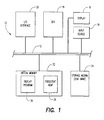
- System 10 comprises various components coupled to an address/data bus 12, namely a central processing unit (“CPU") 14, an interactive display 16, one or more input devices 18, and an input/output (“I/O") interface 20.
- CPU 14 may be any type of processor that is capable of handling memory addressing functions, particularly heap addressing functions, as well as basic computer functions.
- a program designer or operator would view a layout or schematic of a facility, such as a plant facility, refinery or the like, on display 16. The program designer or operator would also provide information and responses to system 10 using input devices 18, such as a computer keyboard and/or mouse.
- I/O interface 20 provides a connection to other systems and to various sensors positioned throughout the facility so that current process values are shown, in real-time, on display 16.
- the preferred system 10 further includes virtual memory 22 to provide CPU 14 with workspace to execute programs and store data temporarily and a storage medium 24 for permanent storage of data and files.
- the operating system for system 10 for example Windows NT® by Microsoft Corporation, is stored in virtual memory 22.
- display program 26 the program designer or operator would load display program 26 from storage medium 24 to virtual memory 22 and execute display program 26 in virtual memory 22.
- display program 26 would load persistent heap 28 from storage medium 24 to virtual memory 22 or, if persistent heap 28 does not exist in storage medium 24, create persistent heap 28 in virtual memory 22.
- Persistent heap 28 is a region of reserved address space that is used for managing numerous small blocks of data, such as linked lists. Persistent heap 28 provides the ability to create objects, non-object memory allocations, strings and object lists that persist across the invocation of the program. Examples of such information include, but are not limited to, primitive objects, embedded picture objects, the script symbol table and script objects. For the preferred embodiment, the above information is stored in heap 28 as a first linked list of free blocks and a second linked list of used blocks.
- Persistent heap 28 allocates a large block of virtual address space, but commits only enough space that required by the picture objects.
- the initial allocation is set to be larger than the space expected for the largest picture object that could be created.
- objects When objects are created, they either reuse a free block of heap 28 or they expand the committed memory space of heap 28. For the preferred embodiment, once a block of memory is allocated at a given size, it will always remain at that size.
- One feature of the present invention is to load persistent heap 28 from a document or heap file in storage medium 24 to virtual memory 22 as a single read statement.
- heap 28 is always loaded at the same address or location in memory.
- heap 28 is serialized at a preferred load address, so that it is always at that preferred address at runtime, Address correction is not required, and heap 28 is ready to be used as soon as it is loaded.
- heap 28 is written to the file in storage medium 24 with a single write statement and read from the file with a single read statement.
- heap 28 may be located at a different address or location.
- the program designer may be working with multiple document files. In such event, only the first document file can position its heap at the preferred address, and the heaps of the other document files must be positioned at higher virtual addresses.
- all pointers are adjusted to have values that they would have if heap 28 were located at the preferred address.
- the pointers are adjusted to the actual location of heap 28. Therefore, all pointers in their heaps are adjusted to values they would have as if the heap were at the preferred address, save to an archive, and then restored to their correct addresses.
- Persistent heap 28 is an image of the heap and, thus, heap 28 cannot be read if the size or arrangement of an object changes.
- serializing and deserializing must take into account that heap 28 may not be at the same address when it is deserialized, and that the code may have been relocated due to a minor version change. Also, if the content of a picture object has changed, the difference may be too great for heap 28 to automatically compensate. Accordingly, the persistent heap is archived into a separate stream so that the heap recreates itself from the archive when it detects an invalid object.
- FIG. 2 there is provided a flow diagram of the operation of the preferred system shown in Fig. 1.
- display program 26 When the program designer or operator activates display program 26, display program 26 is initiated as represented by step 30, and a general initialization of display program 26 is executed as represented by step 32. Following the general initialization, display program 26 performs a persistent heap initialization 34 for allocating a portion of virtual memory 22 to create persistent heap 28 as shown in step 34.
- a heap file located in storage medium 24 is read into persistent heap 28 of virtual memory 22 as shown in step 38 or, in the alternative, persistent heap 28 is left empty if the heap file does not exist in storage medium 24 as shown in step 40.
- the persistent heap 28 is now ready for use and a mode of operation is selected for the display program 26, as represented by step 42.
- Display program 26 is used by a program designer to create and edit dynamic picture objects for viewing on display 16 or by an operator to view the dynamic picture objects on display 16.
- a main screen of a display editor/builder subprogram of display program 26 is activated, as shown in step 44.
- This display editor/builder subprogram may be used to create and edit objects in persistent heap 28 as shown in step 46, delete objects from persistent heap 28 as shown in step 48, or save the contents of persistent heap 28 to storage medium 24 as shown in step 50.
- display program 26 After creating an object, deleting an object or saving persistent heap 28, display program 26 returns to the main screen of the display editor/builder subprogram at step 44.
- the operation of the display editor/builder subprogram may be terminated as shown in step 52.
- the operator simply activates a viewing subprogram as represented by step 54. Either the display editor/builder subprogram or the viewing subprogram may be terminated to end operation of display program 26 as shown in step 56.
- persistent heap 28 is saved to storage medium 24 in a form that, subsequently, can be quickly read back into persistent heap 28.
- the contents of persistent heap is saved to storage medium 24 so that the heap file is loaded as a single read statement and is always loaded at the same address or location in virtual memory 22. Therefore, when the operator activates the viewing subprogram, the dynamic picture objects stored in heap 28 do not need to be instantiated and, thus, invocation of the objects is accelerated and maximized.
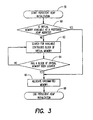
- step 58 display program 26 determines whether the preferred heap address of virtual memory 22 is available as shown in step 60. If not, display program 26 searches for available contiguous blocks of virtual memory 22 until an acceptable block of virtual memory 22 has been located, as represented by steps 62 and 64. Thereafter, the uncommitted memory is allocated as shown in step 66, and initialization of persistent heap ends as shown in step 68.
- step 70 the entire heap file is read to the allocated memory, namely persistent heap 28 of virtual memory 22, as shown in step 72.
- Display program 26 determines whether persistent heap 28 had been allocated at the preferred heap address at step 74. If so, the dynamic picture objects in persistent heap 28 are ready for use as shown in step 78, and the subroutine ends as shown in step 80. On the other hand, if persistent heap 28 had not been allocated at the preferred heap address, then all pointers must be updated so that they are valid for the current address of persistent heap 28, as shown in step 76, before the objects are ready for use.
- persistent heap 28 includes a first linked list of free blocks and a second linked list of used blocks.
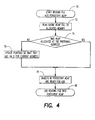
- dynamic picture objects are created in persistent heap 28 by first determining whether a block of heap memory is available on the first linked list of free blocks as shown in step 84. If a block is available, then the block is simply removed from the first linked list as shown in step 86. On the other hand, if a block is not available, the committed memory size of persistent heap 28 is extended to handle the requested block as shown in step 88. Then, the block is added to the second linked list of used blocks as shown in step 90. Finally, the object initialization is finished as shown in step 92, and the subroutine is ended as shown in step 94 and display program 26 routines to the main screen of the display editor/builder subprogram.
- step 96 Upon initiation of the subroutine as shown in step 96, a block is added to the first linked list of free blocks as shown in step 98. Then, in step 100, the subroutine ends and display program 26 routines to the main screen of the display editor/builder subprogram.
- step 102 Display program 26 determines whether persistent heap 28 had been allocated at the preferred heap address. If so, a block is removed from the first linked list of free blocks as shown in step 106. However, if persistent heap 28 had not been allocated at the preferred heap address, an offset is added to all pointers in persistent heap 28 to adjust for variance between the current address and the preferred heap address as shown in step 108. Thereafter, a single write operation is performed for the entire committed portion of allocated memory to storage medium 24 as shown in step 110. Later, when the heap file is loaded into virtual memory 22 by an operator, persistent heap 28 will be loaded as a single read statement. Finally, in step 112, the subroutine ends and display program 26 routines to the main screen of the display editor/builder subprogram.
Landscapes
- Engineering & Computer Science (AREA)
- Software Systems (AREA)
- Theoretical Computer Science (AREA)
- Physics & Mathematics (AREA)
- General Engineering & Computer Science (AREA)
- General Physics & Mathematics (AREA)
- Information Retrieval, Db Structures And Fs Structures Therefor (AREA)
- Digital Computer Display Output (AREA)
- Investigating Or Analysing Materials By The Use Of Chemical Reactions (AREA)
- Transition And Organic Metals Composition Catalysts For Addition Polymerization (AREA)
- Heterocyclic Compounds That Contain Two Or More Ring Oxygen Atoms (AREA)
Claims (31)
- Système destiné à afficher des objets contenus dans une pile persistante et mémorisés dans un fichier de pile, le système comprenant :un moyen destiné à former ladite pile persistante (28) dans une partie de mémoire virtuelle (22) dudit système (10),un moyen destiné à extraire ledit fichier de pile à partir d'un support de mémorisation (24) dudit système,un moyen (26) destiné à charger ledit fichier de pile dans ladite pile persistante, ledit fichier de pile comprenant au moins un objet, etun moyen destiné à afficher ledit objet sur un affichage dudit système.
- Système selon la revendication 1, caractérisé en ce que ladite pile persistante (28) est formée à une adresse de pile préférée de ladite partie de mémoire virtuelle (22) dudit système (10).
- Système selon la revendication 1 ou 2, dans lequel ladite pile persistante est formée à une adresse de pile de remplacement de ladite partie de mémoire virtuelle (22) dudit système (10) si ladite pile persistante (28) ne peut pas être formée à ladite adresse de pile préférée, et ledit moyen de formation comprend un moyen destiné à localiser un bloc contigu de ladite partie de mémoire virtuelle et un moyen destiné à allouer ladite pile persistante au niveau dudit bloc contigu.
- Système selon l'une quelconque des revendications précédentes, dans lequel ledit fichier de pile est extrait dudit support de mémorisation (24) dans ladite pile persistante sous forme d'une instruction de lecture unique.
- Système selon l'une quelconque des revendications précédentes, comprenant un moyen destiné à mémoriser tous lesdits objets de ladite pile persistante (28) dans ledit support de mémorisation (24).
- Système selon l'une quelconque des revendications précédentes, comprenant un moyen destiné à créer un nouvel objet dans ladite pile persistante (28), un moyen destiné à éditer un objet existant dans ladite pile persistante, et un moyen destiné à supprimer un objet existant de ladite pile persistante.
- Système selon l'une quelconque des revendications précédentes, dans lequel ladite pile persistante (28) comprend une première liste liée de blocs libres et une seconde liste liée de blocs utilisés.
- Système selon l'une quelconque des revendications précédentes, comprenant en outre un moyen destiné à archiver ladite pile persistante (28) dans un flux séparé pour former un fichier d'archives.
- Système selon l'une quelconque des revendications précédentes, comprenant :un moyen destiné à détecter un objet invalide dans ledit fichier de pile, etun moyen, sensible audit moyen de détection, destiné à former ledit fichier de pile dans ladite pile persistante en désarchivant ledit fichier d'archives.
- Système destiné à afficher des objets contenus dans une pile persistante et mémorisés dans un fichier de pile, ledit système comprenant :un moyen destiné à activer un programme d'affichage (26),un moyen, sensible à ladite activation dudit programme d'affichage, destiné à former une pile persistante (28) dans une partie de mémoire virtuelle (22) dudit système, dans lequel ladite pile persistante persiste tout au long de l'appel dudit programme d'affichage, ladite pile persistante étant efficace pour mémoriser au moins un objet utilisé par ledit programme d'affichage,un moyen destiné à afficher ledit au moins un objet sur un affichage du système.
- Système selon la revendication 10, dans lequel ladite pile persistante (28) est formée à une adresse de pile préférée de ladite partie de mémoire virtuelle du système.
- Système selon la revendication 10 ou 11, dans lequel ladite pile persistante (28) est formée à une adresse de pile de remplacement de ladite partie de mémoire virtuelle (22) dudit système (10) si ladite pile persistante ne peut pas être formée à ladite adresse de pile préférée, et ledit moyen de formation comprend un moyen destiné à localiser un bloc contigu de ladite partie de mémoire virtuelle et un moyen destiné à allouer ladite pile persistante au niveau dudit bloc contigu.
- Système selon l'une quelconque des revendications 10 à 12, comprenant un moyen destiné à créer un nouvel objet dans ladite pile persistante (28), un moyen destiné à éditer un objet existant dans ladite pile persistante, et un moyen destiné à supprimer un objet existant de ladite pile persistante.
- Système selon l'une quelconque des revendications 10 à 13, dans lequel ladite pile persistante (28) comprend une première liste liée de blocs libres et une seconde liste liée de blocs utilisés.
- Système selon l'une quelconque des revendications 10 à 14, comprenant en outre un moyen destiné à archiver ladite pile persistante (28) dans un flux séparé pour former un fichier d'archives.
- Système selon la revendication 15, comprenant :un moyen destiné à détecter un objet invalide dans ledit fichier de pile, etun moyen, sensible audit moyen de détection, destiné à former ledit fichier de pile dans ladite pile persistante en désarchivant ledit fichier d'archives.
- Procédé destiné à afficher des objets contenus dans une pile persistante et mémorisés dans un fichier de pile, le procédé comprenant :la formation de ladite pile persistante (28) dans une partie de mémoire virtuelle (22),l'extraction dudit fichier de pile à partir d'un support de mémorisation (24),le chargement dudit fichier de pile dans ladite pile persistante, ledit fichier de pile comprenant au moins un objet, etl'affichage dudit objet.
- Procédé selon la revendication 17, dans lequel ledit fichier de pile est extrait dudit support de mémorisation (24) dans ladite pile persistante (28) sous forme d'une instruction de lecture unique.
- Procédé selon la revendication 17 ou 18, comprenant en outre :
la mémorisation de tous lesdits objets de ladite pile persistante (28) dans ledit support de mémorisation (24). - Procédé selon l'une quelconque des revendications 17 à 19, comprenant :la création d'un nouvel objet dans ladite pile persistante (28),l'édition d'un objet existant dans ladite pile persistante, etla suppression d'un objet existant de ladite pile persistante.
- Procédé selon l'une quelconque des revendications 17 à 20, comprenant :
l'archivage de ladite pile persistante (28) dans un flux séparé afin de former un fichier d'archives. - Procédé selon la revendication 21 comprenant :la détection d'un objet invalide dans ledit fichier de pile, eten réponse à celle-ci, la formation dudit fichier de pile dans ladite pile persistante en désarchivant ledit fichier d'archives.
- Supports de mémorisation destinés à commander un processeur de sorte que ledit processeur est capable d'afficher des objets contenus dans une pile persistante et mémorisés dans un fichier de pile, lesdits supports de mémorisation comprenant :un moyen destiné à former ladite pile persistante (28) dans une partie de mémoire virtuelle (22) dudit processeur,un moyen destiné à extraire ledit fichier de pile à partir d'un support de mémorisation (24) dudit processeur,un moyen destiné à charger ledit fichier de pile dans ladite pile persistante, ledit fichier de pile comprenant au moins un objet, etun moyen destiné à afficher ledit objet sur un affichage dudit processeur.
- Supports de mémorisation selon la revendication 23, dans lesquels ladite pile persistante (28) est formée à une adresse de pile préférée de ladite partie de mémoire virtuelle (22) dudit processeur.
- Supports de mémorisation selon la revendication 23 ou 24, dans lesquels ladite pile persistante (28) est formée à une adresse de pile de remplacement de ladite partie de mémoire virtuelle (22) dudit processeur si ladite pile persistante ne peut pas être formée à ladite adresse de pile préférée, et ledit moyen de formation comprend un moyen destiné à localiser un bloc contigu de ladite partie de mémoire virtuelle et un moyen destiné à allouer ladite pile persistante au niveau dudit bloc contigu.
- Supports de mémorisation selon l'une quelconque des revendications 23 à 25, dans lesquels ledit fichier de pile est extrait dudit support de mémorisation dans ladite pile persistante (28) sous forme d'une instruction de lecture unique.
- Support de mémorisation selon l'une quelconque des revendications 23 à 26, comprenant un moyen destiné à mémoriser tous lesdits objets de ladite pile persistante (28) dans ledit support de mémorisation (24).
- Supports de mémorisation selon l'une quelconque des revendications 23 à 27, comprenant un moyen destiné à créer un nouvel objet dans ladite pile persistante (28), un moyen destiné à éditer un objet existant dans ladite pile persistante, et un moyen destiné à supprimer un objet existant de ladite pile persistante.
- Supports de mémorisation selon l'une quelconque des revendications 23 à 28, dans lesquels ladite pile persistante (28) comprend une première liste liée de blocs libres et une seconde liste liée de blocs utilisés.
- Supports de mémorisation selon l'une quelconque des revendications 23 à 29, comprenant un moyen destiné à archiver ladite pile persistante (28) dans un flux séparé afin de former un fichier d'archives.
- Supports de mémorisation selon la revendication 30 comprenant :un moyen destiné à détecter un objet invalide dans ledit fichier de pile, etun moyen, sensible audit moyen de détection, destiné à former ledit fichier de pile dans ladite pile persistante en désarchivant ledit fichier d'archives.
Applications Claiming Priority (3)
| Application Number | Priority Date | Filing Date | Title |
|---|---|---|---|
| US697919 | 1996-09-03 | ||
| US08/697,919 US5751613A (en) | 1996-09-03 | 1996-09-03 | Persistent heap for dynamic picture objects |
| PCT/US1997/015168 WO1998010346A1 (fr) | 1996-09-03 | 1997-08-28 | Segment de memoire permanent pour objets-images dynamiques |
Publications (2)
| Publication Number | Publication Date |
|---|---|
| EP0925539A1 EP0925539A1 (fr) | 1999-06-30 |
| EP0925539B1 true EP0925539B1 (fr) | 2000-05-10 |
Family
ID=24803123
Family Applications (1)
| Application Number | Title | Priority Date | Filing Date |
|---|---|---|---|
| EP97939635A Expired - Lifetime EP0925539B1 (fr) | 1996-09-03 | 1997-08-28 | Segment de memoire permanent pour objets-images dynamiques |
Country Status (8)
| Country | Link |
|---|---|
| US (1) | US5751613A (fr) |
| EP (1) | EP0925539B1 (fr) |
| JP (1) | JP2000517451A (fr) |
| CN (1) | CN1111788C (fr) |
| AU (1) | AU720816B2 (fr) |
| CA (1) | CA2263170C (fr) |
| DE (1) | DE69701993T2 (fr) |
| WO (1) | WO1998010346A1 (fr) |
Families Citing this family (14)
| Publication number | Priority date | Publication date | Assignee | Title |
|---|---|---|---|---|
| US6957237B1 (en) * | 2000-06-02 | 2005-10-18 | Sun Microsystems, Inc. | Database store for a virtual heap |
| US6941410B1 (en) | 2000-06-02 | 2005-09-06 | Sun Microsystems, Inc. | Virtual heap for a virtual machine |
| US6934755B1 (en) | 2000-06-02 | 2005-08-23 | Sun Microsystems, Inc. | System and method for migrating processes on a network |
| US6854115B1 (en) | 2000-06-02 | 2005-02-08 | Sun Microsystems, Inc. | Process persistence in a virtual machine |
| US7739306B2 (en) * | 2004-04-14 | 2010-06-15 | Verisign, Inc. | Method and apparatus for creating, assembling, and organizing compound media objects |
| US20050234838A1 (en) * | 2004-04-14 | 2005-10-20 | Manousos Nicholas H | Method and apparatus for providing in place editing within static documents |
| US8250034B2 (en) * | 2004-04-14 | 2012-08-21 | Verisign, Inc. | Method and apparatus to provide visual editing |
| US7249235B2 (en) * | 2004-06-21 | 2007-07-24 | Oracle International Corporation | Architecture for a scalable and user-extensible heap dump analysis tool |
| US7412466B1 (en) * | 2005-05-31 | 2008-08-12 | Sun Microsystems, Inc. | Offset-based forward address calculation in a sliding-compaction garbage collector |
| US10353797B2 (en) * | 2006-12-29 | 2019-07-16 | International Business Machines Corporation | Using memory tracking data to inform a memory map tool |
| US8301672B2 (en) * | 2008-09-22 | 2012-10-30 | Advanced Micro Devices, Inc. | GPU assisted garbage collection |
| US8473900B2 (en) * | 2009-07-01 | 2013-06-25 | Advanced Micro Devices, Inc. | Combining classes referenced by immutable classes into a single synthetic class |
| US8327109B2 (en) * | 2010-03-02 | 2012-12-04 | Advanced Micro Devices, Inc. | GPU support for garbage collection |
| US8527544B1 (en) | 2011-08-11 | 2013-09-03 | Pure Storage Inc. | Garbage collection in a storage system |
Family Cites Families (10)
| Publication number | Priority date | Publication date | Assignee | Title |
|---|---|---|---|---|
| US5222221A (en) * | 1986-06-17 | 1993-06-22 | Yeda Research And Development Co., Ltd. | Method and apparatus for implementing a concurrent logic program |
| JPH0833862B2 (ja) * | 1989-10-23 | 1996-03-29 | インターナシヨナル・ビジネス・マシーンズ・コーポレーシヨン | オブジエクト指向コンピユータ・システム |
| US5265206A (en) * | 1990-10-23 | 1993-11-23 | International Business Machines Corporation | System and method for implementing a messenger and object manager in an object oriented programming environment |
| US5430850A (en) * | 1991-07-22 | 1995-07-04 | Massachusetts Institute Of Technology | Data processing system with synchronization coprocessor for multiple threads |
| US5353401A (en) * | 1992-11-06 | 1994-10-04 | Ricoh Company, Ltd. | Automatic interface layout generator for database systems |
| US5485607A (en) * | 1993-02-05 | 1996-01-16 | Digital Equipment Corporation | Concurrency-control method and apparatus in a database management system utilizing key-valued locking |
| EP0620520A1 (fr) * | 1993-03-30 | 1994-10-19 | AT&T Corp. | Méthode pour créer des objets de données persistants ayant des pointeurs cachés |
| US5564011A (en) * | 1993-10-05 | 1996-10-08 | International Business Machines Corporation | System and method for maintaining file data access in case of dynamic critical sector failure |
| US5742848A (en) * | 1993-11-16 | 1998-04-21 | Microsoft Corp. | System for passing messages between source object and target object utilizing generic code in source object to invoke any member function of target object by executing the same instructions |
| AU7090894A (en) * | 1993-12-17 | 1995-07-03 | Taligent, Inc. | Object-oriented memory allocation framework |
-
1996
- 1996-09-03 US US08/697,919 patent/US5751613A/en not_active Expired - Fee Related
-
1997
- 1997-08-28 CN CN97197636A patent/CN1111788C/zh not_active Expired - Fee Related
- 1997-08-28 EP EP97939635A patent/EP0925539B1/fr not_active Expired - Lifetime
- 1997-08-28 CA CA002263170A patent/CA2263170C/fr not_active Expired - Fee Related
- 1997-08-28 DE DE69701993T patent/DE69701993T2/de not_active Expired - Lifetime
- 1997-08-28 WO PCT/US1997/015168 patent/WO1998010346A1/fr not_active Ceased
- 1997-08-28 AU AU41677/97A patent/AU720816B2/en not_active Ceased
- 1997-08-28 JP JP10512748A patent/JP2000517451A/ja active Pending
Also Published As
| Publication number | Publication date |
|---|---|
| CN1111788C (zh) | 2003-06-18 |
| US5751613A (en) | 1998-05-12 |
| CN1228854A (zh) | 1999-09-15 |
| CA2263170A1 (fr) | 1998-03-12 |
| JP2000517451A (ja) | 2000-12-26 |
| AU4167797A (en) | 1998-03-26 |
| AU720816B2 (en) | 2000-06-15 |
| DE69701993T2 (de) | 2000-11-02 |
| EP0925539A1 (fr) | 1999-06-30 |
| DE69701993D1 (de) | 2000-06-15 |
| WO1998010346A1 (fr) | 1998-03-12 |
| CA2263170C (fr) | 2008-12-30 |
Similar Documents
| Publication | Publication Date | Title |
|---|---|---|
| EP0925539B1 (fr) | Segment de memoire permanent pour objets-images dynamiques | |
| US5359713A (en) | Method and apparatus for enhancing synchronous I/O in a computer system with a non-volatile memory and using an acceleration device driver in a computer operating system | |
| US6192432B1 (en) | Caching uncompressed data on a compressed drive | |
| JP4215286B2 (ja) | 記憶装置内容整理システムおよび記憶装置内容整理方法 | |
| US5519853A (en) | Method and apparatus for enhancing synchronous I/O in a computer system with a non-volatile memory and using an acceleration device driver in a computer operating system | |
| US5432928A (en) | Updating objects stored in a permanent container while preserving logical contiguity | |
| US5873101A (en) | Database backup/restore and bulk data transfer | |
| EP0536077A2 (fr) | Procédé pour améliorer la recherche interactive dans une base de données | |
| JP2001510598A (ja) | コンピュータ・ファイルにアクセスするためのデバイス駆動装置 | |
| JPH07104808B2 (ja) | 設置可能なファイルシステムにおいてダイナミックボリュームトラッキングを行う方法及び装置 | |
| JP2001506387A (ja) | ファイル・システムにおけるディスク・スペースの解放 | |
| JPH0412846B2 (fr) | ||
| JPH06290084A (ja) | 記号定義を再構成する方法と装置及びそれらに使用するコンピュータシステム | |
| US4827447A (en) | Method for selectively returning to the beginning or the previous revision point in document edition | |
| EP1031083B1 (fr) | Appareil et procede d'acces a une memoire ram | |
| US6711625B1 (en) | Kernel file I/O management system and method | |
| US7565645B2 (en) | Method and apparatus for marking code for data versioning | |
| US5418965A (en) | Subroutine-type computer program for enhancing the speed of data processing in data management programs systems | |
| US5898875A (en) | Method and computer system for loading objects | |
| JP2776907B2 (ja) | ヘルプ情報制御方法および装置 | |
| CA1160351A (fr) | Terminal a memoire virtuelle | |
| US5745749A (en) | Method and system of file version clustering of object blocks using a compiler and database and having a predetermined value | |
| US5784701A (en) | Method and system for dynamically changing the size of a hardware system area | |
| JP3037375B2 (ja) | ファイル圧縮処理方法 | |
| JP2718676B2 (ja) | 仮想記憶ダンプ処理方法 |
Legal Events
| Date | Code | Title | Description |
|---|---|---|---|
| PUAI | Public reference made under article 153(3) epc to a published international application that has entered the european phase |
Free format text: ORIGINAL CODE: 0009012 |
|
| 17P | Request for examination filed |
Effective date: 19990315 |
|
| AK | Designated contracting states |
Kind code of ref document: A1 Designated state(s): DE FR GB |
|
| GRAG | Despatch of communication of intention to grant |
Free format text: ORIGINAL CODE: EPIDOS AGRA |
|
| 17Q | First examination report despatched |
Effective date: 19990802 |
|
| GRAG | Despatch of communication of intention to grant |
Free format text: ORIGINAL CODE: EPIDOS AGRA |
|
| GRAH | Despatch of communication of intention to grant a patent |
Free format text: ORIGINAL CODE: EPIDOS IGRA |
|
| GRAH | Despatch of communication of intention to grant a patent |
Free format text: ORIGINAL CODE: EPIDOS IGRA |
|
| GRAA | (expected) grant |
Free format text: ORIGINAL CODE: 0009210 |
|
| AK | Designated contracting states |
Kind code of ref document: B1 Designated state(s): DE FR GB |
|
| REF | Corresponds to: |
Ref document number: 69701993 Country of ref document: DE Date of ref document: 20000615 |
|
| ET | Fr: translation filed | ||
| PLBE | No opposition filed within time limit |
Free format text: ORIGINAL CODE: 0009261 |
|
| STAA | Information on the status of an ep patent application or granted ep patent |
Free format text: STATUS: NO OPPOSITION FILED WITHIN TIME LIMIT |
|
| 26N | No opposition filed | ||
| REG | Reference to a national code |
Ref country code: GB Ref legal event code: IF02 |
|
| PGFP | Annual fee paid to national office [announced via postgrant information from national office to epo] |
Ref country code: FR Payment date: 20110811 Year of fee payment: 15 Ref country code: DE Payment date: 20110831 Year of fee payment: 15 Ref country code: GB Payment date: 20110722 Year of fee payment: 15 |
|
| GBPC | Gb: european patent ceased through non-payment of renewal fee |
Effective date: 20120828 |
|
| REG | Reference to a national code |
Ref country code: FR Ref legal event code: ST Effective date: 20130430 |
|
| PG25 | Lapsed in a contracting state [announced via postgrant information from national office to epo] |
Ref country code: GB Free format text: LAPSE BECAUSE OF NON-PAYMENT OF DUE FEES Effective date: 20120828 Ref country code: DE Free format text: LAPSE BECAUSE OF NON-PAYMENT OF DUE FEES Effective date: 20130301 |
|
| PG25 | Lapsed in a contracting state [announced via postgrant information from national office to epo] |
Ref country code: FR Free format text: LAPSE BECAUSE OF NON-PAYMENT OF DUE FEES Effective date: 20120831 |
|
| REG | Reference to a national code |
Ref country code: DE Ref legal event code: R119 Ref document number: 69701993 Country of ref document: DE Effective date: 20130301 |