EP0904057B1 - Liposomverkapselte amphiphile arzneistoffe enthaltende mittel - Google Patents
Liposomverkapselte amphiphile arzneistoffe enthaltende mittel Download PDFInfo
- Publication number
- EP0904057B1 EP0904057B1 EP97914270A EP97914270A EP0904057B1 EP 0904057 B1 EP0904057 B1 EP 0904057B1 EP 97914270 A EP97914270 A EP 97914270A EP 97914270 A EP97914270 A EP 97914270A EP 0904057 B1 EP0904057 B1 EP 0904057B1
- Authority
- EP
- European Patent Office
- Prior art keywords
- phospholipid
- compound
- bupivacaine
- amphiphilic
- crystals
- Prior art date
- Legal status (The legal status is an assumption and is not a legal conclusion. Google has not performed a legal analysis and makes no representation as to the accuracy of the status listed.)
- Expired - Lifetime
Links
- 239000002502 liposome Substances 0.000 title claims abstract description 65
- 239000000203 mixture Substances 0.000 title claims description 36
- 229940079593 drug Drugs 0.000 title description 30
- 239000003814 drug Substances 0.000 title description 30
- 150000001875 compounds Chemical class 0.000 claims abstract description 152
- 150000003904 phospholipids Chemical class 0.000 claims abstract description 119
- 239000013078 crystal Substances 0.000 claims abstract description 60
- 238000000034 method Methods 0.000 claims abstract description 57
- 230000008569 process Effects 0.000 claims abstract description 46
- 238000002360 preparation method Methods 0.000 claims abstract description 14
- BQJCRHHNABKAKU-KBQPJGBKSA-N morphine Chemical compound O([C@H]1[C@H](C=C[C@H]23)O)C4=C5[C@@]12CCN(C)[C@@H]3CC5=CC=C4O BQJCRHHNABKAKU-KBQPJGBKSA-N 0.000 claims description 156
- LEBVLXFERQHONN-UHFFFAOYSA-N 1-butyl-N-(2,6-dimethylphenyl)piperidine-2-carboxamide Chemical compound CCCCN1CCCCC1C(=O)NC1=C(C)C=CC=C1C LEBVLXFERQHONN-UHFFFAOYSA-N 0.000 claims description 90
- 229960003150 bupivacaine Drugs 0.000 claims description 69
- 150000002632 lipids Chemical class 0.000 claims description 67
- 229960005181 morphine Drugs 0.000 claims description 59
- 230000002209 hydrophobic effect Effects 0.000 claims description 48
- 238000003780 insertion Methods 0.000 claims description 44
- 230000037431 insertion Effects 0.000 claims description 44
- 210000000170 cell membrane Anatomy 0.000 claims description 34
- 238000009472 formulation Methods 0.000 claims description 27
- LYNKDPZUPVLOJW-UHFFFAOYSA-L 1,4-dioxine-2-carboxylate;tin(2+) Chemical compound [Sn+2].[O-]C(=O)C1=COC=CO1.[O-]C(=O)C1=COC=CO1 LYNKDPZUPVLOJW-UHFFFAOYSA-L 0.000 claims description 24
- 125000002091 cationic group Chemical group 0.000 claims description 19
- 239000003960 organic solvent Substances 0.000 claims description 19
- 239000000725 suspension Substances 0.000 claims description 19
- 150000004665 fatty acids Chemical class 0.000 claims description 15
- 230000036571 hydration Effects 0.000 claims description 15
- 238000006703 hydration reaction Methods 0.000 claims description 15
- 238000004458 analytical method Methods 0.000 claims description 12
- 239000002609 medium Substances 0.000 claims description 10
- 239000000243 solution Substances 0.000 claims description 10
- 238000001704 evaporation Methods 0.000 claims description 9
- 239000000872 buffer Substances 0.000 claims description 8
- 230000008020 evaporation Effects 0.000 claims description 8
- 235000014113 dietary fatty acids Nutrition 0.000 claims description 7
- 229930195729 fatty acid Natural products 0.000 claims description 7
- 239000000194 fatty acid Substances 0.000 claims description 7
- 238000000302 molecular modelling Methods 0.000 claims description 7
- 229930182558 Sterol Natural products 0.000 claims description 6
- 150000003432 sterols Chemical class 0.000 claims description 6
- 235000003702 sterols Nutrition 0.000 claims description 6
- IUTCEZPPWBHGIX-UHFFFAOYSA-N tin(2+) Chemical compound [Sn+2] IUTCEZPPWBHGIX-UHFFFAOYSA-N 0.000 claims description 6
- 238000012935 Averaging Methods 0.000 claims description 5
- 239000012736 aqueous medium Substances 0.000 claims description 5
- WTJKGGKOPKCXLL-RRHRGVEJSA-N phosphatidylcholine Chemical compound CCCCCCCCCCCCCCCC(=O)OC[C@H](COP([O-])(=O)OCC[N+](C)(C)C)OC(=O)CCCCCCCC=CCCCCCCCC WTJKGGKOPKCXLL-RRHRGVEJSA-N 0.000 claims description 5
- 230000002378 acidificating effect Effects 0.000 claims description 4
- 238000001493 electron microscopy Methods 0.000 claims description 4
- 230000000887 hydrating effect Effects 0.000 claims description 4
- 238000004519 manufacturing process Methods 0.000 claims description 4
- 239000008194 pharmaceutical composition Substances 0.000 claims description 4
- FAPWRFPIFSIZLT-UHFFFAOYSA-M Sodium chloride Chemical compound [Na+].[Cl-] FAPWRFPIFSIZLT-UHFFFAOYSA-M 0.000 claims description 3
- 239000007864 aqueous solution Substances 0.000 claims description 2
- 239000007972 injectable composition Substances 0.000 claims description 2
- 150000002500 ions Chemical class 0.000 claims description 2
- HVYWMOMLDIMFJA-DPAQBDIFSA-N cholesterol Natural products C1C=C2C[C@@H](O)CC[C@]2(C)[C@@H]2[C@@H]1[C@@H]1CC[C@H]([C@H](C)CCCC(C)C)[C@@]1(C)CC2 HVYWMOMLDIMFJA-DPAQBDIFSA-N 0.000 description 60
- KILNVBDSWZSGLL-KXQOOQHDSA-N 1,2-dihexadecanoyl-sn-glycero-3-phosphocholine Chemical compound CCCCCCCCCCCCCCCC(=O)OC[C@H](COP([O-])(=O)OCC[N+](C)(C)C)OC(=O)CCCCCCCCCCCCCCC KILNVBDSWZSGLL-KXQOOQHDSA-N 0.000 description 59
- HEDRZPFGACZZDS-UHFFFAOYSA-N Chloroform Chemical compound ClC(Cl)Cl HEDRZPFGACZZDS-UHFFFAOYSA-N 0.000 description 40
- 239000010410 layer Substances 0.000 description 40
- 241000894007 species Species 0.000 description 33
- 235000012000 cholesterol Nutrition 0.000 description 30
- 238000005538 encapsulation Methods 0.000 description 30
- KBPLFHHGFOOTCA-UHFFFAOYSA-N 1-Octanol Chemical compound CCCCCCCCO KBPLFHHGFOOTCA-UHFFFAOYSA-N 0.000 description 24
- MCJGNVYPOGVAJF-UHFFFAOYSA-N quinolin-8-ol Chemical compound C1=CN=C2C(O)=CC=CC2=C1 MCJGNVYPOGVAJF-UHFFFAOYSA-N 0.000 description 23
- 238000005192 partition Methods 0.000 description 22
- 239000012071 phase Substances 0.000 description 21
- GJSURZIOUXUGAL-UHFFFAOYSA-N Clonidine Chemical compound ClC1=CC=CC(Cl)=C1NC1=NCCN1 GJSURZIOUXUGAL-UHFFFAOYSA-N 0.000 description 18
- 229960002896 clonidine Drugs 0.000 description 18
- XLYOFNOQVPJJNP-UHFFFAOYSA-N water Substances O XLYOFNOQVPJJNP-UHFFFAOYSA-N 0.000 description 18
- 238000000502 dialysis Methods 0.000 description 14
- 239000012528 membrane Substances 0.000 description 14
- 230000003993 interaction Effects 0.000 description 10
- 238000003556 assay Methods 0.000 description 9
- 238000000605 extraction Methods 0.000 description 8
- OKKJLVBELUTLKV-UHFFFAOYSA-N Methanol Chemical compound OC OKKJLVBELUTLKV-UHFFFAOYSA-N 0.000 description 6
- 208000002193 Pain Diseases 0.000 description 6
- 230000000202 analgesic effect Effects 0.000 description 6
- 150000001768 cations Chemical class 0.000 description 6
- 238000009792 diffusion process Methods 0.000 description 6
- 238000013537 high throughput screening Methods 0.000 description 6
- 230000036407 pain Effects 0.000 description 6
- 230000003444 anaesthetic effect Effects 0.000 description 5
- 230000015572 biosynthetic process Effects 0.000 description 5
- -1 cholesterol lipid Chemical class 0.000 description 5
- 230000000694 effects Effects 0.000 description 5
- 238000012546 transfer Methods 0.000 description 5
- IAZDPXIOMUYVGZ-UHFFFAOYSA-N Dimethylsulphoxide Chemical compound CS(C)=O IAZDPXIOMUYVGZ-UHFFFAOYSA-N 0.000 description 4
- 241000282412 Homo Species 0.000 description 4
- 239000002253 acid Substances 0.000 description 4
- 230000009471 action Effects 0.000 description 4
- 229960005015 local anesthetics Drugs 0.000 description 4
- 230000007935 neutral effect Effects 0.000 description 4
- 125000004433 nitrogen atom Chemical group N* 0.000 description 4
- 230000002035 prolonged effect Effects 0.000 description 4
- 238000012216 screening Methods 0.000 description 4
- LFQSCWFLJHTTHZ-UHFFFAOYSA-N Ethanol Chemical compound CCO LFQSCWFLJHTTHZ-UHFFFAOYSA-N 0.000 description 3
- IDBPHNDTYPBSNI-UHFFFAOYSA-N N-(1-(2-(4-Ethyl-5-oxo-2-tetrazolin-1-yl)ethyl)-4-(methoxymethyl)-4-piperidyl)propionanilide Chemical compound C1CN(CCN2C(N(CC)N=N2)=O)CCC1(COC)N(C(=O)CC)C1=CC=CC=C1 IDBPHNDTYPBSNI-UHFFFAOYSA-N 0.000 description 3
- 229960001391 alfentanil Drugs 0.000 description 3
- 230000000844 anti-bacterial effect Effects 0.000 description 3
- 239000008346 aqueous phase Substances 0.000 description 3
- 230000001580 bacterial effect Effects 0.000 description 3
- 239000003899 bactericide agent Substances 0.000 description 3
- 230000006399 behavior Effects 0.000 description 3
- 230000036983 biotransformation Effects 0.000 description 3
- 210000004027 cell Anatomy 0.000 description 3
- 230000001086 cytosolic effect Effects 0.000 description 3
- 230000003247 decreasing effect Effects 0.000 description 3
- 230000029142 excretion Effects 0.000 description 3
- 238000002474 experimental method Methods 0.000 description 3
- 229960002428 fentanyl Drugs 0.000 description 3
- PJMPHNIQZUBGLI-UHFFFAOYSA-N fentanyl Chemical compound C=1C=CC=CC=1N(C(=O)CC)C(CC1)CCN1CCC1=CC=CC=C1 PJMPHNIQZUBGLI-UHFFFAOYSA-N 0.000 description 3
- 229910052751 metal Inorganic materials 0.000 description 3
- 239000002184 metal Substances 0.000 description 3
- 229910052757 nitrogen Inorganic materials 0.000 description 3
- 239000012299 nitrogen atmosphere Substances 0.000 description 3
- 229940005483 opioid analgesics Drugs 0.000 description 3
- 239000002356 single layer Substances 0.000 description 3
- 239000002904 solvent Substances 0.000 description 3
- 239000000126 substance Substances 0.000 description 3
- 230000002459 sustained effect Effects 0.000 description 3
- 238000000870 ultraviolet spectroscopy Methods 0.000 description 3
- CDULGHZNHURECF-UHFFFAOYSA-N 2,3-dimethylaniline 2,4-dimethylaniline 2,5-dimethylaniline 2,6-dimethylaniline 3,4-dimethylaniline 3,5-dimethylaniline Chemical group CC1=CC=C(N)C(C)=C1.CC1=CC=C(C)C(N)=C1.CC1=CC(C)=CC(N)=C1.CC1=CC=C(N)C=C1C.CC1=CC=CC(N)=C1C.CC1=CC=CC(C)=C1N CDULGHZNHURECF-UHFFFAOYSA-N 0.000 description 2
- 239000005725 8-Hydroxyquinoline Substances 0.000 description 2
- IJGRMHOSHXDMSA-UHFFFAOYSA-N Atomic nitrogen Chemical compound N#N IJGRMHOSHXDMSA-UHFFFAOYSA-N 0.000 description 2
- RTZKZFJDLAIYFH-UHFFFAOYSA-N Diethyl ether Chemical compound CCOCC RTZKZFJDLAIYFH-UHFFFAOYSA-N 0.000 description 2
- IAZDPXIOMUYVGZ-WFGJKAKNSA-N Dimethyl sulfoxide Chemical compound [2H]C([2H])([2H])S(=O)C([2H])([2H])[2H] IAZDPXIOMUYVGZ-WFGJKAKNSA-N 0.000 description 2
- 102000002322 Egg Proteins Human genes 0.000 description 2
- 108010000912 Egg Proteins Proteins 0.000 description 2
- VTUSIVBDOCDNHS-UHFFFAOYSA-N Etidocaine Chemical compound CCCN(CC)C(CC)C(=O)NC1=C(C)C=CC=C1C VTUSIVBDOCDNHS-UHFFFAOYSA-N 0.000 description 2
- NNJVILVZKWQKPM-UHFFFAOYSA-N Lidocaine Chemical compound CCN(CC)CC(=O)NC1=C(C)C=CC=C1C NNJVILVZKWQKPM-UHFFFAOYSA-N 0.000 description 2
- IMNFDUFMRHMDMM-UHFFFAOYSA-N N-Heptane Chemical compound CCCCCCC IMNFDUFMRHMDMM-UHFFFAOYSA-N 0.000 description 2
- 238000010521 absorption reaction Methods 0.000 description 2
- 239000003929 acidic solution Substances 0.000 description 2
- RJURFGZVJUQBHK-UHFFFAOYSA-N actinomycin D Natural products CC1OC(=O)C(C(C)C)N(C)C(=O)CN(C)C(=O)C2CCCN2C(=O)C(C(C)C)NC(=O)C1NC(=O)C1=C(N)C(=O)C(C)=C2OC(C(C)=CC=C3C(=O)NC4C(=O)NC(C(N5CCCC5C(=O)N(C)CC(=O)N(C)C(C(C)C)C(=O)OC4C)=O)C(C)C)=C3N=C21 RJURFGZVJUQBHK-UHFFFAOYSA-N 0.000 description 2
- 125000002252 acyl group Chemical group 0.000 description 2
- 238000013019 agitation Methods 0.000 description 2
- 125000003118 aryl group Chemical group 0.000 description 2
- 125000004429 atom Chemical group 0.000 description 2
- 210000001124 body fluid Anatomy 0.000 description 2
- 239000010839 body fluid Substances 0.000 description 2
- 239000000969 carrier Substances 0.000 description 2
- 210000001175 cerebrospinal fluid Anatomy 0.000 description 2
- 239000006185 dispersion Substances 0.000 description 2
- 238000001035 drying Methods 0.000 description 2
- 235000013345 egg yolk Nutrition 0.000 description 2
- 210000002969 egg yolk Anatomy 0.000 description 2
- 229960003976 etidocaine Drugs 0.000 description 2
- 150000002433 hydrophilic molecules Chemical class 0.000 description 2
- 230000001077 hypotensive effect Effects 0.000 description 2
- 229960004194 lidocaine Drugs 0.000 description 2
- 230000007246 mechanism Effects 0.000 description 2
- 102000006240 membrane receptors Human genes 0.000 description 2
- 108020004084 membrane receptors Proteins 0.000 description 2
- 229960002409 mepivacaine Drugs 0.000 description 2
- INWLQCZOYSRPNW-UHFFFAOYSA-N mepivacaine Chemical compound CN1CCCCC1C(=O)NC1=C(C)C=CC=C1C INWLQCZOYSRPNW-UHFFFAOYSA-N 0.000 description 2
- 229910021645 metal ion Inorganic materials 0.000 description 2
- 238000000386 microscopy Methods 0.000 description 2
- 210000005036 nerve Anatomy 0.000 description 2
- 238000005457 optimization Methods 0.000 description 2
- 239000012074 organic phase Substances 0.000 description 2
- 229960003540 oxyquinoline Drugs 0.000 description 2
- IPCSVZSSVZVIGE-UHFFFAOYSA-N palmitic acid group Chemical group C(CCCCCCCCCCCCCCC)(=O)O IPCSVZSSVZVIGE-UHFFFAOYSA-N 0.000 description 2
- 230000035699 permeability Effects 0.000 description 2
- 239000012466 permeate Substances 0.000 description 2
- 125000001997 phenyl group Chemical group [H]C1=C([H])C([H])=C(*)C([H])=C1[H] 0.000 description 2
- 125000002525 phosphocholine group Chemical group OP(=O)(OCC[N+](C)(C)C)O* 0.000 description 2
- 229960001807 prilocaine Drugs 0.000 description 2
- MVFGUOIZUNYYSO-UHFFFAOYSA-N prilocaine Chemical compound CCCNC(C)C(=O)NC1=CC=CC=C1C MVFGUOIZUNYYSO-UHFFFAOYSA-N 0.000 description 2
- 229960004919 procaine Drugs 0.000 description 2
- MFDFERRIHVXMIY-UHFFFAOYSA-N procaine Chemical compound CCN(CC)CCOC(=O)C1=CC=C(N)C=C1 MFDFERRIHVXMIY-UHFFFAOYSA-N 0.000 description 2
- 102000005962 receptors Human genes 0.000 description 2
- 108020003175 receptors Proteins 0.000 description 2
- 238000002798 spectrophotometry method Methods 0.000 description 2
- 229960004739 sufentanil Drugs 0.000 description 2
- GGCSSNBKKAUURC-UHFFFAOYSA-N sufentanil Chemical compound C1CN(CCC=2SC=CC=2)CCC1(COC)N(C(=O)CC)C1=CC=CC=C1 GGCSSNBKKAUURC-UHFFFAOYSA-N 0.000 description 2
- 238000013268 sustained release Methods 0.000 description 2
- 239000012730 sustained-release form Substances 0.000 description 2
- 231100000057 systemic toxicity Toxicity 0.000 description 2
- 229960002372 tetracaine Drugs 0.000 description 2
- GKCBAIGFKIBETG-UHFFFAOYSA-N tetracaine Chemical compound CCCCNC1=CC=C(C(=O)OCCN(C)C)C=C1 GKCBAIGFKIBETG-UHFFFAOYSA-N 0.000 description 2
- 230000001225 therapeutic effect Effects 0.000 description 2
- 231100000419 toxicity Toxicity 0.000 description 2
- 230000001988 toxicity Effects 0.000 description 2
- 239000002691 unilamellar liposome Substances 0.000 description 2
- ZKMNUMMKYBVTFN-HNNXBMFYSA-N (S)-ropivacaine Chemical compound CCCN1CCCC[C@H]1C(=O)NC1=C(C)C=CC=C1C ZKMNUMMKYBVTFN-HNNXBMFYSA-N 0.000 description 1
- USSIQXCVUWKGNF-UHFFFAOYSA-N 6-(dimethylamino)-4,4-diphenylheptan-3-one Chemical compound C=1C=CC=CC=1C(CC(C)N(C)C)(C(=O)CC)C1=CC=CC=C1 USSIQXCVUWKGNF-UHFFFAOYSA-N 0.000 description 1
- APKFDSVGJQXUKY-KKGHZKTASA-N Amphotericin-B Natural products O[C@H]1[C@@H](N)[C@H](O)[C@@H](C)O[C@H]1O[C@H]1C=CC=CC=CC=CC=CC=CC=C[C@H](C)[C@@H](O)[C@@H](C)[C@H](C)OC(=O)C[C@H](O)C[C@H](O)CC[C@@H](O)[C@H](O)C[C@H](O)C[C@](O)(C[C@H](O)[C@H]2C(O)=O)O[C@H]2C1 APKFDSVGJQXUKY-KKGHZKTASA-N 0.000 description 1
- 241000894006 Bacteria Species 0.000 description 1
- 206010058019 Cancer Pain Diseases 0.000 description 1
- OKTJSMMVPCPJKN-UHFFFAOYSA-N Carbon Chemical compound [C] OKTJSMMVPCPJKN-UHFFFAOYSA-N 0.000 description 1
- 206010048610 Cardiotoxicity Diseases 0.000 description 1
- 108010092160 Dactinomycin Proteins 0.000 description 1
- 206010019280 Heart failures Diseases 0.000 description 1
- 239000000232 Lipid Bilayer Substances 0.000 description 1
- XADCESSVHJOZHK-UHFFFAOYSA-N Meperidine Chemical compound C=1C=CC=CC=1C1(C(=O)OCC)CCN(C)CC1 XADCESSVHJOZHK-UHFFFAOYSA-N 0.000 description 1
- 241001465754 Metazoa Species 0.000 description 1
- 238000005481 NMR spectroscopy Methods 0.000 description 1
- 206010029350 Neurotoxicity Diseases 0.000 description 1
- 206010033799 Paralysis Diseases 0.000 description 1
- 208000004550 Postoperative Pain Diseases 0.000 description 1
- 208000004756 Respiratory Insufficiency Diseases 0.000 description 1
- 206010038678 Respiratory depression Diseases 0.000 description 1
- ATJFFYVFTNAWJD-UHFFFAOYSA-N Tin Chemical compound [Sn] ATJFFYVFTNAWJD-UHFFFAOYSA-N 0.000 description 1
- JXLYSJRDGCGARV-WWYNWVTFSA-N Vinblastine Natural products O=C(O[C@H]1[C@](O)(C(=O)OC)[C@@H]2N(C)c3c(cc(c(OC)c3)[C@]3(C(=O)OC)c4[nH]c5c(c4CCN4C[C@](O)(CC)C[C@H](C3)C4)cccc5)[C@@]32[C@H]2[C@@]1(CC)C=CCN2CC3)C JXLYSJRDGCGARV-WWYNWVTFSA-N 0.000 description 1
- 150000007513 acids Chemical class 0.000 description 1
- RJURFGZVJUQBHK-IIXSONLDSA-N actinomycin D Chemical compound C[C@H]1OC(=O)[C@H](C(C)C)N(C)C(=O)CN(C)C(=O)[C@@H]2CCCN2C(=O)[C@@H](C(C)C)NC(=O)[C@H]1NC(=O)C1=C(N)C(=O)C(C)=C2OC(C(C)=CC=C3C(=O)N[C@@H]4C(=O)N[C@@H](C(N5CCC[C@H]5C(=O)N(C)CC(=O)N(C)[C@@H](C(C)C)C(=O)O[C@@H]4C)=O)C(C)C)=C3N=C21 RJURFGZVJUQBHK-IIXSONLDSA-N 0.000 description 1
- 239000000556 agonist Substances 0.000 description 1
- 125000001931 aliphatic group Chemical group 0.000 description 1
- APKFDSVGJQXUKY-INPOYWNPSA-N amphotericin B Chemical compound O[C@H]1[C@@H](N)[C@H](O)[C@@H](C)O[C@H]1O[C@H]1/C=C/C=C/C=C/C=C/C=C/C=C/C=C/[C@H](C)[C@@H](O)[C@@H](C)[C@H](C)OC(=O)C[C@H](O)C[C@H](O)CC[C@@H](O)[C@H](O)C[C@H](O)C[C@](O)(C[C@H](O)[C@H]2C(O)=O)O[C@H]2C1 APKFDSVGJQXUKY-INPOYWNPSA-N 0.000 description 1
- 229960003942 amphotericin b Drugs 0.000 description 1
- 229940124326 anaesthetic agent Drugs 0.000 description 1
- 230000036592 analgesia Effects 0.000 description 1
- 229940035676 analgesics Drugs 0.000 description 1
- 125000000129 anionic group Chemical group 0.000 description 1
- 150000001450 anions Chemical class 0.000 description 1
- 239000005557 antagonist Substances 0.000 description 1
- 239000000730 antalgic agent Substances 0.000 description 1
- 229940030600 antihypertensive agent Drugs 0.000 description 1
- 239000002220 antihypertensive agent Substances 0.000 description 1
- 239000012298 atmosphere Substances 0.000 description 1
- QVGXLLKOCUKJST-UHFFFAOYSA-N atomic oxygen Chemical compound [O] QVGXLLKOCUKJST-UHFFFAOYSA-N 0.000 description 1
- 238000003287 bathing Methods 0.000 description 1
- 239000007853 buffer solution Substances 0.000 description 1
- 229910052799 carbon Inorganic materials 0.000 description 1
- 231100000259 cardiotoxicity Toxicity 0.000 description 1
- 230000007681 cardiovascular toxicity Effects 0.000 description 1
- 230000001413 cellular effect Effects 0.000 description 1
- 210000003169 central nervous system Anatomy 0.000 description 1
- 231100000153 central nervous system (CNS) toxicity Toxicity 0.000 description 1
- 238000005119 centrifugation Methods 0.000 description 1
- 125000001309 chloro group Chemical group Cl* 0.000 description 1
- 229960002023 chloroprocaine Drugs 0.000 description 1
- VDANGULDQQJODZ-UHFFFAOYSA-N chloroprocaine Chemical compound CCN(CC)CCOC(=O)C1=CC=C(N)C=C1Cl VDANGULDQQJODZ-UHFFFAOYSA-N 0.000 description 1
- 239000000084 colloidal system Substances 0.000 description 1
- 230000000295 complement effect Effects 0.000 description 1
- 230000000536 complexating effect Effects 0.000 description 1
- 230000008094 contradictory effect Effects 0.000 description 1
- 230000010485 coping Effects 0.000 description 1
- 229960000640 dactinomycin Drugs 0.000 description 1
- 230000001419 dependent effect Effects 0.000 description 1
- 238000001647 drug administration Methods 0.000 description 1
- 238000012377 drug delivery Methods 0.000 description 1
- 206010013663 drug dependence Diseases 0.000 description 1
- 238000007876 drug discovery Methods 0.000 description 1
- 235000013601 eggs Nutrition 0.000 description 1
- 238000006911 enzymatic reaction Methods 0.000 description 1
- 238000005530 etching Methods 0.000 description 1
- 238000011156 evaluation Methods 0.000 description 1
- 210000003494 hepatocyte Anatomy 0.000 description 1
- 238000004128 high performance liquid chromatography Methods 0.000 description 1
- XPXMKIXDFWLRAA-UHFFFAOYSA-N hydrazinide Chemical compound [NH-]N XPXMKIXDFWLRAA-UHFFFAOYSA-N 0.000 description 1
- 125000002887 hydroxy group Chemical group [H]O* 0.000 description 1
- 238000007654 immersion Methods 0.000 description 1
- 238000000338 in vitro Methods 0.000 description 1
- 238000001727 in vivo Methods 0.000 description 1
- 238000010348 incorporation Methods 0.000 description 1
- 239000007924 injection Substances 0.000 description 1
- 238000002347 injection Methods 0.000 description 1
- 230000003834 intracellular effect Effects 0.000 description 1
- 230000002045 lasting effect Effects 0.000 description 1
- 231100000518 lethal Toxicity 0.000 description 1
- 230000001665 lethal effect Effects 0.000 description 1
- 230000004807 localization Effects 0.000 description 1
- 230000005923 long-lasting effect Effects 0.000 description 1
- 238000007726 management method Methods 0.000 description 1
- 230000008384 membrane barrier Effects 0.000 description 1
- 229960001797 methadone Drugs 0.000 description 1
- 125000002496 methyl group Chemical group [H]C([H])([H])* 0.000 description 1
- 238000000324 molecular mechanic Methods 0.000 description 1
- 230000000877 morphologic effect Effects 0.000 description 1
- 239000004084 narcotic analgesic agent Substances 0.000 description 1
- 230000002981 neuropathic effect Effects 0.000 description 1
- 239000002547 new drug Substances 0.000 description 1
- QJGQUHMNIGDVPM-UHFFFAOYSA-N nitrogen group Chemical group [N] QJGQUHMNIGDVPM-UHFFFAOYSA-N 0.000 description 1
- 239000000014 opioid analgesic Substances 0.000 description 1
- 230000008520 organization Effects 0.000 description 1
- 150000004880 oxines Chemical class 0.000 description 1
- 239000001301 oxygen Substances 0.000 description 1
- 229910052760 oxygen Inorganic materials 0.000 description 1
- 230000000149 penetrating effect Effects 0.000 description 1
- 230000035515 penetration Effects 0.000 description 1
- 210000000578 peripheral nerve Anatomy 0.000 description 1
- 229960000482 pethidine Drugs 0.000 description 1
- 230000004526 pharmaceutical effect Effects 0.000 description 1
- 239000000546 pharmaceutical excipient Substances 0.000 description 1
- 239000003186 pharmaceutical solution Substances 0.000 description 1
- 230000003285 pharmacodynamic effect Effects 0.000 description 1
- 230000000144 pharmacologic effect Effects 0.000 description 1
- 239000008363 phosphate buffer Substances 0.000 description 1
- 125000002467 phosphate group Chemical group [H]OP(=O)(O[H])O[*] 0.000 description 1
- 230000036470 plasma concentration Effects 0.000 description 1
- 239000011148 porous material Substances 0.000 description 1
- 239000002244 precipitate Substances 0.000 description 1
- 230000005610 quantum mechanics Effects 0.000 description 1
- 238000006722 reduction reaction Methods 0.000 description 1
- 229960001549 ropivacaine Drugs 0.000 description 1
- 229920006395 saturated elastomer Polymers 0.000 description 1
- 238000009738 saturating Methods 0.000 description 1
- 230000001953 sensory effect Effects 0.000 description 1
- 150000003384 small molecules Chemical class 0.000 description 1
- 239000011780 sodium chloride Substances 0.000 description 1
- 238000003860 storage Methods 0.000 description 1
- 208000011117 substance-related disease Diseases 0.000 description 1
- 230000002889 sympathetic effect Effects 0.000 description 1
- 230000009885 systemic effect Effects 0.000 description 1
- 229910052713 technetium Inorganic materials 0.000 description 1
- 231100001274 therapeutic index Toxicity 0.000 description 1
- 229960003048 vinblastine Drugs 0.000 description 1
- JXLYSJRDGCGARV-XQKSVPLYSA-N vincaleukoblastine Chemical compound C([C@@H](C[C@]1(C(=O)OC)C=2C(=CC3=C([C@]45[C@H]([C@@]([C@H](OC(C)=O)[C@]6(CC)C=CCN([C@H]56)CC4)(O)C(=O)OC)N3C)C=2)OC)C[C@@](C2)(O)CC)N2CCC2=C1NC1=CC=CC=C21 JXLYSJRDGCGARV-XQKSVPLYSA-N 0.000 description 1
Images


Classifications
-
- A—HUMAN NECESSITIES
- A61—MEDICAL OR VETERINARY SCIENCE; HYGIENE
- A61K—PREPARATIONS FOR MEDICAL, DENTAL OR TOILETRY PURPOSES
- A61K9/00—Medicinal preparations characterised by special physical form
- A61K9/10—Dispersions; Emulsions
- A61K9/127—Synthetic bilayered vehicles, e.g. liposomes or liposomes with cholesterol as the only non-phosphatidyl surfactant
- A61K9/1271—Non-conventional liposomes, e.g. PEGylated liposomes or liposomes coated or grafted with polymers
-
- A—HUMAN NECESSITIES
- A61—MEDICAL OR VETERINARY SCIENCE; HYGIENE
- A61K—PREPARATIONS FOR MEDICAL, DENTAL OR TOILETRY PURPOSES
- A61K9/00—Medicinal preparations characterised by special physical form
- A61K9/10—Dispersions; Emulsions
- A61K9/127—Synthetic bilayered vehicles, e.g. liposomes or liposomes with cholesterol as the only non-phosphatidyl surfactant
- A61K9/1277—Preparation processes; Proliposomes
Definitions
- the present invention relates to the entrapment of amphiphilic compounds, as uncharged or ionic species, into liposomes, with or without extraliposomal crystals or ions in the suspension; and to a method allowing the prediction of the permeation of these compounds through cell membranes.
- Amphiphilic compounds are molecules which possess both a hydrophilic and a hydrophobic part.
- phospholipids are amphiphilic compounds which comprise two hydrophobic fatty acid chains and a hydrophilic phosphocholine group.
- an example of such compound is tin(II) dioxinate.
- Amphiphilic compounds may also be represented by uncharged hydrophobic and ionic hydrophilic forms of molecules whose proportions depend upon the pH. The pK of such compounds is defined as the pH at which equal concentrations of both the uncharged and charged forms of the molecule are found. Four such compounds will be specifically described in the present invention, namely morphine, bupivacaine, oxine and clonidine.
- Liposomes are vesicles consisting of a double layer of phospholipids in an aqueous solution, with their hydrophilic portions in contact with water and their hydrophobic portions inside the bilayers.
- Hydrophilic compounds with a negative log octanol/water partition coefficient (Log Poct ⁇ -0.3) are entrapped within the inner aqueous compartments of phospholipid vesicles and their stability and release depend upon the respective sizes and the electric charges of the compound and the pores of the lipid layers.
- Lipid soluble drugs have a high octanol/water partition coefficient (Log Poct > 5) and are almost completely trapped inside the lipid layers. Their stability inside the lipid layers may be so high that they are not released anymore from the lipid layers once entrapped (Reference 2).
- Amphiphilic compounds have an intermediate partition coefficient (-0.3 ⁇ Log Poct ⁇ 5) and are readily partitioned between liposomal lipid and water phases depending on the pH of hydration of the vesicles referred to the compound's pK. Amphiphilic compounds were shown to be trapped into the liposomal bilayers only if they formed a complex with the lipid layers acyl chains (Reference 3).
- the ionic hydrosoluble species have thus been strictly encapsulated into the intraliposomal aqueous compartment(s) (References 1, 10) as all hydrophilic compounds, the rules being that only "Lipid-soluble compounds may be incorporated within the liposomes by inclusion in the phospholipid mixture during dispersion", while “water-soluble compounds may be entrapped within the liposomes by inclusion in the aqueous medium during dispersion of the phospholipids" (Reference 10).
- EP-A-317 120 discloses amphotericin B entrapped in unilamellar vesicles.
- MLVs multilamellar vesicles
- SUVs small unilamellar vesicles
- MLVs are the simplest liposomes to prepare. A dry lipid film is obtained by evaporation under a nitrogen atmosphere of the organic solvent in which the lipids are dissolved, and then hydrated under agitation. Multilamellar vesicles are thus generally preferred for drug delivery.
- the expected improvements of the association of a drug with lipid layers are to increase the therapeutic efficacy, to prolong the duration of action, to reduce the toxicity and side effects, and thus to increase the drug therapeutic index for human clinical application. These improvements are generated by the slow rate of release of the encapsulated drug from the lipid layers.
- actinomycin D Reference 1
- vinblastine Reference 1
- bupivacaine References 17 to 19
- compositions comprising bupivacaine encapsulated in liposomes are described in US-A-5244678 (Reference 8).
- the compositions which are described are in an injectable form.
- the encapsulation of bupivacaine in the liposomes is advantageous in that it leads to a superior anaesthetic action as compared to the non-encapsulated drug, to a longer lasting action at equal dosages and to the possibility of reducing the doses to achieve the same or a similar effect (References 18 to 20)
- the maximum molar ratio of lipid to bupivacaine in the liposomal preparations as described in US-A-5244678 (Reference 8) was about 1.5 : 1.
- the liposomes are obtained by involving uncharged hydrophobic bupivacaine in the phospholipid/cholesterol lipid film and by hydrating at pH 8.1, the pKa of the drug (References 6, 8, 11). These liposomal formulations are saturated with bupivacaine, which forms crystals both inside and outside the liposomes as can been seen by light and electron microscopy (References 17 to 20).
- the present invention provides a process for preparing multilamellar liposomes and incorporating within the phospholipid bilayers ionic species of amphiphilic compounds comprising a hydrophilic and a hydrophobic portion, which method comprises the steps of:
- the present invention provides a process for preparing multilamellar liposomes and incorporating within the phospholipid bilayers uncharged amphiphilic compounds comprising a hydrophilic and a hydrophobic portion, which method comprises the steps of
- the non-ionized molecules are usually lipid soluble and can diffuse across the cell membrane.
- the ionized fraction is usually unable to penetrate the lipid membrane because of its low lipid solubility" (Reference 4, p. 4).
- “Only the non-ionized moiety can readily penetrate the membrane; hence, it diffuses along its concentration gradient until, at steady state, its concentration is the same in both compartments” (Reference 4, p. 4).
- the present invention provides a process for determining the permeation of a cell membrane by an amphiphilic compound as an uncharged or ionic species, which process comprises predicting the mode of insertion into and the stability of the compound in phospholipid monolayers by conformational analysis numeric molecular modelling, preparing multilamellar liposomes incorporating the said amphiphilic compounds according to a process as defined above and determining the release rate of the said amphiphilic compound into a continuously removed buffer solution at pH 7.4.
- Numeric molecular modelling is a current major aid in the discovery of pharmaceutically acceptable novel compounds, or families of novel compounds (Reference 23).
- a numeric molecular modelling program, Theoretical Analysis of Membrane Molecular Organization, TAMMO (Reference 24) has been developed which is able to predict:
- the conformational analysis procedure starts from the HYPERCHEM program (Autodesk, USA) which optimizes the molecular physico-chemical data in order that the molecule is seen as a volume structure, pointing out the torsions and tensions inside the three dimensional structure.
- a geometric optimization, performed following the molecular mechanic theoretical data, provides preliminary information leading to a molecular configuration following quantum mechanics.
- This procedure provides a space configuration taking into account the valence electrons in the optimization process, the internal electrons being included in the nonpolar core of the atom.
- the WinMGM software (Reference 25) enables the hydrophilic and hydrophobic parts of the molecule to be identified and distinguished.
- the TAMMO program (Reference 24) predicts the insertion of the compound into phospholipid monolayers, as well as the relationship of the compound with the liposomal cholesterol.
- the TAMMO data concerning morphine, bupivacaine, tin(II) dioxinate, oxine and clonidine are summarized in Table III wherein they are also compared with the experimental chemical and morphological results of the liposomal entrapment listed in the following examples and to the log Poct according to the current classification (Reference 1).
- the current TAMMO program uses dipalmitoyl phosphatidylcholine (DPPC) as the phospholipid molecule assembled into a monolayer.
- DPPC dipalmitoyl phosphatidylcholine
- the liposomal suspension of the multilamellar vesicles is prepared by hydration of a lipid film comprising the amphiphilic drug encapsulated in polar or ionic form in a phospholipid, optionally in combination with a sterol component.
- the molar ratio of the phospholipid to the sterol component is preferably in the range of from 1.0 to 1:1, more preferably about 4:3.
- the phospholipid is preferably, but not exclusively, a L- ⁇ - or L- ⁇ - phosphatidyl choline (PC), or a mixture thereof, for example egg yolk phosphatidyl choline.
- the sterol component is preferably cholesterol.
- the formation of the preliposomal lipid film is carried out by dissolving the phospholipid, the sterol and the amphiphilic compound in uncharged or in ionic form, in an organic solvent and evaporating the solvent preferably under a nitrogen atmosphere:
- Apolar hydrophobic or hydrophilic amphiphilic compounds are thereby inserted into the lipid film.
- the encapsulation of an uncharged amphiphilic compound occurs through dissolving phospholipid(s) and cholesterol in an organic solvent, adding the uncharged compound in such an amount that the phospholipid/compound (PL/Compound) ratio is higher or lower than the mole ratio corresponding to the saturation of phospholipid molecules by the compound, and hydrating at a pH, preferably alkaline, which ensures that at least 50% of the compound is uncharged.
- the formulation includes:
- the incorporation of the hydrosoluble ionic form of an amphiphilic compound occurs through extraction from an aqueous medium using an organic solvent enriched in phospholipid(s), evaporation of the organic solvent, drying to obtain a lipid film including phospholipid(s) and the ionic amphiphilic compound, and hydration at a pH selected to maintain the compound in the ionic form, preferably at an acid pH in the range of from 4 to 6.5.
- the liposomes are generally formed as suspensions of MLVs in a buffer, for example an isotonic phosphate buffer at pH's from 6.5 to 9.
- Amphiphilic compounds which may be encapsulated in the liposomes in accordance with the present invention may be anaesthetics, for example, bupivacaine, ropivacaine, prilocaine, mepivacaine, tetracaine or etidocaine, or narcotic analgesic agents such as morphine, fentanyl, alfentanil or sufentanil, and more generally amphiphilic compounds endowed with one pK between pH 3.5 and 10.5, which are the pH limits of pharmaceutical solutions for injection to humans, with at least a part of the molecule inserted under the phospholipid layer hydrophilic/hydrophobic interface of DPPC following the TAMMO program of the conformational analysis methodology.
- the pH of hydration in step (iii) and the pH of the extraction in step (i) are the same, i.e. both within the pH range of from 4 to 6.5.
- the phospholipid/bupivacaine mole ratio For the entrapment of bupivacaine in cationic form the phospholipid/bupivacaine mole ratio must be at least 13 in order to avoid the formation of crystals. For the entrapment of morphine in cationic form the phospholipid/bupivacaine mole ratio is at least 20 in order to avoid the formation of crystals. For the entrapment of tin (II) dioxinate in ionic form the phospholipid/tin (II) dioxinate mole ratio is preferably at least 15.
- the lipid form from step (b) of the method will be hydrated in step (c) at a pH at which the amphiphilic compound remains in uncharged form, preferably at a pH of about 8.1.
- compositions are obtained in which the amphiphilic compound is exclusively entrapped inside the liposomes without crystals of the compound, or is partly entrapped within the liposomes with extraliposomal crystals, but no intrapliposomal crystals.
- the particular molar ratios at which these types of compositions will be formed can be predetermined by progressively increasing the phospholipid/compound mole ratio, hydrating the films as multilamellar vesicles suspensions and determining the presence of or the absence of extraliposomal crystals or intraliposomal crystals by light and/or electron microscopy.
- the uncharged amphiphilic compound is bupivacaine
- the bupivacaine is partly entrapped inside the phopsholipid bilayers with entraliposomal crystals.
- the formation of intraliposomal crystals is avoided at a mole ratio of about 6.
- the bupivacaine is entrapped in the phopsholipid bilayers in the absence of extraliposomal crystals.
- the uncharged amphiphilic compound is morphine
- the morphine is partly entrapped inside the phospholipid bilayers with extraliposomal crystals.
- a mole ratio of above 20 generally in the range of from 20 to 40, the morphine is entrapped in the phospholipid bilayers in the absence of extraliposomal morphine crystals.
- the present invention includes within its scope the pharmaceutical compositions comprising multilamellar liposomes associated with an amphiphilic compound which have been prepared by the process as described above, in particular such compositions which are in injectable form.
- the present invention also enables the prediction of an amphiphilic compounds' cell membrane permeation as uncharged and ionic species to be applied in high-throughput screening.
- Morphine is an opioid analgesic endowed with a slow onset of effect and a long duration of action (+ 12 hours) and is currently administered intramuscularly, epidurally or intrathecally (Reference 26). Morphine is used in the treatment of post-operative pain and in cancer pain management. Its side effects may be lethal, leading to respiratory depression. Repeated administrations may induce drug addiction.
- two forms are prominent, namely apolar morphine (MP 0 ) and its cationic species (MP + ).
- MP 0 apolar morphine
- MP + its cationic species
- It is poorly soluble in water (7 x 10 -4 M) when uncharged and soluble in water as MP + (0.18 M).
- the uncharged form is poorly soluble in chloroform (2.0 x 10 -4 M) and the cationic form totally insoluble.
- the log of the partition coefficient between water and octanol is 0.36 and is thus located in the zone of uncertainty for amphiphilic compound liposomal encapsulation (Reference 1).
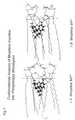
- hydrophilic portion of uncharged morphine MP' is limited to the three oxygen and the nitrogen atoms within the molecule. Accordingly, this hydrophilic portion of the molecule will orient towards the polar headgroups of phospholipid monolayers when the molecule is associated therewith ( Figure 1A).
- Lipids 100 mg, comprising 72 mg egg phosphatidylcholine (EPC) and 28 mg cholesterol (Ch) and uncharged morphine MP 0 , in EPC/MP 0 molar ratios of from 4 to 100 were dissolved in an organic solution, namely chloroform and methanol in a 10:1 ratio.
- the organic solution was dried under a nitrogen atmosphere, followed by one night in a vacuum.
- the encapsulation efficiencies are given in the following Table V. The encapsulation efficiencies progressively decreased with increasing EPC/MP 0 molar ratio down to about 80 % at a 20:1 ratio.
- liposomal morphine preparations may be prepared, as desired, with high and low levels of drug encapsulated therein, with or without extraliposomal crystals.
- Morphine formulations for human trials were prepared in PL/MP 0 ratios of 10, 26 and 52. As shown in Tables V, a molar ratio of 10 leads to extraliposomal crystals, whilst this is not the case for the two other preparations.
- the liposomal suspensions were placed in a dialysis bag without centrifugation and immersed in a 150 ml (corresponding to the human cerebrospinal fluid volume) solution of PBS at the physiological pH 7.4, and continuously renewed at the rate of the human cerebrospinal fluid, namely 23 ml per hour.
- Two preparations were tested under each experimental condition. Morphine was detected in the external medium in the three experiments outlining the liposomal release.
- Figure 2 illustrates the release of morphine outside the dialysis bag for two preparations obtained from a PL/MP 0 ratio of 26 in the lipid film. Peaks of morphine concentrations were observed which were considered to be due to the leakage of free morphine present in the dialysis bag.
- the chloroform + EPC phase was isolated, and 25 mg cholesterol was added in order to obtain an EPC/Cholesterol mole ratio 4:3.
- the mole ratio EPC/Morphine was 98 in this chloroform phase.
- Chloroform was evaporated and a dry lipid film was obtained and hydrated by 1 ml PBS pH 4.5 for 24 hours.
- Bupivacaine is an amphiphilic amino-amide long lasting local anaesthetic.
- the duration of analgesic action averages 2 to 4 hours following epidural (surgical or obstetrical) or spinal administration, and up to 12 hours in peripheral nerve blocks (References 27, 28).
- Side effects are motor and sympathetic blocks.
- Systemic central nervous system and cardiac toxicities have been observed, leading to seizure and cardiac failure. This systemic toxicity becomes apparent at plasma levels averaging 1.6 ⁇ g/ml which are close to 1 ⁇ g/ml therapeutic concentration.
- the association with liposomes aims at prolonging the duration of pain relief while avoiding limbs motor blockade and reducing systemic toxicity through slow liposomal release.
- Bupivacaine has a pK of 8.16. At this pH 50 % of the molecules are cations and 50 % are neutral. Acidic solutions are thus enriched with cationic species.
- Bupivacaine has two hydrophobic portions ; one is constituted by the phenyl ring with two methyl groups (xylidine group) on one side and the other by the terminal side aliphatic chain C 4 H 9 bound to the tertiary nitrogen atom of the other side. The hydrophilic part is around this tertiary central nitrogen atom.
- the log of the partition coefficient between water and octanol is 1.8, in the range for amphiphilic compounds, based on the partition coefficient (Reference 1).
- Both bupivacaine species are mainly inserted into the hydrophobic phase of the phospholipid layers, below the carbons C 2 -C 3 of the fatty acids which represents the hydrophobic/hydrophilic interface of the layers.
- the TAMMO predictions indicate that the two bupivacaine species offer hydrophobic bonds with the fatty acid chains of the phospholipids assembled in monolayers.
- the cationic form BP + offers a straight disposal into the phospholipid layers with hydrophobic bonds at the two ends, both for the hydrophobic xylidine moiety and the C 4 H 9 groups.
- the whole molecule lies in the hydrophobic phase of the monolayers, between the C 2 -C 3 interface.
- the uncharged compound BP 0 lies obliquely being in part in the hydrophilic phase above C 2 -C 3 but mainly penetrating into the hydrophobic phase. Both species are thus inserted inside the phospholipid layers at the fatty acid chain level.
- the liposome-associated bupivacaine formulations currently administered to humans are prepared from films of lipids 20 mg (14.4 mg EPC and 5.6 mg Cholesterol) and BP 0 varying from 2.5 to 10 mg. These films were hydrated by 1 ml buffer at pH 8.1 and suspended as MLVs with bupivacaine crystals inside and outside the phospholipid vescicles as seen by freeze-etching electron microscopy.
- Clinical preparations without crystals can be obtained from EPC/BP 0 drug ratio of 13 or above into the lipid film, i.e. at the limit of phospholipid bilayers saturation or above (Table VII).
- This film was suspended as MLVs in 1 ml buffer pH 8.1.
- a clinical formulation of bupivacaine 5 mg/ml (0.5 %) comprised 231 mg EPC and 90 mg cholesterol associated with 5 mg BP 0 and suspended in 1 ml buffer pH 8.1.
- a first liposomal bupivacaine formulation involved crystals; it was prepared from lipid films made of 14.4 mg EPC, 5.6 mg cholesterol and 5 mg apolar bupivacaine BP 0 hydrated by 1 ml PBS at pH 8.1. One milliliter was put in a dialysis bag immersed in 150 ml PBS pH 7.4 at 37°C continuously renewed at a rate of 23 ml/hr. The release of bupivacaine was measured by HPLC. A maximal concentration (7-8 ⁇ g/ml) was attained after 6-12 hours. The whole amount of bupivacaine was released from the liposomes after 2 days.
- the bupivacaine concentration was measured by UV spectrophotometry at 271.6 nm. After extraction of BP + in chloroform with EPC, 27.5 mg of cholesterol were added thereto.
- a further preparation of liposomal BP + pH 6.5 prepared as described above was inserted into a dialysis bag (5 ml containing 353.25 mg EPC and 25 mg BP + ). The bag was immersed in 145 ml PBS pH 7.4 with a renewal rate of 23 ml/hour. Samples of the pH 7.4 medium were harvested at different times and the concentration of bupivacaine was measured by UV spectrophotometry. After a 6 hour rapid transfer of the 25 % unencapsulated bupivacaine from the dialysis bag into the physiologic pH medium, a slow release of the liposomal bupivacaine occurred over a period of 3 days.
- the release profile of BP + is similar to those of the BP 0 formulations and does not depend on the amount of liposomal drug put in the dialysis bag : a concentration peak followed by a sustained slow release. But the duration of release was dependent on the liposomal bupivacaine load in the dialysis bag, varying from 3 days for 5 ml of the liposomal formulation to 24 - 48 hr for 1 ml of the liposomal formulation inside the dialysis bag .
- the combination of the conformational analysis TAMMO program and of liposome entrapment and release assays demonstrates that the cationic species of bupivacaine is able to cross cell membranes, in contrast to the current concept restricting the membrane permeation to the uncharged form of an amphiphilic compound (Reference 4).
- the combination TAMMO-liposome assays of the present invention thus seems relevant in predicting the behaviour of a small pharmaceutical molecule regarding its cell membrane permeation and may be incorporated as a tool in high-throughput screening complementary to combinatorial chemistry.
- Oxine (8-hydroxyquinoline) is an amphiphilic molecule presenting two aromatic rings with one nitrogen and one OH. Its pKa is 7.3. It is poorly soluble in water and highly soluble in organic solvents with a partition coefficient octanol/water of 67. The neutral molecule is predominant at the physiologic pH 7.4. But it is also found as a cation at acid pHs and as an anion at basic pHs. Its molecular weight is 186. Oxine is known as a bactericidal agent (Reference 30).
- the TAMMO program predicted an energy of insertion higher than the relationships between two molecules of DPPC and between DPPC and cholesterol.
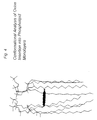
- the mode of insertion of oxine into DPPC monolayers is shown in Figure 4.
- the molecule offers hydrophobic bonds between its aromatic rings and the palmitic acid chains on one side, while the hydrophilic OH and nitrogen groups of the compound face the acyl chains of the second DPPC molecule on the other side. This allows the prediction that oxine would be able to be entrapped inside liposomal phospholipid layers, but would be unstable in those layers.
- This prediction agrees with the intracellular bactericidal mode of action of oxine (Reference 31) after crossing the cell membrane (Reference 32).
- the oxine-MLVs suspension was placed in a dialysis bag which was immersed in 10 ml PBS pH 7.4.
- the oxine appearing in the medium bathing the dialysis bag was titrated by spectrophotometry at 332 nm.
- a bulk of the liposomal compound was released in 20 minutes. The release then stopped until the pH 7.4 medium was replaced by a fresh solution, and a new leakage was observed.
- Oxine is known as a bactericidal agent which acts intracellularly by complexing cytoplasmic metal ions involved in enzymatic reactions.
- Oxine has been hypothesised to preliminarily cross the bacterial cell membrane following a gradient of concentration (References 30 to 32).
- the present liposomal release assays confirm this hypothesis and are in agreement with the prediction of the TAMMO program concerning the instability of oxine in DPPC monolayers.
- Tin(II) dioxinate (SnOx 2 ) is an amphiphilic compound comprising two molecules of 8-hydroxyquinoline (oxine) bound to a tin(II) atom. It is inserted into liposomes and radiolabelled with 99m-technetium without the additional formation of 99mTc-labelled tin colloids. (References 33, 34).
- Tin(II) dioxinate has a hydrophobic moiety comprising the two oxines and a tin(II) hydrophilic part. It is poorly soluble in water, insoluble in ether, ethanol, methanol, octanol, heptane, poorly soluble in chloroform, and moderately soluble in dimethyl sulfoxide (DMSO).
- DMSO dimethyl sulfoxide
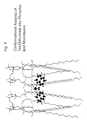
- This TAMMO prediction indicates that the whole oxinate molecule, including the "hydrophilic" tin(II) cation interacts with the fatty acid chains inside the hydrophobic phase of the phospholipid layers.
- the compound occupies the whole space between two adjacent phospholipid molecules.
- the Tin(II) ion merges into the hydrophilic phase which accounts for its oxido-reduction reaction with 99m Tc0 4 added in the suspension (References 33, 34).
- the energy of insertion is of the order of DPPC/DPPC the insertion of the two oxine moieties into the hydrophobic phase allows the prediction of high stability of the molecules. This prediction agrees with the correlation between the lack of bactericidal activity of dioxinate metal(II) and its unability to cross the cell membranes (References 31, 32).
- This mode of tin(II) dioxinate insertion into phospholipid layers is completely different from the three types of metal dioxinate relationships with liposomal phospholipids hypothesized by Hwang (Reference 35). According to this reference no deep bonds are predicted between the oxinate molecules and the inner hydrophobic fatty acid chains of the phospholipid layers. It can be implied from Hwang that the dioxinate groups of the compounds would be unable to insert into the hydrophobic phase of the phospholipid layers, i.e. the fatty acid chains. Thus, the relationship of the metal ion to phospholipid layers should be restricted to the hydrophilic polar head groups of the amphiphilic phospholipids.
- Egg yolk phosphatidylcholine (14.4 mg, 18.3 ⁇ mol) and cholesterol (5.6 mg, 13.7 ⁇ mol) were dissolved in chloroform with 0.1, 0.2, 0.3, 0.4, 0.5 mg (1.2 ⁇ mol) and 0.6 mg tin(II) dioxinate. After evaporation of the solvent, hydration occurred with NaCl 150 mM 1 ml. The MLVs thus prepared were washed 5 times in order to discard free tin(II) dioxinate.
- the number of tin(II) dioxinate molecules inserted into liposomes increased with the number of SnOx 2 molecules present in the preliposomal lipid film. Liposomal saturation occurred for a number of moles averaging 1.23 ⁇ moles SnOx 2 inserted into 18.3 ⁇ moles EPC (EPC/SnOx 2 mole ratio of 15) with an encapsulation efficiency of 30 % for MLVs.
- the energy of insertion is equivalent to one of two DPPC molecules and lower than that for bupivacaine and morphine
- the multiple bonds of the compound in its whole chemical structure and inside the hydrophobic phase ensure a high stability of encapsulation provided that the EPC/tin(II) dioxinate molar ratio is not higher than the 15 saturating ratio in the lipid film. This indicates that the mode and the energies of insertion are both necessary to predict the stability of the liposomal entrapment of an amphiphilic compound.
- Clonidine is an amphiphilic antihypertensive agent (Reference 36). In the 1990s, clonidine started to be used to improve the quality of analgesia. Unfortunately, when administered in the epidural space of humans, the analgesic effect is associated with a 1 day long hypotensive action (Reference 37). The aim of the association of clonidine with liposome carriers would thus be to reduce the hypotensive effect, whilst maintaining and even improving the analgesic action, through a prolonged slow release from the phospholipid vesicles.
- Clonidine has a pK of 8.2. It has a hexacyclic hydrophobic part with two chlorine atoms and a hydrophilic pentacyclic part with two nitrogen atoms. It is highly soluble in acidic solution as a cation, and soluble in octanol when uncharged. Its log Poct/buffer at pH 7.4 is 1.59, in the zone of amphiphilic molecules with uncertainty regarding the prediction of liposomal encapsulation based on partition coefficients (Reference 1).
- the energies of insertion of both CL 0 and CL + are lower than those between two molecules of DPPC or DPPC and cholesterol.
- the stability of both clonidine species inside phospholipid vesicles can thus be predicted as being too low to ensure the stability of the compound inside the fatty acid lipid phase monolayers.
- both CL 0 and CL + species are bound to the end of the phospolipid fatty acid chains through their hydrophobic part, close to the hydrophilic polar phosphocholine head groups, and close to (CL 0 ) or inside (CL + ) the hydrophilic phase above the C 2 -C 3 interface.
- the CL + proton interacts with a phosphate group of the polar head, whilst the phenyl group interacts with the first carbon of the fatty acid chains in both species.
- the liposomal encapsulation of clonidine was measured by U.V. spectrophotometry at 271 nm. Lipid films at 14.4 mg EPC (18.3 ⁇ moles), 5.6 mg Ch and 0.5 mg CL 0 (2.2 ⁇ moles) were hydrated by 1 ml isotonic buffer pH 7.8 (71.5 % CL + ; 28.5 % CL 0 ). The encapulation efficiency was :
- the encapsulation efficiency was thus significantly and reproducibly low.
- the present invention thus allows the prediction the mode of insertion and therefrom the stability of an amphiphilic compound, as uncharged or ionic species, into a phospholipid layer. These predictions in turn enable the feasibility of the two species of an amphiphilic compound liposomal entrapment to be decided. They also allow the prediction of whether or not a compound will permeate the cell membrane.
Landscapes
- Health & Medical Sciences (AREA)
- Chemical & Material Sciences (AREA)
- Life Sciences & Earth Sciences (AREA)
- Medicinal Chemistry (AREA)
- Pharmacology & Pharmacy (AREA)
- Epidemiology (AREA)
- Dispersion Chemistry (AREA)
- Animal Behavior & Ethology (AREA)
- General Health & Medical Sciences (AREA)
- Public Health (AREA)
- Veterinary Medicine (AREA)
- Medicinal Preparation (AREA)
- Pharmaceuticals Containing Other Organic And Inorganic Compounds (AREA)
Claims (30)
- Verfahren zur Herstellung multilamellarer Liposomen und zum Einbringen in die Phospholipiddoppelschichten ionischer Spezies amphiphiler Verbindungen, die einen hydrophilen und einen hydrophoben Teil umfassen, wobei das Verfahren die Schritte umfasst:i) Extrahieren der hydrophilen ionischen Spezies aus einem wässrigen Medium mit einem organischen Lösungsmittel, worin das Phospholipid gelöst wird;ii) Herstellen eines Lipidfilms, umfassend das Phospholipid und die amphiphile Verbindung, durch das Verdampfen dieser Lösung zur Trockene; undiii) Herstellen einer Suspension aus multilamellaren Liposomen durch Hydratisieren des Lipidfilms bei einem sauren pH-Wert im Bereich von 4 bis 6,5, auf eine solche Art, dass die amphiphile Verbindung zumindest teilsweise in die Phospholipidschicht nahe der hydrophilen Fettsäure-C2-C3-Grenzschicht eingebaut wird.
- Verfahren nach Anspruch 1, worin die Art des Einbaus der amphiphilen Verbindung in die liposomalen Phospholipiddoppelschichten und ihre Stabilität darin durch numerische Molekularmodelling- oder Konformationsanalysen vorausgesagt werden.
- Verfahren nach Anspruch 1 oder Anspruch 2, worin der getrocknete Lipidfilm aus Schritt (iii) bei einem pH-Wert der wässrigen Lösung hydratisiert wird, worin das amphiphile lon zuerst gelöst wurde.
- Verfahren nach einem der vorhergehenden Ansprüche, worin die ionische Spezies kationisches Bupivacain ist.
- Verfahren nach Anspruch 4, worin das Molverhältnis von Phospholipid/Bupivacain mindestens 13 ist.
- Verfahren nach Anspruch 4 oder 5, worin der Lipidfilm aus Schritt (ii) bei einem gepufferten mittleren pH-Wert von 6,5 hydratisiert wird.
- Verfahren nach einem der Ansprüche 1 bis 3, worin die ionische Spezies kationisches Morphin ist.
- Verfahren nach Anspruch 7, worin das Molverhältnis von Phospholipid/Morphin mindestens 20 ist.
- Verfahren nach Anspruch 7 oder Anspruch 8, worin das Lipid aus Schritt (ii) bei einem gepufferten mittleren pH-Wert von 5 hydratisiert wird.
- Verfahren nach einem der Ansprüche 1 bis 3, worin die ionische Spezies Zinn(II)dioxinat ist.
- Verfahren nach Anspruch 10, worin das Molverhältnis von Phospholipid/Zinn(ll)dioxinat mindestens 15 ist.
- Verfahren nach Anspruch 10 oder Anspruch 11, worin der Lipidfilm aus Schritt (ii) bei einem gepufferten mittleren pH-Wert von 6,5 hydratisiert wird.
- Verfahren zum Herstellen multilamellarer Liposomen und zum Einbringen in die Phospholipiddoppelschichten ungeladener amphiphiler Verbindungen, die einen hydrophilen und einen hydrophoben Teil umfassen, wobei das Verfahren die Schritte umfasst:a) Lösen der apolaren hydrophoben Spezies der amphiphilen Verbindung in den Phospholipiddoppelschichten unter Verwendung vorbestimmter Phospholipid/Verbindung-Molverhältnisse, um Präparationen von Liposomen zu erhalten, wobei die Verbindung ausschließlich in den Liposomen ohne Kristalle der Verbindung eingeschlossen ist oder teilweise in den Liposomen mit extraliposomalen Kristallen eingeschlossen ist;b) Herstellen eines Lipidfilms, umfassend das Phospholipid und die amphiphile Verbindung durch das Verdampfen dieser Lösung bis zur Trockene; undc) Herstellen einer Suspension aus multilamellaren Liposomen durch Hydratisieren des Lipidfilms bei einem pH-Wert, bei welchem die amphiphile Verbindung in einer ungeladenen Form bleibt, auf eine solche Art, dass die amphiphile Verbindung mindestens teilweise in die Phospholipidschicht nahe der hydrophilen Fettsäure-C2-C3-Grenzschicht eingelagert wird.
- Verfahren nach Anspruch 13, worin die Art der Einlagerung der amphiphilen Verbindung in die Liposomenphospholipiddoppelschichten und ihre Stabilität darin durch numerische Molekularmodelling- oder Konformationsanalysen vorhergesagt wird.
- Verfahren nach Anspruch 13 oder Anspruch 14, worin das molare Verhältnis von Phospholipid/Verbindung, bei welchem die Verbindung ausschließlich in den Liposomen ohne Kristalle der Verbindung eingeschlossen wird oder teilweise in die Liposomen mit extraliposomalen Kristallen, jedoch ohne intraliposomale Kristalle eingeschlossen wird, durch schrittweises Erhöhen des Molverhältnisses von Phospholipid/Verbindung, Hydratisieren der Filme als Supensionen multilamellarer Vesikel und Bestimmen des Vorliegens oder des Fehlens extraliposomaler Kristalle oder intraliposomaler Kristalle durch Licht- und/oder Elektronenmikroskopie vorbestimmt wird.
- Verfahren nach einem der Ansprüche 13 bis 15, worin die ungeladene amphiphile Verbindung Bupivacain ist und das Molverhältnis von Phospholipid/Bupivacin in dem Lipidfilm kleiner als 13 ist, wobei das Bupivacain teilweise in den Phospholipiddoppelschichten mit extraliposomalen Kristallen einschlossen wird.
- Verfahren nach einem der Ansprüche 13 bis 15, worin die ungeladene amphiphile Verbindung Bupivacain ist und das molare Verhältnis von Phospholipid/Bupivacain in dem Lipidfilm 13 oder höher ist, wobei das Bupivacain in den Phospholipiddoppelschichten ohne das Vorliegen von extraliposomalen Bupivacainkristallen eingeschlossenwird.
- Verfahren nach einem der Ansprüche 13 bis 15, worin die ungeladene amphiphile Verbindung Morphin ist und das Molverhältnis von Phospholipid/Morphin in dem Lipidfilm kleiner als 20 ist, wobei das Morphin teilweise innerhalb der Phospholipiddoppelschichten mit extraliposomalen Morphinkristallen eingeschlossen wird.
- Verfahren nach einem der Ansprüche 13 bis 15, worin die ungeladene amphiphile Verbindung Morphin ist und das Molverhältnis von Phospholipid/Morphin in dem Lipidfilm 20 oder höher ist, wobei das Morphin in den Phospholipiddoppelschichten ohne das Vorliegen von extraliposomalen Morphinkristallen eingeschlossen wird.
- Verfahren nach Anspruch 19, worin das Molverhältnis bis zu 40 ist.
- Verfahren nach einem der Ansprüche 13 bis 20, worin die Hydratisierung des Films in Schritt (c) bei einem pH-Wert von 8,1 durchgeführt wird.
- Verfahren nach einem der vorhergehenden Ansprüche, worin der Lipidfilm, der das Phospholipid und die amphiphile Verbindung umfasst, mit einem Puffer oder 0,9 %iger NaCl auf einen End-pH-Wert im Bereich von 3,5 bis 10,5 hydratisiert wird, wobei der spezielle pH-Bereich, der ausgewählt wird, kompatibel für eine injizierbare Formulierung ist und als eine Funktion des pKs-Wertes der amphiphilen Verbindung und in Abhängigkeit davon ob die gewünschte klinische Formulierung der amphiphilen Verbindung eine ungeladene oder ionische Spezies ist, ausgewählt wird.
- Verfahren nach einem der vorhergehenden Ansprüche, worin das Phospholipid L- - oder L- -Phosphatidylcholin oder ein Gemisch davon ist.
- Verfahren nach einem der vorhergehenden Ansprüche, worin der Lipidfilm zusätzlich ein Sterol umfasst.
- Verfahren nach Anspruch 23, worin das molare Verhältnis von Phospholipid:Sterol im Bereich von 1,0 bis 1:1 ist.
- Verfahren nach einem der vorhergehenden Ansprüche, worin die Suspensionen der multilamellaren Liposomen in einer injizierbaren Form hergestellt werden.
- Pharmazeutische Zusammensetzung, welche multilamellare Liposomen umfasst, die mit einer amphiphilen Verbindung assoziiert sind, wleche durch ein Verfahren nach einem der vorhergehenden Ansprüche hergestellt worden ist.
- Pharmazeutische Zusammensetzung nach Anspruch 27, welche in einer injizierbaren Form ist.
- Verfahren zum Bestimmen der Permeation einer Zellmembran durch eine amphiphile Verbindung als eine ungeladene oder ionische Spezies, wobei das Verfahren das Vorhersagen der Einbauart in und der Stabilität der Verbindung in Phospholipidmonoschichten durch numerische Molekularmodellingkonformationsanalysen, Herstellung multilamellarer Liposomen, Einbringen der amphiphilen Verbindungen gemäß einem Verfahren nach Anspruch 1 oder Anspruch 10 und Bestimmen des Freisetzungsverhältnisses der amphiphilen Verbindung in ein kontinuierlich entferntes gepuffertes Medium bei einem pH-Wert von 7,4 umfasst.
- Verfahren nach Anspruch 29, welches verwendet wird, um eine amphiphile Verbindung für Zellmembranpermeation zu screenen.
Applications Claiming Priority (3)
| Application Number | Priority Date | Filing Date | Title |
|---|---|---|---|
| GBGB9605915.9A GB9605915D0 (en) | 1996-03-21 | 1996-03-21 | Liposome encapsulated amphiphilic drug compositions |
| GB9605915 | 1996-03-21 | ||
| PCT/EP1997/001384 WO1997034582A1 (en) | 1996-03-21 | 1997-03-19 | Liposome encapsulated amphiphilic drug compositions |
Publications (2)
| Publication Number | Publication Date |
|---|---|
| EP0904057A1 EP0904057A1 (de) | 1999-03-31 |
| EP0904057B1 true EP0904057B1 (de) | 2001-06-20 |
Family
ID=10790761
Family Applications (1)
| Application Number | Title | Priority Date | Filing Date |
|---|---|---|---|
| EP97914270A Expired - Lifetime EP0904057B1 (de) | 1996-03-21 | 1997-03-19 | Liposomverkapselte amphiphile arzneistoffe enthaltende mittel |
Country Status (9)
| Country | Link |
|---|---|
| US (1) | US6149937A (de) |
| EP (1) | EP0904057B1 (de) |
| JP (1) | JP2001500105A (de) |
| AT (1) | ATE202278T1 (de) |
| AU (1) | AU2158097A (de) |
| CA (1) | CA2250073A1 (de) |
| DE (1) | DE69705310T2 (de) |
| GB (1) | GB9605915D0 (de) |
| WO (1) | WO1997034582A1 (de) |
Families Citing this family (27)
| Publication number | Priority date | Publication date | Assignee | Title |
|---|---|---|---|---|
| JP4575592B2 (ja) | 1997-11-14 | 2010-11-04 | パシラ ファーマシューティカルズ インコーポレーテッド | 多小胞リポソームの製造 |
| WO2000003660A1 (en) | 1998-07-17 | 2000-01-27 | Skyepharma, Inc. | Biodegradable compositions for the controlled release of encapsulated substances |
| US6676963B1 (en) * | 2000-10-27 | 2004-01-13 | Barnes-Jewish Hospital | Ligand-targeted emulsions carrying bioactive agents |
| US20020073441A1 (en) | 2000-12-13 | 2002-06-13 | Ross Brian D. | Compositions and methods for detecting proteolytic activity |
| US20030096000A1 (en) * | 2001-05-31 | 2003-05-22 | Solis Rosa Maria | Encapsulation of nanosuspensions in liposomes and microspheres |
| WO2003047499A2 (en) | 2001-12-04 | 2003-06-12 | Ben Gurion University Of The Negev Research And Development Authority | Amphiphilic compounds and vesicles/liposomes for organ-specific drug targeting |
| EP1759691A1 (de) * | 2003-11-20 | 2007-03-07 | Delex Therapeutics Inc. | Stabile Liposomenzubereitung |
| MXPA06005688A (es) * | 2003-11-20 | 2006-12-14 | Delex Therapeutics Inc | Composiciones estables de liposoma que comprenden una amina lipofilica que contiene agentes farmaceuticos. |
| CN102138927B (zh) * | 2011-01-27 | 2012-07-25 | 浙江大学 | 氯喹和阿霉素共载脂质体及其制备方法 |
| GB201505527D0 (en) | 2015-03-31 | 2015-05-13 | Jmedtech Pte Ltd | Composition |
| MX381655B (es) | 2015-05-04 | 2025-03-13 | Versantis AG | Metodo para preparar vesiculas con gradiente de ph de transmembrana. |
| CN110325179A (zh) * | 2016-12-26 | 2019-10-11 | 塞尔利克斯生物私人有限公司 | 用于治疗慢性疼痛的组合物和方法 |
| JP6974661B2 (ja) * | 2017-03-16 | 2021-12-01 | 小林 裕司 | 水溶性エキス輸送作用を呈する環状ペプチド誘導体 |
| MX393126B (es) | 2017-08-28 | 2025-03-24 | Tlc Biopharmaceuticals Inc | Composiciones anestesicas de liberacion sostenida, y metodos de preparacion de las mismas |
| JP2020536955A (ja) | 2017-10-06 | 2020-12-17 | ファウンドリー セラピューティクス, インコーポレイテッド | 治療剤の制御放出のための埋込み可能なデポー |
| EP3737433A1 (de) | 2018-01-08 | 2020-11-18 | Foundry Therapeutics, Inc. | Vorrichtungen, systeme und verfahren zur behandlung von intraluminalem krebs durch kontrollierte abgabe von therapeutika |
| CN115350154A (zh) * | 2018-03-30 | 2022-11-18 | 美商Tlc生物医药公司 | 用以制备麻醉剂组成物的脂质饼块及其用途 |
| WO2019221853A1 (en) | 2018-05-12 | 2019-11-21 | Foundry Therapeutics, Inc. | Implantable depots for the controlled release of therapeutic agents |
| EP3843710A1 (de) | 2018-08-28 | 2021-07-07 | Foundry Therapeutics, Inc. | Polymerimplantate |
| US11033495B1 (en) | 2021-01-22 | 2021-06-15 | Pacira Pharmaceuticals, Inc. | Manufacturing of bupivacaine multivesicular liposomes |
| US11357727B1 (en) | 2021-01-22 | 2022-06-14 | Pacira Pharmaceuticals, Inc. | Manufacturing of bupivacaine multivesicular liposomes |
| US12151024B2 (en) | 2021-01-22 | 2024-11-26 | Pacira Pharmaceuticals, Inc. | Manufacturing of bupivacaine multivesicular liposomes |
| US11278494B1 (en) | 2021-01-22 | 2022-03-22 | Pacira Pharmaceuticals, Inc. | Manufacturing of bupivacaine multivesicular liposomes |
| GB2627096A (en) | 2021-10-14 | 2024-08-14 | Pacira Pharmaceuticals Inc | Bupivacaine multivesicular liposome formulations and uses thereof |
| US12251472B1 (en) | 2024-05-20 | 2025-03-18 | Pacira Pharmaceuticals, Inc. | Manufacturing of bupivacaine multivesicular liposomes |
| US12251468B1 (en) | 2024-05-20 | 2025-03-18 | Pacira Pharmaceuticals, Inc. | Manufacturing of bupivacaine multivesicular liposomes |
| US12246092B1 (en) | 2024-05-20 | 2025-03-11 | Pacira Pharmaceuticals, Inc. | Manufacturing of bupivacaine multivesicular liposomes |
Family Cites Families (6)
| Publication number | Priority date | Publication date | Assignee | Title |
|---|---|---|---|---|
| EP0152379A3 (de) * | 1984-02-15 | 1986-10-29 | Ciba-Geigy Ag | Verfahren zur Herstellung von pharmazeutischen Zusammensetzungen enthaltend unilamellare Liposomen |
| US5244678A (en) * | 1986-01-14 | 1993-09-14 | Ire-Celltarg S.A. | Pharmaceutical composition containing a local anesthetic and/or centrally acting analgesic encapsulated in liposomes |
| FR2592791A1 (fr) * | 1986-01-14 | 1987-07-17 | Ire Celltarg Sa | Composition pharmaceutique, contenant un anesthesique local et/ou un analgesique central encapsule dans des liposomes |
| AU598958B2 (en) * | 1987-11-12 | 1990-07-05 | Vestar, Inc. | Improved amphotericin b liposome preparation |
| DE4038075C1 (en) * | 1990-11-29 | 1992-03-19 | B. Braun Melsungen Ag, 3508 Melsungen, De | Encapsulating solid or liq. lipophilic agents - comprises mixing hydration medium with phospholipid increasing temp. to above soln. phase change temp. and adding remaining medium |
| CA2168260C (en) * | 1993-07-28 | 2000-04-11 | Marianna Foldvari | Biphasic multilamellar lipid vesicles |
-
1996
- 1996-03-21 GB GBGB9605915.9A patent/GB9605915D0/en active Pending
-
1997
- 1997-03-19 US US09/142,260 patent/US6149937A/en not_active Expired - Fee Related
- 1997-03-19 JP JP09533155A patent/JP2001500105A/ja active Pending
- 1997-03-19 DE DE69705310T patent/DE69705310T2/de not_active Expired - Fee Related
- 1997-03-19 CA CA002250073A patent/CA2250073A1/en not_active Abandoned
- 1997-03-19 EP EP97914270A patent/EP0904057B1/de not_active Expired - Lifetime
- 1997-03-19 AT AT97914270T patent/ATE202278T1/de not_active IP Right Cessation
- 1997-03-19 WO PCT/EP1997/001384 patent/WO1997034582A1/en not_active Ceased
- 1997-03-19 AU AU21580/97A patent/AU2158097A/en not_active Abandoned
Also Published As
| Publication number | Publication date |
|---|---|
| GB9605915D0 (en) | 1996-05-22 |
| JP2001500105A (ja) | 2001-01-09 |
| DE69705310T2 (de) | 2001-10-11 |
| ATE202278T1 (de) | 2001-07-15 |
| US6149937A (en) | 2000-11-21 |
| CA2250073A1 (en) | 1997-09-25 |
| EP0904057A1 (de) | 1999-03-31 |
| AU2158097A (en) | 1997-10-10 |
| WO1997034582A1 (en) | 1997-09-25 |
| DE69705310D1 (de) | 2001-07-26 |
Similar Documents
| Publication | Publication Date | Title |
|---|---|---|
| US6149937A (en) | Liposome encapsulated amphiphilic drug compositions | |
| EP1105098B1 (de) | Mittels ammoniumsulfatgradient hergestellte liposomale therapeutische zusammensetzungen | |
| AU735588B2 (en) | Sustained-release liposomal anesthetic compositions | |
| US6221385B1 (en) | Freeze dried liposome encapsulated amphiphilic drug compositions and a process for the preparation thereof | |
| US4241046A (en) | Method of encapsulating biologically active materials in lipid vesicles | |
| US4235871A (en) | Method of encapsulating biologically active materials in lipid vesicles | |
| US20110250266A1 (en) | Liposomal systems comprising sphingomyelin | |
| EP1448165B1 (de) | Lipidträgerzusammensetzungen und verfahren zur verbesserten wirkstoffzurückhaltung | |
| US20030129224A1 (en) | Lipid carrier compositions and methods for improved drug retention | |
| KR20060123341A (ko) | 친유성 아민 함유 약제를 포함하는 안정한 리포좀 조성물 | |
| WO2007049278A2 (en) | A method for preparing liposomes and uses thereof | |
| WO2007049279A2 (en) | A liposomal combination and uses thereof | |
| EP1759691A1 (de) | Stabile Liposomenzubereitung | |
| Webb et al. | A cationic liposomal vincristine formulation with improved vincristine retention, extended circulation lifetime and increased anti-tumor activity | |
| Cullis et al. | Model membrane systems as drug delivery vehicles | |
| Mowat | Development of liposomal bupivacaine using a transmembrane pH gradient | |
| Baker | Studies on liposome entrapped sitamaquine | |
| Kulkarni | Liposomal formulation, in-vitro characterization, delivery and cellular studies of colchicine | |
| HK1156256A (en) | Sustained-release liposomal anesthetic compositions | |
| HK1145966B (en) | Sustained-release liposomal anesthetic compositions |
Legal Events
| Date | Code | Title | Description |
|---|---|---|---|
| PUAI | Public reference made under article 153(3) epc to a published international application that has entered the european phase |
Free format text: ORIGINAL CODE: 0009012 |
|
| 17P | Request for examination filed |
Effective date: 19981019 |
|
| AK | Designated contracting states |
Kind code of ref document: A1 Designated state(s): AT BE CH DE DK ES FI FR GB GR IE IT LI LU MC NL PT SE |
|
| GRAG | Despatch of communication of intention to grant |
Free format text: ORIGINAL CODE: EPIDOS AGRA |
|
| GRAG | Despatch of communication of intention to grant |
Free format text: ORIGINAL CODE: EPIDOS AGRA |
|
| GRAH | Despatch of communication of intention to grant a patent |
Free format text: ORIGINAL CODE: EPIDOS IGRA |
|
| 17Q | First examination report despatched |
Effective date: 20001114 |
|
| GRAH | Despatch of communication of intention to grant a patent |
Free format text: ORIGINAL CODE: EPIDOS IGRA |
|
| GRAA | (expected) grant |
Free format text: ORIGINAL CODE: 0009210 |
|
| AK | Designated contracting states |
Kind code of ref document: B1 Designated state(s): AT BE CH DE DK ES FI FR GB GR IE IT LI LU MC NL PT SE |
|
| PG25 | Lapsed in a contracting state [announced via postgrant information from national office to epo] |
Ref country code: FI Free format text: LAPSE BECAUSE OF FAILURE TO SUBMIT A TRANSLATION OF THE DESCRIPTION OR TO PAY THE FEE WITHIN THE PRESCRIBED TIME-LIMIT Effective date: 20010620 |
|
| REF | Corresponds to: |
Ref document number: 202278 Country of ref document: AT Date of ref document: 20010715 Kind code of ref document: T |
|
| REG | Reference to a national code |
Ref country code: CH Ref legal event code: NV Representative=s name: BOVARD AG PATENTANWAELTE Ref country code: CH Ref legal event code: EP |
|
| REG | Reference to a national code |
Ref country code: IE Ref legal event code: FG4D |
|
| REF | Corresponds to: |
Ref document number: 69705310 Country of ref document: DE Date of ref document: 20010726 |
|
| ET | Fr: translation filed | ||
| ITF | It: translation for a ep patent filed | ||
| PG25 | Lapsed in a contracting state [announced via postgrant information from national office to epo] |
Ref country code: SE Free format text: LAPSE BECAUSE OF FAILURE TO SUBMIT A TRANSLATION OF THE DESCRIPTION OR TO PAY THE FEE WITHIN THE PRESCRIBED TIME-LIMIT Effective date: 20010920 Ref country code: PT Free format text: LAPSE BECAUSE OF FAILURE TO SUBMIT A TRANSLATION OF THE DESCRIPTION OR TO PAY THE FEE WITHIN THE PRESCRIBED TIME-LIMIT Effective date: 20010920 Ref country code: DK Free format text: LAPSE BECAUSE OF FAILURE TO SUBMIT A TRANSLATION OF THE DESCRIPTION OR TO PAY THE FEE WITHIN THE PRESCRIBED TIME-LIMIT Effective date: 20010920 |
|
| PG25 | Lapsed in a contracting state [announced via postgrant information from national office to epo] |
Ref country code: GR Free format text: LAPSE BECAUSE OF FAILURE TO SUBMIT A TRANSLATION OF THE DESCRIPTION OR TO PAY THE FEE WITHIN THE PRESCRIBED TIME-LIMIT Effective date: 20010921 |
|
| PG25 | Lapsed in a contracting state [announced via postgrant information from national office to epo] |
Ref country code: ES Free format text: LAPSE BECAUSE OF FAILURE TO SUBMIT A TRANSLATION OF THE DESCRIPTION OR TO PAY THE FEE WITHIN THE PRESCRIBED TIME-LIMIT Effective date: 20011220 |
|
| REG | Reference to a national code |
Ref country code: GB Ref legal event code: IF02 |
|
| PGFP | Annual fee paid to national office [announced via postgrant information from national office to epo] |
Ref country code: GB Payment date: 20020111 Year of fee payment: 6 |
|
| PGFP | Annual fee paid to national office [announced via postgrant information from national office to epo] |
Ref country code: DE Payment date: 20020115 Year of fee payment: 6 |
|
| PGFP | Annual fee paid to national office [announced via postgrant information from national office to epo] |
Ref country code: FR Payment date: 20020130 Year of fee payment: 6 |
|
| PGFP | Annual fee paid to national office [announced via postgrant information from national office to epo] |
Ref country code: BE Payment date: 20020205 Year of fee payment: 6 |
|
| PGFP | Annual fee paid to national office [announced via postgrant information from national office to epo] |
Ref country code: CH Payment date: 20020312 Year of fee payment: 6 |
|
| PG25 | Lapsed in a contracting state [announced via postgrant information from national office to epo] |
Ref country code: MC Free format text: LAPSE BECAUSE OF NON-PAYMENT OF DUE FEES Effective date: 20020319 Ref country code: LU Free format text: LAPSE BECAUSE OF NON-PAYMENT OF DUE FEES Effective date: 20020319 Ref country code: IE Free format text: LAPSE BECAUSE OF NON-PAYMENT OF DUE FEES Effective date: 20020319 |
|
| PGFP | Annual fee paid to national office [announced via postgrant information from national office to epo] |
Ref country code: AT Payment date: 20020322 Year of fee payment: 6 |
|
| PGFP | Annual fee paid to national office [announced via postgrant information from national office to epo] |
Ref country code: NL Payment date: 20020328 Year of fee payment: 6 |
|
| PLBE | No opposition filed within time limit |
Free format text: ORIGINAL CODE: 0009261 |
|
| STAA | Information on the status of an ep patent application or granted ep patent |
Free format text: STATUS: NO OPPOSITION FILED WITHIN TIME LIMIT |
|
| 26N | No opposition filed | ||
| REG | Reference to a national code |
Ref country code: IE Ref legal event code: MM4A |
|
| PG25 | Lapsed in a contracting state [announced via postgrant information from national office to epo] |
Ref country code: GB Free format text: LAPSE BECAUSE OF NON-PAYMENT OF DUE FEES Effective date: 20030319 Ref country code: AT Free format text: LAPSE BECAUSE OF NON-PAYMENT OF DUE FEES Effective date: 20030319 |
|
| PG25 | Lapsed in a contracting state [announced via postgrant information from national office to epo] |
Ref country code: LI Free format text: LAPSE BECAUSE OF NON-PAYMENT OF DUE FEES Effective date: 20030331 Ref country code: CH Free format text: LAPSE BECAUSE OF NON-PAYMENT OF DUE FEES Effective date: 20030331 Ref country code: BE Free format text: LAPSE BECAUSE OF NON-PAYMENT OF DUE FEES Effective date: 20030331 |
|
| BERE | Be: lapsed |
Owner name: *VRIJE UNIVERSITEIT BRUSSEL Effective date: 20030331 |
|
| PG25 | Lapsed in a contracting state [announced via postgrant information from national office to epo] |
Ref country code: NL Free format text: LAPSE BECAUSE OF NON-PAYMENT OF DUE FEES Effective date: 20031001 Ref country code: DE Free format text: LAPSE BECAUSE OF NON-PAYMENT OF DUE FEES Effective date: 20031001 |
|
| GBPC | Gb: european patent ceased through non-payment of renewal fee |
Effective date: 20030319 |
|
| REG | Reference to a national code |
Ref country code: CH Ref legal event code: PL |
|
| PG25 | Lapsed in a contracting state [announced via postgrant information from national office to epo] |
Ref country code: FR Free format text: LAPSE BECAUSE OF NON-PAYMENT OF DUE FEES Effective date: 20031127 |
|
| NLV4 | Nl: lapsed or anulled due to non-payment of the annual fee |
Effective date: 20031001 |
|
| REG | Reference to a national code |
Ref country code: FR Ref legal event code: ST |
|
| PG25 | Lapsed in a contracting state [announced via postgrant information from national office to epo] |
Ref country code: IT Free format text: LAPSE BECAUSE OF NON-PAYMENT OF DUE FEES;WARNING: LAPSES OF ITALIAN PATENTS WITH EFFECTIVE DATE BEFORE 2007 MAY HAVE OCCURRED AT ANY TIME BEFORE 2007. THE CORRECT EFFECTIVE DATE MAY BE DIFFERENT FROM THE ONE RECORDED. Effective date: 20050319 |