EP0903902B1 - Informationszugriffssystem und -verfahren - Google Patents
Informationszugriffssystem und -verfahren Download PDFInfo
- Publication number
- EP0903902B1 EP0903902B1 EP98305682A EP98305682A EP0903902B1 EP 0903902 B1 EP0903902 B1 EP 0903902B1 EP 98305682 A EP98305682 A EP 98305682A EP 98305682 A EP98305682 A EP 98305682A EP 0903902 B1 EP0903902 B1 EP 0903902B1
- Authority
- EP
- European Patent Office
- Prior art keywords
- information
- access
- content
- user
- information content
- Prior art date
- Legal status (The legal status is an assumption and is not a legal conclusion. Google has not performed a legal analysis and makes no representation as to the accuracy of the status listed.)
- Expired - Lifetime
Links
Images

Classifications
-
- H—ELECTRICITY
- H04—ELECTRIC COMMUNICATION TECHNIQUE
- H04L—TRANSMISSION OF DIGITAL INFORMATION, e.g. TELEGRAPHIC COMMUNICATION
- H04L67/00—Network arrangements or protocols for supporting network services or applications
- H04L67/01—Protocols
- H04L67/02—Protocols based on web technology, e.g. hypertext transfer protocol [HTTP]
-
- H—ELECTRICITY
- H04—ELECTRIC COMMUNICATION TECHNIQUE
- H04L—TRANSMISSION OF DIGITAL INFORMATION, e.g. TELEGRAPHIC COMMUNICATION
- H04L67/00—Network arrangements or protocols for supporting network services or applications
- H04L67/2866—Architectures; Arrangements
- H04L67/2885—Hierarchically arranged intermediate devices, e.g. for hierarchical caching
-
- H—ELECTRICITY
- H04—ELECTRIC COMMUNICATION TECHNIQUE
- H04L—TRANSMISSION OF DIGITAL INFORMATION, e.g. TELEGRAPHIC COMMUNICATION
- H04L67/00—Network arrangements or protocols for supporting network services or applications
- H04L67/50—Network services
- H04L67/52—Network services specially adapted for the location of the user terminal
-
- H—ELECTRICITY
- H04—ELECTRIC COMMUNICATION TECHNIQUE
- H04L—TRANSMISSION OF DIGITAL INFORMATION, e.g. TELEGRAPHIC COMMUNICATION
- H04L67/00—Network arrangements or protocols for supporting network services or applications
- H04L67/50—Network services
- H04L67/55—Push-based network services
-
- H—ELECTRICITY
- H04—ELECTRIC COMMUNICATION TECHNIQUE
- H04L—TRANSMISSION OF DIGITAL INFORMATION, e.g. TELEGRAPHIC COMMUNICATION
- H04L67/00—Network arrangements or protocols for supporting network services or applications
- H04L67/50—Network services
- H04L67/56—Provisioning of proxy services
- H04L67/568—Storing data temporarily at an intermediate stage, e.g. caching
-
- H—ELECTRICITY
- H04—ELECTRIC COMMUNICATION TECHNIQUE
- H04L—TRANSMISSION OF DIGITAL INFORMATION, e.g. TELEGRAPHIC COMMUNICATION
- H04L67/00—Network arrangements or protocols for supporting network services or applications
- H04L67/50—Network services
- H04L67/60—Scheduling or organising the servicing of application requests, e.g. requests for application data transmissions using the analysis and optimisation of the required network resources
- H04L67/63—Routing a service request depending on the request content or context
-
- H—ELECTRICITY
- H04—ELECTRIC COMMUNICATION TECHNIQUE
- H04L—TRANSMISSION OF DIGITAL INFORMATION, e.g. TELEGRAPHIC COMMUNICATION
- H04L9/00—Cryptographic mechanisms or cryptographic arrangements for secret or secure communications; Network security protocols
- H04L9/40—Network security protocols
-
- H—ELECTRICITY
- H04—ELECTRIC COMMUNICATION TECHNIQUE
- H04W—WIRELESS COMMUNICATION NETWORKS
- H04W4/00—Services specially adapted for wireless communication networks; Facilities therefor
- H04W4/02—Services making use of location information
-
- H—ELECTRICITY
- H04—ELECTRIC COMMUNICATION TECHNIQUE
- H04L—TRANSMISSION OF DIGITAL INFORMATION, e.g. TELEGRAPHIC COMMUNICATION
- H04L69/00—Network arrangements, protocols or services independent of the application payload and not provided for in the other groups of this subclass
- H04L69/30—Definitions, standards or architectural aspects of layered protocol stacks
- H04L69/32—Architecture of open systems interconnection [OSI] 7-layer type protocol stacks, e.g. the interfaces between the data link level and the physical level
- H04L69/322—Intralayer communication protocols among peer entities or protocol data unit [PDU] definitions
- H04L69/329—Intralayer communication protocols among peer entities or protocol data unit [PDU] definitions in the application layer [OSI layer 7]
Definitions
- the invention relates to information access technology, and particularly to user selection of network access modes according to location of information content, network and server capacity, and other factors.
- SCHILIT B N ET AL "TeleWeb: Loosely connected access to the World Wide Web” COMPUTER NETWORKS AND ISDN SYSTEMS, vol. 28, no. 11, May 1996 (1996-05), page 1431-1444 , XP004018240 describes a system in which costs are made visible to the user through annotated HTML; budget monitoring warns the user when operations exceed pre-specified limits; actions may be postponed and later triggered when conditions are met; and user customisation and system configuration values may automatically adapt according to the changing conditions of use. These mechanisms work together to provide an asynchronous, email-style of browsing in which users can work disconnected from a cache of documents, or trade off communication cost against information needs.
- the invention relates to an information access system and a method for providing user access to different types of information content, as set out in the accompanying claims.
- the invention allows users to take advantage of knowledge of the information structure to obtain better services more conveniently and consistently, and allow service providers to offer a richer set of services in a more cost-effective way.
- Information can be categorized, stored and distributed according to the "closeness" to the client in an EP sense, and the nature of the information.
- the information is broken into a hierarchy of types, illustratively at least three classes.
- the type of information that is closest in an EP sense to users are information elements, referred to as "infoids" herein, on a specially-provided Information Carousel.
- Those infoids are constantly broadcast through one or more physical channels to all the information clients on a shared network system.
- the Information Carousel automatically distributes infoids of an infoid package in rotation to be picked up by any information client on the system without explicit client request, as long as that client has the proper decoding information for the physical channel over which that Information Carrousel stream is carried.
- an Information Carrousel can also carry information from a next-category Local Content Server if it meets certain access criteria, for example, client access frequency rising above a threshold.
- the infoids can also be moved from an Information Carrousel to a Local Content Server when they meet some conditions, for example, timer expiration.
- LC Local Content
- LC is the type of information second closest to clients in the invention. LC is stored on local server(s), and unlike infoids can be accessed upon client request.
- a LC server can also carry information content from a Remote Content Server if it meets certain access criteria, for example, client access frequency. Local Content can also be removed from an LC server when it meets some conditions, for example, that the content has become stale as indicated by timer expiration, or when access frequency by clients decreases below a threshold.
- Remote Content refers to all other information that is stored remotely on the World Wide Web, and can be accessed through the regular manner of Web browsing. If a piece of information is accessed frequently enough or has just been accessed, it can also be copied and moved to an LC server closer to the client, a process that is commonly referred to as "caching".
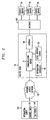
- Fig. 1 shows the hierarchical arrangement of information used in the system and method of the invention.
- the structuring and placement of information in Information Carrousels and Local Server 50 is under the control of network access node 30.
- Remote Servers 20 The most distant sources in an EP sense are Remote Servers 20.
- the placement and control of Remote Servers 20 is autonomous, like today's World Wide Web, into which the invention can connect for information supply from that category.
- the presentation of information of all three types of information content, Infoid, Local Content, and Remote Content to the client is under the network access system's overall control.
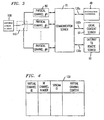
- Fig. 2 illustrates a physical architecture of the network access node 30 according to a first illustrative embodiment of the invention.
- Content in Remote Servers 20 is accessed through the Internet 160 in any conventional manner, as understood by persons skilled in the art. This category however offers little direct guarantee of access performance to that information.
- Access node 30 itself contains Information Carrousel Server 40, Local Server 50, and a gateway 60 for connectivity with Remote Servers including the rest of the Internet.
- Access node 30 also contains a Communication Server 70 for multiplexing, scheduling, and inserting information content from Remote Servers, Local Servers, and Information Carrousel Servers 40 for delivery to information clients 100.
- the Communication Server 70 is responsible for the allocation of access network bandwidth among different information sources, and communicating that allocation to the information clients 100.
- An information client 100 can for example be a PC running Windows NT TM , a workstation running UNIX TM , a network computer running Netware TM , or any other information consumption device.
- Information client 100 can service users accessing the network access node 30 through dial-up Internet Services Providers (ISPs) 150, or other suitable access modes.
- Communication Server 70 carries out multiplexing, scheduling and control so that content residing in access node 30 can be accessed with a certain guarantee of grades of service.
- Remote Servers 20, Local Server 50, and Information Carrousel Server 40 cooperate in information access node 30 to offer an information client 100 a unified interface to access content at different levels of the information hierarchy, with discriminated levels of grades of service.
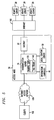
- Fig. 3 illustrates the functions of Communication Server 70 embedded in access node 30.
- Communication Server 70 is connected to a single broadband access medium that can be further partitioned into multiple physical channels 80.
- Those channels can for instance be multiple RF channels over coaxial cable, or radio links or multiple physical channels (1 through N) of different transmission media.
- the physical channelization of a broadband medium can be done by frequency division multiplex (FDM), time division multiplex (TDM), statistical multiplex (SM), combinations of the above or otherwise, as understood by persons skilled in the art.
- FDM frequency division multiplex
- TDM time division multiplex
- SM statistical multiplex
- a variety of performance attributes are associated with physical channels 80, including latency, capacity (for example, bps or MHz ratings) and connectivity types (point-to-point, broadcast, etc.) that can be translated into grades of service and service types.
- Different ones of physical channels 80 can also be used to provide connectivity to different information clients 100, or groups of information clients.
- Communication Server 70 receives information content from each of Information Carrousel Servers 40, Local Content Servers 50, and Remote Servers 20 through associated communication links 130a, 130b, and 130c (last through gateway 60). According to the types of information content and the attributes of the physical channels 80, the Communication Server 70 delivers the information content across physical channels 80 to the intended information client 100, at the desired grades of service and service types requested by the client. To do so, the information client 100 is configured to communicate specialized control data with its associated Communication Server 70.
- the first illustrated embodiment of the invention includes an access mechanism for information client 100 which expands on the existing HTML (Hyper Text Markup Language, known in the art) standard, by adding the definition of additional "tag" fields 140 to otherwise conventional control data.
- the tag fields 140 are used to establish a link 110 to the physical channel 80 that carries the information pointed to by the link 110.
- a channel map 120 for the association of virtual channels, physical channels, and content type in the virtual channels.
- Fig. 4 shows an example of such a channel map 120 for the illustrative broadband medium of coaxial cable.
- Virtual Channel ID is the identifier of a virtual channel, and may be used as one value of the tag data in expanded HTML.
- RF Channel Number identifies a 6MHz-wide analog bandwidth allocation that a digital bit stream is modulated on.
- Stream ID identifies a given partition of a digital bit stream, and is usually used as part of the header of packets.
- a physical channel 80 is effectively identified by a combination of RF Channel Number (FDM) and Stream ID (SM).
- Channel map 120 shows that there are multiple VCs for infoids, one VC for Local Content and one VC for Remote Content.
- FDM RF Channel Number
- SM Stream ID
- Channel map 120 shows that there are multiple VCs for infoids, one VC for Local Content and one VC for Remote Content.
- This configuration is merely illustrative. Other possible arrangements include, for example, the cases of one VC for both Local Content and Remote Content, or multiple VCs for Local Content or Remote Content, and many others.
- the multiplexing, scheduling and other control of the characteristics of the VCs maintained for client 100 are controlled by Communication Server 70.
- an Access Type tag is included with every URL (Universal Resource Locator) to identify the hierarchical type of information (IC, RC, or LC) and the Virtual Channel ID (VCID) for that link 110.
- the client's browser uses the VCID and the channel map 120 to find the necessary physical channel, and instruct the associated device driver on the information client 100 to tune to the proper physical channel 80, for reception of the content pointed to by the URL.
- the appropriate frequency for a particular 6-MHZ coaxial band may be coordinated with VCID and other information in channel map 120 to establish the pathway from the information source to client 100.
- a backward compatibility default is preferably defined.
- a logical choice for the default is Remote Content (RC).
- RC Remote Content
- the first illustrative embodiment described above allows the client 100 to browse the content in Information Carrousels and other sources in a completely passive manner, which is useful in broadcast media such as one-way cable systems or Direct Broadcast Satellite (DBS).
- broadcast media such as one-way cable systems or Direct Broadcast Satellite (DBS).
- DBS Direct Broadcast Satellite
- HTTP Hyper Text Transfer Protocol
- Communication Server 70 rather than the client 100, maintains the channel map 120 and responds to requests from one or more clients 100 in real time.
- Client 100 can therefore be implemented to more modest specifications for processor, software storage and other features (be made a "thin" or thinner client).
- Virtual channel, physical channel and other information is stored and processed by Communication Server 70 similarly to the client 100 in the first illustrative embodiment.
- Communication Server 70 gains the flexibility of controlling dynamic bandwidth allocation. The information client 100 is consequently relieved of the overhead of resolving channel connections.
Landscapes
- Engineering & Computer Science (AREA)
- Computer Networks & Wireless Communication (AREA)
- Signal Processing (AREA)
- Computer Security & Cryptography (AREA)
- Information Transfer Between Computers (AREA)
- Two-Way Televisions, Distribution Of Moving Picture Or The Like (AREA)
Claims (24)
- Informationszugriffssystem, mittels dessen ein Benutzer auf verschiedene Typen von Informationsinhalt einschließlich Information im Internet (160) zugreifen kann, welches System Mittel (100) zur Anzeige einer Darstellung des im System verfügbaren Informationsinhalts und eines Zugriffsnetzes (150) mit mehreren Zugriffsmodi (80) umfasst; gekennzeichnet durch
Mittel zur hierarchischen Gliederung des Informationsinhalts in Typen entsprechend der elektronischen Nähe des Informationsinhalts zum Anzeigemittel;
Mittel (70), die zwischen Zugriffsnetz und Internet eingeschaltet sind, um Zugriffsmodi entsprechend der verschiedenen Informationsinhaltstypen voneinander unterscheiden zu können, und um den Benutzern die verschiedenen Zugriffsmodi über das Zugriffsnetz mitteilen zu können;
Mittel (100, 110) zur Auswahl mindestens eines der Informationsinhalte zum Zugriff, und zum Zugriff auf den Informationsinhalt über das Zugriffsnetz gemäß einem entsprechenden Zugriffsmodus. - Informationszugriffssystem nach Anspruch 1, wobei das Mittel (100) zur Anzeige einen an das Zugriffsnetz (150) angeschlossenen Computer aufweist, und der Computer umfasst:Mittel (120), reagierend auf eine vom Benutzer des Computers eingegebene Anforderung zur Anzeige von Links zu verschiedenen Typen von Informationsinhalt, welche Typen mindestens gemäß einer elektronischen Nähe des Informationsinhalts zum Benutzer zusammengefasst sind.
- Informationszugriffssystem nach Anspruch 2, wobei das zwischen dem Zugriffsnetz und dem Internet eingefügte Mittel weiterhin ein Informationskarussell zum Speichern von Informationselementen zum konstanten Senden an Benutzer ist, und die angezeigten Informationsinhaltstypen in absteigender Reihenfolge der elektronischen Nähe Informationskarussell-Inhalt, lokalen Serverinhalt und entfernten Serverinhalt umfassen.
- Informationszugriffssystem nach Anspruch 3, wobei jeder der Informationsinhaltstypen mit Zugriffsmodusinformation einschließlich physikalischer Kanalinformation und elektronischer Nähe zum Benutzer verknüpft ist.
- Informationszugriffssystem nach Anspruch 4, wobei der Computer (100) die Mittel zur Auswahl (110) und Anzeige (120) von Informationstyp und Zugriffsmodusinformation zur Auswahl durch den Benutzer umfasst.
- Informationszugriffssystem nach Anspruch 5, wobei jede Instanz von im Netz befindlichem Informationsinhalt Zugriffsinformation einschließlich Zugriffsmodus und Kanalkennung enthält.
- Informationszugriffssystem nach Anspruch 6, wobei die Zugriffsinformation Tag-Information (140) in HTML-Format ist.
- Informationszugriffssystem nach Anspruch 1, wobei das Mittel zum Unterscheiden Netzwerkserver (70) umfasst, die darauf eingerichtet sind, Information von Inhaltquellen verschiedener Zugriffstypen zu empfangen, Zugriffsmodusinformation zu erzeugen und diese Information an den Benutzer zu übertragen.
- Informationszugriffssystem nach Anspruch 8, wobei die Netzwerkserver darauf eingerichtet sind, die Zugriffsmodusinformation (120) zu speichern und auf erweiterte http-Anforderungen von Benutzern mit Zugriffsmodusinformation zu reagieren.
- Zugriffsmodusinformation nach Anspruch 9, wobei die Zugriffsmodusinformation Kanalkarteninformation (120) ist, die den physikalischen Verbund von Kanälen (80) anzeigt.
- Informationszugriffssystem nach Anspruch 10, wobei das System Mittel umfasst, die angepasst sind, dem Benutzer zu gestatten, den Informationsinhalt mittels mindestens der erweiterten HTTP oder der Kanalkarteninformation auszuwählen.
- Informationszugriffssystem nach Anspruch 11, wobei das System Mittel umfasst, die angepasst sind, dem Benutzer zu gestatten, anzuzeigenden Informationsinhalt gemäß der elektronischen Nähe oder des Informationszugriffstyps auszuwählen,
- Verfahren zur Bereitstellung von Benutzerzugriff auf verschiedene Typen von Informationsinhalt im Internet (160), umfassend die Schritte des Anzeigens einer Darstellung von Informationsinhalt auf einem Benutzerinformations-Zugriffsgerät (100) und des Zugriffs auf den Informationsinhalt über ein Zugriffsnetz (150) mit mehreren Zugriffsmodi (80), gekennzeichnet durch die folgenden weiteren Schritte:Hierachisches Gliedern des Informationsinhalts in Typen entsprechend der elektronischen Nähe des Informationsinhalts zum Informationszugriffsgerät (100);Unterscheiden der Zugriffsmodi voneinander entsprechend den verschiedenen Informationsinhaltstypen in einem mit dem Zugriffsnetz (150) verknüpften Knoten (30);Bekanntgeben der unterschiedlichen Zugriffsmodi an Benutzer über das Zugriffsnetz (150); undAuswählen mindestens eines Informationsinhalts zum Zugriff und zum Zugreifen auf den Informationsinhalt über das Zugriffsnetz (150) gemäß einem entsprechenden Zugriffsmodus.
- Verfahren nach Anspruch 13, wobei das Informationszugriffsgerät ein an das Zugriffsnetz (150) angeschlossener Computer ist, und der Schritt des Anzeigens darin besteht, dass der Computer (100) auf eine von einem Benutzer des Computers eingegebene Anforderung zur Anzeige von Links zu verschiedenen Typen von Informationsinhalt reagiert, welche Typen gemäß mindestens einer elektronischen Nähe des Informationsinhalts zum Benutzer zusammengefasst sind.
- Verfahren nach Anspruch 14, ferner umfassend das Speichern von Informationsinhalt zum konstanten Senden an Benutzer auf einem Informationskarussell, und wobei der Schritt des Anzeigens den Schritt des Anzeigens (120) von Informationsinhaltstypen, umfassend Informationskarussellinhalt, lokalen Serverinhalt und entfernten Serverinhalt in absteigender Reihenfolge der elektronischen Nähe des Benutzers umfasst.
- Verfahren nach Anspruch 15, wobei jeder der Informationsinhaltstypen mit Zugriffsmodusinformation einschließlich des physikalisches Kanaltyps (80) und der elektronischen Nähe verknüpft ist.
- Verfahren nach Anspruch 16, wobei der Computer (100) den Schritt des Auswählens durchführt und den Informationsinhaltstyp und die Zugriffsmodusinformation (120) zur Auswahl durch den Benutzer anzeigt.
- Verfahren nach Anspruch 17, wobei jede Instanz von über das Zugriffsnetz (10) zugreifbarem Informationsinhalt Zugriffsinformation (120) einschließlich Zugriffsmodus und Kanalkennung enthält.
- Verfahren nach Anspruch 18, wobei die Zugriffsinformation Tag-Information (140) in HTML-Format ist.
- Verfahren nach Anspruch 13, wobei der Schritt des Unterscheidens den Schritt des Einrichtens von Netzwerkservern (40, 50, 60) umfasst, um Information aus Quellen verschiedener Zugriffstypen zu empfangen, Zugriffsmodusinformation (120) zu erzeugen, und der Schritt des Kommunizierens den Schritt des Übertragens dieser Information an den Benutzer umfasst.
- Verfahren nach Anspruch 20, wobei der Schritt des Einrichtens den Schritt des Einrichtens der Netzwerkserver umfasst, um erweiterte http-Anforderungen von Benutzern mit Zugriffsmodusinformation zu empfangen.
- Verfahren nach Anspruch 21, wobei die Zugriffsinformation Kanalkarteninformation (120) umfasst, die den physikalischen Verbund der Kanäle anzeigt.
- Verfahren nach Anspruch 22, wobei der Benutzer den Informationsinhalt mittels mindestens des erweiterten HTTP oder der Kanalkarteninformation auswählt.
- Verfahren nach Anspruch 23, wobei der Benutzer die anzuzeigende Information entsprechend der elektronischen Nähe oder des Informationsinhalt-Zugriffsmodus auswählt.
Applications Claiming Priority (2)
| Application Number | Priority Date | Filing Date | Title |
|---|---|---|---|
| US898238 | 1997-07-22 | ||
| US08/898,238 US6049829A (en) | 1997-07-22 | 1997-07-22 | Information access system and method |
Publications (2)
| Publication Number | Publication Date |
|---|---|
| EP0903902A1 EP0903902A1 (de) | 1999-03-24 |
| EP0903902B1 true EP0903902B1 (de) | 2007-06-20 |
Family
ID=25409147
Family Applications (1)
| Application Number | Title | Priority Date | Filing Date |
|---|---|---|---|
| EP98305682A Expired - Lifetime EP0903902B1 (de) | 1997-07-22 | 1998-07-16 | Informationszugriffssystem und -verfahren |
Country Status (4)
| Country | Link |
|---|---|
| US (1) | US6049829A (de) |
| EP (1) | EP0903902B1 (de) |
| CA (1) | CA2243688C (de) |
| DE (1) | DE69837959T2 (de) |
Families Citing this family (40)
| Publication number | Priority date | Publication date | Assignee | Title |
|---|---|---|---|---|
| US6272523B1 (en) * | 1996-12-20 | 2001-08-07 | International Business Machines Corporation | Distributed networking using logical processes |
| US6058423A (en) | 1996-12-23 | 2000-05-02 | International Business Machines Corporation | System and method for locating resources in a distributed network |
| US20030056216A1 (en) * | 1998-01-05 | 2003-03-20 | Theodore D. Wugofski | System for managing favorite channels |
| US6832253B1 (en) | 1999-04-01 | 2004-12-14 | Cisco Technologies, Inc. | Proximity as an aid to caching and secondary serving of data |
| US6721741B1 (en) | 2000-01-24 | 2004-04-13 | Friskit, Inc. | Streaming media search system |
| US7281034B1 (en) | 2000-01-24 | 2007-10-09 | Friskit, Inc. | System and method for media playback over a network using links that contain control signals and commands |
| US6389467B1 (en) * | 2000-01-24 | 2002-05-14 | Friskit, Inc. | Streaming media search and continuous playback system of media resources located by multiple network addresses |
| US7228305B1 (en) | 2000-01-24 | 2007-06-05 | Friskit, Inc. | Rating system for streaming media playback system |
| US6519648B1 (en) | 2000-01-24 | 2003-02-11 | Friskit, Inc. | Streaming media search and continuous playback of multiple media resources located on a network |
| US8170920B1 (en) | 2000-04-17 | 2012-05-01 | Welch James D | Method of providing audio format professional information update service, via an electronic network |
| US7606735B1 (en) | 2000-04-17 | 2009-10-20 | Welch James D | Method of providing audio format professional information update service for payment, via internet |
| US7010537B2 (en) * | 2000-04-27 | 2006-03-07 | Friskit, Inc. | Method and system for visual network searching |
| US20020086706A1 (en) * | 2000-11-15 | 2002-07-04 | Ming-Feng Chen | Mobile device server |
| US20030054810A1 (en) * | 2000-11-15 | 2003-03-20 | Chen Yih-Farn Robin | Enterprise mobile server platform |
| US6768499B2 (en) | 2000-12-06 | 2004-07-27 | Microsoft Corporation | Methods and systems for processing media content |
| US6882891B2 (en) * | 2000-12-06 | 2005-04-19 | Microsoft Corporation | Methods and systems for mixing digital audio signals |
| US7447754B2 (en) * | 2000-12-06 | 2008-11-04 | Microsoft Corporation | Methods and systems for processing multi-media editing projects |
| US7114162B2 (en) * | 2000-12-06 | 2006-09-26 | Microsoft Corporation | System and methods for generating and managing filter strings in a filter graph |
| US7287226B2 (en) | 2000-12-06 | 2007-10-23 | Microsoft Corporation | Methods and systems for effecting video transitions represented by bitmaps |
| US6954581B2 (en) * | 2000-12-06 | 2005-10-11 | Microsoft Corporation | Methods and systems for managing multiple inputs and methods and systems for processing media content |
| US7103677B2 (en) | 2000-12-06 | 2006-09-05 | Microsoft Corporation | Methods and systems for efficiently processing compressed and uncompressed media content |
| US7114161B2 (en) * | 2000-12-06 | 2006-09-26 | Microsoft Corporation | System and related methods for reducing memory requirements of a media processing system |
| US6959438B2 (en) | 2000-12-06 | 2005-10-25 | Microsoft Corporation | Interface and related methods for dynamically generating a filter graph in a development system |
| US6961943B2 (en) * | 2000-12-06 | 2005-11-01 | Microsoft Corporation | Multimedia processing system parsing multimedia content from a single source to minimize instances of source files |
| US6912717B2 (en) * | 2000-12-06 | 2005-06-28 | Microsoft Corporation | Methods and systems for implementing dynamic properties on objects that support only static properties |
| US6774919B2 (en) * | 2000-12-06 | 2004-08-10 | Microsoft Corporation | Interface and related methods for reducing source accesses in a development system |
| US6983466B2 (en) * | 2000-12-06 | 2006-01-03 | Microsoft Corporation | Multimedia project processing systems and multimedia project processing matrix systems |
| US6834390B2 (en) * | 2000-12-06 | 2004-12-21 | Microsoft Corporation | System and related interfaces supporting the processing of media content |
| US7242665B2 (en) * | 2001-01-25 | 2007-07-10 | Ericsson Ab | Network device virtual interface |
| US20030056012A1 (en) * | 2001-05-10 | 2003-03-20 | Philbert Modeste | System for providing continuous cyber link between embedded controllers and web servers |
| WO2003015393A2 (en) * | 2001-08-06 | 2003-02-20 | Digeo Inc. | Providing content and applicatons via carousel transmission to thin-client interactive television terminals |
| US7567575B2 (en) * | 2001-09-07 | 2009-07-28 | At&T Corp. | Personalized multimedia services using a mobile service platform |
| US7054416B2 (en) * | 2001-09-24 | 2006-05-30 | Meyerson Robert F | Modular multi-media communication management system |
| US20030115296A1 (en) * | 2001-12-17 | 2003-06-19 | Jantz Ray M. | Method for improved host context access in storage-array-centric storage management interface |
| US20030145106A1 (en) * | 2002-01-31 | 2003-07-31 | Sun Microsystems, Inc. | System and method for directing wireless data packet traffic |
| US7032028B2 (en) * | 2002-03-05 | 2006-04-18 | Avica Technology Corporation | Multi-path content distribution and aggregation |
| US20050048918A1 (en) | 2003-08-29 | 2005-03-03 | Onami, Llc | Radio controller system and method for remote devices |
| GB2418823A (en) * | 2004-09-01 | 2006-04-05 | Quadriga Worldwide Ltd | Interactive television system in a hospitality environment which aids the user by providing a channel map |
| JP2009075923A (ja) * | 2007-09-21 | 2009-04-09 | Canon Inc | ファイルシステム、データ処理装置、ファイル参照方法、プログラムおよび記憶媒体 |
| US10397326B2 (en) | 2017-01-11 | 2019-08-27 | Sprinklr, Inc. | IRC-Infoid data standardization for use in a plurality of mobile applications |
Family Cites Families (5)
| Publication number | Priority date | Publication date | Assignee | Title |
|---|---|---|---|---|
| US5855015A (en) * | 1995-03-20 | 1998-12-29 | Interval Research Corporation | System and method for retrieval of hyperlinked information resources |
| US5913040A (en) * | 1995-08-22 | 1999-06-15 | Backweb Ltd. | Method and apparatus for transmitting and displaying information between a remote network and a local computer |
| US5781909A (en) * | 1996-02-13 | 1998-07-14 | Microtouch Systems, Inc. | Supervised satellite kiosk management system with combined local and remote data storage |
| US5787077A (en) * | 1996-06-04 | 1998-07-28 | Ascom Tech Ag | Dynamic connection mapping in wireless ATM systems |
| US5832223A (en) * | 1996-09-13 | 1998-11-03 | Motorola, Inc. | System, method and device for automatic capture of internet access information in a broadcast signal for use by an internet access device |
-
1997
- 1997-07-22 US US08/898,238 patent/US6049829A/en not_active Expired - Lifetime
-
1998
- 1998-07-16 EP EP98305682A patent/EP0903902B1/de not_active Expired - Lifetime
- 1998-07-16 DE DE69837959T patent/DE69837959T2/de not_active Expired - Lifetime
- 1998-07-22 CA CA002243688A patent/CA2243688C/en not_active Expired - Fee Related
Non-Patent Citations (1)
| Title |
|---|
| None * |
Also Published As
| Publication number | Publication date |
|---|---|
| DE69837959T2 (de) | 2008-02-28 |
| CA2243688C (en) | 2003-04-22 |
| EP0903902A1 (de) | 1999-03-24 |
| CA2243688A1 (en) | 1999-01-22 |
| DE69837959D1 (de) | 2007-08-02 |
| US6049829A (en) | 2000-04-11 |
Similar Documents
| Publication | Publication Date | Title |
|---|---|---|
| US6049829A (en) | Information access system and method | |
| EP0837584B1 (de) | Zwischenspeicher-Protokoll für verbesserte Webleistung | |
| US5608446A (en) | Apparatus and method for combining high bandwidth and low bandwidth data transfer | |
| US8903950B2 (en) | Personalized content delivery using peer-to-peer precaching | |
| US6442598B1 (en) | System and method for delivering web content over a broadcast medium | |
| US6996627B1 (en) | System and method for providing update information | |
| EP1535445B1 (de) | Dynamische fernkonfiguration eines webservers zur bereitstellung von kapazität auf anfrage | |
| US5991809A (en) | Web serving system that coordinates multiple servers to optimize file transfers | |
| US5915096A (en) | Network browsing system and method | |
| US20020143853A1 (en) | Customization of network documents | |
| US20020023178A1 (en) | Multiple-browser client architecture | |
| US20030195980A1 (en) | Class of methods for improving perceived efficiency of end-user interactive access of a large database such as the World-Wide Web via a communication network such as "The Internet" | |
| WO1998014894A1 (en) | Caching systems | |
| US5828887A (en) | Network based program loader system and method of operation | |
| US20020091792A1 (en) | Method and apparatus for client sharing of cached content | |
| US6697859B1 (en) | Apparatus, method, program, and information processing system for prioritized data transfer to a network terminal | |
| US7486626B1 (en) | Partitioning a network element into multiple virtual network elements | |
| US20100131673A1 (en) | System and method for distributing foveated data in a network | |
| US7620734B2 (en) | System and method for distributing foveated data in a network | |
| KR100267727B1 (ko) | 분산 제어 시스템의 감시 데이터 전송 장치 | |
| EP0892354B1 (de) | Effiziente Darstellung und Uebertragung von Objekten mit Varianten | |
| WO2001050683A1 (en) | Telecommunication network management with mobile workstation | |
| AU740208B2 (en) | Web serving system with primary and secondary servers | |
| JP2001216278A (ja) | 情報加工装置、情報加工方法、およびそのコンピュータ・プログラム・プロダクト | |
| Rudisch et al. | Transparent extention of existing applications for mobile computing |
Legal Events
| Date | Code | Title | Description |
|---|---|---|---|
| PUAI | Public reference made under article 153(3) epc to a published international application that has entered the european phase |
Free format text: ORIGINAL CODE: 0009012 |
|
| AK | Designated contracting states |
Kind code of ref document: A1 Designated state(s): DE FR GB |
|
| AX | Request for extension of the european patent |
Free format text: AL;LT;LV;MK;RO;SI |
|
| 17P | Request for examination filed |
Effective date: 19990913 |
|
| AKX | Designation fees paid |
Free format text: DE FR GB |
|
| 17Q | First examination report despatched |
Effective date: 20041012 |
|
| GRAP | Despatch of communication of intention to grant a patent |
Free format text: ORIGINAL CODE: EPIDOSNIGR1 |
|
| GRAS | Grant fee paid |
Free format text: ORIGINAL CODE: EPIDOSNIGR3 |
|
| GRAA | (expected) grant |
Free format text: ORIGINAL CODE: 0009210 |
|
| AK | Designated contracting states |
Kind code of ref document: B1 Designated state(s): DE FR GB |
|
| REG | Reference to a national code |
Ref country code: GB Ref legal event code: FG4D |
|
| REF | Corresponds to: |
Ref document number: 69837959 Country of ref document: DE Date of ref document: 20070802 Kind code of ref document: P |
|
| ET | Fr: translation filed | ||
| PLBE | No opposition filed within time limit |
Free format text: ORIGINAL CODE: 0009261 |
|
| STAA | Information on the status of an ep patent application or granted ep patent |
Free format text: STATUS: NO OPPOSITION FILED WITHIN TIME LIMIT |
|
| 26N | No opposition filed |
Effective date: 20080325 |
|
| REG | Reference to a national code |
Ref country code: FR Ref legal event code: PLFP Year of fee payment: 18 |
|
| PGFP | Annual fee paid to national office [announced via postgrant information from national office to epo] |
Ref country code: GB Payment date: 20150624 Year of fee payment: 18 |
|
| PGFP | Annual fee paid to national office [announced via postgrant information from national office to epo] |
Ref country code: FR Payment date: 20150624 Year of fee payment: 18 |
|
| PGFP | Annual fee paid to national office [announced via postgrant information from national office to epo] |
Ref country code: DE Payment date: 20150731 Year of fee payment: 18 |
|
| REG | Reference to a national code |
Ref country code: DE Ref legal event code: R119 Ref document number: 69837959 Country of ref document: DE |
|
| GBPC | Gb: european patent ceased through non-payment of renewal fee |
Effective date: 20160716 |
|
| PG25 | Lapsed in a contracting state [announced via postgrant information from national office to epo] |
Ref country code: DE Free format text: LAPSE BECAUSE OF NON-PAYMENT OF DUE FEES Effective date: 20170201 Ref country code: FR Free format text: LAPSE BECAUSE OF NON-PAYMENT OF DUE FEES Effective date: 20160801 |
|
| REG | Reference to a national code |
Ref country code: FR Ref legal event code: ST Effective date: 20170331 |
|
| PG25 | Lapsed in a contracting state [announced via postgrant information from national office to epo] |
Ref country code: GB Free format text: LAPSE BECAUSE OF NON-PAYMENT OF DUE FEES Effective date: 20160716 |