EP0903902B1 - Information access system and method - Google Patents
Information access system and method Download PDFInfo
- Publication number
- EP0903902B1 EP0903902B1 EP98305682A EP98305682A EP0903902B1 EP 0903902 B1 EP0903902 B1 EP 0903902B1 EP 98305682 A EP98305682 A EP 98305682A EP 98305682 A EP98305682 A EP 98305682A EP 0903902 B1 EP0903902 B1 EP 0903902B1
- Authority
- EP
- European Patent Office
- Prior art keywords
- information
- access
- content
- user
- information content
- Prior art date
- Legal status (The legal status is an assumption and is not a legal conclusion. Google has not performed a legal analysis and makes no representation as to the accuracy of the status listed.)
- Expired - Lifetime
Links
Images

Classifications
-
- H—ELECTRICITY
- H04—ELECTRIC COMMUNICATION TECHNIQUE
- H04L—TRANSMISSION OF DIGITAL INFORMATION, e.g. TELEGRAPHIC COMMUNICATION
- H04L67/00—Network arrangements or protocols for supporting network services or applications
- H04L67/01—Protocols
- H04L67/02—Protocols based on web technology, e.g. hypertext transfer protocol [HTTP]
-
- H—ELECTRICITY
- H04—ELECTRIC COMMUNICATION TECHNIQUE
- H04L—TRANSMISSION OF DIGITAL INFORMATION, e.g. TELEGRAPHIC COMMUNICATION
- H04L67/00—Network arrangements or protocols for supporting network services or applications
- H04L67/2866—Architectures; Arrangements
- H04L67/2885—Hierarchically arranged intermediate devices, e.g. for hierarchical caching
-
- H—ELECTRICITY
- H04—ELECTRIC COMMUNICATION TECHNIQUE
- H04L—TRANSMISSION OF DIGITAL INFORMATION, e.g. TELEGRAPHIC COMMUNICATION
- H04L67/00—Network arrangements or protocols for supporting network services or applications
- H04L67/50—Network services
- H04L67/52—Network services specially adapted for the location of the user terminal
-
- H—ELECTRICITY
- H04—ELECTRIC COMMUNICATION TECHNIQUE
- H04L—TRANSMISSION OF DIGITAL INFORMATION, e.g. TELEGRAPHIC COMMUNICATION
- H04L67/00—Network arrangements or protocols for supporting network services or applications
- H04L67/50—Network services
- H04L67/55—Push-based network services
-
- H—ELECTRICITY
- H04—ELECTRIC COMMUNICATION TECHNIQUE
- H04L—TRANSMISSION OF DIGITAL INFORMATION, e.g. TELEGRAPHIC COMMUNICATION
- H04L67/00—Network arrangements or protocols for supporting network services or applications
- H04L67/50—Network services
- H04L67/56—Provisioning of proxy services
- H04L67/568—Storing data temporarily at an intermediate stage, e.g. caching
-
- H—ELECTRICITY
- H04—ELECTRIC COMMUNICATION TECHNIQUE
- H04L—TRANSMISSION OF DIGITAL INFORMATION, e.g. TELEGRAPHIC COMMUNICATION
- H04L67/00—Network arrangements or protocols for supporting network services or applications
- H04L67/50—Network services
- H04L67/60—Scheduling or organising the servicing of application requests, e.g. requests for application data transmissions using the analysis and optimisation of the required network resources
- H04L67/63—Routing a service request depending on the request content or context
-
- H—ELECTRICITY
- H04—ELECTRIC COMMUNICATION TECHNIQUE
- H04L—TRANSMISSION OF DIGITAL INFORMATION, e.g. TELEGRAPHIC COMMUNICATION
- H04L9/00—Cryptographic mechanisms or cryptographic arrangements for secret or secure communications; Network security protocols
- H04L9/40—Network security protocols
-
- H—ELECTRICITY
- H04—ELECTRIC COMMUNICATION TECHNIQUE
- H04W—WIRELESS COMMUNICATION NETWORKS
- H04W4/00—Services specially adapted for wireless communication networks; Facilities therefor
- H04W4/02—Services making use of location information
-
- H—ELECTRICITY
- H04—ELECTRIC COMMUNICATION TECHNIQUE
- H04L—TRANSMISSION OF DIGITAL INFORMATION, e.g. TELEGRAPHIC COMMUNICATION
- H04L69/00—Network arrangements, protocols or services independent of the application payload and not provided for in the other groups of this subclass
- H04L69/30—Definitions, standards or architectural aspects of layered protocol stacks
- H04L69/32—Architecture of open systems interconnection [OSI] 7-layer type protocol stacks, e.g. the interfaces between the data link level and the physical level
- H04L69/322—Intralayer communication protocols among peer entities or protocol data unit [PDU] definitions
- H04L69/329—Intralayer communication protocols among peer entities or protocol data unit [PDU] definitions in the application layer [OSI layer 7]
Definitions
- the invention relates to information access technology, and particularly to user selection of network access modes according to location of information content, network and server capacity, and other factors.
- SCHILIT B N ET AL "TeleWeb: Loosely connected access to the World Wide Web” COMPUTER NETWORKS AND ISDN SYSTEMS, vol. 28, no. 11, May 1996 (1996-05), page 1431-1444 , XP004018240 describes a system in which costs are made visible to the user through annotated HTML; budget monitoring warns the user when operations exceed pre-specified limits; actions may be postponed and later triggered when conditions are met; and user customisation and system configuration values may automatically adapt according to the changing conditions of use. These mechanisms work together to provide an asynchronous, email-style of browsing in which users can work disconnected from a cache of documents, or trade off communication cost against information needs.
- the invention relates to an information access system and a method for providing user access to different types of information content, as set out in the accompanying claims.
- the invention allows users to take advantage of knowledge of the information structure to obtain better services more conveniently and consistently, and allow service providers to offer a richer set of services in a more cost-effective way.
- Information can be categorized, stored and distributed according to the "closeness" to the client in an EP sense, and the nature of the information.
- the information is broken into a hierarchy of types, illustratively at least three classes.
- the type of information that is closest in an EP sense to users are information elements, referred to as "infoids" herein, on a specially-provided Information Carousel.
- Those infoids are constantly broadcast through one or more physical channels to all the information clients on a shared network system.
- the Information Carousel automatically distributes infoids of an infoid package in rotation to be picked up by any information client on the system without explicit client request, as long as that client has the proper decoding information for the physical channel over which that Information Carrousel stream is carried.
- an Information Carrousel can also carry information from a next-category Local Content Server if it meets certain access criteria, for example, client access frequency rising above a threshold.
- the infoids can also be moved from an Information Carrousel to a Local Content Server when they meet some conditions, for example, timer expiration.
- LC Local Content
- LC is the type of information second closest to clients in the invention. LC is stored on local server(s), and unlike infoids can be accessed upon client request.
- a LC server can also carry information content from a Remote Content Server if it meets certain access criteria, for example, client access frequency. Local Content can also be removed from an LC server when it meets some conditions, for example, that the content has become stale as indicated by timer expiration, or when access frequency by clients decreases below a threshold.
- Remote Content refers to all other information that is stored remotely on the World Wide Web, and can be accessed through the regular manner of Web browsing. If a piece of information is accessed frequently enough or has just been accessed, it can also be copied and moved to an LC server closer to the client, a process that is commonly referred to as "caching".
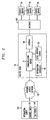
- Fig. 1 shows the hierarchical arrangement of information used in the system and method of the invention.
- the structuring and placement of information in Information Carrousels and Local Server 50 is under the control of network access node 30.
- Remote Servers 20 The most distant sources in an EP sense are Remote Servers 20.
- the placement and control of Remote Servers 20 is autonomous, like today's World Wide Web, into which the invention can connect for information supply from that category.
- the presentation of information of all three types of information content, Infoid, Local Content, and Remote Content to the client is under the network access system's overall control.
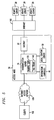
- Fig. 2 illustrates a physical architecture of the network access node 30 according to a first illustrative embodiment of the invention.
- Content in Remote Servers 20 is accessed through the Internet 160 in any conventional manner, as understood by persons skilled in the art. This category however offers little direct guarantee of access performance to that information.
- Access node 30 itself contains Information Carrousel Server 40, Local Server 50, and a gateway 60 for connectivity with Remote Servers including the rest of the Internet.
- Access node 30 also contains a Communication Server 70 for multiplexing, scheduling, and inserting information content from Remote Servers, Local Servers, and Information Carrousel Servers 40 for delivery to information clients 100.
- the Communication Server 70 is responsible for the allocation of access network bandwidth among different information sources, and communicating that allocation to the information clients 100.
- An information client 100 can for example be a PC running Windows NT TM , a workstation running UNIX TM , a network computer running Netware TM , or any other information consumption device.
- Information client 100 can service users accessing the network access node 30 through dial-up Internet Services Providers (ISPs) 150, or other suitable access modes.
- Communication Server 70 carries out multiplexing, scheduling and control so that content residing in access node 30 can be accessed with a certain guarantee of grades of service.
- Remote Servers 20, Local Server 50, and Information Carrousel Server 40 cooperate in information access node 30 to offer an information client 100 a unified interface to access content at different levels of the information hierarchy, with discriminated levels of grades of service.
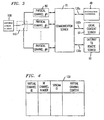
- Fig. 3 illustrates the functions of Communication Server 70 embedded in access node 30.
- Communication Server 70 is connected to a single broadband access medium that can be further partitioned into multiple physical channels 80.
- Those channels can for instance be multiple RF channels over coaxial cable, or radio links or multiple physical channels (1 through N) of different transmission media.
- the physical channelization of a broadband medium can be done by frequency division multiplex (FDM), time division multiplex (TDM), statistical multiplex (SM), combinations of the above or otherwise, as understood by persons skilled in the art.
- FDM frequency division multiplex
- TDM time division multiplex
- SM statistical multiplex
- a variety of performance attributes are associated with physical channels 80, including latency, capacity (for example, bps or MHz ratings) and connectivity types (point-to-point, broadcast, etc.) that can be translated into grades of service and service types.
- Different ones of physical channels 80 can also be used to provide connectivity to different information clients 100, or groups of information clients.
- Communication Server 70 receives information content from each of Information Carrousel Servers 40, Local Content Servers 50, and Remote Servers 20 through associated communication links 130a, 130b, and 130c (last through gateway 60). According to the types of information content and the attributes of the physical channels 80, the Communication Server 70 delivers the information content across physical channels 80 to the intended information client 100, at the desired grades of service and service types requested by the client. To do so, the information client 100 is configured to communicate specialized control data with its associated Communication Server 70.
- the first illustrated embodiment of the invention includes an access mechanism for information client 100 which expands on the existing HTML (Hyper Text Markup Language, known in the art) standard, by adding the definition of additional "tag" fields 140 to otherwise conventional control data.
- the tag fields 140 are used to establish a link 110 to the physical channel 80 that carries the information pointed to by the link 110.
- a channel map 120 for the association of virtual channels, physical channels, and content type in the virtual channels.
- Fig. 4 shows an example of such a channel map 120 for the illustrative broadband medium of coaxial cable.
- Virtual Channel ID is the identifier of a virtual channel, and may be used as one value of the tag data in expanded HTML.
- RF Channel Number identifies a 6MHz-wide analog bandwidth allocation that a digital bit stream is modulated on.
- Stream ID identifies a given partition of a digital bit stream, and is usually used as part of the header of packets.
- a physical channel 80 is effectively identified by a combination of RF Channel Number (FDM) and Stream ID (SM).
- Channel map 120 shows that there are multiple VCs for infoids, one VC for Local Content and one VC for Remote Content.
- FDM RF Channel Number
- SM Stream ID
- Channel map 120 shows that there are multiple VCs for infoids, one VC for Local Content and one VC for Remote Content.
- This configuration is merely illustrative. Other possible arrangements include, for example, the cases of one VC for both Local Content and Remote Content, or multiple VCs for Local Content or Remote Content, and many others.
- the multiplexing, scheduling and other control of the characteristics of the VCs maintained for client 100 are controlled by Communication Server 70.
- an Access Type tag is included with every URL (Universal Resource Locator) to identify the hierarchical type of information (IC, RC, or LC) and the Virtual Channel ID (VCID) for that link 110.
- the client's browser uses the VCID and the channel map 120 to find the necessary physical channel, and instruct the associated device driver on the information client 100 to tune to the proper physical channel 80, for reception of the content pointed to by the URL.
- the appropriate frequency for a particular 6-MHZ coaxial band may be coordinated with VCID and other information in channel map 120 to establish the pathway from the information source to client 100.
- a backward compatibility default is preferably defined.
- a logical choice for the default is Remote Content (RC).
- RC Remote Content
- the first illustrative embodiment described above allows the client 100 to browse the content in Information Carrousels and other sources in a completely passive manner, which is useful in broadcast media such as one-way cable systems or Direct Broadcast Satellite (DBS).
- broadcast media such as one-way cable systems or Direct Broadcast Satellite (DBS).
- DBS Direct Broadcast Satellite
- HTTP Hyper Text Transfer Protocol
- Communication Server 70 rather than the client 100, maintains the channel map 120 and responds to requests from one or more clients 100 in real time.
- Client 100 can therefore be implemented to more modest specifications for processor, software storage and other features (be made a "thin" or thinner client).
- Virtual channel, physical channel and other information is stored and processed by Communication Server 70 similarly to the client 100 in the first illustrative embodiment.
- Communication Server 70 gains the flexibility of controlling dynamic bandwidth allocation. The information client 100 is consequently relieved of the overhead of resolving channel connections.
Landscapes
- Engineering & Computer Science (AREA)
- Computer Networks & Wireless Communication (AREA)
- Signal Processing (AREA)
- Computer Security & Cryptography (AREA)
- Information Transfer Between Computers (AREA)
- Two-Way Televisions, Distribution Of Moving Picture Or The Like (AREA)
Description
- The invention relates to information access technology, and particularly to user selection of network access modes according to location of information content, network and server capacity, and other factors.
- Today's web browsing technology treats the Internet as a flat information structure. That is, to users all web sites appear to be on the same information "plane". Following a link from one site to another is like moving from one point to another equally distant point on that plane. Users have no a priori indication of the speed and ease of reaching information sources at the next site. Users also usually have no way to decide beforehand whether to access a particular web site based on its grade or nature of service, and so performance expectations are unsure.
- While there are directory structures organizing the content of web servers, the structures do not indicate the "Electronic Proximity" of that information content to users. The term "Electronic Proximity" (EP) as used in this application refers to a user's sense of proximity, speed and ease of acquiring information over a network. Factors contributing to Electronic Proximity include the server capacity of an information source, the bandwidth of the backbone network, the bandwidth of the access network, the loads of the servers and networks, and the placement and access mechanisms of the servers.
- Except in offices with LANs, the dominant connection mediating EP today is the multi-Kbps access pipes provided by V.series modems using POTS (Plain Old Telephone Services). With emerging high-speed access mechanisms, for example, cable modems, IDSN, and ADSL modems, this dominant access mode is increasingly being supplanted. The information hierarchy and differing pipe widths inside the World Wide Web consequently are increasingly being exposed, since users see more access bandwidth. As demand for access increases, in addition to adding server and backbone capacity to take advantage of new high-speed access pipes, it is now also possible to exploit new techniques of server placement and access mechanisms, to improve overall user experience on the World Wide Web.
- SCHILIT B N ET AL: "TeleWeb: Loosely connected access to the World Wide Web" COMPUTER NETWORKS AND ISDN SYSTEMS, vol. 28, no. 11, May 1996 (1996-05), page 1431-1444,
XP004018240 - The invention relates to an information access system and a method for providing user access to different types of information content, as set out in the accompanying claims. The invention allows users to take advantage of knowledge of the information structure to obtain better services more conveniently and consistently, and allow service providers to offer a richer set of services in a more cost-effective way.
- Information can be categorized, stored and distributed according to the "closeness" to the client in an EP sense, and the nature of the information. The information is broken into a hierarchy of types, illustratively at least three classes. The type of information that is closest in an EP sense to users are information elements, referred to as "infoids" herein, on a specially-provided Information Carousel. Those infoids are constantly broadcast through one or more physical channels to all the information clients on a shared network system. The Information Carousel automatically distributes infoids of an infoid package in rotation to be picked up by any information client on the system without explicit client request, as long as that client has the proper decoding information for the physical channel over which that Information Carrousel stream is carried. There may be more than one Information Carrousel on an access network. In addition to infoids that are grouped together in packages, an Information Carrousel can also carry information from a next-category Local Content Server if it meets certain access criteria, for example, client access frequency rising above a threshold. The infoids can also be moved from an Information Carrousel to a Local Content Server when they meet some conditions, for example, timer expiration.
- Local Content (LC) is the type of information second closest to clients in the invention. LC is stored on local server(s), and unlike infoids can be accessed upon client request. In addition to content that is designated as local and stored in an LC server until further notice, a LC server can also carry information content from a Remote Content Server if it meets certain access criteria, for example, client access frequency. Local Content can also be removed from an LC server when it meets some conditions, for example, that the content has become stale as indicated by timer expiration, or when access frequency by clients decreases below a threshold.
- Lastly, in the third illustrative category Remote Content (RC) refers to all other information that is stored remotely on the World Wide Web, and can be accessed through the regular manner of Web browsing. If a piece of information is accessed frequently enough or has just been accessed, it can also be copied and moved to an LC server closer to the client, a process that is commonly referred to as "caching".
-
- Fig. 1 illustrates an information hierarchy in an information access system according to the invention;
- Fig. 2 illustrates an overall architecture for an information access system according to a first illustrative embodiment of the invention;
- Fig. 3 illustrates a system configuration of access node including the relationship between communication server, information sources, and physical channels according to the invention;
- Fig. 4 illustrates a channel map for information access according to the invention; and
- Fig. 5 illustrates an overall architecture for an information access system according to a second illustrative embodiment of the invention.
- Fig. 1 shows the hierarchical arrangement of information used in the system and method of the invention. In the invention, the structuring and placement of information in Information Carrousels and
Local Server 50 is under the control ofnetwork access node 30. - The most distant sources in an EP sense are
Remote Servers 20. The placement and control ofRemote Servers 20 is autonomous, like today's World Wide Web, into which the invention can connect for information supply from that category. However, the presentation of information of all three types of information content, Infoid, Local Content, and Remote Content to the client is under the network access system's overall control. - Fig. 2 illustrates a physical architecture of the
network access node 30 according to a first illustrative embodiment of the invention. Content inRemote Servers 20 is accessed through the Internet 160 in any conventional manner, as understood by persons skilled in the art. This category however offers little direct guarantee of access performance to that information.Access node 30 itself contains Information CarrouselServer 40,Local Server 50, and agateway 60 for connectivity with Remote Servers including the rest of the Internet.Access node 30 also contains aCommunication Server 70 for multiplexing, scheduling, and inserting information content from Remote Servers, Local Servers, andInformation Carrousel Servers 40 for delivery toinformation clients 100. - The
Communication Server 70 is responsible for the allocation of access network bandwidth among different information sources, and communicating that allocation to theinformation clients 100. Aninformation client 100 can for example be a PC running Windows NT™, a workstation running UNIX™, a network computer running Netware™, or any other information consumption device.Information client 100 can service users accessing thenetwork access node 30 through dial-up Internet Services Providers (ISPs) 150, or other suitable access modes.Communication Server 70 carries out multiplexing, scheduling and control so that content residing inaccess node 30 can be accessed with a certain guarantee of grades of service.Remote Servers 20,Local Server 50, and Information CarrouselServer 40 cooperate ininformation access node 30 to offer an information client 100 a unified interface to access content at different levels of the information hierarchy, with discriminated levels of grades of service. - Fig. 3 illustrates the functions of
Communication Server 70 embedded inaccess node 30.Communication Server 70 is connected to a single broadband access medium that can be further partitioned into multiplephysical channels 80. Those channels can for instance be multiple RF channels over coaxial cable, or radio links or multiple physical channels (1 through N) of different transmission media. The physical channelization of a broadband medium can be done by frequency division multiplex (FDM), time division multiplex (TDM), statistical multiplex (SM), combinations of the above or otherwise, as understood by persons skilled in the art. A variety of performance attributes are associated withphysical channels 80, including latency, capacity (for example, bps or MHz ratings) and connectivity types (point-to-point, broadcast, etc.) that can be translated into grades of service and service types. Different ones ofphysical channels 80 can also be used to provide connectivity todifferent information clients 100, or groups of information clients. -
Communication Server 70 receives information content from each ofInformation Carrousel Servers 40,Local Content Servers 50, andRemote Servers 20 through associatedcommunication links 130a, 130b, and 130c (last through gateway 60). According to the types of information content and the attributes of thephysical channels 80, theCommunication Server 70 delivers the information content acrossphysical channels 80 to the intendedinformation client 100, at the desired grades of service and service types requested by the client. To do so, theinformation client 100 is configured to communicate specialized control data with its associatedCommunication Server 70. - The first illustrated embodiment of the invention includes an access mechanism for
information client 100 which expands on the existing HTML (Hyper Text Markup Language, known in the art) standard, by adding the definition of additional "tag"fields 140 to otherwise conventional control data. The tag fields 140 are used to establish alink 110 to thephysical channel 80 that carries the information pointed to by thelink 110. - To coordinate the setup of
link 110,physical channel 80 and related pathways toinformation client 100, theclient 100 establishes achannel map 120 for the association of virtual channels, physical channels, and content type in the virtual channels. Fig. 4 shows an example of such achannel map 120 for the illustrative broadband medium of coaxial cable. In that map, Virtual Channel ID is the identifier of a virtual channel, and may be used as one value of the tag data in expanded HTML. RF Channel Number identifies a 6MHz-wide analog bandwidth allocation that a digital bit stream is modulated on. Stream ID identifies a given partition of a digital bit stream, and is usually used as part of the header of packets. In this illustrative embodiment, aphysical channel 80 is effectively identified by a combination of RF Channel Number (FDM) and Stream ID (SM).Channel map 120 shows that there are multiple VCs for infoids, one VC for Local Content and one VC for Remote Content. This configuration however is merely illustrative. Other possible arrangements include, for example, the cases of one VC for both Local Content and Remote Content, or multiple VCs for Local Content or Remote Content, and many others. In all instances, the multiplexing, scheduling and other control of the characteristics of the VCs maintained forclient 100 are controlled byCommunication Server 70. - In the first illustrative embodiment of the invention, an Access Type tag is included with every URL (Universal Resource Locator) to identify the hierarchical type of information (IC, RC, or LC) and the Virtual Channel ID (VCID) for that
link 110. The client's browser then uses the VCID and thechannel map 120 to find the necessary physical channel, and instruct the associated device driver on theinformation client 100 to tune to the properphysical channel 80, for reception of the content pointed to by the URL. For example, the appropriate frequency for a particular 6-MHZ coaxial band may be coordinated with VCID and other information inchannel map 120 to establish the pathway from the information source toclient 100. If no Access Type is given, a backward compatibility default is preferably defined. A logical choice for the default is Remote Content (RC). In an alternative implementation without thechannel map 120, physical channel information can be stored as tags directly in URL links. - The first illustrative embodiment described above allows the
client 100 to browse the content in Information Carrousels and other sources in a completely passive manner, which is useful in broadcast media such as one-way cable systems or Direct Broadcast Satellite (DBS). - However, if interaction between servers and
clients 100 is possible and desired, such as the case of two-way cable systems, the burden of maintaining thechannel map 120 can be removed from theclient 100. In this second illustrative embodiment, illustrated in Fig. 5, HTTP (Hyper Text Transfer Protocol, known in the art) can be expanded to include the capability for the servers themselves to respond to requests for information on thephysical channel 80. - In this
embodiment Communication Server 70, rather than theclient 100, maintains thechannel map 120 and responds to requests from one ormore clients 100 in real time.Client 100 can therefore be implemented to more modest specifications for processor, software storage and other features (be made a "thin" or thinner client). Virtual channel, physical channel and other information is stored and processed byCommunication Server 70 similarly to theclient 100 in the first illustrative embodiment. In exchange for the extra load of responding to requests concerningphysical channels 80 and other information, in thisembodiment Communication Server 70 gains the flexibility of controlling dynamic bandwidth allocation. Theinformation client 100 is consequently relieved of the overhead of resolving channel connections.
Claims (24)
- An information access system by means of which a user may access different types of information content including information located on the Internet (160), the system comprising means (100) for displaying a representation of information content available on the system and an access network (150) with multiple access modes (80);, characterized by:means for hierarchically arranging the information content into types according to the electronic proximity of the information content to the display means;means (70) interposed between the access network and the Internet for differentiating access modes according to the different types of information content and for communicating the differentiated access modes to users over the access network;
andmeans (100, 110) for selecting at least one of the information content for access, and for accessing the information content over the access network according to a corresponding access mode. - The information access system of claim 1, wherein the means (100) for displaying comprises a computer connected to the access network (150), and the computer comprises:means (120) responsive to a request entered by the user of the computer for displaying links to different types of the information content, the types being grouped at least according to an electronic proximity of the information content to the user.
- The information access system of claim 2 wherein the means interposed between the access network and the Internet further comprises an Information Carrousel for storing information elements for constant broadcast to users, and the displayed information content types comprise Information Carrousel content, local server content, and remote server content, in decreasing order of electronic proximity.
- The information access system of claim 3 wherein each of the information content types has associated with it access mode information including physical channel information and electronic proximity to the user.
- The information access system of claim 4 wherein the computer (100) comprises the means for selecting (110), and displaying (120) information type and access mode information for user selection.
- The information access system of claim 5 wherein each instance of information content located on the network contains access information including access mode and channel identification.
- The information access system of claim 6 wherein the access information comprises tag information (140) in HTML format.
- The information access system of claim 1 wherein the means for differentiating comprises network servers (70) configured to receive information from content sources of different access types, generate access mode information, and transmit that information to the user.
- The information access system of claim 8 wherein the network servers are configured to store access mode information (120), and respond to expanded HTTP requests from users with access mode information.
- The information access system of claim 9 wherein the access mode information comprises channel map (120) information indicating physical linkage of channels (80).
- The information access system of claim 10 wherein the system comprises means adapted to permit the user to select the information content by means of at least one of the expanded HTTP and channel map information.
- The information access system of claim 11 wherein the system comprises means adapted to permit the user to select information content to be displayed according to electronic proximity or information access type.
- A method for providing user access to different types of information content, including information content located on the Internet (160), comprising the steps of displaying a representation of information content on a user information access device (100), and accessing information content over an access network (150) with multiple access modes (80), characterized by the further steps of:arranging the information content hierarchically into types according to the electronic proximity of the information content to the information access device (100);differentiating access modes according to the different types of information content in a node (30) associated with the access network (150);communicating the differentiated access modes to users over the access network (150); andselecting at least one of the information content for access, and for accessing the information content over the access network (150) according to a corresponding access mode.
- The method of claim 13 wherein the information access device is a computer (100) connected to the access network (150) and the step of displaying comprises the computer (100) responding to a request entered by a user of the computer for displaying links to different types of the information content, the types being grouped at least according to an electronic proximity of the information content to the user
- The method of claim 14 further comprising storing information content for constant broadcast to users on an Information Carrousel and wherein the step of displaying comprises the step of displaying (120) information content types comprising Information Carrousel content, local server content, and remote server content, in decreasing order of electronic proximity to the user.
- The method of claim 15 wherein each of the information content types has associated with it access mode information including physical channel (80) type and electronic proximity.
- The method of claim 16 wherein the computer (100) performs the step of selecting, and displays information content type and access mode information (120) for user selection.
- The method of claim 17 wherein each instance of information content accessible on the access network (10) contains access information (120) including access mode and channel identification.
- The method of claim 18 wherein the access information comprises tag information (140) in HTML format.
- The method of claim 13 wherein the step of differentiating comprises the step of configuring network servers (40, 50, 60) to receive information from sources of different access types, generate access mode information (120), and the step of communication comprises the step of transmitting that information to the user.
- The method of claim 20 wherein the step of configuring comprises the step of configuring the network servers to receive expanded HTTP requests from users with access mode information.
- The method of claim 21 wherein the access information comprises channel map information (120) indicating physical linkage of channels.
- The method of claim 22 wherein the user selects the information content using at least one of the expanded HTTP and channel map information.
- The method of claim 23 wherein the user selects information to be displayed according to electronic proximity or information content access mode.
Applications Claiming Priority (2)
| Application Number | Priority Date | Filing Date | Title |
|---|---|---|---|
| US08/898,238 US6049829A (en) | 1997-07-22 | 1997-07-22 | Information access system and method |
| US898238 | 1997-07-22 |
Publications (2)
| Publication Number | Publication Date |
|---|---|
| EP0903902A1 EP0903902A1 (en) | 1999-03-24 |
| EP0903902B1 true EP0903902B1 (en) | 2007-06-20 |
Family
ID=25409147
Family Applications (1)
| Application Number | Title | Priority Date | Filing Date |
|---|---|---|---|
| EP98305682A Expired - Lifetime EP0903902B1 (en) | 1997-07-22 | 1998-07-16 | Information access system and method |
Country Status (4)
| Country | Link |
|---|---|
| US (1) | US6049829A (en) |
| EP (1) | EP0903902B1 (en) |
| CA (1) | CA2243688C (en) |
| DE (1) | DE69837959T2 (en) |
Families Citing this family (40)
| Publication number | Priority date | Publication date | Assignee | Title |
|---|---|---|---|---|
| US6272523B1 (en) * | 1996-12-20 | 2001-08-07 | International Business Machines Corporation | Distributed networking using logical processes |
| US6058423A (en) | 1996-12-23 | 2000-05-02 | International Business Machines Corporation | System and method for locating resources in a distributed network |
| US20030056216A1 (en) * | 1998-01-05 | 2003-03-20 | Theodore D. Wugofski | System for managing favorite channels |
| US6832253B1 (en) * | 1999-04-01 | 2004-12-14 | Cisco Technologies, Inc. | Proximity as an aid to caching and secondary serving of data |
| US7228305B1 (en) | 2000-01-24 | 2007-06-05 | Friskit, Inc. | Rating system for streaming media playback system |
| US6721741B1 (en) | 2000-01-24 | 2004-04-13 | Friskit, Inc. | Streaming media search system |
| US6389467B1 (en) | 2000-01-24 | 2002-05-14 | Friskit, Inc. | Streaming media search and continuous playback system of media resources located by multiple network addresses |
| US7281034B1 (en) | 2000-01-24 | 2007-10-09 | Friskit, Inc. | System and method for media playback over a network using links that contain control signals and commands |
| US6519648B1 (en) * | 2000-01-24 | 2003-02-11 | Friskit, Inc. | Streaming media search and continuous playback of multiple media resources located on a network |
| US7606735B1 (en) | 2000-04-17 | 2009-10-20 | Welch James D | Method of providing audio format professional information update service for payment, via internet |
| US8170920B1 (en) | 2000-04-17 | 2012-05-01 | Welch James D | Method of providing audio format professional information update service, via an electronic network |
| US7010537B2 (en) * | 2000-04-27 | 2006-03-07 | Friskit, Inc. | Method and system for visual network searching |
| US20020086706A1 (en) * | 2000-11-15 | 2002-07-04 | Ming-Feng Chen | Mobile device server |
| US20030054810A1 (en) * | 2000-11-15 | 2003-03-20 | Chen Yih-Farn Robin | Enterprise mobile server platform |
| US6959438B2 (en) * | 2000-12-06 | 2005-10-25 | Microsoft Corporation | Interface and related methods for dynamically generating a filter graph in a development system |
| US6882891B2 (en) * | 2000-12-06 | 2005-04-19 | Microsoft Corporation | Methods and systems for mixing digital audio signals |
| US6983466B2 (en) | 2000-12-06 | 2006-01-03 | Microsoft Corporation | Multimedia project processing systems and multimedia project processing matrix systems |
| US6954581B2 (en) * | 2000-12-06 | 2005-10-11 | Microsoft Corporation | Methods and systems for managing multiple inputs and methods and systems for processing media content |
| US7103677B2 (en) | 2000-12-06 | 2006-09-05 | Microsoft Corporation | Methods and systems for efficiently processing compressed and uncompressed media content |
| US6834390B2 (en) * | 2000-12-06 | 2004-12-21 | Microsoft Corporation | System and related interfaces supporting the processing of media content |
| US7114161B2 (en) * | 2000-12-06 | 2006-09-26 | Microsoft Corporation | System and related methods for reducing memory requirements of a media processing system |
| US7447754B2 (en) * | 2000-12-06 | 2008-11-04 | Microsoft Corporation | Methods and systems for processing multi-media editing projects |
| US6912717B2 (en) | 2000-12-06 | 2005-06-28 | Microsoft Corporation | Methods and systems for implementing dynamic properties on objects that support only static properties |
| US6768499B2 (en) | 2000-12-06 | 2004-07-27 | Microsoft Corporation | Methods and systems for processing media content |
| US6961943B2 (en) * | 2000-12-06 | 2005-11-01 | Microsoft Corporation | Multimedia processing system parsing multimedia content from a single source to minimize instances of source files |
| US7287226B2 (en) | 2000-12-06 | 2007-10-23 | Microsoft Corporation | Methods and systems for effecting video transitions represented by bitmaps |
| US7114162B2 (en) | 2000-12-06 | 2006-09-26 | Microsoft Corporation | System and methods for generating and managing filter strings in a filter graph |
| US6774919B2 (en) * | 2000-12-06 | 2004-08-10 | Microsoft Corporation | Interface and related methods for reducing source accesses in a development system |
| US7242665B2 (en) * | 2001-01-25 | 2007-07-10 | Ericsson Ab | Network device virtual interface |
| US20030056012A1 (en) * | 2001-05-10 | 2003-03-20 | Philbert Modeste | System for providing continuous cyber link between embedded controllers and web servers |
| AU2002323022A1 (en) * | 2001-08-06 | 2003-02-24 | Digeo Inc. | Providing content and applicatons via carousel transmission to thin-client interactive television terminals |
| US7567575B2 (en) * | 2001-09-07 | 2009-07-28 | At&T Corp. | Personalized multimedia services using a mobile service platform |
| US7054416B2 (en) * | 2001-09-24 | 2006-05-30 | Meyerson Robert F | Modular multi-media communication management system |
| US20030115296A1 (en) * | 2001-12-17 | 2003-06-19 | Jantz Ray M. | Method for improved host context access in storage-array-centric storage management interface |
| US20030145106A1 (en) * | 2002-01-31 | 2003-07-31 | Sun Microsystems, Inc. | System and method for directing wireless data packet traffic |
| US7032028B2 (en) * | 2002-03-05 | 2006-04-18 | Avica Technology Corporation | Multi-path content distribution and aggregation |
| US20050048918A1 (en) | 2003-08-29 | 2005-03-03 | Onami, Llc | Radio controller system and method for remote devices |
| GB2418823A (en) * | 2004-09-01 | 2006-04-05 | Quadriga Worldwide Ltd | Interactive television system in a hospitality environment which aids the user by providing a channel map |
| JP2009075923A (en) * | 2007-09-21 | 2009-04-09 | Canon Inc | File system, data processing apparatus, file reference method, program, and storage medium |
| US10397326B2 (en) | 2017-01-11 | 2019-08-27 | Sprinklr, Inc. | IRC-Infoid data standardization for use in a plurality of mobile applications |
Family Cites Families (5)
| Publication number | Priority date | Publication date | Assignee | Title |
|---|---|---|---|---|
| US5855015A (en) * | 1995-03-20 | 1998-12-29 | Interval Research Corporation | System and method for retrieval of hyperlinked information resources |
| US5913040A (en) * | 1995-08-22 | 1999-06-15 | Backweb Ltd. | Method and apparatus for transmitting and displaying information between a remote network and a local computer |
| US5781909A (en) * | 1996-02-13 | 1998-07-14 | Microtouch Systems, Inc. | Supervised satellite kiosk management system with combined local and remote data storage |
| US5787077A (en) * | 1996-06-04 | 1998-07-28 | Ascom Tech Ag | Dynamic connection mapping in wireless ATM systems |
| US5832223A (en) * | 1996-09-13 | 1998-11-03 | Motorola, Inc. | System, method and device for automatic capture of internet access information in a broadcast signal for use by an internet access device |
-
1997
- 1997-07-22 US US08/898,238 patent/US6049829A/en not_active Expired - Lifetime
-
1998
- 1998-07-16 DE DE69837959T patent/DE69837959T2/en not_active Expired - Lifetime
- 1998-07-16 EP EP98305682A patent/EP0903902B1/en not_active Expired - Lifetime
- 1998-07-22 CA CA002243688A patent/CA2243688C/en not_active Expired - Fee Related
Non-Patent Citations (1)
| Title |
|---|
| None * |
Also Published As
| Publication number | Publication date |
|---|---|
| DE69837959D1 (en) | 2007-08-02 |
| EP0903902A1 (en) | 1999-03-24 |
| CA2243688A1 (en) | 1999-01-22 |
| US6049829A (en) | 2000-04-11 |
| CA2243688C (en) | 2003-04-22 |
| DE69837959T2 (en) | 2008-02-28 |
Similar Documents
| Publication | Publication Date | Title |
|---|---|---|
| EP0903902B1 (en) | Information access system and method | |
| EP0837584B1 (en) | Inter-cache protocol for improved web performance | |
| US6647531B2 (en) | Customization of network documents | |
| US5608446A (en) | Apparatus and method for combining high bandwidth and low bandwidth data transfer | |
| US8903950B2 (en) | Personalized content delivery using peer-to-peer precaching | |
| US6996627B1 (en) | System and method for providing update information | |
| EP1535445B1 (en) | Remote dynamic configuration of a web server to provide capacity on demand | |
| US5991809A (en) | Web serving system that coordinates multiple servers to optimize file transfers | |
| US5915096A (en) | Network browsing system and method | |
| US20020023178A1 (en) | Multiple-browser client architecture | |
| US20030195980A1 (en) | Class of methods for improving perceived efficiency of end-user interactive access of a large database such as the World-Wide Web via a communication network such as "The Internet" | |
| JPH10247945A (en) | Method and apparatus for mapping a uniform resource locator to a broadcast address in a television signal | |
| WO1998014894A1 (en) | Caching systems | |
| US5828887A (en) | Network based program loader system and method of operation | |
| US20020091792A1 (en) | Method and apparatus for client sharing of cached content | |
| KR20020029441A (en) | Distributed Server System and Method for Providing Data Using the Same | |
| US6697859B1 (en) | Apparatus, method, program, and information processing system for prioritized data transfer to a network terminal | |
| US7486626B1 (en) | Partitioning a network element into multiple virtual network elements | |
| US20100131673A1 (en) | System and method for distributing foveated data in a network | |
| US7620734B2 (en) | System and method for distributing foveated data in a network | |
| KR100267727B1 (en) | Monitoring data transmission device of distributed control system | |
| EP0892354B1 (en) | Efficient representation and transmission of objects with variants | |
| AU740208B2 (en) | Web serving system with primary and secondary servers | |
| Rudisch et al. | Transparent extention of existing applications for mobile computing | |
| GB2295035A (en) | Computer network distributed data storage. |
Legal Events
| Date | Code | Title | Description |
|---|---|---|---|
| PUAI | Public reference made under article 153(3) epc to a published international application that has entered the european phase |
Free format text: ORIGINAL CODE: 0009012 |
|
| AK | Designated contracting states |
Kind code of ref document: A1 Designated state(s): DE FR GB |
|
| AX | Request for extension of the european patent |
Free format text: AL;LT;LV;MK;RO;SI |
|
| 17P | Request for examination filed |
Effective date: 19990913 |
|
| AKX | Designation fees paid |
Free format text: DE FR GB |
|
| 17Q | First examination report despatched |
Effective date: 20041012 |
|
| GRAP | Despatch of communication of intention to grant a patent |
Free format text: ORIGINAL CODE: EPIDOSNIGR1 |
|
| GRAS | Grant fee paid |
Free format text: ORIGINAL CODE: EPIDOSNIGR3 |
|
| GRAA | (expected) grant |
Free format text: ORIGINAL CODE: 0009210 |
|
| AK | Designated contracting states |
Kind code of ref document: B1 Designated state(s): DE FR GB |
|
| REG | Reference to a national code |
Ref country code: GB Ref legal event code: FG4D |
|
| REF | Corresponds to: |
Ref document number: 69837959 Country of ref document: DE Date of ref document: 20070802 Kind code of ref document: P |
|
| ET | Fr: translation filed | ||
| PLBE | No opposition filed within time limit |
Free format text: ORIGINAL CODE: 0009261 |
|
| STAA | Information on the status of an ep patent application or granted ep patent |
Free format text: STATUS: NO OPPOSITION FILED WITHIN TIME LIMIT |
|
| 26N | No opposition filed |
Effective date: 20080325 |
|
| REG | Reference to a national code |
Ref country code: FR Ref legal event code: PLFP Year of fee payment: 18 |
|
| PGFP | Annual fee paid to national office [announced via postgrant information from national office to epo] |
Ref country code: GB Payment date: 20150624 Year of fee payment: 18 |
|
| PGFP | Annual fee paid to national office [announced via postgrant information from national office to epo] |
Ref country code: FR Payment date: 20150624 Year of fee payment: 18 |
|
| PGFP | Annual fee paid to national office [announced via postgrant information from national office to epo] |
Ref country code: DE Payment date: 20150731 Year of fee payment: 18 |
|
| REG | Reference to a national code |
Ref country code: DE Ref legal event code: R119 Ref document number: 69837959 Country of ref document: DE |
|
| GBPC | Gb: european patent ceased through non-payment of renewal fee |
Effective date: 20160716 |
|
| PG25 | Lapsed in a contracting state [announced via postgrant information from national office to epo] |
Ref country code: DE Free format text: LAPSE BECAUSE OF NON-PAYMENT OF DUE FEES Effective date: 20170201 Ref country code: FR Free format text: LAPSE BECAUSE OF NON-PAYMENT OF DUE FEES Effective date: 20160801 |
|
| REG | Reference to a national code |
Ref country code: FR Ref legal event code: ST Effective date: 20170331 |
|
| PG25 | Lapsed in a contracting state [announced via postgrant information from national office to epo] |
Ref country code: GB Free format text: LAPSE BECAUSE OF NON-PAYMENT OF DUE FEES Effective date: 20160716 |