EP0903419A1 - Dünnes stahlblech mit hoher rechteckig-röhreziehfähigkeit und verfahren zur herstellung davon - Google Patents
Dünnes stahlblech mit hoher rechteckig-röhreziehfähigkeit und verfahren zur herstellung davon Download PDFInfo
- Publication number
- EP0903419A1 EP0903419A1 EP97913460A EP97913460A EP0903419A1 EP 0903419 A1 EP0903419 A1 EP 0903419A1 EP 97913460 A EP97913460 A EP 97913460A EP 97913460 A EP97913460 A EP 97913460A EP 0903419 A1 EP0903419 A1 EP 0903419A1
- Authority
- EP
- European Patent Office
- Prior art keywords
- less
- steel sheet
- rolling
- rectangular
- rolling direction
- Prior art date
- Legal status (The legal status is an assumption and is not a legal conclusion. Google has not performed a legal analysis and makes no representation as to the accuracy of the status listed.)
- Withdrawn
Links
Images



Classifications
-
- C—CHEMISTRY; METALLURGY
- C22—METALLURGY; FERROUS OR NON-FERROUS ALLOYS; TREATMENT OF ALLOYS OR NON-FERROUS METALS
- C22C—ALLOYS
- C22C38/00—Ferrous alloys, e.g. steel alloys
- C22C38/002—Ferrous alloys, e.g. steel alloys containing In, Mg, or other elements not provided for in one single group C22C38/001 - C22C38/60
-
- C—CHEMISTRY; METALLURGY
- C21—METALLURGY OF IRON
- C21D—MODIFYING THE PHYSICAL STRUCTURE OF FERROUS METALS; GENERAL DEVICES FOR HEAT TREATMENT OF FERROUS OR NON-FERROUS METALS OR ALLOYS; MAKING METAL MALLEABLE, e.g. BY DECARBURISATION OR TEMPERING
- C21D8/00—Modifying the physical properties of ferrous metals or ferrous alloys by deformation combined with, or followed by, heat treatment
- C21D8/02—Modifying the physical properties of ferrous metals or ferrous alloys by deformation combined with, or followed by, heat treatment during manufacturing of plates or strips
- C21D8/04—Modifying the physical properties of ferrous metals or ferrous alloys by deformation combined with, or followed by, heat treatment during manufacturing of plates or strips to produce plates or strips for drawing, e.g. for deep-drawing
- C21D8/0421—Modifying the physical properties of ferrous metals or ferrous alloys by deformation combined with, or followed by, heat treatment during manufacturing of plates or strips to produce plates or strips for drawing, e.g. for deep-drawing characterised by the working steps
- C21D8/0426—Hot rolling
-
- C—CHEMISTRY; METALLURGY
- C21—METALLURGY OF IRON
- C21D—MODIFYING THE PHYSICAL STRUCTURE OF FERROUS METALS; GENERAL DEVICES FOR HEAT TREATMENT OF FERROUS OR NON-FERROUS METALS OR ALLOYS; MAKING METAL MALLEABLE, e.g. BY DECARBURISATION OR TEMPERING
- C21D8/00—Modifying the physical properties of ferrous metals or ferrous alloys by deformation combined with, or followed by, heat treatment
- C21D8/02—Modifying the physical properties of ferrous metals or ferrous alloys by deformation combined with, or followed by, heat treatment during manufacturing of plates or strips
- C21D8/04—Modifying the physical properties of ferrous metals or ferrous alloys by deformation combined with, or followed by, heat treatment during manufacturing of plates or strips to produce plates or strips for drawing, e.g. for deep-drawing
- C21D8/0447—Modifying the physical properties of ferrous metals or ferrous alloys by deformation combined with, or followed by, heat treatment during manufacturing of plates or strips to produce plates or strips for drawing, e.g. for deep-drawing characterised by the heat treatment
- C21D8/0463—Modifying the physical properties of ferrous metals or ferrous alloys by deformation combined with, or followed by, heat treatment during manufacturing of plates or strips to produce plates or strips for drawing, e.g. for deep-drawing characterised by the heat treatment following hot rolling
-
- C—CHEMISTRY; METALLURGY
- C22—METALLURGY; FERROUS OR NON-FERROUS ALLOYS; TREATMENT OF ALLOYS OR NON-FERROUS METALS
- C22C—ALLOYS
- C22C38/00—Ferrous alloys, e.g. steel alloys
- C22C38/004—Very low carbon steels, i.e. having a carbon content of less than 0,01%
-
- C—CHEMISTRY; METALLURGY
- C22—METALLURGY; FERROUS OR NON-FERROUS ALLOYS; TREATMENT OF ALLOYS OR NON-FERROUS METALS
- C22C—ALLOYS
- C22C38/00—Ferrous alloys, e.g. steel alloys
- C22C38/04—Ferrous alloys, e.g. steel alloys containing manganese
-
- C—CHEMISTRY; METALLURGY
- C22—METALLURGY; FERROUS OR NON-FERROUS ALLOYS; TREATMENT OF ALLOYS OR NON-FERROUS METALS
- C22C—ALLOYS
- C22C38/00—Ferrous alloys, e.g. steel alloys
- C22C38/06—Ferrous alloys, e.g. steel alloys containing aluminium
-
- C—CHEMISTRY; METALLURGY
- C22—METALLURGY; FERROUS OR NON-FERROUS ALLOYS; TREATMENT OF ALLOYS OR NON-FERROUS METALS
- C22C—ALLOYS
- C22C38/00—Ferrous alloys, e.g. steel alloys
- C22C38/12—Ferrous alloys, e.g. steel alloys containing tungsten, tantalum, molybdenum, vanadium, or niobium
-
- C—CHEMISTRY; METALLURGY
- C22—METALLURGY; FERROUS OR NON-FERROUS ALLOYS; TREATMENT OF ALLOYS OR NON-FERROUS METALS
- C22C—ALLOYS
- C22C38/00—Ferrous alloys, e.g. steel alloys
- C22C38/14—Ferrous alloys, e.g. steel alloys containing titanium or zirconium
-
- C—CHEMISTRY; METALLURGY
- C22—METALLURGY; FERROUS OR NON-FERROUS ALLOYS; TREATMENT OF ALLOYS OR NON-FERROUS METALS
- C22C—ALLOYS
- C22C38/00—Ferrous alloys, e.g. steel alloys
- C22C38/60—Ferrous alloys, e.g. steel alloys containing lead, selenium, tellurium, or antimony, or more than 0.04% by weight of sulfur
-
- C—CHEMISTRY; METALLURGY
- C21—METALLURGY OF IRON
- C21D—MODIFYING THE PHYSICAL STRUCTURE OF FERROUS METALS; GENERAL DEVICES FOR HEAT TREATMENT OF FERROUS OR NON-FERROUS METALS OR ALLOYS; MAKING METAL MALLEABLE, e.g. BY DECARBURISATION OR TEMPERING
- C21D8/00—Modifying the physical properties of ferrous metals or ferrous alloys by deformation combined with, or followed by, heat treatment
- C21D8/02—Modifying the physical properties of ferrous metals or ferrous alloys by deformation combined with, or followed by, heat treatment during manufacturing of plates or strips
- C21D8/04—Modifying the physical properties of ferrous metals or ferrous alloys by deformation combined with, or followed by, heat treatment during manufacturing of plates or strips to produce plates or strips for drawing, e.g. for deep-drawing
- C21D8/0421—Modifying the physical properties of ferrous metals or ferrous alloys by deformation combined with, or followed by, heat treatment during manufacturing of plates or strips to produce plates or strips for drawing, e.g. for deep-drawing characterised by the working steps
- C21D8/0436—Cold rolling
Definitions
- the present invention relates to a thin steel sheet having excellent rectangular drawability and being suitable for use in forming rectangular parts such as automobile oil pan, etc., and a production method and a method of application thereof.
- a deep drawing steel sheet is conventionally used for forming in which the height of press forming is high, or the shape is complicated, for example, forming automobile components such as an oil pan, etc.
- the r value (Lankford value, abbreviated to "the r value” hereinafter), particularly the average r value ( (r L + 2r D + r C )/4 wherein r L , r D and r C indicate r values in the rolling direction, the direction at 45° with the rolling direction and the direction perpendicular to the rolling direction, respectively), is high.
- breakage portions not only ⁇ breakage (breakage from a punch shoulder), which is often observed in a normal deep drawability test (cup forming), but also wall breakage, i.e., breakage from an intermediate position of the corner wall, often occur.
- Such types of breakage less occur in cupping, and can be said to be peculiar to rectangular forming.
- components such as an oil pan and the like which have a high height of forming are required to have high average r values, and thus have a problem in that it is difficult from the viewpoint of mechanical properties to satisfy a high r value, and high strength and a fine grain diameter, which cause a decrease in the r value.
- T value there is a problem in that no effective means for increasing the T value is known.
- an object of the present invention is to provide a thin steel sheet which has excellent rectangular drawability, particularly a thin steel sheet in which the occurrence of wall breakage in rectangular drawing is suppressed, and a production method thereof.
- Another object of the present invention is to provide a method of application of a steel sheet which produces no breakage in drawing into a rectangular shape having various plane shapes (the shape of a formed product in a plan view) using the steel sheet, and which is suitable for such shapes.
- the inventors first carried out study on mechanical properties required for suppressing wall breakage in rectangular forming. As a result, it was found through trial and error that in order to prevent wall breakage in rectangular forming, it is advantageous to increase the planar anisotropy of r values including ⁇ r in a sheet surface to some extent while maintaining a high average r value. Also specified conditions for the r value in the direction of each of the sheet surfaces required for obtaining good rectangular drawability, particularly conditions for permitting good rectangular drawing even when the plane shape of a rectangular shape is changed due to the relation to the rolling direction, could be determined.
- production conditions particularly conditions for warm rolling under lubrication , and base sheet annealing for annealing a hot rolled sheet, are significantly important.
- Rectangular test pieces each having a side of 88 mm were obtained from a steel sheet showing various r values and having a thickness of 1.2 mm in various blanking directions so that the diagonal directions thereof are 0 and 45° with the rolling direction.
- the test piece was set in a direction in which the corners of the test piece agreed with the corners of a square punch, followed by drawing to a forming height of 30 mm under a blank holder pressure of 4 ton for preventing wrinkles.
- the punch had a 40-mm square shape having side R of 10 mm and punch shoulder R of 5 mm.
- the diagonal length of a flange was measured before and after drawing, and the flow of the flange into the wall was determined by subtracting the diagonal length of the test piece after drawing from the diagonal length thereof before drawing, and then dividing the obtained value by 2.
- the r value (r T ) of a corner in the inflow direction is smaller than the r value (r S ) of a straight side in the inflow direction
- the average r value of the straight sides, which fold a corner therebetween, in the inflow direction is used as r S .
- the r values of both straight sides, which hold the corner therebetween are high.
- the inventors performed further research on a production method using a steel sheet having high r values as a base in order to obtain a steel sheet having a high value of (r L + r C )/2 - r D .
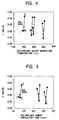
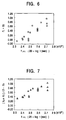
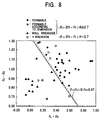
- the results obtained are shown in Figs. 4 to 8.
- Figs. 4 and 5 show the relations between hot rolled sheet annealing conditions and the r value in each direction of the steel sheet. These drawings indicate that as the hot rolled sheet annealing temperature increases, or the hot rolled sheet annealing time increases, r D decreases, while r L increases. It is also found that since r C hardly changes, r L - r D , r C - r D and (r L + r C )/2 - r D increase, and (r L + 2r D + r C )/4 also increases.
- r L - r D and (r L + r C )/2 - r D can be arranged by using (T + 273)(20 + log t) which is a function of the hot rolled sheet annealing temperature T (C) and the hot rolled sheet appealing time t (sec), and it was found that when (T + 273)(20 + log t) ⁇ 2.50 x 10 4 , r L - r D ⁇ 0.3 and (r L + r C )/2 - r D ⁇ 0.67 . At this time, r C - r D ⁇ 0.3 and (r L + 2r D + r C )/4 ⁇ 2.7 were also satisfied.
- Fig. 4 shows the results of rearrangement of data of Nos. 1, 4 and 7 in the example shown in Table 2 which will be described below
- Fig. 5 shows the results of rearrangement of data of Nos. 8, 12 and 16 shown in Table 2
- Figs. 6 and 7 show the results of rearrangement of data except data of Nos. 18, 24, 25, 26, 29 and 30 shown in Table 2 in which the chemical components and hot-rolling conditions do not satisfy the production conditions of the present invention.
- the reduction at Ar 3 to 500°C is 80% or more.
- the hot rolled sheet annealing temperature increases, or the hot rolled sheet annealing time increases, the ferrite grain diameter increases, a carbide and/or nitride is made spherical, and the distribution thereof is made coarse.
- the hot rolled sheet annealing temperature satisfies the condition (T + 273) (20 + log t) and, at the same time, the conditions of 745°C or more and 920°C or less. This is because at a hot rolled sheet annealing temperature exceeding 920°C, the crystal grain becomes excessively coarse, thereby causing the problems of roughing the surface in subsequent cold rolling and decreasing the r values due to nonuniformity of strain in cold rolling. On the other hand, at a hot rolled sheet annealing temperature of less than 745°C, the required annealing time uneconomically exceeds 10 hr.
- Fig. 8 shows the results of rectangular drawing tests for steel sheets in which r L , r D and r C were changed by changing production conditions.
- Fig. 8 indicates that in order to obtain good rectangular drawability without defects, the conditions (r L + r C )/2 - r D ⁇ 0.67 and (r L + 2r D + r C )/4 ⁇ 2.7 must be satisfied.
- Tables 4 and 5 the data of the examples shown in Tables 4 and 5 are summarized.
- the length of a straight side of the rectangular shape means the length of a straight side of a rectangular plane shape.
- actual rectangular products hardly have simple three-dimensional shapes, and often have various complicated shapes such as the shape shown in Fig. 9A in which a difference in height is seen as viewed from a side thereof, the shape shown in Fig. 9B in which a convex portion is seen as viewed from a plane thereof, etc.
- the length of a straight side means the maximum length of each of a short side and long side, as shown in Fig. 9.
- the heating temperature for hot rolling is preferably in the range of 900 to 1200°C. After heating, hot-rolling comprising rough rolling and finishing rolling by multi-pass rolling is carried out. At this time, rough rolling and finishing rolling must be carried out in consideration of the following:
- the finishing temperature of roughing rolling is in the range of 950°C to the Ar 3 transformation point.
- the reduction of roughing rolling is preferably 50% or more in order to make fine microstructure.
- Finishing rolling must be carried out at the Ar 3 transformation point or less and a reduction of over 70%, preferably 80% or more, in order to accumulate a large amount of strain in finishing rolling. If finishing rolling is performed at a temperature over the Ar 3 transformation point, strain is released due to the occurrence of ⁇ ⁇ ⁇ transformation during hot-rolling, and the rolled texture is made random, thereby interfering with preferential formation of the ⁇ 111 ⁇ texture in annealing. On the other hand, finishing rolling at a temperature of less than 500°C causes a significant increase in rolling load, and is thus unpractical. During finishing rolling at a total reduction of less than 70%, the ⁇ 111 ⁇ texture is not developed after hot-rolling and hot rolled sheet annealing.
- the finishing rolling conditions include a temperature of the Ar 3 transformation point to 500°C, preferably the Ar 3 transformation point to 600°C, and a reduction of over 70%, preferably 80% or more.
- lubrication is required for uniformly accumulating a large amount of strain during rolling. This is because without lubrication, additional shearing force acts on the surface layer of the steel sheet due to the frictional force between a roll and the surface of the steel sheet, and a texture other than the ⁇ 111 ⁇ texture is developed after hot-rolling and annealing, thereby decreasing the average r value of the cold-rolled and annealed steel sheet.
- An example of the lubrication method is a method in which graphite, low-melting-point glass, mineral oil, or the like is adhered to the roll or the steel sheet by spraying or coating. This can decrease the friction coefficient between the roll and the steel sheet to 0.15 or less.
- Cold rolling is essential for developing the texture to obtain a high average r value and high ⁇ r, and the reduction of cold rolling is within the range of 50 to 95%. With a cold rolling reduction of less than 50% or over 95%, good properties cannot be obtained.
- the cold-rolled steel sheet passed through the cold rolling step must be subjected to finishing annealing for recrystallization.
- the annealing process may be a box annealing process or a continuous annealing process.
- the heating temperature of annealing is preferably within the range of the recrystallization temperature (about 600°C) to 950°C.
- the steel strip After annealing, the steel strip may be subjected to temper rolling for correcting the shape, adjusting the surface roughness, etc.
- the steel sheet obtained in the present invention can be used as an original sheet for a surface-treated steel sheet for working.
- the surface of the steel sheet is treated by a normal method such as galvanization (including alloy systems), tinning, enameling, or the like.
- the C content is preferably as low as possible from the viewpoint of rectangular drawability. At a content of over 0.02 wt%, a large amount of cementite is precipitated in the hot-rolled steel sheet, thereby deceasing the r values after cold rolling and annealing. Therefore, the C content is 0.02 wt% or less, preferably 0.008% or less. Si: 0.5 wt% or less
- Si has the function to strengthen steel, and is added in a necessary amount according to desired strength. If the amount of Si added exceeds 0.5 wt%, rectangular drawability is adversely affected. Therefore, the Si content is in the range of 0.5 wt% or less.
- Mn has the function to strengthen steel, and is added in a necessary amount according to desired strength. If the amount of Mn added exceeds 1.0 wt%, the hardness of the hot-rolled steel sheet is rapidly increased, and elongation and the r values after cold rolling and annealing are decreased, thereby adversely affecting rectangular drawability. Therefore, the Mn content is in the range of 1.0 wt% or less.
- P has the function to strengthen steel, and is added in a necessary amount according to desired strength. If the amount of P added exceeds 0.15 wt%, large amounts of phosphides are precipitated in the hot-rolled steel sheet due to composite addition of Ti and Nb, thereby adversely affecting rectangular drawability after cold rolling and annealing. Therefore, the P content is 0.15 wt%.
- the S content is preferably as low as possible from the viewpoint of rectangular drawability.
- a S content of up to 0.02 wt% is allowable, and thus the S content is 0.02 wt% or less.
- Al is added for deoxidation for improving the yield of a carbide and/or nitride forming element according to demand. Addition off less than 0.010 wt% of A has no effect, while addition of over 0.01 wt% of Al produces no further deoxidation effect. Therefore, the Al content is in the range of 0.01 to 0.10 wt%.
- N is dissolved to decrease aging, and solute nitrogen decreases the r values after cold rolling and annealing.
- the N content is preferably as low as possible from the viewpoint of rectangular drawability. Since a N content of up to 0.008 wt% is allowable, the N content is 0.008 wt% or less.
- Ti is a carbide and/or nitride forming element, and has the function to decrease solute C and N in steel before finishing rolling and cold rolling to preferentially form the ⁇ 111 ⁇ texture in the annealing step after finishing rolling and cold rolling.
- Ti is added for increasing the average r value. Addition of less than 0.01 wt% of Ti has no effect. On the other hand, if over 0.20 wt% of Ti is added, no further effect can be expected, and deterioration in surface quality results. Therefore, the amount of Ti added is 0.001 to 0.20 wt%, preferably 0.005 to 0.20 wt%, more preferably 0.035 to 0.10 wt%.
- Nb is a carbide and/or nitride forming element, and has the function to decrease solute C and N in steel before finishing rolling and cold rolling to preferentially form the ⁇ 111 ⁇ texture in the annealing step after finishing rolling and cold rolling. Nb also has the function to make fine microstructure before finishing hot-rolling to preferentially form the ⁇ 111 ⁇ texture during finishing rolling and annealing, and the function to increase the r values. Further solute Nb has the stain accumulating effect during finishing hot-rolling, and has the function to accelerate development of the texture. Addition of less than 0.001 wt% of Nb does not have the above effects.
- the amount of Nb added is in the range of 0.001 to 0.15 wt%, preferably 0.005 to 0.10 wt%.
- B is an element effective for improving the resistance to secondary work embrittlement, and is added according to demand. Addition of less than 0.0001 wt% of B has no effect. On the other hand, addition of over 0.01 wt% of B causes deterioration in rectangular drawability. Therefore, the amount of B added is in the range of 0.0001 to 0.01 wt%, preferably 0.0001 to 0.005 wt%.
- the ⁇ 111 ⁇ texture is developed after finishing hot rolling and hot rolled sheet annealing.
- the ⁇ 111 ⁇ texture is further developed by subsequent cold rolling and finishing annealing to improve the average r value.
- the amounts of Ti and Nb added may be adjusted to satisfy the relation 1.2(C/12 + N/14 + S/32) ⁇ (Ti/48 + Nb/93) .
- a steel slab having a thickness of 250 mm and each of the chemical compositions shown in Table 1 was heated and soaked, and then roughly rolled (total reduction 85%) by a 3-stand roughing rolling mill under the conditions shown in Table 2 and Table 3, followed by finishing rolling by a 7-stand finishing rolling mill, pickling, hot rolled sheet annealing, cold rolling and finishing annealing.
- the cold-rolled and annealed steel sheets obtained were subjected to r value and rectangular drawability tests. The results of the tests are shown in Table 4 and 5.
- the r values were measured by a three-point method after pre-tension strain of 15% had been applied to a tension test piece of JIS No. 5.
- test pieces of (a) 88 mm x 88 mm, (b) 80 x 96 and (c) 76 mm by 104 mm were obtained from each of the steel sheets, and rustproofing oil was coated on the test pieces.
- Each of the test pieces was then set in a direction in which the corners of the test piece agreed with the corners of a rectangular punch, and drawn to a forming height of 30 mm under a blank holder pressure of 4 ton.
- the punches respectively had shapes of (a) 40 mm x 40 mm (length ratio 1 : 1), (b) 32 x 48 (length ratio 1 : 1.5), and (b) 28 mm x 56 mm (length ratio 1 : 2).
- evaluation was made as to whether the test piece was formable (O) or not (x). When breakage occurred, ⁇ breakage ( ⁇ ) and wall breakage (W) were discriminated.
- the present invention provides a thin steel sheet having excellent rectangular drawability, particularly a thin steel sheet in which the occurrence of wall breakage during rectangular drawing is suppressed, and a production process thereof.
- the present invention also provides a method of application of a thin steel sheet which produces no breakage during rectangular drawing to various plane shapes (the shapes of products in plan views) using the thin steel sheet of the present invention and which is suitable for these shapes.
- the present invention permits achievement of excellent rectangular drawability. It is thus possible to easily produce, by press forming, a rectangular component having a high forming height, such as an automobile oil pan, which has conventionally been produced by welding and assembling formed parts. Therefore, it is possible to simplify the production process, improve productivity and significantly decrease cost.
Landscapes
- Chemical & Material Sciences (AREA)
- Engineering & Computer Science (AREA)
- Materials Engineering (AREA)
- Mechanical Engineering (AREA)
- Metallurgy (AREA)
- Organic Chemistry (AREA)
- Physics & Mathematics (AREA)
- Thermal Sciences (AREA)
- Crystallography & Structural Chemistry (AREA)
- Heat Treatment Of Sheet Steel (AREA)
- Heat Treatment Of Steel (AREA)
Applications Claiming Priority (3)
| Application Number | Priority Date | Filing Date | Title |
|---|---|---|---|
| JP343449/96 | 1996-12-24 | ||
| JP34344996 | 1996-12-24 | ||
| PCT/JP1997/004336 WO1998028457A1 (en) | 1996-12-24 | 1997-11-27 | Thin steel plate of high rectangular tube drawability and method of manufacturing the same |
Publications (2)
| Publication Number | Publication Date |
|---|---|
| EP0903419A1 true EP0903419A1 (de) | 1999-03-24 |
| EP0903419A4 EP0903419A4 (de) | 2000-03-22 |
Family
ID=18361608
Family Applications (1)
| Application Number | Title | Priority Date | Filing Date |
|---|---|---|---|
| EP97913460A Withdrawn EP0903419A4 (de) | 1996-12-24 | 1997-11-27 | Dünnes stahlblech mit hoher rechteckig-röhreziehfähigkeit und verfahren zur herstellung davon |
Country Status (3)
| Country | Link |
|---|---|
| EP (1) | EP0903419A4 (de) |
| CN (1) | CN1083902C (de) |
| WO (1) | WO1998028457A1 (de) |
Cited By (2)
| Publication number | Priority date | Publication date | Assignee | Title |
|---|---|---|---|---|
| EP1929059A4 (de) * | 2005-08-25 | 2012-06-13 | Posco | Stahlblech zum galvanisieren mit hervorragender bearbeitbarkeit und herstellungsverfahren dafür |
| EP1026278B2 (de) † | 1998-07-27 | 2014-04-30 | Nippon Steel & Sumitomo Metal Corporation | Verwendung eines ferritischen stahlbleches mit hervorragendem beibehalten der form und herstellungsverfahren dafür |
Families Citing this family (4)
| Publication number | Priority date | Publication date | Assignee | Title |
|---|---|---|---|---|
| JPH1150211A (ja) * | 1997-08-05 | 1999-02-23 | Kawasaki Steel Corp | 深絞り加工性に優れる厚物冷延鋼板およびその製造方法 |
| CN101514425B (zh) * | 2008-02-21 | 2011-05-11 | 宝山钢铁股份有限公司 | 屈服强度160MPa级建筑抗震用低屈服点钢及其生产方法 |
| CN104789899B (zh) * | 2015-03-02 | 2017-09-01 | 河南工程学院 | 一种双面搪瓷用钢热轧板材及其制备工艺 |
| CN111334716B (zh) * | 2020-03-25 | 2021-04-13 | 江西理工大学 | 一种含铬钛硼的低碳高强深冲钢及其制备方法和应用 |
Family Cites Families (7)
| Publication number | Priority date | Publication date | Assignee | Title |
|---|---|---|---|---|
| JPS5662926A (en) * | 1979-10-29 | 1981-05-29 | Kawasaki Steel Corp | Production of steel sheet having super high r value |
| JPS6043415B2 (ja) * | 1980-07-07 | 1985-09-27 | 日本鋼管株式会社 | 耐ウオ−ルプレイク性に優れた角筒絞り用Alキルド冷延鋼板の製造方法 |
| JPS6386819A (ja) * | 1986-09-30 | 1988-04-18 | Kawasaki Steel Corp | 深絞り用冷延鋼板の製造方法 |
| JPH0765118B2 (ja) * | 1987-05-22 | 1995-07-12 | 株式会社神戸製鋼所 | 角筒絞り性にすぐれる熱延鋼板の製造方法 |
| CA2097900C (en) * | 1992-06-08 | 1997-09-16 | Saiji Matsuoka | High-strength cold-rolled steel sheet excelling in deep drawability and method of producing the same |
| JP3420313B2 (ja) * | 1993-12-27 | 2003-06-23 | Jfeスチール株式会社 | 深絞り性に優れた高強度冷延鋼板の製造方法 |
| JP3370443B2 (ja) * | 1994-08-01 | 2003-01-27 | 川崎製鉄株式会社 | 深絞り性に優れる高強度冷延鋼板の製造方法 |
-
1997
- 1997-11-27 WO PCT/JP1997/004336 patent/WO1998028457A1/ja not_active Ceased
- 1997-11-27 CN CN97191100A patent/CN1083902C/zh not_active Expired - Fee Related
- 1997-11-27 EP EP97913460A patent/EP0903419A4/de not_active Withdrawn
Cited By (2)
| Publication number | Priority date | Publication date | Assignee | Title |
|---|---|---|---|---|
| EP1026278B2 (de) † | 1998-07-27 | 2014-04-30 | Nippon Steel & Sumitomo Metal Corporation | Verwendung eines ferritischen stahlbleches mit hervorragendem beibehalten der form und herstellungsverfahren dafür |
| EP1929059A4 (de) * | 2005-08-25 | 2012-06-13 | Posco | Stahlblech zum galvanisieren mit hervorragender bearbeitbarkeit und herstellungsverfahren dafür |
Also Published As
| Publication number | Publication date |
|---|---|
| CN1083902C (zh) | 2002-05-01 |
| CN1198781A (zh) | 1998-11-11 |
| EP0903419A4 (de) | 2000-03-22 |
| WO1998028457A1 (en) | 1998-07-02 |
Similar Documents
| Publication | Publication Date | Title |
|---|---|---|
| CN109715838B (zh) | 用于生产扁钢产品的方法和扁钢产品 | |
| EP3415653B1 (de) | Hochfestes galvanisiertes stahlblech und verfahren zur herstellung davon | |
| EP0675206B1 (de) | Verfahren zum Herstellen ferritischer rostfreier Stahlbänder mit niedriger Anisotropie in der Ebene | |
| EP2258886B1 (de) | Hochfestes feuerverzinktes stahlblech mit hervorragender verarbeitbarkeit und herstellungsverfahren dafür | |
| EP0574814B1 (de) | Hochfester, kaltgewalzter Stahlblech mit ausgezeichneten Tiefzieheigenschaften und Verfahren zu dessen Herstellung | |
| EP2116311B1 (de) | Hochfeste kaltgewalzte stahlplatte und verfahren zur herstellung der kaltgewalzten stahlplatte | |
| US10422015B2 (en) | High-strength galvanized steel sheet excellent in stretch-flange formability, in-plane stability of stretch-flange formability, and bendability and method for manufacturing the same | |
| US20240263287A1 (en) | Hot-dip galvanized steel sheet and method for producing same, and member | |
| KR20240005884A (ko) | 고강도 강판 및 그의 제조 방법 | |
| EP0731182B1 (de) | Verfahren zum Herstellen von Stahlblechern geeignet zur Dosenherstellung | |
| US20030099567A1 (en) | Austenitic stainless steel excellent in fine blankability | |
| RU2678350C1 (ru) | Способ производства формованного продукта и формованный продукт | |
| EP2700731A1 (de) | Stahlblech für dosen mit hoher rumpfknickfestigkeit unter externem druck und mit ausgezeichneter formbarkeit und hervorragenden oberflächeneigenschaften nach dem formen sowie verfahren zu seiner herstellung | |
| US6217680B1 (en) | Thick cold rolled steel sheet excellent in deep drawability and method of manufacturing the same | |
| EP1394276B1 (de) | Hochzugfestes warmgewalztes stahlblech mit hervorragender formwerkzeug-verschleissfestigkeit und ermüdungsfestigkeit | |
| CN104981551B (zh) | 具有优异可成形性和疲劳性能的高强度热轧钢带材或片材以及生产所述钢带材或片材的方法 | |
| KR20240152340A (ko) | 고강도 강판 및 그 제조 방법 | |
| CN116829756B (zh) | 卷取温度影响的冷轧带或钢 | |
| KR20240152341A (ko) | 고강도 강판 및 그 제조 방법 | |
| US6623691B2 (en) | Ultra-low carbon steel composition, the process of production of an ULC BH steel product and the product | |
| CN116867923A (zh) | 卷取温度影响的经冷轧的带或钢 | |
| US6103394A (en) | Thin steel sheet having excellent rectangular drawability and production method thereof | |
| EP3686293B1 (de) | Hochfestes kaltgewalztes stahlband oder -blech mit hoher duktilität und komplexer phase | |
| EP0484960B1 (de) | Kaltgewalztes Stahlband mit hervorragender Pressverformbarkeit und Verfahren zur Herstellung | |
| EP4317483A1 (de) | Stahlblech und verfahren zur herstellung davon |
Legal Events
| Date | Code | Title | Description |
|---|---|---|---|
| PUAI | Public reference made under article 153(3) epc to a published international application that has entered the european phase |
Free format text: ORIGINAL CODE: 0009012 |
|
| 17P | Request for examination filed |
Effective date: 19980318 |
|
| AK | Designated contracting states |
Kind code of ref document: A1 Designated state(s): BE DE ES FR GB |
|
| A4 | Supplementary search report drawn up and despatched |
Effective date: 20000208 |
|
| AK | Designated contracting states |
Kind code of ref document: A4 Designated state(s): BE DE ES FR GB |
|
| 17Q | First examination report despatched |
Effective date: 20020916 |
|
| GRAP | Despatch of communication of intention to grant a patent |
Free format text: ORIGINAL CODE: EPIDOSNIGR1 |
|
| RAP1 | Party data changed (applicant data changed or rights of an application transferred) |
Owner name: JFE STEEL CORPORATION |
|
| STAA | Information on the status of an ep patent application or granted ep patent |
Free format text: STATUS: THE APPLICATION IS DEEMED TO BE WITHDRAWN |
|
| 18D | Application deemed to be withdrawn |
Effective date: 20031223 |