EP0836866A2 - Herzschrittmacher mit verbesserter Erfassung von atrialer Fibrillation - Google Patents
Herzschrittmacher mit verbesserter Erfassung von atrialer Fibrillation Download PDFInfo
- Publication number
- EP0836866A2 EP0836866A2 EP97307225A EP97307225A EP0836866A2 EP 0836866 A2 EP0836866 A2 EP 0836866A2 EP 97307225 A EP97307225 A EP 97307225A EP 97307225 A EP97307225 A EP 97307225A EP 0836866 A2 EP0836866 A2 EP 0836866A2
- Authority
- EP
- European Patent Office
- Prior art keywords
- atrial
- indicia
- signals
- generating
- rate
- Prior art date
- Legal status (The legal status is an assumption and is not a legal conclusion. Google has not performed a legal analysis and makes no representation as to the accuracy of the status listed.)
- Granted
Links
- 206010003658 Atrial Fibrillation Diseases 0.000 title claims abstract description 12
- 238000001514 detection method Methods 0.000 title description 4
- 230000001746 atrial effect Effects 0.000 claims abstract description 120
- 230000033764 rhythmic process Effects 0.000 claims abstract description 30
- 230000002503 metabolic effect Effects 0.000 claims abstract description 20
- 210000002837 heart atrium Anatomy 0.000 claims abstract description 15
- 230000007774 longterm Effects 0.000 claims abstract description 7
- 230000002861 ventricular Effects 0.000 claims description 31
- 206010061592 cardiac fibrillation Diseases 0.000 claims description 15
- 230000002600 fibrillogenic effect Effects 0.000 claims description 15
- 238000000034 method Methods 0.000 claims description 11
- 230000001575 pathological effect Effects 0.000 claims description 11
- 230000004044 response Effects 0.000 claims description 9
- 206010003119 arrhythmia Diseases 0.000 claims description 8
- 230000000747 cardiac effect Effects 0.000 claims description 8
- 230000001419 dependent effect Effects 0.000 claims description 6
- 230000008859 change Effects 0.000 claims description 4
- 230000037323 metabolic rate Effects 0.000 claims description 3
- 230000009977 dual effect Effects 0.000 abstract description 6
- 206010003130 Arrhythmia supraventricular Diseases 0.000 description 9
- 230000006793 arrhythmia Effects 0.000 description 7
- 206010042600 Supraventricular arrhythmias Diseases 0.000 description 6
- 238000010586 diagram Methods 0.000 description 4
- 230000000694 effects Effects 0.000 description 4
- 230000006870 function Effects 0.000 description 4
- 238000002847 impedance measurement Methods 0.000 description 4
- 238000002560 therapeutic procedure Methods 0.000 description 4
- 208000002102 Atrial Premature Complexes Diseases 0.000 description 3
- 206010053486 Pacemaker generated arrhythmia Diseases 0.000 description 3
- 230000008602 contraction Effects 0.000 description 3
- 230000000241 respiratory effect Effects 0.000 description 3
- 238000007619 statistical method Methods 0.000 description 3
- 208000001871 Tachycardia Diseases 0.000 description 2
- 230000004913 activation Effects 0.000 description 2
- 238000004458 analytical method Methods 0.000 description 2
- 210000001367 artery Anatomy 0.000 description 2
- 230000006399 behavior Effects 0.000 description 2
- 239000008280 blood Substances 0.000 description 2
- 210000004369 blood Anatomy 0.000 description 2
- 238000004364 calculation method Methods 0.000 description 2
- 230000000763 evoking effect Effects 0.000 description 2
- 230000002332 fibrillatory effect Effects 0.000 description 2
- 230000000004 hemodynamic effect Effects 0.000 description 2
- 206010003662 Atrial flutter Diseases 0.000 description 1
- 101100213966 Neurospora crassa (strain ATCC 24698 / 74-OR23-1A / CBS 708.71 / DSM 1257 / FGSC 987) ypi-1 gene Proteins 0.000 description 1
- 206010040639 Sick sinus syndrome Diseases 0.000 description 1
- 206010049447 Tachyarrhythmia Diseases 0.000 description 1
- 208000032364 Undersensing Diseases 0.000 description 1
- 230000003321 amplification Effects 0.000 description 1
- 210000001765 aortic valve Anatomy 0.000 description 1
- 210000001992 atrioventricular node Anatomy 0.000 description 1
- 230000002457 bidirectional effect Effects 0.000 description 1
- 230000017531 blood circulation Effects 0.000 description 1
- 238000013194 cardioversion Methods 0.000 description 1
- 238000003745 diagnosis Methods 0.000 description 1
- 230000037183 heart physiology Effects 0.000 description 1
- 238000005259 measurement Methods 0.000 description 1
- 230000007246 mechanism Effects 0.000 description 1
- 230000028161 membrane depolarization Effects 0.000 description 1
- 238000003199 nucleic acid amplification method Methods 0.000 description 1
- 230000007170 pathology Effects 0.000 description 1
- 210000003102 pulmonary valve Anatomy 0.000 description 1
- 230000004213 regulation of atrial cardiomyocyte membrane depolarization Effects 0.000 description 1
- 230000000638 stimulation Effects 0.000 description 1
- 210000000115 thoracic cavity Anatomy 0.000 description 1
- 230000036962 time dependent Effects 0.000 description 1
Images




Classifications
-
- A—HUMAN NECESSITIES
- A61—MEDICAL OR VETERINARY SCIENCE; HYGIENE
- A61N—ELECTROTHERAPY; MAGNETOTHERAPY; RADIATION THERAPY; ULTRASOUND THERAPY
- A61N1/00—Electrotherapy; Circuits therefor
- A61N1/18—Applying electric currents by contact electrodes
- A61N1/32—Applying electric currents by contact electrodes alternating or intermittent currents
- A61N1/36—Applying electric currents by contact electrodes alternating or intermittent currents for stimulation
- A61N1/362—Heart stimulators
- A61N1/3621—Heart stimulators for treating or preventing abnormally high heart rate
- A61N1/3622—Heart stimulators for treating or preventing abnormally high heart rate comprising two or more electrodes co-operating with different heart regions
-
- A—HUMAN NECESSITIES
- A61—MEDICAL OR VETERINARY SCIENCE; HYGIENE
- A61B—DIAGNOSIS; SURGERY; IDENTIFICATION
- A61B5/00—Measuring for diagnostic purposes; Identification of persons
- A61B5/24—Detecting, measuring or recording bioelectric or biomagnetic signals of the body or parts thereof
- A61B5/316—Modalities, i.e. specific diagnostic methods
- A61B5/318—Heart-related electrical modalities, e.g. electrocardiography [ECG]
- A61B5/346—Analysis of electrocardiograms
- A61B5/349—Detecting specific parameters of the electrocardiograph cycle
Definitions
- This invention pertains to pacemakers in which the atrial rhythm is categorized using statistical analysis of its amplitude and its rate in relation to a physiological parameter. It also pertains to implantable cardioverter-defibrillators and atrial defibrillators for rhythm classification. Once the atrial condition is established, a decision can be made as to whether and what type of atrial and/or ventricular therapy is desirable (if any).
- a pacemaker cardiac pulse generator
- sense for intrinsic (natural) events that is, P-waves and R-waves, and if such are absent to provide stimulation or pacing pulses in either or both the atrium and the ventricle.
- a dual chamber pacemaker stimulates a patient's heart in the most physiologically efficient manner when it provides atrioventricular (AV) synchrony. This means that each atrial contraction (P-wave) is followed, after an appropriate AV delay, by a ventricular contraction (R-wave), which is the sequence exhibited by a healthy heart.
- P-wave atrial contraction
- R-wave ventricular contraction
- the rate of ventricular pacing pulses which are provided in the absence of sensed intrinsic ventricular activity (V-sense) is determined by the atrial channel.
- the atrial channel may either sense a P-wave (A-sense) or, in the absence of an A-sense, provide a pacing pulse (A-pace).
- A-sense P-wave
- A-pace pacing pulse
- the ventricular channel follows, one for one, providing a pacing pulse (V-pace) in the absence of a V-sense. This provides the intended therapy of increased hemodynamic output with increased sinoatrial rate.
- the dual chamber pacemaker must also cope with atrial tachyarrhythmia and the mechanism to do this is the "programmed maximum rate.”
- This maximum rate is usually the upper rate limit both (i) when the ventricular channel is tracking (or following) A-senses in the atrial channel, and (ii) when in the case of a sensor driven, rate responsive pacemaker, the atrial channel is pacing, i.e., providing A-paces.
- a rate responsive pacemaker has an independent sensor which measures a physical or metabolic parameter. The sinus rate is combined with the sensor indicated rate to determine the atrial pacing rate. This also has the effect of providing increased hemodynamic output for a patient who has sinus node disease.
- AMS automatic mode switching
- the time period between an atrial and a subsequent ventricular pace (the A-V delay) is one of the parameters that is set in the pacemakers as part of their normal operation.
- the atrio-ventricular valve is open and the blood flows from atrium through this valve into the ventricle.
- a ventricular pacing pulse initiates a contraction which closes the A-V valves and opens the aortic and pulmonary valves to cause blood to flow into the arteries.
- the amount of blood delivered into the ventricles and eventually by the heart to the arteries i.e., the stroke volume for each heart beat, is dependent on both the A-V delay and the physiological characteristics of the heart, which characteristics are unique for each patient.
- a problem in these types of pacemakers has been that, due to the low amplitudes of the intrinsic atrial signals, it is difficult to analyze the same to determine the status of the atrial condition and hence affect behavior of the implanted device.
- the behavior of the device in response to detection of a pathological atrial rhythm might consist of AMS, anti-tachycardia pacing, cardioversion, or defibrillation.
- Another object is to provide a means of further classifying the cardiac condition based on information obtained from a metabolic sensor.
- a further objective is to provide in an implantable cardiac device such as a dual chamber pacemaker, an implantable cardioverter/defibrillator or an atrial defibrillator means of correctly determining and classifying the condition of a patient s atrium for diagnosis and treatment.
- an implantable cardiac device such as a dual chamber pacemaker, an implantable cardioverter/defibrillator or an atrial defibrillator means of correctly determining and classifying the condition of a patient s atrium for diagnosis and treatment.
- Atrial signals can be classified into one of five categories as follows:
- Category IV is not well suited for the analysis disclose herein and therefore it is not discussed further.
- Category V retrograde atrial activation, may cause pacemaker mediated tachycardia (PMT).
- PMT pacemaker mediated tachycardia
- the present pacemaker constructed in accordance with this invention includes means for sensing atrial signals, means for analyzing these signals to determine their peak amplitudes of a plurality of consecutive signals, and means for analyzing these peak amplitudes statistically so that the atrial status can be categorized. It may optionally include means for measurement of a metabolic sensor which provides information on the appropriateness of the intrinsic atrial rate and whether said rate is pathological.
- FIG. 1-4 A pacemaker incorporating the present invention is shown in Figures 1-4. Except for the features covering the determination of atrial amplitude, the pacemaker of these Figures is constructed and operates in accordance with the description found in commonly assigned U.S. Patent No. 5,441,523 by Tibor A. Nappholz, entitled FORCED ATRIOVENTRICULAR SYNCHRONY DUAL CHAMBER PACEMAKER, incorporated herein by reference.
- the pacemaker 10 shown in Figure 1 is designed to be implanted in a patient and is connected by leads 12 and 14 to a patient s heart 16 for sensing and pacing the same.
- the atrial cardiac lead 12 extends into the atrium of the heart 16 and the ventricular cardiac lead 14 extends into the ventricle of the heart 16.
- Other lead configurations are possible, including the inclusion of additional leads sensing atrial signals and/or the absence of a ventricular lead in, for example, an atrial antitachycardia pacemaker.
- Leads 12 and 14 are used for both sensing electrical activity in the heart and for applying pacing pulses to the heart.
- the pacemaker 10 includes a pace and sense circuit 18 for the detection of analog signals from leads 12 and 14 and for the delivery of pacing pulses to the heart.
- a microprocessor 20 ( Figure 2) is also provided, in response to inputs received from the pace and sense circuit 18, performs operations to generate different control and data outputs to the pace and sense circuit 18.
- a power supply (not shown) provides voltage to the pace and sense circuit 18 and the microprocessor 20.
- the microprocessor 20 and the pace and sense circuit 18 are connected to each other by a number of data and control lines included in bus 22.
- FIG. 1 further shows details of the pace and sense circuit 18.
- the circuit 18 includes an atrial pacing pulse generator 32, a ventricular pacing pulse generator 36, an atrial heartbeat sensor 34, a ventricular sensing circuit 38, and a telemetry circuit 40.
- the preferred embodiment of the pace and sense circuit 18 also includes an impedance measurement circuit 42 for measuring a respiratory parameter indicative of the patient s metabolic demand as described in detail in U.S. Patent No. 4,901,725 and incorporated herein by reference.
- the pace and sense circuit 18 also includes a interface port 44 for interfacing with the microprocessor 20 via bus 22.
- the atrial and ventricular sensing circuits 34 and 38 detect respective atrial and ventricular analog signals 46 and 48 from the heart 16 and convert the detected analog signals to digital signals.
- the atrial pacing pulse generator circuit 32 receives via microprocessor 20 and interface port 44 on bus 56, an atrial pace command to generate an atrial pacing pulse 23 at appropriate times.
- the ventricular pacing pulse generator circuit 36 receives from the interface port 44, and control bus 54, a ventricular pace command to generate a ventricular pacing pulse 58.
- the telemetry circuit 40 provides a bidirectional link between the interface port 44 of the pace and sense circuit 18 and an external device such as a programmer. It allows data such as the operating parameters to be read from or altered in the implanted pacemaker.
- a programmer is the 9600 Network Programmer manufactured by Telectronics Pacing Systems, Inc. of Englewood, Colorado, U.S.A.
- FIG. 2 shows the microprocessor 20 having a timer circuit 62 for generating several timing signals, a controller 64, a vectored interrupts circuit 66, a ROM 68, a RAM 70, an external memory 72 and an interface port 74. Signals between these elements are exchanged via an internal communications bus 40.
- the RAM 70 acts as a scratchpad and active memory during execution of the programs stored in the ROM 68 and used by the microprocessor 20.
- ROM 68 is used to store various subroutines.
- the microprocessor 20 through its interface port 74 receives status inputs from the pace and sense circuit 18. Using controller 64, it performs various operations, including arrhythmia detection, and produces commands, such as the atrial pace command on the bus 56 and the ventricular pace command on the bus 54, which determine the type of pacing that is to take place.
- the pacemaker 10 of the present invention will function properly using any metabolic indicator rate system, so long as that system is able to reliably relate the sensed parameter to a metabolic demand pacing rate.
- any metabolic indicator rate system so long as that system is able to reliably relate the sensed parameter to a metabolic demand pacing rate.
- U.S. Patent No. 4,766,901 to F. Callaghan, issued August 30, 1988, for "Rate Responsive Pacing System Using the Integrated Evoked Potential” refers to the operation of a rate-responsive pacing system using an integrated evoked ventricle depolarization potential (or PDI) as a metabolic demand pacing rate indicator.
- PDI integrated evoked ventricle depolarization potential
- Nappholz et al. issued October 27, 1987, for "Metabolic-Demand Pacemaker and Method of Using the Same to Determine Minute Volume," U.S. Patent No. 4,901,725, to T. A. Nappholz et al., issued February 20, 1990 for "Minute Volume Rate-Responsive Pacemaker", and U.S. Patent No. 5,201,808 to B.M. Steinhaus et al., entitled “Minute Volume Rate-Responsive Pacemaker Employing Impedance Sensing on a Unipolar Lead”, which issued on April 13, 1993, disclose rate-responsive pacers describing another metabolic demand pacing rate indicator, respiratory minute volume, as the rate control parameter.
- the pacemaker 10 can employ any rate response techniques available or no rate response at all.
- the preferred embodiment of the invention employs the impedance measurement circuit 42 which measures the thoracic impedance to determine the respiratory minute volume in accordance with the 725 Nappholz patent mentioned above.
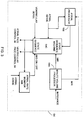
- FIG. 3 shows the block diagram of the controller 64 of Figure 2.
- the controller 64 includes a state sequence machine 64C, a minute volume processor 64A and an atrial rate monitor 64B.
- the minute volume processor 64A uses the data supplied via the internal bus 40 and the bus 22 from the impedance measurement block 42 to relate the minute volume indicated by the impedance measurement to the Metabolic Indicated Rate (MIR). This rate is then used by the machine 64C to vary the length of each interval in the timing cycle.
- MIR is also used by the atrial processor 100 to analyze the atrial rhythm. While the pacemaker 10 is preferably operating in a DDDR mode, it should be understood that it can operate in other modes as well.
- the atrial sense signals are fed to an atrial processor 100 which analyzes the atrial sense signals to determine the amplitude variability of the atrial sense signals and the respective atrial rhythm.
- the processor 100 provides corresponding commands to the state machine 64C. For example, if the processor detects a non-physiological rate and/or rhythm, it generates an AMS on (automatic mode switching) command, in response to which the state machine suspends atrial pacing and performs ventricular pacing independent of the timing of atrial depolarizations until the atrial functions return to normal. When this rate or rhythm is no longer detected the AMS feature is turned OFF.
- the atrial sense signal is fed to a peak detector 102.
- the peak detector feeds the peak amplitudes of the sensed atrial signals to an analyzer 104.
- the MIR is also fed into the analyzer 104 from the minute volume processor 64A.
- the analyzer analyzes these signals as discussed below.
- the atrial sense signal sensed during normal sinus rhythm is a well ordered signal having a relatively constant amplitude. That is, if a long-term statistical analysis is performed of the peak value of a large number of atrial sense signals, then, as shown in Figure 6A, about 90% of the atrial signals will have an amplitude of about 5 mV, about 5% will have an amplitude of about 4 mV and about 5% will have an amplitude of about 6 mV.
- Regular supraventricular arrhythmias typically show a consistent atrial rate and amplitude. The rate is elevated from that during sinus rhythm.
- the atrial rate is approximately 160 beats/min.
- the atrial amplitude histogram corresponding to this arrhythmia (Figure 6B) is similar to that during sinus rhythm ( Figure 6A). It would be necessary to include another criteria to distinguish this arrhythmia from sinus rhythm.
- we use a definition of atrial pathological rate based upon the deviation of actual atrial rate from the metabolic indicated rate or, alternately, a short-term atrial rate.
- the amplitude becomes less organized.
- the amplitude is at the nominal value of 5mV less than 70% of the time.
- the remaining sensed signals may range from 3 to 7 mV, as indicated.
- the statistical histogram curve has a lower maximum percent and is spread over a broader voltage value.
- the peak amplitudes become much more disorganized.
- the example signal in Figure 6D shows that for this condition, the peak amplitude does not exceed about 1 mV over a comparatively broad voltage range.
- Figure 5E shows the atrial sense signals characterizing fine atrial fibrillation.
- the peak-to-peak amplitudes of these example signals do not much exceed 0.1 mV, as shown in Figure 6E, but have a relatively narrow voltage range.
- Analyzer 104 performs the statistical analysis to determine if the atrial sense signals are indicative of sinus rhythm, regular supraventricular arrhythmia, flubber, coarse fibrillation, or fine fibrillation. This information is then provided to the pace controller 106 for a determination as to whether the state machine needs to adjust its pacing parameters. The information is obtained by defining sequential time periods P, each of which being partitioned into L frames, and analyzing and comparing the atrial senses within each frame, as described below. This timing function is performed by a timer 107.
- Analyzer 104 can be implemented a number of ways.
- the atrial amplitude variability is determined by the analyzer from the peak amplitude of each sensed atrial signal. This method is preferable because it can be implemented in a microprocessor by performing only a small number of calculations.
- the amplitude variability criteria may be combined with a pathological rate criteria. The rate criteria is based on boundary conditions set by the metabolic rate sensor in a rate responsive system, or on allowed deviations from a short term average atrial rate in a non-rate-responsive system.
- consecutive time periods of P seconds are defined, each time period being partitioned into L time frames having a duration of P/L.
- P/L is defined as the longest pacing interval of the pacemaker, i.e., the default rate used when no atrial signals are sensed. For example, if the default pacing rate is 50 ppm then P/L is 1.2 seconds. Generally, it is believed that P should be about 12 seconds, and therefore L is about 10.
- the first term, I1 is an indicia of the atrial short term amplitude variability during the 1.2 sec frames.
- I2 is an indicia of the long-term absolute waveform amplitude change from sinus rhythm.
- K is added to weigh the indicia J proportionally when the atrial rate is pathological.
- step 200 while the atrium is known to follow sinus rhythm, a voltage Vsr is determined, where Vsr is the average peak amplitude of a predetermined number (for example 100) of sensed sinus generated atrial signals.
- Vsr is the average peak amplitude of a predetermined number (for example 100) of sensed sinus generated atrial signals.
- step 202 all atrial signals in the first frame having a peak amplitude of Vp > 0.1 Vsr are detected by the peak detector 102.
- step 204 the maximum peak amplitude in time frame 1 is defined as Vm1.
- a preliminary decision may be made at the end of the first frame. More particularly, as seen in Figure 7, in step 208 a test is performed to determine if I11 is greater than a threshold level T1 (for example, T1 may be about 5 mV) and K > 0. If the determination is 'YES', a preliminary atrial fibrillation flag is set (step 230) and some therapy may be activated (e.g., AMS, step 232). If the determination is 'NO', these two steps are bypassed.
- T1 for example, T1 may be about 5 mV
- a preliminary atrial fibrillation flag is set (step 230) and some therapy may be activated (e.g., AMS, step 232). If the determination is 'NO', these two steps are bypassed.
- step 210 the next frame is examined by incrementing the value of j.
- step 212 the peak values Vpi (step 212), the maximum peak values Vmj (step 214), and the terms I1j are determined (step 216) for the next eleven frames.
- steps 202, 204, and 206 correspond to steps 202, 204, and 206.
- step 220 after all L (e.g., 12) peak values Vpi and all the maximum values Vmj have been calculated ('YES' to step 218), the final value I1 is calculated by summing all L I1j's (step 220).
- L e.g., 12
- the indicia J is calculated and, finally, based on the values of I1, I2, K and/or J, the atrial condition is categorized (step 226) (i.e., identified as being one of categories I, II, III. Based on these categories, the state sequence machine 64C can provide appropriate therapy, if necessary.
- the third term K is added to weigh the indicia J when the atrial rate is pathological.
- the pathological condition of the atrium is determined by the maximum atrial rate appropriate for the persons age and medical condition. Generally, this rate is 220-Age beats/min.
- the value of K is scaled to appropriately weight the value of J.
- FIG. 5A shows a typical atrial signal during an episode of sinus rhythm as might be sensed by an atrial electrode at a rate of 70 beats/min.
- This signal consists of a plurality of well defined, fairly similar waves such as the four waves X1, X2, X3, X4.
- the amplitudes of these waves are shown statistically in Figure 6A as falling mostly in the range of 5mV.
- Waves X1 and X2 fall in frame f1 while X3 and X4 fall in frames f2 and f3 respectively. Since the sum of the differences (Vm-Vp) and
- the term K is also close to zero because, in this case, the atrium rate is not pathological.
- Category II- Regular Supraventricular Arrhythmia A typical time dependent atrial signal showing this condition is shown in Figure 5B. As seen in this Figure, all waves are similar in consistency to one another as in Category I. Each peak amplitude Vi is similar to the others. In addition, the peaks are similar in amplitude to Vsr. Therefore, I1 and I2 are close to zero. However, the rate is approximately 160 beats/min, which depending upon the metabolic indicated rate (or alternatively the short-term atrial average rate), may be pathologic. This would result in an increased value for K. It could be set to Vsr or more appropriately scaled, for example. Therefore, low values of I1 and I2 with an increased K indicates a regular supraventricular arrhythmia.
- This type of rhythm is normally quite stable and could be an organized rhythm with origin in the atrium, the AV node, or a bypass track to the ventricle. If there is no rate transgression, even with the use of the metabolic sensor as described in previous concepts, then there is no way of determining that it is an arrhythmia and, in any case, will generally be benign to the patient. If there is a rate transgression, pacing will either go into a forced synchrony mode with the intent of keeping the ventricular rate stable and perhaps terminating the arrhythmia. In such a case, AMS would occur after forced synchrony proceeded it for perhaps 10 cycles or forced synchrony would be allowed indefinitely, as long as the Category II rhythm was present.
- Atrial Fibrillation or Fibrillation/Flutter (Flubber): With many types of atrial pathologies, fibrillation and an intermediate between fibrillation and flutter (flubber) is very common. It is known that the nature of this rhythm is such that the amplitude could be any value down to and below 10% of the original signal. The amplitude of the fibrillation waveform is largely dependent on the length of time the rhythm has been present. The expression presented previously will return a value for all states of this rhythm identifying it. If there is amplitude variability and higher rate it will return the appropriate indication of fibrillation or flubber based upon the comparison of J to a threshold value.
- the rhythm has deteriorated so that it is often below the sensing threshold it will identify this situation by extending the standby or minimum rate and noting: 1) the difference to the sinus rhythm amplitude is high (increased I2 due to the absence of intrinsic atrial signals), and 2) occasionally the amplitude variability is high (increased I1).
- One issue is to eliminate the effect of frequent PACs (premature atrial contractions), which could be misread as an arrhythmia.
- the arrhythmia threshold would be set appropriately to distinguish sinus rhythm with PACs versus atrial fibrillation.
- the size of the first I1 and I2 terms would be larger than for sinus rhythm, but not large enough to signal atrial fibrillation.
Landscapes
- Health & Medical Sciences (AREA)
- Cardiology (AREA)
- Life Sciences & Earth Sciences (AREA)
- Animal Behavior & Ethology (AREA)
- Public Health (AREA)
- Veterinary Medicine (AREA)
- Biomedical Technology (AREA)
- Engineering & Computer Science (AREA)
- Heart & Thoracic Surgery (AREA)
- General Health & Medical Sciences (AREA)
- Radiology & Medical Imaging (AREA)
- Nuclear Medicine, Radiotherapy & Molecular Imaging (AREA)
- Physics & Mathematics (AREA)
- Biophysics (AREA)
- Pathology (AREA)
- Medical Informatics (AREA)
- Molecular Biology (AREA)
- Surgery (AREA)
- Electrotherapy Devices (AREA)
Applications Claiming Priority (2)
| Application Number | Priority Date | Filing Date | Title |
|---|---|---|---|
| US730748 | 1996-10-15 | ||
| US08/730,748 US5720295A (en) | 1996-10-15 | 1996-10-15 | Pacemaker with improved detection of atrial fibrillation |
Publications (3)
| Publication Number | Publication Date |
|---|---|
| EP0836866A2 true EP0836866A2 (de) | 1998-04-22 |
| EP0836866A3 EP0836866A3 (de) | 1999-07-07 |
| EP0836866B1 EP0836866B1 (de) | 2005-02-23 |
Family
ID=24936661
Family Applications (1)
| Application Number | Title | Priority Date | Filing Date |
|---|---|---|---|
| EP97307225A Expired - Lifetime EP0836866B1 (de) | 1996-10-15 | 1997-09-17 | Herzschrittmacher mit verbesserter Erfassung von atrialer Fibrillation |
Country Status (3)
| Country | Link |
|---|---|
| US (1) | US5720295A (de) |
| EP (1) | EP0836866B1 (de) |
| DE (1) | DE69732553T2 (de) |
Cited By (1)
| Publication number | Priority date | Publication date | Assignee | Title |
|---|---|---|---|---|
| EP1279414A3 (de) * | 2001-07-25 | 2004-09-01 | BIOTRONIK Mess- und Therapiegeräte GmbH & Co Ingenieurbüro Berlin | Herztherapiegerät |
Families Citing this family (67)
| Publication number | Priority date | Publication date | Assignee | Title |
|---|---|---|---|---|
| US5978710A (en) * | 1998-01-23 | 1999-11-02 | Sulzer Intermedics Inc. | Implantable cardiac stimulator with safe noise mode |
| EP0985428A1 (de) | 1998-08-12 | 2000-03-15 | Pacesetter, Inc. | Herzschrittmacher mit sicherer R-Wellensynchronisierung während der Reizungskorrektur einer Vorhofsfibrillierung |
| US6047210A (en) * | 1998-09-03 | 2000-04-04 | Cardiac Pacemakers, Inc. | Cardioverter and method for cardioverting an atrial tachyarrhythmia while maintaining atrial pacing |
| US6078837A (en) * | 1999-01-27 | 2000-06-20 | Medtronic, Inc. | Method and apparatus for treatment of fibrillation |
| DE60012886T2 (de) * | 1999-02-08 | 2005-08-25 | Heartsine Technologies Ltd. | Gerät zur feststellung ob ein patient empfänglich ist für defibrillation |
| US6266561B1 (en) * | 1999-04-01 | 2001-07-24 | Agilent Technologies, Inc. | Method of adjusting electrotherapy in response to an arrhythmia |
| US6496731B1 (en) * | 2000-04-14 | 2002-12-17 | Cardiac Pacemakers, Inc. | Highly specific technique for discriminating atrial fibrillation from atrial flutter |
| US7403819B1 (en) | 2002-06-12 | 2008-07-22 | Pacesetter, Inc. | Parasympathetic nerve stimulation for control of AV conduction |
| US7245967B1 (en) * | 2002-06-12 | 2007-07-17 | Pacesetter, Inc. | Parasympathetic nerve stimulation for termination of supraventricular arrhythmias |
| SE0202882D0 (sv) * | 2002-09-30 | 2002-09-30 | St Jude Medical | An Implantable Heart Stimulator |
| US7536224B2 (en) * | 2003-04-30 | 2009-05-19 | Medtronic, Inc. | Method for elimination of ventricular pro-arrhythmic effect caused by atrial therapy |
| US7561913B2 (en) | 2003-04-30 | 2009-07-14 | Medtronic, Inc. | Automatic adjusting R-wave synchronization algorithm for atrial cardioversion and defibrillation |
| US20190357827A1 (en) | 2003-08-01 | 2019-11-28 | Dexcom, Inc. | Analyte sensor |
| US7062328B1 (en) | 2003-08-25 | 2006-06-13 | Pacesetter, Inc. | System and method for providing improved specificity for automatic mode switching within an implantable medical device |
| US7184834B1 (en) | 2003-12-05 | 2007-02-27 | Pacesetter, Inc. | Method and apparatus for improving specificity of atrial tachycardia detection techniques in dual-unipolar or dual-bipolar implantable cardiac stimulation systems |
| US7174210B1 (en) | 2003-12-05 | 2007-02-06 | Pacesetter, Inc. | Method and apparatus for improving specificity of atrial tachycardia detection techniques in dual-unipolar or dual-bipolar implantable cardiac stimulation systems |
| US7158829B1 (en) | 2003-12-05 | 2007-01-02 | Pacesetter, Inc. | Method and apparatus for improving specificity of atrial tachycardia detection techniques in dual-unipolar or dual-bipolar implantable cardiac stimulation systems |
| US7146213B1 (en) * | 2003-12-05 | 2006-12-05 | Pacesetter, Inc. | Method and apparatus for improving specificity of atrial tachycardia detection techniques in dual-unipolar or dual-bipolar implantable cardiac stimulation systems |
| US7756572B1 (en) | 2005-01-25 | 2010-07-13 | Pacesetter, Inc. | System and method for efficiently distinguishing among cardiac ischemia, hypoglycemia and hyperglycemia using an implantable medical device and an external system |
| US7272436B2 (en) * | 2005-01-25 | 2007-09-18 | Pacesetter, Inc. | System and method for distinguishing among cardiac ischemia, hypoglycemia and hyperglycemia using an implantable medical device |
| US7590443B2 (en) * | 2005-04-27 | 2009-09-15 | Pacesetter, Inc | System and method for detecting hypoglycemia based on a paced depolarization integral using an implantable medical device |
| EP1921980A4 (de) | 2005-08-31 | 2010-03-10 | Univ Virginia | Verbesserung der genauigkeit von kontinuierlichen glucosesensoren |
| DE102005047320A1 (de) * | 2005-09-30 | 2007-04-05 | Biotronik Crm Patent Ag | Detektor für atriales Flimmern und Flattern |
| US7742812B2 (en) | 2006-03-29 | 2010-06-22 | Medtronic, Inc. | Method and apparatus for detecting arrhythmias in a medical device |
| US7630748B2 (en) | 2006-10-25 | 2009-12-08 | Abbott Diabetes Care Inc. | Method and system for providing analyte monitoring |
| US8224415B2 (en) | 2009-01-29 | 2012-07-17 | Abbott Diabetes Care Inc. | Method and device for providing offset model based calibration for analyte sensor |
| US8219173B2 (en) | 2008-09-30 | 2012-07-10 | Abbott Diabetes Care Inc. | Optimizing analyte sensor calibration |
| US9675290B2 (en) | 2012-10-30 | 2017-06-13 | Abbott Diabetes Care Inc. | Sensitivity calibration of in vivo sensors used to measure analyte concentration |
| US8583205B2 (en) | 2008-03-28 | 2013-11-12 | Abbott Diabetes Care Inc. | Analyte sensor calibration management |
| US9392969B2 (en) | 2008-08-31 | 2016-07-19 | Abbott Diabetes Care Inc. | Closed loop control and signal attenuation detection |
| US9326709B2 (en) | 2010-03-10 | 2016-05-03 | Abbott Diabetes Care Inc. | Systems, devices and methods for managing glucose levels |
| EP2106238A4 (de) | 2006-10-26 | 2011-03-09 | Abbott Diabetes Care Inc | Verfahren, system und computerprogrammprodukt zur echtzeit-erkennung eines empfindlichkeitsabfalls in analytsensoren |
| DE102006061988A1 (de) | 2006-12-21 | 2008-07-03 | Biotronik Crm Patent Ag | Detektor für atriales Flimmern und Flattern |
| US7627368B2 (en) * | 2006-12-28 | 2009-12-01 | Medtronic, Inc. | Method and apparatus for atrial arrhythmia detection |
| US7706865B1 (en) | 2007-01-24 | 2010-04-27 | Pacesetter, Inc. | Apparatus and method for cardiac rhythm detection |
| US8019410B1 (en) | 2007-08-22 | 2011-09-13 | Pacesetter, Inc. | System and method for detecting hypoglycemia using an implantable medical device based on pre-symptomatic physiological responses |
| US8216138B1 (en) | 2007-10-23 | 2012-07-10 | Abbott Diabetes Care Inc. | Correlation of alternative site blood and interstitial fluid glucose concentrations to venous glucose concentration |
| US20090164239A1 (en) | 2007-12-19 | 2009-06-25 | Abbott Diabetes Care, Inc. | Dynamic Display Of Glucose Information |
| DE102008018569A1 (de) * | 2007-12-20 | 2009-06-25 | Biotronik Crm Patent Ag | Biventrikulärer Herzstimulator |
| US20100057158A1 (en) * | 2008-08-26 | 2010-03-04 | Pacesetter, Inc. | Neurostimulation Based On Glycemic Condition |
| US9326707B2 (en) | 2008-11-10 | 2016-05-03 | Abbott Diabetes Care Inc. | Alarm characterization for analyte monitoring devices and systems |
| WO2011053881A1 (en) | 2009-10-30 | 2011-05-05 | Abbott Diabetes Care Inc. | Method and apparatus for detecting false hypoglycemic conditions |
| US8635046B2 (en) | 2010-06-23 | 2014-01-21 | Abbott Diabetes Care Inc. | Method and system for evaluating analyte sensor response characteristics |
| US10092229B2 (en) | 2010-06-29 | 2018-10-09 | Abbott Diabetes Care Inc. | Calibration of analyte measurement system |
| WO2012142502A2 (en) | 2011-04-15 | 2012-10-18 | Dexcom Inc. | Advanced analyte sensor calibration and error detection |
| WO2013066849A1 (en) | 2011-10-31 | 2013-05-10 | Abbott Diabetes Care Inc. | Model based variable risk false glucose threshold alarm prevention mechanism |
| US9907492B2 (en) | 2012-09-26 | 2018-03-06 | Abbott Diabetes Care Inc. | Method and apparatus for improving lag correction during in vivo measurement of analyte concentration with analyte concentration variability and range data |
| US9474475B1 (en) | 2013-03-15 | 2016-10-25 | Abbott Diabetes Care Inc. | Multi-rate analyte sensor data collection with sample rate configurable signal processing |
| US10433773B1 (en) | 2013-03-15 | 2019-10-08 | Abbott Diabetes Care Inc. | Noise rejection methods and apparatus for sparsely sampled analyte sensor data |
| US10076285B2 (en) | 2013-03-15 | 2018-09-18 | Abbott Diabetes Care Inc. | Sensor fault detection using analyte sensor data pattern comparison |
| US9775559B2 (en) | 2013-04-26 | 2017-10-03 | Medtronic, Inc. | Staged rhythm detection system and method |
| EP3865063A1 (de) | 2014-03-30 | 2021-08-18 | Abbott Diabetes Care, Inc. | Verfahren und vorrichtung zur bestimmung des starts einer mahlzeit und von spitzenwertereignissen in analytüberwachungssystemen |
| US10376705B2 (en) | 2014-04-01 | 2019-08-13 | Medtronic, Inc. | Method and apparatus for discriminating tachycardia events in a medical device |
| US9526908B2 (en) | 2014-04-01 | 2016-12-27 | Medtronic, Inc. | Method and apparatus for discriminating tachycardia events in a medical device |
| US9808640B2 (en) | 2014-04-10 | 2017-11-07 | Medtronic, Inc. | Method and apparatus for discriminating tachycardia events in a medical device using two sensing vectors |
| US9352165B2 (en) | 2014-04-17 | 2016-05-31 | Medtronic, Inc. | Method and apparatus for verifying discriminating of tachycardia events in a medical device having dual sensing vectors |
| US10252067B2 (en) | 2014-04-24 | 2019-04-09 | Medtronic, Inc. | Method and apparatus for adjusting a blanking period during transitioning between operating states in a medical device |
| US10244957B2 (en) | 2014-04-24 | 2019-04-02 | Medtronic, Inc. | Method and apparatus for selecting a sensing vector configuration in a medical device |
| US10278601B2 (en) | 2014-04-24 | 2019-05-07 | Medtronic, Inc. | Method and apparatus for selecting a sensing vector configuration in a medical device |
| US9795312B2 (en) | 2014-04-24 | 2017-10-24 | Medtronic, Inc. | Method and apparatus for adjusting a blanking period for selecting a sensing vector configuration in a medical device |
| US9610025B2 (en) | 2014-07-01 | 2017-04-04 | Medtronic, Inc. | Method and apparatus for verifying discriminating of tachycardia events in a medical device having dual sensing vectors |
| US9561005B2 (en) | 2015-01-23 | 2017-02-07 | Medtronic, Inc. | Method and apparatus for beat acquisition during template generation in a medical device having dual sensing vectors |
| US10188867B2 (en) | 2015-01-23 | 2019-01-29 | Medtronic, Inc. | Method and apparatus for beat acquisition during template generation in a medical device having dual sensing vectors |
| CN107206242B (zh) | 2015-02-06 | 2020-10-30 | 心脏起搏器股份公司 | 用于电刺激治疗的安全递送的系统和方法 |
| EP3684465B1 (de) | 2017-09-20 | 2021-07-14 | Cardiac Pacemakers, Inc. | Implantierbare medizinische vorrichtung mit mehreren betriebsmodi |
| US11331022B2 (en) | 2017-10-24 | 2022-05-17 | Dexcom, Inc. | Pre-connected analyte sensors |
| EP3700416B1 (de) | 2017-10-24 | 2024-06-26 | Dexcom, Inc. | Vorverbundene analytsensoren |
Citations (6)
| Publication number | Priority date | Publication date | Assignee | Title |
|---|---|---|---|---|
| US4702253A (en) | 1985-10-15 | 1987-10-27 | Telectronics N.V. | Metabolic-demand pacemaker and method of using the same to determine minute volume |
| US4766901A (en) | 1985-12-18 | 1988-08-30 | Telectronics N.V. | Rate responsive pacing system using the integrated evoked potential |
| US4901725A (en) | 1988-01-29 | 1990-02-20 | Telectronics N.V. | Minute volume rate-responsive pacemaker |
| US5201808A (en) | 1992-02-10 | 1993-04-13 | Telectronics Pacing Systems, Inc. | Minute volume rate-responsive pacemaker employing impedance sensing on a unipolar lead |
| US5423868A (en) | 1994-04-12 | 1995-06-13 | Telectronics Pacing Systems, Inc. | Dual chamber pacemaker which detects, confirms and terminates pacemaker mediated tachycardia |
| US5441523A (en) | 1994-04-12 | 1995-08-15 | Telectronics Pacing Systems, Inc. | Forced atrioventricular synchrony dual chamber pacemaker |
Family Cites Families (5)
| Publication number | Priority date | Publication date | Assignee | Title |
|---|---|---|---|---|
| US4944298A (en) * | 1989-05-23 | 1990-07-31 | Siemens-Pacesetter, Inc. | Atrial rate based programmable pacemaker with automatic mode switching means |
| US5086772A (en) * | 1990-07-30 | 1992-02-11 | Telectronics Pacing Systems, Inc. | Arrhythmia control system employing arrhythmia recognition algorithm |
| US5240009A (en) * | 1991-03-25 | 1993-08-31 | Ventritex, Inc. | Medical device with morphology discrimination |
| US5413594A (en) * | 1993-12-09 | 1995-05-09 | Ventritex, Inc. | Method and apparatus for interrogating an implanted cardiac device |
| US5454836A (en) * | 1994-01-18 | 1995-10-03 | Vitatron Medical, B.V. | VDD (R) pacing system |
-
1996
- 1996-10-15 US US08/730,748 patent/US5720295A/en not_active Expired - Lifetime
-
1997
- 1997-09-17 DE DE69732553T patent/DE69732553T2/de not_active Expired - Lifetime
- 1997-09-17 EP EP97307225A patent/EP0836866B1/de not_active Expired - Lifetime
Patent Citations (6)
| Publication number | Priority date | Publication date | Assignee | Title |
|---|---|---|---|---|
| US4702253A (en) | 1985-10-15 | 1987-10-27 | Telectronics N.V. | Metabolic-demand pacemaker and method of using the same to determine minute volume |
| US4766901A (en) | 1985-12-18 | 1988-08-30 | Telectronics N.V. | Rate responsive pacing system using the integrated evoked potential |
| US4901725A (en) | 1988-01-29 | 1990-02-20 | Telectronics N.V. | Minute volume rate-responsive pacemaker |
| US5201808A (en) | 1992-02-10 | 1993-04-13 | Telectronics Pacing Systems, Inc. | Minute volume rate-responsive pacemaker employing impedance sensing on a unipolar lead |
| US5423868A (en) | 1994-04-12 | 1995-06-13 | Telectronics Pacing Systems, Inc. | Dual chamber pacemaker which detects, confirms and terminates pacemaker mediated tachycardia |
| US5441523A (en) | 1994-04-12 | 1995-08-15 | Telectronics Pacing Systems, Inc. | Forced atrioventricular synchrony dual chamber pacemaker |
Cited By (1)
| Publication number | Priority date | Publication date | Assignee | Title |
|---|---|---|---|---|
| EP1279414A3 (de) * | 2001-07-25 | 2004-09-01 | BIOTRONIK Mess- und Therapiegeräte GmbH & Co Ingenieurbüro Berlin | Herztherapiegerät |
Also Published As
| Publication number | Publication date |
|---|---|
| EP0836866B1 (de) | 2005-02-23 |
| DE69732553D1 (de) | 2005-03-31 |
| US5720295A (en) | 1998-02-24 |
| EP0836866A3 (de) | 1999-07-07 |
| DE69732553T2 (de) | 2006-01-12 |
Similar Documents
| Publication | Publication Date | Title |
|---|---|---|
| EP0836866B1 (de) | Herzschrittmacher mit verbesserter Erfassung von atrialer Fibrillation | |
| US6745076B2 (en) | Implantable medical device with autosensitivity algorithm for controlling sensing of cardiac signals | |
| US6615083B2 (en) | Implantable medical device system with sensor for hemodynamic stability and method of use | |
| US6745068B2 (en) | Automated template generation algorithm for implantable device | |
| US7130681B2 (en) | Use of accelerometer signal to augment ventricular arrhythmia detection | |
| CA2171108C (en) | Waveform discriminator for cardiac stimulation devices | |
| US6249701B1 (en) | Implantable device with automatic sensing adjustment | |
| US6556859B1 (en) | System and method for classifying sensed atrial events in a cardiac pacing system | |
| US7840265B2 (en) | Anti-tachyarrhythmia system with selectively activated detection enhancements | |
| US8126550B2 (en) | Methods and devices involving automatic atrial blanking | |
| US8457736B2 (en) | Anti-tachyarrhythmia system with unified atrial tachyarrhythmia rate threshold | |
| US6865414B1 (en) | Apparatus and method for automatically sensing threshold histogram with differentiation of sinus from ectopic beats | |
| EP3560422B1 (de) | System mit verwendung von fernfeldsignalen zur identifizierung und behandlung von unterdetektierten arrhythmien | |
| US8082036B2 (en) | Automatic signal amplitude measurement system in the setting of abnormal rhythms | |
| US20250302389A1 (en) | Methods and systems for determining whether r-wave detections should be classified as false due to t-wave oversensing (two) or p-wave oversensing (pwo) | |
| US8509892B2 (en) | Method and apparatus for controlling anti-tachyarrhythmia therapy using hemodynamic tolerability | |
| EP1321167B1 (de) | Herzschrittmacher |
Legal Events
| Date | Code | Title | Description |
|---|---|---|---|
| PUAI | Public reference made under article 153(3) epc to a published international application that has entered the european phase |
Free format text: ORIGINAL CODE: 0009012 |
|
| AK | Designated contracting states |
Kind code of ref document: A2 Designated state(s): DE ES FR GB IT NL |
|
| AX | Request for extension of the european patent |
Free format text: AL;LT;LV;RO;SI |
|
| PUAL | Search report despatched |
Free format text: ORIGINAL CODE: 0009013 |
|
| RIC1 | Information provided on ipc code assigned before grant |
Free format text: 6A 61N 1/368 A, 6A 61N 1/39 B, 6A 61N 1/362 B |
|
| AK | Designated contracting states |
Kind code of ref document: A3 Designated state(s): AT BE CH DE DK ES FI FR GB GR IE IT LI LU MC NL PT SE |
|
| AX | Request for extension of the european patent |
Free format text: AL;LT;LV;RO;SI |
|
| 17P | Request for examination filed |
Effective date: 20000107 |
|
| AKX | Designation fees paid |
Free format text: DE ES FR GB IT NL |
|
| 17Q | First examination report despatched |
Effective date: 20031009 |
|
| GRAP | Despatch of communication of intention to grant a patent |
Free format text: ORIGINAL CODE: EPIDOSNIGR1 |
|
| GRAS | Grant fee paid |
Free format text: ORIGINAL CODE: EPIDOSNIGR3 |
|
| GRAA | (expected) grant |
Free format text: ORIGINAL CODE: 0009210 |
|
| AK | Designated contracting states |
Kind code of ref document: B1 Designated state(s): DE ES FR GB IT NL |
|
| PG25 | Lapsed in a contracting state [announced via postgrant information from national office to epo] |
Ref country code: NL Free format text: LAPSE BECAUSE OF FAILURE TO SUBMIT A TRANSLATION OF THE DESCRIPTION OR TO PAY THE FEE WITHIN THE PRESCRIBED TIME-LIMIT Effective date: 20050223 |
|
| REG | Reference to a national code |
Ref country code: GB Ref legal event code: FG4D |
|
| REF | Corresponds to: |
Ref document number: 69732553 Country of ref document: DE Date of ref document: 20050331 Kind code of ref document: P |
|
| PG25 | Lapsed in a contracting state [announced via postgrant information from national office to epo] |
Ref country code: ES Free format text: LAPSE BECAUSE OF FAILURE TO SUBMIT A TRANSLATION OF THE DESCRIPTION OR TO PAY THE FEE WITHIN THE PRESCRIBED TIME-LIMIT Effective date: 20050603 |
|
| NLV1 | Nl: lapsed or annulled due to failure to fulfill the requirements of art. 29p and 29m of the patents act | ||
| PG25 | Lapsed in a contracting state [announced via postgrant information from national office to epo] |
Ref country code: GB Free format text: LAPSE BECAUSE OF NON-PAYMENT OF DUE FEES Effective date: 20050917 |
|
| PLBE | No opposition filed within time limit |
Free format text: ORIGINAL CODE: 0009261 |
|
| STAA | Information on the status of an ep patent application or granted ep patent |
Free format text: STATUS: NO OPPOSITION FILED WITHIN TIME LIMIT |
|
| 26N | No opposition filed |
Effective date: 20051124 |
|
| ET | Fr: translation filed | ||
| GBPC | Gb: european patent ceased through non-payment of renewal fee |
Effective date: 20050917 |
|
| PGFP | Annual fee paid to national office [announced via postgrant information from national office to epo] |
Ref country code: IT Payment date: 20080926 Year of fee payment: 12 Ref country code: FR Payment date: 20080917 Year of fee payment: 12 |
|
| PGFP | Annual fee paid to national office [announced via postgrant information from national office to epo] |
Ref country code: DE Payment date: 20090929 Year of fee payment: 13 |
|
| REG | Reference to a national code |
Ref country code: FR Ref legal event code: ST Effective date: 20100531 |
|
| PG25 | Lapsed in a contracting state [announced via postgrant information from national office to epo] |
Ref country code: FR Free format text: LAPSE BECAUSE OF NON-PAYMENT OF DUE FEES Effective date: 20090930 |
|
| PG25 | Lapsed in a contracting state [announced via postgrant information from national office to epo] |
Ref country code: IT Free format text: LAPSE BECAUSE OF NON-PAYMENT OF DUE FEES Effective date: 20090917 |
|
| REG | Reference to a national code |
Ref country code: DE Ref legal event code: R119 Ref document number: 69732553 Country of ref document: DE Effective date: 20110401 |
|
| PG25 | Lapsed in a contracting state [announced via postgrant information from national office to epo] |
Ref country code: DE Free format text: LAPSE BECAUSE OF NON-PAYMENT OF DUE FEES Effective date: 20110401 |