EP0809219A2 - System und Verfahren für Dokumentenanalyse - Google Patents
System und Verfahren für Dokumentenanalyse Download PDFInfo
- Publication number
- EP0809219A2 EP0809219A2 EP97303116A EP97303116A EP0809219A2 EP 0809219 A2 EP0809219 A2 EP 0809219A2 EP 97303116 A EP97303116 A EP 97303116A EP 97303116 A EP97303116 A EP 97303116A EP 0809219 A2 EP0809219 A2 EP 0809219A2
- Authority
- EP
- European Patent Office
- Prior art keywords
- document
- knowledge
- knowledge source
- sample
- tokens
- Prior art date
- Legal status (The legal status is an assumption and is not a legal conclusion. Google has not performed a legal analysis and makes no representation as to the accuracy of the status listed.)
- Withdrawn
Links
Images









Classifications
-
- G—PHYSICS
- G07—CHECKING-DEVICES
- G07D—HANDLING OF COINS OR VALUABLE PAPERS, e.g. TESTING, SORTING BY DENOMINATIONS, COUNTING, DISPENSING, CHANGING OR DEPOSITING
- G07D7/00—Testing specially adapted to determine the identity or genuineness of valuable papers or for segregating those which are unacceptable, e.g. banknotes that are alien to a currency
- G07D7/20—Testing patterns thereon
- G07D7/2016—Testing patterns thereon using feature extraction, e.g. segmentation, edge detection or Hough-transformation
-
- G—PHYSICS
- G06—COMPUTING OR CALCULATING; COUNTING
- G06V—IMAGE OR VIDEO RECOGNITION OR UNDERSTANDING
- G06V30/00—Character recognition; Recognising digital ink; Document-oriented image-based pattern recognition
- G06V30/10—Character recognition
- G06V30/14—Image acquisition
- G06V30/1444—Selective acquisition, locating or processing of specific regions, e.g. highlighted text, fiducial marks or predetermined fields
-
- G—PHYSICS
- G06—COMPUTING OR CALCULATING; COUNTING
- G06V—IMAGE OR VIDEO RECOGNITION OR UNDERSTANDING
- G06V30/00—Character recognition; Recognising digital ink; Document-oriented image-based pattern recognition
- G06V30/10—Character recognition
Definitions
- the present invention relates to document analysis systems and processes. It is concerned with systems and processes that identify a document and fields or informational elements within such document.
- the system must be capable of processing a mixed stream of document types. Also, the system must be capable of processing fixed format documents as well as highly unconstrained documents.
- the document is first scanned using one of several existing techniques such as a charged coupled device (CCD) to create a digital image representing a matrix of the black and white points on the page by a matrix of 0's and 1's. This matrix is then transmitted to a digital computer where it can be processed, displayed, identified and stored.
- CCD charged coupled device
- the requirements for processing the scanned document can be divided into two types: identification and decomposition of constrained documents and identification and decomposition of unconstrained documents.
- a system for analyzing a target document including at least one informational element comprising:
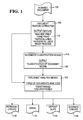
- Document recognition and data extraction is accomplished by an advanced document feature extractor that locates, identifies and extracts low level features within bitonal and grayscale images.
- Low level features include machine print text, hand print text, and vertical and horizontal lines.
- the low level features are passed to a document classification means which forms initial hypotheses about document identity.
- the document identity is passed to a document analysis means that handles both constrained and unconstrained documents.
- the document analysis may sort through various models to determine the exact type of document and then extracts the relevant fields which are sent for optical character recognition (OCR).
- OCR optical character recognition
- For unconstrained documents the system creates information and hypotheses to identify and locate relevant fields within the document. The fields located are then sent for optical character recognition (OCR).
- Document 100 contains fields of data which are informational elements.
- informational elements for a business cheque include the signature line, courtesy amount, legal amount, MICR and date.
- a TIFF format scanned image is used, grey-scale (8 bits/pixel) or binary, 200, 240, 254, 300, 400, 600, 1200 or 2400 dpi, both sides of the image should be scanned and any orientation of the image is supported.
- the image may be uncompressed (raw) image, or a compressed (binary or grey) image. However, any image type is readily usable.
- the image scanned may be stored on any storage media including hard disk.
- Document Feature Extractor 105 From the scanned image 100 it is possible, using Document Feature Extractor 105 to locate and identify basic features of the document. These basic features may include machine print, hand print, vertical lines, horizontal lines and noisy regions within the digital image of the document 110.
- the Document Feature Extractor 105 identifies the four corners of a rectangle that enclose individual document features. Features that are positioned close to one another or of the same type may be clustered into a single feature. For example, characters that compose an individual machine print word may be grouped into a single machine print feature, as well as multiple machine print words that are located close together within the document.
- the output of the Document Feature Extractor is the location and type indicator for each document feature.
- An example of a Document Feature Extractor 105 is the Net32K product available from AT&T Laboratories in Holmdel, New Jersey.
- Document Classification Means 115 identifies the general document class of the document scanned from the set of low level features extracted by Document Feature Extractor 105.
- a general document class is for example fixed format document with a high degree of linear features such as giros or single fixed format documents such as United States ANSI standard personal cheques or an unconstrained document such as a business cheque.
- the output of Document Classification Means 115 is an ordered list of classification hypotheses, consisting of a document type identifier and a score which indicates the confidence level of the hypothesis 120. Details of the Document Classification Means are described below.
- the output features 110 of the Document Feature Extractor 105 and the ordered list of classification hypotheses 120 from the Document Classification Engine 115 are passed to the Document Analysis Means 125.
- the Document Analysis Means 125 locates relevant areas or zones within the document. For example, for a U.S. business cheque 145 or personal cheque 130, the Document Analysis Means 125 outputs the location and print type of the courtesy amount which is shown in figures, the legal amount which is shown in words, MICR, date, and signature zone. Details of the Document Analysis Means are described below.
- the code for the Document Classification Means and the Document Analysis Means may be written in Microsoft Visual C++.
- the software may run on an Intel 486, Pentium or Pentium Pro platform under Windows NT or Windows '95. It also may utilize the Win32 application subsystem.
- FIG. 16 A computer 1610 is shown which contains a monitor 1613, keyboard 1614, a mouse 1615, a central processing unit 1611 which can be an Intel 486, Pentium or Pentium Pro processor, memory 1612, and a hard disk 1616.
- the computer 1610 may be connected to a network.
- the network may contain hard disks 1620 and a scanner 1630.
- the scanner 1630 is used to scan the document into an image that can be stored either on hard disks 1620 or 1616. While this configuration is disclosed for the preferred embodiment, equivalent hardware systems or configurations may be substituted.
- Document classification is divided into two parts: training and run-time.
- immediate features such as machine print, hand print, vertical lines and horizontal lines are extracted from a set of sample documents using the Document Feature Extractor 105.
- a set of indirect features are then computed based on the set of immediate features. Indirect features are created by putting together immediate features.
- a list of indirect features may include: image width, document boundary width, horizontal line total length, horizontal line total count, horizontal line average length, vertical line total length, vertical line total count, vertical line average length, machine print total area, machine print total count, machine print average area, hand print total area, hand print total count, hand print average area, machine print vs. hand print area ratio, machine print vs. hand print count ratio, machine print vs. hand print average area ratio, and total number of boxes.
- a set of discriminant vectors is derived from optimizing a Fischer criteria using standard statistical procedures.
- the Fischer criteria is based on the concept that features from different fields on the document are spaced apart, while features from the same field are clustered together.
- Information from the discriminant vectors are stored as a file that is used at run-time.
- immediate features are read from the Document Feature Extractor 105 and indirect features are generated. Both the immediate features and the indirect features for the document read form a test set of features.
- the test set of features are put in a matrix and projected onto the discriminant vector for each class of document (implicitly the discriminant vector includes the features for that class of document).
- the result of the projection is a value indicating the distance between the test set of features and the features for each document class.
- the document is classified as belonging to the document class that has the smallest projection value.
- the values in the image_vector are values for each of the ten features of the business cheque defined above. These values represent the pixel values for those features.
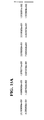
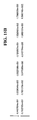
- centre_vector [Figs. 15A and 15B]
- the discriminant vector for the first pair (Business Cheque vs. Deposit Slip) is selected:
- projection vector image_vector ⁇ pair_discriminant_vector.
- the Document Analysis Means 125 processes constrained and unconstrained documents differently. If the document is identified by the Document Classification Means as constrained, the document analysis means sorts through various model documents of the type identified and extracts the fields that are relevant for the document identified. For personal cheques, the document model file is accessed, as explained below, and the relevant fields are located. For giros and deposit slips, the system sorts through various model files for the type of document and the relevant fields are located. The sorting through files for giros and deposit slips may be accomplished by systems that process constrained documents such as the DP-ATM Model 5665 produced by NCR in Dundee, Scotland.
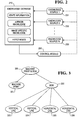
- the document analysis system taught by this invention applies information in an opportunistic manner. Dependent upon the state of the system, the system dynamically determines which of the two approaches will yield the most useful information to derive a solution. To achieve this dynamic process flow, the document analysis system is implemented as a blackboard architecture. Referring to Fig. 2, the document analysis means 125 consists of three components: knowledge sources 231, 232 and 233, a control module 250, and a knowledge database 210.
- the knowledge database 210 is the repository of all information and data in the system.
- the knowledge database 210 contains general a priori knowledge in the form of document models, specific information about the current image being processed, as well as hypotheses created by the system.
- the knowledge sources 231-233 communicate with each other via the knowledge database 210.
- Knowledge sources 231-233 consist of a set of procedures or subsystems that are invoked to add to the current set of information contained within the knowledge database 210. Inputs to knowledge sources are stored in the knowledge database. The output of each knowledge source is stored in the knowledge database so that other knowledge sources can access the data. Knowledge sources may be simple procedures, or in some instances may be complete systems, such as the Net32K or field understanding engines such as optical character recognition systems.
- a control module 250 is required to control the firing or invocation of knowledge sources 231-233.
- the control module monitors the state of the knowledge database 210, determining the best knowledge source to activate given the current state of the system. This scheduling activity is where the system selects to perform forward reasoning versus backward reasoning.
- Information in the knowledge database 210 may be subdivided into the following types of information: image specific knowledge, a priori general knowledge, hypotheses, and system state information.
- Image specific knowledge is information that is derived from the scanned image such as machine print features or boxes.
- Information on the scanned image is subdivided into two sets: tokens and complex objects.
- Tokens are the smallest unit of information. Tokens are generated by Net32K and may divided into five types of objects: machine print tokens, hand print tokens, vertical line tokens, horizontal line tokens and graphical object or noise tokens.
- Each token is represented as an object in the system and contains information that describes the size and location of the token, the type of token, and a confidence level generated by Net32K.
- the confidence level indicates the confidence of the token type.
- an additional field that contains the results of recognition operations performed on the token. This field is provided by the field understanding engines in the knowledge database.
- Complex objects are structures that represent relationships between tokens or objects and other complex objects. As shown in Fig. 3, complex objects are represented as a directed graph, where each node defines a relationship that exists between other objects in the graph. In many instances, each node is a new object. As an example, Fig. 3 shows the data structure to represent a machine print object that is contained within a box. A machine print object 320 is represented as machine print 321 and a box 322. The box 322 is represented by its components, vertical lines 323 and 324 and horizontal lines 325 and 326. The data contained within each node, or object, consists of an object identifier, a confidence level, reference to the constituent objects or tokens that compose the new object, and information describing the size and location of the object.
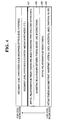
- the information contained within the knowledge database 210 is partitioned into a hierarchy of knowledge. Complex objects are structured from more primitive objects. Information can be therefore partitioned as shown in Fig. 4. Tokens 430 are at the bottom of the hierarchy.
- the next level up, 429 are objects formed by the spatial relationships between tokens. For example two horizontal lines .05 inches apart.
- the next level in the hierarchy 428 includes more objects formed by geometric relationships between objects or tokens. For example line intersections forming boxes. The highest level may be spatial relationships between tokens and objects 427 as described for Fig. 5.
- the following information describing spatial relationships between tokens may be represented in the system.
- machine print tokens or hand print tokens that are located on the same line of text can be grouped together as a single token.
- the text PAY*****158*DOLLARS AND *11CENTS may be identified as multiple machine print tokens by the Net32K board.
- these fields are grouped into a single line of machine print text, since they are approximately the same font size, located on approximately the same position on the y-axis, and located closely together.
- the text NCR CORPORATION ATTN PAT DIXON, ROOM 8147 1200 P'TREE ST., PROMENADE I ATLANTA, GA 30309 may first be grouped horizontally to form four individual lines of text. Next, the relationship between the lines of text can be analyzed to determine if the text forms a block of text.
- Line intersections are self explanatory. Simple boxes are boxes that are created by examining the endpoints of line segments. Complex boxes are boxes that are created by including line intersections, rather than only analyzing line endpoints for boxes. In general, simple boxes form the largest box that encompasses smaller, complex boxes, if complex boxes exist.
- Fig. 6 illustrates simple and complex boxes.
- the simple box is denoted by the solid line, and is created by lines L1, L2, L3, and L4.
- the complex boxes, or boxes contained within the simple box are created by the following set of lines. ⁇ L1, L4, L5, L6> ⁇ L1, L2, L5, L6> ⁇ L3, L4, L5, L6> ⁇ L3, L2, L5, L6>
- Enclosed objects refer to objects or tokens that are enclosed by either a simple box or a complex box.
- Other types of spatial relationships may include underlined objects, or objects that have headers or labels.
- giros can be described as documents that generally contain a mix of machine print and linear features,.with little or any hand print features present in the document. These documents often contain a large number of linear features.
- U.S. personal cheques generally contain a mix of machine print and hand print features, with a fairly large number of hand print features. Since the document layout is controlled by ANSI standards, the location of specific hand print features can also be exploited to perform the classification process. In cases where the cheque has been typed, this definition will not classify the document as a personal cheque. This is actually not a problem, since the document would be classified as a business cheque and the correct information would be located by the business cheque processor.
- Business cheques generally contain a mix of machine print and linear features. However, the linear features are not as prevalent in a business cheque. Also, most business cheques contain a signature in the lower right portion of the document to help differentiate between giros and business cheques.
- Deposit slips generally contain a mixture of machine print, hand print, and linear features. However, in image ready deposit slips, the line features will drop out leaving primarily machine print and hand print features. The hand print features generally do not match the layout of a personal cheque, making the classification process viable.
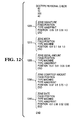
- a model file for a personal cheque is shown in Fig. 12.
- the model file is broken into zones. These zones include a signature zone 1205, MICR zone 1210, legal amount zone 1220, courtesy amount zone 1230 and date zone 1240. Each zone contains fields which further identify the zone.
- the signature zone contains the following fields: fixed position, type hand print, and position 0.65, 0.9, 0.55 and 1.0 (these are representative of Ymin, Ymax, Xmin and Xmax: For example given 0,0 as the top left corner of the cheque, the signature should be contained in the box formed by the four points (0.55, 0.65) (1.0, 0.65) (0.55, 0.9) and (1.0, 0.9).
- This data is interpreted to mean that the signature zone of a personal cheque is a fixed position field, it is hand printed and in the box designated by the position field.
- a courtesy amount field may have the following attributes: machine print field, right area location, short field length, enclosed by a box, field contains '$' or '*', field contains numeric data, font size is approximately equivalent to the legal amount field, field to the right of the legal amount field, field located above the signature field.
- a legal amount field may contain the following attributes: machine print, location in the right area, long field, '*", alphanumeric data, font size approximately equivalent to the courtesy amount field, field to left of courtesy amount, field higher than signature field.
- a signature zone may contain the following attributes: hand print, located in the right bottom area, large field size, field is below the courtesy amount, field below the legal amount.
- the data zone is a machine print field.
- the MICR zone may contain the following attributes: machine print field, bottom location, long length, numeric data, font size in pixels.
- candidate zones are identified for each object based on local information kept by the object.
- a simple rule based processor that evaluates each attribute as true or false in order to determine if a token or object meets the field requirements is appropriate.
- the courtesy amount may not be enclosed in a box or may not contain a '$' or '*'.
- the set of attributes should be viewed as a set of heuristic that are used to locate candidates for the individual fields.
- a weight or value is assigned to each attribute to determine the amount of supporting evidence each attribute contributes in identifying a zone. Also, given that some attributes must be true, it should be possible to assign a negative weight to attributes that are proven false. These weights are used to generate probabilities that correspond to the degree of match with the model.
- true and false is fuzzy with some attributes. If the attribute specifies a location or size, there may be a range where the attribute should be considered true, false, or partially true. For example, assume the attribute is that the zone height is between 15 pixels and 30 pixels. If the height for a candidate zone is 14 pixels, it does not make sense to mark the attribute as false, since the zone is very close to meeting the requirement of the attribute.
- the solution is to treat attributes not as binary relations, but adjust the score according to the degree of match with the attribute.
- the graph in Fig. 7 shows an example for the height attribute. If the height constraint is met, the score is 0.3. If the height is within 8 pixels of the constraint, the score is adjusted based on the distance from the defined height constraint using a linear formula. If the height difference is greater than 8 pixels, the score is 0.0.
- a field model the attributes for a particular field as represented in the zones of the document model file, is implemented as a C++ object that is created and then instantiated with a set of attributes and weights from an input file. In this way, additional fields can be supported by simply creating a new model object and loading the appropriate model file.
- a model file for a business cheque is shown in Fig. 13.
- These zones include a signature zone 1310, an MICR zone 1320, a legal amount zone 1330, a courtesy amount zone 1340 and a date zone 1350.
- the signature zone for a business cheque is not in fixed position. It is probabilistic which means that it may or may not be found in the location or with the print type specified in the signature zone. Because of this uncertainty, confidence values are computed for each zone. For example, if the field found is hand print, a confidence value of .3 is assigned. If it is not hand print a confidence value of -.5 is assigned.
- Xmin, Xmax, Ymin and Ymax Box designated by these four points (0.7, 0.6) (0.7, 0.8) (0.9, 0.6) (0.9, 0.8). Since this field is probabilistic, the box that encloses the Net32K token is also taken into consideration. If the Net32K box overlaps the box in the signature zone then a confidence value of 0.7 is assigned. If the two boxes do not overlap and the distance is greater than 0.5 inches, a confidence value of 0 is assigned. If the boxes overlap and their distance apart is from 0.1 - 0.5 inches then a confidence value between 0 and 0.7 is assigned.
- a confidence value of 0.1 is given. If the field is 110 ⁇ 90 pixels in height then a confidence value of 0.0 is given.
- a confidence value of 0.2 is assigned. If the width is 350 ⁇ 270 a confidence value of 0 is assigned.
- the process of whether an object matches a field is as follows: The object attributes are compared against the zones or field model attributes in the document model file; confidence values are calculated as explained for the example in Fig. 8; the confidence values for each attribute comparison are added to obtain a zone or field model confidence value; the object is matched to the field model or zone with the highest confidence value.
- hypotheses can be generated.
- the structure and impact of hypotheses vary according to the type of hypotheses.
- Hypotheses can be classified as three types: (1) document classification hypotheses; (2) field level hypotheses; and (3) overall document composition hypotheses.
- Document classification hypotheses are hypotheses about the current type of document being processed, such as a business cheque, giro; deposit slip, or personal cheque. These hypotheses are derived from the models of generic document composition as described for the priori general knowledge, and are used to guide the system in performing the document decomposition or identification step.
- Field level hypotheses are hypotheses pertaining to individual fields within the document. The fields being considered are determined by the current document classification hypothesis being explored. If the highest ranking document classification hypothesis indicates a business cheque, the field level hypotheses are for the courtesy amount field, legal amount field, and other fields that must be located and recognized on the business cheque. For a giro, where the only problem is document identification, there are no field level hypotheses, since the location of fields is implicit in the identification of the document.
- Field level hypotheses may consist of the following data.
- Hypotheses about overall document composition are generated by creating valid tuples, or combinations, of field level hypotheses.
- a valid business cheque tuple consists of field level hypotheses for each zone of interest that meets the constraints defined in the model of the overall document composition for a business cheque. In instances where not all fields exist within the image, the tuple would contain a NULL entry for that field. It should be realized that a single field level hypothesis may be included in more than one tuple, since a valid tuple may exist with more than one combination of fields.
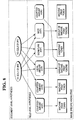
- Fig. 8 illustrates the relationship between field level hypotheses, document level hypotheses, and tokens or objects.
- Hypothesis H1 consists of the tuple ⁇ C1,L1,S1,M1 ⁇ and hypothesis H2 consists of the tuple ⁇ C2,L1,S1,M1 ⁇ .
- the hypotheses H1 and H2 share the same hypotheses for legal amount, signature, and MICR, with the only difference being in the courtesy amount zone.
- this tuple fails to meet the constraints specified in the document model and a hypothesis is not created for this combination.
- Field level hypotheses that cannot be grouped with other fields, such as courtesy amount hypothesis 3 remain as field level hypotheses. Similar to field level hypotheses not associated with document level hypotheses, there exist image specific knowledge that is not associated with any field level hypotheses.
- the information stored within a document level hypothesis is very similar to a field level hypothesis.
- the primary difference is that the object reference is to field level hypotheses, and consists of a variable number of field level hypotheses references.
- State information consist of data that is required to control and monitor the system.
- the state information is information that the control means or scheduler requires to determine what knowledge source to execute next. This information is explained as part of the control means.
- a knowledge source is a procedure or subsystem that is invoked to generate additional knowledge.
- the input to a knowledge source is information contained in the knowledge database, generally in the form of tokens, objects, or additional parameters that impact the results of the knowledge source.
- Each knowledge source is an object, in the context of programming, that has the following attributes: set of activation events, set of preconditions, cost, benefit, and performance statistics.
- a set of data For a knowledge source to become executable, a set of data must be created by the system that is compatible with the inputs to the knowledge source.
- the inputs to a knowledge source are a set of tokens and objects that are used by the knowledge source to generate new information.
- the set of inputs are well defined.
- the system would only have to cheque if an event was generated that indicates the creation of data that can be processed by the knowledge source.
- each knowledge source contains a list of events that cause the activation of the knowledge source.
- the knowledge source may have a set of preconditions that must be true prior to executing the knowledge source. This is a case where the creation of new knowledge, resulting in an event, has activated the knowledge source. Execution of the knowledge source, however, may still not be possible because some additional data may not exist that is required by the knowledge source.
- a cost that indicates the computational requirements of the knowledge source. This cost is state information and used by the scheduler to determine the best knowledge source to execute at any point in time. In many instances, the cost of executing a knowledge source may be fixed, not requiring the knowledge source to recalculate the cost at run time. However, in some cases the cost of the knowledge source may not be fixed. As an example, a knowledge source may be very sensitive to the number of objects or tokens that are input to the knowledge source. In this case, the knowledge source must be capable of calculating the true cost at run time based on the current state of the knowledge database.
- the scheduler requires an estimate by the knowledge source on the value of the information to be generated by the knowledge source. This score is called the estimated benefit of the knowledge source.
- the benefit of a knowledge source can vary given the current activity or goal of the system. For instance, if the knowledge source is a routine that constructs boxes from linear features found in the document, the benefit of this knowledge source would be higher if the system is focusing on a model that contains box features, rather than a model that does not contain boxes. As a result, a knowledge source must be capable of reevaluating the potential benefit based on the current state of the system.
- Each knowledge source should maintain performance statistics that can be used in determining the cost and benefit attributes of the knowledge source.
- One statistic is the average CPU time required to execute the knowledge source. This data can be collected in a test environment and analyzed in order to accurately determine the cost of the knowledge source. In a more sophisticated implementation, the knowledge source can use this information to determine the true cost at run time. In this example, the knowledge source cost is adaptable to the live run time environment of the system.
- the knowledge source should also collect statistics pertaining to the ability of the knowledge source to produce information that contributes to the problem solution. Again, this data can be collected in a test environment or run time environment in order to estimate the benefit of a knowledge source.
- the system consists of a set of knowledge sources that can be executed to create new information that is used to construct new hypotheses or support current hypotheses. Since knowledge sources are activated with respect to a data object or a set of data objects, it is possible that a single knowledge source can be ready to execute upon the creation of a single data object. As described earlier, the computational power required by knowledge sources varies by the function being performed. The job of the control means is that of a scheduler, to select the best knowledge source given the state of the system.
- the control means is divided into three components.
- knowledge sources must be activated 911. Activation in this context refers to some event in the system that makes it possible to run a knowledge source.
- the knowledge source is executed, resulting in an update in the current state of the system 913. Each loop through the scheduler loop is termed an execution cycle.
- a knowledge source is a function that processes a set of input data, tokens or complex objects, and produces a set of output data, new or updated complex objects, as well.as hypotheses.
- a knowledge source cannot be executed until the set of input data required by the knowledge source exists in the knowledge database.
- a knowledge source may exist in three states: idle, active and executing.
- the knowledge source In the idle state, the knowledge source is not bound to a set of input objects, meaning there is no context for the knowledge source to process.
- the knowledge source In the activated state, the knowledge source has been triggered and bound to a specific context, but cannot be executed because all of the knowledge source preconditions have not been met.
- the executing state the knowledge source has been triggered and all preconditions have been met in the given context.
- the activation queue (ACTIVE) and the executable queue (EXECUTE).
- An idle queue is not necessary, since each knowledge source is always in the idle state. Given the three states listed above, the primary requirement is to define an efficient mechanism that can be used to activate knowledge sources and evaluate their preconditions.
- the simplest mechanism available for event activation is to scan the current knowledge database looking for new objects or objects that have been updated. If these objects are found, the scheduler can then search the set of knowledge sources to determine if a knowledge source can be activated within the context of the new or modified object. However, as the knowledge base and the set of knowledge sources grows, this search method becomes computationally inefficient.
- the mechanism selected for event activation is an event queue (EVENT).
- EVENT event queue
- knowledge sources are activated by events (triggers) that are generated by other knowledge sources in the system.
- An event consists of an event identifier and a pointer to the data object that was responsible for the event.
- An event Associated with each knowledge source are a list of events that cause a knowledge source to be activated.
- the first step of the ACTIVATION step is to process the current set of events 1010-1012, resulting in the creation of knowledge source contexts (tasks) .1013.
- a task is an executable entity that is the result of binding a knowledge source and an object. After a task is created, the task is added to the active queue (ACTIVATE) 1014.
- the system After a task has been created, the system must evaluate the task preconditions to determine if the task is executable. Since the state of the system changes each time through the scheduler loop, these preconditions need to be evaluated each execution cycle of the scheduler.
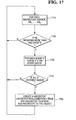
- the simplest mechanism available for condition evaluation is to scan the ACTIVE queue evaluating the preconditions for each knowledge source context. If all preconditions for a knowledge source context are met, then the knowledge source context can be added to the EXECUTE queue. However, as the number of knowledge source contexts on the ACTIVE queue grows, the processing required to evaluate each precondition can grow out of control. Also, it is wasteful to reevaluate each precondition. In many cases, if no new knowledge has been created that can affect the precondition, there is no need to reevaluate the precondition. As a result, the goal is to create a mechanism that causes preconditions to be updated when the knowledge source context is updated, i.e. state information about the object is modified. Figs. 17 - 19 flow chart this mechanism and the pseudo code is given below with reference numerals enclosed in brackets ([ ]).
- a link must be added so that given a specific object, the system can determine the knowledge contexts that are impacted by the object update.
- a link already exists from the knowledge source to the object, since a task is a pairing of a knowledge source and an object to be processed by the knowledge source.
- a link must exist between the object and the task. This link is initialized when the task is initially added to the ACTIVE queue 1750, 1840. When a task becomes executable, the link is removed so that preconditions are no longer evaluated 1970.
- the evaluation of preconditions can be performed at two points.
- One possibility is when an object is updated, the knowledge source updating the object can determine if the object should trigger the evaluation of preconditions. If so, the knowledge source can follow the link to the task and invoke the routine to evaluate the preconditions. This method is not optimal, since if multiple objects are being updated by a knowledge source, the preconditions would be evaluated on each object update.
- a more efficient method is to update a flag contained in the task to indicate that the precondition needs to be updated 1840.
- the scheduler traverses the ACTIVE queue to determine if a task can be moved to the EXECUTE queue, only preconditions of knowledge sources marked out-of-date are updated 1940. This guarantees that the preconditions are evaluated only once per execution cycle, after the knowledge base update is complete 1950-1970.
- knowledge sources can have more than one event that must occur before the knowledge source can execute.
- a Knowledge Source may require more than one event before it can execute. If so, all events that trigger the Knowledge Source must exist or be on the EVENT queue. If all the events are on the EVENT queue then the Knowledge Source is ready to be executed and is placed on the ACTIVE queue 1750.
- the following pseudo code contains the modifications to cheque if a knowledge source requires more than one event 1710-1750, the modifications to the event handler 1810-1840, along with the additional pseudo code required to evaluate preconditions 1910-1980.
- Scheduling a knowledge source for execution consists of selecting the appropriate task from the execution queue (EXECUTE) based on a cost/benefit analysis, deleting the task from the execute queue, and invoking the task or knowledge source.
- execution queue EXECUTE
- task scheduling can be more complex, since it may be possible to select more than one task for execution.
- the scheduler In a multiprocessing environment, the scheduler must be capable of selecting tasks on the basis of computational resource availability, potential problems related to concurrent data access, as well as cost/benefit. As a result of the added complexity, and no current requirements for parallel processing, the task selection is based completely on a cost/benefit analysis.
- the scheduler calculates a cost/benefit score for each knowledge source and then selects the best knowledge source to execute.
- the current system calculates the score as benefit - cost, with the highest score being the best knowledge source to execute.
- the score is calculated from the benefit and cost values assigned to each knowledge source.
- the benefit and cost values are assigned during development of the system.
- the benefit value represents the value the information computed by the knowledge source has towards obtaining an answer.
- the cost is a value representing the cost of running the knowledge source.
- the score is computed by the benefit minus the cost.
- the system recalculates the cost/benefit score each execution cycle of the control module, rather than maintaining an ordered list of tasks based on the cost/benefit score. In some instances, it may still be necessary to reevaluate the cost/benefit scores due to changes in the state of the system, i.e. the focus of attention (explained below), even if an ordered list is implemented.
- the control module selects the next activity to pursue by the system based on the cost/benefit score.
- a more efficient method is to design the system so that it is goal driven, where the current goal of the system impacts the set of executable knowledge sources, as well as the cost/benefit analysis of each executable knowledge source. This is called the focus of attention (FOA).
- the FOA includes fine tuning the benefit value based on the knowledge source context. For example, rather than simply calculating the score using the benefit and the cost for each knowledge source, a third value which would represent any existing knowledge the system has in the knowledge database can be introduced to the equation for calculating the score.
- hypotheses are generated by the system.
- the obvious goal of the system is to generate additional information that provides evidence to either support the hypotheses or prove the hypotheses false.
- hypotheses are generated by mapping information from objects and tokens to models of fields. Therefore, if the goal of the system is to locate the courtesy amount field, the system should place a priority on the knowledge sources that generate information required by the courtesy amount field model. By adding these capabilities to the scheduler, the system will evolve from a bottom-up, data driven reasoning system to a top-down, model based reasoning system.
- hypotheses the creation and updating of individual hypotheses are implemented as knowledge sources in the document analysis system. Since knowledge sources can be triggered based on the occurrence of one or more events, the knowledge sources that manage hypotheses can be triggered when new knowledge is created by any of the knowledge sources in the system. Specifically, since the system supports three types of hypotheses, field level, document composition, and document classification, each type of hypothesis has a corresponding knowledge source for creating and updating the corresponding types of hypotheses.
- Field level hypotheses can be created, updated, or deleted as soon as any new information becomes available to the system. For instance, if the knowledge source for identifying machine print tokens enclosed within boxes executes and generates new information, i.e. new objects, then the new objects are candidates for possible hypothesis creation or update. If.the system has already created a hypothesis about the machine print field contained within the object, then the hypothesis must be updated based on the new information available. The new information can increase the confidence value of a hypothesis, or can result in a decrease in the confidence value for the hypothesis. If the decrease in the confidence value is great, the hypothesis can actually be discarded. Even if there is a hypothesis associated with the object, the system also attempts to create new hypotheses based on the new information. This is because the system must be capable of managing multiple hypotheses associated with a single object.
- Document classification hypotheses are created based on very general document features, such as the percentage of hand print tokens in the image or the number of lines in the image. Since this information is generally available on system startup from the Net32K, these hypotheses can be made early in the processing of the image. Also, information generated during the processing of the image may have little impact on these hypotheses.
- Fig. 11 An example of how the system would locate the relevant fields of an unconstrained document is given below using Fig. 11, a business cheque. Tokens returned by Net32K are numbered and enclosed in boxes for ease of reference only.
Landscapes
- Engineering & Computer Science (AREA)
- Computer Vision & Pattern Recognition (AREA)
- Physics & Mathematics (AREA)
- General Physics & Mathematics (AREA)
- Multimedia (AREA)
- Theoretical Computer Science (AREA)
- Character Discrimination (AREA)
- Character Input (AREA)
- Financial Or Insurance-Related Operations Such As Payment And Settlement (AREA)
Applications Claiming Priority (2)
| Application Number | Priority Date | Filing Date | Title |
|---|---|---|---|
| US652283 | 1996-05-22 | ||
| US08/652,283 US5937084A (en) | 1996-05-22 | 1996-05-22 | Knowledge-based document analysis system |
Publications (2)
| Publication Number | Publication Date |
|---|---|
| EP0809219A2 true EP0809219A2 (de) | 1997-11-26 |
| EP0809219A3 EP0809219A3 (de) | 2000-02-23 |
Family
ID=24616254
Family Applications (1)
| Application Number | Title | Priority Date | Filing Date |
|---|---|---|---|
| EP97303116A Withdrawn EP0809219A3 (de) | 1996-05-22 | 1997-05-06 | System und Verfahren für Dokumentenanalyse |
Country Status (3)
| Country | Link |
|---|---|
| US (1) | US5937084A (de) |
| EP (1) | EP0809219A3 (de) |
| JP (1) | JPH1091712A (de) |
Cited By (22)
| Publication number | Priority date | Publication date | Assignee | Title |
|---|---|---|---|---|
| FR2830106A1 (fr) * | 2001-07-13 | 2003-03-28 | Alban Giroux | Dispositif et procede de reconnaissance de structure de document |
| WO2003046779A1 (de) * | 2001-11-26 | 2003-06-05 | Basf Aktiengesellschaft | Verfahren und vorrichtung zur computerimplementierten auswertung von kunden-geschäftsprozessen |
| EP1306133A3 (de) * | 2000-03-09 | 2004-03-31 | Currency Systems International | Banknoten Abrechnungsprüfung |
| EP1118959A3 (de) * | 2000-01-18 | 2004-06-09 | Hitachi, Ltd. | Verfahren und Vorrichtung zur Formular-Blatttyp-Bestimmung |
| EP1583023A1 (de) * | 2004-03-30 | 2005-10-05 | Swt | Dokumentenmodell und Verfahren zur automatischen Dokument-Klassifiezierung |
| US9152883B2 (en) | 2009-11-02 | 2015-10-06 | Harry Urbschat | System and method for increasing the accuracy of optical character recognition (OCR) |
| EP2992481A4 (de) * | 2013-05-03 | 2017-02-22 | Kofax, Inc. | Systeme und verfahren zur detektion und klassifizierung von objekten in mithilfe von mobilen vorrichtungen aufgenommenen videos |
| US9747504B2 (en) | 2013-11-15 | 2017-08-29 | Kofax, Inc. | Systems and methods for generating composite images of long documents using mobile video data |
| US9760788B2 (en) | 2014-10-30 | 2017-09-12 | Kofax, Inc. | Mobile document detection and orientation based on reference object characteristics |
| US9767379B2 (en) | 2009-02-10 | 2017-09-19 | Kofax, Inc. | Systems, methods and computer program products for determining document validity |
| US9769354B2 (en) | 2005-03-24 | 2017-09-19 | Kofax, Inc. | Systems and methods of processing scanned data |
| US9767354B2 (en) | 2009-02-10 | 2017-09-19 | Kofax, Inc. | Global geographic information retrieval, validation, and normalization |
| US9779296B1 (en) | 2016-04-01 | 2017-10-03 | Kofax, Inc. | Content-based detection and three dimensional geometric reconstruction of objects in image and video data |
| EP2483815A4 (de) * | 2009-09-30 | 2018-01-24 | Kofax International Switzerland Sàrl | Extraktionsverfahren und -system |
| US9946954B2 (en) | 2013-09-27 | 2018-04-17 | Kofax, Inc. | Determining distance between an object and a capture device based on captured image data |
| US9996741B2 (en) | 2013-03-13 | 2018-06-12 | Kofax, Inc. | Systems and methods for classifying objects in digital images captured using mobile devices |
| US10146803B2 (en) | 2013-04-23 | 2018-12-04 | Kofax, Inc | Smart mobile application development platform |
| US10146795B2 (en) | 2012-01-12 | 2018-12-04 | Kofax, Inc. | Systems and methods for mobile image capture and processing |
| US10242285B2 (en) | 2015-07-20 | 2019-03-26 | Kofax, Inc. | Iterative recognition-guided thresholding and data extraction |
| US10467465B2 (en) | 2015-07-20 | 2019-11-05 | Kofax, Inc. | Range and/or polarity-based thresholding for improved data extraction |
| US10657600B2 (en) | 2012-01-12 | 2020-05-19 | Kofax, Inc. | Systems and methods for mobile image capture and processing |
| US10803350B2 (en) | 2017-11-30 | 2020-10-13 | Kofax, Inc. | Object detection and image cropping using a multi-detector approach |
Families Citing this family (99)
| Publication number | Priority date | Publication date | Assignee | Title |
|---|---|---|---|---|
| US5867153A (en) * | 1996-10-30 | 1999-02-02 | Transaction Technology, Inc. | Method and system for automatically harmonizing access to a software application program via different access devices |
| JPH10240658A (ja) * | 1996-12-26 | 1998-09-11 | Canon Inc | 情報処理装置及びその方法 |
| US7653600B2 (en) * | 1997-05-30 | 2010-01-26 | Capital Security Systems, Inc. | Automated document cashing system |
| US6012048A (en) * | 1997-05-30 | 2000-01-04 | Capital Security Systems, Inc. | Automated banking system for dispensing money orders, wire transfer and bill payment |
| US6119124A (en) * | 1998-03-26 | 2000-09-12 | Digital Equipment Corporation | Method for clustering closely resembling data objects |
| US6044375A (en) * | 1998-04-30 | 2000-03-28 | Hewlett-Packard Company | Automatic extraction of metadata using a neural network |
| US7016539B1 (en) | 1998-07-13 | 2006-03-21 | Cognex Corporation | Method for fast, robust, multi-dimensional pattern recognition |
| JP2000076150A (ja) * | 1998-08-31 | 2000-03-14 | Fujitsu Ltd | システム管理方法及びシステム管理装置 |
| US7039856B2 (en) * | 1998-09-30 | 2006-05-02 | Ricoh Co., Ltd. | Automatic document classification using text and images |
| US6301386B1 (en) * | 1998-12-09 | 2001-10-09 | Ncr Corporation | Methods and apparatus for gray image based text identification |
| US6658400B2 (en) * | 1999-12-04 | 2003-12-02 | William S. Perell | Data certification and verification system having a multiple-user-controlled data interface |
| ES2208164T3 (es) * | 2000-02-23 | 2004-06-16 | Ser Solutions, Inc | Metodo y aparato para procesar documentos electronicos. |
| US6950553B1 (en) * | 2000-03-23 | 2005-09-27 | Cardiff Software, Inc. | Method and system for searching form features for form identification |
| US6668074B1 (en) * | 2000-03-23 | 2003-12-23 | Unisys Corporation | Apparatus and method for utilizing multiple digital image representations of a document |
| US7010788B1 (en) * | 2000-05-19 | 2006-03-07 | Hewlett-Packard Development Company, L.P. | System for computing the optimal static schedule using the stored task execution costs with recent schedule execution costs |
| US9177828B2 (en) | 2011-02-10 | 2015-11-03 | Micron Technology, Inc. | External gettering method and device |
| KR100411894B1 (ko) * | 2000-12-28 | 2003-12-24 | 한국전자통신연구원 | 문서영상 영역해석 방법 |
| PT1288792E (pt) | 2001-08-27 | 2012-02-29 | Bdgb Entpr Software Sarl | Método para indexar automaticamente documentos |
| US7996312B1 (en) | 2002-03-01 | 2011-08-09 | Wells Fargo Bank, N.A. | System and method for image based electronic check presentment |
| US20040102990A1 (en) * | 2002-10-11 | 2004-05-27 | Xerox Corporation | Method for managing knowledge flow to value |
| JP2004246782A (ja) * | 2003-02-17 | 2004-09-02 | Toshiba Corp | 金融事務処理事故情報管理システム |
| RU2003108433A (ru) * | 2003-03-28 | 2004-09-27 | Аби Софтвер Лтд. (Cy) | Способ предварительной обработки изображения машиночитаемой формы |
| US20110188759A1 (en) * | 2003-06-26 | 2011-08-04 | Irina Filimonova | Method and System of Pre-Analysis and Automated Classification of Documents |
| RU2635259C1 (ru) * | 2016-06-22 | 2017-11-09 | Общество с ограниченной ответственностью "Аби Девелопмент" | Способ и устройство для определения типа цифрового документа |
| US7190834B2 (en) | 2003-07-22 | 2007-03-13 | Cognex Technology And Investment Corporation | Methods for finding and characterizing a deformed pattern in an image |
| US8081820B2 (en) | 2003-07-22 | 2011-12-20 | Cognex Technology And Investment Corporation | Method for partitioning a pattern into optimized sub-patterns |
| US20050097019A1 (en) * | 2003-11-04 | 2005-05-05 | Jacobs Ronald F. | Method and system for validating financial instruments |
| US7324711B2 (en) * | 2004-02-26 | 2008-01-29 | Xerox Corporation | Method for automated image indexing and retrieval |
| US20050203924A1 (en) * | 2004-03-13 | 2005-09-15 | Rosenberg Gerald B. | System and methods for analytic research and literate reporting of authoritative document collections |
| US7283656B2 (en) * | 2004-03-17 | 2007-10-16 | Federal Reserve Bank Of Cleveland | Assessing electronic image quality |
| CA2564943A1 (en) * | 2004-05-05 | 2005-11-17 | Fluor Technologies Corporation | Integrated acceptance testing |
| US20050289182A1 (en) * | 2004-06-15 | 2005-12-29 | Sand Hill Systems Inc. | Document management system with enhanced intelligent document recognition capabilities |
| US7606408B2 (en) * | 2004-06-21 | 2009-10-20 | Seiko Epson Corporation | Magnetic ink character reading method and program |
| US8437502B1 (en) | 2004-09-25 | 2013-05-07 | Cognex Technology And Investment Corporation | General pose refinement and tracking tool |
| US7760372B2 (en) * | 2005-01-11 | 2010-07-20 | Xerox Corporation | Method for automated document selection |
| US7594600B2 (en) * | 2005-02-28 | 2009-09-29 | Federal Reserve Bank Of Atlanta | Expanded mass data sets for electronic check processing |
| US7686209B2 (en) * | 2005-02-28 | 2010-03-30 | Federal Reserve Bank Of Dallas | Cash letter print streams with audit data |
| US8749839B2 (en) | 2005-03-24 | 2014-06-10 | Kofax, Inc. | Systems and methods of processing scanned data |
| US9137417B2 (en) | 2005-03-24 | 2015-09-15 | Kofax, Inc. | Systems and methods for processing video data |
| US7734636B2 (en) * | 2005-03-31 | 2010-06-08 | Xerox Corporation | Systems and methods for electronic document genre classification using document grammars |
| US8032462B2 (en) | 2005-07-07 | 2011-10-04 | Federal Reserve Bank Of Kansas City | Electronic image cash letter balancing |
| US7802717B2 (en) * | 2005-07-07 | 2010-09-28 | Federal Reserve Bank Of Dallas | Electronic image cash letter monitoring |
| US7584424B2 (en) * | 2005-08-19 | 2009-09-01 | Vista Print Technologies Limited | Automated product layout |
| US7676744B2 (en) * | 2005-08-19 | 2010-03-09 | Vistaprint Technologies Limited | Automated markup language layout |
| US7475072B1 (en) | 2005-09-26 | 2009-01-06 | Quintura, Inc. | Context-based search visualization and context management using neural networks |
| US7620607B1 (en) * | 2005-09-26 | 2009-11-17 | Quintura Inc. | System and method for using a bidirectional neural network to identify sentences for use as document annotations |
| JP2007233913A (ja) * | 2006-03-03 | 2007-09-13 | Fuji Xerox Co Ltd | 画像処理装置及びプログラム |
| US8064703B2 (en) * | 2006-03-17 | 2011-11-22 | Data Trace Information Services, Llc | Property record document data validation systems and methods |
| US8387862B2 (en) * | 2006-05-17 | 2013-03-05 | Federal Reserve Bank Of Dallas | Electronic image cash letter validation |
| US8108315B2 (en) * | 2006-06-19 | 2012-01-31 | Hewlett-Packard Development Company, L.P. | Discovering software code subject to licenses |
| US8289541B2 (en) * | 2006-09-12 | 2012-10-16 | Morgan Stanley | Document handling |
| US20080162322A1 (en) * | 2006-11-07 | 2008-07-03 | Federal Reserve Bank Of Richmond | Automated return item re-clear |
| GB0624024D0 (en) * | 2006-12-01 | 2007-01-10 | Ibm | Event correlation based trouble ticket resolution system incorporating adaptive rules optimization |
| US8290311B1 (en) * | 2007-01-11 | 2012-10-16 | Proofpoint, Inc. | Apparatus and method for detecting images within spam |
| US8290203B1 (en) | 2007-01-11 | 2012-10-16 | Proofpoint, Inc. | Apparatus and method for detecting images within spam |
| US7437370B1 (en) * | 2007-02-19 | 2008-10-14 | Quintura, Inc. | Search engine graphical interface using maps and images |
| US7876958B2 (en) * | 2007-06-25 | 2011-01-25 | Palo Alto Research Center Incorporated | System and method for decomposing a digital image |
| US20090228777A1 (en) * | 2007-08-17 | 2009-09-10 | Accupatent, Inc. | System and Method for Search |
| US8103085B1 (en) | 2007-09-25 | 2012-01-24 | Cognex Corporation | System and method for detecting flaws in objects using machine vision |
| US8861856B2 (en) | 2007-09-28 | 2014-10-14 | Abbyy Development Llc | Model-based methods of document logical structure recognition in OCR systems |
| US8260049B2 (en) * | 2007-09-28 | 2012-09-04 | Abbyy Software Ltd. | Model-based method of document logical structure recognition in OCR systems |
| US8452132B2 (en) * | 2008-09-23 | 2013-05-28 | Abbyy Software Ltd. | Automatic file name generation in OCR systems |
| US7918386B2 (en) * | 2007-11-06 | 2011-04-05 | Federal Reserve Bank Of Kansas City | Cash letter print verification |
| US8573498B2 (en) | 2007-11-06 | 2013-11-05 | Federal Reserve Bank Of Kansas City | Identifying duplicate printed paper cash letters |
| US8059881B1 (en) * | 2008-01-07 | 2011-11-15 | Wells Fargo Bank, N.A. | Check image processing |
| US8238638B2 (en) * | 2008-01-31 | 2012-08-07 | Federal Reserve Bank Of Kansas City | Tag validation for efficiently assessing electronic check image quality |
| US20090210786A1 (en) * | 2008-02-19 | 2009-08-20 | Kabushiki Kaisha Toshiba | Image processing apparatus and image processing method |
| US8180754B1 (en) | 2008-04-01 | 2012-05-15 | Dranias Development Llc | Semantic neural network for aggregating query searches |
| US20090276694A1 (en) * | 2008-05-02 | 2009-11-05 | Accupatent, Inc. | System and Method for Document Display |
| US8682056B2 (en) * | 2008-06-30 | 2014-03-25 | Ncr Corporation | Media identification |
| US8774516B2 (en) | 2009-02-10 | 2014-07-08 | Kofax, Inc. | Systems, methods and computer program products for determining document validity |
| US8958605B2 (en) | 2009-02-10 | 2015-02-17 | Kofax, Inc. | Systems, methods and computer program products for determining document validity |
| US9349046B2 (en) | 2009-02-10 | 2016-05-24 | Kofax, Inc. | Smart optical input/output (I/O) extension for context-dependent workflows |
| US8718367B1 (en) * | 2009-07-10 | 2014-05-06 | Intuit Inc. | Displaying automatically recognized text in proximity to a source image to assist comparibility |
| AT509027B1 (de) * | 2009-08-03 | 2013-01-15 | Ait Austrian Inst Technology | Verfahren und vorrichtung zur reduktion von aufgezeichneten bilddaten |
| US9158833B2 (en) | 2009-11-02 | 2015-10-13 | Harry Urbschat | System and method for obtaining document information |
| US9213756B2 (en) * | 2009-11-02 | 2015-12-15 | Harry Urbschat | System and method of using dynamic variance networks |
| US20110145028A1 (en) * | 2009-12-15 | 2011-06-16 | Larsen & Toubro Limited | Establishment and sustenance of knowledge continuity process |
| US8931039B2 (en) * | 2010-05-24 | 2015-01-06 | Datuit, Llc | Method and system for a document-based knowledge system |
| US8548878B1 (en) * | 2011-03-11 | 2013-10-01 | Google Inc. | Aggregating product information for electronic product catalogs |
| US8996350B1 (en) | 2011-11-02 | 2015-03-31 | Dub Software Group, Inc. | System and method for automatic document management |
| US9058515B1 (en) | 2012-01-12 | 2015-06-16 | Kofax, Inc. | Systems and methods for identification document processing and business workflow integration |
| US9483794B2 (en) | 2012-01-12 | 2016-11-01 | Kofax, Inc. | Systems and methods for identification document processing and business workflow integration |
| US9058580B1 (en) | 2012-01-12 | 2015-06-16 | Kofax, Inc. | Systems and methods for identification document processing and business workflow integration |
| US9413912B2 (en) | 2012-10-26 | 2016-08-09 | Abbyy Development Llc | Scanning device having a bed cover including a pattern of repeated design elements |
| US8885951B1 (en) | 2012-12-14 | 2014-11-11 | Tony Cristofano | System and method for data identification and extraction of forms |
| CN105283884A (zh) | 2013-03-13 | 2016-01-27 | 柯法克斯公司 | 对移动设备捕获的数字图像中的对象进行分类 |
| US9679224B2 (en) | 2013-06-28 | 2017-06-13 | Cognex Corporation | Semi-supervised method for training multiple pattern recognition and registration tool models |
| RU2604668C2 (ru) * | 2014-06-17 | 2016-12-10 | Общество с ограниченной ответственностью "Аби Девелопмент" | Визуализация машинно-генерируемого изображения документа |
| WO2016048295A1 (en) * | 2014-09-24 | 2016-03-31 | Hewlett Packard Enterprise Development Lp | Assigning a document to partial membership in communities |
| CN107680108B (zh) * | 2017-07-28 | 2019-06-21 | 平安科技(深圳)有限公司 | 倾斜图像的倾斜值获取方法、装置、终端及存储介质 |
| JP6554193B1 (ja) | 2018-01-30 | 2019-07-31 | 三菱電機インフォメーションシステムズ株式会社 | 記入領域抽出装置および記入領域抽出プログラム |
| US10423851B2 (en) * | 2018-02-28 | 2019-09-24 | Konica Minolta Laboratory U.S.A., Inc. | Method, apparatus, and computer-readable medium for processing an image with horizontal and vertical text |
| US11561964B2 (en) | 2019-10-14 | 2023-01-24 | International Business Machines Corporation | Intelligent reading support |
| RU2737720C1 (ru) * | 2019-11-20 | 2020-12-02 | Общество с ограниченной ответственностью "Аби Продакшн" | Извлечение полей с помощью нейронных сетей без использования шаблонов |
| US11436579B2 (en) * | 2020-05-04 | 2022-09-06 | Bank Of America Corporation | Performing enhanced deposit item processing using cognitive automation tools |
| RU2768233C1 (ru) | 2021-04-15 | 2022-03-23 | АБИ Девеломент Инк. | Нечеткий поиск с использованием форм слов для работы с большими данными |
| CN114267115B (zh) * | 2021-12-27 | 2024-03-08 | 江苏银承网络科技股份有限公司 | 识别票据方法和系统 |
| US12505689B2 (en) | 2023-01-03 | 2025-12-23 | Capital One Services, Llc | Document type detection during upload process |
Family Cites Families (24)
| Publication number | Priority date | Publication date | Assignee | Title |
|---|---|---|---|---|
| US3877019A (en) * | 1970-03-02 | 1975-04-08 | Object Recognition Systems | Photomeasuring device for computer storage of photographic and other materials |
| US4183013A (en) * | 1976-11-29 | 1980-01-08 | Coulter Electronics, Inc. | System for extracting shape features from an image |
| US4216482A (en) * | 1979-01-02 | 1980-08-05 | Hewlett-Packard Company | Automatic paper alignment mechanism |
| JPS58134368A (ja) * | 1982-02-05 | 1983-08-10 | Ricoh Co Ltd | 文書画像処理装置 |
| US4736437A (en) * | 1982-11-22 | 1988-04-05 | View Engineering, Inc. | High speed pattern recognizer |
| DE3720489A1 (de) * | 1987-06-20 | 1988-12-29 | Sood Ralf A | Verfahren zum lesen von text- und druckvorlagen |
| JPS6429166A (en) * | 1987-07-24 | 1989-01-31 | Sharp Kk | Picture rotating device |
| JPH01246678A (ja) * | 1988-03-29 | 1989-10-02 | Toshiba Corp | パターン認識装置 |
| US4949392A (en) * | 1988-05-20 | 1990-08-14 | Eastman Kodak Company | Document recognition and automatic indexing for optical character recognition |
| JP2829006B2 (ja) * | 1988-11-10 | 1998-11-25 | 株式会社リコー | 画像処理装置 |
| US5159667A (en) * | 1989-05-31 | 1992-10-27 | Borrey Roland G | Document identification by characteristics matching |
| DE3930290A1 (de) * | 1989-09-11 | 1991-03-21 | Zeiss Carl Fa | Verfahren zur datenaufnahme mittels eines, mindestens eine detektorzeile enthaltenden detektorarrays und vorrichtung zur durchfuehrung des verfahrens |
| JP2940960B2 (ja) * | 1989-10-31 | 1999-08-25 | 株式会社日立製作所 | 画像の傾き検出方法および補正方法ならびに画像情報処理装置 |
| US5187753A (en) * | 1989-12-08 | 1993-02-16 | Xerox Corporation | Method and apparatus for identification and correction of document skew |
| US5119433A (en) * | 1990-03-12 | 1992-06-02 | International Business Machines Corporation | Method and system for locating the amount field on a document |
| US5050222A (en) * | 1990-05-21 | 1991-09-17 | Eastman Kodak Company | Polygon-based technique for the automatic classification of text and graphics components from digitized paper-based forms |
| JPH0488489A (ja) * | 1990-08-01 | 1992-03-23 | Internatl Business Mach Corp <Ibm> | 一般化ハフ変換を用いた文字認識装置および方法 |
| US5199543A (en) * | 1990-08-22 | 1993-04-06 | Oki Electric Industry Co., Ltd. | Apparatus for and method of discriminating bill |
| US5237628A (en) * | 1991-06-03 | 1993-08-17 | Nynex Corporation | System and method for automatic optical data entry |
| US5293429A (en) * | 1991-08-06 | 1994-03-08 | Ricoh Company, Ltd. | System and method for automatically classifying heterogeneous business forms |
| US5169140A (en) * | 1991-11-25 | 1992-12-08 | Xerox Corporation | Method and apparatus for deskewing and side registering a sheet |
| US5278624A (en) * | 1992-07-07 | 1994-01-11 | Xerox Corporation | Differential drive for sheet registration drive rolls with skew detection |
| US5313311A (en) * | 1992-12-23 | 1994-05-17 | Xerox Corporation | Hybrid mechanical and electronic deskew of scanned images in an image input terminal |
| GB9305554D0 (en) * | 1993-03-18 | 1993-05-05 | Ncr Int Inc | Method and apparatus for processing decuments |
-
1996
- 1996-05-22 US US08/652,283 patent/US5937084A/en not_active Expired - Lifetime
-
1997
- 1997-05-06 EP EP97303116A patent/EP0809219A3/de not_active Withdrawn
- 1997-05-22 JP JP13177297A patent/JPH1091712A/ja active Pending
Cited By (28)
| Publication number | Priority date | Publication date | Assignee | Title |
|---|---|---|---|---|
| EP1118959A3 (de) * | 2000-01-18 | 2004-06-09 | Hitachi, Ltd. | Verfahren und Vorrichtung zur Formular-Blatttyp-Bestimmung |
| US6963665B1 (en) | 2000-01-18 | 2005-11-08 | Hitachi, Ltd. | Method and apparatus for determining form sheet type |
| EP1306133A3 (de) * | 2000-03-09 | 2004-03-31 | Currency Systems International | Banknoten Abrechnungsprüfung |
| FR2830106A1 (fr) * | 2001-07-13 | 2003-03-28 | Alban Giroux | Dispositif et procede de reconnaissance de structure de document |
| WO2003046779A1 (de) * | 2001-11-26 | 2003-06-05 | Basf Aktiengesellschaft | Verfahren und vorrichtung zur computerimplementierten auswertung von kunden-geschäftsprozessen |
| EP1583023A1 (de) * | 2004-03-30 | 2005-10-05 | Swt | Dokumentenmodell und Verfahren zur automatischen Dokument-Klassifiezierung |
| US7370059B2 (en) | 2004-03-30 | 2008-05-06 | Emc Corporation | Model of documents and method for automatically classifying a document |
| US9769354B2 (en) | 2005-03-24 | 2017-09-19 | Kofax, Inc. | Systems and methods of processing scanned data |
| US9767354B2 (en) | 2009-02-10 | 2017-09-19 | Kofax, Inc. | Global geographic information retrieval, validation, and normalization |
| US9767379B2 (en) | 2009-02-10 | 2017-09-19 | Kofax, Inc. | Systems, methods and computer program products for determining document validity |
| EP2483815A4 (de) * | 2009-09-30 | 2018-01-24 | Kofax International Switzerland Sàrl | Extraktionsverfahren und -system |
| US9152883B2 (en) | 2009-11-02 | 2015-10-06 | Harry Urbschat | System and method for increasing the accuracy of optical character recognition (OCR) |
| US10146795B2 (en) | 2012-01-12 | 2018-12-04 | Kofax, Inc. | Systems and methods for mobile image capture and processing |
| US10664919B2 (en) | 2012-01-12 | 2020-05-26 | Kofax, Inc. | Systems and methods for mobile image capture and processing |
| US10657600B2 (en) | 2012-01-12 | 2020-05-19 | Kofax, Inc. | Systems and methods for mobile image capture and processing |
| US9996741B2 (en) | 2013-03-13 | 2018-06-12 | Kofax, Inc. | Systems and methods for classifying objects in digital images captured using mobile devices |
| US10127441B2 (en) | 2013-03-13 | 2018-11-13 | Kofax, Inc. | Systems and methods for classifying objects in digital images captured using mobile devices |
| US10146803B2 (en) | 2013-04-23 | 2018-12-04 | Kofax, Inc | Smart mobile application development platform |
| EP2992481A4 (de) * | 2013-05-03 | 2017-02-22 | Kofax, Inc. | Systeme und verfahren zur detektion und klassifizierung von objekten in mithilfe von mobilen vorrichtungen aufgenommenen videos |
| US9819825B2 (en) | 2013-05-03 | 2017-11-14 | Kofax, Inc. | Systems and methods for detecting and classifying objects in video captured using mobile devices |
| US9946954B2 (en) | 2013-09-27 | 2018-04-17 | Kofax, Inc. | Determining distance between an object and a capture device based on captured image data |
| US9747504B2 (en) | 2013-11-15 | 2017-08-29 | Kofax, Inc. | Systems and methods for generating composite images of long documents using mobile video data |
| US9760788B2 (en) | 2014-10-30 | 2017-09-12 | Kofax, Inc. | Mobile document detection and orientation based on reference object characteristics |
| US10242285B2 (en) | 2015-07-20 | 2019-03-26 | Kofax, Inc. | Iterative recognition-guided thresholding and data extraction |
| US10467465B2 (en) | 2015-07-20 | 2019-11-05 | Kofax, Inc. | Range and/or polarity-based thresholding for improved data extraction |
| US9779296B1 (en) | 2016-04-01 | 2017-10-03 | Kofax, Inc. | Content-based detection and three dimensional geometric reconstruction of objects in image and video data |
| US10803350B2 (en) | 2017-11-30 | 2020-10-13 | Kofax, Inc. | Object detection and image cropping using a multi-detector approach |
| US11062176B2 (en) | 2017-11-30 | 2021-07-13 | Kofax, Inc. | Object detection and image cropping using a multi-detector approach |
Also Published As
| Publication number | Publication date |
|---|---|
| EP0809219A3 (de) | 2000-02-23 |
| JPH1091712A (ja) | 1998-04-10 |
| US5937084A (en) | 1999-08-10 |
Similar Documents
| Publication | Publication Date | Title |
|---|---|---|
| US5937084A (en) | Knowledge-based document analysis system | |
| Azman et al. | Artificial intelligence in automated bookkeeping: a value-added function for small and medium enterprises | |
| US6804665B2 (en) | Method and apparatus for discovering knowledge gaps between problems and solutions in text databases | |
| Podani | SYN-TAX-5.0: Computer programs for multivariate data analysis in ecology and systematics | |
| US7747495B2 (en) | Business method using the automated processing of paper and unstructured electronic documents | |
| US7333984B2 (en) | Methods for document indexing and analysis | |
| US20060282442A1 (en) | Method of learning associations between documents and data sets | |
| US5159667A (en) | Document identification by characteristics matching | |
| US20030161523A1 (en) | MICR-based optical character recognition system and method | |
| Dengel et al. | Clustering and classification of document structure-a machine learning approach | |
| Appiani et al. | Automatic document classification and indexing in high-volume applications | |
| US6320983B1 (en) | Method and apparatus for character recognition, and computer-readable recording medium with a program making a computer execute the method recorded therein | |
| EP3540610B1 (de) | Erkennungsverfahren für standardisierte formulare, zugehöriges computerprogrammprodukt, verarbeitungs- und lernsysteme | |
| CN114971294A (zh) | 数据采集方法、装置、设备及存储介质 | |
| US6122399A (en) | Pattern recognition constraint network | |
| Hanif et al. | Rupiah banknotes detection comparison of the faster R-CNN algorithm and YOLOv5 | |
| Dengel et al. | Computer understanding of document structure | |
| US7058240B2 (en) | Adaptive system and method for pattern classification | |
| CN116442769B (zh) | 车载中控的交互方法及相关设备 | |
| CN117472499A (zh) | 信息提示方法、装置、终端设备以及计算机可读存储介质 | |
| Vaidya et al. | Handwritten numeral identification system using pixel level distribution features | |
| Hassanein et al. | Integrated system for automated financial document processing | |
| KR102272023B1 (ko) | 수출입 선적 서류 심사 방법 및 이를 실행하는 서버 | |
| Samari et al. | Weakly supervised bounding box extraction for unlabeled data in table detection | |
| EP2565799A1 (de) | Verfahren und Vorrichtung zur Erzeugung einer teilweise übereinstimmenden Regelgrundlage zur Klassifizierung der logischen Strukturmerkmale von Druckdokumenten |
Legal Events
| Date | Code | Title | Description |
|---|---|---|---|
| PUAI | Public reference made under article 153(3) epc to a published international application that has entered the european phase |
Free format text: ORIGINAL CODE: 0009012 |
|
| AK | Designated contracting states |
Kind code of ref document: A2 Designated state(s): DE FR GB |
|
| PUAL | Search report despatched |
Free format text: ORIGINAL CODE: 0009013 |
|
| AK | Designated contracting states |
Kind code of ref document: A3 Designated state(s): DE FR GB |
|
| RIC1 | Information provided on ipc code assigned before grant |
Free format text: 7G 07D 7/00 A, 7G 06K 9/20 B |
|
| 17P | Request for examination filed |
Effective date: 20000823 |
|
| 17Q | First examination report despatched |
Effective date: 20010814 |
|
| STAA | Information on the status of an ep patent application or granted ep patent |
Free format text: STATUS: THE APPLICATION IS DEEMED TO BE WITHDRAWN |
|
| 18D | Application deemed to be withdrawn |
Effective date: 20011225 |