EP0804941B1 - Auto-adaptation d'intervalles RR dans les stimulateurs cardiaques implantés - Google Patents
Auto-adaptation d'intervalles RR dans les stimulateurs cardiaques implantés Download PDFInfo
- Publication number
- EP0804941B1 EP0804941B1 EP97302943A EP97302943A EP0804941B1 EP 0804941 B1 EP0804941 B1 EP 0804941B1 EP 97302943 A EP97302943 A EP 97302943A EP 97302943 A EP97302943 A EP 97302943A EP 0804941 B1 EP0804941 B1 EP 0804941B1
- Authority
- EP
- European Patent Office
- Prior art keywords
- pacemaker
- physical fitness
- patient
- metabolic
- determinator
- Prior art date
- Legal status (The legal status is an assumption and is not a legal conclusion. Google has not performed a legal analysis and makes no representation as to the accuracy of the status listed.)
- Expired - Lifetime
Links
- 230000006978 adaptation Effects 0.000 title 1
- 230000002503 metabolic effect Effects 0.000 claims description 25
- 230000000747 cardiac effect Effects 0.000 claims description 17
- 238000013507 mapping Methods 0.000 claims description 16
- 230000004044 response Effects 0.000 claims description 15
- 230000000694 effects Effects 0.000 claims description 12
- 230000000276 sedentary effect Effects 0.000 claims description 7
- 230000001186 cumulative effect Effects 0.000 description 10
- 230000008859 change Effects 0.000 description 6
- 230000007423 decrease Effects 0.000 description 6
- 238000010586 diagram Methods 0.000 description 4
- 230000000004 hemodynamic effect Effects 0.000 description 3
- 238000012544 monitoring process Methods 0.000 description 3
- 230000037081 physical activity Effects 0.000 description 3
- 230000001133 acceleration Effects 0.000 description 2
- 230000001419 dependent effect Effects 0.000 description 2
- 238000009826 distribution Methods 0.000 description 2
- 230000009977 dual effect Effects 0.000 description 2
- 230000007774 longterm Effects 0.000 description 2
- 238000000034 method Methods 0.000 description 2
- 238000005316 response function Methods 0.000 description 2
- 230000000638 stimulation Effects 0.000 description 2
- 238000012360 testing method Methods 0.000 description 2
- 230000003044 adaptive effect Effects 0.000 description 1
- 230000001746 atrial effect Effects 0.000 description 1
- 230000001934 delay Effects 0.000 description 1
- 230000002542 deteriorative effect Effects 0.000 description 1
- 230000028161 membrane depolarization Effects 0.000 description 1
- 230000008569 process Effects 0.000 description 1
- 230000036279 refractory period Effects 0.000 description 1
- 238000005070 sampling Methods 0.000 description 1
- 230000002861 ventricular Effects 0.000 description 1
Images


Classifications
-
- A—HUMAN NECESSITIES
- A61—MEDICAL OR VETERINARY SCIENCE; HYGIENE
- A61N—ELECTROTHERAPY; MAGNETOTHERAPY; RADIATION THERAPY; ULTRASOUND THERAPY
- A61N1/00—Electrotherapy; Circuits therefor
- A61N1/18—Applying electric currents by contact electrodes
- A61N1/32—Applying electric currents by contact electrodes alternating or intermittent currents
- A61N1/36—Applying electric currents by contact electrodes alternating or intermittent currents for stimulation
- A61N1/362—Heart stimulators
- A61N1/365—Heart stimulators controlled by a physiological parameter, e.g. heart potential
- A61N1/36585—Heart stimulators controlled by a physiological parameter, e.g. heart potential controlled by two or more physical parameters
-
- A—HUMAN NECESSITIES
- A61—MEDICAL OR VETERINARY SCIENCE; HYGIENE
- A61N—ELECTROTHERAPY; MAGNETOTHERAPY; RADIATION THERAPY; ULTRASOUND THERAPY
- A61N1/00—Electrotherapy; Circuits therefor
- A61N1/18—Applying electric currents by contact electrodes
- A61N1/32—Applying electric currents by contact electrodes alternating or intermittent currents
- A61N1/36—Applying electric currents by contact electrodes alternating or intermittent currents for stimulation
- A61N1/362—Heart stimulators
- A61N1/365—Heart stimulators controlled by a physiological parameter, e.g. heart potential
- A61N1/36514—Heart stimulators controlled by a physiological parameter, e.g. heart potential controlled by a physiological quantity other than heart potential, e.g. blood pressure
Definitions
- This invention pertains to implantable pacemakers, and more particularly, to a pacemaker which self-adjusts one or more of its pacing parameters in accordance with the long-term physical fitness of the patient.
- pacemakers were simply pulse generators which generated and delivered to a patient cardiac stimulation pulses at predetermined intervals independent of any intrinsic cardiac activity.
- pacemakers were made which sensed intrinsic cardiac activity and allowed a cardiac stimulation pulse to be delivered only in the absence of intrinsic cardiac activity during a certain time window. These pacemakers are normally referred to as 'demand pacemakers'.
- the next major step in pacemaker technology was the rate responsive pacemakers. These pacemakers nut only sensed intrinsic cardiac activity to deliver pacing pulses on demand but also sensed the current metabolic demand of the patient and adjusted the pacing intervals accordingly. This mode of operation is prevalent in most implantable pacemakers available today.
- the metabolic demand is determined either by measuring a physiological parameter related to the operation of the heart, such as the minute volume, the QT interval or the depolarization integral (PDI), or by measuring a physical activity such as acceleration using mechanical or electrical sensors.
- a profile or rate response function (RRF) is used to translate this physical parameter into a corresponding pacing parameter (such as, for example, pacing rate or pacing interval).
- pacing rate is dependent not only on the metabolic demand but also on the physical condition or fitness of the patient, which in turn is closely dependent in his or her lifestyle. Therefore, one of the parameters that must be programmed into the pacemaker when the pacemaker is initialized or reprogrammed is a parameter indicative of this physical condition. In its crudest form, this parameter may have three values: very fit, average, and unfit. This parameter must be determined by the clinician based on his experience with other patients, his physical examination of the patient, as well as information from the patient himself.
- the clinician may ask the patient to exercise, i.e., walk, jog or climb steps, for a prescribed time period.
- the patient's endurance to the exercise can also be used as an indicia of his condition.
- the value entered by the clinician is an educated guess, and often may be inaccurate. Exercise testing is often too time consuming and prone to physiological factors.
- a further problem is that as time goes by, the patient's lifestyle changes, i.e., he may become more, or less active, his physical fitness level changes accordingly. Usually, the change in lifestyle occurs gradually. However, even if this change is drastic, the physical fitness level changes relatively slowly. For optimal performance, the pacemaker parameters should be adjusted dynamically for changes in the physical fitness.
- Embodiments of the present invention deal with the fundamental issue of what criteria should a pacemaker use to continuously modify the relationship between the metabolic demand parameter and the pacing parameter to take into consideration changes in the physical condition of the patient, or to automatically compensate for incorrect physical condition information.
- the pacemaker automatically adjusts the patient's average and minimum pacing rates.
- the pacemaker is able to adjust the maximum allowable pacing rate.
- U.S. 5,074,302 describes a rate-responsive pacemaker in accordance with the pre-characterising portion of claim 1.
- the rate is adjusted in response to signals that indicate a change in level of physical activity over a few days or less.
- an objective of the present invention to provide an implantable pacemaker which automatically and dynamically determines the true physical fitness of a patient.
- a further objective is to provide a pacemaker which adjusts its rate response characteristics to suit the true fitness level of the patient.
- a further objective is to provide a pacemaker which generates boundary conditions (i.e. minimum average rates) automatically to the physical fitness of a patient.
- a pacemaker as defined in claim 1.
- An embodiment of the present invention includes a sensor for sensing intrinsic cardiac events, a pacing pulse generator for generating pacing pulses on demand in accordance to commands from a state machine and a metabolic demand sensor.
- the intrinsic events are used in a fitness determination scheme to determine the physical fitness of the patient.
- the metabolic demand is translated then into a corresponding pacing parameter in accordance with the physical fitness of the patient.
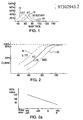
- rate profiles 10, 12 and 14 indicate statistical data obtained from various cardiac patients. More specifically, profile 10 indicates in percentages the amount of time or frequency for heart rates from about 20 bpm to about 110 bpm for a physically very fit person. As seen in this Figure, the weighed average is about 55 bpm at a percentile level of about 45%. That is, during any given time duration in excess of a day or so, 45% of the time, the patient's heart beats in a range around 55 bpm, about 38% of the time it beats at around 60 bpm and so on.
- the actual physical fitness level of a patient can be characterized in a pacemaker by calculating the rates corresponding to certain preselected percentile levels. Accordingly, in embodiments of the present pacemaker, the patient's activity is continuously monitored. The rate response function used for mapping the metabolic demand parameter into a corresponding metabolic indicated pacing parameter is then adjusted in accordance with the patient's physical fitness level. In this manner, the pacemaker can be adjusted to generate pacing pulses at the minimum heart rates that meet the patient's hemodynamic requirements.
- one such change may consist of a patient who is initially sedentary and then starts exercising sufficiently and often enough so that his heart beat exceeds 50% of his peak rate at least three times a week, each exercising taking at least twenty minutes.
- his average heart rate and minimum decreases by about 10 bpm.
- the change in his physical fitness is even more rapid.
- his average heart beat stays at this low level. If he increases the exercise level (i.e., duration, frequency, and/or intensity) his average heart rate decreases further. If he reduces his exercise level average, his heart rate slowly increases, and thus the benefits of exercise slowly decrease.
- Figure 2 is a convenient way to present the concept of patient fitness.
- the curves 16, 18, 20 are idealized to a certain extent. However, they are used to illustrate the following observations.
- Any percentile mark on Figure 2 may be used to generate a continuous physical fitness indicia.
- the indicia for the 92% percentile mark is shown in Figure 2a.
- FIG. 2a A similar diagram to Figure 2a could be drawn for the average (50% percentile) or minimum (10% percentile) rates. These derived values from the life style of the patient can be used in an adaptive algorithm, which over time generates an appropriate relationship between MV and pacing rate.
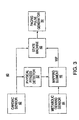
- a pacemaker 40 constructed in accordance with embodiments of the present invention includes a cardiac sensor 42 for receiving signals from the patient's heart indicative of intrinsic cardiac activity.
- a cardiac sensor 42 for receiving signals from the patient's heart indicative of intrinsic cardiac activity.
- typically pacemaker 40 may be a dual chamber pacemaker which senses and/or paces one or both chambers of the patient's heart However, a single chamber pacemaker is described herein for the sake of simplicity).
- the pacemaker 40 further includes a metabolic demand sensor 44 for sensing the hemodynamic needs of the patient's body. As mentioned above, this sensor 44 could be based on physiological parameters (such as minute volute, QT interval. PDI, etc.) or a mechanical sensor which actually measures a physical activity parameter such as acceleration.
- the output of the sensor 44 is fed to a mapping element 46 which uses an RRF function to convert the metabolic demand from sensor 44 into a corresponding metabolic indicated parameter (MIP).
- MIP metabolic indicated parameter
- the output of sensor 42 (indicative of intrinsic cardiac activity) and the metabolic indicated parameter are both fed to a state machine 48.
- the state machine 48 uses these parameters and a set of preprogrammed rules to generate (when required) pacing commands for pacing generator 50.
- the pacing generator 50 in response generates pacing pulses which are sent to the patient's heart via appropriate electrodes (not shown).
- the rules in the state machine 48 set the various pacing parameters such as AV delays, blanking periods, post ventricular atrial refractory periods, and other parameters associated with single and dual chamber pacing as described in U.S. Patent No. 5,441,523.
- pacemaker 40 is also provided with a physical fitness detector 52 which also receives at least some of the events detected by the cardiac sensor 42, and generates an indicia of the current physical fitness of the patient. Detector 52 provides this information to the mapping element 46 which in response selects the appropriate RRF mapping function.
- mapping element 46 may all be implemented on a single microprocessor but are shown here for convenience as discreet elements.
- heart beats are logged by the detector 60.
- the detector 60 collects either all, or a sampling of the heart rates over a long time period, such as for example, over the last 30-40 days, and preferably over the last 35 days.
- the physical fitness detector 52 includes a heart rate detector 60 which receives the intrinsic cardiac events from sensor 42 and generates a numerical value for the current detected heart rate (HR) of the patient.
- HRMAX current maximum allowable heart rate
- the current maximum allowable heart rate (HRMAX) for the patient is also fed to a multiplier 62 where it is multiplied by 0.6 to obtain a 60% threshold value T60.
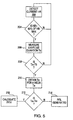
- Step 200 detector 60 detects heart rate HR.
- the output of detector 60 and the T60 value are fed to a comparator 62 which generates an output if the current rate HR is higher.
- the comparator 62 in effect is used to determine the onset of exercise by the patient (Step 204). The purpose of this test is to insure that the patient is involved in an exercise which has a sufficiently high intensity, and is not merely transitory.
- the output of comparator 62 remains high as long as the patient continues exercising. This output is used to trigger a timer 64 used to measure the duration of the exercise Te (Step 206). This duration Te is fed concurrently to a comparator 66 and an accumulator 68.
- Comparator 66 compares Te to a threshold value TO to determine if the exercise has been maintained long enough to have any meaningful effect on the physical fitness of the patient. Te may be, for example, twenty minutes. If Te exceeds this limit, then the accumulator 68 takes it into consideration. Otherwise, Te is ignored (Step 208). In most cases there will be a scaling factor such that less than 20 min. will be considered.
- Accumulator 68 maintains a running sum of the total amount Ta of all the exercising sessions for a given time period (for example, a week) which have met the criteria set by comparator 66 (Step 210).
- a comparator 70 compares the total amount Ta to a threshold level Tm. A low Ta indicates that the patient has not exercised enough and therefore his physical condition is deteriorating. Under these conditions in Step 214, a signal PFIL is generated by a latch 12 to indicate a low physical fitness indicia.
- an activity calculator 74 is used to calculate the total amount of time Tn spent above a threshold level T1 which may or may not be the same as Tm. The difference between these signals is indicated by a signal PFIH (high physical condition Indicia) (Step 216).
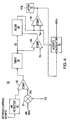
- FIG. 6 shows details of the mapping element 46.
- the mapping element 46 receives the signals PFIL and PFIH.
- the element 46 includes a logic circuit 80 and two comparators 82 and 84. Comparators 82 and 84 are used to determine if the signal PFIH and hence the total amount of exercise by the patient, is in between a range between E1 and E2.
- the comparator 82 generates an output if the indicia PFIH is above level E1.
- Comparator 84 generates an output if the indicia PFIH is above level E2.
- the logic circuit In response, the logic circuit generates one of four outputs, depending on its inputs. If the inputs indicate that the patient has a 'normal' fitness level, i.e., none of the inputs are high, then the logic circuit generates a FIT output indicating a normal level of fitness. For a low fitness level from input PFIL, the logic circuit generates a low or 'sedentary' output. If only comparator 82 generates an output, logic circuit 80 generates a 'MEDIUM FIT' output indicating that the patient has a medium fitness, i.e., a fitness somewhat higher than normal FIT level.
- an input from comparator 84 indicates a high fitness level and in response, the logic circuit 80 generates a 'VERY FIT' output. These inputs are use by the RRF selector 86 to generate an appropriate RRF mapping profile as described below.
- a person having an average fitness level is characterized by the cumulative curve 18, a very fit person may be characterized in comparison by cumulative curve 16, and a sedentary person may be characterized by curve 20.
- RATES BPM
- the 92% level is a useful criteria because it corresponds to moderate exercise level that is reached typically by a person at least once a day.
- a person having a medium fitness level is characterized by heart rates falling somewhere between the normal (or FIT) and very fit characteristics.
- the techniques describe in the above-mentioned Patent are used to generate first the minimum, average and a 92% cumulative values for the metabolic demand parameters, i.e., MV_MIN, MV_AVR, and MV_92. For a person having a normal fitness level, these parameters may then be used to generate a profile 100 as shown in Figure 8.
- profile 100 is shown as being defined by two line segments.
- profiles may be defined in a similar manner which may have an exponential or other (preferably) monotonic shape.
- the RRF selector 86 selects profile 100, and using this profile, for every instantaneous MV parameter, an appropriate metabolic indicated parameter is generated. In Figure 3, this MIP is fed to the state machine 48, as discussed.
- the RRF selector 86 includes an accumulator 92 which monitors the parameter DMV and generates a cumulative histogram which defines several critical values for the cumulative minute volume, such as MV_MIN, MV_AVR and MV_92.
- the corresponding cumulative MIR values are known form the above table, and therefore the profile 100 is calculated by calculator 94.
- the calculator 94 is implemented as a look-up table.
- Embodiments of the present invention contemplate monitoring the person's exercise level on a long term basis, i.e. 35 days, and based on this monitoring develop indicia about whether the person's fitness level has changed or not.
- map calculator 94 generates now profile 102, shown in Figure 8, using the MV percentiles from the accumulator 92 and the MIR values from the above table. As compared to curve 100, curve 102 may be viewed as being shifted to the right.
- the calculator 94 generates a new profile 104 based on the new MV values from accumulator 92 and the MIR values from the above table. As seen in Figure 8, this new profile may be viewed as shifting the profile 100 slightly to the left.
- the MV values corresponding to the 10%, 50% and/or 92% percentiles of MIR are not known but are derived dynamically within the pacemaker over time.
Landscapes
- Health & Medical Sciences (AREA)
- Cardiology (AREA)
- Heart & Thoracic Surgery (AREA)
- Life Sciences & Earth Sciences (AREA)
- Biomedical Technology (AREA)
- Biophysics (AREA)
- Physiology (AREA)
- Engineering & Computer Science (AREA)
- Nuclear Medicine, Radiotherapy & Molecular Imaging (AREA)
- Radiology & Medical Imaging (AREA)
- Animal Behavior & Ethology (AREA)
- General Health & Medical Sciences (AREA)
- Public Health (AREA)
- Veterinary Medicine (AREA)
- Hematology (AREA)
- Electrotherapy Devices (AREA)
Claims (12)
- Stimulateur cardiaque implantable (40) comprenant :caractérisé en ce que ledit moyen de détermination de forme physique détermine la forme physique sur une période de 30 à 40 jours.un capteur cardiaque (42) pour détecter une activité cardiaque intrinsèque et pour générer des signaux cardiaques détectés ;un capteur métabolique (44) pour détecter une demande métabolique d'un patient et pour générer en réponse un signal de demande métabolique;un générateur de stimulation (50) pour générer des signaux de stimulation en réponse à des commandes de stimulation;un moyen de détermination de forme physique (52) pour déterminer une forme physique dudit patient et pour générer en réponse un indicateur de forme physique; etun contrôleur (48) pour générer lesdites commandes de stimulation en réponse auxdits signaux cardiaques détectés, audit signal de commande métabolique et audit indicateur de forme physique,
- Stimulateur cardiaque selon la revendication 1, dans lequel ledit capteur métabolique (44) détecte une caractéristique physiologique.
- Stimulateur cardiaque selon la revendication 2, dans lequel ladite caractéristique physiologique est un élément pris parmi un volume minute, un intervalle PDI ou un intervalle QT.
- Stimulateur cardiaque selon la revendication 1, dans lequel ledit capteur métabolique (44) est un capteur mécanique pour détecter une caractéristique physique qui est associée au corps du patient.
- Stimulateur cardiaque selon la revendication 4, dans lequel ledit capteur mécanique est un accéléromètre.
- Stimulateur cardiaque selon la revendication 1, dans lequel ledit moyen de détermination de forme physique (52) inclut un capteur d'exercice (62, 64) pour la détection et un accumulateur (68) pour l'accumulation des durées de périodes d'exercice présentant une durée présélectionnée.
- Stimulateur cardiaque selon la revendication 6, dans lequel ledit accumulateur (68) est construit et agencé pour accumuler lesdites durées pendant ladite période de 30 à 40 jours.
- Stimulateur cardiaque selon la revendication 6, dans lequel ledit moyen de détermination de forme physique (52) inclut en outre un moyen de détermination de seuil (70) pour déterminer une intensité d'exercice pendant chaque période d'exercice, ledit accumulateur accumulant seulement des périodes d'exercice présentant une intensité présélectionnée.
- Stimulateur cardiaque selon la revendication 6, comprenant en outre un élément de cartographie (46) pour générer un profil de cartographie de fonction de réponse au rythme (RRF) en réponse à des signaux en provenance du moyen de détermination de forme physique (52) et pour cartographier ledit signal de demande métabolique selon un paramètre métaboliquement indiqué conformément audit profil de cartographie RRF.
- Stimulateur cardiaque selon la revendication 9, dans lequel ledit élément de cartographie (46) inclut un circuit de réglage (80) pour générer ledit profil de cartographie RRF.
- Stimulateur cardiaque selon la revendication 9, dans lequel ledit contrôleur (48) génère des signaux de stimulation en réponse audit paramètre métaboliquement indiqué.
- Stimulateur cardiaque selon la revendication 9, dans lequel ledit moyen de détermination de forme physique (52) dérive des signaux qui sont indicatifs de patients très en forme, normalement en forme et sédentaires
Applications Claiming Priority (2)
| Application Number | Priority Date | Filing Date | Title |
|---|---|---|---|
| US1655296P | 1996-04-30 | 1996-04-30 | |
| US16552P | 1996-04-30 |
Publications (3)
| Publication Number | Publication Date |
|---|---|
| EP0804941A2 EP0804941A2 (fr) | 1997-11-05 |
| EP0804941A3 EP0804941A3 (fr) | 1998-12-02 |
| EP0804941B1 true EP0804941B1 (fr) | 2004-07-14 |
Family
ID=21777715
Family Applications (1)
| Application Number | Title | Priority Date | Filing Date |
|---|---|---|---|
| EP97302943A Expired - Lifetime EP0804941B1 (fr) | 1996-04-30 | 1997-04-30 | Auto-adaptation d'intervalles RR dans les stimulateurs cardiaques implantés |
Country Status (3)
| Country | Link |
|---|---|
| US (1) | US5792198A (fr) |
| EP (1) | EP0804941B1 (fr) |
| DE (1) | DE69729819T2 (fr) |
Families Citing this family (50)
| Publication number | Priority date | Publication date | Assignee | Title |
|---|---|---|---|---|
| IL125424A0 (en) | 1998-07-20 | 1999-03-12 | New Technologies Sa Ysy Ltd | Pacing with hemodynamic enhancement |
| US8825152B2 (en) | 1996-01-08 | 2014-09-02 | Impulse Dynamics, N.V. | Modulation of intracellular calcium concentration using non-excitatory electrical signals applied to the tissue |
| US9289618B1 (en) | 1996-01-08 | 2016-03-22 | Impulse Dynamics Nv | Electrical muscle controller |
| WO1997025098A1 (fr) * | 1996-01-08 | 1997-07-17 | New Technologies (Sa-Ysy) Ltd. | Dispositif de regulation electrique d'un muscle |
| US7167748B2 (en) | 1996-01-08 | 2007-01-23 | Impulse Dynamics Nv | Electrical muscle controller |
| US8321013B2 (en) | 1996-01-08 | 2012-11-27 | Impulse Dynamics, N.V. | Electrical muscle controller and pacing with hemodynamic enhancement |
| US9713723B2 (en) | 1996-01-11 | 2017-07-25 | Impulse Dynamics Nv | Signal delivery through the right ventricular septum |
| US6415178B1 (en) * | 1996-09-16 | 2002-07-02 | Impulse Dynamics N.V. | Fencing of cardiac muscles |
| US7908003B1 (en) | 1996-08-19 | 2011-03-15 | Mr3 Medical Llc | System and method for treating ischemia by improving cardiac efficiency |
| US7840264B1 (en) | 1996-08-19 | 2010-11-23 | Mr3 Medical, Llc | System and method for breaking reentry circuits by cooling cardiac tissue |
| DE19804843A1 (de) * | 1998-01-29 | 1999-08-05 | Biotronik Mess & Therapieg | Selbstkalibrierender ratenadaptiver Herzschrittmacher |
| WO2000027476A1 (fr) * | 1998-11-06 | 2000-05-18 | Impulse Dynamics Nv | Regulation de l'excitation du tissu cardiaque en fonction d'une entree physiologique |
| US6587721B1 (en) | 1998-11-06 | 2003-07-01 | Impulse Dynamics N.V. | Trigger-based regulation of excitable tissue control of the heart |
| US6675043B1 (en) | 1998-11-06 | 2004-01-06 | Impulse Dynamics N.V. | Sensor-based regulation of excitable tissue control of the heart |
| US6725093B1 (en) * | 1998-11-06 | 2004-04-20 | Impulse Dynamics N.V. | Regulation of excitable tissue control of the heart based on physiological input |
| WO2000027475A1 (fr) * | 1998-11-06 | 2000-05-18 | Impulse Dynamics Nv | Regulation par capteur de l'excitation des tissus du coeur |
| WO2000046349A1 (fr) | 1999-02-04 | 2000-08-10 | Technion Research & Development Foundation Ltd. | Methode et appareil de renouvellement et de multiplication de cellules souches hematopoietiques et/ou de progeniteurs |
| US8700161B2 (en) | 1999-03-05 | 2014-04-15 | Metacure Limited | Blood glucose level control |
| US8346363B2 (en) | 1999-03-05 | 2013-01-01 | Metacure Limited | Blood glucose level control |
| US6714811B1 (en) * | 1999-03-05 | 2004-03-30 | Medtronic, Inc. | Method and apparatus for monitoring heart rate |
| US8019421B2 (en) | 1999-03-05 | 2011-09-13 | Metacure Limited | Blood glucose level control |
| US9101765B2 (en) | 1999-03-05 | 2015-08-11 | Metacure Limited | Non-immediate effects of therapy |
| US8666495B2 (en) | 1999-03-05 | 2014-03-04 | Metacure Limited | Gastrointestinal methods and apparatus for use in treating disorders and controlling blood sugar |
| DE19940952A1 (de) | 1999-08-20 | 2001-02-22 | Biotronik Mess & Therapieg | Ratenadaptiver Herzschrittmacher |
| US6490485B1 (en) | 1999-10-06 | 2002-12-03 | Cardiac Pacemakers, Inc. | Automatic rate-adaptive pacing with auto-lifestyle |
| AU1049901A (en) | 1999-10-25 | 2001-05-08 | Impulse Dynamics N.V. | Cardiac contractility modulation device having anti-arrhythmic capabilities and a method of operating thereof |
| US6993385B1 (en) | 1999-10-25 | 2006-01-31 | Impulse Dynamics N.V. | Cardiac contractility modulation device having anti-arrhythmic capabilities and a method of operating thereof |
| US7027863B1 (en) | 1999-10-25 | 2006-04-11 | Impulse Dynamics N.V. | Device for cardiac therapy |
| US6408208B1 (en) | 1999-10-28 | 2002-06-18 | Cardiac Pacemakers, Inc. | Fully automatic and physiologic rate-adaptive pacing |
| US6519495B1 (en) * | 2000-08-15 | 2003-02-11 | Cardiac Pacemakers, Inc. | Rate-adaptive therapy with sensor cross-checking |
| US6823214B1 (en) | 2000-09-08 | 2004-11-23 | Cardiac Pacemakers, Inc. | Self-calibrating rate-adaptive pacemaker |
| US7050854B2 (en) * | 2002-06-24 | 2006-05-23 | Cardiac Pacemakers, Inc. | Calibration of adaptive-rate pacing using intrinsic chronotropic response |
| US7218968B2 (en) * | 2002-10-31 | 2007-05-15 | Medtronic, Inc. | User interface for programming rate response technical field |
| ATE471501T1 (de) | 2003-02-10 | 2010-07-15 | N trig ltd | Berührungsdetektion für einen digitalisierer |
| US7840262B2 (en) | 2003-03-10 | 2010-11-23 | Impulse Dynamics Nv | Apparatus and method for delivering electrical signals to modify gene expression in cardiac tissue |
| US11439815B2 (en) | 2003-03-10 | 2022-09-13 | Impulse Dynamics Nv | Protein activity modification |
| CN1856338B (zh) | 2003-07-21 | 2012-11-14 | 超治疗有限公司 | 用于治疗疾病和控制血糖的胃肠方法和装置 |
| US8194944B2 (en) * | 2003-10-21 | 2012-06-05 | Koninklijke Philips Electronics N.V. | Method of automatically displaying medical measurement data |
| US11779768B2 (en) | 2004-03-10 | 2023-10-10 | Impulse Dynamics Nv | Protein activity modification |
| US8548583B2 (en) | 2004-03-10 | 2013-10-01 | Impulse Dynamics Nv | Protein activity modification |
| US8352031B2 (en) | 2004-03-10 | 2013-01-08 | Impulse Dynamics Nv | Protein activity modification |
| US7269458B2 (en) * | 2004-08-09 | 2007-09-11 | Cardiac Pacemakers, Inc. | Cardiopulmonary functional status assessment via heart rate response detection by implantable cardiac device |
| US7389143B2 (en) | 2004-08-12 | 2008-06-17 | Cardiac Pacemakers, Inc. | Cardiopulmonary functional status assessment via metabolic response detection by implantable cardiac device |
| CA2594673A1 (fr) | 2004-12-09 | 2006-07-13 | Impulse Dynamics Nv | Modification de l'activite proteique |
| EP1868679B1 (fr) | 2005-02-17 | 2017-05-03 | MetaCure Limited | Therapie exercant des effets non immediats |
| US8244371B2 (en) | 2005-03-18 | 2012-08-14 | Metacure Limited | Pancreas lead |
| US20070021678A1 (en) * | 2005-07-19 | 2007-01-25 | Cardiac Pacemakers, Inc. | Methods and apparatus for monitoring physiological responses to steady state activity |
| US8073540B2 (en) | 2006-06-21 | 2011-12-06 | St. Jude Medical Ab | Implantable heart stimulating device with stimulation rate optimization |
| US8936556B2 (en) * | 2008-09-24 | 2015-01-20 | Cardiac Pacemakers, Inc. | Minute ventilation-based disordered breathing detection |
| US8934975B2 (en) | 2010-02-01 | 2015-01-13 | Metacure Limited | Gastrointestinal electrical therapy |
Family Cites Families (8)
| Publication number | Priority date | Publication date | Assignee | Title |
|---|---|---|---|---|
| US4856522A (en) * | 1988-01-29 | 1989-08-15 | Telectronics N.V. | Rate-responsive, distributed-rate pacemaker |
| US5074302A (en) * | 1989-01-25 | 1991-12-24 | Siemens-Pacesetter, Inc. | Self-adjusting rate-responsive pacemaker and method thereof |
| FR2671013B1 (fr) * | 1990-12-27 | 1996-09-13 | Ela Medical Sa | Stimulateur cardiaque a frequence de stimulation asservie. |
| US5456262A (en) * | 1993-11-01 | 1995-10-10 | Polar Electro Oy | Method for calculating a fitness index |
| US5476483A (en) * | 1994-06-10 | 1995-12-19 | Pacesetter, Inc. | System and method for modulating the base rate during sleep for a rate-responsive cardiac pacemaker |
| US5487753A (en) * | 1995-03-16 | 1996-01-30 | Telectronics Pacing Systems, Inc. | Rate-responsive pacemaker with anaerobic threshold adaptation and method |
| DE19609382A1 (de) * | 1996-03-04 | 1997-09-11 | Biotronik Mess & Therapieg | Aktivitätsgesteuerter Herzschrittmacher |
| DE69729768T2 (de) * | 1996-04-29 | 2005-07-14 | Pacesetter, Inc., Sylmar | Herzschrittmacher mit Bestimmung des anaeroben Schwellwertes |
-
1997
- 1997-04-21 US US08/839,926 patent/US5792198A/en not_active Expired - Lifetime
- 1997-04-30 DE DE69729819T patent/DE69729819T2/de not_active Expired - Fee Related
- 1997-04-30 EP EP97302943A patent/EP0804941B1/fr not_active Expired - Lifetime
Also Published As
| Publication number | Publication date |
|---|---|
| DE69729819T2 (de) | 2005-07-21 |
| EP0804941A2 (fr) | 1997-11-05 |
| EP0804941A3 (fr) | 1998-12-02 |
| DE69729819D1 (de) | 2004-08-19 |
| US5792198A (en) | 1998-08-11 |
Similar Documents
| Publication | Publication Date | Title |
|---|---|---|
| US5792198A (en) | Auto adaptation of RR interval in implantable pacemaker | |
| EP0593745B1 (fr) | Deceleration de rythme de stimulation modulee par le travail | |
| US5755740A (en) | Pacemaker with automatic calibration of the response of multiple sensors | |
| US6263243B1 (en) | Rate adaptive pacemaker | |
| EP0256617B1 (fr) | Contrôleur sensible à la température pour stimulateur cardiaque | |
| US6823214B1 (en) | Self-calibrating rate-adaptive pacemaker | |
| US5514162A (en) | System and method for automatically determining the slope of a transfer function for a rate-responsive cardiac pacemaker | |
| AU653546B2 (en) | Pacemaker with optimized rate responsiveness and method of rate control | |
| US5158078A (en) | Rate responsive pacemaker and methods for optimizing its operation | |
| US5817135A (en) | Rate-responsive pacemaker with noise-rejecting minute volume determination | |
| US7869877B2 (en) | Cardiopulmonary functional status assessment via heart rate response detection by implantable cardiac device | |
| US7974708B2 (en) | Calibration of adaptive-rate pacing using intrinsic chronotropic response | |
| US5824020A (en) | Rate-responsive pacemaker with rapid minute volume determination | |
| EP0732123A2 (fr) | Stimulateur cardiaque avec adaptation du seuil anaérobiotic | |
| US6839593B1 (en) | Rate-adaptive therapy with automatic limiting of maximum pacing rate | |
| EP0543939A1 (fr) | Procede d'optimisation pour stimulateur cardiaque sensible au rythme du c ur. | |
| EP1060761B1 (fr) | Stimulateur cardiaque avec adaptation de la fréquence | |
| AU655600B2 (en) | Rate responsive pacemaker and methods for optimizing its operation | |
| US5500005A (en) | Activity responsive heart stimulator dependent on return blood flow to the heart | |
| US5645576A (en) | Method and apparatus for controlling the base frequency of a cardiac pacemaker | |
| EP0647454A2 (fr) | Stimulateur cardiaque avec fréquence adaptative avec changement de fréquence amélioré et méthode de stimulation | |
| US5792196A (en) | Rate-responsive pacemaker with automatic rate response factor selection | |
| WO2000057953A1 (fr) | Stimulateur cardiaque a adaptation de frequence | |
| EP0804940A2 (fr) | Stimulateur cardiaque à la demande avec sélection automatique du facteur d'adaptation de la fréquence |
Legal Events
| Date | Code | Title | Description |
|---|---|---|---|
| PUAI | Public reference made under article 153(3) epc to a published international application that has entered the european phase |
Free format text: ORIGINAL CODE: 0009012 |
|
| AK | Designated contracting states |
Kind code of ref document: A2 Designated state(s): DE ES FR GB IT NL |
|
| 17P | Request for examination filed |
Effective date: 19980114 |
|
| PUAL | Search report despatched |
Free format text: ORIGINAL CODE: 0009013 |
|
| AK | Designated contracting states |
Kind code of ref document: A3 Designated state(s): DE ES FR GB IT NL |
|
| 17Q | First examination report despatched |
Effective date: 20030303 |
|
| GRAP | Despatch of communication of intention to grant a patent |
Free format text: ORIGINAL CODE: EPIDOSNIGR1 |
|
| GRAS | Grant fee paid |
Free format text: ORIGINAL CODE: EPIDOSNIGR3 |
|
| GRAA | (expected) grant |
Free format text: ORIGINAL CODE: 0009210 |
|
| AK | Designated contracting states |
Kind code of ref document: B1 Designated state(s): DE ES FR GB IT NL |
|
| PG25 | Lapsed in a contracting state [announced via postgrant information from national office to epo] |
Ref country code: NL Free format text: LAPSE BECAUSE OF FAILURE TO SUBMIT A TRANSLATION OF THE DESCRIPTION OR TO PAY THE FEE WITHIN THE PRESCRIBED TIME-LIMIT Effective date: 20040714 |
|
| REG | Reference to a national code |
Ref country code: GB Ref legal event code: FG4D |
|
| REF | Corresponds to: |
Ref document number: 69729819 Country of ref document: DE Date of ref document: 20040819 Kind code of ref document: P |
|
| PG25 | Lapsed in a contracting state [announced via postgrant information from national office to epo] |
Ref country code: ES Free format text: LAPSE BECAUSE OF FAILURE TO SUBMIT A TRANSLATION OF THE DESCRIPTION OR TO PAY THE FEE WITHIN THE PRESCRIBED TIME-LIMIT Effective date: 20041025 |
|
| NLV1 | Nl: lapsed or annulled due to failure to fulfill the requirements of art. 29p and 29m of the patents act | ||
| ET | Fr: translation filed | ||
| PGFP | Annual fee paid to national office [announced via postgrant information from national office to epo] |
Ref country code: FR Payment date: 20050418 Year of fee payment: 9 |
|
| PG25 | Lapsed in a contracting state [announced via postgrant information from national office to epo] |
Ref country code: GB Free format text: LAPSE BECAUSE OF NON-PAYMENT OF DUE FEES Effective date: 20050430 |
|
| PLBE | No opposition filed within time limit |
Free format text: ORIGINAL CODE: 0009261 |
|
| STAA | Information on the status of an ep patent application or granted ep patent |
Free format text: STATUS: NO OPPOSITION FILED WITHIN TIME LIMIT |
|
| PGFP | Annual fee paid to national office [announced via postgrant information from national office to epo] |
Ref country code: DE Payment date: 20050531 Year of fee payment: 9 |
|
| 26N | No opposition filed |
Effective date: 20050415 |
|
| GBPC | Gb: european patent ceased through non-payment of renewal fee |
Effective date: 20050430 |
|
| PGFP | Annual fee paid to national office [announced via postgrant information from national office to epo] |
Ref country code: IT Payment date: 20060430 Year of fee payment: 10 |
|
| PG25 | Lapsed in a contracting state [announced via postgrant information from national office to epo] |
Ref country code: DE Free format text: LAPSE BECAUSE OF NON-PAYMENT OF DUE FEES Effective date: 20061101 |
|
| REG | Reference to a national code |
Ref country code: FR Ref legal event code: ST Effective date: 20061230 |
|
| PG25 | Lapsed in a contracting state [announced via postgrant information from national office to epo] |
Ref country code: FR Free format text: LAPSE BECAUSE OF NON-PAYMENT OF DUE FEES Effective date: 20060502 |
|
| PG25 | Lapsed in a contracting state [announced via postgrant information from national office to epo] |
Ref country code: IT Free format text: LAPSE BECAUSE OF NON-PAYMENT OF DUE FEES Effective date: 20070430 |