EP0802275A1 - Process to improve the whiteness of paper pulp - Google Patents
Process to improve the whiteness of paper pulp Download PDFInfo
- Publication number
- EP0802275A1 EP0802275A1 EP19970101747 EP97101747A EP0802275A1 EP 0802275 A1 EP0802275 A1 EP 0802275A1 EP 19970101747 EP19970101747 EP 19970101747 EP 97101747 A EP97101747 A EP 97101747A EP 0802275 A1 EP0802275 A1 EP 0802275A1
- Authority
- EP
- European Patent Office
- Prior art keywords
- bleaching
- paper stock
- mechanical processing
- suspension
- chemicals
- Prior art date
- Legal status (The legal status is an assumption and is not a legal conclusion. Google has not performed a legal analysis and makes no representation as to the accuracy of the status listed.)
- Withdrawn
Links
- 238000000034 method Methods 0.000 title claims description 64
- 229920001131 Pulp (paper) Polymers 0.000 title 1
- 238000004061 bleaching Methods 0.000 claims abstract description 54
- 239000002245 particle Substances 0.000 claims abstract description 14
- 239000000835 fiber Substances 0.000 claims abstract description 12
- 239000000463 material Substances 0.000 claims abstract description 12
- 239000000126 substance Substances 0.000 claims description 28
- 239000000725 suspension Substances 0.000 claims description 14
- QVGXLLKOCUKJST-UHFFFAOYSA-N atomic oxygen Chemical compound [O] QVGXLLKOCUKJST-UHFFFAOYSA-N 0.000 claims description 11
- 239000001301 oxygen Substances 0.000 claims description 11
- 229910052760 oxygen Inorganic materials 0.000 claims description 11
- MYMOFIZGZYHOMD-UHFFFAOYSA-N Dioxygen Chemical compound O=O MYMOFIZGZYHOMD-UHFFFAOYSA-N 0.000 claims description 9
- 238000005188 flotation Methods 0.000 claims description 9
- 239000007844 bleaching agent Substances 0.000 claims description 8
- 238000009996 mechanical pre-treatment Methods 0.000 claims description 8
- 239000010893 paper waste Substances 0.000 claims description 7
- XLYOFNOQVPJJNP-UHFFFAOYSA-N water Substances O XLYOFNOQVPJJNP-UHFFFAOYSA-N 0.000 claims description 7
- 239000002761 deinking Substances 0.000 claims description 6
- 229910001882 dioxygen Inorganic materials 0.000 claims description 6
- 239000007789 gas Substances 0.000 claims description 6
- 239000002184 metal Substances 0.000 claims description 6
- 150000002978 peroxides Chemical class 0.000 claims description 6
- 239000006185 dispersion Substances 0.000 claims description 5
- 239000004744 fabric Substances 0.000 claims description 4
- 238000002360 preparation method Methods 0.000 claims description 3
- 230000002829 reductive effect Effects 0.000 claims description 3
- 238000004140 cleaning Methods 0.000 claims description 2
- 238000004519 manufacturing process Methods 0.000 claims description 2
- 239000003795 chemical substances by application Substances 0.000 claims 1
- 239000000470 constituent Substances 0.000 claims 1
- 238000012423 maintenance Methods 0.000 claims 1
- 239000007787 solid Substances 0.000 claims 1
- HEMHJVSKTPXQMS-UHFFFAOYSA-M Sodium hydroxide Chemical compound [OH-].[Na+] HEMHJVSKTPXQMS-UHFFFAOYSA-M 0.000 description 9
- 239000000976 ink Substances 0.000 description 6
- 239000002657 fibrous material Substances 0.000 description 3
- 238000006243 chemical reaction Methods 0.000 description 2
- 239000000975 dye Substances 0.000 description 2
- 229920005610 lignin Polymers 0.000 description 2
- 239000010812 mixed waste Substances 0.000 description 2
- 239000000203 mixture Substances 0.000 description 2
- 230000001590 oxidative effect Effects 0.000 description 2
- 238000000926 separation method Methods 0.000 description 2
- 230000008719 thickening Effects 0.000 description 2
- 238000005406 washing Methods 0.000 description 2
- -1 MgSO 4 Substances 0.000 description 1
- 229910019093 NaOCl Inorganic materials 0.000 description 1
- 238000010793 Steam injection (oil industry) Methods 0.000 description 1
- 239000011230 binding agent Substances 0.000 description 1
- 238000007664 blowing Methods 0.000 description 1
- 239000003153 chemical reaction reagent Substances 0.000 description 1
- 230000003749 cleanliness Effects 0.000 description 1
- 230000006835 compression Effects 0.000 description 1
- 238000007906 compression Methods 0.000 description 1
- 239000000356 contaminant Substances 0.000 description 1
- 238000010586 diagram Methods 0.000 description 1
- 238000010790 dilution Methods 0.000 description 1
- 239000012895 dilution Substances 0.000 description 1
- 230000000694 effects Effects 0.000 description 1
- 238000004880 explosion Methods 0.000 description 1
- 238000010438 heat treatment Methods 0.000 description 1
- 239000012535 impurity Substances 0.000 description 1
- 239000011261 inert gas Substances 0.000 description 1
- 238000009896 oxidative bleaching Methods 0.000 description 1
- 238000009895 reductive bleaching Methods 0.000 description 1
- SUKJFIGYRHOWBL-UHFFFAOYSA-N sodium hypochlorite Chemical compound [Na+].Cl[O-] SUKJFIGYRHOWBL-UHFFFAOYSA-N 0.000 description 1
- 239000000243 solution Substances 0.000 description 1
- 239000002904 solvent Substances 0.000 description 1
- 230000000087 stabilizing effect Effects 0.000 description 1
- 238000003860 storage Methods 0.000 description 1
- 239000002351 wastewater Substances 0.000 description 1
- 238000003911 water pollution Methods 0.000 description 1
- 238000004383 yellowing Methods 0.000 description 1
Images
Classifications
-
- D—TEXTILES; PAPER
- D21—PAPER-MAKING; PRODUCTION OF CELLULOSE
- D21B—FIBROUS RAW MATERIALS OR THEIR MECHANICAL TREATMENT
- D21B1/00—Fibrous raw materials or their mechanical treatment
- D21B1/04—Fibrous raw materials or their mechanical treatment by dividing raw materials into small particles, e.g. fibres
- D21B1/12—Fibrous raw materials or their mechanical treatment by dividing raw materials into small particles, e.g. fibres by wet methods, by the use of steam
- D21B1/30—Defibrating by other means
- D21B1/32—Defibrating by other means of waste paper
-
- D—TEXTILES; PAPER
- D21—PAPER-MAKING; PRODUCTION OF CELLULOSE
- D21C—PRODUCTION OF CELLULOSE BY REMOVING NON-CELLULOSE SUBSTANCES FROM CELLULOSE-CONTAINING MATERIALS; REGENERATION OF PULPING LIQUORS; APPARATUS THEREFOR
- D21C5/00—Other processes for obtaining cellulose, e.g. cooking cotton linters ; Processes characterised by the choice of cellulose-containing starting materials
- D21C5/02—Working-up waste paper
-
- D—TEXTILES; PAPER
- D21—PAPER-MAKING; PRODUCTION OF CELLULOSE
- D21C—PRODUCTION OF CELLULOSE BY REMOVING NON-CELLULOSE SUBSTANCES FROM CELLULOSE-CONTAINING MATERIALS; REGENERATION OF PULPING LIQUORS; APPARATUS THEREFOR
- D21C9/00—After-treatment of cellulose pulp, e.g. of wood pulp, or cotton linters ; Treatment of dilute or dewatered pulp or process improvement taking place after obtaining the raw cellulosic material and not provided for elsewhere
- D21C9/10—Bleaching ; Apparatus therefor
- D21C9/147—Bleaching ; Apparatus therefor with oxygen or its allotropic modifications
-
- B—PERFORMING OPERATIONS; TRANSPORTING
- B41—PRINTING; LINING MACHINES; TYPEWRITERS; STAMPS
- B41M—PRINTING, DUPLICATING, MARKING, OR COPYING PROCESSES; COLOUR PRINTING
- B41M5/00—Duplicating or marking methods; Sheet materials for use therein
- B41M5/26—Thermography ; Marking by high energetic means, e.g. laser otherwise than by burning, and characterised by the material used
- B41M5/382—Contact thermal transfer or sublimation processes
- B41M5/385—Contact thermal transfer or sublimation processes characterised by the transferable dyes or pigments
- B41M5/3852—Anthraquinone or naphthoquinone dyes
-
- B—PERFORMING OPERATIONS; TRANSPORTING
- B41—PRINTING; LINING MACHINES; TYPEWRITERS; STAMPS
- B41M—PRINTING, DUPLICATING, MARKING, OR COPYING PROCESSES; COLOUR PRINTING
- B41M5/00—Duplicating or marking methods; Sheet materials for use therein
- B41M5/26—Thermography ; Marking by high energetic means, e.g. laser otherwise than by burning, and characterised by the material used
- B41M5/382—Contact thermal transfer or sublimation processes
- B41M5/385—Contact thermal transfer or sublimation processes characterised by the transferable dyes or pigments
- B41M5/3854—Dyes containing one or more acyclic carbon-to-carbon double bonds, e.g., di- or tri-cyanovinyl, methine
-
- B—PERFORMING OPERATIONS; TRANSPORTING
- B41—PRINTING; LINING MACHINES; TYPEWRITERS; STAMPS
- B41M—PRINTING, DUPLICATING, MARKING, OR COPYING PROCESSES; COLOUR PRINTING
- B41M5/00—Duplicating or marking methods; Sheet materials for use therein
- B41M5/26—Thermography ; Marking by high energetic means, e.g. laser otherwise than by burning, and characterised by the material used
- B41M5/382—Contact thermal transfer or sublimation processes
- B41M5/385—Contact thermal transfer or sublimation processes characterised by the transferable dyes or pigments
- B41M5/388—Azo dyes
-
- B—PERFORMING OPERATIONS; TRANSPORTING
- B41—PRINTING; LINING MACHINES; TYPEWRITERS; STAMPS
- B41M—PRINTING, DUPLICATING, MARKING, OR COPYING PROCESSES; COLOUR PRINTING
- B41M5/00—Duplicating or marking methods; Sheet materials for use therein
- B41M5/26—Thermography ; Marking by high energetic means, e.g. laser otherwise than by burning, and characterised by the material used
- B41M5/382—Contact thermal transfer or sublimation processes
- B41M5/385—Contact thermal transfer or sublimation processes characterised by the transferable dyes or pigments
- B41M5/39—Dyes containing one or more carbon-to-nitrogen double bonds, e.g. azomethine
-
- Y—GENERAL TAGGING OF NEW TECHNOLOGICAL DEVELOPMENTS; GENERAL TAGGING OF CROSS-SECTIONAL TECHNOLOGIES SPANNING OVER SEVERAL SECTIONS OF THE IPC; TECHNICAL SUBJECTS COVERED BY FORMER USPC CROSS-REFERENCE ART COLLECTIONS [XRACs] AND DIGESTS
- Y02—TECHNOLOGIES OR APPLICATIONS FOR MITIGATION OR ADAPTATION AGAINST CLIMATE CHANGE
- Y02W—CLIMATE CHANGE MITIGATION TECHNOLOGIES RELATED TO WASTEWATER TREATMENT OR WASTE MANAGEMENT
- Y02W30/00—Technologies for solid waste management
- Y02W30/50—Reuse, recycling or recovery technologies
- Y02W30/64—Paper recycling
Definitions
- the invention relates to a method for increasing the whiteness of paper fibers according to the preamble of claim 1.
- Such a method is e.g. known from EP 0 557 651 A1.
- the waste paper is dissolved using NaOH and NaOCl and then subjected to the usual cleaning steps known per se. After further thickening, it is treated with molecular oxygen and peroxide at elevated temperature, releasing oxygen-containing radicals. This causes the chemical reactions known per se, in which in particular the lignin is detached from the fibers. After blowing out of the pressure chamber, the fabric is then washed out. The lignin in solution is removed with the wash water.
- the whiteness of the paper stock can and should be increased, i.e. that the paper subsequently produced from it should be as white as possible, even if it e.g. was obtained from printed waste paper.
- the processing of printed, mixed waste paper to white and mottling-free paper is to be improved.
- the fiber yield should be as high as possible and the wastewater pollution as low as possible.
- oxidizing bleaching chemicals are peroxide, oxygen gas and air containing oxygen.
- NaOH, MgSO 4 , Na 2 Si O 3 can serve as bleaching aids. Both bleaching agents and bleaching aids are often used in combination, for example peroxide and molecular oxygen for bleaching.
- stabilizing chemicals such as Na 2 Si O 3 can be added first and later NaOH.
- the combination of the intensive mechanical treatment of the fiber material with oxidizing bleach under the specified parameters has proven to be particularly advantageous.
- Such a mechanical pretreatment (one or two stages) apparently optimally prepares the fiber material for this use of oxidizing reagents.
- the mechanical pretreatment can also improve the mixing of the fibrous material with the bleaching aids and optionally with the bleaching chemicals.
- dispersion and O 2 - or O 2 + peroxide bleaching increased whiteness and improved cleanliness achieved; especially if flotation or washing is carried out afterwards.
- This means that chemicals can be saved and the bleaching process conditions can be set in a way that is gentle on the fibers, without having to accept insufficient whiteness.
- the water pollution is also reduced since less dissolved substances from the bleaching process or the separation stages downstream of it are produced.
- a combination of two mechanical treatment stages in connection with the bleaching treatment described is particularly effective in solving the problem.
- Such a combination gives e.g. the possibility of mixing in the bleaching aids during the first mechanical processing, just enough to distribute them well without the risk of yellowing of pulp-containing components of the waste paper at this stage of the process due to delignification.
- the subsequent intensive mechanical processing offers the possibility of mixing in gaseous oxygen or an oxygen-containing gas, in which case the bleaching effect can then develop immediately and optimally.
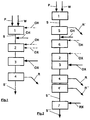
- intensive mechanical processing 2 bleaching 3 and removal 4 of the majority of the ink particles separated from the fibers, that is to say deinking.
- the ink particles accumulate as reject R and are removed from the process.
- intensive mechanical processing 2 specific work of at least 20 kWh / to is transferred, for which purpose a high-consistency kneader or disperser can be used. In many cases, a higher specific work, about 40 kWh / t is an advantage.
- the bleaching aids CH are best admixed prior to intensive mechanical processing 2, because this enables very good mixing.
- Adding them to the material that has already been thickened for mechanical processing is particularly economical. If the thickened substance is heated up anyway, adding it to the hot substance is particularly advantageous. However, it is also conceivable to add the bleaching aids as soon as the pulp P is dissolved in order to allow a longer residence time. As is known, some of the substances that can be used as bleaching chemicals are not very stable chemically, which is why the shortest possible time between addition and the actual bleaching process is sought. On the other hand, mixing the sheet metal chemicals with the material in a mechanical processing machine is particularly effective. Here it is up to the specialist where the addition should take place optimally taking into account all aspects. Peroxide can also be added as a bleaching agent, for example, before the dispersing process.
- a bleaching tower is a device in which the material to be bleached is stacked with a certain dwell time in compliance with the bleaching conditions.
- Both pure oxygen and an oxygen-containing gas, such as air, can be used for sheet metal.
- the pressure and temperature conditions in bleaching 3 depend, among other things, on the concentration in which the gas is present.
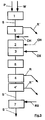
- FIG. 2 The main difference between an embodiment of the method shown in FIG. 2 and FIG. 1 is that after preparation 1 of the suspension S, it is pre-cleaned 5, which is then followed by an additional mechanical pre-treatment 6.
- This pretreatment 6 is carried out with a specific work of at least 10 kWh / to and essentially serves to homogenize the paper stock. It precedes the actual intensive mechanical processing 2, in which at least 20 kWh / to are transmitted.
- Another difference is the two-stage removal 4 and 4 'of the ink particles. This can e.g. two flotation processes connected in series or combinations of flotation and washing.
- FIG. 1 applies in principle.
- a dispersing treatment takes place in a disperser 8.
- a disperser is known to work with very high shear forces and can therefore homogenize the bleached fabric. It is very well prepared for a subsequent removal of the ink particles. It is used here that the treatment of the sheet 3 means that the binders between the color particles and the fiber, which were able to survive the intensive mechanical treatment 2 before bleaching 3, are now destabilized by a chemical attack. The shear forces in the disperser are now suitable for detaching the originally particularly well adhering color particles from the fibers.
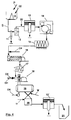
- FIG. 4 A system of the type that can be used to carry out the method according to the invention is shown schematically in FIG. 4.
- Paper P and water W are dissolved and diluted in a high-consistency solvent 10 so that a pumpable suspension S is formed, which is then treated further by means of a hydrocyclone 11 and a stripper 12.
- water W is again added in order to obtain the consistency required for the flotation device 13.
- Detached printing inks and further particulate contaminants are separated in the flotation device 13, that is to say a deinking process step is carried out.
- the cleaned accepted material passes into a thickening device 14, in which a material density of at least 15% is achieved.
- the high-consistency fabric thus produced is then brought to the desired temperature in the heating device 15 with steam injection and is thus fed into a kneader 16, which here carries out a mechanical pretreatment on the paper stock.
- the bleaching aids CH are advantageously mixed in immediately before the kneader 16.
- the kneader shown here is depressurized; therefore, the substance is then fed via a compression device 17 into the dispersing device 18, which is under pressure.
- the combination of pressureless kneader 16 and high-pressure dispersing device 18 is complex, but particularly effective for carrying out the method.
- the mechanical pretreatment in the kneader can be omitted.
- the dispersing device 18 does not necessarily have to be under excess pressure.
- the bleaching chemicals OX are at least partially added to the substance here before it reaches the dispersing device 18. Under certain circumstances, at least some of the bleaching aids CH can also be mixed in at this point.
- the actual bleaching takes place in the bleaching vessel 19. According to the invention, this is under overpressure. At least some of the bleaching chemicals OX can also be introduced into this bleaching vessel 19, which is particularly useful if they are gaseous. After the substance has remained in the bleaching vessel 19 for at least 10 minutes, it can be blown out into a dilution vessel 20 via a lock. A further deinking flotation then takes place in a flotation device 13 ', the material being cleaned once again from the exposed impurities by flotation. Then he arrives in the storage chest 21. As already mentioned, this description of the system is only one way of carrying out the process. Other apparatuses are known to the person skilled in the art in order to carry out the method steps formulated in the claims.
Landscapes
- Engineering & Computer Science (AREA)
- Life Sciences & Earth Sciences (AREA)
- Wood Science & Technology (AREA)
- Mechanical Engineering (AREA)
- Paper (AREA)
Abstract
Description
Die Erfindung bezieht sich auf ein Verfahren zur Erhöhung des Weißgrades von Papierfasern gemäß dem Oberbegriff des Anspruchs 1.The invention relates to a method for increasing the whiteness of paper fibers according to the preamble of
Ein solches Verfahren ist z.B. aus der EP 0 557 651 A1 bekannt. In dieser Publikation findet es bei der Aufbereitung von gemischtem Altpapier Anwendung. Dabei wird das Altpapier unter Verwendung von NaOH und NaOCl aufgelöst und anschließend üblichen, an sich bekannten Reinigungsschritten unterzogen. Nach weiterer Eindickung wird es bei erhöhter Temperatur mit molekularem Sauerstoff und Peroxid behandelt, wobei sauerstoffhaltige Radikale freigesetzt werden. Dadurch werden die an sich bekannten chemischen Umsetzungen veranlaßt, bei denen insbesondere das Lignin von den Fasern gelöst wird. Nach dem Ausblasen aus dem Druckraum wird dann der Stoff ausgewaschen. Das in Lösung gebrachte Lignin wird mit dem Waschwasser entfernt. Mit Hilfe eines solchen Verfahrens kann und soll der Weißgrad des Papierstoffes gesteigert werden, d.h. daß das später daraus erzeugte Papier möglichst weiß sein soll, auch wenn es z.B. aus bedrucktem Altpapier gewonnen wurde.Such a method is e.g. known from EP 0 557 651 A1. In this publication it is used for the processing of mixed waste paper. The waste paper is dissolved using NaOH and NaOCl and then subjected to the usual cleaning steps known per se. After further thickening, it is treated with molecular oxygen and peroxide at elevated temperature, releasing oxygen-containing radicals. This causes the chemical reactions known per se, in which in particular the lignin is detached from the fibers. After blowing out of the pressure chamber, the fabric is then washed out. The lignin in solution is removed with the wash water. With the help of such a process, the whiteness of the paper stock can and should be increased, i.e. that the paper subsequently produced from it should be as white as possible, even if it e.g. was obtained from printed waste paper.
In der SE 94034949 A wurde ein Verfahren zum Blechen von Sekundärfaserstoff bekanntgemacht. Bei diesem wird das Altpapier zuerst einem ein- oder mehrstufigen Deinkingverfahren unterzogen und später die dabei nicht entfernten Druckfarbenpartikel in einem nachgeschalteten Disperger so weit zerkleinert, daß durch sie das später hergestellte Papier nicht verschlechtert wird. Außerdem dient der Disperger dazu, die Angriffsmöglichkeiten der Bleichmittel auf diese restlichen Farbpartikel zu verstärken. Bei diesem Verfahren ist eine befriedigende Weiße nur dann erreichbar, wenn mit Bleichmitteln gearbeitet wird, deren Art oder Konzentration relativ aggressiv ist, was zu hohen Bleichmittelkosten führt und eventuell die Faserqualität vermindert.In SE 94034949 A, a method for sheet metal secondary fiber was published. In this process, the waste paper is first subjected to a one- or multi-stage deinking process and later the ink particles which have not been removed are comminuted in a downstream disperser to such an extent that the paper produced subsequently is not deteriorated by them. In addition, the disperser serves to increase the bleach's potential for attack on these remaining color particles. With this method, a satisfactory whiteness can only be achieved if you work with bleaching agents whose type or concentration is relatively aggressive, which leads to high bleaching agent costs and possibly Fiber quality reduced.
Aus einer anderen Patentschrift, der US 5,211,809, ist ein Altpapierbleichverfahren bekannt, bei dem ebenfalls elementarer Sauerstoff eingesetzt wird. Das Verfahren arbeitet jedoch ausschließlich mit intensiver chemischer Einwirkung auf den Stoff, und zwar einer gezielt herbeigeführten chemischen Reaktion zwischen den enthaltenen Farbstoffen und dem Sauerstoff. In einem rein chemischen Angriff soll also der Weißgrad durch Farbstoffzerstörung gesteigert werden, wobei offenbar hohe Alkalität bevorzugt wird.Another patent, US Pat. No. 5,211,809, discloses a waste paper bleaching process in which elemental oxygen is also used. However, the process works exclusively with an intensive chemical action on the substance, namely a specifically induced chemical reaction between the dyes contained and the oxygen. In a purely chemical attack, the degree of whiteness is to be increased by destroying the dye, obviously high alkalinity being preferred.
Es ist Aufgabe der Erfindung, ein Verfahren zu schaffen, mit dem der Weißgrad beträchtlich gesteigert werden kann. Insbesondere soll die Aufbereitung von bedrucktem, gemischten Altpapier zu weißem und melierungsfreien Papier verbessert werden. Die Ausbeute an Faserstoff soll möglichst hoch und die Abwasserbelastung möglichst niedrig sein.It is an object of the invention to provide a method with which the degree of whiteness can be increased considerably. In particular, the processing of printed, mixed waste paper to white and mottling-free paper is to be improved. The fiber yield should be as high as possible and the wastewater pollution as low as possible.
Diese Aufgabe wird durch die im Kennzeichen genannten Verfahrensschritte gelöst.This task is solved by the method steps mentioned in the label.
Beispiele für oxidierende Bleichchemikalien sind Peroxid, Sauerstoff-Gas und sauerstoffhaltige Luft. Als Bleichhilfsmittel können NaOH, MgSO4, Na2Si O3 dienen. Sowohl Bleichmittel als auch Bleichhilfsmittel werden oft kombiniert eingesetzt, z.B. Peroxid und molekularer Sauerstoff zum Bleichen. Bei Bleichhilfsmittel können stabilisierende Chemikalien wie Na2Si O3 zuerst und später NaOH zugesetzt werden.Examples of oxidizing bleaching chemicals are peroxide, oxygen gas and air containing oxygen. NaOH, MgSO 4 , Na 2 Si O 3 can serve as bleaching aids. Both bleaching agents and bleaching aids are often used in combination, for example peroxide and molecular oxygen for bleaching. In the case of bleaching aids, stabilizing chemicals such as Na 2 Si O 3 can be added first and later NaOH.
Die Kombination der intensiven mechanischen Behandlung des Faserstoffes mit oxidierender Bleiche unter den angegebenen Parametern hat sich als besonders vorteilhaft erwiesen. Offenbar wird durch eine solche mechanische Vorbehandlung (ein- oder zweistufig) der Faserstoff optimal für diesen Einsatz von oxidierenden Reagenzien vorbereitet. Die mechanische Vorbehandlung kann auch die Vermischung des Faserstoffes mit den Bleichhilfsmitteln und gegebenenfalls mit den Bleich-Chemikalien verbessern. Durch Kombination von Dispergierung und O2- bzw. O2 + Peroxid-Bleiche wird erhöhter Weißgrad und verbesserte Sauberkeit erzielt; insbesondere dann, wenn anschließend Flotation oder Wäsche erfolgt. Daher können Chemikalien eingespart und die Bleichprozeßbedingungen faserschonend eingestellt werden, ohne daß eine ungenügende Weiße in Kauf genommen werden müßte. Auch die Wasserbelastung wird geringer, da weniger gelöste Stoffe aus dem Bleichprozeß bzw. den ihm nachgeschalteten Trennstufen anfallen. Dabei bringt der Einsatz von reinem Sauerstoff ausgezeichnete Ergebnisse, aber auch ein Gasgemisch von Inertgas und Sauerstoff - wie z.B. Luft-, insbesondere unter erhöhtem Druck, kann die gestellte Aufgabe lösen und ist ein besonders wirtschaftlicher Kompromiß. Neben den deutlich geringeren Kosten des Gasgemisches ist bei seiner Verwendung auch die Explosionsgefahr geringer als mit reinem Sauerstoff.The combination of the intensive mechanical treatment of the fiber material with oxidizing bleach under the specified parameters has proven to be particularly advantageous. Such a mechanical pretreatment (one or two stages) apparently optimally prepares the fiber material for this use of oxidizing reagents. The mechanical pretreatment can also improve the mixing of the fibrous material with the bleaching aids and optionally with the bleaching chemicals. By combining dispersion and O 2 - or O 2 + peroxide bleaching increased whiteness and improved cleanliness achieved; especially if flotation or washing is carried out afterwards. This means that chemicals can be saved and the bleaching process conditions can be set in a way that is gentle on the fibers, without having to accept insufficient whiteness. The water pollution is also reduced since less dissolved substances from the bleaching process or the separation stages downstream of it are produced. The use of pure oxygen brings excellent results, but also a gas mixture of inert gas and oxygen - such as air pressure, especially under increased pressure - can solve the task and is a particularly economical compromise. In addition to the significantly lower costs of the gas mixture, the risk of explosion when using it is lower than with pure oxygen.
Besonders wirksam bei der Lösung der gestellten Aufgabe ist eine Kombination zweier mechanischer Behandlungsstufen in Verbindung mit der beschriebenen Bleichbehandlung. Durch eine solche Kombination ergibt sich z.B. die Möglichkeit, bei der ersten mechanischen Bearbeitung zunächst die Bleichhilfsmittel zuzumischen, und zwar gerade intensiv genug, um sie gut zu verteilen, ohne daß in diesem Stadium des Verfahrens bereits durch Delignifizierung die Vergilbung von holzschliffhaltigen Bestandteilen des Altpapiers zu befürchten wäre. Nachdem diese Vermischung optimal stattgefunden hat, bietet z.B. die darauffolgende intensive mechanische Bearbeitung die Möglichkeit, gasförmigen Sauerstoff oder ein sauerstoffhaltiges Gas zuzumischen, wobei sich dann sofort und damit optimal die Bleichwirkung entfalten kann.A combination of two mechanical treatment stages in connection with the bleaching treatment described is particularly effective in solving the problem. Such a combination gives e.g. the possibility of mixing in the bleaching aids during the first mechanical processing, just enough to distribute them well without the risk of yellowing of pulp-containing components of the waste paper at this stage of the process due to delignification. After this mixing has taken place optimally, e.g. the subsequent intensive mechanical processing offers the possibility of mixing in gaseous oxygen or an oxygen-containing gas, in which case the bleaching effect can then develop immediately and optimally.
Die Erfindung und ihre Vorteile werden erläutert anhand von Zeichnungen. Dabei zeigen:
- Fig. 1
- grundsätzliches Verfahrensschema der Erfindung;
- Fig. 2 und 3
- besondere Ausgestaltungen des erfindungsgemäßen Verfahrens als Verfahrensschemata;
- Fig. 4
- ein Anlagenschema.
- Fig. 1
- basic process scheme of the invention;
- 2 and 3
- special configurations of the method according to the invention as process diagrams;
- Fig. 4
- an investment scheme.
Fig. 1 zeigt zunächst die vier Grundschritte des erfindungsgemäßen Verfahrens, nämlich die Herstellung 1 einer den Papierstoff P und Wasser W enthaltenden Suspension S, die intensive mechanische Bearbeitung 2, das Bleichen 3 sowie die Entfernung 4 des überwiegenden Anteils der von den Fasern abgetrennten Druckfarbenpartikel, also das sogenannte Deinking. Dabei fallen die Druckfarbenpartikel als Rejekt R an und werden aus dem Prozeß entfernt. Bei der intensiven mechanischen Bearbeitung 2 wird eine spezifische Arbeit von mindestens 20 kWh/to übertragen, wozu z.B. ein Hochkonsistenzkneter oder Disperger verwendbar ist. In vielen Fällen ist auch eine höhere spezifische Arbeit, etwa 40 kWh/to von Vorteil. Die Zumischung der Bleichhilfsmittel CH erfolgt am besten vor der intensiven mechanischen Bearbeitung 2, weil so eine sehr gute Einmischung möglich ist. Besonders wirtschaftlich ist ihre Zugabe zum bereits für die mechanische Bearbeitung eingedickten Stoff. Wenn der eingedickte Stoff ohnehin aufgeheizt wird, ist die Zugabe in den heißen Stoff von besonderem Vorteil. Es ist aber ebenso denkbar, die Bleichhilfsmittel bereits bei der Auflösung des Papierstoffs P zuzugeben, um eine längere Verweilzeit zu ermöglichen. Bekanntlich sind einige der als Bleich-Chemikalien verwendbaren Stoffe chemisch nicht sehr stabil, weshalb eine möglichst kurze Zeit zwischen Zugabe und dem eigentlichen Bleichvorgang angestrebt wird. Andererseits ist eine Vermischung der Blech-Chemikalien mit dem Stoff in einer mechanischen Bearbeitungsmaschine besonders wirksam. Hier ist es dem Fachmann überlassen, wo unter Berücksichtigung aller Gesichtspunkte die Zugabe optimal erfolgen soll. Peroxid kann als Bleichmittel z.B. auch vor dem Dispergierprozeß zugegeben werden. Wird dagegen molekularer Sauerstoff verwendet, empfiehlt sich seine Zugabe direkt in die Bleichapparatur, z.B. einen Bleichturm. Ein solcher Bleichturm ist eine Vorrichtung, in der der zu bleichende Stoff mit einer bestimmten Verweilzeit unter Einhaltung der Bleichbedingungen gestapelt wird. Zum Blechen kann sowohl reiner Sauerstoff verwendet werden als auch ein sauerstoffhaltiges Gas, wie z.B. Luft. Die Druck- und Temperaturbedingungen bei der Bleiche 3 richten sich u.a. danach, in welcher Konzentration das Gas vorhanden ist.1 shows the four basic steps of the method according to the invention, namely the
Nachdem der Papierstoff bzw. die aus ihm gebildete Suspension diese vier Verfahrensschritte durchlaufen hat, wird sie als gebleichte und gereinigte Suspension S' der weiteren Verarbeitung zugeführt.After the paper stock or the suspension formed from it has gone through these four process steps, it is fed to the further processing as a bleached and cleaned suspension S '.
Der wesentliche Unterschied einer in Fig. 2 gezeigten Ausführungsform des Verfahrens gegenüber Fig. 1 liegt darin, daß nach der Herstellung 1 der Suspension S ihre Vorreinigung 5 erfolgt, der sich dann eine zusätzliche mechanische Vorbehandlung 6 anschließt. Diese Vorbehandlung 6 erfolgt mit einer spezifischen Arbeit von mindestens 10 kWh/to und dient im wesentlichen der Homogenisierung des Papierstoffes. Sie geht der eigentlichen intensiven mechanischen Bearbeitung 2 voraus, bei der mindestens 20 kWh/to übertragen werden. Als weiterer Unterschied ist die zweistufige Entfernung 4 und 4' der Druckfarbenpartikel anzusehen. Das können z.B. zwei hintereinander geschaltete Flotationsverfahren sein oder Kombinationen aus Flotation und Wäsche. Bezüglich der Zugabe der Chemikalien gilt im Prinzip das bereits zu Fig. 1 Gesagte. Ferner ist angedeutet, daß aus den Trennstufen 5,4,4' jeweils die Rejekte R, R', R'' abgeführt werden. Die so behandelte Suspension S 2'' kann in einer weiteren, vorzugsweise reduzierenden Bleichbehandlung 7 noch weiter verbessert werden, wozu reduzierende Blech-Chemikalien RX erforderlich sind. Am Ende dieser Stufe liegt in der Suspension S''' ein hochwertiger Papierstoff vor. Selbstverständlich richtet sich der Aufwand für das Verfahren nach den Anforderungen an den Fertigstoff und nach der Qualität des eingetragenen Altpapiers.The main difference between an embodiment of the method shown in FIG. 2 and FIG. 1 is that after
In der Variante gemäß Fig. 3 findet nach der Bleiche 3 eine Dispergierbehandlung in einem Disperger 8 statt. Ein solcher Disperger arbeitet bekanntlich mit sehr hohen Scherkräften und kann dadurch den gebleichten Stoff homogenisieren. Für eine nachfolgende Entfernung der Druckfarbenpartikel wird er dadurch sehr gut vorbereitet. Dabei wird genutzt, daß durch die Behandlung beim Blechen 3 die Bindemittel zwischen Farbpartikel und Faser, welche die intensive mechanische Behandlung 2 vor der Bleiche 3 noch überstehen konnten, nunmehr durch einen chemischen Angriff destabilisiert sind. Die Scherkräfte im Disperger sind geeignet, nunmehr auch die ursprünglich besonders gut anhaftenden Farbpartikel von den Fasern zu lösen.In the variant according to FIG. 3, after bleaching 3, a dispersing treatment takes place in a
Eine Anlage, wie sie zur Durchführung des erfindungsgemäßen Verfahrens verwendet werden kann, zeigt schematisch die Fig. 4. Papierstoff P und Wasser W werden in einem Hochkonsistenzstofflöser 10 aufgelöst und verdünnt, so daß eine pumpfähige Suspension S entsteht, die anschließend über einen Hydrozyklon 11 und einen Entstipper 12 weiter behandelt wird. Danach wird wiederum Wasser W zugegeben, um die für die Flotationsvorrichtung 13 erforderliche Konsistenz zu erhalten. In der Flotationsvorrichtung 13 werden abgelöste Druckfarben und weitere partikelförmige Verunreinigungen abgeschieden, also ein Deinking-Verfahrensschritt durchgeführt. Der gesäuberte Gutstoff gelangt in eine Eindickvorrichtung 14, in der eine Stoffdichte von mindestens 15 % erreicht wird. Der so erzeugte Hochkonsistenzstoff wird dann in der Heizvorrichtung 15 mit Dampfeinblasung auf die gewünschte Temperatur gebracht und so in einen Kneter 16 eingegeben, der hier eine mechanische Vorbehandlung an dem Papierstoff vornimmt. Die Bleichhilfsmittel CH werden mit Vorteil unmittelbar vor dem Kneter 16 zugemischt. Die hier gezeigte Ausführung des Kneters ist drucklos; daher wird der Stoff anschließend über eine Komprimiervorrichtung 17 in die unter Überdruck stehende Dispergiervorrichtung 18 geführt.
Die Kombination druckloser Kneter 16 und Hochdruck-Dispergiervorrichtung 18 ist zwar aufwendig, aber zur Durchführung des Verfahrens besonders wirksam. In anderen Anlagen kann die mechanische Vorbehandlung im Kneter entfallen. Auch muß die Dispergiervorrichtung 18 nicht unbedingt unter Überdruck stehen. Die Bleich-Chemikalien OX werden hier zumindest teilweise dem Stoff zugegeben, bevor er in die Dispergiervorrichtung 18 gelangt. Unter Umständen kann an dieser Stelle auch zumindest ein Teil der Bleich-Hilfsmittel CH zugemischt werden. Die eigentliche Bleiche findet in dem Bleichgefäß 19 statt. Dieses steht erfindungsgemäß unter Überdruck. Auch in dieses Bleichgefäß 19 kann zumindest ein Teil der Bleich-Chemikalien OX eingegeben werden, was sich besonders anbietet, wenn diese gasförmig sind. Nachdem der Stoff mindestens 10 Minuten im Bleichgefäß 19 verblieben ist, kann er über eine Schleuse in ein Verdünnungsgefäß 20 ausgeblasen werden. Anschließend findet eine weitere Deinking-Flotation in einer Flotationsvorrichtung 13' statt, wobei der Stoff noch einmal von den freigelegten Verunreinigungen durch Flotation gereinigt wird. Danach gelangt er in die Vorratsbütte 21. Wie bereits erwähnt, handelt es sich bei dieser Anlagenbeschreibung lediglich um eine Möglichkeit, das Verfahren auszuführen. Dem Fachmann sind auch andere Apparate bekannt, um die in den Ansprüchen formulierten Verfahrensschritte auszuführen.A system of the type that can be used to carry out the method according to the invention is shown schematically in FIG. 4. Paper P and water W are dissolved and diluted in a high-
The combination of
Claims (31)
gekennzeichnet durch
marked by
dadurch gekennzeichnet,
daß zu den Bleichbedingungen ein Feststoffgehalt von 15 - 40 % gehört.Method according to claim 1,
characterized,
that the bleaching conditions include a solids content of 15-40%.
dadurch gekennzeichnet,
daß bei der intensiven mechanischen Bearbeitung (2) eine spezifische Arbeit von mindestens 40 kWh/to übertragen wird.The method of claim 1 or 2,
characterized,
that during the intensive mechanical processing (2) a specific work of at least 40 kWh / to is transferred.
dadurch gekennzeichnet,
daß zu den Bleichbedingungen ein Sauerstoffpartialdruck von mindestens 20 % des Gesamtdruckes gehört.The method of claim 1, 2 or 3,
characterized,
that the bleaching conditions include an oxygen partial pressure of at least 20% of the total pressure.
dadurch gekennzeichnet,
daß zu den Bleichbedingungen ein Gesamtdruck von mindestens 2,5 bar gehört.Method according to claim 4,
characterized,
that the bleaching conditions include a total pressure of at least 2.5 bar.
dadurch gekennzeichnet,
daß zu den Bleichbedingungen ein Sauerstoffpartialdruck von mindestens 90% des Gesamtdruckes gehört.Method according to claim 1, 2, 3, 4 or 5,
characterized,
that the bleaching conditions include an oxygen partial pressure of at least 90% of the total pressure.
dadurch gekennzeichnet,
daß zu den Bleichbedingungen eine Temperatur von 40 bis 140 Grad C gehört.Method according to claim 1,
characterized,
that a temperature of 40 to 140 degrees C belongs to the bleaching conditions.
dadurch gekennzeichnet,
daß zu den Dispergierbedingungen ein Gesamtdruck von über einem bar gehört.Method according to claim 1,
characterized,
that the dispersion conditions include a total pressure of over one bar.
dadurch gekennzeichnet,
daß zu den Dispergierbedingungen eine Stofftemperatur von über 100 Grad gehört.A method according to claim 8,
characterized,
that the dispersing conditions include a material temperature of over 100 degrees.
dadurch gekennzeichnet,
daß zu den Dispergierbedingungen ein Gesamtdruck von mindestens 2,5 bar gehört.Method according to claim 8 or 9,
characterized,
that the dispersing conditions include a total pressure of at least 2.5 bar.
dadurch gekennzeichnet,
daß zu den Dispergierbedingungen eine Stofftemperatur von mindestens 120 Grad C gehört.A method according to claim 10,
characterized,
that the dispersing conditions include a material temperature of at least 120 degrees C.
dadurch gekennzeichnet,
daß die Dispergierbedingungen im wesentlichen den Bleichbedingungen entsprechen.Method according to one of the preceding claims,
characterized,
that the dispersion conditions correspond essentially to the bleaching conditions.
dadurch gekennzeichnet,
daß sowohl die intensive mechanische Bearbeitung (2) des Papierstoffes als auch das Blechen (3) innerhalb desselben Maschinen-Gehäuses erfolgen.Method according to claim 12,
characterized,
that both the intensive mechanical processing (2) of the paper stock and the sheet metal (3) take place within the same machine housing.
dadurch gekennzeichnet,
daß zur Einstellung und Erhaltung der Bleichbedingungen Luft zugegeben wird, die mindestens 20 % molekularen Sauerstoff enthält.Method according to claim 1,
characterized,
that air that contains at least 20% molecular oxygen is added to adjust and maintain the bleaching conditions.
dadurch gekennzeichnet,
daß zur Einstellung und Erhaltung der Bleichbedingungen ein Gas zugegeben wird, das mindestens 90 % molekularen Sauerstoff enthält.Method according to claim 1,
characterized,
that a gas which contains at least 90% molecular oxygen is added to adjust and maintain the bleaching conditions.
dadurch gekennzeichnet,
daß ein erster Teil der Bleichchemikalien (OX) zwischen den Schritten Herstellung (1) der Suspension (S) und intensive mechanische Bearbeitung (2) des Papierstoffes zugegeben wird und ein zweiter Teil der Blech-Chemikalien während der Bleiche (3).Method according to one of the preceding claims,
characterized,
that a first part of the bleaching chemicals (OX) is added between the steps of manufacturing (1) the suspension (S) and intensive mechanical processing (2) of the paper stock and a second part of the sheet metal chemicals during the bleaching (3).
dadurch gekennzeichnet,
daß der erste Teil der Blech-Chemikalien Peroxid enthält.A method according to claim 16,
characterized,
that the first part of the sheet metal chemicals contains peroxide.
dadurch gekennzeichnet,
daß der zweite Teil der Bleich-Chemikalien gasförmigen Sauerstoff enthält.Method according to claim 16 or 17,
characterized,
that the second part of the bleaching chemicals contains gaseous oxygen.
dadurch gekennzeichnet,
daß die Bleichhilfsmittel (CH) in den bereits auf mindestens 10 % Stoffdichte eingedickten Faserstoff zugegeben werden.Method according to claim 1,
characterized,
that the bleaching aids (CH) are added to the pulp which has already been thickened to at least 10% consistency.
dadurch gekennzeichnet,
daß die intensive mechanische Bearbeitung (2) des Papierstoffes in einem Disperger erfolgt und daß Bleichilfsmittel (CH) unmittelbar vor Eintritt des Papierstoffes (P) in die Garnitur zugegeben werden oder innerhalb der Garnitur, so daß der Disperger (8) als Chemikalienmischer wirkt.Method according to claim 19,
characterized,
that the intensive mechanical processing (2) of the paper stock is carried out in a disperser and that bleaching agents (CH) are added to the set immediately before the paper stock (P) enters or within the set so that the disperser (8) acts as a chemical mixer.
dadurch gekennzeichnet,
daß unmittelbar nach der Herstellung (1) einer den Papierstoff (P) und Wasser (W) enthaltenden Suspension (S) eine Vorreinigung (5) der Suspension mit Mitteln erfolgt, die auf unterschiedlicher Größe, unterschiedlicher Dichte oder unterschiedlicher Benetzbarkeit der Bestandteile basieren.Method according to claim 1,
characterized,
that immediately after the preparation (1) of a suspension (S) containing the paper stock (P) and water (W), the suspension is pre-cleaned (5) using agents which are based on different sizes, different densities or different wettability of the constituents.
dadurch gekennzeichnet,
daß bei der Vorreinigung (5) der Suspension (S) ein Teil der Farbpartikel entfernt wird.22. The method of claim 21,
characterized,
that part of the color particles is removed during the preliminary cleaning (5) of the suspension (S).
dadurch gekennzeichnet,
daß eine mechanische Vorbehandlung (6) des Papierstoffes (P) erfolgt, die im Verfahrensablauf vor der intensiven mechanischen Bearbeitung (2) liegt und bei der eine spezifische Arbeit von wenigstens 10 kWh/to übertragen wird.Method according to one of the preceding claims,
characterized,
that a mechanical pretreatment (6) of the paper stock (P) takes place, which lies in the process before the intensive mechanical processing (2) and in which a specific work of at least 10 kWh / to is transferred.
dadurch gekennzeichnet,
daß bei oder unmittelbar vor der mechanischen Vorbehandlung (6) Bleichhilfsmittel (CH) zugemischt werden.The method of claim 23
characterized,
that bleaching agents (CH) are added during or immediately before the mechanical pretreatment (6).
dadurch gekennzeichnet,
daß mechanische Vorbehandlung (6) des Papierstoffes bei etwa Umgebungsdruck erfolgt und die intensive mechanische Bearbeitung (2) bei einem Druck von mindestens 2,5 bar.The method of claim 21 or 22,
characterized,
that mechanical pretreatment (6) of the paper stock takes place at approximately ambient pressure and the intensive mechanical processing (2) at a pressure of at least 2.5 bar.
dadurch gekennzeichnet,
daß eine mechanische Nachbehandlung (8) des Papierstoffes (P) erfolgt, die im Verfahrensablauf nach der intensiven mechanischen Bearbeitung (2) liegt und bei der eine spezifische Arbeit von wenigstens 20 kWh/to übertragen wird.Method according to claim 1,
characterized,
that a mechanical post-treatment (8) of the paper stock (P) takes place, which lies in the process sequence after the intensive mechanical processing (2) and in which a specific work of at least 20 kWh / to is transferred.
dadurch gekennzeichnet,
daß die intensive mechanische Bearbeitung (2) bei einem Druck von mindestens 2,5 bar und die mechanische Nachbehandlung (8) des Papierstoffes bei etwa Umgebungsdruck erfolgt.The method of claim 26
characterized,
that the intensive mechanical processing (2) takes place at a pressure of at least 2.5 bar and the mechanical aftertreatment (8) of the paper stock takes place at approximately ambient pressure.
dadurch gekennzeichnet,
daß die Druckfarbenpartikel nach dem Bleichen (3) durch Deinking-Flotation (4'), bei einer Stoffdichte unter 2,5% entfernt werden.Method according to one of the preceding claims,
characterized,
that the ink particles are removed after bleaching (3) by deinking flotation (4 ') at a consistency of less than 2.5%.
dadurch gekennzeichnet,
daß die Druckfarbenpartikel nach dem Blechen (3) zusammen mit einem Teil des Wassers in einer Deinking-Wäsche (4'') aus der Suspension entfernt werden.Method according to one of the preceding claims,
characterized,
that the printing ink particles are removed from the suspension together with part of the water in a deinking wash (4 '') after the sheet (3).
dadurch gekennzeichnet,
daß der Papierstoff nach Entfernung (4) des überwiegenden Anteils der von den Fasern abgetrennten Druckfarbenpartikel mindestens einer weiteren Bleichbehandlung (7, 7') unterzogen wird.Method according to one of the preceding claims,
characterized,
that the paper stock after removal (4) of the majority of the ink particles separated from the fibers is subjected to at least one further bleaching treatment (7, 7 ').
dadurch gekennzeichnet,
daß mindestens eine weitere Bleichbehandlung (7, 7') mit reduktiv wirkenden Chemikalien (RX) durchgeführt wird.A method according to claim 30,
characterized,
that at least one further bleaching treatment (7, 7 ') with reductive chemicals (RX) is carried out.
Applications Claiming Priority (2)
| Application Number | Priority Date | Filing Date | Title |
|---|---|---|---|
| DE19614947 | 1996-04-16 | ||
| DE1996114947 DE19614947B4 (en) | 1996-04-16 | 1996-04-16 | Process for increasing the whiteness of paper pulp |
Publications (1)
| Publication Number | Publication Date |
|---|---|
| EP0802275A1 true EP0802275A1 (en) | 1997-10-22 |
Family
ID=7791398
Family Applications (1)
| Application Number | Title | Priority Date | Filing Date |
|---|---|---|---|
| EP19970101747 Withdrawn EP0802275A1 (en) | 1996-04-16 | 1997-02-05 | Process to improve the whiteness of paper pulp |
Country Status (4)
| Country | Link |
|---|---|
| US (1) | US5958179A (en) |
| EP (1) | EP0802275A1 (en) |
| CA (1) | CA2202714C (en) |
| DE (1) | DE19614947B4 (en) |
Cited By (2)
| Publication number | Priority date | Publication date | Assignee | Title |
|---|---|---|---|---|
| US6290811B1 (en) * | 1998-06-27 | 2001-09-18 | Korea Research Institute Of Chemical Technology | Method for recycling of old corrugated container using flotation and kneading treatment |
| EP1254986A1 (en) * | 2001-05-02 | 2002-11-06 | Voith Paper Patent GmbH | Process for making pulp from papercontaining material |
Families Citing this family (16)
| Publication number | Priority date | Publication date | Assignee | Title |
|---|---|---|---|---|
| DE19751173A1 (en) * | 1997-11-19 | 1999-05-27 | Voith Sulzer Papiertech Patent | Pulp bleaching method especially for recycling used paper materials |
| DE19954246A1 (en) * | 1999-10-29 | 2001-07-26 | Voith Paper Patent Gmbh | Process for increasing the homogeneity and whiteness of paper pulp |
| EP1096062B1 (en) * | 1999-10-29 | 2004-02-11 | Voith Paper Patent GmbH | Process to improve the homogenity and bleaching degree of paper pulp |
| DE19958038A1 (en) * | 1999-12-03 | 2001-06-07 | Voith Paper Patent Gmbh | Process for increasing the water retention of paper pulp |
| DE10000181A1 (en) * | 2000-01-05 | 2001-07-12 | Voith Paper Patent Gmbh | Process for dissolving waste paper |
| US6458240B1 (en) | 2000-01-14 | 2002-10-01 | Georgia-Pacific Corporation | Method for removing contaminants from fibers in recycle fiber pulping |
| DE10135699A1 (en) * | 2001-07-21 | 2003-02-13 | Voith Paper Patent Gmbh | Process for processing dry waste |
| FI112805B (en) * | 2001-10-10 | 2004-01-15 | Megatrex Oy | Process for removing dyes, especially inks from recycled fiber materials |
| JP2003119679A (en) * | 2001-10-17 | 2003-04-23 | Aikawa Iron Works Co Ltd | Apparatus for heating pulp |
| AT411604B (en) * | 2002-03-27 | 2004-03-25 | Andritz Ag Maschf | METHOD AND DEVICE FOR DISPERSING A PAPER FIBER FIBER |
| DE10219844C1 (en) * | 2002-05-03 | 2003-09-18 | Voith Paper Patent Gmbh | Hot dispersion of a paper fiber suspension, from used recycled paper, has a press to give a high-consistency suspension for heating, with measurements of heating energy consumption to control the press action |
| US7297225B2 (en) * | 2004-06-22 | 2007-11-20 | Georgia-Pacific Consumer Products Lp | Process for high temperature peroxide bleaching of pulp with cool discharge |
| US10895038B2 (en) | 2017-05-31 | 2021-01-19 | Gpcp Ip Holdings Llc | High consistency re-pulping method, apparatus and absorbent products incorporating recycled fiber |
| US11591751B2 (en) | 2019-09-17 | 2023-02-28 | Gpcp Ip Holdings Llc | High efficiency fiber bleaching process |
| US12286751B2 (en) | 2021-01-06 | 2025-04-29 | Gpcp Ip Holdings Llc | Oxygen treatment of high kappa fibers |
| US12435469B2 (en) | 2022-02-22 | 2025-10-07 | Gpcp Ip Holdings Llc | High yield chemical pulping and bleaching process |
Citations (7)
| Publication number | Priority date | Publication date | Assignee | Title |
|---|---|---|---|---|
| WO1987005346A1 (en) * | 1986-03-04 | 1987-09-11 | Sulzer-Escher Wyss Gmbh | High temperature, high consistency bleaching |
| DE4133683A1 (en) * | 1991-09-20 | 1993-03-25 | Voith Gmbh J M | METHOD FOR PROCESSING PRINTED WASTE PAPER |
| US5211809A (en) | 1991-05-21 | 1993-05-18 | Air Products And Chemicals, Inc,. | Dye removal in oxygen color stripping of secondary fibers |
| EP0557651A1 (en) | 1992-02-24 | 1993-09-01 | Scott Paper Company | Integrated pulping process of waste paper yielding tissue-grade paper fibers |
| EP0590626A1 (en) * | 1992-10-02 | 1994-04-06 | J.M. Voith GmbH | Process for treating printed waste paper |
| WO1995028517A1 (en) * | 1994-04-18 | 1995-10-26 | Kamyr, Inc. | Method and apparatus for controlling bleaching chemical usage |
| WO1996012062A1 (en) * | 1994-10-13 | 1996-04-25 | Aga Aktiebolag | A method and apparatus for bleaching secondary fibres |
Family Cites Families (1)
| Publication number | Priority date | Publication date | Assignee | Title |
|---|---|---|---|---|
| US5518580A (en) * | 1991-09-20 | 1996-05-21 | J.M. Voith Gmbh | Method of processing printed waste matter |
-
1996
- 1996-04-16 DE DE1996114947 patent/DE19614947B4/en not_active Expired - Fee Related
-
1997
- 1997-02-05 EP EP19970101747 patent/EP0802275A1/en not_active Withdrawn
- 1997-04-11 US US08/834,482 patent/US5958179A/en not_active Expired - Fee Related
- 1997-04-15 CA CA 2202714 patent/CA2202714C/en not_active Expired - Fee Related
Patent Citations (7)
| Publication number | Priority date | Publication date | Assignee | Title |
|---|---|---|---|---|
| WO1987005346A1 (en) * | 1986-03-04 | 1987-09-11 | Sulzer-Escher Wyss Gmbh | High temperature, high consistency bleaching |
| US5211809A (en) | 1991-05-21 | 1993-05-18 | Air Products And Chemicals, Inc,. | Dye removal in oxygen color stripping of secondary fibers |
| DE4133683A1 (en) * | 1991-09-20 | 1993-03-25 | Voith Gmbh J M | METHOD FOR PROCESSING PRINTED WASTE PAPER |
| EP0557651A1 (en) | 1992-02-24 | 1993-09-01 | Scott Paper Company | Integrated pulping process of waste paper yielding tissue-grade paper fibers |
| EP0590626A1 (en) * | 1992-10-02 | 1994-04-06 | J.M. Voith GmbH | Process for treating printed waste paper |
| WO1995028517A1 (en) * | 1994-04-18 | 1995-10-26 | Kamyr, Inc. | Method and apparatus for controlling bleaching chemical usage |
| WO1996012062A1 (en) * | 1994-10-13 | 1996-04-25 | Aga Aktiebolag | A method and apparatus for bleaching secondary fibres |
Cited By (2)
| Publication number | Priority date | Publication date | Assignee | Title |
|---|---|---|---|---|
| US6290811B1 (en) * | 1998-06-27 | 2001-09-18 | Korea Research Institute Of Chemical Technology | Method for recycling of old corrugated container using flotation and kneading treatment |
| EP1254986A1 (en) * | 2001-05-02 | 2002-11-06 | Voith Paper Patent GmbH | Process for making pulp from papercontaining material |
Also Published As
| Publication number | Publication date |
|---|---|
| DE19614947A1 (en) | 1997-10-23 |
| DE19614947B4 (en) | 2004-04-08 |
| CA2202714C (en) | 2002-06-25 |
| US5958179A (en) | 1999-09-28 |
| CA2202714A1 (en) | 1997-10-16 |
Similar Documents
| Publication | Publication Date | Title |
|---|---|---|
| DE19614947B4 (en) | Process for increasing the whiteness of paper pulp | |
| DE69204739T2 (en) | Removal of color during the oxygen decoloration of waste paper fibers. | |
| DE69028797T2 (en) | Process for bleaching pulp with ozone | |
| DE69019350T2 (en) | MORE ENVIRONMENTALLY FRIENDLY METHOD FOR BLEACHING LIGNOCELLULOSIC MATERIALS. | |
| EP0538603B1 (en) | Process for the removal of fine contaminants from waste paper pulp | |
| DE3017712C2 (en) | Process for the alkaline extraction of cellulose suspensions containing fiber material after treatment with chlorine or chlorine dioxide or mixtures thereof | |
| DE69104566T2 (en) | Process for de-inking printed papers. | |
| AT395028B (en) | METHOD FOR CHLORINE-FREE BLEACHING OF FIBER FIBER | |
| DE2141757A1 (en) | Process for bleaching cellulose pulp | |
| EP0066894B1 (en) | Process for deinking printed waste paper | |
| DE69402650T2 (en) | BLEACHING REUSED PULP BY AN OXYDATIVE REDUCTIVE SEQUENCE | |
| DE68924793T2 (en) | Process for bleaching mechanical wood pulp. | |
| DE69217164T2 (en) | Cleaning and bleaching of secondary fibers | |
| DE69325098T2 (en) | METHOD FOR TREATING WASTE PAPER AND RECOVERED PAPER | |
| DE69506465T2 (en) | Process for reducing fluorescence in decolorized pulp | |
| DE2805445C2 (en) | Process for recycling high quality waste paper | |
| EP1798329B1 (en) | Method for removing impurities from an aqueous fibre suspension | |
| EP0434662A1 (en) | Process for bleaching cellulosic materials and plant for carrying out the process | |
| DE2407542A1 (en) | PROCESS FOR BLEACHING PULP | |
| DE3148749C2 (en) | Papers, preferably for sheet-fed printing, made from recycled waste paper, and processes for their production | |
| DE69204457T2 (en) | METHOD FOR BLEACHING AND DELIGNIFYING CHEMICAL PAPER FIBERS. | |
| EP0247307B1 (en) | Process for decolourizing papers, coloured in the mass, and carbonless copying papers | |
| DE19626200C2 (en) | Process for increasing the whiteness of waste paper pulp | |
| DE102006020981A1 (en) | Process for the removal of impurities from an aqueous pulp suspension | |
| EP0379858A2 (en) | Process for bleaching fibre stock for making paper |
Legal Events
| Date | Code | Title | Description |
|---|---|---|---|
| PUAI | Public reference made under article 153(3) epc to a published international application that has entered the european phase |
Free format text: ORIGINAL CODE: 0009012 |
|
| AK | Designated contracting states |
Kind code of ref document: A1 Designated state(s): AT CH DE FI FR GB LI NL SE |
|
| 17P | Request for examination filed |
Effective date: 19980422 |
|
| 17Q | First examination report despatched |
Effective date: 20020416 |
|
| RAP1 | Party data changed (applicant data changed or rights of an application transferred) |
Owner name: VOITH PAPER FIBER SYSTEMS GMBH & CO. KG |
|
| STAA | Information on the status of an ep patent application or granted ep patent |
Free format text: STATUS: THE APPLICATION HAS BEEN WITHDRAWN |
|
| 18W | Application withdrawn |
Effective date: 20041028 |