EP0799451B1 - Verfahren zur umwandlung einer hash-bucket-zahl in ein steuerungsintervall für die erkennung der physischen lage von massenspeicherinformationen - Google Patents
Verfahren zur umwandlung einer hash-bucket-zahl in ein steuerungsintervall für die erkennung der physischen lage von massenspeicherinformationen Download PDFInfo
- Publication number
- EP0799451B1 EP0799451B1 EP95937464A EP95937464A EP0799451B1 EP 0799451 B1 EP0799451 B1 EP 0799451B1 EP 95937464 A EP95937464 A EP 95937464A EP 95937464 A EP95937464 A EP 95937464A EP 0799451 B1 EP0799451 B1 EP 0799451B1
- Authority
- EP
- European Patent Office
- Prior art keywords
- interval
- value
- bucket
- employing
- mass memory
- Prior art date
- Legal status (The legal status is an assumption and is not a legal conclusion. Google has not performed a legal analysis and makes no representation as to the accuracy of the status listed.)
- Expired - Lifetime
Links
Images


Classifications
-
- G—PHYSICS
- G06—COMPUTING OR CALCULATING; COUNTING
- G06F—ELECTRIC DIGITAL DATA PROCESSING
- G06F12/00—Accessing, addressing or allocating within memory systems or architectures
- G06F12/02—Addressing or allocation; Relocation
Definitions
- This invention relates to the art of data storage and retrieval and, more particularly, to the transformation of a hash bucket number to a physical address on a storage medium during such storage and retrieval.
- the fundamental concept of a hash is to provide a repeatable mathematical algorithm that will accept a key input value which is processed by a special algorithm into a numeric output value in a known range of numbers.
- the numeric output value is known as a hash bucket number and, in the data processing art, is used as an identifier to describe the memory physical location(s) in which data records are to be stored or retrieved from.
- hash bucket numbers are logically contiguous numbers which can range from 1 to n.
- Control interval (hereinafter "CI") numbers are physically contiguous disk segments also numbered from 1 to n. Irregularities in the mapping may exist as follows:
- a disk organization scheme may place special CIs at regular intervals to efficiently manage disk space usage. Therefore, when mapping a hash bucket to a CI, these discontinuities must be dealt with by a hashing algoritlun. Further, those skilled in the art will appreciate that a hashing algorithm must by absolutely accurate and also highly efficient and fast in order that the transformation process can proceed very quickly and not significantly lower systems performance.
- EP 0 072 413 discloses a storage subsystem with hashed cache addressing, wherein the hashing protocol effectively accommodates discontinuities in the storage medium and preserves sequentiality between discontinuities.
- EP 0 594 196 (corresponding to US 5 414 704 ) discloses address lookup in packet data communications link, using hashing and content-addressable memory.
- the method uses a combination of programmable hashing algorithms, binary search algorithms and a small content-addressable memory.
- US 5 202 985 discloses an apparatus and a method for displaying data communication network configuration after searching the network; this method uses linked lists of hash buckets.
- This invention provides such address translation capability which employs a unique hashing process.
- This invention provides such address translation capability by employing a unique hashing process that requires only the use of integer arithmetic.
- This invention provides such address translation capability that is highly efficient and absolutely accurate.
- a computer system including a user interface, a processor and a mass memory which stores information in physically contiguous memory location segments which are interrupted by discontinuities at a regular interval, uses a hashing process for identifying the physical locations in the mass memory to be accessed by the user interface. For each set of information to be stored in the mass memory, a set of characteristics are established which include at least the regular interval at which discontinuities appear and any offset from the first physical location in the relevant subdivision of the mass memory at which the first record of the information set is to be stored.
- a virtual identification specified from the user interface is either converted to, or already is, a hash bucket# which can be transformed by the processor to a physical address in the mass memory using the special hashing algorithms disclosed. These algorithms can operate in integer binary arithmetic and are thus very fast and accurate.
- a first algorithm which can handle any interval, includes the steps:
- the communications path between the user interface and the physical location can be established.
- a PER-IND value may be assigned and relevant preprocessing performed at the beginning of the algorithm used.
- FIG. 1 illustrates an exemplary environment in which the invention may be practiced.
- a work station 1 is coupled by communications channel 2 (which may, for example, be a local area network) to a server 3.
- the server 3 may be a mainframe computer, a minicomputer or even a powerful workstation.
- the server 3 is also coupled to a mass memory 4 (which may, for example, be a large disk unit) by communications channel 5.
- a user at the workstation 1 may wish to access a large database stored in the memory 4.
- the database interface appearing on the workstation screen and the workstation keyboard and/or a pointing device such as a mouse the user can virtually specify the information it is desired to access, and this virtual address and an access request will be transmitted to the server 3.
- hashing techniques are used in the exemplary system and that access to an information record already stored in the mass memory 4 is sought.
- the virtual specification of the location of the desired information will be converted, if necessary, to one of a series of sequentially contiguous hash bucket numbers or virtual addresses in preparation for accessing the memory.
- this virtual address (the hash bucket number) may still not be, and usually is not, the physical address of the desired information as it is actually stored in the memory 4.
- the hash bucket number therefore, must be transformed to a physical address before the actual memory access can be performed. According to the present invention, this transformation is effected by a unique hashing algorithm which runs in the server 3 in the example.
- a hash bucket number will be selected and used to develop a CI number using the same hashing algorithm to develop a physical address in which the information is stored. Thereafter, the selected hash bucket number is used to virtually identify that specific block of information. Typically, the selected hash bucket number is the next sequentially available; i.e., previously unused.
- FIG. 2 is a high level block diagram of an exemplary server 3 which may include one or more central processing units 6 interfacing to a system bus 7 via individual caches 8.
- An I/O unit 9 also interfaces to the system bus 7 and includes one or more ports 10.
- the workstation 1 is coupled to the server 3 at one of the ports 10, and those skilled in the art will understand that other, even many other, workstations may be similarly coupled to the server 3.
- the mass memory 4, in the example communicates with the server 3 via a system control unit 11 which also interfaces to the system bus 7.
- Other server units which may be present in a given system are represented by the block 12.
- a request for access to the mass memory 4 received by the server 3 from the workstation 1 proceeds through a port 10 of the I/O unit 9 to the system bus 7 and to a CPU 6 via a cache 8.
- the access request is interpreted and the hashing process is instituted to transform the specified hash bucket number to the physical address on the memory 4.
- the program routine for running the hashing algorithm may either be resident in the cache 8 or itself called by the CPU from memory 4.
- the CPU issues a request to the memory 4, via the system bus 7 and SCU 11, which includes the physical address of the desired block of information.
- the memory sends the requested information to the server 3 which directs it to the requesting workstation 1.
- Hash bucket numbers are logically contiguous numbers which can range from 1 to n.
- CI numbers are physically contiguous disk segments also numbered from 1 to n.
- Example 1 illustrates an exemplary CI layout with discontinuities every 512 CIs and the corresponding bucket-to-CI mapping. For this example, it is assumed that there is one bucket per CI, that there are 512 buckets in the hash and that bucket 0 starts at CI 4.
- an algorithm to efficiently and quickly map a bucket number to a CI number may appear quite simple upon original consideration, it is in fact not at all obvious because of the need to treat the discontinuities and because of the fact that Bucket 0 may start at any given CI.
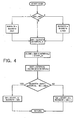
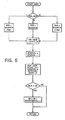
- the process charted in FIG. 4 is a general purpose algorithm which will map a bucket number to a CI number where, as in the present example, discontinuities may exist at any regular interval and bucket 0 may be placed at any CI number. It will be noted that all calculations are performed using integer arithmetic which contributes very significantly to the efficiency and speed of the address transformation process.
- the parenthetical component I Equation 9 may require brief explanation.
- the symbol "&” means a logical AND, and the symbol “ ⁇ ” means a logical NOT. Assuming for example only, sixteen-bit integer binary arithmetic:
Landscapes
- Engineering & Computer Science (AREA)
- Theoretical Computer Science (AREA)
- Physics & Mathematics (AREA)
- General Engineering & Computer Science (AREA)
- General Physics & Mathematics (AREA)
- Information Retrieval, Db Structures And Fs Structures Therefor (AREA)
Claims (6)
- Verfahren zum Kommunizieren zwischen einer Nutzerschittstelle und einem Massenspeicher in einem Computersystem, umfassend eine Nutzerschnittstelle, einen Prozessor und einen Massenspeicher, wobei der Massenspeicher Informationen in physisch benachbarten Speicherortsegmenten abspeichert, welche durch Diskontinuitäten in regelmäßigen Intervallen unterbrochen werden, wobei das Verfahren die Schritte umfasst:A) des Anlegens für jeden Satz an Informationen, welcher in dem Massenspeicher gespeichert werden soll, welcher mit dem Verfahren benutzt werden wird, eines Satzes an Charakteristika, welche zumindest umfassen:1) ein regelmäßiges Intervall, in welchem Diskontinuitäten auftreten, das "INTERVAL"; und2) irgendein Abstand von einem ersten physischen Ort in einer relevanten Unterteilung des Massenspeichers, bei welchem eine erste Aufnahme des Informationssatzes gespeichert werden soll, das "START_CI";B) des Benutzens der Nutzerschnittstelle, um eine virtuelle Identifizierung für einen physischen Ort zu spezifizieren, auf welchen in dem Massenspeicher zugegriffen werden soll;C) des Verknüpfens der virtuellen Identifizierung mit einer Hash-Bucket-Nummer, dem "BUCKET#" in einer Serie von sequentiell benachbarten Hash-Bucket-Nummern;D) des Transformierens der Hash-Bucket-Nummer in einen physischen Ort "CI#" in dem Massenspeicher in dem Prozessor, wobei ein ganzzahliges arithmetisches Hash-Verfahren eingesetzt wird, welches die folgenden Unterschritte umfasst:1) Erhalten eines Werts "MIN" durch Benutzen der Gleichung:
 2) Erhalten eines Werts "CLOSE" durch Benutzen der Gleichung:
 3) Erhalten eines Werts "DIST" durch Benutzen der Gleichung:
 4) Treffen einer JA/NEIN Entscheidung durch Ausführen der Bestimmung:
 5) Wenn die Entscheidung in Unterschritt 4 JA ist, Erhalten des physischen Orts CI# durch Verwendung der Gleichung:
 6) wenn die Entscheidung in Unterschritt 4 NEIN ist, Erhalten des physischen Orts CI# durch Verwenden der Gleichung:
 E) des Benutzens des physischen Orts CI#, um einen Kommunikationspfad zwischen der Benutzerschnittstelle und dem physischen Ort, auf welchen in dem Massenspeicher zugegriffen werden soll, anzulegen.
 - Verfahren nach Anspruch 1, des Weiteren die Schritte umfassend:des weiteren Einfügens in Schritt A in den Satz von Charakteristika:wobei Schritt D) die weiteren Unterschritte umfasst:einen "PER_IND" Wert, welcher wie folgt bestimmt wird:a) wenn ein virtueller Identifizierungswert ein einziges Gegensegment in dem Massenspeicher hat, Einstellen des PER_IND Werts auf eine erste Zahl;b) wenn eine Vielzahl von virtuellen Identifikationswerten auf ein einziges Gegenstücksegment in dem Massenspeicher verweisen, Einstellen des PER_IND Werts auf eine zweite Zahl; undc) wenn ein virtueller Identifizierungswert eine Vielzahl von Gegenstücksegmenten in dem Massenspeicher aufweist, Einstellen des PER_IND Werts auf eine dritte Zahl;10) Untersuchen des PER_IND Werts;20) Wenn der PER_IND Wert die erste Zahl ist, Gehen zu dem Unterschritt 50);30) Wenn der PER_IND Wert die zweite Zahl ist, Erhalten eines geänderten BUCKET#, welcher nachfolgend auf diesen Unterschritt benutzt werden soll, durch Dividieren des BUCKET# aus Schritt C) (original BUCKET#) durch die zweite Zahl und dann Weitergehen zu Unterschritt 50;40) Wenn der PER_IND Wert die dritte Zahl ist, Erhalten eines geänderten BUCKET#, welcher nachfolgend an diesen Unterschritt benutzt werden soll, durch Multiplizieren des original BUCKET# durch die dritte Zahl;50) Ausführen des Unterschritts aus D) wie in Anspruch 1 definiert.
- Verfahren nach Anspruch 1 oder 2, in welchem die virtuelle Identifizierung der BUCKET# ist.
- Verfahren zur Kommunikation zwischen einer Nutzerschnittstelle und einem Massenspeicher in einem Computersystem, umfassend eine Nutzerschnittstelle, einen Prozessor und einen Massenspeicher, wobei der Massenspeicher Information in physisch benachbarten Speicherortsegmenten speichert, welche durch Diskontinuitäten in einem regelmäßigen Intervall von 2n unterbrochen werden, wobei das Verfahren die folgenden Schritte umfasst:A) des Anlegens für jeden Satz von Information, welche in dem Massenspeicher gespeichert werden sollen, welcher mit dem Verfahren benutzt werden wird, eines Satzes von Charakteristika, welche zumindest umfassen:1) ein regelmäßiges Intervall von 2n bei welchem Diskontinuitäten auftreten, das "INTERVAL"; und2) irgendein Abstand von einem ersten physischen Ort in der relevanten Unterteilung des Massenspeichers, bei welchem eine erste Aufnahme des Informationssatzes gespeichert werden soll, das "START_CI";B) des Benutzens der Nutzerschnittstelle, um eine virtuelle Identifizierung für einen physischen Ort festzulegen, auf welchen in dem Massenspeicher zugegriffen werden soll;C) des Verknüpfens der virtuellen Identifizierung mit einer Hash-Bucket-Nummer, dem "BUCKET#" in einer Serie von sequentiell benachbarten Hash-Bucket-Nummern;D) des Transformierens der Hash-Bucket-Nummer in dem Prozessor in einen physischen Ort "CI#" in dem Massenspeicher, wobei ein ganzzahliges arithmetisches Hash-Verfahren eingesetzt wird, welches die folgenden Unterschritte umfasst:1) Erhalten eines Werts "BCI#" durch Benutzen der Gleichung:
 2) Erhalten eines Versuchswerts für den physischen Ort "CI#" durch Benutzen der Gleichung:
 3) Erhalten eines geänderten internen Werts "INTERVAL" durch Benutzen der Gleichung:
 4) Erhalten eines geänderten Werts "BCI#" durch Benutzen der Gleichung
wobei der Operator "&" ein logisches UND und der Operator "~" ein logisches NICHT ist;5) Treffen einer JA/NEIN Entscheidung durch Ausführen der Bestimmung: 6) Wenn die Entscheidung in dem Unterschritt 5) JA ist, Erhalten des physischen Orts CI# durch Benutzen der Gleichung:
 7) Wenn die Entscheidung in dem Unterschritt 5) nein ist, Akzeptieren des physischen Orts CI#, welcher in Unterschritt 2 als der physische Ort CI# erhalten wird; undE) des Benutzens des physischen Orts CI#, um einen Kommunikationspfad zwischen der Benutzerschnittstelle und dem physischen Ort, auf welchen in dem Massenspeicher zugegriffen werden soll, anzulegen.
 - Verfahren nach Anspruch 4, des Weiteren die Schritte umfassend:des in Schritt A) weiteren Einschließens in den Satz von Charakteristika: einen "PER_IND" Wert, welcher wie folgt definiert wird:a) wenn ein virtueller Identifizierungswert ein einziges Gegenstücksegment in dem Massenspeicher hat, Einstellen des PER_IND Werts auf eine erste Zahl;b) wenn eine Vielzahl von virtuellen Identifizierungswerten auf ein einziges Gegenstücksegment in dem Massenspeicher verweisen, Einstellen des PER_IND Werts auf eine zweite Zahl; undc) wenn ein virtueller Identifizierungswert eine Vielzahl von Gegenstücksegmenten in dem Massenspeicher aufweist, Einstellen des PER_IND Werts auf eine dritte Zahl;des Ersetzens von Schritt D) nach Anspruch 4 durch die folgenden Unterschritte:1) Untersuchen des PER_IND Werts;2) wenn der PER_IND Wert die erste Zahl ist, Erhalten eines Werts "BCI#" durch Benutzen der Gleichung

und dann Weitergehen zu Schritt 5);3) wenn der PER_IND Wert die zweite Zahl ist, Erhalten eines Werts "BCI" durch Benutzen der Gleichung:
und dann Weitergehen zu Unterschritt 5;4) qenn der PER_IND Wert die dritte Zahl ist, Erhalten eines Werts "BCI" durch Benutzen der Gleichung: 5) Erhalten eines Versuchswerts "CI#" durch Benutzen der Gleichung:
 6) Erhalten eines geänderten internen Werts "INTERVAL" durch Benutzen der Gleichung:
 7) Erhalten eines geänderten Werts "BCI#" durch Benutzen der Gleichung:
"~" ein logisches NICHT ist;8) Treffen einer JA/NEIN Entscheidung durch Ausführen der Bestimmung: 9) wenn die Entscheidung in Unterschritt 8) JA ist, Erhalten des physischen Orts CI# durch Benutzen der Gleichung:
 10) wenn die Entscheidung in Unterschritt 8) NEIN ist, Akzeptieren des physischen Orts CI#, welcher in Unterschritt 2) als der physische Ort CI# erhalten wurde.
 - Verfahren nach Anspruch 4 oder 5, in welchem die virtuelle Identifizierung der BUCKET# ist.
Applications Claiming Priority (3)
| Application Number | Priority Date | Filing Date | Title |
|---|---|---|---|
| US08/347,005 US5579501A (en) | 1994-11-30 | 1994-11-30 | Method for transforming a hash bucket number to a control interval to identify the physical location of information in a mass memory |
| PCT/US1995/013254 WO1996017300A1 (en) | 1994-11-30 | 1995-10-19 | Method for transforming a hash bucket number to a control interval to identify the physical location of information in a mass memory |
| US347005 | 2003-01-17 |
Publications (3)
| Publication Number | Publication Date |
|---|---|
| EP0799451A1 EP0799451A1 (de) | 1997-10-08 |
| EP0799451A4 EP0799451A4 (de) | 1998-12-02 |
| EP0799451B1 true EP0799451B1 (de) | 2010-05-05 |
Family
ID=23361945
Family Applications (1)
| Application Number | Title | Priority Date | Filing Date |
|---|---|---|---|
| EP95937464A Expired - Lifetime EP0799451B1 (de) | 1994-11-30 | 1995-10-19 | Verfahren zur umwandlung einer hash-bucket-zahl in ein steuerungsintervall für die erkennung der physischen lage von massenspeicherinformationen |
Country Status (4)
| Country | Link |
|---|---|
| US (1) | US5579501A (de) |
| EP (1) | EP0799451B1 (de) |
| DE (1) | DE69536076D1 (de) |
| WO (1) | WO1996017300A1 (de) |
Families Citing this family (8)
| Publication number | Priority date | Publication date | Assignee | Title |
|---|---|---|---|---|
| US5926649A (en) * | 1996-10-23 | 1999-07-20 | Industrial Technology Research Institute | Media server for storage and retrieval of voluminous multimedia data |
| US6535867B1 (en) * | 1999-09-29 | 2003-03-18 | Christopher J. F. Waters | System and method for accessing external memory using hash functions in a resource limited device |
| US6449613B1 (en) | 1999-12-23 | 2002-09-10 | Bull Hn Information Systems Inc. | Method and data processing system for hashing database record keys in a discontinuous hash table |
| US7412462B2 (en) | 2000-02-18 | 2008-08-12 | Burnside Acquisition, Llc | Data repository and method for promoting network storage of data |
| US7937554B2 (en) * | 2002-11-12 | 2011-05-03 | Broadcom Corporation | System and method for managing memory |
| US7478096B2 (en) | 2003-02-26 | 2009-01-13 | Burnside Acquisition, Llc | History preservation in a computer storage system |
| US7424591B2 (en) * | 2006-06-19 | 2008-09-09 | International Business Machines Corporation | Splash tables: an efficient hash scheme for processors |
| CN121029092B (zh) * | 2025-09-01 | 2026-08-04 | 中电云计算技术有限公司 | 一种重定向数据聚合方法和设备 |
Family Cites Families (3)
| Publication number | Priority date | Publication date | Assignee | Title |
|---|---|---|---|---|
| US4464713A (en) | 1981-08-17 | 1984-08-07 | International Business Machines Corporation | Method and apparatus for converting addresses of a backing store having addressable data storage devices for accessing a cache attached to the backing store |
| US5202985A (en) | 1988-04-14 | 1993-04-13 | Racal-Datacom, Inc. | Apparatus and method for displaying data communication network configuration after searching the network |
| DE69324204T2 (de) | 1992-10-22 | 1999-12-23 | Cabletron Systems, Inc. | Aufsuchen von Adressen bei Paketübertragung mittels Hashing und eines inhaltsadressierten Speichers |
-
1994
- 1994-11-30 US US08/347,005 patent/US5579501A/en not_active Expired - Lifetime
-
1995
- 1995-10-19 DE DE69536076T patent/DE69536076D1/de not_active Expired - Lifetime
- 1995-10-19 WO PCT/US1995/013254 patent/WO1996017300A1/en not_active Ceased
- 1995-10-19 EP EP95937464A patent/EP0799451B1/de not_active Expired - Lifetime
Also Published As
| Publication number | Publication date |
|---|---|
| EP0799451A1 (de) | 1997-10-08 |
| EP0799451A4 (de) | 1998-12-02 |
| US5579501A (en) | 1996-11-26 |
| WO1996017300A1 (en) | 1996-06-06 |
| DE69536076D1 (de) | 2010-06-17 |
Similar Documents
| Publication | Publication Date | Title |
|---|---|---|
| US6754800B2 (en) | Methods and apparatus for implementing host-based object storage schemes | |
| JP3848983B2 (ja) | データ送信方法、データ等化方法及び装置 | |
| US4996663A (en) | Methods and apparatus for decontaminating hash tables | |
| EP0713185A1 (de) | Verfahren zum Auflösen der Abhängigheit einer Datenbasis und System zum Identifizieren verwandter Datendateien | |
| US6449696B2 (en) | Device and method for input/output control of a computer system for efficient prefetching of data based on lists of data read requests for different computers and time between access requests | |
| US5202985A (en) | Apparatus and method for displaying data communication network configuration after searching the network | |
| US5307494A (en) | File name length augmentation method | |
| US4800485A (en) | On-line documentation facility | |
| JPH10198587A (ja) | ファイル・システムの間接アドレシング方法及び装置 | |
| US20020169934A1 (en) | Methods and systems for eliminating data redundancies | |
| JP2002523814A (ja) | 通常表現を使用するトランザクションの認識および予測 | |
| JP2769065B2 (ja) | デジタルデータ処理システムに使用する方法及び装置 | |
| US5579501A (en) | Method for transforming a hash bucket number to a control interval to identify the physical location of information in a mass memory | |
| US6421664B1 (en) | Apparatus, program product and method for estimating the number of keys within an index key range | |
| EP2169556A1 (de) | Computer, tlb-steuerverfahren und tlb-steuerprogramm | |
| US6715140B1 (en) | Program trace method and apparatus, and storage medium | |
| US6446129B1 (en) | Method and apparatus for synchronizing function values in a multiple protocol system | |
| EP3418909A1 (de) | Verfahren für den zugriff auf einen schlüssel in einer cuckoo-hash-tabelle | |
| JP2000071576A (ja) | プリンタ管理システムおよびプリンタ管理方法 | |
| EP2597811B1 (de) | Verfahren und System zur Speicherung großer Datendateien | |
| EP0566282A2 (de) | Verfahren für Zugriff auf speicherresidenter Echtzeitdaten | |
| JPH07146880A (ja) | 文書検索装置及び方法 | |
| EP0398650A2 (de) | Datenstrukturkonstruktion | |
| CN116450887B (zh) | 一种医院信息化设备管理系统 | |
| JP2713405B2 (ja) | ファイルシステム |
Legal Events
| Date | Code | Title | Description |
|---|---|---|---|
| PUAI | Public reference made under article 153(3) epc to a published international application that has entered the european phase |
Free format text: ORIGINAL CODE: 0009012 |
|
| 17P | Request for examination filed |
Effective date: 19970623 |
|
| AK | Designated contracting states |
Kind code of ref document: A1 Designated state(s): DE FR GB IT |
|
| A4 | Supplementary search report drawn up and despatched |
Effective date: 19981014 |
|
| AK | Designated contracting states |
Kind code of ref document: A4 Designated state(s): DE FR GB IT |
|
| 17Q | First examination report despatched |
Effective date: 20080829 |
|
| GRAP | Despatch of communication of intention to grant a patent |
Free format text: ORIGINAL CODE: EPIDOSNIGR1 |
|
| GRAS | Grant fee paid |
Free format text: ORIGINAL CODE: EPIDOSNIGR3 |
|
| GRAA | (expected) grant |
Free format text: ORIGINAL CODE: 0009210 |
|
| AK | Designated contracting states |
Kind code of ref document: B1 Designated state(s): DE FR GB IT |
|
| REG | Reference to a national code |
Ref country code: GB Ref legal event code: FG4D |
|
| REF | Corresponds to: |
Ref document number: 69536076 Country of ref document: DE Date of ref document: 20100617 Kind code of ref document: P |
|
| PLBE | No opposition filed within time limit |
Free format text: ORIGINAL CODE: 0009261 |
|
| STAA | Information on the status of an ep patent application or granted ep patent |
Free format text: STATUS: NO OPPOSITION FILED WITHIN TIME LIMIT |
|
| 26N | No opposition filed |
Effective date: 20110208 |
|
| REG | Reference to a national code |
Ref country code: DE Ref legal event code: R097 Ref document number: 69536076 Country of ref document: DE Effective date: 20110207 |
|
| PGFP | Annual fee paid to national office [announced via postgrant information from national office to epo] |
Ref country code: GB Payment date: 20140924 Year of fee payment: 20 |
|
| PGFP | Annual fee paid to national office [announced via postgrant information from national office to epo] |
Ref country code: FR Payment date: 20141021 Year of fee payment: 20 Ref country code: DE Payment date: 20140924 Year of fee payment: 20 |
|
| PGFP | Annual fee paid to national office [announced via postgrant information from national office to epo] |
Ref country code: IT Payment date: 20140926 Year of fee payment: 20 |
|
| REG | Reference to a national code |
Ref country code: DE Ref legal event code: R071 Ref document number: 69536076 Country of ref document: DE |
|
| REG | Reference to a national code |
Ref country code: GB Ref legal event code: PE20 Expiry date: 20151018 |
|
| PG25 | Lapsed in a contracting state [announced via postgrant information from national office to epo] |
Ref country code: GB Free format text: LAPSE BECAUSE OF EXPIRATION OF PROTECTION Effective date: 20151018 |