EP0789299A1 - Verfahren zur Ausführung spekulativer Ladebefehle in Hochleistungsprozessoren - Google Patents
Verfahren zur Ausführung spekulativer Ladebefehle in Hochleistungsprozessoren Download PDFInfo
- Publication number
- EP0789299A1 EP0789299A1 EP97300492A EP97300492A EP0789299A1 EP 0789299 A1 EP0789299 A1 EP 0789299A1 EP 97300492 A EP97300492 A EP 97300492A EP 97300492 A EP97300492 A EP 97300492A EP 0789299 A1 EP0789299 A1 EP 0789299A1
- Authority
- EP
- European Patent Office
- Prior art keywords
- speculative load
- load instruction
- state
- execution
- data
- Prior art date
- Legal status (The legal status is an assumption and is not a legal conclusion. Google has not performed a legal analysis and makes no representation as to the accuracy of the status listed.)
- Withdrawn
Links
Images


Classifications
-
- G—PHYSICS
- G06—COMPUTING OR CALCULATING; COUNTING
- G06F—ELECTRIC DIGITAL DATA PROCESSING
- G06F9/00—Arrangements for program control, e.g. control units
- G06F9/06—Arrangements for program control, e.g. control units using stored programs, i.e. using an internal store of processing equipment to receive or retain programs
- G06F9/22—Microcontrol or microprogram arrangements
- G06F9/26—Address formation of the next micro-instruction ; Microprogram storage or retrieval arrangements
-
- G—PHYSICS
- G06—COMPUTING OR CALCULATING; COUNTING
- G06F—ELECTRIC DIGITAL DATA PROCESSING
- G06F9/00—Arrangements for program control, e.g. control units
- G06F9/06—Arrangements for program control, e.g. control units using stored programs, i.e. using an internal store of processing equipment to receive or retain programs
- G06F9/30—Arrangements for executing machine instructions, e.g. instruction decode
- G06F9/30003—Arrangements for executing specific machine instructions
- G06F9/3004—Arrangements for executing specific machine instructions to perform operations on memory
- G06F9/30043—LOAD or STORE instructions; Clear instruction
-
- G—PHYSICS
- G06—COMPUTING OR CALCULATING; COUNTING
- G06F—ELECTRIC DIGITAL DATA PROCESSING
- G06F9/00—Arrangements for program control, e.g. control units
- G06F9/06—Arrangements for program control, e.g. control units using stored programs, i.e. using an internal store of processing equipment to receive or retain programs
- G06F9/30—Arrangements for executing machine instructions, e.g. instruction decode
- G06F9/38—Concurrent instruction execution, e.g. pipeline or look ahead
- G06F9/3824—Operand accessing
- G06F9/383—Operand prefetching
-
- G—PHYSICS
- G06—COMPUTING OR CALCULATING; COUNTING
- G06F—ELECTRIC DIGITAL DATA PROCESSING
- G06F9/00—Arrangements for program control, e.g. control units
- G06F9/06—Arrangements for program control, e.g. control units using stored programs, i.e. using an internal store of processing equipment to receive or retain programs
- G06F9/30—Arrangements for executing machine instructions, e.g. instruction decode
- G06F9/38—Concurrent instruction execution, e.g. pipeline or look ahead
- G06F9/3836—Instruction issuing, e.g. dynamic instruction scheduling or out of order instruction execution
- G06F9/3842—Speculative instruction execution
Definitions
- the present disclosure relates to a method for improving data processing in general and, in particular, to a method for executing speculative instructions within a processor. Still more particularly, the present disclosure relates to a method for selectively executing speculative load instructions within a high-performance processor such that wrongful displacement of useful data in a data cache can be avoided.
- a high-performance processor achieves high instruction throughput by fetching and dispatching instructions under the assumption that branches are correctly predicted and allows instructions to execute without waiting for the completion of previous instructions. This is commonly known as speculative execution.
- the processor executes instructions speculatively when it has resources that would otherwise be idle, so that the operation may be done at minimum or no cost. If subsequent events indicate that the speculative instruction should not have been executed, the processor simply abandons any result that the speculative instruction produced.
- speculative operations can be performed speculatively, as long as the processor appears to follow a simple sequential method such as those in a scalar processor. For some applications, however, speculative operations can be a severe detriment to the performance of the processor. For example, in the case of executing a load instruction after a branch instruction (or known as speculative load because the load instruction is executed speculatively without knowing exactly which path of the branch would be taken), if the predicted execution path is incorrect, there is a high delay penalty associated with the pending speculative load in the instruction stream, requesting the required data from the system bus. In many applications, the rate of mispredicted branches is high enough that the cost of speculatively accessing the system bus is prohibitively expensive. Furthermore, essential data stored in a data cache may be displaced by some irrelevant data obtained from the system bus because of a wrongful execution of a speculative load instruction caused by misprediction.
- a method and processor for selectively executing speculative load instructions are disclosed.
- the processor has a multiple number of buffers for storing instructions and various execution units for executing instructions.
- a bit within an enable speculative load table which is associated with that particular speculative load instruction is read in order to determine a state of the bit. If the associated bit is in a first state, data for the speculative load instruction is requested from a system bus and further execution of the speculative load instruction is then suspended to wait for control signals from a branch processing unit.
- the associated bit is in a second state, the execution of the speculative load instruction is immediately suspended to wait for control signals from the branch processing unit. If the speculative load instruction is executed based on the control signals from the branch processing unit, the associated bit in the enable speculative load table will be thereafter set to the first state. However, if the speculative load instruction is not executed in response to the control signals from the branch processing unit, the associated bit in the enable speculative load table is thereafter set to the second state. In this manner, the displacement of useful data in the data cache due to wrongful execution of the speculative load instruction is avoided.
- the present disclosure may be implemented on a variety of processors having a pipelined architecture.
- processors having a pipelined architecture.
- an illustrative embodiment as described below is implemented on one of the PowerPC line of microprocessors manufactured by International Business Machines Corporation, which operates according to reduced instruction set computing (RISC) techniques.
- RISC reduced instruction set computing
- processor 10 is a single integrated circuit superscalar microprocessor, comprising various registers, buffers, execution units, and functional units.
- processor 10 is coupled to system bus 11 via a bus interface unit (BIU) 12 within processor 10 .
- BIU 12 controls the transfer of information between processor 10 and other devices, such as a main memory (not shown), that are coupled to system bus 11 .
- Processor 10 , system bus 11 , and the other devices coupled to system bus 11 together form a host data processing system.
- BIU 12 is connected to instruction cache 14 and data cache 16 .
- Both instruction cache 14 and data cache 16 are highspeed caches which enable processor 10 to achieve a relatively fast access time to a subset of instructions or data previously transferred from main memory to caches 14 and 16 , thus improving the speed of operation of the host data processing system.
- Instruction cache 14 is further coupled to sequential fetcher 17 which fetches instructions from instruction cache 14 during each execution cycle. Sequential fetcher 17 transmits branch instructions fetched from instruction cache 14 to branch processing unit (BPU) 18 for execution, but temporarily stores sequential instructions within instruction queue 19 for later execution by other execution circuitry within processor 10 .
- BPU branch processing unit
- the execution circuitry of processor 10 includes three execution units, namely, fixed-point unit (FXU) 22 , load/store unit (LSU) 28 , and floating-point unit (FPU) 32 .
- FXU 22 performs fixed-point mathematical operations such as addition, subtraction, ANDing, ORing, and XORing, utilizing source operands received from specified general purpose registers (GPRs) 24 or GPR rename buffers 25 .
- GPRs general purpose registers
- FXU 22 outputs the data results of the instruction to GPR rename buffers 25 which provide temporary storage for the data results until the instruction is completed before transferring the data results from GPR rename buffers 25 to at least one of the GPRs 24 .
- FPU 32 performs floating-point operations, such as floating-point multiplication and division, on source operands received from floating-point registers (FPRs) 34 or FPR rename buffers 35 .
- FPU 32 outputs data resulting from the execution of floating-point instructions to selected FPR rename buffers 35 which temporarily store the data results until the instructions are completed before transferring the data results from FPR rename buffers 35 to selected FPRs 34 .
- LSU 28 executes floating-point and fixed-point instructions which either load data from memory (i.e., either data cache 16 or main memory) into selected GPRs 24 or FPRs 34 or which store data from a selected one of GPRs 24 , GPR rename buffers 25 , FPRs 34 , or FPR rename buffers 35 to memory.
- Processor 10 employs both pipelining and out-of-order execution of instructions to further improve the performance of its superscalar architecture. Accordingly, instructions can be executed by FXU 22, LSU 28 , and FPU 32 in any order as long as data dependencies are observed. In addition, instructions are processed by each of FXU 22 , LSU 28 , and FPU 32 at a sequence of pipeline stages. Similar to any high-performance processor, processor 10 processes each instruction in five distinct pipeline stages-fetch, decode/dispatch, execute, finish and completion/writeback, though some pipeline stages can be reduced or combined in certain design implementations.
- sequential fetcher 17 retrieves one or more instructions associated with one or more memory addresses from instruction cache 14 . Sequential instructions fetched from instruction cache 14 are stored by sequential fetcher 17 within instruction queue 19 . In contrast, sequential fetcher 17 removes branch instructions from the instruction stream and forwards them to BPU 18 for execution.
- BPU 18 includes a branch prediction mechanism, which in an illustrative embodiment comprises a dynamic prediction mechanism such as a branch history table, that enables BPU 18 to speculatively execute unresolved conditional branch instructions by predicting whether or not the branch will be taken.
- dispatch unit 20 decodes and dispatches one or more instructions from instruction queue 19 to one of the appropriate execution units 22, 28, and 32 . Also, during the decode/dispatch stage, dispatch unit 20 allocates a rename buffer within GPR rename buffers 25 or FPR rename buffers 35 for the data result of each dispatched instruction.
- execution units 22, 28 , and 32 execute instructions received from dispatch unit 20 opportunistically as operands and execution resources for the indicated operations are available.
- Each of the execution units 22, 28 , and 32 are equipped with a reservation table that stores dispatched instructions for which operands or execution resources are unavailable.
- execution units 22, 28 , and 32 store data results within either GPR rename buffers 25 or FPR rename buffers 35, depending upon the instruction type. Then, execution units 22, 28 , and 32 signal completion unit 40 that the execution unit has finished an instruction. Finally, instructions are completed in program order by transferring result data from GPR rename buffers 25 or FPR rename buffers 35 to GPRs 24 or FPRs 34 , respectively.
- ESL table 60 is a small memory location, preferably within processor 10 , indexed by a lower portion of a load instruction address. As shown in Figure 2A, ESL table 60 is 1 bit wide and n bit long, where n is the number of the least significant bits (LSBs) of a load instruction utilized for indexing.
- LSBs least significant bits
- the number of the LSBs of a load instruction, n, utilized for indexing to the ESL table is 8; however, n may be any integer that is deemed appropriate for a specific design.
- the indexing scheme under an illustrative embodiment is quite straight-forward: the numerical decimal value of the LSBs of a load instruction points to the bit position within an ESL table. For example, when the eight LSBs of load instruction 62 is "0000 0000,” load instruction 62 points to the zeroth bit of ESL table 64 ; when the eight LSBs of load instruction 62 is "0000 0001,” load instruction 62 points to the first bit of ESL table 64 ; when the eight LSBs of load instruction 62 is "0000 0010,” load instruction 62 points to the second bit of ESL table 64 ; et cetera.
- Each bit of ESL table 64 indicates whether a load instruction 62 , having the corresponding indexing LSBs, has previously been executed after a branch instruction or not.
- a "0" bit denotes "not executed” while a “1” bit denotes "executed,” though a reverse assignment is also acceptable.
- processor 10 When processor 10 is first initialized, all the bits within ESL table 64 should be zero. As time progresses and different load instructions after branch instruction are taken, some bits within ESL table 64 will be modified accordingly, as described in the following.
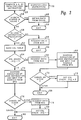
- a load instruction is dispatched from dispatch unit 20.
- the effective address of the data for the load instruction is computed at block 52.
- a determination is then made at block 54 as to whether the data for the load instruction is currently stored in data cache 16 or not. If the data is currently stored in data cache 16 , the data is then obtained from data cache 16 at block 56, and the process exits at block 99 such that the load instruction can be executed regardless of whether the load instruction is speculative or not. This is because even if it is a speculative load instruction, there is no penalty for mispredicted execution.
- the data is requested from system bus 11 at block 66 .
- the first state is a logical "1.”
- the execution of the speculative load instruction is suspended to wait for some control signals from branch processing unit (BPU) 18 in order to determine whether the execution of the speculative load instruction should proceed or not. The result of such determination is obtained at block 70 from BPU 18 .
- BPU branch processing unit
- the associated bit within the ESL table is updated according to an illustrative embodiment of the disclosure, at block 72 , by reversing the associated bit from "1" to a "0,” and the process exits at block 99 . Otherwise, if the indication based on the control signals from BPU 18 is to clear the execution of the load instruction, then the process simply exits at block 99 .
- the execution of the speculative instruction is immediately suspended to wait for the control signals from BPU 18 in order to determine whether the execution of the speculative load instruction should proceed or not.
- the second state is a logical "0.” The result of such determination is obtained at block 76 from BPU 18. If the indication based on the control signals from BPU 18 is to clear the execution of the load instruction (again, at this point the load instruction is not speculative any more), then the required data is requested from system bus 11 at block 78 .
- the associated bit within the ESL table is updated according to an illustrative embodiment of the disclosure, at block 72 , by reversing the associated bit from "0" to a "1,” and the process exits at block 99 . Otherwise, if the indication based on the control signals from BPU 18 is to cancel the execution of the load instruction, again the process simply exits at block 99 .
- the present disclosure provides a method for selectively executing speculative load instructions within a high-performance processor.
- this disclosure provides a unique method to decide whether a data request should be made to the system bus for the execution of a speculative load instruction when the data for the speculative load instruction cannot be found in the data cache.
Landscapes
- Engineering & Computer Science (AREA)
- Software Systems (AREA)
- Theoretical Computer Science (AREA)
- Physics & Mathematics (AREA)
- General Engineering & Computer Science (AREA)
- General Physics & Mathematics (AREA)
- Advance Control (AREA)
Applications Claiming Priority (2)
| Application Number | Priority Date | Filing Date | Title |
|---|---|---|---|
| US08/597,647 US5611063A (en) | 1996-02-06 | 1996-02-06 | Method for executing speculative load instructions in high-performance processors |
| US597647 | 1996-02-06 |
Publications (1)
| Publication Number | Publication Date |
|---|---|
| EP0789299A1 true EP0789299A1 (de) | 1997-08-13 |
Family
ID=24392381
Family Applications (1)
| Application Number | Title | Priority Date | Filing Date |
|---|---|---|---|
| EP97300492A Withdrawn EP0789299A1 (de) | 1996-02-06 | 1997-01-27 | Verfahren zur Ausführung spekulativer Ladebefehle in Hochleistungsprozessoren |
Country Status (5)
| Country | Link |
|---|---|
| US (1) | US5611063A (de) |
| EP (1) | EP0789299A1 (de) |
| JP (1) | JP3336892B2 (de) |
| KR (1) | KR100237985B1 (de) |
| TW (1) | TW397953B (de) |
Families Citing this family (38)
| Publication number | Priority date | Publication date | Assignee | Title |
|---|---|---|---|---|
| US5802340A (en) * | 1995-08-22 | 1998-09-01 | International Business Machines Corporation | Method and system of executing speculative store instructions in a parallel processing computer system |
| US5926645A (en) * | 1997-07-22 | 1999-07-20 | International Business Machines Corporation | Method and system for enabling multiple store instruction completions in a processing system |
| US5961615A (en) * | 1997-12-31 | 1999-10-05 | Intel Corporation | Method and apparatus for queuing data |
| US6216221B1 (en) * | 1997-12-31 | 2001-04-10 | Intel Corporation | Method and apparatus for expanding instructions |
| US6260190B1 (en) * | 1998-08-11 | 2001-07-10 | Hewlett-Packard Company | Unified compiler framework for control and data speculation with recovery code |
| US6519694B2 (en) | 1999-02-04 | 2003-02-11 | Sun Microsystems, Inc. | System for handling load errors having symbolic entity generator to generate symbolic entity and ALU to propagate the symbolic entity |
| US6338133B1 (en) | 1999-03-12 | 2002-01-08 | International Business Machines Corporation | Measured, allocation of speculative branch instructions to processor execution units |
| US6321328B1 (en) * | 1999-03-22 | 2001-11-20 | Hewlett-Packard Company | Processor having data buffer for speculative loads |
| US6473833B1 (en) | 1999-07-30 | 2002-10-29 | International Business Machines Corporation | Integrated cache and directory structure for multi-level caches |
| US6487637B1 (en) | 1999-07-30 | 2002-11-26 | International Business Machines Corporation | Method and system for clearing dependent speculations from a request queue |
| US6418516B1 (en) * | 1999-07-30 | 2002-07-09 | International Business Machines Corporation | Method and system for managing speculative requests in a multi-level memory hierarchy |
| US6766447B1 (en) * | 2000-01-25 | 2004-07-20 | Dell Products L.P. | System and method of preventing speculative reading during memory initialization |
| US7353368B2 (en) * | 2000-02-15 | 2008-04-01 | Intel Corporation | Method and apparatus for achieving architectural correctness in a multi-mode processor providing floating-point support |
| JP3518510B2 (ja) * | 2001-01-10 | 2004-04-12 | 日本電気株式会社 | リオーダバッファの管理方法及びプロセッサ |
| KR20020096252A (ko) * | 2001-06-19 | 2002-12-31 | 인터내셔널 비지네스 머신즈 코포레이션 | 프로세서에서의 명령 실행 방법, 컴퓨터 시스템에사용하기 위한 프로세서 및 데이터 처리 시스템 |
| AU2002367955A1 (en) * | 2001-06-26 | 2004-01-06 | Sun Microsystems, Inc. | Method and apparatus for facilitating speculative loads in a multiprocessor system |
| WO2003001383A2 (en) * | 2001-06-26 | 2003-01-03 | Sun Microsystems, Inc. | Using an l2 directory to facilitate speculative loads in a multiprocessor system |
| US6854048B1 (en) * | 2001-08-08 | 2005-02-08 | Sun Microsystems | Speculative execution control with programmable indicator and deactivation of multiaccess recovery mechanism |
| US20040193849A1 (en) * | 2003-03-25 | 2004-09-30 | Dundas James D. | Predicated load miss handling |
| US7103880B1 (en) | 2003-04-30 | 2006-09-05 | Hewlett-Packard Development Company, L.P. | Floating-point data speculation across a procedure call using an advanced load address table |
| US7325228B1 (en) | 2003-04-30 | 2008-01-29 | Hewlett-Packard Development Company, L.P. | Data speculation across a procedure call using an advanced load address table |
| US7644409B2 (en) * | 2004-06-04 | 2010-01-05 | Sun Microsystems, Inc. | Techniques for accessing a shared resource using an improved synchronization mechanism |
| US7594234B1 (en) * | 2004-06-04 | 2009-09-22 | Sun Microsystems, Inc. | Adaptive spin-then-block mutual exclusion in multi-threaded processing |
| US7475397B1 (en) | 2004-07-28 | 2009-01-06 | Sun Microsystems, Inc. | Methods and apparatus for providing a remote serialization guarantee |
| US7774531B1 (en) * | 2005-09-13 | 2010-08-10 | Oracle America, Inc. | Allocating processor resources during speculative execution using a temporal ordering policy |
| US8266413B2 (en) * | 2006-03-14 | 2012-09-11 | The Board Of Trustees Of The University Of Illinois | Processor architecture for multipass processing of instructions downstream of a stalled instruction |
| KR100867269B1 (ko) * | 2007-02-22 | 2008-11-06 | 삼성전자주식회사 | 프로세서의 추론적 로드 명령 실행 방법 및 상기 방법을채용한 프로세서 |
| US7711936B2 (en) * | 2007-08-28 | 2010-05-04 | Sun Microsystems, Inc. | Branch predictor for branches with asymmetric penalties |
| JP5163220B2 (ja) * | 2008-03-26 | 2013-03-13 | 富士通株式会社 | キャッシュ制御装置、情報処理装置 |
| WO2013095392A1 (en) * | 2011-12-20 | 2013-06-27 | Intel Corporation | Systems and method for unblocking a pipeline with spontaneous load deferral and conversion to prefetch |
| US20170090936A1 (en) * | 2015-09-25 | 2017-03-30 | Qualcomm Incorporated | Method and apparatus for dynamically tuning speculative optimizations based on instruction signature |
| US10423423B2 (en) | 2015-09-29 | 2019-09-24 | International Business Machines Corporation | Efficiently managing speculative finish tracking and error handling for load instructions |
| JP6849949B2 (ja) * | 2017-03-21 | 2021-03-31 | 日本電気株式会社 | メモリアクセス装置、命令制御方法、プログラム、情報処理装置 |
| US10866805B2 (en) * | 2018-01-03 | 2020-12-15 | Arm Limited | Speculation barrier instruction |
| JP7041353B2 (ja) * | 2018-06-06 | 2022-03-24 | 富士通株式会社 | 演算処理装置及び演算処理装置の制御方法 |
| US11681533B2 (en) | 2019-02-25 | 2023-06-20 | Intel Corporation | Restricted speculative execution mode to prevent observable side effects |
| US20200410094A1 (en) * | 2019-06-29 | 2020-12-31 | Intel Corporation | Hardware load hardening for speculative side-channel attacks |
| US20210096872A1 (en) * | 2019-09-27 | 2021-04-01 | Intel Corporation | Hardware for eliding security checks when deemed safe during speculative execution |
Citations (1)
| Publication number | Priority date | Publication date | Assignee | Title |
|---|---|---|---|---|
| GB2284912A (en) * | 1993-12-20 | 1995-06-21 | Motorola Inc | Data processor with speculative instruction fetching and method of operation |
Family Cites Families (7)
| Publication number | Priority date | Publication date | Assignee | Title |
|---|---|---|---|---|
| US5287467A (en) * | 1991-04-18 | 1994-02-15 | International Business Machines Corporation | Pipeline for removing and concurrently executing two or more branch instructions in synchronization with other instructions executing in the execution unit |
| IL98248A0 (en) * | 1991-05-23 | 1992-06-21 | Ibm Israel | Instruction scheduler for a computer |
| JP2786574B2 (ja) * | 1992-05-06 | 1998-08-13 | インターナショナル・ビジネス・マシーンズ・コーポレイション | コンピュータ・システムにおける順不同ロード動作の性能を改善する方法と装置 |
| US5421022A (en) * | 1993-06-17 | 1995-05-30 | Digital Equipment Corporation | Apparatus and method for speculatively executing instructions in a computer system |
| US5420990A (en) * | 1993-06-17 | 1995-05-30 | Digital Equipment Corporation | Mechanism for enforcing the correct order of instruction execution |
| US5428807A (en) * | 1993-06-17 | 1995-06-27 | Digital Equipment Corporation | Method and apparatus for propagating exception conditions of a computer system |
| US5454117A (en) * | 1993-08-25 | 1995-09-26 | Nexgen, Inc. | Configurable branch prediction for a processor performing speculative execution |
-
1996
- 1996-02-06 US US08/597,647 patent/US5611063A/en not_active Expired - Fee Related
- 1996-06-22 TW TW085107513A patent/TW397953B/zh not_active IP Right Cessation
- 1996-11-08 KR KR1019960052781A patent/KR100237985B1/ko not_active Expired - Fee Related
-
1997
- 1997-01-14 JP JP00424397A patent/JP3336892B2/ja not_active Expired - Fee Related
- 1997-01-27 EP EP97300492A patent/EP0789299A1/de not_active Withdrawn
Patent Citations (1)
| Publication number | Priority date | Publication date | Assignee | Title |
|---|---|---|---|---|
| GB2284912A (en) * | 1993-12-20 | 1995-06-21 | Motorola Inc | Data processor with speculative instruction fetching and method of operation |
Non-Patent Citations (2)
| Title |
|---|
| "Tying Data Prefetching To Branch Prediction", IBM TECHNICAL DISCLOSURE BULLETIN, vol. 36, no. 10, October 1993 (1993-10-01), ARMONK, NY, US, pages 69, XP000412187 * |
| D. BERNSTEIN ET AL: "PROVING SAFETY OF SPECULATIVE LOAD INSTRUCTIONS AT COMPILE-TIME", ESOP'92 - PROCEEDINGS OF THE 4TH EUROPEAN SYMPOSIUM ON PROGRAMMING. PROCEEDINGS, 26 February 1992 (1992-02-26) - 28 February 1992 (1992-02-28), RENNES, FR, pages 56 - 72, XP000569989 * |
Also Published As
| Publication number | Publication date |
|---|---|
| JP3336892B2 (ja) | 2002-10-21 |
| KR970062892A (ko) | 1997-09-12 |
| TW397953B (en) | 2000-07-11 |
| US5611063A (en) | 1997-03-11 |
| JPH09223013A (ja) | 1997-08-26 |
| KR100237985B1 (ko) | 2000-01-15 |
Similar Documents
| Publication | Publication Date | Title |
|---|---|---|
| US5611063A (en) | Method for executing speculative load instructions in high-performance processors | |
| US5634103A (en) | Method and system for minimizing branch misprediction penalties within a processor | |
| EP0751458B1 (de) | Verfahren und Anordnung zur Überwachung von Ressourcenzuteilung innerhalb eines Prozessors | |
| US5752014A (en) | Automatic selection of branch prediction methodology for subsequent branch instruction based on outcome of previous branch prediction | |
| US6065115A (en) | Processor and method for speculatively executing instructions from multiple instruction streams indicated by a branch instruction | |
| US5740419A (en) | Processor and method for speculatively executing an instruction loop | |
| US6728866B1 (en) | Partitioned issue queue and allocation strategy | |
| EP0762270B1 (de) | Mikroprozessor mit Lade-/Speicheroperation zu/von mehreren Registern | |
| US5870582A (en) | Method and apparatus for completion of non-interruptible instructions before the instruction is dispatched | |
| JP2839075B2 (ja) | 処理システムを動作させる方法及び処理システム | |
| US5898864A (en) | Method and system for executing a context-altering instruction without performing a context-synchronization operation within high-performance processors | |
| US5537560A (en) | Method and apparatus for conditionally generating a microinstruction that selects one of two values based upon control states of a microprocessor | |
| EP0675434B1 (de) | Verarbeitungssystem und -verfahren | |
| US6629233B1 (en) | Secondary reorder buffer microprocessor | |
| US5875325A (en) | Processor having reduced branch history table size through global branch history compression and method of branch prediction utilizing compressed global branch history | |
| US5872948A (en) | Processor and method for out-of-order execution of instructions based upon an instruction parameter | |
| JP3207124B2 (ja) | カウント/リンク・レジスタ変更命令の投機実行をサポートする方法及び装置 | |
| US6101597A (en) | Method and apparatus for maximum throughput scheduling of dependent operations in a pipelined processor | |
| US7603543B2 (en) | Method, apparatus and program product for enhancing performance of an in-order processor with long stalls | |
| US5802340A (en) | Method and system of executing speculative store instructions in a parallel processing computer system | |
| EP0606643A1 (de) | Verfahren und System für nicht-sequentielle Befehlzuteilung und -ausführung in superskalarem Prozessorsystem | |
| US5812812A (en) | Method and system of implementing an early data dependency resolution mechanism in a high-performance data processing system utilizing out-of-order instruction issue | |
| US5678016A (en) | Processor and method for managing execution of an instruction which determine subsequent to dispatch if an instruction is subject to serialization | |
| US6134645A (en) | Instruction completion logic distributed among execution units for improving completion efficiency | |
| EP0753173B1 (de) | Datenverarbeitungssystem und betriebsverfahren |
Legal Events
| Date | Code | Title | Description |
|---|---|---|---|
| PUAI | Public reference made under article 153(3) epc to a published international application that has entered the european phase |
Free format text: ORIGINAL CODE: 0009012 |
|
| AK | Designated contracting states |
Kind code of ref document: A1 Designated state(s): DE FR GB |
|
| 17P | Request for examination filed |
Effective date: 19980113 |
|
| STAA | Information on the status of an ep patent application or granted ep patent |
Free format text: STATUS: THE APPLICATION HAS BEEN WITHDRAWN |
|
| 18W | Application withdrawn |
Withdrawal date: 20000112 |