EP0787180B1 - Milieu de culture de cellules embryonnaires totipotentes aviaires, depourvu d'acide retinoique actif - Google Patents
Milieu de culture de cellules embryonnaires totipotentes aviaires, depourvu d'acide retinoique actif Download PDFInfo
- Publication number
- EP0787180B1 EP0787180B1 EP95935994A EP95935994A EP0787180B1 EP 0787180 B1 EP0787180 B1 EP 0787180B1 EP 95935994 A EP95935994 A EP 95935994A EP 95935994 A EP95935994 A EP 95935994A EP 0787180 B1 EP0787180 B1 EP 0787180B1
- Authority
- EP
- European Patent Office
- Prior art keywords
- cells
- culture
- avian
- medium
- culture medium
- Prior art date
- Legal status (The legal status is an assumption and is not a legal conclusion. Google has not performed a legal analysis and makes no representation as to the accuracy of the status listed.)
- Expired - Lifetime
Links
Images




Classifications
-
- A—HUMAN NECESSITIES
- A01—AGRICULTURE; FORESTRY; ANIMAL HUSBANDRY; HUNTING; TRAPPING; FISHING
- A01K—ANIMAL HUSBANDRY; AVICULTURE; APICULTURE; PISCICULTURE; FISHING; REARING OR BREEDING ANIMALS, NOT OTHERWISE PROVIDED FOR; NEW BREEDS OF ANIMALS
- A01K67/00—Rearing or breeding animals, not otherwise provided for; New or modified breeds of animals
- A01K67/027—New or modified breeds of vertebrates
- A01K67/0275—Genetically modified vertebrates, e.g. transgenic
-
- C—CHEMISTRY; METALLURGY
- C12—BIOCHEMISTRY; BEER; SPIRITS; WINE; VINEGAR; MICROBIOLOGY; ENZYMOLOGY; MUTATION OR GENETIC ENGINEERING
- C12N—MICROORGANISMS OR ENZYMES; COMPOSITIONS THEREOF; PROPAGATING, PRESERVING, OR MAINTAINING MICROORGANISMS; MUTATION OR GENETIC ENGINEERING; CULTURE MEDIA
- C12N5/00—Undifferentiated human, animal or plant cells, e.g. cell lines; Tissues; Cultivation or maintenance thereof; Culture media therefor
- C12N5/06—Animal cells or tissues; Human cells or tissues
- C12N5/0602—Vertebrate cells
- C12N5/0603—Embryonic cells ; Embryoid bodies
-
- C—CHEMISTRY; METALLURGY
- C12—BIOCHEMISTRY; BEER; SPIRITS; WINE; VINEGAR; MICROBIOLOGY; ENZYMOLOGY; MUTATION OR GENETIC ENGINEERING
- C12N—MICROORGANISMS OR ENZYMES; COMPOSITIONS THEREOF; PROPAGATING, PRESERVING, OR MAINTAINING MICROORGANISMS; MUTATION OR GENETIC ENGINEERING; CULTURE MEDIA
- C12N5/00—Undifferentiated human, animal or plant cells, e.g. cell lines; Tissues; Cultivation or maintenance thereof; Culture media therefor
- C12N5/06—Animal cells or tissues; Human cells or tissues
- C12N5/0602—Vertebrate cells
- C12N5/0603—Embryonic cells ; Embryoid bodies
- C12N5/0606—Pluripotent embryonic cells, e.g. embryonic stem cells [ES]
-
- A—HUMAN NECESSITIES
- A01—AGRICULTURE; FORESTRY; ANIMAL HUSBANDRY; HUNTING; TRAPPING; FISHING
- A01K—ANIMAL HUSBANDRY; AVICULTURE; APICULTURE; PISCICULTURE; FISHING; REARING OR BREEDING ANIMALS, NOT OTHERWISE PROVIDED FOR; NEW BREEDS OF ANIMALS
- A01K2217/00—Genetically modified animals
- A01K2217/05—Animals comprising random inserted nucleic acids (transgenic)
-
- C—CHEMISTRY; METALLURGY
- C12—BIOCHEMISTRY; BEER; SPIRITS; WINE; VINEGAR; MICROBIOLOGY; ENZYMOLOGY; MUTATION OR GENETIC ENGINEERING
- C12N—MICROORGANISMS OR ENZYMES; COMPOSITIONS THEREOF; PROPAGATING, PRESERVING, OR MAINTAINING MICROORGANISMS; MUTATION OR GENETIC ENGINEERING; CULTURE MEDIA
- C12N2500/00—Specific components of cell culture medium
- C12N2500/30—Organic components
- C12N2500/40—Nucleotides, nucleosides or bases
-
- C—CHEMISTRY; METALLURGY
- C12—BIOCHEMISTRY; BEER; SPIRITS; WINE; VINEGAR; MICROBIOLOGY; ENZYMOLOGY; MUTATION OR GENETIC ENGINEERING
- C12N—MICROORGANISMS OR ENZYMES; COMPOSITIONS THEREOF; PROPAGATING, PRESERVING, OR MAINTAINING MICROORGANISMS; MUTATION OR GENETIC ENGINEERING; CULTURE MEDIA
- C12N2500/00—Specific components of cell culture medium
- C12N2500/30—Organic components
- C12N2500/44—Thiols, e.g. mercaptoethanol
-
- C—CHEMISTRY; METALLURGY
- C12—BIOCHEMISTRY; BEER; SPIRITS; WINE; VINEGAR; MICROBIOLOGY; ENZYMOLOGY; MUTATION OR GENETIC ENGINEERING
- C12N—MICROORGANISMS OR ENZYMES; COMPOSITIONS THEREOF; PROPAGATING, PRESERVING, OR MAINTAINING MICROORGANISMS; MUTATION OR GENETIC ENGINEERING; CULTURE MEDIA
- C12N2501/00—Active agents used in cell culture processes, e.g. differentation
- C12N2501/10—Growth factors
- C12N2501/105—Insulin-like growth factors [IGF]
-
- C—CHEMISTRY; METALLURGY
- C12—BIOCHEMISTRY; BEER; SPIRITS; WINE; VINEGAR; MICROBIOLOGY; ENZYMOLOGY; MUTATION OR GENETIC ENGINEERING
- C12N—MICROORGANISMS OR ENZYMES; COMPOSITIONS THEREOF; PROPAGATING, PRESERVING, OR MAINTAINING MICROORGANISMS; MUTATION OR GENETIC ENGINEERING; CULTURE MEDIA
- C12N2501/00—Active agents used in cell culture processes, e.g. differentation
- C12N2501/10—Growth factors
- C12N2501/115—Basic fibroblast growth factor (bFGF, FGF-2)
-
- C—CHEMISTRY; METALLURGY
- C12—BIOCHEMISTRY; BEER; SPIRITS; WINE; VINEGAR; MICROBIOLOGY; ENZYMOLOGY; MUTATION OR GENETIC ENGINEERING
- C12N—MICROORGANISMS OR ENZYMES; COMPOSITIONS THEREOF; PROPAGATING, PRESERVING, OR MAINTAINING MICROORGANISMS; MUTATION OR GENETIC ENGINEERING; CULTURE MEDIA
- C12N2501/00—Active agents used in cell culture processes, e.g. differentation
- C12N2501/10—Growth factors
- C12N2501/125—Stem cell factor [SCF], c-kit ligand [KL]
-
- C—CHEMISTRY; METALLURGY
- C12—BIOCHEMISTRY; BEER; SPIRITS; WINE; VINEGAR; MICROBIOLOGY; ENZYMOLOGY; MUTATION OR GENETIC ENGINEERING
- C12N—MICROORGANISMS OR ENZYMES; COMPOSITIONS THEREOF; PROPAGATING, PRESERVING, OR MAINTAINING MICROORGANISMS; MUTATION OR GENETIC ENGINEERING; CULTURE MEDIA
- C12N2501/00—Active agents used in cell culture processes, e.g. differentation
- C12N2501/10—Growth factors
- C12N2501/13—Nerve growth factor [NGF]; Brain-derived neurotrophic factor [BDNF]; Cilliary neurotrophic factor [CNTF]; Glial-derived neurotrophic factor [GDNF]; Neurotrophins [NT]; Neuregulins
-
- C—CHEMISTRY; METALLURGY
- C12—BIOCHEMISTRY; BEER; SPIRITS; WINE; VINEGAR; MICROBIOLOGY; ENZYMOLOGY; MUTATION OR GENETIC ENGINEERING
- C12N—MICROORGANISMS OR ENZYMES; COMPOSITIONS THEREOF; PROPAGATING, PRESERVING, OR MAINTAINING MICROORGANISMS; MUTATION OR GENETIC ENGINEERING; CULTURE MEDIA
- C12N2501/00—Active agents used in cell culture processes, e.g. differentation
- C12N2501/20—Cytokines; Chemokines
- C12N2501/23—Interleukins [IL]
- C12N2501/2306—Interleukin-6 (IL-6)
-
- C—CHEMISTRY; METALLURGY
- C12—BIOCHEMISTRY; BEER; SPIRITS; WINE; VINEGAR; MICROBIOLOGY; ENZYMOLOGY; MUTATION OR GENETIC ENGINEERING
- C12N—MICROORGANISMS OR ENZYMES; COMPOSITIONS THEREOF; PROPAGATING, PRESERVING, OR MAINTAINING MICROORGANISMS; MUTATION OR GENETIC ENGINEERING; CULTURE MEDIA
- C12N2501/00—Active agents used in cell culture processes, e.g. differentation
- C12N2501/20—Cytokines; Chemokines
- C12N2501/23—Interleukins [IL]
- C12N2501/2311—Interleukin-11 (IL-11)
-
- C—CHEMISTRY; METALLURGY
- C12—BIOCHEMISTRY; BEER; SPIRITS; WINE; VINEGAR; MICROBIOLOGY; ENZYMOLOGY; MUTATION OR GENETIC ENGINEERING
- C12N—MICROORGANISMS OR ENZYMES; COMPOSITIONS THEREOF; PROPAGATING, PRESERVING, OR MAINTAINING MICROORGANISMS; MUTATION OR GENETIC ENGINEERING; CULTURE MEDIA
- C12N2501/00—Active agents used in cell culture processes, e.g. differentation
- C12N2501/20—Cytokines; Chemokines
- C12N2501/23—Interleukins [IL]
- C12N2501/235—Leukemia inhibitory factor [LIF]
-
- C—CHEMISTRY; METALLURGY
- C12—BIOCHEMISTRY; BEER; SPIRITS; WINE; VINEGAR; MICROBIOLOGY; ENZYMOLOGY; MUTATION OR GENETIC ENGINEERING
- C12N—MICROORGANISMS OR ENZYMES; COMPOSITIONS THEREOF; PROPAGATING, PRESERVING, OR MAINTAINING MICROORGANISMS; MUTATION OR GENETIC ENGINEERING; CULTURE MEDIA
- C12N2501/00—Active agents used in cell culture processes, e.g. differentation
- C12N2501/20—Cytokines; Chemokines
- C12N2501/237—Oncostatin M [OSM]
-
- C—CHEMISTRY; METALLURGY
- C12—BIOCHEMISTRY; BEER; SPIRITS; WINE; VINEGAR; MICROBIOLOGY; ENZYMOLOGY; MUTATION OR GENETIC ENGINEERING
- C12N—MICROORGANISMS OR ENZYMES; COMPOSITIONS THEREOF; PROPAGATING, PRESERVING, OR MAINTAINING MICROORGANISMS; MUTATION OR GENETIC ENGINEERING; CULTURE MEDIA
- C12N2501/00—Active agents used in cell culture processes, e.g. differentation
- C12N2501/30—Hormones
- C12N2501/38—Hormones with nuclear receptors
- C12N2501/385—Hormones with nuclear receptors of the family of the retinoic acid recptor, e.g. RAR, RXR; Peroxisome proliferator-activated receptor [PPAR]
-
- C—CHEMISTRY; METALLURGY
- C12—BIOCHEMISTRY; BEER; SPIRITS; WINE; VINEGAR; MICROBIOLOGY; ENZYMOLOGY; MUTATION OR GENETIC ENGINEERING
- C12N—MICROORGANISMS OR ENZYMES; COMPOSITIONS THEREOF; PROPAGATING, PRESERVING, OR MAINTAINING MICROORGANISMS; MUTATION OR GENETIC ENGINEERING; CULTURE MEDIA
- C12N2502/00—Coculture with; Conditioned medium produced by
- C12N2502/13—Coculture with; Conditioned medium produced by connective tissue cells; generic mesenchyme cells, e.g. so-called "embryonic fibroblasts"
- C12N2502/1323—Adult fibroblasts
-
- C—CHEMISTRY; METALLURGY
- C12—BIOCHEMISTRY; BEER; SPIRITS; WINE; VINEGAR; MICROBIOLOGY; ENZYMOLOGY; MUTATION OR GENETIC ENGINEERING
- C12N—MICROORGANISMS OR ENZYMES; COMPOSITIONS THEREOF; PROPAGATING, PRESERVING, OR MAINTAINING MICROORGANISMS; MUTATION OR GENETIC ENGINEERING; CULTURE MEDIA
- C12N2510/00—Genetically modified cells
Definitions
- the present invention relates to obtaining ES cells of a bird, in particular to a culture process and to a medium allowing the culture of these cells.
- transgenic birds are currently possible with an extremely high cost because of its very low efficiency. In effect in birds the technique of microinjecting DNA into the egg is almost impossible.
- retrovirus system vectors the only effective system to date, remains complex and will collide certainly reluctance on the part of industrialists for reasons health.
- ES cells for Embryonic Stem cells
- ES cells are cells totipotent embryos capable of regenerating all the tissues of the embryo, including the germinal tissue, after their injection into very early embryos. These cells can therefore be considered as Trojans to introduce new information genetics in the genetic makeup of an animal.
- the possibility of cultivating these cells in the long term in vitro, offers the possibility of exercising numerous controls before their implantation in vivo.
- these cells can be stored indefinitely in liquid nitrogen, this which is a possibility of storing a genetic heritage.
- the present invention relates to a culture medium for avian totipotent embryonic cells of the type comprising a culture medium for avian cells, characterized in that it comprises at least one compound chosen from cytokines, growth factors fibroblasts, insulin analog growth factors, stem cell growth factors, and in that the retinoic acid is inactivated by anti-retinoic acid antibodies (ARMA) present in the medium.
- a culture medium for avian totipotent embryonic cells comprising a culture medium for avian cells, characterized in that it comprises at least one compound chosen from cytokines, growth factors fibroblasts, insulin analog growth factors, stem cell growth factors, and in that the retinoic acid is inactivated by anti-retinoic acid antibodies (ARMA) present in the medium.
- cytokines cytokines
- growth factors fibroblasts characterized in that it comprises at least one compound chosen from cytokines, growth factors fibroblasts, insulin analog growth factors, stem cell growth factors, and in that the retinoic acid is in
- the media used often contain serum, of which the endogenous amount of retinoic acid cannot be controlled.
- the cytokine can in particular be chosen from LIF, IL-11, IL-6, CNTF and oncostatin M (OSM); advantageously cytokines present in the culture medium described above, include at minus one cytokine selected from the group consisting of LIF, IL-11, IL-6, and their different mixtures, which give the best results from growth stimulation.
- the fibroblast growth factor is b- FGF (or basic Fibroblast Growth Factor) and the analogous growth factor of insulin is IFG-1.
- the stem cell growth factor ⁇ (or SCF) is preferably a-SCF (or avian Stem Cell Factor) and m-SCF (or murine Stem Cell Factor).
- One of the preferred aspects of the invention relates to a culture which contains, in addition to the basic nutrients necessary for the cell growth, a combination of b-FGF, SCF and LIF.
- a culture which contains, in addition to the basic nutrients necessary for the cell growth, a combination of b-FGF, SCF and LIF.
- the presence in the medium of a monoclonal antibody neutralizing the activity of differentiation exerted by retinoic acid increases the number of totipotent embryogenic stem cells.
- avian ES cells The presence of a mat of nourishing cells promotes growth of avian ES cells.
- Various types of cells known to those skilled in the art can be used; we can cite in particular cells such as STO cells, treated with mitomycin or irradiated, BRL-3A cells, LMH cells, QT6 cells and modified QT6 cells such as Isolde QT6 cells, the differentiated cells established in line from embryonic stem cell cultures induced in differentiate.
- STO cells are fibroblasts from mouse embryos (ATCC catalog); BRL-3A cells (ATCC catalog) are cells "Buffalo rat liver” liver.
- QT6 cells ATCC catalog
- QT6 cells modified such that QT6 Isolde cells are quail fibroblasts (Cosset et al., 1990, J. Virol. 64, 10170-1078) and LMH cells come from chicken liver carcinoma (Kawagucchi et al., 1987, Cancer Res., 47, 4460-4464).
- the culture medium also contains various nutrients essentials and antibiotics.
- a culture medium which is particularly suitable for the present invention has the following composition: BHK-21 Bovine fetal serum 10% Chicken serum 2% conalbumin 20 ng / ml Non-essential amino acids 1% Sodium pyruvate 1 mM Nucleosides stock 1% Hepes (1M) 10 mM ⁇ -mercaptoethanol 0.2 mM Penicillin 100 U / ml Streptomycin 100 ⁇ g / ml gentamicin 10 ng / ml additives: Final bFGF from 1 to 20 ng / ml Has CFS from 0.5% to 2% vol SN of COS / vol IGF-1 from 5 to 50 ng / ml LIF 1000 to 5000 U / ml of purified form, ie approximately 0.1% to 2% vol / vol of culture supernatant of transfected COS cells IL-6 5 to 50 ng / ml (approximately 0.1% to 2% vol / vol of culture supernatant of
- the concentration of bFGF is greater than 5 ng / ml and the concentration of IGF-1 is greater than 10 ng / ml.
- the nucleoside stock made up of the mixture: adenosine 80 mg guanosine 85 mg cytidine 73 mg uridine 73 mg thymidine 24 mg H 2 O 100 ml and SN of Cos representing a culture supernatant of COS-7 cells transfected in transient expression with an expression vector for the cDNA of the factor considered, and is suitable for growing totipotent embryonic bird cells.
- BHK21 medium (or MEM medium) is a culture medium which has been described in particular by Mc Pherson, I., and Stoker (1962, Virology 16, 147).
- Hepes is hydroxy-ethyl-piperazine-ethane-sulfonate.
- steps c) and d) one or more are carried out. additions staggered in time, of new medium identical to that used in step a).
- step c reseeds the medium with a cell suspension identical to the suspension prepared in step a).
- steps c) and d) performs between steps c) and d) the addition of new medium on the 3rd day then the medium is changed every day until the next transplanting.
- Step d) can in particular be carried out by treatment enzymatic, washing in a medium containing no factor growth and centrifugation.
- step c) is carried out in which the ES cells are reseeded on a mat of feeder cells, or on boxes gelatinized, so as to obtain a secondary culture.
- Steps d) and e) can be repeated several times to have tertiary and successive cultures.
- the feeder cell mat can be made up of different cell types described above, including STO cells mitomycinea or irradiated.
- Another object of the invention is a culture of ES cells bird, or avian ES cells, likely to be obtained by the process defined above.
- An avian totipotent embryonic cell modified can be obtained by integration of the gene encoding a heterologous protein in the genome of an ES-avian cell in culture.
- a process for producing a recombinant protein characterized in that the gene encoding said protein is integrated into the genome of an avian totipotent embryonic cell in culture is also included in the invention.
- the Applicant has developed a culture medium and in vitro culture conditions allowing culture to be maintained bird cells that have morphological, kinetic properties and histochemicals recalling those of embryonic cells totipotent. These observations were made with both cells derived from blastodermal discs of quail than chicken. The growth of these cells in in vitro culture is made possible by the development of an original environment specially adapted to the culture of bird embryonic cells. We know that the presence, maintenance and propagation of totipotent cells in culture allow their injection in recipient embryos. The contribution to the morphogenesis of somatic and germinal tissues in recipient animals thanks to a totipotent character, can lead to obtaining transgenic animals.
- the blastodermic disc (3-4 mm in diameter for the hen, 2-2.5 mm for quail) is taken using a pasteur pipette in medium complete without factors.
- the cells are centrifuged at 200 g, washed two times in medium in order to eliminate the maximum of contaminating yolk, resuspended at the rate of 2 disks for 1 ml of medium and dissociated mechanically by passing through a 23 G needle. The factors are then added.
- Selection drugs are added in maintenance but removed two days before treatment with mitomycin C.
- the cultures are incubated at 37 ° C or 41 ° C, in a CO 2 controlled atmosphere (7.5%) and their evolution is monitored under phase contrast microscope. A partial addition (50%) of fresh medium with factors is performed on day 3 of culture, then the medium was changed every day. At any time, the growing cells can either be fixed for study, or removed to be re-seeded in secondary or higher culture, on a mat of irradiated mitomycin STO cells or on gelatin boxes.
- the cells are washed in Tris-Glucose twice, then incubated for 10-30 min in an enzyme solution.
- a collagenase-dispase solution (1 mg / ml or 1 U / ml final) to which a solution of hyaluronidase (1 mg / ml final, i.e. 1 U / ml) can be added; we can also use a 0.25 mg / ml final pronase solution.
- Dissociated cells can be deposited on a gradient Percoll multilayer and centrifuged under the same conditions. The interfaces are then removed, washed in an ESA medium and the cells more immature of the reseeded or injected upper interfaces in recipient embryos.
- the cells recovered from gradient can be frozen in a mixed mixture 40% FBS, 50% ESA medium and 10% DMSO.
- Cells equivalent to 24 initial blastodiscs are taken up in 0.5 ml of ESA medium, resuspended and 0.4 ml of serum is added 0.1 ml of DMSO is then added very slowly.
- the freezing suspension is distributed in tubes to freezing (0.5 ml / tube) and frozen slowly at -80 ° c before being transferred to liquid nitrogen.
- ESA Embryonic Stem cells Avian
- Embryonic Stem cells Avian derived from a medium used for murine ES cells was prepared. It has the following composition: "ESA” medium: final BHK-21 Bovine Serum Fetal 10% Chicken serum 2% conalbumin 20 ng / ml Non-essential amino acids 1% Sodium pyruvate 1 mM Nucleoside stock 1% Hepes (1M) 10 mM ⁇ -mercaptoethanol 0.2 mM Penicillin - 100 U / ml Streptomycin 100 ⁇ g / ml gentamicin 10 ng / ml
- ESA growth factor growth factor
- concentrations are indicated below: additives: stock final bFGF 10 ⁇ g / ml 10 ng / ml Has CFS SN of Cos trans 1% vol / vol IGF-1 10 ⁇ g / ml 20 ng / ml LIF SN of Cos trans * 1% vol / vol IL-1 1 10 ⁇ g / ml 10 ng / ml IL-6 10 ⁇ g / ml 10 ng / ml ARMA 10 mg / ml 1 ⁇ g / ml OSM 20 ⁇ g / ml 20 ng / ml CNTF 20 ⁇ g / ml 20 ng / ml nucleoside stock adenosine 80 mg guanosine 85 mg cytidine 73 mg uridine 73 mg thym
- the first criterion used to assess the effect of these factors and changes to the medium was detection by staining biochemical of endogenous alkaline phosphatase activity which appears specific for a number of cells such as ES cells totipotent, the precursor cells derived from the germ line and certain differentiated cells, easily identified by their epithelioid morphology.
- the blastodermal disc cells are seeded in ESA medium in the presence of different combinations of factors. After 3 days of culture, the cells are fixed, stained and the colonies positive for alkaline phosphatase activity (AP +) are counted.
- AP + alkaline phosphatase activity
- SCF Stem Cell Factor of murine origin -mSCF- or avian -aSCF-
- b-FGF basic Fibroblast Growth Factor
- LIF Leukemia Inhibitory Factor
- the cells are seeded either on untreated boxes, or treated with gelatin in complete ESA medium with aSCF (avian Stem Cell Factor), bFGF (basic- Fibroblast Growth Factor), IGF-1 (Insulin-like Growth Factor-1) and LIF (Leukemia Inhibitory Factor).
- SCF avian Stem Cell Factor
- bFGF basic- Fibroblast Growth Factor
- IGF-1 Insulin-like Growth Factor-1
- LIF Leukemia Inhibitory Factor
- the addition of the anti-retinoic acid antibody in the medium of culture significantly increases the presence and / or maintenance of colonies with alkaline phosphatase activity.
- the cells are seeded in complete ESA medium with factors aSCF (avian Stem Cell Factor), bFGF (basic- Fibroblast Growth) Factor), IGF-1 (Insulin-like Growth Factor-1) in the presence of ARMA (1 ⁇ g / ml) and after adding or not adding different cytokines of the same LIF family (Leukemia Inhibitory Factor), IL-11 (Interleukin 11) and IL-6 (Interleukin 6).
- a second seeding takes place 2 days after the first. Fixing, coloring and Reading of the colonies took place 3 days after the second sowing.
- mice In mice, the growth of certain ES cells requires presence of a mat of feeder cells. The effect of these cells on bird embryo cells has been tested
- the cells are seeded in a complete ESA medium with growth factors aSCF (avian Stem Cell Factor), bFGF (basic-Fibroblast Growth Factor), IGF-1 (Insulin-like Growth Factor-1) and ARMA antibody (1 ⁇ g / ml) compared either on a gelatin background either on a mat of STO cells treated with mitomycin C as indicated in the Material and Methods paragraph.
- aSCF avian Stem Cell Factor
- bFGF basic-Fibroblast Growth Factor
- IGF-1 Insulin-like Growth Factor-1
- ARMA antibody (1 ⁇ g / ml
- CNTF cytokines Neuro-Trophic Factor
- OSM Oncostatin M
- LIF Leukemia Inhibitory Factor
- IL-11 Interleukin 11
- IL-6 Interleukin 6
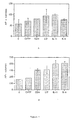
- FIG. 4A represents the growth of cells on gelatin in presence of different cytokines.
- Figure 4B shows growth of cells on a mat of feeder cells in the presence of the same cytokines.
- the number of colonies derived from blastoderm cells and exhibiting alkaline phophatase activity is very markedly increased in presence of a mat of feeder cells (approximately 4-5 times) with a maintenance between the two systems of the same sensitivities towards cytokines added to the medium.
- LIF, IL-11 and II-6 cytokines show the best growth stimulation results. In preliminary results, it appears more than the combination of these 3 cytokines in the complete ESA medium with factors produce effects very promising cumulatives for the maintenance and proliferation of colonized both with cells derived from blastodermal discs from quail than chicken.
- Antibodies ECMA-7, SSEA-1 and SSEA-3, specific for a state of totipotency of murine ES cells are able to recognize epitopes in avian cell populations, maintained in cultures.
- double alkaline phosphatase and antibody activity markings demonstrate that all cells or cell groups recognized by ECMA-7 exhibit alkaline phosphatase activity. This property has been observed with all antibodies used to varying degrees.
- Figure 5 shows respectively the alkaline phosphatase activity and recognition by the ECMA-7 antibody of colonies of cells derived culture of quail blastoderms in the presence of different cytokines.
- Antibodies SSEA-1, SSEA-3, also used on ES cells murines also recognize avian cells in massifs alkaline phosphatase positive.
- Antibodies NC-1, HNK-1 directed respectively to epitopes of neural crest cells and human natural killer cells actually recognize the same epitopes and have been shown to be recognizing certain immature cells of the blastodermal disc of chicken. In our system, these two antibodies again recognize cells in beds with alkaline phosphatase activity.
- the cells are seeded in a complete ESA medium with growth factors aSCF (avian Stem Cell Factor), bFGF (basic-Fibroblast Growth Factor), IGF-1 (Insulin-like Growth Factor-1) and ARMA antibody (1 ⁇ g / ml) on a mat of STO cells treated with mitomycin C as indicated in the Materials and Methods paragraph.
- aSCF avian Stem Cell Factor
- bFGF basic-Fibroblast Growth Factor
- IGF-1 Insulin-like Growth Factor-1
- ARMA antibody (1 ⁇ g / ml)
- LIF Leukemia Inhibitory Factor
- IL-11 cytokines Interleukin 11
- IL-6 Interleukin 6
- EMA-1 antibody (Hahnel and Eddy, 1986) initially raised against epitopes present on primordial cells of the murine germ line has been used against these same cells in chicken. By testing this antibody in our culture system, we can demonstrate that EMA-1 recognizes cells and colonies of cells all showing alkaline phosphatase activity. He was by elsewhere verified that this EMA-1 antibody does not recognize ES cells murines only in their undifferentiated totipotency state.
- the antibodies were tested either on undifferentiated cultures obtained as described in Materials and Methods or on cultures which were treated with an excess of retinoic acid added to the culture (10 -6 M) for at least 48 hours.
- the table below indicates the state of recognition by the various antibodies used.
- Monoclonal antibody Undifferentiated differentiated ECMA-7 +++++ - SSEA-1 1 +++++ - SSEA-3 +++ - TEC-O1 +++++ - TEC-02 + +++ TEC-03 ++ ++ EMA-1 ++++ + EMA-6 +++ + TROMA-1 - ++++ NC-1 ++++ + HNK-1 ++++ + NC-1 and HNK-1 recognize the same epitopes (Tucker et al, 1984) SSEA-1 and TEC 01 recognize the same epitopes
- the blastodermal disc cells of quail or chicken are seeded on a mat of STO feeder cells. After different days of culture, the cells are subcultured on a mat of STO cells as described in Materials and methods. Detection of cells and mass positive both for alkaline phosphatase activity and for the co-localization of a labeling with ECMA-7 or NC-1 suggests that the culture conditions are defined to maintain in secondary and tertiary cultures totipotent cells.
- the transplanting process also ensures after the first passage, homogeneity with the whole of the culture, both morphologically and by detecting the different epitopes.
- the massive cells become very large and homogeneous, increased character by the great capacity of these cells to divide quickly, unlike the differentiated cells initially present in the primary culture. So far, these criteria for identifying and characterization can be used and detected for at least 5 weeks after sowing.
- Chicken blastoderm cells obtained in primary cultures or after successive subcultures can be injected into recipient embryos.
- the cells maintained in culture come from a pigmented strain and the recipient embryos from a non-pigmented strain.
- the cells maintained in cultures are dissociated and prepared as described in Materials and Methods according to the same process as for a subculturing.
- the cell suspension is then prepared at a rate of 1 to 3 ⁇ 10 5 cells per ml of ESA medium.
- the freshly laid, unincubated egg containing the reviving embryo is slightly irradiated between 5 Gy and 7 Gy.
- a small window of a few mm 2 is made in the shell of the recipient by grinding.
- the shell membrane is cut with a scalpel and the cells are injected using a capillary stretched into the subgerminal cavity of the blastodermic disc in a volume of 1 to 5 ⁇ l, which corresponds to a maximum of 100 to 1500 cells.
- the average of the cells injected is 500 cells.
- the window is then covered with shell membranes and sealed.
- a piece of adhesive bandage is applied to improve the seal and limit evaporation as much as possible. After 4 days of incubation under optimal conditions, the eggs are opened and the well-developed embryos are transferred to a larger shell and put back into incubation to finish their development satisfactorily.
- a certain number of animals have thus been obtained and show a apparent rate of chimerism, phenotypically detectable by plumage marker used and characteristic of the cell strain derived from the donor strain, varying from 5% to 90%.
- This chimerism can be obtained so far indifferently with cells derived from primary, secondary, tertiary crops. It should be noted that the percentages of chimeric animals and the chimerism rates of these animals do not vary significantly with time culture of the injected cells. This contributes to underline the capacity of the medium and the method described for maintaining cells with a character totipotent.
Landscapes
- Life Sciences & Earth Sciences (AREA)
- Health & Medical Sciences (AREA)
- Engineering & Computer Science (AREA)
- Biomedical Technology (AREA)
- Zoology (AREA)
- Biotechnology (AREA)
- Bioinformatics & Cheminformatics (AREA)
- Organic Chemistry (AREA)
- Chemical & Material Sciences (AREA)
- Wood Science & Technology (AREA)
- Genetics & Genomics (AREA)
- General Health & Medical Sciences (AREA)
- Developmental Biology & Embryology (AREA)
- Gynecology & Obstetrics (AREA)
- Reproductive Health (AREA)
- Environmental Sciences (AREA)
- Cell Biology (AREA)
- Microbiology (AREA)
- Biochemistry (AREA)
- General Engineering & Computer Science (AREA)
- Veterinary Medicine (AREA)
- Biodiversity & Conservation Biology (AREA)
- Animal Husbandry (AREA)
- Animal Behavior & Ethology (AREA)
- Micro-Organisms Or Cultivation Processes Thereof (AREA)
- Preparation Of Compounds By Using Micro-Organisms (AREA)
- Medicines Containing Plant Substances (AREA)
- Medicines That Contain Protein Lipid Enzymes And Other Medicines (AREA)
Description
- de nombreuses protéines de mammifères ne peuvent être produites en système mammifère car leur surabondance dans ces organismes présente des effets délétères (exemple: l'érythropoiétine qui chez le lapin induit des hyperglobulinémies pathologiques). Beaucoup de ces protéines d'intérêt ne présentent pas d'activité croisée avec celles des oiseaux, autorisant ainsi leur surproduction dans un organisme aviaire sans effet pathologique majeur;
- il est très vraisemblable que la commercialisation de protéines recombinantes produites chez des mammifères se heurtera à des problèmes sanitaires liés à la présence chez cette espèces d'organismes latents potentiellement pathogènes pour l'Homme (lentivirus, prions,...). Ce risque est très minime, pour ne pas dire quasiment inexistant, pour des agents pathogènes des oiseaux domestiques;
- l'oeuf constitue un "tissu" très dense en un petit nombre de protéines. Par exemple la protéine majeure de l'oeuf d'oiseau, l'ovalbumine représente 54 % des protéines du blanc d'oeuf, soit un poids sec moyen par oeuf de 2 grammes de matière sèche environ. On peut raisonablement imaginer produire par oeuf au moins 10% de cette masse en protéine recombinante. La rentabilité économique apparait très grande si l'on considère qu'une poule pond en moyenne 2 oeufs tous les trois jours, et cette rentabilité apparait très supérieure à celle de grands mammifères si l'on considère les coûts d'élevage bien moindres des oiseaux domestiques.
- morphologie
- activité phosphatase alcaline endogène
- réaction avec des anticorps spécifiques d'un état de totipotence (ECMA-7, SSEA-1 et SSEA-3 notamment).
et en ce que l'acide rétinoïque est inactivé par des anticorps anti-acide rétinoïque (ARMA) présents dans le milieu.
| BHK-21 | |
| Sérum foetal de bovin | 10% |
| Sérum de poulet | 2% |
| Conalbumine | 20 ng/ml |
| Acides aminés non essentiels | 1% |
| Pyruvate de sodium | 1 mM |
| Nucléosides stock | 1% |
| Hepes (1M) | 10 mM |
| β-mercaptoéthanol | 0,2 mM |
| Penicilline | 100 U/ml |
| Streptomycine | 100 µg/ml |
| Gentamycine | 10 ng/ml |
| Additifs: | |
| Final | |
| bFGF | de 1 à 20 ng/ml |
| a-SCF | de 0,5% à 2% vol SN de COS/vol |
| IGF-1 | de 5 à 50 ng/ml |
| LIF | de 1000 à 5000 U/ml de forme purifiée soit environ de 0,1% à 2% vol/vol de surnageant de culture de cellules COS transfectées |
| IL-6 | de 5 à 50 ng/ml (environ de 0,1% à 2% vol/vol de surnageant de culture de cellules COS transfectées) |
| IL-11 | de 5 à 50 ng/ml (environ de 0,1% à 2% vol/vol de surnageant de culture de cellules COS transfectées) |
| adénosine | 80 mg |
| guanosine | 85 mg |
| cytidine | 73 mg |
| uridine | 73 mg |
| thymidine | 24 mg |
| H2O | 100 ml |
et convient à la culture de cellules embryonnaires totipotentes d'oiseau.
- Sérum foetal de bovin
- Sérum de poulet
- Conalbumine
- Acides aminés non essentiels
- Pyruvate de sodium
- Stock de nucléosides
- Hepes (1M)
- β-mercaptoéthanol
- Penicilline
- Streptomycine
- Gentamycine
adénosine, guanosine, cytidine, uridine et thymidine en solution aqueuse.
- blastodermes de caille, 0,75 bl/ml
- fond de gélatine
- culture de 3 j
- blastodermes de caille, 0,75 bl/ml
- fond avec ou sans gélatine
- culture de 4 j
- blastodermes de caille, 2 bl/ml
- fond avec gélatine
- culture de 2 + 3 j
- blastodermes de caille, 1 + 1,5 bl/ml
- fond avec gélatine
- culture de 3 + 4 j
- blastodermes de caille, 1 + 1,5 bl/ml
- fond avec cellules STO
- culture de 3 + 4 j
- blastodermes de caille, 1,5 bl/ml
- fond avec cellules STO
- culture de 2 + 3 j
- blastodermes de caille, 1,5 bl/ml
- fond avec cellules STO
- culture de 2 + 3 j
- soit sur boites ou puits (Costar) préalablement gélatinés (0,2 % gélatine, 1 h à t° ambiante),
- soit sur un tapis de cellules STO préalablement traitées à la mitomycine C (90 min, 37°c, 5 µg/ml) et ré-ensemencées à raison de 105 cellules / cm 2,
- soit sur un tapis de cellules Isolde préalablement traitées à la
mitomycine C (90 min, 37°c, 5 µg/ml) et ré-ensemmencées à raison de 105
cellules / cm 2.
Milieu de culture STO : final DMEM Sérum foetal Bovin 10% Penicilline 100 U/ml Streptomycine 100 µg/ml L-Glutamine 2 mM Milieu de culture Isolde : final DMEM Sérum foetal Bovin 8 % Sérum de poulet 2 % Penicilline 100 U/ml Streptomycine 100 µg/ml G418 100 µg/ml Hygromycine 50 µg/ml Phléomycine 50 µg/ml TBP (bouillon tryptose phosphate) 10%
| tampon de réaction | NaCl | 100 mM |
| Tris HCl pH 9.5 | 100 mM | |
| MgCl2 | 5 mM | |
| NBT | 1 mg/ml | |
| BCIP | 0,1 m/ml | |
| H2O |
| tampon de réaction | Ferricyanure de K | 5 mM |
| Ferrocyanure de K | 5 mM | |
| MgCl2 | 5 mM | |
| X-gal | 1 mg/ml | |
| PBS |
| blocage en tampon PBS - BSA (1 mg/ml) | |
| lavage en PBS - BSA | |
| anticorps primaire | 1/ 10ème ou 1/50éme |
| anticorps secondaire fluorescent | 1/50ème |
| Milieu "ESA": | |
| final | |
| BHK-21 | |
| Foetal Bovine Serum | 10% |
| Serum de poulet | 2 % |
| Conalbumine | 20 ng/ml |
| Acide Aminés non essentiels | 1 % |
| Pyruvate de sodium | 1 mM |
| Stock de nucléosides | 1 % |
| Hepes (1M) | 10 mM |
| β-mercaptoethanol | 0.2 mM |
| Penicilline | - 100 U/ml |
| Streptomycine | 100 µg/ml |
| Gentamycine | 10 ng/ml |
| Additifs: | ||
| stock | final | |
| bFGF | 10 µg/ml | 10 ng/ml |
| a-SCF | SN de Cos trans | 1 % vol/vol |
| IGF-1 | 10 µg/ml | 20 ng/ml |
| LIF | SN de Cos trans* | 1 % vol/vol |
| IL-1 1 | 10 µg/ml | 10 ng/ml |
| IL-6 | 10 µg/ml | 10 ng/ml |
| ARMA | 10 mg/ml | 1 µg/ml |
| OSM | 20 µg/ml | 20 ng/ml |
| CNTF | 20 µg/ml | 20 ng/ml |
| stock de nucléosides | ||
| adénosine | 80 mg | |
| guanosine | 85 mg | |
| cytidine | 73 mg | |
| uridine | 73 mg | |
| thymidine | 24 mg | |
| H2O | 100 ml |
| Anticorps monoclonal | Non differenciées | Differenciées |
| ECMA-7 | +++++ | - |
| SSEA-1 1 | +++++ | - |
| SSEA-3 | +++ | - |
| TEC-O1 | +++++ | - |
| TEC-02 | + | +++ |
| TEC-03 | ++ | ++ |
| EMA-1 | ++++ | + |
| EMA-6 | +++ | + |
| TROMA-1 | - | ++++ |
| NC-1 | ++++ | + |
| HNK-1 | ++++ | + |
| NC-1 et HNK-1 reconnaissent les mêmes épitopes (Tucker et al, 1984) SSEA-1 et TEC 01 reconnaissent les mêmes épitopes |
Claims (20)
- Milieu de culture de cellules embryonnaires totipotentes aviaires du type comportant un milieu de culture pour cellules aviaires, caractérisé en ce qu'il comprend au moins un composé choisi parmi les cytokines, les facteurs de croissance des fibroblastes, les facteurs de croissance analogues de l'insuline, les facteurs de croissance des cellules souches et en ce qu'il comprend des anticorps anti-acide rétinoïque (ARMA).
- Milieu de culture selon la revendication 1, caractérisé en ce que la cytokine est choisie parmi le LIF (leukemia inhibitory factor), IL-11 (interleukine-11), IL-6 (interleukine-6), CNTF (ciliary neurotrophic factor), oncostatine M (OSM) et leurs mélanges.
- Milieu de culture selon l'une des revendications 1 à 2, caractérisé en ce qu'il contient au moins une cytokine choisie dans le groupe constitué de LIF, IL-11, IL-6 et leurs différents mélanges.
- Milieu de culture selon l'une des revendications 1 à 3, caractérisé en ce qu'il contient un facteur de croissance des fibroblastes qui est le b-FGF (basic fibroblast growth factor).
- Milieu de culture selon l'une des revendications 1 à 4, caractérisé en ce qu'il contient un facteur de croissance analogue de l'insuline qui est l'IGF-1 (insuline-like growth factor-1).
- Milieu de culture selon l'une des revendications 1 à 5, caractérisé en ce qu'il contient un facteur de croissance des cellules souches choisi parmi l'a-SCF (avian stem cell factor) et le M-SCF (murine stem cell factor).
- Milieu de culture selon l'une des revendications 1 à 6, caractérisé en ce qu'il comporte un tapis de cellules nourricières.
- Milieu de culture selon l'une des revendications 1 à 7, caractérisé en ce qu'il contient en outre les composés suivants :avec le stock de nucléosides constitué du mélange :Sérum foetal bovinSérum de pouletConalbumineAcides aminés non essentielsPyruvate de sodiumStock de nucléosidesHepes(1M)β-mercaptoéthanolPénicillineStreptomycineGentamycine
adénosine, guanosine, cytidine, uridine et thymidine en solution aqueuse. - Procédé de culture de cellules embryonnaires totipotentes aviaires (ou cellules ES aviaires), caractérisé en ce que :a) on met en suspension des cellules provenant de disques blastodermiques d'oeufs fécondés dans un milieu de culture pour cellules aviaires comprenant au moins un composé choisi parmi les cytokines, les facteurs de croissance des fibroblastes, les facteurs de croissance analogue de l'insuline, les facteurs de croissance des cellules souches, ledit mélange étant dépourvu d'acide rétinoïque actif pour action des anticorps anti-acide rétinoïque présents dans ledit milieu,b) on ensemence un tapis de cellules nourricières avec la suspension obtenue à l'issue de l'étape a),c) on met les cellules à incuber,d) les cellules en culture sont prélevées et purifiées afin de récupérer des cellules ES d'oiseau.
- Procédé selon la revendication 9, caractérisé en ce qu'entre les étapes c) et d) on effectue une ou plusieurs additions échelonnées dans le temps, de milieu neuf identique à celui utilisé dans l'étape a).
- Procédé selon l'une des revendications 9 ou 10, caractérisé en ce que le milieu de l'étape a) contient les éléments suivants : b-FGF, a-SCF, IGF-1, LIF, TL-11, IL-6 et des anticorps anti-acide rétinoïque.
- Procédé selon l'une des revendications 9 à 11, caractérisé en ce que le milieu de l'étape a) contient en outre les composés suivants :avec le stock de nucléosides constitué du mélange :Sérum foetal bovinSérum de pouletConalbumineAcides aminés non essentielsPyruvate de sodiumStock de nucléosidesHepes (1M)β-mercaptoéthanolPenicillineStreptomycineGentamycine
adénosine, guanosine, cytidine, uridine et thymidine en solution aqueuse. - Procédé selon l'une des revendications 10 à 12, caractérisé en ce qu'entre les étapes c) et d), on effectue l'addition de milieu neuf au 3ème jour, puis tous les jours.
- Procédé selon l'une des revendications 9 à 13, caractérisé en ce que l'étape d) est effectuée par traitement enzymatique, lavage dans un milieu ne contenant pas de facteur de croissance et centrifugation.
- Procédé selon l'une des revendications 9 à 14, caractérisé en ce qu'à l'issue de l'étape d), on effectue une étape e) dans laquelle les cellules ES sont réensemencées sur un tapis de cellules nourricières en présence de milieu selon la revendication 1, de manière à obtenir une culture secondaire.
- Procédé selon la revendication 15, caractérisé en ce que les étapes d) et e) sont répétées plusieurs fois.
- Procédé selon l'une des revendications 9 à 16, caractérisé en ce que le tapis de cellules nourricières est constitué de cellules STO mitomycinées ou irradiées.
- Culture in vitro de cellules ES aviaires susceptible d'être obtenue par le procédé selon l'une des revendications 10 à 18, ladite culture comprenant un milieu de culture selon la revendication 1.
- Culture de cellules ES aviaires selon la revendication 18, caractérisée en ce qu'elle comprend la combinaison du SCF, du b-FGF et du LIF, ladite culture présentant 2 à 3 fois plus de colonies positives pour l'activité alcaline phosphatase par rapport au fond constitué en majorité de cellules faiblement positives.
- Culture de cellules ES aviaires selon la revendication 18, caractérisée en ce que les cellules sont modifiées par intégration du gène codant pour une protéine hétérologue.
Priority Applications (1)
| Application Number | Priority Date | Filing Date | Title |
|---|---|---|---|
| EP01108584A EP1149899B9 (fr) | 1994-10-21 | 1995-10-20 | Milieu de culture de cellules embryonnaires totipotentes aviaires |
Applications Claiming Priority (3)
| Application Number | Priority Date | Filing Date | Title |
|---|---|---|---|
| FR9412598 | 1994-10-21 | ||
| FR9412598A FR2726003B1 (fr) | 1994-10-21 | 1994-10-21 | Milieu de culture de cellules embryonnaires totipotentes aviaires, procede de culture de ces cellules, et cellules embryonnaires totipotentes aviaires |
| PCT/FR1995/001389 WO1996012793A1 (fr) | 1994-10-21 | 1995-10-20 | Milieu de culture de cellules embryonnaires totipotentes aviaires, depourvu d'acide retinoique actif |
Related Child Applications (1)
| Application Number | Title | Priority Date | Filing Date |
|---|---|---|---|
| EP01108584.2 Division-Into | 2001-04-05 |
Publications (2)
| Publication Number | Publication Date |
|---|---|
| EP0787180A1 EP0787180A1 (fr) | 1997-08-06 |
| EP0787180B1 true EP0787180B1 (fr) | 2002-09-04 |
Family
ID=9468082
Family Applications (2)
| Application Number | Title | Priority Date | Filing Date |
|---|---|---|---|
| EP95935994A Expired - Lifetime EP0787180B1 (fr) | 1994-10-21 | 1995-10-20 | Milieu de culture de cellules embryonnaires totipotentes aviaires, depourvu d'acide retinoique actif |
| EP01108584A Expired - Lifetime EP1149899B9 (fr) | 1994-10-21 | 1995-10-20 | Milieu de culture de cellules embryonnaires totipotentes aviaires |
Family Applications After (1)
| Application Number | Title | Priority Date | Filing Date |
|---|---|---|---|
| EP01108584A Expired - Lifetime EP1149899B9 (fr) | 1994-10-21 | 1995-10-20 | Milieu de culture de cellules embryonnaires totipotentes aviaires |
Country Status (11)
| Country | Link |
|---|---|
| US (3) | US6114168A (fr) |
| EP (2) | EP0787180B1 (fr) |
| AT (2) | ATE499436T1 (fr) |
| AU (1) | AU3808895A (fr) |
| CA (1) | CA2203148C (fr) |
| DE (2) | DE69528071T2 (fr) |
| DK (1) | DK0787180T3 (fr) |
| ES (2) | ES2360595T3 (fr) |
| FR (1) | FR2726003B1 (fr) |
| PT (1) | PT787180E (fr) |
| WO (1) | WO1996012793A1 (fr) |
Cited By (23)
| Publication number | Priority date | Publication date | Assignee | Title |
|---|---|---|---|---|
| WO2011008974A2 (fr) | 2009-07-15 | 2011-01-20 | Novartis Ag | Compositions à base de protéine f du vrs et procédés de fabrication associés |
| WO2011127316A1 (fr) | 2010-04-07 | 2011-10-13 | Novartis Ag | Procédé de génération de pseudo-particules virales de parvovirus b19 |
| WO2012006293A1 (fr) | 2010-07-06 | 2012-01-12 | Novartis Ag | Compositions immunogènes dérivées d'un norovirus et méthodes |
| WO2012103361A1 (fr) | 2011-01-26 | 2012-08-02 | Novartis Ag | Régime d'immunisation contre le vrs |
| WO2012158613A1 (fr) | 2011-05-13 | 2012-11-22 | Novartis Ag | Antigènes de pré-fusion f du vrs |
| WO2013006842A2 (fr) | 2011-07-06 | 2013-01-10 | Novartis Ag | Compositions immunogènes et leurs utilisations |
| WO2013006838A1 (fr) | 2011-07-06 | 2013-01-10 | Novartis Ag | Compositions de combinaisons immunogènes et utilisations de celles-ci |
| WO2013054199A2 (fr) | 2011-10-12 | 2013-04-18 | Novartis Ag | Antigènes de cmv et leurs utilisations |
| WO2014005958A1 (fr) | 2012-07-06 | 2014-01-09 | Novartis Ag | Compositions immunogéniques et leurs utilisations |
| WO2014079842A1 (fr) | 2012-11-20 | 2014-05-30 | Novartis Ag | Trimères de préfusion f de rsv |
| EP2811027A1 (fr) | 2004-05-21 | 2014-12-10 | Novartis Vaccines and Diagnostics, Inc. | Vecteurs alphavirus pour vaccins contre le VRS et le PIV |
| US8962311B2 (en) | 2006-08-09 | 2015-02-24 | Valneva | Method of obtaining chicken embryonic stem cells |
| WO2015177312A1 (fr) | 2014-05-22 | 2015-11-26 | Glaxosmithkline Biologicals Sa | Domaines de trimérisation de rsvf |
| US9260694B2 (en) | 2007-04-24 | 2016-02-16 | Valneva | Generation of duck cell lines |
| EP3031822A1 (fr) | 2014-12-08 | 2016-06-15 | Novartis AG | Antigènes du cytomégalovirus |
| US9382513B2 (en) | 2002-03-08 | 2016-07-05 | Valneva | Method of making an avian cell line |
| EP3047856A1 (fr) | 2015-01-23 | 2016-07-27 | Novartis AG | Antigènes de cytomégalovirus (cmv) et leurs utilisations |
| WO2018176103A1 (fr) | 2017-03-30 | 2018-10-04 | The University Of Queensland | Molécules chimériques et utilisations associées |
| WO2021014385A1 (fr) | 2019-07-24 | 2021-01-28 | Glaxosmithkline Biologicals Sa | Protéines de cytomégalovirus humain modifiées |
| WO2021013798A1 (fr) | 2019-07-21 | 2021-01-28 | Glaxosmithkline Biologicals Sa | Vaccin viral thérapeutique |
| EP4032547A1 (fr) | 2021-01-20 | 2022-07-27 | GlaxoSmithKline Biologicals S.A. | Fragments dérivés du hsv 1 fce pour le traitement du hsv |
| WO2023144665A1 (fr) | 2022-01-28 | 2023-08-03 | Glaxosmithkline Biologicals Sa | Protéines de cytomégalovirus humain modifiées |
| EP4400174A2 (fr) | 2017-09-01 | 2024-07-17 | The Francis Crick Institute Limited | Molecules immunoregulatrices et leurs utilisations |
Families Citing this family (59)
| Publication number | Priority date | Publication date | Assignee | Title |
|---|---|---|---|---|
| FR2726003B1 (fr) * | 1994-10-21 | 2002-10-18 | Agronomique Inst Nat Rech | Milieu de culture de cellules embryonnaires totipotentes aviaires, procede de culture de ces cellules, et cellules embryonnaires totipotentes aviaires |
| EP0920490A2 (fr) * | 1996-07-25 | 1999-06-09 | Genzyme Corporation | Formulations de milieux de culture de chondrocytes et procedes de culture |
| JP2002512510A (ja) * | 1997-03-06 | 2002-04-23 | インフィジェン・インコーポレーテッド | 動物のクローニング方法 |
| US6011197A (en) | 1997-03-06 | 2000-01-04 | Infigen, Inc. | Method of cloning bovines using reprogrammed non-embryonic bovine cells |
| US5968809A (en) | 1997-04-11 | 1999-10-19 | Abbot Laboratories | Methods and compositions for synthesis of long chain poly-unsaturated fatty acids |
| US6566583B1 (en) | 1997-06-04 | 2003-05-20 | Daniel Facciotti | Schizochytrium PKS genes |
| BR9811830A (pt) * | 1997-08-04 | 2000-08-15 | Univ Massachusetts | Processo de cultivo que proporciona manutenção de células germinais primitivas de ave por perìodos prolongados, processo de produção de aves quiméricas, e, linhagem celular de pgc de ave |
| US6333192B1 (en) * | 1999-08-09 | 2001-12-25 | North Carolina State University | Method of producing an undifferentiated avian cell culture using avian primordial germ cells |
| FR2808803B1 (fr) * | 2000-05-11 | 2004-12-10 | Agronomique Inst Nat Rech | Cellules es modifiees et gene specifique de cellules es |
| US8273570B2 (en) * | 2000-05-16 | 2012-09-25 | Riken | Process of inducing differentiation of embryonic cell to cell expressing neural surface marker using OP9 or PA6 cells |
| FR2812004B1 (fr) | 2000-07-24 | 2002-12-27 | Ccd Lab | Milieux de culture pour fecondation in vitro, ou pour la culture de follicules, cellules germinales males ou embryons |
| JP2004504834A (ja) | 2000-08-01 | 2004-02-19 | イスム リサーチ ディベロップメント カンパニー | 胚性細胞の定方向分化 |
| EP1311530A4 (fr) | 2000-08-03 | 2004-10-06 | Wim-Van Schooten | Production d'anticorps humanises dans des animaux transgeniques |
| US7145057B2 (en) | 2002-02-01 | 2006-12-05 | Origen Therapeutics, Inc. | Chimeric bird from embryonic stem cells |
| CA2510229A1 (fr) * | 2002-12-13 | 2004-07-08 | Aventis Pasteur, Inc. | Production du virus alvac sur des cellules souches embryonnaires d'oiseaux |
| CN1798833B (zh) * | 2003-06-11 | 2010-06-09 | 独立行政法人科学技术振兴机构 | 由源于动物的虹彩色素上皮细胞的多能性干细胞生产组织细胞的方法、以及利用该方法得到的组织细胞 |
| FR2857671B1 (fr) * | 2003-07-18 | 2007-10-05 | Centre Nat Rech Scient | Nouveau procede de culture de keratinocytes et ses applications |
| PT1646715E (pt) | 2003-07-22 | 2010-08-09 | Vivalis | Produção de poxvírus com linhagem das células aviarias aderentes ou não aderentes |
| US20050282273A1 (en) * | 2004-06-10 | 2005-12-22 | Swiatek Donald W Ii | Medium and methods for culturing of avian primordial germ cells |
| US20060174362A1 (en) * | 2005-02-01 | 2006-08-03 | Origen Therapeutics, Inc. | Long-term culture of avian primordial germ cells (PGCs) |
| CA2595576A1 (fr) * | 2005-02-01 | 2006-08-10 | Origen Therapeutics, Inc. | Poulets transgeniques |
| FR2884255B1 (fr) | 2005-04-11 | 2010-11-05 | Vivalis | Utilisation de lignees de cellules souches aviaires ebx pour la production de vaccin contre la grippe |
| RU2303068C1 (ru) * | 2005-10-31 | 2007-07-20 | Всероссийский государственный научно-исследовательский институт животноводства (ВИЖ) | Способ введения ретровирусных векторов в клетки бластодермы при получении трансгенных кур |
| FR2898909A1 (fr) | 2006-03-24 | 2007-09-28 | Agronomique Inst Nat Rech | Combinaison de marqueurs de cellules aviaires |
| FR2898908A1 (fr) * | 2006-03-24 | 2007-09-28 | Agronomique Inst Nat Rech | Procede de preparation de cellules aviaires differenciees et genes impliques dans le maintien de la pluripotence |
| WO2008018684A1 (fr) * | 2006-08-11 | 2008-02-14 | Modern Cell & Tissue Technologies Inc. | Milieu de culture pour culture conjointe de cellules souches humaines et de leurs cellules nourricières |
| ES2378407T3 (es) | 2006-09-01 | 2012-04-12 | Therapeutic Human Polyclonals, Inc. | Aumento de la expresión de inmunoglobulina humana o humanizada en animales transgénicos no humanos |
| EP1995309A1 (fr) * | 2007-05-21 | 2008-11-26 | Vivalis | Production de protéine recombinante dans des cellules aviaires EBx |
| WO2009092092A1 (fr) | 2008-01-18 | 2009-07-23 | Regents Of The University Of Minnesota | Agrégats de cellules souches et procédés de préparation et d'utilisation |
| ES2539045T3 (es) | 2009-01-19 | 2015-06-25 | Innate Pharma | Anticuerpos anti-KIR3D |
| EP2456853B1 (fr) | 2009-07-21 | 2020-10-28 | ABT Holding Company | Utilisation de cellules souches pour réduire une extravasation de leucocytes |
| US20110020292A1 (en) | 2009-07-21 | 2011-01-27 | Abt Holding Company | Use of Stem Cells to Reduce Leukocyte Extravasation |
| US8865462B2 (en) * | 2010-01-20 | 2014-10-21 | Crystal Bioscience Inc. | Sustained culture of avian gonocytes |
| CA2791331A1 (fr) | 2010-02-25 | 2011-09-01 | Abt Holding Company | Modulation de l'angiogenese |
| SG183497A1 (en) | 2010-02-25 | 2012-09-27 | Abt Holding Co | Modulation of macrophage activation |
| DK2568991T6 (en) | 2010-05-12 | 2019-03-18 | Abt Holding Co | MODULATION OF SPLENOCYTES IN CELL THERAPY |
| WO2011158125A2 (fr) | 2010-06-17 | 2011-12-22 | Katholieke Universiteit Leuven | Procédé de différenciation de cellules en cellules étoilées du foie et en cellules endothéliales sinusoïdales du foie, cellules produites par ces procédés, et procédés d'utilisation des cellules |
| SG10201914007YA (en) | 2010-08-24 | 2020-03-30 | Univ Minnesota | Non-static suspension culture of cell aggregates |
| US8895291B2 (en) | 2010-10-08 | 2014-11-25 | Terumo Bct, Inc. | Methods and systems of growing and harvesting cells in a hollow fiber bioreactor system with control conditions |
| WO2012168295A1 (fr) | 2011-06-06 | 2012-12-13 | ReGenesys BVBA | Multiplication de cellules souches dans des bioréacteurs à fibres creuses |
| GB201119335D0 (en) | 2011-11-09 | 2011-12-21 | Univ Leuven Kath | Hepatitis virus infectable stem cells |
| PT2983680T (pt) | 2013-04-12 | 2020-10-29 | Abt Holding Co | Melhoria de órgãos para transplante |
| ES2753323T3 (es) | 2013-04-30 | 2020-04-08 | Univ Leuven Kath | Terapia celular para síndromes mielodisplásicos |
| JP6612227B2 (ja) | 2013-11-16 | 2019-11-27 | テルモ ビーシーティー、インコーポレーテッド | バイオリアクターにおける細胞増殖 |
| PE20240817A1 (es) | 2015-12-23 | 2024-04-18 | Pfizer | Mutantes de proteina f de rsv |
| US20170258495A1 (en) | 2016-02-29 | 2017-09-14 | The Curators Of The University Of Missouri | Medium supplement to increase the efficiency of oocyte maturation and embryo culture in vitro |
| US20200325449A1 (en) | 2016-06-02 | 2020-10-15 | The Cleveland Clinic Foundation | Complement inhibition for improving cell viability |
| EP3802841A1 (fr) | 2018-05-30 | 2021-04-14 | Institute for Research in Biomedicine | Ingénierie de lymphocytes b par utilisation de cytidine désaminase induite par activation endogène |
| US11260119B2 (en) | 2018-08-24 | 2022-03-01 | Pfizer Inc. | Escherichia coli compositions and methods thereof |
| US12138302B2 (en) | 2020-10-27 | 2024-11-12 | Pfizer Inc. | Escherichia coli compositions and methods thereof |
| US12357681B2 (en) | 2020-12-23 | 2025-07-15 | Pfizer Inc. | E. coli FimH mutants and uses thereof |
| WO2023158627A2 (fr) * | 2022-02-15 | 2023-08-24 | University Of Southern California | Méthodes de dérivation et de propagation de cellules souches pluripotentes aviaires et leurs applications |
| JP2025532724A (ja) | 2022-09-29 | 2025-10-03 | ファイザー・インク | Rsv fタンパク質三量体を含む免疫原性組成物 |
| JP2026504862A (ja) | 2023-01-18 | 2026-02-10 | ファイザー・インク | 呼吸器疾患に対するワクチン |
| WO2025051975A1 (fr) | 2023-09-06 | 2025-03-13 | Sanofi | Polypeptides d'hémagglutinine de la grippe b modifiés et acides nucléiques et leurs utilisations |
| WO2025141200A1 (fr) | 2023-12-29 | 2025-07-03 | Sanofi Pasteur Inc. | Arn polymérases modifiées |
| WO2025163460A2 (fr) | 2024-01-30 | 2025-08-07 | Pfizer Inc. | Vaccins contre des maladies respiratoires |
| WO2026027730A1 (fr) | 2024-07-31 | 2026-02-05 | Sanofi | Polypeptides d'hémagglutinine de la grippe h5 modifiés et acides nucléiques et leurs utilisations |
| WO2026052773A1 (fr) | 2024-09-06 | 2026-03-12 | Sanofi | Polypeptides d'hémagglutinine de la grippe a modifiés et acides nucléiques et leurs utilisations |
Family Cites Families (7)
| Publication number | Priority date | Publication date | Assignee | Title |
|---|---|---|---|---|
| DE68928914T2 (de) * | 1988-08-04 | 1999-09-09 | Amrad Corp. Ltd. | (in vitro)-vermehrung von embryonalen stammzellen unter verwendung von leukämie-inhibitionsfaktor (lif) |
| AU3597093A (en) * | 1992-01-27 | 1993-09-01 | Embrex Inc. | Gene transfer in poultry by introduction of embryo cells (in ovo) |
| US5340740A (en) * | 1992-05-15 | 1994-08-23 | North Carolina State University | Method of producing an avian embryonic stem cell culture and the avian embryonic stem cell culture produced by the process |
| WO1994003585A1 (fr) * | 1992-08-04 | 1994-02-17 | Commonwealth Scientific And Industrial Research Organisation | Procede de maintien des cellules souches embryonnaires et facteur aviaire utilise a cet effet |
| US5453357A (en) * | 1992-10-08 | 1995-09-26 | Vanderbilt University | Pluripotential embryonic stem cells and methods of making same |
| US5589458A (en) * | 1992-11-13 | 1996-12-31 | Thomas Jefferson University | Compounds that inhibit T cell proliferation and methods for using the same |
| FR2726003B1 (fr) * | 1994-10-21 | 2002-10-18 | Agronomique Inst Nat Rech | Milieu de culture de cellules embryonnaires totipotentes aviaires, procede de culture de ces cellules, et cellules embryonnaires totipotentes aviaires |
-
1994
- 1994-10-21 FR FR9412598A patent/FR2726003B1/fr not_active Expired - Lifetime
-
1995
- 1995-10-20 EP EP95935994A patent/EP0787180B1/fr not_active Expired - Lifetime
- 1995-10-20 DE DE69528071T patent/DE69528071T2/de not_active Expired - Lifetime
- 1995-10-20 US US08/817,671 patent/US6114168A/en not_active Expired - Lifetime
- 1995-10-20 AT AT01108584T patent/ATE499436T1/de not_active IP Right Cessation
- 1995-10-20 WO PCT/FR1995/001389 patent/WO1996012793A1/fr not_active Ceased
- 1995-10-20 AT AT95935994T patent/ATE223480T1/de active
- 1995-10-20 EP EP01108584A patent/EP1149899B9/fr not_active Expired - Lifetime
- 1995-10-20 AU AU38088/95A patent/AU3808895A/en not_active Abandoned
- 1995-10-20 PT PT95935994T patent/PT787180E/pt unknown
- 1995-10-20 ES ES01108584T patent/ES2360595T3/es not_active Expired - Lifetime
- 1995-10-20 ES ES95935994T patent/ES2180655T3/es not_active Expired - Lifetime
- 1995-10-20 DE DE69536142T patent/DE69536142D1/de not_active Expired - Lifetime
- 1995-10-20 DK DK95935994T patent/DK0787180T3/da active
- 1995-10-20 CA CA2203148A patent/CA2203148C/fr not_active Expired - Lifetime
-
1999
- 1999-09-01 US US09/392,506 patent/US6500668B2/en not_active Expired - Lifetime
-
2002
- 2002-03-15 US US10/097,245 patent/US6998266B2/en not_active Expired - Fee Related
Cited By (41)
| Publication number | Priority date | Publication date | Assignee | Title |
|---|---|---|---|---|
| US9382513B2 (en) | 2002-03-08 | 2016-07-05 | Valneva | Method of making an avian cell line |
| EP2811027A1 (fr) | 2004-05-21 | 2014-12-10 | Novartis Vaccines and Diagnostics, Inc. | Vecteurs alphavirus pour vaccins contre le VRS et le PIV |
| EP2848692A1 (fr) | 2004-05-21 | 2015-03-18 | Novartis Vaccines and Diagnostics, Inc. | Vecteurs d'alphavirus de vaccins contre le virus de la grippe |
| US8962311B2 (en) | 2006-08-09 | 2015-02-24 | Valneva | Method of obtaining chicken embryonic stem cells |
| US9822345B2 (en) | 2007-04-24 | 2017-11-21 | Valneva | Method of making a virus using duck embryonic derived stem cell lines |
| US9260694B2 (en) | 2007-04-24 | 2016-02-16 | Valneva | Generation of duck cell lines |
| EP3988115A2 (fr) | 2009-07-15 | 2022-04-27 | GlaxoSmithKline Biologicals S.A. | Compositions à base de protéine f du vrs et procédés de fabrication associés |
| EP4218800A1 (fr) | 2009-07-15 | 2023-08-02 | GlaxoSmithKline Biologicals S.A. | Compositions de protéine f rsv et leurs procédés de fabrication |
| EP4218799A1 (fr) | 2009-07-15 | 2023-08-02 | GlaxoSmithKline Biologicals S.A. | Compositions de protéine f rsv et leurs procédés de fabrication |
| EP4183412A1 (fr) | 2009-07-15 | 2023-05-24 | GlaxoSmithKline Biologicals S.A. | Compositions à base de protéine f du vrs et procédés de fabrication associés |
| WO2011008974A2 (fr) | 2009-07-15 | 2011-01-20 | Novartis Ag | Compositions à base de protéine f du vrs et procédés de fabrication associés |
| EP3178490A2 (fr) | 2009-07-15 | 2017-06-14 | GlaxoSmithKline Biologicals S.A. | Compositions à base de protéine f du vrs et procédés de fabrication associés |
| WO2011127316A1 (fr) | 2010-04-07 | 2011-10-13 | Novartis Ag | Procédé de génération de pseudo-particules virales de parvovirus b19 |
| WO2012006293A1 (fr) | 2010-07-06 | 2012-01-12 | Novartis Ag | Compositions immunogènes dérivées d'un norovirus et méthodes |
| EP3153578A1 (fr) | 2010-07-06 | 2017-04-12 | Novartis Ag | Compositions immunogènes dérivées de norovirus et procédés |
| WO2012103361A1 (fr) | 2011-01-26 | 2012-08-02 | Novartis Ag | Régime d'immunisation contre le vrs |
| EP3527224A1 (fr) | 2011-01-26 | 2019-08-21 | GlaxoSmithKline Biologicals S.A. | Régime d'immunisation contre le vrs |
| EP4159232A1 (fr) | 2011-01-26 | 2023-04-05 | GlaxoSmithKline Biologicals S.A. | Régime d'immunisation contre le vrs |
| EP4144368A1 (fr) | 2011-01-26 | 2023-03-08 | GlaxoSmithKline Biologicals S.A. | Régime d'immunisation contre le vrs |
| WO2012158613A1 (fr) | 2011-05-13 | 2012-11-22 | Novartis Ag | Antigènes de pré-fusion f du vrs |
| EP3275892A2 (fr) | 2011-05-13 | 2018-01-31 | GlaxoSmithKline Biologicals S.A. | Antigènes f de rsv pré-fusion |
| WO2013006838A1 (fr) | 2011-07-06 | 2013-01-10 | Novartis Ag | Compositions de combinaisons immunogènes et utilisations de celles-ci |
| EP3332802A1 (fr) | 2011-07-06 | 2018-06-13 | GlaxoSmithKline Biologicals SA | Compositions de combinaisons immunogènes et utilisations de celles-ci |
| WO2013006842A2 (fr) | 2011-07-06 | 2013-01-10 | Novartis Ag | Compositions immunogènes et leurs utilisations |
| WO2013054199A2 (fr) | 2011-10-12 | 2013-04-18 | Novartis Ag | Antigènes de cmv et leurs utilisations |
| WO2014005958A1 (fr) | 2012-07-06 | 2014-01-09 | Novartis Ag | Compositions immunogéniques et leurs utilisations |
| WO2014079842A1 (fr) | 2012-11-20 | 2014-05-30 | Novartis Ag | Trimères de préfusion f de rsv |
| WO2015177312A1 (fr) | 2014-05-22 | 2015-11-26 | Glaxosmithkline Biologicals Sa | Domaines de trimérisation de rsvf |
| EP2974739A1 (fr) | 2014-07-15 | 2016-01-20 | Novartis AG | Domaines de trimérisation RSVF |
| WO2016092460A2 (fr) | 2014-12-08 | 2016-06-16 | Glaxosmithkline Biologicals Sa | Antigènes de cytomégalovirus |
| EP3031822A1 (fr) | 2014-12-08 | 2016-06-15 | Novartis AG | Antigènes du cytomégalovirus |
| WO2016116905A1 (fr) | 2015-01-23 | 2016-07-28 | Glaxosmithkline Biologicals Sa | Antigènes de cmv et leurs utilisations |
| EP3047856A1 (fr) | 2015-01-23 | 2016-07-27 | Novartis AG | Antigènes de cytomégalovirus (cmv) et leurs utilisations |
| WO2018176103A1 (fr) | 2017-03-30 | 2018-10-04 | The University Of Queensland | Molécules chimériques et utilisations associées |
| EP4512820A2 (fr) | 2017-03-30 | 2025-02-26 | The University of Queensland | Molécules chimériques et leur utilisations |
| EP4400174A2 (fr) | 2017-09-01 | 2024-07-17 | The Francis Crick Institute Limited | Molecules immunoregulatrices et leurs utilisations |
| WO2021013798A1 (fr) | 2019-07-21 | 2021-01-28 | Glaxosmithkline Biologicals Sa | Vaccin viral thérapeutique |
| WO2021014385A1 (fr) | 2019-07-24 | 2021-01-28 | Glaxosmithkline Biologicals Sa | Protéines de cytomégalovirus humain modifiées |
| EP4032547A1 (fr) | 2021-01-20 | 2022-07-27 | GlaxoSmithKline Biologicals S.A. | Fragments dérivés du hsv 1 fce pour le traitement du hsv |
| WO2022157155A2 (fr) | 2021-01-20 | 2022-07-28 | Glaxosmithkline Biologicals Sa | Vaccin viral thérapeutique |
| WO2023144665A1 (fr) | 2022-01-28 | 2023-08-03 | Glaxosmithkline Biologicals Sa | Protéines de cytomégalovirus humain modifiées |
Also Published As
| Publication number | Publication date |
|---|---|
| FR2726003A1 (fr) | 1996-04-26 |
| DE69528071T2 (de) | 2003-05-15 |
| EP1149899B1 (fr) | 2011-02-23 |
| FR2726003B1 (fr) | 2002-10-18 |
| EP1149899B9 (fr) | 2011-09-21 |
| DE69536142D1 (de) | 2011-04-07 |
| ES2360595T3 (es) | 2011-06-07 |
| US6998266B2 (en) | 2006-02-14 |
| PT787180E (pt) | 2003-01-31 |
| ES2180655T3 (es) | 2003-02-16 |
| ATE499436T1 (de) | 2011-03-15 |
| AU3808895A (en) | 1996-05-15 |
| US20010019840A1 (en) | 2001-09-06 |
| DE69528071D1 (de) | 2002-10-10 |
| WO1996012793A1 (fr) | 1996-05-02 |
| DK0787180T3 (da) | 2003-01-06 |
| CA2203148A1 (fr) | 1996-05-02 |
| EP0787180A1 (fr) | 1997-08-06 |
| CA2203148C (fr) | 2011-08-09 |
| ATE223480T1 (de) | 2002-09-15 |
| US6114168A (en) | 2000-09-05 |
| US6500668B2 (en) | 2002-12-31 |
| US20020192815A1 (en) | 2002-12-19 |
| EP1149899A1 (fr) | 2001-10-31 |
Similar Documents
| Publication | Publication Date | Title |
|---|---|---|
| EP1149899B9 (fr) | Milieu de culture de cellules embryonnaires totipotentes aviaires | |
| JP4841777B2 (ja) | トリ始原生殖細胞を使用して、未分化のトリ細胞培養物を取得する方法 | |
| US5340740A (en) | Method of producing an avian embryonic stem cell culture and the avian embryonic stem cell culture produced by the process | |
| AU2007283564B2 (en) | Method of production of transgenic avian using embryonic stem cells | |
| US6156569A (en) | Prolonged culturing of avian primordial germ cells (PGCs) using specific growth factors, use thereof to produce chimeric avians | |
| CN1195844C (zh) | 鸟原始生殖细胞(pgc)细胞系及其长期培养的方法 | |
| KR100569168B1 (ko) | 조류 정원줄기세포의 배양방법 및 이에 의해 수득한 조류정원줄기세포 | |
| US20060174362A1 (en) | Long-term culture of avian primordial germ cells (PGCs) | |
| JP4376901B2 (ja) | 精原細胞を利用した鳥類キメラの生産方法及び鳥類キメラ | |
| US20020162134A1 (en) | Primordial germ cell-based germ line production of birds | |
| WO2002067669A2 (fr) | Production d une lignee germinale d'oiseaux fondee sur une cellule germinale primordiale | |
| MXPA00001301A (en) | Avian primordial germ cell (pgc) cell line and a method for long term culturing thereof |
Legal Events
| Date | Code | Title | Description |
|---|---|---|---|
| PUAI | Public reference made under article 153(3) epc to a published international application that has entered the european phase |
Free format text: ORIGINAL CODE: 0009012 |
|
| 17P | Request for examination filed |
Effective date: 19970512 |
|
| AK | Designated contracting states |
Kind code of ref document: A1 Designated state(s): AT BE CH DE DK ES FR GB GR IE IT LI LU MC NL PT SE |
|
| 17Q | First examination report despatched |
Effective date: 20001009 |
|
| GRAG | Despatch of communication of intention to grant |
Free format text: ORIGINAL CODE: EPIDOS AGRA |
|
| GRAG | Despatch of communication of intention to grant |
Free format text: ORIGINAL CODE: EPIDOS AGRA |
|
| GRAH | Despatch of communication of intention to grant a patent |
Free format text: ORIGINAL CODE: EPIDOS IGRA |
|
| GRAH | Despatch of communication of intention to grant a patent |
Free format text: ORIGINAL CODE: EPIDOS IGRA |
|
| GRAA | (expected) grant |
Free format text: ORIGINAL CODE: 0009210 |
|
| AK | Designated contracting states |
Kind code of ref document: B1 Designated state(s): AT BE CH DE DK ES FR GB GR IE IT LI LU MC NL PT SE |
|
| REF | Corresponds to: |
Ref document number: 223480 Country of ref document: AT Date of ref document: 20020915 Kind code of ref document: T |
|
| REG | Reference to a national code |
Ref country code: GB Ref legal event code: FG4D Free format text: NOT ENGLISH |
|
| REG | Reference to a national code |
Ref country code: CH Ref legal event code: EP |
|
| REG | Reference to a national code |
Ref country code: IE Ref legal event code: FG4D Free format text: FRENCH |
|
| REF | Corresponds to: |
Ref document number: 69528071 Country of ref document: DE Date of ref document: 20021010 |
|
| REG | Reference to a national code |
Ref country code: CH Ref legal event code: NV Representative=s name: MICHELI & CIE INGENIEURS-CONSEILS |
|
| REG | Reference to a national code |
Ref country code: DK Ref legal event code: T3 |
|
| REG | Reference to a national code |
Ref country code: PT Ref legal event code: SC4A Free format text: AVAILABILITY OF NATIONAL TRANSLATION Effective date: 20021203 |
|
| REG | Reference to a national code |
Ref country code: GR Ref legal event code: EP Ref document number: 20020404087 Country of ref document: GR |
|
| GBT | Gb: translation of ep patent filed (gb section 77(6)(a)/1977) |
Effective date: 20030110 |
|
| REG | Reference to a national code |
Ref country code: ES Ref legal event code: FG2A Ref document number: 2180655 Country of ref document: ES Kind code of ref document: T3 |
|
| PLBE | No opposition filed within time limit |
Free format text: ORIGINAL CODE: 0009261 |
|
| STAA | Information on the status of an ep patent application or granted ep patent |
Free format text: STATUS: NO OPPOSITION FILED WITHIN TIME LIMIT |
|
| 26N | No opposition filed |
Effective date: 20030605 |
|
| PGFP | Annual fee paid to national office [announced via postgrant information from national office to epo] |
Ref country code: MC Payment date: 20140917 Year of fee payment: 20 Ref country code: IE Payment date: 20140922 Year of fee payment: 20 Ref country code: GR Payment date: 20140929 Year of fee payment: 20 Ref country code: LU Payment date: 20140922 Year of fee payment: 20 Ref country code: DK Payment date: 20140919 Year of fee payment: 20 |
|
| PGFP | Annual fee paid to national office [announced via postgrant information from national office to epo] |
Ref country code: PT Payment date: 20140421 Year of fee payment: 20 |
|
| PGFP | Annual fee paid to national office [announced via postgrant information from national office to epo] |
Ref country code: FR Payment date: 20141015 Year of fee payment: 20 Ref country code: ES Payment date: 20141021 Year of fee payment: 20 Ref country code: SE Payment date: 20141015 Year of fee payment: 20 Ref country code: CH Payment date: 20141016 Year of fee payment: 20 Ref country code: GB Payment date: 20141015 Year of fee payment: 20 Ref country code: DE Payment date: 20141010 Year of fee payment: 20 |
|
| PGFP | Annual fee paid to national office [announced via postgrant information from national office to epo] |
Ref country code: NL Payment date: 20140915 Year of fee payment: 20 Ref country code: AT Payment date: 20140919 Year of fee payment: 20 |
|
| PGFP | Annual fee paid to national office [announced via postgrant information from national office to epo] |
Ref country code: IT Payment date: 20141020 Year of fee payment: 20 |
|
| PGFP | Annual fee paid to national office [announced via postgrant information from national office to epo] |
Ref country code: BE Payment date: 20141030 Year of fee payment: 20 |
|
| REG | Reference to a national code |
Ref country code: DE Ref legal event code: R071 Ref document number: 69528071 Country of ref document: DE |
|
| REG | Reference to a national code |
Ref country code: NL Ref legal event code: MK Effective date: 20151019 |
|
| REG | Reference to a national code |
Ref country code: DK Ref legal event code: EUP Effective date: 20151020 |
|
| REG | Reference to a national code |
Ref country code: PT Ref legal event code: MM4A Free format text: MAXIMUM VALIDITY LIMIT REACHED Effective date: 20151020 |
|
| REG | Reference to a national code |
Ref country code: CH Ref legal event code: PL |
|
| REG | Reference to a national code |
Ref country code: GB Ref legal event code: PE20 Expiry date: 20151019 |
|
| REG | Reference to a national code |
Ref country code: IE Ref legal event code: MK9A |
|
| REG | Reference to a national code |
Ref country code: AT Ref legal event code: MK07 Ref document number: 223480 Country of ref document: AT Kind code of ref document: T Effective date: 20151020 Ref country code: SE Ref legal event code: EUG |
|
| REG | Reference to a national code |
Ref country code: ES Ref legal event code: FD2A Effective date: 20160127 |
|
| PG25 | Lapsed in a contracting state [announced via postgrant information from national office to epo] |
Ref country code: GB Free format text: LAPSE BECAUSE OF EXPIRATION OF PROTECTION Effective date: 20151019 Ref country code: IE Free format text: LAPSE BECAUSE OF EXPIRATION OF PROTECTION Effective date: 20151020 |
|
| REG | Reference to a national code |
Ref country code: GR Ref legal event code: MA Ref document number: 20020404087 Country of ref document: GR Effective date: 20151021 |
|
| PG25 | Lapsed in a contracting state [announced via postgrant information from national office to epo] |
Ref country code: PT Free format text: LAPSE BECAUSE OF EXPIRATION OF PROTECTION Effective date: 20151028 |
|
| PG25 | Lapsed in a contracting state [announced via postgrant information from national office to epo] |
Ref country code: ES Free format text: LAPSE BECAUSE OF EXPIRATION OF PROTECTION Effective date: 20151021 |