EP0785583A2 - Verfahren zum Herstellen eines druckempfindlichen Materials - Google Patents
Verfahren zum Herstellen eines druckempfindlichen Materials Download PDFInfo
- Publication number
- EP0785583A2 EP0785583A2 EP96402837A EP96402837A EP0785583A2 EP 0785583 A2 EP0785583 A2 EP 0785583A2 EP 96402837 A EP96402837 A EP 96402837A EP 96402837 A EP96402837 A EP 96402837A EP 0785583 A2 EP0785583 A2 EP 0785583A2
- Authority
- EP
- European Patent Office
- Prior art keywords
- piezo
- sensitive
- particles
- magnetic
- magnetic material
- Prior art date
- Legal status (The legal status is an assumption and is not a legal conclusion. Google has not performed a legal analysis and makes no representation as to the accuracy of the status listed.)
- Granted
Links
Images

Classifications
-
- H—ELECTRICITY
- H10—SEMICONDUCTOR DEVICES; ELECTRIC SOLID-STATE DEVICES NOT OTHERWISE PROVIDED FOR
- H10N—ELECTRIC SOLID-STATE DEVICES NOT OTHERWISE PROVIDED FOR
- H10N30/00—Piezoelectric or electrostrictive devices
- H10N30/80—Constructional details
- H10N30/85—Piezoelectric or electrostrictive active materials
- H10N30/852—Composite materials, e.g. having 1-3 or 2-2 type connectivity
-
- H—ELECTRICITY
- H10—SEMICONDUCTOR DEVICES; ELECTRIC SOLID-STATE DEVICES NOT OTHERWISE PROVIDED FOR
- H10N—ELECTRIC SOLID-STATE DEVICES NOT OTHERWISE PROVIDED FOR
- H10N30/00—Piezoelectric or electrostrictive devices
- H10N30/01—Manufacture or treatment
- H10N30/09—Forming piezoelectric or electrostrictive materials
- H10N30/092—Forming composite materials
-
- H—ELECTRICITY
- H10—SEMICONDUCTOR DEVICES; ELECTRIC SOLID-STATE DEVICES NOT OTHERWISE PROVIDED FOR
- H10N—ELECTRIC SOLID-STATE DEVICES NOT OTHERWISE PROVIDED FOR
- H10N35/00—Magnetostrictive devices
- H10N35/01—Manufacture or treatment
Definitions
- the invention relates to the fields of piezoelectricity and magnetism and in particular relates to a process for manufacturing a piezoelectric or magnetic material as well as the materials obtained by such a process.
- a magnetic material can be used in certain devices such as magnetometers, compasses, or magnetic heading sensors.
- the magnetic composites commonly produced use particles or grains of magnetic substances which come from materials such as ferrites, such as magnetic iron oxide (FeO) ( Fe 2 O 3 ), a natural ferrite made up of Fe 2+ ions. and Fe 3+ , or other ferrites based on Co, Cu, Mn, Mg or Li associated with Fe 2+ and Fe 3+ ions in the form of oxides.
- ferrites such as magnetic iron oxide (FeO) ( Fe 2 O 3 )
- Fe 3+ a natural ferrite made up of Fe 2+ ions. and Fe 3+
- ferrites such as magnetic iron oxide (FeO) ( Fe 2 O 3 )
- Fe 3+ a natural ferrite made up of Fe 2+ ions.
- Fe 3+ or other ferrites based on Co, Cu, Mn, Mg or Li associated with Fe 2+ and Fe 3+ ions in the form of oxides.
- a piezoelectric composite material can be used in sensors, of the electromechanical transducer type.
- These transducers can be hydrophones, accelerometers, hydrostatic pressure, deformation, force or temperature sensors or complex systems that can combine these different functions.
- These transducers can also be used, in the air, in microphones, teleprinter or computer keyboards, heat detectors or piezo-chrome coatings.
- a drawback of the piezoelectric materials, described in the previous patents and comprising piezoelectric particles lies in the fact that the latter have sizes which are greater than one micron, the size dispersion ranging from a few microns to several hundred microns.
- one of the conditions for obtaining a good quality piezoelectric composite material lies in the regularity of shape and size of the particles, as explained in US Pat. No. 4,407,054 for example .
- One of the aims of the invention is therefore to provide a process which makes it possible to obtain piezo-sensitive or magnetic particles with increased regularity in size and shape.
- the dehydration of the microorganisms is carried out by lyophilization.
- the extraction of the microorganisms responsible for the culture is carried out by centrifugation.
- Such a method can be implemented for the manufacture of a piezo-sensitive material or a magnetic material.
- it comprises an additional step consisting in compacting said dry particles or in inserting them into a matrix to constitute a composite material to form said material.
- a piezo-sensitive or magnetic material is characterized in that it comprises piezo-sensitive or magnetic particles, these particles comprising dehydrated microorganisms.
- At least a portion of the particles comprise an envelope of piezo-sensitive material inside of which is located a dehydrated microorganism.
- the particles of said part are of quasi-spherical shape and have a size of between 1 and 6 ⁇ m.
- the particles of said part are rod-shaped, the length being between 1 and 10 ⁇ m, and the width between 0.5 and 5 ⁇ m.
- a process according to the invention can also consist, after having dehydrated the charged micro-organisms, in separating the piezo particles -sensitive or magnetic micro-organisms, this separation can consist of immersing the micro-organisms loaded in bleach.
- a piezo-sensitive or magnetic material according to the invention is characterized in that at least part of the particles comprise an envelope made up of a dehydrated microorganism inside which is found a piezo-sensitive or magnetic particle.
- the feed medium mentioned above can for example be solid and constituted by agar, or liquid and then constituted by a feed liquid of the broth type.
- the piezo-sensitive powder can be chosen from Seignette salt, tartaric acid, lithium sulphate, ammonium dihydrogen phosphate, potassium dihydrogen phosphate, ammonium tartrate, tartrate potassium, ethylene diamine tartrate, dipotassium tartrate, sodium chlorate, sodium bromate, nickel sulfate hexahydrate, iodic acid, terpene monohydrate, benzophenone, lithium gallate hydrate, or dehydrated, synthetic alkylglutamate or arylglutamate polypeptides, poly- ⁇ -methyl-L-glutamates, poly- ⁇ -benzylglutamates, copolymers of ⁇ -hydroxybutarate or ⁇ -hydroxyvalerate, poly- ⁇ -hydroxybutarates , monosaccharides, disaccharides, oligosaccharides, homopolysaccharides, heteropolysaccharides, glycosaminoglycans, carboxylic acid salts, brushite, monet
- charged micro-organism should be understood to mean a micro-organism, such as for example a bacteria, a yeast, a fungus or a protozoan, having fixed a certain quantity of piezo-sensitive material.
- the piezo-sensitive particles thus obtained are compacted in order to form a piezo-sensitive agglomerate or inserted into a matrix of polymer or dielectric, non-piezo-electric or weakly piezo-organic product. -electric, to form a piezo-sensitive composite material.
- the colonies of the magnetic microorganism strains obtained according to the invention could for example be used, in the state of living beings, as sensitive elements to design sensors endowed with a certain intelligence or, in the state of powders inert, such as trace elements for medical purposes.
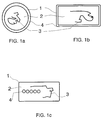
- FIGs 1a and 1b show two examples of the shape of microorganisms loaded with piezo-sensitive material or magnetic material.
- the microorganisms are shown diagrammatically by their membrane 1, their cytoplasm 2 and their DNA 3.
- the piezo-sensitive or magnetic material 4 is fixed to the periphery of the micro-organism and the piezo-sensitive or magnetic particle respectively obtained at the end of its manufacturing process has dimensions close to those of the support microorganism.
- the largest dimension of a particle of this type goes from a few microns to several hundred microns and the geometry of the piezo-sensitive or magnetic element obtained is that of the micro-organism which serves as a support.
- FIG. 1c shows another example of a microorganism loaded with piezo-sensitive material or with magnetic material.
- the microorganism ingested the piezo-sensitive material or the magnetic material and then fixed it in its cytoplasm 2, in the form of particles.
- the fixed particles thus obtained have dimensions very close to one another at the end of their recrystallization in the cytoplasm; the geometry of these particles is invariable and defined by the crystal structure of the starting network before dissolving in a nourishing medium.
- the microorganisms, yeasts or bacteria are cultivated in a nourishing medium further comprising the piezo-sensitive or magnetic substance which it is desired to fix on the surface of the cells. .
- the nourishing medium can be constituted by an agar or by a liquid nutritive medium.
- agar makes it possible to control the development of colonies of microorganisms.
- the piezo-sensitive or magnetic substance is in the form of a powder, the grain size of which generally does not exceed 100 or 20 microns respectively.
- This powder is incorporated into the agar after determining the lethal concentration of piezo-sensitive or magnetic product. This concentration varies depending on the nature of the substance. It is around 2% for hydrated lithium sulphate and it reaches 10% for tartaric acid, these substances being piezo-sensitive; for iron powder, which is a magnetic substance, it is around 10%.
- the incorporation of the piezo-sensitive or magnetic substance is carried out by melting the agar at a suitable temperature, but which must in no case exceed the melting point of said substance. Indeed, certain substances can lose their properties irreversibly if they are brought to too high temperatures. In this case, it is better to use a nourishing liquid and not an agar.
- the particles constituting the powder are sterilized before mixing. Subsequent operations should preferably be carried out in a sterile environment or in a laminar flow hood.
- the agar and particle mixture should be stirred continuously until completely cooled. It is very important to obtain an agar whose surface film is impregnated, with a suitable concentration, of the substance.
- the colonies of microorganisms are deposited on its surface to inoculate it.
- the incubation period is around 48 hours.
- the growth of the colonies is monitored by means of regular samples and observations under a microscope.
- the colonies are removed from the surface by means of pipette rakes. For very small quantities one can be content to use a dare.
- the use of agar is however less effective in case A than the use of a nourishing solution
- a nourishing solution is in the form of a more or less thick liquid, called broth, which contains the same nutritive elements (proteins, sugars, vitamins, water in suitable proportions) as agar.
- the composition of the broth depends on the microorganisms used.
- the piezo-sensitive or magnetic substance is in the form of a powder, the grain size of which generally does not exceed 100 or 20 microns respectively.
- This powder is incorporated into the broth after having determined, as for agar, the lethal concentration of piezo-sensitive or magnetic product. It is around 2.5% for hydrated lithium sulphate, it reaches 10% for tartaric acid and 10% for iron powder. Certain products such as Seignette salt are not lethal and may be recommended for this reason.
- the incorporation of the substance is carried out by pouring this substance at room temperature into the feed broth. To facilitate the dissolution of this substance, it is possible, in certain cases, to heat the broth to temperatures not exceeding 30 ° C.
- the particles must be sterilized before mixing. Subsequent operations should preferably be carried out in a sterile environment or in a laminar flow hood. The broth loaded with particles must be stirred continuously until the particles are completely dissolved.
- the broth After dissolution, the broth is left to stand. The incubation period is around 48 hours at 37 ° C. In this interval, the growth of the colonies is monitored by means of regular samples and observations under a microscope. At the end of this process, the colonies are centrifuged in a centrifuge tube, for a suitable duration, so as to obtain the formation of a pellet. The liquid which floats above the pellet is removed with a pipette and the pellet is collected with a spatula.
- microorganisms recovered at the end of these operations carried out from an agar or a solution are then lyophilized in the following manner.
- the principle of lyophilization is to sublimate the solvents present in a sample by bringing it to low temperature and low pressure. For this, the recovered microorganisms are previously frozen in order to obtain the solid phase.
- the next step is to lower the temperature of the cell in which the frozen samples will be placed. When the temperature of the latter has reached -20 ° C, the cooling circuit of the trap is started. It is at this point that the solvent vapors are removed. This operation lasts on average 15 minutes, it is completed when the temperature of the trap reaches -45 ° C.
- the samples are then placed in the tank at -20 ° C and a vacuum is produced. This step is carried out in stages until a pressure in the tank of 3.10 -2 Pa and lasts approximately 30 minutes.
- the samples are left to lyophilize for 24 hours, for a volume of 50 ml, in order to be sure of the good result of the operation.
- case B the method differs from the method used in case A only in the final phase which comprises an additional operation of extraction of the particles ingested by the microorganisms.
- piezo-sensitive particles can be extracted from the microorganisms recovered after lyophilization by immersing said microorganisms in a solution of water added with bleach. Bleach dissolves the membranes or cell walls of microorganisms within hours. The solution is then evaporated and the residues The products obtained in case B are smaller than those obtained in case A and require delicate and costly extraction operations.
- the invention therefore privileges the method corresponding to case A.
- the particles finally obtained can be compacted to form a piezo-sensitive agglomerate, or inserted into a matrix of polymer or dielectric, non-piezoelectric or weakly piezoelectric organic product, and this, to form a piezoelectric composite material.
- the material constituting the polymer matrix or the dielectric, non-piezoelectric or weakly piezocellular organic product are separated from the piezo-sensitive granules by ultra-centrifugation.
- electric can be chosen from polystyrenes, polysulfones, polycarbonates, polypropylenes, polyethylene, polyethylene terephthalates, polyphenylene oxides, polyurethane elastomers, polyvinylecarbazols and polyvinylidene fluorides, polyacrylate or polymethacrylate esters, polyvinylidyl polyvinylides , acrylonitrile or methacrylonitrile polymers, polyvinyl acetates, celluloids, cellulose acetates, polyvinylepyrrolidones, cellulose polymers, phenol-formaldehydes, phenol-furfural resins, soluble polyimide polymers, epoxy resins, polymerizable resins, natural rubbers, synthetic rubbers, silicone
- the microorganism used is a yeast called "Saccaromyces cerevisiae" which is a eukaryotic cell. This cell has the distinction of having a relatively large size, since of the order of 5 microns.
- the process requires the preparation of solid culture media.
- Sabouraud agar supplied by BIOCAR, is chosen as the preferred medium. This agar is indeed particularly suitable for the selection, identification, and culture of yeasts and molds.
- a broad-spectrum antimicrobial antibiotic is added to the ALPHA medium, at a concentration of 100 mg / L, in order to make the ALPHA medium more selective and therefore reduce the development of undesirable bacteria or microorganisms.
- the ALPHA medium is then sterilized by passing it in an autoclave at 120 ° C for 20 min. After sterilization it is then brought back to a temperature of the order of 45 ° C.
- the piezo-sensitive substance used in the example is Seignette salt powder.
- This powder is in the form of grains having an average size of 500 microns and a maximum size of 1 mm.
- This powder is sterilized by means of an ultraviolet ray lamp operating at a wavelength of 254 nm. Then it is mixed with the ALPHA medium maintained at a temperature of 45 ° C.
- the ALPHA medium must indeed be sufficiently liquid for the mixing to take place, but the mixing temperature must be sufficiently low so that the piezo-sensitive substance is not liquefied.
- Seignette salt has a melting temperature of 55 ° C. After mixing, the BETA medium is obtained.
- the quantity of piezo-sensitive product mixed in the culture medium is chosen so as to obtain a final concentration which is non-toxic for yeasts.
- the lethal concentration was determined by a prior cytotoxicity study. It is of the order of 0.1 g per gram of ALPHA medium. 50 g of Seignette salt powder was used to produce the BETA medium, which is below the lethal concentration (100 g).
- the BETA medium thus obtained is poured (volume of 20 ml) into a Petri dish 9 cm in diameter.
- a stock solution is established by dilution so as to obtain a concentration of 3000 yeasts per ml of suspension.
- a concentration of 3000 yeasts per ml of suspension is obtained by seeding 100 ⁇ l of this suspension, isolated colonies (around 300) will appear without forming a continuous sheet.
- Calcium salts (calcium carbonate and calcium acetate) are used to weaken the yeast membrane. By altering it, it becomes more easily penetratable. These calcium salts are prepared at a concentration of 50g / l.
- yeasts modified by the process we deposit them in a droplet of dielectric liquid (silicone oil for example), itself placed between two flat scotch-copper electrodes glued on a blade of glass, and an electric field of at least 200 V / mm is applied between these electrodes. The yeasts then form alignments perpendicular to the electrodes.
- dielectric liquid silicone oil for example
- the colonies removed are lyophilized and then inserted into a polymer matrix to form a composite material.
- the process for producing the material-electrode assembly may be as follows.
- the silicone resin is in the form of a resin A and a hardener B.
- the resin being always in the pre-polymer state, the mixture is injected, through an injection orifice 123, into a mold, shown in FIG. 2, made of plastic and provided with metal electrodes.
- This mold has the shape of a cylinder. It comprises two parts 124, 125 in Plexiglas and the electrodes are constituted by two metal cylinders 121 and 122 in aluminum bronze.
- the mixture of resin and microcrystals is allowed to polymerize for 48 hours.
- a coaxial electrical cable 131 is fitted to the electrodes 121 and 122, as shown in FIG. 3, and fitted at its outer end with a socket 132.
- the braid 133 of the cable 131 is connected to the external electrode 122.
- the central conductor 134 of the cable 131 is connected to the internal electrode 121.
- the assembly is placed in another mold for receive an outer coating 135 of polyurethane resin. During this operation, part of the cable 131 is overmolded by the coating 135.
- a sensor is thus obtained which is used as
- EXAMPLE 2 (yeast and iron powder in solid medium):
- Example 2 In this example of manufacturing a magnetic material according to the invention in solid medium, the method and its stages are strictly identical to Example 1, with the exception of the products involved. Indeed, an oxide powder FeO.OH type iron with a mass of 80g replaces the rye salt to produce the BETA medium, the yeasts having ingested this powder at the end of the 24 hour incubation operation at 37 °.
- yeasts modified by the process are removed and placed in a droplet of distilled water, itself placed in the air gap of an electromagnet in which the magnetic induction is at least one Tesla. The yeasts then form alignments perpendicular to the surfaces of the jaws of the electromagnet.
- EXAMPLE 3 yeast and Seignette salt in a liquid medium:
- the culture medium is in the form of a liquid called Sabouraud broth, supplied by the BIOCAR Company. It is prepared as follows. 30 g of agar powder are put in one liter of distilled water, then the medium is stirred, by means of a mechanical stirrer with fins, until a homogeneous suspension called ALPHA is obtained. During this last operation, the medium is slowly heated in a thermostatically controlled tank, to a temperature close to boiling. The agitation does not have to be continuous, but it must be frequent. The operation stops when the powder is completely dissolved.
- a broad-spectrum antimicrobial antibiotic is added to the ALPHA medium, at a concentration of 100 mg / L, in order to make the ALPHA medium more selective and therefore reduce the development of undesirable bacteria or microorganisms.
- the ALPHA medium is then sterilized by passing it through an autoclave at 120 ° C for 15 min. After sterilization it is then brought back to a temperature of the order of 45 ° C.
- the piezo-sensitive substance used in the example is Seignette salt powder.
- This powder is in the form of grains having an average size of 500 microns and a maximum size of 1 mm. Said powder is sterilized by means of an ultraviolet lamp operating at a wavelength of 254 nm. Then it is added and mixed with the ALPHA medium maintained at a temperature of 45 ° C. The mixing temperature must be low enough so that the piezo-sensitive substance is not liquefied.
- Seignette salt has a melting temperature of 55 ° C. After mixing, the BETA medium is obtained.
- the quantity of piezo-sensitive products mixed in the culture medium is chosen so as to obtain a final concentration which is non-toxic for yeasts.
- the lethal concentration was determined by a prior cytotoxicity study. It is of the order of 0.05 g per gram of ALPHA medium. 25 g of Seignette salt powder were therefore used to produce the BETA medium.
- a stock solution is established by dilution so as to obtain a concentration of 3000 yeasts per ml of suspension.
- the yeasts used belong to the Saccharomyces Cerevisiae strain.
- Calcium salts (calcium carbonate and calcium acetate) are used to weaken the yeast membrane. By altering it it becomes more easily penetratable. These calcium salts are prepared at a concentration of 50 g / l.
- the GAMMA suspension is then mixed with the BETA solution in the proportion of 100 ⁇ l of GAMMA solution per 50 ml of BETA solution.
- the incubation period is around 48 hours at 37 ° C. In this interval, the growth of the colonies is monitored by means of regular samples and observations under a microscope.
- Yeast recovery is then carried out by centrifugation at 4500 rpm for 15 minutes. The supernatant is removed with a pipette and the pellet is rinsed with distilled water. It is recovered, after a second centrifugation at 4500 rpm for 15 minutes, by means of one or more micropipettes connected to an automatic control and command system.
- the colonies removed are lyophilized and then compacted.
- the process for compacting the lyophilized particles can be as follows.
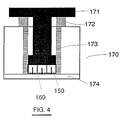
- the electrodes 150,160 chosen in this example are of the comb type, that is to say of the type of those described in patent application FR94.05991. They include a 151,161 49mm plate x 49mm, and blades 152.162 perpendicular to said plate, 1mm thick and whose spacing, between two consecutive blades, is 3 mm.
- the particles according to the invention are distributed between the blades of the electrode 150 and then, the electrode 160 is positioned so that each blade 161 of the latter is interposed between two blades of the electrode 150, and so that the space between two consecutive blades is 1 mm.
- a pressure of 20 MPa is then applied for five minutes, to the assembly described above, using the tool 170.
- This tool mainly comprises a piston 171, two spacers 172, a press body 173 and a sole 174
- Said pressure can optionally be applied until a homogeneous agglomerate is obtained, the control of the homogeneity being able to be carried out by a visual examination and by measuring the characteristic dimensions, at rest, of the product obtained.
- Example 3 In this example of manufacturing a magnetic material according to the invention in a liquid medium, the method and its steps are strictly identical to Example 3, with the exception of the products involved. Indeed, an oxide powder FeO.OH type iron with a mass of 100g replaces the rye salt to produce the BETA medium, the lethal concentration is 0.1g per gram of ALPHA medium, 100 ⁇ l of GAMMA suspension are mixed with 1500 ml of BETA solution .
- yeasts modified by the process are taken and placed in a droplet of distilled water, itself placed in the air gap of an electromagnet in which the magnetic induction is d 'at least one Tesla. The yeasts then form alignments perpendicular to the surfaces of the jaws of the electromagnet.
Landscapes
- Engineering & Computer Science (AREA)
- Chemical & Material Sciences (AREA)
- Composite Materials (AREA)
- Materials Engineering (AREA)
- Manufacturing & Machinery (AREA)
- Micro-Organisms Or Cultivation Processes Thereof (AREA)
- Measuring Or Testing Involving Enzymes Or Micro-Organisms (AREA)
- Immobilizing And Processing Of Enzymes And Microorganisms (AREA)
- Preparation Of Compounds By Using Micro-Organisms (AREA)
- Soft Magnetic Materials (AREA)
Applications Claiming Priority (2)
| Application Number | Priority Date | Filing Date | Title |
|---|---|---|---|
| FR9600368A FR2743667B1 (fr) | 1996-01-15 | 1996-01-15 | Procede de fabrication d'un materiau piezo-sensible |
| FR9600368 | 1996-01-15 |
Publications (3)
| Publication Number | Publication Date |
|---|---|
| EP0785583A2 true EP0785583A2 (de) | 1997-07-23 |
| EP0785583A3 EP0785583A3 (de) | 1997-08-13 |
| EP0785583B1 EP0785583B1 (de) | 2003-02-19 |
Family
ID=9488095
Family Applications (1)
| Application Number | Title | Priority Date | Filing Date |
|---|---|---|---|
| EP96402837A Expired - Lifetime EP0785583B1 (de) | 1996-01-15 | 1996-12-20 | Verfahren zum Herstellen eines druckempfindlichen Materials |
Country Status (6)
| Country | Link |
|---|---|
| US (2) | US5814916A (de) |
| EP (1) | EP0785583B1 (de) |
| JP (1) | JPH1050511A (de) |
| DE (1) | DE69626270T2 (de) |
| FR (1) | FR2743667B1 (de) |
| NO (1) | NO970157L (de) |
Cited By (2)
| Publication number | Priority date | Publication date | Assignee | Title |
|---|---|---|---|---|
| US5948652A (en) * | 1996-01-15 | 1999-09-07 | Etat Francais Represented By The Delugue General Pour L'armement | Method of manufacturing a piezosensitive material or a magnetic material |
| US12036286B2 (en) | 2021-03-18 | 2024-07-16 | Seagen Inc. | Selective drug release from internalized conjugates of biologically active compounds |
Families Citing this family (3)
| Publication number | Priority date | Publication date | Assignee | Title |
|---|---|---|---|---|
| FR2792338B1 (fr) * | 1999-04-15 | 2001-08-10 | France Etat | Procede et dispositif de determination de l'existence d'une activite biologique de micro-organismes |
| DE10104604A1 (de) * | 2001-02-02 | 2002-08-22 | Daimler Chrysler Ag | Bauteil mit schwingungsdämpfenden Eigenschaften, Gemenge zur Herstellung des Bauteils, sowie Verfahren zur Herstellung eines derartigen Bauteils |
| SE531313C2 (sv) * | 2007-05-25 | 2009-02-17 | Totalfoersvarets Forskningsins | Piezokrom komposit |
Citations (1)
| Publication number | Priority date | Publication date | Assignee | Title |
|---|---|---|---|---|
| FR2719181A1 (fr) | 1994-04-22 | 1995-10-27 | France Etat Armement | Dispositif piézo-sensible à polarisation variable. |
Family Cites Families (11)
| Publication number | Priority date | Publication date | Assignee | Title |
|---|---|---|---|---|
| US4214887A (en) * | 1978-11-08 | 1980-07-29 | Ozodyne, Inc. | Sewage and waste water treatment |
| US4285819A (en) * | 1980-01-28 | 1981-08-25 | California Institute Of Technology | Functional magnetic microspheres |
| US4407054A (en) * | 1980-10-28 | 1983-10-04 | Bell Telephone Laboratories, Incorporated | Method of making electromechanical transducers using improved flexible composite piezoelectric material |
| US4394451A (en) * | 1980-10-30 | 1983-07-19 | Biomagnetech Corp. | Culture medium and conditions for growth of magnetic bacteria |
| JPS57102188A (en) * | 1980-12-19 | 1982-06-25 | Toshiharu Yamashita | Piezoelectric substance fx-100 |
| JPS62171688A (ja) * | 1986-01-24 | 1987-07-28 | Hitachi Ltd | 微生物磁性粒子の分離精製方法 |
| JPS62294089A (ja) * | 1986-06-11 | 1987-12-21 | Canon Inc | 磁性トナ−用磁性体の製造方法 |
| US4935467A (en) * | 1987-06-04 | 1990-06-19 | Raychem Corporation | Polymeric blends |
| JPH0630599B2 (ja) * | 1989-03-03 | 1994-04-27 | ユニチカ株式会社 | フルクトース―1,6―二リン酸の製造法 |
| US5861285A (en) * | 1994-09-16 | 1999-01-19 | Tdk Corporation | Fusion protein-bound magnetic particles for recombinant production and magnetic separation of polypeptides of interest |
| FR2743667B1 (fr) * | 1996-01-15 | 1998-02-20 | France Etat | Procede de fabrication d'un materiau piezo-sensible |
-
1996
- 1996-01-15 FR FR9600368A patent/FR2743667B1/fr not_active Expired - Fee Related
- 1996-12-20 DE DE69626270T patent/DE69626270T2/de not_active Expired - Fee Related
- 1996-12-20 EP EP96402837A patent/EP0785583B1/de not_active Expired - Lifetime
-
1997
- 1997-01-14 NO NO970157A patent/NO970157L/no not_active Application Discontinuation
- 1997-01-14 JP JP9004537A patent/JPH1050511A/ja active Pending
- 1997-01-15 US US08/783,328 patent/US5814916A/en not_active Expired - Fee Related
-
1998
- 1998-03-24 US US09/047,186 patent/US5948652A/en not_active Expired - Fee Related
Patent Citations (1)
| Publication number | Priority date | Publication date | Assignee | Title |
|---|---|---|---|---|
| FR2719181A1 (fr) | 1994-04-22 | 1995-10-27 | France Etat Armement | Dispositif piézo-sensible à polarisation variable. |
Cited By (2)
| Publication number | Priority date | Publication date | Assignee | Title |
|---|---|---|---|---|
| US5948652A (en) * | 1996-01-15 | 1999-09-07 | Etat Francais Represented By The Delugue General Pour L'armement | Method of manufacturing a piezosensitive material or a magnetic material |
| US12036286B2 (en) | 2021-03-18 | 2024-07-16 | Seagen Inc. | Selective drug release from internalized conjugates of biologically active compounds |
Also Published As
| Publication number | Publication date |
|---|---|
| NO970157L (no) | 1997-07-16 |
| FR2743667B1 (fr) | 1998-02-20 |
| DE69626270D1 (de) | 2003-03-27 |
| DE69626270T2 (de) | 2003-12-11 |
| FR2743667A1 (fr) | 1997-07-18 |
| US5814916A (en) | 1998-09-29 |
| NO970157D0 (no) | 1997-01-14 |
| US5948652A (en) | 1999-09-07 |
| EP0785583A3 (de) | 1997-08-13 |
| EP0785583B1 (de) | 2003-02-19 |
| JPH1050511A (ja) | 1998-02-20 |
Similar Documents
| Publication | Publication Date | Title |
|---|---|---|
| Kimura et al. | New cellulose synthesizing complexes (terminal complexes) involved in animal cellulose biosynthesis in the tunicate Metandrocarpa uedai | |
| MUTVEI | Ultrastructural characteristics of the nacre in some gastropods | |
| Nuanpeng et al. | Ethanol production from sweet sorghum by Saccharomyces cerevisiae DBKKUY-53 immobilized on alginate-loofah matrices | |
| WO2001068808A1 (fr) | Particules contenant des microorganismes vivants enrobes, et procede de production | |
| Filshie | The resistance of epicuticular components of an insect to extraction with lipid solvents | |
| EP0785583B1 (de) | Verfahren zum Herstellen eines druckempfindlichen Materials | |
| FR2522678A1 (fr) | Microsupport a sa surface en verre pour la croissance de culture de cellules, et procede pour sa fabrication | |
| CN105032309A (zh) | 一种微胶囊及其制备方法 | |
| DE2018058A1 (de) | Glucose Isomerase und Verfahren zu ihrer Herstellung | |
| Schultz et al. | Enrichment of 5′-nucleotidase in membrane fragments isolated from acathamoeba sp. | |
| EP2276037B1 (de) | Verfahren zur Immobilisierung von radioaktivem Abfall | |
| FR3054141A1 (fr) | Separation des enzymes issues de trichoderma reesei par filtre presse et filtration tangentielle sur membrane ceramique. | |
| Brown et al. | The peripheral structures of Gram-negative bacteria: II. Membranes of bacilli and spheroplasts of a marine pseudomonad | |
| US20170226342A1 (en) | Compositions and methods related to proteins capable of reversible transition to a melt | |
| FR2736196A1 (fr) | Procede pour former un ecran luminescent a surface lisse | |
| FR2546180A1 (fr) | Procede d'augmentation de la production d'antibiotique par recombinaison genetique in vivo | |
| DE60313031T2 (de) | Hefebehandlung | |
| FR2999096A1 (fr) | Capsule a membrane etanche aux liquides et permeable aux gaz, procede de fabrication et utilisation pour l'elevage d'arthropodes in vitro | |
| FR3059207A1 (fr) | Materiau cellulosique antimicrobien | |
| WO1996034971A1 (fr) | Procede de production de vanilline par bioconversion de precurseurs benzeniques | |
| Tamura et al. | Cellulose‐synthesizing terminal complexes and microfibril structure in the brown alga Sphacelaria rigidula (Sphacelariales, Phaeophyceae) | |
| EP0678924A1 (de) | Drückempfindliche Anordnung mit variabler Polarisation | |
| EP1086253A1 (de) | Verfahren zur behandlung von zuckerrüben | |
| WO2009098212A2 (fr) | Procédé de fabrication de nanostructures d'éléments chalcogènes, notamment de nanostructures dites à une dimension ou 1 d | |
| CN111801403B (zh) | 可膜过滤的物理预处理的生物质组合物 |
Legal Events
| Date | Code | Title | Description |
|---|---|---|---|
| PUAI | Public reference made under article 153(3) epc to a published international application that has entered the european phase |
Free format text: ORIGINAL CODE: 0009012 |
|
| PUAL | Search report despatched |
Free format text: ORIGINAL CODE: 0009013 |
|
| 17P | Request for examination filed |
Effective date: 19970120 |
|
| AK | Designated contracting states |
Kind code of ref document: A2 Designated state(s): DE GB IT NL |
|
| AK | Designated contracting states |
Kind code of ref document: A3 Designated state(s): DE GB IT NL |
|
| 17Q | First examination report despatched |
Effective date: 19991217 |
|
| GRAG | Despatch of communication of intention to grant |
Free format text: ORIGINAL CODE: EPIDOS AGRA |
|
| GRAG | Despatch of communication of intention to grant |
Free format text: ORIGINAL CODE: EPIDOS AGRA |
|
| GRAH | Despatch of communication of intention to grant a patent |
Free format text: ORIGINAL CODE: EPIDOS IGRA |
|
| GRAH | Despatch of communication of intention to grant a patent |
Free format text: ORIGINAL CODE: EPIDOS IGRA |
|
| GRAA | (expected) grant |
Free format text: ORIGINAL CODE: 0009210 |
|
| AK | Designated contracting states |
Designated state(s): DE GB IT NL |
|
| REG | Reference to a national code |
Ref country code: GB Ref legal event code: FG4D Free format text: NOT ENGLISH |
|
| REF | Corresponds to: |
Ref document number: 69626270 Country of ref document: DE Date of ref document: 20030327 Kind code of ref document: P |
|
| GBT | Gb: translation of ep patent filed (gb section 77(6)(a)/1977) |
Effective date: 20030417 |
|
| PLBE | No opposition filed within time limit |
Free format text: ORIGINAL CODE: 0009261 |
|
| STAA | Information on the status of an ep patent application or granted ep patent |
Free format text: STATUS: NO OPPOSITION FILED WITHIN TIME LIMIT |
|
| 26N | No opposition filed |
Effective date: 20031120 |
|
| PGFP | Annual fee paid to national office [announced via postgrant information from national office to epo] |
Ref country code: DE Payment date: 20041208 Year of fee payment: 9 |
|
| PGFP | Annual fee paid to national office [announced via postgrant information from national office to epo] |
Ref country code: GB Payment date: 20041222 Year of fee payment: 9 |
|
| PGFP | Annual fee paid to national office [announced via postgrant information from national office to epo] |
Ref country code: NL Payment date: 20041231 Year of fee payment: 9 |
|
| PG25 | Lapsed in a contracting state [announced via postgrant information from national office to epo] |
Ref country code: IT Free format text: LAPSE BECAUSE OF NON-PAYMENT OF DUE FEES Effective date: 20051220 Ref country code: GB Free format text: LAPSE BECAUSE OF NON-PAYMENT OF DUE FEES Effective date: 20051220 |
|
| PG25 | Lapsed in a contracting state [announced via postgrant information from national office to epo] |
Ref country code: NL Free format text: LAPSE BECAUSE OF NON-PAYMENT OF DUE FEES Effective date: 20060701 Ref country code: DE Free format text: LAPSE BECAUSE OF NON-PAYMENT OF DUE FEES Effective date: 20060701 |
|
| GBPC | Gb: european patent ceased through non-payment of renewal fee |
Effective date: 20051220 |
|
| NLV4 | Nl: lapsed or anulled due to non-payment of the annual fee |
Effective date: 20060701 |