EP0764380B1 - A two-way multiple access communication system, and a central station and a user station for use in such a system - Google Patents
A two-way multiple access communication system, and a central station and a user station for use in such a system Download PDFInfo
- Publication number
- EP0764380B1 EP0764380B1 EP95920183A EP95920183A EP0764380B1 EP 0764380 B1 EP0764380 B1 EP 0764380B1 EP 95920183 A EP95920183 A EP 95920183A EP 95920183 A EP95920183 A EP 95920183A EP 0764380 B1 EP0764380 B1 EP 0764380B1
- Authority
- EP
- European Patent Office
- Prior art keywords
- central station
- session
- multiple access
- user
- communication system
- Prior art date
- Legal status (The legal status is an assumption and is not a legal conclusion. Google has not performed a legal analysis and makes no representation as to the accuracy of the status listed.)
- Expired - Lifetime
Links
- 238000004891 communication Methods 0.000 title claims abstract description 27
- 238000011144 upstream manufacturing Methods 0.000 claims description 32
- 230000005540 biological transmission Effects 0.000 claims description 27
- 230000002452 interceptive effect Effects 0.000 abstract description 20
- WTUKKAOMXJCRLH-UHFFFAOYSA-N 3-(2,2-dimethyl-3h-1-benzofuran-7-yl)-5-methoxy-1,3,4-oxadiazol-2-one Chemical compound O=C1OC(OC)=NN1C1=CC=CC2=C1OC(C)(C)C2 WTUKKAOMXJCRLH-UHFFFAOYSA-N 0.000 description 13
- GOSQZULQAKPXLL-OCAPTIKFSA-N 2-[(2r,6s)-6-(carboxymethyl)-4,4-dimethylmorpholin-4-ium-2-yl]acetate Chemical compound C[N+]1(C)C[C@H](CC(O)=O)O[C@H](CC([O-])=O)C1 GOSQZULQAKPXLL-OCAPTIKFSA-N 0.000 description 6
- 238000000034 method Methods 0.000 description 4
- RGDOXQAJXVTNRP-UHFFFAOYSA-N 8-(dicyclopropylmethyl)-1-methyl-3-propyl-7h-purine-2,6-dione Chemical compound N1C=2C(=O)N(C)C(=O)N(CCC)C=2N=C1C(C1CC1)C1CC1 RGDOXQAJXVTNRP-UHFFFAOYSA-N 0.000 description 3
- 238000012544 monitoring process Methods 0.000 description 3
- 239000000872 buffer Substances 0.000 description 2
- 230000006835 compression Effects 0.000 description 2
- 238000007906 compression Methods 0.000 description 2
- 230000001419 dependent effect Effects 0.000 description 2
- 238000012546 transfer Methods 0.000 description 2
- 230000008878 coupling Effects 0.000 description 1
- 238000010168 coupling process Methods 0.000 description 1
- 238000005859 coupling reaction Methods 0.000 description 1
- 238000010295 mobile communication Methods 0.000 description 1
- 238000012545 processing Methods 0.000 description 1
- 108010028621 stem cell inhibitory factor Proteins 0.000 description 1
Images
Classifications
-
- H—ELECTRICITY
- H04—ELECTRIC COMMUNICATION TECHNIQUE
- H04H—BROADCAST COMMUNICATION
- H04H20/00—Arrangements for broadcast or for distribution combined with broadcast
- H04H20/38—Arrangements for distribution where lower stations, e.g. receivers, interact with the broadcast
-
- H—ELECTRICITY
- H04—ELECTRIC COMMUNICATION TECHNIQUE
- H04N—PICTORIAL COMMUNICATION, e.g. TELEVISION
- H04N21/00—Selective content distribution, e.g. interactive television or video on demand [VOD]
- H04N21/20—Servers specifically adapted for the distribution of content, e.g. VOD servers; Operations thereof
- H04N21/23—Processing of content or additional data; Elementary server operations; Server middleware
- H04N21/238—Interfacing the downstream path of the transmission network, e.g. adapting the transmission rate of a video stream to network bandwidth; Processing of multiplex streams
-
- H—ELECTRICITY
- H04—ELECTRIC COMMUNICATION TECHNIQUE
- H04H—BROADCAST COMMUNICATION
- H04H60/00—Arrangements for broadcast applications with a direct linking to broadcast information or broadcast space-time; Broadcast-related systems
- H04H60/76—Arrangements characterised by transmission systems other than for broadcast, e.g. the Internet
- H04H60/81—Arrangements characterised by transmission systems other than for broadcast, e.g. the Internet characterised by the transmission system itself
- H04H60/93—Wired transmission systems
- H04H60/96—CATV systems
-
- H—ELECTRICITY
- H04—ELECTRIC COMMUNICATION TECHNIQUE
- H04L—TRANSMISSION OF DIGITAL INFORMATION, e.g. TELEGRAPHIC COMMUNICATION
- H04L12/00—Data switching networks
- H04L12/28—Data switching networks characterised by path configuration, e.g. LAN [Local Area Networks] or WAN [Wide Area Networks]
- H04L12/2801—Broadband local area networks
-
- H—ELECTRICITY
- H04—ELECTRIC COMMUNICATION TECHNIQUE
- H04N—PICTORIAL COMMUNICATION, e.g. TELEVISION
- H04N21/00—Selective content distribution, e.g. interactive television or video on demand [VOD]
- H04N21/20—Servers specifically adapted for the distribution of content, e.g. VOD servers; Operations thereof
- H04N21/21—Server components or server architectures
-
- H—ELECTRICITY
- H04—ELECTRIC COMMUNICATION TECHNIQUE
- H04N—PICTORIAL COMMUNICATION, e.g. TELEVISION
- H04N21/00—Selective content distribution, e.g. interactive television or video on demand [VOD]
- H04N21/20—Servers specifically adapted for the distribution of content, e.g. VOD servers; Operations thereof
- H04N21/23—Processing of content or additional data; Elementary server operations; Server middleware
- H04N21/239—Interfacing the upstream path of the transmission network, e.g. prioritizing client content requests
-
- H—ELECTRICITY
- H04—ELECTRIC COMMUNICATION TECHNIQUE
- H04N—PICTORIAL COMMUNICATION, e.g. TELEVISION
- H04N7/00—Television systems
- H04N7/16—Analogue secrecy systems; Analogue subscription systems
- H04N7/162—Authorising the user terminal, e.g. by paying; Registering the use of a subscription channel, e.g. billing
- H04N7/165—Centralised control of user terminal ; Registering at central
-
- H—ELECTRICITY
- H04—ELECTRIC COMMUNICATION TECHNIQUE
- H04N—PICTORIAL COMMUNICATION, e.g. TELEVISION
- H04N7/00—Television systems
- H04N7/16—Analogue secrecy systems; Analogue subscription systems
- H04N7/173—Analogue secrecy systems; Analogue subscription systems with two-way working, e.g. subscriber sending a programme selection signal
- H04N7/17309—Transmission or handling of upstream communications
-
- H—ELECTRICITY
- H04—ELECTRIC COMMUNICATION TECHNIQUE
- H04H—BROADCAST COMMUNICATION
- H04H20/00—Arrangements for broadcast or for distribution combined with broadcast
- H04H20/65—Arrangements characterised by transmission systems for broadcast
- H04H20/76—Wired systems
- H04H20/77—Wired systems using carrier waves
- H04H20/78—CATV [Community Antenna Television] systems
- H04H20/79—CATV [Community Antenna Television] systems using downlink of the CATV systems, e.g. audio broadcast via CATV network
-
- H—ELECTRICITY
- H04—ELECTRIC COMMUNICATION TECHNIQUE
- H04H—BROADCAST COMMUNICATION
- H04H60/00—Arrangements for broadcast applications with a direct linking to broadcast information or broadcast space-time; Broadcast-related systems
- H04H60/76—Arrangements characterised by transmission systems other than for broadcast, e.g. the Internet
- H04H60/81—Arrangements characterised by transmission systems other than for broadcast, e.g. the Internet characterised by the transmission system itself
- H04H60/90—Wireless transmission systems
- H04H60/91—Mobile communication networks
-
- H—ELECTRICITY
- H04—ELECTRIC COMMUNICATION TECHNIQUE
- H04H—BROADCAST COMMUNICATION
- H04H60/00—Arrangements for broadcast applications with a direct linking to broadcast information or broadcast space-time; Broadcast-related systems
- H04H60/76—Arrangements characterised by transmission systems other than for broadcast, e.g. the Internet
- H04H60/81—Arrangements characterised by transmission systems other than for broadcast, e.g. the Internet characterised by the transmission system itself
- H04H60/93—Wired transmission systems
- H04H60/96—CATV systems
- H04H60/97—CATV systems using uplink of the CATV systems
Definitions
- the present invention relates to a two-way multiple access communication system comprising at least one central station, a plurality of user stations, and a transmission network for exchanging at least video information comprising user information in sessions between the central station and the user stations, and for exchanging session accompanying control information.
- a network can be a CATV-network, a radio network, or the like.
- the present invention further relates to a central station and a user station for use in such a system.
- a two-way multiple access communication system of this kind is known from the European Patent Application No. 0 140 475.
- An interactive multiple access communication system is described in which in a downstream direction of a CATV (Community or Cable Television) network as a transmission network, a plurality of television programs are supplied by a CATV head end as a central station to a plurality of user stations, the transmission network being a coaxial cable.
- CATV Common or Cable Television
- common forward and reverse channels are provided which are common to all user stations, and which are separate from television channels for providing the television programs, the reverse channel occupying a frequency band below 30 MHz, and the forward channel occupying a TV channel equivalent frequency band above 50 MHz.
- Interactivity characterizes a system in that a maximum response time from the central station to a subscriber station input is less than a predetermined response time, e.g. less than one second.
- session accompanying control information is exchanged between the central station and the user station in traffic packets containing user station addresses inter alia .
- a retransmission mechanism is disclosed in which the central station acknowledges control messages from the user station.
- the channel has to be a relatively wide-band channel with relatively high speed transmission. This would disadvantageously lead to the user station needing a relatively high-speed modem for communicating control messages, such a modem being relatively expensive.
- the two-way multiple access communication system is characterized in that at least in an upstream direction of the transmission network, the session accompanying control information is exchanged via upstream control channels which are per session assigned to the user stations.
- the present invention is based upon the insight that usually, when the system has to provide true interactivity to many user stations simultaneously, in the upstream direction a relatively high traffic capacity is needed. By providing a dedicated control channel per session, such a need can be fulfilled.
- a communication system which comprises a control center and a number of subscriber terminals.
- the control center and the subscriber terminals can exchange control information by means of a single dedicated forward control channel and a single dedicated return control channel. Both the forward and return control channels are shared by all the subscriber terminals.
- the control center cyclically assigns exclusive time slots to the user stations so that the user stations can communicate with the central station.
- the session accompanying control information is exchanged via a dedicated control channel.
- the central station advantageously also can provide control data via the dedicated channels.
- the system is suitable for all kinds of multimedia applications, such as pay per view, video on demand, teleshopping, interactive television, games, TV education, teleworking, or the like, or other applications such as monitoring of customers' choices of selected television programs, or the like.
- the transmission network comprises a cable television network for exchanging the user information, and a two-way multiple access radio system for exchanging the session information, the central station being coupled to the cable television network and to the radio system.
- the system can be a dedicated system on a CATV network, i.e.
- CATV network also an ordinary CATV network, or the like
- CATV network can be transformed into a two-way multiple access communication system according to the present invention by combining such an ordinary CATV network with an existing two-way multiple access radio system such as a GSM (Global System for Mobile Communications) or a DECT (Digital European Cordless Telecommunications) system, or the like, the radio system supplying full duplex traffic channels as the dedicated control channels for each session.
- GSM Global System for Mobile Communications
- DECT Digital European Cordless Telecommunications
- the GSM system can be used as a separate radio system coupled to the CATV system, or the functionality of the GSM system can be integrated in the CATV system, terrestrial cells being replaced by the CATV network.
- the GSM frequency bands can simply be adjusted thereto.
- the upstream channels the 5-30 MHz band can be used, and the downstream channels can be allocated in between VHF bands II and III.
- the dedicated control channels are multiplexed by means of time division multiplexing, or by means of frequency division multiplexing, or by means of a combination of time division multiplexing and frequency division multiplexing.
- a well-manageable control structure is achieved for offering the desired control channel capacity.
- the central station comprising managing arrangements for assigning the dedicated control channels when receiving a session request message from a user station and for assigning transmission channels to session data streams, the presence of a common upstream control channel for session requests from user stations, and a storage means in the central station for storing dedicated channel numbers as assigned to sessions.
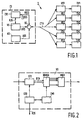
- Fig. 1 schematically shows an interactive television system on a CATV network as a two-way multiple access system 1 according to the present invention comprising a central station CS coupled to a plurality of user stations US1 via a CATV network CTV.
- a transmission network i.e. no separate transmission network, like a telephone network.
- the user stations US1 to US5, or Set-Top Boxes are coupled to television sets TV1 to TV5, the user stations including means for responding (not shown) to the central station CS.
- Such responding means could be included into remote control units (not shown) of the user stations US1 to US5.
- the central station, or cable head end, CS comprises a video server VS for providing hyper band downstream signals HYS, a central station controller CSC for generating downstream control signals DSCS and processing upstream control signals USCS from the user station US1 to US5, an analog radio and TV services providing unit AS for providing VHF band I, II and III signals and UHF band IV and V signals ASS, and a signal combiner/splitter SC for combining the downstream signals ASS, HYS, and DSCS, and splitting the upstream control signals USCS to the controller CSC.
- the video server VS can be a so-called multi-media server.
- the system 1 is a two-way multiple access system to which n user stations can have access, m user stations being active simultaneously, m ⁇ n, m and n being integers.
- n can be in the order of thousands, and m can be in the order of hundreds.
- the hyper band signals can be compressed digital signals, using signal compression according to the MPEG-1 or MPEG-2 standard, or the like.
- video compression techniques such as MPEG (Moving Picture Expert Group), referred is to "Videokompressionsvon, view Ohne Frust", Funkschau No. 11, 1994, pp. 54-59.
- the digitally compressed signals can represent still pictures or moving pictures.
- the upstream control signals can represent interactive TV control signals from the user stations US1 to US5, can represent requests from the user stations for an interactive TV session, for a video film (so-called Video on Demand), or many other services in the field of Multi-Media applications.
- the downstream control signals DSCS can represent messages from the central station CS to the user stations US1 to US5 indicating channels of bought movies (Video on Demand), can represent handshake control signals or other data for interactive TV applications, or many other control signals in the field of Multi-Media applications.
- the session accompanying upstream control information USCS is exchanged via a dedicated control channel, e.g.
- the session accompanying downstream control information is exchanged via a dedicated control channel.
- the dedicated control channels can transfer control information at a bit rate of 9.6 kbit/s.
- a common control channel can be used, as will be described in the sequel.
- Fig. 2 shows the video server VS in the system 1.
- an interactive TV session on the CATV network CTV will be described, the system according to the present invention also being usable for other Multi-Media applications.
- An interactive TV session could be shopping TV.
- a customer wants to buy a new car.
- the TV-screen of the television set TV1 shows a picture of a shopping center.
- a joy-stick (not shown) on his remote control unit, the customer can point to the part of the shopping centers where car dealers are located. An outline of this part of the shopping center is then shown on the TV-screen.
- the remote control unit the customer selects a particular car dealer, and then a particular car type for sale by the selected dealer.
- the video server VS comprises a storage STO, e.g. a disk array having a storage capacity of 100 Giga bytes, for storing digitally compressed movies, and digital modulators MOD, e.g. using 64-QAM modulation, for modulating data streams DTA of ordered movies.
- the video server VS further comprises a control & supervision unit CSU which is coupled to the storage STO and to a channel manager CM, and still further comprises a demultiplexing arrangement DEMUX for demultiplexing the video data stream DTA to a number of parallel data streams each containing a number of user streams.
- the modulator MOD then comprises 10 parallel operating 64-QAM cable modulators (not shown in detail).
- the data stream DTA for all m user stations is a packetized stream with a user station identification in each packet so as to determine the destination of the packet.
- 10 channels of 8 MHz are provided, each channel using the so-called hyper band 300-450 MHz, or, alternatively, the lower part of the UHF V band 550-750 MHz, each channel having a capacity of over 30 Mbit/s.
- the channel manager CM1 further communicates the channel assignments to the unit CSU, which, on its turn, communicates the channel assignments to the user stations.
- an link X25 is provided, coupling the video server VS to the central station controller CSC.
- a well-known packet transfer protocol X.25 is applied, making the video server VS independent from the control channel transmission network.
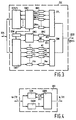
- the downstream control channels occupy a frequency band of 25 MHz, e.g. 149-174 MHz.
- the central station controller CSC further comprises a splitter SPL, an input of which being coupled to the network CTV so as to process the dedicated upstream control channels USCS, occupying a frequency band of 25 MHz, e.g. 5-30 MHz.
- the switch SW2 is coupled to packet concentrator X25PC, operating in accordance to the well-known X.25 packet concentrating mechanism.
- the central station controller CSC further comprises a channel managing arrangement CM2 which is coupled to the switch SW1, the channel managing arrangement CM2 being coupled to storage means STM for storing channel numbers of dedicated control channels, which are assigned by the channel managing arrangement CM2 to sessions requested by the user stations.
- the channel managing arrangement CM2 is further coupled to a modulator MC and a demodulator DMC so as to provide a common downstream control channel DCC, and a common upstream control channel UCC, respectively.
- signal multiplexing of the 200 dedicated control channels can be done by using time division multiplexing, by using frequency division multiplexing, by using a combination of time division multiplexing and frequency division multiplexing, or by any other well-known signal multiplexing technique.
- the dedicated control channels are session accompanying control channels.
- the common control channels DCC and UCC are available.
- n 1000, user stations, which may have access to the network CTV, use the upstream common control channel UCC for transmitting their session request messages, collisions may occur.
- the channel managing unit CM2 in the central station controller CSC notices a collision, it transmits a message on the downstream common control channel DCC to the involved user stations to inform them to retransmit their request message after a randomly selected waiting time. If a session request message if properly detected by the channel managing arrangement CM2, it assigns an available dedicated upstream control channel and an available dedicated downstream control channel to the requesting user station, the storage means STM being updated so as to keep track of the assigned dedicated channels.
- the central station controller CSC transmits an acknowledgement/assignment message to the requesting user station via the downstream common control channel DCC, the message comprising the assigned dedicated channel numbers and an identification number of the requesting user station.
- the requesting user station tunes to the assigned dedicated control channels.
- the switch SW2 selectively passes data received from assigned dedicated upstream control channels to the X.25 packet concentrator X25PC.
- the switch SW1 receives packets from the control & supervision unit CSU, it reads a destination identifier stored in a packet header, consults the storage means STM for acquiring the corresponding assigned dedicated upstream channel number, and passes the packet to the corresponding channel FIFO-buffer.
- the user station When closing a session, the user station informs the control & supervision unit CSU in a message it is doing so. Thereupon, the video server VS transmits a message to the channel managing arrangement CM2 via the link X25, the channel managing arrangement CM2 updating the storage means STM so as to release the dedicated channels which were assigned to the session.
- a session may be closed when the user station switches off its power. In this case, the central station has to monitor whether or not open sessions exist. For such monitoring purposes, the user stations can transmit pilot messages at regular time intervals, when being active.
- Fig. 4 shows the user station US1 in the system 1 which comprises a control channel modem CCM coupled to a decoder arrangement DBOX, and a digital cable demodulator arrangement CADM, the digital cable demodulator CADM being known per se.
- the demodulator CADM is coupled to the decoder arrangement DBOX via a so-called T1-interface, and the channel modem CCM is coupled to the decoder arrangement DBOX via a V.24 interface, also known as RS-232.
- a session indicator line SIL (1 bit) indicates whether or not a session is going on.
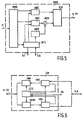
- Fig. 5 shows the decoder arrangement DBOX in the user station US1 according to the present invention.
- the decoder arrangement DBOX which operates independent of the transmission network due to the fact that all transmission network dependent equipment is put outside the decoder arrangement DBOX, comprises an MPEG demultiplexer MPDX which is coupled to the demodulator CADM via the T1-interface.
- the MPEG demultiplexer MPDX submits demultiplexed audio information to an audio decoder ADEC, and submits demultiplexed video information to a video decoder VDEC.
- the decoder arrangement DBOX further comprises a graphics generator GGEN for locally generating graphical information, a video combiner VCOM combining the decoded MPEG video information, and the locally generated graphics.
- a so-called Scan interface SCIF is provided in the decoder arrangement DBOX for providing audio and video signals to the television set TV1.
- a decoder arrangement controller DCTL is provided in the decoder arrangement DBOX which is coupled to the audio decoder ADEC, to the video decoder VDEC, to the graphics generator GGEN, and to the MPEG demultiplexer MPDX.
- the controller DCTL renders the session indicator line SIL high or low, when a session is required or when a session is to be closed, respectively.
- Information to be exchanged between the central station CS and the user station US1 is transferred between the decoder arrangement DBOX and the control channel modem CCM via the V.24 interface.
- Fig. 6 shows the control channel modem CCM in the user station US1 comprising a modulator CMM and a demodulator CMDM coupled to respective switches SW3 and SW4, and to the network CTV.
- the control channel modem further comprises a controller CCTL which is coupled to the modulator CMM, to the demodulator CMDM, to the switch SW3, to the switch SW4, and to the session indicator line SIL.
- the decoder arrangement renders the session indicator line SIL high, the controller CCTL monitoring the line SIL.
- the controller CCTL actuates the switches SW3 and SW4 such that the controller CCTL can communicate with the central station CS via the modulator CMM, and via the demodulator CMDM.
- the controller CCTL tunes the modulator CCM and the demodulator CMDM to the common control channels UCC and DCC, respectively.
- the controller transmits a session request message to the central station CS via the upstream common control channel UCC for opening an interactive TV session. If the session request message is acknowledged by the central station CS via the downstream common control channel DCC, such an acknowledgement is accompanied by assigned dedicated control channel numbers, both upstream and downstream.
- the controller CCTL tunes the modulator CMM and the demodulator CMDM to the assigned upstream and downstream dedicated control channel, respectively, and actuates the switches SW3 and SW4 such that the decoder arrangement DBOX is coupled to the demodulator CMM and to the demodulator CMDM for exchanging session accompanying messages with the central station CS. If the session is to be closed, the decoder arrangement DBOX transmits a message to this end to the central station CS, and renders the line SIL low.
Landscapes
- Engineering & Computer Science (AREA)
- Signal Processing (AREA)
- Multimedia (AREA)
- Computer Networks & Wireless Communication (AREA)
- Computer Security & Cryptography (AREA)
- Two-Way Televisions, Distribution Of Moving Picture Or The Like (AREA)
- Television Systems (AREA)
Priority Applications (1)
| Application Number | Priority Date | Filing Date | Title |
|---|---|---|---|
| EP95920183A EP0764380B1 (en) | 1994-06-09 | 1995-06-06 | A two-way multiple access communication system, and a central station and a user station for use in such a system |
Applications Claiming Priority (4)
| Application Number | Priority Date | Filing Date | Title |
|---|---|---|---|
| EP94201652 | 1994-06-09 | ||
| EP94201652 | 1994-06-09 | ||
| PCT/IB1995/000434 WO1995034168A2 (en) | 1994-06-09 | 1995-06-06 | A two-way multiple access communication system, and a central station and a user station for use in such a system |
| EP95920183A EP0764380B1 (en) | 1994-06-09 | 1995-06-06 | A two-way multiple access communication system, and a central station and a user station for use in such a system |
Publications (2)
| Publication Number | Publication Date |
|---|---|
| EP0764380A2 EP0764380A2 (en) | 1997-03-26 |
| EP0764380B1 true EP0764380B1 (en) | 2000-03-22 |
Family
ID=8216936
Family Applications (1)
| Application Number | Title | Priority Date | Filing Date |
|---|---|---|---|
| EP95920183A Expired - Lifetime EP0764380B1 (en) | 1994-06-09 | 1995-06-06 | A two-way multiple access communication system, and a central station and a user station for use in such a system |
Country Status (8)
| Country | Link |
|---|---|
| US (1) | US5917810A (enExample) |
| EP (1) | EP0764380B1 (enExample) |
| JP (1) | JP4277094B2 (enExample) |
| KR (1) | KR100395040B1 (enExample) |
| DE (1) | DE69515871T2 (enExample) |
| ES (1) | ES2146315T3 (enExample) |
| TW (1) | TW449987B (enExample) |
| WO (1) | WO1995034168A2 (enExample) |
Families Citing this family (37)
| Publication number | Priority date | Publication date | Assignee | Title |
|---|---|---|---|---|
| US6334219B1 (en) | 1994-09-26 | 2001-12-25 | Adc Telecommunications Inc. | Channel selection for a hybrid fiber coax network |
| USRE42236E1 (en) | 1995-02-06 | 2011-03-22 | Adc Telecommunications, Inc. | Multiuse subcarriers in multipoint-to-point communication using orthogonal frequency division multiplexing |
| US7280564B1 (en) | 1995-02-06 | 2007-10-09 | Adc Telecommunications, Inc. | Synchronization techniques in multipoint-to-point communication using orthgonal frequency division multiplexing |
| NZ315992A (en) * | 1995-09-07 | 2000-02-28 | Nec Australia Pty Ltd | A distribution system to enable video and interactive services to be distributed over a public switched telephone network |
| WO1997027550A2 (en) * | 1996-01-24 | 1997-07-31 | Adc Telecommunications, Inc. | Communication system with multicarrier telephony transport |
| US5841468A (en) * | 1996-04-26 | 1998-11-24 | Convergence. Com | System and method for routing data messages through a cable transmission system |
| EP0820194A1 (en) * | 1996-07-19 | 1998-01-21 | Telefonaktiebolaget Lm Ericsson | A method and an arrangement for integrated radio telecommunication via a CATV network |
| FI101665B1 (fi) | 1996-08-23 | 1998-07-31 | Nokia Multimedia Network Terminals Oy | Parannettu kaksisuuntainen tietoliikenneyhteys kaapelitelevisiojärjestelmässä |
| CN1062100C (zh) * | 1996-11-02 | 2001-02-14 | 深圳市华为技术有限公司 | 基于catv网实现综合业务的介质送取控制方法和网络 |
| US6226750B1 (en) | 1998-01-20 | 2001-05-01 | Proact Technologies Corp. | Secure session tracking method and system for client-server environment |
| US6259443B1 (en) | 1998-02-06 | 2001-07-10 | Henry R. Williams, Jr. | Method and apparatus for enabling multiple users to concurrently access a remote server using set-top boxes |
| US7120592B1 (en) * | 1998-06-24 | 2006-10-10 | Morris Edward Lewis | Method, apparatus and processed for real time interactive online ordering and reordering and over the counter purchasing with rebate, saving, and investing processes |
| US6181687B1 (en) * | 1998-10-22 | 2001-01-30 | International Business Machines Corporation | System and a method for continuously adjustable, splitting group, multi-contention resolution in multi-access computer communication systems |
| US6385642B1 (en) | 1998-11-03 | 2002-05-07 | Youdecide.Com, Inc. | Internet web server cache storage and session management system |
| US6346047B1 (en) * | 1999-01-08 | 2002-02-12 | Eleven Engineering Inc | Radio frequency remote game controller |
| US6532225B1 (en) * | 1999-07-27 | 2003-03-11 | At&T Corp | Medium access control layer for packetized wireless systems |
| US6807178B1 (en) * | 2000-05-31 | 2004-10-19 | Telefonaktiebolaget Lm Ericsson (Publ) | Session dispatcher at a wireless multiplexer interface |
| US6992990B2 (en) | 2000-07-17 | 2006-01-31 | Sony Corporation | Radio communication apparatus |
| JP4543513B2 (ja) * | 2000-07-17 | 2010-09-15 | ソニー株式会社 | 双方向通信システム、表示装置、ベース装置および双方向通信方法 |
| JP4501243B2 (ja) | 2000-07-24 | 2010-07-14 | ソニー株式会社 | テレビジョン受像機およびプログラム実行方法 |
| US6954615B2 (en) | 2000-07-25 | 2005-10-11 | Sony Corporation | Display terminal |
| JP2002064398A (ja) | 2000-08-21 | 2002-02-28 | Sony Corp | 無線伝送装置 |
| US7840691B1 (en) | 2000-09-07 | 2010-11-23 | Zamora Radio, Llc | Personal broadcast server system for providing a customized broadcast |
| JP4881503B2 (ja) | 2000-09-19 | 2012-02-22 | ソニー株式会社 | コマンド処理方法および無線通信機器 |
| JP2002111686A (ja) | 2000-10-04 | 2002-04-12 | Sony Corp | 通信方法および通信装置 |
| JP4572461B2 (ja) | 2000-10-10 | 2010-11-04 | ソニー株式会社 | 端末機器設定方法 |
| US7162728B1 (en) | 2001-03-30 | 2007-01-09 | Digeo, Inc. | System and method to provide audio enhancements and preferences for interactive television |
| DE20108146U1 (de) * | 2001-05-14 | 2002-09-26 | Dietrich, Oliver, 86159 Augsburg | Übertragungseinrichtung für Audio- und/oder visuelle Programme |
| US6915473B2 (en) | 2001-05-14 | 2005-07-05 | Interdigital Technology Corporation | Method and system for implicit user equipment identification |
| US7962482B2 (en) | 2001-05-16 | 2011-06-14 | Pandora Media, Inc. | Methods and systems for utilizing contextual feedback to generate and modify playlists |
| US20020184507A1 (en) * | 2001-05-31 | 2002-12-05 | Proact Technologies Corp. | Centralized single sign-on method and system for a client-server environment |
| GB2377585B (en) | 2001-07-06 | 2005-08-24 | Ipwireless Inc | Communication resource access request |
| WO2003081878A1 (en) * | 2002-03-27 | 2003-10-02 | Mitsubishi Denki Kabushiki Kaisha | Communication apparatus and communication method |
| US7200405B2 (en) | 2003-11-18 | 2007-04-03 | Interdigital Technology Corporation | Method and system for providing channel assignment information used to support uplink and downlink channels |
| WO2005053243A2 (en) * | 2003-11-19 | 2005-06-09 | Honeywell International Inc. | Priority based arbitration for tdma schedule enforcement in a multi-channel system in star configuration |
| US20050138667A1 (en) * | 2003-12-22 | 2005-06-23 | Alain Delpuch | Method and system to control a return path to a source system in an interactive television environment |
| US8412167B1 (en) * | 2011-12-08 | 2013-04-02 | Sprint Communications Company L.P. | Wireless communication system that selects and broadcasts FM media streams on a per-base station basis |
Family Cites Families (11)
| Publication number | Priority date | Publication date | Assignee | Title |
|---|---|---|---|---|
| US3668307A (en) * | 1970-03-30 | 1972-06-06 | Kms Ind Inc | Two-way community antenna television system |
| US4633462A (en) * | 1983-07-18 | 1986-12-30 | The Board Of Trustees Of The University Of Illinois | Multiple access communication on a CATV reverse channel |
| US5455823A (en) * | 1990-11-06 | 1995-10-03 | Radio Satellite Corporation | Integrated communications terminal |
| US5303229A (en) * | 1991-07-31 | 1994-04-12 | Alcatel Network Systems, Inc. | Optical network unit |
| US5421030A (en) * | 1991-09-17 | 1995-05-30 | Com21, Inc. | Communications system and method for bi-directional communications between an upstream control facility and downstream user terminals |
| US5247347A (en) * | 1991-09-27 | 1993-09-21 | Bell Atlantic Network Services, Inc. | Pstn architecture for video-on-demand services |
| US5408680A (en) * | 1992-08-11 | 1995-04-18 | Ericsson Ge Mobile Communications Inc. | Single channel autonomous digitally trunked RF communications system |
| US5446490A (en) * | 1992-10-23 | 1995-08-29 | At&T Corp. | Interactive television with tailored programming |
| US5841971A (en) * | 1992-12-17 | 1998-11-24 | Voxson International Pty. Limited | Information transmission system for transmitting video signals over cellular telephone networks |
| DE4304095B4 (de) * | 1993-02-11 | 2005-08-25 | Philips Intellectual Property & Standards Gmbh | Mobilfunksystem |
| SG46708A1 (en) * | 1993-09-20 | 1998-02-20 | Motorola Inc | Method and apparatus for trunked telephone access to a cable network |
-
1995
- 1995-06-06 WO PCT/IB1995/000434 patent/WO1995034168A2/en not_active Ceased
- 1995-06-06 ES ES95920183T patent/ES2146315T3/es not_active Expired - Lifetime
- 1995-06-06 DE DE69515871T patent/DE69515871T2/de not_active Expired - Lifetime
- 1995-06-06 EP EP95920183A patent/EP0764380B1/en not_active Expired - Lifetime
- 1995-06-06 JP JP50061396A patent/JP4277094B2/ja not_active Expired - Lifetime
- 1995-06-06 KR KR1019960707008A patent/KR100395040B1/ko not_active Expired - Lifetime
- 1995-06-20 TW TW084106337A patent/TW449987B/zh not_active IP Right Cessation
-
1996
- 1996-12-16 US US08/767,460 patent/US5917810A/en not_active Expired - Lifetime
Also Published As
| Publication number | Publication date |
|---|---|
| WO1995034168A2 (en) | 1995-12-14 |
| JP4277094B2 (ja) | 2009-06-10 |
| DE69515871T2 (de) | 2000-11-02 |
| WO1995034168A3 (en) | 1996-02-08 |
| US5917810A (en) | 1999-06-29 |
| KR970704297A (ko) | 1997-08-09 |
| DE69515871D1 (de) | 2000-04-27 |
| HK1013387A1 (en) | 1999-08-20 |
| EP0764380A2 (en) | 1997-03-26 |
| JPH10502502A (ja) | 1998-03-03 |
| ES2146315T3 (es) | 2000-08-01 |
| TW449987B (en) | 2001-08-11 |
| KR100395040B1 (ko) | 2003-12-31 |
Similar Documents
| Publication | Publication Date | Title |
|---|---|---|
| US5917810A (en) | Two-way multiple access communication system, and a central station and a user station for use in such a system | |
| US5613191A (en) | Customer premise wireless distribution of audio-video, control signals and voice using CDMA | |
| US5630204A (en) | Customer premise wireless distribution of broad band signals and two-way communication of control signals over power lines | |
| US5539449A (en) | Integrated television services system | |
| US5613190A (en) | Customer premise wireless distribution of audio-video, control signals and voice | |
| JP3486294B2 (ja) | ケーブル・テレビ・チャネルにより伝送されるデータに対する動的チャネル割当て | |
| US5793413A (en) | Wireless video distribution | |
| US6014381A (en) | System and method for distributing information throughout an aircraft | |
| US6857132B1 (en) | Head end multiplexer to select and transmit video-on-demand and other requested programs and services | |
| EP1442386B1 (en) | Mechanism for implementing network discovery in a cable network | |
| JP3895804B2 (ja) | 双方向通信システム | |
| US6041056A (en) | Full service network having distributed architecture | |
| JP4653888B2 (ja) | 情報送信ネットワークにおける論理型ノード識別 | |
| US5539880A (en) | Cable-based interactive multimedia workstation network | |
| US7203953B2 (en) | Method and apparatus for two-way internet access over a CATV network with channel tracking | |
| US5757798A (en) | Image information distribution system | |
| JPH09511628A (ja) | 顧客構内機器が高速下流データをケーブルテレビシステムを通じて受信し、低速上流シグナリングを別個のチャネルを通じて送信する | |
| JPH10509568A (ja) | 疑似チャネルアクセスによるテレビジョン情報サービス選択のユーザインタフェース | |
| US5673264A (en) | Image information distribution system | |
| JPH09130350A (ja) | 広帯域私設ネットワーク上のマルチメディアサービスの伝送方法及び装置 | |
| WO2002001781A2 (en) | A process for supplying video from a headend | |
| US20020056128A1 (en) | Establishment of upstream connection in wired network | |
| US7564873B1 (en) | Method and apparatus for providing in-band messaging within a video on demand environment | |
| JPH09149399A (ja) | データ伝送システム | |
| HK1013387B (en) | A two-way multiple access communication system, and a central station and a user station for use in such a system |
Legal Events
| Date | Code | Title | Description |
|---|---|---|---|
| PUAI | Public reference made under article 153(3) epc to a published international application that has entered the european phase |
Free format text: ORIGINAL CODE: 0009012 |
|
| 17P | Request for examination filed |
Effective date: 19970109 |
|
| AK | Designated contracting states |
Kind code of ref document: A2 Designated state(s): DE ES FR GB IT |
|
| 17Q | First examination report despatched |
Effective date: 19990609 |
|
| GRAG | Despatch of communication of intention to grant |
Free format text: ORIGINAL CODE: EPIDOS AGRA |
|
| GRAG | Despatch of communication of intention to grant |
Free format text: ORIGINAL CODE: EPIDOS AGRA |
|
| GRAG | Despatch of communication of intention to grant |
Free format text: ORIGINAL CODE: EPIDOS AGRA |
|
| GRAH | Despatch of communication of intention to grant a patent |
Free format text: ORIGINAL CODE: EPIDOS IGRA |
|
| GRAH | Despatch of communication of intention to grant a patent |
Free format text: ORIGINAL CODE: EPIDOS IGRA |
|
| GRAA | (expected) grant |
Free format text: ORIGINAL CODE: 0009210 |
|
| AK | Designated contracting states |
Kind code of ref document: B1 Designated state(s): DE ES FR GB IT |
|
| REF | Corresponds to: |
Ref document number: 69515871 Country of ref document: DE Date of ref document: 20000427 |
|
| ITF | It: translation for a ep patent filed | ||
| ET | Fr: translation filed | ||
| REG | Reference to a national code |
Ref country code: ES Ref legal event code: FG2A Ref document number: 2146315 Country of ref document: ES Kind code of ref document: T3 |
|
| PLBE | No opposition filed within time limit |
Free format text: ORIGINAL CODE: 0009261 |
|
| STAA | Information on the status of an ep patent application or granted ep patent |
Free format text: STATUS: NO OPPOSITION FILED WITHIN TIME LIMIT |
|
| 26N | No opposition filed | ||
| REG | Reference to a national code |
Ref country code: GB Ref legal event code: IF02 |
|
| REG | Reference to a national code |
Ref country code: GB Ref legal event code: 746 Effective date: 20050518 |
|
| REG | Reference to a national code |
Ref country code: ES Ref legal event code: PC2A Owner name: KONINKLIJKE PHILIPS N.V. Effective date: 20140220 |
|
| REG | Reference to a national code |
Ref country code: DE Ref legal event code: R082 Ref document number: 69515871 Country of ref document: DE Representative=s name: MEISSNER, BOLTE & PARTNER GBR, DE |
|
| REG | Reference to a national code |
Ref country code: DE Ref legal event code: R082 Ref document number: 69515871 Country of ref document: DE Representative=s name: MEISSNER, BOLTE & PARTNER GBR, DE Effective date: 20140328 Ref country code: DE Ref legal event code: R081 Ref document number: 69515871 Country of ref document: DE Owner name: KONINKLIJKE PHILIPS N.V., NL Free format text: FORMER OWNER: KONINKLIJKE PHILIPS ELECTRONICS N.V., EINDHOVEN, NL Effective date: 20140328 |
|
| PGFP | Annual fee paid to national office [announced via postgrant information from national office to epo] |
Ref country code: GB Payment date: 20140630 Year of fee payment: 20 |
|
| PGFP | Annual fee paid to national office [announced via postgrant information from national office to epo] |
Ref country code: IT Payment date: 20140626 Year of fee payment: 20 |
|
| PGFP | Annual fee paid to national office [announced via postgrant information from national office to epo] |
Ref country code: DE Payment date: 20140829 Year of fee payment: 20 |
|
| PGFP | Annual fee paid to national office [announced via postgrant information from national office to epo] |
Ref country code: ES Payment date: 20140724 Year of fee payment: 20 Ref country code: FR Payment date: 20140630 Year of fee payment: 20 |
|
| REG | Reference to a national code |
Ref country code: FR Ref legal event code: CD Owner name: KONINKLIJKE PHILIPS N.V., NL Effective date: 20141126 Ref country code: FR Ref legal event code: CA Effective date: 20141126 |
|
| REG | Reference to a national code |
Ref country code: DE Ref legal event code: R071 Ref document number: 69515871 Country of ref document: DE |
|
| REG | Reference to a national code |
Ref country code: GB Ref legal event code: PE20 Expiry date: 20150605 |
|
| PG25 | Lapsed in a contracting state [announced via postgrant information from national office to epo] |
Ref country code: GB Free format text: LAPSE BECAUSE OF EXPIRATION OF PROTECTION Effective date: 20150605 |
|
| REG | Reference to a national code |
Ref country code: ES Ref legal event code: FD2A Effective date: 20150925 |
|
| PG25 | Lapsed in a contracting state [announced via postgrant information from national office to epo] |
Ref country code: ES Free format text: LAPSE BECAUSE OF EXPIRATION OF PROTECTION Effective date: 20150607 |