EP0758775B1 - Feature extraction system - Google Patents
Feature extraction system Download PDFInfo
- Publication number
- EP0758775B1 EP0758775B1 EP96305868A EP96305868A EP0758775B1 EP 0758775 B1 EP0758775 B1 EP 0758775B1 EP 96305868 A EP96305868 A EP 96305868A EP 96305868 A EP96305868 A EP 96305868A EP 0758775 B1 EP0758775 B1 EP 0758775B1
- Authority
- EP
- European Patent Office
- Prior art keywords
- image data
- text
- block
- text block
- address
- Prior art date
- Legal status (The legal status is an assumption and is not a legal conclusion. Google has not performed a legal analysis and makes no representation as to the accuracy of the status listed.)
- Expired - Lifetime
Links
Images







Classifications
-
- G—PHYSICS
- G06—COMPUTING OR CALCULATING; COUNTING
- G06V—IMAGE OR VIDEO RECOGNITION OR UNDERSTANDING
- G06V30/00—Character recognition; Recognising digital ink; Document-oriented image-based pattern recognition
- G06V30/40—Document-oriented image-based pattern recognition
- G06V30/41—Analysis of document content
- G06V30/414—Extracting the geometrical structure, e.g. layout tree; Block segmentation, e.g. bounding boxes for graphics or text
Definitions
- the present invention relates to a feature extraction system for analyzing a document page in order to distinguish between different types of image data in the document page utilizing block selection processing and for extracting image data within the document page for further processing based on the analyzed image data, and, more particularly, the present invention relates to a feature extraction system which, upon identifying image data as a table, defines columns and rows in the image data identified as the table, assigns a row and column address coordinates to text blocks in the table, and stores the coordinates.
- image data within a document are first identified in accordance with image type and then grouped together based on type. Grouped image data is subsequently extracted for further processing. Specifically, the feature extraction system executes a block selection routine so as to identify image data within a document, such as text data, table data, or graph data. Identified image data is grouped together based on image type, preferably, in a block rectangular format. Once the image data is grouped together in the block format, the image data within the block is extracted for further processing based on its image type.
- block selection techniques such as the techniques described in EP-A-0567344 and EP-A-0712088 are used in feature extraction systems to provide automatic analysis of images within a document page in order to distinguish between different types of image data within the document page.
- the result of such a block selection technique is used to determine the type of subsequent processing to be performed on the image, such as optical character recognition (OCR), data compression, data routing, data extraction, etc.
- OCR optical character recognition
- image data which is designated as text data will be subjected to OCR processing, whereas image data which is designated as picture data would not be designated to OCR processing.
- OCR optical character recognition
- image data which is designated as text data will be subjected to OCR processing
- image data which is designated as picture data would not be designated to OCR processing.
- different types of image data can be input and automatically processed without an operator's intervention.
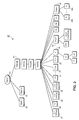
- hierarchical tree structure 20 contains a plurality of nodes which represent segmented blocks of image data of document page 1.
- Each node of the tree contains feature data which defines the feature of each block of image data in the processed document page.
- the feature data may include block location data, size data, attribute data (image type such as text, picture, table, etc.), sub-attribute data, and child node and parent node pointers.
- child or "descendent" nodes represent image data which exist entirely within a larger block of image data.
- text blocks located in a table would be designated as child nodes of the table block.
- Child nodes are depicted in the hierarchical tree structure as a node branching from a parent node, such as the nodes at the same level as node 22, which branch from parent or root node 21.
- Hierarchical tree structure 20 Once a hierarchical tree structure, such as hierarchical tree structure 20, has been created, it is stored in memory. Upon receiving a request to process the image data in the document image, hierarchical tree structure 20 is retrieved from memory and image data which has been blocked together is processed according to the feature data stored in its corresponding node. For example, a user can extract data within various text blocks of a table in order to further process the data.
- the hierarchical tree structure is used to generate and display a comprehensible format of document page 1, such as the display of block template 40 shown in Figure 3.
- Block template 40 of the document page is generated and displayed to the user based on the feature data stored in the hierarchical tree structure shown in Figure 2.
- the block template of the document page directly reflects the structure of the hierarchical tree as well as the feature data stored in each node of the hierarchical tree structure.
- the feature data in the node is utilized to generate the block outline, location, and size.
- feature data in each node is used to identify the type of image data contained within the block.
- block template 40 includes text blocks 41, 42 and 43, each of which corresponds to nodes 28, 31 and 32, respectively.
- table block 48 which includes text cells 49 which correspond to nodes 39A-39N, respectively.
- US-A-5111514 discloses a digital image forming apparatus for optically reading an input document including character information and graphic information. Character images and graphic images are identified with the character images being aligned horizontally and vertically based on the distance between the origin of a first character and the centres of adjacent characters. However, the apparatus of US-A-5111514 does not disclose a meaningful analysis of text block positions.
- the present invention provides a method for extracting features of an input document image which includes a table image, the method comprising the steps of: performing block selection processing on the image data of a document page, said block selection processing identifying and separating the image data into blocks having the same image type; identifying table image data based on the separated blocks of image data; identifying text blocks within the table image data; horizontally sorting each text block located in the table image data in relation to each other text block located in the table image data based on horizontal position information; vertically sorting each text block located in the table image data in relation to each other text block located in the table image data based on vertical position information; calculating rows and columns based on a result of the vertical and the horizontal sorting steps; assigning a column address and a row address to each text block in the table image data based on the calculating step; and storing the assigned addresses of each text block.
- the present invention provides a feature extraction system for analyzing image data of a document image, the system comprising: block selection processing means for performing block selection processing on the image data of a document page, said block selection processing means being adapted to identify and separate the image data into blocks having the same image type; first identifying means for identifying table image data based on the separated blocks of image data; second identifying means for identifying text blocks within the table image data; horizontal sorting means for sorting of each text block located in the table image data in relation to each other text block located in the table image data based on horizontal position information; vertical sorting means for sorting of each text block located in the table image data in relation to each other text block located in the table image data based on vertical position information; calculating means for calculating rows and columns based on a result of the vertical and the horizontal sorting; address assigning means for assigning a column address and a row address to each text block in the table image data; and storing means for storing the assigned address information of each text block.
- Figure 4 is a view showing the outward appearance of representative computing equipment which incorporates a block selection based table manipulation and text data extraction system according to the present invention.
- computing equipment 410 such as an IBM PC or PC compatible computer having a windowing operation system such as Microsoft Windows Operating System.
- Computing equipment 410 is provided with either a monochromatic or color display monitor 412, on which computing equipment 410 displays images to the user.
- Computing equipment 410 is further provided with fixed disk drive 411 for storing data files and application program files, keyboard 413 for permitting input text data and manipulation of objects displayed on display screen 412, and pointing device 414, such as a mouse, which is provided by pointing and for manipulating objects displayed on display screen 412.
- a conventional color printer 418 is provided for outputting documents processed by computing equipment 410.
- network interface 424 for interfacing with a local area network
- facsimile/modem interface 426 for sending and receiving facsimile messages and other data files via a facsimile/modem.
- stored application programs such as desktop publishing programs, drawing application programs, and block selection applications, are selectably activated to process and to manipulate data. Also in accordance with operator instructions and based on those stored application programs, commands are issued to display images on monitor 412 and to print images appearing on monitor 412 by printer 418.
- the applications stored on computer disk 411 including the block selection program of the present invention, have been stored on disk 411 by downloading each application from a computer-readable medium, such as a floppy disk, a CD-ROM or a computer bulletin board.
- a computer-readable medium such as a floppy disk, a CD-ROM or a computer bulletin board.
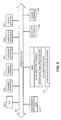
- FIG. 5 is a detailed block diagram showing the internal construction of computing equipment 410.
- computing equipment 410 includes a central processing unit (CPU) 520, such as a programmed microprocessor, interfaced to computer bus 521.
- CPU central processing unit
- scanner interface 522 printer interface 523
- network interface 524 network interface 524
- fax modem interface 526 display interface 527
- keyboard interface 528 mouse interface 529.
- Main memory 530 such as random access memory (RAM), interfaces to computer bus 521 so as to provide CPU 520 with access to memory storage.
- RAM random access memory
- CPU 520 loads those instruction sequences from disk 411 (or other storage media such as media accessed via network interface 524 or via a floppy disk drive (not shown)) into main memory 530 and executes those stored program instruction sequences out of main memory 530.
- the present invention provides a computer-implemented method which locates and identifies table cells of text in each text block within image data identified as a table and determines whether that text block can be sub-divided into one or more additional columns and rows depending on the location of the table cells of text in the text block.
- text blocks in the image data are identified using known-block selection techniques such as those discussed previously.
- the text blocks are sorted based on horizontal and vertical positional information within the document page and then assigned address coordinates based on row and column location in the table.
- address coordinates Once assigned address coordinates, each text block is analyzed again to locate text blocks having an address range, such as a column address range, a row address range, or both.
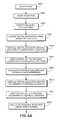
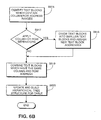
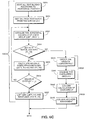
- Figures 6A-6B comprise a flowchart showing the method for performing table identification, and text block sub-division and text block addressing using the block selection application according to the present invention.
- the process steps shown in Figure 6A-6B are executed by CPU 520 in accordance with a computer process steps stored in disk 411.
- step S600 pixel image data of a document page is input into the system and then stored in disk 411.
- Image data is a pixel-by-pixel representation of the image, preferably the pixel data is binary pixel data, that is, black and white image data which has been input through scanner 416, through network interface 424 or through facsimile/modem interface 426.
- the block selection application is launched.
- block selection initialization and processing of an entire document page of different image types will not be provided herein. Rather, a description of how block selection and analysis of image data identifies a table will be described.
- block selection techniques For a detailed description of how block selection techniques distinguish between image data within an entire document page, block selection techniques disclosed in Serial Nos.
- the present invention is directed to identifying image data as a table and to sub-dividing, if necessary, text blocks which span more than columns and/or rows of the table into smaller text blocks and within the table once the block selection process has sub-divided a text block.
- step S603 when framed data is located using one of the block selection techniques discussed above, it is analyzed to determine if the frame is a "frame-table" or a "frame-halftone". Accordingly, the frame data is further processed to determine if it includes table or tabularly organized data by inspecting the interior of connected components to obtain white contours which are white pixels that are inspected rather than black pixels.
- the interior of a non-text unit is scanned in a first direction from a bottom right-hand portion of an interior of the non-text unit toward an upper left-hand portion. When a first white pixel is encountered, adjacent pixels to the white pixel analyzed are in an order similar to a starburst-like pattern.
- a density of the non-text unit is calculated by counting the number of black pixels within the connected component, and dividing the number of block pixels by the total number of pixels enclosed by the rectangular.
- the number of white contours found within the non-text unit are inspected. If the number of white contours is greater than or equal to a predefined number, then there is a possibility that the non-text images, in fact, are a table or tabularly arranged series of text blocks.
- the white contour filling rate is the degree to which white contours fill the area enclosed by the non-text image. If the filling rate is high, then it is probable that the non-text image is a table or tabulated arranged sequence of text data. However, if the filling rate is low, then it is most likely not a table or tabularly arranged sequence of text data.
- non-text image is a table or tabulated arranged sequence of text data.
- the white contours are inspected to determine if they form a grid-like structure extending both horizontally and vertically. Specifically, non-grid arranged white contours get recombined if their boundaries do not extend horizontally and vertically across at least two contours.
- White contours for a table are not likely to recombine, whereas white contours for a non-table, for example, a halftone image or a line drawings, are more likely to recombine. Accordingly, the recombination rate is inspected.
- the non-text unit is designated as a halftone image or a line drawings. However, if the recombination rate is less than the predetermined number, then the non-text image is designated as a "table".
- step S605 text blocks within the area designated as a table are located. That is, the interior of the newly designated table area is inspected so as to detect and to classify connected components in eight directions.
- the process for locating text blocks in a table is described further in U.S. Patent Application Serial No. 07/873,012.
- the identified table may contain a plurality of text blocks inside the table.
- the text blocks are randomly processed and are assigned position information based on a location within the document page.
- the text blocks are not placed in a column/row order within the table, but rather branch randomly from the table node when stored in the hierarchical tree structure.
- text blocks may contain more than one table cell of text in either the horizontal or the vertical direction or both. That is, after block selection, each text block within the table should correspond to only one table cell.
- one text block may contain more than one table cell content in either the horizontal or vertical direction or both. And, one table cell content may be split into more than one text block.
- the present invention analyzes the table cell structure and assigns column and row address coordinates to text blocks and then analyzes text blocks in order to determine if a text block containing one or more table cells can be further divided into smaller text blocks.
- step S606 analysis of the table structure is performed.
- table 600 is defined by five grid lines, which make up four columns and three rows.
- Each text block is assigned positional information from the block selection processing. The positional information relates to the text block location in the analyzed document page rather than a position relative to the table.
- table 600 includes multiple text lines in rows 2 and 3. Accordingly, without the present invention, in order to extract and post-process only one line of the multi-line row, for example, table cell 601, the entire table cell or text block would have to be extracted. However, after applying the method of the present invention, table cell 601 as well as the remaining text lines in rows 2 and 3 would be further sub-divided into individual rows or text blocks, thereby permitting individual lines within a row to be extracted.
- step S606 all text blocks in the identified table are sorted based on horizontal positional information. For example, all text blocks residing in the first column are grouped together. To accomplish this task, a block having the furthest left coordinate is selected as being in group 1. Then, all other text blocks are compared to the group currently being formed using a maximum horizontal overlapping method. That is, a maximum horizontal overlapping rate of the currently formed group and the selected text block are compared to a predetermined threshold "t_h". The maximum overlapping rate is determined by the following equation:
- max_h_overlapping is greater than "t_h”
- the selected text block is placed in a currently formed group and the group horizontal coverage is updated. If no overlapping occurs or the maximum overlapping is less than "t_h”, then the selected text block is placed into a separate group. All text blocks in the table are analyzed using the same method.
- step S606 a group of text blocks are sorted in order to determine sequential order of the group in the table. This is performed by analyzing the horizontal location information (step S608).
- step S609 columns for the table are calculated based on separations or gaps inside each text block group.
- the text blocks inside each group are assumed to belong to one column area, based on positional information, and are determined to be in one column of the table.
- the block selection process of the present invention locates these text blocks which overlap a column area in order to determine where the text block begins and ends. In order to accomplish this task, it is determined where a column or columns can intersect the text block which spans more than one column area. Based on this determination, a column range can be determined. Once each text block which overlaps a column area is located and analyzed, each text block is assigned a column address range based on the relative location between the block and the adjacent groups on either side. Similarly, the remaining non-spanning text blocks are assigned a column address. For example, as shown in Figure 8A, text block 701 spans a gap between two columns of neighboring text blocks within the same group, and, accordingly, a column address range is assigned to is text block 701. That is, text block 701 assigned (n,20 a column address range of n+1), wherein n-1 is the last column number of the previous group.
- Figures 6C is a flow diagram for explaining in greater detail the process performed in steps S608-S609.
- step S630 the coordinates of each of the text blocks are utilized in step S630 to sort all text blocks according to their horizontal position. Specifically, the left-hand coordinate of each text block in the table is examined to determine which block is the furthest left within the table. The text block having the furthest left location is placed at the beginning of a sort list. Each of the text blocks thereafter are analyzed based on their left-hand coordinate to determine its place within the sort list. For example, a text block having coordinates of (1,1) will be placed at the beginning of the list whereas a text block having the coordinates of (3,5) will be placed at the middle or end of a sort list. Accordingly, each text block is sorted based on their horizontal location.
- step S631 the first text block in the sorted list is retrieved and is placed in the first group (column). Utilizing the coordinates of the first text block in step S632, the horizontal coverage of the first group is initialized as the first block and used to begin a comparison process between the remaining text blocks. In step S634, it is determined if there are other text blocks within the table and, if so, in step S635, the coordinates of the next text block are retrieved and compared to the horizontal coverage of the group currently being formed in order to determine whether the next text block resides in the same group as the last text block. In order to perform the comparison, a maximum horizontal overlapping rate of the current group and the next text block are examined.
- step S636 If the maximum overlap is greater than a predetermined threshold "t_h", then the right-hand horizontal coverage or coordinate is reset based on the right hand coordinate of the next text block which is analyzed in step S636. That is, the right-hand coordinate of the next text block which was analyzed can be used to determine a new horizontal coverage of the group. On the other hand, if the maximum overlap is not greater than the predetermined threshold "t” in step S636, flow returns to step S632 and the next text block begins a new group and a new group horizontal coverage is initialed in step S632.
- step S640 Reverting back to step S634, in the case that no additional text blocks remain in the table, flow proceeds to step S640 in which the groups of text blocks are ordered horizontally.
- step S641 if any overlapped groups exist, they are combined. Specifically, in the case that neighboring groups horizontally overlap to a predefined threshold "x_h", these groups are combined into one group.
- step S642 column separators are placed between groups and inside some groups, if necessary, based on text block assignments. Specifically, in step S642, the width and length of a gap is examined. That is, in the case that the width meets a predefined criteria "w" and the length of the gap meets a predefined criteria "l”, then it is determined that a column separator can be inserted into a group.
- step S610 once all possible columns are calculated in step S609, all text blocks are sorted into groups of rows according to a vertical positional information. Row analysis is performed similar to column analysis performed in steps S606-S609. Specifically, in step S610, all text blocks are sorted into groups according to vertical positional information. Once again, text blocks are placed into different groups in which each text block has some vertical overlapping with another text block of the same group which is either closely to the right or to the left of it. As stated previously, the maximum vertical overlapping rate of the text block and the group currently formed is compared to some predetermined threshold "t_v".
- step S611 the groups of text blocks are
- step S650 row analysis begins by examining the top coordinate to determine which block is the closest to the top of the table.
- the text block which is at the top location of the table is put at the beginning of the sort list.
- Each of the text blocks thereafter are analyzed based on their top coordinate to determine its place within the sorting list. For example, a text block having coordinates of (1,1) will be placed at the beginning of the list whereas a text block having the coordinates of (3,5) will be placed at the middle or end of a sort list. Accordingly, each text block is sorted based on their vertical location.
- step S651 the first text block in the sorted list is retrieved and is determined to be in the first group (row). Utilizing the coordinates of the first text block in step S652, the vertical coverage of the first group is initialized as the first block and used to begin a comparison process between the remaining text blocks in the table. In step S654, it is determined if there are other text blocks within the table and, if so, in step S655, the coordinates of the next text block are retrieved and compared to the vertical coverage of the currently formed group in order to determine whether the next text block resides in the same group as the last text block. In order to perform the comparison, a maximum vertical overlapping between the currently formed group and the next text block are examined.
- the vertical coverage or bottom coordinate may be reset based on the next text block which is analyzed in step S656. That is, the bottom coordinate of the next text block which was analyzed can be used to determine a new vertical coverage of the group.
- the maximum overlap is not greater than the predetermined threshold "t_v” in step S656, flow returns to step S652 and the next text block begins a new group and a new group vertical coverage is initialized as the next text block in step S652.
- step S660 Reverting back to step S654, in the case that no additional text blocks remain in the table, flow proceeds to step S660 in which the groups of text blocks are ordered vertically.
- step S661 if any overlapped groups exist, they are combined. Specifically, in the case that neighboring groups vertically overlap to a predefined threshold "x_v", these groups are combined into a single group.
- step S662 row separators are placed between groups and inside some groups, if necessary, based on the assigned groups.
- step S665 once the row calculations of each group has been performed, row address assignments are provided in accordance with the number of row separators between groups.
- each of the text blocks have been assigned a column and row address coordinates.
- block 801 is assigned row/column address (1,1)
- block 802 is assigned row address and column address and address range (1, 2-4)
- block 803 is assigned (2,1)
- block 804 is assigned row/column address (2,2)
- block 805 is assigned row/column address (2,3)
- block 806 is assigned row/column address (2,4).
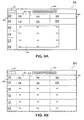
- large text block 808 is assigned both a row and column address range (4-7, 2-4).
- step S615 the block selection process of the present invention locates text blocks which span gaps and contain either a column address range or a row address range. These text blocks are analyzed again to determine if they can be sub-divided by using the column and row separation process to determine if column or row separators can be inserted within the range address of the text block. Specifically, in step S617, it is determined if there is a large horizontal gap around a column separator, as shown in Figure 10A or if there is an incomplete vertical grid line around a column separator as shown in Figure 10B. The same procedure is then performed for row separators.
- step S617 it is determined if a separator can be inserted into the text block having an address range. If row or column separators can be applied in step S618, the text block is divided into smaller text blocks. That is, the text block itself is divided into at least two columns or rows. Each new text block is then assigned an address after the column separator or row separator has been applied.
- text block 701 in group 700 spans a narrow gap within the group. Using the column or row separator method, the width and length of the gap is analyzed to determine if column separator 710 can be placed therein.
- column separator 710 can not be placed therein since the gap width does not meet a predefined criterion, the text block can not be sub-divided by a column separator.
- column separators 711 and 712 indicate columns which separates group 700 from another group. Using these separators as boundaries to a column, each text block in group 700 is given a column address assignment.
- each text block which has a column address range of (Y-Y+1), where Y-1 is the last column number of the previous group, is separated into two smaller text blocks since in each block a wide gap exists around the column separators. That is, column separator 722 shown as a dotted line is inserted to separate each text block into two smaller text blocks. Thereafter, each text block is assigned a new column address based on the sub-division.
- text block 808 has both a column and range address and also contains more than one table cell. Accordingly, this type of text block is a good candidate for further sub-division using the column and row processing. Thus, after applying column and row processing, text block 808 is sub-divided into 12 new text blocks as shown in Figure 9B. Each new text block is then assigned an address based on its column and row in the newly divided table 800.
- step S618 if the text block with a column address range has "n" column separators, then it will be determined that this text block actually contains, at most, (n+1) column contents.
- the column separators are used to cut the text block into different columns and smaller text blocks are formed.
- this gap meets the width criterion and, as a result, column separators 901 and 902 are inserted in order to form three columns.
- text block 903 is split into three text blocks based on column separators illustrated in Figure 10A. The column address of each new text block is then addressed as column n, column n+1, and column n+2.
- text block 913 includes an incomplete line 911 which exists near column separator 912 as well.
- text block 913 is split into two text blocks using column separator 912. Each new text block is assigned a column address of column n and column n+1.
- step S619 text blocks which have the same column and row address are combined into one text block. This may occur when groups have been combined, as discussed previously, or if a gap does not meet the predefined criteria.
- step S620 column and row address coordinates of the table are stored in memory in order to update the hierarchical tree structure.
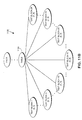
- hierarchical tree structure 1100 Prior to updating the hierarchical tree structure for table 800, hierarchical tree structure 1100 has a page node, a table branching from the page node, and 15 text block nodes branching from the table node.
- table 800 undergoes processing according to the present invention, each table cell of text is sub-divided into columns and rows and, utilizing the stored address coordinates, the hierarchical tree structure of the document page can be updated as shown in Figure 11B.
- FIG 11B shows hierarchical tree structure 1100 after applying block selection processing of the present invention to table 800 shown in Figure 9A.
- Hierarchical tree structure 1100 shows the hierarchy for table 800 shown in Figure 9B. It is to be understood that any other type of image data located in a page would be shown as well but those nodes are not shown for the purposes of brevity and clarity.
- hierarchial tree structure 1100 shows table node 1101.
- Branching off table node 1103 are text blocks 1-26, of which only textblockl, textblock5, textblock10, textblockl5, textblock20, textblock25 and textblock26 are shown.
- textblock15 contained a plurality of individual cells of text which have now been sub-divided into smaller text blocks when submitted to column/row separation processing.
- the result of processing the text block results in smaller text blocks which are assigned individual address coordinates. This result is shown in Figure 11B as 26 text blocks branching off table node 1103 in hierarchical tree structure 1100.
- the result of processing a table using the present invention results in a logically defined hierarchical tree structure of a table which will be used for post-processing the table image data in the document page.
- text data can be properly extracted based on specific column and row address coordinates. If some specified address coordinate is related to a text block with a single column and row address, then an internal image of the text block will be extracted. However, if some specified address of a text block includes either a column address range or row address range, then all of the cells of text within the text block is extracted.
Landscapes
- Engineering & Computer Science (AREA)
- Physics & Mathematics (AREA)
- Computer Vision & Pattern Recognition (AREA)
- Computer Graphics (AREA)
- Geometry (AREA)
- Artificial Intelligence (AREA)
- General Physics & Mathematics (AREA)
- Multimedia (AREA)
- Theoretical Computer Science (AREA)
- Character Input (AREA)
- Facsimile Image Signal Circuits (AREA)
- Image Analysis (AREA)
Applications Claiming Priority (2)
| Application Number | Priority Date | Filing Date | Title |
|---|---|---|---|
| US514252 | 1995-08-11 | ||
| US08/514,252 US5848186A (en) | 1995-08-11 | 1995-08-11 | Feature extraction system for identifying text within a table image |
Publications (3)
| Publication Number | Publication Date |
|---|---|
| EP0758775A2 EP0758775A2 (en) | 1997-02-19 |
| EP0758775A3 EP0758775A3 (en) | 1997-10-01 |
| EP0758775B1 true EP0758775B1 (en) | 2002-03-06 |
Family
ID=24046414
Family Applications (1)
| Application Number | Title | Priority Date | Filing Date |
|---|---|---|---|
| EP96305868A Expired - Lifetime EP0758775B1 (en) | 1995-08-11 | 1996-08-09 | Feature extraction system |
Country Status (4)
| Country | Link |
|---|---|
| US (1) | US5848186A (https=) |
| EP (1) | EP0758775B1 (https=) |
| JP (1) | JP3847856B2 (https=) |
| DE (1) | DE69619606T2 (https=) |
Families Citing this family (83)
| Publication number | Priority date | Publication date | Assignee | Title |
|---|---|---|---|---|
| US6009196A (en) * | 1995-11-28 | 1999-12-28 | Xerox Corporation | Method for classifying non-running text in an image |
| US6201894B1 (en) * | 1996-01-23 | 2001-03-13 | Canon Kabushiki Kaisha | Method and apparatus for extracting ruled lines or region surrounding ruled lines |
| US6157738A (en) * | 1996-06-17 | 2000-12-05 | Canon Kabushiki Kaisha | System for extracting attached text |
| US5893127A (en) * | 1996-11-18 | 1999-04-06 | Canon Information Systems, Inc. | Generator for document with HTML tagged table having data elements which preserve layout relationships of information in bitmap image of original document |
| US6327387B1 (en) * | 1996-12-27 | 2001-12-04 | Fujitsu Limited | Apparatus and method for extracting management information from image |
| US5973692A (en) * | 1997-03-10 | 1999-10-26 | Knowlton; Kenneth Charles | System for the capture and indexing of graphical representations of files, information sources and the like |
| US6137906A (en) * | 1997-06-27 | 2000-10-24 | Kurzweil Educational Systems, Inc. | Closest word algorithm |
| US5950196A (en) * | 1997-07-25 | 1999-09-07 | Sovereign Hill Software, Inc. | Systems and methods for retrieving tabular data from textual sources |
| KR100295225B1 (ko) * | 1997-07-31 | 2001-07-12 | 윤종용 | 컴퓨터에서 영상정보 검색장치 및 방법 |
| US5999664A (en) * | 1997-11-14 | 1999-12-07 | Xerox Corporation | System for searching a corpus of document images by user specified document layout components |
| US6112216A (en) * | 1997-12-19 | 2000-08-29 | Microsoft Corporation | Method and system for editing a table in a document |
| US6173073B1 (en) * | 1998-01-05 | 2001-01-09 | Canon Kabushiki Kaisha | System for analyzing table images |
| US6496198B1 (en) | 1999-05-04 | 2002-12-17 | Canon Kabushiki Kaisha | Color editing system |
| FR2801997A1 (fr) * | 1999-12-02 | 2001-06-08 | Itesoft | Technologie adaptative d'analyse automatique de document |
| US6718059B1 (en) | 1999-12-10 | 2004-04-06 | Canon Kabushiki Kaisha | Block selection-based image processing |
| JP4401560B2 (ja) * | 1999-12-10 | 2010-01-20 | キヤノン株式会社 | 画像処理装置、画像処理方法、及び記憶媒体 |
| KR100319756B1 (ko) * | 2000-01-21 | 2002-01-09 | 오길록 | 논문 문서영상 구조 분석 방법 |
| US7149347B1 (en) | 2000-03-02 | 2006-12-12 | Science Applications International Corporation | Machine learning of document templates for data extraction |
| US6995853B1 (en) * | 2000-03-31 | 2006-02-07 | Pitney Bowes Inc. | Method and system for modifying print stream data to allow printing over a single I/O port |
| US6714941B1 (en) | 2000-07-19 | 2004-03-30 | University Of Southern California | Learning data prototypes for information extraction |
| US6704449B1 (en) | 2000-10-19 | 2004-03-09 | The United States Of America As Represented By The National Security Agency | Method of extracting text from graphical images |
| US6826576B2 (en) * | 2001-05-07 | 2004-11-30 | Microsoft Corporation | Very-large-scale automatic categorizer for web content |
| FR2830106B1 (fr) * | 2001-07-13 | 2004-04-23 | Alban Giroux | Dispositif et procede de reconnaissance de structure de document |
| US7561734B1 (en) | 2002-03-02 | 2009-07-14 | Science Applications International Corporation | Machine learning of document templates for data extraction |
| US20030185432A1 (en) * | 2002-03-29 | 2003-10-02 | Hong Dezhong | Method and system for image registration based on hierarchical object modeling |
| US20030225763A1 (en) * | 2002-04-15 | 2003-12-04 | Microsoft Corporation | Self-improving system and method for classifying pages on the world wide web |
| US7142728B2 (en) * | 2002-05-17 | 2006-11-28 | Science Applications International Corporation | Method and system for extracting information from a document |
| EP1686499B1 (en) * | 2002-06-28 | 2010-06-30 | Nippon Telegraph and Telephone Corporation | Selection and extraction of information from structured documents |
| US7254270B2 (en) * | 2002-07-09 | 2007-08-07 | Hewlett-Packard Development Company, L.P. | System and method for bounding and classifying regions within a graphical image |
| JP2004088585A (ja) * | 2002-08-28 | 2004-03-18 | Fuji Xerox Co Ltd | 画像処理システムおよびその方法 |
| US7444403B1 (en) | 2003-11-25 | 2008-10-28 | Microsoft Corporation | Detecting sexually predatory content in an electronic communication |
| CN1310182C (zh) * | 2003-11-28 | 2007-04-11 | 佳能株式会社 | 用于增强文档图像和字符识别的方法和装置 |
| US20050177599A1 (en) * | 2004-02-09 | 2005-08-11 | Microsoft Corporation | System and method for complying with anti-spam rules, laws, and regulations |
| JP2006023945A (ja) * | 2004-07-07 | 2006-01-26 | Canon Inc | 画像処理システム及び画像処理方法 |
| JP4208780B2 (ja) * | 2004-07-07 | 2009-01-14 | キヤノン株式会社 | 画像処理システム及び画像処理装置の制御方法並びにプログラム |
| JP2006025129A (ja) * | 2004-07-07 | 2006-01-26 | Canon Inc | 画像処理システム及び画像処理方法 |
| JP2006023944A (ja) * | 2004-07-07 | 2006-01-26 | Canon Inc | 画像処理システム及び画像処理方法 |
| EP1669896A3 (en) * | 2004-12-03 | 2007-03-28 | Panscient Pty Ltd. | A machine learning system for extracting structured records from web pages and other text sources |
| IL167283A (en) * | 2005-03-07 | 2007-06-03 | Israel Marmorstein | Methods for printing booklets and booklets printed thereby |
| TWI271650B (en) * | 2005-05-13 | 2007-01-21 | Yu-Le Lin | Method for sorting specific values in combination with image acquisition and display |
| US7676744B2 (en) * | 2005-08-19 | 2010-03-09 | Vistaprint Technologies Limited | Automated markup language layout |
| US7584424B2 (en) * | 2005-08-19 | 2009-09-01 | Vista Print Technologies Limited | Automated product layout |
| US7801358B2 (en) * | 2006-11-03 | 2010-09-21 | Google Inc. | Methods and systems for analyzing data in media material having layout |
| JP2008242543A (ja) * | 2007-03-26 | 2008-10-09 | Canon Inc | 画像検索装置、画像検索装置の画像検索方法、及び画像検索装置の制御プログラム |
| US8290272B2 (en) * | 2007-09-14 | 2012-10-16 | Abbyy Software Ltd. | Creating a document template for capturing data from a document image and capturing data from a document image |
| JP4926004B2 (ja) * | 2007-11-12 | 2012-05-09 | 株式会社リコー | 文書処理装置、文書処理方法及び文書処理プログラム |
| GB2457267B (en) * | 2008-02-07 | 2010-04-07 | Yves Dassas | A method and system of indexing numerical data |
| JP4875024B2 (ja) * | 2008-05-09 | 2012-02-15 | 株式会社東芝 | 画像情報伝送装置 |
| US9390321B2 (en) | 2008-09-08 | 2016-07-12 | Abbyy Development Llc | Flexible structure descriptions for multi-page documents |
| US8547589B2 (en) | 2008-09-08 | 2013-10-01 | Abbyy Software Ltd. | Data capture from multi-page documents |
| US8443278B2 (en) * | 2009-01-02 | 2013-05-14 | Apple Inc. | Identification of tables in an unstructured document |
| JP5743443B2 (ja) * | 2010-07-08 | 2015-07-01 | キヤノン株式会社 | 画像処理装置、画像処理方法、コンピュータプログラム |
| US8380753B2 (en) | 2011-01-18 | 2013-02-19 | Apple Inc. | Reconstruction of lists in a document |
| US8549399B2 (en) | 2011-01-18 | 2013-10-01 | Apple Inc. | Identifying a selection of content in a structured document |
| US8442998B2 (en) | 2011-01-18 | 2013-05-14 | Apple Inc. | Storage of a document using multiple representations |
| EP2807608B1 (en) * | 2012-01-23 | 2024-04-10 | Microsoft Technology Licensing, LLC | Borderless table detection engine |
| CN104067293B (zh) | 2012-01-23 | 2017-07-25 | 微软技术许可有限责任公司 | 矢量图分类引擎 |
| US8971630B2 (en) | 2012-04-27 | 2015-03-03 | Abbyy Development Llc | Fast CJK character recognition |
| US8989485B2 (en) | 2012-04-27 | 2015-03-24 | Abbyy Development Llc | Detecting a junction in a text line of CJK characters |
| US9953008B2 (en) | 2013-01-18 | 2018-04-24 | Microsoft Technology Licensing, Llc | Grouping fixed format document elements to preserve graphical data semantics after reflow by manipulating a bounding box vertically and horizontally |
| CN103366369B (zh) * | 2013-07-01 | 2016-02-10 | 中国矿业大学 | 一种评价图像中块效应的方法及装置 |
| US9292186B2 (en) | 2014-01-31 | 2016-03-22 | 3M Innovative Properties Company | Note capture and recognition with manual assist |
| US10706218B2 (en) * | 2016-05-16 | 2020-07-07 | Linguamatics Ltd. | Extracting information from tables embedded within documents |
| WO2018003074A1 (ja) * | 2016-06-30 | 2018-01-04 | 楽天株式会社 | 画像処理装置、画像処理方法、および、画像処理プログラム |
| CN106446881B (zh) * | 2016-07-29 | 2019-05-21 | 北京交通大学 | 从医疗化验单图像中提取化验结果信息的方法 |
| CN107622041B (zh) * | 2017-09-18 | 2021-02-12 | 鼎富智能科技有限公司 | 隐性表格提取方法及装置 |
| CN107798355B (zh) * | 2017-11-17 | 2021-12-07 | 山西同方知网数字出版技术有限公司 | 一种基于文档图像版式自动分析与判断的方法 |
| US10936864B2 (en) * | 2018-06-11 | 2021-03-02 | Adobe Inc. | Grid layout determination from a document image |
| US10846550B2 (en) * | 2018-06-28 | 2020-11-24 | Google Llc | Object classification for image recognition processing |
| US10614345B1 (en) | 2019-04-12 | 2020-04-07 | Ernst & Young U.S. Llp | Machine learning based extraction of partition objects from electronic documents |
| US11113518B2 (en) | 2019-06-28 | 2021-09-07 | Eygs Llp | Apparatus and methods for extracting data from lineless tables using Delaunay triangulation and excess edge removal |
| US11915465B2 (en) | 2019-08-21 | 2024-02-27 | Eygs Llp | Apparatus and methods for converting lineless tables into lined tables using generative adversarial networks |
| US10810709B1 (en) | 2019-11-21 | 2020-10-20 | Eygs Llp | Systems and methods for improving the quality of text documents using artificial intelligence |
| US11625934B2 (en) | 2020-02-04 | 2023-04-11 | Eygs Llp | Machine learning based end-to-end extraction of tables from electronic documents |
| CN111626250B (zh) * | 2020-06-02 | 2023-08-11 | 泰康保险集团股份有限公司 | 文本图像的分行方法、装置、计算机设备及可读存储介质 |
| US11599711B2 (en) * | 2020-12-03 | 2023-03-07 | International Business Machines Corporation | Automatic delineation and extraction of tabular data in portable document format using graph neural networks |
| CN113221743B (zh) * | 2021-05-12 | 2024-01-12 | 北京百度网讯科技有限公司 | 表格解析方法、装置、电子设备和存储介质 |
| CN113221778B (zh) * | 2021-05-19 | 2022-05-10 | 北京航空航天大学杭州创新研究院 | 手写表格的检测与识别方法及装置 |
| CN113449620A (zh) * | 2021-06-17 | 2021-09-28 | 深圳思谋信息科技有限公司 | 基于语义分割的表格检测方法、装置、设备和介质 |
| CN115729800A (zh) * | 2021-08-30 | 2023-03-03 | 北京字节跳动网络技术有限公司 | 一种页面分析方法及装置 |
| CN113986964B (zh) * | 2021-09-30 | 2025-08-08 | 珠海金山办公软件有限公司 | 数据处理方法、装置、电子设备及存储介质 |
| CN114283438B (zh) * | 2021-11-15 | 2025-06-27 | 中广核惠州核电有限公司 | 核电厂图纸信息识别与提取方法及系统 |
| CN116758571B (zh) * | 2023-06-16 | 2026-04-17 | 杭州米加健康科技有限公司 | 基于文字检测的表格图像结构化信息提取与分析方法和装置 |
Family Cites Families (8)
| Publication number | Priority date | Publication date | Assignee | Title |
|---|---|---|---|---|
| JPS6324448A (ja) * | 1986-07-17 | 1988-02-01 | Toshiba Corp | 複合文書処理装置 |
| JPS63268081A (ja) * | 1987-04-17 | 1988-11-04 | インタ−ナショナル・ビジネス・マシ−ンズ・コ−ポレ−ション | 文書の文字を認識する方法及び装置 |
| JP2812982B2 (ja) * | 1989-04-05 | 1998-10-22 | 株式会社リコー | 表認識方法 |
| JP2940936B2 (ja) * | 1989-06-06 | 1999-08-25 | 株式会社リコー | 表領域識別方法 |
| DE69016123T2 (de) * | 1989-08-02 | 1995-05-24 | Canon Kk | Bildverarbeitungsgerät. |
| JP2930612B2 (ja) * | 1989-10-05 | 1999-08-03 | 株式会社リコー | 画像形成装置 |
| JP2851089B2 (ja) * | 1989-11-30 | 1999-01-27 | 株式会社リコー | 表処理方法 |
| US5588072A (en) * | 1993-12-22 | 1996-12-24 | Canon Kabushiki Kaisha | Method and apparatus for selecting blocks of image data from image data having both horizontally- and vertically-oriented blocks |
-
1995
- 1995-08-11 US US08/514,252 patent/US5848186A/en not_active Expired - Lifetime
-
1996
- 1996-08-06 JP JP22183496A patent/JP3847856B2/ja not_active Expired - Fee Related
- 1996-08-09 EP EP96305868A patent/EP0758775B1/en not_active Expired - Lifetime
- 1996-08-09 DE DE69619606T patent/DE69619606T2/de not_active Expired - Lifetime
Also Published As
| Publication number | Publication date |
|---|---|
| DE69619606T2 (de) | 2002-08-08 |
| EP0758775A2 (en) | 1997-02-19 |
| DE69619606D1 (de) | 2002-04-11 |
| JP3847856B2 (ja) | 2006-11-22 |
| US5848186A (en) | 1998-12-08 |
| EP0758775A3 (en) | 1997-10-01 |
| JPH09171556A (ja) | 1997-06-30 |
Similar Documents
| Publication | Publication Date | Title |
|---|---|---|
| EP0758775B1 (en) | Feature extraction system | |
| US6173073B1 (en) | System for analyzing table images | |
| EP0712088B1 (en) | Page analysis system | |
| US6711292B2 (en) | Block selection of table features | |
| US5761344A (en) | Image pre-processor for character recognition system | |
| US5619594A (en) | Image processing system with on-the-fly JPEG compression | |
| US5809167A (en) | Page segmentation and character recognition system | |
| JP3950498B2 (ja) | イメージ処理方法及び装置 | |
| US5680479A (en) | Method and apparatus for character recognition | |
| US5048099A (en) | Polygon-based method for automatic extraction of selected text in a digitized document | |
| US5867277A (en) | Reduced resolution document storage and retrieval system | |
| US5856877A (en) | Apparatus and method for processing and reproducing image information | |
| EP0677816B1 (en) | Programmable function keys for a networked personal imaging computer system | |
| EP0814422B1 (en) | System for extracting attached text from a table-cell frame | |
| US6360006B1 (en) | Color block selection | |
| AU688453B2 (en) | Automatic determination of blank pages and bounding boxes for binary images | |
| EP0712089B1 (en) | Document analyzer application programming interface | |
| US6058219A (en) | Method of skeletonizing a binary image using compressed run length data | |
| HK1013692A (en) | Image processing system with on-the-fly jpeg compression |
Legal Events
| Date | Code | Title | Description |
|---|---|---|---|
| PUAI | Public reference made under article 153(3) epc to a published international application that has entered the european phase |
Free format text: ORIGINAL CODE: 0009012 |
|
| AK | Designated contracting states |
Kind code of ref document: A2 Designated state(s): DE FR GB IT |
|
| PUAL | Search report despatched |
Free format text: ORIGINAL CODE: 0009013 |
|
| AK | Designated contracting states |
Kind code of ref document: A3 Designated state(s): DE FR GB IT |
|
| 17P | Request for examination filed |
Effective date: 19980211 |
|
| 17Q | First examination report despatched |
Effective date: 19980527 |
|
| GRAG | Despatch of communication of intention to grant |
Free format text: ORIGINAL CODE: EPIDOS AGRA |
|
| GRAG | Despatch of communication of intention to grant |
Free format text: ORIGINAL CODE: EPIDOS AGRA |
|
| GRAG | Despatch of communication of intention to grant |
Free format text: ORIGINAL CODE: EPIDOS AGRA |
|
| GRAH | Despatch of communication of intention to grant a patent |
Free format text: ORIGINAL CODE: EPIDOS IGRA |
|
| GRAH | Despatch of communication of intention to grant a patent |
Free format text: ORIGINAL CODE: EPIDOS IGRA |
|
| REG | Reference to a national code |
Ref country code: GB Ref legal event code: IF02 |
|
| GRAA | (expected) grant |
Free format text: ORIGINAL CODE: 0009210 |
|
| AK | Designated contracting states |
Kind code of ref document: B1 Designated state(s): DE FR GB IT |
|
| REF | Corresponds to: |
Ref document number: 69619606 Country of ref document: DE Date of ref document: 20020411 |
|
| ET | Fr: translation filed | ||
| PLBE | No opposition filed within time limit |
Free format text: ORIGINAL CODE: 0009261 |
|
| STAA | Information on the status of an ep patent application or granted ep patent |
Free format text: STATUS: NO OPPOSITION FILED WITHIN TIME LIMIT |
|
| 26N | No opposition filed |
Effective date: 20021209 |
|
| PGFP | Annual fee paid to national office [announced via postgrant information from national office to epo] |
Ref country code: GB Payment date: 20120822 Year of fee payment: 17 |
|
| PGFP | Annual fee paid to national office [announced via postgrant information from national office to epo] |
Ref country code: DE Payment date: 20120831 Year of fee payment: 17 Ref country code: FR Payment date: 20120903 Year of fee payment: 17 Ref country code: IT Payment date: 20120802 Year of fee payment: 17 |
|
| GBPC | Gb: european patent ceased through non-payment of renewal fee |
Effective date: 20130809 |
|
| PG25 | Lapsed in a contracting state [announced via postgrant information from national office to epo] |
Ref country code: DE Free format text: LAPSE BECAUSE OF NON-PAYMENT OF DUE FEES Effective date: 20140301 |
|
| REG | Reference to a national code |
Ref country code: FR Ref legal event code: ST Effective date: 20140430 |
|
| REG | Reference to a national code |
Ref country code: DE Ref legal event code: R119 Ref document number: 69619606 Country of ref document: DE Effective date: 20140301 |
|
| PG25 | Lapsed in a contracting state [announced via postgrant information from national office to epo] |
Ref country code: IT Free format text: LAPSE BECAUSE OF NON-PAYMENT OF DUE FEES Effective date: 20130809 |
|
| PG25 | Lapsed in a contracting state [announced via postgrant information from national office to epo] |
Ref country code: GB Free format text: LAPSE BECAUSE OF NON-PAYMENT OF DUE FEES Effective date: 20130809 |
|
| PG25 | Lapsed in a contracting state [announced via postgrant information from national office to epo] |
Ref country code: FR Free format text: LAPSE BECAUSE OF NON-PAYMENT OF DUE FEES Effective date: 20130902 |