EP0742022A1 - Biologically compatible hydrogel - Google Patents
Biologically compatible hydrogel Download PDFInfo
- Publication number
- EP0742022A1 EP0742022A1 EP94928547A EP94928547A EP0742022A1 EP 0742022 A1 EP0742022 A1 EP 0742022A1 EP 94928547 A EP94928547 A EP 94928547A EP 94928547 A EP94928547 A EP 94928547A EP 0742022 A1 EP0742022 A1 EP 0742022A1
- Authority
- EP
- European Patent Office
- Prior art keywords
- hydrogel
- paa
- biocompatible
- acrylamide
- tissue
- Prior art date
- Legal status (The legal status is an assumption and is not a legal conclusion. Google has not performed a legal analysis and makes no representation as to the accuracy of the status listed.)
- Granted
Links
Images
Classifications
-
- A—HUMAN NECESSITIES
- A61—MEDICAL OR VETERINARY SCIENCE; HYGIENE
- A61L—METHODS OR APPARATUS FOR STERILISING MATERIALS OR OBJECTS IN GENERAL; DISINFECTION, STERILISATION OR DEODORISATION OF AIR; CHEMICAL ASPECTS OF BANDAGES, DRESSINGS, ABSORBENT PADS OR SURGICAL ARTICLES; MATERIALS FOR BANDAGES, DRESSINGS, ABSORBENT PADS OR SURGICAL ARTICLES
- A61L31/00—Materials for other surgical articles, e.g. stents, stent-grafts, shunts, surgical drapes, guide wires, materials for adhesion prevention, occluding devices, surgical gloves, tissue fixation devices
- A61L31/14—Materials characterised by their function or physical properties, e.g. injectable or lubricating compositions, shape-memory materials, surface modified materials
- A61L31/145—Hydrogels or hydrocolloids
-
- A—HUMAN NECESSITIES
- A61—MEDICAL OR VETERINARY SCIENCE; HYGIENE
- A61L—METHODS OR APPARATUS FOR STERILISING MATERIALS OR OBJECTS IN GENERAL; DISINFECTION, STERILISATION OR DEODORISATION OF AIR; CHEMICAL ASPECTS OF BANDAGES, DRESSINGS, ABSORBENT PADS OR SURGICAL ARTICLES; MATERIALS FOR BANDAGES, DRESSINGS, ABSORBENT PADS OR SURGICAL ARTICLES
- A61L27/00—Materials for grafts or prostheses or for coating grafts or prostheses
- A61L27/14—Macromolecular materials
- A61L27/16—Macromolecular materials obtained by reactions only involving carbon-to-carbon unsaturated bonds
-
- A—HUMAN NECESSITIES
- A61—MEDICAL OR VETERINARY SCIENCE; HYGIENE
- A61L—METHODS OR APPARATUS FOR STERILISING MATERIALS OR OBJECTS IN GENERAL; DISINFECTION, STERILISATION OR DEODORISATION OF AIR; CHEMICAL ASPECTS OF BANDAGES, DRESSINGS, ABSORBENT PADS OR SURGICAL ARTICLES; MATERIALS FOR BANDAGES, DRESSINGS, ABSORBENT PADS OR SURGICAL ARTICLES
- A61L27/00—Materials for grafts or prostheses or for coating grafts or prostheses
- A61L27/50—Materials characterised by their function or physical properties, e.g. injectable or lubricating compositions, shape-memory materials, surface modified materials
- A61L27/52—Hydrogels or hydrocolloids
-
- A—HUMAN NECESSITIES
- A61—MEDICAL OR VETERINARY SCIENCE; HYGIENE
- A61L—METHODS OR APPARATUS FOR STERILISING MATERIALS OR OBJECTS IN GENERAL; DISINFECTION, STERILISATION OR DEODORISATION OF AIR; CHEMICAL ASPECTS OF BANDAGES, DRESSINGS, ABSORBENT PADS OR SURGICAL ARTICLES; MATERIALS FOR BANDAGES, DRESSINGS, ABSORBENT PADS OR SURGICAL ARTICLES
- A61L31/00—Materials for other surgical articles, e.g. stents, stent-grafts, shunts, surgical drapes, guide wires, materials for adhesion prevention, occluding devices, surgical gloves, tissue fixation devices
- A61L31/04—Macromolecular materials
- A61L31/048—Macromolecular materials obtained by reactions only involving carbon-to-carbon unsaturated bonds
-
- A—HUMAN NECESSITIES
- A61—MEDICAL OR VETERINARY SCIENCE; HYGIENE
- A61L—METHODS OR APPARATUS FOR STERILISING MATERIALS OR OBJECTS IN GENERAL; DISINFECTION, STERILISATION OR DEODORISATION OF AIR; CHEMICAL ASPECTS OF BANDAGES, DRESSINGS, ABSORBENT PADS OR SURGICAL ARTICLES; MATERIALS FOR BANDAGES, DRESSINGS, ABSORBENT PADS OR SURGICAL ARTICLES
- A61L2400/00—Materials characterised by their function or physical properties
- A61L2400/06—Flowable or injectable implant compositions
Definitions
- the invention relates to the formulations of medical-purpose biocompatible hydrogels intended to be applied as follows:
- glicerol In comparison with water, glicerol is known to have higher viscosity, therefore a paste stored is considerably stable. When injected, glicerol serves as an effective lubricant.
- glicerol Due to its unlimited solubility in water and water-containing liquids of an organism, however, glicerol is quite rapidly (few hours to one day) removed from the endoprosthetics region. Subsequent gradual mechanical removal of teflon microparticles, leaving zone together with lymph - and bloodflow, is possible. It results in the prosthesis volume lowering and considerable decrease in the treatment efficacy. Therefore, despite the teflon biochemical inertness, it should be multiple applied.
- the teflon hard particles damage tissues, contacting with the endoprosthetics, in a mechanical way. Actually in all cases, initially it causes the expressed aseptical inflammatory reaction and, sometimes, laryngostenosis with the possible urgent tracheotomy required.
- bovine collagen solution due to its resorbility and ability to intra-tissue and inter-tissue migration, is inefficient for drug depot formation and, because of its fermentative unstability and low electroconductivity, is actually unsuitable for applying as an immersion medium.
- biocompatible gel-forming material in the form of hydrophilic polyglycols of metacrylic acid esters is known to be applied for endoprosthetics (Kresa L., Rems T., Wichterle O. Hydron gel implantat in vocal cord // Otolaryngol. Head Neck Surg. - 1988. V. 98. No 3. pp.242-245).
- Required dose of the given dry-form material is implanted via section in the region of cosmetic or functional defect correction and an operative wound is satured. Absorbing water from the adjacent tissues, material swells thereupon and promotes a local increase in corrected organ volume, e.g., a vocal cord.
- the mentioned biocompatible material is biochemically the highly stable one.
- the durable therapeutic effect is obtained at the expense of traumatic surgical interventions associated with the edemas and aseptic inflammations; its application for intra-tissue drug depots is highly complicated and production of the electroconductive immersion media, based on the given material, is actually unsuitable.
- Biocompatible gel-forming materials ready-made liquids that could be used as injections, are therefore, the most promising for endoprosthetics and the other mentioned requirements.
- Biocompatible gel-forming material in the form of water-insoluble solution of non-cross-linked polymer or acrylonitrile copolymer, polyvinylacetate, linear or low-branched polymers and 2-hydroxyethyl-acrylate copolymer and methyl-acrylate, n-vinyliminocarbonile polymer in dimethyl sulfoxide or other polar water-free-miscible organic solvent, may be sites as example (Stoy V., Chvapil M. US Patent No. 4631188, 1986).
- copolymers as the additional monomers, are intended to use, namely: acrylamide (including N-substituted), acrylhydrazide (including N-substituted), acrylic acid and acrylates, glutarimide and vinil sulfone and, as the polar water-free-miscible solvents, glycerin and its mono- or diacetates, methanol, ethanol, propanol and izopropanol, dimethylformamide, glycols, etc.
- the given material is highly efficient for correcting the slight cosmetic or functional defect, specifically, for endoprosthetics of lips and other parts of face, vocal cords mentioned above, etc.
- Number of the suggested ones include the most similar biocompatible gel, containing 3.0% by mass of polymer, based on acrylamide,which is obtained using the free-radical polymerization initiator (specifically, ammonium persulfate) in a dispersion medium in the form of pyrogen-free bidistilled water (see the USSR Specification of Author's Certificate No.1697756).
- the given hydrogel is of actually complete biocompatibility with the human organism's tissues and media by the all mentioned above aspects and may, therefore, be applied at considerable (up to 1 l) volumes, causing no expressed negative biochemical and biological aftereffects.
- the region of injection endoprosthetics, tamponing, etc.
- it forms a structure, free-to-be-permeable not only by water, ions, oxygen but by low-molecular metabolites also.
- Implants of the hydrogel described, at a considerably rapid rate (by the fifth-sixth month) are being grown out by their own young fibrous tissue of a recipient. The given result is especially valuable in vocal apparatus alloplasty.
- the hydrogel described is, however, of low viscosity and, subsequently, low elasticity and high mobility. Its water-polyacrylamide macromolecules bond is loose, the former is rapidly removed from implants what results in their distinct shrinkage and considerable decrease in cosmetic or therapeutic effect.
- implants resistance to external deformation loads and shrinkage is inversely proportional to their initial volume.
- the hydrogel described Due to its high viscosity, the hydrogel described is also of the low efficiency to be externaly applied as an electroconductive immersion medium.
- the essence of the invention is, therefore, by means of improving the polyacrylamide composition, to produce such a biocompatible gel, which would provide higher elasticity. form-firmness and stability of massive implants and, thus, more valuable therapeutic or cosmetic effect, preferably for endoprosthetics.
- biocompatible hydrogel containing an acrylamide-based polymer, was obtained by using a biocompatible cross-linking agent.
- the hydrogel suggested retaining its ability to be permeable for water, ions, oxygen and low-molecular metabolites and suitability to be applicable as injection, has the more regular and more advantageous water-binding structure which provides obtaining the massive highly elastic and form-stable implants (e.g. intramammar endoprostheses, supporting bars in corpus cavernosum penis, tampons in lung caverns), which are sluggishly (some months to some years) being grown out by a soft rich-vascularized fibrous tissue. Due to the mentioned structural, biochemical and anatomic-physiologic advantages, cosmetic and/or therepeutic effect of endoprosthetics and tamponing as well as stability of the given effect in time, becames more favourable.
- the massive highly elastic and form-stable implants e.g. intramammar endoprostheses, supporting bars in corpus cavernosum penis, tampons in lung caverns
- the biocompatible hydrogel includes the cross-linked polyacrylamide obtained by using methylene-bis-acrylamide as linking agent and mixture of persulfate ammonium and tetramethylendiammine as the polimerization initiator.
- Methylene-bis-acrylamide is an analogue to the base monomer (acrylamide) both by its composition and biocompatibility and application of the stated polymerization initiators mixture favors the marked regular cross-linking of polyacrylamide chain macromolecules in an elastic space network, suitable for the hydrogel injection.
- the biocompatible hydrogel includes 3.5 to 9.0% by mass the stated cross-linked polyacrylamide. This range of concentration is the maximum favorable for therapeutic or cosmetic effect in the injection endoprosthetics or tamponing. At the concentrations lower 3.5%, the hydrogel is unstable and may be applied as medicinal ointments base or electroconducting immersion media for cardio-or encephalography and at the concentration higher 9.0% it virtually looses its viscosity and, in certain cases, may be used for manufacturing the relatively firm form-rigid, preliminary casted endoprostheses, implantation of which requires an operation access to the prosthetics region.
- biocompatible hydrogel includes, in addition, physiologically neutral water-soluble salt, which allows the most effective application of the former as an electroconductive immersion medium.
- the biocompatible hydrogel as a physiologically neutral water-soluble salt, includes a generally available sodium chloride.
- the biocompatible gel suggested is obtained by the following method:
- the ready-made CL PAA hydrogel is controlled for the following characteristics: - appearance, as according to visual evaluation; - the hydrogel should have no color or impurities containing; - refraction index should be within the range of 1.334 to 1.350; - pH should be within the range of 7.0 - 9.0; - heavy metal contents should be no less than 0.001% by mass; Table 1 DATA ON REAGENTS FOR OBTAINING THE BIOCOMPATIBLE HYDROGEL SUGGESTED Name and empirical formula of reagent Ammount required for 100g hydrohel, g Indices controlled, units for their measuring and values tolerable Acrylamide C 3 H 5 NO 3.5 - 9.0 Melting temperature, °C, 84.5+/-0.5 Density, g/cub.cm, 1.222 Content of the ground substance, % mass, at the least 98 Methylene-bis-acrylamide C 7 H 10 N 2 O 2 0.01 - 1.00 Melting temperature, °C, 184+/-1.0 Content of the ground substance,
- the CL PAA hydrogel was obtained, as described in Example 1, the difference being that for delution the physiological solution has been used instead of water.
- the CL PAA hydrogel was obtained, as described in Example 2, the difference being that for delution 9%- sodium acetate aqueous solution has been used instead of water.
- Examples of the compositions of the BCHs 2, 3, 4, 6, 7, 8 and 9 are in accordance with the preferable values of CL PAA concentration in the hydrogel, Examples 2 and 4 being in conformity with the limit preferable values of the concentration and the rest pointed Examples characterize its intermediate, the most beneficial values.
- compositions of the BCH 1 and 5 illustate examples include Table 2 EXAMPLES OF SPECIFIC COMPOSITIONS OF THE CL PAA BIOCOMPATIBLE HYDROGEL SUGGESTED Constituents Indices of the constituent compositions and concentrations, % mass BCH1 BCH2 BCH3 BCH4 BCH5 BCH6 BCH7 BCH8 BCH9 CL PAA 3.0 3.5 6.0 9.0 9.5 4.0 7.0 5.0 8.0 Na chloride - - - - - - - - 0.9 0.9 Na acetate - - - - 0.9 0.9 - - Water in all cases up to 100% values of the CL PAA concentration in hydrogel which are of limited application
- Hydrogel constituing relatively slightly-cross-linked (0.25% methylene-bis-acrylamide of the acrylamide mass) CL PAA with the calculated concentration of about 5%, was prepared.
- the given index was determined by the method of highly efficient liquid chromatography (HELC) with detecting the absorption of ultraviolet radiation in the range of 195 nm, which is typical of the monomer mentioned; chromatograph "Liquochrom” (Hungary) has been applied thereby.
- HELC highly efficient liquid chromatography
- minimal detectable concentration of acrylamide is of 0.000001 mg/l and its limiting permissible concentration (LPC) in aqueous solutions from materials, applied for implants, is of 0.02 mg/l.
- acrylamide is not detectable, that serves an evidence for high chemical stability of the CL PAA as well as biocompatible hydrogel suggested as a whole.
- samples of the CL PAA hydrogels obtained by the method described, have been tested under laboratory condition for:
- Rats of both groups were kept on a conventional diet.
- the major electrolytes indices show the absense of marked cell-membranes injuries.
- the ATP-ase activity is also normal.
- AlAT and AsAT normal activity indicates to the hepatocytes stability and the adequate state of cardiac muscle, which, considering a normal creatinine-phosphokinase activity, is not subjected to considerable overloadings.
- Sufficiant alkaline - phosphotase activity showes the absense of inflammation processes in the biliary duct endothelium.
- leukocytes amount in the experiment is inconsiderably over the norm of 4.5 thsd/mcl and data, showing blood erythrocytes concentration and erythrocytes hemoglobin, are an evidence for adequate blood oxygenation.
- hematocrit one may testify that water-salt equilibrium is about the norm.
- Embryotoxic activity of the CL PAA hydrogels was determined in the experiment; three groups of albino breed-free female-rats, mass of 180 - 200 g, each consisting of 16 animal unit, were used.
- Rats of the first group were intraperitoneally syringed with 2 ml 5%-hydrogel suggested in a week they were to be served.
- rats of the second group were, in the similar manner, intraperitoneally injected with 2 ml 5%-hydrogel suggested.
- CL PAA hydrogels mutagenicity was studied, using bone marrow reticulocytes of the C3H1-line mice (of both sexes) at the two-month age in two groups, each consisting of 10 animal units.
- mice in the control group were injected with the 30-days aqueous extract (0.01% by body mass) from the 9%-CL PAA hydrogel, the former being prepared at the temperature of 40 C and ratio 100 ml extragent/1 g gel.
- mice were killed by means of spinal marrow shift; bone marrow smears were prepared by the known methods, using a serum of fresh non-stored human blood group AB(IV); Pappengeim's method of staining was applied thereby.
- Carcinogenecity of the CT PAA hydrogel was evaluated by the method of immunodetection of organ-specific tumor-associated antigens.
- the mentioned method (in the said version) is based on determining the electrophoretic mobility (EPM) of stabilized and tanninized erythrocytes, which are sensibilized to a tumor-associated antigens of rhabdomyoblastoma and, additionally, to a non-specific embryonal antigen; the latter, in a positive reaction, serves as an indicator of tumors progressive growth.
- EPM-tests are considered to be positive, if the electrophoretic mobility of cells-indicators is decreased by 20% or more.
- Rats in the control group being locally anesthetized, were musculus femoris - injected with 4 ml 6% CL PAA hydrogel. Then, for 18 months the rats were kept on their usual diet. Afterwards, all animals were taken blood from tail vein; erythrocytes were isolated from samples and sensibilized on the mentioned antigens; the EPM-test were carried out.
- the fourth group was the controls, consisting of three dogs.
- Mounts were stained with hematoxylin and eosin, pyrofuchsin by van Gison; for detection of glycosaminoglycanes, at the different pHs of staining solution, applying chemical and enzymatic control, the mounts were stained on elastic by Weigert using toluidine blue.
- Glycoproteides and glycogen were detected by means of the PAS-reaction by Mac-Manus; calcium salts were detected by con Kos; RNA was detected by Brashe (the control with the ribonuclease).
- Nervous tissues were silver-nitrate impregnated by the Bilshovsky-Gross method.
- Bioptat was fixed in 10% formaline, dehydrated in alcohols of increasing strength and poored with paraffin. Mounts were stained with hematoxylin and eosin; the collagen fibers were determined by van Gison and the elastic fibers - by Weigert; glycosaminoglycans were determined by the toluidine blue under the different pH of solutions, applying the required chemical and enzymatic control; glycoproteide and glycogen concentrations were determined by means of the PAS-reaction by Mac-Manus.
- the bioptat was oval in shape, gentle-elastic by its consistency, light-pink in color without ally visual changes, which would be distinctive, if compared it with the tissues adjacent.
- Signs of acute and chronic inflammation i.e. polymorphonuclear leukocytes, epitheloid cells, giant cells able to resolve foreign bodies and lymphoid-histiocytic infiltrations, were completely absent; traits of allergic reactions in the form of lymphocytes, macrophags and histiocytes as well as of hemodynamic disorders expressed in the vessel plethora, pre-stasis, hemostasis, thrombosis and malignization, e.g., cell- or tissue atypism and cell proliferation, were not observed, too.
- the given method is highly effective in mammaplasty (preferably, in aplasia and hyperplasia) and phalloplasty, when the impotency is expressed in poor erection or is a result of agening or injuries happened.
- the CL PAA hydrogel having the preferable concentration of 3.5-6% and the most preferable concentration of 5-6%, depending on the individual anatomic mamma peculiarities, is retromammarily, intracapsularry or/and subfascially injected in the two-three stages; usual dose is 40-160 ml (but not exceeding 200ml) per one mamma for one stage.
- the CL PAA hydrogel when applied for phalloplasty, the CL PAA hydrogel, having the preferable concentration of 4.5-6.0% and also the most preferable one of 5%, is, as a rule, intracavernously injected into the three segments along each side of penis in trabecular corpus cevernosum.
- Total amount of the CL PAA hydrogel as required for one pnalloplastic operation is preferably of 40 to 60 ml. The amount for particular case is calculated by the criteria of permissible volume and degree of penis elasticity, excluding possibility of the urethra compression.
- the bicompatible hydrogel suggested was clinically tested.
- both mammas are of the regular topography and form. Cutaneous thickness does not exceed 2.0 mm, nipples nad areolas are in the norm (neither deformed nor drawn). Hypoplasized tissue of both mammas is ventrally shifted by the CL PAA hydrogel (different by the density if compare it with the former), which is filling the retromammary space (glandule mammaria tissue density is + 3.0 to 4.0, density of the mentioned hydrogel is +4.6 to 7.2 and subcutenous density is -73 to -96 units Hu).
- Glandula mammaria dimensions after correction were as follows:
- CL PAA hydrogel is chemically and biologically stable, inert, biocompatible and highly suitable for implantation in endopresthetics, caverns tamponing and formation of intratissue depots of the prolonged-effect medicine preparations.
Landscapes
- Health & Medical Sciences (AREA)
- Chemical & Material Sciences (AREA)
- Animal Behavior & Ethology (AREA)
- Veterinary Medicine (AREA)
- Public Health (AREA)
- General Health & Medical Sciences (AREA)
- Epidemiology (AREA)
- Life Sciences & Earth Sciences (AREA)
- Dispersion Chemistry (AREA)
- Oral & Maxillofacial Surgery (AREA)
- Surgery (AREA)
- Heart & Thoracic Surgery (AREA)
- Chemical Kinetics & Catalysis (AREA)
- Dermatology (AREA)
- Medicinal Chemistry (AREA)
- Vascular Medicine (AREA)
- Transplantation (AREA)
- Materials For Medical Uses (AREA)
- Medicinal Preparation (AREA)
- Pharmaceuticals Containing Other Organic And Inorganic Compounds (AREA)
- Addition Polymer Or Copolymer, Post-Treatments, Or Chemical Modifications (AREA)
- Compositions Of Macromolecular Compounds (AREA)
- Cosmetics (AREA)
- Graft Or Block Polymers (AREA)
Abstract
Description
- The invention relates to the formulations of medical-purpose biocompatible hydrogels intended to be applied as follows:
- in endoprosthetics processes using the purposeful injections for correcting mostly those human 'organism' defects, which are caused by traumatic, congenital or age distortion of shape and size or loss of form or certain organs constituing soft tissues, e.g.:
- cosmetology practice for correcting form and size of face and other parts of a body and, specifically, for mammoplasty (preferably in case of mamma aplasia and hypoplasia),
- otorhinolaryngology practice for treating vocal apparatus by correction of vocal cord shapes and sizes,
- male sexology (in case of poor erection) for a potency intensification by means of filing corpus cavernosum penis with an plastic medium;
- in endoprosthetics processes, associated with cutenous plastics, by the prosthesis blanks pre-manufacture, using casting technique, and implantation of the above blanks, prosthetics bed being surgically accessible;
- long-term therapy (e.g., of abscesses or tumors) for the formation of the prolong effect drug depot inside or nearby the affected organs;
- for tamponing the cavities, occured due to disease (e.g., tuberculosis caverns) or traumas of various etiology;
- as physiologically neutral electroconducting immersion medium between the patients' skin and electrodes:
- long term control of the organism electrophysiologic parameters (e.g., continuous control of the cardiac and cerebral activities),
- percutaneous electrophoretic drug injection;
- as a base for primarily medicinal ointments, water used as a dispersion medium.
- Wish to improve cosmetic and functional defects, both mentioned and of the similar-type ones, at present is of a mass character and is frequently reasoned by the mere patient's desire. Requitements for electrophysiological diagnostics, drug treatment, including formation of drug depot, and the spared physiologically-efficient tamponing of caverns of various etiology, are of a mass character, too.
- Numerous hardly-to-be-combined requirements for biocompatible materials of the mentioned purpose should be meeted, therefore. The major requirements include the following ones:
- long-term (life-long preferably) retaining of the form and size of an endoprosthetic organ, despite the patient's age, when the former was corrected;
- the greatest-possible biocompatibility which is, specifically, characterized by the elimination of carcinogenicity, allergic reactions (including the short-term ones immediately followed by the injection of selected material into an organism or its application at the skin and mucous membrane in particular), absence of an expressed capsulization or rejection of endoprosthesis, tampone or depot for a medicinal preparation and free-occured metabolic processes in the region filled with a biocompatible material;
- minimal traumaticity and prolongation of a biocompatible material injection, especially under endoprosthetics with a high-dosage (up to 1 l) application.
- Individual meeting of the requirements mentioned or their certain combinations are of no special problem.
- Thus, using glicerol-based fluoroplastic (teflon) paste as a biocompatible material for larynx endoprosthetics, considerably stable clinical effect may be obtained (see: Beck Ch.L. Unsere Erfahrungen mit der intralaryngealen Tefloninjektion // Laryngol. Rhinol. Otol. - 1980. Bd. 59, - No 11. - S.715-718; Lewy R.B. Teflon injection of the vocal cord: Complications, errors and precautions // Ann. Otol. - 1983. V.52.
No 5. pp. 1, 473-474; Berghans A. Verfahren zur Unterfitterung von Stimmlippen // H.N.O. - 1987. Bd. 35. No 6. S.227-233). - In comparison with water, glicerol is known to have higher viscosity, therefore a paste stored is considerably stable. When injected, glicerol serves as an effective lubricant.
- Due to its unlimited solubility in water and water-containing liquids of an organism, however, glicerol is quite rapidly (few hours to one day) removed from the endoprosthetics region. Subsequent gradual mechanical removal of teflon microparticles, leaving zone together with lymph - and bloodflow, is possible. It results in the prosthesis volume lowering and considerable decrease in the treatment efficacy. Therefore, despite the teflon biochemical inertness, it should be multiple applied.
- Besides, the teflon hard particles damage tissues, contacting with the endoprosthetics, in a mechanical way. Actually in all cases, initially it causes the expressed aseptical inflammatory reaction and, sometimes, laryngostenosis with the possible urgent tracheotomy required.
- Application of gel-forming biocompatible materials for the mentioned requirements is, therefore, more advisable.
- In fact, minimal traumaticity, endoprosthetics prolongation, absense of carcinogenicity and minimal allergic reactions are obtained by using water-solution or bovine collagen, which is highly refined and degraded by the degree of polimerization. Being injected into form-and-size corrected organ, collagen at the temperature below 37 degree Celsius forms an elastic and mechanical-deformation-resistant hydrogel (see: Ford Ch., Martin O.M., Warner Th.F. Injectable collagen in laryngeal reabilitation // LARYNGOSCOPE, 1984. 94. pp.513-518).
- As a protein, however, collagen for the considerably short period (less then half-year) would completely resorbed in the patient's organism. It is, therefore, suitable for endoprosthetics primarily in the cases when a complete connective tissue substitution for endoprosthesis is acceptable or when a patient, according to medical indications, is required exactly the temporary endoprosthesis.
- It should be also noted that the bovine collagen solution, due to its resorbility and ability to intra-tissue and inter-tissue migration, is inefficient for drug depot formation and, because of its fermentative unstability and low electroconductivity, is actually unsuitable for applying as an immersion medium.
- Considering the above stated, it should be more reasonable to give preferance to gel-forming biocompatible materials based on synthetic polymers.
- Thus, the biocompatible gel-forming material in the form of hydrophilic polyglycols of metacrylic acid esters is known to be applied for endoprosthetics (Kresa L., Rems T., Wichterle O. Hydron gel implantat in vocal cord // Otolaryngol. Head Neck Surg. - 1988. V. 98. No 3. pp.242-245).
- Required dose of the given dry-form material is implanted via section in the region of cosmetic or functional defect correction and an operative wound is satured. Absorbing water from the adjacent tissues, material swells thereupon and promotes a local increase in corrected organ volume, e.g., a vocal cord.
- The mentioned biocompatible material is biochemically the highly stable one.
- When applying it, however, the durable therapeutic effect is obtained at the expense of traumatic surgical interventions associated with the edemas and aseptic inflammations; its application for intra-tissue drug depots is highly complicated and production of the electroconductive immersion media, based on the given material, is actually unsuitable.
- Biocompatible gel-forming materials, ready-made liquids that could be used as injections, are therefore, the most promising for endoprosthetics and the other mentioned requirements.
- Biocompatible gel-forming material in the form of water-insoluble solution of non-cross-linked polymer or acrylonitrile copolymer, polyvinylacetate, linear or low-branched polymers and 2-hydroxyethyl-acrylate copolymer and methyl-acrylate, n-vinyliminocarbonile polymer in dimethyl sulfoxide or other polar water-free-miscible organic solvent, may be sites as example (Stoy V., Chvapil M. US Patent No. 4631188, 1986). Obtaining copolymers, as the additional monomers, are intended to use, namely: acrylamide (including N-substituted), acrylhydrazide (including N-substituted), acrylic acid and acrylates, glutarimide and vinil sulfone and, as the polar water-free-miscible solvents, glycerin and its mono- or diacetates, methanol, ethanol, propanol and izopropanol, dimethylformamide, glycols, etc.
- The given material is highly efficient for correcting the slight cosmetic or functional defect, specifically, for endoprosthetics of lips and other parts of face, vocal cords mentioned above, etc.
- Tamponing the caverns, considerable by their volume, or correcting the mamma forms and sizes by endoprostheses, up to 1 l mentioned material may be required, however. In the similar cases, quantity of an organic solvent, injected with gel-forming polymer, substantially exceeds the physiologically permissible minimum, what may be resulted in occurance of an erythema and, in certain cases, an allergic shock. Simultaneously, due to a linear structure of gel-forming polymer applied, endoprostheses low form stability is observed: the higher volume would resulted in lower quality.
- Thus, applying the allergen-free ready-made hydrogels is the most preferable.
- Number of the suggested ones include the most similar biocompatible gel, containing 3.0% by mass of polymer, based on acrylamide,which is obtained using the free-radical polymerization initiator (specifically, ammonium persulfate) in a dispersion medium in the form of pyrogen-free bidistilled water (see the USSR Specification of Author's Certificate No.1697756).
- The given hydrogel is of actually complete biocompatibility with the human organism's tissues and media by the all mentioned above aspects and may, therefore, be applied at considerable (up to 1 l) volumes, causing no expressed negative biochemical and biological aftereffects. In the region of injection (endoprosthetics, tamponing, etc.) it forms a structure, free-to-be-permeable not only by water, ions, oxygen but by low-molecular metabolites also. Implants of the hydrogel described, at a considerably rapid rate (by the fifth-sixth month) are being grown out by their own young fibrous tissue of a recipient. The given result is especially valuable in vocal apparatus alloplasty.
- The hydrogel described is, however, of low viscosity and, subsequently, low elasticity and high mobility. Its water-polyacrylamide macromolecules bond is loose, the former is rapidly removed from implants what results in their distinct shrinkage and considerable decrease in cosmetic or therapeutic effect. Thus, in case of volume (e.g., intramammar) endoprosthetics, cavern tamponing and formation of the long-term intratissue drug depots, implants resistance to external deformation loads and shrinkage is inversely proportional to their initial volume.
- Due to its high viscosity, the hydrogel described is also of the low efficiency to be externaly applied as an electroconductive immersion medium.
- The essence of the invention is, therefore, by means of improving the polyacrylamide composition, to produce such a biocompatible gel, which would provide higher elasticity. form-firmness and stability of massive implants and, thus, more valuable therapeutic or cosmetic effect, preferably for endoprosthetics.
- The problem forwarded was solved in such a way that biocompatible hydrogel, containing an acrylamide-based polymer, was obtained by using a biocompatible cross-linking agent.
- The hydrogel suggested, retaining its ability to be permeable for water, ions, oxygen and low-molecular metabolites and suitability to be applicable as injection, has the more regular and more advantageous water-binding structure which provides obtaining the massive highly elastic and form-stable implants (e.g. intramammar endoprostheses, supporting bars in corpus cavernosum penis, tampons in lung caverns), which are sluggishly (some months to some years) being grown out by a soft rich-vascularized fibrous tissue. Due to the mentioned structural, biochemical and anatomic-physiologic advantages, cosmetic and/or therepeutic effect of endoprosthetics and tamponing as well as stability of the given effect in time, becames more favourable.
- The first extra-advantage is that the biocompatible hydrogel includes the cross-linked polyacrylamide obtained by using methylene-bis-acrylamide as linking agent and mixture of persulfate ammonium and tetramethylendiammine as the polimerization initiator. Methylene-bis-acrylamide is an analogue to the base monomer (acrylamide) both by its composition and biocompatibility and application of the stated polymerization initiators mixture favors the marked regular cross-linking of polyacrylamide chain macromolecules in an elastic space network, suitable for the hydrogel injection.
- The second extra-advantage is that the biocompatible hydrogel includes 3.5 to 9.0% by mass the stated cross-linked polyacrylamide. This range of concentration is the maximum favorable for therapeutic or cosmetic effect in the injection endoprosthetics or tamponing. At the concentrations lower 3.5%, the hydrogel is unstable and may be applied as medicinal ointments base or electroconducting immersion media for cardio-or encephalography and at the concentration higher 9.0% it virtually looses its viscosity and, in certain cases, may be used for manufacturing the relatively firm form-rigid, preliminary casted endoprostheses, implantation of which requires an operation access to the prosthetics region.
- The third extra-advantage is that the biocompatible hydrogel includes, in addition, physiologically neutral water-soluble salt, which allows the most effective application of the former as an electroconductive immersion medium.
- The fourth extra-advantage is that the biocompatible hydrogel, as a physiologically neutral water-soluble salt, includes a generally available sodium chloride.
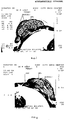
- Efficiency of the biocompatible gel suggested as applied for mammoplastics is illustrated by the two computer tomograms, viz.:
- Fig. 1 -
- illustrates the result of correcting form and size of the right mamma and
- Fig. 2 -
- results of the similar correction of the left mamma in patient K.
- The essence of the invention is thereafter revealed as follows:
- by description of the initial reagents, method of obtaining, examples of the method realization and results of laboratory tests realization and results of laboratory tests of the biocompatible hydrogel suggested,examples of the biocompatible hydrogel composition, description of methods and results of chemical, biochemical and medical studies of the biocompatible hydrogel suggested,
- description of the methods for correcting cosmetic and functional defects of human organism by the intended injections of the biocompatible hydrogel suggested, and information on its practical application.
- To obtain the biocompatible gel suggested, the following reagents were used, viz. (see Table 1, p. 9).
- Excepting the bidistilled water, reagents of "REANAL" firm (Hungary) were used in the experiments, namely: acrylamide and ethylene- bis-acrylamide in the form of white crystals, tetramethylethylenediamine in the form of white viscous liquid and ammonium persulfate in the form of colorless crystals.
- Conventionally, the biocompatible gel suggested is obtained by the following method:
- under aseptic laboratory conditions calculated amounts of acrylamide and water-diluted solutions of the cross-linking agent, i.e. methyl-bis-acrylamide and initiators of polymerization, e.g. ammonuim persulfate and TMED, are placed into sterile glass container. The given reagents are intimately mixed, then diluted with water (physiological solution or other water-diluted physiologically neutral salt, e.g. sodium acetate); the mixture is then filtrated and a filtrate is allowed to stand for obtaining the cross-linked polyacrylamide (CL PAA) hydrogel.
- The ready-made CL PAA hydrogel is controlled for the following characteristics:
- appearance, as according to visual evaluation;
- the hydrogel should have no color or impurities containing;
- refraction index should be within the range of 1.334 to 1.350;
- pH should be within the range of 7.0 - 9.0;
- heavy metal contents should be no less than 0.001% by mass;Table 1 DATA ON REAGENTS FOR OBTAINING THE BIOCOMPATIBLE HYDROGEL SUGGESTED Name and empirical formula of reagent Ammount required for 100g hydrohel, g Indices controlled, units for their measuring and values tolerable Acrylamide C3H5NO 3.5 - 9.0 Melting temperature, °C, 84.5+/-0.5 Density, g/cub.cm, 1.222 Content of the ground substance, % mass, at the least 98 Methylene-bis-acrylamide C7H10N2O2 0.01 - 1.00 Melting temperature, °C, 184+/-1.0 Content of the ground substance, % mass, at the least 96 TMED - tetramethylethylendiamine C6 H10N2 0.001 - 1.00 Density, g/cub.cm, 0.78 Content of the ground substance, % mass, at the least 98 Ammonium persulfate (NH4)2S2O8 0.001 - 1.00 Density, g/cub.cm, 1.98 Breaking temperature, °C, 120 Content of the ground substance, % mass, at the least 98 Bidistilled pyrogen-free water the rest to 100 Refraction index, 1.3329
- sterility. - Examples sited below will provide more detailed illustration of the substance of invention.
- In 1-l glass container the amount of 20.3 g acrylamide, 8.7
ml 2% methyl-bis-acrylamide aqueous solution, 7.5ml 4% TMED aqueous solution and 15ml 4% ammonium persulfate aqueous solution were mixed. The mixture, using water, has been brought to the end volume of 580 ml; then is was filtrated by the glass filter and the filtrate was allowed to stand for at least 20 minutes untill 3.5% CL PAA hydrogel was formed. - In 1-l glass container the amount of 34.2 g acrylamide, 60
ml 1%- methyl-bis-acrylamide aqueous solution, 6ml 1% TMED aqueous solution and 25 ml 0,48%- ammonium persulfate aqueous solution were mixed. The mixture, using water, has been brought to the end volume of 380 ml; then is was filtrated by the glass filter and the filtrate was allowed to stand for at least 20 minutes untill 9% CL PAA hydrogel was formed. - In 1-l glass container the amount of 24 g acrylamide, 50
ml 1%- methyl-bis-acrylamide aqueous solution, 25ml 1%-tetramethylethylenediamide aqueous solution and 50 ml 1.3%-ammonium persulfate aqueous solution were mixed. The mixture, using water, has been brought to the end volume of 350 ml; then is was filtrated by who glass filter and the filtrate was allowed to stand for at least 20 minutes untill 5%- CL PAA hydrogel was formed. - The CL PAA hydrogel was obtained, as described in Example 1, the difference being that for delution the physiological solution has been used instead of water.
- The CL PAA hydrogel was obtained, as described in Example 2, the difference being that for delution 9%- sodium acetate aqueous solution has been used instead of water.
- In experiments the following compositions of the CL PAA biocompatible hydrogel (BCH) were used (see Table 2, p.11).
- As shows the Table, Examples of the compositions of the
BCHs BCH Table 2 EXAMPLES OF SPECIFIC COMPOSITIONS OF THE CL PAA BIOCOMPATIBLE HYDROGEL SUGGESTED Constituents Indices of the constituent compositions and concentrations, % mass BCH1 BCH2 BCH3 BCH4 BCH5 BCH6 BCH7 BCH8 BCH9 CL PAA 3.0 3.5 6.0 9.0 9.5 4.0 7.0 5.0 8.0 Na chloride - - - - - - - 0.9 0.9 Na acetate - - - - - 0.9 0.9 - - Water in all cases up to 100% - Laboratory studies of the hydrogel suggested were performed chemically, biochemically and medio-biologically. The given distinction was not so strict; it was virtually based on methods and techniques applied.
- Thus, studies of the dry residue, which is conventially used to determine a precise concentration of a definite substance in true or colloid solution, were conducted.
- The given method was applied for evaluating chemical stability of the hydrogel suggested.
- Hydrogel, constituing relatively slightly-cross-linked (0.25% methylene-bis-acrylamide of the acrylamide mass) CL PAA with the calculated concentration of about 5%, was prepared. Four series of five samples of the given hydrogel, each volume about 20 ml, were treated as follows:
- the 1st series - weighed and dried at the temperature of 35 C and residual pressure of 12 - 15 mm Hg to the constant mass (for about 20 hours);
- the 2st series - weighed and poured with bidistilled water, boiled for 15 minutes and dried afterwards, as it was mentioned above, to the constant mass;
- the 3st series - weighed, each poured with bidistilled water up to the 200 ml level, steeped for 7 day (water being changed every day) and dried, as it was stated above, to the constant mass;
- the 4st series - weighed, steeped for 7 days, similar to samples in the 3rd series, boiled for 15 minutes, similar to samples in the 2nd series, dried afterwards, as it was stated above, to the constant mass.
- By means of conventional computing for each sample the polymer percentage in the hydrogel mass was determined.
- The results obtained were as follows (see Table 3):
Table 3 RESULTS OF STUDIES OF CHEMICAL STABILITY OF THE SUGGESTED CL PAA BIOCOMPATIBLE HYDROGEL WITH THE DRY RESIDUE DETERMINED Series Sample average mass, g, and peak deviation from the average Before treatment After treatment 1 20.84+/-0.96 0.983+/-0.0048 2 20.15+/-0.87 0.951+/-0.0076 3 20.65+/-0.83 0.923+/-0.0065 4 20.41+/-0.63 0.913+/-0.0095 - As follows from the results obtained, steeping with the subsequent boiling actually causes no destruction of the CL PAA in the hydrogel and testify to its potential, as it would be required, thermall sterilization, as well as to stability of even the slightly cross-linked CL PAA.
- Consequently, using the suggested CL PAA hydrogel stability in aqueous medium, the acryl-amide ability to migrate into biotissues was evaluated.
- The given index was determined by the method of highly efficient liquid chromatography (HELC) with detecting the absorption of ultraviolet radiation in the range of 195 nm, which is typical of the monomer mentioned; chromatograph "Liquochrom" (Hungary) has been applied thereby.
- Thus, by steeping the samples of hydrogel suggested
throghout - By the HELC-method, minimal detectable concentration of acrylamide is of 0.000001 mg/l and its limiting permissible concentration (LPC) in aqueous solutions from materials, applied for implants, is of 0.02 mg/l.
- In aqueous extracts from hydrogels, obtained by the methods described, acrylamide is not detectable, that serves an evidence for high chemical stability of the CL PAA as well as biocompatible hydrogel suggested as a whole.
- In medical-biological aspects, samples of the CL PAA hydrogels, obtained by the method described, have been tested under laboratory condition for:
- biochemical and hemolytic activity;
- embriotoxic activity;
- mutagenous activity;
- carcinogenic activity.
- Biochemical and hemolytic activity of the CL PAA hydrogels was evaluated by alteration in indices in albino male-rats of the "Vistar" line, mass of 300-350 g, experimental and control groups each consisting of 16 animal units.
- At the start of the experiment, the control narcotized rats were intraperitoneally syringed with the 5%-hydrogel suggested.
- Rats of both groups were kept on a conventional diet.
- Two weeks afterward, using the biochemical analyzer (production of "CORNING" Firm, Sweden), rats were taken blood to determine its components as follows: Na, K, Ca and Cl ions; urea, blood urea nitrogen, uric acid nitrogen; creatinine and enzymes (amylase, alkaline phosphatase, alanine - and aspartate aminotransferase, thereon being stated as AlAT and AsAT, resppectively; lactate dehydrogenase (LDG) and creatinine were determined by the bio-assay "Lachema" (Chekhia). Results obtained are shown in Table 4 (p. 14).
Table 4 EFFECT OF IMPLANTS MADE OF THE CL PAA BIOCOMPATIBLE HYDROGEL SUGGESTED ON BIOCHEMICAL BLOOD COMPOSITION IN RATS Biochemical indices and units for their measuring Results of measurement in the controls in the experiments Sodium, mmol/l 151 148 Potassium, mmol/l 8.20 6.82 Calcium, mmol/l 0.97 0.90 Chlorides, mmol/l 97.5 102.1 Urea, mmol/l 4.8 4.8 Blood urea nitrogen, mmol/l 2.2 2.2 Creatinine, mmol/l 0.05 0.05 Amylase, mg % 89.1 83.33 Alkaline phosphatase, mmol/l 84.5 55.9 AsAT, mmol/l 133 130 AlAT, mmol/l 41 51.7 LGD (total), mmol/l 217 189 Creatinine phosphokinase, un. 5960 5685 Uric acid, mmol/l 0.14 0.1 - As it follows from the Table, the major electrolytes indices show the absense of marked cell-membranes injuries. The ATP-ase activity is also normal.
- Stability of nitrogen metabolism testifies to the normal metabolism, including purine metabolism; the latter, being combined with the creatinine stability, proves a stability of functioning the excretion system, when the CL PAA is present in organism.
- AlAT and AsAT normal activity indicates to the hepatocytes stability and the adequate state of cardiac muscle, which, considering a normal creatinine-phosphokinase activity, is not subjected to considerable overloadings.
- Sufficiant alkaline - phosphotase activity showes the absense of inflammation processes in the biliary duct endothelium.
- In addition, blood cells analysis of the rats mentioned, was conducted and the results are shown in Table 5.
Table 5 EFFECT OF IMPLANTS MADE OF THE CL PAA BIOCOMPATIBLE HYDROGEL SUGGESTED ON BLOOD COMPOSITION IN RATS Indices of blood cells composition and units for their measuring Results of measurement in the controls in the experiments Leukocytes, thsd/mcl 3.5+0.2 5.4 Erythrocytes, mln/mcl 6.86+0.43 7.02+0.31 Hemoglobin, g/l 125+12 136+9 Hematocrit, % 35.0+1.5 36.5+1.3 Erythrocytes mean diameter, nm 51.0+0.2 52.0+1.5 Hemoglobin average content in one erythrocyte, pg 35.7+0.3 38.1+0.5 Thrombocytes, thsd/mcl 992+12 694+50 Thrombocytes mean diameter, nm 8+1.5 14.25+1.6 - As it follows from Table 4, leukocytes amount in the experiment is inconsiderably over the norm of 4.5 thsd/mcl and data, showing blood erythrocytes concentration and erythrocytes hemoglobin, are an evidence for adequate blood oxygenation. In case of hematocrit, one may testify that water-salt equilibrium is about the norm.
- Indirectly, all information available confirm a high biochemical stability of the CL PAA itself as well as its high biocompatibility.
- Embryotoxic activity of the CL PAA hydrogels was determined in the experiment; three groups of albino breed-free female-rats, mass of 180 - 200 g, each consisting of 16 animal unit, were used.
- Rats of the first group were intraperitoneally syringed with 2
ml 5%-hydrogel suggested in a week they were to be served. - At the third day of being pregnant, rats of the second group were, in the similar manner, intraperitoneally injected with 2
ml 5%-hydrogel suggested. - Pregnant intact rats consituted the third group.
- Two rats in the first group showed no pregnancy. The 14 rats in the first group and all of 16 rats in the 2nd and 3rd groups gave birth to normal healthy cubs that proves absense of embryotoxygenicity of the hydrogel suggested.
- CL PAA hydrogels mutagenicity was studied, using bone marrow reticulocytes of the C3H1-line mice (of both sexes) at the two-month age in two groups, each consisting of 10 animal units.
- Mice in the control group were injected with the 30-days aqueous extract (0.01% by body mass) from the 9%-CL PAA hydrogel, the former being prepared at the temperature of 40 C and ratio 100 ml extragent/1 g gel.
- In 24 hours the experimental and intact mice were killed by means of spinal marrow shift; bone marrow smears were prepared by the known methods, using a serum of fresh non-stored human blood group AB(IV); Pappengeim's method of staining was applied thereby.
- By microscopic study, number of reticulocytes, containing micronuclei, was counted. It has been determined that difference in numbers of the given reticulocytes between bone marrow smears in the experimental and intact mice, when being counted in 20 visual fields, each, by 1000 cells, did not exceed 2.3%, what is an evidence of the CL PAA hydrogel non-mutagenic effect.
- Carcinogenecity of the CT PAA hydrogel was evaluated by the method of immunodetection of organ-specific tumor-associated antigens.
- The mentioned method (in the said version) is based on determining the electrophoretic mobility (EPM) of stabilized and tanninized erythrocytes, which are sensibilized to a tumor-associated antigens of rhabdomyoblastoma and, additionally, to a non-specific embryonal antigen; the latter, in a positive reaction, serves as an indicator of tumors progressive growth. Generally, the EPM-tests are considered to be positive, if the electrophoretic mobility of cells-indicators is decreased by 20% or more.
- Experiments conducted have included 12 albino line-free male-rats, mass of 180 - 200 g, divided in to the experimental and control groups, each consisting of 6 animal units.
- Rats in the control group, being locally anesthetized, were musculus femoris - injected with 4 ml 6% CL PAA hydrogel. Then, for 18 months the rats were kept on their usual diet. Afterwards, all animals were taken blood from tail vein; erythrocytes were isolated from samples and sensibilized on the mentioned antigens; the EPM-test were carried out.
- Slowing down of the EPM-sensibilized erythrocytes as compared them with the non-sensibilized ones, expressed as follows:
- 4.17+/-1.58% in rats of the experimental for rhabdomyoblastoma antigen and 1.67+/-0.95% for non-specific embrional antigen, and
- 1.5+/-0.62% for rhabdomyoblastoma antigen and 1.83+/-1.28% for non-specific embryonal antigen.
- Thus, the EPM-test appeared to be negative for rats of both groups, what testify to absense of carcinogenous activity of the CL PAA hydrogel suggested.
- The most detailed medico-biological studies of the CL PAA biocompatible hydrogel suggested as applied for endoprosthetics and tamponing in medical practice, were conducted on breedless three- /four-year-old male-dogs, mass of 25 to 30 kg; under sterile conditions, in locally anesthetized dogs, after the skin of penis was disinfected with 10%-iodine tincture, an endoprosthetics has been modelled, viz:
- in 6 dogs, subcutaneously, 5 ml 3.5%-CL PAA hydrogel was single-injected;
- in the next 6 dogs, endofascially, excluding penetration under tunica albuginea corporum cavernosum, in the three segments on each side along the penis, the 9%-CL PAA hydrogel was injected in the amount up to 1.5 ml per a segment, total dose being of 8.0 ml, and
- in another 6 dogs, intracavernously, including penetration under tunica albuginea, mainly in trabecula corporum cavernosum but excluding injury of an urethra, the 6%-CL PAA hydrogel was also injected in the three segments on each side along penis in the amount up to 1.5 ml per a segment, total dose being of 8.0 ml.
- The fourth group was the controls, consisting of three dogs.
- Each dog was killed by intravenous nembutal injection:
- in the experimental groups in 1, 7 and 14 days and 1, 3 and 6 months after the CL PAA hydrogel suggested was implanted;
- in the control group in 1, 3 and 6 months.
- Excited pieces of the complete cross section of penis, regional lymph nodes and canine lungs, together with the control section, were fixed in 10% and 6% neutral formaline and the Carnua liquid, dehydrated in alcohols of increasing strenght and poored with the paraffin.
- Mounts were stained with hematoxylin and eosin, pyrofuchsin by van Gison; for detection of glycosaminoglycanes, at the different pHs of staining solution, applying chemical and enzymatic control, the mounts were stained on elastic by Weigert using toluidine blue.
- Glycoproteides and glycogen were detected by means of the PAS-reaction by Mac-Manus; calcium salts were detected by con Kos; RNA was detected by Brashe (the control with the ribonuclease).
- Activity of the following enzymes was studies, namely:
- malate dehydrogenase (MDG);
- succinate dehydrogenase (SDG) - by Nachlas;
- lactate dehydrogenase (LDG);
- glucoso-6-phosphate dehydrogenase (G-6-PDG). NAD - and NADFdiaphorase, respectively, by Hess, Scarpelli and Pearce;
- alkaline phosphatase (AP) by Gomori, and
- adenosintriphosphatase (ATPase) by Wachstein-Maisel.
- Nervous tissues were silver-nitrate impregnated by the Bilshovsky-Gross method.
- Histo-chemical reactions and controls for them were conducted as recommended in the Manual by E.Pearce (Histochemistry / transl. from the English / 2nd Edd. - M:

 . 1962).
 - Studies showed the following:
- A.When the CL PAA hydrogel was subcutaneosly injected:
- in 1 day in the site of injection a socked-like swelling of solt-elastic consistency with a slight skin thinning was observed (one dog developed inconsiderable edema and hyperemia of tissues, adjacent to an implant, a small focal hemorrhage being resolved by the 7th day, what can be considered as a manipulation injury);
- in 7 day the hemodynamic, alternative or inflammation reactions were not observed. Being studied histologically, implant had an appearance of a large light-blue vacuole, surrounded by a thin connective-tissue capsule, which separated the CL PAA hydrogel from penis and dermis fascial. Capsule consisted of one-two layers of young fibroblasts encircled by the gentle collagen and elasticfibers. Pyroninophilia and enhanced activity of the reduction-oxidation enzymes (SDG, MDG, NAD- and NADF-diaphorases, LDG) and AP are typical for fibroblasts cytoplasma. The G-6-PDG increased activity testified to activation of metabolism pentose-type. Low-dense leukocyte and macrophage infiltration was observed in the near-to-surfece layer. Granulation tissue along the capsule periphery was constituted of the new-formed vessels, covered with swelled epithelial cells, lumens of the former being enlarged and filled with the blood formed elements. Proliferating fibroblasts, histiocytes and solitary plasmatic cells were detected in the vessels adventition. In all cases the giant-cell reaction did not occur. At the all pHs of solution applied the metachromatic foci, when stained with the toluidine blue, were not detected. Definite nervous fibers, being impregnated with silver nitrate, showed various alterations, i.e.: local swelling of axis cylinders, their fibers disintegration, vacuolization, varicosity, hypo - or hyperimpregnation. Oxoplasma excrescence, along the nervous fibers or at their ends, partial disoders of the smooth myeline membrane and its decomposition into short and long fragments were observed in some cases. Changes mentioned, are typical of the compensatory-adaptive re-structure of nervous fibers as a response to a compression caused by vacuole on the CL PAA hydrogel;
- in 14 days the macrophage-leukocyte reaction around the CL PAA hydrogel implant was slightly increased; marced fibroblastic reaction, including formation of connective-tissue capsule around a vacuole, occured; the former, at certain sites, was represented by the randomlocated collagen and elastic fibers, having young fibroblasts and newly-formed capillaries in the interspace, and at the another sites it was represented by the more mature connective tissue, consisting of some sequences of the parallel-collage- and elastic fibers as well as proliferate fibroblasts. In a cytoplasm and nucleolis the RNA-contents, activity of reduction-oxidation and hydrolythic enzimes was increased. Fibroblasts cytoplasm was rich in the metachromatic granules, well-detectable with the toluidine blue at the pH=2.8, what is typical, when the glycosaminoglycanes synthesis is increased. Capsule-surrounding tissues had a considerably decreased number of the newly-formed vessels, and the histiogenous-type cells, producing glycosaminoglycanes and collagen, were prevailing at their sites. Giant cells were extremely infrequent to occur. Alterations in the nervous fibres were simliar to those described above:
- In 1 month after injection a mature connective tissue capsule was formed around vacoule of CL PAA hydrogel which constisted of circle-located collagen and elastic fibres with mature fibroblasts within intervals containing a moderate number of RNA-content and highly-sulfated detectable toluidine blue at the pH = 2.8 glycosamineoglycanes. Activity of reduction-oxidated and hydrolitic enzimes in cytoplasm of fibrocytes is normal. Sometimes a cellular reaction had been seen on the surface of hydrogel like an inconsiderable diffusive infiltration caused by macrofages and plasmatic cells. Fibre structure, suurounding implants, was completely normalized and had not differed from the structure of similar tissue of intact animal. Rective alterations of sensitive nervous tissue are decreasing and are expresses mainly by the non-uniform regions of expansion or thinned axial cylinders and their hype- and hyperimpregnation;
- in 3 months there was noted a slight thickening of CL PAA gydrogel with increased basophilic character as well as good separation of implant from adjuacent tissues of connective-tissue capsule from collagen and elastic fibres and cells of fibrocytes-type. Structural and histochemical alterations in adjusent tissues were absent and nervous tissues gained normal forms;
- in 6 months the form and size of implant were practically similar to those as on the first day after injection of CL PAA hydrogel. Histologically implant had an appearance of the solid well-capsulated dark-blue vacucles. Capsule consisted of one-two layers of fibrocytes and well-located collagenic and elastic fibers in which calcium salts had not been detected by von Kos methid. Neither reactive, nor hemodyanamic, nor dystrophic, nor necrotic, nor inflamatory, nor other changes had not been detected in implant-surrounding tissues, including tissue and cellular atypism. Nervous tissues while impregnated with silver nitrate were in norm.
- B. When CL PAA hydrogel was injected endofascially:
- in 1 day and in 7 days penis had uniformly-thickened appearance and heightened elasticity.
Dogs body temperature was normal, skin coloring at the injection sites was conventional, local inflammations were absent. Histologically, the implants were detected in the sites of injection in the form of light-blue vacuoles. In the seven days the CL PAA hydrogel vacuoles were surrounded by thin-walled capsules, mainly consisted of one-two layers of young fibroblasts and encircled by the gentle connective - tissue-newly-formed capillaries; leukocytes and macrophages were observed at the hydrogel surface. In a cytoplasm and fibroblast nucleoli the RNA content was increased as well as activities of the SDG, MSG, NAD- and NADF-diaphorases, LDG and G-6-PDG in a cytoplasm were more effective, too. Newly-formed cappilaries with slightly widened and blood-fieled interspaces and swelled endothelium composited the granulation tissue surrounding a capsule. Proliferation fibroblasts, impured with plasmatic cells, were found in blood vessels adventation. No dystrophic or necrobiotic charges were detected in the fascia parted tissue, adjacent to implant. Thus, metachromasy foci, which would testify to the CL PAA hydrogel destruction were not found at staining mounts by the toluidine blue at any pHs of its solutions. Permeability of vessels remained to be normal, as the PAS-positive material; stable to amylase and in perivascular spaces as well as in walls of small and middle vessels, and the AP and ATP-ase in the walls of microcirculatory bed remained to be low. In some cases, the nervous fibres, impregnated with silver nitrate and studied by Spielmeier, were wave- or spiral- shaped, and, in definite cases, had swells at their ends. Regions of demyelination were rare to observe as well as a local spreading of nervous fibers with loop-like structures formation. Infrequent proliferation of the hypertropric Schwann's cells was observed. Changes mentio ned should be considered as nervous fibers response to compression by implants, i.e.: - in 14 days the macrophage reaction nearby the implants was slightly more intensive but the giant cells ware not occured, however. Distinctive fibroblast reaction, including formation of the connective tissue capsules around vacuoles, was observed; capsules, in the definite regions, were represented by randomly scattered collagen and elastic fibers with young fibroblasts in interspaces, having the high RNA content in a cytoplasm and enhanced reduction-oxidation activity of enzymes,. More mature connective tissue of the sequenced collagen and elastic fibers and fibroblast-type cells were determined in another regions. Increase in number of histogenous cells and decrease in newly-formed vessels were observed in the granulation tissue, adjacent to a capsula. Endothelium and middle membrane structures, vessels adventition and hemodynamic indicies were unchanged but the nervous cells changes were similsr to those as described for the previous term;
- in 1 month the implant capsules consisted of cell elements of fibroblastic sequence, fibrocytes with a mederately pyroninophilous cytoplasm being prevailed. When staining with the methylene blue at the pH=2.8, a moderate number of high-sulfated glycosaminoglycans in fibroblasts were determined. Enzymes activity in the fibrocytes cytoplasm was in accordance with the control. Undersurface layer of the CL PAA hydrogel was inconsiderably infiltrated by the macrophages and plasmatic cells. Neither blood-flow disoders, inflammation, degeneration nor necrosis were detected in tissues adjacent to implants. Changes in nervous fibers, mentioned before, were still retained;
- in 3 months followed by injection, basophilia growth of the CL PAA hydrogel was observed. Its vacuoles were markedly separated from the fascia by the thin connective-tissue capsules of the collagen and elastic fibers, fibrocytes being in the interspaces. Blood vessels were in the norm. Reaction of penis tissues did not occur (fascia, similar to the control, gas presented by the circulatorry located marced collagen and elastic fibers, having neither disoders in their structure at the micro- and macrolevels, nervous fibers being in the norm);
- in 6 months the penis forms aid sizes in dogs were, by the visual evaluaton, similar to those observed at the second-third days. Histologically, implants were of the whole well-incapsulated dark-blue vacuoles. Capsules consisted of one-two fibrocytes sequences and order-lined thin collagen and elastic fibers; calcium salts were neither macroscopically nor microscopically (by von Kos) detected in them. Neither reactive, hemodynamic, degeneratic, necrotic, inflammation nor other changes, includihg the tissue and cell atypism, were found in the implant-adjacent tissues. Nervous tissues, impregnated with silver nitrate, both in the experimental and control animals were virtually identical. In the regional lymphonodes, intra-trabecular and trabecular corpus cavernosum penis, penis veins and lungs, the hydrogel particles were not detected;
- in 1 day and in 7 days penis had uniformly-thickened appearance and heightened elasticity.
- B. Followed by the CL PAA hydrogel intracavernous injections,
- in 1 day and 7 days, the CL PAA hydrogel, stained with hematoxylin and eosin, was detected as homogenous light-blue vacuoles, which, in seven days, were surrounded by the thin connective-tissue capsules; the latters caused a slight shift and compression on corporum caverncsum penis and tunica albuginea. Capsules were constituted of the thin, mainly collagen fibers, and one-two sequrnces of fibroblasts. Connective-tissue of corporum cavernosum penis nearby the capsules, were of the usual structure, having markedly distinctive smooth muscles with the minor number of elastic fibers, being of no degeneration and necrosis traits, when studied histochemically or histologically. Minor leukocytes and macrophages accumulation was observed at the surface of the CL PAA hydrogel implants. Intra-trabecular spaces had inconsiderable blood content and slighly swelled endothelium. Lesser arteries and veins were moderately blood-filled, having slightly thickened walls (primarilly, due to endothelium swelling and proliferation of fibroblasts, histocytes and plasmatic cells in the adventitial membranes). Capsules were encircled by the granulation tissue, formed of insignificant number of the thin-walled newly-formed vessels and different cells, mainly of histogenous origin, i.e.: fibroblasts, histocytes. Giant cells able to resolve foreign elements were not observed. Some nervous fibers, when impregnant and being studied by Spielmeier, showed changes in axis cylinders, myelin membrane and Schwann's cells. Twisting, local swelling and irregular-form thickenings of nervous tissues as well as varicosity and fiber disintegration of axons, spherical and club-shaped enlargements at their ends and definite demielinization region were observed. Reactive proliferation of the Schwann's cells hypertrophied was detected in particular cases, i.e.:
- in 14 days the leukocytes and macrophages reaction around the CL PAA hydrogel implants became more intensive but the giant cells able to resolve foreign elements were, as mentioned before, not found, however. Connective-tissue capsules around implants were, in some cases, slightly porous and consisted of random-scattered collagen and elastic fibers and young fibroblasts, and in separate cases, were more mature in appearance and constisted mainly of parallel collagen fibers, including elastic fibers and fibroblastic elements. Perifocal granulation tissue was constituted of incosidersble number of slit-like newly-formed vessels and fibroblasts including a moderate RNA-contents and highly-sulfated glycosaminoglycan granules. Nervous tissue changes occured as a local swellind of axial cylinders, their fiber-disintegration, vacuolization, varicosity, hypo- and hype-impregnation and, occasionally, in local oxoplasm swelling, either along the nervous fibers or at their ends, partial alterations in smoothness of myeline membrane and its disintegration into short and long fragments, what should be considered as a compensatory-adaptive response to compression. In the regional lymphonodes, intertrabecular spaces of corporum cavernosum, penis viens and lungs, CL PAA hydrogel particles were not detected;
- in 1 month around the CL PAA hydrogel implants the thin mature connective-tissue capsules were formed; the latter included circle-located collagen and elastic fibers, mature fibroblastic elements being detected among them. Inconsiderable diffusive infiltration, caused by macrophages and plasmatic cells, was detected in the surface-adjacent layers of implants. By their structure, connective-tissue trabeculars of corporum cavernosum did not differ from the control and were covered with the conventional endothelium. Insignificant amount of blood could be found in the inter-trabecular spaces. Walls of the corporum cavernosum veins and arteries were of no marked structurel changes. Nervous tissue reaction alterations, as compare them with the previous period, were considerably decreased and expressed mainly by the non-uniform regions of thickened and thinned axial cylinders and their hypo- or hyperimpregnation;
- in 3 months the hydrogel was getting the low-dense and basophilic character. Implants were separated from tissues adjacent by the thin-walled capsules with the parallel-located collagen and elastic fibers and inconsiderable number of fibrocytes between them. Cell elements were not detected at the implants surface. Tissues adjacent and their blood vessels were of the usual structure. Glycosaminoglycans composition of the major connective-tissue substance, fibrous structures and cell elements of connective tissue was virtually identical to the control. Changes in nervous fibers were not observed;
- in 6 months the penis forms and sized in dogs were visually similar to those observed at the second-seventh days. Histologically, implants had the appearance of the solid well-incapsulated dark-blue vacuoles. Capsules consisted of one-two layers of fibrocytes and regular-located thin collagen and elastic fibers; calcium salts, neither macroscopically, nor microscopically by von Kos, were detected in them. No reactive, hemodynamic, degenerative, necrotic, inflammation and other changes, including tissues and cells atypism, were detected in tissues adjacent to the implant. Nervous tissues, impregnanted with silver nitrate, in the experimental and control animals were virtually identical. In the regional lymphonodes, inter-trabecular spaces of the corporum cavernosum and veins of penis as well as in lungs, the CL PAA hydrogel particles were not found.
- The similar morphologic data were also obtained in the clinical studies. As a material, bioptat of subcutaneous fat, taken in the healthy volunteer, age of 45, was used; the man, in 6 years before the biopsy, was intradermally injected with the 10 ml hydrogel suggested, the CL PAA concentration of 8%.
- Bioptat was fixed in 10% formaline, dehydrated in alcohols of increasing strength and poored with paraffin. Mounts were stained with hematoxylin and eosin; the collagen fibers were determined by van Gison and the elastic fibers - by Weigert; glycosaminoglycans were determined by the toluidine blue under the different pH of solutions, applying the required chemical and enzymatic control; glycoproteide and glycogen concentrations were determined by means of the PAS-reaction by Mac-Manus.
- Macroscopically, the bioptat was oval in shape, gentle-elastic by its consistency, light-pink in color without ally visual changes, which would be distinctive, if compared it with the tissues adjacent.
- In microscopic studies all preparations showed presense of the CL PAA hydrogel, srained with hematoxylin and eosine; blue colors obtained were different by their intensity. The implant of the present hydrogel, in bulk, was impregnant by the highly vascularized gentle connective tissue, consisted mainly of the regulated collagen and elastic fibers and the ground substance, which included slight admixture of cell elements (as a rule, inactive fibroblasts, since, by the results of staining with the toluidine blue at pH=2.8, the traits of neither metachromasy in the form of glycosaminoglycans nor the solitary mononuclears-macrophages were detected in the fibroblasts cytoplasm).
- Vessels in the mentioned connective-tissue interlayers here located in groups and their walls were of different thickness having the fiat endothelium.
- Signs of acute and chronic inflammation, i.e. polymorphonuclear leukocytes, epitheloid cells, giant cells able to resolve foreign bodies and lymphoid-histiocytic infiltrations, were completely absent; traits of allergic reactions in the form of lymphocytes, macrophags and histiocytes as well as of hemodynamic disorders expressed in the vessel plethora, pre-stasis, hemostasis, thrombosis and malignization, e.g., cell- or tissue atypism and cell proliferation, were not observed, too.
- Calcium salts were not detected in the mounts - either macro- or microscopically. Alternative, i.e. dystrophic or necrotic changes, were not found.
- Fibrous capsule around the implant was absent.
- The major method for correcting cosmetic or functional defects of human organism, using the CL PAA biocompatible hydrogel suggested, consists in the following:
- based on anamnesis, examination and, as required, laboratory studies, i.e., generally accepted for patients would-be surgically treated (specifically, determination of the individual antibiotic sensitivity), preliminaries, as follows, should be considered, viz.:
- first, definition of an organ would-be corrected either by its form and size or by the functional afficacy, and
- second, determination of the volume, tactical measures and regimen (ambulatory or clinical) of the would-be correction;
- before the hydrogel suggested is to be injected, local anesthesia, as a rule, should be performed;
- the sterile CL PAA hydrogel, additionally impregnant with antibacterial preparations, should be slowly syringed (usually, in two-three srages) into the correction region at the temperature similar to the normal for humans (36-37 C).
- The given method is highly effective in mammaplasty (preferably, in aplasia and hyperplasia) and phalloplasty, when the impotency is expressed in poor erection or is a result of agening or injuries happened.
- Thus, when applied for mammeplasty, the CL PAA hydrogel, having the preferable concentration of 3.5-6% and the most preferable concentration of 5-6%, depending on the individual anatomic mamma peculiarities, is retromammarily, intracapsularry or/and subfascially injected in the two-three stages; usual dose is 40-160 ml (but not exceeding 200ml) per one mamma for one stage.
- Specifically, when applied for phalloplasty,the CL PAA hydrogel, having the preferable concentration of 4.5-6.0% and also the most preferable one of 5%, is, as a rule, intracavernously injected into the three segments along each side of penis in trabecular corpus cevernosum. Total amount of the CL PAA hydrogel as required for one pnalloplastic operation, is preferably of 40 to 60 ml. The amount for particular case is calculated by the criteria of permissible volume and degree of penis elasticity, excluding possibility of the urethra compression.
- The bicompatible hydrogel suggested was clinically tested.
- Specifically, it was applied for the cosmetic correction of the congenital face defects and mammaplasty in mammaaplasia and hypoplasia in women.
- Individual examples of correcting defects of forms and sizes of face and mammas are sited below.
-
- Diagnosis: Congenital right-side mandibulo-neuro-muscular microsomia.
- Correction (general anesthesia: intravenous and NLA):
- the first November, 1993) - 10 ml 3.5% CL PAA hydrogel being twice intramuscular-injected;
- the second (June, 1994) - similar injection of the given hydrogel (15ml).
- Results obtained were positive: the right and left sides of face were symmetrical in appearance.
-
- Diagnosis: Symmetrical mamma aplasia.
- Correction in the three stages (local anesthesia: 0.5% novocain solution, 80 ml at each stage):
- the first stage (January, 1991) - intramuscular, retromammar and subcapsular injections of 140 ml 6%-CL PAA hydrogel into both mammas;
- the second stage (March, 1991) - similar injection of the given hydrogel, 40 ml into both mammas;
- the third stage (May, 1991) - similar injection of the given hydrogel, 60 ml into both mammas.
- Result obtained was positive: the patient's mammas, in their shape and size, were in conformity with her physique; their elasticity was similar to the natural soft tissues.
-
- Diagnosis: Symmetrical mamma hypoplasia.
- Correction: (local anesthesia 0.5%-novocain solution, 80 ml):
- the first stage (January, 1994) - intramuscular, retromammar and subcapsular injections of 130 ml 6%-CL PAA hydrogel into both mammas;
- the second stage (July, 1994) - the similar injection of the given hydrogel into both mammas.
- Positive result, similar to the above described, was obtained.
- Correction results were additionally evaluated using the chest axial computer tomography;it was carried out at the tomograph "SONATRON CR" of SIEMENS production, FRG; spacing of 8 mm; the mentioned patient was in the "back-lieng" position and tomography was performed at the mammas level. Two tomograms of the numerous obtained are shown in the above-mentioned Fig.1 and Fig.2.
- As it follows from illustrations, both mammas , as a result of correction, are of the regular topography and form. Cutaneous thickness does not exceed 2.0 mm, nipples nad areolas are in the norm (neither deformed nor drawn). Hypoplasized tissue of both mammas is ventrally shifted by the CL PAA hydrogel (different by the density if compare it with the former), which is filling the retromammary space (glandule mammaria tissue density is + 3.0 to 4.0, density of the mentioned hydrogel is +4.6 to 7.2 and subcutenous density is -73 to -96 units Hu).
- Glandula mammaria dimensions after correction were as follows:
- transversal of 7.4cm dextra and 8.0 sinistra;
- longitudal of 5.0cm dextra et sinistra.
- Regional lymphonodes were not enlarged, osseous tissues of breast bones and ribs were of normal structure.
- Laboratory, experimental and clinical data allow to conclude, that the CL PAA hydrogel suggested is chemically and biologically stable, inert, biocompatible and highly suitable for implantation in endopresthetics, caverns tamponing and formation of intratissue depots of the prolonged-effect medicine preparations.
- Suitability of the biocompatible hydrogel suggested for the long-term cardio- and encephalography was tested, samples having the CL PAA concentration of 4.0-8.0% and being prepared on the 0.9%- aqueous solution of sodium chloride and acetate.
- The tests included the following:
- determination of electrical specific resistance of the hydrogel lofted as 1mm layer between electograph electrodes (type EKMK-6), working surface with the diameter of 9mm and thickness of 3mm, tin-, copper- or aluminium- plated,
- long-day stability of the given index and endurance of the prolonged (observation terms of 1.7 to 15 days) applications at the skin of forearm nearby the elbow ; two men and two women-volunteers from the physician stuff were involved.
- Samples specific resistance was of 8.0 to 9.0 kOhm/cm for the samples of the BCG6- and BCG7- types and of 10.0 to 20`0kOhm for the samples of BCG8- and BCG9-types; in a day three hour surveyings were performed and remained unchanged for each sample. For comparison, it should be mentioned that the specific electrical resistance of an electrode paste (product of SIEMENS) is about 8.0kOhm/cm.
- In all tests the polarizability for tin-plated electrodes was at the level of about 450mV, for copper-plated - of 150mV and aluminum-plated - of about 700mV. Determining the specific electroresistance, parasitic polarization was not shown.
- When locations of the cutaneous application were visually investigated, at all terms of studies mentioned, marked reddening or pruritus as well as the cutaneous injuries (maceration) were not detected. Only in one case at the 15th day, a slight pinking of skin nearby the plaster, somewhat covering the hydrogel layer, was observed in a woman-volunteer.
- Spontaneous flowing of the CL PAA hydrogel, having viscosity of 10-11 poise, out of the space between the horizontally located measuring electrodes or out of the plasters, was not observed.
- Data obtained testify to the possible application of the CL PAA hydrogel suggested as the suitable immersion meduim for monitoring of the electrophysiologic parameters of human organism and for electrophoretic drug injection via the skin.
Claims (5)
- Biocompatible hydrogel, containing polymer, based on acrylamide, obtained using the initiator of radical polymerization in pyrogen-free water as dispersion medium, distinctive by that it contains the cross-linked polyacrylamide, obtained by using the biocompatible cross-linking agent.
- Biocompatible hydrogel; as mentioned in item 1, distinctive by that it contains the cross-linked polyacrylamide obtained by using the methyl-bis-acrylamide as the cross-linking agent and mixture of ammonium persulphate and tetramethylethylendiamine as the initiator of polymerization.
- Biocompatible hydrogel, as mentioned in item 1, distinctive by that it contains of 3.5 to 9.0% by mass the mentioned cross-linked polyacrylamide.
- Biocompatible hydrogel, as mentioned in item 1, distinctive by that it additinally contains the physiologically neutral water-soluble salt.
- Biocompatible hydrogel, as mentioned in item 1, distinctive by that it contains sodium chloride as physiologically neutral water-soluble salt.
Applications Claiming Priority (3)
| Application Number | Priority Date | Filing Date | Title |
|---|---|---|---|
| UA94086726A UA10911C2 (en) | 1994-08-10 | 1994-08-10 | BIOSMIX HYDROGEL |
| UA94086726 | 1994-08-10 | ||
| PCT/UA1994/000022 WO1996004943A1 (en) | 1994-08-10 | 1994-08-12 | Biologically compatible hydrogel |
Publications (3)
| Publication Number | Publication Date |
|---|---|
| EP0742022A1 true EP0742022A1 (en) | 1996-11-13 |
| EP0742022A4 EP0742022A4 (en) | 1996-11-25 |
| EP0742022B1 EP0742022B1 (en) | 2000-03-15 |
Family
ID=21689009
Family Applications (1)
| Application Number | Title | Priority Date | Filing Date |
|---|---|---|---|
| EP94928547A Expired - Lifetime EP0742022B1 (en) | 1994-08-10 | 1994-08-12 | Biologically compatible hydrogel |
Country Status (22)
| Country | Link |
|---|---|
| US (2) | USRE38913E1 (en) |
| EP (1) | EP0742022B1 (en) |
| JP (1) | JP3359036B2 (en) |
| KR (1) | KR100316212B1 (en) |
| CN (1) | CN1058639C (en) |
| AT (1) | ATE190508T1 (en) |
| AU (1) | AU696773B2 (en) |
| BG (1) | BG62915B1 (en) |
| BR (1) | BR9408609A (en) |
| CA (1) | CA2195957C (en) |
| CZ (1) | CZ297126B6 (en) |
| DE (1) | DE69423520T2 (en) |
| DK (1) | DK0742022T3 (en) |
| ES (1) | ES2145841T3 (en) |
| FI (1) | FI970315L (en) |
| GR (1) | GR3033694T3 (en) |
| HU (1) | HU9603434D0 (en) |
| NO (1) | NO310446B1 (en) |
| PT (1) | PT742022E (en) |
| RU (1) | RU2067873C1 (en) |
| UA (1) | UA10911C2 (en) |
| WO (1) | WO1996004943A1 (en) |
Cited By (9)
| Publication number | Priority date | Publication date | Assignee | Title |
|---|---|---|---|---|
| WO1999010021A1 (en) * | 1997-08-26 | 1999-03-04 | Pegas Ltd. | Injectable, biocompatible, hydrophilic gel, process for its preparation and application |
| EP0895785A3 (en) * | 1997-08-07 | 1999-09-15 | Mentor Corporation | Filling material for soft tissue implant prostheses and implants made therewith |
| WO2001041809A1 (en) * | 1999-12-08 | 2001-06-14 | Dmitry Vladimirovich Zybin | Application of polyacrylamide gel for forming a capsule in the tissue of a mammal organism, method for cultivating cells and method for therapy of oncological diseases and the diabetes mellitus |
| WO2001049336A1 (en) * | 1999-12-29 | 2001-07-12 | Progen S.R.L. | Biocompatible hydrogel and method of its production |
| WO2002016453A1 (en) * | 2000-08-25 | 2002-02-28 | Contura S.A. | Polyacrylamide hydrogel and its use as an endoprosthesis |
| US7186419B2 (en) | 2000-08-25 | 2007-03-06 | Contura Sa | Polyacrylamide hydrogel for arthritis |
| US7294348B2 (en) | 2001-09-28 | 2007-11-13 | Biopharma Development, Ltd. | Polyfunctional biocompatible hydrogel and method for the production thereof |
| US7678146B2 (en) | 2000-08-25 | 2010-03-16 | Contura A/S | Polyacrylamide hydrogel and its use as an endoprosthesis |
| WO2020109628A1 (en) | 2018-11-30 | 2020-06-04 | Nvd | Biocompatible hydrogel, process for producing same, and use thereof in a mechanical viscosupplementation system |
Families Citing this family (67)
| Publication number | Priority date | Publication date | Assignee | Title |
|---|---|---|---|---|
| UA10911C2 (en) | 1994-08-10 | 1996-12-25 | Мале Впроваджувальне Підприємство "Іhтерфалл" | BIOSMIX HYDROGEL |
| US5658329A (en) * | 1995-02-14 | 1997-08-19 | Mentor Corporation | Filling material for soft tissue implant prostheses and implants made therewith |
| RU2134071C1 (en) * | 1996-05-28 | 1999-08-10 | Лукомский Генрих Ильич | Method for increasing mammary gland dimensions |
| US5846517A (en) | 1996-09-11 | 1998-12-08 | Imarx Pharmaceutical Corp. | Methods for diagnostic imaging using a renal contrast agent and a vasodilator |
| US6800278B1 (en) | 1996-10-28 | 2004-10-05 | Ballard Medical Products, Inc. | Inherently antimicrobial quaternary amine hydrogel wound dressings |
| FR2764514B1 (en) * | 1997-06-13 | 1999-09-03 | Biopharmex Holding Sa | IMPLANT INJECTED IN SUBCUTANEOUS OR INTRADERMAL WITH CONTROLLED BIORESORBABILITY FOR REPAIR OR PLASTIC SURGERY AND AESTHETIC DERMATOLOGY |
| USRE38614E1 (en) | 1998-01-30 | 2004-10-05 | Synthes (U.S.A.) | Intervertebral allograft spacer |
| US6986788B2 (en) | 1998-01-30 | 2006-01-17 | Synthes (U.S.A.) | Intervertebral allograft spacer |
| RU2148957C1 (en) * | 1998-02-10 | 2000-05-20 | Скнар Александр Антонович | Method for treating the cases of vesicoureteral reflux |
| US6660301B1 (en) | 1998-03-06 | 2003-12-09 | Biosphere Medical, Inc. | Injectable microspheres for dermal augmentation and tissue bulking |
| PT1100417E (en) | 1998-08-03 | 2004-08-31 | Synthes Ag | ALOGENIC IMPLANT INTERVERTEBRAL DILATADOR |
| FR2784580B1 (en) | 1998-10-16 | 2004-06-25 | Biosepra Inc | POLYVINYL-ALCOHOL MICROSPHERES AND METHODS OF MAKING THE SAME |
| US6025538A (en) * | 1998-11-20 | 2000-02-15 | Musculoskeletal Transplant Foundation | Compound bone structure fabricated from allograft tissue |
| RU2143864C1 (en) * | 1998-11-25 | 2000-01-10 | Плечев Владимир Вячеславович | Method for fixing polyacryl amide gel in performing soft tissue contour plastic repair |
| CN1068612C (en) * | 1999-01-15 | 2001-07-18 | 吉林富华医用高分子材料有限公司 | Medical cross-linked polyacrylamide gel and its preparing method |
| WO2001070289A2 (en) | 2000-03-20 | 2001-09-27 | Biosphere Medical, Inc. | Injectable and swellable microspheres for tissue bulking |
| US20030212022A1 (en) * | 2001-03-23 | 2003-11-13 | Jean-Marie Vogel | Compositions and methods for gene therapy |
| EP1267839B1 (en) * | 2000-03-24 | 2007-10-03 | Biosphere Medical, Inc. | Microspheres for active embolization |
| RU2212843C2 (en) * | 2000-04-17 | 2003-09-27 | Кубанский государственный аграрный университет | Method for detecting activity of alkaline phosphatase in blood smears of cattle and poultry |
| CN1116321C (en) * | 2000-04-21 | 2003-07-30 | 郑永碧 | Process for preparing, purifying and testing medical hydrogel of polyacrylamide |
| RU2196990C2 (en) * | 2000-04-24 | 2003-01-20 | Красноярская государственная медицинская академия | Method for reproducing inflammatory- infectious process in rats |
| AU2002249958B2 (en) * | 2001-01-16 | 2007-11-08 | Vascular Therapies, Inc. | Implantable device containing resorbable matrix material and anti-proliferative drugs for preventing or treating failure of hemodialysis vascular access and other vascular grafts |
| CN1308039C (en) * | 2002-04-10 | 2007-04-04 | 生命胶股份有限公司 | Multifunction biocompatible hydrogel and preparation method thereof |
| RU2231300C2 (en) * | 2002-08-07 | 2004-06-27 | Макаров Геннадий Анатольевич | Method for testicular prosthetics at monarchism and anarchism |
| MXPA05004927A (en) * | 2002-11-06 | 2005-09-08 | Alza Corp | Controlled release depot formulations. |
| US7632291B2 (en) | 2003-06-13 | 2009-12-15 | Trivascular2, Inc. | Inflatable implant |
| WO2005014073A1 (en) * | 2003-08-08 | 2005-02-17 | Contura Sa | Implantable hydrogel with resorbable shell for use as an endoprothesis |
| RU2240809C1 (en) * | 2003-08-26 | 2004-11-27 | Государственное учреждение "Нижегородский научно-исследовательский институт травматологии и ортопедии" | Method for obtaining cell-free dermal matrix |
| JP4210231B2 (en) * | 2004-03-25 | 2009-01-14 | 株式会社資生堂 | Cosmetic method for improving skin wrinkles and wrinkle improving tool |
| US20050226936A1 (en) | 2004-04-08 | 2005-10-13 | Q-Med Ab | Method of soft tissue augmentation |
| US7641688B2 (en) | 2004-09-16 | 2010-01-05 | Evera Medical, Inc. | Tissue augmentation device |
| US7244270B2 (en) | 2004-09-16 | 2007-07-17 | Evera Medical | Systems and devices for soft tissue augmentation |
| KR20140090270A (en) | 2005-05-09 | 2014-07-16 | 바이오스피어 메디칼 에스.에이. | Compositions and methods using microspheres and non-ionic contrast agents |
| RU2290876C1 (en) * | 2005-07-28 | 2007-01-10 | Научно-исследовательский и учебно-методический центр биомедицинских технологий Всероссийского научно-исследовательского института лекарственных и ароматических растений РАСХН | Method for surgical treatment of patients at destructive forms of open tuberculosis |
| US20070048249A1 (en) | 2005-08-24 | 2007-03-01 | Purdue Research Foundation | Hydrophilized bactericidal polymers |
| CN1322032C (en) * | 2005-10-20 | 2007-06-20 | 北京科技大学 | Method for preparing porous aquagel using wave polymerisation technology |
| US20080033366A1 (en) * | 2006-01-30 | 2008-02-07 | Surgica Corporation | Compressible intravascular embolization particles and related methods and delivery systems |
| WO2007090130A2 (en) * | 2006-01-30 | 2007-08-09 | Surgica Corporation | Porous intravascular embolization particles and related methods |
| US8043377B2 (en) | 2006-09-02 | 2011-10-25 | Osprey Biomedical, Inc. | Implantable intervertebral fusion device |
| EP2124831B1 (en) | 2007-03-15 | 2016-07-06 | Ortho-Space Ltd. | Prosthetic devices |
| CA2685956A1 (en) * | 2007-05-04 | 2008-11-13 | Perth Bone & Tissue Bank | A method for treating inflammation and controlled-release material capable of providing same |
| HU228872B1 (en) * | 2007-05-31 | 2013-06-28 | Univ Szegedi | Nanocomposites of synthetised hydrogeles prepared by polymerisation of n-isopropyl-acrylamide, acrylamide and acrylacid, process for preparation thereof and their use for preparation of osmotically active hydrogeles in tissue expanding expanders |
| CN101230135B (en) * | 2007-08-27 | 2010-09-22 | 重庆大学 | A class of hydrogel materials and applications based on ethylenediaminetetraacetic anhydride |
| US20090198329A1 (en) | 2008-02-01 | 2009-08-06 | Kesten Randy J | Breast implant with internal flow dampening |
| EP2249877B1 (en) * | 2008-02-22 | 2012-12-19 | Battelle Memorial Institute | Absorbent protein meal base hydrogels |
| EP2172236A1 (en) * | 2008-10-03 | 2010-04-07 | Koninklijke Philips Electronics N.V. | Breast pump system |
| US20110212179A1 (en) * | 2008-10-30 | 2011-09-01 | David Liu | Micro-spherical porous biocompatible scaffolds and methods and apparatus for fabricating same |
| EP2263710A1 (en) * | 2009-06-18 | 2010-12-22 | Koninklijke Philips Electronics N.V. | An insert for a breast pump |
| RU2457792C1 (en) * | 2011-04-27 | 2012-08-10 | Игорь Леонидович Бабанин | Method of endoscopic correction of vesicoureteral reflux |
| RU2514093C2 (en) * | 2011-08-09 | 2014-04-27 | Государственное бюджетное образовательное учреждение высшего профессионального образования "Сибирский государственный медицинский университет" Министерства здравоохранения и социального развития Российской Федерации (ГБОУ ВПО СибГМУ Минздравсоцразвития России) | Device for injection therapy of gastroesophageal reflux disease |
| US9289307B2 (en) | 2011-10-18 | 2016-03-22 | Ortho-Space Ltd. | Prosthetic devices and methods for using same |
| RU2470589C1 (en) * | 2011-10-27 | 2012-12-27 | Федеральное государственное бюджетное учреждение "Московский научно-исследовательский институт глазных болезней имени Гельмгольца" Министерства здравоохранения и социального развития Российской Федерации | Immersion medium for carrying out volumetric echography of orbit in case of anophthalmia and subatrophy of eye and method of carrying out volumetric echography of orbit in case of anophthalmia and subatrophy of eye |
| EP2703018A1 (en) | 2012-08-31 | 2014-03-05 | Ludwig Boltzmann Gesellschaft GmbH | One step method for casting hydrogels for tissue engineering |
| RU2523879C2 (en) * | 2012-11-23 | 2014-07-27 | Общество с ограниченной ответственностью "Кардиоплант" | Method for modifying biotissue for prosthetic repair |
| CN103583512B (en) * | 2013-11-14 | 2016-05-11 | 大连民族学院 | Plant specimen is preserved gel and preparation method thereof and purposes |
| LT6227B (en) | 2014-01-17 | 2015-10-26 | Oleksiiovych Ivan Zavgorodnii | Biocompatible polyacrylamide hydrogel and method for production thereof |
| CN103977458B (en) * | 2014-05-28 | 2016-10-05 | 苏州恒瑞迦俐生生物医药科技有限公司 | Polyhydroxy polycarboxylic zoarium embolism microball and preparation technology thereof |
| WO2017046647A1 (en) | 2015-09-18 | 2017-03-23 | Ortho-Space Ltd. | Intramedullary fixated subacromial spacers |
| RU2622430C1 (en) * | 2016-01-27 | 2017-06-15 | Майя Валерьевна УСПЕНСКАЯ | Method of obtaining nanocompositic sorbent for drying soils |
| US11045981B2 (en) | 2017-01-30 | 2021-06-29 | Ortho-Space Ltd. | Processing machine and methods for processing dip-molded articles |
| US20180340046A1 (en) | 2017-05-27 | 2018-11-29 | Poly Group LLC | Dispersible antimicrobial complex and coatings therefrom |
| HUE068413T2 (en) | 2017-06-16 | 2024-12-28 | Poly Group LLC | Polymeric antimicrobial surfactant |
| RU2681212C1 (en) * | 2018-07-09 | 2019-03-05 | Давид Севанович Давтян | Method for producing polyacrylamide hydrogels by continuous frontal polymerization |
| KR102166153B1 (en) * | 2020-01-20 | 2020-10-15 | 박형준 | Synthesis method of Polyacrylamide Hydrogel for Tissue Repairation |
| CN113461979A (en) * | 2021-07-19 | 2021-10-01 | 吉林大学 | Preparation method of simulated mussel hydrogel catalytically crosslinked by hemoglobin |
| CN114246983B (en) * | 2021-12-31 | 2022-11-18 | 华南理工大学 | Double-layer structure penis albuginea repairing patch and preparation method thereof |
| CN119684530A (en) * | 2024-12-18 | 2025-03-25 | 合肥综合性国家科学中心人工智能研究院(安徽省人工智能实验室) | Organoid fixatives, uses thereof and methods of preparing organoid tissue slices |
Family Cites Families (23)
| Publication number | Priority date | Publication date | Assignee | Title |
|---|---|---|---|---|
| DE742022C (en) | 1940-03-30 | 1943-11-20 | Boehmische Waffenfabrik Ag | Cartridge magazine in which a cartridge pusher loaded by a driving force moves a row of cartridges in circular or spiral guides and the cartridges move in the magazine |
| GB727232A (en) | 1949-10-13 | 1955-03-30 | Stin | Improvements in or relating to railway interlocking apparatus |
| DE2048039A1 (en) * | 1969-10-23 | 1971-04-29 | Ceskoslovenska Akademie Ved | Process for the manufacture of objects intended for repeated or long-term contact with living tissues |
| WO1981001290A1 (en) | 1979-11-06 | 1981-05-14 | Ki Med I | Polyacrylamide gel for medical and biological application and method of its preparation |
| JPS56160992A (en) * | 1980-05-17 | 1981-12-11 | Nitto Electric Ind Co Ltd | Enzymic pharmaceutical of sustained release type |
| US4540568A (en) * | 1982-10-14 | 1985-09-10 | Trager Seymour F | Injectionable viscoelastic ophthalmic gel |
| US4631188A (en) * | 1983-08-31 | 1986-12-23 | S.K.Y. Polymers, Ltd. (Kingston Technologies) | Injectable physiologically-acceptable polymeric composition |
| JPS6060548A (en) * | 1983-09-14 | 1985-04-08 | Fuji Photo Film Co Ltd | Medium for electrophoresis |
| GB8418772D0 (en) * | 1984-07-24 | 1984-08-30 | Geistlich Soehne Ag | Chemical substances |
| US4746551A (en) * | 1985-11-20 | 1988-05-24 | Micro-Map, Inc. | Rehydratable polyacrylamide gels |
| US4873086A (en) * | 1986-03-03 | 1989-10-10 | Ciba-Geigy Corporation | Hydrogels with increased organic solvent soluble active agent loading capacity, their preparation and the use thereof |
| IE60941B1 (en) * | 1986-07-10 | 1994-09-07 | Elan Transdermal Ltd | Transdermal drug delivery device |
| US5244799A (en) * | 1987-05-20 | 1993-09-14 | Anderson David M | Preparation of a polymeric hydrogel containing micropores and macropores for use as a cell culture substrate |
| EP0354948A1 (en) * | 1988-02-12 | 1990-02-21 | DE ZAEPFFEL, Brigitte | Crosslinked hydrophilic copolymer for medical and paramedical use |
| SU1697756A1 (en) | 1988-06-20 | 1991-12-15 | Киевский Научно-Исследовательский Институт Отоларингологии Им.Проф.А.Коломийченко | Method for treating laryngeal diseases with persistent nonclosure of vocal folds |
| JP3071926B2 (en) * | 1992-01-28 | 2000-07-31 | 第一化学薬品株式会社 | Method for producing polyacrylamide gel plate for electrophoresis |
| US5344451A (en) * | 1992-06-24 | 1994-09-06 | Dayton Michael P | Synthetic reconstructive implant device |
| US5482719A (en) * | 1992-10-30 | 1996-01-09 | Guillet; James E. | Drug delivery systems |
| US5589104A (en) * | 1993-12-30 | 1996-12-31 | Bambeck; Gregory S. | Electrophoresis separation gel and a method for preparing an electrophoresis separation gel |
| UA10911C2 (en) | 1994-08-10 | 1996-12-25 | Мале Впроваджувальне Підприємство "Іhтерфалл" | BIOSMIX HYDROGEL |
| US5941909A (en) | 1995-02-14 | 1999-08-24 | Mentor Corporation | Filling material for soft tissue implant prostheses and implants made therewith |
| US5658329A (en) | 1995-02-14 | 1997-08-19 | Mentor Corporation | Filling material for soft tissue implant prostheses and implants made therewith |
| BG102375A (en) | 1997-08-26 | 1999-11-30 | Пегас Оод | Inoculation biocompatible hydrophilic gel, method for its preparation and application |
-
1994
- 1994-08-10 UA UA94086726A patent/UA10911C2/en unknown
- 1994-08-12 US US09/648,586 patent/USRE38913E1/en not_active Expired - Lifetime
- 1994-08-12 KR KR1019970700490A patent/KR100316212B1/en not_active Expired - Fee Related
- 1994-08-12 JP JP50724296A patent/JP3359036B2/en not_active Expired - Fee Related
- 1994-08-12 WO PCT/UA1994/000022 patent/WO1996004943A1/en not_active Ceased
- 1994-08-12 FI FI970315A patent/FI970315L/en not_active Application Discontinuation
- 1994-08-12 CZ CZ0022497A patent/CZ297126B6/en not_active IP Right Cessation
- 1994-08-12 DE DE69423520T patent/DE69423520T2/en not_active Expired - Lifetime
- 1994-08-12 HU HU9603434A patent/HU9603434D0/en unknown
- 1994-08-12 DK DK94928547T patent/DK0742022T3/en active
- 1994-08-12 AU AU77940/94A patent/AU696773B2/en not_active Ceased
- 1994-08-12 PT PT94928547T patent/PT742022E/en unknown
- 1994-08-12 CA CA002195957A patent/CA2195957C/en not_active Expired - Fee Related
- 1994-08-12 CN CN94195147A patent/CN1058639C/en not_active Expired - Fee Related
- 1994-08-12 AT AT94928547T patent/ATE190508T1/en active
- 1994-08-12 US US08/776,731 patent/US5798096A/en not_active Ceased
- 1994-08-12 EP EP94928547A patent/EP0742022B1/en not_active Expired - Lifetime
- 1994-08-12 BR BR9408609A patent/BR9408609A/en not_active Application Discontinuation
- 1994-08-12 ES ES94928547T patent/ES2145841T3/en not_active Expired - Lifetime
-
1995
- 1995-01-25 RU RU9595100525A patent/RU2067873C1/en not_active IP Right Cessation
-
1997
- 1997-01-24 NO NO19970330A patent/NO310446B1/en not_active IP Right Cessation
- 1997-02-20 BG BG101251A patent/BG62915B1/en unknown
-
2000
- 2000-06-15 GR GR20000401384T patent/GR3033694T3/en unknown
Cited By (18)
| Publication number | Priority date | Publication date | Assignee | Title |
|---|---|---|---|---|
| EP0895785A3 (en) * | 1997-08-07 | 1999-09-15 | Mentor Corporation | Filling material for soft tissue implant prostheses and implants made therewith |
| WO1999010021A1 (en) * | 1997-08-26 | 1999-03-04 | Pegas Ltd. | Injectable, biocompatible, hydrophilic gel, process for its preparation and application |
| US6972194B1 (en) | 1999-12-08 | 2005-12-06 | Dmitry Vladimirovich Zybin | Use of polyacrylamide gel for forming a connective-tissue capsule in a mammal for cultivating allogenic and xenogenic cells |
| WO2001041809A1 (en) * | 1999-12-08 | 2001-06-14 | Dmitry Vladimirovich Zybin | Application of polyacrylamide gel for forming a capsule in the tissue of a mammal organism, method for cultivating cells and method for therapy of oncological diseases and the diabetes mellitus |
| WO2001049336A1 (en) * | 1999-12-29 | 2001-07-12 | Progen S.R.L. | Biocompatible hydrogel and method of its production |
| US7790194B2 (en) | 2000-08-25 | 2010-09-07 | Contura A/S | Polyacrylamide hydrogel as a soft tissue filler endoprosthesis |
| EP1564230A2 (en) | 2000-08-25 | 2005-08-17 | Contura S.A. | Polyacrylamide hydrogel and its use as an endoprosthesis |
| US7186419B2 (en) | 2000-08-25 | 2007-03-06 | Contura Sa | Polyacrylamide hydrogel for arthritis |
| EP1564230A3 (en) * | 2000-08-25 | 2009-12-09 | Contura A/S | Polyacrylamide hydrogel and its use as an endoprosthesis |
| US7678146B2 (en) | 2000-08-25 | 2010-03-16 | Contura A/S | Polyacrylamide hydrogel and its use as an endoprosthesis |
| US7780958B2 (en) | 2000-08-25 | 2010-08-24 | Contura Sa | Polyacrylamide hydrogel for the treatment of incontinence and vesicouretal reflux |
| WO2002016453A1 (en) * | 2000-08-25 | 2002-02-28 | Contura S.A. | Polyacrylamide hydrogel and its use as an endoprosthesis |
| US7935361B2 (en) | 2000-08-25 | 2011-05-03 | Contura A/S | Polyacrylamide hydrogel as a soft tissue filler endoprosthesis |
| US8216561B2 (en) | 2000-08-25 | 2012-07-10 | Contura A/S | Polyacrylamide hydrogel for the treatment of incontinence and vesicouretal reflex |
| US7294348B2 (en) | 2001-09-28 | 2007-11-13 | Biopharma Development, Ltd. | Polyfunctional biocompatible hydrogel and method for the production thereof |
| WO2020109628A1 (en) | 2018-11-30 | 2020-06-04 | Nvd | Biocompatible hydrogel, process for producing same, and use thereof in a mechanical viscosupplementation system |
| FR3089115A1 (en) | 2018-11-30 | 2020-06-05 | Nvd | BIOCOMPATIBLE HYDROGEL, PREPARATION METHOD AND USE IN A MECHANICAL VISCO-SUPPLEMENTATION SYSTEM |
| US12102735B2 (en) | 2018-11-30 | 2024-10-01 | Nvd | Biocompatible hydrogel, process for producing same, and use thereof in a mechanical viscosupplementation system |
Also Published As
Similar Documents
| Publication | Publication Date | Title |
|---|---|---|
| EP0742022B1 (en) | Biologically compatible hydrogel | |
| DE69519124T2 (en) | Collagen and synthetic polymer matrices made using a multi-step reaction | |
| DE68928754T2 (en) | Collagen polymer conjugates | |
| Duranti et al. | Injectable hyaluronic acid gel for soft tissue augmentation: A clinical and histological study | |
| DE69520613T2 (en) | Injectable collagen-based drug delivery system and its use | |
| US6156572A (en) | Bioartificial extracellular matrix containing hydrogel matrix derivatized with cell adhesive peptide fragment | |
| DE69828050T2 (en) | A process for producing a polyvinyl alcohol cryogel | |
| DE69731959T2 (en) | IMPLANTABLE ACRYLAMIDE COPOLYMER HYDROGEL FOR THERAPEUTIC APPLICATIONS | |
| Yen et al. | Novel electrospun poly (ε-caprolactone)/type I collagen nanofiber conduits for repair of peripheral nerve injury | |
| US4828827A (en) | Process for augmenting soft tissue with cross-linked polyvinyl pyrrolidone | |
| Askarzadeh et al. | Bilayer cylindrical conduit consisting of electrospun polycaprolactone nanofibers and DSC cross‐linked sodium alginate hydrogel to bridge peripheral nerve gaps | |
| JPH07505146A (en) | Use of injectable biological materials for anal sphincter repair and reinforcement | |
| EP2184078A2 (en) | Bio-artificial materials with tuneable properties | |
| BG107397A (en) | Polyacrylamide hydrogel and its use as an endoprosthesis | |
| Song et al. | Electrically conductive and anti-inflammatory nerve conduits based on chitosan/hydroxyethyl cellulose hydrogel for enhanced peripheral nerve regeneration | |
| Lee et al. | Subcutaneous toxicity of a dual ionically cross-linked atelocollagen and sodium hyaluronate gel: Rat in vivo study for biological safety evaluation of the injectable hydrogel | |
| RU2034465C1 (en) | Composition for injection at endoprosthesis | |
| KR20190012589A (en) | Gellan-gum Hydrogels Composition containing Chondroitin Sulfate | |
| Knight et al. | Glycosaminoglycan composition of uninjured skin and of scar, tissue in fetal, newborn and adult sheep | |
| CN113827775B (en) | Artificial amniotic membrane bone synovial membrane and preparation method thereof | |
| Amudeswari et al. | Short‐term biocompatibility studies of hydrogel‐grafted collagen copolymers | |
| CN112353997A (en) | Preparation method and application of absorbable collagen sponge | |
| RU2034464C1 (en) | Method of forming endoprosthesis | |
| PL176486B1 (en) | Biocompatible hydrogel | |
| CN121606678A (en) | Protein gel compound, preparation method thereof and application thereof in spinal cord injury treatment |
Legal Events
| Date | Code | Title | Description |
|---|---|---|---|
| PUAI | Public reference made under article 153(3) epc to a published international application that has entered the european phase |
Free format text: ORIGINAL CODE: 0009012 |
|
| 17P | Request for examination filed |
Effective date: 19950502 |
|
| AK | Designated contracting states |
Kind code of ref document: A1 Designated state(s): AT BE CH DE DK ES FR GB GR IE IT LI LU MC NL PT SE |
|
| A4 | Supplementary search report drawn up and despatched | ||
| AK | Designated contracting states |
Kind code of ref document: A4 Designated state(s): AT BE CH DE DK ES FR GB GR IE IT LI LU MC NL PT SE |
|
| 17Q | First examination report despatched |
Effective date: 19790812 |
|
| GRAG | Despatch of communication of intention to grant |
Free format text: ORIGINAL CODE: EPIDOS AGRA |
|
| GRAG | Despatch of communication of intention to grant |
Free format text: ORIGINAL CODE: EPIDOS AGRA |
|
| GRAH | Despatch of communication of intention to grant a patent |
Free format text: ORIGINAL CODE: EPIDOS IGRA |
|
| GRAH | Despatch of communication of intention to grant a patent |
Free format text: ORIGINAL CODE: EPIDOS IGRA |
|
| GRAA | (expected) grant |
Free format text: ORIGINAL CODE: 0009210 |
|
| AK | Designated contracting states |
Kind code of ref document: B1 Designated state(s): AT BE CH DE DK ES FR GB GR IE IT LI LU MC NL PT SE |
|
| REF | Corresponds to: |
Ref document number: 190508 Country of ref document: AT Date of ref document: 20000415 Kind code of ref document: T |
|
| REG | Reference to a national code |
Ref country code: CH Ref legal event code: EP |
|
| REF | Corresponds to: |
Ref document number: 69423520 Country of ref document: DE Date of ref document: 20000420 |
|
| REG | Reference to a national code |
Ref country code: IE Ref legal event code: FG4D |
|
| ITF | It: translation for a ep patent filed | ||
| ET | Fr: translation filed | ||
| REG | Reference to a national code |
Ref country code: CH Ref legal event code: NV Representative=s name: ISLER & PEDRAZZINI AG |
|
| REG | Reference to a national code |
Ref country code: ES Ref legal event code: FG2A Ref document number: 2145841 Country of ref document: ES Kind code of ref document: T3 |
|
| REG | Reference to a national code |
Ref country code: DK Ref legal event code: T3 |
|
| REG | Reference to a national code |
Ref country code: PT Ref legal event code: SC4A Free format text: AVAILABILITY OF NATIONAL TRANSLATION Effective date: 20000615 |
|
| PLBE | No opposition filed within time limit |
Free format text: ORIGINAL CODE: 0009261 |
|
| STAA | Information on the status of an ep patent application or granted ep patent |
Free format text: STATUS: NO OPPOSITION FILED WITHIN TIME LIMIT |
|
| 26N | No opposition filed | ||
| REG | Reference to a national code |
Ref country code: GB Ref legal event code: IF02 |
|
| REG | Reference to a national code |
Ref country code: CH Ref legal event code: PCAR Free format text: ISLER & PEDRAZZINI AG;POSTFACH 1772;8027 ZUERICH (CH) |
|
| PGFP | Annual fee paid to national office [announced via postgrant information from national office to epo] |
Ref country code: MC Payment date: 20100812 Year of fee payment: 17 |
|
| PGFP | Annual fee paid to national office [announced via postgrant information from national office to epo] |
Ref country code: LU Payment date: 20100812 Year of fee payment: 17 |
|
| PGFP | Annual fee paid to national office [announced via postgrant information from national office to epo] |
Ref country code: GR Payment date: 20100824 Year of fee payment: 17 |
|
| PGFP | Annual fee paid to national office [announced via postgrant information from national office to epo] |
Ref country code: PT Payment date: 20100806 Year of fee payment: 17 |
|
| PGFP | Annual fee paid to national office [announced via postgrant information from national office to epo] |
Ref country code: BE Payment date: 20100810 Year of fee payment: 17 |
|
| PGFP | Annual fee paid to national office [announced via postgrant information from national office to epo] |
Ref country code: DK Payment date: 20110822 Year of fee payment: 18 Ref country code: CH Payment date: 20110824 Year of fee payment: 18 |
|
| REG | Reference to a national code |
Ref country code: PT Ref legal event code: MM4A Free format text: LAPSE DUE TO NON-PAYMENT OF FEES Effective date: 20120213 |
|
| BERE | Be: lapsed |
Owner name: *MALOE VNEDRENCHESKOE PREDPRIYATIE "INTERFALL" Effective date: 20110831 |
|
| PG25 | Lapsed in a contracting state [announced via postgrant information from national office to epo] |
Ref country code: MC Free format text: LAPSE BECAUSE OF NON-PAYMENT OF DUE FEES Effective date: 20110831 |
|
| REG | Reference to a national code |
Ref country code: GR Ref legal event code: ML Ref document number: 20000401384 Country of ref document: GR Effective date: 20120302 |
|
| PG25 | Lapsed in a contracting state [announced via postgrant information from national office to epo] |
Ref country code: PT Free format text: LAPSE BECAUSE OF NON-PAYMENT OF DUE FEES Effective date: 20120213 Ref country code: GR Free format text: LAPSE BECAUSE OF NON-PAYMENT OF DUE FEES Effective date: 20120302 Ref country code: BE Free format text: LAPSE BECAUSE OF NON-PAYMENT OF DUE FEES Effective date: 20110831 |
|
| PGFP | Annual fee paid to national office [announced via postgrant information from national office to epo] |
Ref country code: SE Payment date: 20120821 Year of fee payment: 19 Ref country code: IE Payment date: 20120821 Year of fee payment: 19 Ref country code: GB Payment date: 20120821 Year of fee payment: 19 |
|
| PGFP | Annual fee paid to national office [announced via postgrant information from national office to epo] |
Ref country code: IT Payment date: 20120822 Year of fee payment: 19 Ref country code: ES Payment date: 20120828 Year of fee payment: 19 Ref country code: FR Payment date: 20120906 Year of fee payment: 19 Ref country code: DE Payment date: 20120822 Year of fee payment: 19 |
|
| PGFP | Annual fee paid to national office [announced via postgrant information from national office to epo] |
Ref country code: NL Payment date: 20120821 Year of fee payment: 19 |
|
| PGFP | Annual fee paid to national office [announced via postgrant information from national office to epo] |
Ref country code: AT Payment date: 20120813 Year of fee payment: 19 |
|
| PG25 | Lapsed in a contracting state [announced via postgrant information from national office to epo] |
Ref country code: LU Free format text: LAPSE BECAUSE OF NON-PAYMENT OF DUE FEES Effective date: 20110812 |
|
| REG | Reference to a national code |
Ref country code: NL Ref legal event code: V1 Effective date: 20140301 |
|
| REG | Reference to a national code |
Ref country code: CH Ref legal event code: PL Ref country code: DK Ref legal event code: EBP Effective date: 20130831 |
|
| REG | Reference to a national code |
Ref country code: SE Ref legal event code: EUG |
|
| REG | Reference to a national code |
Ref country code: AT Ref legal event code: MM01 Ref document number: 190508 Country of ref document: AT Kind code of ref document: T Effective date: 20130812 |
|
| GBPC | Gb: european patent ceased through non-payment of renewal fee |
Effective date: 20130812 |
|
| PG25 | Lapsed in a contracting state [announced via postgrant information from national office to epo] |
Ref country code: LI Free format text: LAPSE BECAUSE OF NON-PAYMENT OF DUE FEES Effective date: 20130831 Ref country code: SE Free format text: LAPSE BECAUSE OF NON-PAYMENT OF DUE FEES Effective date: 20130813 Ref country code: NL Free format text: LAPSE BECAUSE OF NON-PAYMENT OF DUE FEES Effective date: 20140301 Ref country code: DE Free format text: LAPSE BECAUSE OF NON-PAYMENT OF DUE FEES Effective date: 20140301 Ref country code: CH Free format text: LAPSE BECAUSE OF NON-PAYMENT OF DUE FEES Effective date: 20130831 |
|
| REG | Reference to a national code |
Ref country code: IE Ref legal event code: MM4A |
|
| REG | Reference to a national code |
Ref country code: FR Ref legal event code: ST Effective date: 20140430 |
|
| REG | Reference to a national code |
Ref country code: DE Ref legal event code: R119 Ref document number: 69423520 Country of ref document: DE Effective date: 20140301 |
|
| PG25 | Lapsed in a contracting state [announced via postgrant information from national office to epo] |
Ref country code: AT Free format text: LAPSE BECAUSE OF NON-PAYMENT OF DUE FEES Effective date: 20130812 Ref country code: IT Free format text: LAPSE BECAUSE OF NON-PAYMENT OF DUE FEES Effective date: 20130812 |
|
| PG25 | Lapsed in a contracting state [announced via postgrant information from national office to epo] |
Ref country code: GB Free format text: LAPSE BECAUSE OF NON-PAYMENT OF DUE FEES Effective date: 20130812 Ref country code: IE Free format text: LAPSE BECAUSE OF NON-PAYMENT OF DUE FEES Effective date: 20130812 |
|
| PG25 | Lapsed in a contracting state [announced via postgrant information from national office to epo] |
Ref country code: FR Free format text: LAPSE BECAUSE OF NON-PAYMENT OF DUE FEES Effective date: 20130902 |
|
| REG | Reference to a national code |
Ref country code: ES Ref legal event code: FD2A Effective date: 20140905 |
|
| PG25 | Lapsed in a contracting state [announced via postgrant information from national office to epo] |
Ref country code: DK Free format text: LAPSE BECAUSE OF NON-PAYMENT OF DUE FEES Effective date: 20130831 |
|
| PG25 | Lapsed in a contracting state [announced via postgrant information from national office to epo] |
Ref country code: ES Free format text: LAPSE BECAUSE OF NON-PAYMENT OF DUE FEES Effective date: 20130813 |