EP0736079B1 - Hydrierverfahren - Google Patents
Hydrierverfahren Download PDFInfo
- Publication number
- EP0736079B1 EP0736079B1 EP95904910A EP95904910A EP0736079B1 EP 0736079 B1 EP0736079 B1 EP 0736079B1 EP 95904910 A EP95904910 A EP 95904910A EP 95904910 A EP95904910 A EP 95904910A EP 0736079 B1 EP0736079 B1 EP 0736079B1
- Authority
- EP
- European Patent Office
- Prior art keywords
- range
- mineral oil
- process according
- catalyst
- hydrogenation
- Prior art date
- Legal status (The legal status is an assumption and is not a legal conclusion. Google has not performed a legal analysis and makes no representation as to the accuracy of the status listed.)
- Expired - Lifetime
Links
- 238000005984 hydrogenation reaction Methods 0.000 title claims description 24
- 239000000463 material Substances 0.000 claims description 45
- 239000003054 catalyst Substances 0.000 claims description 41
- 239000011148 porous material Substances 0.000 claims description 36
- 239000003921 oil Substances 0.000 claims description 32
- KDLHZDBZIXYQEI-UHFFFAOYSA-N Palladium Chemical compound [Pd] KDLHZDBZIXYQEI-UHFFFAOYSA-N 0.000 claims description 31
- PNEYBMLMFCGWSK-UHFFFAOYSA-N aluminium oxide Inorganic materials [O-2].[O-2].[O-2].[Al+3].[Al+3] PNEYBMLMFCGWSK-UHFFFAOYSA-N 0.000 claims description 29
- 238000000034 method Methods 0.000 claims description 20
- 239000000203 mixture Substances 0.000 claims description 19
- 239000002480 mineral oil Substances 0.000 claims description 14
- 238000002441 X-ray diffraction Methods 0.000 claims description 10
- 229910052739 hydrogen Inorganic materials 0.000 claims description 10
- 239000001257 hydrogen Substances 0.000 claims description 10
- 235000010446 mineral oil Nutrition 0.000 claims description 10
- 229910052763 palladium Inorganic materials 0.000 claims description 8
- 238000009835 boiling Methods 0.000 claims description 7
- 238000004519 manufacturing process Methods 0.000 claims description 7
- 238000001354 calcination Methods 0.000 claims description 5
- 230000005484 gravity Effects 0.000 claims description 4
- 230000007935 neutral effect Effects 0.000 claims description 3
- 239000010779 crude oil Substances 0.000 claims description 2
- 230000001747 exhibiting effect Effects 0.000 claims description 2
- 125000004435 hydrogen atom Chemical class [H]* 0.000 claims description 2
- 239000007788 liquid Substances 0.000 claims description 2
- 238000005292 vacuum distillation Methods 0.000 claims description 2
- PXHVJJICTQNCMI-UHFFFAOYSA-N Nickel Chemical compound [Ni] PXHVJJICTQNCMI-UHFFFAOYSA-N 0.000 description 26
- 102220500397 Neutral and basic amino acid transport protein rBAT_M41T_mutation Human genes 0.000 description 20
- VYPSYNLAJGMNEJ-UHFFFAOYSA-N Silicium dioxide Chemical compound O=[Si]=O VYPSYNLAJGMNEJ-UHFFFAOYSA-N 0.000 description 16
- 239000003795 chemical substances by application Substances 0.000 description 13
- BASFCYQUMIYNBI-UHFFFAOYSA-N platinum Chemical compound [Pt] BASFCYQUMIYNBI-UHFFFAOYSA-N 0.000 description 13
- 229910052593 corundum Inorganic materials 0.000 description 11
- 229910001845 yogo sapphire Inorganic materials 0.000 description 11
- 229910052751 metal Inorganic materials 0.000 description 10
- 239000002184 metal Substances 0.000 description 10
- UHOVQNZJYSORNB-UHFFFAOYSA-N Benzene Chemical compound C1=CC=CC=C1 UHOVQNZJYSORNB-UHFFFAOYSA-N 0.000 description 9
- 239000002178 crystalline material Substances 0.000 description 9
- 229910052759 nickel Inorganic materials 0.000 description 9
- IJGRMHOSHXDMSA-UHFFFAOYSA-N nitrogen Substances N#N IJGRMHOSHXDMSA-UHFFFAOYSA-N 0.000 description 9
- 239000000314 lubricant Substances 0.000 description 8
- 230000003197 catalytic effect Effects 0.000 description 7
- -1 for example Chemical class 0.000 description 7
- 150000002500 ions Chemical class 0.000 description 7
- 229910000510 noble metal Inorganic materials 0.000 description 7
- 239000011541 reaction mixture Substances 0.000 description 7
- 239000002904 solvent Substances 0.000 description 7
- BPQQTUXANYXVAA-UHFFFAOYSA-N Orthosilicate Chemical compound [O-][Si]([O-])([O-])[O-] BPQQTUXANYXVAA-UHFFFAOYSA-N 0.000 description 6
- 125000004432 carbon atom Chemical group C* 0.000 description 6
- 230000000694 effects Effects 0.000 description 6
- 238000002524 electron diffraction data Methods 0.000 description 6
- 239000000377 silicon dioxide Substances 0.000 description 6
- UFHFLCQGNIYNRP-UHFFFAOYSA-N Hydrogen Chemical compound [H][H] UFHFLCQGNIYNRP-UHFFFAOYSA-N 0.000 description 5
- CPLXHLVBOLITMK-UHFFFAOYSA-N Magnesium oxide Chemical compound [Mg]=O CPLXHLVBOLITMK-UHFFFAOYSA-N 0.000 description 5
- ZMXDDKWLCZADIW-UHFFFAOYSA-N N,N-Dimethylformamide Chemical compound CN(C)C=O ZMXDDKWLCZADIW-UHFFFAOYSA-N 0.000 description 5
- NINIDFKCEFEMDL-UHFFFAOYSA-N Sulfur Chemical compound [S] NINIDFKCEFEMDL-UHFFFAOYSA-N 0.000 description 5
- XEEYBQQBJWHFJM-UHFFFAOYSA-N iron Substances [Fe] XEEYBQQBJWHFJM-UHFFFAOYSA-N 0.000 description 5
- 229910052757 nitrogen Inorganic materials 0.000 description 5
- 238000002360 preparation method Methods 0.000 description 5
- 229910052717 sulfur Inorganic materials 0.000 description 5
- 239000011593 sulfur Substances 0.000 description 5
- QGZKDVFQNNGYKY-UHFFFAOYSA-O Ammonium Chemical compound [NH4+] QGZKDVFQNNGYKY-UHFFFAOYSA-O 0.000 description 4
- 238000010521 absorption reaction Methods 0.000 description 4
- 230000002378 acidificating effect Effects 0.000 description 4
- 125000000217 alkyl group Chemical group 0.000 description 4
- 125000003118 aryl group Chemical group 0.000 description 4
- 239000013078 crystal Substances 0.000 description 4
- QGZKDVFQNNGYKY-UHFFFAOYSA-N Ammonia Chemical compound N QGZKDVFQNNGYKY-UHFFFAOYSA-N 0.000 description 3
- 239000008186 active pharmaceutical agent Substances 0.000 description 3
- 150000001335 aliphatic alkanes Chemical class 0.000 description 3
- 150000001336 alkenes Chemical class 0.000 description 3
- 229910052782 aluminium Inorganic materials 0.000 description 3
- 150000001412 amines Chemical class 0.000 description 3
- 229910052796 boron Inorganic materials 0.000 description 3
- RLGQACBPNDBWTB-UHFFFAOYSA-N cetyltrimethylammonium ion Chemical compound CCCCCCCCCCCCCCCC[N+](C)(C)C RLGQACBPNDBWTB-UHFFFAOYSA-N 0.000 description 3
- 238000009792 diffusion process Methods 0.000 description 3
- 229910052733 gallium Inorganic materials 0.000 description 3
- 229910052742 iron Inorganic materials 0.000 description 3
- 239000000395 magnesium oxide Substances 0.000 description 3
- 150000002739 metals Chemical class 0.000 description 3
- 239000002245 particle Substances 0.000 description 3
- 238000005504 petroleum refining Methods 0.000 description 3
- 229910052697 platinum Inorganic materials 0.000 description 3
- 230000005855 radiation Effects 0.000 description 3
- 229910052710 silicon Inorganic materials 0.000 description 3
- 239000010703 silicon Substances 0.000 description 3
- 238000001308 synthesis method Methods 0.000 description 3
- 238000007669 thermal treatment Methods 0.000 description 3
- FYGHSUNMUKGBRK-UHFFFAOYSA-N 1,2,3-trimethylbenzene Chemical compound CC1=CC=CC(C)=C1C FYGHSUNMUKGBRK-UHFFFAOYSA-N 0.000 description 2
- DGAQECJNVWCQMB-PUAWFVPOSA-M Ilexoside XXIX Chemical compound C[C@@H]1CC[C@@]2(CC[C@@]3(C(=CC[C@H]4[C@]3(CC[C@@H]5[C@@]4(CC[C@@H](C5(C)C)OS(=O)(=O)[O-])C)C)[C@@H]2[C@]1(C)O)C)C(=O)O[C@H]6[C@@H]([C@H]([C@@H]([C@H](O6)CO)O)O)O.[Na+] DGAQECJNVWCQMB-PUAWFVPOSA-M 0.000 description 2
- URLKBWYHVLBVBO-UHFFFAOYSA-N Para-Xylene Chemical group CC1=CC=C(C)C=C1 URLKBWYHVLBVBO-UHFFFAOYSA-N 0.000 description 2
- ISWSIDIOOBJBQZ-UHFFFAOYSA-N Phenol Chemical compound OC1=CC=CC=C1 ISWSIDIOOBJBQZ-UHFFFAOYSA-N 0.000 description 2
- OAICVXFJPJFONN-UHFFFAOYSA-N Phosphorus Chemical compound [P] OAICVXFJPJFONN-UHFFFAOYSA-N 0.000 description 2
- XAGFODPZIPBFFR-UHFFFAOYSA-N aluminium Chemical compound [Al] XAGFODPZIPBFFR-UHFFFAOYSA-N 0.000 description 2
- 229910000323 aluminium silicate Inorganic materials 0.000 description 2
- 230000015572 biosynthetic process Effects 0.000 description 2
- 229910052799 carbon Inorganic materials 0.000 description 2
- 229910017052 cobalt Inorganic materials 0.000 description 2
- 239000010941 cobalt Substances 0.000 description 2
- GUTLYIVDDKVIGB-UHFFFAOYSA-N cobalt atom Chemical compound [Co] GUTLYIVDDKVIGB-UHFFFAOYSA-N 0.000 description 2
- 238000002425 crystallisation Methods 0.000 description 2
- 238000002447 crystallographic data Methods 0.000 description 2
- 230000003247 decreasing effect Effects 0.000 description 2
- HNPSIPDUKPIQMN-UHFFFAOYSA-N dioxosilane;oxo(oxoalumanyloxy)alumane Chemical compound O=[Si]=O.O=[Al]O[Al]=O HNPSIPDUKPIQMN-UHFFFAOYSA-N 0.000 description 2
- 238000009826 distribution Methods 0.000 description 2
- 238000002003 electron diffraction Methods 0.000 description 2
- HYBBIBNJHNGZAN-UHFFFAOYSA-N furfural Chemical compound O=CC1=CC=CO1 HYBBIBNJHNGZAN-UHFFFAOYSA-N 0.000 description 2
- 229930195733 hydrocarbon Natural products 0.000 description 2
- 150000002430 hydrocarbons Chemical class 0.000 description 2
- 150000002431 hydrogen Chemical class 0.000 description 2
- XLYOFNOQVPJJNP-UHFFFAOYSA-M hydroxide Chemical compound [OH-] XLYOFNOQVPJJNP-UHFFFAOYSA-M 0.000 description 2
- 239000012535 impurity Substances 0.000 description 2
- 229910052500 inorganic mineral Inorganic materials 0.000 description 2
- 239000010687 lubricating oil Substances 0.000 description 2
- 239000011777 magnesium Substances 0.000 description 2
- 239000011572 manganese Substances 0.000 description 2
- 239000011707 mineral Substances 0.000 description 2
- 229910052698 phosphorus Inorganic materials 0.000 description 2
- 239000011574 phosphorus Substances 0.000 description 2
- 229910052708 sodium Inorganic materials 0.000 description 2
- 239000011734 sodium Substances 0.000 description 2
- 239000000243 solution Substances 0.000 description 2
- 238000001179 sorption measurement Methods 0.000 description 2
- 239000000126 substance Substances 0.000 description 2
- 238000003786 synthesis reaction Methods 0.000 description 2
- 238000012360 testing method Methods 0.000 description 2
- 229910052723 transition metal Inorganic materials 0.000 description 2
- 150000003624 transition metals Chemical class 0.000 description 2
- XLYOFNOQVPJJNP-UHFFFAOYSA-N water Substances O XLYOFNOQVPJJNP-UHFFFAOYSA-N 0.000 description 2
- 239000010457 zeolite Substances 0.000 description 2
- LGXAANYJEHLUEM-UHFFFAOYSA-N 1,2,3-tri(propan-2-yl)benzene Chemical compound CC(C)C1=CC=CC(C(C)C)=C1C(C)C LGXAANYJEHLUEM-UHFFFAOYSA-N 0.000 description 1
- VIDOPANCAUPXNH-UHFFFAOYSA-N 1,2,3-triethylbenzene Chemical compound CCC1=CC=CC(CC)=C1CC VIDOPANCAUPXNH-UHFFFAOYSA-N 0.000 description 1
- ZOXJGFHDIHLPTG-UHFFFAOYSA-N Boron Chemical compound [B] ZOXJGFHDIHLPTG-UHFFFAOYSA-N 0.000 description 1
- 239000007848 Bronsted acid Substances 0.000 description 1
- 101100352919 Caenorhabditis elegans ppm-2 gene Proteins 0.000 description 1
- 244000025254 Cannabis sativa Species 0.000 description 1
- OKTJSMMVPCPJKN-UHFFFAOYSA-N Carbon Chemical compound [C] OKTJSMMVPCPJKN-UHFFFAOYSA-N 0.000 description 1
- 239000004215 Carbon black (E152) Substances 0.000 description 1
- VEXZGXHMUGYJMC-UHFFFAOYSA-M Chloride anion Chemical compound [Cl-] VEXZGXHMUGYJMC-UHFFFAOYSA-M 0.000 description 1
- GYHNNYVSQQEPJS-UHFFFAOYSA-N Gallium Chemical compound [Ga] GYHNNYVSQQEPJS-UHFFFAOYSA-N 0.000 description 1
- FYYHWMGAXLPEAU-UHFFFAOYSA-N Magnesium Chemical compound [Mg] FYYHWMGAXLPEAU-UHFFFAOYSA-N 0.000 description 1
- RWRDLPDLKQPQOW-UHFFFAOYSA-N Pyrrolidine Chemical class C1CCNC1 RWRDLPDLKQPQOW-UHFFFAOYSA-N 0.000 description 1
- 238000003917 TEM image Methods 0.000 description 1
- BOTDANWDWHJENH-UHFFFAOYSA-N Tetraethyl orthosilicate Chemical compound CCO[Si](OCC)(OCC)OCC BOTDANWDWHJENH-UHFFFAOYSA-N 0.000 description 1
- 229910021536 Zeolite Inorganic materials 0.000 description 1
- 238000002835 absorbance Methods 0.000 description 1
- 239000002253 acid Substances 0.000 description 1
- 239000011820 acidic refractory Substances 0.000 description 1
- 238000013019 agitation Methods 0.000 description 1
- 125000001931 aliphatic group Chemical group 0.000 description 1
- 150000001338 aliphatic hydrocarbons Chemical class 0.000 description 1
- ANBBXQWFNXMHLD-UHFFFAOYSA-N aluminum;sodium;oxygen(2-) Chemical compound [O-2].[O-2].[Na+].[Al+3] ANBBXQWFNXMHLD-UHFFFAOYSA-N 0.000 description 1
- 229910021529 ammonia Inorganic materials 0.000 description 1
- 150000003863 ammonium salts Chemical class 0.000 description 1
- 239000007864 aqueous solution Substances 0.000 description 1
- 150000001491 aromatic compounds Chemical class 0.000 description 1
- 150000004945 aromatic hydrocarbons Chemical class 0.000 description 1
- YOUGRGFIHBUKRS-UHFFFAOYSA-N benzyl(trimethyl)azanium Chemical compound C[N+](C)(C)CC1=CC=CC=C1 YOUGRGFIHBUKRS-UHFFFAOYSA-N 0.000 description 1
- GDTBXPJZTBHREO-UHFFFAOYSA-N bromine Substances BrBr GDTBXPJZTBHREO-UHFFFAOYSA-N 0.000 description 1
- 229910052794 bromium Inorganic materials 0.000 description 1
- 125000001246 bromo group Chemical group Br* 0.000 description 1
- 125000000484 butyl group Chemical group [H]C([*])([H])C([H])([H])C([H])([H])C([H])([H])[H] 0.000 description 1
- 238000004517 catalytic hydrocracking Methods 0.000 description 1
- 150000001768 cations Chemical class 0.000 description 1
- NEUSVAOJNUQRTM-UHFFFAOYSA-N cetylpyridinium Chemical compound CCCCCCCCCCCCCCCC[N+]1=CC=CC=C1 NEUSVAOJNUQRTM-UHFFFAOYSA-N 0.000 description 1
- 229960004830 cetylpyridinium Drugs 0.000 description 1
- WOWHHFRSBJGXCM-UHFFFAOYSA-M cetyltrimethylammonium chloride Chemical compound [Cl-].CCCCCCCCCCCCCCCC[N+](C)(C)C WOWHHFRSBJGXCM-UHFFFAOYSA-M 0.000 description 1
- 239000013043 chemical agent Substances 0.000 description 1
- 238000006243 chemical reaction Methods 0.000 description 1
- UPHIPHFJVNKLMR-UHFFFAOYSA-N chromium iron Chemical compound [Cr].[Fe] UPHIPHFJVNKLMR-UHFFFAOYSA-N 0.000 description 1
- 239000004927 clay Substances 0.000 description 1
- 229910052681 coesite Inorganic materials 0.000 description 1
- 150000001875 compounds Chemical class 0.000 description 1
- 239000000470 constituent Substances 0.000 description 1
- 239000000356 contaminant Substances 0.000 description 1
- 238000005336 cracking Methods 0.000 description 1
- 229910052906 cristobalite Inorganic materials 0.000 description 1
- 230000008025 crystallization Effects 0.000 description 1
- 150000001923 cyclic compounds Chemical class 0.000 description 1
- 125000004122 cyclic group Chemical group 0.000 description 1
- RKMJXTWHATWGNX-UHFFFAOYSA-N decyltrimethylammonium ion Chemical compound CCCCCCCCCC[N+](C)(C)C RKMJXTWHATWGNX-UHFFFAOYSA-N 0.000 description 1
- 230000007547 defect Effects 0.000 description 1
- 230000018044 dehydration Effects 0.000 description 1
- 238000006297 dehydration reaction Methods 0.000 description 1
- 230000001627 detrimental effect Effects 0.000 description 1
- QQJDHWMADUVRDL-UHFFFAOYSA-N didodecyl(dimethyl)azanium Chemical class CCCCCCCCCCCC[N+](C)(C)CCCCCCCCCCCC QQJDHWMADUVRDL-UHFFFAOYSA-N 0.000 description 1
- 230000003292 diminished effect Effects 0.000 description 1
- 150000002009 diols Chemical class 0.000 description 1
- LRCFXGAMWKDGLA-UHFFFAOYSA-N dioxosilane;hydrate Chemical compound O.O=[Si]=O LRCFXGAMWKDGLA-UHFFFAOYSA-N 0.000 description 1
- 238000004821 distillation Methods 0.000 description 1
- VICYBMUVWHJEFT-UHFFFAOYSA-N dodecyltrimethylammonium ion Chemical compound CCCCCCCCCCCC[N+](C)(C)C VICYBMUVWHJEFT-UHFFFAOYSA-N 0.000 description 1
- 229940079593 drug Drugs 0.000 description 1
- 239000003814 drug Substances 0.000 description 1
- 238000000635 electron micrograph Methods 0.000 description 1
- 125000001495 ethyl group Chemical group [H]C([H])([H])C([H])([H])* 0.000 description 1
- 238000011049 filling Methods 0.000 description 1
- 238000001914 filtration Methods 0.000 description 1
- 229910052732 germanium Inorganic materials 0.000 description 1
- GNPVGFCGXDBREM-UHFFFAOYSA-N germanium atom Chemical compound [Ge] GNPVGFCGXDBREM-UHFFFAOYSA-N 0.000 description 1
- 150000004820 halides Chemical class 0.000 description 1
- 125000005843 halogen group Chemical group 0.000 description 1
- 125000005842 heteroatom Chemical group 0.000 description 1
- TXPMUPUOSOZCCS-UHFFFAOYSA-N hexadecyl(trimethyl)phosphanium Chemical compound CCCCCCCCCCCCCCCC[P+](C)(C)C TXPMUPUOSOZCCS-UHFFFAOYSA-N 0.000 description 1
- ZSIAUFGUXNUGDI-UHFFFAOYSA-N hexan-1-ol Chemical compound CCCCCCO ZSIAUFGUXNUGDI-UHFFFAOYSA-N 0.000 description 1
- 238000010348 incorporation Methods 0.000 description 1
- 229910052809 inorganic oxide Inorganic materials 0.000 description 1
- 229910003480 inorganic solid Inorganic materials 0.000 description 1
- 238000005342 ion exchange Methods 0.000 description 1
- 125000001449 isopropyl group Chemical group [H]C([H])([H])C([H])(*)C([H])([H])[H] 0.000 description 1
- 229910052749 magnesium Inorganic materials 0.000 description 1
- 229910052748 manganese Inorganic materials 0.000 description 1
- WPBNNNQJVZRUHP-UHFFFAOYSA-L manganese(2+);methyl n-[[2-(methoxycarbonylcarbamothioylamino)phenyl]carbamothioyl]carbamate;n-[2-(sulfidocarbothioylamino)ethyl]carbamodithioate Chemical compound [Mn+2].[S-]C(=S)NCCNC([S-])=S.COC(=O)NC(=S)NC1=CC=CC=C1NC(=S)NC(=O)OC WPBNNNQJVZRUHP-UHFFFAOYSA-L 0.000 description 1
- 150000002736 metal compounds Chemical class 0.000 description 1
- 229910021645 metal ion Inorganic materials 0.000 description 1
- 125000002496 methyl group Chemical group [H]C([H])([H])* 0.000 description 1
- 238000001683 neutron diffraction Methods 0.000 description 1
- PXHVJJICTQNCMI-OIOBTWANSA-N nickel-56 Chemical compound [56Ni] PXHVJJICTQNCMI-OIOBTWANSA-N 0.000 description 1
- QJGQUHMNIGDVPM-UHFFFAOYSA-N nitrogen group Chemical group [N] QJGQUHMNIGDVPM-UHFFFAOYSA-N 0.000 description 1
- 229910000069 nitrogen hydride Inorganic materials 0.000 description 1
- 238000010899 nucleation Methods 0.000 description 1
- 230000006911 nucleation Effects 0.000 description 1
- 239000011368 organic material Substances 0.000 description 1
- 150000002897 organic nitrogen compounds Chemical class 0.000 description 1
- 125000001147 pentyl group Chemical group C(CCCC)* 0.000 description 1
- 238000000053 physical method Methods 0.000 description 1
- 230000010287 polarization Effects 0.000 description 1
- 230000036619 pore blockages Effects 0.000 description 1
- 239000002243 precursor Substances 0.000 description 1
- 125000001436 propyl group Chemical group [H]C([*])([H])C([H])([H])C([H])([H])[H] 0.000 description 1
- 125000001453 quaternary ammonium group Chemical group 0.000 description 1
- 239000000376 reactant Substances 0.000 description 1
- 239000011347 resin Substances 0.000 description 1
- 229920005989 resin Polymers 0.000 description 1
- 229960004029 silicic acid Drugs 0.000 description 1
- 229910001388 sodium aluminate Inorganic materials 0.000 description 1
- 238000000638 solvent extraction Methods 0.000 description 1
- 239000011877 solvent mixture Substances 0.000 description 1
- 238000003756 stirring Methods 0.000 description 1
- 229910052682 stishovite Inorganic materials 0.000 description 1
- DZLFLBLQUQXARW-UHFFFAOYSA-N tetrabutylammonium Chemical compound CCCC[N+](CCCC)(CCCC)CCCC DZLFLBLQUQXARW-UHFFFAOYSA-N 0.000 description 1
- CBXCPBUEXACCNR-UHFFFAOYSA-N tetraethylammonium Chemical compound CC[N+](CC)(CC)CC CBXCPBUEXACCNR-UHFFFAOYSA-N 0.000 description 1
- QEMXHQIAXOOASZ-UHFFFAOYSA-N tetramethylammonium Chemical compound C[N+](C)(C)C QEMXHQIAXOOASZ-UHFFFAOYSA-N 0.000 description 1
- APSPVJKFJYTCTN-UHFFFAOYSA-N tetramethylazanium;silicate Chemical compound C[N+](C)(C)C.C[N+](C)(C)C.C[N+](C)(C)C.C[N+](C)(C)C.[O-][Si]([O-])([O-])[O-] APSPVJKFJYTCTN-UHFFFAOYSA-N 0.000 description 1
- OSBSFAARYOCBHB-UHFFFAOYSA-N tetrapropylammonium Chemical compound CCC[N+](CCC)(CCC)CCC OSBSFAARYOCBHB-UHFFFAOYSA-N 0.000 description 1
- 239000004753 textile Substances 0.000 description 1
- 231100000331 toxic Toxicity 0.000 description 1
- 230000002588 toxic effect Effects 0.000 description 1
- 238000004627 transmission electron microscopy Methods 0.000 description 1
- 229910052905 tridymite Inorganic materials 0.000 description 1
- IKANSXQHJXBNIN-UHFFFAOYSA-N trimethyl(octadecyl)phosphanium Chemical compound CCCCCCCCCCCCCCCCCC[P+](C)(C)C IKANSXQHJXBNIN-UHFFFAOYSA-N 0.000 description 1
- GLFDLEXFOHUASB-UHFFFAOYSA-N trimethyl(tetradecyl)azanium Chemical compound CCCCCCCCCCCCCC[N+](C)(C)C GLFDLEXFOHUASB-UHFFFAOYSA-N 0.000 description 1
Images

Classifications
-
- B—PERFORMING OPERATIONS; TRANSPORTING
- B01—PHYSICAL OR CHEMICAL PROCESSES OR APPARATUS IN GENERAL
- B01J—CHEMICAL OR PHYSICAL PROCESSES, e.g. CATALYSIS OR COLLOID CHEMISTRY; THEIR RELEVANT APPARATUS
- B01J29/00—Catalysts comprising molecular sieves
- B01J29/04—Catalysts comprising molecular sieves having base-exchange properties, e.g. crystalline zeolites
- B01J29/041—Mesoporous materials having base exchange properties, e.g. Si/Al-MCM-41
- B01J29/042—Mesoporous materials having base exchange properties, e.g. Si/Al-MCM-41 containing iron group metals, noble metals or copper
- B01J29/043—Noble metals
-
- B—PERFORMING OPERATIONS; TRANSPORTING
- B01—PHYSICAL OR CHEMICAL PROCESSES OR APPARATUS IN GENERAL
- B01J—CHEMICAL OR PHYSICAL PROCESSES, e.g. CATALYSIS OR COLLOID CHEMISTRY; THEIR RELEVANT APPARATUS
- B01J29/00—Catalysts comprising molecular sieves
- B01J29/03—Catalysts comprising molecular sieves not having base-exchange properties
- B01J29/0308—Mesoporous materials not having base exchange properties, e.g. Si-MCM-41
-
- B—PERFORMING OPERATIONS; TRANSPORTING
- B01—PHYSICAL OR CHEMICAL PROCESSES OR APPARATUS IN GENERAL
- B01J—CHEMICAL OR PHYSICAL PROCESSES, e.g. CATALYSIS OR COLLOID CHEMISTRY; THEIR RELEVANT APPARATUS
- B01J29/00—Catalysts comprising molecular sieves
- B01J29/04—Catalysts comprising molecular sieves having base-exchange properties, e.g. crystalline zeolites
- B01J29/041—Mesoporous materials having base exchange properties, e.g. Si/Al-MCM-41
-
- C—CHEMISTRY; METALLURGY
- C10—PETROLEUM, GAS OR COKE INDUSTRIES; TECHNICAL GASES CONTAINING CARBON MONOXIDE; FUELS; LUBRICANTS; PEAT
- C10G—CRACKING HYDROCARBON OILS; PRODUCTION OF LIQUID HYDROCARBON MIXTURES, e.g. BY DESTRUCTIVE HYDROGENATION, OLIGOMERISATION, POLYMERISATION; RECOVERY OF HYDROCARBON OILS FROM OIL-SHALE, OIL-SAND, OR GASES; REFINING MIXTURES MAINLY CONSISTING OF HYDROCARBONS; REFORMING OF NAPHTHA; MINERAL WAXES
- C10G2400/00—Products obtained by processes covered by groups C10G9/00 - C10G69/14
- C10G2400/14—White oil, eating oil
Definitions
- This invention relates to a process for preparing food grade white oils.
- oils there is a significant commercial demand for oils known as food grade mineral oils, or white oils. In addition to food preparation, they are also used in the manufacture of paper and textiles. Such oils also have medicinal uses. These oils are referred to as "white”, but they are actually colorless or very light in color.
- white oils The preparation of white oils is well-known. These oils have stringent API gravity and viscosity requirements. They must have an API gravity between 29 and 32.
- the kinematic viscosity of white oils is between 10 and 600 cS at 56°C (100°F).
- the Saybolt Universal Viscosity of white oils which is the preferred viscosity range is between 26 and 140 (76-296 cS) at 56°C (100°F). The most preferred viscosities are in the lower end of this range.
- the flash point is between 125 and 195°C (260 and 380°F).
- the boiling range of white oil is between 260 and 705°C (500°F and 1300°F).
- White oils must meet or exceed strict test requirements on sulfur, readily carbonizable substances and ultraviolet absorbance. The standards for white oil which may be safely used in food are established by the Food and Drug Administration and are set forth in 21 CFR ⁇ 172.878.
- White oils are generally produced by the hydrogenation or hydrotreating of lubricant oils under severe conditions. Hydrogenation is a well-established process both in the chemical and petroleum refining industries. Hydrogenation is conventionally carried out in the presence of a catalyst which usually comprises a metal hydrogenation component on a porous support material, such as a natural clay or a synthetic oxide. Metals such as nickel, platinum, palladium and combinations of metals are often used. Typical support materials include kieselguhr, alumina, silica and silica-alumina. Depending upon the ease with which the feed may be hydrogenated, the hydrogen pressures used may vary from quite low to very high values, typically from 3550 to 21,000 kPa (500 to 3,000 psig).
- Hydrogenation is an exothermic process and is therefore thermodynamically favored by lower temperatures but for kinetic reasons, moderately elevated temperatures are normally used and for petroleum refining processes, temperatures in the range of 120 to 370°C (250° to 700°F) are typical. Space velocity may range from 0.1 to 2.0 LHSV.
- Hydrogenative treatment is frequently used in petroleum refining to improve the qualities of lubricating oils, both of natural mineral oil and synthetic origin. Hydrogenation, or hydrotreating as it is frequently termed, is used to reduce any residual unsaturation in the lubricating oil, to remove heteroatom-containing impurities and color bodies.
- Hydrogenation or hydrotreating as it is frequently termed, is used to reduce any residual unsaturation in the lubricating oil, to remove heteroatom-containing impurities and color bodies.
- mineral oils the removal of impurities and color bodies is of particular significance, especially for mineral oils which have been subjected to hydrocracking or catalytic dewaxing.
- the saturation of lube boiling range olefins or aromatics is a major objective.
- White oils have traditionally been prepared by hydrotreating the lubricant oil fraction of the hydrocracker effluent under conditions of extreme severity, i.e., high pressures and low space velocities. Hydrotreating units often operate at metallurgical pressure limits and low throughputs to produce white oils.
- the prior art discloses the preparation of white oils using hydrogenation techniques. In many of these cases the catalyst employed comprises Pt or Pd combined in some manner with a non-acidic refractory inorganic oxide material such as alumina. Nickel in some cases may also be employed as the hydrogenation component.
- U.S. Patent No. 5,057,206 discloses the production of a white oil from a heavy alkylate feedstock possessing hydrogenatable components. The catalyst employed is a Pt group metal compound that has been surface impregnated upon an alumina support.
- U.S. Patent No. 4,240,900 discloses a process for the hydrogenation of olefins and aromatic compounds, useful in the production of white oils, employing a zeolite-containing catalyst that has been treated with a hydrocarbon stream relatively high in organic nitrogen compounds in order to suppress its cracking activity.
- Nickel is a preferred hydrogenation component in this patent.
- U.S. Patent No. 3,926,777 combines hydrogenation with solvent dewaxing to produce a colorless mineral oil with good hazing properties.
- This patent involves more than one hydrogenation step with more than one catalyst.
- the catalysts comprise a combination of a Group VIB metal and a Group VIII metal on a non-acidic or weakly acidic support, and a Group VIII metal alone on a non-acidic or weakly acidic support.
- the catalysts used for hydrogenating lubricants require a strong hydrogenation function provided by the metal component and large pore diameters in the porous support material in order to minimize the diffusion resistance of the bulky lubricant molecules.
- the optimum ratio of catalytic pore diameter to molecule size is about 1.5:1. Table 1 below shows the optimum pore sizes required for normal alkanes in the C-7 to C-25 range.
- amorphous support materials such as alumina, silica and silica-alumina, typically have a pore size distribution with most of the pores larger than 50 ⁇ and most of these are larger than 100 ⁇ . Although these large pores enable the bulky lubricant molecules to traverse the molecular structure of the catalyst freely with little diffusion resistance, the reduced surface area associated with the larger pore sizes diminishes the area which is available for the hydrogenation reactions. It would therefore be desirable to utilize a hydrogenation catalyst which posses a significant amount of its pores in the range of 15 to 60 ⁇ , close to the optimum ratio for the lower molecular weight materials making up the bulk of many synthetic lubricants as well as the lower viscosity mineral oils.
- hydrotreating units commonly operate at metallurgical pressure limits and low throughputs to produce white oils. Operation at high seventies is quite expensive. Furthermore, if the hydrogenation catalyst is nickel-based rather than based on a noble metal, the catalyst can be irreversibly poisoned by sulfur.
- mesoporous crystalline materials which have high pore volume, high surface area and controlled pore openings of at least 13 A, is particularly suitable for the hydrogenation of lubricant hydrocarbons for the production of food grade white oils.
- M41S mesoporous crystalline materials
- These catalysts are disclosed in U.S. Patent Nos. 5,108,725 (Beck et al), 5,102,643 (Kresge et al) and 5,098,684 (Kresge et al).
- Hydrogenation employing mesoporous crystalline materials has now been found to provide white oil of equal or superior quality and equal or superior yield at less severe conditions than hydrogenation employing catalysts of the prior art.
- a process for preparing a food grade white oil comprising contacting an aromatics-containing hydrotreated mineral oil fraction, resulting from atmospheric or vacuum distillation of crude oil, under severe conditions, in the presence of hydrogen, with a catalyst comprising up to 1 wt% of palladium supported on an extruded mixture of alumina and an inorganic, non-layered, porous, crystalline phase material having pores with diameters of at least 13 ⁇ and exhibiting, after calcination, an x-ray diffraction pattern with at least one d-spacing greater than about 18 ⁇ with a relative intensity of 100, said severe conditions including a temperature in the range 121 to 371°C (250-700°F), a pressure in the range 35.5-207.9 bar (500-3000 psig) and a liquid hourly space velocity of 0.1-2.0 hr -1 , and withdrawing a product containing less aromatics than said mineral oil fraction and having an API gravity of 29-32 and a
- the support material is characterized by a substantially uniform hexagonal honeycomb microstructure with uniform pores having a cell diameter greater than 13 ⁇ and typically in the range of 20 to 100 ⁇ .
- MCM-41 a new crystalline material identified as MCM-41 which is usually synthesized as a metallosilicate with Br ⁇ nsted acid sites by incorporating a tetrahedrally coordinated trivalent element such as Al, Ga, B, or Fe within the silicate framework.
- MCM-41 a new crystalline material identified as MCM-41 which is usually synthesized as a metallosilicate with Br ⁇ nsted acid sites by incorporating a tetrahedrally coordinated trivalent element such as Al, Ga, B, or Fe within the silicate framework.
- the preferred forms of these materials are the aluminosilicates although other metallosilicates may also be utilized.
- a preferred catalyst for the present purpose is an alumina bound crystalline material which has a significant pore volume with pore diameters greater than 200 ⁇ .
- the large diameter pores provide channels for bulky lubricant molecules to transport freely with diminished diffusion resistance to the smaller particles of the crystalline material which provide a large surface area for the hydrogenation reaction.
- the preferred crystalline materials for use in the present process have pore diameters greater than 15 ⁇ and the preferred pore diameters are in the range of 15 to 60 ⁇ .
- the crystalline i.e.
- a diffraction pattern with at least one peak by, for example, X-ray, electron or neutron diffraction) support material of this invention is generally "mesoporous", by which is meant that the material has uniform pores of diameter within the range of 1.3 to 20 nm. More preferably, the materials of the invention have uniform pores of diameter within the range 1.8 to 10 nm. In this respect, pore size is considered as the maximum perpendicular cross-sectional dimension of the pore.
- the support material of the present invention can be distinguished from other porous inorganic solids by the regularity of its large open pores, whose size more nearly resembles that of amorphous or paracrystalline materials, but whose regular arrangement and uniformity of size (pore size distribution within a single phase of, for example, ⁇ 25%, usually ⁇ 15% or less of the average pore size of that phase) more closely resemble those of crystalline framework materials such as zeolites.
- the porosity of the crystalline support material of the invention is provided by a generally hexagonal arrangement of open channels, a property that can be readily observed by electron diffraction and transmission electron microscopy.
- the transmission electron micrograph of properly oriented specimens of the material show a hexagonal arrangement of large channels and the corresponding electron diffraction pattern gives an approximately hexagonal arrangement of diffraction maxima.
- This d 100 spacing observed in the electron diffraction patterns corresponds to the d-spacing of a low angle peak in the X-ray diffraction pattern of the material.
- the most highly ordered preparations of the material obtained so far have 20-40 distinct spots observable in the electron diffraction patterns.
- These patterns can be indexed with the hexagonal hkO subset of unique reflections of 100, 110, 200, 210, etc., and their symmetry-related reflections.
- the reference to a hexagonal arrangement of channels is intended to encompass not only mathematically perfect hexagonal symmetry but also an an arrangement in which most channels in the material are surrounded by six nearest neighbor channels at substantially the same distance. Defects and imperfections will cause significant numbers of channels to violate this criterion to varying degrees. Samples which exhibit as much as ⁇ 25% random deviation from the average repeat distance between adjacent channels still clearly give recognizable images of the present ultra-large pore materials.
- the crystalline support material of the invention may be further characterized by an X-ray diffraction pattern with at least one peak at a position greater than about 1.8 nm d-spacing (4.909 degrees two-theta for Cu K-alpha radiation) which corresponds to the d 100 value of the electron diffraction pattern of the material.
- the calcined crystalline support material of the invention is characterized by an X-ray diffraction pattern with at least two peaks at positions greater than about 1 nm d-spacing (8.842 degrees two-theta for Cu K-alpha radiation), at least one of which is at a position greater than 1.8 nm d-spacing, and no peaks at positions less than 1 nm d-spacing with relative intensity greater than about 20% of the strongest peak.
- the X-ray diffraction pattern of the calcined material of this invention has no peaks at positions less than 1 nm d-spacing with relative intensity greater than about 10% of the strongest peak.
- at least one peak in the X-ray pattern will have a d-spacing corresponding to the d 100 value of the electron diffraction pattern of the material.
- X-ray diffraction data referred to herein were collected on a Scintag PAD X automated diffraction system employing theta-theta geometry, Cu K-alpha radiation, and an energy dispersive X-ray detector.
- Use of the energy dispersive X-ray detector eliminated the need for incident or diffracted beam monochromators.
- Both the incident and diffracted X-ray beams were collimated by double slit incident and diffracted collimation systems.
- the slit sizes used, starting from the X-ray tube source, were 0.5, 1.0, 0.3 and 0.2 mm, respectively. Different slit systems may produce differing intensities for the peaks.
- the materials of the present invention that have the largest pore sizes may require more highly collimated incident X-ray beams in order to resolve the low angle peak from the transmitted incident X-ray beam.
- the diffraction data were recorded by step-scanning at 0.04 degrees of two-theta, where theta is the Bragg angle, and a counting time of 10 seconds for each step.
- the interplanar spacings, d's were calculated in nanometers (nm), and the relative intensities of the lines, I/I O , where I O is one-hundredth of the intensity of the strongest line, above background, were derived with the use of a profile fitting routine.
- the intensities were uncorrected for Lorentz and polarization effects.
- diffraction data listed as single lines may consist of multiple overlapping lines which under certain conditions, such as very high experimental resolution or crystallographic changes, may appear as resolved or partially resolved lines.
- crystallographic changes can include minor changes in unit cell parameters and/or a change in crystal symmetry, without a substantial change in structure. These minor effects, including changes in relative intensities, can also occur as a result of differences in cation content, framework composition, nature and degree of pore filling, thermal and/or hydrothermal history, and peak width/shape variations due to particle size/shape effects, structural disorder or other factors known to those skilled in the art of X-ray diffraction.
- the support material of the invention preferably exhibits an equilibrium benzene adsorption capacity of greater than about 15 grams benzene/100 grams crystal at 6.7 kPa (50 torr) and 25°C.
- the equilibrium benzene adsorption capacity must, of course, be measured on a sample which exhibits no pore blockage by incidental contaminants. For example, water should be removed by dehydration techniques, e.g. thermal treatment, whereas inorganic amorphous materials, e.g. silica, and organics should be removed by contact with acid or base or other chemical agents and/or physical methods (such as, calcination) so that the detrital material is removed without detrimental effect on the material of the invention.
- crystalline support material of this invention has the following composition: M n/q (W a Xb Y c Z d 0 h ) wherein W is a divalent element, such as a divalent first row transition metal, e.g.
- X is a trivalent element, such as aluminum, boron, chromium iron and/or gallium, preferably aluminum;
- Y is a tetravalent element such as silicon and/or germanium, preferably silicon;
- Z is a pentavalent element, such as phosphorus;
- M is one or more ions, such as, for example, ammonium, Group IA, IIA and VIIB ions, usually hydrogen, sodium and/or fluoride ions;
- n is the charge of the composition excluding M expressed as oxides;
- q is the weighted molar average valence of M;
- n/q is the number of moles or mole fraction of M;
- a, b, c, and d are mole fractions of W, X, Y and Z, respectively;
- h is a number of from 1 to 2.5; and (a+b+c
- the support material of this invention has a composition, on an anhydrous basis, expressed empirically as follows: rRM n/q (W a X b Y c Z d 0 h ) wherein R is the total organic material used to assist in the synthesis of the material and not included in M as an ion, and r is the coefficient for R, i.e. the number of moles or mole fraction of R.
- the M and R components are associated with the material as a result of their presence during crystallization, and are easily removed or, in the case of M, replaced by post-crystallization methods hereinafter more particularly described.
- the original M e.g. sodium or chloride
- ions of the as-synthesized material of this invention can be replaced by ion exchange with other ions.
- Preferred replacing ions include metal ions, hydrogen ions, hydrogen precursor, e.g. ammonium, ions and mixtures thereof.
- Support materials having the composition defined by the above formula can be prepared from a reaction mixture having a composition in terms of mole ratios of oxides, within the following ranges: Reactants Useful Preferred X 2 O 3 /YO 2 0 to 0.5 0.001 to 0.5 X 2 O 3 /(YO 2 +Z 2 O 5 ) 0.1 to 100 0.1 to 20 X 2 O 3 /(YO 2 +WO+Z 2 O 5 ) 0.1 to 100 0.1 to 20 Solvent/(YO 2 +WO+Z 2 O 5 +X 2 O 3 ) 1 to 1500 5 to 1000 OH - /YO 2 0 to 10 0 to 5 (M 2/e O+R 2/f O)/(YO 2 +WO+Z 2 O 5 +X 2 O 3 ) 0.01 to 20 0.05 to 5 M 2/e O/(YO 2 +WO+Z 2 O 5 +X 2 O 3 ) 0 to 10 0 to 5 R 2/f O/(YO 2 +WO+Z 2 O 5
- e and f are the weighted average valences of M and R, respectively, wherein the solvent is a C 1 to C 6 alcohol or diol, or, more preferably, water and wherein R comprises an organic directing agent having the formula R 1 R 2 R 3 R 4 Q + wherein Q is nitrogen or phosphorus and wherein at least one of R 1 , R 2 , R 3 and R 4 is aryl or alkyl group having 6 to 36 carbon atoms, e.g.
- R 1 , R 2 , R 3 and R 4 are selected from hydrogen and an alkyl group having 1 to 5 carbon atoms.
- the compound from which the above ammonium or phosphonium ion is derived may be, for example, the hydroxide, halide, silicate or mixtures thereof.
- Non-limiting examples of these directing agents include cetyltrimethylammonium, cetyltrimethylphosphonium, octadecyltrimethylphosphonium, benzyltrimethylammonium, cetylpyridinium, myristyltrimethylammonium, decyltrimethylammonium, dodecyltrimethylammonium and dimethyldidodecylammonium compounds.
- the total organic, R, present in the reaction mixture comprises an additional organic directing agent in the form of an ammonium or phosphonium ion of the above directing agent formula but wherein each R 1 , R 2 , R 3 and R 4 is selected from hydrogen and an alkyl group of 1 to 5 carbon atoms (2 of the alkyl groups can be interconnected to form a cyclic compound).
- the additional organic directing agent include tetramethylammonium, tetraethylammonium, tetrapropylammonium, tetrabutylammonium and pyrrolidinium compounds.
- the molar ratio of the first-mentioned organic directing agent to the additional organic directing agent can be in the range 100/1 to 0.01/1. Where the additional organic directing agent is present, the molar ratio R 2 /fO/(YO 2 +WO+Z 2 O 5 +X 2 O 3 ) in the reaction mixture is preferably 0.1 to 2.0, most preferably 0.12 to 1.0.
- the total organic, R, in the reaction mixture can include an auxiliary organic in addition to the organic directing agent(s) described above.
- This auxiliary organic is selected from (1) aromatic hydrocarbons and amines having 5-20 carbon atoms and halogen- and C 1 -C 14 alkyl-substituted derivatives thereof, (2) cyclic and polycyclic aliphatic hydrocarbons and amines of 5 to 20 carbon atoms and halogen- and C 1 -C 14 alkyl-substituted derivatives thereof and (3) straight and branched chain aliphatic hydrocarbons and amines having 3-16 carbon atoms and halogen-substituted derivatives thereof.
- the halogen substituent is preferably bromine.
- the C 1 -C 14 alkyl substituent may be a linear or branched aliphatic chain, such as, for example, methyl, ethyl, propyl, isopropyl, butyl, pentyl and combinations thereof.
- auxiliary organics include, for example, p-xylene, trimethylbenzene, triethylbenzene and triisopropylbenzene.
- the mole ratio of auxiliary organic/YO 2 will be from 0.05 to 20, preferably from 0.1 to 10, and the mole ratio of auxiliary organic/organic directing agent(s) will be from 0.02 to 100, preferably from 0.05 to 35.
- an organic silicate such as, for example, a quaternary ammonium silicate.
- a silicate include tetramethylammonium silicate and tetraethylorthosilicate.
- Non-limiting examples of various combinations of W, X, Y and Z contemplated for the above reaction mixture include: W X Y Z -- Al Si -- -- Al -- P -- Al Si P Co Al -- P Co Al Si P -- -- Si --
- W being Mg, or an element selected from the divalent first row transition metals, e.g. Mn, Co and Fe; X being B, Ga or Fe; and Y being Ge.
- the reaction mixture described above is maintained at a temperature of 25 to 250°C, preferably 50 to 175°C, and preferably a pH of 9 to 14 for a period of time until the required crystals form, typically 5 minutes to 14 days, more preferably 1 to 300 hours.
- the synthesis method conveniently involves the following steps:
- the composition of the invention When used as a support material, the composition of the invention should be subjected to treatment to remove part or all of any organic constituent. Typically, this involves thermal treatment (calcination) at a temperature of 400 to 750°C for at least 1 minute and generally not longer than 20 hours, preferably from 1 to 10 hours. While subatmospheric pressure can be employed for the thermal treatment, atmospheric pressure is desired for reasons of convenience, such as in air, nitrogen and ammonia.
- the feed to the process may generally be characterized as having a minimum boiling point of at least 500°F. (about 260°C) and usually will be neutral i.e., distillate, stocks with an end point of not more than 1000°F. (about 540°C), although residual lube stocks such as bright stock may also be treated by the same catalytic process.
- Hydroprocessed Light Neutral basestock is useful in the instant invention. Higher viscosity feedstocks low in sulfur are also suitable. Removal of undesirable aromatic components may be accomplished by solvent extraction using a solvent such as phenol, furfural or N,N-dimethylformamide (DMF).
- Dewaxing to the desired product pour point may be carried out using either solvent dewaxing or catalytic dewaxing techniques and it is particularly preferred that a hydrogenative treatment according to the present invention should follow any catalytic dewaxing treatment in order to saturate lube boiling range olefins which may be produced during the catalytic dewaxing process.
- the mineral oil fraction is initially hydrotreated using a commercial catalyst such as nickel and molybdenium impregnated on Al 2 O 3 , then subjected to the hydrogenative treatment over the supported palladium catalyst.
- a commercial catalyst such as nickel and molybdenium impregnated on Al 2 O 3
- the process according to the invention is preferably carried out at a temperature of 230-290°C (450-550°F); hydrogen circulation rates in the range 180 to 900 Nm 3 /m 3 (1,000 to 5,000 scf/bbl), once through circulation being preferred in order to maximize the purity of the hydrogen; and space velocities from 0.3 to 0.5 LHSV.
- the products of the hydrogenation reaction have a low degree of unsaturation consistent with the hydrogenative treatment.
- a sample of a mesoporous crystalline material (40 ⁇ ) was prepared in accordance with the method described below.
- the mixture was crystallized at 100°C for 20 hrs. with stirring under autogenous pressure.
- the resulting product was recovered by filtration and dried in air at ambient temperature.
- a sample of the product was calcined at 540°C for 1 hour in nitrogen, followed by 6 hours in air.
- the identity of the material as a member of the M41S class is confirmed from its properties.
- the M41S crystalline product was formulated into a palladium-containing catalyst by the folowing method.
- a sample of the as-synthesized M41S material was ammonium exchanged and dried at 120°C overnight.
- the sample was extruded with alumina, dried overnight at 120°C and calcined in nitrogen for 6 hours at 480°C and in air for 12 hours at 540°C.
- the calcined sample was impregnated with Pd(NH 3 ) 4 Cl 2 solution (about 1 wt% Pd) and then calcined at 300°C in air for 3 hours.
- Example 2 The catalyst of Example 1 and the following conventional catalysts were used to hydrogenate a hydrotreated base stock with the characteristics given in Table 2:
- Pd/M41S contains 65 wt% M41S and 35 wt% alumina prior to the metal addition.
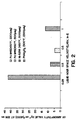
- the UV absorption data indicates similar levels of polynuclear aromatics (PNA) and total aromatic content for Pd/MCM-41 and Ni/silica-alumina.
- PNA polynuclear aromatics
- White oils produced using Pt/Al 2 O 3 had a much higher level of aromatics.
- Figure 1 illustrates the lowest UV absorption value being that obtained by using Pd/M41S at 12170 kPa (1750 psig).
- space velocity was varied significantly for Pd/M41S. It was approximately double the space velocity used for Ni/silica-alumina and Pt/Al 2 O 3 in one run involving Pd/M41S and quadruple the space velocity used for Ni/silica-alumina and Pt/Al 2 O 3 in a second run involving Pd/M41S.
- the temperature was held between 230-260°C (450-500°F).
- the pressure was held between 15270-15960 kPa (2200-2300 psig) for each catalyst, including Pd/M41S in the instance in which the space velocity was doubled. In the instance in which the space velocity was quadrupled, pressure was decreased to 10445 (1500 psig).
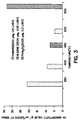
- Pd/M41S produced a product with UV absorption levels similar to those of Ni/silica-alumina at 0.25 LHSV. Therefore Pd/M41S produces a white oil similar in characteristics to that of the nickel catalyst, i.e. both are low in total and polynuclear aromatics. Pd/M41S operates at far less severe conditions. There is little difference, however, between the aromatics content of the oil produced using Pd/M41S at 15270 kPa (2200 psig) and the aromatics content of the oil produced using Pd/M41S at 10445 (1500 psig). Lower pressures are therefore preferred.
- Figure 2 presents a graphical comparison of the catalysts and conditions.
Landscapes
- Chemical & Material Sciences (AREA)
- Dispersion Chemistry (AREA)
- Engineering & Computer Science (AREA)
- Materials Engineering (AREA)
- Organic Chemistry (AREA)
- Chemical Kinetics & Catalysis (AREA)
- Crystallography & Structural Chemistry (AREA)
- Catalysts (AREA)
- Production Of Liquid Hydrocarbon Mixture For Refining Petroleum (AREA)
Claims (5)
- Verfahren zur Herstellung von Weißöl mit Lebensmittelqualität, welches umfaßt: Kontakt einer Aromaten enthaltenden, dem Hydrotreating unterzogenen Mineralölfraktion, die von der atmosphärischen oder Vakuumdestillation von Rohöl stammt, unter strengen Bedingungen in Gegenwart von Wasserstoff mit einem Katalysator, der bis zu 1 Gew.-% Palladium, getragen auf einer extrudierten Mischung von Aluminiumoxid und einem anorganischen, ungeschichteten, porösen Material mit kristalliner Phase umfaßt, das Poren mit Durchmessern von mindestens 13 Å hat und nach dem Kalzinieren ein Röntgenbeugungsdiagramm mit mindestens einem d-Abstand von mehr als etwa 18 Å mit einer relativen Intensität von 100 hat, wobei die strengen Bedingungen eine Temperatur im Bereich von 121 bis 371°C (250 bis 700°F), einen Druck im Bereich von 35,5 bis 207,9 bar (500 bis 3000 psig) und eine stündliche Flüssigkeits-Raum-Geschwindigkeit von 0,1 bis 2,0 h-1 umfassen; und Abziehen eines Produktes, das weniger Aromaten als die Mineralölfraktion enthält und einen API-Grad von 29 bis 32 und eine kinematische Viskosität im Bereich von 10 bis 600 cSt bei 37,7°C (100°F) hat.
- Verfahren nach Anspruch 1, wobei die Raumgeschwindigkeit im Bereich von 0,3 bis 0,5 h-1 liegt.
- Verfahren nach Anspruch 1 oder Anspruch 2, wobei die Mineralölfraktion ein hydriertes Brightstock-Material, ein leichtes neutrales Material oder ein Rückstandsmaterial ist.
- Verfahren nach einem der vorstehenden Ansprüche, wobei das Mineralöl vor dem Hydrieren entparaffiniert wird.
- Verfahren nach einem der vorstehenden Ansprüche, wobei das hydrierte Mineralöl einen Siedebereich von 260 bis 540°C (500 bis 1000°F) hat.
Applications Claiming Priority (3)
| Application Number | Priority Date | Filing Date | Title |
|---|---|---|---|
| US16910993A | 1993-12-20 | 1993-12-20 | |
| US169109 | 1993-12-20 | ||
| PCT/US1994/014412 WO1995017482A1 (en) | 1993-12-20 | 1994-12-13 | Hydrogenation process |
Publications (3)
| Publication Number | Publication Date |
|---|---|
| EP0736079A1 EP0736079A1 (de) | 1996-10-09 |
| EP0736079A4 EP0736079A4 (de) | 1997-04-02 |
| EP0736079B1 true EP0736079B1 (de) | 2000-05-10 |
Family
ID=22614303
Family Applications (1)
| Application Number | Title | Priority Date | Filing Date |
|---|---|---|---|
| EP95904910A Expired - Lifetime EP0736079B1 (de) | 1993-12-20 | 1994-12-13 | Hydrierverfahren |
Country Status (4)
| Country | Link |
|---|---|
| EP (1) | EP0736079B1 (de) |
| JP (1) | JP3609830B2 (de) |
| DE (1) | DE69424442T2 (de) |
| WO (1) | WO1995017482A1 (de) |
Families Citing this family (6)
| Publication number | Priority date | Publication date | Assignee | Title |
|---|---|---|---|---|
| ATE335063T1 (de) * | 2002-06-24 | 2006-08-15 | Shell Int Research | Verfahren zur herstellung von medizinischen und technischen weissölen |
| GB0227086D0 (en) | 2002-11-20 | 2002-12-24 | Exxonmobil Res & Eng Co | Hydrogenation processes |
| US7682502B2 (en) * | 2004-09-08 | 2010-03-23 | Exxonmobil Research And Engineering Company | Process to hydrogenate aromatics present in lube oil boiling range feedstreams |
| US20060073961A1 (en) * | 2004-09-08 | 2006-04-06 | Mccarthy Stephen J | Noble metal-containing catalyst having a specific average pore diameter |
| US7538065B2 (en) * | 2004-09-08 | 2009-05-26 | International Business Machines Corporation | Noble metal-containing catalyst containing a specific ratio of silica to aluminum in the framework |
| US7407909B2 (en) * | 2004-10-01 | 2008-08-05 | Exxonmobil Research And Engineering Company | Ex-situ reduction and dry passivation of noble metal catalysts |
Family Cites Families (5)
| Publication number | Priority date | Publication date | Assignee | Title |
|---|---|---|---|---|
| US5134241A (en) * | 1991-06-21 | 1992-07-28 | Mobil Oil Corporation | Multistage olefin upgrading process using synthetic mesoporous crystalline material |
| US5227353A (en) * | 1991-07-24 | 1993-07-13 | Mobil Oil Corporation | Hydroprocessing catalyst composition |
| US5183557A (en) * | 1991-07-24 | 1993-02-02 | Mobil Oil Corporation | Hydrocracking process using ultra-large pore size catalysts |
| WO1993002157A1 (en) * | 1991-07-24 | 1993-02-04 | Mobil Oil Corporation | Hydrogenation process |
| US5264641A (en) * | 1992-12-14 | 1993-11-23 | Mobil Oil Corp. | Aromatics saturation with catalysts comprising crystalline ultra-large pore oxide materials |
-
1994
- 1994-12-13 EP EP95904910A patent/EP0736079B1/de not_active Expired - Lifetime
- 1994-12-13 JP JP51749995A patent/JP3609830B2/ja not_active Expired - Lifetime
- 1994-12-13 WO PCT/US1994/014412 patent/WO1995017482A1/en not_active Ceased
- 1994-12-13 DE DE69424442T patent/DE69424442T2/de not_active Expired - Lifetime
Also Published As
| Publication number | Publication date |
|---|---|
| JP3609830B2 (ja) | 2005-01-12 |
| DE69424442T2 (de) | 2000-08-24 |
| EP0736079A1 (de) | 1996-10-09 |
| JPH09507092A (ja) | 1997-07-15 |
| DE69424442D1 (de) | 2000-06-15 |
| WO1995017482A1 (en) | 1995-06-29 |
| EP0736079A4 (de) | 1997-04-02 |
Similar Documents
| Publication | Publication Date | Title |
|---|---|---|
| US5573657A (en) | Hydrogenation process | |
| US5227353A (en) | Hydroprocessing catalyst composition | |
| CA2112120A1 (en) | Production of high viscosity index lubricants | |
| US5264116A (en) | Production of lubricants by hydrocracking and hydroisomerization | |
| US8545694B2 (en) | Aromatics saturation process for lube oil boiling range feedstreams | |
| US20060089254A1 (en) | Noble metal-containing catalyst containing a specific ratio of silica to aluminum in the framework | |
| WO2006028878A1 (en) | An improved process to hydrogenate aromatics present in lube oil boiling range feedstreams | |
| EP0724616B1 (de) | Verfahren zur herstellung von destillaten mit niedrigem aromatengehalt | |
| US5281328A (en) | Hydrocracking with ultra large pore size catalysts | |
| US20020112989A1 (en) | Hydrogenation process | |
| EP0736079B1 (de) | Hydrierverfahren | |
| US7686949B2 (en) | Hydrotreating process for lube oil boiling range feedstreams | |
| JP3388737B2 (ja) | 超大孔寸法触媒による水素化分解 | |
| EP0600935B1 (de) | Hydrierungsverfahren | |
| JP3167725B2 (ja) | 水素化分解潤滑剤の製造 | |
| US20060070916A1 (en) | Aromatics saturation process for lube oil boiling range feedstreams | |
| US5277792A (en) | Production of hydrocracked lubricants | |
| US20190336953A1 (en) | Noble metal catalyst composition with an improved aromatic saturation activity and its use |
Legal Events
| Date | Code | Title | Description |
|---|---|---|---|
| PUAI | Public reference made under article 153(3) epc to a published international application that has entered the european phase |
Free format text: ORIGINAL CODE: 0009012 |
|
| 17P | Request for examination filed |
Effective date: 19960417 |
|
| AK | Designated contracting states |
Kind code of ref document: A1 Designated state(s): BE DE FR GB IT NL |
|
| A4 | Supplementary search report drawn up and despatched |
Effective date: 19970120 |
|
| AK | Designated contracting states |
Kind code of ref document: A4 Designated state(s): BE DE FR GB IT NL |
|
| 17Q | First examination report despatched |
Effective date: 19990119 |
|
| GRAG | Despatch of communication of intention to grant |
Free format text: ORIGINAL CODE: EPIDOS AGRA |
|
| GRAG | Despatch of communication of intention to grant |
Free format text: ORIGINAL CODE: EPIDOS AGRA |
|
| GRAH | Despatch of communication of intention to grant a patent |
Free format text: ORIGINAL CODE: EPIDOS IGRA |
|
| GRAH | Despatch of communication of intention to grant a patent |
Free format text: ORIGINAL CODE: EPIDOS IGRA |
|
| GRAA | (expected) grant |
Free format text: ORIGINAL CODE: 0009210 |
|
| AK | Designated contracting states |
Kind code of ref document: B1 Designated state(s): BE DE FR GB IT NL |
|
| REF | Corresponds to: |
Ref document number: 69424442 Country of ref document: DE Date of ref document: 20000615 |
|
| ET | Fr: translation filed | ||
| ITF | It: translation for a ep patent filed | ||
| PLBE | No opposition filed within time limit |
Free format text: ORIGINAL CODE: 0009261 |
|
| STAA | Information on the status of an ep patent application or granted ep patent |
Free format text: STATUS: NO OPPOSITION FILED WITHIN TIME LIMIT |
|
| 26N | No opposition filed | ||
| REG | Reference to a national code |
Ref country code: GB Ref legal event code: IF02 |
|
| PGFP | Annual fee paid to national office [announced via postgrant information from national office to epo] |
Ref country code: GB Payment date: 20131126 Year of fee payment: 20 |
|
| PGFP | Annual fee paid to national office [announced via postgrant information from national office to epo] |
Ref country code: NL Payment date: 20131206 Year of fee payment: 20 Ref country code: IT Payment date: 20131216 Year of fee payment: 20 Ref country code: FR Payment date: 20131126 Year of fee payment: 20 |
|
| PGFP | Annual fee paid to national office [announced via postgrant information from national office to epo] |
Ref country code: BE Payment date: 20131230 Year of fee payment: 20 |
|
| PGFP | Annual fee paid to national office [announced via postgrant information from national office to epo] |
Ref country code: DE Payment date: 20131230 Year of fee payment: 20 |
|
| REG | Reference to a national code |
Ref country code: DE Ref legal event code: R071 Ref document number: 69424442 Country of ref document: DE |
|
| REG | Reference to a national code |
Ref country code: NL Ref legal event code: V4 Effective date: 20141213 |
|
| REG | Reference to a national code |
Ref country code: GB Ref legal event code: PE20 Expiry date: 20141212 |
|
| PG25 | Lapsed in a contracting state [announced via postgrant information from national office to epo] |
Ref country code: GB Free format text: LAPSE BECAUSE OF EXPIRATION OF PROTECTION Effective date: 20141212 |