EP0733374A2 - Cyano-alpha-amino Carboxylsäure, und deren Verwendung in der Herstellung von radiomarkierten Alpha-Aminosäuren - Google Patents
Cyano-alpha-amino Carboxylsäure, und deren Verwendung in der Herstellung von radiomarkierten Alpha-Aminosäuren Download PDFInfo
- Publication number
- EP0733374A2 EP0733374A2 EP96302011A EP96302011A EP0733374A2 EP 0733374 A2 EP0733374 A2 EP 0733374A2 EP 96302011 A EP96302011 A EP 96302011A EP 96302011 A EP96302011 A EP 96302011A EP 0733374 A2 EP0733374 A2 EP 0733374A2
- Authority
- EP
- European Patent Office
- Prior art keywords
- labelled
- cyano
- compound
- group
- radionuclide
- Prior art date
- Legal status (The legal status is an assumption and is not a legal conclusion. Google has not performed a legal analysis and makes no representation as to the accuracy of the status listed.)
- Withdrawn
Links
Images





Classifications
-
- A—HUMAN NECESSITIES
- A61—MEDICAL OR VETERINARY SCIENCE; HYGIENE
- A61K—PREPARATIONS FOR MEDICAL, DENTAL OR TOILETRY PURPOSES
- A61K51/00—Preparations containing radioactive substances for use in therapy or testing in vivo
- A61K51/02—Preparations containing radioactive substances for use in therapy or testing in vivo characterised by the carrier, i.e. characterised by the agent or material covalently linked or complexing the radioactive nucleus
- A61K51/04—Organic compounds
- A61K51/0404—Lipids, e.g. triglycerides; Polycationic carriers
- A61K51/0406—Amines, polyamines, e.g. spermine, spermidine, amino acids, (bis)guanidines
-
- A—HUMAN NECESSITIES
- A61—MEDICAL OR VETERINARY SCIENCE; HYGIENE
- A61K—PREPARATIONS FOR MEDICAL, DENTAL OR TOILETRY PURPOSES
- A61K2123/00—Preparations for testing in vivo
Definitions
- the present invention relates to a labelled compound and a method for manufacturing the compound. More particularly, the present invention relates to a compound labelled with radionuclide such as positron nuclide or stable isotope.
- the labelled compound of the invention is useful for imaging tumors and brain.
- PET Positron Emission Tomography
- the PET permits measurement of the physiological, pharmacological and biochemical processes of extra-trace substances in vivo at a very high sensitivity and a very low concentration, thus providing information very useful for clinical purposes.
- An example is the diagnosis of tumor by means of PET using positron nuclide. It is generally believed that glycometabolism, amino acid metabolism, fat metabolism and nucleic acid metabolism exasperate more in tumor cells than in normal ones. Since these metabolisms in tumor directly represent viability of tumor and the status of proliferation thereof, trials have been made to diagnose tumor by using a compound available by labelling sugar or amino acid with positron nuclide.
- a labelled compound used in the PET method should have a short half-life of positron nuclide (for example, 20.4 minutes for 11 C), and for clinical purposes, purity, specific radioactivity and ultimate quantity of radiation must satisfy clinical requirements. It is however very difficult to manufacture a positron-labelled compound which satisfies these requirements. Exposure of the operator during synthesis of the labelled compound is another problem. As a labelling method permitting rapid operation and giving a high radiochemical yield sufficient to meet practical requirements has not as yet been established, progress of the PET method has not been satisfactory in terms of application for biological observation and diagnosis, for example, imaging of tumor or brain.
- the present invention has an object to provide a novel compound labelled with radionuclide or stable isotope which is achievable as a rapid labelling giving a high radiochemical yield, and a labelled compound which is a synthetic intermediate thereof.
- the other object of the invention is to provide a method for manufacturing the labelled compounds.
- a first invention provided by the present invention covers ⁇ -cyano-L-alanine, a salt thereof or a derivative thereof having protecting group,of which cyano group carbon is labelled with radionuclide or stable isotope.
- a second invention is a method for manufacturing the labelled compound of the first invention, which comprises reacting an amino acid expressed by the following Formula (1), a salt thereof or a derivative thereof having protecting group with a cyanic compound of which cyano group is labelled with radionuclide or stable isotope in the presence of a thermostable ⁇ -cyano-L-alanine synthase: (where, R 1 is hydrogen atom, halogen atom, a hydrocarbon group, an oxygen-containing group or a sulfur-containing group).
- a third invention of the present invention covers a labelled compound which is an amino acid expressed by the following formula (2), a salt thereof or a derivative thereof having protecting group: (where, R 2 represents -*CONH 2 (asparagine), -*COOH(asparatic acid), -*CH 2 -NH 2 (DABA), and *C is carbon labelled with radionuclide or stable isotope).
- a fourth invention of the present invention covers a method for manufacturing the labelled compound of the third invention, which comprises organically or enzymatically synthesizing the amino acid, the salt thereof or the derivative thereof having protecting group by using, as an intermediate, the labelled compound of the first invention or a labelled compound manufactured by the method of the second invention.
- a fifth invention provided by the present invention covers a labelled compound which is ⁇ -cyano- ⁇ -aminobutyric acid, a salt thereof or a derivative thereof having protecting group, of which cyano group carbon is labelled with radionuclide or stable isotope.
- a sixth invention covers a method for manufacturing the labelled compound of the fifth invention, which comprises reacting an amino acid expressed by the following Formula (3), a salt thereof or a derivative thereof having protecting group with a cyanic compound of which cyano group is labelled with radionuclide or stable isotope in the presence of a thermostable ⁇ -cyano- ⁇ -aminobutyric acid synthase: (where, R 1 is hydrogen atom, halogen atom, a hydrocarbon group, an oxygen-containing group or a sulfur-containing group).
- a seventh invention covers a labelled compound which is an amino acid expressed by the following formula (4), a salt thereof or a derivative thereof having protecting group: (where, R 2 represents -*CONH 2 (glutamine), or -*COOH (glutamic acid), and *C is carbon labelled with radionuclide or stable isotope).
- An eighth invention covers a method for manufacturing the labelled compound of the seventh invention, which comprises organically or enzymatically synthesizing the amino acid, the salt thereof or the derivative thereof having protecting group by using, as an intermediate, the labelled compound of the fifth invention or a labelled compound manufactured by the method of the sixth invention.
- Fig. 1 is the result of HPLC analysis showing that the reaction product of Example 2 is ⁇ -cyanic alanine.
- Fig. 2 is the result of HPLC analysis showing that the reaction product of Example 2 is ⁇ -cyanic alanine labelled with 11 C.
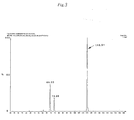
- Fig. 3 is the mass-analysis spectrum for the reaction product of Example 2.
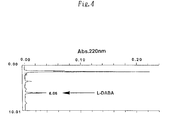
- Fig. 4 is the result of HPLC analysis showing that the reaction product of Example 3 is DABA.
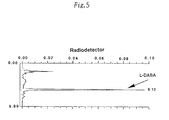
- Fig. 5 is the result of HPLC analysis showing that the reaction product of Example 3 is DABA labelled with 11 C.
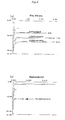
- Fig. 6 is the result of HPLC analysis showing that the 11 C-labelled DABA of Example 3 is L-form.
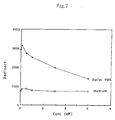
- Fig. 7 shows the uptake of 11 C-labelled DABA of Example 3 into gliomacyte.
- Fig. 8 illustrates an optimum pH of thermostable ⁇ -cyano- ⁇ --aminobutyric acid synthase
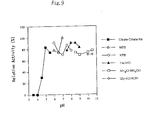
- Fig. 9 shows a pH stability thereof
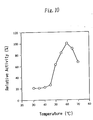
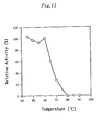
- Fig. 10 shows an optimum temperature thereof; Fig. 11 shows temperature stability thereof.
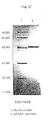
- Fig. 12 illustrates a subunit molecular weight of thermostable ⁇ -cyano- ⁇ -aminobutyric acid synthase by SDS-PAGE;
- Fig. 13 shows a graph of molecular weights of the enzyme by gel filtration.
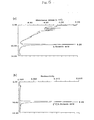
- Fig. 15 is the result of HPLC analysis showing that the reaction product of Example 7 is L-glutamic acid.
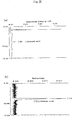
- Fig. 17 is the result of HPLC analysis showing that the 11 C-labelled glutamic acid of Example 7 is L-form.
- Both the labelled ⁇ -cyano-alanine or a salt thereof or a protective derivative thereof which is covered by the first invention (hereinafter referred to as the "labelled ⁇ -cyano-L-alanine compound") and the labelled ⁇ -cyano- ⁇ -aminobutyric acid or a salt thereof or a protected derivative thereof which is covered by the fifth invention (hereinafter referred to as the "labelled ⁇ -cyano- ⁇ -aminobutyric acid compound”) are novel compounds provided by the present invention. These compounds can be expressed, for example by the following Formula (5) (labelled ⁇ -cyano-L-alanine compound) or the Formula (6) (labelled ⁇ - cyano- ⁇ -aminobutyric acid compound):
- Free amino group or carboxyl group may of course be present in the form of a salt of acid or alkali, or may be a derivative protected by a conventional amino acid, or by any of various protecting groups in peptide synthesis. All such cases are included in the labelled ⁇ -cyano-L-alanine compound and the labelled ⁇ -cyano- ⁇ -aminobutyric acid compound of the present invention.
- the labelled ⁇ -cyano-L-alanine compound of the present invention can be manufactured by reacting an amino acid as expressed by the above-mentioned Formula (1) or a salt thereof or a protected derivative thereof, with a cyanic compound of which cyano group carbon is labelled with radionuclide or stable isotope, in the presence of ⁇ -cyano-L-alanine synthase. It is needless to mention that it can be manufactured through conventional chemical synthesis.
- ⁇ -cyano-L-alanine synthase derived from a bacterium selected from the group consisting of, for example, Acinetobacter, Aerobacler, Agrobacterium, Arthrobacter, Bacillus, Brevibacterium, Cellulomanas, Corynebacterium, Enterobacter, Erwinia, Escherichia, Flavobacterium, Hafnia, Micrococcus, Mycobacterium , Nocardia, Pseudomonas, Rhodococcus, Salmonella, Serratia, and Staphylococcus . These bacteria can more specifically be shown in Table 1.
- Table 1 Specific activity for ⁇ -Cyanoalanine synthase in bacterial AKU stock culture.
- AKUNo. Strain Specific activity (X10 3 U/mg dry cell mass) Ser O-M-Ser Cys O-P-Ser B-Cl-Ala O-A-Ser 8 Escherichia coli K12 7.35 0.56 1.46 17.3 8.3 10.7 23 Aerobacter aerogenes K-6 0.14 0.42 4.41 5.88 29 Enterobacter aerogenes IFO 12010 0.53 12.1 11.7 41 Erwinia carotovora subsp.
- a ⁇ -cyano-L-alanine synthase derived from a bacterium of Bacillus or more specifically, an enzyme isolated from, for example, Bacillus stearothermophilus .
- Bacillus stearothermophilus CN3 is the most preferable for the present invefntion. This strain was isolatede by the present inventors from a natural source and deposited on August 8, 1994 to National Institute of Bioscience and Human Technology under a deposit number of FERM BP-4773.
- the substituent of the Formula (1) compound may more specifically be -0-alkyl group, -0-phosphoryl group, or halogen atom, and the cyanic compound may be prussic acid (CN - ), NaCN or KCN of which carbon is labelled.
- the labelled cyanic compound is available, in the case of prussic acid labelled with positron nuclide 11 C, by for example reducing 11 CO 2 prepared in a cyclotron into 11 CH 4 , and reacting it with ammonia in the presence of platinum (Pt) catalyst at a high temperature of about 1,000°C, just as in the ordinary prussic acid synthesis.
- the ⁇ -cyano-L-alanine compound of which cyano group carbon is labelled with positron nuclide 11 C can be manufactured by reacting this cyanic compound with the Formula (1) amino acid in an aqueous medium in the presence of the synthase above. Similarly, ⁇ -cyano-L-alanine compounds labelled with 13 C and 14 C are produced.
- thermostable ⁇ -cyano- ⁇ -aminobutyric acid synthase when manufacturing by the use of an enzyme, may be one available by isolating from a thermophilic Bacillus, or more specifically, for example, may be one obtained from Bacillus stearothermophilus CN3 strain (FERM BP-4773).
- thermostable ⁇ -cyano- ⁇ -aminobutyric acid synthase having the following properties may be presented as an example of the enzyme for the above-mentioned reaction:
- This enzyme can be manufactured, for example, by culturing Bacillus stearothermophilus CN3 strain on a ⁇ -cyano- ⁇ -aminobutyric acid synthase producing medium, and then, isolating the target enzyme.
- This enzyme requires, for example, pyridoxal phosphate as a coenzyme, and applicable substrates include O-acetyl-L-homoserine, or L-homocystine.
- the substituent R1 of this Formula (3) compound may more specifically be -0-acyl group, -0-alkyl group, - 0-phosphoryl group, or halogen atom, and the cyanic compound be prussic acid (CN - ) , NaCN or KCN of which carbon is labelled.
- the reduction reaction is made possible by a method based on Raney nickel or Raney cobalt, or any of the various means including the conventional methods such as one using NaBH 4 or other reducing agent. This is also the case with the hydrolysis reaction.
- any of these means including the enzyme method for example, the following labelled amino acids are synthesized from the labelled ⁇ -cyano-L-alanine compound:
- the following labelled amino acid compounds are for example manufactured from the labelled ⁇ -cyano- ⁇ -aminobutyric acid compound: L-glutamine: L-glutamic acid:
- the labelled amino acid compound thus synthesized can be combined, for example, with a biopolymer such as peptide or protein through substitution of amino acid residue or addition of other amino acid residue.
- the present invention permits, as described above, easy radiochemical labelling or stable isotope labelling with positron nuclide 11 C or the like through substitution or addition reaction of the amino acid and a cyanic compound in the presence of a specific synthase.
- bacteria of Bacillus can produce an enzyme for this reaction make it possible, in the present invention, to achieve labelling not only with positron nuclide 11 C, but also with a radioisotope such as 14 C or a stable isotope such as 13 C.
- Labelling of various amino acids makes a great contribution to observation and diagnosis by the PET method as well as to NMR diagnosis and biochemical research on metabolism.
- a method of labelling amino group or carboxyl group of amino acid with an isotope has conventionally been known, these groups were easily metabolized in vivo, so that it was impossible to trace the mother nucleus of amino acid.
- the present invention makes it possible to label carbon which is hard to metabolize, and now permits very easy tracing of the mother nucleus. It is possible to label the mother nucleus with a ⁇ -decaying radioisotope 3 H or 14 C through chemical synthesis consuming a long period of time.
- thermostable ⁇ -cyano-L-alanine synthase was prepared as follows.
- a culture medium comprising 1% polypepton, 0.25% yeast extract, 0.1% glycerol, 0.1% (NH 4 ) 2 SO 4 , 0.05% MgSO 4 7H 2 O, and 0.1% K 2 HPO 4 (pH: 7.2) was poured into two large test tubes by equal amounts of 8 ml, sterilized at 120°C for 20 minutes, and cooled. Then, Bacillus stearothermophilus CN3 strain (No. FERM BP-4773) was inoculated in an amount of one platinum spoon, and after culture at 60°C for 24 hours, the product was used as a basic medium.
- An antifoaming agent made by Asahi Denka Company, ADEKANOL KG-126 in an amount of 0.01% (V/V) was added to a culture medium having the same composition as above.
- the resultant medium in an amount of 1.6 1 was placed in a jar fermenter having a volume of 2 1, and after sterilization at 120°C for 20 minutes and cooling, 16 ml of the above-mentioned basic medium (for two test tubes) were inoculated. Culture was thus conducted at 60°C for 27 hours under stirring conditions including a volume of aeration of 1.6 1/minute and a stirring velocity of 300 rpm, and the resultant medium was used as the preculture medium.
- a culture comprising 1% polypepton, 0.25% yeast extract, 0.1% glycerol, 0.1% (NH 4 ) 2 SO 4 , 0.05% MgSO 4 7H 2 0, 0.1% K 2 HPO 4 , and 0.1% L-serine (pH: 7.2) in an amount of 160 1 was placed in a jar fermenter having a volume of 200 1, sterilized at 120°C for 30 minutes, cooled, and then, 1.6 1 of the above-mentioned preculture medium were inoculated to conduct culture at 60°C for 24 hours under stirring conditions including a volume of aeration of 120 1/minute and a stirring velocity of 200 rpm. After culturing, bacteria were collected through sharpless centrifugal separation.
- the resultant bacteria were equally divided into eight (each in an amount of 20 l), and were each suspended in an appropriate amount of potassium phosphate buffer solution (10 mM, pH: 8.0, containing 0.1 mM dithiothreitol) to subject to cryopreservation at -80°C. This was used for the subsequent manufacture of enzyme by defrosting.
- Ammonium sulfate was added to this cell-free extract to achieve 40% saturation. After holding for-a night, precipitate was removed by centrifugal separation, and ammonium sulfate was added again to the resultant supernatant to achieve 90% saturation. The saturated supernatant was held for 5 hours and a precipitate was obtained by centrifugal separation. The precipitate thus obtained was dissolved in a 10 mM potassium phosphate buffer solution (pH: 8.0) containing 0.1 mM dithiothreitol, and was desalted with a buffer solution of the same composition by the use of a dialysis membrane.
- Ethanol previously cooled to -80°C was added to the thus desalted solution in an amount of 1,065 ml to achieve an ultimate concentration of 70%, and a precipitate was obtained through centrifugal separation.
- the resultant precipitate was suspended in a 10 mM potassium phosphate buffer solution (pH: 8.0) containing 0.1 mM dithiothreitol and was subjected to a heat treatment at 70°C for 30 minutes.
- the supernatant in an amount of 1,024 ml was passed through a DEAE-cellurofine A-500 column (6.0 cm diameter x 18 cm length) previously equilibrated with a 10 mM potassium phosphate buffer solution (pH: 8.0) containing 0.1 mM dithiothreitol for adsorption of enzyme.
- the enzyme was eluted by gradient elution from the 10 mM potassium phosphate buffer solution (pH: 8.0) containing 0.1 mM dithiothreitol to a 100 mM potassium phosphate buffer solution (pH: 8.0) containing 0.1 mM dithiothreitol and 0.5 M NaCl to colle-ct an active fraction.
- Ammonium sulfate was added to this active fraction so as to achieve 80% saturation, and after holding for a night, a precipitate was obtained through centrifugal separation.
- This precipitate was dissolved in a 10 mM potassium phosphate buffer solution (pH: 8.0) containing 0.1 mM dithiothreitol, and subjected to an adjusted electrophoresis (7.5% polyacrylamide gel). After electrophoresis, an active portion'in the gel was cut out, milled, and an enzyme was extracted by means of a 10 mM potassium phosphate buffer solution (pH: 8.0) containing 0.1 mM dithiothreitol.
- Ammonium sulfate was added to this active fraction so as to achieve 30% saturation, passed through a Phenyl Sepharose CL-4B column (2.5 cm diameter x 12 cm length) previously equilibrated with 30% saturated ammonium sulfate and a 10 mM potassium phosphate buffer solution (pH: 8.0) containing 0.1 mM dithiothreitol for adsorption of an enzyme.
- the enzyme was eluted by gradient elution from the 30% saturated ammonium sulfate and the 10 mM potassium phosphate buffer solution (pH: 8.0) containing 0.1 mM dithiothreitol to a 10 mM potassium phosphate buffer solution (pH: 8.0) containing 0.1 mM dithiothreitol to collect an active fraction.
- Ammonium sulfate was added to this active fraction so as to achieve 30% saturation, and the saturated fraction was passed through an Octyl Sepharose CL-4B column (1.5 cm diameter x 10 cm length) previously equilibrated with 30% saturated ammonium sulfate and a 10 mM potassium phosphate buffer solution (pH: 8.0) containing 0.1 mM dithiothreitol, for adsorption of an enzyme.
- an active fraction was collected by eluting the enzyme by the gradient elution method from the 30% saturated ammonium sulfate and the 10 mM potassium phosphate buffer solution (pH: 8.0) containing 0.1 mM dithiothreitol to a 10 mM potassium phosphate buffer solution (pH: 8.0) containing 0.1 mM dithiothreitol.
- the enzyme preparation thus obtained was confirmed to be single in terms of electrophoresis.
- the resultant enzyme having ⁇ -cyano-L-alanine synthetic activity from 0-acetyl-L-serine and cyanic compound, had the following properties:
- H 11 CN was prepared by reducing 11 CO 2 , having positron nuclide 11 C prepared in cyclotron, at 400°C in a mixed atmosphere of H 2 and N 2 in the presence of Ni into 11 CH 4 , and contact-reacting the resulting 11 CH 4 with ammonia using platinum (Pt) as a catalyst at a temperature of 1,000°C.
- the resultant H 11 CN in the form of a mixed gas was passed through a 50% H 2 SO 4 solution in an amount of 1.5 ml to remove residual ammonia, further brought into contact with P 2 O 5 to remove ammonia, and H 11 CN was trapped with 50 mM KOH in an amount of 350 ⁇ l.
- O-acetyl-L-serine was mixed, together with the ⁇ -cyano-L-alanine synthase obtained in Example 1, into this H 11 CN aqueous solution, and was reacted at the room temperature.
- Fig. 3 which illustrates a quantitative analysis spectrum permitted confirmation as well, together with the results shown in Figs. 1 and 2, of the fact that the reaction product was ⁇ -cyano-L-alanine.
- Reducing agents CoBr 2 and NaBH 4 were added to the labelled ⁇ -cyano-L-alanine obtained in Example 2 for reduction. Then, after filtration (0.2 ⁇ m), 6 M hydrochloric acid in an amount of 500 ⁇ l was added and the mixture was filtered through a 0.2 ⁇ m filter to remove protein and collect an enzyme, which was then purified with HPLC.
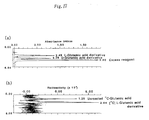
- Fig. 6 illustrates values of analysis based on UV 340 nm and Radiodetector carried out for identification of L-DABA and D-DABA. It is thus proved that the DABA enzymatically synthesized in the present invention is of the L-form.
- the chart (a) of Fig. 6 shows a racemi authentic sample of DABA as converted into a derivative to perform HPLC analysis. D and L-forms were converted into derivatives with reference to the method of Marfey P. (Carlsberg Res. Commun. 49,591, 1984).
- the chart (b) of Fig. 6 also demonstrates that the enzymatically synthesized DABA is of L-form.
- Example 3 Biological applicability of the 11 C-labelled L-DABA obtained in Example 3 was evaluated.
- concentration of the L-DABA added to culture medium of rat glioma and uptake of radioactivity into the glioma cells in a given duration was investigated in a medium having an amino acid content close to the biological one, and for control, in a physiological saline buffered with phosphoric acid.
- thermostable ⁇ -cyano- ⁇ -aminobutyric acid synthase was prepared as follows.
- Dry bouillon medium NISSUI for general bacteria (made by Nissui Seiyaku Company) was poured into four test tubes (2.2 cm diameter x 19.5 cm length), sterilized at 120°C for 20 minutes and cooled. Then, Bacillus stearothermophilus CN3 strain was inoculated to the cooled medium by an amount of one platinum dose.
- a basic culture medium was prepared by shake-culturing the inoculated medium at 58°C for 18 hours.
- a medium (pH: 7.2) comprising 1% soluble starch, 0.5% yeast extract, 0.05% MgSO 4 7H 2 0, 0.1% K 2 HPO 4 , 0.001% FeS0 4 7H 2 0, and 0.1% L-glutamine was poured into four culturing flasks having a volume of 2 1 each in an amount of 400 ml.
- the above-mentioned basic culture medium in an amount of 16 ml was inoculated by an amount of 4 ml to each of the flasks, and the inoculated medium was shake-cultured at 58°C for 18 hours to prepare a preculture medium.
- the resultant medium in an amount of 160 1 was placed in a jar fermenter having a volume of 200 1.
- the above-mentioned preculture medium in an amount of 1.6 1 was inoculated and culturing was carried out at 58°C for 18 hours under conditions including a flowrate of aeration of 160 1/minute and a stirring velocity of 200 rpm. After the completion of culture, bacteria were collected through sharpless.
- the resultant bacteria in an amount of 660 g was suspended in a potassium phosphate buffer solution (20 mM, pH: 7.5, containing 0.1 mM dithiothreitol) so as to achikve a total amount of 2.5 1, and the suspension was milled in "Dyno Mill" (made by WAB Company).
- the milled solution was subjected to centrifugal separation to remove bacterial residue, and a cell-free extract in an amount of 2,799 ml was obtained.
- the thus obtained cell-free extract was held at 60°C for 30 minutes, and produced precipitate was removed by centrifugal separation to give a supernatant.
- the desalted solution was passed through a previously equilibrated DEAE-cellurofine A-500 column (8 cm diameter x 22 cm length) for adsorption of an enzyme.
- a 100 mM potassium phosphate buffer solution pH: 7.5
- the enzyme was eluted by the gradient elution method from this buffer solution to a 100 mM potassium phosphate buffer solution (pH: 7.5) containing 0.1 mM dithiothreitol, 0.01 mM pyridoxal phosphate and 0.4 M KCL, thus collecting an active fraction.
- ammonium sulfate was added to the resultant active fraction to achieve 60% saturation, and after holding for a night, produced precipitate was removed through centrifugal separation. Ammonium sulfate was added again to the supernatant thus obtained to achieve 75% saturation, which was held for a night, and a precipitate was obtained through centrifugal separation.
- the enzyme was eluted from this buffer solution to a 20 mM potassium phosphate buffer solution (pH: 7.5) containing 0.1 mM dithiothreitol and 0.01 mM pyridoxal phosphate by the gradient elution method and an active fraction was collected.
- Ammonium sulfate was added to the thus collected active fraction so as to achieve 80% saturation, and after holding for a night, a precipitate was obtained by centrifugal separation. This precipitate was dissolved in a 50 mM sodium phosphate buffer solution (pH: 7.5) containing 0.1 mM dithiothreitol and 0.2 M NaCl. The solution was then applied to a Sephacryl S-200HR column (2.0 cm diameter x 106 cm length) previously equilibrated with the above-mentioned buffer solution, and an active fraction was collected by eluting enzyme with this buffer solution.
- a Sephacryl S-200HR column 2.0 cm diameter x 106 cm length
- Ammonium sulfate was added to the collected active fraction so as to achieve 80% saturation, and after holding for a night, a precipitate was obtained through centrifugal separation. This precipitate was dissolved in a 100 mM sodium phosphate buffer solution (pH: 7.0) containing 0.2 M NaCl, and the solution was poured at a flow rate of 0.7 ml/minute as a mobile phase into a TSK gel-G3000SW column (0.75 cm diameter x 60 cm length) for HPLC to take out the active fraction. The resultant enzyme was electrophoretically homogeneous, having a specific activity of 147 U/mg.
- Enzyme activity was measured by incubating a reaction solution (total amount: 200 ⁇ l) comprising 10 ⁇ l 1 M potassium phosphate buffer solution (pH: 7.5) (ultimate concentration: 50 mM), 100 ⁇ l 10 mM 0-acetyl-L-homoserine (ultimate concentration: 5 mM), 20 ⁇ l 100 mM potassium cyanide (ultimate concentration: 10 mM), 20 ⁇ l 0.8 mM pyridoxal phosphate (ultimate concentration: 0.08 mM), and 50 ⁇ l enzyme solution at 45°C for 10 minutes, discontinuing the reaction by placing the mixture in boiling water bath for two minutes, then subjecting a supernatant centrifugally separated at 10,000 rpm for five minutes to HPLC, and measuring ⁇ -cyano- ⁇ -aminobutyric acid
- the enzyme activity of producing 1 ⁇ mol ⁇ -cyano- ⁇ -aminobutyric acid in a minute under the following conditions was defined as a unit.
- the conditions for HPLC was:
- the ⁇ -cyano- ⁇ -aminobutyric acid synthase was dissolved in various 20 mM concentration buffer solutions, i.e., citric acid/sodium citrate (pH: 3.5 to 5.5), MES (pH: 6.0 to 7.0), KPB (pH: 6.0 to 8.0), Tris-HCl (pH: 7.5 to 9.0), NH 4 Cl-NH 4 OH (pH: 8.5 to 10.0), and glycine/KCl-KOH (pH: 10.0 to 10.5), respectively, and residual activity after holding at 60°C for 30 minutes was measured.
- the results are as shown in Fig. 9: the stable pH for this ⁇ -cyano- ⁇ -aminobutyric acid synthase was found to be within a range of from 6.0 to 10.5.
- the ⁇ -cyano- ⁇ -aminobutyric acid synthase was dissolved in a 20 mM potassium phosphate buffer solution (pH: 7.5), and enzyme activity was measured within a temperature range of from 30°C to 70°C by the enzyme activity measuring method described above. The results are as shown in Fig. 10: the optimum temperature for this ⁇ -cyano- ⁇ -aminobutyric acid synthase was found to be within a range of from 55 to 65°C.
- the ⁇ -cyano- ⁇ -aminobutyric acid synthase was dissolved in a 20 mM potassium phosphate buffer solution (pH: 7.5), and after holding at each of various temperatures of from 45°C to 90°C for 30 minutes, residual activity was measured. The results are as shown in Fig. 11: the ⁇ -cyano- ⁇ -aminobutyric acid synthase was found to have a very high thermostability, and to be stable at temperatures up to 65°C.
- thermostable ⁇ -cyano- ⁇ -aminobutyric acid synthase was measured by gel filtration and SDS-PAGE. The results are as shown in Figs. 12 and 13: the molecular weight was confirmed to be about 43 kDa (Fig. 12) as measured by the SDS-PAGE, and about 180 kDa (Fig. 13) as-measured by gel filtration.
- thermostable ⁇ -cyano- ⁇ -aminobutyric acid synthase was dissolved in a 20 mM potassium phosphate (pH: 7.5) containing 0.1 mM dithiothreitol and 0.01 mM pyridoxal phosphate, and absorption spectrum was measured on this solution by means of a U-3200 type spectrophotometer (made by Hitachi Ltd.). The results are as shown in Fig. 14: for the thermostable ⁇ -cyano- ⁇ -aminobutyric acid synthase of the present invention, absorption was observed within a range of from 410 to 440 nm, which is intrinsic to an enzyme utilizing pyridoxal phosphate as coenzyme.
- H 11 CN was manufactured by reducing 11 C containing positron nuclide 11 C prepared in cyclotron into 11 CH 4 at 400°C in the presence of Ni in a mixed atmosphere of H 2 and N 2 , and contact reacting the resultant 11 CH 4 with ammonia at a temperature of 1,000°C in the presence of a platinum (Pt) catalyst. This process was based on a known method (Iwata et al. Appl. Radiat. 38, 97, 1987).
- H 11 CN in the form of a mixed gas was passed through a 50% H 2 SO 4 solution in an amount of 1.5 ml to remove residual ammonia, and after further removing ammonia by bringing same into contact with P 2 O 5 , H 11 CN was trapped with 50 mM KOH in an amount of 350 ⁇ l.
- Example 5 250 ⁇ l 200 mM K 2 HPO 4 , 10 ⁇ l 10 mM pyridoxal phosphate (PLP), 110 ⁇ l 25 mM O-acetyl-L-homoserine (OAHS) dissolved in 100 mM K 2 HPO 4 , and ⁇ -cyano- ⁇ -aminobutyric acid synthase (GCAs) obtained in Example 5 were added to this trapped H 11 CN, and the mixture was subjected to enzymatic reaction at 65°C for 10 minutes.
- PDP pyridoxal phosphate
- OAHS O-acetyl-L-homoserine
- GCAs ⁇ -cyano- ⁇ -aminobutyric acid synthase
- the reaction solution was analyzed with UV 220 nm and a radiodetector by means of HPLC.
- This reaction product showed the same retention time as that of the standard ⁇ -cyano- ⁇ -aminobutyric acid, and was confirmed to be labelled with positron nuclide 11 C.
- the ⁇ -cyano- ⁇ -aminobutyric acid synthesized by the enzymatic reaction had a radiochemical yield (corrected decay value) of 93.99%.
- the reaction product was eluted with 150 mM NaH 2 PO 4 (pH adjusted to 2.8 with phosphoric acid), and the elute was received in a receptacle containing 150 ⁇ l 8.5% phosphoric acid.
- the contents were passed through a sterilized filter having a pore diameter of 0.2 ⁇ m for collection in bial. The product was germ-free, and no exothermic substance was detected.
- Figs. 15 and 16 illustrate the results of HPLC analysis carried out by admixing standard glutamic acid to the above-mentioned reaction product.
- the analysis shown in Figs. 15 (a) and (b) was carried out under the following conditions:
- the resultant 11 C-labelled glutamic acid had a radiochemical yield (decay corrected value) of about 50% and a radiochemical purity of at least 95%.
- Fig. 17 shows the results of measurement of optical purity of the 11 C-labelled glutamic acid, in which (a) is a chart of HPLC in the case where a racemi standard glutamic acid is converted into a derivative, and (b) gives the result of analysis carried out by similarly converting the enzymatically synthesized 11 C-labelled glutamic acid into a derivative.
- the analytic conditions were as follows:
Landscapes
- Health & Medical Sciences (AREA)
- Life Sciences & Earth Sciences (AREA)
- Optics & Photonics (AREA)
- Animal Behavior & Ethology (AREA)
- Proteomics, Peptides & Aminoacids (AREA)
- Physics & Mathematics (AREA)
- Chemical & Material Sciences (AREA)
- Medicinal Chemistry (AREA)
- Biophysics (AREA)
- Pharmacology & Pharmacy (AREA)
- Epidemiology (AREA)
- Molecular Biology (AREA)
- General Health & Medical Sciences (AREA)
- Public Health (AREA)
- Veterinary Medicine (AREA)
- Enzymes And Modification Thereof (AREA)
- Organic Low-Molecular-Weight Compounds And Preparation Thereof (AREA)
- Medicines Containing Antibodies Or Antigens For Use As Internal Diagnostic Agents (AREA)
- Preparation Of Compounds By Using Micro-Organisms (AREA)
Applications Claiming Priority (4)
| Application Number | Priority Date | Filing Date | Title |
|---|---|---|---|
| JP06658695A JP3253819B2 (ja) | 1995-03-24 | 1995-03-24 | 標識化合物 |
| JP66586/95 | 1995-03-24 | ||
| JP264015/95 | 1995-10-12 | ||
| JP26401595A JP3227078B2 (ja) | 1995-10-12 | 1995-10-12 | 標識γ−シアノ−α−アミノ酪酸類と標識アミノ酸類、並びにそれらの製造法 |
Publications (2)
| Publication Number | Publication Date |
|---|---|
| EP0733374A2 true EP0733374A2 (de) | 1996-09-25 |
| EP0733374A3 EP0733374A3 (de) | 1999-06-02 |
Family
ID=26407783
Family Applications (1)
| Application Number | Title | Priority Date | Filing Date |
|---|---|---|---|
| EP96302011A Withdrawn EP0733374A3 (de) | 1995-03-24 | 1996-03-22 | Cyano-alpha-amino Carboxylsäure, und deren Verwendung in der Herstellung von radiomarkierten Alpha-Aminosäuren |
Country Status (3)
| Country | Link |
|---|---|
| US (1) | US5847193A (de) |
| EP (1) | EP0733374A3 (de) |
| CA (1) | CA2172455C (de) |
Cited By (1)
| Publication number | Priority date | Publication date | Assignee | Title |
|---|---|---|---|---|
| EP0911040A1 (de) * | 1997-10-06 | 1999-04-28 | Tokyo Gas Co., Ltd. | Diagnostisches Mittel zur Leberfunktion |
Families Citing this family (1)
| Publication number | Priority date | Publication date | Assignee | Title |
|---|---|---|---|---|
| US8932551B2 (en) * | 2011-08-16 | 2015-01-13 | Brookhaven Science Associates, Llc | C-11 cyanide production system |
Family Cites Families (4)
| Publication number | Priority date | Publication date | Assignee | Title |
|---|---|---|---|---|
| JPS55108887A (en) * | 1979-02-15 | 1980-08-21 | Rikagaku Kenkyusho | Novel oligo saccharide and its preparation |
| DD291579A5 (de) * | 1990-01-16 | 1991-07-04 | Martin-Luther-Universitaet Halle,De | Verfahren zur herstellung von markiertem beta-cyano-l-alanin |
| JP3694335B2 (ja) * | 1994-08-26 | 2005-09-14 | 池田食研株式会社 | 耐熱性o−アセチルセリンスルフヒドリラーゼおよびその製造法 |
| JP3827751B2 (ja) * | 1995-07-06 | 2006-09-27 | 池田食研株式会社 | 耐熱性γ−シアノ−α−アミノ酪酸合成酵素と、その 製造法 |
-
1996
- 1996-03-22 US US08/620,320 patent/US5847193A/en not_active Expired - Fee Related
- 1996-03-22 CA CA002172455A patent/CA2172455C/en not_active Expired - Fee Related
- 1996-03-22 EP EP96302011A patent/EP0733374A3/de not_active Withdrawn
Cited By (2)
| Publication number | Priority date | Publication date | Assignee | Title |
|---|---|---|---|---|
| EP0911040A1 (de) * | 1997-10-06 | 1999-04-28 | Tokyo Gas Co., Ltd. | Diagnostisches Mittel zur Leberfunktion |
| US6071245A (en) * | 1997-10-06 | 2000-06-06 | Tokyo Gas Company Limited | Diagnostic agent for liver function |
Also Published As
| Publication number | Publication date |
|---|---|
| CA2172455A1 (en) | 1996-09-25 |
| CA2172455C (en) | 2004-06-22 |
| US5847193A (en) | 1998-12-08 |
| EP0733374A3 (de) | 1999-06-02 |
Similar Documents
| Publication | Publication Date | Title |
|---|---|---|
| AU765452B2 (en) | Method for labeling biopolymers using isotopes | |
| IL95547A (en) | Diamine compounds crystallize methods for their preparation and pharmaceutical and diagnostic preparations containing them | |
| AU2003225124A1 (en) | Method for obtaining a 2-18f-fluor-2-deoxy-d-glucose (18f-fdg) - solution | |
| Casey et al. | Preparation and preliminary tissue studies of optically active 11C-D-and L-phenylalanine | |
| McPherson et al. | Synthesis and biodistribution of no-carrier-added [1-11C] putrescine | |
| EP0733374A2 (de) | Cyano-alpha-amino Carboxylsäure, und deren Verwendung in der Herstellung von radiomarkierten Alpha-Aminosäuren | |
| Ishiwata et al. | Biodistribution of a positron-emitting suicide inactivator of monoamine oxidase, carbon-11 pargyline, in mice and a rabbit | |
| CA2445293C (en) | Labelled .gamma.-cyano-.alpha.-aminobutyric acid compounds | |
| JP3253819B2 (ja) | 標識化合物 | |
| JP3227078B2 (ja) | 標識γ−シアノ−α−アミノ酪酸類と標識アミノ酸類、並びにそれらの製造法 | |
| Ermert | Labelling with positron emitters of pnicogens and chalcogens | |
| Gelbard | Biosynthetic methods for incorporating positron‐emitting radionuclides into compounds of biomedical interest | |
| Pałka et al. | Enzymatic synthesis of halogen derivatives of L‐phenylalanine and phenylpyruvic acid stereoselectively labeled with hydrogen isotopes in the side chain | |
| US4845039A (en) | Method of labeling amine-containing compounds with a metal | |
| Simeonova et al. | Modification of [18 F] FDG by the formation of a hydrazone bond | |
| WO2003020945A2 (en) | An enzymatic process for the synthesis of organo-fluorine compounds | |
| Pulagam et al. | Synthesis of 13 N‐and 15 O‐Labeled Radiopharmaceuticals | |
| US20250025585A1 (en) | Her2 affibody radionuclide marker composition and application thereof | |
| JP3896477B2 (ja) | 標識化合物の製造方法 | |
| Gómez-Vallejo et al. | The radiopharmaceutical chemistry of Nitrogen-13 and Oxygen-15 | |
| JP2930621B2 (ja) | 標識化合物の製造方法 | |
| Irie et al. | Labeling of 13N labeled adenosine and nicotinamide by ammonolysis | |
| JP2930622B2 (ja) | 標識化合物を製造する方法 | |
| Orr et al. | Stereochemistry of the decarboxylation of L-ornithine with ornithine decarboxylase from mouse kidney | |
| Tilbury et al. | [13N] Labeled Tracers, Synthesis and Applications |
Legal Events
| Date | Code | Title | Description |
|---|---|---|---|
| PUAI | Public reference made under article 153(3) epc to a published international application that has entered the european phase |
Free format text: ORIGINAL CODE: 0009012 |
|
| AK | Designated contracting states |
Kind code of ref document: A2 Designated state(s): DE FR GB SE |
|
| PUAL | Search report despatched |
Free format text: ORIGINAL CODE: 0009013 |
|
| AK | Designated contracting states |
Kind code of ref document: A3 Designated state(s): DE FR GB SE |
|
| 17P | Request for examination filed |
Effective date: 19991011 |
|
| 17Q | First examination report despatched |
Effective date: 20020805 |
|
| RAP1 | Party data changed (applicant data changed or rights of an application transferred) |
Owner name: JAPAN SCIENCE AND TECHNOLOGY CORPORATION |
|
| RAP1 | Party data changed (applicant data changed or rights of an application transferred) |
Owner name: JAPAN SCIENCE AND TECHNOLOGY AGENCY |
|
| 17Q | First examination report despatched |
Effective date: 20020805 |
|
| RIC1 | Information provided on ipc code assigned before grant |
Ipc: C12N 9/88 20060101ALI20100122BHEP Ipc: C12P 13/04 20060101ALI20100122BHEP Ipc: A61K 51/04 20060101AFI20100122BHEP |
|
| STAA | Information on the status of an ep patent application or granted ep patent |
Free format text: STATUS: THE APPLICATION IS DEEMED TO BE WITHDRAWN |
|
| 18D | Application deemed to be withdrawn |
Effective date: 20111001 |