EP0721468B1 - Platelet aggregation inhibitory peptides - Google Patents
Platelet aggregation inhibitory peptides Download PDFInfo
- Publication number
- EP0721468B1 EP0721468B1 EP94927800A EP94927800A EP0721468B1 EP 0721468 B1 EP0721468 B1 EP 0721468B1 EP 94927800 A EP94927800 A EP 94927800A EP 94927800 A EP94927800 A EP 94927800A EP 0721468 B1 EP0721468 B1 EP 0721468B1
- Authority
- EP
- European Patent Office
- Prior art keywords
- peptide
- amino acid
- group
- salt
- inhibiting
- Prior art date
- Legal status (The legal status is an assumption and is not a legal conclusion. Google has not performed a legal analysis and makes no representation as to the accuracy of the status listed.)
- Expired - Lifetime
Links
Images

Classifications
-
- C—CHEMISTRY; METALLURGY
- C07—ORGANIC CHEMISTRY
- C07K—PEPTIDES
- C07K14/00—Peptides having more than 20 amino acids; Gastrins; Somatostatins; Melanotropins; Derivatives thereof
- C07K14/435—Peptides having more than 20 amino acids; Gastrins; Somatostatins; Melanotropins; Derivatives thereof from animals; from humans
- C07K14/745—Blood coagulation or fibrinolysis factors
-
- A—HUMAN NECESSITIES
- A61—MEDICAL OR VETERINARY SCIENCE; HYGIENE
- A61K—PREPARATIONS FOR MEDICAL, DENTAL OR TOILETRY PURPOSES
- A61K38/00—Medicinal preparations containing peptides
- A61K38/16—Peptides having more than 20 amino acids; Gastrins; Somatostatins; Melanotropins; Derivatives thereof
- A61K38/17—Peptides having more than 20 amino acids; Gastrins; Somatostatins; Melanotropins; Derivatives thereof from animals; from humans
- A61K38/36—Blood coagulation or fibrinolysis factors
-
- C—CHEMISTRY; METALLURGY
- C07—ORGANIC CHEMISTRY
- C07K—PEPTIDES
- C07K7/00—Peptides having 5 to 20 amino acids in a fully defined sequence; Derivatives thereof
- C07K7/04—Linear peptides containing only normal peptide links
- C07K7/06—Linear peptides containing only normal peptide links having 5 to 11 amino acids
Definitions
- the present invention relates to novel peptides having platelet aggregation-inhibiting action, and platelet aggregation-inhibiting agents, blood coagulation-inhibiting agents for extracorporeal circulation, cell adhesion-inhibiting agents, tumor metastasis-inhibiting agents and agents for protecting platelet preparations for blood transfusion which comprise the novel peptides as an active ingredient, as well as platelet preparations for blood transfusion in which the novel peptides are added and platelet preparation packs for blood transfusion which comprise the novel peptides in the platelet preparations for blood transfusion in the packs.
- Platelets play an important role in hemostasis by adhering to the surface of a damaged blood vessel.
- platelet aggregation is primarily responsible for the formation of thrombus and that the formed thrombus obstructs a blood vessel. This obstruction prevents the adequate supply of oxygen and nutrients to tissues and organs and thereby causes ischemic diseases in circulatory organs as represented by myocardial infarction and cerebral infarction. At present, the mortality rates of these ischemic diseases follow that of cancer, which has become a significant social problem.
- blood coagulation may be caused by the activation and aggregation of platelets, which adversely affects the performance of such medical treatments.
- Platelets are activated by the binding, to receptors on a platelet membrane, of thrombin present in plasma, connective tissue proteins such as collagen, present in subendothelial tissues that may become exposed by damage to a blood vessel and other substances. Platelets are also activated by the binding of released adenosine diphosphate (ADP), adrenaline, serotonin, thromboxane (TX) A2 and the like to membrane receptors in a manner like autosecretion. Two kinds of glycoprotein units which compose a fibrinogen receptor are presented on the cell surface and associated to form a receptor complex (gpIIbIIIa), whereby aggregation via a fibrinogen bridge is induced.
- ADP adenosine diphosphate
- TX thromboxane
- the monoclonal antibody has the potential as a therapeutic agent for inhibiting platelet aggregation, there is apprehension concerning the possible production of antibodies against the monoclonal antibody by its repeated administration, since it is in itself a large protein.
- the study of receptors recognizing the RGD sequence verified that the gpIIbIIIa complex is a receptor classified in an integrin family recognizing the RGD sequence (Phillips et al., Blood, 71, 831-843 (1988)) and that this complex especially recognizes two arginine-glycine-aspartic acid-phenylalanine (RGDF) sequences present in the fibrinogen molecule, thereby binding with the fibrinogen (Andrieux et al., J. Biol. Chem., 264, 9258-9265 (1989)).
- RGDF arginine-glycine-aspartic acid-phenylalanine
- the gpIIbIIIa complex binds to von Willebrand factor, fibronectin, vitronectin and thrombospondin which have the RGD sequence as well as fibrinogen (Pytela et al., Science., 231, 1559 (1986) and Cell, 42, 439 (1985)).
- arginine-glycine-aspartic acid-serine at concentrations of 46-50 ⁇ M inhibits 80-90 % of platelet aggregation in a concentration-dependent manner (Plow et al., Blood, 70, 110-115 (1987)).
- a peptide RGDF exhibits platelet aggregation-inhibiting activity 4-5 times as strong as RGDS (Harfinest et al., 71, 132-136 (1988)).
- An improvement in the in vivo stability of compounds leads to the persistence of platelet aggregation-inhibiting action and blood coagulation-inhibiting action, thereby potentially inhibiting for a long period of time the important physiological actions inherently possessed by platelets, as exemplified by the inducement of hemorrhagic tendency and the like.
- the RGD peptides per se do not have such high platelet aggregation-inhibiting action as to warrant use in clinical practice.
- the RGD peptides have an excellent characteristic in that they are broken down by protease inherently present in an organism to amino acids which are safe and useful to the organism.
- the inventors intended to utilize this characteristic in producing peptide derivatives having excellent platelet aggregation-inhibiting and blood coagulation-inhibiting abilities, platelet-protecting action and cell adhesion-inhibiting activity and to use these compounds as pharmaceutical agents.
- An object of the present invention is to provide highly safe peptides and salts thereof having excellent platelet aggregationinhibiting and blood coagulation-inhibiting abilities, platelet-protecting action and cell adhesion-inhibiting activity.
- Another object of the present invention is to provide platelet aggregation-inhibiting agents, blood coagulation-inhibiting agents for extracorporeal circulation, cell adhesion-inhibiting agents, tumor metastasis-inhibiting agents and agents for protecting platelet preparations for blood transfusion which comprise the peptides or salts thereof as an active ingredient, as well as platelet preparations for blood transfusion in which the peptides or salts thereof are added and platelet preparation packs for blood transfusion which comprise the peptides or salts thereof in the platelet preparations for blood transfusion in the packs.
- a further object of the present invention is to provide pharmaceutical compositions comprising the peptides or salts thereof as an active ingredient, especially for inhibiting platelet aggregation, blood coagulation at the time of extracorporeal circulation, cell adhesion and tumor metastasis and for protecting platelets in platelet preparations for blood transfusion.
- Still further objects of the present invention are to provide methods for inhibiting platelet aggregation, methods for inhibiting blood coagulation at the time of extracorporeal circulation, methods for inhibiting cell adhesion, methods for inhibiting tumor metastasis, and methods for protecting platelets in platelet preparations for blood transfusion by utilizing the peptides or salts thereof.
- the inventors produced highly active and safe peptide compounds that have excellent platelet aggregation-inhibiting and blood coagulation-inhibiting activities and which are of practical use.
- the peptides of the present invention have these activities at very high levels although they do not contain the RGD sequence which is believed to be essential for the platelet aggregation-inhibiting action.
- amino acid means a molecule having an amino and a carboxyl group in the molecule.
- the Pro-Ser structure at the N-terminus consists of a combination of proline having a basic portion at the N-terminus with serine having a hydroxy group at a side chain.
- the Asp-C structure at the C-terminus consists of a combination of aspartic acid which is an acidic amino acid having a carboxyl group at a side chain with an amino acid having a hydrophobic group at a side chain (hereinafter referred to as "hydrophobic amino acid").
- the presence of proline having a basic portion and aspartic acid having an acidic portion is required for the platelet aggregation-inhibiting and blood coagulation-inhibiting activities. Furthermore, in order to enhance both activities, the presence of both a structure that connects the basic and acidic portions and thereby fixes the steric location thereof and a structure that interacts with the IIbIIIa complex through a hydrophobic bond, a hydrogen bond and the like is important.
- the imino group present in the proline at the N-terminus corresponds to the basic portion and the carboxyl group present at a side chain in the aspartic acid corresponds to the acidic portion.
- the serine or amino acids as A and B, and the hydrophobic amino acid as C in the peptide represented by general formula (I) facilitate the formation of a hydrogen bond and a hydrophobic bond that take part in the formation of the above-described important structures for enhancing the platelet aggregation-inhibiting and blood coagulation-inhibiting activities.
- A is an amino acid which does not have a guanidino group at a side chain and includes neutral amino acids, amino acids having at a side chain an amino group which may be substituted with an alkyl group having 1-10 carbon atoms and derivatives thereof, such as p-aminocyclohexyl glycine, p-aminocyclohexyl alanine, p-aminophenylglycine, p-aminophenyl alanine and the like.
- side chain means the portion of R in the following general formula of amino acids.
- neutral amino acid means amino acids having a group without electric charges at a side chain, as well as glycine, proline, or derivatives thereof.
- glycine derivatives include N-alkyl glycine having an alkyl group with 1-10 carbon atoms.
- proline derivatives include proline having a substituted group, an unsaturated bond and a hetero atom in the ring, and proline having different ring sizes.
- Examples of the group without electric charges at a side chain include substituted or unsubstituted alkyl groups having 1-30 carbon atoms, substituted or unsubstituted aryl groups, substituted or unsubstituted heteroaryl groups, substituted or unsubstituted cycloalkyl groups having 3-10 carbon atoms, and combinations thereof. These groups may further have a group without electric charges which contains a hetero atom such as oxygen, sulfur, or the like. Examples of such a group include hydroxy, mercapto groups, and alkylthio groups having 1-10 carbon atoms.
- the neutral amino acid is alanine.
- the side chain is an alkyl group, it is preferably a linear or branched type such that the neutral amino acid containing it is relatively highly soluble in water and more preferred examples in terms of its steric hindrance are alkyl groups having 1-20 carbon atoms such as methyl, ethyl, n-propyl, isopropyl, n-butyl, isobutyl, sec-butyl, t-butyl, n-pentyl, n-hexyl, heptyl, and octyl groups.
- neutral amino acids having an alkyl group at a side chain include alanine, valine, norvaline, leucine, norleucine, tertiary leucine, isoleucine, alloisoleucine and the like.
- neutral amino acids having at a side chain an n-propyl or n-butyl group that are linear-type alkyl groups are especially preferred.
- peptides containing valine or leucine having a bulky isopropyl or isobutyl group (compounds prepared in Examples 3 and 6) with peptides containing norvaline or norleucine having an n-propyl or n-butyl group that are linear-type groups having the same number of carbon atoms (compounds prepared in Examples 5 and 9)
- the peptides having norvaline or norleucine with a linear alkyl group as a neutral amino acid tend to have higher platelet aggregation-inhibiting and blood coagulation-inhibiting activities.
- Preferred examples of the neutral amino acids having a linear alkyl group at a side chain include:
- More preferred examples include:
- the most preferred examples include Pro-Ser-Nva-Gly-Asp-Trp-OH.
- Preferred examples of the neutral amino acids having a branched-type alkyl group at a side chain include:
- More preferred examples include:
- the most preferred examples include Pro-Ser-Tle-Gly-Asp-Trp-OH.
- the side chain in amino acid A is an aryl group
- it includes phenyl and naphthyl groups and the like.
- the aryl group may be substituted with the above-mentioned group without electric charges such as an alkyl having 1-10 carbon atoms, a cycloalkyl having 3-10 carbon atoms or an aryl group, a halogen atom such as bromine, iodine, or chlorine atom or the like, a cyano, a nitro, an alkoxy having 1-10 carbon atoms, an acyl group having 2-10 carbon atoms or a keto group.
- Examples of the neutral amino acids having an aryl group at a side chain include phenylglycine, naphthyl glycine and the like. Preferred examples include Pro-Ser-Phg-Gly-Asp-Trp-OH and the like.
- the side chain in amino acid A is a heteroaryl group
- it includes furyl, tetrahydrofuryl, pyranyl, thienyl groups and the like.
- the heteroaryl group may be substituted with the above-mentioned group without electric charges such as an alkyl having 1-10 carbon atoms, a cycloalkyl having 3-10 carbon atoms or an aryl group, a halogen atom such as bromine, iodine, or chlorine atom or the like, a cyano, a nitro, an alkoxy having 1-10 carbon atoms, an acyl group having 2-10 carbon atoms or a keto group.
- the side chain in amino acid A is a cyclbalkyl group having 3-10 carbon atoms
- it is preferably a cycloalkyl group having an alkyl group having 3-7 carbon atoms such as a cyclopentyl, a cyclohexyl, a cycloheptyl group or the like.
- the cycloalkyl group may be substituted with the above-mentioned group without electric charges such as an alkyl having 1-10 carbon atoms, a cycloalkyl having 3-10 carbon atoms or an aryl group, a halogen atom such as bromine, iodine, or chlorine atom or the like, a cyano, a nitro, an alkoxy having 1-10 carbon atoms, an acyl group having 2-10 carbon atoms, a keto or a hydroxy group.
- an alkyl having 1-10 carbon atoms such as an alkyl having 1-10 carbon atoms, a cycloalkyl having 3-10 carbon atoms or an aryl group, a halogen atom such as bromine, iodine, or chlorine atom or the like, a cyano, a nitro, an alkoxy having 1-10 carbon atoms, an acyl group having 2-10 carbon atoms, a keto or a hydroxy group.
- Examples of the neutral amino acids having a cycloalkyl group at a side chain include cyclohexyl glycine and the like. Preferred examples include Pro-Ser-Chg-Gly-Asp-Trp-OH.
- the groups in which the alkyl having 1-10 carbon atoms, aryl and heteroaryl groups, and cycloalkyl groups having 3-10 carbon atoms are combined include aralkyl groups such as phenyl alkyl groups; cycloalkyl-alkyl groups such as cyclohexyl alkyl groups; alkyl-cycloalkyl groups and the like. More specific examples include a benzyl, phenyl ethyl, cyclohexyl methyl groups and the like.
- the ring portion in the combined groups may be substituted with the above-mentioned group without electric charges such as an alkyl having 1-10 carbon atoms, a cycloalkyl having 3-10 carbon atoms or an aryl group, a halogen atom such as bromine, iodine, or chlorine atom or the like, a cyano, a nitro, an alkoxy having 1-10 carbon atoms, an acyl group having 2-10 carbon atoms, a keto or a hydroxy group.
- an alkyl having 1-10 carbon atoms such as an alkyl having 1-10 carbon atoms, a cycloalkyl having 3-10 carbon atoms or an aryl group, a halogen atom such as bromine, iodine, or chlorine atom or the like, a cyano, a nitro, an alkoxy having 1-10 carbon atoms, an acyl group having 2-10 carbon atoms, a keto or a hydroxy group.
- Examples of the neutral amino acids having the above-mentioned combined groups include phenyl alanine, cyclohexyl alanine, 4-methylphenyl alanine, 4-bromophenyl alanine, naphthyl alanine, homophenyl alanine, and O-methyl tyrosine.
- Preferred examples of the peptides include:
- More preferred examples include Pro-Ser-Cha-Gly-Asp-Trp-OH.
- the side chain in amino acid A is an alkyl, an aryl, a heteroaryl or a cycloalkyl group having a group without electric charges which contains a hetero atom such as oxygen, sulfur or the like, or a group in which these groups are combined
- specific examples of such groups include alkyl and cycloalkyl groups having a hydroxy or a mercapto group, or an alkylthio group having 1-10 carbon atoms.
- Preferred examples of the neutral amino acids having such groups include serine, threonine, methionine, cysteine, homocysteine and the like.
- amino acid A is an N-alkyl glycine having an alkyl group with 1-10 carbon atoms
- one having an alkyl group with 3 or less carbon atoms such as sarcosine is preferred.
- exemplary substituents include the above-mentioned group without electric charges such as an alkyl having 1-10 carbon atoms, a cycloalkyl having 3-10 carbon atoms or an aryl group, a halogen atom such as bromine, iodine, or chlorine atom or the like, a cyano, a nitro, an alkoxy having 1-10 carbon atoms, an acyl group having 2-10 carbon atoms, a keto or a hydroxy group.
- Examples of the derivatives having an unsaturated bond include dehydroproline.
- Examples of the derivatives in which a ring-constituting carbon atom is substituted with a hetero atom include thioproline and the like.
- Preferred examples of the derivatives having different ring sizes include derivatives having from a 3-membered to an 8-membered ring such as azetidine-carboxylic acid, homoproline and the like.
- the proline derivatives may be combinations of them such as ⁇ , ⁇ -dimethyl thioproline and the like.
- Examples of the neutral amino acids that provide peptides with high solubility and activities include serine, threonine, proline, hydroxyproline, dehydroproline, 4-methyl proline and 4-methoxy proline.
- Preferred examples of the peptides include:
- More preferred examples include:
- the most preferred examples include Pro-Ser- ⁇ Pro-Gly-Asp-Trp-OH.
- D-amino acids can be used in order to prevent the enzymatic breakdown and to maintain the high activities of the peptides.
- Preferred examples of the D-amino acids include D-isomers of the above-mentioned neutral amino acids and preferred examples of the peptides include Pro-Ser-DPro-Gly-Asp-Trp-OH.
- amino acids having at a side chain an amino group which may be substituted with an alkyl group having 1-10 carbon atoms include amino acid residues represented by the following general formula (X): wherein R 1 and R 2 which may be the same or different are each a hydrogen atom or an alkyl group having 1-10 carbon atoms, and n is an integer of 4-10.
- Preferred examples include amino acid residues represented by the following general formula (X'): wherein R 1 is a hydrogen atom, a methyl or t-butyl group. These amino acid residues are lysine, ⁇ -N-methyllysine and ⁇ -N-t-butyllysine residues.
- Lysine is preferred to ⁇ -N-methyllysine and ⁇ -N-methyllysine is preferred to ⁇ -N-t-butyllysine residues in terms of their steric hindrance. Lysine having an unsubstituted amino group is preferred.
- the integer n in the formula (X) represents the distance from ⁇ -carbon to an amino acid at a side chain. Hence, n is preferably at least 4, more preferably 4-6.
- peptides containing norvaline as amino acid A which has an alkyl chain of the same length at a side chain but which does not have a basic functional amino group (a compound prepared in Example 4) exhibit remarkably enhanced platelet aggregation-inhibiting and blood coagulation-inhibiting activities, compared with peptides containing ornithine as amino acid A (a compound prepared in Comparative Example 1).
- B is an amino acid other than phenylalanine.
- Amino acids having great steric hindrance and acidic amino acids tend to reduce the platelet aggregation-inhibiting and blood coagulation-inhibiting activities of peptides containing them.
- preferred examples of the amino acid B include neutral amino acids having a relatively small side chain having 10 or less carbon atoms and N-alkyl substitution products thereof.
- the carbon number of the alkyl group in the N-alkyl substitution products is preferably 1-5.
- glycine, alanine, ⁇ -alanine, sarcosine, N-ethyl glycine, N-isopropyl glycine, N-propyl glycine and the like may be mentioned as preferred examples.
- the peptides of the present invention containing, as B, sarcosine (a compound prepared in Example 1) exhibit about twice as much platelet aggregation-inhibiting and blood coagulation-inhibiting activities as peptides containing glycine as B (a compound prepared in Example 2).
- amino acid having a hydrophobic group at a side chain that interacts with a receptor through a hydrophobic bond can be used as C in general formula (I).
- Preferred examples of the amino acid as C include amino acids having a hydrophobic group such as an alkyl, a phenyl, a phenylalkyl, an alkoxyphenyl, a cycloalkyl, a pyridyl, an indolyl group or the like at a side chain.
- Specific examples include phenyl alanine, tryptophan, O-alkyl tyrosine, naphthyl alanine, pyridyl alanine and the like. Among them, tryptophan is preferred.
- As the alkyl group lower alkyl groups having no more than 10 carbon atoms are preferred.
- D is a hydroxy or an amino group.
- D is a hydroxy group
- the activities of peptides tend to become higher than when D is an amino group.
- the working time is longer in the case where D is an amino group.
- the selection of a hydroxy or an amino group depends on the purpose of interest.
- amino acids When amino acids, peptides, protective groups, active groups and the like are designated herein by abbreviations, they should comply with the definition by IUPAC and IBU or any conventional symbols used in the art.
- ⁇ -amino acid directly related to genetic control can have optical isomerism, it is to be understood that an L-isomer is meant unless otherwise indicated.
- the peptides of the present invention can be easily synthesized with commercially available amino acids by simple procedures. For example, they can be prepared either in a liquid or solid phase by a conventional method used in peptide chemistry such as ones described in Schroder and Luhke, "The Peptides” vol.1, Academic Press, New York, U.S.A. (1966), Nobuo Izumiya et al., "The Fundamentals and Experiments of Peptide Synthesis", Maruzen (1985) and the like. These preparation methods may be a column or batch method.
- the condensation methods for forming peptide bonds include the azide method, acid chloride method, acid anhydride method, carbodiimide method, carbodiimide-additive method, active ester method, carbonyl imidazole method, redox method, enzymic method, the method using Woodward's reagent K and the like.
- the acid anhydride method, carbodiimide method and active ester method may predominantly be used.
- the C-terminal amino acid is coupled to a support such as a resin that is insoluble in the organic solvents to be used.
- the resin may be modified depending on the purpose by introducing a functional group for the purpose of bonding amino acids to the resin, by inserting a spacer between the resin and a functional group or by introducing a chain called "handle" which can be cleaved in various positions depending on the conditions.
- exemplary resins include halomethyl resins (such as chloromethyl resin), oxymethyl resin, 4-(oxymethyl)-phenylacetamide methyl resin, 4-(oxymethyl)-phenoxymethyl resin, resin for C-terminal amidation and the like.
- carboxyl and amino groups, and guanidino group in arginine residue that do not take part in the condensation reaction may be protected by conventional and known techniques. In contrast with this, carboxyl and amino groups that directly take part in the condensation reaction may be activated.
- protective groups for the protection those which are commonly used in the field of organic chemistry, as described in Greene, "Protective Groups in Organic Synthesis", John Willey & Sons, Inc. (1981), can be used.
- Exemplary protective groups for carboxyl group include commonly used and known protective groups such as various kinds of methyl ester, ethyl ester, benzyl ester, p-nitrobenzyl ester, t-butyl ester, cyclohexyl ester and the like.
- Exemplary protective groups for amino group include benzyl oxycarbonyl, t-butoxycarbonyl, isobornyloxycarbonyl and 9-fluorenyl methoxycarbonyl groups and the like.
- Exemplary protective groups for hydroxy group in an amino acid residue such as serine include t-butyl, benzyl, trimethylsilyl and tetrahydropyranyl groups and the like.
- Exemplary protective groups for ⁇ -amino group in lysine include t-butoxycarbonyl, 9-fluorenylmethoxycarbonyl groups and the like.
- Exemplary amino acids with an activated carboxyl group include the acid anhydride corresponding to the carboxyl group; azide; active esters with pentafluorophenol, 2,4-dinitrophenol, cyanomethyl alcohol, p-nitrophenol, N-hydroxysuccinimide, N-hydroxy-5-norbornene-2,3-dicarboximide, N-hydroxyphthalimide, and 1-hydroxybenzotriazole and the like.
- Exemplary amino acids with an activated amino group include amide phosphate corresponding to the amino group.
- the condensation reaction for peptide synthesis is usually carried out in a solvent.
- solvents include chloroform, dichloromethane, ethyl acetate, N,N-dimethylformamide, dimethyl sulfoxide, pyridine, dioxane, tetrahydrofuran, N-methyl pyrrolidone, water, methanol and the like, and a mixture thereof.
- the condensation reaction can be carried out at a temperature of from -30 to 50 °C as usual.
- the kind of the deprotection reaction of the protective groups in the peptide preparation process can be selected depending on the kind of the protective groups, provided that the protective groups can be eliminated without affecting the peptide bonds.
- Exemplary deprotection reactions include a treatment with an acid such as hydrogen chloride, hydrogen bromide, anhydrous hydrogen fluoride, methanesulfonic acid, trifluoromethanesulfonic acid, trifluoro acetic acid, or a mixture thereof; a treatment with an alkali such as sodium hydroxide, potassium hydroxide, hydrazine, diethylamine, piperidine, or the like; a treatment with sodium in liquid ammonia; reduction with palladium on carbon; a silylation treatment with trimethylsilyl triflate, trimethylsilyl bromide or the like.
- cation-trapping agents such as anisole, phenol, cresol, thioanisole and ethanedithiol are examples of the protective groups.
- the peptides synthesized by the solid phase method can be cleaved from the solid phase by conventional methods.
- Exemplary methods for cleaving the peptide include treatments with the acid or silylation agent described above.
- the peptides thus prepared can be separated and purified in a conventional and known manner after the end of the series of reactions described above. For example, extraction, partition, reprecipitation, recrystallization, column chromatography and the like can be used to obtain the peptides in a more purified form.
- the peptides of the present invention may be obtained in salt forms depending upon the reaction conditions in the preparation processes.
- Exemplary salts include inorganic acid salts such as hydrochloride, sulfate, nitrate, phosphate and the like; organic acid salts such as formate, acetate, propionate, glycolate, succinate, malate, tartrate, citrate, trifluoroacetate and the like; alkaline metal salts such as sodium and potassium salt and the like; alkaline earth metal salts such as calcium salt and the like; organic amine salts such as an ammonium, ethanolamine, triethylamine and dicyclohexylamine salt, and the like.
- the peptides of the present invention are used as active ingredients of platelet aggregation-inhibiting agents, cell adhesion-inhibiting agents, tumor metastasis-inhibiting agents, and protective agents for platelet preparations for blood transfusion (hereinafter referred to as "platelet aggregation-inhibiting agents and the like")
- the peptides or pharmaceutically acceptable salts thereof are formulated together with a solid or liquid pharmaceutically acceptable carrier or diluent, that is, an excipient, stabilizer, etc to prepare pharmaceutical compositions.
- the ratio of the active ingredient to the carrier can be varied in a range of 1 to 90% by weight.
- the pharmaceutical compositions may be orally administered in the form of granules, fine granules, powders, tablets, capsules, pills, liquids and solutions, and the like.
- the pharmaceutical compositions may be orally administered in the form of bulk powders or they can be administered intravenously, intramuscularly or subcutaneously as injections.
- the injections may be prepared just before use from powders of the peptides or pharmaceutically acceptable salts thereof of the present invention.
- An organic or inorganic, solid or liquid pharmaceutically acceptable carrier or diluent suitable for oral, enteral or parenteral administration can be used to prepare the platelet aggregation-inhibiting agents and the like of the present invention.
- Water, gelatin, lactose, starch, magnesium stearate, talc, animal fats and oils, vegetable fats and oils, benzyl alcohol, gums, polyalkylene glycol, petroleum resins, coconut oil, lanolin, and all other carriers for medicines can be used as carriers or diluents for the platelet aggregation-inhibiting agents and the like of the present invention.
- Stabilizers, wetting agents, emulsifying agents, and salts for changing osmolarity or maintaining suitable pH of the preparation can be appropriately used as adjuvants.
- the platelet aggregation-inhibiting agents and the like of the present invention may contain other pharmaceutically active ingredients such as other kinds of platelet aggregation-inhibiting components in the case where they are used for the treatment of various diseases.
- the content of the active ingredient is preferably in the range from 5 to 80% by weight.
- the content of the active ingredient is preferably in the range from 1 to 30% by weight.
- the content of the active ingredient is preferably in the range from 1 to 10% by weight.
- the clinical dose of the active ingredient is preferably in the range from 500 to 1000 mg per day for adult patients, which can be varied depending on the age of the patient, severity of the disease to be treated and the like.
- the platelet aggregation-inhibiting agents and the like can be administered in the aforementioned daily dose either once a day, or twice or three times a day at suitable intervals.
- the dose of the active ingredient is preferably in the range from one to several hundred mg per injection for adult patients.
- the platelet aggregation-inhibiting agents and the like can be administered by a method such as instillation or the like in a single or several shots.
- the peptides or salts thereof of the present invention are used for extracorporeal circulation, they can be used in the form of injections and drip infusions.
- the position and dose of administration may be varied depending on the kind of extracorporeal circulation system, their duration time and the like.
- the peptides can be injected or infused continuously in a dose of from 1 to 100 mg/kg per hour from the inlet to an extracorporeal circulation system. Irrespective of whether they are used singly or in combination with other drugs, the peptides are effective in a smaller dose in extracorporeal circulation systems than in vivo where degradation enzymes are present in large amounts.
- heparin which is used as a blood coagulation-inhibiting agent in the prior art
- two important routes of blood coagulation i.e., platelet aggregation and coagulation systems
- the use of heparin having the already described unwanted side effects can be reduced.
- the combinations of the peptides of the present invention with citric acid, protease-inhibiting agents such as futhan, fibrinolytic agents such as tissue plasminogen activator and the like are believed to be effective.
- the form of the platelet preparation packs for blood transfusion are characterized in that the agents for protecting platelets for blood transfusion are contained in platelet preparations for blood transfusion, and are not particularly limited. All of the forms of platelet preparation packs for blood transfusion that are commonly used in clinical practice can be employed. Suitable examples include pack types bags, bottles and the like. The materials therefore also are not particularly limited. For example, poly-vinyl materials capable of inhibiting the adsorption of the active ingredient as much as possible, such as polyvinyl chloride, polyolefins and the like can be used as materials for the bags; plastic and glass materials can be used as materials for the bottles.
- the agents for protecting platelet preparations for blood transfusion of the present invention can be added at a final concentration of from 0.1 ⁇ M to 1 mM, preferably from 1 ⁇ M to 50 ⁇ M in terms of the amount of the peptides or salts thereof of the present invention based on the amount of platelet components.
- Other components that are usually added to platelet preparation packs for blood transfusion can be added together with the agents of the present invention for protecting platelets for blood transfusion.
- the peptides of the present invention can be used in preventing re-thrombosis after the thrombolytic treatment and thrombus formation after surgery by utilizing their characters such as potent platelet aggregation-inhibiting action and low toxicity.
- the peptides of the present invention can be used in preventing blood restenosis after percutaneous transluminal coronary angioplasty (PTCA) which is performed by surgery against cardiac infarction and various other arterial thrombi, maintaining graft patency after angioplasty such as arterial or venous hemitransplant, preventing thrombus formation after the transplant of artificial blood vessels, and the like.
- PTCA percutaneous transluminal coronary angioplasty
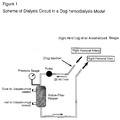
- Figure 1 is a scheme of a dialysis circuit in a dog hemodialysis model.
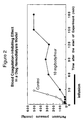
- Figure 2 is a graph showing blood coagulation-inhibiting effect in a dog hemodialysis model.
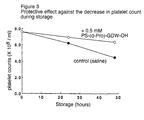
- Figure 3 is a graph showing the protective effect of the peptide of the present invention against the decrease in platelet counts during storage.
- Figure 4 is a graph showing the protective effect of the peptide of the present invention against the decline of the ability of platelet aggregation.
- p-Alkoxybenzyl alcohol-type resin represented by the following formula (the amount of Trp introduced: 0.87 meq/g; BACHEM Co.) (0.275 g; 0.25 mmol) HOCH 2 -C 6 H 4 (1,4)-OCH 2 -C 6 H 4 (1,4)-Polymer was placed in a reaction container.
- F moc -Trp was introduced in the form of active ester in the presence of dimethyaminopyrimidine and thereafter shaking and filtering steps were repeated as listed in Table 1 to obtain a protected peptide resin represented by the following general formula.
- the obtained protected peptide resin was treated with thioanisole in the presence of m-cresol and ethanedithiol in trifluoroacetic acid (TFA) at 0 °C for one hour. TFA was distilled off with an evaporator and thereafter the resin was removed by filtration. Diethyl ether was added to the filtrate under ice-cooling to obtain a peptide cleaved from the resin as a powder. The powder was washed with diethyl ether. The washed peptide was desalted by gel permeation chromatography using Sephadex G-10 (Pharmacia Co.) as a support and lyophilized to obtain a crude peptide.
- TFA trifluoroacetic acid
- HPLC high pressure liquid chromatography
- the titled peptide was synthesized by the same procedure as in Example 1. Amino acid analysis (6N HCl+phenol, 24 hr, 110°C ) Asp 0.82 (1) Ser 1.00 (1) Gly 1.08 (1) Trp - (1) Ala 1.08 (1) Pro 1.19 (1)
- the titled peptide was synthesized by the same procedure as in Example 1. Amino acid analysis (6N HCl+phenol, 24 hr, 110°C ) Asp 0.97 (1) Ser 1.00 (1) Gly 1.12 (1) Trp - (1) Leu 1.16 (1) Pro 1.08 (1)
- the titled peptide was synthesized by the same procedure as in Example 1. Amino acid analysis (6N HCl+phenol, 24 hr, 110°C ) Asp 1.07 (1) Ser 1.00 (1) Gly 1.14 (1) Trp - (1) Sar - (1) Pro 1.10 (1)
- the titled peptide was synthesized by the same procedure as in Example 1. Amino acid analysis (6N HCl+phenol, 24 hr, 110°C ) Asp 0.99 (1) Ser 1.00 (1) Gly 1.08 (1) Nva 1.17 (1) Tyr(CH 3 ) 1.05 (1) Pro 1.12 (1)
- the titled peptide was synthesized by the same procedure as in Example 1. Amino acid analysis (6N HCl+phenol, 24 hr, 110°C ) Asp 1.03 (1) Ser 1.00 (1) Gly 1.09 (1) Phg 1.10 (1) Trp - (1) Pro 1.08 (1)
- PRP platelet-rich plasma
- the blood remaining after centrifuging was further centrifuged (3500 rpm, 1500 g) at room temperature for 15 minutes and the rotation was stopped without applying the brake. The supernatant was collected to obtain platelet-poor plasma (PPP). After the preparation of the PRP, the number of platelets was counted and samples containing more than 2 x 10 8 /ml of platelets were used for the following experiments.
- Platelet aggregation was measured using an 8-channel platelet aggregation measuring instrument (Hematracer, Nikoh Bioscience, Tokyo, Japan) on the basis of the change in light transmittance through PRP.
- PPP and PRP each 200 ⁇ l were placed in glass cuvettes and incubated at 37°C . Thereafter, the transmittance was measured. The transmittance of PPP was determined as 100% and that of PRP as 0%. Then, 10 ⁇ l of saline or a sample-containing saline was added to PRP and incubated at 37°C for one minute.
- a collagen solution (10 ⁇ l) at a concentration of 100 ⁇ g/ml was added (final concentration: 5 ⁇ g/ml) to induce aggregation and thereafter the transmittance was measured over 7 minutes.
- the experiment was carried out using those samples in which aggregation with collagen and ADP was confirmed in the first step and in which the maximum rate of the aggregation with collagen was at least 70%.
- the sample was dissolved in saline at a concentration of 2.2 x 10 -2 M and a 2-fold dilution series was prepared for use in the experiments.
- the samples insoluble in saline were dissolved in saline containing 10% Dimethyl sulfoxide.
- a graph was constructed by plotting the percent aggregation inhibition against sample concentration and from the graph, the concentration at which the aggregation was inhibited by 50% (IC 50 ) was calculated.
- IC 50 of each sample is shown in Table 2.
- Table 2 shows that the peptides of the present invention having the base skeleton that had the Pro-Ser structure at the N-terminus and into which guanidino group-free amino acids were introduced exhibited greatly increased platelet aggregation-inhibiting activity compared to the amino acid sequence RGDS which was present in the fibrinogen molecule (Table 2, Comparative Example 2).
- the peptide obtained in Example 1 was intravenously injected into a mouse in an amount of 100 mg/kg but no toxicity was observed.
- beagles (either male or female) weighing 10-12 kg were used.
- the beagles were anesthetized with pentobarbital (about 30 mg/kg) and the right hind legs were incised to expose the femoral artery and femoral vein.
- Cannulas with silicon tubes were inserted into the femoral artery and femoral vein and these silicon tubes were connected to a hollow-fiber dialyzer (RENAK-A, RA-04, 0.4 m 2 , Kawasumi Lab. Tokyo). During this operation, no anti-coagulants such as heparin were used.
- a blood perfusion pump was placed between the femoral artery and the dialyzer and operated to keep the blood flow rate at 25 ml/min in the extracorporeal circulation system during the experiments. Dialysate was not circulated and after the hydrostatic pressure of about 100 cm H 2 O was applied to the outer space of the hollow fibers of the dialyzer, the inlet and outlet for dialysate circuit were sealed.
- the perfusion pressure was measured by a pressure gauge incorporated in the proximal portion of the dialyzer as shown in Figure 1. Since at the site of dialyzer, blood often experiences contacts with foreign materials and blood flows in a narrow space, blood coagulation is most likely to occur at this site in the dialysis circuit. If blood coagulation occurs there, the dialyzer is clogged and the blood pressure at the proximal portion will increase.
- the change in the perfusion pressure at this site indicates the degree of blood coagulation in the dialysis circuit.
- An aliquot of blood was sampled at the inlet and outlet of the dialysis part at given intervals to measure the parameters (2) and (3), which were measured by conventional methods.
- FIG. 2 shows the results of the experiments in which the inhibitory effect of the compound of Example 19 on the increase in the perfusion pressure was examined.
- the numbers on the abscissa indicate the time after the beginning of the drug infusion and those on the ordinate indicate the perfusion pressure.
- the perfusion pressure was 0-30 mmHg right after the start of the blood flow and increased due to the occurrence of the blood coagulation.
- the perfusion pressure increased rapidly after 10 minutes and exceeded 500 mmHg in 25 minutes, making further measurements impossible.
- blood coagulation occurred rapidly in the dialysis circuit, particularly at the site of the dialyzer.
- the peptide of the present invention prepared in Example 19 was injected, blood coagulation was obviously inhibited.
- the peptides of the present invention inhibited completely the blood coagulation in an extracorporeal circulation system. This indicates that the peptides of the present invention can satisfactorily be used as a substitute for currently used anti-coagulant heparin.
- heparin completely inhibits blood coagulation in an extracorporeal system, it has the disadvantage that it is only slightly eliminated from the body and thereby inhibits blood coagulation while promoting hemorrhagic tendency for several hours even after the hemodialysis.
- the peptides of the present invention are highly degradable in the body (cleared within about 30 min from the body).
- the peptides of the present invention are superior to heparin or its relevant drugs in that blood coagulation activity will return to normal level soon after the stoppage of the drug administration. Furthermore, since the peptides of the present invention are extremely low in toxicity, they are promising as new blood coagulation-inhibiting agents that compensate for the disadvantages of heparin.
- the peptides of the present invention are dissolved in saline or sodium citrate solution and if they are injected continuously at a rate of approximately 1-3 mg/hour/kg from the inlet of the extracorporeal circulation system by means of drop infusion and the like, satisfactory blood coagulation-inhibiting action can be expected. If is believed that in the actual application to humans, the dose can be further reduced.
- peptides of the present invention are combined with other anti-coagulants with entirely different modes of action such as a sodium citrate solution, heparin, futhan, fibrinolytic agents and the like, synergistic effect can be expected. Therefore, the dose of both drugs can be reduced and greater safety is insured.
- Hartley guinea pigs male; body weight 350-400 g were used in this experiment.
- the peritoneal cavities were opened and blood was collected from the peritoneal artery.
- the blood collection was performed using a syringe in which a preliminarily sterilized 3.8% sodium citrate solution had been charged in a 1/10 volume and which was equipped with a #24 needle.
- the syringe was stirred gently to mix the blood with the sodium citrate solution.
- the mixed blood was centrifuged (900 rpm) at room temperature for 15 minutes and the rotation was stopped. Then, the supernatant was collected with a Komagome-type pipette aseptically to give a platelet fraction for storage.
- the platelet fraction was transferred into a platelet storage bag (TERUMO CORP., Separation Bag S for Apheresis), the bag was placed on a shaker and preserved while shaking with a shaking amplitude of 20 cm and at a shaking frequency of 20 Hz at room temperature.
- TERUMO CORP. Separation Bag S for Apheresis
- the platelet fraction was sampled and the number of platelets was measured.
- the storage fraction was adjusted at pH 6.5 with a citric acid solution and centrifuged (2000 rpm, 15 minutes) at room temperature. After the supernatant was removed, a Ca-Tyrode solution (pH 6.5) with apyrase (Sigma Co., final concentration 0.2 U/ml) was added to resuspend platelets. After being left to stand for 20 minutes at room temperature, the suspension was centrifuged (2000 rpm, 15 minutes) and the supernatant was removed.
- the suspension was washed again in the same manner and the platelets were resuspended in preliminarily preserved guinea pig plasma (the number of platelets; about 3 x 10 8 /ml).
- the aggregation ability of the platelets was determined using this platelet suspension by the same method as in Experimental Example 1.
- Figure 3 shows the change in platelet count during the storage.
- the platelet count decreased greatly during the storage.
- the compound prepared in Example 28 was added, a significant inhibitory effect on the decrease in platelet count was observed compared to the control group.
- This protective effect was dependent on the concentration of the peptide added, indicating that the peptide of the present invention itself has the protective action on platelets.
- Figure 4 shows the time-dependent change in the platelet aggregation ability during the storage.
- the aggregation activity of platelets declined to less than 40% after storage for 48 hours.
- the compound prepared in Example 28 was added, at least 60% of the aggregation activity of platelets remained after the 48 hour storage. This indicates that the decline in the aggregation activity of the platelets was significantly inhibited by the addition of the compound.
- the addition of the peptide of the present invention produced platelet-protective effects during storage such as the inhibition of the decrease in platelet count, platelet aggregation ability, and the like. It has already been confirmed that even if the peptide compounds heretofore in use such as RGDS, RGDF and the like are added to platelet fractions, they are broken down by the action of enzymes present in plasma and hence are clearly unsuitable for use in long-term storage of platelets. On the other hand, compounds that are very stable and which will not be easily broken down in the body will inhibit all the functions of platelets in the body after blood transfusion and thereby lower the efficiency of transfusion. In contrast, the peptides of the present invention have desirable features such as high stability in platelet fractions, high in vivo degradability and low toxicity and, therefore, they are believed to be useful as excellent platelet protecting agents.
- the peptides of the present invention are administered as acetate salt or phosphate salt, they are expected to manifest a buffering action and thereby produce inhibitory effects against the change of pH during the storage of platelet fractions. Moreover, if the peptides of the present invention are not used alone but are combined with aspirin or other platelet aggregation-inhibiting agents having different modes of action, synergistic effects can be expected.
- Each of the peptides obtained in Examples 1-31 (100 mg) was dissolved in 100 ml of saline. Under aseptic conditions, the obtained solution was charged in a 2.5 ml volume ampule and the ampule was sealed to prepare an injection preparation.
- a mixture (1 ml) of ethanol and water was added to a mixture consisting of one of the peptides obtained in Examples 1-31 (500 mg), crystalline cellulose (50 mg) and lactose (450 mg) and blended intimately.
- the obtained mixture was granulated by a conventional method to prepare granules.
- the peptides of the present invention are useful as platelet aggregation-inhibiting agents.
- the peptides of the present invention are useful for preventing thrombolus, thromboembolism and reobstruction during and after the treatment of thrombolysis, preventing thrombolus, thromboembolism and reobstruction after angioplasty of coronary arteries and other arteries and after coronary artery bypassing, and preventing cardiac infarction.
- the peptides of the present invention are useful as blood coagulation-inhibiting agents for extracorporeal circulation for inhibiting thrombus formation at the time of extracorporeal circulation.
- the peptides of the present invention are effective in suppressing the decrease in the function of platelets, that is, they are effective in protecting platelets. Moreover, the peptides of the present invention are effective as cell adhesion-inhibiting agents in inhibiting tumor metastasis.
Landscapes
- Health & Medical Sciences (AREA)
- Life Sciences & Earth Sciences (AREA)
- Chemical & Material Sciences (AREA)
- Organic Chemistry (AREA)
- Medicinal Chemistry (AREA)
- General Health & Medical Sciences (AREA)
- Proteomics, Peptides & Aminoacids (AREA)
- Gastroenterology & Hepatology (AREA)
- Zoology (AREA)
- Hematology (AREA)
- Molecular Biology (AREA)
- Genetics & Genomics (AREA)
- Biophysics (AREA)
- Biochemistry (AREA)
- Engineering & Computer Science (AREA)
- Public Health (AREA)
- Veterinary Medicine (AREA)
- Toxicology (AREA)
- Animal Behavior & Ethology (AREA)
- Epidemiology (AREA)
- Pharmacology & Pharmacy (AREA)
- Immunology (AREA)
- Bioinformatics & Cheminformatics (AREA)
- Medicines That Contain Protein Lipid Enzymes And Other Medicines (AREA)
- Peptides Or Proteins (AREA)
- Organic Low-Molecular-Weight Compounds And Preparation Thereof (AREA)
Applications Claiming Priority (7)
| Application Number | Priority Date | Filing Date | Title |
|---|---|---|---|
| JP24554193 | 1993-09-30 | ||
| JP24554193 | 1993-09-30 | ||
| JP245541/93 | 1993-09-30 | ||
| JP50602/94 | 1994-03-22 | ||
| JP5060294 | 1994-03-22 | ||
| JP5060294 | 1994-03-22 | ||
| PCT/JP1994/001611 WO1995009185A1 (en) | 1993-09-30 | 1994-09-29 | Novel peptide, active as inhibitors of platelet aggregation |
Publications (2)
| Publication Number | Publication Date |
|---|---|
| EP0721468A1 EP0721468A1 (en) | 1996-07-17 |
| EP0721468B1 true EP0721468B1 (en) | 2001-05-30 |
Family
ID=26391074
Family Applications (1)
| Application Number | Title | Priority Date | Filing Date |
|---|---|---|---|
| EP94927800A Expired - Lifetime EP0721468B1 (en) | 1993-09-30 | 1994-09-29 | Platelet aggregation inhibitory peptides |
Country Status (10)
| Country | Link |
|---|---|
| US (1) | US5721213A (da) |
| EP (1) | EP0721468B1 (da) |
| KR (1) | KR100186656B1 (da) |
| CN (1) | CN1056619C (da) |
| AU (1) | AU673466B2 (da) |
| CA (1) | CA2168964C (da) |
| DE (1) | DE69427363T2 (da) |
| DK (1) | DK0721468T3 (da) |
| ES (1) | ES2159303T3 (da) |
| WO (1) | WO1995009185A1 (da) |
Families Citing this family (9)
| Publication number | Priority date | Publication date | Assignee | Title |
|---|---|---|---|---|
| EP1608681B1 (en) * | 2003-03-28 | 2008-06-04 | FUJIFILM Manufacturing Europe B.V. | Rgd-enriched gelatine-like proteins with enhanced cell binding |
| WO2009033765A2 (en) * | 2007-09-11 | 2009-03-19 | Mondobiotech Laboratories Ag | Use of a peptide as a therapeutic agent |
| WO2011028915A2 (en) * | 2009-09-03 | 2011-03-10 | University Of Chicago | Platelet aggregation inhibitors |
| CN102241735B (zh) * | 2011-06-23 | 2014-01-22 | 陕西麦科奥特科技有限公司 | 用于预防及治疗急性冠脉综合症及抗凝抗血栓治疗的多肽及其应用 |
| CN106317191B (zh) * | 2015-06-23 | 2019-09-17 | 首都医科大学 | Thr-Val-Gly-Cys-Ser,其合成,活性和应用 |
| AU2016338410B2 (en) | 2015-10-14 | 2021-07-15 | X-Therma, Inc. | Compositions and methods for reducing ice crystal formation |
| CN107137757A (zh) * | 2017-04-26 | 2017-09-08 | 浙江大学 | 一种rgd噬菌体/丝素复合止血材料及其制备方法 |
| CN108610394B (zh) * | 2018-05-07 | 2021-08-31 | 深圳市维琪医药研发有限公司 | 一种拟肽类化合物的制备纯化方法以及应用 |
| CN111647043B (zh) * | 2019-08-07 | 2022-03-22 | 中国农业大学 | 含有Hyp-Gly序列的一类抗血小板和抗血栓功能的寡肽 |
Family Cites Families (2)
| Publication number | Priority date | Publication date | Assignee | Title |
|---|---|---|---|---|
| US4952562A (en) * | 1989-09-29 | 1990-08-28 | Rorer Pharmaceutical Corporation | Anti-thrombotic peptides and pseudopeptides |
| JPH06192291A (ja) * | 1992-09-07 | 1994-07-12 | Nippon Steel Corp | 新規ペプチドとそれを用いた血小板凝集抑制剤及び血液凝固抑制剤 |
-
1994
- 1994-09-29 DE DE69427363T patent/DE69427363T2/de not_active Expired - Fee Related
- 1994-09-29 DK DK94927800T patent/DK0721468T3/da active
- 1994-09-29 KR KR1019960701666A patent/KR100186656B1/ko not_active Expired - Fee Related
- 1994-09-29 WO PCT/JP1994/001611 patent/WO1995009185A1/en not_active Ceased
- 1994-09-29 ES ES94927800T patent/ES2159303T3/es not_active Expired - Lifetime
- 1994-09-29 CA CA002168964A patent/CA2168964C/en not_active Expired - Fee Related
- 1994-09-29 EP EP94927800A patent/EP0721468B1/en not_active Expired - Lifetime
- 1994-09-29 AU AU77076/94A patent/AU673466B2/en not_active Ceased
- 1994-09-29 CN CN94193587A patent/CN1056619C/zh not_active Expired - Fee Related
- 1994-09-29 US US08/596,116 patent/US5721213A/en not_active Expired - Fee Related
Also Published As
| Publication number | Publication date |
|---|---|
| DK0721468T3 (da) | 2001-09-17 |
| CA2168964C (en) | 2000-08-22 |
| US5721213A (en) | 1998-02-24 |
| KR960704935A (ko) | 1996-10-09 |
| EP0721468A1 (en) | 1996-07-17 |
| CN1056619C (zh) | 2000-09-20 |
| DE69427363D1 (de) | 2001-07-05 |
| DE69427363T2 (de) | 2002-03-14 |
| WO1995009185A1 (en) | 1995-04-06 |
| AU673466B2 (en) | 1996-11-07 |
| AU7707694A (en) | 1995-04-18 |
| CN1132515A (zh) | 1996-10-02 |
| ES2159303T3 (es) | 2001-10-01 |
| KR100186656B1 (ko) | 1999-04-01 |
Similar Documents
| Publication | Publication Date | Title |
|---|---|---|
| EP0578728B1 (en) | PLATELET AGGREGATION INHIBITORS HAVING HIGH SPECIFICITY FOR GP IIbIIIa | |
| KR100438244B1 (ko) | 사이클릭결합저해제 | |
| US6100236A (en) | Method and composition for treating thrombosis | |
| US5498601A (en) | Platelet aggregation-inhibiting peptides | |
| RU2604193C2 (ru) | Новое соединение с эффектами тромболизиса, акцептирования свободных радикалов и направленного действия на тромб, а также способ его получения и применение | |
| Shebuski et al. | Demonstration of Ac-Arg-Gly-Asp-Ser-NH2 as an antiaggregatory agent in the dog by intracoronary administration | |
| MXPA96004100A (en) | Cyclic compounds, adhes inhibitors | |
| KR100438378B1 (ko) | 고리형부착억제제 | |
| WO1991011458A1 (en) | CYCLIC PEPTIDES CONTAINING Arg-Gly-Asp FLANKED BY PROLINE | |
| EP0721468B1 (en) | Platelet aggregation inhibitory peptides | |
| JP2011523634A (ja) | ペプチド、ペプチド模倣物およびそれらの誘導体、それらの製造、ならびに治療および/または予防活性のある医薬組成物を調製するためのそれらの使用 | |
| US5648330A (en) | Method and composition for treating vascular graft occlusion | |
| US5338725A (en) | Anti-aggregatory agents for platelets | |
| KR20010014267A (ko) | 맥관형성에 작용하는 시클릭 아자펩티드 | |
| JP3581174B2 (ja) | 新規ペプチド並びにそれを用いた血小板凝集抑制剤、体外循環用血液凝固抑制剤及び輸血用血小板製剤保護剤 | |
| JPH08511518A (ja) | 三機能性の抗血栓及び抗血小板ペプチド類 | |
| US11643439B2 (en) | Multi-target compound with anticoagulation and antiplatelet activity, preparation method therefor, and use thereof | |
| JPH06179696A (ja) | 血液凝固阻害ペプチド及び血栓症治療剤 | |
| AU1825697A (en) | Antithrombotic agents and methods of use | |
| WO1995001371A1 (en) | Novel peptide and antiplatelet aggregation containing the same | |
| AU761624B2 (en) | Bradykinin analogs as selective inhibitors of cell activation | |
| JPH0797397A (ja) | 新規ペプチド及びそれを用いた血小板凝集抑制剤 | |
| JPH069687A (ja) | 新規ペプチドおよびそれを用いた血小板凝集阻害剤 |
Legal Events
| Date | Code | Title | Description |
|---|---|---|---|
| PUAI | Public reference made under article 153(3) epc to a published international application that has entered the european phase |
Free format text: ORIGINAL CODE: 0009012 |
|
| 17P | Request for examination filed |
Effective date: 19960426 |
|
| AK | Designated contracting states |
Kind code of ref document: A1 Designated state(s): BE CH DE DK ES FR GB IT LI NL SE |
|
| 17Q | First examination report despatched |
Effective date: 19991008 |
|
| GRAG | Despatch of communication of intention to grant |
Free format text: ORIGINAL CODE: EPIDOS AGRA |
|
| RTI1 | Title (correction) |
Free format text: PLATELET AGGREGATION INHIBITORY PEPTIDES |
|
| GRAG | Despatch of communication of intention to grant |
Free format text: ORIGINAL CODE: EPIDOS AGRA |
|
| GRAH | Despatch of communication of intention to grant a patent |
Free format text: ORIGINAL CODE: EPIDOS IGRA |
|
| GRAH | Despatch of communication of intention to grant a patent |
Free format text: ORIGINAL CODE: EPIDOS IGRA |
|
| GRAA | (expected) grant |
Free format text: ORIGINAL CODE: 0009210 |
|
| AK | Designated contracting states |
Kind code of ref document: B1 Designated state(s): BE CH DE DK ES FR GB IT LI NL SE |
|
| REG | Reference to a national code |
Ref country code: CH Ref legal event code: EP |
|
| REF | Corresponds to: |
Ref document number: 69427363 Country of ref document: DE Date of ref document: 20010705 |
|
| RAP2 | Party data changed (patent owner data changed or rights of a patent transferred) |
Owner name: NIPPON STEEL CORPORATION |
|
| ITF | It: translation for a ep patent filed | ||
| REG | Reference to a national code |
Ref country code: CH Ref legal event code: NV Representative=s name: BRAUN & PARTNER PATENT-, MARKEN-, RECHTSANWAELTE |
|
| NLT2 | Nl: modifications (of names), taken from the european patent patent bulletin |
Owner name: NIPPON STEEL CORPORATION |
|
| REG | Reference to a national code |
Ref country code: DK Ref legal event code: T3 |
|
| REG | Reference to a national code |
Ref country code: ES Ref legal event code: FG2A Ref document number: 2159303 Country of ref document: ES Kind code of ref document: T3 |
|
| ET | Fr: translation filed | ||
| REG | Reference to a national code |
Ref country code: GB Ref legal event code: IF02 |
|
| PLBE | No opposition filed within time limit |
Free format text: ORIGINAL CODE: 0009261 |
|
| STAA | Information on the status of an ep patent application or granted ep patent |
Free format text: STATUS: NO OPPOSITION FILED WITHIN TIME LIMIT |
|
| 26N | No opposition filed | ||
| PGFP | Annual fee paid to national office [announced via postgrant information from national office to epo] |
Ref country code: SE Payment date: 20020904 Year of fee payment: 9 |
|
| PGFP | Annual fee paid to national office [announced via postgrant information from national office to epo] |
Ref country code: FR Payment date: 20020910 Year of fee payment: 9 |
|
| PGFP | Annual fee paid to national office [announced via postgrant information from national office to epo] |
Ref country code: DK Payment date: 20020912 Year of fee payment: 9 |
|
| PGFP | Annual fee paid to national office [announced via postgrant information from national office to epo] |
Ref country code: GB Payment date: 20020925 Year of fee payment: 9 |
|
| PGFP | Annual fee paid to national office [announced via postgrant information from national office to epo] |
Ref country code: ES Payment date: 20020927 Year of fee payment: 9 |
|
| PGFP | Annual fee paid to national office [announced via postgrant information from national office to epo] |
Ref country code: NL Payment date: 20020930 Year of fee payment: 9 |
|
| PGFP | Annual fee paid to national office [announced via postgrant information from national office to epo] |
Ref country code: CH Payment date: 20021001 Year of fee payment: 9 |
|
| PGFP | Annual fee paid to national office [announced via postgrant information from national office to epo] |
Ref country code: DE Payment date: 20021002 Year of fee payment: 9 |
|
| PGFP | Annual fee paid to national office [announced via postgrant information from national office to epo] |
Ref country code: BE Payment date: 20021203 Year of fee payment: 9 |
|
| PG25 | Lapsed in a contracting state [announced via postgrant information from national office to epo] |
Ref country code: GB Free format text: LAPSE BECAUSE OF NON-PAYMENT OF DUE FEES Effective date: 20030929 |
|
| PG25 | Lapsed in a contracting state [announced via postgrant information from national office to epo] |
Ref country code: SE Free format text: LAPSE BECAUSE OF NON-PAYMENT OF DUE FEES Effective date: 20030930 Ref country code: LI Free format text: LAPSE BECAUSE OF NON-PAYMENT OF DUE FEES Effective date: 20030930 Ref country code: ES Free format text: LAPSE BECAUSE OF NON-PAYMENT OF DUE FEES Effective date: 20030930 Ref country code: DK Free format text: LAPSE BECAUSE OF NON-PAYMENT OF DUE FEES Effective date: 20030930 Ref country code: CH Free format text: LAPSE BECAUSE OF NON-PAYMENT OF DUE FEES Effective date: 20030930 Ref country code: BE Free format text: LAPSE BECAUSE OF NON-PAYMENT OF DUE FEES Effective date: 20030930 |
|
| BERE | Be: lapsed |
Owner name: *NIPPON STEEL CORP. Effective date: 20030930 |
|
| PG25 | Lapsed in a contracting state [announced via postgrant information from national office to epo] |
Ref country code: NL Free format text: LAPSE BECAUSE OF NON-PAYMENT OF DUE FEES Effective date: 20040401 Ref country code: DE Free format text: LAPSE BECAUSE OF NON-PAYMENT OF DUE FEES Effective date: 20040401 |
|
| EUG | Se: european patent has lapsed | ||
| REG | Reference to a national code |
Ref country code: CH Ref legal event code: PL |
|
| REG | Reference to a national code |
Ref country code: DK Ref legal event code: EBP |
|
| GBPC | Gb: european patent ceased through non-payment of renewal fee |
Effective date: 20030929 |
|
| PG25 | Lapsed in a contracting state [announced via postgrant information from national office to epo] |
Ref country code: FR Free format text: LAPSE BECAUSE OF NON-PAYMENT OF DUE FEES Effective date: 20040528 |
|
| NLV4 | Nl: lapsed or anulled due to non-payment of the annual fee |
Effective date: 20040401 |
|
| REG | Reference to a national code |
Ref country code: FR Ref legal event code: ST |
|
| REG | Reference to a national code |
Ref country code: ES Ref legal event code: FD2A Effective date: 20030930 |
|
| PG25 | Lapsed in a contracting state [announced via postgrant information from national office to epo] |
Ref country code: IT Free format text: LAPSE BECAUSE OF NON-PAYMENT OF DUE FEES Effective date: 20050929 |
|
| REG | Reference to a national code |
Ref country code: DE Ref legal event code: R082 Ref document number: 69427363 Country of ref document: DE Representative=s name: VOSSIUS & PARTNER, DE |
|
| REG | Reference to a national code |
Ref country code: DE Ref legal event code: R082 Ref document number: 69427363 Country of ref document: DE Representative=s name: VOSSIUS & PARTNER PATENTANWAELTE RECHTSANWAELT, DE Effective date: 20130422 Ref country code: DE Ref legal event code: R082 Ref document number: 69427363 Country of ref document: DE Representative=s name: VOSSIUS & PARTNER, DE Effective date: 20130422 Ref country code: DE Ref legal event code: R081 Ref document number: 69427363 Country of ref document: DE Owner name: NIPPON STEEL & SUMITOMO METAL CORPORATION, JP Free format text: FORMER OWNER: NIPPON STEEL CORP., TOKIO/TOKYO, JP Effective date: 20130422 |