EP0718774A1 - Multimedia system employing timers to properly allocate bus access - Google Patents
Multimedia system employing timers to properly allocate bus access Download PDFInfo
- Publication number
- EP0718774A1 EP0718774A1 EP95308775A EP95308775A EP0718774A1 EP 0718774 A1 EP0718774 A1 EP 0718774A1 EP 95308775 A EP95308775 A EP 95308775A EP 95308775 A EP95308775 A EP 95308775A EP 0718774 A1 EP0718774 A1 EP 0718774A1
- Authority
- EP
- European Patent Office
- Prior art keywords
- bus
- access
- timer
- devices
- arbiter
- Prior art date
- Legal status (The legal status is an assumption and is not a legal conclusion. Google has not performed a legal analysis and makes no representation as to the accuracy of the status listed.)
- Withdrawn
Links
Images
Classifications
-
- G—PHYSICS
- G06—COMPUTING OR CALCULATING; COUNTING
- G06F—ELECTRIC DIGITAL DATA PROCESSING
- G06F13/00—Interconnection of, or transfer of information or other signals between, memories, input/output devices or central processing units
- G06F13/14—Handling requests for interconnection or transfer
- G06F13/36—Handling requests for interconnection or transfer for access to common bus or bus system
- G06F13/362—Handling requests for interconnection or transfer for access to common bus or bus system with centralised access control
- G06F13/3625—Handling requests for interconnection or transfer for access to common bus or bus system with centralised access control using a time dependent access
Definitions
- a device with a very high priority will get frequent access to the bus while a device with a low priority will get infrequent access to the bus.
- This can present a problem when the devices are assigned their priorities during system initialization or boot-up such that the relative priorities of the devices do not change over time.
- a situation can exist where a low priority device needs access to the bus in order to continue functioning but cannot obtain access because a high priority device which does not necessarily need access happens to be requesting bus access coincidentally.
- the system is granting access on a priority basis, inefficiencies can result where low priority devices experience idle time or malfunction.
- arbiter which calculates the priority of each device based not only on the time since each device last had access to the bus and on the amount of data needed by the device, but also on the data transfer rate of each device.
- One embodiment of the present invention comprises a bus connected to a plurality of devices through an arbiter. At least one of the devices has a corresponding timer indicating a value representing the elapsed time since the device last accessed the bus. The arbiter thus grants access to the bus based on the value of the timer.
- This embodiment can be expanded to associate a timer with each device. This embodiment can also be expanded to include a minimum access interval for one or more of the devices. The timer can then either count up to the minimum access interval from zero, or count down to zero from the minimum access interval. The arbiter can then determine the relative priority for each device based on the time since the device last had access to the bus and the minimum access interval for the device.
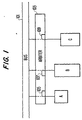
- Fig. 1 shows three devices A, B and C connected to bus 101 through arbiter 103.
- Devices A, B and C can be any devices which communicate via bus 101.
- the connection of each of these devices to bus 101 can be associated with a timer.
- arbiter 103 contains timers 105, 107 and 109 associated respectively with devices A, B and C.
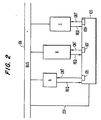
- arbiter 103 can be connected in parallel to connections between devices A, B and C to bus 101 as shown in Fig. 2.
- timers 105, 107 and 109 are each connected to their respective devices A, B and C via a request line REQ and a grant line GNT.
- Arbiter 103 is also connected to bus 101 via line 201 to inform bus 101 of which device is granted access.
- the following discussion focuses on describing the embodiment of Fig. 1 in comparison to conventional arbiters. One skilled in the art will understand that similar operations can be performed using the embodiment of Fig 2.
- the timers will keep track of the elapsed time since each device last had access to bus 101. This enables arbiter 103 to base its priority decisions on these elapsed times.
- devices A, B and C are video processing devices which receive data from bus 101 for video processing and subsequent display. Further, assume that devices A, B and C are different types of video processing devices targeted to different video applications, such that they have different data input requirements.
- device A is a video processor related to a teleconferencing application whereas devices B and C are video processors related to full motion video applications. Since teleconferencing does not require the same frame update rate as full motion video, device A has lower data input requirements compared to the other devices. Further, assume device B is a video processor engaged in color video while device C is a video processor engaged in black and white video. Therefore, since color video requires more data than black and white video, device B would require more data via bus 101 than device C.
- the differing data input requirements of the three devices translate into differing bus access requirements.
- device B requires the greatest amount of data and therefore requires the most frequent bus access.
- device C requires the second greatest amount of data and therefore requires the second most frequent bus access, while device A requires the least amount of data and therefore the lowest amount of bus access.
- the relative priorities of devices A, B and C would be assigned at the time of system boot-up. For the example discussed above, device B would be given the highest priority, device C would be given the second highest priority and device A would be given the lowest priority.
- devices A, B and C receive data from bus 101 in like-size packets.
- device A accesses bus 101, it receives the same amount of data that device B receives when device B accesses bus 101, which is identical to the amount of data device C receives when device C accesses bus 101.
- this requirement for receiving identical amounts of data for each bus access is purely by way of example to assist in understanding a first embodiment of the invention.
- a subsequent embodiment will address the situation where the devices can receive different amounts of data when accessing bus 101.
- timer 105 is reset to zero every time device A accesses bus 101. Timer 105 then counts upward to keep track of the amount of time since the last access. Arbiter 103 then compares the content of timer 105 with a previously stored minimum access interval associated with device A. As discussed above, for this example, the minimum access interval for device A is 10 microseconds. Therefore, arbiter 103 compares the content of timer 105 with 10 microseconds, the difference therebetween representing the amount of time left in the minimum access interval. Alternatively, timer 105 can be reset to the minimum access interval associated with device A (10 microseconds) each time device A accesses bus 101. In this example, timer 105 counts down toward zero such that the content of timer 105 represents the amount of time left in device A's minimum access interval. Thus, arbiter 103 determines device A's minimum access interval by merely reading timer 105.
- timer 107 can either be reset to zero and count up to 1 microsecond each time device B accesses bus 101 or be reset to 1 microsecond and count down toward zero each time device B accesses bus 101.
- timer 109 is reset to zero each time device C accesses bus 101 and if a count-down scheme is employed, timer 109 is reset to 2 microseconds each time device C accesses bus 101.
- Arbiter 103 then grants devices A, B and C access to bus 101 based upon the values of their corresponding timers 105, 107 and 109. For example, suppose devices A and B are simultaneously requesting access to the bus. Further, suppose the timers are reset to zero each time their respective device accesses the bus. Further, suppose timer 105 contains a value of 2 microseconds and timer 107 contains a value of .8 microseconds. These values indicate that it has been .8 microseconds since device B last had access to bus 101 and that it has been two microseconds since device A last had access to bus 101. Since device B needs access every microsecond, arbiter 103 determines that device B has a greater need for access to the bus and grants access to device B. This is because device B must obtain access within the next .2 microseconds whereas device A does not need access to the bus for another 8 microseconds. Therefore, in this example, device B is granted priority.
- timer 105 indicates that it has been 9.8 microseconds since device A had access to bus 101
- timer 107 indicates that it has been .5 microseconds since device B had access to bus 101
- timer 109 indicates that it has been 1.7 microseconds since device C had access to bus 101.
- priority is given to device A, then to device C and finally to device B, since device A must access bus 101 within the next .1 microseconds, device C must access bus 101 within the next .3 microseconds and device B must access bus 101 within the next .5 microseconds. Therefore, the device which would be given the lowest priority by a conventional arbiter would receive the highest priority in this example.
- the arbiter of the present invention thus ensures that device A does not experience any malfunction merely because devices B and C are coincidentally requesting access.
- arbiter 103 can base its priority decisions not only on the content of timers 105, 107 and 109 but also on other factors. These can include, for example, the amount of data required by each device and the rates of data transferred to each device. Thus, suppose device B from the above example can be reconfigured such that it requires access less frequently but receives a greater amount of data each time it has access. For example, suppose devices A and C continue to receive one packet of data each time they access bus 101 but device B is configured such that it receives two packets of data each time it accesses bus 101. Therefore, device B's minimum access interval can be raised from 1 microsecond to 2 microseconds. Arbiter 103 then grants priority based on this new minimum access interval.
- the number of packets of data provided to each device can be variable such that arbiter 103 can set the minimum access intervals of each device based upon the amount of data each device received during its most recent bus access. For example, if device B requires one packet of data every microsecond but received four packets of data during its last access, arbiter 103 can set timer 107 such that device B only requires access within the next 4 microseconds.
- the minimum access interval for each device is a function of the way in which data intended for each device is supplied to bus 101.
- devices A, B and C can have differing transfer rates which can variably affect their minimum access intervals. For example, consider the first example presented earlier where all three devices function with the same data transfer rate. Now, presume that the data transfer rate of each device is based on a given application employed by each device. For example, suppose device B's 1 microsecond minimum access interval includes a .3 microsecond data transfer period associated with a given application whereas device B can sometimes be engaged in an alternative application for which there is only a .1 microsecond data transfer period. In the latter case, when device B is configured for the alternative application, the minimum access interval for device B can be increased to 1.2 microseconds to take advantage of its shorter data transfer period. Thus, arbiter 103 can monitor the configurations of devices A, B and C and adjust the minimum access intervals associated therewith based upon data transfer rates related to various applications.
- arbiter 103 can assign priorities to devices A, B and C to minimize the likelihood that any of the devices will not function due to inaccessibility of bus 101 based on contention for bus access with the other devices.
- the examples discussed above are based, for simplicity, on three devices accessing the bus. Clearly, however, any number of devices can access the bus and be in mutual contention. The various embodiments of the present invention described above can thus be employed to optimize bus usage.
Landscapes
- Engineering & Computer Science (AREA)
- Theoretical Computer Science (AREA)
- Physics & Mathematics (AREA)
- General Engineering & Computer Science (AREA)
- General Physics & Mathematics (AREA)
- Bus Control (AREA)
Applications Claiming Priority (2)
| Application Number | Priority Date | Filing Date | Title |
|---|---|---|---|
| US359286 | 1989-05-31 | ||
| US08/359,286 US6178475B1 (en) | 1994-12-19 | 1994-12-19 | Multimedia system employing timers to properly allocate bus access |
Publications (1)
| Publication Number | Publication Date |
|---|---|
| EP0718774A1 true EP0718774A1 (en) | 1996-06-26 |
Family
ID=23413159
Family Applications (1)
| Application Number | Title | Priority Date | Filing Date |
|---|---|---|---|
| EP95308775A Withdrawn EP0718774A1 (en) | 1994-12-19 | 1995-12-05 | Multimedia system employing timers to properly allocate bus access |
Country Status (4)
| Country | Link |
|---|---|
| US (1) | US6178475B1 (enExample) |
| EP (1) | EP0718774A1 (enExample) |
| JP (1) | JPH08255126A (enExample) |
| KR (1) | KR960025060A (enExample) |
Cited By (6)
| Publication number | Priority date | Publication date | Assignee | Title |
|---|---|---|---|---|
| WO1997019410A1 (en) * | 1995-11-21 | 1997-05-29 | Advanced Micro Devices, Inc. | Bus arbiter including aging factor counters to dynamically vary arbitration priority |
| US5754807A (en) * | 1995-11-20 | 1998-05-19 | Advanced Micro Devices, Inc. | Computer system including a multimedia bus which utilizes a separate local expansion bus for addressing and control cycles |
| US5761452A (en) * | 1996-03-18 | 1998-06-02 | Advanced Micro Devices, Inc. | Bus arbiter method and system |
| US5802330A (en) * | 1996-05-01 | 1998-09-01 | Advanced Micro Devices, Inc. | Computer system including a plurality of real time peripheral devices having arbitration control feedback mechanisms |
| US5805840A (en) * | 1996-03-26 | 1998-09-08 | Advanced Micro Devices, Inc. | Bus arbiter employing a transaction grading mechanism to dynamically vary arbitration priority |
| US5935232A (en) * | 1995-11-20 | 1999-08-10 | Advanced Micro Devices, Inc. | Variable latency and bandwidth communication pathways |
Families Citing this family (23)
| Publication number | Priority date | Publication date | Assignee | Title |
|---|---|---|---|---|
| US6467003B1 (en) * | 1997-01-21 | 2002-10-15 | Honeywell International, Inc. | Fault tolerant data communication network |
| US6735653B2 (en) * | 2001-02-16 | 2004-05-11 | Koninklijke Philips Electronics N.V. | Bus bandwidth consumption profiler |
| DE10116795A1 (de) * | 2001-04-04 | 2002-10-17 | Infineon Technologies Ag | Bussystem |
| US6820152B2 (en) * | 2001-04-25 | 2004-11-16 | Matsushita Electric Industrial Co., Ltd. | Memory control device and LSI |
| KR20030012049A (ko) * | 2001-07-30 | 2003-02-12 | 엘지전자 주식회사 | 아비터의 액세스 제어 방법 및 장치 |
| TWI258081B (en) * | 2002-04-04 | 2006-07-11 | Via Tech Inc | Arbitrating method and arbiter for bus grant |
| CN100445973C (zh) * | 2002-04-17 | 2008-12-24 | 威盛电子股份有限公司 | 总线控制权仲裁方法与仲裁器 |
| JP2004287576A (ja) * | 2003-03-19 | 2004-10-14 | Matsushita Electric Ind Co Ltd | バスコントローラ |
| US7054968B2 (en) * | 2003-09-16 | 2006-05-30 | Denali Software, Inc. | Method and apparatus for multi-port memory controller |
| US7036908B2 (en) * | 2003-11-14 | 2006-05-02 | Randall Don Briggs | Method and apparatus for color formatting in a color printer |
| JP4778199B2 (ja) * | 2004-02-26 | 2011-09-21 | 富士通株式会社 | データ転送装置及びデータ転送方法 |
| US20050228927A1 (en) * | 2004-04-05 | 2005-10-13 | Philip Garcia | Bus utilization based on data transfers on the bus |
| US7366811B2 (en) * | 2004-12-23 | 2008-04-29 | International Business Machines Corporation | Bus arbitration system |
| JP4847036B2 (ja) * | 2005-03-30 | 2011-12-28 | キヤノン株式会社 | バスアクセスを調停する制御装置およびデータ処理装置の制御方法 |
| JP4974508B2 (ja) * | 2005-10-28 | 2012-07-11 | キヤノン株式会社 | バスマスタ装置、バス調停装置及びバス調停方法 |
| TWI318355B (en) * | 2006-04-17 | 2009-12-11 | Realtek Semiconductor Corp | System and method for bandwidth sharing in busses |
| TWI324305B (en) * | 2006-06-14 | 2010-05-01 | Via Tech Inc | Embedded system and related buffer size determining method thereof |
| CN101495979B (zh) * | 2006-06-27 | 2012-09-05 | 汤姆逊许可证公司 | 执行仲裁的方法和装置 |
| JP5115075B2 (ja) * | 2007-07-25 | 2013-01-09 | 富士通株式会社 | 転送装置、転送装置を有する情報処理装置及び制御方法 |
| JP6201591B2 (ja) * | 2013-09-30 | 2017-09-27 | 富士通株式会社 | 情報処理装置および情報処理装置の制御方法 |
| WO2018229625A1 (en) * | 2017-06-11 | 2018-12-20 | Moazami Syyed Gholam Reza | Controlling a distributed system |
| EP4002770B1 (en) * | 2020-11-16 | 2024-04-03 | Ratier-Figeac SAS | Serial time triggered data bus |
| KR20220135048A (ko) | 2021-03-29 | 2022-10-06 | 삼성전자주식회사 | 버스를 통해 자원을 공유하기 위한 장치 및 방법 |
Citations (3)
| Publication number | Priority date | Publication date | Assignee | Title |
|---|---|---|---|---|
| EP0125809A2 (en) * | 1983-04-19 | 1984-11-21 | Forney International, Inc. | Distributed computer control system |
| US5301332A (en) * | 1992-12-23 | 1994-04-05 | Ncr Corporation | Method and apparatus for a dynamic, timed-loop arbitration |
| EP0625753A1 (en) * | 1993-05-17 | 1994-11-23 | AT&T Corp. | Dynamically programmable bus arbiter with provisions for historical feedback |
Family Cites Families (17)
| Publication number | Priority date | Publication date | Assignee | Title |
|---|---|---|---|---|
| JPS5216674A (en) | 1975-07-30 | 1977-02-08 | Hitachi Ltd | Proximity switch |
| US4285038A (en) | 1976-10-15 | 1981-08-18 | Tokyo Shibaura Electric Co., Ltd. | Information transfer control system |
| US4161778A (en) | 1977-07-19 | 1979-07-17 | Honeywell Information Systems, Inc. | Synchronization control system for firmware access of high data rate transfer bus |
| US5168568A (en) * | 1989-02-06 | 1992-12-01 | Compaq Computer Corporation | Delaying arbitration of bus access in digital computers |
| US5072420A (en) | 1989-03-16 | 1991-12-10 | Western Digital Corporation | FIFO control architecture and method for buffer memory access arbitration |
| US5377332A (en) * | 1989-10-02 | 1994-12-27 | Data General Corporation | Bus arbitration algorithm and apparatus |
| EP0476175A1 (de) * | 1990-09-20 | 1992-03-25 | Siemens Aktiengesellschaft | Einrichtung zum Betrieb eines Mehrprozessorsystems, insbesondere einer numerischen Steuerung |
| US5410652A (en) | 1990-09-28 | 1995-04-25 | Texas Instruments, Incorporated | Data communication control by arbitrating for a data transfer control token with facilities for halting a data transfer by maintaining possession of the token |
| US5247617A (en) | 1991-02-26 | 1993-09-21 | Digi International, Inc. | Method for supplying data to a buffered uart |
| US5276887A (en) * | 1991-06-06 | 1994-01-04 | Commodore Electronics Limited | Bus arbitration system for granting bus access to devices following two-wire bus arbitration protocol and devices following three-wire bus arbitration protocol |
| JPH0594409A (ja) * | 1991-10-02 | 1993-04-16 | Nec Eng Ltd | バス調停システム |
| US5319388A (en) | 1992-06-22 | 1994-06-07 | Vlsi Technology, Inc. | VGA controlled having frame buffer memory arbitration and method therefor |
| US5430848A (en) * | 1992-08-14 | 1995-07-04 | Loral Fairchild Corporation | Distributed arbitration with programmable priorities |
| US5392033A (en) | 1993-01-05 | 1995-02-21 | International Business Machines Corporation | Priority generator for providing controllable guaranteed fairness in accessing a shared bus |
| US5463624A (en) * | 1994-04-15 | 1995-10-31 | Dsc Communications Corporation | Bus arbitration method for telecommunications switching |
| EP0718773A1 (en) | 1994-12-19 | 1996-06-26 | Advanced Micro Devices, Inc. | Bus access arbiter |
| US5778200A (en) * | 1995-11-21 | 1998-07-07 | Advanced Micro Devices, Inc. | Bus arbiter including aging factor counters to dynamically vary arbitration priority |
-
1994
- 1994-12-19 US US08/359,286 patent/US6178475B1/en not_active Expired - Lifetime
-
1995
- 1995-12-05 EP EP95308775A patent/EP0718774A1/en not_active Withdrawn
- 1995-12-13 JP JP7324393A patent/JPH08255126A/ja active Pending
- 1995-12-14 KR KR1019950049990A patent/KR960025060A/ko not_active Withdrawn
Patent Citations (3)
| Publication number | Priority date | Publication date | Assignee | Title |
|---|---|---|---|---|
| EP0125809A2 (en) * | 1983-04-19 | 1984-11-21 | Forney International, Inc. | Distributed computer control system |
| US5301332A (en) * | 1992-12-23 | 1994-04-05 | Ncr Corporation | Method and apparatus for a dynamic, timed-loop arbitration |
| EP0625753A1 (en) * | 1993-05-17 | 1994-11-23 | AT&T Corp. | Dynamically programmable bus arbiter with provisions for historical feedback |
Non-Patent Citations (1)
| Title |
|---|
| "Programmable dynamically-alterable request priority levels", IBM TECHNICAL DISCLOSURE BULLETIN, vol. 37, no. 10, October 1994 (1994-10-01), NEW YORK, US, pages 461 - 462, XP000475738 * |
Cited By (7)
| Publication number | Priority date | Publication date | Assignee | Title |
|---|---|---|---|---|
| US5754807A (en) * | 1995-11-20 | 1998-05-19 | Advanced Micro Devices, Inc. | Computer system including a multimedia bus which utilizes a separate local expansion bus for addressing and control cycles |
| US5935232A (en) * | 1995-11-20 | 1999-08-10 | Advanced Micro Devices, Inc. | Variable latency and bandwidth communication pathways |
| WO1997019410A1 (en) * | 1995-11-21 | 1997-05-29 | Advanced Micro Devices, Inc. | Bus arbiter including aging factor counters to dynamically vary arbitration priority |
| US5778200A (en) * | 1995-11-21 | 1998-07-07 | Advanced Micro Devices, Inc. | Bus arbiter including aging factor counters to dynamically vary arbitration priority |
| US5761452A (en) * | 1996-03-18 | 1998-06-02 | Advanced Micro Devices, Inc. | Bus arbiter method and system |
| US5805840A (en) * | 1996-03-26 | 1998-09-08 | Advanced Micro Devices, Inc. | Bus arbiter employing a transaction grading mechanism to dynamically vary arbitration priority |
| US5802330A (en) * | 1996-05-01 | 1998-09-01 | Advanced Micro Devices, Inc. | Computer system including a plurality of real time peripheral devices having arbitration control feedback mechanisms |
Also Published As
| Publication number | Publication date |
|---|---|
| JPH08255126A (ja) | 1996-10-01 |
| KR960025060A (ko) | 1996-07-20 |
| US6178475B1 (en) | 2001-01-23 |
Similar Documents
| Publication | Publication Date | Title |
|---|---|---|
| US6178475B1 (en) | Multimedia system employing timers to properly allocate bus access | |
| US6138200A (en) | System for allocating bus bandwidth by assigning priority for each bus duration time slot to application using bus frame and bus duration | |
| US6467002B1 (en) | Single cycle modified round-robin arbitration with embedded priority | |
| US5301283A (en) | Dynamic arbitration for system bus control in multiprocessor data processing system | |
| EP0383475A2 (en) | Shared resource arbitration | |
| US5740380A (en) | Method and system for apportioning computer bus bandwidth | |
| EP1403773B1 (en) | Resource management device | |
| US5487170A (en) | Data processing system having dynamic priority task scheduling capabilities | |
| US5784569A (en) | Guaranteed bandwidth allocation method in a computer system for input/output data transfers | |
| US6519666B1 (en) | Arbitration scheme for optimal performance | |
| US4972313A (en) | Bus access control for a multi-host system using successively decremented arbitration delay periods to allocate bus access among the hosts | |
| US6804738B2 (en) | Method and apparatus for scheduling a resource to meet quality-of-service restrictions | |
| US5515523A (en) | Method and apparatus for arbitrating conflicts by monitoring number of access requests per unit of time in multiport memory systems | |
| US6976109B2 (en) | Multi-level and multi-resolution bus arbitration | |
| US6311244B1 (en) | Priority allocation in a bus interconnected discrete and/or integrated digital multi-module system | |
| US20030088722A1 (en) | System and method for managing priorities in a PCI bus system | |
| US20060155904A1 (en) | Resource management device | |
| US7065594B2 (en) | Method and apparatus of allocating minimum and maximum bandwidths on a bus-based communication system | |
| US20050257012A1 (en) | Storage device flow control | |
| US7404024B2 (en) | Method for arbitrating access to a shared resource | |
| KR20020010334A (ko) | 글로벌 버스의 버스 사용권 예약 중재방법 | |
| US7487276B2 (en) | Bus arbitration system | |
| US6571306B1 (en) | Bus request mechanism for bus master which is parked on a shared bus | |
| EP1029284A1 (en) | Shared memory access controller | |
| US5293493A (en) | Preemption control for central processor with cache |
Legal Events
| Date | Code | Title | Description |
|---|---|---|---|
| PUAI | Public reference made under article 153(3) epc to a published international application that has entered the european phase |
Free format text: ORIGINAL CODE: 0009012 |
|
| AK | Designated contracting states |
Kind code of ref document: A1 Designated state(s): AT BE DE DK ES FR GB GR IE IT LU NL PT SE |
|
| 17P | Request for examination filed |
Effective date: 19961004 |
|
| 17Q | First examination report despatched |
Effective date: 19990315 |
|
| STAA | Information on the status of an ep patent application or granted ep patent |
Free format text: STATUS: THE APPLICATION IS DEEMED TO BE WITHDRAWN |
|
| 18D | Application deemed to be withdrawn |
Effective date: 19991118 |