EP0718406B1 - Verfahren zur Zersetzung von Wursthäuten und anderen celluloseartigen Substanzen mittels einer Enzymlösung - Google Patents
Verfahren zur Zersetzung von Wursthäuten und anderen celluloseartigen Substanzen mittels einer Enzymlösung Download PDFInfo
- Publication number
- EP0718406B1 EP0718406B1 EP95850219A EP95850219A EP0718406B1 EP 0718406 B1 EP0718406 B1 EP 0718406B1 EP 95850219 A EP95850219 A EP 95850219A EP 95850219 A EP95850219 A EP 95850219A EP 0718406 B1 EP0718406 B1 EP 0718406B1
- Authority
- EP
- European Patent Office
- Prior art keywords
- skins
- dissolved
- substances
- added
- hydrolysis
- Prior art date
- Legal status (The legal status is an assumption and is not a legal conclusion. Google has not performed a legal analysis and makes no representation as to the accuracy of the status listed.)
- Expired - Lifetime
Links
Images




Classifications
-
- C—CHEMISTRY; METALLURGY
- C12—BIOCHEMISTRY; BEER; SPIRITS; WINE; VINEGAR; MICROBIOLOGY; ENZYMOLOGY; MUTATION OR GENETIC ENGINEERING
- C12P—FERMENTATION OR ENZYME-USING PROCESSES TO SYNTHESISE A DESIRED CHEMICAL COMPOUND OR COMPOSITION OR TO SEPARATE OPTICAL ISOMERS FROM A RACEMIC MIXTURE
- C12P19/00—Preparation of compounds containing saccharide radicals
- C12P19/14—Preparation of compounds containing saccharide radicals produced by the action of a carbohydrase (EC 3.2.x), e.g. by alpha-amylase, e.g. by cellulase, hemicellulase
-
- A—HUMAN NECESSITIES
- A22—BUTCHERING; MEAT TREATMENT; PROCESSING POULTRY OR FISH
- A22C—PROCESSING MEAT, POULTRY, OR FISH
- A22C13/00—Sausage casings
- A22C13/0013—Chemical composition of synthetic sausage casings
Definitions
- the invention is concerned with a method of destruction of sausage skins and other mainly cellulose-containing substances by dissolution in an enzyme solution.
- usage skin means a fibrous casing or a cellulose or cellophane® casing or some other cellulose-based casing.
- Casing of cellulose material for tube-formed food products are as is well known used for packing of processed meat products, such at for example sausages.
- the object of this invention is the destruction of the sausage skins by means of enzyme hydrolysis by an economic method.
- the method of the invention is characterized by the following steps:
- the invention provides an economic method for dissolution of skins by means of enzymes, and as the enzymes are recovered, they are reused in the following dissolution.
- the skins to be destroyed, and possibly other cellulose-containing substances are dissolved in a reactor that contains an enzyme solution.
- the enzymes then adhere to the sausage skin and a hydrolysis reaction for dissolving of these starts. This reaction is continued until a required part of the skins to be dissolved, preferably all of them, have been dissolved, whereafter a new amount of skins to be destroyed is added to the reactor, whereby the enzymes are adsorbed to the new skins.
- the disintegration products of the skins in other words, the sugars are in the solution that is recovered from the reactor.
- These disintegration products which often simply are measured as reducing sugars, mainly consist of oligo- and monosaccharides, the last mentioned ones mainly of glucose.
- the method can thus be used for example for preparing of glucose, which is obtained as a by-product when the skins are destroyed.
- the destruction of the skins can be followed as a function of time and enzyme and/or skin concentration and/or by defining the concentrations of glucose and reducing sugars and also the amount of insoluble dry matter.
- the enzymes used are cellulase preparations, preferably commercial and easily available ones, which split up cellulose to hydrocarbons of lower molecular weights than cellulose.
- the composition of the end product and the proportion of glucose in the dissolved hydrocarbons depend on the ratio of the different activities of the used cellulase preparations.
- ⁇ -glucosidase enzyme is preferably added to the reactor, as it produces glucose from cellobiose-disaccharide and oligosaccharides.
- the ⁇ -glucosidase also hinders an inhibition of cellulases because of cellobiose. As ⁇ -glucosidase does not adhere to the sausage skins it is preferably fastened on a solid carrier. The use of such an immobilised ⁇ -glucosidase makes it also possible to recirculate this enzyme.
- the skins can be dissolved in 2-5 hours.
- the time of hydrolysis is chosen by a suitable dose of enzymes, also according to what is preferable in the factory, taking into consideration the costs of the apparatuses, the amount of the skins and the addition of those and also the enzyme costs.
- the cellulases are preferably recirculated in a semi-continuous batch hydrolysis so that the enzymes are bound to new skins after the hydrolysis and the recovered sugar solution is preferably substituted with a buffer or water solution for the following hydrolysis.
- the hydrolysis works for several weeks with the same effect and with only a small substituting enzyme addition.
- an addition of ⁇ -glucosidase is needed to keep the hydrolysis level constant, as it does not adhere to the skins and is thus not reusable.
- the ⁇ -glucosidase is bound to a solid carrier, the same enzyme batch can be recirculated in several weeks in a semi-continuous hydrolysis without reducing the sugar yields.
- the following enzyme consumption can be evaluated from the semi-continuous hydrolysis tests when a new enzyme addition (30 FPU Econase® and 100 nkat ⁇ -glucosidase/g skin) is carried out every 150th day.
- Econase® 0,7 FPU/g skin Immobilised ⁇ -glucosidase 6,7 nkat/g skin nkat nanokatal, a unit of the enzyme activity.
- One nanokatal produces one nanomole of reaction product in a second, respectively disintegrate or change one nanomole of starting material in a second in conditions to be used in the analysis method.
- the reaction product can also be used as fodder.
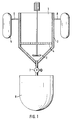
- Fig. 1 is a schematic view of the process of the invention.
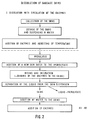
- Fig. 2 is a flow diagram of the steps of the method of the invention wherein the enzyme is circulated.
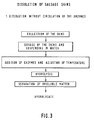
- Fig. 3 is a flow diagram of the steps of the method of the invention without any circulation of the enzymes or when the hydrolysis is carried out only once.
- Fig. 1 for example 5 m 3 /500 kg skin/d
- the hydrolysis time is for example 24 hours or more.
- the hydrolysis time can vary depending on the practical function of the factory.
- the reactors 1 are preferably containers with a mixer 2 and foreseen with mantles 3 (temperature regulation) with a sieve bottom 4 above the mixers.
- the reactors are supplied from a separate supply/skin collection container 5 along line 6.
- the insoluble dry matter, the skins to which the enzymes are bound and the immobilised ⁇ -glucosidase can be separated from the hydrolysate by centrifugation, filtration or other known separation methods of dry matter.
- the separated insoluble dry matter is returned to the reactor, which in this case is any mixed container with a mantle without any intermediate bottom.
- the insoluble matters are discharged with desired intervals from the reactor in a suitable stage of the process.
- Unused and used sausage skins were dissolved enzymatically with three commercial cellulase preparations, with Econase® manufactured by Alko and with Spezyme CE®-and Spezyme CP®-cellulases manufactured by Genencor.
- the hydrolysis of the skins were observed as a function of time and of the enzyme and the skin content by determining the concentrations of glucose and reducing sugars and the amounts of insoluble and soluble dry matter.
- ⁇ -glucosidase enzyme Novo was fastened on a solid carrier.
- the FPU the hydrolysing activity on the filter paper
- HEC the hydroxy ethylcellulose hydrolysing activity
- the endoglucanases cleave bindings in the cellulose chain by producing oligosaccharides of different sizes and the exoglucanases release cellubiose units from the ends of the chains.
- ⁇ -glucosidase produces glucose from the disaccharides and from the oligosaccharides.
- the batch hydrolysis of the sausage skins were made in a water bath (150 rpm) with shaking conical bottles. The whole content of the bottle was taken as a sample from which the sugar and the dry matter contents were determined.
- the composition of the reaction mixture was:
- the enzymes were added according to the FPU activity of the preparations (2-30 FPU/g skin) into the hydrolysis mixtures.
- the reaction temperature was 50°C, which is optimal for the function of the cellulases.
- the temperature can also be lower, for example 30-50°C.
- the used skins were hydrolyzed as well as the unused skins.
- the fat in the skins remained on the walls of the reaction vessel and on the surface of the liquid.
- the fat could be cleaved into fatty acids and glycerol by a lipase enzyme that cleave fats, ( Candida cylindracea lipase, Biocatalysts LTD, UK), but the fatty acids remained suspended in the reaction mixture as they are insoluble in water.
- the refining of the skins had no effect on the hydrolysis result.
- the whole skins (ca 6 x 30 cm, 15 g/p) were dissolved with Econase® as well as the smaller particles (0,5 x 0,5 cm; 1 x 1 cm; 3 x 3 cm).
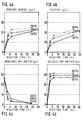
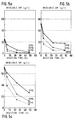
- Fig. 5 there has been presented the concentration of insoluble dry matter in the hydrolysis, wherein the contents of the skins (used skins) were 50, 100 and 150 g/l and the cellulase enzyme concentrations (Econase®) 2, 5 and 10 FPU/g skin.
- Econase® cellulase enzyme concentrations
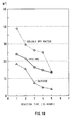
- stage of addition of the skins on the total hydrolysis (24 h)
- Stage of skin addition hydr. time Red.sug. (g/l) Glucose (g/l) Insoluble dry matter (g/l) Soluble dry matter (g/l) 2 7,4 4,3 15,6 47,6 4 9,3 4,8 7,7 51,0 6 16,1 8,2 5,5 52,1 24 22,4 15,7 1,4 55,3
- the binding of Novo ⁇ -glucosidase was studied with five different carriers.
- the immobilisation mixture contained 5 g carrier washed with water, 49 ml 50 mM acetate buffer, pH 5 and 1,35 ml enzyme (2000 nkat/g carrier).
- the reaction mixtures were agitated slightly in cold conditions (+4 °C) for 24 hours.
- the binding of the enzyme was followed from the solutions and the carriers.
- the ⁇ -glucosidase was best bound to a weak cation exchanger.
- the enzyme was fastened with glutar aldehyde by crosslinking to improve the stability of the carrier.
- Immobilised ⁇ -glucosidase 1000 nkat/g skin
- Immobilised ⁇ -glucosidase 1000 nkat/g skin
- three different amounts of glutar aldehyde-treated immobilised ⁇ -glucosidase 1000, 2000 and 3000 nkat/g skin
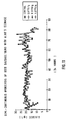
- Fig. 13 there has been presented the effect of the circulation of the immobilised ⁇ -glucosidase on the forming of the soluble dry matter in a semi-continuous hydrolysis of used sausage skins with Econase® cellulase.
- the enzyme dose was 30 FPU/g skins. Every 24 hour there had been added new skins to the reaction mixture (50 g/l), the sugar solution was recovered and substituted with a buffer solution containing cellulase (0,5 FPU/g).
- the immobilised ⁇ -glucosidase that was treated with glutar aldehyde 1000-3000 nkat/g skin was added only in the beginning of the reaction.
- the reaction conditions 50°C, pH 5, mixing 150 rpm.
- the enzyme costs can be reduced by using an immobilised ⁇ -glucosidase.
- the same enzyme batch can be circulated for several weeks or months in a continuous hydrolysis.
Landscapes
- Engineering & Computer Science (AREA)
- Life Sciences & Earth Sciences (AREA)
- Organic Chemistry (AREA)
- Chemical & Material Sciences (AREA)
- Zoology (AREA)
- Wood Science & Technology (AREA)
- Health & Medical Sciences (AREA)
- General Engineering & Computer Science (AREA)
- General Chemical & Material Sciences (AREA)
- Chemical Kinetics & Catalysis (AREA)
- Biotechnology (AREA)
- Biochemistry (AREA)
- Bioinformatics & Cheminformatics (AREA)
- Microbiology (AREA)
- General Health & Medical Sciences (AREA)
- Genetics & Genomics (AREA)
- Food Science & Technology (AREA)
- Preparation Of Compounds By Using Micro-Organisms (AREA)
- Meat, Egg Or Seafood Products (AREA)
- Processing Of Meat And Fish (AREA)
- Processing Of Solid Wastes (AREA)
- Polysaccharides And Polysaccharide Derivatives (AREA)
Claims (12)
- Verfahren zur Zersetzung von Wursthäuten und anderen hauptsächlich zelluloseartigen Substanzen mittels einer Enzymlösung, dadurch gekennzeichnet, dass das Verfahren folgende Verfahrensschritte umfasst:a) Zellulaseenzyme werden zu einem eine Wasserlösung enthaltenden Reaktor gegeben,b) vor Stufe a) oder danach werden die zu lösenden Substanzen zu dem Reaktor zugegeben,c) die zu lösenden Substanzen werden teilweise oder vollständig gelöst, danachd) wird eine neue Menge der zu lösenden Substanzen zu dem Reaktor zugegeben,e) wenn die Enzyme in den neuen zu lösenden Substanzen adsorbiert worden sind, wird die die in Stufe c) gelösten Substanzen enthaltende Lösung durch Trennung der Lösung und der zu lösenden Substanzen voneinander wieder gewonnen, wobeif) Wasser zu den zu lösenden Substanzen hinzugegeben wird und wenn gewünscht, werden die Stufen c-f eine gewünschte Anzahl von Malen wiederholt.
- Verfahren nach Anspruch 1, dadurch gekennzeichnet, dass die Enzyme Zellulasen sind.
- Verfahren nach Anspruch 2, dadurch gekennzeichnet, dass die Zellulasezubereitungen Ekonase® CE, Spezyme CE® und/oder Spezyme CP® sind.
- Verfahren nach einem der Ansprüche 1 bis 3, dadurch gekennzeichnet, dass die Hydrolysezeit durch die Konzentration der Häute und die Konzentration der Enzyme eingestellt wird.
- Verfahren nach einem der Ansprüche 1 - 4, dadurch gekennzeichnet, dass die Hydrolysezeit 2 - 5 Stunden beträgt, wenn die Konzentration der Häute ca. 0 - 100 g/l und die Konzentration der Enzyme 1 - 50 FPU/g Häute beträgt.
- Verfahren nach einem der Ansprüche 1 bis 5, dadurch gekennzeichnet, dass die Menge des Zellulaseenzyms in der Lösung 1 - 50 FPU/g Haut beträgt.
- Verfahren nach einem der Ansprüche 1 - 6, dadurch gekennzeichnet, dass auch β-Glukosidase zu dem Verfahren hinzugegeben wird, um die Hydrolyse auszuführen, wenn eine größere Menge der Glukose erwünscht ist.
- Verfahren nach Anspruch 7, dadurch gekennzeichnet, dass die β-Glukosidase immobilisiert ist, um dieselbe in den Kreislauf zurückzuführen.
- Verfahren nach Anspruch 8, dadurch gekennzeichnet, dass die Menge der immobilisierten β-Glukosidase ca. 1000 nkat/g Häute beträgt.
- Verfahren nach Ansprüchen 1 - 9, dadurch gekennzeichnet, dass zwischen den Zugaben der Häute oder in Verbindung mit diesen, die benötigte Menge an Zellula-seenzymen und β-Glukosidase hinzugefügt wird.
- Verfahren nach einem der Ansprüche 1 - 10, dadurch gekennzeichnet, dass die Hautkonzentration 10 - 200 g/l beträgt.
- Verfahren nach einem der Ansprüche 1 - 11, dadurch gekennzeichnet, dass das Verfahren als ein Chargenverfah-ren unter Verwendung eines, zwei oder mehrerer Reaktoren ausgeführt wird.
Applications Claiming Priority (2)
| Application Number | Priority Date | Filing Date | Title |
|---|---|---|---|
| FI946053A FI96323C (fi) | 1994-12-23 | 1994-12-23 | Menetelmä makkarankuorien ja muiden selluloosapitoisten aineiden liuottamiseksi entsyymiliuoksen avulla |
| FI946053 | 1994-12-23 |
Publications (2)
| Publication Number | Publication Date |
|---|---|
| EP0718406A1 EP0718406A1 (de) | 1996-06-26 |
| EP0718406B1 true EP0718406B1 (de) | 2001-03-14 |
Family
ID=8542046
Family Applications (1)
| Application Number | Title | Priority Date | Filing Date |
|---|---|---|---|
| EP95850219A Expired - Lifetime EP0718406B1 (de) | 1994-12-23 | 1995-12-07 | Verfahren zur Zersetzung von Wursthäuten und anderen celluloseartigen Substanzen mittels einer Enzymlösung |
Country Status (9)
| Country | Link |
|---|---|
| US (1) | US5814515A (de) |
| EP (1) | EP0718406B1 (de) |
| JP (1) | JPH08214894A (de) |
| AT (1) | ATE199744T1 (de) |
| DE (1) | DE69520335T2 (de) |
| DK (1) | DK0718406T3 (de) |
| ES (1) | ES2155121T3 (de) |
| FI (1) | FI96323C (de) |
| NO (1) | NO955052L (de) |
Families Citing this family (6)
| Publication number | Priority date | Publication date | Assignee | Title |
|---|---|---|---|---|
| FI96323C (fi) * | 1994-12-23 | 1996-06-10 | Eriksson Capital Ab | Menetelmä makkarankuorien ja muiden selluloosapitoisten aineiden liuottamiseksi entsyymiliuoksen avulla |
| DE19628232A1 (de) | 1996-07-15 | 1998-01-22 | Kalle Nalo Gmbh | Cellulosehydrat-Formkörper mit enzymatisch modifizierter Oberfläche |
| US6132779A (en) * | 1998-08-28 | 2000-10-17 | Viskase Corporation | Method for removing cellulosic casings from sausages |
| US6042853A (en) * | 1998-08-28 | 2000-03-28 | Viskase Corporation | Method for removing cellulosic casings from sausages |
| DE10352657A1 (de) * | 2003-11-11 | 2005-06-02 | Huckfeldt & Thorlichen Gmbh & Co. Kg | Verpackungshülle, insbesondere Wursthülle, die Wirkware enthält und Verfahren zum Öffnen derselben |
| CN102861757B (zh) * | 2012-09-13 | 2015-04-01 | 南京林业大学 | 一种香肠制造业肠衣废弃物的销毁方法 |
Family Cites Families (7)
| Publication number | Priority date | Publication date | Assignee | Title |
|---|---|---|---|---|
| DD154713A1 (de) * | 1980-11-17 | 1982-04-14 | Ludwig Muehlberg | Verfahren zur hydrolyse zellulosehaltiger abprodukte |
| AT371499B (de) * | 1981-03-25 | 1983-06-27 | Steyrermuehl Papier | Verfahren zur gewinnung von monosacchariden sowie anlage zur durchfuehrung des verfahrens |
| GB2107320A (en) * | 1981-09-29 | 1983-04-27 | Philip Morris Inc | Method for recycling cellulosic waste materials from tobacco product manufacture |
| DE3227920A1 (de) * | 1982-07-27 | 1984-02-02 | Hoechst Ag, 6230 Frankfurt | Cellulaseresistente lebensmittelhuelle |
| US5236726A (en) * | 1991-12-05 | 1993-08-17 | Weyerhaeuser Company | Method of processing cellulose sausage skins |
| US5348871A (en) * | 1992-05-15 | 1994-09-20 | Martin Marietta Energy Systems, Inc. | Process for converting cellulosic materials into fuels and chemicals |
| FI96323C (fi) | 1994-12-23 | 1996-06-10 | Eriksson Capital Ab | Menetelmä makkarankuorien ja muiden selluloosapitoisten aineiden liuottamiseksi entsyymiliuoksen avulla |
-
1994
- 1994-12-23 FI FI946053A patent/FI96323C/fi not_active IP Right Cessation
-
1995
- 1995-12-07 EP EP95850219A patent/EP0718406B1/de not_active Expired - Lifetime
- 1995-12-07 AT AT95850219T patent/ATE199744T1/de not_active IP Right Cessation
- 1995-12-07 DE DE69520335T patent/DE69520335T2/de not_active Expired - Lifetime
- 1995-12-07 DK DK95850219T patent/DK0718406T3/da active
- 1995-12-07 ES ES95850219T patent/ES2155121T3/es not_active Expired - Lifetime
- 1995-12-13 NO NO955052A patent/NO955052L/no not_active Application Discontinuation
- 1995-12-20 JP JP7331281A patent/JPH08214894A/ja active Pending
- 1995-12-21 US US08/576,826 patent/US5814515A/en not_active Expired - Fee Related
Also Published As
| Publication number | Publication date |
|---|---|
| ES2155121T3 (es) | 2001-05-01 |
| DE69520335D1 (de) | 2001-04-19 |
| FI96323B (fi) | 1996-02-29 |
| US5814515A (en) | 1998-09-29 |
| ATE199744T1 (de) | 2001-03-15 |
| FI946053A0 (fi) | 1994-12-23 |
| JPH08214894A (ja) | 1996-08-27 |
| NO955052D0 (no) | 1995-12-13 |
| EP0718406A1 (de) | 1996-06-26 |
| NO955052L (no) | 1996-06-24 |
| DE69520335T2 (de) | 2001-08-09 |
| DK0718406T3 (da) | 2001-04-17 |
| FI96323C (fi) | 1996-06-10 |
Similar Documents
| Publication | Publication Date | Title |
|---|---|---|
| Jönsson et al. | Ultrafiltration applications | |
| US3764475A (en) | Enzymatic hydrolysis of cellulose to soluble sugars | |
| EP0718406B1 (de) | Verfahren zur Zersetzung von Wursthäuten und anderen celluloseartigen Substanzen mittels einer Enzymlösung | |
| WO1995004134A1 (en) | Method of reducing complex carbohydrates in fermentation products | |
| SE461659B (sv) | Foerfarande foer framstaellning av enzymet sps-as med foermaaga att soenderdela hoegmolekylaer kolhydrat | |
| IE48660B1 (en) | Immobilised enzyme and preparation and use thereof | |
| US4089746A (en) | Method for insolubilizing enzymes on chitosan | |
| Ellenrieder et al. | Hydrolysis of supersaturated naringin solutions by free and immobilized naringinase | |
| AU2002355759B2 (en) | Recovery method for immobilized biocatalysts | |
| Freixo et al. | Enzymatic hydrolysis of beechwood xylan in a membrane reactor | |
| SU921470A3 (ru) | Способ получени иммобилизованного осахаривающего ферментного препарата | |
| AU2002355759A1 (en) | Recovery method for immobilized biocatalysts | |
| KR101655404B1 (ko) | 아미노산 함량이 증대된 계란의 생산방법 및 이에 의하여 생산된 계란 | |
| Calabro | Engineering aspects of membrane bioreactors | |
| CN1814772A (zh) | 一种动物甲壳物处理方法及装置 | |
| IE55342B1 (en) | Process for producing protein foodstuffs and various by-products from cereals | |
| Mishra et al. | Immobilization of Penicillium funiculosum cellulase on a soluble polymer | |
| US5250305A (en) | Process for enzymatic ultrafiltration of deamidated protein | |
| WO2012072883A1 (en) | Hydrolysis process | |
| SU1500671A1 (ru) | Способ производства спирта и кормопродукта | |
| CN1071309A (zh) | 连续生产部分水解淀粉的方法,用此方法生产的产品及其应用 | |
| CN116807003A (zh) | 一种酵素的制作工艺 | |
| CN116784472A (zh) | 一种酵素的制作工艺 | |
| CN117402927A (zh) | 一种高效制备菊芋肽的制备方法 | |
| RU2004125119A (ru) | Способ получения сахаристых продуктов из крахмалосодержащего сырья |
Legal Events
| Date | Code | Title | Description |
|---|---|---|---|
| PUAI | Public reference made under article 153(3) epc to a published international application that has entered the european phase |
Free format text: ORIGINAL CODE: 0009012 |
|
| AK | Designated contracting states |
Kind code of ref document: A1 Designated state(s): AT BE CH DE DK ES FR GB GR IE IT LI LU MC NL PT SE |
|
| 17P | Request for examination filed |
Effective date: 19960916 |
|
| 17Q | First examination report despatched |
Effective date: 19990701 |
|
| GRAG | Despatch of communication of intention to grant |
Free format text: ORIGINAL CODE: EPIDOS AGRA |
|
| 17Q | First examination report despatched |
Effective date: 19990701 |
|
| GRAG | Despatch of communication of intention to grant |
Free format text: ORIGINAL CODE: EPIDOS AGRA |
|
| GRAH | Despatch of communication of intention to grant a patent |
Free format text: ORIGINAL CODE: EPIDOS IGRA |
|
| GRAH | Despatch of communication of intention to grant a patent |
Free format text: ORIGINAL CODE: EPIDOS IGRA |
|
| GRAA | (expected) grant |
Free format text: ORIGINAL CODE: 0009210 |
|
| AK | Designated contracting states |
Kind code of ref document: B1 Designated state(s): AT BE CH DE DK ES FR GB GR IE IT LI LU MC NL PT SE |
|
| PG25 | Lapsed in a contracting state [announced via postgrant information from national office to epo] |
Ref country code: NL Free format text: LAPSE BECAUSE OF FAILURE TO SUBMIT A TRANSLATION OF THE DESCRIPTION OR TO PAY THE FEE WITHIN THE PRESCRIBED TIME-LIMIT Effective date: 20010314 Ref country code: LI Free format text: LAPSE BECAUSE OF FAILURE TO SUBMIT A TRANSLATION OF THE DESCRIPTION OR TO PAY THE FEE WITHIN THE PRESCRIBED TIME-LIMIT Effective date: 20010314 Ref country code: IT Free format text: LAPSE BECAUSE OF FAILURE TO SUBMIT A TRANSLATION OF THE DESCRIPTION OR TO PAY THE FEE WITHIN THE PRE;WARNING: LAPSES OF ITALIAN PATENTS WITH EFFECTIVE DATE BEFORE 2007 MAY HAVE OCCURRED AT ANY TIME BEFORE 2007. THE CORRECT EFFECTIVE DATE MAY BE DIFFERENT FROM THE ONE RECORDED.SCRIBED TIME-LIMIT Effective date: 20010314 Ref country code: GR Free format text: LAPSE BECAUSE OF NON-PAYMENT OF DUE FEES Effective date: 20010314 Ref country code: CH Free format text: LAPSE BECAUSE OF FAILURE TO SUBMIT A TRANSLATION OF THE DESCRIPTION OR TO PAY THE FEE WITHIN THE PRESCRIBED TIME-LIMIT Effective date: 20010314 Ref country code: BE Free format text: LAPSE BECAUSE OF FAILURE TO SUBMIT A TRANSLATION OF THE DESCRIPTION OR TO PAY THE FEE WITHIN THE PRESCRIBED TIME-LIMIT Effective date: 20010314 Ref country code: AT Free format text: LAPSE BECAUSE OF FAILURE TO SUBMIT A TRANSLATION OF THE DESCRIPTION OR TO PAY THE FEE WITHIN THE PRESCRIBED TIME-LIMIT Effective date: 20010314 |
|
| REF | Corresponds to: |
Ref document number: 199744 Country of ref document: AT Date of ref document: 20010315 Kind code of ref document: T |
|
| REG | Reference to a national code |
Ref country code: CH Ref legal event code: EP |
|
| REG | Reference to a national code |
Ref country code: DK Ref legal event code: T3 |
|
| REG | Reference to a national code |
Ref country code: IE Ref legal event code: FG4D |
|
| REF | Corresponds to: |
Ref document number: 69520335 Country of ref document: DE Date of ref document: 20010419 |
|
| REG | Reference to a national code |
Ref country code: ES Ref legal event code: FG2A Ref document number: 2155121 Country of ref document: ES Kind code of ref document: T3 |
|
| PG25 | Lapsed in a contracting state [announced via postgrant information from national office to epo] |
Ref country code: SE Free format text: LAPSE BECAUSE OF FAILURE TO SUBMIT A TRANSLATION OF THE DESCRIPTION OR TO PAY THE FEE WITHIN THE PRESCRIBED TIME-LIMIT Effective date: 20010614 |
|
| PG25 | Lapsed in a contracting state [announced via postgrant information from national office to epo] |
Ref country code: PT Free format text: LAPSE BECAUSE OF FAILURE TO SUBMIT A TRANSLATION OF THE DESCRIPTION OR TO PAY THE FEE WITHIN THE PRESCRIBED TIME-LIMIT Effective date: 20010615 |
|
| ET | Fr: translation filed | ||
| NLV1 | Nl: lapsed or annulled due to failure to fulfill the requirements of art. 29p and 29m of the patents act | ||
| REG | Reference to a national code |
Ref country code: CH Ref legal event code: PL |
|
| PG25 | Lapsed in a contracting state [announced via postgrant information from national office to epo] |
Ref country code: MC Free format text: LAPSE BECAUSE OF NON-PAYMENT OF DUE FEES Effective date: 20011207 Ref country code: LU Free format text: LAPSE BECAUSE OF NON-PAYMENT OF DUE FEES Effective date: 20011207 Ref country code: IE Free format text: LAPSE BECAUSE OF FAILURE TO SUBMIT A TRANSLATION OF THE DESCRIPTION OR TO PAY THE FEE WITHIN THE PRESCRIBED TIME-LIMIT Effective date: 20011207 Ref country code: GB Free format text: LAPSE BECAUSE OF NON-PAYMENT OF DUE FEES Effective date: 20011207 |
|
| REG | Reference to a national code |
Ref country code: GB Ref legal event code: IF02 |
|
| PLBE | No opposition filed within time limit |
Free format text: ORIGINAL CODE: 0009261 |
|
| STAA | Information on the status of an ep patent application or granted ep patent |
Free format text: STATUS: NO OPPOSITION FILED WITHIN TIME LIMIT |
|
| 26N | No opposition filed | ||
| GBPC | Gb: european patent ceased through non-payment of renewal fee |
Effective date: 20011207 |
|
| REG | Reference to a national code |
Ref country code: IE Ref legal event code: MM4A |
|
| REG | Reference to a national code |
Ref country code: ES Ref legal event code: PC2A |
|
| REG | Reference to a national code |
Ref country code: FR Ref legal event code: TP |
|
| PGFP | Annual fee paid to national office [announced via postgrant information from national office to epo] |
Ref country code: FR Payment date: 20110104 Year of fee payment: 16 Ref country code: DK Payment date: 20101210 Year of fee payment: 16 |
|
| PGFP | Annual fee paid to national office [announced via postgrant information from national office to epo] |
Ref country code: DE Payment date: 20101222 Year of fee payment: 16 |
|
| PGFP | Annual fee paid to national office [announced via postgrant information from national office to epo] |
Ref country code: ES Payment date: 20101217 Year of fee payment: 16 |
|
| REG | Reference to a national code |
Ref country code: DK Ref legal event code: EBP |
|
| REG | Reference to a national code |
Ref country code: FR Ref legal event code: ST Effective date: 20120831 |
|
| REG | Reference to a national code |
Ref country code: DE Ref legal event code: R119 Ref document number: 69520335 Country of ref document: DE Effective date: 20120703 |
|
| PG25 | Lapsed in a contracting state [announced via postgrant information from national office to epo] |
Ref country code: DE Free format text: LAPSE BECAUSE OF NON-PAYMENT OF DUE FEES Effective date: 20120703 |
|
| PG25 | Lapsed in a contracting state [announced via postgrant information from national office to epo] |
Ref country code: DK Free format text: LAPSE BECAUSE OF NON-PAYMENT OF DUE FEES Effective date: 20120102 |
|
| PG25 | Lapsed in a contracting state [announced via postgrant information from national office to epo] |
Ref country code: FR Free format text: LAPSE BECAUSE OF NON-PAYMENT OF DUE FEES Effective date: 20120102 |
|
| REG | Reference to a national code |
Ref country code: ES Ref legal event code: FD2A Effective date: 20130703 |
|
| PG25 | Lapsed in a contracting state [announced via postgrant information from national office to epo] |
Ref country code: ES Free format text: LAPSE BECAUSE OF NON-PAYMENT OF DUE FEES Effective date: 20111208 |