EP0697809B1 - Behandlung von futtern und fasergut - Google Patents
Behandlung von futtern und fasergut Download PDFInfo
- Publication number
- EP0697809B1 EP0697809B1 EP94914973A EP94914973A EP0697809B1 EP 0697809 B1 EP0697809 B1 EP 0697809B1 EP 94914973 A EP94914973 A EP 94914973A EP 94914973 A EP94914973 A EP 94914973A EP 0697809 B1 EP0697809 B1 EP 0697809B1
- Authority
- EP
- European Patent Office
- Prior art keywords
- moisture content
- crop
- compaction
- steam
- fiber
- Prior art date
- Legal status (The legal status is an assumption and is not a legal conclusion. Google has not performed a legal analysis and makes no representation as to the accuracy of the status listed.)
- Expired - Lifetime
Links
- 239000002657 fibrous material Substances 0.000 title claims description 11
- 238000005056 compaction Methods 0.000 claims abstract description 46
- 238000000034 method Methods 0.000 claims abstract description 27
- 210000002268 wool Anatomy 0.000 claims abstract description 13
- 239000000463 material Substances 0.000 claims description 29
- 238000010438 heat treatment Methods 0.000 claims description 21
- 230000006835 compression Effects 0.000 claims description 13
- 238000007906 compression Methods 0.000 claims description 13
- 239000010902 straw Substances 0.000 claims description 5
- 241000609240 Ambelania acida Species 0.000 claims description 4
- 229920000742 Cotton Polymers 0.000 claims description 4
- 239000010905 bagasse Substances 0.000 claims description 4
- 235000013162 Cocos nucifera Nutrition 0.000 claims description 3
- 244000060011 Cocos nucifera Species 0.000 claims description 3
- XLYOFNOQVPJJNP-UHFFFAOYSA-N water Substances O XLYOFNOQVPJJNP-UHFFFAOYSA-N 0.000 claims description 3
- 240000000491 Corchorus aestuans Species 0.000 claims description 2
- 235000011777 Corchorus aestuans Nutrition 0.000 claims description 2
- 235000010862 Corchorus capsularis Nutrition 0.000 claims description 2
- 239000003595 mist Substances 0.000 claims description 2
- 238000002203 pretreatment Methods 0.000 claims description 2
- 240000006240 Linum usitatissimum Species 0.000 claims 1
- 235000004431 Linum usitatissimum Nutrition 0.000 claims 1
- 239000000835 fiber Substances 0.000 abstract description 48
- 239000000047 product Substances 0.000 description 10
- 238000003306 harvesting Methods 0.000 description 5
- 230000007774 longterm Effects 0.000 description 3
- 239000007921 spray Substances 0.000 description 3
- 238000012545 processing Methods 0.000 description 2
- 241000196324 Embryophyta Species 0.000 description 1
- 241001465754 Metazoa Species 0.000 description 1
- 230000002411 adverse Effects 0.000 description 1
- 239000006227 byproduct Substances 0.000 description 1
- 230000001143 conditioned effect Effects 0.000 description 1
- 230000003750 conditioning effect Effects 0.000 description 1
- 230000003247 decreasing effect Effects 0.000 description 1
- 230000000694 effects Effects 0.000 description 1
- 239000004463 hay Substances 0.000 description 1
- 238000012986 modification Methods 0.000 description 1
- 230000004048 modification Effects 0.000 description 1
- 235000016709 nutrition Nutrition 0.000 description 1
- 239000011368 organic material Substances 0.000 description 1
- 238000012856 packing Methods 0.000 description 1
- 239000011148 porous material Substances 0.000 description 1
- 238000012805 post-processing Methods 0.000 description 1
- 238000007781 pre-processing Methods 0.000 description 1
- 239000000523 sample Substances 0.000 description 1
- 238000010008 shearing Methods 0.000 description 1
- 238000010025 steaming Methods 0.000 description 1
Images



Classifications
-
- B—PERFORMING OPERATIONS; TRANSPORTING
- B30—PRESSES
- B30B—PRESSES IN GENERAL
- B30B9/00—Presses specially adapted for particular purposes
- B30B9/30—Presses specially adapted for particular purposes for baling; Compression boxes therefor
- B30B9/3003—Details
- B30B9/3035—Means for conditioning the material to be pressed, e.g. paper shredding means
-
- B—PERFORMING OPERATIONS; TRANSPORTING
- B30—PRESSES
- B30B—PRESSES IN GENERAL
- B30B9/00—Presses specially adapted for particular purposes
- B30B9/30—Presses specially adapted for particular purposes for baling; Compression boxes therefor
Definitions
- the present invention relates to a method and apparatus for the compaction of crops and certain other materials of a fibrous nature.
- the apparatus of the invention can be utilised as either a mobile or stationary apparatus.
- compaction of crop or fiber is performed by a system known as “double dumping” or “triple dumping” wherein the crop is either teased apart and then recompacted or simply compacted to a high degree using mechanical force upon crop that has previously been cured to an appropriate moisture content.
- a subsidiary problem is control or management of moisture content of the crop or fiber immediately before, during and immediately after compaction.
- moisture content for storage under compressed conditions may not be the desired moisture content for harvesting.
- Treatment of crops in order to alter or control their moisture content at the time of harvesting and so as to provide better or optimum harvest moisture content conditions for a crop is addressed in Australian Patent No. 561,014 (see also U.S. Patent No. 4,254,605 and U.S. Patent No. 4,604,857).
- crop or fiber are to be taken in a broad sense and are to include that which is harvested whether from plants or animals, and which will be referred to hereinafter collectively as “crop or fiber”.
- fibrous refers to organic materials which are made up of elongate strands such as harvested hay, bagasse, straw, shorn wool, cotton, jute or kenaff.
- ambient or “base reference” applied to the temperature and/or moisture content or humidity of a crop or fiber is to be taken as that temperature and/or moisture content at which the crop or fiber presents itself for processing by the method or apparatus of the invention described and claimed in this specification.
- references to elevation of temperature and/or moisture content above ambient in relation to crops or fibers it should be understood that such references do not extend to an elevation of temperature or moisture content to a level where the crop or fiber will be permanently adversely affected either immediately or in terms of its medium to long term storage characteristics.
- a method of forming a compacted bale of a harvested fibrous material comprising applying a mechnaical compacting force to said material at the same time as or immediately after subjecting said material to an elevated temperature above a base reference temperature and adjusting moisture content condition of the material to above a base reference moisture content condition whereby said material is compressed to a compressed state of density of about 300 kg/m 3 to about 640 kg/m 3 using less compacting force than would otherwise be the case if compression were applied at said base reference temperature and said base reference moisture content condition.
- said method is applied so that said crop or fiber has a greater tendency to remain in said compressed state after removal of said mechanical compacting force than would otherwise be the case.
- the method further includes the integral step of conditioning the crop or fiber to a satisfactory moisture content in compacted form.
- said steps of subjecting said crop or fiber to an elevated temperature and an elevated moisture content condition are performed by applying steam to said crop or fiber.
- said steps of subjecting said crop or fiber to an elevated temperature and an elevated moisture content condition are performed respectively by the application of microwave energy and the application of steam or micro sprays.
- moisture is removed from said crop, as appropriate, either before compaction or quickly after compaction by subjecting said crop or fiber to superheated steam.
- moisture can be removed by application of a hot air blast preferably in conjunction with the application of heat by other means (for example, microwave heating).
- apparatus for forming a compacted bale of harvested fibrous material including mechanical compacting means adapted to compact said material, said apparatus further including heating means and moisture content altering means; said heating means adapted to heat said material to an elevated temperature above a base reference temperature; said moisture content altering means adapted to apply to said material an elevated moisture condition above a base reference moisture content condition during compaction of said material whereby said material is compressed to a compressed state of density of about 300 kg/m 3 to about 640 kg/m 3 using less compacting force than would otherwise be the case.
- said crop or fiber has a greater tendency to remain in said compressed state after removal of said crop or fiber from said apparatus than would otherwise be the case.
- a by-product or consequence of the application of said apparatus is that said crop or fiber is also conditioned by said apparatus so as to have a satisfactory moisture content in compacted form.
- said mechanical compacting means comprises a combination of groups of generally opposed planar plates.
- said groups act through different axes more preferably said groups act through mutually orthogonally opposed axes.
- said heating means comprises microwave generation means which heats only said crop or fiber and not said mechanical compacting means.
- said moisture content altering means comprises a source of steam or of super heated steam or of a fine mist spray of water.
- steam generating means either ordinary steam where moisture content of the crop is to be increased or superheated steam where the moisture content of the crop or fiber is to be decreased
- steam generating means is utilised both as said heating means and as said moisture content altering means.
- said apparatus further includes crop pre-treatment means for altering the moisture content of said crop or fiber prior to treatment by said mechanical compacting means.
- said apparatus further includes post treatment means for altering the moisture content of said crop or fiber after compaction by said mechanical compacting means.
- the compaction apparatus 10 of a first embodiment comprises two opposed planar plates 11, 12 actuated by pistons 13, 14 which, in turn, are driven by mechanical means such as hydraulic or pneumatic actuators (not shown).
- the assembly 10 further includes a sensor 15 having a probe 16 which extends into the volume defined between the plates 11, 12.
- the sensor 15 is adapted to sense both temperature and moisture content of material located within the volume between the plates 11, 12.
- Both plates 11, 12 include one or more steam orifices 17 adapted to conduct steam or heated air by means of pipes 18 into the volume defined between the plates 11, 12.
- heating elements 19 can be embedded in the plates 11, 12 for the purpose of preheating the plates to a predetermined temperature.
- the heating elements 19 can be of the electrical resistance type or can be steam conduction tubes.
- a crop or fiber 20 such as hay or wool is placed in the volume defined between the plates 11, 12 whilst the plates are in a spaced apart position (as shown in Fig. 1).
- the crop or fiber may have been pre-heated including pre-steaming and/or pre-heating immediately prior to being placed between the plates.
- the crop may have been pre-treated to alter its moisture content (see for example Example 4 later).
- Sensor 15 communicates the precompression temperature and moisture content of the crop or fiber 20 to control means (not shown).
- the control means causes plates 11 and 12 to be urged towards each other so as to compact the crop or fiber 20 located therebetween whilst, at the same time, injecting either heated air, steam or superheated steam by means of orifices 17 into the volume between the plates 11 and 12 so as to adjust the moisture content of the crop under compaction to an elevated humidity condition above a base reference humidity condition and the temperature of the crop under compression to an elevated temperature above a base reference temperature.
- FIG. 3 graphs temperature versus moisture content for a set of three different constant compaction energy lines.
- Fig. 4 graphs compaction energy versus temperature for a series of three different constant moisture content lines whilst Fig. 5 graphs compaction energy versus moisture content for a series of three different constant temperature lines.
- the plates 11, 12 are preheated to a predetermined temperature to aid in controlling the environment of the volume between the plates 11, 12.
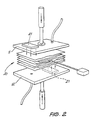
- a second embodiment is shown wherein the plates 11, 12 are not themselves heated. Instead, a source of microwave energy 21 is applied directly to the crop or fiber 20 for the purpose of providing uniform elevation of crop temperature.
- control means will utilise steam or a fine water spray (in combination with heating) to elevate the moisture content of the crop 20 injected through orifices 17 so as to elevate the moisture content of the crop or fiber to the desired elevated humidity condition.
- control means will utilise superheated steam or heated air injected through orifices 17 to reduce the humidity condition of the crop or fiber down to the desired elevated humidity condition above a base reference humidity condition.
- the process of varying the moisture content of the crop or fiber 20 necessarily increases the temperature of the crop or fiber 20. If additional heating is required to achieve the desired elevated temperature above a base reference temperature, then this can be achieved by use of convection heating of the plates 11, 12 (refer Fig. 1) or microwave heating (refer Fig. 2).
- the plates 11, 12 can be made from non-porous material whereby the microwave sources 21 can be placed on the outside of the plates and arranged so as to inject microwaves through the plates 11, 12 and into the volume defined between the plates so as to heat the crop or fiber 20 uniformly without heating the plates, 11, 12 directly.
- the crop can be constrained on the sides of the plates.
- the crop or fiber to be treated by the compaction apparatus 10 can be treated prior to placement between the plates 11, 12. This can be achieved by steam treatment methods and the like as, for example, described in Australian Patent 606,317 and Australian Patent Application 61,915/80.
- hay or wool an optimum compaction density of about 640Kg/m 3 allows the compacted hay or wool to fill a 20' container so that the filled container is at maximum allowable payload.
- hay is stored fodder made from a variety of crops.
- Hay would normally be pressed into bales at ambient temperatures, at a moisture content of 18% mc+2%, and a density of 160Kg/m 3 to 200 Kg/m 3 .
- hay is compacted ("Double-Dumped") to reduce its bulk for export and thereby reduce the cost of ocean freight when it is packed into containers at a final density of around 320 Kg/m 3 .
- Practice has shown that to reduce the chance of mould growth the hay needs to be packed at a moisture content of less than 12% preferably less than 10% mc.
- hay cannot be successfully made at this low moisture content as it will suffer "leaf shatter” and hence suffer a loss of nutritional value and a reduction of crop yield in Tonnes/Ha. Therefore, the current industry practice is to make hay conventionally at 18% mc+2%mc (ideal conditions) and then store it to dry out naturally over a period of one month to four months.
- a means for applying moisture and temperature together is to apply steam to the hay immediately prior to baling in the field.
- An alternative is to bring hay to a stationary compression machine where heat and temperature are applied to the hay (by steam) immediately prior to compaction.
- wool is pressed into bales in the shearing shed. It is then transported as a bulky commodity to major collection points, usually at a port, where it is later double or triple dumped to fit into 20' containers to reduce ocean freight charges.
- major collection points usually at a port, where it is later double or triple dumped to fit into 20' containers to reduce ocean freight charges.
- wool can be pressed more densely on-farm. This will reduce domestic freight and storage costs.
- Typical wool is double dumped to bale densities of the order of 300 kg/m 3 requiring compaction pressures of the order of 0.1 to 0.3 MPa. Typical moisture content is less than 15%.
- Increase of moisture content by around 5% also enhances the reduction in pressure required to achieve a given density.
- a harvested crop 30 is transported on input conveyor 31 to compactor 32.
- Compactor 32 can take the form of the compactor of Fig. 1 or the compactor of Fig. 2 wherein the temperature and/or humidity of crop 30 is raised a predetermined amount above its base temperature and humidity (that is the conditions pertained to the crop on conveyor 31) and then compacting the crop for discharge onto discharge conveyor 33.
- Discharge conveyor 33 conveys the compressed crop to transporter 34. Examples of particular crops which can be processed according to the apparatus illustrated in Fig. 6 include the following:
- Hay/straw is harvested at a base temperature of ambient and a base moisture content of less than 12% as presented on conveyor 30.
- the base temperature is elevated by a minimum of 20°C degrees and the base moisture content is elevated by about 5% mc at which time compression takes place at a pressure of approximately 0.35 MPa for a density of 300 kg/m 3 .
- the resulting bale is discharged onto conveyor 33.
- Wool is harvested at a base temperature of ambient and a base moisture content of about 15% mc as presented on conveyor 30.
- the base temperature is elevated by at least 20°C and the base humidity is elevated by about 5% me at which time compression takes place at a pressure of approximately 0.25 MPa for a density of 300 kg/m 3 .
- the resulting bale is discharged onto conveyor 33.
- Cotton is harvested at a base temperature of ambient and a typical base moisture content of 5-20% mc as presented on conveyor 30. Within compactor 32 the base temperature is elevated by about a minimum of 20°C at which time compression takes place at a pressure of approximately 0.3-1 MPa depending on fiber type. The resulting bale is discharged onto conveyor 33.
- Copra is harvested at a base temperature of ambient and a typical base moisture content of 5-20% mc as presented on conveyor 30.
- the base temperature is elevated by about a minimum of 20°C at which time compression takes place at a pressure of approximately 0.25-1 MPa depending on fiber type.
- the resulting bale is discharged onto conveyor 33.
- Bagasse is harvested at a base temperature of ambient and a typical base moisture content of 5-20% mc as presented on conveyor 30. Within compactor 32 the base temperature is elevated by about a minimum of 20°C at which time compression takes place at a pressure of approximately 0.25-1 MPa depending on fiber type. The resulting bale is discharged onto conveyor 33.
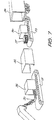
- FIG. 7 an assembly of generally similar configuration to that illustrated in Fig. 6 is shown comprising input conveyor 31, compactor 32 and discharge conveyor 33.
- a pre-processor unit 35 treats crop 30 as it moves on conveyor 31.
- a post processor unit 36 treats crop in baled form on conveyor 33.
- Pre-processor 35 and post processor 36 can take substantially the form of the devices illustrated and described in respect of either Fig. 1 or Fig. 2.
- the degree to which the capabilities of these devices are utilised can be varied in order to on the one hand allow compactor 32 to compact the crop 30 at a lower compaction pressure than would otherwise be the case and also to ensure that the moisture content of the baled product 37 leaving discharge conveyor 33 is at or will relatively soon achieve a predetermined moisture content which is appropriate for medium to long-term storage purposes of the crop in compressed form.
- a pre-processor 35 can be utilised only to alter the humidity or moisture content of the crop 30 prior to presentation to compactor 32.
- Compactor 32 can then be utilised only to heat and compress or alternatively be used to alter the moisture content further as well as to heat and compress the crop.
- Post processor 36 can be utilised to either further raise or lower the moisture content of the baled product 37 when it first appears on discharge conveyor 33. Heating can be performed in conjunction with this.
- post processor 36 can inject steam into the baled product 37 so as to further raise its moisture content whilst also further heating the baled product whereby ultimately the moisture content of the baled product will drop as the baled product 37 cools after discharge from conveyor 33.
- super heated steam can be applied to post processor 36 to baled product 37 whereby the baled product is both heated and its moisture content is reduced whilst passing through post processor 36.
- the moisture content will drop further as the baled product 37 cools after discharge from conveyor 33.
- pre-processor 35 compactor 32 and post processor 36 can provide relatively rigorous control of both the temperature and moisture content of harvested crop 30 and baled product 37.
- Examples of the invention have particular applicability where it is desired to optimise containerised transport of crops and fibrous materials following harvesting thereof or otherwise to bale or pack harvested crop for storage or transport.
Landscapes
- Engineering & Computer Science (AREA)
- Mechanical Engineering (AREA)
- Paper (AREA)
- Thermal Insulation (AREA)
- Nonwoven Fabrics (AREA)
- Treatment Of Fiber Materials (AREA)
Claims (22)
- Verfahren zum Herstellen eines kompaktierten Ballens aus geerntetem faserförmigen Material, wobei das Verfahren das Aufbringen einer mechanischen Kompaktierungskraft auf das Material umfaßt, was gleichzeitig mit oder unmittelbar nach einem Verfahrensschritt erfolgt, bei dem das Material einer erhöhten Temperatur oberhalb einer Basisreferenztemperatur ausgesetzt und der Feuchtigkeitsgehaltszustand des Materials auf einen Zustand oberhalb eines Basisreferenz-Feuchtigkeitsgehaltszustandes eingestellt wird, so daß das Material auf einen komprimierten Dichtezustand von etwa 300 kg/m3 bis etwa 640 kg/m3 komprimiert wird, wobei eine geringere Kompaktierungskraft verwendet wird als es sonst der Fall wäre, wenn die Kompression bei der Basisreferenztemperatur und dem Basisreferenz-Feuchtigkeitsgehaltzustand ausgeübt wird.
- Verfahren nach Anspruch 1,
wobei die Schritte, bei denen das Material einer erhöhten Temperatur und einem erhöhten Feuchtigkeitsgehaltszustand ausgesetzt wird, durchgeführt werden, indem das Material mit Dampf beaufschlagt wird. - Verfahren nach Anspruch 2,
wobei die Schritte, bei denen das Material einer erhöhten Temperatur und einem erhöhten Feuchtigkeitsgehaltszustand ausgesetzt werden, durch das Aufbringen von Mikrowellenenergie bzw. das Aufbringen von Dampf durchgeführt werden. - Verfahren nach Anspruch 1,
wobei aus dem Material nach der weiteren Kompaktierung Feuchtigkeit entfernt wird, indem das Material überhitztem Dampf ausgesetzt wird. - Verfahren aus Anspruch 1,
wobei aus dem Material nach der weiteren Kompaktierung Feuchtigkeit entfernt wird, indem es mit heißer Blasluft beaufschlagt wird. - Verfahren aus Anspruch 1,
wobei aus dem Erntematerial nach der weiteren Kompaktierungs-Mikrowellenbeheizung Feuchtigkeit entfernt wird. - Verfahren von Anspruch 1,
wobei das faserförmige Material Heu oder Stroh ist. - Verfahren aus Anspruch 1,
wobei das faserförmige Material Wolle ist. - Verfahren von Anspruch 1,
wobei das faserförmige Material Baumwolle ist. - Verfahren aus Anspruch 1,
wobei das faserförmige Material Kopra ist. - Verfahren aus Anspruch 1,
wobei das faserförmige Material eines von Bagasse, Flachs, Jute oder Kenaf ist. - Vorrichtung zum Herstellen eines kompaktierten Ballens aus geerntetem faserförmigen Material, wobei die Vorrichtung mechanische Kompaktierungseinrichtungen aufweist, die zum Kompaktieren des Materials geeignet sind, wobei die Vorrichtung ferner Heizungseinrichtungen und Einrichtungen zum Ändern des Feuchtigkeitsgehaltes aufweist;wobei die Heizungseinrichtungen dazu ausgelegt sind, das Material auf eine erhöhte Temperatur oberhalb einer Basisreferenztemperatur auf zuheizen;wobei die Einrichtungen zum Ändern des Feuchtigkeitsgehaltes dazu ausgelegt sind, das Material während der Kompaktierung des Materials einem erhöhten Feuchtigkeitsgehaltszustand oberhalb eines Basisreferenz-Feuchtigkeitsgehaltszustandes auszusetzen, so daß das Material auf einen komprimierten Dichtezustand von etwa 300 kg/m3 bis etwa 640 kg/m3 komprimiert wird, wobei eine geringere Kompaktierungskraft verwendet wird, als es sonst der Fall wäre.
- Vorrichtung nach Anspruch 12,
wobei die mechanischen Kompaktierungseinrichtungen eine Kombination von Gruppen von im allgemeinen gegenüberliegenden planen Platten aufweisen. - Vorrichtung aus Anspruch 13,
wobei die Gruppen von Platten über verschiedene Achsen wirken. - Vorrichtung nach Anspruch 14,
wobei die Gruppen von Platten über wechselseitig orthogonal gegenüberliegende Achsen wirken. - Vorrichtung nach Anspruch 12,
wobei die Heizungseinrichtungen Mikrowellen-Erzeugungseinrichtungen aufweisen, welche nur das Material und nicht die mechanischen Kompaktierungseinrichtungen aufheizen. - Vorrichtung nach Anspruch 12,
wobei die Einrichtungen zum Ändern des Feuchtigkeitsgehaltes eine Dampfquelle aufweisen. - Vorrichtung nach Anspruch 17,
wobei die Einrichtungen zum Ändern des Feuchtigkeitsgehaltes überhitzten Dampf aufweisen. - Vorrichtung nach Anspruch 17,
wobei die Einrichtungen zum Ändern des Feuchtigkeitsgehaltes einen feinen Wassernebel aufweisen. - Vorrichtung von Anspruch 12,
wobei die Dampferzeugungseinrichtungen sowohl als Heizungseinrichtungen als auch als Einrichtungen zum Ändern des Feuchtigkeitsgehaltes verwendet werden. - Vorrichtung nach Anspruch 12,
die ferner eine Vorbehandlungseinrichtung aufweist, um den Feuchtigkeitsgehalt des Materials vor der Behandlung mit den mechanischen Kompaktierungseinrichtungen zu ändern. - Vorrichtung nach Anspruch 12,
die ferner eine Nachbehandlungseinrichtung aufweist, um den Feuchtigkeitsgehalt des Materials nach dem Kompaktieren mit den mechanischen Kompaktierungseinrichtungen zu ändern.
Applications Claiming Priority (4)
| Application Number | Priority Date | Filing Date | Title |
|---|---|---|---|
| AUPL868193 | 1993-05-06 | ||
| AUPL8681/93 | 1993-05-06 | ||
| AUPL868193 | 1993-05-06 | ||
| PCT/AU1994/000236 WO1994026091A1 (en) | 1993-05-06 | 1994-05-06 | Treatment of crops and fibrous materials |
Publications (3)
| Publication Number | Publication Date |
|---|---|
| EP0697809A1 EP0697809A1 (de) | 1996-02-28 |
| EP0697809A4 EP0697809A4 (de) | 1996-07-24 |
| EP0697809B1 true EP0697809B1 (de) | 2001-11-28 |
Family
ID=3776882
Family Applications (1)
| Application Number | Title | Priority Date | Filing Date |
|---|---|---|---|
| EP94914973A Expired - Lifetime EP0697809B1 (de) | 1993-05-06 | 1994-05-06 | Behandlung von futtern und fasergut |
Country Status (6)
| Country | Link |
|---|---|
| US (1) | US5799572A (de) |
| EP (1) | EP0697809B1 (de) |
| DE (1) | DE69429259D1 (de) |
| ES (1) | ES2170098T3 (de) |
| NZ (1) | NZ265885A (de) |
| WO (1) | WO1994026091A1 (de) |
Cited By (1)
| Publication number | Priority date | Publication date | Assignee | Title |
|---|---|---|---|---|
| WO2007139400A1 (en) * | 2006-05-26 | 2007-12-06 | Stephen Young | A device for improving the consistency of an internal bond strength test on glued bio-based panel products |
Families Citing this family (4)
| Publication number | Priority date | Publication date | Assignee | Title |
|---|---|---|---|---|
| SE512760C2 (sv) * | 1997-06-25 | 2000-05-08 | Sca Hygiene Prod Ab | Metod och anordning för fuktig sammanpressning av absorberande produkter |
| US6085486A (en) * | 1997-12-11 | 2000-07-11 | Hwd Holdings Ltd. | Forage compactor |
| US6454996B1 (en) * | 1999-02-24 | 2002-09-24 | Lin Cubing Inc. | Method for treating agricultural products for harmful infestations |
| US20170064980A1 (en) * | 2015-09-03 | 2017-03-09 | Todd Michael Graus | Portable lawn clipping silage processing method |
Family Cites Families (23)
| Publication number | Priority date | Publication date | Assignee | Title |
|---|---|---|---|---|
| DE243206C (de) * | ||||
| US1688524A (en) * | 1926-06-11 | 1928-10-23 | Cobb Arthur | Cotton treating |
| US1946814A (en) * | 1929-08-20 | 1934-02-13 | Sims Alfred Varley | Hay drying and the like |
| US2942976A (en) * | 1958-04-21 | 1960-06-28 | Kosch Co | Method of pelleting roughage crops |
| US3203366A (en) * | 1960-12-09 | 1965-08-31 | Massey Ferguson Services Nv | Pellet-forming machine |
| US3163131A (en) * | 1962-08-31 | 1964-12-29 | Massey Ferguson Services Nv | Fluid supplying arrangement for wafering machines |
| US3352229A (en) * | 1965-09-07 | 1967-11-14 | George W Morse | Hay wafer and method and apparatus for manufacture |
| US3871291A (en) * | 1971-12-29 | 1975-03-18 | Rush Corp Floyd | Apparatus for processing garbage |
| US3956980A (en) * | 1971-12-29 | 1976-05-18 | Lassiter Rush E | Method for processing refuse material |
| FR2366929A1 (fr) * | 1976-10-06 | 1978-05-05 | Wetstein Leon | Presse pour l'agglomeration des dechets |
| DK140303A (de) * | 1977-11-30 | |||
| SU728829A1 (ru) * | 1978-12-21 | 1980-04-25 | Опытное Проектно-Конструкторское Бюро Научно-Исследовательского Института Сельского Хозяйства Северного Зауралья | Установка дл приготовлени грубых кормов |
| SE417424B (sv) * | 1979-06-15 | 1981-03-16 | Bengt Johan Gustav Gullberg | Sett och apparat for tillverkning av ett i blockform utfort byggnadselement av stramaterial, sasom halm |
| DK48080A (da) * | 1980-02-05 | 1981-08-06 | Soee Pedersen A | Automatisk reguleringssystem til pillepresse for produktion af piller |
| AU606317B2 (en) * | 1985-11-21 | 1991-02-07 | Riyate Pty Limited | treatment of crops |
| US4700310A (en) * | 1985-12-24 | 1987-10-13 | Beta Raven Inc. | Automatic pellet mill controller with steam temperature control |
| AU590140B2 (en) * | 1986-12-23 | 1989-10-26 | Australian Wool Corporation | Conditioning of baled materials |
| JPS63190064A (ja) * | 1986-12-23 | 1988-08-05 | オーストラリアン ウール コーポレーション | 梱包した材料のコンディショニング |
| DE3739315A1 (de) * | 1987-11-20 | 1989-06-01 | Siempelkamp Gmbh & Co | Pressenplatte fuer das pressen von pressgutmatten bei der herstellung von spanplatten, faserplatten u. dgl. |
| US4916888A (en) * | 1989-02-22 | 1990-04-17 | Ford New Holland, Inc. | Method of dispensing a substance onto a crop material at a controlled rate |
| US4918910A (en) * | 1989-02-22 | 1990-04-24 | Ford New Holland, Inc. | Apparatus for dispensing a substance onto a crop material at a controlled rate |
| AU5123490A (en) * | 1989-03-31 | 1990-10-04 | Bert Jensen | Improvements in fodder cubing |
| US5022317A (en) * | 1989-11-24 | 1991-06-11 | Williams Kenneth J | Fodder conditioning process |
-
1994
- 1994-05-06 EP EP94914973A patent/EP0697809B1/de not_active Expired - Lifetime
- 1994-05-06 DE DE69429259T patent/DE69429259D1/de not_active Expired - Lifetime
- 1994-05-06 WO PCT/AU1994/000236 patent/WO1994026091A1/en not_active Ceased
- 1994-05-06 NZ NZ265885A patent/NZ265885A/en not_active IP Right Cessation
- 1994-05-06 US US08/918,576 patent/US5799572A/en not_active Expired - Lifetime
- 1994-05-06 ES ES94914973T patent/ES2170098T3/es not_active Expired - Lifetime
Cited By (1)
| Publication number | Priority date | Publication date | Assignee | Title |
|---|---|---|---|---|
| WO2007139400A1 (en) * | 2006-05-26 | 2007-12-06 | Stephen Young | A device for improving the consistency of an internal bond strength test on glued bio-based panel products |
Also Published As
| Publication number | Publication date |
|---|---|
| EP0697809A1 (de) | 1996-02-28 |
| EP0697809A4 (de) | 1996-07-24 |
| DE69429259D1 (de) | 2002-01-10 |
| ES2170098T3 (es) | 2002-08-01 |
| WO1994026091A1 (en) | 1994-11-24 |
| US5799572A (en) | 1998-09-01 |
| NZ265885A (en) | 1997-04-24 |
Similar Documents
| Publication | Publication Date | Title |
|---|---|---|
| O'Dogherty | A review of the mechanical behaviour of straw when compressed to high densities | |
| US20180304274A1 (en) | Method for processing whole hemp stalks to form dry hemp product comprising cannabinoid oil | |
| US9173347B2 (en) | Balers and methods for forming high density bales | |
| CN102764611B (zh) | 秸秆造粒工艺 | |
| EP0697809B1 (de) | Behandlung von futtern und fasergut | |
| US3352229A (en) | Hay wafer and method and apparatus for manufacture | |
| CN104488460A (zh) | 一种秸秆打包机 | |
| US9320200B2 (en) | Baler and method of baling | |
| AU2003204523B2 (en) | Treatment of crops and fibrous materials | |
| CA2161086C (en) | Treatment of crops and fibrous materials | |
| CA3009554C (en) | Method for processing whole hemp stalks to form dry hemp product comprising cannabinoid oil | |
| AU6640694A (en) | Treatment of crops and fibrous materials | |
| AU2015226984B2 (en) | Briquetting process and product | |
| CA3070594A1 (en) | Method for processing whole hemp stalks to form dry hemp product comprising cannabinoid oil | |
| US3040882A (en) | Fibrous material and method and apparatus for packaging the same | |
| CN109619603A (zh) | 一种花生脱壳筛选方法 | |
| US11161382B2 (en) | Axle arrangement for an agricultural baler | |
| JPS63190064A (ja) | 梱包した材料のコンディショニング | |
| US10342180B2 (en) | Regenerative hydraulic brake for a stuffer unit in an agricultural baler | |
| JPS592829Y2 (ja) | 原料の連続式膨化処理装置 | |
| DE10207811A1 (de) | Verfahren zur Herstellung von Presskörpern | |
| Nason | The compaction of partially dried lucerne | |
| US691953A (en) | Process of forming bales of fibrous or other materials. | |
| RU2100205C1 (ru) | Способ изготовления пищевых соляных брикетов | |
| CN121269194A (zh) | 一种汽爆罐的备料灌装方法及装置 |
Legal Events
| Date | Code | Title | Description |
|---|---|---|---|
| PUAI | Public reference made under article 153(3) epc to a published international application that has entered the european phase |
Free format text: ORIGINAL CODE: 0009012 |
|
| 17P | Request for examination filed |
Effective date: 19951205 |
|
| AK | Designated contracting states |
Kind code of ref document: A1 Designated state(s): DE ES FR GB GR IT |
|
| A4 | Supplementary search report drawn up and despatched |
Effective date: 19960611 |
|
| AK | Designated contracting states |
Kind code of ref document: A4 Designated state(s): DE ES FR GB GR IT |
|
| 17Q | First examination report despatched |
Effective date: 19980715 |
|
| GRAG | Despatch of communication of intention to grant |
Free format text: ORIGINAL CODE: EPIDOS AGRA |
|
| GRAG | Despatch of communication of intention to grant |
Free format text: ORIGINAL CODE: EPIDOS AGRA |
|
| GRAH | Despatch of communication of intention to grant a patent |
Free format text: ORIGINAL CODE: EPIDOS IGRA |
|
| GRAH | Despatch of communication of intention to grant a patent |
Free format text: ORIGINAL CODE: EPIDOS IGRA |
|
| GRAA | (expected) grant |
Free format text: ORIGINAL CODE: 0009210 |
|
| AK | Designated contracting states |
Kind code of ref document: B1 Designated state(s): DE ES FR GB GR IT |
|
| PG25 | Lapsed in a contracting state [announced via postgrant information from national office to epo] |
Ref country code: IT Free format text: LAPSE BECAUSE OF FAILURE TO SUBMIT A TRANSLATION OF THE DESCRIPTION OR TO PAY THE FEE WITHIN THE PRESCRIBED TIME-LIMIT;WARNING: LAPSES OF ITALIAN PATENTS WITH EFFECTIVE DATE BEFORE 2007 MAY HAVE OCCURRED AT ANY TIME BEFORE 2007. THE CORRECT EFFECTIVE DATE MAY BE DIFFERENT FROM THE ONE RECORDED. Effective date: 20011128 Ref country code: GR Free format text: LAPSE BECAUSE OF FAILURE TO SUBMIT A TRANSLATION OF THE DESCRIPTION OR TO PAY THE FEE WITHIN THE PRESCRIBED TIME-LIMIT Effective date: 20011128 |
|
| REG | Reference to a national code |
Ref country code: GB Ref legal event code: IF02 |
|
| REF | Corresponds to: |
Ref document number: 69429259 Country of ref document: DE Date of ref document: 20020110 |
|
| PG25 | Lapsed in a contracting state [announced via postgrant information from national office to epo] |
Ref country code: DE Free format text: LAPSE BECAUSE OF FAILURE TO SUBMIT A TRANSLATION OF THE DESCRIPTION OR TO PAY THE FEE WITHIN THE PRESCRIBED TIME-LIMIT Effective date: 20020301 |
|
| ET | Fr: translation filed | ||
| REG | Reference to a national code |
Ref country code: ES Ref legal event code: FG2A Ref document number: 2170098 Country of ref document: ES Kind code of ref document: T3 |
|
| PLBE | No opposition filed within time limit |
Free format text: ORIGINAL CODE: 0009261 |
|
| STAA | Information on the status of an ep patent application or granted ep patent |
Free format text: STATUS: NO OPPOSITION FILED WITHIN TIME LIMIT |
|
| 26N | No opposition filed | ||
| PGFP | Annual fee paid to national office [announced via postgrant information from national office to epo] |
Ref country code: FR Payment date: 20121211 Year of fee payment: 19 |
|
| PGFP | Annual fee paid to national office [announced via postgrant information from national office to epo] |
Ref country code: ES Payment date: 20121130 Year of fee payment: 19 Ref country code: GB Payment date: 20121129 Year of fee payment: 19 |
|
| GBPC | Gb: european patent ceased through non-payment of renewal fee |
Effective date: 20130506 |
|
| REG | Reference to a national code |
Ref country code: FR Ref legal event code: ST Effective date: 20140131 |
|
| PG25 | Lapsed in a contracting state [announced via postgrant information from national office to epo] |
Ref country code: GB Free format text: LAPSE BECAUSE OF NON-PAYMENT OF DUE FEES Effective date: 20130506 |
|
| PG25 | Lapsed in a contracting state [announced via postgrant information from national office to epo] |
Ref country code: FR Free format text: LAPSE BECAUSE OF NON-PAYMENT OF DUE FEES Effective date: 20130531 |
|
| REG | Reference to a national code |
Ref country code: ES Ref legal event code: FD2A Effective date: 20140609 |
|
| PG25 | Lapsed in a contracting state [announced via postgrant information from national office to epo] |
Ref country code: ES Free format text: LAPSE BECAUSE OF NON-PAYMENT OF DUE FEES Effective date: 20130507 |