EP0697666A1 - System und Verfahren zum Erstellen von Dokumenten - Google Patents
System und Verfahren zum Erstellen von Dokumenten Download PDFInfo
- Publication number
- EP0697666A1 EP0697666A1 EP95202212A EP95202212A EP0697666A1 EP 0697666 A1 EP0697666 A1 EP 0697666A1 EP 95202212 A EP95202212 A EP 95202212A EP 95202212 A EP95202212 A EP 95202212A EP 0697666 A1 EP0697666 A1 EP 0697666A1
- Authority
- EP
- European Patent Office
- Prior art keywords
- central storage
- data
- programs
- language
- user
- Prior art date
- Legal status (The legal status is an assumption and is not a legal conclusion. Google has not performed a legal analysis and makes no representation as to the accuracy of the status listed.)
- Withdrawn
Links
Images

Classifications
-
- G—PHYSICS
- G06—COMPUTING OR CALCULATING; COUNTING
- G06F—ELECTRIC DIGITAL DATA PROCESSING
- G06F40/00—Handling natural language data
- G06F40/40—Processing or translation of natural language
- G06F40/58—Use of machine translation, e.g. for multi-lingual retrieval, for server-side translation for client devices or for real-time translation
Definitions
- the present invention relates to a method for producing documents, to a document production system and to documents produced in accordance with said method.
- Such systems are generally known.
- software WordPerfect, MS Word etc. coupled to DTP and document management systems, may be considered thereby.
- word-processing programs comprise spell-check or grammar-check programs or for example a thesaurus, which may be stored by users in their computer systems and which may be output from said computer systems.
- the object of the present invention is to provide a method and a document production system, which make it possible to reduce the amount of storage space locally required by the system, whereby a possibility is created, however, for very high-quality language data - or language-oriented information - to be transferred, distributed and made available to a very large group of paying users.
- the advantage of the method according to the invention is that it is very user-friendly, since the user only sees the same version of the regularly recurring interface when the connection with the central storage is made, and it seems as if he has all the programs and the corresponding language data on his own PC.
- the user operates in a communication layer which is positioned above the layer that builds up the connection by means of corresponding protocols. What happens in reality, however, is that the user operates in the network of the warehouse by adjustably activating the programs in the selection menu or the selection menus.
- Said warehouse may be a noncentral warehouse, which means that, dependent on the activated program, contact is sought from the place with which the modem makes contact with that program which is located elsewhere in the world and which is at that moment optimally geared to that task. In that case the warehouse forms part of a WAN (Wide Area Network).
- WAN Wide Area Network
- the system according to the invention provides a possibility of usage upon request, as a result of which the user does not need to buy his own language software.
- the selected language program remains present in the central storage and is in particular not transferred to the originator, but activated in the central storage of a host PC, so that the user is not given an opportunity to copy the language program he has selected to his own computer system and possibly make further copies for use by others. The risk of a possible infringement of the copyright has thus been reduced.
- the central storage of the document production system according to the invention is provided with control means, which control the communication in both directions between the central storage and the user's computer system.
- each computer system is arranged to create a certain file, in which file the request signal is stored, without the user being aware of this, and the control means in the central storage are able to access only that particular file in order to retrieve the request signal from there and, under certain circumstances, to transfer the reply signal only to that particular file.
- control means retrieve the data from that particular file after a (mostly short) period of time and store the reply in said file again, which reply is immediately available in the user's program again, if desired.
- checking means in said central storage verify upon receipt of a request signal, by checking the source identification data contained in said request signal, from a stored table that has been kept up to date, whether a request signal was received from the same computer system within a previous term, in which case no comparison is made with the contents of the list comprising all authorized users.
- said data may be retrieved, via a network connection, from an external database or subsystem (WAN), where the data requested is indeed available.
- WAN database or subsystem
- central storage is provided with a multitude of host PC's, which are each restarted (rebooted) after the contact with a computer system has been broken.
- FIG. 1 shows a document production system 1, which in the illustrated embodiment comprises a central storage or a central means 2, which is connected to several host PC's 3-1, 3-n, two of which are shown.
- the central storage 2 is connected, via a (usually long-distance) communication link 4, to individual computer systems 5-1, 5-2, .... 5-n, three of which are shown.
- Each of said computer systems 5 is provided with data input means 6, which for example comprise a keyboard 7 and a mouse 8.
- Each computer system 5 is furthermore provided with data output means 9 in the shape of for example a display screen 10.
- the computer systems 5 are furthermore provided with local memory means 11, which are connected to a processor 12, as are the aforesaid means 6, 9.
- the processor 12 is connected to the communication link 4-1 via a modem 13.
- the communication link 4 may comprise various types of communication channels, such as wireless or non-wireless connections, for example.
- wireless connections are for example satellite connections
- non-wireless connections are telephone lines, coax cables, glass fibre cables, electronic highways, cable connections etc.
- the central storage 2 comprises a memory 14, in which language data in the form of for example language databases of language data programs is stored. From a linguistic point of view the language data stored is of a very high quality and satisfies very high, if not maximum standards. Insofar as language data is not available in the memory 14, it may be retrieved, if necessary, in an extensive network 15, for example a WAN, which is coupled to the central storage 2. Part of this network 15 are for example a number of very specific application-oriented and specialized suppliers of language data. This language data may be used in the individual supplementation, alteration or conversion of documents being processed in one or more of the computer systems 5. Examples of language data include language programs configured in one or more languages, namely:
- Each computer system 5 possesses request formatting means 16, which can be activated by the user of the computer system to write a request signal, in which request signal a request is made, by means of query data, for information with regard to the document being processed.
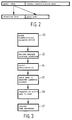
- Figure 2 shows a possible manner of executing the request signal.
- the request signal on the one hand contains the query data and on the other the source identification data, which includes data as to the identity of the originator, and which in particular includes the data that must be available to the central storage 2 in order to be able to trace the originator and to retrieve and make the connection via the communication link 4-1 with the originator 5-1 via the modem 13.
- the central storage 2 is provided with transmission-reception means 17.
- the request signal received by said means 17 is passed to the identification means 18 incorporated therein, which upon receipt of the request signal compare the source-identification data received with identification data included in a list 19 of authorized users.
- the identification data furthermore includes the password input by the user 5-1, whereby the identification means 18 furthermore verify whether the password corresponds with the password associated with the authorized user.
- the request formatting means 16 constitute the interface to the user, which interface is displayed on the screen 10 in the form of a selection menu 20 comprising submenus or pop-up menus. From said menus applications are selected and the types of required input data, which usually vary with each individual application, are input, after which the requested language data can be directly passed to the document(s). In short, the only thing the user sees after inputting the required selection and security codes is the interface with its aforesaid menus, whereby the user communicates with the central storage 2 in such an (ISO) layer, or in other words, at such a level that it seems as if he has the programs and language data at his disposal on his own computer system. This makes the interface quite user-friendly.
- ISO ISO
- Figure 3 shows in block 20 the log-in procedure and the identification and password check. If any inaccuracies are detected during said check, the identification means 18 will deliver a signal, via a link 21, to the means 17, as a result of which the log-in procedure must be restarted. If the password and the identification have been found correct, a welcome message will be displayed on screen 10 in block 20, in which the user is requested to select the language and in which information is supplied and received with regard to the available language programs. If for example the selection of a language is of importance in the possible selection of help functions (not shown), which are made available to the authorized user at any moment in order to supply him with the necessary information, for example with regard to the manner of operation and the selection method and the possibilities which are offered by the various language programs that are stored.
- the selection means 23 then use the selection data forming part of the query data to select the desired language programs in memory 14.
- the input data likewise forming part of the query data are used to provide the selected language program with the necessary input data after the required application has been selected in block 24 of Figure 3.
- the central storage 2 contains program output means 26, which control the output of the selected and activated language program to the transmission-reception means 17, which take care of the transfer of a reply signal containing the output data to the originator 5. This is schematically indicated in block 26 of Figure 3.
- the selection of language programs does not have to be limited to the selection of one language program, of course, but it will also be possible to activate a series of language programs in order to process, for example translate, a series of input data and then transfer the results in the form of a series of output data to the originator/interface.
- the advantage of including a multitude of input data in the form of a series of input data is that the access time to the central storage 2 remains minimal.
- the interface moreover makes it possible to devise a step-by-step plan tailored to that which is required with regard to the document or report being processed.
- Said step-by-step plan which consists of programs usually selected when composing the document, will then support the composition and compilation of the document or type of document in question. In this way it will not be necessary for the user to call successive individual programs when composing a document, because with the step-by-step plan it is fixed from the outset which steps must be gone through in a systematic manner.
- the activated program or the activated programs transferred to the originator.
- an admitted user may be assigned one of the host PC's 3, in order to have the above-explained procedure completed in and by the host PC.
- several users 5 may be served by means of the several host PC's.
- the result of the procedure after logging out in block 27 is that the host PC 3 that was previously communicating with a user is restarted (rebooted), so that every trace of any information that was transferred between said user and the central storage 2 is erased. This offers an optimum protection and security for the user, who does not wish others to have knowledge of he contents of the documents processed on his computer system.
- the central storage 2 contains control means 28, which control the communication in both direction between the central storage 2 and each of the computer systems 5 and/or the interface 5 according to a fixed and optimized protocol.
- the central storage is always the "master" in the communication and each of the computer systems 5 is the "slave”.
- the communication between the central storage 2 and a communication 5 may be structured and limited even more, so that the control means 28 will be able to access only a particular file created in a specific manner in the processor 12, in order to retrieve from there the request signal placed in said file by the request formatting means 16, and in order that a reply signal containing the output data can only be transferred to that particular file.
- the transfer of the required data from said file to the word processing program on the computer system 5 can be arranged locally then, so that the user can have the data he requires at his disposal, possibly in the document being processed.
- said central storage may be provided with checking means 29, if desired. After receipt of a request signal said checking means 29 verify whether the source identification data contained therein corresponds with a series of identification data contained in a stored table 30, which is kept up to date, said identification data comprising data on authorized users who previously accessed the central storage 2 within a predetermined period of time. This procedure takes less time than going through the usually more extensive list 19 of all authorized users, so that some time is gained in this way when a user accesses the central storage 2 for the second or other time. The user is not aware of these activities at all, however, because he only communicates with the interface.
- the central storage 2 is provided with means 31 which record the usage time of each individual user that has been admitted, so that the costs corresponding with the usage time can be debited to an account, automatically, if desired, and usually once per predetermined period, or be charged to the user.
- the interface may already be placed in the background (in another window) when the computer system 5 is started, and can be called from the actual program, such as a word-processing program or a Windows program.
- a sign, icon or pictogram is displayed in the actual program, by means of which the interface can be called, for example by clicking on said sign, icon or pictogram with the mouse 8.
- the way in which the interface presents itself to the user by means of the selection menus is adjustable.
- the central means 2 usually automatically, to a possibly revised structure, composition or contents of the programs and language data then available.
- the time during which the link is active is recorded at the end of the central means 2 as a measure for charging the users for their consultation of the language data.
- the time is displayed on the screen while the user is on-line.
Landscapes
- Engineering & Computer Science (AREA)
- Theoretical Computer Science (AREA)
- Health & Medical Sciences (AREA)
- Artificial Intelligence (AREA)
- Audiology, Speech & Language Pathology (AREA)
- Computational Linguistics (AREA)
- General Health & Medical Sciences (AREA)
- Physics & Mathematics (AREA)
- General Engineering & Computer Science (AREA)
- General Physics & Mathematics (AREA)
- Document Processing Apparatus (AREA)
Applications Claiming Priority (2)
| Application Number | Priority Date | Filing Date | Title |
|---|---|---|---|
| NL9401314 | 1994-08-15 | ||
| NL9401314A NL9401314A (nl) | 1994-08-15 | 1994-08-15 | Systeem en werkwijze voor het produceren van documenten. |
Publications (1)
| Publication Number | Publication Date |
|---|---|
| EP0697666A1 true EP0697666A1 (de) | 1996-02-21 |
Family
ID=19864525
Family Applications (1)
| Application Number | Title | Priority Date | Filing Date |
|---|---|---|---|
| EP95202212A Withdrawn EP0697666A1 (de) | 1994-08-15 | 1995-08-15 | System und Verfahren zum Erstellen von Dokumenten |
Country Status (2)
| Country | Link |
|---|---|
| EP (1) | EP0697666A1 (de) |
| NL (1) | NL9401314A (de) |
Cited By (4)
| Publication number | Priority date | Publication date | Assignee | Title |
|---|---|---|---|---|
| WO1998001807A1 (en) * | 1996-07-03 | 1998-01-15 | Polydoc N.V. | Document producing support system |
| WO1998011523A1 (en) * | 1996-09-13 | 1998-03-19 | British Telecommunications Public Limited Company | Training apparatus and method |
| EP1132831A3 (de) * | 2000-03-03 | 2003-08-06 | KnowHow Systems Group Limited | Erstellen und Ausliefern von Dokumenten |
| WO2005015808A3 (en) * | 2003-08-11 | 2005-06-30 | Seati Mohale Moloi | Mobile dictionary/sms dictionary |
Citations (4)
| Publication number | Priority date | Publication date | Assignee | Title |
|---|---|---|---|---|
| JPS62291250A (ja) * | 1986-06-11 | 1987-12-18 | Hitachi Ltd | 音声認識システム |
| GB2217067A (en) * | 1988-03-16 | 1989-10-18 | Fuji Xerox Co Ltd | Intelligent network server |
| WO1992012494A1 (en) * | 1990-12-31 | 1992-07-23 | Trans-Link International Corp. | Machine translation and telecommunications system |
| JPH0528189A (ja) * | 1991-07-22 | 1993-02-05 | Oki Electric Ind Co Ltd | 翻訳処理システム |
-
1994
- 1994-08-15 NL NL9401314A patent/NL9401314A/nl not_active Application Discontinuation
-
1995
- 1995-08-15 EP EP95202212A patent/EP0697666A1/de not_active Withdrawn
Patent Citations (4)
| Publication number | Priority date | Publication date | Assignee | Title |
|---|---|---|---|---|
| JPS62291250A (ja) * | 1986-06-11 | 1987-12-18 | Hitachi Ltd | 音声認識システム |
| GB2217067A (en) * | 1988-03-16 | 1989-10-18 | Fuji Xerox Co Ltd | Intelligent network server |
| WO1992012494A1 (en) * | 1990-12-31 | 1992-07-23 | Trans-Link International Corp. | Machine translation and telecommunications system |
| JPH0528189A (ja) * | 1991-07-22 | 1993-02-05 | Oki Electric Ind Co Ltd | 翻訳処理システム |
Non-Patent Citations (3)
| Title |
|---|
| IBM: "Concurrent Edit and Spell Check in a Computer System Having Multiple Processors", IBM TECHNICAL DISCLOSURE BULLETIN., vol. 29, no. 1, NEW YORK US, pages 396 - 398 * |
| PATENT ABSTRACTS OF JAPAN vol. 12, no. 187 (E - 615) 31 May 1988 (1988-05-31) * |
| PATENT ABSTRACTS OF JAPAN vol. 17, no. 311 (P - 1556) 14 June 1993 (1993-06-14) * |
Cited By (5)
| Publication number | Priority date | Publication date | Assignee | Title |
|---|---|---|---|---|
| WO1998001807A1 (en) * | 1996-07-03 | 1998-01-15 | Polydoc N.V. | Document producing support system |
| US6632251B1 (en) | 1996-07-03 | 2003-10-14 | Polydoc N.V. | Document producing support system |
| WO1998011523A1 (en) * | 1996-09-13 | 1998-03-19 | British Telecommunications Public Limited Company | Training apparatus and method |
| EP1132831A3 (de) * | 2000-03-03 | 2003-08-06 | KnowHow Systems Group Limited | Erstellen und Ausliefern von Dokumenten |
| WO2005015808A3 (en) * | 2003-08-11 | 2005-06-30 | Seati Mohale Moloi | Mobile dictionary/sms dictionary |
Also Published As
| Publication number | Publication date |
|---|---|
| NL9401314A (nl) | 1996-03-01 |
Similar Documents
| Publication | Publication Date | Title |
|---|---|---|
| US5211563A (en) | Computer assisted learning support system and processing method therefor | |
| US4949300A (en) | Sharing word-processing functions among multiple processors | |
| US5251130A (en) | Method and apparatus for facilitating contextual language translation within an interactive software application | |
| US4604710A (en) | System for converting data processing information to text processing format and vice versa | |
| US5442779A (en) | System and method for enabling an interpreted programming language to be executed in a database management system environment | |
| US4800485A (en) | On-line documentation facility | |
| AU8667198A (en) | Computerized system and associated method for optimally controlling storage and transfer of computer programs on a computer network | |
| JPS6114528B2 (de) | ||
| JPH0778728B2 (ja) | ヘルプ・パネルのアップロード処理自動化方法 | |
| US20120158742A1 (en) | Managing documents using weighted prevalence data for statements | |
| EP0150273B1 (de) | Durch ein Netzwerk gehendes mehrsprachiges System | |
| US5940845A (en) | System for accessing databases with different character sets | |
| US5946499A (en) | Method and apparatus for processing text inputs from multiple input devices in a plurality of applications | |
| EP0697666A1 (de) | System und Verfahren zum Erstellen von Dokumenten | |
| KR0142163B1 (ko) | 문자 코드 변환 장치 | |
| US20020177992A1 (en) | Method and system for translation management of human language text | |
| CA2376341A1 (en) | Syntax checker with real-time feedback | |
| US7322006B1 (en) | Integrated document management system, document retrieval device, and a computer-readable recording medium with a document retrieval program recorded therein | |
| EP1006470A2 (de) | Informationssytem zur Wiederauffindung einer Produktarchitektur | |
| EP0520926A2 (de) | Verfahren und Gerät für Klasseninformationsverwaltung | |
| Klein | PROFESSIONAL SQL SERVER 2005 XML | |
| CA1189628A (en) | On-line documentation facility | |
| EP1221082B1 (de) | Verwendung von englischer phonetik zum schreiben von nicht-romanischen zeichen | |
| Srirengan | Understanding Unix | |
| CA1199733A (en) | Computer system software interface bus |
Legal Events
| Date | Code | Title | Description |
|---|---|---|---|
| PUAI | Public reference made under article 153(3) epc to a published international application that has entered the european phase |
Free format text: ORIGINAL CODE: 0009012 |
|
| AK | Designated contracting states |
Kind code of ref document: A1 Designated state(s): BE DE ES FR GB IT LU NL |
|
| 17P | Request for examination filed |
Effective date: 19960820 |
|
| STAA | Information on the status of an ep patent application or granted ep patent |
Free format text: STATUS: THE APPLICATION IS DEEMED TO BE WITHDRAWN |
|
| 18D | Application deemed to be withdrawn |
Effective date: 19990302 |