EP1006470A2 - Informationssytem zur Wiederauffindung einer Produktarchitektur - Google Patents
Informationssytem zur Wiederauffindung einer Produktarchitektur Download PDFInfo
- Publication number
- EP1006470A2 EP1006470A2 EP99123281A EP99123281A EP1006470A2 EP 1006470 A2 EP1006470 A2 EP 1006470A2 EP 99123281 A EP99123281 A EP 99123281A EP 99123281 A EP99123281 A EP 99123281A EP 1006470 A2 EP1006470 A2 EP 1006470A2
- Authority
- EP
- European Patent Office
- Prior art keywords
- block
- component
- product
- products
- attributes
- Prior art date
- Legal status (The legal status is an assumption and is not a legal conclusion. Google has not performed a legal analysis and makes no representation as to the accuracy of the status listed.)
- Withdrawn
Links
Images



Classifications
-
- G—PHYSICS
- G06—COMPUTING OR CALCULATING; COUNTING
- G06F—ELECTRIC DIGITAL DATA PROCESSING
- G06F30/00—Computer-aided design [CAD]
-
- G—PHYSICS
- G06—COMPUTING OR CALCULATING; COUNTING
- G06F—ELECTRIC DIGITAL DATA PROCESSING
- G06F2119/00—Details relating to the type or aim of the analysis or the optimisation
- G06F2119/20—Design reuse, reusability analysis or reusability optimisation
-
- Y—GENERAL TAGGING OF NEW TECHNOLOGICAL DEVELOPMENTS; GENERAL TAGGING OF CROSS-SECTIONAL TECHNOLOGIES SPANNING OVER SEVERAL SECTIONS OF THE IPC; TECHNICAL SUBJECTS COVERED BY FORMER USPC CROSS-REFERENCE ART COLLECTIONS [XRACs] AND DIGESTS
- Y02—TECHNOLOGIES OR APPLICATIONS FOR MITIGATION OR ADAPTATION AGAINST CLIMATE CHANGE
- Y02P—CLIMATE CHANGE MITIGATION TECHNOLOGIES IN THE PRODUCTION OR PROCESSING OF GOODS
- Y02P90/00—Enabling technologies with a potential contribution to greenhouse gas [GHG] emissions mitigation
- Y02P90/02—Total factory control, e.g. smart factories, flexible manufacturing systems [FMS] or integrated manufacturing systems [IMS]
-
- Y—GENERAL TAGGING OF NEW TECHNOLOGICAL DEVELOPMENTS; GENERAL TAGGING OF CROSS-SECTIONAL TECHNOLOGIES SPANNING OVER SEVERAL SECTIONS OF THE IPC; TECHNICAL SUBJECTS COVERED BY FORMER USPC CROSS-REFERENCE ART COLLECTIONS [XRACs] AND DIGESTS
- Y10—TECHNICAL SUBJECTS COVERED BY FORMER USPC
- Y10S—TECHNICAL SUBJECTS COVERED BY FORMER USPC CROSS-REFERENCE ART COLLECTIONS [XRACs] AND DIGESTS
- Y10S707/00—Data processing: database and file management or data structures
- Y10S707/99941—Database schema or data structure
- Y10S707/99944—Object-oriented database structure
-
- Y—GENERAL TAGGING OF NEW TECHNOLOGICAL DEVELOPMENTS; GENERAL TAGGING OF CROSS-SECTIONAL TECHNOLOGIES SPANNING OVER SEVERAL SECTIONS OF THE IPC; TECHNICAL SUBJECTS COVERED BY FORMER USPC CROSS-REFERENCE ART COLLECTIONS [XRACs] AND DIGESTS
- Y10—TECHNICAL SUBJECTS COVERED BY FORMER USPC
- Y10S—TECHNICAL SUBJECTS COVERED BY FORMER USPC CROSS-REFERENCE ART COLLECTIONS [XRACs] AND DIGESTS
- Y10S707/00—Data processing: database and file management or data structures
- Y10S707/99941—Database schema or data structure
- Y10S707/99944—Object-oriented database structure
- Y10S707/99945—Object-oriented database structure processing
Definitions
- This invention relates generally to the field of computer systems and more particularly to the field of computer aided engineering design and decision systems.
- Engineering is the art of directing the great sources of power in nature for the use and convenience of humans.
- the process by which these goals are achieved is engineering design.
- Engineering design commences upon the recognition of the need to satisfy some human want or desire, which might range from the detection and destruction of incoming aircraft to the design of some type of fastener, i.e., a special type of screw.
- the first obligation of the engineer is to develop more detailed, quantitative information which defines the human want or task to be accomplished in order to formulate the task as a specification.
- the scope of the problem is defined and the need for pertinent information is established.
- many engineering situations particularly those where there is a great body of experience residing in a company that has previously designed similar products, models or systems, a large amount of this experience or expertise is unable to be found or is lost. Consequently, many existing components are needlessly redesigned or modified, even when no change is required.
- This specification addresses the disadvantages of the prior art and describes a system and method that enables inexperienced or new engineers or engineers that do not have a complete knowledge of the available knowledge to automatically use the experience and designs that have previously been used by experienced engineers in the organization.
- the engineering user of this system is able to identify requirements, components (product building blocks), documentation, processes, test, historical data, etc., as candidates for reuse. This is accomplished by parsing the required information automatically from product and component specifications.
- an "Architecture Wizard” provides the ability to graphically specify architectures from scratch and/or use existing architectures (components and their associated attributes).
- Server 11 contains: DOORS Software 12; Product Architecture Retrieval Information Software (PARIS) 13; Architecture Wizard Software 14; and Product Information Data Base 15.
- Product Specifications are transmitted from software 12 to software 13 via communications path 16 and component specifications are transmitted from software 12 to software 13 via communications path 17.
- Product attributes data is transmitted from software 12 to software 13 via communications path 18 and component attributes data is transmitted from software 12 to software 13 via communications path 19.
- Product functions data is transmitted from software 12 to software 13 via communications path 20 and product architecture data is transmitted from software 12 to software 13 via communications path 21.
- Standard components data is transmitted from software 12 to software 13 via communications path 22, and product and component queries are transmitted from software 13 to software 12 via communications path 23.
- Existing product components data is transmitted from software 12 to software 14 via communications path 24 and existing product attributes data is transmitted from software 14 to software 12 via communications path 25.
- New Product architecture data is transmitted from software 12 to software 14 via communications path 26 and new components data is transmitted from software 12 to software 14 via communications path 27.
- New attributes data is transmitted from software 12 to software 14 via communications path 28.
- a plurality of computers 29 having displays 30, printers 31 and input output devices 32 are coupled to server 11.
- DOORS Software 12 provides a secure, controlled environment for information management.
- Software 12 establishes relationships between parts of project documentation and permits teams working at multiple locations to use the same database concurrently.
- Software 12 is manufactured by Quality Systems & Software Ltd. of 200 Valley Road, Suite 306, Mt. Arlington, New Jersey 07856 USA.
- Software 13 controls the display of the existing building blocks of the product components in graphical form or textual form on displays 32.
- Software 13 is described in the description of Figs. 2A-2D.
- Architecture wizard software 14 specifies the product component architecture using software 13 based building blocks.
- Software 14 is described in the description of Fig. 4.
- Product information database 15 contains information about product components that is not contained within software 12.
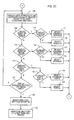
- Figs. 2A-2D is a flow chart showing the Product Architecture Retrieval Information Software 13.
- This program begins in decision block 100 of Fig. 2A.
- Block 100 determines whether the user of computer 29 requested product or component information. If the user of computer 29 requested component information, the program will proceed to block 108 of Fig 2C. If block 100 determines that a user of computer 29 requested product information, then the program will go to block 101.
- Block 101 will select one or more products, either directly or with respect to the product family, product code number, business segment, market segment, and/or product type. After making one of the above selections, the program will go to decision to block 102.
- Decision block 102 will determine whether or not to display the product specification(s) on a display 30. If Block 102 determines to display the product specification(s), then the program goes to block 103 to open the read-only copy of the latest base line specification(s). If Block 102 determines not to display the product specification(s), then the program goes to decision block 104.
- Decision Block 104 determines whether or not to display the product architecture(s). If Block 104 determines to display the product architecture(s), then the program goes to block 150 of Fig. 2B. Block 150 graphically displays the functional architecture with physical decomposition. Then the program goes to block 151 to display the attributes of the selected component. Now the program goes to decision to block 152. Block 152 determines whether one not to display the attributes of another component. If Block 152 determines not to display the attributes of another component, then the program goes back to the input of block 150. If Block 152 decides to display the attribute of another component, then the program goes to block 153 to select the component. At this point, the program will go back to the input of block 150.
- Block 104 determines not to display the product architecture(s)
- the program goes to decision block 105.
- Decision block 105 compares the product functions. If the product functions are the same, the program goes to block 106 to display the product functions. If the product functions are not the same, the program goes to decision block 107.
- Decision block 107 determines whether or not to display the query product attributes. If block 107 determines not to display the query product attributes, then the program goes back to block 101. If block 107 determines to display the query product attributes, then the program goes to block 200 (Fig. 2D).
- block component display 108 receives an input from decision block 100.
- Block 108 displays the lists of products and associated modules, devices, device types, part categories and parts.
- the program goes to decision block 109.
- Block 109 determines whether or not to display the query on a module will level. If block 109 determines to display the query on a module level, then the program goes to decision block 110.
- Decision block 110 determines whether or not to only display the standard module. If Block 110 determines to display the standard module, then the program goes to block 111 to select the standard modules. At this point, the program will go to block 200 (See Fig. 2D). If Block 110 determines not to display the standard module, then the program goes to block 112 to select the selected modules. At this point, the program will go to block 200 (Fig. 2D).
- Block 109 determines not to display or query on a module level
- the program goes to decision block 113.
- Decision block 113 determines whether or not to display or query on a device level. If Block 113 determines to display or query on a device level, then the program goes to decision block 114. If block 114 determines only to display the standard device, then the program goes to block 115 to select the standard devices. At this point, the program will go to block 200 (Fig. 2D). If Block 114 determines not to display the selected device(s), then the program goes to block 116 to select the selected device(s). At this point, the program will go to block 200 (Fig. 2D). If Block 113 determines not to display or query on a device level, the program goes to decision block 117.
- Decision block 117 determines whether or not to display or query on a parts level. If Block 117 determines to display or query on a parts level, then the program goes to decision block 118. If block 114 determines only to display the standard parts, then the program goes to block 119 to select the standard parts. At this point, the program will go to block 200 (Fig. 2D). If Block 118 determines not to display the standard part(s), then the program goes to block 120 to select the selected pads(s). At this point, the program will go to block 200 (Fig. 2D). If Block 117 determines not to display or query on parts, the program goes to decision block 121.
- Decision block 121 determines whether or not to display the module(s), device(s) or pad(s) specification. If Block 121 determines not to display the module(s), device(s) or part(s) specifications, the program goes back to the input of block 108. If Block 121 determines to display the module(s), device(s) or pad(s) specifications, the program goes to block 122 to select the module(s), device(s) or pad(s). Now the program goes to block 1243 to open the read-only copy of the latest base line specification(s).
- block 200 receives an input from decision block 107.
- Block 107 displays the applicable attribute categories and attribute names for selected product(s) or selected component(s).
- the program goes to block 101 to select one attribute category or all attributes categories.
- the program goes to block 202 to select one or more attribute names associated with the attribute category.
- the program goes to block to 203 to display the attribute value(s).
- decision block 204 determines whether or not details are needed. If decision block 204 determines that details are needed, then the program goes to block 205 to launch the applicable Computer Aided Engineering (CAE) programs.
- CAE programs are programs that contain additional design details, i.e., additional electrical, electronic, mechanical or electromechanical details.
- Block 206 determines whether or not to display additional attribute values. If block 206 determines to display additional attribute values, then the program goes back to the input of block 201. If block 206 determines not to display additional attribute values, then the program goes to decision block 207. Block 207 determines whether or not to query into the product or component data base. If block 207 determines not to query into the product or component data base, then the program goes back to the input of block 201. If block 206 determines to query into the product or component data base, then the program goes to block 208 to input the queried numerical or textual criteria.
- Decision block 209 determines whether or not to apply the criteria. If block 209 determines not to apply the criteria, then the program goes back to the input of block 208. If block 209 determines to apply the criteria, then the program goes to block 210 to display all match(es) and partial match(es) of the query. Then the program goes to decision block 211. Block 211 determines whether or not additional queries are required. If additional queries are required, then the program goes back to the input of block to 208. If additional queries are not required, then the program goes back to the input of block 210.
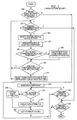
- Fig. 3 is a flow chart showing the Architecture Wizard Software 14.
- the program begins at start and then goes to decision block 250.
- Decision block 250 determines whether or not to revise the existing Product Architecture Retrieval Information Software (PARIS) 13 modules, devices or parts. If block 250 determines not to revise the existing modules, devices or parts, the program goes to block 258. If block 250 determines to revise the existing modules, devices or parts, the program goes to decision block 251.
- Block 251 determines whether or not software 14 finished analyzing all software 13 components. If block 251 determines that all the software 13 components have been analyzed, the program goes to block 264. If block 251 determines that all the software 13 components have not been analyzed, the program goes to block 252 to select the existing module(s), device(s) or part(s). Now the program goes to block 253 to view the attributes of the selected component.
- PARIS Product Architecture Retrieval Information Software
- Block 254 determines whether or not to add or modify the attributes of the selected component. If block 254 determines that the attributes of the selected component should be modified, the program goes to block 255 to create a new software 13 component with modified attributes. Then the program goes to the input of decision block 256. If block 254 determines that the attributes of the selected component should not be modified, the program goes to decision block 256. Block 256 determines whether or not to use the selected component for this new architecture. If block 256 determines not to use the selected component for the new architecture, the program goes back to the input of block 251.
- block 256 determines to use the selected component for the new architecture, the program goes block 257 to insert the component into the graphical representation of the architecture which will be displayed on displays 29 and which may be printed on printers 31. Then the program goes back to the input of block 251.
- Block 258 names the new component. Then the program goes to decision block 259.
- Block 259 determines whether or not to re-use software 13 attributes. If block 259 determines to re-use software 13 attributes, the program goes to block 260 to access software 13 attributes. At this point the program goes to block 262. If block 259 determines not to reuse software 13 attributes, the program goes to block 261 to create new software 13 attributes. Then the program goes to block 262 to set attribute values. Now the program goes to decision block 263.
- Block 263 determines whether or not the attribute definition has been finished. If the attribute definition has not been finished, the program goes back to the input of block 259.
- Block 264 determines whether or not the component definition has been finished. If the component definition has not been finished, the program goes back to the input of block 258. If the component definition has been finished, the program exits.
Landscapes
- Engineering & Computer Science (AREA)
- Physics & Mathematics (AREA)
- Theoretical Computer Science (AREA)
- Computer Hardware Design (AREA)
- Evolutionary Computation (AREA)
- Geometry (AREA)
- General Engineering & Computer Science (AREA)
- General Physics & Mathematics (AREA)
- Stored Programmes (AREA)
- Management, Administration, Business Operations System, And Electronic Commerce (AREA)
- General Factory Administration (AREA)
- Information Retrieval, Db Structures And Fs Structures Therefor (AREA)
Applications Claiming Priority (2)
| Application Number | Priority Date | Filing Date | Title |
|---|---|---|---|
| US203878 | 1998-12-02 | ||
| US09/203,878 US6260046B1 (en) | 1998-12-02 | 1998-12-02 | Product architecture retrieval information system |
Publications (2)
| Publication Number | Publication Date |
|---|---|
| EP1006470A2 true EP1006470A2 (de) | 2000-06-07 |
| EP1006470A3 EP1006470A3 (de) | 2003-12-03 |
Family
ID=22755680
Family Applications (1)
| Application Number | Title | Priority Date | Filing Date |
|---|---|---|---|
| EP99123281A Withdrawn EP1006470A3 (de) | 1998-12-02 | 1999-11-30 | Informationssytem zur Wiederauffindung einer Produktarchitektur |
Country Status (3)
| Country | Link |
|---|---|
| US (1) | US6260046B1 (de) |
| EP (1) | EP1006470A3 (de) |
| JP (1) | JP2000172723A (de) |
Families Citing this family (7)
| Publication number | Priority date | Publication date | Assignee | Title |
|---|---|---|---|---|
| US6768928B1 (en) * | 1999-05-20 | 2004-07-27 | Olympus Optical Co., Ltd. | Mechanism component design support system |
| US6625507B1 (en) * | 2000-02-23 | 2003-09-23 | United Technologies Corporation | Method and system for designing a low pressure turbine shaft |
| US7333975B2 (en) * | 2002-02-25 | 2008-02-19 | John Robert Cain | Information system and method for disseminating technology information |
| US20030212587A1 (en) * | 2002-05-13 | 2003-11-13 | International Business Machines Corporation | Apparatus and methods for coordinating Web services using role based interpretation of coordination plans |
| US20070150240A1 (en) * | 2004-10-07 | 2007-06-28 | Bridson William D | Automated selection of optical systems |
| US7149662B2 (en) * | 2004-10-07 | 2006-12-12 | Navitar, Inc. | Automated selection of optical systems |
| US20090083696A1 (en) * | 2007-09-26 | 2009-03-26 | Electronic Data Systems Corporation | Apparatus, and associated methodology, for planning, modeling, and monitoring a development process |
Family Cites Families (13)
| Publication number | Priority date | Publication date | Assignee | Title |
|---|---|---|---|---|
| US4553206A (en) * | 1983-10-03 | 1985-11-12 | Wang Laboratories, Inc. | Image storage and retrieval |
| US5519630A (en) * | 1993-03-22 | 1996-05-21 | Matsushita Electric Industrial Co., Ltd. | LSI automated design system |
| JP3201156B2 (ja) * | 1993-08-30 | 2001-08-20 | トヨタ自動車株式会社 | 設計を支援する方法と装置 |
| US5552995A (en) * | 1993-11-24 | 1996-09-03 | The Trustees Of The Stevens Institute Of Technology | Concurrent engineering design tool and method |
| US5767848A (en) * | 1994-12-13 | 1998-06-16 | Hitachi, Ltd. | Development support system |
| US5765142A (en) | 1994-08-18 | 1998-06-09 | Creatacard | Method and apparatus for the development and implementation of an interactive customer service system that is dynamically responsive to change in marketing decisions and environments |
| US5838965A (en) * | 1994-11-10 | 1998-11-17 | Cadis, Inc. | Object oriented database management system |
| US5752027A (en) | 1994-11-30 | 1998-05-12 | Dun & Bradstreet Software Services, Inc. | Apparatus and process for creating and accessing a database centric object |
| US5754737A (en) | 1995-06-07 | 1998-05-19 | Microsoft Corporation | System for supporting interactive text correction and user guidance features |
| US5727159A (en) | 1996-04-10 | 1998-03-10 | Kikinis; Dan | System in which a Proxy-Server translates information received from the Internet into a form/format readily usable by low power portable computers |
| US5767854A (en) | 1996-09-27 | 1998-06-16 | Anwar; Mohammed S. | Multidimensional data display and manipulation system and methods for using same |
| US5782466A (en) | 1996-11-08 | 1998-07-21 | Hewlett-Packard Company | Media processing having intermediate finishing operations and a remote output storage location |
| US5880959A (en) * | 1997-11-25 | 1999-03-09 | Voyan Technology | Method for computer-aided design of a product or process |
-
1998
- 1998-12-02 US US09/203,878 patent/US6260046B1/en not_active Expired - Fee Related
-
1999
- 1999-11-30 EP EP99123281A patent/EP1006470A3/de not_active Withdrawn
- 1999-12-02 JP JP34393499A patent/JP2000172723A/ja active Pending
Also Published As
| Publication number | Publication date |
|---|---|
| US6260046B1 (en) | 2001-07-10 |
| EP1006470A3 (de) | 2003-12-03 |
| JP2000172723A (ja) | 2000-06-23 |
Similar Documents
| Publication | Publication Date | Title |
|---|---|---|
| US6959294B2 (en) | Context-based help engine and dynamic help | |
| US6651240B1 (en) | Object-oriented software development support apparatus and development support method | |
| CN1855040B (zh) | 带有可重用得分和建议的可重用数据的资源创作 | |
| US8490054B2 (en) | Software and related software tracking during software modification | |
| US20040186705A1 (en) | Concept word management | |
| EP1253527A2 (de) | Verfahren und System zur Steuerung eines Eingabemodus | |
| MXPA04011788A (es) | Aprendizaje y uso de patrones de cadena generalizados para extraccion de informacion. | |
| CN108776677B (zh) | 平行语句库的创建方法、设备及计算机可读存储介质 | |
| US6260046B1 (en) | Product architecture retrieval information system | |
| EP4127957A1 (de) | Verfahren und systeme zum suchen und abrufen von informationen | |
| US6907434B2 (en) | Message analysis tool | |
| Frase | Human factors and behavioral science: The UNIX™ Writer'S workbench software: Philosophy | |
| US20050132324A1 (en) | System and method for efficient development of configurable software systems in a large software development community | |
| US12174865B2 (en) | Information processing apparatus, information processing system, and information processing method | |
| US20040051737A1 (en) | Method and system of interface editing and online real-time accessing for a personal mobile device | |
| JP2000172682A (ja) | ル―ルベ―スのドキュメントを作成する方法およびシステム | |
| CN114089992A (zh) | 工程系统的构建方法及其构建装置、电子设备及存储介质 | |
| KR100576487B1 (ko) | 컴포넌트화된 콘텐츠를 유지하기 위한 시스템 및 방법 | |
| EP4455931A1 (de) | System und verfahren zur erzeugung eines oder mehrerer simulationsszenarien für ein simulationsmodell in einer simulationsumgebung eines oder mehrerer anlagen in einer umgebung | |
| JP2005173999A (ja) | 電子ファイル検索装置、電子ファイル検索システム、電子ファイル検索方法、プログラムおよび記録媒体 | |
| US6799183B2 (en) | Operation assistance method and system and recording medium for storing operation assistance method | |
| US20040220772A1 (en) | Method and system for authoring case bases related to work machines | |
| EP1304640A2 (de) | System und Verfahren für das Verwenden Netz-basierter Wizards und Werkzeuge | |
| Cybulski | Patterns in software requirements reuse | |
| US20260087021A1 (en) | Document Management |
Legal Events
| Date | Code | Title | Description |
|---|---|---|---|
| PUAI | Public reference made under article 153(3) epc to a published international application that has entered the european phase |
Free format text: ORIGINAL CODE: 0009012 |
|
| AK | Designated contracting states |
Kind code of ref document: A2 Designated state(s): AT BE CH CY DE DK ES FI FR GB GR IE IT LI LU MC NL PT SE |
|
| AX | Request for extension of the european patent |
Free format text: AL;LT;LV;MK;RO;SI |
|
| PUAL | Search report despatched |
Free format text: ORIGINAL CODE: 0009013 |
|
| AK | Designated contracting states |
Kind code of ref document: A3 Designated state(s): AT BE CH CY DE DK ES FI FR GB GR IE IT LI LU MC NL PT SE |
|
| AX | Request for extension of the european patent |
Extension state: AL LT LV MK RO SI |
|
| RIC1 | Information provided on ipc code assigned before grant |
Ipc: 7G 06F 17/50 A |
|
| 17P | Request for examination filed |
Effective date: 20040527 |
|
| AKX | Designation fees paid |
Designated state(s): DE FR GB |
|
| 17Q | First examination report despatched |
Effective date: 20040727 |
|
| 17Q | First examination report despatched |
Effective date: 20040727 |
|
| STAA | Information on the status of an ep patent application or granted ep patent |
Free format text: STATUS: THE APPLICATION HAS BEEN WITHDRAWN |
|
| 18W | Application withdrawn |
Effective date: 20100520 |