EP0692902A2 - System zum automatischen Zugriff auf automatisierte Fernsprechinformationsdienste - Google Patents
System zum automatischen Zugriff auf automatisierte Fernsprechinformationsdienste Download PDFInfo
- Publication number
- EP0692902A2 EP0692902A2 EP95304859A EP95304859A EP0692902A2 EP 0692902 A2 EP0692902 A2 EP 0692902A2 EP 95304859 A EP95304859 A EP 95304859A EP 95304859 A EP95304859 A EP 95304859A EP 0692902 A2 EP0692902 A2 EP 0692902A2
- Authority
- EP
- European Patent Office
- Prior art keywords
- signals
- response
- codes
- subscriber
- list
- Prior art date
- Legal status (The legal status is an assumption and is not a legal conclusion. Google has not performed a legal analysis and makes no representation as to the accuracy of the status listed.)
- Withdrawn
Links
- 230000004044 response Effects 0.000 claims description 79
- 238000000034 method Methods 0.000 claims description 28
- 238000001514 detection method Methods 0.000 claims description 6
- 230000005236 sound signal Effects 0.000 claims description 4
- 230000005540 biological transmission Effects 0.000 claims 3
- 230000000977 initiatory effect Effects 0.000 claims 3
- 238000002372 labelling Methods 0.000 claims 2
- 230000001419 dependent effect Effects 0.000 claims 1
- 238000004519 manufacturing process Methods 0.000 claims 1
- 230000009977 dual effect Effects 0.000 abstract description 2
- 238000012545 processing Methods 0.000 description 15
- 230000006870 function Effects 0.000 description 8
- 230000003993 interaction Effects 0.000 description 7
- 238000012360 testing method Methods 0.000 description 7
- 238000004891 communication Methods 0.000 description 4
- 230000008569 process Effects 0.000 description 3
- 238000006243 chemical reaction Methods 0.000 description 2
- 238000010276 construction Methods 0.000 description 2
- 238000010586 diagram Methods 0.000 description 2
- 238000005516 engineering process Methods 0.000 description 2
- 238000012986 modification Methods 0.000 description 2
- 230000004048 modification Effects 0.000 description 2
- 101100236764 Caenorhabditis elegans mcu-1 gene Proteins 0.000 description 1
- 241000277284 Salvelinus fontinalis Species 0.000 description 1
- 230000009471 action Effects 0.000 description 1
- 230000009118 appropriate response Effects 0.000 description 1
- 230000003247 decreasing effect Effects 0.000 description 1
- 230000003111 delayed effect Effects 0.000 description 1
- 230000007246 mechanism Effects 0.000 description 1
- 238000012544 monitoring process Methods 0.000 description 1
- 230000011664 signaling Effects 0.000 description 1
- 230000001960 triggered effect Effects 0.000 description 1
- 230000003442 weekly effect Effects 0.000 description 1
Images
Classifications
-
- H—ELECTRICITY
- H04—ELECTRIC COMMUNICATION TECHNIQUE
- H04M—TELEPHONIC COMMUNICATION
- H04M3/00—Automatic or semi-automatic exchanges
- H04M3/42—Systems providing special services or facilities to subscribers
- H04M3/487—Arrangements for providing information services, e.g. recorded voice services or time announcements
- H04M3/493—Interactive information services, e.g. directory enquiries ; Arrangements therefor, e.g. interactive voice response [IVR] systems or voice portals
-
- H—ELECTRICITY
- H04—ELECTRIC COMMUNICATION TECHNIQUE
- H04Q—SELECTING
- H04Q1/00—Details of selecting apparatus or arrangements
- H04Q1/18—Electrical details
- H04Q1/30—Signalling arrangements; Manipulation of signalling currents
- H04Q1/44—Signalling arrangements; Manipulation of signalling currents using alternate current
- H04Q1/444—Signalling arrangements; Manipulation of signalling currents using alternate current with voice-band signalling frequencies
- H04Q1/45—Signalling arrangements; Manipulation of signalling currents using alternate current with voice-band signalling frequencies using multi-frequency signalling
- H04Q1/453—Signalling arrangements; Manipulation of signalling currents using alternate current with voice-band signalling frequencies using multi-frequency signalling in which m-out-of-n signalling frequencies are transmitted
Definitions
- the present invention is directed to an information services system accessed via telephone by subscribers to obtain the services provided and, more particularly, to providing a service for automatically accessing automated telephonic information services, such as telephone banking, airline reservations, stock quotes, etc.
- An object of the present invention is to provide a system for automatically interacting with automated telephonic information services.
- Another object of the present invention is to automatically initiate interaction with an automated telephonic information service.
- a further object of the present invention is to automatically record selected information obtained from an automated telephonic information service during automatic interaction therewith.
- Yet another object is to monitor manual interaction with an automated telephonic information service to detect commands entered manually and to store the commands with timing information and information corresponding to signals received from the automated telephonic information service prior to input of the commands.
- a still further object of the present invention is to permit a user of a system according to the present invention to interrupt automatic operation and take over control of interaction with the automated telephonic information service.
- a method of automatically interacting with automated telephonic information services comprising the steps of: storing a list of codes associated with at least one automated telephonic information service; and automatically generating response signals, e.g., dual tone multifrequency (DTMF) signals, with timing thereof controlled by the list of codes previously stored or the response signals, for example, may be recorded voice commands.
- response signals e.g., dual tone multifrequency (DTMF) signals
- the list of codes includes response codes representing the response signals and control codes for controlling the timing of when the response signals are generated.
- a subscriber using a system according to the present invention will receive an audio menu which includes an option for access to a gateway learn mode. If the subscriber wishes to use the gateway learn mode, the appropriate response can be entered using a twelve-key or sixteen-key DTMF keypad. The subscriber then manually generates original DTMF signals to access the automated telephonic information service which is to be automatically interacted with in the future.
- the information services system or gateway system which acts as a gateway to the automated telephonic information service detects the original DTMF signals and stores response codes representing the original DTMF signals as they are supplied to the automated telephonic information service and stores information on the timing of the DTMF signals, including signals received from the automated telephonic information service prior to input of the original DTMF signals.
- the gateway system may also generate response codes by detecting the types of signals at the automated telephonic information services system, such as a ring signal, voice prompt, audio reference information and other tones. Using heuristics, a list of codes is generated which can duplicate the action of the automated telephonic information service. A test run may be performed using the generated codes.
- a system according to the present invention includes voice recognition capability for detecting voice commands from the subscriber.
- One set of commands are “record start” and “record stop” which are used to instruct a system according to the present invention to record the information, e.g., stock quote listing, newsletter, sports score, horoscope, etc., received from the automated telephonic information service as a voice mail message.
- a single voice mail message may be generated from several pieces of information received from one or more automated telephonic information services by using a series of record start and record stop commands.
- Another possible set of commands are "pause” and "resume”.
- a pause command may be inserted into a list of codes or spoken during use of a list of codes to interrupt the automatic generation of response signals to permit the subscriber to use the twelve-key (or sixteen-key) keypad and then continue automatic interaction with the automated telephonic information service by speaking the resume command.
- keypad codes alone are used to control the gateway system.
- the "*" key may be used to signify commands to the gateway system (an "attention" signal), while "**" would be required to send a single "*" to an automated telephonic information service.
- the present invention preferably provides a learn mode in which commands sent to an automated telephonic information service are detected and stored; an assisted execution mode in which previously stored codes interact with an automated telephonic information service upon request by a user and may be interrupted for manual interaction by the user; and an automatic execution mode in which previously stored codes are used to interact with an automated telephonic information service automatically at a previously determined time.
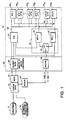
- a subscriber 10 obtains access to an information services system 12 by dialing the number of the information services system 12.
- a central office 20 connects the subscriber 10 to the information services system 12.
- the information services system 12 may be a system like those disclosed in U.S. Patents 4,371,752; 4,580,012; 4,581,486; 4,585,906; and 4,602,129, all assigned to VMX, Inc. (U.S. Patent 4,371,752 was originally assigned to ECS Telecommunications, Inc.) and U.S. Patents 5,029,199 and 5,193,110; both of which are assigned to Boston Technology, Inc. and are both incorporated herein by reference.
- the information services system 12 includes a digital switching system (DSS) 22 controlled by a control unit 24.
- the DSS 22 is connected to the central office 20 via multiline hunt group (MLHG) 26. If the central office 20 is a digital central office, the DSS 22 can be connected directly to the MLHG 26. If the central office 20 is an older analog central office, a channel bank 28 is provided in an analog-to-digital conversion unit 30 to connect the DSS 22 to the MLHG 26.
- the central office 20 typically provides information via a protocol, such as the simplified message desk interface (SMDI), between a modem 32 in analog-to-digital conversion unit 30 and a modem 34 for the central office 20.
- SMSI simplified message desk interface
- the control unit 24 preferably includes at least two master control units (MCUs) 38, 40. As described in U.S. Patent 5,029,199, only one MCU has control of the DSS 22 at any given time. A switch 42 is illustrated indicating which MCU has control of the system, although a physical switch 42 may not be present.
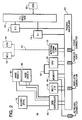
- the services of the information services platform 12 are provided by application processing units (APUs) 44 which are connected to each other and to the MCUs 38, 40 via an internal bus 45, such as an ETHERNET network.
- the APUs 44 may be dedicated to a specific function, such as voice processing or facsimile processing, or may be multipurpose units, such as APU1 441 and APU N 44 N . All of the APUs 44 are connected to the DSS 22 via a digital line, such as a T1 line.
- a central processing unit (CPU) 58 such as an INTEL 80386, is connected to a memory 60 via a conventional 32 channel bus 62. Connections to other devices within an APU 44 are provided by a passive backplane 63. These devices include hard drives 64, 66 connected to a disk controller 68 which also controls a floppy drive 70.
- An internal communication link 72 such as an ETHERNET communication link, connects the APU 44 to other processors in the platform 10, such as the MCUs 38, 40 in the control unit 24 and other APUs 44.
- Digital ports 74 connect the passive backplane 63 to the DSS 22 via a telephone communication standard T1 interface 76.
- the digital ports 74 may be provided on line cards which include DTMF signal detection and generation and higher level capabilities, such as handling facsimile protocols, as in the case of Model No. TR112LL from Brooktrout Technology, Inc. of Wellesly Hills, MA. Other input and output may be provided by multi-I/O unit 78. All the components in an APU 44 may be conventional, as disclosed in U.S. Patent No. 5,193,110.
- any telephone user including subscriber 10 may call any automated telephonic information service (ATIS) 80. If the phone number of the ATIS 80 is dialed directly by the subscriber 10, the central office 20 will connect the subscriber 10 to the ATIS 80.
- an alternative route to reaching the ATIS 80 is for the subscriber 10 to access, via the central office 20, an information services system 12 which can act as a gateway system.
- the active MCU which is illustrated to be MCU1 38 controls the DSS 22 to connect the subscriber 10 to one of the APUs, such as APU1 441.
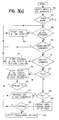
- the APU1 441 executes the processing illustrated in Fig. 3.
- the entire processing may be executed by a single APU 44, or the subscriber 10 may be passed off to one or more other APUs 44 as the specific type of processing required by the subscriber 10 is determined.
- one or more audio menus 82 may be generated by APU1 441. If the subscriber 10 wishes to use the information services system 12 in accordance with the present invention, the subscriber 10 will eventually respond to a menu prompt to request either use of the learn mode, identified in step 84, or the assisted execution mode, identified in step 85.
- a different APU 44 could be used for the learn mode steps than is used for the execution mode steps. For simplicity of description, it will be assumed that the same APU 44 performs all of the steps illustrated in Fig. 3.
- the APU 44 When the APU 44 receives an indication to enter the gateway learn mode, it will be determined 84 that call progress tones should be monitored.
- the active MCU 38 controls the DSS 22 to provide a connection to the central office 20. Preferably, this connection is provided via a separate port to the APU 44 performing the steps illustrated in Fig. 3. This permits the APU 44 to distinguish between signals on the line connected to the subscriber 10 and signals on the line connected to the ATIS 80. As a result, the APU 44 is able to separately identify 86 the presence of DTMF and voice signals from the subscriber 10 and call progress signals and information from the ATIS 80.
- all DTMF signals are generated by the subscriber 10 using a conventional 12- or 16-key keypad. Thus, these DTMF signals will be referred to as original DTMF signals.
- the DTMF signal When a key is pressed by the subscriber, sending a DTMF signal to a first APU port (port 1) in response to accessing or controlling the ATIS 80, the DTMF signal is stored as a code and is regenerated by a second APU port (port 2) to send to the ATIS 80. Both ports may be controlled by a single process or interprocess communication (IPC) may be used to control the ports.
- the APU 44 stores 88 response codes representing the original DTMF signals and associated timing data in, e.g., one of the hard drives 64, 66 (Fig. 2) and informs the MCU what is stored and how it can be accessed, in a manner similar to that used for voice mail messages.
- the MCU will command the DSS 22 to send all audio signals from the ATIS 80 to both the subscriber 10 and the second APU port. This allows the subscriber to hear what should be responded to and allows the second APU port to hear important audio reference information which will be stored in the response code list.
- the DSS 22 may be used to perform this function.
- the same mechanism (hardware and software) used to determine responses to the audio menu 82 can be used to identify the original DTMF signals, so that a digital representation of the digit or character indicated by the DTMF signal can be stored.
- the response codes may be conventional codes, such as the American Standard Code for Information Interchange (ASCII) or, since there are at the most 16 possible DTMF codes, as few as four bits could be used for the response code.
- ASCII American Standard Code for Information Interchange
- the timing with which the original DTMF signals are generated is also stored.
- the call progress tones from the line connected to the ATIS 80 and other signals received from both the subscriber 10 and the ATIS 80 are used to provide timing information.
- the DTMF signals generated between the dial tone and a ring signal or other call progress tone are stored 88 as the telephone number of the ATIS 80. Assuming that a ring signal is received, the approximate amount of time from when the ring signal stops and another DTMF signal is generated by the subscriber 10 may be stored as an amount of time for response to the first menu from the ATIS 80.
- a representation of the energy signals received from the ATIS 80 in the learn mode could be stored for matching with signals received from the ATIS 80 during subsequent calls in the execution mode as a form of voice recognition.
- voice recognition techniques may be used to identify key events in the call flow. Due to the changes in the information and menus produced by some automated telephonic information services, typically the energy signals may not be very helpful in identifying the menu being generated.
- the menus generated 82 by the gateway system 12 include an option in the learn mode which permits the subscriber 10 to request or suppress storage of the energy signals received from the ATIS 80 for the purpose of identifying the proper response to be generated during the execution mode.
- the storing in step 88 results in a list of codes associated with the ATIS 80.
- This enables the subscriber 10 to access the gateway system 12 and request execution of a previously stored list of codes in an assisted execution mode.
- the subscriber 10 can listen to the responses obtained from the ATIS 80 without having to enter responses to all of the prompts generated by the ATIS 80. However, this is only a small portion of the capability of the present invention.
- the APU 44 is preferably programmed to identify 90 subscriber commands.
- the gateway system 12 There are two ways of identifying 90 subscriber commands. The first requires the least sophisticated equipment in the gateway system 12, while the second is easiest for a user.
- the former method uses entries on the keypad of the subscriber's telephone. For example, the "*" key may be used to signify that a command to the gateway system will follow. In this case, the gateway system would respond to "**" by passing a single asterisk to the automated telephonic information service presently connected. Anything else would be evaluated as one of the commands described in more detail below.
- the keypad entered commands could include "*1" indicating that the following codes should not be recorded, "*2” could indicate that the following codes should be recorded, "*3" could indicate that automatically generated codes during execution should stop (pause), to permit manually entered responses and "*4" could indicate that automatically generated codes should resume, during both learning and assisted execution modes.
- the subscriber commands are spoken and voice recognition is used to identify the command.
- Limited voice recognition systems satisfactory for this purpose are available from Voice Control Systems of Dallas, Texas; Voice Processing Corporation of Cambridge, Massachusetts and Scott Instruments of Denton, Texas. With these systems, when a subscriber initially enters the learn mode, or as part of the process of initializing a new subscriber, the APU 44 requests the subscriber to repeat a list of commands, one at a time, so that sampled voice signals corresponding to specific control codes can be stored on one of the hard drives 64, 66 or in a memory provided by the voice processing system. When a signal received from the subscriber 10 is determined 90 by the voice recognition system to match one of the previously stored sample voice signals, the APU determines which command signal was generated by the subscriber. If voice recognition is not used, the APU 44 may prompt the subscriber 10 for commands by providing a menu of options in a manner similar to conventional voice mail. If voice recognition is available, then processing continues depending upon the particular command which was spoken.
- a small set of commands will be described.
- the present invention is not limited to using only these commands, nor must all of these commands be provided.
- the command set is kept small, so that a single voice recognition system can be used for many subscribers.
- the names of the commands used below may be the words which are spoken, or other words which are more easily distinguished by a particular voice recognition system may be spoken to cause the APU 44 to perform the functions described, or the commands may be entered using the keypad as described above.
- the commands used, by way of example, in Fig. 3 include pick-up (to go off-hook), hang-up, record start, various stop commands including paused stop, event stop, timed stop, pause, resume and exit.
- the pick-up and hang-up commands are included to enable the subscriber to access more than one ATIS 80 by a single list of codes. This enables a single list of codes to obtain, for example, a bank balance, a weather report and a stock quote.
- the record start and the various stop commands enable selected portions of the information obtained from one or more ATIS 80 to be recorded into a single voice mail message during unassisted execution mode.
- the paused stop function enables information to be recorded until a pause is detected (silence from the ATIS 80) for, e.g., 2-4 seconds; the timed stop function enables information to be recorded until a pre-defined amount of time has elapsed; and, the event stop function enables information to be recorded until a pre-recorded or a pre-arranged signal is matched (e.g., tone or voice pattern).
- a pre-recorded or a pre-arranged signal is matched (e.g., tone or voice pattern).
- Many of these commands may be used during assisted execution mode, as well as during the learn mode. If the APU 44 identifies 91 any of these commands, the instructed function is performed and a control code is stored 92, together with a time code or other indication of the time or event corresponding to receipt of the command signal from the subscriber 10.
- the time code stored 92 with the control code may include an indication not only of the length of time since the last DTMF signal was generated by the user, but also how much time has elapsed since signals received from the ATIS 80 had one or more predetermined energy levels, frequency signatures, or both.
- the time code may include a length of time since there was no significant voice band energy received from the ATIS 80 and the length of time that a voice band signal of some higher level was received.
- Additional information including a sampled signal of the last, e.g., three to five seconds of the information received from the ATIS 80, could be stored with the control code and time code to aid in determining when the command indicated by the control code should be performed during the execution mode, as described below.
- the APU 44 tests 93 for a pause command.
- the pause and resume commands are used during assisted execution mode to permit variable DTMF signals to be generated by the subscriber 10 during the execution of a list of codes.
- learn mode upon detecting 93 a pause command, the APU 44 records 94 the control and time codes and continues to monitor and pass through to the ATIS signals received from the subscriber 10 without storing response codes corresponding to the DTMF signals generated by the subscriber 10.
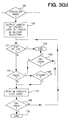
- a menu of options may be generated 98 upon exit from the learn mode so that the subscriber can specify how the list of codes is to be used.
- One option may be to indicate whether an on-hook signal is to be generated at the end of the list of codes.
- One use for the inclusion of such a hang-up option after the exit command is in an embodiment of the present invention which does not include voice command capability.
- Other options in the audio menu generated in step 98 could include indicating whether the list of codes should be initiated automatically with a certain frequency, at a certain future time or times, only upon request by the subscriber 10, or upon the occurrence of an event, such as login to a voice mail box by the subscriber 10.
- the frequency of use could be daily, hourly, weekly, etc., depending upon the service provided by the ATIS 80.
- other lists of codes such as one associated with an airline reservation phone number or direct marketing order phone number might only be executed upon request by the subscriber 10, since variable information, identifying a flight or product, would always be entered by the subscriber 10.
- an embodiment of the present invention could have no voice recognition capability.
- the signals following a predefined attention signal such as "*" could be interpreted as commands and if no command is received after a predetermined period of time, such as five seconds, an audio menu could be generated 98 by the APU 44.
- the menu could be generated 98 immediately upon detecting the predefined attention signal.
- the menu generated 98 in either embodiment may include the ability to continue in the learn mode as indicated by test 99 in Fig. 3. This option is particularly important in an embodiment without voice recognition capability, to simulate the pause and resume commands available in a voice recognition system.
- one of the options in the initial audio menu(s) 82 is to execute a previously stored list of codes.
- the APU 44 determines 85 that the subscriber requested the assisted execution mode, the previously stored audio labels are used to describe the lists of codes and the list identified by the subscriber 10 is selected in response to output of the labels.
- the APU 44 will test 101 for the end of the list of codes. Execution will end 102 with appropriate processing, depending upon whether the list of codes is being automatically executed or executed upon request by the subscriber 10.
- the APU 44 may perform the usual steps for storing a voice mail message and use a label previously stored by the subscriber to identify the voice mail message.
- control may be returned to the subscriber 10 for conventional handling of any messages recorded during execution of the list of codes and for continued interaction with the ATIS 80 if no on-hook signal was sent.
- the execution mode might be triggered by an event such as the login of the subscriber to a VM box (e.g., to get weather or a stock quote.)
- the functions performed in step 110 include storing representations of the audio signals received from the ATIS 80 if the control code for the record start command was previously read and the recording has not yet been stopped. In the preferred embodiment, long pauses are not recorded.
- the test 108 for an on-hook signal from the subscriber 10 is preferably made once every, e.g., second, and is thus illustrated in the code execution loop as well as the loop waiting for a resume command.
- the timing information stored as time codes with the response codes can include timing relative to voice band signals received on the line connected to the ATIS 80.
- the DTMF signal corresponding to the response code representing the original DTMF signal is not generated 110 in the execution mode, until the energy level on the line connected to the ATIS 80 increases. If there is a significant delay between the increase in voiceband energy on the line connected to the ATIS 80 and the generation of the original DTMF signals during the learn mode, the DTMF signal generated in the execution mode may be delayed by a similar amount.
- the APU 44 may wait for the end of the prompt also.
- ATIS systems of three types: (1) systems which will store DTMF codes received prior to generation of a prompt to which they are responding, (2) systems which permit prompts to be interrupted by the generation of a response and (3) systems which only respond to DTMF signals received after a prompt is completed.
Landscapes
- Engineering & Computer Science (AREA)
- Signal Processing (AREA)
- Telephonic Communication Services (AREA)
- Exchange Systems With Centralized Control (AREA)
Applications Claiming Priority (2)
| Application Number | Priority Date | Filing Date | Title |
|---|---|---|---|
| US275358 | 1994-07-15 | ||
| US08/275,358 US5524139A (en) | 1994-07-15 | 1994-07-15 | System for automatic access to automated telephonic information services |
Publications (2)
| Publication Number | Publication Date |
|---|---|
| EP0692902A2 true EP0692902A2 (de) | 1996-01-17 |
| EP0692902A3 EP0692902A3 (de) | 1997-02-19 |
Family
ID=23051950
Family Applications (1)
| Application Number | Title | Priority Date | Filing Date |
|---|---|---|---|
| EP95304859A Withdrawn EP0692902A3 (de) | 1994-07-15 | 1995-07-12 | System zum automatischen Zugriff auf automatisierte Fernsprechinformationsdienste |
Country Status (5)
| Country | Link |
|---|---|
| US (1) | US5524139A (de) |
| EP (1) | EP0692902A3 (de) |
| JP (1) | JPH08102789A (de) |
| BR (1) | BR9503320A (de) |
| CA (1) | CA2153717A1 (de) |
Cited By (4)
| Publication number | Priority date | Publication date | Assignee | Title |
|---|---|---|---|---|
| WO1998049826A1 (en) * | 1997-04-28 | 1998-11-05 | Gratistel International Ab | A method relating to telephone communications that include the transmission of advertising messages |
| WO1999026397A1 (en) * | 1997-11-18 | 1999-05-27 | Telecheck International, Inc. | Automated system for accessing speech-based information |
| WO2001028200A1 (en) * | 1999-10-14 | 2001-04-19 | Ericsson Inc. | Method and apparatus for transmitting dtmf signals employing local speech recognition |
| WO2001060092A3 (en) * | 2000-02-10 | 2002-03-07 | Telespree Comm | Phone service provisioning |
Families Citing this family (21)
| Publication number | Priority date | Publication date | Assignee | Title |
|---|---|---|---|---|
| KR0138184B1 (ko) * | 1995-06-26 | 1998-07-01 | 김광호 | 키폰시스템의 통화중 맨머신 커뮤니케이션 방법 |
| KR0174607B1 (ko) * | 1995-08-31 | 1999-04-01 | 김광호 | 음성/팩시밀리 메일 서비스 겸용 음성우편장치 및 그 서비스방법 |
| US6233318B1 (en) | 1996-11-05 | 2001-05-15 | Comverse Network Systems, Inc. | System for accessing multimedia mailboxes and messages over the internet and via telephone |
| US5933475A (en) * | 1997-06-04 | 1999-08-03 | Interactive Quality Services, Inc. | System and method for testing a telecommunications apparatus |
| US5982863A (en) * | 1997-08-27 | 1999-11-09 | Phytel, Inc. | Communications system for a service provider |
| CA2217473A1 (en) * | 1997-10-03 | 1999-04-03 | David Edward William Mercer | Service access using limited set of characters |
| US6275570B1 (en) | 1998-04-22 | 2001-08-14 | Unisys Corporation | System and method of provisioning subscribers in a messaging environment comprising two messaging systems |
| US6504912B1 (en) * | 1998-07-07 | 2003-01-07 | At&T Corp. | Method of initiating a call feature request |
| US6594484B1 (en) | 1998-12-17 | 2003-07-15 | Openwave Systems Inc. | Automated access by mobile device to automated telephone information services |
| US6768788B1 (en) * | 1999-09-13 | 2004-07-27 | Microstrategy, Incorporated | System and method for real-time, personalized, dynamic, interactive voice services for property-related information |
| US6738458B1 (en) | 1999-11-09 | 2004-05-18 | Bell South Intellectual Property Corporation | Methods and systems for changing the domain association of a mailbox in a messaging system |
| US7120234B1 (en) | 1999-12-29 | 2006-10-10 | Bellsouth Intellectual Property Corp. | Integrated tone-based and voice-based telephone user interface |
| US6937986B2 (en) * | 2000-12-28 | 2005-08-30 | Comverse, Inc. | Automatic dynamic speech recognition vocabulary based on external sources of information |
| JP2002222563A (ja) * | 2001-01-25 | 2002-08-09 | Pioneer Electronic Corp | 切替装置及び切替装置を有する情報記録再生装置 |
| US7023970B1 (en) * | 2001-01-30 | 2006-04-04 | Cisco Technology, Inc. | Arrangement in a local computer for sending voice messages to a unified communications system |
| US7139376B2 (en) * | 2001-02-16 | 2006-11-21 | Qwest Communications International Inc. | Method and system for providing preselected information services upon detection of an off-hook condition |
| US6941269B1 (en) * | 2001-02-23 | 2005-09-06 | At&T Corporation | Method and system for providing automated audible backchannel responses |
| US7797159B2 (en) * | 2002-09-16 | 2010-09-14 | Movius Interactive Corporation | Integrated voice navigation system and method |
| US7680250B1 (en) | 2004-11-24 | 2010-03-16 | Interactive Quality Services | Interactive method and system of testing an automated call telephonic communication system |
| US8670972B1 (en) | 2007-06-07 | 2014-03-11 | West Corporation | Method and apparatus for voice recognition unit simulation |
| CN101316430A (zh) * | 2008-06-27 | 2008-12-03 | 华为技术有限公司 | 通信信息收集方法、测试方法及网络侧设备 |
Citations (6)
| Publication number | Priority date | Publication date | Assignee | Title |
|---|---|---|---|---|
| US4371752A (en) | 1979-11-26 | 1983-02-01 | Ecs Telecommunications, Inc. | Electronic audio communication system |
| US4580012A (en) | 1979-11-26 | 1986-04-01 | Vmx, Inc. | Electronic audio communications system with automatic user access features |
| US4581486A (en) | 1979-11-26 | 1986-04-08 | Vmx, Inc. | Electronic audio communications system with user accessible message groups |
| US4602129A (en) | 1979-11-26 | 1986-07-22 | Vmx, Inc. | Electronic audio communications system with versatile message delivery |
| US5029199A (en) | 1989-08-10 | 1991-07-02 | Boston Technology | Distributed control and storage for a large capacity messaging system |
| US5193110A (en) | 1990-10-09 | 1993-03-09 | Boston Technology, Incorporated | Integrated services platform for telephone communication system |
Family Cites Families (12)
| Publication number | Priority date | Publication date | Assignee | Title |
|---|---|---|---|---|
| US4591664A (en) * | 1982-11-23 | 1986-05-27 | Michael Freeman | Multichannel interactive telephone answering apparatus |
| US4611096A (en) * | 1983-12-01 | 1986-09-09 | At&T Bell Laboratories | Telephone office service assist and handoff |
| US4670628A (en) * | 1984-04-19 | 1987-06-02 | Boratgis James P | Reprogrammable call forwarding device |
| US4799254A (en) * | 1986-06-30 | 1989-01-17 | Wang Laboratories, Inc. | Portable communication terminal for remote database query |
| US4926461A (en) * | 1987-01-12 | 1990-05-15 | Code-A-Phone Corporation | Telephone answering machine having call transfer capabilities |
| US5214689A (en) * | 1989-02-11 | 1993-05-25 | Next Generaton Info, Inc. | Interactive transit information system |
| US5058152A (en) * | 1989-12-12 | 1991-10-15 | The Telephone Connection | Anonymous interactive telephone system having direct connect feature |
| US5117455A (en) * | 1990-03-28 | 1992-05-26 | Danish International, Inc. | Telephone keypad matrix |
| US5187735A (en) * | 1990-05-01 | 1993-02-16 | Tele Guia Talking Yellow Pages, Inc. | Integrated voice-mail based voice and information processing system |
| US5202914A (en) * | 1990-09-13 | 1993-04-13 | Pitney Bowes Inc. | System for resetting a postage meter |
| US5381470A (en) * | 1991-05-28 | 1995-01-10 | Davox Corporation | Supervisory management center with parameter testing and alerts |
| US5418844A (en) * | 1992-04-17 | 1995-05-23 | Bell Atlantic Network Services, Inc. | Automatic access to information service providers |
-
1994
- 1994-07-15 US US08/275,358 patent/US5524139A/en not_active Expired - Lifetime
-
1995
- 1995-07-12 CA CA002153717A patent/CA2153717A1/en not_active Abandoned
- 1995-07-12 EP EP95304859A patent/EP0692902A3/de not_active Withdrawn
- 1995-07-14 BR BR9503320A patent/BR9503320A/pt not_active Application Discontinuation
- 1995-07-14 JP JP7201772A patent/JPH08102789A/ja not_active Withdrawn
Patent Citations (7)
| Publication number | Priority date | Publication date | Assignee | Title |
|---|---|---|---|---|
| US4371752A (en) | 1979-11-26 | 1983-02-01 | Ecs Telecommunications, Inc. | Electronic audio communication system |
| US4580012A (en) | 1979-11-26 | 1986-04-01 | Vmx, Inc. | Electronic audio communications system with automatic user access features |
| US4581486A (en) | 1979-11-26 | 1986-04-08 | Vmx, Inc. | Electronic audio communications system with user accessible message groups |
| US4585906A (en) | 1979-11-26 | 1986-04-29 | Vmx, Inc. | Electronic audio communication system with user controlled message address |
| US4602129A (en) | 1979-11-26 | 1986-07-22 | Vmx, Inc. | Electronic audio communications system with versatile message delivery |
| US5029199A (en) | 1989-08-10 | 1991-07-02 | Boston Technology | Distributed control and storage for a large capacity messaging system |
| US5193110A (en) | 1990-10-09 | 1993-03-09 | Boston Technology, Incorporated | Integrated services platform for telephone communication system |
Cited By (7)
| Publication number | Priority date | Publication date | Assignee | Title |
|---|---|---|---|---|
| WO1998049826A1 (en) * | 1997-04-28 | 1998-11-05 | Gratistel International Ab | A method relating to telephone communications that include the transmission of advertising messages |
| AU733258B2 (en) * | 1997-04-28 | 2001-05-10 | Gratistel International Ab | A method relating to telephone communications that include the transmission of advertising messages |
| WO1999026397A1 (en) * | 1997-11-18 | 1999-05-27 | Telecheck International, Inc. | Automated system for accessing speech-based information |
| US6195417B1 (en) | 1997-11-18 | 2001-02-27 | Telecheck International, Inc. | Automated system for accessing speech-based information |
| WO2001028200A1 (en) * | 1999-10-14 | 2001-04-19 | Ericsson Inc. | Method and apparatus for transmitting dtmf signals employing local speech recognition |
| US6493670B1 (en) | 1999-10-14 | 2002-12-10 | Ericsson Inc. | Method and apparatus for transmitting DTMF signals employing local speech recognition |
| WO2001060092A3 (en) * | 2000-02-10 | 2002-03-07 | Telespree Comm | Phone service provisioning |
Also Published As
| Publication number | Publication date |
|---|---|
| US5524139A (en) | 1996-06-04 |
| CA2153717A1 (en) | 1996-01-16 |
| JPH08102789A (ja) | 1996-04-16 |
| EP0692902A3 (de) | 1997-02-19 |
| BR9503320A (pt) | 1996-07-16 |
Similar Documents
| Publication | Publication Date | Title |
|---|---|---|
| US5524139A (en) | System for automatic access to automated telephonic information services | |
| EP0515068B1 (de) | Automatisiertes Sprachsystem zur Verbesserung der Bedienereffizienz und zur Verbesserung des Dienstes für Teilnehmer in Wartestellung | |
| US8379803B2 (en) | Voice response apparatus and method of providing automated voice responses with silent prompting | |
| US5309504A (en) | Automated identification of attendant positions in a telecommunication system | |
| US5822405A (en) | Automated retrieval of voice mail using speech recognition | |
| US5430792A (en) | Automated telephone calling system | |
| US5493608A (en) | Caller adaptive voice response system | |
| US5933475A (en) | System and method for testing a telecommunications apparatus | |
| US6882973B1 (en) | Speech recognition system with barge-in capability | |
| US5475738A (en) | Interface between text and voice messaging systems | |
| US5181237A (en) | Automation of telephone operator assistance calls | |
| US5357562A (en) | Automated facsimile/voice memory managing system | |
| US6381311B2 (en) | Automated message system for a calling party | |
| EP0748102A2 (de) | Teilnehmergesteuerte flexible Telekommunikationsverarbeitung | |
| WO1994026054A1 (en) | Apparatus and method for transparent telephony | |
| JPH06217017A (ja) | 自動呼出し処理システム | |
| US5519766A (en) | Message length reporting system for telephone communication system | |
| EP0480622B1 (de) | Automatisierung von Fernmeldeanrufen mit Vermittlungshilfsplätzen | |
| US8145495B2 (en) | Integrated voice navigation system and method | |
| EP0249575A2 (de) | Rechnergesteuertes Kommunikationssystem | |
| US20050278177A1 (en) | Techniques for interaction with sound-enabled system or service | |
| JP3998724B2 (ja) | 対話式装置 | |
| US6449487B1 (en) | Computerized telephone apparatus | |
| US6229881B1 (en) | Method and apparatus to provide enhanced speech recognition in a communication network | |
| CA2314152C (en) | Automated voice system for improving agent efficiency and improving service to parties on hold |
Legal Events
| Date | Code | Title | Description |
|---|---|---|---|
| PUAI | Public reference made under article 153(3) epc to a published international application that has entered the european phase |
Free format text: ORIGINAL CODE: 0009012 |
|
| AK | Designated contracting states |
Kind code of ref document: A2 Designated state(s): AT BE CH DE DK ES FR GB GR IT LI LU NL SE |
|
| PUAL | Search report despatched |
Free format text: ORIGINAL CODE: 0009013 |
|
| AK | Designated contracting states |
Kind code of ref document: A3 Designated state(s): AT BE CH DE DK ES FR GB GR IT LI LU NL SE |
|
| 17P | Request for examination filed |
Effective date: 19970815 |
|
| RAP1 | Party data changed (applicant data changed or rights of an application transferred) |
Owner name: COMVERSE NETWORK SYSTEMS, INC. |
|
| STAA | Information on the status of an ep patent application or granted ep patent |
Free format text: STATUS: THE APPLICATION HAS BEEN WITHDRAWN |
|
| 18W | Application withdrawn |
Withdrawal date: 20000816 |
|
| R18W | Application withdrawn (corrected) |
Effective date: 20000816 |