EP0672189B1 - A method of processing nucleic acid samples - Google Patents
A method of processing nucleic acid samples Download PDFInfo
- Publication number
- EP0672189B1 EP0672189B1 EP94900332A EP94900332A EP0672189B1 EP 0672189 B1 EP0672189 B1 EP 0672189B1 EP 94900332 A EP94900332 A EP 94900332A EP 94900332 A EP94900332 A EP 94900332A EP 0672189 B1 EP0672189 B1 EP 0672189B1
- Authority
- EP
- European Patent Office
- Prior art keywords
- solid phase
- nucleic acid
- manifold
- phase members
- receptacles
- Prior art date
- Legal status (The legal status is an assumption and is not a legal conclusion. Google has not performed a legal analysis and makes no representation as to the accuracy of the status listed.)
- Expired - Lifetime
Links
Images
Classifications
-
- B—PERFORMING OPERATIONS; TRANSPORTING
- B01—PHYSICAL OR CHEMICAL PROCESSES OR APPARATUS IN GENERAL
- B01L—CHEMICAL OR PHYSICAL LABORATORY APPARATUS FOR GENERAL USE
- B01L3/00—Containers or dishes for laboratory use, e.g. laboratory glassware; Droppers
- B01L3/50—Containers for the purpose of retaining a material to be analysed, e.g. test tubes
- B01L3/502—Containers for the purpose of retaining a material to be analysed, e.g. test tubes with fluid transport, e.g. in multi-compartment structures
- B01L3/5025—Containers for the purpose of retaining a material to be analysed, e.g. test tubes with fluid transport, e.g. in multi-compartment structures for parallel transport of multiple samples
-
- B—PERFORMING OPERATIONS; TRANSPORTING
- B01—PHYSICAL OR CHEMICAL PROCESSES OR APPARATUS IN GENERAL
- B01L—CHEMICAL OR PHYSICAL LABORATORY APPARATUS FOR GENERAL USE
- B01L3/00—Containers or dishes for laboratory use, e.g. laboratory glassware; Droppers
- B01L3/02—Burettes; Pipettes
-
- C—CHEMISTRY; METALLURGY
- C12—BIOCHEMISTRY; BEER; SPIRITS; WINE; VINEGAR; MICROBIOLOGY; ENZYMOLOGY; MUTATION OR GENETIC ENGINEERING
- C12Q—MEASURING OR TESTING PROCESSES INVOLVING ENZYMES, NUCLEIC ACIDS OR MICROORGANISMS; COMPOSITIONS OR TEST PAPERS THEREFOR; PROCESSES OF PREPARING SUCH COMPOSITIONS; CONDITION-RESPONSIVE CONTROL IN MICROBIOLOGICAL OR ENZYMOLOGICAL PROCESSES
- C12Q1/00—Measuring or testing processes involving enzymes, nucleic acids or microorganisms; Compositions therefor; Processes of preparing such compositions
- C12Q1/68—Measuring or testing processes involving enzymes, nucleic acids or microorganisms; Compositions therefor; Processes of preparing such compositions involving nucleic acids
- C12Q1/6813—Hybridisation assays
- C12Q1/6834—Enzymatic or biochemical coupling of nucleic acids to a solid phase
-
- C—CHEMISTRY; METALLURGY
- C12—BIOCHEMISTRY; BEER; SPIRITS; WINE; VINEGAR; MICROBIOLOGY; ENZYMOLOGY; MUTATION OR GENETIC ENGINEERING
- C12Q—MEASURING OR TESTING PROCESSES INVOLVING ENZYMES, NUCLEIC ACIDS OR MICROORGANISMS; COMPOSITIONS OR TEST PAPERS THEREFOR; PROCESSES OF PREPARING SUCH COMPOSITIONS; CONDITION-RESPONSIVE CONTROL IN MICROBIOLOGICAL OR ENZYMOLOGICAL PROCESSES
- C12Q1/00—Measuring or testing processes involving enzymes, nucleic acids or microorganisms; Compositions therefor; Processes of preparing such compositions
- C12Q1/68—Measuring or testing processes involving enzymes, nucleic acids or microorganisms; Compositions therefor; Processes of preparing such compositions involving nucleic acids
- C12Q1/6844—Nucleic acid amplification reactions
- C12Q1/686—Polymerase chain reaction [PCR]
-
- C—CHEMISTRY; METALLURGY
- C12—BIOCHEMISTRY; BEER; SPIRITS; WINE; VINEGAR; MICROBIOLOGY; ENZYMOLOGY; MUTATION OR GENETIC ENGINEERING
- C12Q—MEASURING OR TESTING PROCESSES INVOLVING ENZYMES, NUCLEIC ACIDS OR MICROORGANISMS; COMPOSITIONS OR TEST PAPERS THEREFOR; PROCESSES OF PREPARING SUCH COMPOSITIONS; CONDITION-RESPONSIVE CONTROL IN MICROBIOLOGICAL OR ENZYMOLOGICAL PROCESSES
- C12Q1/00—Measuring or testing processes involving enzymes, nucleic acids or microorganisms; Compositions therefor; Processes of preparing such compositions
- C12Q1/68—Measuring or testing processes involving enzymes, nucleic acids or microorganisms; Compositions therefor; Processes of preparing such compositions involving nucleic acids
- C12Q1/6869—Methods for sequencing
-
- B—PERFORMING OPERATIONS; TRANSPORTING
- B01—PHYSICAL OR CHEMICAL PROCESSES OR APPARATUS IN GENERAL
- B01L—CHEMICAL OR PHYSICAL LABORATORY APPARATUS FOR GENERAL USE
- B01L2300/00—Additional constructional details
- B01L2300/06—Auxiliary integrated devices, integrated components
- B01L2300/0609—Holders integrated in container to position an object
-
- B—PERFORMING OPERATIONS; TRANSPORTING
- B01—PHYSICAL OR CHEMICAL PROCESSES OR APPARATUS IN GENERAL
- B01L—CHEMICAL OR PHYSICAL LABORATORY APPARATUS FOR GENERAL USE
- B01L3/00—Containers or dishes for laboratory use, e.g. laboratory glassware; Droppers
- B01L3/02—Burettes; Pipettes
- B01L3/0241—Drop counters; Drop formers
- B01L3/0244—Drop counters; Drop formers using pins
-
- B—PERFORMING OPERATIONS; TRANSPORTING
- B01—PHYSICAL OR CHEMICAL PROCESSES OR APPARATUS IN GENERAL
- B01L—CHEMICAL OR PHYSICAL LABORATORY APPARATUS FOR GENERAL USE
- B01L3/00—Containers or dishes for laboratory use, e.g. laboratory glassware; Droppers
- B01L3/50—Containers for the purpose of retaining a material to be analysed, e.g. test tubes
- B01L3/508—Rigid containers without fluid transport within
- B01L3/5085—Rigid containers without fluid transport within for multiple samples, e.g. microtitration plates
Definitions
- the present invention relates to the analysis of nucleic acids, and more particularly to a method of processing nucleic acid samples for or as a part of analytical procedures.
- PCR polymerase chain reaction
- PCR amplification reaction
- the PCR technique provides for the highly specific amplification of unique DNA segments defined by two surrounding primer sequences. PCR thereby offers a convenient way of obtaining sufficient quantities of DNA for inter alia nucleotide sequencing purposes.
- One major application of PCR is for diagnostic purposes. For a description of PCR it may, for example, be referred to White, T. et al., Trends in Genetics, 5 , 179 (1989).
- DD-A-279 506 discloses the use of a multipronged device for DNA-sequencing on a solid phase by chemical degradation (Maxam-Gilbert method).
- the device has a set of rods, each with immobilization primers attached, which rods are designed to fit into a set of reaction vessels.
- the labelled DNA fragments to be sequenced are immobilized to the rods by dipping them into respective vessels containing the DNA fragments.
- the further processing of the immobilized DNA fragments is conducted by dipping the rods into vessels containing corresponding reagents and solution, and the contents of the respective vessels containing DNA fragments degraded by the respective base specific reagents are lyophilized and then subjected to gel electrophoresis.
- nucleic acid sample procedure using a multipronged device as described above may simplify the procedure significantly and reduce the risk of mix-up and contamination to a substantial degree, there still remains, however, the relatively cumbersome step of releasing the reaction products from the solid support and transferring them to the analyzer apparatus in question.
- the present invention thus provides a method of processing nucleic acid (DNA or RNA) samples for analysis, comprising the steps of providing one or more manifolds having a plurality of individual solid phase members adapted for cooperation with a corresponding set or sets of receptacles, binding a nucleic acid species from a sample to each solid phase member of a first manifold or manifold set by introducing the solid phase members into a first receptacle or set of receptacles containing said sample or samples, processing each nucleic acid species by synthesizing complementary nucleic acid species while it is bound to the solid phase member by introducing the solid phase members into a second set or sets of receptacles, optionally introducing the solid phase members of a second manifold or manifold set into the second receptacles to immobilize one or more species generated in the receptacles to the solid phase members, and releasing the complementary nucleic acid species or reaction products from the solid phase members of the manifold or man
- the term "analyzer” as used herein is to be interpreted in a broad sense.
- the analyzer need not be an actual analytical instrument but may, for example, be a set of microtiter wells in which a colour reaction is detected, such as visually.
- the manifold is designed such that the solid phase members thereof may be conveniently introduced into the sample wells of the electrophoretic gel plate, in which wells desorption of the synthesized nucleic acid strands may be effected by means of, for example, a denaturant, such as formamide, heat and/or a denaturing pH, e.g. alkali.
- a denaturant such as formamide, heat and/or a denaturing pH, e.g. alkali.
- the solid phase members may be provided in various ways within the scope of the present invention.
- they are prongs or pins extending from the surface of a plate member.
- Such a system may for instance have a number of e.g. 96 prongs adapted to fit into the wells of a 96 well microtiter plate which may be of conventional type.
- the manifold is a comb-like element having, for example, four, eight or more prongs.
- the manifolds are designed such that two or more manifolds may be interconnected and stacked together one behind the other to form a manifold assembly exhibiting several rows of prongs, and/or interconnected in a side-by-side relationship.
- the solid phase members are defined surface areas of a first plate means adapted to cooperate with respective areas (e.g. recesses) in a second plate means to define a plurality of reaction volumes therewith.
- nucleic acid species there is immobilized to the solid phase surface a molecule or group capable of interacting with the nucleic acid species per se or with a functional group or molecule incorporated into the nucleic acid species.
- the solid phase surface may support an oligonucleotide, e.g. covalently bound to the solid phase, which oligonucleotide is capable of hybridizing with or ligating to the nucleic acid species.
- the functional group incorporated into the nucleic acid may be one member of a specific binding pair, the other member being supported by the solid phase.
- binding pairs are biotin - avidin, biotin - streptavidin, cystein - thiol groups, antigen - antibody, lectin - sugar.
- a particularly useful binding pair in the present context is biotin - avidin (or streptavidin). The use of such a specific binding pair for immobilizing DNA to a solid phase is described in e.g.
- WO 89/099282 discloses the immobilization for sequencing purposes of a single stranded DNA template on an insoluble carrier by selective incorporation of a functional group into one of the DNA strands of a plasmid or phage vector, followed by directed immobilization of this vector to a solid support via the functional group, and subsequent selective elution of the non-bonded DNA-strand with suitable conditions.
- the solid phase members may advantageously be provided with a substantially expanded surface area, permitting increased surface loading, by coating the surfaces with porous particles. Such particle coating of the solid phase members will readily provide for the achievement of sufficient binding capacities for the intended purposes.
- the method of the present invention may comprise the following steps: (i) sampling; (ii) selection and optional amplification of the desired nucleic acid material; (iii) processing of the nucleic acid material to produce complementary molecules; and (iv) application of the complementary strand to the analytical instrument (analyzer), such as e.g. an electrophoretic gel; with appropriate washes therebetween.
- the analytical instrument such as e.g. an electrophoretic gel
- the selection is typically performed such that one strand of a nucleic acid material of interest, e.g. DNA, either has or is provided with a unique chemical group chosen to selectively and strongly bind to another molecule which can be immobilized to the solid phase.
- a nucleic acid material of interest e.g. DNA
- exemplary of such pairs of interacting molecules or groups, i.e. specific binding pairs, are as already mentioned above biotin-streptavidin, and two hybridizing or ligating single stranded DNA molecules.
- the interaction between the solid phase and the target molecule may thus be of covalent as well as non-covalent type.
- the unique chemical group may, for example, be introduced by making an oligonucleotide (primer) complementary to one of the strands of the nucleic acid material of interest and provided with the unique chemical group at the 5'-end. This primer may then hybridize to its complementary strand and subsequently be extended in the presence of the four nucleotides (dNTP's) and a DNA dependent polymerase. If such a primer is combined with a second primer, simultaneous amplification and selection may be obtained, e.g. by means of PCR, as is per se known in the art.
- primer oligonucleotide
- the nucleic acid material thus end-labelled with the unique chemical group may then be selectively bound to the solid phase members of the manifold, the solid phase members each supporting a molecule or group capable of interacting with the unique chemical group of the above-mentioned primer, i.e. the other member of the specific binding pair.
- a succession of manifolds may be used. For instance, a first manifold (or set) may be utilized for fishing a target molecule from a complex sample. The immobilized molecule may then be processed to generate one or more desired complementary species in the reaction solution. This or these species may then be immobilized to a second manifold (or set) to be further processed as described above. optionally, this procedure may be repeated one or more times with different manifolds (or sets) before one or more desired species are eventually analyzed.
- the manifold may as suggested above, for example, be in the form of a comb-like means, the prongs or teeth of which represent said solid phase members and have been provided with suitable surface characteristics (hydrophilicity, available surface area, etc) as well as with the desired interacting group as described above.
- nucleic acid material bound as above may then, if desired, be subjected to various chemical environments by introducing the solid phase members, or prongs, into wells with suitable contents. Since the individual prongs are integral with a common carrier, any desired number of individual prongs may each be moved and individually processed by being introduced into respective wells. This processing consists in synthesizing a complementary molecule on each immobilized nucleic acid material (template). These complementary molecules may then be desorbed from the respective prongs by subjecting the latter to a suitable environment in direct connection with the following analysis to be performed on these released complementary molecules.
- the manifold such as the mentioned comb-like means, is designed such that the different solid phase members, or prongs, will fit into the wells of the electrophoretic gel plate for the desorption process to take place therein.
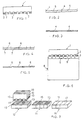
- the comb-like manifold schematically illustrated in Fig. 1 and generally designated by reference numeral 1 has eight prongs or teeth 2.
- the shape of the teeth 2 and their spacing are adapted to the sample wells of an electrophoretic apparatus as will be described in more detail below.
- the teeth 2 have been derivatized, indicated by shading 3, e.g. coated with avidin-conjugated particles as described in Example 1 below.
- the manifold 1 is designed to cooperate with corresponding well sets, two different embodiments of which are shown in Figs. 2, 3 and 4, 5, respectively.
- the well set of Figs. 2 and 3 has two elongate wells 4, each capable of receiving four manifold teeth 2. In the illustrated case, the wells 4 are partially filled with reagent solution 5.
- the well set embodiment illustrated in Figs. 4 and 5, on the other hand, has eight individual wells 6, each well 6 being adapted to receive a single manifold tooth 2 and here also shown as partially filled with reagent solution 7.
- manifold 1 is adapted to cooperate with the sample wells of an analytical apparatus. This is schematically illustrated in Fig. 6, where manifold 1 is placed above an electrophoretic apparatus, generally designated by reference numeral 8, with the teeth 2 aligned with and capable of being received in respective sample wells 9 of the electrophoretic apparatus.
- DNA sequencing according to the chain termination or dideoxy method using the manifold and well sets described above may be conducted as follows:
- Manifold 1 is provided with streptavidin immobilized to the teeth 2 thereof as indicated at 3 in Fig. 1.
- PCR on a desired DNA sequence is performed in per se conventional manner in each elongate well 4 of the well strip of Figs. 2 and 3, using one biotin-labelled primer and one non-labelled primer.
- the streptavidin-coated teeth 2 of manifold 1 are then introduced into the reaction mixtures 5 in the wells 4 to bind the respective biotin-labelled PCR reaction products thereto, i.e. in the illustrated case a first PCR reaction product to one set of four adjacent teeth and a second PCR reaction product to the other set of four teeth.
- each doublestranded DNA fragment is then melted off by subjecting the teeth to denaturing conditions, e.g. heat and/or alkali treatment.
- denaturing conditions e.g. heat and/or alkali treatment.
- the denaturing to single-stranded DNA may, however, be performed already in the PCR reaction mixture after completed reaction prior to the immobilization to the solid phase.
- the manifold teeth 2 are introduced into the wells 4 of a second well strip of the type shown in Figs. 2 and 3 containing a reaction solution 5 for hybridizing a labelled primer (e.g. a coloured or fluorescent tag) to the single stranded DNA fragments or templates bound to the manifold teeth 2.
- a labelled primer e.g. a coloured or fluorescent tag
- dNTP's or ddNTP's used in the subsequent extension reaction steps may be labelled instead of the primers.
- the manifold 1 is then removed from the well strip, and after a quick wash the teeth 2 thereof are introduced into the eight individual wells 6 of the well strip shown in Figs. 4 and 5, each set of four wells 6 containing sequence reaction mixtures 7 with a respective dideoxynucleotide (ddNTP) in each well to permit nucleotide polymerizations on the solid phase-bound templates in per se known manner.
- ddNTP dideoxynucleotide
- manifold 1 After washing of the manifold teeth 2, manifold 1 is now transferred to and aligned with the electrophoretic apparatus 8 as shown in Fig. 6, and the manifold teeth 2 are introduced into the sample wells 9 of the electrophoretic apparatus 8.
- the sample wells 8 contain a suitable agent solution, e.g. formamide, for effecting desorption of the mixture of dideoxy terminated extension products from the templates carried by each manifold teeth 2. After desorption for a few minutes, the manifold 1 is lifted out from the wells 9, and the electrophoretic process is started.
- Fig. 7 illustrates a set of several, here four, manifolds 10, each having four teeth 11.
- Manifolds 10 are designed to permit being stacked together by suitable means (not shown), without the teeth 11 of adjacent manifolds contacting each other, such that all four manifolds may be handled as a single unit.
- the manifold set is placed above and aligned with a corresponding set 12 of elongate wells 13, each well 13 being adapted for receiving all four teeth of one manifold 10.
- a second well set 14 having respective wells 15 for each manifold tooth 11.
- a third well set 16 is shown, having four elongate wells 17 arranged transversely to the wells 13 of well set 12 to each receive a respective tooth row (consisting of one tooth 11 from each manifold 10) of the stacked manifold set.
- the manifolds and well sets may be provided in a kit form, which preferably has the necessary reagent components present in a dried state in the wells and/or on the solid phase members.
- dried state reaction mixtures it may be referred to, for example, EP-A-298 669, EP-A-383 569 and US-A-4,891,319.
- Sepharose® particles HiTrap® , NHS-activated Sepharose® HP, Pharmacia LKB Biotechnology AB, Uppsala Sweden
- 6.0 ml of sedimented material were carefully washed with ice cold 1 mM HCl (3 x 10 ml) on a sintered funnel, making sure that the Sepharose® surface did not at any time become dry.
- the particles were quickly washed with a solution of 1.0 M NaCl and 0.4 M NaHCO 3 , buffered to pH 8.3, and transferred to a final volume of 5 ml of the above buffer, containing 10 mg of avidin.
- the suspension was incubated rotating end-over-end for one hour, filtered, and the particles were blocked in 0.1 M ethanolamine buffer, pH 8.3, for 15 minutes.
- the avidin-conjugated Sepharose® particles were then washed with 0.1 M acetate buffer, pH 4.0, and used immmediately or stored in 0.05 M Tris-buffer, pH 7.3, with 0.02% (w/v) sodium azide.
- Avidin-conjugated particles as prepared above were filtered, washed with distilled water, dried with methanol (3 x 5 ml), and then equilibrated with triethylamine (Et 3 N; 3 x 5 ml). The solid was quickly transferred to a suitable vessel and Et 3 N was added to obtain a slurry of about 75% (v/v) particles.
- a polystyrene support configured as a microtiter plate lid with 8 rows of 12 pin-and-ball extensions adapted to project into individual microtiter wells of a corresponding microtiter plate (F.A.S.T.
- the manifold was stored until use in buffer (1 M NaCl, 100 mM Tris-HCl, pH 7.5, and 0.1% (v/v) TritonTM X 100), with the addition of 0.5% (w/v) fat-free dry milk and 0.02% sodium azide.
- DNA dideoxy sequencing reactions were then performed substantially according to the standard protocol described by Hultman et al. (1989) NAR 17: 4937-4946, by first trapping and purifying the 5'-biotinylated template strand on the manifold teeth and then dipping the manifold teeth into wells containing the appropriate reaction media.
- the teeth of the manifold were introduced into the wells of the sequencing gel of an A.L.F.TM DNA Sequencer (Pharmacia LKB Biotechnology AB, Uppsala, Sweden), the wells containing concentrated formamide.
- the teeth were allowed to remain submersed in the formamide for 5 minutes at room temperature.
- the electrophoresis was then started and stopped after another 5 minutes when the manifold was removed.
- the electrophoresis was then continued and run in per se conventional manner. The sequence reading indicated that efficient desorption and gel separation of the dideoxy-terminated reaction fragments had taken place in the sample wells.
Landscapes
- Chemical & Material Sciences (AREA)
- Life Sciences & Earth Sciences (AREA)
- Organic Chemistry (AREA)
- Health & Medical Sciences (AREA)
- Proteomics, Peptides & Aminoacids (AREA)
- Engineering & Computer Science (AREA)
- Zoology (AREA)
- Wood Science & Technology (AREA)
- Chemical Kinetics & Catalysis (AREA)
- Analytical Chemistry (AREA)
- General Health & Medical Sciences (AREA)
- Biotechnology (AREA)
- General Engineering & Computer Science (AREA)
- Immunology (AREA)
- Microbiology (AREA)
- Molecular Biology (AREA)
- Physics & Mathematics (AREA)
- Genetics & Genomics (AREA)
- Biophysics (AREA)
- Biochemistry (AREA)
- Bioinformatics & Cheminformatics (AREA)
- Clinical Laboratory Science (AREA)
- Hematology (AREA)
- Measuring Or Testing Involving Enzymes Or Micro-Organisms (AREA)
- Apparatus Associated With Microorganisms And Enzymes (AREA)
Applications Claiming Priority (3)
| Application Number | Priority Date | Filing Date | Title |
|---|---|---|---|
| SE9203320A SE9203320D0 (sv) | 1992-11-06 | 1992-11-06 | A method of processing nucleic acid samples |
| SE9203320 | 1992-11-06 | ||
| PCT/SE1993/000929 WO1994011529A1 (en) | 1992-11-06 | 1993-11-05 | A method of processing nucleic acid samples |
Publications (2)
| Publication Number | Publication Date |
|---|---|
| EP0672189A1 EP0672189A1 (en) | 1995-09-20 |
| EP0672189B1 true EP0672189B1 (en) | 2002-03-06 |
Family
ID=20387732
Family Applications (1)
| Application Number | Title | Priority Date | Filing Date |
|---|---|---|---|
| EP94900332A Expired - Lifetime EP0672189B1 (en) | 1992-11-06 | 1993-11-05 | A method of processing nucleic acid samples |
Country Status (6)
| Country | Link |
|---|---|
| US (1) | US5618701A (enExample) |
| EP (1) | EP0672189B1 (enExample) |
| JP (1) | JPH08503133A (enExample) |
| DE (1) | DE69331665T2 (enExample) |
| SE (1) | SE9203320D0 (enExample) |
| WO (1) | WO1994011529A1 (enExample) |
Families Citing this family (50)
| Publication number | Priority date | Publication date | Assignee | Title |
|---|---|---|---|---|
| SE9201929D0 (sv) * | 1992-06-23 | 1992-06-23 | Pharmacia Lkb Biotech | Method and system for molecular-biological diagnostics |
| US5795714A (en) | 1992-11-06 | 1998-08-18 | Trustees Of Boston University | Method for replicating an array of nucleic acid probes |
| US6436635B1 (en) | 1992-11-06 | 2002-08-20 | Boston University | Solid phase sequencing of double-stranded nucleic acids |
| SE9401594D0 (sv) * | 1994-05-06 | 1994-05-06 | Pharmacia Lkb Biotech | Method of nucleic acid transfer |
| SE9402518D0 (sv) * | 1994-07-18 | 1994-07-18 | Pharmacia Biotech Ab | Processing system |
| SE9403805D0 (sv) * | 1994-11-07 | 1994-11-07 | Ulf Landegren | Method of preparing oligonucleotide probes or primers, vector therefor and use thereof |
| US5972188A (en) * | 1995-03-03 | 1999-10-26 | Genetic Biosystems, Inc. | Membrane loader for gel electrophoresis |
| CA2220467A1 (en) * | 1995-05-11 | 1996-11-14 | Arild Lagerkvist | Detection of mismatches by resolvase cleavage on a solid support |
| SE9504099D0 (sv) * | 1995-11-16 | 1995-11-16 | Pharmacia Biotech Ab | A method of sequencing |
| JP3764779B2 (ja) * | 1996-03-30 | 2006-04-12 | 株式会社東北テクノアーチ | 凸状領域を用いた分析方法 |
| US5980713A (en) * | 1996-08-29 | 1999-11-09 | The Regents Of The University Of California | Micro injector sample delivery system for charged molecules |
| US6124092A (en) | 1996-10-04 | 2000-09-26 | The Perkin-Elmer Corporation | Multiplex polynucleotide capture methods and compositions |
| FR2754469B1 (fr) * | 1996-10-10 | 1998-12-04 | Corning Inc | Outil de transport de gouttes de liquide et procede de transfert de gouttes a l'aide d'un tel outil |
| CN1234112A (zh) * | 1996-10-10 | 1999-11-03 | 康宁股份有限公司 | 液滴传送工具和用该工具传送液滴的方法 |
| EP1164203B1 (en) | 1996-11-06 | 2007-10-10 | Sequenom, Inc. | DNA Diagnostics based on mass spectrometry |
| US6133436A (en) | 1996-11-06 | 2000-10-17 | Sequenom, Inc. | Beads bound to a solid support and to nucleic acids |
| US7285422B1 (en) | 1997-01-23 | 2007-10-23 | Sequenom, Inc. | Systems and methods for preparing and analyzing low volume analyte array elements |
| US6024925A (en) * | 1997-01-23 | 2000-02-15 | Sequenom, Inc. | Systems and methods for preparing low volume analyte array elements |
| DE19700626A1 (de) | 1997-01-10 | 1998-07-16 | Europ Lab Molekularbiolog | Probenzuführung |
| WO1998035059A1 (en) * | 1997-02-11 | 1998-08-13 | Hildebrand William H | Class i sequence based typing of hla-a, -b, and -c alleles by direct dna sequencing |
| US6077669A (en) * | 1997-11-04 | 2000-06-20 | Becton Dickinson And Company | Kit and method for fluorescence based detection assay |
| US20020090639A1 (en) * | 1998-02-26 | 2002-07-11 | Mcginnis Ralph Evan | Two dimensional linkage study methods and related inventions |
| CA2322521A1 (en) * | 1998-03-03 | 1999-09-10 | Merck & Co., Inc. | Sealing apparatus for use with microplates |
| JP2000035432A (ja) * | 1998-07-17 | 2000-02-02 | Inst Of Physical & Chemical Res | オリゴヌクレオチド検出および塩基配列決定法 |
| SE9802951D0 (sv) * | 1998-09-02 | 1998-09-02 | Amersham Pharm Biotech Ab | Metod för screening samt verktyg att använda i metoden |
| US7612020B2 (en) * | 1998-12-28 | 2009-11-03 | Illumina, Inc. | Composite arrays utilizing microspheres with a hybridization chamber |
| US20030138774A1 (en) * | 2000-01-19 | 2003-07-24 | Jones Chris L. | Methods and apparatus for separating and detecting nucleic acid |
| JP4015946B2 (ja) | 2000-10-30 | 2007-11-28 | シークエノム・インコーポレーテツド | 基板上にサブマイクロリットルの体積を供給する方法及び装置 |
| NZ530626A (en) * | 2001-09-25 | 2007-11-30 | Prionics Ag | Test strips for the detection of prion proteins |
| ITCZ20020002A1 (it) * | 2002-04-11 | 2003-10-13 | Parco Scient E Tecnologico Del | Dispositivo e metodo per il rilevamento simultaneo di differenti anticorpi e antigeni in campioni clinici, alimentari ed ambientali |
| US20030208936A1 (en) * | 2002-05-09 | 2003-11-13 | Lee Charles Hee | Method for manufacturing embroidery decorated cards and envelopes |
| US20040129676A1 (en) * | 2003-01-07 | 2004-07-08 | Tan Roy H. | Apparatus for transfer of an array of liquids and methods for manufacturing same |
| US20050226782A1 (en) * | 2003-09-19 | 2005-10-13 | Reed Mark T | High density plate filler |
| US20060233673A1 (en) * | 2003-09-19 | 2006-10-19 | Beard Nigel P | High density plate filler |
| US20060233671A1 (en) * | 2003-09-19 | 2006-10-19 | Beard Nigel P | High density plate filler |
| US8277760B2 (en) * | 2003-09-19 | 2012-10-02 | Applied Biosystems, Llc | High density plate filler |
| US20050220675A1 (en) * | 2003-09-19 | 2005-10-06 | Reed Mark T | High density plate filler |
| US9492820B2 (en) | 2003-09-19 | 2016-11-15 | Applied Biosystems, Llc | High density plate filler |
| US7695688B2 (en) * | 2003-09-19 | 2010-04-13 | Applied Biosystems, Llc | High density plate filler |
| US20060272738A1 (en) * | 2003-09-19 | 2006-12-07 | Gary Lim | High density plate filler |
| US7407630B2 (en) * | 2003-09-19 | 2008-08-05 | Applera Corporation | High density plate filler |
| US7998435B2 (en) * | 2003-09-19 | 2011-08-16 | Life Technologies Corporation | High density plate filler |
| WO2005113804A1 (en) * | 2004-05-20 | 2005-12-01 | Trillion Genomics Limited | Use of mass labelled probes to detect target nucleic acids using mass spectrometry |
| US20060246576A1 (en) | 2005-04-06 | 2006-11-02 | Affymetrix, Inc. | Fluidic system and method for processing biological microarrays in personal instrumentation |
| WO2007035836A2 (en) * | 2005-09-20 | 2007-03-29 | The Board Of Regents Of The University Of Oklahoma | Accelerated class i and class ii hla dna sequence-based typing |
| US20080003667A1 (en) * | 2006-05-19 | 2008-01-03 | Affymetrix, Inc. | Consumable elements for use with fluid processing and detection systems |
| US20090180931A1 (en) | 2007-09-17 | 2009-07-16 | Sequenom, Inc. | Integrated robotic sample transfer device |
| US8405379B1 (en) | 2008-09-18 | 2013-03-26 | Luc Montagnier | System and method for the analysis of DNA sequences in biological fluids |
| WO2021113290A1 (en) | 2019-12-03 | 2021-06-10 | Alamar Biosciences, Inc. | Nucleic acid linked immune-sandwich assay (nulisa) |
| US12704508B2 (en) | 2021-06-02 | 2026-08-11 | Alamar Biosciences, Inc. | Nucleic acid linked immune-sandwich assay (NULISA) |
Family Cites Families (7)
| Publication number | Priority date | Publication date | Assignee | Title |
|---|---|---|---|---|
| DE259628C (enExample) * | ||||
| NL8203102A (nl) * | 1982-08-04 | 1984-03-01 | Katholieke Universiteit Facult | Papier voor rna-blotting; werkwijze voor het maken daarvan; toepassingen van het papier. |
| US4734363A (en) * | 1984-11-27 | 1988-03-29 | Molecular Diagnostics, Inc. | Large scale production of DNA probes |
| US4891321A (en) * | 1987-10-21 | 1990-01-02 | Hubscher Thomas T | Apparatus for performing determinations of immune reactants in biological fluids |
| US5188963A (en) * | 1989-11-17 | 1993-02-23 | Gene Tec Corporation | Device for processing biological specimens for analysis of nucleic acids |
| DD279506A1 (de) * | 1989-01-19 | 1990-06-06 | Akad Wissenschaften Ddr | Vorrichtung und verfahren zur sequenzanalyse von dna durch chemische degradation an fester phase |
| US5244788A (en) * | 1992-07-01 | 1993-09-14 | Hubscher Thomas T | Method and apparatus for performing determinations of immune rectants in biological fluids |
-
1992
- 1992-11-06 SE SE9203320A patent/SE9203320D0/xx unknown
-
1993
- 1993-11-05 JP JP6511979A patent/JPH08503133A/ja active Pending
- 1993-11-05 WO PCT/SE1993/000929 patent/WO1994011529A1/en not_active Ceased
- 1993-11-05 DE DE69331665T patent/DE69331665T2/de not_active Expired - Fee Related
- 1993-11-05 US US08/432,115 patent/US5618701A/en not_active Expired - Lifetime
- 1993-11-05 EP EP94900332A patent/EP0672189B1/en not_active Expired - Lifetime
Also Published As
| Publication number | Publication date |
|---|---|
| DE69331665T2 (de) | 2002-11-07 |
| US5618701A (en) | 1997-04-08 |
| EP0672189A1 (en) | 1995-09-20 |
| SE9203320D0 (sv) | 1992-11-06 |
| WO1994011529A1 (en) | 1994-05-26 |
| JPH08503133A (ja) | 1996-04-09 |
| DE69331665D1 (de) | 2002-04-11 |
Similar Documents
| Publication | Publication Date | Title |
|---|---|---|
| US5618701A (en) | Method of processing nucleic acid samples | |
| US10982274B2 (en) | Bead emulsion nucleic acid amplification | |
| EP0758405B1 (en) | Method of nucleic acid transfer | |
| JP2000500024A (ja) | 塩基配列決定法 | |
| EP1027458A2 (en) | Multiple sequential polynucleotide displacement reactions for signal amplification and processing | |
| WO1992003575A1 (en) | Method for preparing, isolating and sequencing polynucleotides | |
| WO1996019587A3 (en) | Methods of immobilizing oligonucleotides to solid support materials and methods of using support bound oligonucleotides | |
| US8975017B2 (en) | Process for concentrating nucleic acid molecules | |
| CN115747301B (zh) | 一种测序文库的构建方法、构建测序文库的试剂盒及基因测序方法 | |
| WO1989009281A1 (en) | Method for amplifying and detecting nucleic acid in a test liquid | |
| AU2008200151B2 (en) | Bead Emulsion Nucleic Acid Amplification | |
| CA2773059C (en) | Bead emulsion nucleic acid amplification | |
| WO2000015842A1 (en) | Method of isolation primer extension products with modular oligonucleotides | |
| JPH03123500A (ja) | 核酸の分別方法 | |
| JP2004500062A (ja) | 核酸を選択的に単離するための方法 | |
| GB2284051A (en) | Quantitative determination of nucleic acids using enzyme labels | |
| WO2004087908A1 (ja) | マイクロアレイ再生方法及びマイクロアレイ再生試薬キット |
Legal Events
| Date | Code | Title | Description |
|---|---|---|---|
| PUAI | Public reference made under article 153(3) epc to a published international application that has entered the european phase |
Free format text: ORIGINAL CODE: 0009012 |
|
| 17P | Request for examination filed |
Effective date: 19950413 |
|
| AK | Designated contracting states |
Kind code of ref document: A1 Designated state(s): CH DE FR GB IT LI NL SE |
|
| 17Q | First examination report despatched |
Effective date: 19990706 |
|
| GRAG | Despatch of communication of intention to grant |
Free format text: ORIGINAL CODE: EPIDOS AGRA |
|
| GRAG | Despatch of communication of intention to grant |
Free format text: ORIGINAL CODE: EPIDOS AGRA |
|
| GRAG | Despatch of communication of intention to grant |
Free format text: ORIGINAL CODE: EPIDOS AGRA |
|
| GRAH | Despatch of communication of intention to grant a patent |
Free format text: ORIGINAL CODE: EPIDOS IGRA |
|
| RAP1 | Party data changed (applicant data changed or rights of an application transferred) |
Owner name: AMERSHAM PHARMACIA BIOTECH AB |
|
| GRAH | Despatch of communication of intention to grant a patent |
Free format text: ORIGINAL CODE: EPIDOS IGRA |
|
| REG | Reference to a national code |
Ref country code: GB Ref legal event code: IF02 |
|
| GRAA | (expected) grant |
Free format text: ORIGINAL CODE: 0009210 |
|
| RAP1 | Party data changed (applicant data changed or rights of an application transferred) |
Owner name: AMERSHAM BIOSCIENCES AB |
|
| AK | Designated contracting states |
Kind code of ref document: B1 Designated state(s): CH DE FR GB IT LI NL SE |
|
| PG25 | Lapsed in a contracting state [announced via postgrant information from national office to epo] |
Ref country code: NL Free format text: LAPSE BECAUSE OF FAILURE TO SUBMIT A TRANSLATION OF THE DESCRIPTION OR TO PAY THE FEE WITHIN THE PRESCRIBED TIME-LIMIT Effective date: 20020306 Ref country code: LI Free format text: LAPSE BECAUSE OF FAILURE TO SUBMIT A TRANSLATION OF THE DESCRIPTION OR TO PAY THE FEE WITHIN THE PRESCRIBED TIME-LIMIT Effective date: 20020306 Ref country code: IT Free format text: LAPSE BECAUSE OF FAILURE TO SUBMIT A TRANSLATION OF THE DESCRIPTION OR TO PAY THE FEE WITHIN THE PRESCRIBED TIME-LIMIT;WARNING: LAPSES OF ITALIAN PATENTS WITH EFFECTIVE DATE BEFORE 2007 MAY HAVE OCCURRED AT ANY TIME BEFORE 2007. THE CORRECT EFFECTIVE DATE MAY BE DIFFERENT FROM THE ONE RECORDED. Effective date: 20020306 Ref country code: FR Free format text: LAPSE BECAUSE OF FAILURE TO SUBMIT A TRANSLATION OF THE DESCRIPTION OR TO PAY THE FEE WITHIN THE PRESCRIBED TIME-LIMIT Effective date: 20020306 Ref country code: CH Free format text: LAPSE BECAUSE OF FAILURE TO SUBMIT A TRANSLATION OF THE DESCRIPTION OR TO PAY THE FEE WITHIN THE PRESCRIBED TIME-LIMIT Effective date: 20020306 |
|
| REG | Reference to a national code |
Ref country code: CH Ref legal event code: EP |
|
| REF | Corresponds to: |
Ref document number: 69331665 Country of ref document: DE Date of ref document: 20020411 |
|
| PG25 | Lapsed in a contracting state [announced via postgrant information from national office to epo] |
Ref country code: SE Free format text: LAPSE BECAUSE OF FAILURE TO SUBMIT A TRANSLATION OF THE DESCRIPTION OR TO PAY THE FEE WITHIN THE PRESCRIBED TIME-LIMIT Effective date: 20020606 |
|
| NLV1 | Nl: lapsed or annulled due to failure to fulfill the requirements of art. 29p and 29m of the patents act | ||
| REG | Reference to a national code |
Ref country code: CH Ref legal event code: PL |
|
| PGFP | Annual fee paid to national office [announced via postgrant information from national office to epo] |
Ref country code: GB Payment date: 20021030 Year of fee payment: 10 |
|
| PGFP | Annual fee paid to national office [announced via postgrant information from national office to epo] |
Ref country code: DE Payment date: 20021107 Year of fee payment: 10 |
|
| EN | Fr: translation not filed | ||
| PLBE | No opposition filed within time limit |
Free format text: ORIGINAL CODE: 0009261 |
|
| STAA | Information on the status of an ep patent application or granted ep patent |
Free format text: STATUS: NO OPPOSITION FILED WITHIN TIME LIMIT |
|
| 26N | No opposition filed |
Effective date: 20021209 |
|
| PG25 | Lapsed in a contracting state [announced via postgrant information from national office to epo] |
Ref country code: GB Free format text: LAPSE BECAUSE OF NON-PAYMENT OF DUE FEES Effective date: 20031105 |
|
| PG25 | Lapsed in a contracting state [announced via postgrant information from national office to epo] |
Ref country code: DE Free format text: LAPSE BECAUSE OF NON-PAYMENT OF DUE FEES Effective date: 20040602 |
|
| GBPC | Gb: european patent ceased through non-payment of renewal fee |
Effective date: 20031105 |