EP0652758B1 - Diphtheria toxin vaccines - Google Patents
Diphtheria toxin vaccines Download PDFInfo
- Publication number
- EP0652758B1 EP0652758B1 EP93913897A EP93913897A EP0652758B1 EP 0652758 B1 EP0652758 B1 EP 0652758B1 EP 93913897 A EP93913897 A EP 93913897A EP 93913897 A EP93913897 A EP 93913897A EP 0652758 B1 EP0652758 B1 EP 0652758B1
- Authority
- EP
- European Patent Office
- Prior art keywords
- polypeptide
- dna
- cell
- glu
- toxin
- Prior art date
- Legal status (The legal status is an assumption and is not a legal conclusion. Google has not performed a legal analysis and makes no representation as to the accuracy of the status listed.)
- Expired - Lifetime
Links
- 108010053187 Diphtheria Toxin Proteins 0.000 title claims abstract description 80
- 102000016607 Diphtheria Toxin Human genes 0.000 title claims abstract description 79
- 229960005486 vaccine Drugs 0.000 title claims description 36
- 108020004705 Codon Proteins 0.000 claims abstract description 18
- 101800000585 Diphtheria toxin fragment A Proteins 0.000 claims abstract description 14
- 108090000765 processed proteins & peptides Proteins 0.000 claims description 65
- 229920001184 polypeptide Polymers 0.000 claims description 64
- 102000004196 processed proteins & peptides Human genes 0.000 claims description 64
- 108020004414 DNA Proteins 0.000 claims description 49
- 239000012634 fragment Substances 0.000 claims description 32
- 231100000765 toxin Toxicity 0.000 claims description 27
- 239000003053 toxin Substances 0.000 claims description 25
- 125000000539 amino acid group Chemical group 0.000 claims description 22
- 238000000034 method Methods 0.000 claims description 21
- 150000001413 amino acids Chemical class 0.000 claims description 13
- 241000588724 Escherichia coli Species 0.000 claims description 12
- 230000004927 fusion Effects 0.000 claims description 12
- 230000014509 gene expression Effects 0.000 claims description 12
- 239000000126 substance Substances 0.000 claims description 12
- 230000005847 immunogenicity Effects 0.000 claims description 10
- 238000002360 preparation method Methods 0.000 claims description 10
- 239000002671 adjuvant Substances 0.000 claims description 9
- 150000007523 nucleic acids Chemical group 0.000 claims description 8
- 230000002588 toxic effect Effects 0.000 claims description 8
- 241001465754 Metazoa Species 0.000 claims description 7
- 241000186227 Corynebacterium diphtheriae Species 0.000 claims description 5
- 108091028043 Nucleic acid sequence Proteins 0.000 claims description 5
- 238000012258 culturing Methods 0.000 claims description 5
- 241000607149 Salmonella sp. Species 0.000 claims description 4
- 241000607626 Vibrio cholerae Species 0.000 claims description 4
- 239000000203 mixture Substances 0.000 claims description 4
- 229940118696 vibrio cholerae Drugs 0.000 claims description 4
- 235000014469 Bacillus subtilis Nutrition 0.000 claims description 3
- 238000004519 manufacturing process Methods 0.000 claims description 3
- 101800002949 Diphtheria toxin fragment B Proteins 0.000 claims description 2
- 229940030156 cell vaccine Drugs 0.000 claims description 2
- 150000004676 glycans Chemical class 0.000 claims description 2
- 229920001282 polysaccharide Polymers 0.000 claims description 2
- 239000005017 polysaccharide Substances 0.000 claims description 2
- 230000035755 proliferation Effects 0.000 claims description 2
- 210000004027 cell Anatomy 0.000 description 39
- 108090000623 proteins and genes Proteins 0.000 description 31
- 229960003983 diphtheria toxoid Drugs 0.000 description 30
- 238000012217 deletion Methods 0.000 description 23
- 230000037430 deletion Effects 0.000 description 23
- 230000035772 mutation Effects 0.000 description 21
- 102000004169 proteins and genes Human genes 0.000 description 21
- 108700012359 toxins Proteins 0.000 description 18
- 235000018102 proteins Nutrition 0.000 description 17
- 230000000694 effects Effects 0.000 description 16
- 235000001014 amino acid Nutrition 0.000 description 13
- 229940024606 amino acid Drugs 0.000 description 12
- WHUUTDBJXJRKMK-UHFFFAOYSA-N Glutamic acid Natural products OC(=O)C(N)CCC(O)=O WHUUTDBJXJRKMK-UHFFFAOYSA-N 0.000 description 10
- 231100000419 toxicity Toxicity 0.000 description 9
- 230000001988 toxicity Effects 0.000 description 9
- 239000013612 plasmid Substances 0.000 description 8
- 241001467552 Mycobacterium bovis BCG Species 0.000 description 7
- 241000700605 Viruses Species 0.000 description 7
- 229960000190 bacillus calmette–guérin vaccine Drugs 0.000 description 7
- 206010013023 diphtheria Diseases 0.000 description 7
- 108020004707 nucleic acids Proteins 0.000 description 7
- 102000039446 nucleic acids Human genes 0.000 description 7
- 238000001243 protein synthesis Methods 0.000 description 7
- 230000014616 translation Effects 0.000 description 7
- 230000002238 attenuated effect Effects 0.000 description 6
- 230000000813 microbial effect Effects 0.000 description 6
- 238000010561 standard procedure Methods 0.000 description 6
- 102000009062 ADP Ribose Transferases Human genes 0.000 description 5
- 108010049290 ADP Ribose Transferases Proteins 0.000 description 5
- 102100031334 Elongation factor 2 Human genes 0.000 description 5
- WSFSSNUMVMOOMR-UHFFFAOYSA-N Formaldehyde Chemical compound O=C WSFSSNUMVMOOMR-UHFFFAOYSA-N 0.000 description 5
- 108010077519 Peptide Elongation Factor 2 Proteins 0.000 description 5
- 125000003275 alpha amino acid group Chemical group 0.000 description 5
- 230000008859 change Effects 0.000 description 5
- 244000005700 microbiome Species 0.000 description 5
- 238000002741 site-directed mutagenesis Methods 0.000 description 5
- 238000006467 substitution reaction Methods 0.000 description 5
- 239000013598 vector Substances 0.000 description 5
- 108700039691 Genetic Promoter Regions Proteins 0.000 description 4
- TWRXJAOTZQYOKJ-UHFFFAOYSA-L Magnesium chloride Chemical compound [Mg+2].[Cl-].[Cl-] TWRXJAOTZQYOKJ-UHFFFAOYSA-L 0.000 description 4
- 229960000723 ampicillin Drugs 0.000 description 4
- AVKUERGKIZMTKX-NJBDSQKTSA-N ampicillin Chemical compound C1([C@@H](N)C(=O)N[C@H]2[C@H]3SC([C@@H](N3C2=O)C(O)=O)(C)C)=CC=CC=C1 AVKUERGKIZMTKX-NJBDSQKTSA-N 0.000 description 4
- 230000022534 cell killing Effects 0.000 description 4
- 238000005119 centrifugation Methods 0.000 description 4
- 230000003053 immunization Effects 0.000 description 4
- 239000002773 nucleotide Substances 0.000 description 4
- 230000001681 protective effect Effects 0.000 description 4
- 108020003175 receptors Proteins 0.000 description 4
- 102000005962 receptors Human genes 0.000 description 4
- 230000005945 translocation Effects 0.000 description 4
- 238000001262 western blot Methods 0.000 description 4
- 241000894006 Bacteria Species 0.000 description 3
- 241000124008 Mammalia Species 0.000 description 3
- 229920005654 Sephadex Polymers 0.000 description 3
- 239000012507 Sephadex™ Substances 0.000 description 3
- 239000004098 Tetracycline Substances 0.000 description 3
- 108091007433 antigens Proteins 0.000 description 3
- 102000036639 antigens Human genes 0.000 description 3
- 238000003556 assay Methods 0.000 description 3
- 238000010276 construction Methods 0.000 description 3
- 230000002255 enzymatic effect Effects 0.000 description 3
- 230000002068 genetic effect Effects 0.000 description 3
- 235000013922 glutamic acid Nutrition 0.000 description 3
- 239000004220 glutamic acid Substances 0.000 description 3
- 238000011534 incubation Methods 0.000 description 3
- 230000005764 inhibitory process Effects 0.000 description 3
- 239000002502 liposome Substances 0.000 description 3
- 239000012528 membrane Substances 0.000 description 3
- 239000004005 microsphere Substances 0.000 description 3
- 125000003729 nucleotide group Chemical group 0.000 description 3
- 239000000047 product Substances 0.000 description 3
- 230000001105 regulatory effect Effects 0.000 description 3
- 241000894007 species Species 0.000 description 3
- 238000003786 synthesis reaction Methods 0.000 description 3
- 229960002180 tetracycline Drugs 0.000 description 3
- 229930101283 tetracycline Natural products 0.000 description 3
- 235000019364 tetracycline Nutrition 0.000 description 3
- 150000003522 tetracyclines Chemical class 0.000 description 3
- 238000013518 transcription Methods 0.000 description 3
- 230000035897 transcription Effects 0.000 description 3
- UXVMQQNJUSDDNG-UHFFFAOYSA-L Calcium chloride Chemical compound [Cl-].[Cl-].[Ca+2] UXVMQQNJUSDDNG-UHFFFAOYSA-L 0.000 description 2
- 108091026890 Coding region Proteins 0.000 description 2
- 241000186216 Corynebacterium Species 0.000 description 2
- KCXVZYZYPLLWCC-UHFFFAOYSA-N EDTA Chemical compound OC(=O)CN(CC(O)=O)CCN(CC(O)=O)CC(O)=O KCXVZYZYPLLWCC-UHFFFAOYSA-N 0.000 description 2
- 239000006137 Luria-Bertani broth Substances 0.000 description 2
- KDXKERNSBIXSRK-UHFFFAOYSA-N Lysine Natural products NCCCCC(N)C(O)=O KDXKERNSBIXSRK-UHFFFAOYSA-N 0.000 description 2
- 239000004472 Lysine Substances 0.000 description 2
- 102000016943 Muramidase Human genes 0.000 description 2
- 108010014251 Muramidase Proteins 0.000 description 2
- 108010062010 N-Acetylmuramoyl-L-alanine Amidase Proteins 0.000 description 2
- 108010076504 Protein Sorting Signals Proteins 0.000 description 2
- 239000007983 Tris buffer Substances 0.000 description 2
- AZDRQVAHHNSJOQ-UHFFFAOYSA-N alumane Chemical class [AlH3] AZDRQVAHHNSJOQ-UHFFFAOYSA-N 0.000 description 2
- 230000001147 anti-toxic effect Effects 0.000 description 2
- 239000000427 antigen Substances 0.000 description 2
- 230000015572 biosynthetic process Effects 0.000 description 2
- 239000001110 calcium chloride Substances 0.000 description 2
- 229910001628 calcium chloride Inorganic materials 0.000 description 2
- 125000003636 chemical group Chemical group 0.000 description 2
- 238000007796 conventional method Methods 0.000 description 2
- 210000000172 cytosol Anatomy 0.000 description 2
- 239000007857 degradation product Substances 0.000 description 2
- 239000000539 dimer Substances 0.000 description 2
- 239000002158 endotoxin Substances 0.000 description 2
- 230000002708 enhancing effect Effects 0.000 description 2
- 238000010353 genetic engineering Methods 0.000 description 2
- 230000001900 immune effect Effects 0.000 description 2
- 230000028993 immune response Effects 0.000 description 2
- 230000036039 immunity Effects 0.000 description 2
- 230000002163 immunogen Effects 0.000 description 2
- 238000001727 in vivo Methods 0.000 description 2
- 208000015181 infectious disease Diseases 0.000 description 2
- 239000007924 injection Substances 0.000 description 2
- 238000002347 injection Methods 0.000 description 2
- BPHPUYQFMNQIOC-NXRLNHOXSA-N isopropyl beta-D-thiogalactopyranoside Chemical compound CC(C)S[C@@H]1O[C@H](CO)[C@H](O)[C@H](O)[C@H]1O BPHPUYQFMNQIOC-NXRLNHOXSA-N 0.000 description 2
- 229940124590 live attenuated vaccine Drugs 0.000 description 2
- 229940023012 live-attenuated vaccine Drugs 0.000 description 2
- 229960000274 lysozyme Drugs 0.000 description 2
- 235000010335 lysozyme Nutrition 0.000 description 2
- 239000004325 lysozyme Substances 0.000 description 2
- 229910001629 magnesium chloride Inorganic materials 0.000 description 2
- 239000002609 medium Substances 0.000 description 2
- 230000004048 modification Effects 0.000 description 2
- 238000012986 modification Methods 0.000 description 2
- 230000036961 partial effect Effects 0.000 description 2
- 239000008188 pellet Substances 0.000 description 2
- 230000002062 proliferating effect Effects 0.000 description 2
- 230000010076 replication Effects 0.000 description 2
- 230000004044 response Effects 0.000 description 2
- 231100000331 toxic Toxicity 0.000 description 2
- 210000003956 transport vesicle Anatomy 0.000 description 2
- LENZDBCJOHFCAS-UHFFFAOYSA-N tris Chemical compound OCC(N)(CO)CO LENZDBCJOHFCAS-UHFFFAOYSA-N 0.000 description 2
- 239000003981 vehicle Substances 0.000 description 2
- OTLLEIBWKHEHGU-UHFFFAOYSA-N 2-[5-[[5-(6-aminopurin-9-yl)-3,4-dihydroxyoxolan-2-yl]methoxy]-3,4-dihydroxy-6-(hydroxymethyl)oxan-2-yl]oxy-3,5-dihydroxy-4-phosphonooxyhexanedioic acid Chemical compound C1=NC=2C(N)=NC=NC=2N1C(C(C1O)O)OC1COC1C(CO)OC(OC(C(O)C(OP(O)(O)=O)C(O)C(O)=O)C(O)=O)C(O)C1O OTLLEIBWKHEHGU-UHFFFAOYSA-N 0.000 description 1
- 230000005730 ADP ribosylation Effects 0.000 description 1
- 231100000699 Bacterial toxin Toxicity 0.000 description 1
- 241000588832 Bordetella pertussis Species 0.000 description 1
- 101000679617 Bordetella pertussis (strain Tohama I / ATCC BAA-589 / NCTC 13251) Pertussis toxin subunit 1 Proteins 0.000 description 1
- 108091003079 Bovine Serum Albumin Proteins 0.000 description 1
- 108010071134 CRM197 (non-toxic variant of diphtheria toxin) Proteins 0.000 description 1
- 241000700198 Cavia Species 0.000 description 1
- 241000700199 Cavia porcellus Species 0.000 description 1
- 102000004163 DNA-directed RNA polymerases Human genes 0.000 description 1
- 108090000626 DNA-directed RNA polymerases Proteins 0.000 description 1
- 108090000204 Dipeptidase 1 Proteins 0.000 description 1
- 241001198387 Escherichia coli BL21(DE3) Species 0.000 description 1
- 208000000666 Fowlpox Diseases 0.000 description 1
- 102400001369 Heparin-binding EGF-like growth factor Human genes 0.000 description 1
- 101800001649 Heparin-binding EGF-like growth factor Proteins 0.000 description 1
- CKLJMWTZIZZHCS-REOHCLBHSA-N L-aspartic acid Chemical compound OC(=O)[C@@H](N)CC(O)=O CKLJMWTZIZZHCS-REOHCLBHSA-N 0.000 description 1
- AGPKZVBTJJNPAG-WHFBIAKZSA-N L-isoleucine Chemical compound CC[C@H](C)[C@H](N)C(O)=O AGPKZVBTJJNPAG-WHFBIAKZSA-N 0.000 description 1
- QIVBCDIJIAJPQS-VIFPVBQESA-N L-tryptophane Chemical compound C1=CC=C2C(C[C@H](N)C(O)=O)=CNC2=C1 QIVBCDIJIAJPQS-VIFPVBQESA-N 0.000 description 1
- GUBGYTABKSRVRQ-QKKXKWKRSA-N Lactose Natural products OC[C@H]1O[C@@H](O[C@H]2[C@H](O)[C@@H](O)C(O)O[C@@H]2CO)[C@H](O)[C@@H](O)[C@H]1O GUBGYTABKSRVRQ-QKKXKWKRSA-N 0.000 description 1
- 241000222722 Leishmania <genus> Species 0.000 description 1
- 108010021466 Mutant Proteins Proteins 0.000 description 1
- 102000008300 Mutant Proteins Human genes 0.000 description 1
- 108091034117 Oligonucleotide Proteins 0.000 description 1
- 108010087702 Penicillinase Proteins 0.000 description 1
- 208000000474 Poliomyelitis Diseases 0.000 description 1
- 241000607142 Salmonella Species 0.000 description 1
- 108091081024 Start codon Proteins 0.000 description 1
- 108010008038 Synthetic Vaccines Proteins 0.000 description 1
- 108700009124 Transcription Initiation Site Proteins 0.000 description 1
- QIVBCDIJIAJPQS-UHFFFAOYSA-N Tryptophan Natural products C1=CC=C2C(CC(N)C(O)=O)=CNC2=C1 QIVBCDIJIAJPQS-UHFFFAOYSA-N 0.000 description 1
- 241000700618 Vaccinia virus Species 0.000 description 1
- 239000002253 acid Substances 0.000 description 1
- 150000007513 acids Chemical class 0.000 description 1
- 239000011543 agarose gel Substances 0.000 description 1
- 230000004075 alteration Effects 0.000 description 1
- 238000004458 analytical method Methods 0.000 description 1
- 230000003466 anti-cipated effect Effects 0.000 description 1
- 230000000890 antigenic effect Effects 0.000 description 1
- 238000013459 approach Methods 0.000 description 1
- 229940009098 aspartate Drugs 0.000 description 1
- 229940031567 attenuated vaccine Drugs 0.000 description 1
- 230000001580 bacterial effect Effects 0.000 description 1
- 239000000688 bacterial toxin Substances 0.000 description 1
- 229960001212 bacterial vaccine Drugs 0.000 description 1
- 102000006635 beta-lactamase Human genes 0.000 description 1
- 229920000249 biocompatible polymer Polymers 0.000 description 1
- 230000004071 biological effect Effects 0.000 description 1
- 239000008280 blood Substances 0.000 description 1
- 210000004369 blood Anatomy 0.000 description 1
- 229940098773 bovine serum albumin Drugs 0.000 description 1
- 210000004899 c-terminal region Anatomy 0.000 description 1
- 125000002915 carbonyl group Chemical group [*:2]C([*:1])=O 0.000 description 1
- 238000004113 cell culture Methods 0.000 description 1
- 238000001311 chemical methods and process Methods 0.000 description 1
- 238000007385 chemical modification Methods 0.000 description 1
- 239000003795 chemical substances by application Substances 0.000 description 1
- 238000004587 chromatography analysis Methods 0.000 description 1
- 238000003776 cleavage reaction Methods 0.000 description 1
- 239000013599 cloning vector Substances 0.000 description 1
- 239000011248 coating agent Substances 0.000 description 1
- 238000000576 coating method Methods 0.000 description 1
- 230000001472 cytotoxic effect Effects 0.000 description 1
- 230000034994 death Effects 0.000 description 1
- 230000007423 decrease Effects 0.000 description 1
- 230000002950 deficient Effects 0.000 description 1
- 201000010099 disease Diseases 0.000 description 1
- 208000037265 diseases, disorders, signs and symptoms Diseases 0.000 description 1
- 230000004064 dysfunction Effects 0.000 description 1
- 238000005516 engineering process Methods 0.000 description 1
- 239000002095 exotoxin Substances 0.000 description 1
- 231100000776 exotoxin Toxicity 0.000 description 1
- 239000013604 expression vector Substances 0.000 description 1
- 239000000284 extract Substances 0.000 description 1
- 238000009472 formulation Methods 0.000 description 1
- 108020001507 fusion proteins Proteins 0.000 description 1
- 102000037865 fusion proteins Human genes 0.000 description 1
- 239000000499 gel Substances 0.000 description 1
- 230000004077 genetic alteration Effects 0.000 description 1
- 238000009650 gentamicin protection assay Methods 0.000 description 1
- 239000001963 growth medium Substances 0.000 description 1
- 238000002649 immunization Methods 0.000 description 1
- 238000011065 in-situ storage Methods 0.000 description 1
- 230000000415 inactivating effect Effects 0.000 description 1
- 238000010348 incorporation Methods 0.000 description 1
- 230000000977 initiatory effect Effects 0.000 description 1
- 230000003993 interaction Effects 0.000 description 1
- 229960000310 isoleucine Drugs 0.000 description 1
- AGPKZVBTJJNPAG-UHFFFAOYSA-N isoleucine Natural products CCC(C)C(N)C(O)=O AGPKZVBTJJNPAG-UHFFFAOYSA-N 0.000 description 1
- 125000000741 isoleucyl group Chemical group [H]N([H])C(C(C([H])([H])[H])C([H])([H])C([H])([H])[H])C(=O)O* 0.000 description 1
- 238000002372 labelling Methods 0.000 description 1
- 239000008101 lactose Substances 0.000 description 1
- 231100000636 lethal dose Toxicity 0.000 description 1
- 230000000670 limiting effect Effects 0.000 description 1
- 210000004962 mammalian cell Anatomy 0.000 description 1
- 239000000463 material Substances 0.000 description 1
- 239000000693 micelle Substances 0.000 description 1
- 239000006151 minimal media Substances 0.000 description 1
- 238000010369 molecular cloning Methods 0.000 description 1
- 229940031348 multivalent vaccine Drugs 0.000 description 1
- 239000013642 negative control Substances 0.000 description 1
- 231100000252 nontoxic Toxicity 0.000 description 1
- 230000003000 nontoxic effect Effects 0.000 description 1
- 238000012856 packing Methods 0.000 description 1
- 244000045947 parasite Species 0.000 description 1
- 238000007911 parenteral administration Methods 0.000 description 1
- 229950009506 penicillinase Drugs 0.000 description 1
- 238000010647 peptide synthesis reaction Methods 0.000 description 1
- 210000001322 periplasm Anatomy 0.000 description 1
- 239000002504 physiological saline solution Substances 0.000 description 1
- 239000013600 plasmid vector Substances 0.000 description 1
- 229920000642 polymer Polymers 0.000 description 1
- 239000013641 positive control Substances 0.000 description 1
- 238000001556 precipitation Methods 0.000 description 1
- 230000009465 prokaryotic expression Effects 0.000 description 1
- 238000000164 protein isolation Methods 0.000 description 1
- 238000002708 random mutagenesis Methods 0.000 description 1
- 230000009257 reactivity Effects 0.000 description 1
- 230000010837 receptor-mediated endocytosis Effects 0.000 description 1
- 229940124551 recombinant vaccine Drugs 0.000 description 1
- 238000011084 recovery Methods 0.000 description 1
- 238000009877 rendering Methods 0.000 description 1
- 230000000717 retained effect Effects 0.000 description 1
- 108020004418 ribosomal RNA Proteins 0.000 description 1
- 238000003345 scintillation counting Methods 0.000 description 1
- 230000007017 scission Effects 0.000 description 1
- 230000028327 secretion Effects 0.000 description 1
- 238000013207 serial dilution Methods 0.000 description 1
- 230000002269 spontaneous effect Effects 0.000 description 1
- 238000013268 sustained release Methods 0.000 description 1
- 239000012730 sustained-release form Substances 0.000 description 1
- 238000012360 testing method Methods 0.000 description 1
- 210000001519 tissue Anatomy 0.000 description 1
- 230000013715 transcription antitermination Effects 0.000 description 1
- 230000005026 transcription initiation Effects 0.000 description 1
- 230000005030 transcription termination Effects 0.000 description 1
- 238000012546 transfer Methods 0.000 description 1
- 230000009261 transgenic effect Effects 0.000 description 1
- 230000032258 transport Effects 0.000 description 1
- 241000701161 unidentified adenovirus Species 0.000 description 1
- 241001529453 unidentified herpesvirus Species 0.000 description 1
- 238000002255 vaccination Methods 0.000 description 1
- 230000001018 virulence Effects 0.000 description 1
Images

Classifications
-
- A—HUMAN NECESSITIES
- A61—MEDICAL OR VETERINARY SCIENCE; HYGIENE
- A61K—PREPARATIONS FOR MEDICAL, DENTAL OR TOILETRY PURPOSES
- A61K39/00—Medicinal preparations containing antigens or antibodies
- A61K39/385—Haptens or antigens, bound to carriers
-
- A—HUMAN NECESSITIES
- A61—MEDICAL OR VETERINARY SCIENCE; HYGIENE
- A61K—PREPARATIONS FOR MEDICAL, DENTAL OR TOILETRY PURPOSES
- A61K39/00—Medicinal preparations containing antigens or antibodies
- A61K39/02—Bacterial antigens
- A61K39/05—Actinobacteria, e.g. Actinomyces, Streptomyces, Nocardia, Bifidobacterium, Gardnerella, Corynebacterium; Propionibacterium
-
- A—HUMAN NECESSITIES
- A61—MEDICAL OR VETERINARY SCIENCE; HYGIENE
- A61K—PREPARATIONS FOR MEDICAL, DENTAL OR TOILETRY PURPOSES
- A61K47/00—Medicinal preparations characterised by the non-active ingredients used, e.g. carriers or inert additives; Targeting or modifying agents chemically bound to the active ingredient
- A61K47/50—Medicinal preparations characterised by the non-active ingredients used, e.g. carriers or inert additives; Targeting or modifying agents chemically bound to the active ingredient the non-active ingredient being chemically bound to the active ingredient, e.g. polymer-drug conjugates
- A61K47/51—Medicinal preparations characterised by the non-active ingredients used, e.g. carriers or inert additives; Targeting or modifying agents chemically bound to the active ingredient the non-active ingredient being chemically bound to the active ingredient, e.g. polymer-drug conjugates the non-active ingredient being a modifying agent
- A61K47/62—Medicinal preparations characterised by the non-active ingredients used, e.g. carriers or inert additives; Targeting or modifying agents chemically bound to the active ingredient the non-active ingredient being chemically bound to the active ingredient, e.g. polymer-drug conjugates the non-active ingredient being a modifying agent the modifying agent being a protein, peptide or polyamino acid
- A61K47/64—Drug-peptide, drug-protein or drug-polyamino acid conjugates, i.e. the modifying agent being a peptide, protein or polyamino acid which is covalently bonded or complexed to a therapeutically active agent
- A61K47/646—Drug-peptide, drug-protein or drug-polyamino acid conjugates, i.e. the modifying agent being a peptide, protein or polyamino acid which is covalently bonded or complexed to a therapeutically active agent the entire peptide or protein drug conjugate elicits an immune response, e.g. conjugate vaccines
-
- A—HUMAN NECESSITIES
- A61—MEDICAL OR VETERINARY SCIENCE; HYGIENE
- A61P—SPECIFIC THERAPEUTIC ACTIVITY OF CHEMICAL COMPOUNDS OR MEDICINAL PREPARATIONS
- A61P31/00—Antiinfectives, i.e. antibiotics, antiseptics, chemotherapeutics
- A61P31/04—Antibacterial agents
-
- C—CHEMISTRY; METALLURGY
- C07—ORGANIC CHEMISTRY
- C07K—PEPTIDES
- C07K14/00—Peptides having more than 20 amino acids; Gastrins; Somatostatins; Melanotropins; Derivatives thereof
- C07K14/195—Peptides having more than 20 amino acids; Gastrins; Somatostatins; Melanotropins; Derivatives thereof from bacteria
- C07K14/34—Peptides having more than 20 amino acids; Gastrins; Somatostatins; Melanotropins; Derivatives thereof from bacteria from Corynebacterium (G)
-
- A—HUMAN NECESSITIES
- A61—MEDICAL OR VETERINARY SCIENCE; HYGIENE
- A61K—PREPARATIONS FOR MEDICAL, DENTAL OR TOILETRY PURPOSES
- A61K39/00—Medicinal preparations containing antigens or antibodies
- A61K2039/60—Medicinal preparations containing antigens or antibodies characteristics by the carrier linked to the antigen
- A61K2039/6031—Proteins
- A61K2039/6037—Bacterial toxins, e.g. diphteria toxoid [DT], tetanus toxoid [TT]
-
- Y—GENERAL TAGGING OF NEW TECHNOLOGICAL DEVELOPMENTS; GENERAL TAGGING OF CROSS-SECTIONAL TECHNOLOGIES SPANNING OVER SEVERAL SECTIONS OF THE IPC; TECHNICAL SUBJECTS COVERED BY FORMER USPC CROSS-REFERENCE ART COLLECTIONS [XRACs] AND DIGESTS
- Y10—TECHNICAL SUBJECTS COVERED BY FORMER USPC
- Y10S—TECHNICAL SUBJECTS COVERED BY FORMER USPC CROSS-REFERENCE ART COLLECTIONS [XRACs] AND DIGESTS
- Y10S424/00—Drug, bio-affecting and body treating compositions
- Y10S424/832—Drug, bio-affecting and body treating compositions involving bacterial toxin that has modified amino acid sequence
Definitions
- This invention relates to vaccines which protect against diphtheria toxin.
- Diphtheria toxin is a protein exotoxin produced by the bacterium Corynebacteria diphtheria.
- the DT molecule is produced as a single polypeptide that is readily nicked to form two subunits linked by a disulfide bond, Fragment A (N-terminal ⁇ 21K) and Fragment B (C-terminal ⁇ 37K), as a result of cleavage at residue 190, 192, or 193 (Moskaug, et al., Biol Chem 264 :15709-15713, 1989; Collier et al., Biol Chem, 246 :1496-1503, 1971).
- Fragment A is the catalytically active portion of DT.
- Fragment B of DT possesses a receptor-binding domain which recognizes and binds the toxin molecule to a particular receptor structure found on the surfaces of many types of mammalian cells. Once DT is bound to the cell via this receptor structure, the receptor/DT complex is taken up by the cell via receptor-mediated endocytosis.
- a second functional region on Fragment B acts to translocate DT across the membrane of the endocytic vesicle, releasing catalytically active Fragment A into the cytosol of the cell.
- a single molecule of Fragment A is sufficient to inactivate the protein synthesis machinery in a given cell.
- Immunity to a bacterial toxin such as DT may be acquired naturally during the course of an infection, or artificially by injection of a detoxified form of the toxin (a toxoid) (Germanier, ed., Bacterial Vaccines, Academic Press, Orlando, Fl., 1984).
- Toxoids have traditionally been prepared by chemical modification of native toxins (e.g., with formalin or formaldehyde (Lingood et al., Brit. J. Exp. Path. 44 :177, 1963)), rendering them nontoxic while retaining an antigenicity that protects the vaccinated animal against subsequent challenges by the natural toxin: an example of a chemically-inactivated DT is that described by Michel and Dirkx (Biochem.
- Trp-153 of Fragment A is the modified residue.
- Trp-153 of Fragment A is the modified residue.
- such a chemically modified toxin may occasionally lose the added chemical group or groups, and revert to its active, toxic form, so that its use as a vaccine poses a possible risk to the recipient.
- 4,709,017 discloses a genetically engineered diphtheria toxin mutant that bears a deletion mutation at Glu-148 of diphtheria toxin.
- Glu-148 was originally identified as an active-site residue by photoaffinity labelling (Carroll et al., Proc. Natl. Acad. Sci. USA 81 :3307, 1984; Carroll et al. Proc. Natl. Acad. Sci. USA 82 :7237, 1985; Carroll et al., J. Biol. Chem. 262 :8707, 1987).
- Patent No: 4,950,740 discloses genetically engineered mutant forms of DT in which the Glu-148 residue is deleted or replaced with Asn, and the Ala-158 residue is replaced with Gly.
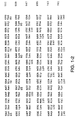
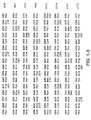
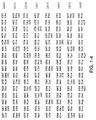
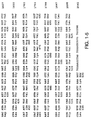
- the DNA sequence and corresponding amino acid sequence of wild-type diphtheria toxin DNA are set forth in Fig. 1 (SEQ ID NO:1).
- a recent approach to vaccination utilizes live, genetically engineered microorganisms (cells or viruses) expressing mutant toxin genes. Because live vaccines proliferate in the vaccinee, their genes, including those encoding a genetically engineered toxoid, can in theory mutate over time within the vaccinee. If such a spontaneous mutation causes a genetically engineered toxoid to revert to toxicity, illness and/or death of the vaccinee can result.
- the DT Glu-148 deletion mutant disclosed in Collier et al., U.S. Patent No. 4,709,017 a strong candidate for a genetically engineered diphtheria toxoid, carries a small but possibly significant risk of reversion to partial toxicity.
- the toxoids of the invention and the DNA which encodes them, carry significantly less risk of reversion than does the Collier et al. Glu-148 deletion mutant, and so are substantially better candidates for using in a live, genetically engineered vaccine cell that is capable of proliferating in the vaccinee.
- the invention features a DNA encoding an immunologically cross-reactive form of diphtheria toxin Fragment A, or encoding both Fragment A and Fragment B, wherein the codons corresponding to Val-147 and Glu-148 (Fig. 1; SEQ ID NO:1) of naturally-occurring diphtheria toxin are absent from the DNA.
- a codon corresponding to a third amino acid residue of the naturally occurring toxin can be deleted or altered to encode an amino acid residue different from that of the naturally occurring toxin, the presence of the third amino acid residue of the naturally occurring toxin being essential for the full toxic activity of the naturally occurring toxin.
- the third amino acid residue may be in the Fragment A portion of diphtheria toxin, in which case the third amino acid residue of the naturally occurring toxin may be, for example, Gly-52, Gly-79, Gly-128, Ala-158, or Glu-162.
- the third amino acid residue may instead be in the Fragment B portion of diphtheria toxin, the third amino acid residue of the naturally occurring toxin being, for example, Glu-349, Asp-352, or Ile-364.
- the codon corresponding to Glu-142 is absent or is altered to encode an amino acid other than Glu, or all of the codons from Glu-142 to Glu-148, inclusive, are absent.
- wild-type diphtheria toxin having the amino acid sequence shown in Fig. 1 (SEQ ID NO:1).
- full toxic activity of the naturally occurring toxin is meant 100% of the ability of wild-type diphtheria toxin to attach to, penetrate, and kill cells, as measured in a standard cell-killing assay, as described below.
- the invention also includes vectors (i.e., plasmids, phages and viruses) including DNA sequences encoding the Fragment A variants described herein.
- Expression of a diphtheria toxoid polypeptide of the invention is under the control of a heterologous promoter, and/or the expressed amino acids are linked to a signal sequence.
- heterologous promoter is meant a promoter region that is not identical to the promoter region found in a naturally occurring diphtheria toxin gene.
- the promoter region is a segment of DNA 5' to the transcription start site of a gene, to which RNA polymerase binds before initiating transcription of the gene.
- An essentially pure preparation of the nucleic acid of the invention is a preparation containing the nucleic acid of the invention, and which is substantially free of other nucleic acid molecules with which a nucleic acid encoding diphtheria toxin is naturally associated in Corynebacterium.
- a DNA encoding a diphtheria toxoid of the invention can be contained in a cell, or a homogeneous population of cells, preferably a B. subtilis, Bacillus Calmette-Guerin (BCG), Salmonella sp., Vibrio cholerae, Corynebacterium diphtheria, Listeriae, Yersiniae, Streptococci, or E. coli cell.
- the cell is preferably capable of expressing the diphtheria toxoid polypeptide of the invention.
- diphtheria toxin Fragment A encompasses a diphtheria toxoid polypeptide that is immunologically cross-reactive, and retains at least 40% homology, with naturally occurring Fragment A.
- a vaccine of the invention can include any of the various DNAs encoding a diphtheria toxoid of the invention, or a cell or virus containing a DNA of the invention, preferably a live vaccine cell, more preferably a B. subtilis, BCG, Salmonella sp., Vibrio cholerae, Listeriae, Yersiniae, Streptococci, Corynebacterium diphtheriae, or E. coli cell.
- a "live vaccine cell”, as used herein, is either a naturally avirulent live microorganism, or a live microorganism with either low or attenuated virulence, that expresses an immunogen.
- One method for manufacturing a vaccine of the invention includes culturing a cell containing DNA encoding a diphtheria toxoid of the invention under conditions permitting proliferation of the cell, the cell being one that is suitable for introduction into an animal as a live-cell vaccine.
- the vaccine can be used in a method of immunizing a mammal against diphtheria, preferably a human, the method including introducing an immunizing amount of a vaccine of the invention into the mammal.
- One, but not the only, method of administering an acellular vaccine that includes a DNA encoding a diphtheria toxoid of the invention is by biolistic transfer, a method of delivery involving coating a microprojectile with DNA encoding an immunogen of interest, and injecting the coated microprojectile directly into cells of the recipient (Tang, et al., Nature 356 :152-154, 1992).
- the diphtheria toxoid of the invention is then expressed from the DNA to stimulate an immune response in the recipient.
- the vaccines of the invention immunize against progression of the disease diphtheria, and against infection by the bacterium Corynebacterium diphtheriae.
- the invention features a polypeptide that is an immunologically cross-reactive form of diphtheria toxin Fragment A, or preferably of Fragment A and Fragment B, wherein amino acids corresponding to Val-147 and Glu-148 (SEQ ID NO: 1) of naturally-occurring diphtheria toxin are absent from the polypeptide.
- the toxoid retains Tyr-149.
- a third amino acid residue in the naturally occurring toxin is deleted or is altered to encode an amino acid residue different from the third amino acid residue in the naturally occurring toxin, the presence of the third amino acid residue in the naturally occurring toxin being essential for the full toxic activity of the naturally occurring toxin.
- the third amino acid residue can be in the Fragment A portion of diphtheria toxin, preferably His-21, Gly-22, Lys-39, Gly-52, Gly-79, Gly-128, Ala-158, or Glu-162, or in the Fragment B portion of diphtheria toxin, preferably amino acid Glu-349, Asp-352, or Ile-364.
- Glu-142 of the polypeptide can be absent or altered to an amino acid other than Glu.
- all of the amino acids from Glu-142 to Glu-148 can be absent.
- the polypeptide can be made by any suitable method, preferably by culturing any of the various cells containing a DNA encoding a diphtheria toxoid of the invention under conditions permitting the expression of the DNA.
- a substantially pure preparation of a polypeptide of the invention is meant that at least 50% (by weight) of the protein present in the preparation is the diphtheria toxoid polypeptide of the invention. In preferred embodiments, at least 75%, more preferably at least 90%, and most preferably at least 99% (by weight) of the protein present in the preparation is the diphtheria toxoid polypeptide of the invention.
- a vaccine against diphtheria toxin can be made of a composition that includes a diphtheria toxoid polypeptide of the invention, and an adjuvant.
- Adjuvants can include, but are not limited to, any presently known type of adjuvant such as aluminum salts, bacterial endotoxins, Bacillus Calmette-Guerin (BCG), liposomes, microspheres (i.e., microencapsulation polymers used in orally administered vaccines), and Freund's complete or incomplete adjuvant.
- An "adjuvant”, as used herein, is a substance that is capable of increasing the immunogenicity of an antigen.
- the diphtheria toxoid polypeptide of the invention may be covalently attached to a moiety, e.g., a polysaccharide or a second polypeptide.
- the moiety may serve as a carrier substance for the polypeptide; or, alternatively, the diphtheria toxoid polypeptide of the invention can serve as a carrier substance for the moiety, preferably enhancing the immunogenicity of the moiety.
- a "carrier substance” is a substance that confers stability on, and/or aids or enhances the transport or immunogenicity of, an associated molecule.
- a diphtheria toxoid of the invention can also be part of a fusion polypeptide consisting of the diphtheria toxoid polypeptide of the invention linked by a peptide bond to an additional polypeptide.
- the fusion polypeptide is included in a vaccine, which can be used to immunize a human patient against diphtheria toxin.
- the diphtheria toxoid polypeptide of the invention can act as a carrier substance for the additional polypeptide, preferably enhancing the immunogenicity of that additional polypeptide.
- the DNA encoding the fusion polypeptide can be used directly as a vaccine, or can be incorporated into a cell, and preferably that cell (e.g.
- Fusion polypeptide refers to a protein molecule produced by expression of a hybrid DNA in which a DNA encoding the diphtheria toxoid of the invention is linked by means of genetic engineering to a second DNA encoding a second polypeptide sequence.
- “Homology” refers to the sequence identity between two polypeptide molecules or between two nucleic acid molecules. When a given position in both of the two compared sequences is occupied by the same amino acid monomeric subunit, e.g., if a position in each of two polypeptide molecules is occupied by aspartate, then the molecules are homologous at the position.
- the homology between two sequences is a function of the number of matching positions shared by the two sequences. For example, if 6 of 10 of the positions in two sequences are matched or homologous then the two sequences are 60% homologous.
- the amino acid sequences LTVSFR and LPVSAT share 50% homology.
- an immunologically cross-reactive form of diphtheria toxin Fragment A or Fragment B is at least 40%, preferably 50%, more preferably at least 60%, and most preferably at least 80% homologous to naturally occurring Fragment A or B, respectively.
- Applicants have shown how to construct a mutant form of diphtheria toxin Fragment A that is safe to administer to a human patient in the form of a live attenuated vaccine strain which expresses the toxoid of the invention.
- Use of a live vaccine strain has many advantages over immunizing with a diphtheria toxoid alone.
- a live organism proliferates in the recipient and expresses the cloned protective protein antigen.
- a live attenuated vaccine remains in the vaccinee longer than would an injected polypeptide, and continuously produces the genetically engineered protein in situ.
- Such a live vaccine may require fewer injections or boosters for effective immunization, can often be orally administered, and can be used to administer multiple antigens at once.
- Applicants have experimentally deleted or substituted amino acids in the vicinity of the active site for ADP-ribosyltransferase activity, i.e., amino acids on the NH 2 -terminal side of Glu-148 of Fig. 1 (SEQ ID NO:1). In so doing, they have determined which amino acid positions, if mutated to a Glu residue, would restore toxic activity to a DT toxoid in which the critical residue Glu-148 is missing. With this knowledge, these residues can be deleted or altered in such a way as to reduce the probability that phenotypic reversion would occur in vivo. In this way, Applicants have designed mutations of diphtheria toxin which render it enzymatically dysfunctional and substantially free of any risk of reversion, even in a continuously proliferating microbial host.
- the resulting toxoid combined with a pharmaceutically suitable vehicle to form a vaccine composition that is inoculated into a mammal, generates immunological protection against diphtheria toxin.
- the toxoid is produced by culturing a cell that includes a DNA vehicle having DNA encoding the toxoid and regulatory DNA capable of effecting its expression.
- Fig. 1 is a representation of the nucleotide sequence and corresponding amino acid sequence of wildtype diphtheria toxin encoding DNA (SEQ ID NO:1).
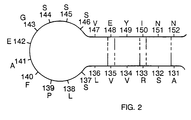
- Fig. 2 is a schematic representation of the secondary structure within which Glu-148 resides.
- the drawing is based on the previously described x-ray crystallographic model of the DT dimer (Collier et al., WO-A-9321769; Choe et al., Nature 357 :216-222, 1992).
- Glu-148 (E148) is seen to lie on a ⁇ -strand, one residue removed from a loop connecting this strand with the adjacent, NH 2 -proximal ⁇ -strand. H-bonds between backbone N (---) and carbonyl O (-) atoms within these 2 strands are shown.
- This residue is located in the translocation domain and plays an important role in DT's translocation from the endocytic vesicle to the cytosol. Independently, this mutation produces a toxoid that is 500-fold deficient in protein synthesis inhibition compared to wild-type DT. The appropriate two base change would have to occur in order for lysine 364 to mutate to isoleucine and restore toxicity.
- Deletions and substitutions can be generated by oligonucleotide-directed mutagenesis of the diphtheria toxin Fragment A (DTA) gene, as described below.
- the mutant genes can then be expressed in E. coli or any other standard expression system by standard methods, and extracts assayed for NAD:EF-2 ADP-ribosyltransferase activity and for DT-specific protein by Western blot analysis as described below.
- a plasmid encoding the F2 fragment of DT, pBRptac Bam HIATGF2 was constructed according to the method of Greenfield et al. (Greenfield et al., PNAS. 80 :6853-6857, 1983).
- the F2 fragment of DT contains the naturally-occurring DT leader sequence, all of Fragment A, and the N-terminal 189 amino acid residues of Fragment B, so that the final construct includes amino acids 1-382 of SEQ ID NO:1.
- the plasmid F2 was digested with Bam HI and Cla I. The resulting 949 base-pair fragment was ligated with Bam HI- and Acc I-restricted M13mp19, yielding M13mp19-F2.
- An Nde I restriction site spanning the translational start codon of F2, and a translational stop codon at Arg-192 of F2 were created by the site-directed mutagenesis procedure described by Sayers et al. (Nucleic Acids Res. 16 :791, 1988), yielding M13mpl9-DTA.
- the 968 base-pair Nde I- Hind III fragment of M13mp19-DTA was ligated in Nde I- and Hind III-restricted pT7-7 (Tabor, in Current Protocols in Molecular Biology, Ausubel et al., eds.; Greene, Wiley-Interscience, New York, 1991, pages 16.2.1-16.2.11), and the resulting plasmid, pT7-DTA, was used as a cloning vector to prepare each of the site-directed mutagenesis constructs of DTA listed in Table 1. All site-directed mutants were constructed with M13mp19-DTA template DNA and the appropriate oligonucleotide.
- PT7-DTA delta147,148 and PT7-DTA delta146-148 were digested with ApaI, MscI.
- the 539 bp ApaI-MscI fragment spanning each active-site deletion was isolated from a 1% agarose gel and ligated separately into ApaI, MscI digested ptac DT Ser148;364I>K, yielding ptacDTdelta147,148;364I>K and ptacDTdelta146-148;364I>K.
- Each plasmid was used to transform competent E. coli TG-1.
- Transformants were grown overnight in Luria broth +100 ⁇ g/ml ampicillin (L-amp), diluted 1/50 in L-amp. grown to OD 1.0, induced for 3 h with IPTG, and harvested by centrifugation (3000 x g, 5 min).
- Cell pellets were resuspended in 1/30 volume 10 mM Tris, 1 mM EDTA, pH 8.0 (TE) + 5 mM CaCl 2 , 5 mM MgCl 2 ; freeze-thaw cycled three times; incubated for 15 min with 0.1 mg/ml lysozyme and 1 ⁇ g/ml DNAseI; clarified by centrifugation (10,000 x g, 10 min) and desalted on G-50 Sephadex, by the same method used to desalt with G-25 Sephadex, as cited above.
- polypeptide backbone of the four residues immediately following Glu-148 (residues 149-152) is involved in H-bonding typical of antiparallel ⁇ -sheet, and this bonding, together with other packing interactions, may firmly anchor this region of polypeptide within the protein.
- deletion of both the Val-147 codon and the Glu-148 codon leaves Ser-146 immediately adjacent to Tyr-149; since the Ser AGC codon cannot be converted into a Glu codon without a change in all three nucleotides, the risk of reversion of this particular six-nucleotide deletion mutant to a mutant with some restored activity is substantially less (a probability lower than 10 -10 /cell/generation) than the risk of reversion of the mutant lacking only the Glu-148 codon.
- This recombinant toxoid, DT delta147,148;364I>K was cloned, expressed in E. coli, and assessed for overall protein stability and ADP-ribosyltransferase activity. Western blot analysis revealed a single full-length protein with few degradation products suggesting that the stability and overall structural integrity of the protein was maintained. As anticipated, the recombinant toxoid was devoid of activity ( ⁇ 10 -4 that of wild-type toxin).
- mutant protein so produced lacks detectable enzymatic activity
- mutants may then be analyzed for immunogenicity as follows:
- Guinea pigs (or another species which is naturally sensitive to the cell-killing effects of diphtheria toxin) are immunized with the recombinant toxoid of the invention according to the following protocol: between 1 and 50 ⁇ g recombinant toxoid, suspended in 50-100 ⁇ l of Freud's complete adjuvant, is subcutaneously injected into a guinea pig on day 1, day 12, and day 24. Blood samples are then assayed for antitoxin antibodies by testing serial dilutions for reactivity to naturally occurring diphtheria toxin.
- Appropriate live vaccine microorganisms (cells or viruses) genetically engineered to express a toxoid of the invention can be tested by injecting the candidate vaccine into a DT sensitive animal, and, after a 2-3 month incubation period, challenging the animal with either a) a lethal dose of naturally occurring DT, or b) multiple, serially administered doses of naturally occurring DT, so as to calibrate the range of acquired immunity.
- a DNA sequence encoding the diphtheria toxoid of the invention can be expressed by standard methods in a prokaryotic host cell.
- DNA encoding the diphtheria toxoid of the invention is carried on a vector operably linked to control signals capable of effecting expression in the prokaryotic host.
- the coding sequence can contain, at its 5' end, a sequence encoding any of the known signal sequences capable of effecting secretion of the expressed protein into the periplasmic space of the host cell, thereby facilitating recovery of the protein.
- a vector expressing the diphtheria toxoid of the invention, or a fusion protein including the polypeptide of the invention can consist of (i) an origin of replication functional in E.
- coli derived from the plasmid pBR322; (ii) a selectable tetracycline resistance gene also derived from pBR322; (iii) a transcription termination region, e.g., the termination of the E.
- coli trp operon (placed at the end of the tetracycline resistance gene to prevent transcriptional read-through into the trp promoter region); (iv) a transcription promoter, e.g., the trp operon promoter, or the diphtheria toxin promoter; (v) the protein coding sequence of the invention; and (vi) a transcription terminator, e.g., the T1T2 sequence from the ribosomal RNA ( rrn B) locus of E. coli.
- the sequences of carrier molecules, the methods used in the synthesis of the DNA sequences, the construction of fusion genes, and the appropriate vectors and expression systems are all well known to those skilled in the art. Similar expression systems can be designed for fusion or non-fusion polypeptides, i.e., for expression of the polypeptide of the invention alone. These procedures are an example of, but are not limiting on, the methods of the invention.
- Prokaryotes most frequently used are represented by various strains of E. coli; however, other microbial strains can also be used, e.g., C. diphtheriae.
- Plasmid vectors are used which contain replication origins, selectable markers, and control sequences derived from a species compatible with the microbial host.
- E. coli can be transformed using derivatives of pBR322, a plasmid constructed by Bolivar, et al. (Gene 2 :95, 1977) using fragments derived from three naturally-occurring plasmids, two isolated from species of Salmonella, and one isolated from E. coli.
- pBR322 contains genes for ampicillin and tetracycline resistance, and thus provides multiple selectable markers which can be either retained or destroyed in constructing the desired expression vector.
- Commonly used prokaryotic expression control sequences are defined herein to include promoters for transcription initiation, optionally with an operator, along with ribosome binding site sequences. Promoters commonly used to direct protein expression include the beta-lactamase (penicillinase), the lactose (lac) (Chang et al., Nature 198 :1056, 1977) and the tryptophan (trp) promoter systems (Goeddel et al., Nucl. Acids Res.
- the mutant diphtheria toxoid of the invention can be expressed in any known protein expression system and then purified by standard means.
- diphtheria toxoids of the invention can be synthesized by organic chemical synthesis or produced as a biosynthesized polypeptide.
- Organic chemical synthesis can be performed by conventional methods of automated peptide synthesis, or by classical organic chemical techniques.
- One schooled in the art can purify the diphtheria toxoid polypeptide of the invention using conventional methods of protein isolation, e.g., methods including but not limited to precipitation, chromatography, immunoadsorption, or affinity techniques.
- the polypeptide can be purified from the cells, or medium of the cells, of a microbial strain genetically engineered to express the diphtheria toxoid of the invention.
- the purified polypeptide may be combined with a suitable carrier (such as physiological saline); with an adjuvant that increases the immunogenicity of the toxoid (such as aluminum salts, bacterial endotoxins or attenuated bacterial strains (e.g., BCG or Bordetella pertussis), attenuated viruses, liposomes, microspheres, or Freund's complete or incomplete adjuvant)); and/or with additional toxoids or killed or attenuated vaccine organisms (to form a multivalent vaccine).
- a suitable carrier such as physiological saline
- an adjuvant that increases the immunogenicity of the toxoid such as aluminum salts, bacterial endotoxins or attenuated bacterial strains (e.g., BCG or Bordetella pertussis), attenuated viruses, liposomes, microspheres, or Freund's complete or incomplete adjuvant)
- additional toxoids or killed or attenuated vaccine organisms to form a multivalent vaccine
- Administration can be in a sustained release formulation using a biodegradable biocompatible polymer, such as a microsphere, by on-site delivery using micelles, gels or liposomes, or by transgenic modes (e.g., by biolistic administration of the DNA of the invention directly into the patient's cells, as described by Tang et al., Nature 356 :152-154, 1992).
- a biodegradable biocompatible polymer such as a microsphere
- Appropriate live carrier organisms include attenuated microorganisms such as BCG, Salmonella sp., Vibrio cholerae, Streptococci, Listeriae, and Yersiniae.
- the DNA of the invention can be stably transfected into such a microbial strain by standard methods (Sambrook et al., Molecular Cloning: A Laboratory Manual. Cold Spring Harbor Lab. Press, New York, 1989.), and then would be introduced into a patient by, for example, oral or parenteral administration. Once introduced into the patient, the bacterium would multiply and express the mutant form of diphtheria toxin within the patient, causing the patient to maintain a protective level of antibodies to the mutant toxin.
- an attenuated animal virus such as adenovirus, herpes virus, vaccinia virus, polio, fowl pox, or even attenuated eukaryotic parasites such as Leishmania may be employed as the carrier organism.
- the mutant DNA of the invention can be incorporated by genetic engineering techniques into the genome of any appropriate virus, which is then introduced into a human vaccinee by standard methods.
- a live vaccine of the invention can be administered at, for example, about 10 4 -10 8 organisms/dose, or a dose that is sufficient to stably induce protective levels of antitoxin. Actual dosages of such a vaccine can be readily determined by one of ordinary skill in the field of vaccine technology.
- diphtheria toxin-sensitive tissue culture cell line which is a line of cells bearing the diphtheria toxin receptor, e.g., viro or BSC1 cells.
- the cells are treated with a known amount of the candidate mutant diphtheria toxin, with naturally occurring diphtheria toxin (as a positive control), or with bovine serum albumin (as a negative control).
- a survival assay is performed by counting viable colonies (Yamaizumi, M. et al. Cell 15 :245-250, 1978).
- the extent of cell-killing can be determined by measuring the extent of inhibition of protein synthesis.
- a radiolabelled amino acid e.g., [ 14 C]Leu
- the decline in de novo protein synthesis is measured by scintillation counting of TCA-precipitable protein.
- a mutant form of diphtheria toxin Fragment A can be generated which lacks Glu-142 as well as Val-147 and Glu-148, or which lacks all of the residues from Glu-142 to Glu-148, inclusive.
- deletion mutants can be generated by site directed mutagenesis (Sayers, et al., supra), and analyzed for enzymatic activity and immunogenicity as described above.
- amino acid residues that have been shown to be essential for the biological activity of diphtheria toxin include residues His-21, Gly-22, Lys-39, Gly-52, Gly-79, Gly-128, Ala-158, and Gly-162 of the Fragment A portion of diphtheria toxin, and residues Glu-349, Asp-352, and Ile-364 of the Fragment B portion. Mutants lacking any one or more of these residues, in addition to lacking both Val-147 and Glu-148, may be generated by standard methods of site-directed mutagenesis known to one schooled in the art.
Landscapes
- Health & Medical Sciences (AREA)
- Life Sciences & Earth Sciences (AREA)
- Chemical & Material Sciences (AREA)
- Medicinal Chemistry (AREA)
- General Health & Medical Sciences (AREA)
- Animal Behavior & Ethology (AREA)
- Veterinary Medicine (AREA)
- Public Health (AREA)
- Pharmacology & Pharmacy (AREA)
- Proteomics, Peptides & Aminoacids (AREA)
- Mycology (AREA)
- Molecular Biology (AREA)
- Bioinformatics & Cheminformatics (AREA)
- Engineering & Computer Science (AREA)
- Epidemiology (AREA)
- Immunology (AREA)
- Organic Chemistry (AREA)
- Microbiology (AREA)
- Virology (AREA)
- Gastroenterology & Hepatology (AREA)
- Biochemistry (AREA)
- Biophysics (AREA)
- Genetics & Genomics (AREA)
- General Chemical & Material Sciences (AREA)
- Nuclear Medicine, Radiotherapy & Molecular Imaging (AREA)
- Chemical Kinetics & Catalysis (AREA)
- Oncology (AREA)
- Communicable Diseases (AREA)
- Medicines Containing Antibodies Or Antigens For Use As Internal Diagnostic Agents (AREA)
- Peptides Or Proteins (AREA)
- Micro-Organisms Or Cultivation Processes Thereof (AREA)
- Saccharide Compounds (AREA)
- Medicines That Contain Protein Lipid Enzymes And Other Medicines (AREA)
- Preparation Of Compounds By Using Micro-Organisms (AREA)
Applications Claiming Priority (3)
| Application Number | Priority Date | Filing Date | Title |
|---|---|---|---|
| US90171292A | 1992-06-18 | 1992-06-18 | |
| US901712 | 1992-06-18 | ||
| PCT/US1993/004606 WO1993025210A1 (en) | 1992-06-18 | 1993-05-17 | Diphtheria toxin vaccines |
Publications (3)
| Publication Number | Publication Date |
|---|---|
| EP0652758A1 EP0652758A1 (en) | 1995-05-17 |
| EP0652758A4 EP0652758A4 (en) | 1997-02-12 |
| EP0652758B1 true EP0652758B1 (en) | 2000-01-05 |
Family
ID=25414686
Family Applications (1)
| Application Number | Title | Priority Date | Filing Date |
|---|---|---|---|
| EP93913897A Expired - Lifetime EP0652758B1 (en) | 1992-06-18 | 1993-05-17 | Diphtheria toxin vaccines |
Country Status (12)
| Country | Link |
|---|---|
| US (1) | US5601827A (enExample) |
| EP (1) | EP0652758B1 (enExample) |
| JP (1) | JP3428646B2 (enExample) |
| AT (1) | ATE188508T1 (enExample) |
| AU (1) | AU671649B2 (enExample) |
| CA (1) | CA2138137C (enExample) |
| DE (1) | DE69327534T2 (enExample) |
| DK (1) | DK0652758T3 (enExample) |
| ES (1) | ES2142346T3 (enExample) |
| GR (1) | GR3032862T3 (enExample) |
| PT (1) | PT652758E (enExample) |
| WO (1) | WO1993025210A1 (enExample) |
Families Citing this family (61)
| Publication number | Priority date | Publication date | Assignee | Title |
|---|---|---|---|---|
| GB9513371D0 (en) * | 1995-06-30 | 1995-09-06 | Biocine Spa | Immunogenic detoxified mutant toxins |
| US6455673B1 (en) * | 1994-06-08 | 2002-09-24 | President And Fellows Of Harvard College | Multi-mutant diphtheria toxin vaccines |
| US5917017A (en) * | 1994-06-08 | 1999-06-29 | President And Fellows Of Harvard College | Diphtheria toxin vaccines bearing a mutated R domain |
| US5843462A (en) * | 1995-11-30 | 1998-12-01 | Regents Of The University Of Minnesota | Diphtheria toxin epitopes |
| WO1997043407A1 (en) * | 1996-05-10 | 1997-11-20 | Phylomed Corporation | Methods for oxidizing disulfide bonds using ozone |
| US6797276B1 (en) * | 1996-11-14 | 2004-09-28 | The United States Of America As Represented By The Secretary Of The Army | Use of penetration enhancers and barrier disruption agents to enhance the transcutaneous immune response |
| US5910306A (en) * | 1996-11-14 | 1999-06-08 | The United States Of America As Represented By The Secretary Of The Army | Transdermal delivery system for antigen |
| US20060002949A1 (en) * | 1996-11-14 | 2006-01-05 | Army Govt. Of The Usa, As Rep. By Secretary Of The Office Of The Command Judge Advocate, Hq Usamrmc. | Transcutaneous immunization without heterologous adjuvant |
| US20060002959A1 (en) * | 1996-11-14 | 2006-01-05 | Government Of The United States | Skin-sctive adjuvants for transcutaneous immuization |
| US5980898A (en) | 1996-11-14 | 1999-11-09 | The United States Of America As Represented By The U.S. Army Medical Research & Material Command | Adjuvant for transcutaneous immunization |
| US6818222B1 (en) | 1997-03-21 | 2004-11-16 | Chiron Corporation | Detoxified mutants of bacterial ADP-ribosylating toxins as parenteral adjuvants |
| US20040258703A1 (en) * | 1997-11-14 | 2004-12-23 | The Government Of The Us, As Represented By The Secretary Of The Army | Skin-active adjuvants for transcutaneous immunization |
| US20080050367A1 (en) * | 1998-04-07 | 2008-02-28 | Guriq Basi | Humanized antibodies that recognize beta amyloid peptide |
| US7790856B2 (en) * | 1998-04-07 | 2010-09-07 | Janssen Alzheimer Immunotherapy | Humanized antibodies that recognize beta amyloid peptide |
| US7964192B1 (en) | 1997-12-02 | 2011-06-21 | Janssen Alzheimer Immunotherapy | Prevention and treatment of amyloidgenic disease |
| US6761888B1 (en) | 2000-05-26 | 2004-07-13 | Neuralab Limited | Passive immunization treatment of Alzheimer's disease |
| US6787523B1 (en) * | 1997-12-02 | 2004-09-07 | Neuralab Limited | Prevention and treatment of amyloidogenic disease |
| US7588766B1 (en) | 2000-05-26 | 2009-09-15 | Elan Pharma International Limited | Treatment of amyloidogenic disease |
| TWI239847B (en) | 1997-12-02 | 2005-09-21 | Elan Pharm Inc | N-terminal fragment of Abeta peptide and an adjuvant for preventing and treating amyloidogenic disease |
| US20050059802A1 (en) * | 1998-04-07 | 2005-03-17 | Neuralab Ltd | Prevention and treatment of amyloidogenic disease |
| EP2368575B1 (en) * | 1999-04-08 | 2014-10-01 | Intercell USA, Inc. | Dry formulation for transcutaneous immunization |
| GB0108364D0 (en) | 2001-04-03 | 2001-05-23 | Glaxosmithkline Biolog Sa | Vaccine composition |
| KR20070091698A (ko) | 2000-06-29 | 2007-09-11 | 글락소스미스클라인 바이오로지칼즈 에스.에이. | 다가 백신 조성물 |
| GB0022742D0 (en) | 2000-09-15 | 2000-11-01 | Smithkline Beecham Biolog | Vaccine |
| PE20020574A1 (es) * | 2000-12-06 | 2002-07-02 | Wyeth Corp | Anticuerpos humanizados que reconocen el peptido amiloideo beta |
| US7700751B2 (en) | 2000-12-06 | 2010-04-20 | Janssen Alzheimer Immunotherapy | Humanized antibodies that recognize β-amyloid peptide |
| US7527802B2 (en) * | 2001-02-13 | 2009-05-05 | The United States Of America As Represented By The Secretary Of The Army | Vaccine for transcutaneous immunization |
| US20020177614A1 (en) * | 2001-03-23 | 2002-11-28 | Merril Carl R. | Methods for treating nuerodegenerative diseases including alzheimer's |
| MY139983A (en) * | 2002-03-12 | 2009-11-30 | Janssen Alzheimer Immunotherap | Humanized antibodies that recognize beta amyloid peptide |
| PL378571A1 (pl) * | 2003-02-01 | 2006-05-02 | Neuralab Limited | Czynna immunizacja dla wytworzenia przeciwciał przeciw rozpuszczalnemu A-ß |
| TWI374893B (en) * | 2003-05-30 | 2012-10-21 | Janssen Alzheimer Immunotherap | Humanized antibodies that recognize beta amyloid peptide |
| GB0409745D0 (en) | 2004-04-30 | 2004-06-09 | Chiron Srl | Compositions including unconjugated carrier proteins |
| TW200636066A (en) * | 2004-12-15 | 2006-10-16 | Elan Pharm Inc | Humanized antibodies that recognize beta amyloid peptide |
| ES2434732T3 (es) * | 2004-12-15 | 2013-12-17 | Janssen Alzheimer Immunotherapy | Anticuerpos para beta-amiloide humanizados para su uso en mejorar la cognición |
| US20060257396A1 (en) * | 2004-12-15 | 2006-11-16 | Jacobsen Jack S | Abeta antibodies for use in improving cognition |
| GB0505996D0 (en) * | 2005-03-23 | 2005-04-27 | Glaxosmithkline Biolog Sa | Fermentation process |
| WO2007026249A2 (en) | 2005-09-01 | 2007-03-08 | Novartis Vaccines And Diagnostics Gmbh & Co Kg | Multiple vaccination including serogroup c meningococcus |
| JO2813B1 (en) | 2005-12-22 | 2014-09-15 | جلاكسو سميث كلاين بايولوجيكالز اس.ايه | A vaccine with multiple pneumococcal saccharides |
| PT2004225E (pt) | 2006-03-22 | 2012-05-30 | Novartis Ag | Regimes para imunização com conjugados meningocócicos |
| US8784810B2 (en) * | 2006-04-18 | 2014-07-22 | Janssen Alzheimer Immunotherapy | Treatment of amyloidogenic diseases |
| EA016417B1 (ru) | 2006-09-07 | 2012-04-30 | Глаксосмитклайн Байолоджикалс С.А. | Способ получения вакцины |
| MX2009011127A (es) * | 2007-04-18 | 2010-03-10 | Janssen Alzheimer Immunotherap | Metodo de prevencion y tratamiento de angiopatia amiloide cerebral. |
| US8003097B2 (en) * | 2007-04-18 | 2011-08-23 | Janssen Alzheimer Immunotherapy | Treatment of cerebral amyloid angiopathy |
| AR066376A1 (es) | 2007-05-02 | 2009-08-12 | Glaxosmithkline Biolog Sa | Vacuna |
| WO2008157776A2 (en) * | 2007-06-21 | 2008-12-24 | Angelica Therapeutics, Inc. | Modified diphtheria toxins |
| PT2167121E (pt) | 2007-06-26 | 2015-12-02 | Glaxosmithkline Biolog Sa | Vacina compreendendo conjugados de polissacáridos capsulares de streptococcus pneumoniae |
| DK2182983T3 (da) | 2007-07-27 | 2014-07-14 | Janssen Alzheimer Immunotherap | Behandling af amyloidogene sygdomme med humaniserede anti-abeta antistoffer |
| JO3076B1 (ar) * | 2007-10-17 | 2017-03-15 | Janssen Alzheimer Immunotherap | نظم العلاج المناعي المعتمد على حالة apoe |
| US8470314B2 (en) * | 2008-02-29 | 2013-06-25 | Angelica Therapeutics, Inc. | Modified toxins |
| US9067981B1 (en) | 2008-10-30 | 2015-06-30 | Janssen Sciences Ireland Uc | Hybrid amyloid-beta antibodies |
| GB0917647D0 (en) | 2009-10-08 | 2009-11-25 | Glaxosmithkline Biolog Sa | Expression system |
| JP6296536B2 (ja) | 2010-11-05 | 2018-03-20 | メドベット サイエンス ピーティーワイエルティーディーMedvet Science Pty Ltd | 内皮前駆細胞のマーカーおよびその使用 |
| GB201105981D0 (en) | 2011-04-08 | 2011-05-18 | Glaxosmithkline Biolog Sa | Novel process |
| GB201106225D0 (en) | 2011-04-13 | 2011-05-25 | Glaxosmithkline Biolog Sa | Fermentation process |
| CA2896157A1 (en) | 2012-12-27 | 2014-07-03 | Glycovaxyn Ag | Methods and compositions relating to crm197 |
| MY172181A (en) | 2013-03-08 | 2019-11-15 | Janssen Vaccines & Prevention Bv | Acellular pertussis vaccine |
| US10059750B2 (en) | 2013-03-15 | 2018-08-28 | Angelica Therapeutics, Inc. | Modified toxins |
| GB201518684D0 (en) | 2015-10-21 | 2015-12-02 | Glaxosmithkline Biolog Sa | Vaccine |
| EP3506933A2 (en) | 2016-09-02 | 2019-07-10 | GlaxoSmithKline Biologicals SA | Vaccines for neisseria gonorrhoeae |
| GB201711635D0 (en) | 2017-07-19 | 2017-08-30 | Glaxosmithkline Biologicals Sa | Immunogenic composition |
| JP7551618B2 (ja) | 2018-12-12 | 2024-09-17 | グラクソスミスクライン バイオロジカルズ ソシエテ アノニム | O-結合型グリコシル化のための修飾キャリアタンパク質 |
Family Cites Families (3)
| Publication number | Priority date | Publication date | Assignee | Title |
|---|---|---|---|---|
| US4709017A (en) | 1985-06-07 | 1987-11-24 | President And Fellows Of Harvard College | Modified toxic vaccines |
| US4950740A (en) | 1987-03-17 | 1990-08-21 | Cetus Corporation | Recombinant diphtheria vaccines |
| US5149532A (en) * | 1989-11-01 | 1992-09-22 | Cedars Sinai Medical Center | Method of vaccine or toxoid preparation and immunization by colonization with recombinant microorganisms |
-
1993
- 1993-05-17 JP JP50147594A patent/JP3428646B2/ja not_active Expired - Fee Related
- 1993-05-17 PT PT93913897T patent/PT652758E/pt unknown
- 1993-05-17 DE DE69327534T patent/DE69327534T2/de not_active Expired - Fee Related
- 1993-05-17 WO PCT/US1993/004606 patent/WO1993025210A1/en not_active Ceased
- 1993-05-17 ES ES93913897T patent/ES2142346T3/es not_active Expired - Lifetime
- 1993-05-17 DK DK93913897T patent/DK0652758T3/da active
- 1993-05-17 CA CA002138137A patent/CA2138137C/en not_active Expired - Fee Related
- 1993-05-17 AU AU43762/93A patent/AU671649B2/en not_active Ceased
- 1993-05-17 EP EP93913897A patent/EP0652758B1/en not_active Expired - Lifetime
- 1993-05-17 AT AT93913897T patent/ATE188508T1/de not_active IP Right Cessation
-
1995
- 1995-05-23 US US08/447,413 patent/US5601827A/en not_active Expired - Lifetime
-
2000
- 2000-03-03 GR GR20000400554T patent/GR3032862T3/el not_active IP Right Cessation
Also Published As
| Publication number | Publication date |
|---|---|
| US5601827A (en) | 1997-02-11 |
| DK0652758T3 (da) | 2000-05-08 |
| JP3428646B2 (ja) | 2003-07-22 |
| CA2138137C (en) | 2004-11-09 |
| JPH07507688A (ja) | 1995-08-31 |
| DE69327534D1 (de) | 2000-02-10 |
| ATE188508T1 (de) | 2000-01-15 |
| EP0652758A1 (en) | 1995-05-17 |
| CA2138137A1 (en) | 1993-12-23 |
| AU671649B2 (en) | 1996-09-05 |
| DE69327534T2 (de) | 2000-06-08 |
| GR3032862T3 (en) | 2000-07-31 |
| ES2142346T3 (es) | 2000-04-16 |
| PT652758E (pt) | 2000-04-28 |
| EP0652758A4 (en) | 1997-02-12 |
| WO1993025210A1 (en) | 1993-12-23 |
| AU4376293A (en) | 1994-01-04 |
Similar Documents
| Publication | Publication Date | Title |
|---|---|---|
| US5601827A (en) | Diphtheria toxin vaccines | |
| US6455673B1 (en) | Multi-mutant diphtheria toxin vaccines | |
| EP0762892B1 (en) | Diphtheria toxin vaccines bearing a mutated r domain | |
| EP0652962B1 (en) | Expression of recombinant fusion proteins in attenuated bacteria | |
| EP0712442B1 (en) | Vaccine compositions | |
| EP0558631B1 (en) | Recombinant avirulent salmonella antifertility vaccines | |
| AU720857B2 (en) | Use of toxin peptides and/or affinity handles for delivery compounds into cells | |
| CZ285118B6 (cs) | Exprese rekombinačních proteinů v oslabených bakteriích | |
| KR100338894B1 (ko) | 백신조성물 | |
| US5985289A (en) | Haemophilus somnus outer membrane protein extract enriched with iron-regulated proteins | |
| US6096320A (en) | Vaccines with chimeric protein comprising gamma-interferon and leukotoxin derived from pasteurella haemolytica | |
| JPH04504656A (ja) | ボルデテラワクチン | |
| US6797272B1 (en) | Enhanced immunogenicity using leukotoxin chimeras | |
| EP0358692B1 (en) | Cholera vaccines | |
| EP0742829B1 (en) | Expression of heterologous proteins in attenuated bacteria using the htra-promoters |
Legal Events
| Date | Code | Title | Description |
|---|---|---|---|
| PUAI | Public reference made under article 153(3) epc to a published international application that has entered the european phase |
Free format text: ORIGINAL CODE: 0009012 |
|
| 17P | Request for examination filed |
Effective date: 19950117 |
|
| AK | Designated contracting states |
Kind code of ref document: A1 Designated state(s): AT BE CH DE DK ES FR GB GR IE IT LI LU MC NL PT SE |
|
| RHK1 | Main classification (correction) |
Ipc: A61K 31/735 |
|
| A4 | Supplementary search report drawn up and despatched |
Effective date: 19961223 |
|
| AK | Designated contracting states |
Kind code of ref document: A4 Designated state(s): AT BE CH DE DK ES FR GB GR IE IT LI LU MC NL PT SE |
|
| GRAG | Despatch of communication of intention to grant |
Free format text: ORIGINAL CODE: EPIDOS AGRA |
|
| 17Q | First examination report despatched |
Effective date: 19990114 |
|
| GRAG | Despatch of communication of intention to grant |
Free format text: ORIGINAL CODE: EPIDOS AGRA |
|
| GRAG | Despatch of communication of intention to grant |
Free format text: ORIGINAL CODE: EPIDOS AGRA |
|
| GRAH | Despatch of communication of intention to grant a patent |
Free format text: ORIGINAL CODE: EPIDOS IGRA |
|
| RIC1 | Information provided on ipc code assigned before grant |
Free format text: 6C 07K 14/34 A, 6C 12N 15/31 B, 6C 12N 5/10 B |
|
| GRAH | Despatch of communication of intention to grant a patent |
Free format text: ORIGINAL CODE: EPIDOS IGRA |
|
| GRAA | (expected) grant |
Free format text: ORIGINAL CODE: 0009210 |
|
| AK | Designated contracting states |
Kind code of ref document: B1 Designated state(s): AT BE CH DE DK ES FR GB GR IE IT LI LU MC NL PT SE |
|
| REF | Corresponds to: |
Ref document number: 188508 Country of ref document: AT Date of ref document: 20000115 Kind code of ref document: T |
|
| RIC1 | Information provided on ipc code assigned before grant |
Free format text: 7C 12N 15/54 A, 7C 12N 1/21 B, 7C 12N 5/10 B, 7C 12N 9/10 B, 7C 12N 15/31 B, 7C 07K 14/34 B, 7C 12P 21/02 B, 7A 61K 38/45 B |
|
| REG | Reference to a national code |
Ref country code: CH Ref legal event code: NV Representative=s name: E. BLUM & CO. PATENTANWAELTE Ref country code: CH Ref legal event code: EP |
|
| REF | Corresponds to: |
Ref document number: 69327534 Country of ref document: DE Date of ref document: 20000210 |
|
| REG | Reference to a national code |
Ref country code: IE Ref legal event code: FG4D |
|
| ITF | It: translation for a ep patent filed | ||
| REG | Reference to a national code |
Ref country code: ES Ref legal event code: FG2A Ref document number: 2142346 Country of ref document: ES Kind code of ref document: T3 |
|
| REG | Reference to a national code |
Ref country code: PT Ref legal event code: SC4A Free format text: AVAILABILITY OF NATIONAL TRANSLATION Effective date: 20000114 |
|
| ET | Fr: translation filed | ||
| REG | Reference to a national code |
Ref country code: DK Ref legal event code: T3 |
|
| PLBE | No opposition filed within time limit |
Free format text: ORIGINAL CODE: 0009261 |
|
| STAA | Information on the status of an ep patent application or granted ep patent |
Free format text: STATUS: NO OPPOSITION FILED WITHIN TIME LIMIT |
|
| 26N | No opposition filed | ||
| REG | Reference to a national code |
Ref country code: GB Ref legal event code: IF02 |
|
| PGFP | Annual fee paid to national office [announced via postgrant information from national office to epo] |
Ref country code: MC Payment date: 20070521 Year of fee payment: 15 Ref country code: AT Payment date: 20070521 Year of fee payment: 15 |
|
| PGFP | Annual fee paid to national office [announced via postgrant information from national office to epo] |
Ref country code: PT Payment date: 20070522 Year of fee payment: 15 |
|
| PGFP | Annual fee paid to national office [announced via postgrant information from national office to epo] |
Ref country code: NL Payment date: 20070524 Year of fee payment: 15 |
|
| PGFP | Annual fee paid to national office [announced via postgrant information from national office to epo] |
Ref country code: ES Payment date: 20070528 Year of fee payment: 15 |
|
| PGFP | Annual fee paid to national office [announced via postgrant information from national office to epo] |
Ref country code: SE Payment date: 20070529 Year of fee payment: 15 |
|
| PGFP | Annual fee paid to national office [announced via postgrant information from national office to epo] |
Ref country code: IE Payment date: 20070530 Year of fee payment: 15 Ref country code: CH Payment date: 20070530 Year of fee payment: 15 |
|
| PGFP | Annual fee paid to national office [announced via postgrant information from national office to epo] |
Ref country code: DK Payment date: 20070531 Year of fee payment: 15 |
|
| PGFP | Annual fee paid to national office [announced via postgrant information from national office to epo] |
Ref country code: LU Payment date: 20070605 Year of fee payment: 15 |
|
| PGFP | Annual fee paid to national office [announced via postgrant information from national office to epo] |
Ref country code: BE Payment date: 20070615 Year of fee payment: 15 |
|
| PGFP | Annual fee paid to national office [announced via postgrant information from national office to epo] |
Ref country code: DE Payment date: 20070702 Year of fee payment: 15 |
|
| REG | Reference to a national code |
Ref country code: CH Ref legal event code: PFA Owner name: THE PRESIDENT AND FELLOWS OF HARVARD COLLEGE Free format text: THE PRESIDENT AND FELLOWS OF HARVARD COLLEGE#17 QUINCY STREET#CAMBRIDGE, MA 02114 (US) -TRANSFER TO- THE PRESIDENT AND FELLOWS OF HARVARD COLLEGE#17 QUINCY STREET#CAMBRIDGE, MA 02114 (US) |
|
| PGFP | Annual fee paid to national office [announced via postgrant information from national office to epo] |
Ref country code: GB Payment date: 20070525 Year of fee payment: 15 |
|
| PGFP | Annual fee paid to national office [announced via postgrant information from national office to epo] |
Ref country code: IT Payment date: 20070526 Year of fee payment: 15 |
|
| PGFP | Annual fee paid to national office [announced via postgrant information from national office to epo] |
Ref country code: FR Payment date: 20070517 Year of fee payment: 15 |
|
| PGFP | Annual fee paid to national office [announced via postgrant information from national office to epo] |
Ref country code: GR Payment date: 20070531 Year of fee payment: 15 |
|
| REG | Reference to a national code |
Ref country code: PT Ref legal event code: MM4A Free format text: LAPSE DUE TO NON-PAYMENT OF FEES Effective date: 20081117 |
|
| BERE | Be: lapsed |
Owner name: THE *PRESIDENT AND FELLOWS OF HARVARD COLLEGE Effective date: 20080531 |
|
| PG25 | Lapsed in a contracting state [announced via postgrant information from national office to epo] |
Ref country code: MC Free format text: LAPSE BECAUSE OF NON-PAYMENT OF DUE FEES Effective date: 20080531 |
|
| REG | Reference to a national code |
Ref country code: CH Ref legal event code: PL |
|
| REG | Reference to a national code |
Ref country code: DK Ref legal event code: EBP |
|
| GBPC | Gb: european patent ceased through non-payment of renewal fee |
Effective date: 20080517 |
|
| PG25 | Lapsed in a contracting state [announced via postgrant information from national office to epo] |
Ref country code: PT Free format text: LAPSE BECAUSE OF NON-PAYMENT OF DUE FEES Effective date: 20081117 Ref country code: NL Free format text: LAPSE BECAUSE OF NON-PAYMENT OF DUE FEES Effective date: 20081201 Ref country code: LI Free format text: LAPSE BECAUSE OF NON-PAYMENT OF DUE FEES Effective date: 20080531 Ref country code: CH Free format text: LAPSE BECAUSE OF NON-PAYMENT OF DUE FEES Effective date: 20080531 |
|
| REG | Reference to a national code |
Ref country code: IE Ref legal event code: MM4A |
|
| PG25 | Lapsed in a contracting state [announced via postgrant information from national office to epo] |
Ref country code: AT Free format text: LAPSE BECAUSE OF NON-PAYMENT OF DUE FEES Effective date: 20080517 |
|
| REG | Reference to a national code |
Ref country code: FR Ref legal event code: ST Effective date: 20090119 |
|
| PG25 | Lapsed in a contracting state [announced via postgrant information from national office to epo] |
Ref country code: BE Free format text: LAPSE BECAUSE OF NON-PAYMENT OF DUE FEES Effective date: 20080531 |
|
| PG25 | Lapsed in a contracting state [announced via postgrant information from national office to epo] |
Ref country code: IE Free format text: LAPSE BECAUSE OF NON-PAYMENT OF DUE FEES Effective date: 20080519 Ref country code: FR Free format text: LAPSE BECAUSE OF NON-PAYMENT OF DUE FEES Effective date: 20080602 Ref country code: DK Free format text: LAPSE BECAUSE OF NON-PAYMENT OF DUE FEES Effective date: 20080531 Ref country code: DE Free format text: LAPSE BECAUSE OF NON-PAYMENT OF DUE FEES Effective date: 20081202 |
|
| PG25 | Lapsed in a contracting state [announced via postgrant information from national office to epo] |
Ref country code: GR Free format text: LAPSE BECAUSE OF NON-PAYMENT OF DUE FEES Effective date: 20081204 Ref country code: GB Free format text: LAPSE BECAUSE OF NON-PAYMENT OF DUE FEES Effective date: 20080517 |
|
| REG | Reference to a national code |
Ref country code: ES Ref legal event code: FD2A Effective date: 20080519 |
|
| PG25 | Lapsed in a contracting state [announced via postgrant information from national office to epo] |
Ref country code: IT Free format text: LAPSE BECAUSE OF NON-PAYMENT OF DUE FEES Effective date: 20080517 |
|
| PG25 | Lapsed in a contracting state [announced via postgrant information from national office to epo] |
Ref country code: ES Free format text: LAPSE BECAUSE OF NON-PAYMENT OF DUE FEES Effective date: 20080519 |
|
| PG25 | Lapsed in a contracting state [announced via postgrant information from national office to epo] |
Ref country code: LU Free format text: LAPSE BECAUSE OF NON-PAYMENT OF DUE FEES Effective date: 20080517 |
|
| PG25 | Lapsed in a contracting state [announced via postgrant information from national office to epo] |
Ref country code: SE Free format text: LAPSE BECAUSE OF NON-PAYMENT OF DUE FEES Effective date: 20080518 |