EP0652674B1 - Cascaded image processing using histogram prediction - Google Patents
Cascaded image processing using histogram prediction Download PDFInfo
- Publication number
- EP0652674B1 EP0652674B1 EP94308130A EP94308130A EP0652674B1 EP 0652674 B1 EP0652674 B1 EP 0652674B1 EP 94308130 A EP94308130 A EP 94308130A EP 94308130 A EP94308130 A EP 94308130A EP 0652674 B1 EP0652674 B1 EP 0652674B1
- Authority
- EP
- European Patent Office
- Prior art keywords
- image
- signal
- histogram
- signals
- processing module
- Prior art date
- Legal status (The legal status is an assumption and is not a legal conclusion. Google has not performed a legal analysis and makes no representation as to the accuracy of the status listed.)
- Expired - Lifetime
Links
- 238000012545 processing Methods 0.000 title claims description 58
- 238000000034 method Methods 0.000 claims description 31
- 238000005070 sampling Methods 0.000 claims description 3
- 238000012937 correction Methods 0.000 description 17
- 230000008569 process Effects 0.000 description 14
- 238000012986 modification Methods 0.000 description 4
- 230000004048 modification Effects 0.000 description 4
- 230000006870 function Effects 0.000 description 3
- 238000009499 grossing Methods 0.000 description 3
- 238000000926 separation method Methods 0.000 description 3
- 238000013459 approach Methods 0.000 description 2
- 230000015556 catabolic process Effects 0.000 description 2
- 238000006243 chemical reaction Methods 0.000 description 2
- 239000003086 colorant Substances 0.000 description 2
- 238000006731 degradation reaction Methods 0.000 description 2
- 238000010586 diagram Methods 0.000 description 2
- 230000000694 effects Effects 0.000 description 2
- 230000006872 improvement Effects 0.000 description 2
- 238000012935 Averaging Methods 0.000 description 1
- 238000004364 calculation method Methods 0.000 description 1
- 238000007596 consolidation process Methods 0.000 description 1
- 230000003247 decreasing effect Effects 0.000 description 1
- 230000008030 elimination Effects 0.000 description 1
- 238000003379 elimination reaction Methods 0.000 description 1
- 238000005516 engineering process Methods 0.000 description 1
- 238000001914 filtration Methods 0.000 description 1
- 238000005286 illumination Methods 0.000 description 1
- 238000013507 mapping Methods 0.000 description 1
- 238000005259 measurement Methods 0.000 description 1
- 238000003672 processing method Methods 0.000 description 1
- 238000013139 quantization Methods 0.000 description 1
- 230000009467 reduction Effects 0.000 description 1
- 230000011218 segmentation Effects 0.000 description 1
- 230000001629 suppression Effects 0.000 description 1
- 230000016776 visual perception Effects 0.000 description 1
Images


Classifications
-
- H—ELECTRICITY
- H04—ELECTRIC COMMUNICATION TECHNIQUE
- H04N—PICTORIAL COMMUNICATION, e.g. TELEVISION
- H04N1/00—Scanning, transmission or reproduction of documents or the like, e.g. facsimile transmission; Details thereof
- H04N1/46—Colour picture communication systems
- H04N1/56—Processing of colour picture signals
- H04N1/60—Colour correction or control
- H04N1/6027—Correction or control of colour gradation or colour contrast
-
- H—ELECTRICITY
- H04—ELECTRIC COMMUNICATION TECHNIQUE
- H04N—PICTORIAL COMMUNICATION, e.g. TELEVISION
- H04N1/00—Scanning, transmission or reproduction of documents or the like, e.g. facsimile transmission; Details thereof
- H04N1/40—Picture signal circuits
- H04N1/407—Control or modification of tonal gradation or of extreme levels, e.g. background level
- H04N1/4072—Control or modification of tonal gradation or of extreme levels, e.g. background level dependent on the contents of the original
- H04N1/4074—Control or modification of tonal gradation or of extreme levels, e.g. background level dependent on the contents of the original using histograms
Definitions
- the present invention is directed toward a method and apparatus for improving the appearance of a digital image having a pictorial scene, and more particularly, toward improving processing time and image quality of an image which is processed by multiple cascaded processing elements.
- Analog filters and illumination variations can improve the appearance of pictures in the analog photographic process.
- yellow filters enhance the appearance of white clouds against a blue sky in black and white images.
- various electrophotographic devices including digital copiers, can clean up and improve images by adjustment of threshold, filtering, or background suppression.
- these methods are manual methods which a user must select on an image by image basis.
- the casual user is not skilled enough to perform these operations.
- the inability to perform image enhancement operations is exacerbated when additionally dealing with color controls.
- the image can always be processed. It turns out that an improvement can usually be made to an image if certain assumptions are made that are accurate for most cases. In an exceptionally large set of images, increasing contrast, sharpness, and/or color saturation, will improve the image. This model tends to produce better images, but the process is unstable, in that for multi-generation copying, increases in contrast, saturation, or sharpness are undesirable and ultimately lead to a severe image degradation. Further the process may undesirably operate on those images which are good ones.
- a problem in cascading several operations that work on the image data is that subsequent processing modules have to receive the information of the operations of the prior modules in order to perform the correct modifications based on the image at that particular stage of proceeding.
- Accurate processing requires the prediction of the image resulting from prior processing, particularly where the TRC correction is calculated for the luminance channel, but applied to each rgb separation (a preferred mode).
- the processing is determined as a function of the image histogram, it is sufficient to predict the histogram of the image at every step of the processing.
- a method of improving processing time of a color natural scene image defined by color density signals processed by multiple processing elements wherein after an exposure processor incorporates a luminance signal histogram, a modifying TRC curve is derived and applied to the luminance histogram signal.
- the resultant modified luminance histogram signal is blurred prior to directing it to a contrast processor.
- the modifying TRC curves determined at each processor are combined and applied to the color density signals only after combination.
- the inventive method is used to allow the generation of intermediate image signals for processing by a cascaded string of processing elements.
- This method also enables an improved image quality by reducing the quantization errors inherent in multiple 8 bit table look-ups.
- Figure 1 illustrates a scanner 10 which may conveniently be a black and white or color scanner which produces image signals defined in either RGB space for color images or density space for black and white images.
- RGB space for color images
- density space for black and white images.
- These images of concern are pictorial in nature, i.e., they represent natural scenes. While certain computer generated imagery may qualify as representing nature scenes, the contemplated images are predominantly scanned photographs.
- the images themselves are defined in terms of pixels, wherein each pixel has a gray value which varies between a white level and a black level. In a currently desirable system, in which calculations may be done on 8 bits of information, 256 levels of gray will be available for use.
- Pixels are also identified in terms of position, i.e, a pixel defines a unique area within the image, identified by its position in a scan line, and the scan line position in a page. Color is therefore represented by triplets of gray pixels for each color pixel in the image, each triplet of gray pixel defining the color in each separation, which together form the color pixel.
- the output of a scanner 10 may be directed to an automated image enhancement system which will be further defined herein.
- the automated image enhancement system may include a segmentation system which can identify within a document a type of image, including pictorial and non-pictorial image areas. It will be assumed that the output of the automated image enhancement system that is described herein will be directed to a printer, CRT, or like device. These devices may have many characteristics and may be laser printers, or ink jet printers or LED displays or CRT displays. However, they have as a common requirement the representation of gray pictorial images. This may be done with gray printing or pseudo gray printing.
- a prescan may be performed on a document placed on a copying platen and scanned by the electro-optical system of the scanner to produce a signal representing the document image.
- the image may be directed to the automated image enhancement system from a memory, having previously been scanned or derived from some other system, in which case, the received image is sampled as required.
- the prescan is undersampled, i.e., the image need not be sampled at the ultimate resolution of the system for the purposes of enhancement. In practice, it has been determined that a relatively small number of pixels representative of and dispersed through the entire image can accurately represent the image for this purpose.
- the primary purpose of this selection is to improve the speed at which a software image enhancement system can process the pictorial images. Sampling at common image resolutions does not improve the results noted in the inventive process herein described significantly, and dramatically increases the software processing time required. Hardware embodiments of the described inventive process might decide not to undersample the image.
- the input image color signals are edited, enhanced and prepared for printing at color image processing unit 20, which in Figure 1 provides as an output r, g, b signals.
- Printer 30 receives the signal from color image processing unit 20, and provides for conversion of the signals to printer driver signals, commonly given in terms of the colorants that will be used in reproduction, typically Cyan, Magenta, Yellow and Key or black (CMYK).
- printer driver signals commonly given in terms of the colorants that will be used in reproduction, typically Cyan, Magenta, Yellow and Key or black (CMYK).
- CYK Cyan, Magenta, Yellow and Key or black
- the printer has an output of the natural scene image, which, hopefully, matches user expectations of a "good" output image.
- the processed image from color image processing unit 20 is displayed on a television screen, CRT display or the like.
- Data channel 100 is a bus which carries image data, conveniently in terms of rgb color density signals.
- Enhancement channel 102 carries data from data channel 100 to subsampler 104, which as described, optionally undersamples the data and delivers it to information generation and distribution 106 which accomplished the common functions required for all the enhancement modules, and which may conveniently be derived at the same time.
- information generation and distribution 106 accomplishes conversion of the image from RGB space to luminance space, derives a histogram of the luminance signal for the image, generates local histograms required for exposure correction as taught in EP-A-255949 determines the black and white points for color balance, and determines average values for color balance.
- the initial color image data initially received from scanner 10 or the like is assumed to be in RGB space initially, i.e., red green - blue space, and for the inventive process, must initially be converted to luminance space (YC 1 C 2 ) at information generation and distribution 106. It is possible that the image will already be in luminance space, as it is common to convert RGB values to luminance/chrominance space for other image processing.
- YC 1 C 2 space is a useful space in which the inventive process can be performed, and Xerox YES space is one possible embodiment of such a space.
- correction processor buses 110, 120 and 130 respectively, forward signals required for operation to exposure processor 112, color balance processor 122 and contrast processor 132, and likewise return information to information channel 108 as required.
- exposure processor 112, color balance processor 122 and contrast processor 132 use the data supplied via information channel 108 to calculate the signals for TRC generators 114, 124 and 134 respectively, to generate TRC's reflecting required image modification determined at each processor.
- TRC generators 114, 124 and 134 directs generated TRC's to TRC combiner 140, which combines the generated TRC's into a single look up table and stores the results at TRC controller 150 via bus 160.
- TRC controller 150 applies the changes to the rgb signals on bus 100 as required.
- Judge or arbiter 170 operates to resolve conflicts in the TRC determination, so that processors 112, 122 and 132 do not operate at cross purposes.
- the output of TRC controller 150 might be directed to a sharpness adjustment stage.
- the output of the TRC controller 150 might have a number of bits different from the original number of bits in the image. This is specially useful if the output is directed to a sharpness adjustment stage that optionally incorporates a reduction in the number of bits, say from 10 bits to 8 bits.
- exposure processor 112 and contrast processor 132 both operate on the luminance histogram, and preferably operate in order of exposure, first, and contrast, second. Accordingly, after directing the exposure signal to TRC generator 114, the exposure signal produced at exposure processor 110 is directed to information generation and distribution 106 via information channel 108. This signal is used to generate a modified histogram according to the determined exposure adjustment. This modified histogram is subsequently filtered with a blur or smoothing function, such as an averaging over about 10 adjacent levels, to blur or smooth peaks naturally resulting in the modified luminance histogram due to exposure adjustment. It should be noted that the operation of this filter can be modified for increased or decreased smoothing. It also appears to be desirable to modify the filter operation based on the amount of correction to the histogram at the exposure processor. The blurred modified histogram is then forwarded to contrast processor 132, via information channel 108 and correction processor bus 130.
- a blur or smoothing function such as an averaging over about 10 adjacent levels
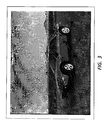
- Figure 3 is a pseudo gray illustration of a color image to be illustrated.
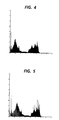
- Figure 4 is a histogram of the luminance channel of the actual color image.
- Figure 5 illustrates an exposure corrected histogram which results from the process steps of: a) using the Figure 4 histogram to generate exposure correction values; b) using the exposure correction values to generate an exposure correction TRC; and c) using the exposure correction TRC to modify the luminance histogram of Figure 4.
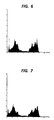
- Figure 6 illustrates the effect of applying the exposure correction to the color input image and re-measuring the luminance histogram.
- Figure 7 shows the histogram derived through the proposed inventive process.
- the histogram signal of Figure 5 was filtered using a smoothing filter to give the histogram shown in Figure 7.
- the gaps and spikes of Figure 5 are reduced or eliminated.
- This filtered histogram is delivered to contrast processor 132.
- the histogram displayed in Figure 7 is also slightly smoothed with respect to the histogram shown in Figure 6. This is not decremental to the process, since a smoother histogram aids in the contrast enhancement step by homogenizing the contrast TRC steps.
Landscapes
- Engineering & Computer Science (AREA)
- Multimedia (AREA)
- Signal Processing (AREA)
- Facsimile Image Signal Circuits (AREA)
- Image Processing (AREA)
- Facsimiles In General (AREA)
Applications Claiming Priority (2)
| Application Number | Priority Date | Filing Date | Title |
|---|---|---|---|
| US147614 | 1993-11-05 | ||
| US08/147,614 US5347374A (en) | 1993-11-05 | 1993-11-05 | Cascaded image processing using histogram prediction |
Publications (3)
| Publication Number | Publication Date |
|---|---|
| EP0652674A2 EP0652674A2 (en) | 1995-05-10 |
| EP0652674A3 EP0652674A3 (en) | 1995-11-08 |
| EP0652674B1 true EP0652674B1 (en) | 1998-07-29 |
Family
ID=22522238
Family Applications (1)
| Application Number | Title | Priority Date | Filing Date |
|---|---|---|---|
| EP94308130A Expired - Lifetime EP0652674B1 (en) | 1993-11-05 | 1994-11-04 | Cascaded image processing using histogram prediction |
Country Status (4)
| Country | Link |
|---|---|
| US (1) | US5347374A (enExample) |
| EP (1) | EP0652674B1 (enExample) |
| JP (1) | JP3676402B2 (enExample) |
| DE (1) | DE69412035T2 (enExample) |
Families Citing this family (54)
| Publication number | Priority date | Publication date | Assignee | Title |
|---|---|---|---|---|
| US6546131B1 (en) * | 1990-12-19 | 2003-04-08 | Canon Kabushiki Kaisha | Image processing method and apparatus for achieving tone reproduction suited to the image |
| US5414538A (en) * | 1993-10-07 | 1995-05-09 | Xerox Corporation | Image-dependent exposure enhancement |
| JP3636487B2 (ja) * | 1994-06-20 | 2005-04-06 | キヤノン株式会社 | 画像処理装置およびその方法 |
| JP2702408B2 (ja) * | 1994-07-15 | 1998-01-21 | 日本電気ホームエレクトロニクス株式会社 | 画像変換システム |
| JP2647033B2 (ja) * | 1994-11-24 | 1997-08-27 | 日本電気株式会社 | ルックアップテーブル作成方法及びルックアップテーブル作成装置 |
| US5532849A (en) * | 1995-03-10 | 1996-07-02 | Xerox Corporation | Facsimile with local correction of TRC based on destination TRC requirements |
| US5581370A (en) * | 1995-06-05 | 1996-12-03 | Xerox Corporation | Image-dependent automatic area of interest enhancement |
| US5812286A (en) * | 1995-08-30 | 1998-09-22 | Hewlett-Packard Company | Automatic color processing to correct hue shift and incorrect exposure |
| US5778104A (en) * | 1996-06-19 | 1998-07-07 | Northrop Grumman Corporation | Adaptive luminance-based filter |
| US5956468A (en) * | 1996-07-12 | 1999-09-21 | Seiko Epson Corporation | Document segmentation system |
| US5901243A (en) * | 1996-09-30 | 1999-05-04 | Hewlett-Packard Company | Dynamic exposure control in single-scan digital input devices |
| US6014469A (en) * | 1996-12-31 | 2000-01-11 | Xerox Corporation | System and method for selectively noise-filtering digital images |
| EP0891075A3 (en) | 1997-06-09 | 2002-03-06 | Seiko Epson Corporation | An image processing apparatus and method, and an image evaluation device and method |
| JP3413589B2 (ja) * | 1998-03-09 | 2003-06-03 | 富士写真フイルム株式会社 | 画像処理方法および装置 |
| US6192149B1 (en) * | 1998-04-08 | 2001-02-20 | Xerox Corporation | Method and apparatus for automatic detection of image target gamma |
| JPH11298736A (ja) * | 1998-04-14 | 1999-10-29 | Minolta Co Ltd | 画像処理方法、画像処理プログラムが記録された可読記録媒体及び画像処理装置 |
| US6175427B1 (en) * | 1998-04-20 | 2001-01-16 | Xerox Corporation | System and method of tonal correction of independent regions on a compound document |
| US6201613B1 (en) | 1998-07-22 | 2001-03-13 | Xerox Corporation | Automatic image enhancement of halftone and continuous tone images |
| US6377703B1 (en) | 1998-11-10 | 2002-04-23 | Seiko Epson Corporation | Apparatus and method for determining an area encompassing an image for scanning the image |
| EP1070423A1 (en) | 1999-02-05 | 2001-01-24 | Koninklijke Philips Electronics N.V. | Histogram equalization |
| JP2000261680A (ja) * | 1999-03-09 | 2000-09-22 | Riso Kagaku Corp | 画像処理方法および装置 |
| US6628843B1 (en) | 1999-11-24 | 2003-09-30 | Xerox Corporation | Image enhancement on JPEG compressed image data |
| US6594388B1 (en) * | 2000-05-25 | 2003-07-15 | Eastman Kodak Company | Color image reproduction of scenes with preferential color mapping and scene-dependent tone scaling |
| US7023578B2 (en) * | 2001-01-23 | 2006-04-04 | Xerox Corporation | Printer image processing system with customized tone reproduction curves |
| US6826310B2 (en) * | 2001-07-06 | 2004-11-30 | Jasc Software, Inc. | Automatic contrast enhancement |
| US7200263B2 (en) * | 2002-07-01 | 2007-04-03 | Xerox Corporation | Background suppression and color adjustment method |
| US7236641B2 (en) * | 2002-07-01 | 2007-06-26 | Xerox Corporation | Page background detection and neutrality on scanned documents |
| US20050244060A1 (en) * | 2004-04-30 | 2005-11-03 | Xerox Corporation | Reformatting binary image data to generate smaller compressed image data size |
| US20060093234A1 (en) * | 2004-11-04 | 2006-05-04 | Silverstein D A | Reduction of blur in multi-channel images |
| WO2006063246A1 (en) * | 2004-12-08 | 2006-06-15 | The General Hospital Corporation | System and method for normalized fluorescence or bioluminescence imaging |
| US7352912B2 (en) * | 2004-12-10 | 2008-04-01 | Xerox Corporation | Method for automatically determining a region of interest for text and data overlay |
| US7568628B2 (en) | 2005-03-11 | 2009-08-04 | Hand Held Products, Inc. | Bar code reading device with global electronic shutter control |
| US7770799B2 (en) | 2005-06-03 | 2010-08-10 | Hand Held Products, Inc. | Optical reader having reduced specular reflection read failures |
| KR100703527B1 (ko) * | 2005-07-12 | 2007-04-03 | 삼성전자주식회사 | 핫코드 인식률 향상을 위한 이미지 전처리 방법 및 그 장치 |
| US7492486B2 (en) * | 2005-12-08 | 2009-02-17 | Xerox Corporation | Systems and methods for adaptive dynamic range adjustment for images |
| US8078265B2 (en) | 2006-07-11 | 2011-12-13 | The General Hospital Corporation | Systems and methods for generating fluorescent light images |
| US8000554B2 (en) * | 2007-04-04 | 2011-08-16 | Xerox Corporation | Automatic dynamic range adjustment in digital imaging |
| US7933454B2 (en) * | 2007-06-25 | 2011-04-26 | Xerox Corporation | Class-based image enhancement system |
| US7597418B2 (en) * | 2007-07-31 | 2009-10-06 | Xerox Corporation | System and method for adjusting ink jet uniformity based on drop mass history |
| US8340452B2 (en) * | 2008-03-17 | 2012-12-25 | Xerox Corporation | Automatic generation of a photo guide |
| US8285059B2 (en) * | 2008-05-20 | 2012-10-09 | Xerox Corporation | Method for automatic enhancement of images containing snow |
| US8194992B2 (en) * | 2008-07-18 | 2012-06-05 | Xerox Corporation | System and method for automatic enhancement of seascape images |
| WO2010135595A1 (en) * | 2009-05-21 | 2010-11-25 | Sony Computer Entertainment America Inc. | Method and apparatus for rendering shadows |
| US8325186B2 (en) * | 2009-05-21 | 2012-12-04 | Sony Computer Entertainment America Llc | Method and apparatus for rendering shadows |
| US9269184B2 (en) * | 2009-05-21 | 2016-02-23 | Sony Computer Entertainment America Llc | Method and apparatus for rendering image based projected shadows with multiple depth aware blurs |
| US8775424B2 (en) * | 2010-01-26 | 2014-07-08 | Xerox Corporation | System for creative image navigation and exploration |
| US8764151B2 (en) | 2010-06-21 | 2014-07-01 | Xerox Corporation | System and method for preserving edges while enabling inkjet correction within an interior of an image |
| US8594385B2 (en) | 2011-04-19 | 2013-11-26 | Xerox Corporation | Predicting the aesthetic value of an image |
| US8712157B2 (en) | 2011-04-19 | 2014-04-29 | Xerox Corporation | Image quality assessment |
| EP2748792B1 (en) | 2012-08-08 | 2016-12-21 | Dolby Laboratories Licensing Corporation | Image processing for hdr images |
| US8807695B1 (en) | 2013-01-30 | 2014-08-19 | Xerox Corporation | System and method for estimating ink usage in an inkjet printer |
| US8960839B1 (en) | 2014-05-14 | 2015-02-24 | Xerox Corporation | System and method for spatial dependent correction for images printed with multiple drop parameters |
| US9349162B1 (en) | 2014-10-24 | 2016-05-24 | Matrox Electronic Systems Ltd. | System and method for image color correction |
| US9955041B2 (en) | 2015-06-12 | 2018-04-24 | Xerox Corporation | System and method for tone reproduction curve color resolution enhancement in a three-dimensional object printer |
Family Cites Families (7)
| Publication number | Priority date | Publication date | Assignee | Title |
|---|---|---|---|---|
| US4667228A (en) * | 1983-10-14 | 1987-05-19 | Canon Kabushiki Kaisha | Image signal processing apparatus |
| US4731671A (en) * | 1985-05-06 | 1988-03-15 | Eastman Kodak Company | Contrast adjustment in digital image processing method employing histogram normalization |
| JPS6342575A (ja) * | 1986-08-08 | 1988-02-23 | Dainippon Screen Mfg Co Ltd | 階調変換方法およびその装置 |
| US5177602A (en) * | 1989-12-28 | 1993-01-05 | Konica Corporation | Image scanners |
| EP0514909B1 (en) * | 1991-05-23 | 1997-08-20 | Fuji Photo Film Co., Ltd. | Method of determining exposure |
| US5305119A (en) * | 1992-10-01 | 1994-04-19 | Xerox Corporation | Color printer calibration architecture |
| EP0599099B1 (en) * | 1992-11-24 | 1999-03-31 | Eastman Kodak Company | Tonal consistency in a radiographic image network |
-
1993
- 1993-11-05 US US08/147,614 patent/US5347374A/en not_active Expired - Lifetime
-
1994
- 1994-10-31 JP JP29073094A patent/JP3676402B2/ja not_active Expired - Lifetime
- 1994-11-04 EP EP94308130A patent/EP0652674B1/en not_active Expired - Lifetime
- 1994-11-04 DE DE69412035T patent/DE69412035T2/de not_active Expired - Lifetime
Also Published As
| Publication number | Publication date |
|---|---|
| DE69412035T2 (de) | 1999-01-21 |
| EP0652674A3 (en) | 1995-11-08 |
| JPH07193715A (ja) | 1995-07-28 |
| US5347374A (en) | 1994-09-13 |
| DE69412035D1 (de) | 1998-09-03 |
| JP3676402B2 (ja) | 2005-07-27 |
| EP0652674A2 (en) | 1995-05-10 |
Similar Documents
| Publication | Publication Date | Title |
|---|---|---|
| US5347374A (en) | Cascaded image processing using histogram prediction | |
| US5450217A (en) | Image-dependent color saturation correction in a natural scene pictorial image | |
| US6175427B1 (en) | System and method of tonal correction of independent regions on a compound document | |
| JP3256982B2 (ja) | 画像処理装置 | |
| EP0652672B1 (en) | Image-dependent sharpness enhancement | |
| US5371615A (en) | Image-dependent color correction using black point and white point in a natural scene pictorial image | |
| US5414538A (en) | Image-dependent exposure enhancement | |
| US6205257B1 (en) | System and method for selectively noise-filtering digital images | |
| EP0878777A2 (en) | Method for enhancement of reduced color set images | |
| US5818975A (en) | Method and apparatus for area selective exposure adjustment | |
| US5581370A (en) | Image-dependent automatic area of interest enhancement | |
| US6975437B2 (en) | Method, apparatus and recording medium for color correction | |
| JP3082289B2 (ja) | 画像処理装置 | |
| US20080181491A1 (en) | Color to grayscale conversion method and apparatus | |
| EP0398268A2 (en) | Video printer device | |
| US5802214A (en) | Method for determining and loading an image-dependent look-up table for generating an enhanced image representation | |
| US20020008762A1 (en) | Method, apparatus and recording medium for image processing | |
| JP3067304B2 (ja) | カラー画像処理装置のパターン発生方式 | |
| JPH07101917B2 (ja) | 領域制御装置 | |
| US7034959B1 (en) | Method, apparatus and recording medium for image processing | |
| US7072072B1 (en) | Color rendering optimized for text and line art | |
| EP1708481A2 (en) | Two-dimensional gray component replacement | |
| JPH08289143A (ja) | カラー画像画質調整装置 | |
| JP3289530B2 (ja) | 画像処理装置 | |
| JP3441001B2 (ja) | 画像処理装置 |
Legal Events
| Date | Code | Title | Description |
|---|---|---|---|
| PUAI | Public reference made under article 153(3) epc to a published international application that has entered the european phase |
Free format text: ORIGINAL CODE: 0009012 |
|
| AK | Designated contracting states |
Kind code of ref document: A2 Designated state(s): DE FR GB |
|
| PUAL | Search report despatched |
Free format text: ORIGINAL CODE: 0009013 |
|
| AK | Designated contracting states |
Kind code of ref document: A3 Designated state(s): DE FR GB |
|
| 17P | Request for examination filed |
Effective date: 19960508 |
|
| GRAG | Despatch of communication of intention to grant |
Free format text: ORIGINAL CODE: EPIDOS AGRA |
|
| 17Q | First examination report despatched |
Effective date: 19970923 |
|
| GRAG | Despatch of communication of intention to grant |
Free format text: ORIGINAL CODE: EPIDOS AGRA |
|
| GRAG | Despatch of communication of intention to grant |
Free format text: ORIGINAL CODE: EPIDOS AGRA |
|
| GRAH | Despatch of communication of intention to grant a patent |
Free format text: ORIGINAL CODE: EPIDOS IGRA |
|
| GRAH | Despatch of communication of intention to grant a patent |
Free format text: ORIGINAL CODE: EPIDOS IGRA |
|
| GRAA | (expected) grant |
Free format text: ORIGINAL CODE: 0009210 |
|
| AK | Designated contracting states |
Kind code of ref document: B1 Designated state(s): DE FR GB |
|
| REF | Corresponds to: |
Ref document number: 69412035 Country of ref document: DE Date of ref document: 19980903 |
|
| ET | Fr: translation filed | ||
| PLBE | No opposition filed within time limit |
Free format text: ORIGINAL CODE: 0009261 |
|
| STAA | Information on the status of an ep patent application or granted ep patent |
Free format text: STATUS: NO OPPOSITION FILED WITHIN TIME LIMIT |
|
| 26N | No opposition filed | ||
| REG | Reference to a national code |
Ref country code: GB Ref legal event code: IF02 |
|
| PGFP | Annual fee paid to national office [announced via postgrant information from national office to epo] |
Ref country code: GB Payment date: 20131025 Year of fee payment: 20 Ref country code: DE Payment date: 20131022 Year of fee payment: 20 Ref country code: FR Payment date: 20131121 Year of fee payment: 20 |
|
| REG | Reference to a national code |
Ref country code: DE Ref legal event code: R071 Ref document number: 69412035 Country of ref document: DE |
|
| REG | Reference to a national code |
Ref country code: GB Ref legal event code: PE20 Expiry date: 20141103 |
|
| PG25 | Lapsed in a contracting state [announced via postgrant information from national office to epo] |
Ref country code: GB Free format text: LAPSE BECAUSE OF EXPIRATION OF PROTECTION Effective date: 20141103 |