EP0645708A1 - Speicherungsaufhebung zur Fehlerbeseitigung in einem Cache-Speicher - Google Patents
Speicherungsaufhebung zur Fehlerbeseitigung in einem Cache-Speicher Download PDFInfo
- Publication number
- EP0645708A1 EP0645708A1 EP94105978A EP94105978A EP0645708A1 EP 0645708 A1 EP0645708 A1 EP 0645708A1 EP 94105978 A EP94105978 A EP 94105978A EP 94105978 A EP94105978 A EP 94105978A EP 0645708 A1 EP0645708 A1 EP 0645708A1
- Authority
- EP
- European Patent Office
- Prior art keywords
- processing unit
- cache
- result
- data
- unit
- Prior art date
- Legal status (The legal status is an assumption and is not a legal conclusion. Google has not performed a legal analysis and makes no representation as to the accuracy of the status listed.)
- Granted
Links
Images


Classifications
-
- G—PHYSICS
- G06—COMPUTING OR CALCULATING; COUNTING
- G06F—ELECTRIC DIGITAL DATA PROCESSING
- G06F11/00—Error detection; Error correction; Monitoring
- G06F11/07—Responding to the occurrence of a fault, e.g. fault tolerance
- G06F11/16—Error detection or correction of the data by redundancy in hardware
- G06F11/1629—Error detection by comparing the output of redundant processing systems
- G06F11/1641—Error detection by comparing the output of redundant processing systems where the comparison is not performed by the redundant processing components
-
- G—PHYSICS
- G06—COMPUTING OR CALCULATING; COUNTING
- G06F—ELECTRIC DIGITAL DATA PROCESSING
- G06F11/00—Error detection; Error correction; Monitoring
- G06F11/07—Responding to the occurrence of a fault, e.g. fault tolerance
- G06F11/14—Error detection or correction of the data by redundancy in operations
- G06F11/1402—Saving, restoring, recovering or retrying
- G06F11/1405—Saving, restoring, recovering or retrying at machine instruction level
-
- G—PHYSICS
- G06—COMPUTING OR CALCULATING; COUNTING
- G06F—ELECTRIC DIGITAL DATA PROCESSING
- G06F11/00—Error detection; Error correction; Monitoring
- G06F11/07—Responding to the occurrence of a fault, e.g. fault tolerance
- G06F11/16—Error detection or correction of the data by redundancy in hardware
- G06F11/1629—Error detection by comparing the output of redundant processing systems
- G06F11/165—Error detection by comparing the output of redundant processing systems with continued operation after detection of the error
Definitions
- This invention relates to information processing systems and, more particularly, to processor error detection and responses to errors in a mainframe central processing unit (CPU).
- CPU central processing unit
- a mainframe CPU incorporating a cache memory and a BPU which includes an address and execution (AX) unit, a decimal numeric (DN) unit and a floating point (FP) unit and also incorporating a cache unit situated logically intermediate the BPU and system memory, by duplicating each of the AX, DN and FP units (i.e., duplicating the BPU) and performing all BPU data manipulation operations redundantly.
- AX address and execution
- DN decimal numeric
- FP floating point
- FIG. 1 is a general block diagram of an exemplary central processing unit.
- the Address and Execution Unit (AX unit) is a microprocessing engine which performs all address preparation and executes all instructions except decimal arithmetic, binary floating point and multiply/divide instructions.
- AX unit is a microprocessing engine which performs all address preparation and executes all instructions except decimal arithmetic, binary floating point and multiply/divide instructions.
- Two identical AX units 10, 10A perform duplicate actions in parallel, and the resulting AX unit outputs are constantly compared to detect errors.
- the structure of the AX unit will be described in more detail below.
- the main functions performed by the AX unit include:
- the cache section includes a cache unit 11 part of 64K bytes (16K words) and a set associative directory part which defines the main memory location of each 64-byte (16-word) block stored in the cache data part. Physically, the cache section is implemented in an array of ten DT units (the cache unit), a cache directory (CD) 12 and a duplicate directory (DD) 13. Each of the DT, CD and DD units will be described in more detail below.
- the specific functions performed by the DT cache unit 11 include:
- the cache write strategy is "store into”. If a longitudinal parity error is detected when reading a portion of a modified block from the cache, the block will be swapped out of the cache onto the system bus, corrected by circuitry (not shown) intermediate the CPU and main memory (not shown) and written into main memory. The corrected block will then be refetched from main memory.
- CD and DD blocks Two copies of the cache directory information are respectively maintained in the CD and DD blocks which perform different logic functions.
- the two directory copies allow interrogation of the cache contents from the system bus in parallel and without interference with instruction/operand access from the CPUs and also provide for error recovery.
- Functions performed by the CD block 12 include:
- FP Floating Point
- the identical FP units execute all binary floating point arithmetic in duplicate. These units, operating in concert with the duplicate AX units 10, 10A, perform scalar or vector scientific processing.
- the FP unit 15 (duplicated by the FP unit 15A):
- Functions performed by the FP units 15, 15A include:
- FRAM 17 and XRAM 18 Two special purpose random access memories (FRAM 17 and XRAM 18) are incorporated into the CPU.
- the FRAM block 17 is an adjunct to the FP units 15, 15A and functions as an FP control store and decimal integer table lookup.
- the XRAM block 18 is an adjunct to the AX units 10 10A and serves as a scratchpad as well as providing safestore and patch functions.
- the CPU also employs a Clock Distribution (CK) block 16 whose functions include:
- the DN unit 14 (in parallel with the DN unit 14A) performs the execution of the decimal numeric Extended Instruction Set (EIS) instructions. It also executes the Decimal-to-Binary (DTB), Binary-to-Decimal (BTD) conversion EIS instructions and Move-Numeric-Edit (MVNE) EIS instructions in conjunction with the AX unit 10.
- the DN unit both receives operands from memory and sends results to memory via the cache unit 11.
- the AX, DN and FP units collectively, are sometimes referred to as the Basic Processing Unit (BPU). It was previously noted that the AX, DN and FP units were duplicated with the duplicate units operating in parallel to obtain duplicate results which are available for integrity checking. Thus, master and slave results are obtained in the normal operation of these units.
- the master results are placed onto a Master Result Bus (MRB) 20 while the slave results are placed onto a Slave Result Bus (SRB) 21. Both the master and slave results are conveyed, on the MRB and SRB respectively, to the cache data array 11 of DT units.
- MRB Master Result Bus
- SRB Slave Result Bus
- Both the master and slave results are conveyed, on the MRB and SRB respectively, to the cache data array 11 of DT units.
- a COMTO bus 22 and a COMFROM bus 23 couple together the AX unit, the DN unit and the FP unit for certain interrelated operations as will also be described more fully below.
- mainframe CPU is subject to the occurrence of numerous errors. While state of the art mainframe CPU's are very reliable and may run for long periods with no errors whatever occurring, there is little tolerance in many applications for accommodating even occasional errors. As a result, it is necessary to provide many error sensing and recovery circuits throughout the logic of a CPU to detect several types of errors such as parity errors (as a common example) which may occur when information is transferred between elements of the CPU. As previously noted, in the specific CPU chosen for illustration and in which the invention finds particular application, the outputs of duplicate master and slave AX, FP and DN units are compared for identical results, and the content of the Master and Slave Result Busses are compared in the Cache Unit for similar identity. Various other errors are sensed throughout the CPU. The CK block receives the error signals and has a primary role in coordinating the error handling processes in the exemplary CPU.
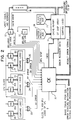
- FIG. 2 Attention is now directed to FIG. 2 in which the CPU is shown in a redrawn configuration. It will be seen that numerous errors are reported to the CK block 16.
- the CPU has a variety of sources of internally detected errors which are classified as hardware retryable, software retryable or non-retryable.
- Hardware retryable errors are those which are directly compensated by the hardware without involvement or intervention by the software operating system and with little or no involvement by an external service processor (not shown) to which all errors are reported. Certain paging and cache directory errors, for example, are deemed hardware retryable.
- the CK block 16 will either cause a freeze of BPU or CPU clocks as quickly as possible to minimize any loss of data relating to the failing condition or it will invoke a suspension of BPU and system bus operation.
- Two types of software retry are employed, one corresponding to a freeze and the other to a suspend. If a clock freeze occurs, the machine state is extracted by the SP and provided to the operating system for retry. If a BPU or CPU suspension occurs, the SP may direct a CPU resume, and the operating system will attempt a software retry.
- Each of the AX units 10, 10A, FP units 15, 15A and DN units 14, 14A combine multiple error signal lines (as represented by OR-gates 33, 34, 35), including those from the individual unit compare logic blocks 30, 31, 32, to obtain AX, FP and DN ERROR signals which are applied to the CK block 16.
- the majority of the checked logic areas sense parity errors during data transfers, but other error types, such as directory read mismatch, DIR Level In/Out miscompares, illegal command sequence, increment miscount, multiple directory hit, etc. as well as several types of compares are all monitored.
- the CD block 12 and DD block 13 each send separate BPU error and CPU error signals to the CK block.
- AX errors, FP errors, DN errors and result bus errors are all deemed to be BPU errors.
- the CD block 12 and the DD block 13 can detect and advise the CK block 16 of either BPU errors or CPU errors (for example, cache errors) which are treated differently.
- the CD and DD blocks are notified of BPU errors originating elsewhere, and, under certain conditions (such as during a hardware/firmware troubleshooting process), the DD block 13 may order a temporary "unfreeze" of the BPU clock. Certain cache errors are reported directly to the DD block 13 which then determines if a BPU or CPU error signal is to be forwarded to the CK block 16.
- AX, DN and FP units were duplicated with the duplicate units operating in parallel to obtain duplicate results which are available for integrity checking.
- master and slave results are obtained in the normal operation of these units.
- Both the master and slave results are conveyed, on the MRB and SRB respectively, to the cache data array 11 of DT units.
- a COMTO bus 22 and a COMFROM bus 23 couple together the AX unit, the DN unit and the FP unit for certain interrelated operations.
- the AX unit 10, DN unit 14 and FP unit 15, communicating with one another via the COMTO bus 22 and COMFROM bus 23 accept data manipulation instructions and operands from the cache unit 11 and deliver the results back to the cache unit via the MRB 20.
- the secondary AX unit 10A, the secondary DN unit 14A and the secondary FP unit 15A (intercommunicating on their own COMTO and COMFROM busses, not shown in FIG. 1) accept the same data manipulation instructions and operands from the cache unit 11 and deliver the results back to the cache unit via the SRB 21.
- the results appearing at a given time on the MRB and SRB should always be identical, and if they are not, a basic processing error will have occurred.
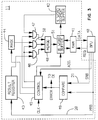
- FIG. 3 in which the cache unit 11 is shown in simplified block diagram form.
- the BPU 40 issues a request to the RAM 41 for a 16 word block of data which includes the specific information it wishes to process.
- the requested 16 word block is also transferred to a 16 word buffer register 51.
- the results are sent to the cache unit 11 via the MRB 20 and SRB 21 where they are compared for identity in the compare block 49.
- results on the MRB 20 are transferred to two word result buffer register 43, and address information from the BPU is sent to the control block 45 to indicate where the original 16 word block modified by the two word results, is to be stored in the 16 word buffer register 51 (and eventually in the RAM 41) and the position of the two word result in the 16 word block.
- the two word result (which may be double or single precision) is also transmitted to the result register 43 for temporary storage.
- the control block 45 uses the address information from the BPU and the CLK signal from the clock block 16 (FIGs. 1 and 2), issues coordinating signals to the mask block 44 and to AND-gate arrays 46, 47, 50 and also to transfer the appropriate four word segment which will receive the modified data into a four word segment buffer register 42, all in preparation for a merging operation.
- the output of the result register block 43 is applied to the AND-gate array 46, and the output of the four word segment buffer register 42 is applied to the AND-gate array 47.
- AND-gate arrays 46, 47, 50 are temporarily enabled by the control block signals such that the contents of the result register 43 and the four word segment buffer register 42 are applied to the merge block 48.
- the signals from the mask block 44 specity the position in the four word segment of the original 16 word block at which the two word result will modity the original data.
- the modified updated data is then stored back into the 16 word buffer register 51 for eventual transfer to the RAM 41 at the address from which it was originally taken.
- the results appearing on the MRB 20 and SRB 21 are routinely examined for identity in the compare block 49. If the results are not identical, an error signal issues, and the CPU is quickly frozen and remedial action undertaken.
- certain important economies of logic circuitry drive the requirement to continue with the immediate store operation in the cache unit, notwithstanding the compare error.
- the original 16 word block will be modified and restored back into the 16 word buffer register 51 with unreliable data. This condition has made it more difficult to achieve a restart, because processing must resume, if it is determined that it can continue, at a step prior to the corruption of the data in the 16 word block affected. Under some conditions, a considerable reprocessing of previously executed steps must be undertaken to reach the same point in the process.
- control block 45 receives an error signal from the compare block (it will be understood that this is only one of many error signals which may be generated in the CPU, but it is the one of direct interest here), it sends the error signal to the CK block 16 (FIGS. 1 and 2) to institute a freeze and corrective action. However, it does not freeze the operation of the cache unit immediately after the completion of the store of the corrupted 16 word block into 16 word buffer register 51.
- FIG. 3 is necessarily simplified in order to best illustrate the invention.
- a two-phase clock, various multiplexers, and other logic techniques are conventionally used to eliminate logic races and to handle other routine housekeeping tasks, all as well known in the art and susceptible to variation among different specific logic designs.
- the process flow chart of FIG. 4 illustrates the sequence and relationships of the various actions necessary to practice the invention and is an example of the actual implementation of the invention in the presently preferred embodiment.
Landscapes
- Engineering & Computer Science (AREA)
- Theoretical Computer Science (AREA)
- Quality & Reliability (AREA)
- Physics & Mathematics (AREA)
- General Engineering & Computer Science (AREA)
- General Physics & Mathematics (AREA)
- Memory System Of A Hierarchy Structure (AREA)
- Techniques For Improving Reliability Of Storages (AREA)
- Debugging And Monitoring (AREA)
Applications Claiming Priority (2)
| Application Number | Priority Date | Filing Date | Title |
|---|---|---|---|
| US127206 | 1993-09-27 | ||
| US08/127,206 US5408651A (en) | 1993-09-27 | 1993-09-27 | Store "undo" for cache store error recovery |
Publications (2)
| Publication Number | Publication Date |
|---|---|
| EP0645708A1 true EP0645708A1 (de) | 1995-03-29 |
| EP0645708B1 EP0645708B1 (de) | 1999-11-10 |
Family
ID=22428848
Family Applications (1)
| Application Number | Title | Priority Date | Filing Date |
|---|---|---|---|
| EP94105978A Expired - Lifetime EP0645708B1 (de) | 1993-09-27 | 1994-04-18 | Speicherungsaufhebung zur Fehlerbeseitigung in einem Cache-Speicher |
Country Status (3)
| Country | Link |
|---|---|
| US (1) | US5408651A (de) |
| EP (1) | EP0645708B1 (de) |
| DE (1) | DE69421587T2 (de) |
Cited By (3)
| Publication number | Priority date | Publication date | Assignee | Title |
|---|---|---|---|---|
| WO1996033459A1 (en) * | 1995-04-18 | 1996-10-24 | International Business Machines Corporation | High available error self-recovering shared cache for multiprocessor systems |
| EP0834811A1 (de) * | 1996-09-04 | 1998-04-08 | Kabushiki Kaisha Toshiba | Vorrichtung zur Prüfpunkterfassungsbeschleunigung |
| US6148416A (en) * | 1996-09-30 | 2000-11-14 | Kabushiki Kaisha Toshiba | Memory update history storing apparatus and method for restoring contents of memory |
Families Citing this family (8)
| Publication number | Priority date | Publication date | Assignee | Title |
|---|---|---|---|---|
| JPH086854A (ja) * | 1993-12-23 | 1996-01-12 | Unisys Corp | アウトボードファイルキャッシュ外部処理コンプレックス |
| US5894564A (en) * | 1995-06-07 | 1999-04-13 | International Business Machines Corporation | System for identifying memory segment bounded by previously accessed memory locations within data block and transferring thereof only when the segment has been changed |
| US5742533A (en) * | 1996-05-21 | 1998-04-21 | International Business Machines Corporation | Method and apparatus for modulus error checking |
| US5895485A (en) * | 1997-02-24 | 1999-04-20 | Eccs, Inc. | Method and device using a redundant cache for preventing the loss of dirty data |
| US7818718B2 (en) * | 2003-09-30 | 2010-10-19 | Sap Ag | Undoing user actions in a client program |
| US7526676B2 (en) * | 2004-09-03 | 2009-04-28 | Avago Technologies General Ip (Singapore) Pte. Ltd. | Slave device having independent error recovery |
| US8209602B2 (en) * | 2007-07-25 | 2012-06-26 | Hewlett-Packard Development Company, L.P. | Viewing of internet content |
| US11995922B2 (en) | 2020-07-30 | 2024-05-28 | Ge Aviation Systems Llc | Flight management system and method for reporting an intermitted error |
Citations (2)
| Publication number | Priority date | Publication date | Assignee | Title |
|---|---|---|---|---|
| DE2523795A1 (de) * | 1975-05-28 | 1976-12-09 | Siemens Ag | Verfahren zum wiederholten ausfuehren von befehlen in einer verarbeitungseinheit einer datenverarbeitungsanlage im fehlerfall |
| EP0463573A2 (de) * | 1990-06-28 | 1992-01-02 | Bull HN Information Systems Inc. | Effiziente Fehlererkennung in einer VLSI-zentralen Verarbeitungseinheit |
Family Cites Families (1)
| Publication number | Priority date | Publication date | Assignee | Title |
|---|---|---|---|---|
| US5339408A (en) * | 1992-12-30 | 1994-08-16 | Digital Equipment Corporation | Method and apparatus for reducing checking costs in fault tolerant processors |
-
1993
- 1993-09-27 US US08/127,206 patent/US5408651A/en not_active Expired - Lifetime
-
1994
- 1994-04-18 DE DE69421587T patent/DE69421587T2/de not_active Expired - Lifetime
- 1994-04-18 EP EP94105978A patent/EP0645708B1/de not_active Expired - Lifetime
Patent Citations (2)
| Publication number | Priority date | Publication date | Assignee | Title |
|---|---|---|---|---|
| DE2523795A1 (de) * | 1975-05-28 | 1976-12-09 | Siemens Ag | Verfahren zum wiederholten ausfuehren von befehlen in einer verarbeitungseinheit einer datenverarbeitungsanlage im fehlerfall |
| EP0463573A2 (de) * | 1990-06-28 | 1992-01-02 | Bull HN Information Systems Inc. | Effiziente Fehlererkennung in einer VLSI-zentralen Verarbeitungseinheit |
Non-Patent Citations (2)
| Title |
|---|
| G. L. HICKS ET AL.: "Instruction retry mechanism for a computer", IBM TECHNICAL DISCLOSURE BULLETIN, vol. 17, no. 8, January 1975 (1975-01-01), NEW YORK US, pages 2239 - 2242 * |
| S. P. DALE ET AL.: "Microcode control for instruction retry", IBM TECHNICAL DISCLOSURE BULLETIN, vol. 22, no. 5, October 1979 (1979-10-01), NEW YORK US, pages 1811 - 1812 * |
Cited By (4)
| Publication number | Priority date | Publication date | Assignee | Title |
|---|---|---|---|---|
| WO1996033459A1 (en) * | 1995-04-18 | 1996-10-24 | International Business Machines Corporation | High available error self-recovering shared cache for multiprocessor systems |
| EP0834811A1 (de) * | 1996-09-04 | 1998-04-08 | Kabushiki Kaisha Toshiba | Vorrichtung zur Prüfpunkterfassungsbeschleunigung |
| US6088773A (en) * | 1996-09-04 | 2000-07-11 | Kabushiki Kaisha Toshiba | Checkpoint acquisition accelerating apparatus |
| US6148416A (en) * | 1996-09-30 | 2000-11-14 | Kabushiki Kaisha Toshiba | Memory update history storing apparatus and method for restoring contents of memory |
Also Published As
| Publication number | Publication date |
|---|---|
| DE69421587T2 (de) | 2000-07-06 |
| US5408651A (en) | 1995-04-18 |
| DE69421587D1 (de) | 1999-12-16 |
| EP0645708B1 (de) | 1999-11-10 |
Similar Documents
| Publication | Publication Date | Title |
|---|---|---|
| EP0516126B1 (de) | Fehlertolerantes Mehrrechnersystem | |
| US4751639A (en) | Virtual command rollback in a fault tolerant data processing system | |
| US5504859A (en) | Data processor with enhanced error recovery | |
| US3533082A (en) | Instruction retry apparatus including means for restoring the original contents of altered source operands | |
| JPS6353571B2 (de) | ||
| US4805095A (en) | Circuit and a method for the selection of original data from a register log containing original and modified data | |
| US5195101A (en) | Efficient error detection in a vlsi central processing unit | |
| US5408651A (en) | Store "undo" for cache store error recovery | |
| US5276862A (en) | Safestore frame implementation in a central processor | |
| US5263034A (en) | Error detection in the basic processing unit of a VLSI central processor | |
| US5553232A (en) | Automated safestore stack generation and move in a fault tolerant central processor | |
| US5557737A (en) | Automated safestore stack generation and recovery in a fault tolerant central processor | |
| US5251321A (en) | Binary to binary coded decimal and binary coded decimal to binary conversion in a VLSI central processing unit | |
| US3603934A (en) | Data processing system capable of operation despite a malfunction | |
| US20020133759A1 (en) | Method of de-allocating multiple processor cores for an L2 correctable error | |
| US5862308A (en) | Fault intercept and resolution process independent of operating system | |
| IE63461B1 (en) | Improvements in and relating to stable memory circuits | |
| US6014757A (en) | Fast domain switch and error recovery in a secure CPU architecture | |
| EP0113982B1 (de) | Datenverarbeitungssystem | |
| US5422837A (en) | Apparatus for detecting differences between double precision results produced by dual processing units operating in parallel | |
| EP0476262B1 (de) | Fehlerbehandlung in einer zentralen Verarbeitungseinheit aus VLSI, die ein Adress- und Ausführungspipelinemodul verwendet | |
| JP3240660B2 (ja) | データ処理装置 | |
| JPS59172044A (ja) | 命令制御方式 | |
| JPH0628251A (ja) | 耐故障マルチプロセッサ・コンピュータ・システム | |
| JPH02135539A (ja) | マイクロプログラム制御装置 |
Legal Events
| Date | Code | Title | Description |
|---|---|---|---|
| PUAI | Public reference made under article 153(3) epc to a published international application that has entered the european phase |
Free format text: ORIGINAL CODE: 0009012 |
|
| AK | Designated contracting states |
Kind code of ref document: A1 Designated state(s): DE FR GB IT |
|
| RAP1 | Party data changed (applicant data changed or rights of an application transferred) |
Owner name: BULL HN INFORMATION SYSTEMS INC. |
|
| 17P | Request for examination filed |
Effective date: 19950831 |
|
| GRAG | Despatch of communication of intention to grant |
Free format text: ORIGINAL CODE: EPIDOS AGRA |
|
| 17Q | First examination report despatched |
Effective date: 19990211 |
|
| GRAG | Despatch of communication of intention to grant |
Free format text: ORIGINAL CODE: EPIDOS AGRA |
|
| GRAH | Despatch of communication of intention to grant a patent |
Free format text: ORIGINAL CODE: EPIDOS IGRA |
|
| GRAH | Despatch of communication of intention to grant a patent |
Free format text: ORIGINAL CODE: EPIDOS IGRA |
|
| GRAA | (expected) grant |
Free format text: ORIGINAL CODE: 0009210 |
|
| ITF | It: translation for a ep patent filed | ||
| AK | Designated contracting states |
Kind code of ref document: B1 Designated state(s): DE FR GB IT |
|
| REF | Corresponds to: |
Ref document number: 69421587 Country of ref document: DE Date of ref document: 19991216 |
|
| ET | Fr: translation filed | ||
| PLBE | No opposition filed within time limit |
Free format text: ORIGINAL CODE: 0009261 |
|
| STAA | Information on the status of an ep patent application or granted ep patent |
Free format text: STATUS: NO OPPOSITION FILED WITHIN TIME LIMIT |
|
| 26N | No opposition filed | ||
| REG | Reference to a national code |
Ref country code: GB Ref legal event code: IF02 |
|
| PG25 | Lapsed in a contracting state [announced via postgrant information from national office to epo] |
Ref country code: IT Free format text: LAPSE BECAUSE OF NON-PAYMENT OF DUE FEES;WARNING: LAPSES OF ITALIAN PATENTS WITH EFFECTIVE DATE BEFORE 2007 MAY HAVE OCCURRED AT ANY TIME BEFORE 2007. THE CORRECT EFFECTIVE DATE MAY BE DIFFERENT FROM THE ONE RECORDED. Effective date: 20050418 |
|
| PGFP | Annual fee paid to national office [announced via postgrant information from national office to epo] |
Ref country code: GB Payment date: 20130326 Year of fee payment: 20 |
|
| PGFP | Annual fee paid to national office [announced via postgrant information from national office to epo] |
Ref country code: DE Payment date: 20130322 Year of fee payment: 20 |
|
| PGFP | Annual fee paid to national office [announced via postgrant information from national office to epo] |
Ref country code: FR Payment date: 20130603 Year of fee payment: 20 |
|
| REG | Reference to a national code |
Ref country code: DE Ref legal event code: R071 Ref document number: 69421587 Country of ref document: DE |
|
| REG | Reference to a national code |
Ref country code: DE Ref legal event code: R071 Ref document number: 69421587 Country of ref document: DE |
|
| REG | Reference to a national code |
Ref country code: GB Ref legal event code: PE20 Expiry date: 20140417 |
|
| PG25 | Lapsed in a contracting state [announced via postgrant information from national office to epo] |
Ref country code: GB Free format text: LAPSE BECAUSE OF EXPIRATION OF PROTECTION Effective date: 20140417 |
|
| PG25 | Lapsed in a contracting state [announced via postgrant information from national office to epo] |
Ref country code: DE Free format text: LAPSE BECAUSE OF EXPIRATION OF PROTECTION Effective date: 20140423 |