EP0620522B1 - Dynamische Hochleistungsprogrammverknüpfung durch Cachespeicherung - Google Patents
Dynamische Hochleistungsprogrammverknüpfung durch Cachespeicherung Download PDFInfo
- Publication number
- EP0620522B1 EP0620522B1 EP94301785A EP94301785A EP0620522B1 EP 0620522 B1 EP0620522 B1 EP 0620522B1 EP 94301785 A EP94301785 A EP 94301785A EP 94301785 A EP94301785 A EP 94301785A EP 0620522 B1 EP0620522 B1 EP 0620522B1
- Authority
- EP
- European Patent Office
- Prior art keywords
- library
- program
- programs
- symbol
- image
- Prior art date
- Legal status (The legal status is an assumption and is not a legal conclusion. Google has not performed a legal analysis and makes no representation as to the accuracy of the status listed.)
- Expired - Lifetime
Links
Images




Classifications
-
- G—PHYSICS
- G06—COMPUTING OR CALCULATING; COUNTING
- G06F—ELECTRIC DIGITAL DATA PROCESSING
- G06F9/00—Arrangements for program control, e.g. control units
- G06F9/06—Arrangements for program control, e.g. control units using stored programs, i.e. using an internal store of processing equipment to receive or retain programs
- G06F9/44—Arrangements for executing specific programs
- G06F9/445—Program loading or initiating
- G06F9/44521—Dynamic linking or loading; Link editing at or after load time, e.g. Java class loading
Definitions
- the present invention relates to the fields of distributed computing systems, client-server computing and object oriented programming.
- a computer programmer writes a program, the source program, in a high level language which typically makes use of symbols for addresses, and special characters or acronyms for operation codes.
- This source code comprises a set of instructions for the computer and data with which or upon which the instructions are to operate. These instructions and data must be loaded into a computer's memory at certain addresses in order for the computer to execute the program process.
- the source code is processed by a compiler which generates binary object code which a computer can execute. Before the computer can execute this newly written program, the program must go through several additional steps, during which the addresses in the program may be represented in different ways.
- the compiler typically will bind the symbolic addresses of the source code to relocatable addresses (such as 16 bytes from the beginning address of the program).
- a linkage editor or loader will in turn bind these relocatable addresses to absolute addresses (such as memory location 64216). Each binding is a mapping from one address space to another. This binding of instructions and data to memory addresses can be done either at compilation time, load time or at program execution time.
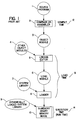
- the source program 1 is processed by a compiler 2 producing an object code module 3 .
- This object code module 3 is processed by a linkage editor 5 to produce a load module 6 .
- the load module 6 and any system libraries 7 required are processed by a loader 8 producing an in-memory binary image 10 of the original program and its related modules and libraries. This in-memory binary image 10 can now be executed by the computer.
- Modem computer operating systems are designed to optimize the use of memory space and to minimize user wait time. This is done in the address binding/program loading process, by dynamic loading of program object modules only when they are actually called by another module and dynamic linking of an object module to its system library routines only when they are required. In these cases the main program is loaded into memory and executed and supporting object modules or system libraries are not loaded unless they are called by the main program, thus saving memory space and load time at the expense of some program start-up time. Also, system libraries which will likely already be resident in memory can be dynamically linked to the executing main program when called, thereby not requiring a copy of the system libraries to be linked and loaded with each main program at load time, again saving memory space but at the cost of some program start-up time and some execution time.
- a stub is included in the image for each library-routine reference.
- This stub is a small piece of code that indicates how to locate the appropriate memory-resident library routine.
- the stub When executed it replaces itself with the address of the routine and executes the routine. Under this scheme all programs that use a library routine use the same copy of the library code.
- program compilers In order to take maximum advantage of dynamic linking and loading, program compilers must be designed to produce the necessary relocatable address references, the sub-routine stub code, and efficient PIC code.
- existing compilers for object-oriented program modules cannot generate such code efficiently.
- the cfront 3.0 preprocessor and the G++ compiler generate virtual function tables as initialized data structures which are full of references to relocatable symbols.
- the number of relocatable symbols in object-oriented program modules is much higher than in more traditional program modules and the program startup delay required to dynamically link these modules can rise to unacceptable levels due to the number of relocations. Therefore what is required is a system that provides efficient dynamic linking of program modules with large numbers of relocatable symbols.
- IBM Journal of Research and Development, Volume 34, No. 1, 1 January 1990, Pages 98-103 discloses a program library matter in facility in an article entitled "Managing Programs and Library's in AIX Version 3 For RISC Sysem/6000 Processors" by M.A. Auslander.
- the present invention as defined in the appended claims provides an elegant solution to this problem by caching linked program images and also caching partially linked library programs.
- the present invention fills this need for minimizing the system delay caused by linking new object oriented programs by establishing an elegant and efficient system of caching fully bound program images along with their system library modules, and establishing a second level of caches for caching relocatable system library programs whose addresses are provisionally fixed-up (partly linked), and using these caches to supply fully linked or partially linked modules when a call to another program/routine is made.
- the system first checks the image cache to see if the program has been linked before and if so the linked version of the program along with its linked library programs is used without further processing overhead.
- a method for a method to dynamically link a new program image and related library programs into an executable application program image.
- the method provides for producing a linked list of the required programs by giving the linker an argument representing the designated program image and a naming context which contains data on the associated library programs which are to be linked together.
- the linker finds all of the required programs, and links them together.
- the parent maps the program images into the designated addresses thereby completing the linking of the executable application program.
- the linker In finding the required programs, the linker first checks the image cache to see if the new program and its related library programs is already linked and cached because it was executed before.
- the linker object checks the library program cache to see if the library programs are cached in partially linked form, and will use as many of these as it can find. For any library programs that must still be located, the linker will retrieve them from a data store and will then proceed to link all library programs and the new program image together to form an executable whole. This process of caching new program images with their library programs and caching partially linked library programs individually guarantees a procedure which minimizes the time delay in program start-up when a new program is executed.
- a procedure is here, and generally, conceived to be a self-consistent sequence of steps leading to a desired result. These steps are those requiring physical manipulations of physical quantities. Usually, though not necessarily, these quantities take the form of electrical or magnetic signals capable of being stored, transferred, combined, compared, and otherwise manipulated. It proves convenient at times, principally for reasons of common usage, to refer to these signals as bits, values, elements, symbols, characters, terms, numbers, or the like. It should be noted, however, that all of these and similar terms are to be associated with the appropriate physical quantities and are merely convenient labels applied to these quantities.
- the manipulations performed are often referred to in terms, such as adding or comparing, which are commonly associated with mental operations performed by a human operator. No such capability of a human operator is necessary, or desirable in most cases, in any of the operations described herein which form part of the present invention; the operations are machine operations.
- Useful machines for performing the operations of the present invention include general purpose digital computers or similar devices.
- the present invention also relates to apparatus for performing these operations.
- This apparatus may be specially constructed for the required purposes or it may comprise a general purpose computer as selectively activated or reconfigured by a computer program stored in the computer.
- the procedures presented herein are not inherently related to a particular computer or other apparatus.
- Various general purpose machines may be used with programs written in accordance with the teachings herein, or it may prove more convenient to construct more specialized apparatus to perform the required method steps. The required structure for a variety of these machines will appear from the description given.
- a SPRING domain is an address space with a collection of threads.
- a given domain may act as the server of some objects and the clients of other objects.
- the implementor or object manager and the client can be in the same domain or in a different domain.
- SPRING has a slightly different way of viewing objects from other distributed object oriented systems and it is necessary to clarify this before discussing the details of the present invention.
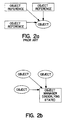
- SPRING presents a model wherein clients are operating directly on objects, not on object handles. (See figure 2b .) Some of these objects happen to keep all their interesting state at some remote site, so that their local state merely consists of a handle to this remote state. An object can only exist in one place at a time, so if an object is transmitted to someone else then the transmitter of the object ceases to have the object. However, the object can be copied before being transmitted, which might be implemented such that there are now two distinct objects pointing to the same remote state.
- the client domain executes a "Link (Image Memory Object, Naming Context Object)" command 20 on a linker object.
- the linker object first checks his image cache 22 by looking-up the image memory object to see if it contains a fully-linked version of the program represented by the image memory object and that this cached version was linked using the library programs in the naming context object. If a match is found 28 the linker object is basically finished with its work and merely returns the cached list of memory objects and related addresses 38 which are associated with the found image memory object.
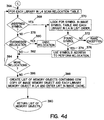
- the linker object finds a list of names of the library programs required by the image memory object and using the naming context object, obtains a memory object associated with each library program, and proceeds to check the library program cache for a match for each library program 26 . If a match is found for a library program memory object 36 the linker object obtains the memory object representing the provisionally fixed-up copy of the found library program and the associated address at which this program is to be mapped. If no match is found 30 , the linker object decides on an address at which to map the library program in question, creates a memory object that is a copy-on-write copy of the library program in question and maps this memory object at the address it selected for it.
- the linker object further provisionally fixes-up this new copy of the program and stores the library program's memory object and related address in the library program cache 32 .
- the linker object After finding a memory object for each library program required, whether they were found in the library program cache or new copies created, the linker object now resolves all unresolved symbol references in the new program image and in all of these library programs and writes a copy of this fully-linked version into the image cache 34 .
- the linker object returns to the client domain a list of the memory objects and related addresses for this fully-linked new program image and its associated library programs.
- File F 40 contains a program image.
- the file has four parts: a header 42 that contains the address 44 to begin executing the program and the list of shared library programs 46 to use; the code for the program 52 ; a symbol table 48 that contains all external symbols defined in the program; and a relocation table 50 that contains a list of what symbols to relocate.
- the program header 42 says that the program needs shared library SL 46 .
- the relocation table 50 shows that the program code 52 contains an instruction at address A1 that references an external symbol foo 54.
- the symbol table 48 shows that the program defines the external function bar 56 at address A2.
- file F2 containing shared library SL 60 .
- File F2 has the same four parts as File F: a program header 62 ; the code for the library program 72 ; a symbol table 68 ; and a relocation table 70 . Since this shared library does not depend on any other shared libraries, the shared library list is empty 66 .
- the relocation table 70 shows that the library code contains an instruction at address B I that references the external symbol bar 64 .
- the symbol table 68 shows that the library code defines the external function foo at address B2 76.
- Figure 6 shows a "fixed-up" version of the same program and library program which is depicted in Figure 5.
- Figure 6 shows an address space 80 containing the fixed-up program code 82 and the fixed-up library code 84.
- the code for the program image in File F ( 52 in Figure 5 ) is mapped at the address 86 that is fixed for all program images. The value of this address is such that each code address in the image ( 52 in Figure 5 ) is correct (for example, the code at address A1 ( 58 in Figure 5 ) is mapped at address A1 in the address space 86 ).
- the shared library SL on the other hand is mapped beginning at address space location address R1 and thus each library code address is offset by R 190 in the address space 80.
- the symbol foo was defined at address B2 in the shared library ( 76 in Figure 5 ) and since address B2 was mapped to address R1+B2 in the Address space 80, the actual address put in A1 for foo was R1+B2 88.
- the external reference to the symbol bar in the instruction B1 shown by the library relocation table ( 64 in Figure 5 ) was satisfied by the program code which defined bar at address A2 in the program image (56 in Figure 5).
- the instruction at address B1 in the shared library is actually mapped to address R1+B1 I in the address space 90 and so the actual address placed in the instruction at R1+B1 is A2 92 .
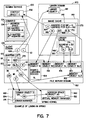
- a Naming Service 100 containing an implementor for context object C 102 ; a Domain D 104 containing an Address Space 106 ; a Client Domain 108 containing a mapping list 120 and objects C 109 , L 110 , M 112, AS 114 , D 116, and DM 118; a SPRING kernel 122, containing a Domain Manager 124 which itself contains an implementor of domain object D 126 which is shown containing object AS 128 ; a Virtual Memory Manager 130 also contained in the SPRING kernel which contains an address space implementor for objects AS 132 ; a File Server Domain 152 containing implementors for memory object M 154 , memory object M2 156 , memory object SL 158 , memory object SL2 160 and memory object SL3 162 ; and finally a Linker Domain 140 containing an implementor for linker object L 142 , an image
- M 112 and M 166 M2 175 and M2 168 ; SL3 177 and SL3 170; and C 109 and C 164.
- Two objects for the purpose of this invention are considered equivalent if they reference the source state on the server.
- a client domain wishes to start a program named foo .
- the configuration after the program is started is shown in Figure 7 .
- the library cache 148 also has a cached copy of shared library SL 172 and a provisionally fixed-up version which is in memory object SL2 174 . However, since we got a hit on the image cache 144 we didn't need to consult the library cache 148 .
- a second example is when there is no image cache hit but there is a library cache hit.
- the image cache 144 in Figure 7 is empty when the client domain 108 tries to link the program image.
- the linker domain 140 does the link using the following steps:
- the client domain 108 then follows the same steps in the first example to create the new domain.
- the linker domain 140 does the link using the following steps:
- the client domain 108 then follows the same steps as above in the first example, to create the new domain 104 .
- An alternative embodiment of the invention is to use only the shared library program cache in the dynamic linker system, following the same steps as outlined above starting with the second example.
Landscapes
- Engineering & Computer Science (AREA)
- Software Systems (AREA)
- Theoretical Computer Science (AREA)
- Physics & Mathematics (AREA)
- General Engineering & Computer Science (AREA)
- General Physics & Mathematics (AREA)
- Stored Programmes (AREA)
Claims (39)
- Ein Verfahren zum effektiven Erzeugen eines vollständig verknüpften Programmabbilds eines bestimmten Programms und zugehöriger Bibliotheksprogramme unter Verwendung eines dynamischen Verknüpfungssystems, das einen Abbild-Cache umfaßt, wobei das Verfahren in einem Computersystem implementiert ist, wobei das Verfahren gekennzeichnet ist durch die Schritte:Aufrufen des Verknüpfungssystems mit Parametern, die ein unverknüpftes Programmabbild des bestimmten Programms darstellen;Durchsuchen (22) des Abbild-Caches nach dem vollständig verknüpften Programmabbild des bestimmten Programms und der zugehörigen Bibliotheksprogramme; undwobei dann, wenn das vollständig verknüpfte Programmabbild in dem Abbild-Cache gefunden wird (28), das Verfahren ferner die Schritte umfaßt:Wiedergewinnen (38) des vollständig verknüpften Programmabbilds mit einer Liste von Programmidentifizierern und zugehörigen Adressen für jedes der zugehörigen Bibliotheksprogramme aus dem Abbild-Cache; undAbbilden (38) des vollständig verknüpften Programmabbilds des bestimmten Programms und jedes der zugehörigen Bibliotheksprogramme auf die Adressen aus der Liste von Programmidentifizierern.
- Das Verfahren nach Anspruch 1, wobei dann, wenn das vollständig verknüpfte Programmabbild nicht in dem Abbild-Cache gefunden wird, das Verfahren ferner die Schritte umfaßt:Erzeugen (26) einer unverknüpften Kopie des bestimmten Programms;Durchsuchen (26) eines Bibliotheks-Cache des Verknüpfungssystems nach einer provisorisch festgelegten (fixed-up) Kopie der zugehörigen Bibliotheksprogramme; undwobei dann, wenn die provisorisch festgelegten Bibliotheksprogramme in dem Bibliotheks-Cache gefunden werden, das Verfahren ferner die Schritte umfaßt:Wiedergewinnen (34) der provisorisch festgelegten Bibliotheksprogramme aus dem Bibliotheks-Cache;Verknüpfen (34) der provisorisch festgelegten Bibliotheksprogramme miteinander und mit dem unverknüpften bestimmten Programm, um das vollständig verknüpfte Programmabbild des bestimmten Programms und der zugehörigen Bibliotheksprogramme mit einer Liste von Programmidentifizierern und zugehörigen Adressen, die einen Identifizierer und eine zugehörige Adresse für das bestimmte Programm und für jedes der zugehörigen Bibliotheksprogramme enthält, zu erzeugen; undAbbilden (38) des vollständig verknüpften Programmabbilds des bestimmten Programms und jedes der provisorisch festgelegten Bibliotheksprogramme auf die zugehörigen Adressen aus der Liste von Programmidentifizierern.
- Das Verfahren nach Anspruch 2, wobei dann, wenn die provisorisch festgelegten Bibliotheksprogramme nicht in dem Bibliotheks-Cache gefunden werden, das Verfahren ferner die folgenden Schritte umfaßt:Auswählen einer Adresse (32), mit welcher zugehörige Bibliotheksprogramme verknüpft werden sollen;Erzeugen einer unverknüpften Kopie (32) der zugehörigen Bibliotheksprogramme;provisorisches Festlegen (fixing-up) von Verschiebungssymbolen (32) in der Kopie der zugehörigen Bibliotheksprogramme;Verknüpfen (32) der provisorisch festgelegten Bibliotheksprogramme miteinander und mit dem unverknüpften bestimmten Programm, um das vollständig verknüpfte Programmabbild des bestimmten Programms und der zugehörigen Bibliotheksprogramme mit einer Liste von Programmidentifizierern und zugehörigen Adressen, die einen Identifizierer und eine zugehörige Adresse für das bestimmte Programm und für jedes der zugehörigen Bibliotheksprogramme umfaßt, zu erzeugen;Abbilden (32) des vollständig verknüpften Programmabbilds des bestimmten Programms und jedes der zugehörigen Bibliotheksprogramme auf die zugehörigen Adressen aus der Liste von Programmidentifizierern; undHinzufügen (34) der provisorisch festgelegten Bibliotheksprogramme zu dem Bibliotheks-Cache.
- Das Verfahren nach Anspruch 3, wobei dann, wenn das Programmabbild nicht in dem Abbild-Cache gefunden wird, das Verfahren ferner die Schritte umfaßt:
Hinzufügen (34) des vollständig verknüpften Programmabbilds mit den provisorisch festgelegten Bibliotheksprogrammen und der Liste von Programmidentifizierern und zugehörigen Adressen zu dem Abbild-Cache für eine nachfolgende Wiedergewinnung durch das Verknüpfungssystem. - Das Verfahren nach Anspruch 4, wobei sämtliche Programme objekt-orientierte Programme sind.
- Das Verfahren nach Anspruch 1, wobei der Schritt des Durchsuchens des Abbild-Cache nach dem vollständig verknüpften Programmabbild den Schritt umfaßt:
Überprüfen des Abbild-Cache nach einem Schlüssel, welcher mit dem bestimmten Programm und den zugehörigen Bibliotheksprogrammen übereinstimmt. - Das Verfahren nach Anspruch 2, wobei der Schritt des Durchsuchens nach einer provisorisch festgelegten Kopie der zugehörigen Bibliotheksprogramme die zusätzlichen Schritte umfaßt:Erzeugen (308) einer ersten Namensliste, die Namen der Bibliotheksprogramme enthält, welche zu dem bestimmten Programm gehören; undAuflösen (310) jedes der Namen der in der ersten Liste enthaltenen Bibliotheksprogramme in einen Bibliotheksprogrammidentifizierer und Hinzufügen jedes Bibliotheksprogrammidentifizierers zu einer zweiten Liste.
- Das Verfahren nach Anspruch 7, wobei der Schritt des Wiedergewinnens der provisorisch festgelegten Bibliotheksprogramme die zusätzlichen Schritte umfaßt:Überprüfen (316) des Bibliotheks-Cache hinsichtlich einer Übereinstimmung jedes Bibliotheksprogrammidentifizierers in der zweiten Liste;Gewinnen (322) eines übereinstimmenden Bibliotheksprogramms aus dem Bibliotheks-Cache, sofern ein übereinstimmender Bibliotheksprogrammidentifizierer gefunden wird; undHinzufügen (336) des übereinstimmenden Bibliotheksprogrammidentifizierers aus dem Bibliotheks-Cache zu einer dritten Liste.
- Das Verfahren nach Anspruch 8, umfassend die zusätzlichen Schritte:Auswählen einer Adresse, mit welcher in der zweiten Liste identifizierte zugehörige Bibliotheksprogramme verknüpft werden sollen, sofern kein übereinstimmender Bibliotheksprogrammidentifizierer in dem Bibliotheks-Cache gefunden wird;Erzeugen (330) einer unverknüpften Kopie der zugehörigen Bibliotheksprogramme;provisorisches Festlegen (332) von Verschiebungssymbolen in der Kopie der zugehörigen Bibliotheksprogramme;Verknüpfen (332) der provisorisch festgelegten Bibliotheksprogramme miteinander und mit dem unverknüpften bestimmten Programm, um das vollständig verknüpfte Programmabbild des bestimmten Programms und der zugehörigen Bibliotheksprogramme mit einer Liste von Programmidentifizierern und zugehörigen Adressen, die einen Identifizierer und eine zugehörige Adresse für das bestimmte Programm und für jedes der zugehörigen Bibliotheksprogramme enthält, zu erzeugen;Hinzufügen (334) der provisorisch festgelegten Bibliotheksprogramme zu dem Bibliotheks-Cache; undHinzufügen (336) der provisorisch festgelegten Bibliotheksprogrammidentifizierer zu der dritten Liste.
- Das Verfahren nach Anspruch 9, umfassend die zusätzlichen Schritte:
Herstellen einer Kopie (342) des Programmabbilds und Hinzufügen eines Identifizierers der Kopie des Programmabbilds zu einer vierten Liste, wobei die Kopie des Programmabbilds eine Symboltabelle und eine Verschiebungstabelle aufweist; und Herstellen einer Kopie (344) jedes der Bibliotheksprogramme aus der dritten Liste und Hinzufügen eines Identifizierers der Kopie der Bibliotheksprogramme zu der vierten Liste, wobei jede der Kopien der Bibliotheksprogramme eine Symboltabelle und eine Verschiebungstabelle aufweist. - Das Verfahren nach Anspruch 10, umfassend die zusätzlichen Schritte:Auffinden jedes zu verschiebenden Symbols (352) in der Kopie des Programmabbilds; undDurchsuchen (336) sämtlicher der in der vierten Liste identifizierten Bibliotheksprogramme und, sofern eine erste Symboldefinition, welche mit dem zu verschiebenden Symbol übereinstimmt, gefunden wird, Verwenden einer Adresse der ersten Symboldefinition, welche mit dem zu verschiebenden Symbol übereinstimmt, um eine Verschiebung für das zu verschiebende Symbol durchzuführen.
- Das Verfahren nach Anspruch 11, umfassend die zusätzlichen Schritte:Verwenden der Symboltabelle (356) in jedem der in der vierten Liste identifizierten Bibliotheksprogramme, um der Reihe nach, beginnend mit einem ersten in der vierten Liste identifizierten Bibliotheksprogramm, jedes Symbol der Symboltabelle mit der Symboltabelle des Programmabbilds zu vergleichen und um ein Symbol in der Symboltabelle des Bibliotheksprogramms als überschrieben (overridden) zu markieren, sofern das Symbol mit einem Symbol in der Symboltabelle des Programmabbilds übereinstimmt;Vergleichen jedes Symbols jeder der Symboltabellen mit sämtlichen Symboltabellen der in der vierten Liste identifizierten Bibliotheksprogramme, welche an einer höheren Stelle in der vierten Liste sind, als die Symboltabelle, welche überprüft wird, und welche als bereits überprüft markiert worden sind;Markieren des Identifizierers eines in der vierten Liste identifizierten Bibliotheksprogramms bei Abschluß der Überprüfung der Symboltabelle des Bibliotheksprogramms der vierten Liste als einen, dessen Symboltabelle überprüft worden ist; undVergleichen der Symbole in den Symboltabellen in jedem der in der vierten Liste identifizierten Bibliotheksprogramme auf eine gleiche Weise, bis sämtliche Symboltabellen verglichen worden sind.
- Das Verfahren nach Anspruch 12, umfassend die zusätzlichen Schritte:Verwenden der Verschiebungstabelle (366) in jedem der in der vierten Liste identifizierten Programme, um nacheinander beginnend mit einem ersten in der vierten Liste identifizierten Programm jede der Verschiebungstabellen zu durchsuchen, um ein undefiniertes Symbol aufzufinden;sofern ein Symbol in einer der Verschiebungstabellen ein definiertes Symbol ist (370), Überprüfen des definierten Symbols, und sofern das definierte Symbol als überschrieben markiert worden ist, Rückgängigmachen einer Verschiebungsadresse für das definierte Symbol, welches als überschrieben markiert worden ist;Verwenden jedes undefinierten Symbols (368) und jedes definierten Symbols, dessen Verschiebungsadresse rückgängig gemacht wurde, als Suchargument beim Überprüfen der Symboltabelle der Kopie des Programmabbilds und der Symboltabellen jeder der in der vierten Liste identifizierten Bibliotheksprogramme, um ein mit dem Suchargument übereinstimmendes Symbol aufzufinden, und, sofern das übereinstimmende Symbol gefunden ist, Verwenden der Adresse des übereinstimmenden Symbols, um die Adreßverschiebung für das Symbol durchzuführen, welches als Suchargument verwendet worden ist; undBereitstellen einer Ausnahmenachricht (372) für den Fall, daß herausgefunden wird, daß kein Symbol mit dem Suchargument übereinstimmt.
- Das Verfahren nach Anspruch 13, umfassend die zusätzlichen Schritte:Erzeugen einer cache-baren Liste (388) von Programmidentifizierern, die eine Kopie des bestimmten Programmabbilds und jedes der in der vierten Liste identifizierten Bibliotheksprogramme enthält;Eingeben der cache-baren Liste (388) von Programmidentifizierern in den Abbild-Cache; undRückgeben der cache-baren Liste (390) von Programmidentifizierern in Erwiderung auf das Verknüpfungssystem.
- Das Verfahren nach Anspruch 14, wobei die Programme Objekte sind und das Computersystem ein objekt-orientiertes System ist.
- Das Verfahren nach Anspruch 15, wobei die Identifizierer und die Programmidentifizierer Speicherobjekte sind.
- Das Verfahren nach Anspruch 1, wobei:dann, wenn kein vollständig verknüpftes Programmabbild in dem Abbild-Cache gefunden wird (24), das Verfahren ferner die Schritte umfaßt:Überprüfen eines Bibliotheks-Cache (26) hinsichtlich einer provisorisch festgelegten (fixed-up) Kopie der zugehörigen Bibliotheksprogramme und dann, wenn der Bibliotheks-Cache die provisorisch festgelegten zugehörigen Bibliotheksprogramme enthält, Wiedergewinnen der provisorisch festgelegten Bibliotheksprogramme; undwobei dann, wenn die provisorisch festgelegten Bibliotheksprogramme in dem Bibliotheks-Cache nicht gefunden werden (30), das Verfahren ferner die Schritte umfaßt:Erzeugen (32) einer Liste von Bibliotheksprogrammidentifizierern und zugehörigen Adressen aus dem Bibliotheks-Cache;Verknüpfen (34) jedes der Bibliotheksprogramme miteinander und mit dem Programmabbild, um das vollständig verknüpfte Programmabbild zu erzeugen; undAbbilden (38) des von den Programmidentifizieren identifizierten vollständig verknüpften Programmabbilds mit der zugehörigen Adresse aus der Liste von Programmidentifizierern.
- Das Verfahren nach Anspruch 17, wobei der Schritt des Erzeugens einer Liste von Bibliotheksprogrammidentifizierern und zugehörigen Adressen aus dem Bibliotheksprogramm-Cache die zusätzlichen Schritte umfaßt:Erzeugen (308) einer ersten Liste, die die Namen derjenigen Bibliotheksprogramme enthält, welche zu dem bestimmten Programm gehören;Auflösen (310) jedes der Namen der Bibliotheksprogramme, die in der ersten Liste enthalten sind, in einen Bibliotheksprogrammidentifizierer und Hinzufügen jedes der Bibliotheksprogrammidentifizierer zu einer zweiten Liste;Überprüfen (322) des Bibliotheks-Cache hinsichtlich einer Übereinstimmung für jeden Bibliotheksprogrammidentifizierer in der zweiten Liste;Gewinnen (336) eines übereinstimmenden Bibliotheksprogramms aus dem Bibliotheks-Cache, sofern ein übereinstimmender Bibliotheksprogrammidentifizierer gefunden wird; undHinzufügen (336) des übereinstimmenden Bibliotheksprogrammidentifizierers aus dem Bibliotheks-Cache zu einer dritten Liste.
- Das Verfahren nach Anspruch 18, umfassend die zusätzlichen Schritte:Auswählen (328) einer Adresse, mit welcher in der zweiten Liste identifizierte zugehörige Bibliotheksprogramme verknüpft werden sollen, sofern kein übereinstimmender Bibliotheksprogrammidentifizierer in dem Bibliotheks-Cache gefunden wird;Erzeugen (330) einer unverknüpften Kopie der zugehörigen Bibliotheksprogramme;provisorisches (332) Festlegen von Verschiebungssymbolen in der Kopie der zugehörigen Bibliotheksprogramme;Hinzufügen (334) der provisorisch festgelegten Bibliotheksprogramme zu dem Bibliotheks-Cache; undHinzufügen (336) des provisorisch festgelegten Bibliotheksprogrammidentifizierers zu der dritten Liste.
- Das Verfahren nach Anspruch 19, umfassend die zusätzlichen Schritte:Herstellen (343) einer Kopie des Programmabbilds und Hinzufügen eines Identifizierers der Kopie des Programmabbilds zu einer vierten Liste, wobei die Kopie des Programmabbilds eine Symboltabelle und eine Verschiebungstabelle aufweist; undHerstellen (342) einer Kopie jedes der Bibliotheksprogramme aus der dritten Liste und Hinzufügen eines Identifizierers der Kopie der Bibliotheksprogramme zu der vierten Liste, wobei jede der Kopien der Bibliotheksprogramme eine Symboltabelle und eine Verschiebungstabelle aufweist.
- Das Verfahren nach Anspruch 20, umfassend die zusätzlichen Schritte:Auffinden (352) jedes zu verschiebenden Symbols in der Kopie des Programmabbilds; undDurchsuchen (356) sämtlicher in der vierten Liste identifizierter Bibliotheksprogramme und, sofern eine erste Symboldefinition, welche mit dem zu verschiebenden Symbol übereinstimmt, aufgefunden wird, Verwenden einer Adresse der ersten Symboldefinition, welche mit dem zu verschiebenden Symbol übereinstimmt, um eine Verschiebung des zu verschiebenden Symbols durchzuführen.
- Das Verfahren nach Anspruch 21, umfassend die zusätzlichen Schritte:Verwenden (358) der Symboltabelle in jedem der in der vierten Liste identifizierten Bibliotheksprogramme, um der Reihe nach beginnend mit einem ersten der in der vierten Liste identifizierten Bibliotheksprogramme jedes Symbol der Symboltabelle mit der Symboltabelle des Programmabbilds zu vergleichen und ein Symbol in der Symboltabelle des Bibliotheksprogramms als überschrieben zu markieren, sofern das Symbol mit einem Symbol in der Symboltabelle des Programmabbilds übereinstimmt;Vergleichen jedes Symbols jeder der Symboltabellen mit sämtlichen Symboltabellen der in der vierten Liste identifizierten Bibliotheksprogramme, welche an einer höheren Stelle in der vierten Liste sind als die Symboltabelle, welche überprüft wird und welche als bereits überprüft markiert worden ist;bei Abschluß der Überprüfung der Symboltabelle jedes der in der vierten Liste identifizierten Bibliotheksprogramme: Markieren des Identifizierers des Bibliotheksprogramms in der vierten Liste als einen, dessen Symboltabelle überprüft worden ist; undVergleichen der Symbole in den Symboltabellen in jedem der in der vierten Liste identifizierten Bibliotheksprogramme in gleicher Weise, bis sämtliche Symboltabellen verglichen worden sind.
- Das Verfahren nach Anspruch 22, umfassend die zusätzlichen Schritte:Verwenden (366) der Verschiebungstabelle in jedem der in der vierten Liste identifizierten Programme, um nacheinander beginnend mit einem ersten der in der vierten Liste identifizierten Programme jede der Verschiebungstabellen zu durchsuchen, um ein undefiniertes Symbol aufzufinden;dann, wenn ein Symbol in einer der Verschiebungstabellen ein definiertes Symbol ist, Überprüfen des definierten Symbols (378) ein zweites Mal und, sofern das definierte Symbol als überschrieben markiert worden ist, Rückgängig-Machen einer Verschiebungsadresse für das definierte Symbol, welches als überschrieben markiert worden ist;Verwenden jedes undefinierten Symbols (368) und jedes definierten Symbols, dessen Verschiebungsadresse rückgängig gemacht wurde, als Suchargument, Überprüfen der Symboltabelle der Kopie des Programmabbilds und der Symboltabellen jeder der in der vierten Liste identifizierten Bibliotheksprogramme, um ein Symbol aufzufinden, das mit dem Suchargument übereinstimmt, und, sofern das übereinstimmende Symbol gefunden wird, Verwenden der Adresse des gefundenen Symbols, um die Adreßverschiebung für das Symbol, welches als das Suchargument verwendet worden ist, durchzuführen; undBereitstellen einer Ausnahmenachricht (372), sofern gefunden wird, daß kein Symbol mit dem Suchargument übereinstimmt.
- Das Verfahren nach Anspruch 23, umfassend die zusätzlichen Schritte:Erzeugen (388) einer cache-baren Liste von Programmidentifizierern, die eine Kopie des bestimmten Programmabbilds und jedes der in der vierten Liste identifizierten Bibliotheksprogramme enthält; undZurückgeben (390) der cache-baren Liste von Programmidentifizierern in Erwiderung auf das Verknüpfungssystem.
- Das Verfahren nach Anspruch 24, wobei die Programme Objekte sind und das Computersystem ein objekt-orientiertes System ist.
- Das Verfahren nach Anspruch 25, wobei die Identifizierer und die Programmidentifizierer Speicherobjekte sind.
- Ein Abbild-Cache-System zum Bereitstellen eines vollständig verknüpften Programmabbilds eines bestimmten Programms und zugehöriger Bibliotheksprogramme für ein dynamisches Verknüpfungssystem, wobei das Cache-System in einem Computersystem implementiert ist, wobei das Abbild-Cache-System gekennzeichnet ist durch:einen Abbild-Cache (144) zum Cache-Speichern des vollständig verknüpften Programmabbilds mit einer Liste von Programmidentifizierern und zugehörigen Adressen für jedes der zugehörigen Bibliotheksprogramme, wobei die Liste zum Abbilden des vollständig verknüpften Programmabbilds dient;eine erste mit dem Abbild-Cache gekoppelte Sucheinrichtung (22) zum Durchsuchen des Abbild-Cache, um zu bestimmen, ob der Abbild-Cache das vollständig verknüpfte Programmabbild enthält, wobei die Suche in Beantwortung einer Anforderung zum Verknüpfen des bestimmten Programms durchgeführt wird; undeine mit der ersten Sucheinrichtung gekoppelte erste Kommunikationseinrichtung (38) zum Antworten auf die Anforderung zum Verknüpfen des bestimmten Programms, wobei die Antwort die Liste von Programmidentifizierern und zu den Programmidentifizierern gehörende Adressen enthält, die aus dem Abbild-Cache gewonnen wurden, sofern das vollständig verknüpfte Programmabbild in dem Abbild-Cache gefunden wird.
- Das Abbild-Cache-System nach Anspruch 27, ferner aufweisend:einen mit dem Abbild-Cache gekoppelten Bibliotheks-Cache (148) zum Speichern provisorisch festgelegter (fixed-up) Bibliotheksprogramme; undeine mit dem Bibliotheks-Cache gekoppelte zweite Sucheinrichtung (263) zum Durchsuchen des Bibliotheks-Cache, um zu bestimmen, ob wenigstens eines der provisorisch festgelegten Bibliotheksprogramme mit wenigstens einem der zugehörigen Bibliotheksprogramme übereinstimmt.
- Das Abbild-Cache-System nach Anspruch 28, wobei das Durchsuchen des Bibliotheks-Cache durchgeführt wird, wenn das vollständig verknüpfte Programmabbild nicht in dem Abbild-Cache, welcher mit dem bestimmten Programm übereinstimmt, gefunden wird, und wobei die erste Suchmöglichkeit eine unverknüpfte Kopie des bestimmten Programms gewinnt.
- Das Abbild-Cache-System nach Anspruch 29, ferner aufweisend:
eine mit der zweiten Sucheinrichtung gekoppelte erste Verknüpfungseinrichtung (32) zum Verknüpfen eines gefundenen Bibliotheksprogramms mit dem unverknüpften Programmabbild, sofern wenigstens eines der provisorisch festgelegten Bibliotheksprogramme in dem Bibliotheks-Cache gefunden ist, welches mit wenigstens einem der zugehörigen Bibliotheksprogramme übereinstimmt. - Das Abbild-Cache-System nach Anspruch 30, ferner aufweisend:eine mit der zweiten Sucheinrichtung gekoppelte dritte Sucheinrichtung (36) zum Auffinden unverknüpfter Bibliotheksprogramme, sofern kein Bibliotheksprogramm in dem Bibliotheks-Cache gefunden wird, das mit dem zugehörigen Bibliotheksprogramm übereinstimmt; undeine mit der dritten Sucheinrichtung gekoppelte zweite Verknüpfungseinrichtung (32) zum Verknüpfen der unverknüpften Bibliotheksprogramme miteinander und mit den gefundenen Bibliotheksprogrammen und mit dem unverknüpften Programmabbild, wobei ein vollständig verknüpftes Programmabbild des bestimmten Programms mit zugehörigen Bibliotheksprogrammen erzeugt wird.
- Das Abbild-Cache-System nach Anspruch 31, wobei:eine zweite Verknüpfungseinrichtung (32) irgendwelche der unverknüpften Bibliotheksprogramme provisorisch festlegt (fixed-up) und die provisorisch festgelegten Bibliotheksprogramme in dem Bibliotheks-Cache speichert; unddie zweite Verknüpfungseinrichtung (32) das vollständig verknüpfte Programmabbild mit zugehörigen Bibliotheksprogrammen in dem Abbild-Cache (144) speichert.
- Das Abbild-Cache-System nach Anspruch 22, wobei das bestimmte Programm und die Bibliotheksprogramme objekt-orientierte Programme sind.
- Das Abbild-Cache-System nach Anspruch 28, wobei die zweite Sucheinrichtung (26) die Suche in Erwiderung einer Anforderung zum Verknüpfen des bestimmten Programms durchführt, sofern das vollständig verknüpfte Programmabbild des bestimmten Programms von dem dynamischen Verknüpfungssystem nicht aufgefunden wird; und
eine mit der zweiten Sucheinrichtung gekoppelte erste Verknüpfungseinrichtung (38) zum Verknüpfen eines aufgefundenen Bibliotheksprogramms mit dem bestimmten Programm, sofern das gefundene Bibliotheksprogramm in dem Bibliotheks-Cache gefunden wird. - Das Abbild-Cache-System nach Anspruch 34, wobei die erste Sucheinrichtung ferner aufweist:
eine mit dem Bibliotheks-Cache (148) gekoppelte zweite Sucheinrichtung (26) zum Durchsuchen des Bibliotheks-Cache, zum Bestimmen, ob der Bibliotheks-Cache ein unverknüpftes Bibliotheksprogramm enthält, das mit einem der zugehörigen Bibliotheksprogramme übereinstimmt. - Das Abbild-Cache-System nach Anspruch 34, ferner aufweisend:eine mit dem Speicher des Computers gekoppelte zweite Sucheinrichtung (26) zum Auffinden der unverknüpften Bibliotheksprogramme, welche mit den zugehörigen Bibliotheksprogrammen übereinstimmen; undeine mit der zweiten Sucheinrichtung gekoppelte zweite Verknüpfungseinrichtung (32) zum Verknüpfen der unverknüpften Bibliotheksprogramme miteinander und mit den aufgefundenen Bibliotheksprogrammen und mit der unverknüpften Kopie des bestimmten Programms, wobei ein vollständig verknüpftes Programmabbild des bestimmten Programms mit zugehörigen Bibliotheksprogrammen erzeugt wird.
- Das Abbild-Cache-System nach Anspruch 36, wobei:
die zweite Verknüpfungseinrichtung (32) irgendwelche der unverknüpften Bibliotheksprogramme provisorisch festlegt (fixed-up) und die provisorisch festgelegten Bibliotheksprogramme in den Bibliotheks-Cache speichert. - Das dynamische Verknüpfungssystem nach Anspruch 37, wobei die Bibliotheksprogramme in dem Bibliotheksprogramm-Cache (148) partiell verknüpfte Bibliotheksprogramme sind.
- Das dynamische Verknüpfungssystem nach Anspruch 38, wobei die Anwendungsprogramme und die Bibliotheksprogramme objekt-orientierte Programme sind.
Applications Claiming Priority (2)
| Application Number | Priority Date | Filing Date | Title |
|---|---|---|---|
| US46827 | 1987-05-05 | ||
| US08/046,827 US5475840A (en) | 1993-04-13 | 1993-04-13 | High performance dynamic linking through caching |
Publications (3)
| Publication Number | Publication Date |
|---|---|
| EP0620522A2 EP0620522A2 (de) | 1994-10-19 |
| EP0620522A3 EP0620522A3 (de) | 1996-05-01 |
| EP0620522B1 true EP0620522B1 (de) | 2001-05-09 |
Family
ID=21945612
Family Applications (1)
| Application Number | Title | Priority Date | Filing Date |
|---|---|---|---|
| EP94301785A Expired - Lifetime EP0620522B1 (de) | 1993-04-13 | 1994-03-14 | Dynamische Hochleistungsprogrammverknüpfung durch Cachespeicherung |
Country Status (4)
| Country | Link |
|---|---|
| US (1) | US5475840A (de) |
| EP (1) | EP0620522B1 (de) |
| JP (1) | JPH07160483A (de) |
| DE (1) | DE69427174T2 (de) |
Families Citing this family (65)
| Publication number | Priority date | Publication date | Assignee | Title |
|---|---|---|---|---|
| JP3553991B2 (ja) * | 1993-05-27 | 2004-08-11 | キヤノン株式会社 | プログラム制御方法 |
| US5748961A (en) * | 1993-07-12 | 1998-05-05 | Digital Equipment Corporation | Efficient method and apparatus for compiling and linking modules of computer code in a large software system |
| US5379432A (en) * | 1993-07-19 | 1995-01-03 | Taligent, Inc. | Object-oriented interface for a procedural operating system |
| JP3527765B2 (ja) * | 1993-11-29 | 2004-05-17 | 富士通株式会社 | プログラムキャッシュ装置 |
| JPH07327093A (ja) * | 1994-06-01 | 1995-12-12 | Ekushingu:Kk | データ伝送装置 |
| JPH08241216A (ja) * | 1995-01-06 | 1996-09-17 | Mitsubishi Electric Corp | 計算機システム |
| US5797015A (en) * | 1995-04-18 | 1998-08-18 | Pitney Bowes Inc. | Method of customizing application software in inserter systems |
| US6332168B1 (en) | 1995-09-28 | 2001-12-18 | International Business Machines Corporation | Method of, system for, and computer program product for providing a run time subsystem for run time libraries |
| US5774722A (en) * | 1995-12-14 | 1998-06-30 | International Business Machines Corporation | Method for efficient external reference resolution in dynamically linked shared code libraries in single address space operating systems |
| US5797014A (en) * | 1995-12-14 | 1998-08-18 | International Business Machines Corporation | Method for reducing processor cycles used for global offset table address computation in a position independent shared library |
| US6421704B1 (en) | 1998-03-20 | 2002-07-16 | Sun Microsystems, Inc. | Method, apparatus, and product for leasing of group membership in a distributed system |
| US6938263B2 (en) | 1996-04-23 | 2005-08-30 | Sun Microsystems, Inc. | System and method for facilitating dynamic loading of “stub” information to enable a program operating in one address space to invoke processing of a remote method or procedure in another address space |
| US6182083B1 (en) | 1997-11-17 | 2001-01-30 | Sun Microsystems, Inc. | Method and system for multi-entry and multi-template matching in a database |
| US6393497B1 (en) | 1998-03-20 | 2002-05-21 | Sun Microsystems, Inc. | Downloadable smart proxies for performing processing associated with a remote procedure call in a distributed system |
| US6185611B1 (en) | 1998-03-20 | 2001-02-06 | Sun Microsystem, Inc. | Dynamic lookup service in a distributed system |
| US6832223B1 (en) | 1996-04-23 | 2004-12-14 | Sun Microsystems, Inc. | Method and system for facilitating access to a lookup service |
| US6446070B1 (en) | 1998-02-26 | 2002-09-03 | Sun Microsystems, Inc. | Method and apparatus for dynamic distributed computing over a network |
| US6466947B2 (en) * | 1998-03-20 | 2002-10-15 | Sun Microsystems, Inc. | Apparatus and method for dynamically verifying information in a distributed system |
| US6237009B1 (en) | 1996-10-11 | 2001-05-22 | Sun Microsystems, Inc. | Lease renewal service |
| US5832529A (en) | 1996-10-11 | 1998-11-03 | Sun Microsystems, Inc. | Methods, apparatus, and product for distributed garbage collection |
| US6728737B2 (en) | 1996-10-11 | 2004-04-27 | Sun Microsystems, Inc. | Method and system for leasing storage |
| US6003095A (en) * | 1996-10-31 | 1999-12-14 | International Business Machines Corporation | Apparatus and method for demand loading a dynamic link library |
| US6769126B1 (en) | 1996-12-10 | 2004-07-27 | International Business Machines Corporation | Apparatus and method for demand load analysis |
| US5946486A (en) * | 1996-12-10 | 1999-08-31 | International Business Machines Corporation | Apparatus and method for tracing entries to or exits from a dynamic link library |
| US6052778A (en) * | 1997-01-13 | 2000-04-18 | International Business Machines Corporation | Embedded system having dynamically linked dynamic loader and method for linking dynamic loader shared libraries and application programs |
| US5767978A (en) * | 1997-01-21 | 1998-06-16 | Xerox Corporation | Image segmentation system |
| US6363436B1 (en) | 1997-01-27 | 2002-03-26 | International Business Machines Corporation | Method and system for loading libraries into embedded systems |
| US7203769B2 (en) * | 1997-03-14 | 2007-04-10 | International Business Machines Corporation | Bootstrapping technique for distributed object client systems |
| US5933630A (en) * | 1997-06-13 | 1999-08-03 | Acceleration Software International Corporation | Program launch acceleration using ram cache |
| US6957427B1 (en) | 1997-10-15 | 2005-10-18 | Sun Microsystems, Inc. | Remote object activation in a distributed system |
| US6421827B1 (en) | 1997-12-17 | 2002-07-16 | International Business Machines Corporation | System and method for detecting and reordering loading patterns |
| US6292843B1 (en) | 1998-01-16 | 2001-09-18 | International Business Machines Corporation | Quick loading of run time dynamic link library for OS/2 |
| US6604127B2 (en) * | 1998-03-20 | 2003-08-05 | Brian T. Murphy | Dynamic lookup service in distributed system |
| JP2002505491A (ja) | 1998-02-26 | 2002-02-19 | サンマイクロシステムズ インコーポレーテッド | 分散形システムにおける動的情報証明のための装置及び方法 |
| JP2002505473A (ja) | 1998-02-26 | 2002-02-19 | サンマイクロシステムズ インコーポレーテッド | 決定性ハッシュでリモートメソッドを識別する方法とシステム |
| US20020046228A1 (en) * | 1998-03-20 | 2002-04-18 | Sun Microsystems, Inc. | Method and system for facilitating access to a lookup service |
| US6591337B1 (en) | 1999-04-05 | 2003-07-08 | Lsi Logic Corporation | Method and apparatus for caching objects in a disparate management environment |
| US6901518B1 (en) | 1999-04-08 | 2005-05-31 | Sun Microsystems, Inc. | Method and system for establishing trust in downloaded proxy code |
| US6845393B1 (en) | 1999-06-14 | 2005-01-18 | Sun Microsystems, Inc. | Lookup discovery service in a distributed system having a plurality of lookup services each with associated characteristics and services |
| US6928641B1 (en) * | 1999-10-08 | 2005-08-09 | Texas Instruments Incorporated | Method and system for far branch and call instructions |
| US6542167B1 (en) * | 2000-01-28 | 2003-04-01 | Wind River Systems, Inc. | System and method for flexible software linking |
| US7577834B1 (en) | 2000-05-09 | 2009-08-18 | Sun Microsystems, Inc. | Message authentication using message gates in a distributed computing environment |
| US6629201B2 (en) | 2000-05-15 | 2003-09-30 | Superspeed Software, Inc. | System and method for high-speed substitute cache |
| US6957237B1 (en) | 2000-06-02 | 2005-10-18 | Sun Microsystems, Inc. | Database store for a virtual heap |
| US20020129336A1 (en) * | 2000-12-19 | 2002-09-12 | Bolding Joe D. | Automatic symbol table selection in a multi-cell environment |
| US7296275B2 (en) | 2001-01-04 | 2007-11-13 | Sun Microsystems, Inc. | Method and system for passing objects in a distributed system using serialization contexts |
| US20030009750A1 (en) * | 2001-07-09 | 2003-01-09 | Robert Hundt | Optimizing an executable computer program having linkage functions |
| US20030051029A1 (en) | 2001-09-07 | 2003-03-13 | Reedy Dennis G. | Dynamic provisioning of sevice components in a distributed system |
| US7660887B2 (en) | 2001-09-07 | 2010-02-09 | Sun Microsystems, Inc. | Systems and methods for providing dynamic quality of service for a distributed system |
| US7756969B1 (en) | 2001-09-07 | 2010-07-13 | Oracle America, Inc. | Dynamic provisioning of identification services in a distributed system |
| US7805710B2 (en) * | 2003-07-15 | 2010-09-28 | International Business Machines Corporation | Shared code caching for program code conversion |
| US7792874B1 (en) | 2004-01-30 | 2010-09-07 | Oracle America, Inc. | Dynamic provisioning for filtering and consolidating events |
| US7231632B2 (en) * | 2004-04-16 | 2007-06-12 | Apple Computer, Inc. | System for reducing the number of programs necessary to render an image |
| US8704837B2 (en) | 2004-04-16 | 2014-04-22 | Apple Inc. | High-level program interface for graphics operations |
| US8134561B2 (en) | 2004-04-16 | 2012-03-13 | Apple Inc. | System for optimizing graphics operations |
| KR100617698B1 (ko) * | 2004-06-07 | 2006-08-28 | 삼성전자주식회사 | 기능별 데이터 저장을 위한 바이너리 파일 생성 장치 및방법과 그 방법이 저장된 컴퓨터 판독 가능한 저장 매체 |
| US20060075394A1 (en) * | 2004-10-01 | 2006-04-06 | Tatsuya Iwamoto | Dynamic loading and unloading for processing unit |
| JP4794331B2 (ja) * | 2006-03-15 | 2011-10-19 | 株式会社日立ソリューションズ | 任意アプリケーションによる外部記憶装置への情報持ち出し制御方法 |
| US7930710B2 (en) * | 2006-05-16 | 2011-04-19 | Panasonic Corporation | Program start-up unit, program start-up method, recording medium with start-up processing program recorded, and integrated circuit |
| US7930709B2 (en) * | 2006-10-02 | 2011-04-19 | Red Hat, Inc. | Methods and apparatus for a dynamic linker speed up |
| US8274520B2 (en) * | 2007-06-08 | 2012-09-25 | Apple Inc. | Facilitating caching in an image-processing system |
| US8402410B2 (en) | 2007-08-27 | 2013-03-19 | Samsung Electronics Co., Ltd. | Method and apparatus for managing configuration memory of reconfigurable hardware |
| US10410117B2 (en) | 2008-09-21 | 2019-09-10 | Brainchip, Inc. | Method and a system for creating dynamic neural function libraries |
| US9218373B2 (en) * | 2012-10-10 | 2015-12-22 | Business Objects Software Ltd. | In-memory data profiling |
| US10606611B2 (en) | 2017-06-02 | 2020-03-31 | Apple Inc. | Techniques for performing dynamic linking |
Family Cites Families (2)
| Publication number | Priority date | Publication date | Assignee | Title |
|---|---|---|---|---|
| US5269021A (en) * | 1989-10-12 | 1993-12-07 | Texas Instruments Incorporated | Multiprocessor software interface for a graphics processor subsystem employing partially linked dynamic load modules which are downloaded and fully linked at run time |
| JPH04178731A (ja) * | 1990-11-13 | 1992-06-25 | Hitachi Ltd | オブジェクト指向処理系におけるメソッド・キャッシュ情報の再利用方式 |
-
1993
- 1993-04-13 US US08/046,827 patent/US5475840A/en not_active Expired - Lifetime
-
1994
- 1994-03-14 DE DE69427174T patent/DE69427174T2/de not_active Expired - Fee Related
- 1994-03-14 EP EP94301785A patent/EP0620522B1/de not_active Expired - Lifetime
- 1994-04-13 JP JP6097874A patent/JPH07160483A/ja active Pending
Also Published As
| Publication number | Publication date |
|---|---|
| EP0620522A3 (de) | 1996-05-01 |
| DE69427174T2 (de) | 2002-01-03 |
| JPH07160483A (ja) | 1995-06-23 |
| DE69427174D1 (de) | 2001-06-13 |
| US5475840A (en) | 1995-12-12 |
| EP0620522A2 (de) | 1994-10-19 |
Similar Documents
| Publication | Publication Date | Title |
|---|---|---|
| US5475840A (en) | High performance dynamic linking through caching | |
| US5727147A (en) | System and method for resolving symbolic references to externally located program files | |
| US6799173B2 (en) | Method and apparatus for sharing code containing references to non-shared objects | |
| Dahm | Byte code engineering | |
| US5414854A (en) | Object-oriental system for managing shared libraries | |
| KR100450312B1 (ko) | 읽기전용메모리에클래스들을로딩하기위한방법및시스템 | |
| EP4099152B1 (de) | Erweiterung einer befehlssatzarchitektur einer virtuellen maschine | |
| US5946486A (en) | Apparatus and method for tracing entries to or exits from a dynamic link library | |
| US7536409B2 (en) | Having a single set of object relational mappings across different instances of the same schemas | |
| CN107924326B (zh) | 对经更新的类型的迁移方法进行覆盖 | |
| US5367683A (en) | Smart recompilation of performing matchup/difference after code generation | |
| US9411617B2 (en) | System and method for matching synthetically generated inner classes and methods | |
| US20050028155A1 (en) | Java execution device and Java execution method | |
| US6243668B1 (en) | Instruction set interpreter which uses a register stack to efficiently map an application register state | |
| JP2002517033A (ja) | 静的束縛された機能呼出から動的束縛された機能呼出への再コンパイルを必要としない動的切り換え | |
| US7080382B2 (en) | Accessing shorter-duration instances of activatable objects based on object references stored in longer-duration memory | |
| JP2003509761A (ja) | オブジェクト指向コンピュータプログラムのロード | |
| JPH1040107A (ja) | セキュリテ・インタープリタにおけるプライベート変数機能呼出しの走行時間最適化のためのシステム及び方法 | |
| JP2002525707A (ja) | バーチャルコールのインライン化のための精確な方法 | |
| JP2001216169A (ja) | 第1ビット・アーキテクチャの命令を第2ビット・アーキテクチャの命令に変換する方法、システム、プログラムおよびデータ構造 | |
| US5625822A (en) | Using sorting to do matchup in smart recompilation | |
| US7913243B2 (en) | Method and system for generating and applying patches to a computer program concurrently with its execution | |
| EP1058897A4 (de) | Transparente müllabfuhr für hilfsquellen | |
| Richardson et al. | Implementing persistence in E | |
| Tilevich et al. | NRMI: Natural and efficient middleware |
Legal Events
| Date | Code | Title | Description |
|---|---|---|---|
| PUAI | Public reference made under article 153(3) epc to a published international application that has entered the european phase |
Free format text: ORIGINAL CODE: 0009012 |
|
| AK | Designated contracting states |
Kind code of ref document: A2 Designated state(s): DE FR IT NL SE |
|
| PUAL | Search report despatched |
Free format text: ORIGINAL CODE: 0009013 |
|
| AK | Designated contracting states |
Kind code of ref document: A3 Designated state(s): DE FR IT NL SE |
|
| 17P | Request for examination filed |
Effective date: 19961023 |
|
| 17Q | First examination report despatched |
Effective date: 19990305 |
|
| GRAG | Despatch of communication of intention to grant |
Free format text: ORIGINAL CODE: EPIDOS AGRA |
|
| GRAG | Despatch of communication of intention to grant |
Free format text: ORIGINAL CODE: EPIDOS AGRA |
|
| GRAH | Despatch of communication of intention to grant a patent |
Free format text: ORIGINAL CODE: EPIDOS IGRA |
|
| GRAH | Despatch of communication of intention to grant a patent |
Free format text: ORIGINAL CODE: EPIDOS IGRA |
|
| GRAA | (expected) grant |
Free format text: ORIGINAL CODE: 0009210 |
|
| AK | Designated contracting states |
Kind code of ref document: B1 Designated state(s): DE FR IT NL SE |
|
| PG25 | Lapsed in a contracting state [announced via postgrant information from national office to epo] |
Ref country code: NL Free format text: LAPSE BECAUSE OF FAILURE TO SUBMIT A TRANSLATION OF THE DESCRIPTION OR TO PAY THE FEE WITHIN THE PRESCRIBED TIME-LIMIT Effective date: 20010509 Ref country code: IT Free format text: LAPSE BECAUSE OF FAILURE TO SUBMIT A TRANSLATION OF THE DESCRIPTION OR TO PAY THE FEE WITHIN THE PRE;WARNING: LAPSES OF ITALIAN PATENTS WITH EFFECTIVE DATE BEFORE 2007 MAY HAVE OCCURRED AT ANY TIME BEFORE 2007. THE CORRECT EFFECTIVE DATE MAY BE DIFFERENT FROM THE ONE RECORDED.SCRIBED TIME-LIMIT Effective date: 20010509 |
|
| REF | Corresponds to: |
Ref document number: 69427174 Country of ref document: DE Date of ref document: 20010613 |
|
| ET | Fr: translation filed | ||
| PG25 | Lapsed in a contracting state [announced via postgrant information from national office to epo] |
Ref country code: SE Free format text: LAPSE BECAUSE OF FAILURE TO SUBMIT A TRANSLATION OF THE DESCRIPTION OR TO PAY THE FEE WITHIN THE PRESCRIBED TIME-LIMIT Effective date: 20010809 |
|
| NLV1 | Nl: lapsed or annulled due to failure to fulfill the requirements of art. 29p and 29m of the patents act | ||
| PLBE | No opposition filed within time limit |
Free format text: ORIGINAL CODE: 0009261 |
|
| STAA | Information on the status of an ep patent application or granted ep patent |
Free format text: STATUS: NO OPPOSITION FILED WITHIN TIME LIMIT |
|
| 26N | No opposition filed | ||
| PGFP | Annual fee paid to national office [announced via postgrant information from national office to epo] |
Ref country code: FR Payment date: 20040309 Year of fee payment: 11 |
|
| PGFP | Annual fee paid to national office [announced via postgrant information from national office to epo] |
Ref country code: DE Payment date: 20040325 Year of fee payment: 11 |
|
| PG25 | Lapsed in a contracting state [announced via postgrant information from national office to epo] |
Ref country code: DE Free format text: LAPSE BECAUSE OF NON-PAYMENT OF DUE FEES Effective date: 20051001 |
|
| PG25 | Lapsed in a contracting state [announced via postgrant information from national office to epo] |
Ref country code: FR Free format text: LAPSE BECAUSE OF NON-PAYMENT OF DUE FEES Effective date: 20051130 |
|
| REG | Reference to a national code |
Ref country code: FR Ref legal event code: ST Effective date: 20051130 |