EP0616645B1 - Prohormon Konvertase transformierte Zellen. - Google Patents
Prohormon Konvertase transformierte Zellen. Download PDFInfo
- Publication number
- EP0616645B1 EP0616645B1 EP93900978A EP93900978A EP0616645B1 EP 0616645 B1 EP0616645 B1 EP 0616645B1 EP 93900978 A EP93900978 A EP 93900978A EP 93900978 A EP93900978 A EP 93900978A EP 0616645 B1 EP0616645 B1 EP 0616645B1
- Authority
- EP
- European Patent Office
- Prior art keywords
- leu
- gly
- host cell
- glu
- gln
- Prior art date
- Legal status (The legal status is an assumption and is not a legal conclusion. Google has not performed a legal analysis and makes no representation as to the accuracy of the status listed.)
- Expired - Lifetime
Links
Images





Classifications
-
- C—CHEMISTRY; METALLURGY
- C12—BIOCHEMISTRY; BEER; SPIRITS; WINE; VINEGAR; MICROBIOLOGY; ENZYMOLOGY; MUTATION OR GENETIC ENGINEERING
- C12N—MICROORGANISMS OR ENZYMES; COMPOSITIONS THEREOF; PROPAGATING, PRESERVING, OR MAINTAINING MICROORGANISMS; MUTATION OR GENETIC ENGINEERING; CULTURE MEDIA
- C12N9/00—Enzymes; Proenzymes; Compositions thereof; Processes for preparing, activating, inhibiting, separating or purifying enzymes
- C12N9/14—Hydrolases (3)
- C12N9/48—Hydrolases (3) acting on peptide bonds (3.4)
- C12N9/50—Proteinases, e.g. Endopeptidases (3.4.21-3.4.25)
- C12N9/64—Proteinases, e.g. Endopeptidases (3.4.21-3.4.25) derived from animal tissue
- C12N9/6421—Proteinases, e.g. Endopeptidases (3.4.21-3.4.25) derived from animal tissue from mammals
- C12N9/6424—Serine endopeptidases (3.4.21)
-
- C—CHEMISTRY; METALLURGY
- C07—ORGANIC CHEMISTRY
- C07K—PEPTIDES
- C07K14/00—Peptides having more than 20 amino acids; Gastrins; Somatostatins; Melanotropins; Derivatives thereof
- C07K14/435—Peptides having more than 20 amino acids; Gastrins; Somatostatins; Melanotropins; Derivatives thereof from animals; from humans
- C07K14/475—Growth factors; Growth regulators
-
- C—CHEMISTRY; METALLURGY
- C07—ORGANIC CHEMISTRY
- C07K—PEPTIDES
- C07K14/00—Peptides having more than 20 amino acids; Gastrins; Somatostatins; Melanotropins; Derivatives thereof
- C07K14/435—Peptides having more than 20 amino acids; Gastrins; Somatostatins; Melanotropins; Derivatives thereof from animals; from humans
- C07K14/475—Growth factors; Growth regulators
- C07K14/48—Nerve growth factor [NGF]
-
- C—CHEMISTRY; METALLURGY
- C07—ORGANIC CHEMISTRY
- C07K—PEPTIDES
- C07K14/00—Peptides having more than 20 amino acids; Gastrins; Somatostatins; Melanotropins; Derivatives thereof
- C07K14/435—Peptides having more than 20 amino acids; Gastrins; Somatostatins; Melanotropins; Derivatives thereof from animals; from humans
- C07K14/575—Hormones
- C07K14/62—Insulins
-
- C—CHEMISTRY; METALLURGY
- C07—ORGANIC CHEMISTRY
- C07K—PEPTIDES
- C07K14/00—Peptides having more than 20 amino acids; Gastrins; Somatostatins; Melanotropins; Derivatives thereof
- C07K14/435—Peptides having more than 20 amino acids; Gastrins; Somatostatins; Melanotropins; Derivatives thereof from animals; from humans
- C07K14/575—Hormones
- C07K14/64—Relaxins
-
- C—CHEMISTRY; METALLURGY
- C12—BIOCHEMISTRY; BEER; SPIRITS; WINE; VINEGAR; MICROBIOLOGY; ENZYMOLOGY; MUTATION OR GENETIC ENGINEERING
- C12N—MICROORGANISMS OR ENZYMES; COMPOSITIONS THEREOF; PROPAGATING, PRESERVING, OR MAINTAINING MICROORGANISMS; MUTATION OR GENETIC ENGINEERING; CULTURE MEDIA
- C12N15/00—Mutation or genetic engineering; DNA or RNA concerning genetic engineering, vectors, e.g. plasmids, or their isolation, preparation or purification; Use of hosts therefor
- C12N15/09—Recombinant DNA-technology
- C12N15/11—DNA or RNA fragments; Modified forms thereof; Non-coding nucleic acids having a biological activity
- C12N15/62—DNA sequences coding for fusion proteins
-
- C—CHEMISTRY; METALLURGY
- C12—BIOCHEMISTRY; BEER; SPIRITS; WINE; VINEGAR; MICROBIOLOGY; ENZYMOLOGY; MUTATION OR GENETIC ENGINEERING
- C12N—MICROORGANISMS OR ENZYMES; COMPOSITIONS THEREOF; PROPAGATING, PRESERVING, OR MAINTAINING MICROORGANISMS; MUTATION OR GENETIC ENGINEERING; CULTURE MEDIA
- C12N15/00—Mutation or genetic engineering; DNA or RNA concerning genetic engineering, vectors, e.g. plasmids, or their isolation, preparation or purification; Use of hosts therefor
- C12N15/09—Recombinant DNA-technology
- C12N15/63—Introduction of foreign genetic material using vectors; Vectors; Use of hosts therefor; Regulation of expression
- C12N15/79—Vectors or expression systems specially adapted for eukaryotic hosts
- C12N15/85—Vectors or expression systems specially adapted for eukaryotic hosts for animal cells
-
- C—CHEMISTRY; METALLURGY
- C12—BIOCHEMISTRY; BEER; SPIRITS; WINE; VINEGAR; MICROBIOLOGY; ENZYMOLOGY; MUTATION OR GENETIC ENGINEERING
- C12N—MICROORGANISMS OR ENZYMES; COMPOSITIONS THEREOF; PROPAGATING, PRESERVING, OR MAINTAINING MICROORGANISMS; MUTATION OR GENETIC ENGINEERING; CULTURE MEDIA
- C12N9/00—Enzymes; Proenzymes; Compositions thereof; Processes for preparing, activating, inhibiting, separating or purifying enzymes
- C12N9/14—Hydrolases (3)
- C12N9/48—Hydrolases (3) acting on peptide bonds (3.4)
- C12N9/50—Proteinases, e.g. Endopeptidases (3.4.21-3.4.25)
- C12N9/64—Proteinases, e.g. Endopeptidases (3.4.21-3.4.25) derived from animal tissue
- C12N9/6421—Proteinases, e.g. Endopeptidases (3.4.21-3.4.25) derived from animal tissue from mammals
- C12N9/6424—Serine endopeptidases (3.4.21)
- C12N9/6454—Dibasic site splicing serine proteases, e.g. kexin (3.4.21.61); furin (3.4.21.75) and other proprotein convertases
-
- C—CHEMISTRY; METALLURGY
- C07—ORGANIC CHEMISTRY
- C07K—PEPTIDES
- C07K2319/00—Fusion polypeptide
-
- C—CHEMISTRY; METALLURGY
- C07—ORGANIC CHEMISTRY
- C07K—PEPTIDES
- C07K2319/00—Fusion polypeptide
- C07K2319/01—Fusion polypeptide containing a localisation/targetting motif
- C07K2319/02—Fusion polypeptide containing a localisation/targetting motif containing a signal sequence
-
- C—CHEMISTRY; METALLURGY
- C07—ORGANIC CHEMISTRY
- C07K—PEPTIDES
- C07K2319/00—Fusion polypeptide
- C07K2319/70—Fusion polypeptide containing domain for protein-protein interaction
- C07K2319/74—Fusion polypeptide containing domain for protein-protein interaction containing a fusion for binding to a cell surface receptor
- C07K2319/75—Fusion polypeptide containing domain for protein-protein interaction containing a fusion for binding to a cell surface receptor containing a fusion for activation of a cell surface receptor, e.g. thrombopoeitin, NPY and other peptide hormones
Definitions
- This invention relates to host cells expressing one or more prohormone convertase enzymes and the production of a biologically active polypeptide from these cells.
- the invention further relates to polypeptide precursor variants having endoprotease cleavage sites which are processed by the host cell.
- prohormones that are biologically inactive (reviewed in Publicerty and Steiner 1982; Loh et al. 1984; Mains et al. 1990). Maturation of the prohormone to its active form often requires endoproteolytic cleavage at paired or multiple basic amino acid residues to liberate the active component from the inactive portion of the precursor molecule.
- PC prohormone convertase
- insulin family of hormones An example of a family of hormones that is processed during regulated secretion is the insulin family of hormones. This family includes insulin, the insulin-like growth factors IGF-I and IGF-II, and relaxin. In their native environment, all members of this family are synthesized as precursor molecules that require processing to yield active hormone.
- the POMC protein is a prohormone that is subject to differential processing. Expression of mature POMC derivatives is highly tissue-specific; alternate processed forms of the same prohormone precursor are produced in different regions of the brain (Douglass et al. 1984). The enzyme(s) and control mechanisms involved in the generation of this diversity are unknown. The possibility exists that there are tissue-specific enzymes that recognize unique amino acid sites on the prohormone substrate, or alternatively, that only one enzyme is responsible for the endoproteolytic cleavages and is itself under tight metabolic control, with each tissue providing a characteristic intracellular environment that is associated with cleavage at a specific subset of residue pairs.
- the only known eukaryotic prohormone processing enzyme was the KEX2 gene product of the yeast Saccharomyces cerevisiae (Julius et al. 1983 and 1984; Fuller et al. 1989a).
- the kex2 protein is a serine protease related to the subtilisin family of enzymes and has a preference for specific pairs of basic amino acids on its native hormone precursor substrates (pro-a-factor mating type pheromone and the pro-killer toxin).
- Kex2 shows maximum enzymatic activity at neutral pH with a strict requirement for the presence of calcium (Julius et al. 1984; Fuller et al. 1989a).
- Kex2 was shown to have a highly similar if not identical substrate specificity to the authentic human proalbumin convertase in vitro (Bathurst et al. 1986; Brennan et al. 1990). When heterologously expressed in mammalian cells kex2 will home to the post-Golgi compartment, where it is apparently fully active (Germain et al. 1990). These observations have led to speculation that this yeast protein must be both functionally and structurally similar to an authentic mammalian convertase. A search began for the elusive mammalian counterparts of kex2 based upon structural homologies.
- the Kex2 endoprotease has two hydrophobic regions located at the N-terminal side and C-terminal side.
- the C-terminal hydrophobic transmembrane anchor is responsible for the anchoring of the Kex2 to a Golgi body of a yeast cell. Deletion of this C-terminal hydrophobic anchor renders the Kex2 endoprotease soluble while still maintaining substrate specificity (EPO PUB No.0327377).
- furin does not seem to be capable of efficiently processing certain hormone precursors such as prorenin, and its mRNA message is apparently expressed in most if not all mammalian cells (Hatsuzawa et al. 1990)
- the furin protease may play a role in an essential "housekeeping" function in that it could be responsible for many of the basic amino acid site cleavages occurring in the constitutive secretory pathway of the cell. These functions could be general, or more confined to specific cell-types with the constitutive pathway-dependent processing of growth factors like bNGF.
- PC1 and PC2 have so far been observed to be confined to neuroendocrine-derived tissues (Seidah et al. 1990; Seidah et al. 1991; Smeekens et al. 1991), suggesting that these proteins may be candidates for the authentic convertases resident in the regulated secretory pathways of these tissues.
- the substrate specificities of PC1 and PC2 for defined pairs of dibasic amino acids at the prohormone cleavage sites do not appear to be identical (Benjannet et al. 1991; Thomas et al. 1991), nor do they share the same pattern of tissue distribution in the brain (Seidah et al. 1991). This implies that different classes of prohormones may require unique PC enzymes, and that both PC1 and PC2 may be members of a family of specific processing enzymes employed by the endocrine system to generate the diversity of hormones required throughout the entire organism.
- the biosynthetic process begins with the synthesis of the precursor (prepropeptide) on the rough endoplasmic reticulum (RER).
- the signal peptide (pre-portion) is clipped off as the proprotein is transported into the cisternae of the RER where protein folding, di-sulfide bond formation and asparagine-linked glycosylation occur ( Figure 1).
- the precursor is then translocated to the Golgi apparatus where more complex glycosylation and phosphorylation occur.
- proteins are sorted by an unknown mechanism into two groups: those that will be constitutively secreted and those that undergo regulated secretion.
- the constitutively secreted proteins will enter vesicles and be transported to their target continually without the need for any specific stimulus. Proteins undergoing regulated secretion are transported to secretory vesicles and will be released only when an adequate stimulus is provided. Within the secretory vesicles the excision of bioactive peptides from the larger inactive protein precursors occurs. Two steps involved in this process are endoproteolytic cleavage usually at the carboxyl side of paired basic amino acids (e.g. lys-arg, arg-arg) and exoproteolytic cleavage of flanking basic amino acids by carboxyl- and/or aminopeptidases (reviewed in Mains et al. 1990.).
- endoproteolytic cleavage usually at the carboxyl side of paired basic amino acids (e.g. lys-arg, arg-arg) and exoproteolytic cleavage of flanking basic amino acids by carboxyl- and/or aminopeptidases (reviewed
- NGF Neurotrophic factor
- NGF Neurotrophic factor
- the function of the precursor is still not well understood.
- One possible role of the precursor is to aid in protein folding (Steiner 1982, Selby et al. 1987, Wise et al. 1988).
- the precursor may also direct the protein to the proper location or pathway within the cell as is suggested by Sevarino and colleagues (1989), though this is not the case with the connecting peptide of insulin (Powell et al. 1988, Gross et al. 1990).
- the precursor has been shown to have roles in gamma carboxylation of glutamic acid residues (Pan and Price 1985, Furie and Furie 1988), and regulation of the coordinate synthesis of multiple mature peptides from a single precursor polypeptide eg., POMC. (For review, see Douglass et al. 1984).
- prorelaxin is used as a typical hormone precursor.
- the relaxin is first synthesized as a preprohormone precursor which undergoes specific processing to form the mature two-chain, disulfide-linked active relaxin. A major part of this processing requires endoproteolytic cleavage at specific pairs of basic amino acid residues. This specific processing does not occur when the precursor is heterologously expressed in cells containing only the constitutive pathway of protein secretion.
- Mature human relaxin is an ovarian hormonal peptide of approximately 6000 daltons in molecular weight known to be responsible for remodeling the reproductive tract before parturition, thus facilitating the birth process. Hisaw, F.L., Proc. Soc. Exp. Biol. Med.
- Relaxin consists of two polypeptide chains, referred to as A and B, joined by disulfide bonds with an intrachain disulfide loop in the A-chain in a manner analogous to that of insulin.
- Two human genes (H1 and H2) for human relaxin have been identified, and only H2 is expressed in the ovary.
- Porcine relaxin, the sequence of which has also been determined, has been used in human clinical trials for ripening of the cervix and induction of labor. MacLennan et al., Obstetrics & Gynecology , 68 : 598 (1986).
- European Pat. Publ. No. 86,649 published Aug. 24, 1983 discloses how to prepare porcine preprorelaxin, porcine prorelaxin, and porcine relaxin.
- Australian Pat. No. 561,670 issued Aug. 26, 1987, European Pat. Publ. No. 68,375 published January 5, 1983, and Haley et al., DNA, 1: 155-162 (1982) disclose how to prepare porcine relaxin.
- European Pat. Publ. Nos. 101,309 published Feb. 22, 1984 and 112,149 published June 27, 1984 respectively disclose the molecular cloning and characterization of a gene sequence coding for human relaxin and human H2-relaxin and analogs thereof.
- U.S. Pat. No. 4,267,101 issued May 12, 1981 discloses a process for obtaining human relaxin from fetal membranes.
- Nerve growth factor required for sympathetic and sensory neuron survival (Levi-Montalcini and Booker 1960, Gorin and Johnson 1979), is the most well characterized neurotrophic factor in part due to the exceptionally high levels synthesized in the male mouse submaxillary gland. It was from this source that NGF was purified (Cohen 1960) and its complete amino acid sequence determined (Angeletti 1973). Using this information, Scott and colleagues (1983) identified and cloned the mouse NGF gene by screening a mouse submaxillary gland cDNA library using a probe constructed for a hexapeptide based on the least degenerate codons contained within the NGF sequence.
- NGF polymerase chain reaction
- NGF, BDNF and NT-3 are all translated as preproproteins that require endoproteolytic cleavage in order to be active. There is an extensive amount of homology (>50%) between the mature portions of NGF, BDNF, and NT3. However the homologies of the precursor portions are much lower ( ⁇ 20%). The efficiency of processing of the three neurotrophic factors, from their inactive pro-form to the active factor, vary substantially with different cell types.
- Insulin is a polypeptide hormone which is produced in the beta cells of the islets of Langerhans situated in the pancreas of all vertebrates. Insulin is secreted directly into the bloodstream where it regulates carbohydrate metabolism, influences the synthesis of protein and of RNA, and the formation and storage of neutral lipids. The Merck Index, 10th edition, 1983. Insulin promotes anabolic processes and inhibits catabolic ones in muscle, liver and adipose tissue. The structure of human insulin was disclosed in Nature 187,483 (1960). Prior to the discovery of recombinant DNA technology, the major source of insulin for human consumption was the pancreases of slaughtered animals. Human insulin was among the first commercial health care products produced by recombinant technology. A review of the research, development, and recombinant production of human insulin is in Science 219, 632-637 (1983).
- insulin is also useful in recombinant cell culture.
- Insulin is an example of a polypeptide factor important for mammalian cell culture proliferation and anabolism. Some cell cultures produce endogenous insulin and some do not; cell cultures which rely on added insulin are problematic because insulin is unstable in some cultures.
- Insulin is synthesized as a larger precursor protein, proinsulin.
- Proinsulin is a single polypeptide chain containing a sequence of about thirty residues that is absent from mature insulin.
- Proinsulin like prorelaxin, has a B-C-A chain structure. The C or connecting peptide joins the carboxyl end of the B chain and the amino terminus of the A chain of the future insulin molecule Biochemistry 3rd edition. pg. 995 (1988).
- the mature insulin is generated by cleavage of the C peptide at dibasic residues Arg(31)- Arg(32) and Lys(64)-Arg(65).
- Two distinct processing enzymes have been defined which are specific for their respective dibasic cleavage sites in proinsulin; type I is substrate specific for the BC junction, while type II is specific for the CA junction (Weiss, Biochemistry 29, 1990).
- IGF-I and IGF-II Insulin Like Growth Factor I and II
- IGFs Insulin-like growth factors, by definition are polypeptides with insulin-like structural and biologic properties which are not neutralized by the presence of excess anti-insulin antibodies. ( Endocrinology and Metabolism 2nd ed.[1987]). The complete amino acid sequences of IGF-I and IGF-II have been determined (Rinderknecht, et al Journal of Biological Chemistry 253 pg. 2769 [1978]; Rinderknecht. et al FEBS Letters 89, 283 [1978]). They are both single-chain polypeptides with three disulfide bridges and a sequence identity of 49 and 47 percent respectively, to human insulin A and B chains.
- the connecting peptide or C region is considerably shorter than the one of proinsulin and does not show any significant homology to it.
- the IGF-I C peptide is not cleaved during the processing to the mature molecule.
- IGF-I contains a short, 8 aminoacid, carboxyterminal extension peptide, termed the D domain, for which no homologous region exists in insulin (Foyt, H.L., Insulin-Like Growth Factors: Molecular and Cellular Aspects [1991])
- IGF-I and IGF-II are derived from precursors by proteolytic processing (Jansen et al Nature 306, 609 [1984]; Bell, et al Nature 310, 775 [1984]; Jansen et al. FEBS letters 179, 243 [1985].
- EP-A-307247 discloses methods for autocrine production of polypeptide factors necessary for the survival and growth of recombinant host cells in culture. These methods involve expression of a gene encoding the desired polypeptide factor but there is no teaching of expressing of the polypeptide factor in the form of a precursor having a heterologous cleavage site recognizable by a host cell enzyme which cleaves the expressed precursor in the host cell to yield mature polypeptide factor.
- polypeptide hormones such as insulin, relaxin, and IGF-I.
- a further object of the present invention relates to providing polypeptide precursor mutants having prohormone convertase cleavage sites for processing by the host cell.
- the present invention describes a method for the production of a desired polypeptide in host cells expressing a pro-hormone convertase.
- the desired polypeptide is a prohormone processed to active hormone.
- the desired polypeptide is any polypeptide factor needed for cell growth or anabolism.
- the invention provides polypeptide factor mutants comprising as cleavage site recognizable by a host cell enzyme, such as a prohormone convertase.
- a prohormone convertase precursor is provided which is modified to have a host cell cleavage site allowing for processing of the prohormone convertase precursor to active enzyme in the host cell.
- the host cell constitutively expresses a prohormone convertase. In another embodiment, the host cell is stably transformed with a prohormone convertase.
- a heterologous polypeptide factor such as insulin or transferrin
- a polypeptide factor-dependent host cell is accomplished by a) introducing into the polypeptide factor-dependent host cell nucleic acid encoding a heterologous polypeptide factor precursor comprising a cleavage site recognizable by a host cell enzyme and wherein said host cell is dependent on the cleavage product of said polypeptide factor precursor; and b) culturing said host cell under conditions wherein the polypeptide factor precursor is cleaved at said cleavage site by the host cell enzyme, thereby producing said polypeptide factor.
- the production of a desired polypeptide in a host cell expressing a prohormone convertase is accomplished by a) introducing into the host cell nucleic acid encoding a desired polypeptide; and b) culturing said host cell under conditions wherein said desired polypeptide is expressed.
- the desired polypeptide is a polypeptide hormone and may be any polypeptide hormone.
- it may be any polypeptide hormone comprised of two or more polypeptide chains.
- the preferred two-chain hormones are insulin, relaxin, and insulin-like growth factors I or II.
- the preferred prohormones are proinsulin, prorelaxin, and precursors of insulin-like growth factors I or II.
- the prohormone may be a prohormone mutant modified to contain one or more prohormone convertase cleavage sites.
- the prohormone or prohormone mutant may be processed by the prohormone convertase in an in vivo or in vitro manner.
- the method of producing polypeptide hormones may be further accomplished by inserting into a prohormone, a prohormone convertase cleavage site that facilitates processing by a prohormone convertase.
- the preferred hormone is a mammalian polypeptide hormone comprised of two or more polypeptide chains, for example insulin, relaxin, insulin-like growth factor I or insulin like growth factor II.
- the method may be practiced using cells transformed to contain a prohormone convertase fused to a hydrophobic transmembrane Golgi anchor, such as that from kex2 or furin.
- the present invention discloses nucleic acid (a) encoding murine prohormone convertases 1 and 2, (b) mutants of prohormone convertase that contain inserted convertase cleavage sites, and (c) mutants of prohormone convertase that contain hydrophobic anchor domains, or heterologous pre and prepro sequences from other processed polypeptides. Also disclosed are vectors containing such nucleic acid and cells expressing such nucleic acid. Methods of effecting transformation and methods of providing transformed mammalian cells are disclosed.
- Desired polypeptide refers to any polypeptide intended to be produced in a host cell, but which the host cell either normally does not produce or produces in small amounts, and which is not normally necessary for the continued existence of the cell. Desired polypeptides include a polypeptide having as few as about five amino acids as well as much larger proteins such as factor VIII (2332 amino acids). Desired polypeptides also include any molecule having a pre- or prepro-amino acid sequence, as well as amino acid or glycosylation variants (including natural alleles) capable of exhibiting a biological activity in common with the desired protein. Preferably the polypeptide is heterologous to the host cell in which it is made and is a human polypeptide.
- Preferred polypeptides are those that have pharmaceutical utility, such as: growth hormones, including human growth hormone, des-N-methionyl human growth hormone, and bovine growth hormone; parathyroid hormone; thyroid stimulating hormone; thyroxine; insulin; follicle stimulating hormone; calcitonin; leutinizing hormone; glucagon; factor VIII; bombesin; factor IX, thrombin; hemopoietic growth factor; tumor necrosis factor-alpha and -beta; relaxin; mouse gonadotropin-associated peptide; tissue factor protein; inhibin; activin; vascular endothelial growth factor; thrombopoietin; rheumatoid factors; nerve growth factor such as NGF-b; platelet-derived growth factor; fibroblast growth factor such as aFGF and bFGF; epidermal growth factor; transforming growth factor (TGF) such as TGF-alpha and TGF-beta; insulin-like growth factor-I and -
- one or more predetermined amino acid residues in the polypeptide may be substituted, inserted, or deleted, for example, to produce products with improved biological properties, or to vary expression levels, such as adding or deleting a dibasic amino acid site susceptible to cleavage by host cell enzyme.
- Some of the desired polypeptides falling within this present invention may optionally possess covalent or non-covalent modifications of features of a naturally occurring molecule, for example, glycosylation modifications.
- Desired polypeptide precursor mutant refers to a desired polypeptide precursor comprising a non-naturally occurring enzyme cleavage site as well as a desired polypeptide precursor mutant optionally having amino acid substitutions, deletions, and/or insertions at certain other positions provided that the final construct possesses the desired activity.
- the desired polypeptide precursor mutants of the present invention also include those mutants wherein glycosylation or other features of a naturally occurring molecule have been modified covalently or noncovalently provided that the final mutant construction possesses the desired activity.
- polypeptide factor refers to any protein necessary for the survival or growth of a host cell in culture.
- the polypeptide factor may be a hormone, growth factor, peptide hormone, autocrine factor, transport protein, oncogene/proto- oncogene and the like.
- examples of polypeptide factors that are hormones are, for example, insulin, follicle stimulating hormone (FSH), calcitonin, leutinizing hormone (LH), glucagon, parathyroid hormone (PTH), thyroid stimulating hormone (TSH), thyroid releasing hormone (TRH), and growth hormone.
- FSH follicle stimulating hormone
- LH leutinizing hormone
- PTH parathyroid hormone
- TSH thyroid stimulating hormone
- TRH thyroid releasing hormone
- polypeptide factors are the transport proteins, such as, transferrin, serum albumin, ceruloplasm, low density lipoprotein (LDL) and high density lipoprotein (HDL).
- Some polypeptide factors often are described as autocrine because, in some instances, the cells they are secreted from can respond to the secreted factor; example of such factors are interleukin-2, epidermal growth factor (EGF), fibroblast growth factor (FGF), thrombin, nerve growth factor, hemopoietic growth factor and granulocyte-macrophage colony stimulating factor (GM-CSF).
- GEF epidermal growth factor
- FGF fibroblast growth factor
- thrombin thrombin
- nerve growth factor hemopoietic growth factor
- GM-CSF granulocyte-macrophage colony stimulating factor
- GM-CSF granulocyte-macrophage colony stimulating factor
- the proteins encoded by these proto-oncogenes encompassed by the polypeptide factors of this invention are growth factors, transducing proteins and membrane receptors.
- a growth factor is PDGF (b subunit) encoded by the sis oncogene.
- peripheral membrane proteins are the truncated cell surface receptor for EGF encoded by erb-B, the cell surface receptor for M-CSF/CSF-1 encoded by fms and the receptors encoded by neu and ros.
- An example of a transducing protein is tyrosine kinase at the inner surface of the plasma-membrane encoded by abl. While these polypeptide factors are typically not added to a culture medium, they may be substituted for another polypeptide factor.
- polypeptide factor includes amino acid mutants which maintain the functional characteristics of the polypeptide factor. These mutants may comprise one or more amino acid differences in the overall sequence and may be prepared by deletions, substitutions, and/or insertions of one or more amino acids in the overall sequence. Through the use of recombinant DNA technology polypeptide factor mutants may be prepared by altering the underlying DNA. All such variations or alterations in the structure of a polypeptide factor mutant is included within the scope of this invention so long as the functional activity is maintained.
- Polypeptide factor precursor mutant refers to a polypeptide factor precursor comprising a non-naturally occurring enzyme cleavage site.
- Polypeptide factor-dependent host cell refers to a host cell requiring one or more polypeptide factors in the culture medium for growth or survival.
- the polypeptide factor(s) for a particular host cell is determined using general methods known to the ordinarily skilled artisan.. Elimination of the polypeptide factor from the medium may result in death of the cell or in inhibited growth.
- Heterologous polypeptide factor is defined as a polypeptide factor not naturally occurring in the host cell.
- a “heterologous” element is defined herein to mean foreign to the cell, or (unless otherwise specified) homologous to the cell but in a position within the host cell in which the element is ordinarily not found.
- An “endogenous” element is defined herein to mean naturally occurring in the cell.
- An “endogenous host cell enzyme is defined to mean an enzyme which is endogenous to the cell.
- Prohormone refers to a hormone precursor.
- Prohormone convertase enzymes are specialized proteinases having conserved active site domains which are substrate specific and cleave exclusively at certain sets of basic residues, preferably Lys-Arg, Arg-Arg, Lys-Lys and Arg-Lys. This type of proteinase is responsible for processing large precursor proteins, such as prorelaxin, to their biologically active form.
- prohormone convertase is used to refer to mammalian PC1 and PC2, furin, and includes mammalian, yeast, or any prohormone convertase that is biologically active as described above.
- the yeast enzyme, Kex2 is specifically excluded from the definition of prohormone convertase enzymes.
- prohormone convertase cleavage site refers to a cleavage site recognized by a prohormone convertase.
- Base residue refers to amino acids in which the R groups have a net positive charge at pH 7.0, for example: Lysine, Arginine, Histidine.
- Dibasic cleavage site contains two amino acids with basic charges on their side chains that are specifically cleaved by ]prohormone convertases, the preferred amino acids are Lys-Arg, Arg-Arg, Lys-Lys and Arg-Lys.
- Kex2 refers to a Saccharomyces yeast endoprotease which specifically processes a mating type factor and a killer factor. Kex2 contains an amino terminal catalytic domain followed by a cysteine-rich region, a transmembrane domain, and a short cytoplasmic tail.
- Furin refers to a protein encoded by the gene fur which has homology to the Kex2 protein and is involved in processing of protein precursors. Furin is expressed constitutively in most cell types including CHO, HepG2, PC12, BHK and in most tissue. Furin mediates basic cleavages which occur in the Golgi, and has a preference for cleaving Lys-Arg residues. Like Kex2, human furin contains an amino terminal catalytic domain followed by a cysteine-rich region, a transmembrane domain, and a short cytoplasmic tail.
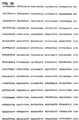
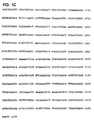
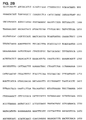
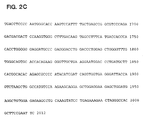
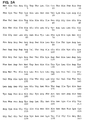
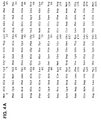
- Micromalian PC1 refers to the sequence identified in Fig 4, and all mammalian prohormone convertases having equal to or greater than 95% homology to the sequence in Fig. 4.
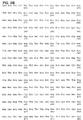
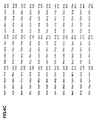
- Micromalian PC2 refers to the sequence identified in Fig.5 and all mammalian prohormone convertases having equal to or greater than 95% homology to the sequence in Fig 5.
- a "cleavage site recognizable by a host cell enzyme” refers to the cleavage site of an enzyme naturally occurring in a host cell
- the preferred naturally occurring enzyme of the present invention is a prohormone convertase.
- Prohormone convertase precursor mutant refers to a prohormone convertase precursor comprising a non-naturally occurring enzyme cleavage site as well as desired polypeptide precursor mutants optionally having substitutions, deletions, and/or insertions at certain other positions provided that the final construct possesses the desired activity.
- Precursor means a form of the protein which may be converted into the desired protein by processing. It may be a natural pro-form or prepro-form of the protein, or a synthetic pro-form wherein a gene coding for the desired protein is preceded by a heterologous signal, or leader sequence, and such as constructs which are routinely produced in vitro.
- an "Isolated" polypeptide means polypeptide which has been identified and separated and/or recovered from a component of its natural environment. Contaminant components of its natural environment are materials which would interfere with diagnostic or therapeutic uses for the polypeptide, and may include proteins, hormones, and other substances.
- the polypeptide will be purified (1) to greater than 95% by weight of protein as determined by the Lowry method, and most preferably more than 99% by weight, (2) to a degree sufficient to obtain at least 15 residues of N-Terminal or internal amino acid sequence by use of a spinning cup sequenator, or (3) to homogeneity by SDS-PAGE using Coomassie blue or, preferably, silver stain.
- polypeptides present in situ in a host cell wherein the host cell in its native form lacks the polypeptide Ordinarily, however, isolated polypeptide will be prepared by at least one purification step. In preferred embodiments, isolated prohormone convertase is utilized.
- Nucleic acid refers to a nucleotide sequence comprising a series of nucleic acids in a 5' to 3' phosphate diester linkage that may be either an RNA or a DNA sequence. If DNA, the nucleotide sequence is either single or double stranded.
- Polypeptide-encoding nucleic acid is RNA or DNA that encodes a biologically or antigenically active polypeptide, is complementary to nucleic acid sequence encoding such polypeptide, or hybridizes to nucleic acid sequence encoding such polypeptide and remains stably bound to it under stringent conditions.
- isolated polypeptide nucleic acid is a nucleic acid that is identified and separated from at least one contaminant nucleic acid with which it is ordinarily associated in the natural source of the nucleic acid. Isolated nucleic acid is other than in the form or setting in which it is found in nature. Isolated prohormone convertase nucleic acid therefore distinguishes prohormone convertase nucleic acid as it exists in natural cells. However, isolated prohormone convertase nucleic acid includes prohormone convertase in ordinarily prohormone convertase-expressing cells where the nucleic acid is, for example, in a chromosomal location different from that of natural cells.
- “Hydrophobic transmembrane anchor” is the hydrophobic region of enzymes localized in the golgi, RER or other cellular membranes which facilitates localization of the enzyme in that region and reduces the loss of enzyme from the cell, specifically illustrating such anchors are the kex2 and furin transmembrane anchors.
- mutant as used herein is defined as a molecule in which the amino acid sequence, glycosylation, or other feature of a naturally occurring molecule has been modified covalently or noncovalently and is intended to include variants.
- Some of the variants falling within this invention possess amino acid substitutions or additions of a host cell enzyme cleavage sites and optionally also substitutions, deletions, and/or insertions at certain other positions provided that the final construct possesses the desired activity.
- the term "host cell” refers to those cells capable of growth in culture and capable of expressing a prohormone convertase, and / or a desired protein and/or a polypeptide factor(s).
- the host cells referred to in this disclosure encompass cells in in vitro culture as well as cells that are within a host animal. While the preferred host cells in in vitro culture of this invention are mammalian cells, other cells may be used. Some of the embodiments of this invention involve the use of a host cell enzyme which itself requires processing from a precursor to an active form; for those host cells, such as bacterial or yeast, that lack the enzyme required to process the host cell enzyme, such enzyme may be introduced into the host cell to facilitate practice of the methods of this invention.
- cell and “cell culture” are used interchangeably and all such designations include progeny and ancestors. It is also understood that all progeny may not be precisely identical in DNA content, due to deliberate or inadvertent mutations. Mutant progeny that have the same function or biological activity as screened for in the cell are included. Where distinct designations are intended, it will be clear from the context.
- Transfection refers to the taking up of an expression vector by a host cell whether or not any coding sequences are in fact expressed. Numerous methods of transfection are known to the ordinarily skilled artisan for example, CaPO 4 and electroporation. Successful transfection is generally recognized when any indication of the operation of this vector occurs within the host cell.
- Transformation means introducing DNA into an organism so that the DNA is replicable, either as an extrachromosomal element or by chromosomal integrant. Depending on the host cell used, transformation is done using standard techniques appropriate to such cells.
- “Stably transformed host cell” refers to a cell wherein the inserted nucleic acid is present either integrated in the host cell or extrachromosomally, and wherein the inserted nucleic acid is continuously produced by the cell for about two weeks after insertion of nucleic acid.
- Specific aspects of mammalian cell host system transformations have been described by Axel in U.S. 4,399,216 issued 16 August 1983.
- the term “medium” refers to the aqueous environment in which the mammalian cells are grown in culture.
- the medium comprises the physiochemical, nutritional, and hormonal environment. Traditionally the medium has been formulated by the addition of nutritional and growth factors necessary for growth or survival.
- “Serum-free medium” refers to a medium lacking serum. The hormones, growth factors, transport proteins, peptide hormones and the like typically found in serum which are necessary for the survival or growth of particular cells in culture are typically added as a supplement to serum-free medium.
- a “defined medium” refers to a medium comprising nutritional and hormonal requirements necessary for the survival and growth of the cells in culture such that the components of the medium are known.
- a defined medium provided by the method of the instant invention establishes a local environment for a particular host cell that may differ from the general environment of the medium.
- Cells in serum-free medium generally require insulin and transferrin for optimal growth. These two factors should be tested first when determining what factors a given cell requires.
- Most cell lines require one or more of the growth factors. These include epidermal growth factor (EGF), fibroblast growth factor (FGF), insulin-like growth factors I and II (IGF-I, IGF-II), nerve growth factor (NGF), etc.
- Other classes of factors which may be necessary include: transport and binding proteins (e.g., ceruloplasmin, high and low density lipoprotein [HDL, LDL], albumin); and hormones.
- “Stringent conditions” are those hybridization conditions that (1) employ low ionic strength and high temperature for washing, for example, 0.015 M NaCl/0.0015 M sodium citrate/0/1% NaDodSO 4 at 50° C; (2) employ during hybridization a denaturing agent such as formamide, for example, 50% (vol/vol) formamide with 0.1% bovine serum albumin/0/1% Ficoll/0/1% polyvinylpyrrolidone/50 mM sodium phosphate buffer at pH 6.5 with 750 mM NaCl, 75 mM sodium citrate at 42° C; or (3) employ 50% formamide, 5 x SSC (0.75 M Nacl, 0.075 M sodium citrate), 50 mM sodium phosphate (pH 6.8), 0.1% sodium pyrophosphate, 5 x Denhardt's solution, sonicated salmon sperm DNA (50 g/ml), 0.1% SDS, and 10% dextran sulfate at 42 C, with washes at 42 C in 0.2
- Recovery or “isolation” of a given fragment of DNA from a restriction digest means separation of the digest on polyacrylamide or agarose gel by electrophoresis, identification of the fragment of interest by comparison of its mobility versus that of marker DNA fragments of known molecular weight, removal of the gel section containing the desired fragment, and separation of the gel from DNA.
- This procedure is known generally. For example, see Lawn et al., Nucleic Acids Res. , 9 : 6103-6114 (1981), and Goeddel et al. , Nucleic Acids Res. 8 : 4057 (1980).
- Polymerase chain reaction generally refers to a procedure wherein minute amounts of a specific piece of nucleic acid, RNA and/or DNA, are amplified as described in U.S. Pat. No. 4,683,195 issued 28 July 1987.
- sequence information from the ends of the region of interest or beyond needs to be available, such that oligonucleotide primers can be designed; these primers will be identical or similar in sequence to opposite strands of the template to be amplified.
- the 5' terminal nucleotides of the two primers may coincide with the ends of the amplified material.
- PCR can be used to amplify specific RNA sequences, specific DNA sequences from total genomic DNA, and cDNA transcribed from total cellular RNA, bacteriophage or plasmid sequences, etc. See generally Mullis et al., Cold Spring Harbor Symp. Ouant. Biol. , 51 : 263 (1987); Erlich, ed., PCR Technology , (Stockton Press, NY, 1989).
- PCR is considered to be one, but not the only, example of a nucleic acid polymerase reaction method for amplifying a nucleic acid test sample, comprising the use of a known nucleic acid as a primer and utilizing a nucleic acid polymerase to amplify or generate a specific piece of nucleic acid.
- “Oligonucleotide-mediated mutagenesis” refers to a method for preparing substitution, deletion, and insertion mutants of prohormone convertase 1 or 2 encoding DNA. This technique is well known in the art as described by Adelman et al. , DNA , 2 : 183 (1983). Briefly, the prohormone convertase 1 or 2 DNA is altered by hybridizing an oligonucleotide encoding the desired mutation to a DNA template, where the template is the single-stranded form of a plasmid or bacteriophage containing the unaltered or native DNA sequence of the prohormone convertase 1 or 2.
- a DNA polymerase is used to synthesize an entire second complementary strand of the template that will thus incorporate the oligonucleotide primer, and will code for the selected alteration in the prohormone convertase 1 or 2.
- oligonucleotides of at least 25 nucleotides in length are used.
- An optimal oligonucleotide will have 12 to 15 nucleotides that are completely complementary to the template on either side of the nucleotide(s) coding for the mutation. This ensures that the oligonucleotide will hybridize properly to the single-stranded DNA template molecule.
- the oligonucleotides are readily synthesized using techniques known in the art such as that described by Crea et al. ( Proc. Natl. Acad. Sci. USA , 75 : 5765 [1978]).
- Glycosylation refers to the post-translational modification process of adding a series of sugar residues to proteins to produce glycoproteins. Glycosylation can occur in the cytosol, the endoplasmic reticulum, or the Golgi apparatus of mammalian cells.
- pRK5 and pRK7 are expression vectors used to transform mammalian cells.
- the construction of expression vector pRK5 was described in European Patent Application 0307247A2, published March 15, 1989.
- the pRK7 vector was described in European Patent Application 278,776 published August 17, 1988.
- Regular protein secretory pathway refers to the cellular pathway for exocytosis which is regulated over short periods of time by physiological stimuli, such as cyclic AMP. This pathway is not required for cell viability and is only present in specialized secretory cells such as endocrine and exocrine cells.
- Constant protein secretory pathway refers to the unregulated cellular pathway which is found in cells such as macrophages and fibroblasts.
- Human insulin refers to a protein exhibiting a biological activity in common with naturally occurring human insulin. Human insulin biological activity includes promoting glucose utilization, protein synthesis, and the formation and storage of neutral lipids.
- Human proinsulin is defined to be a molecule containing the B, C, and A chain amino acid sequence and includes amino acid variants that maintain the functional characteristics of insulin discussed above. These variants may comprise one or more amino acid differences in the overall sequence and may be prepared by deletions, substitutions, and/or insertions of one or more amino acids in the overall sequence.
- human proinsulin mutants may be prepared by altering the protein itself or the nucleic acid encoding the protein. All such variations or alterations in the structure of human proinsulin resulting in human proinsulin variants are included within the scope of this invention so long as the functional activity of proinsulin is maintained.
- Human relaxin denotes a functional protein capable of exhibiting a biological activity.
- Human relaxin biological activity is defined as any of 1) immunological cross-reactivity with at least one epitope of human relaxin or 2) the possession of a least one hormonal function in common with human relaxin.
- Human prorelaxin is defined to be a molecule containing the B, C, and A chain amino acid sequence and includes amino acid variants which maintain the functional characteristics discussed above. These variants may comprise one or more amino acid differences in the overall sequence and may be prepared by deletions, substitutions, and/or insertions of one or more amino acids in the overall sequence. Through the use of recombinant DNA technology human prorelaxin mutants may be prepared by altering the underlying DNA. All such variations or alterations in the structure of human prorelaxin resulting in human prorelaxin variants are included within the scope of this invention so long as the functional activity is maintained.
- IGF-I refers to IGF-I from any species, including bovine, ovine, porcine, equine, and preferably human, in naturally occurring-sequence or in variant form, or from any source, whether natural, synthetic, or recombinant.
- Variants may comprise one or more amino acid differences in the overall sequence and may be prepared by deletions, substitutions, and/or insertions of one or more amino acids in the overall sequence. All such variations or alterations in the structure of IGF-I resulting in human prorelaxin variants are included within the scope of this invention so long as the functional activity is maintained.
- the host cells expressing a prohormone convertase may be used to express polypeptide factors needed for cell growth and anabolism.
- Mammalian cells frequently require one or more hormones from each of the following groups: steroids, prostaglandins, growth factors, pituitary hormones, and polypeptide hormones. Most cell types require insulin to survive in serum-free media. (Sato, G.H. et al. in Growth of Cells in Hormonally Defined Media, [Cold Spring Harbor Press, N.Y., 1982]).
- cells may require transport proteins such as transferrin (plasma iron transport protein), ceruloplasmin (a copper transport protein), and high density lipoprotein (a lipid carrier) to be added to cell media.
- transferrin plasma iron transport protein
- ceruloplasmin a copper transport protein
- high density lipoprotein a lipid carrier
- Autocrine The secretion from a cell of a factor to which that same cell can respond has been referred to as an "autocrine" system. Numerous factors have been described as autocrine: bombesin, interleukin-2 (Duprez, V. et al. PNAS 82:6932 [1985]); insulin, (Serrero, G. In Vitro Cellular & Dev. Biol.
- TGF-a transforming growth factor alpha
- PDGF platelet-derived growth factor
- TGF-b transforming growth factor-beta
- SGF sarcoma growth factor
- GM-CSF granulocyte-macrophage colony stimulating factor
- the host cells expressing a prohormone convertase may be used to express any desired polypeptide which requires processing from a precursor form.
- the cells of the present invention may be used in cell culture to produce any polypeptide of interest even those not requiring processing by a prohormone convertase.
- nucleic acid encoding a prohormone convertase may be introduced prior to the introduction of nucleic acid encoding a desired polypeptide or a polypeptide factor.
- nucleic acid encoding a prohormone convertase may be introduced simultaneously with nucleic acid encoding a desired polypeptide or a polypeptide factor wherein the nucleic acid may be on the same or separate vectors.
- the present invention describes a method for the production of a heterologous polypeptide factor in a polypeptide factor-dependent host cell comprising a) introducing into the polypeptide factor-dependent host cell nucleic acid encoding a heterologous polypeptide factor precursor comprising a cleavage site recognizable by a host cell enzyme and wherein said host cell is dependent on the cleavage product of said polypeptide factor precursor; and b) culturing said host cell under conditions wherein the polypeptide factor precursor is cleaved at said cleavage site by the host cell enzyme, thereby producing said polypeptide factor.
- polypeptide factor is recovered.
- the present invention further describes a method for the production of a desired polypeptide in a host cell expressing a prohormone convertase comprising a) introducing into the host cell expressing said prohormone convertase nucleic acid encoding a desired polypeptide; and b) culturing said host cell under conditions wherein said desired polypeptide is expressed. Optionally the desired polypeptide is recovered.
- additional host cell enzyme or heterologous enzyme is added to the host cell as desired.
- the present invention discloses nucleic acid encoding a polypeptide factor precursor mutant comprising an prohormone convertase cleavage site.
- Another aspect of the present invention is a nucleic acid encoding a prohormone convertase that is joined to nucleic acid encoding a hydrophobic transmembrane anchor. This joined nucleic acid directs the synthesis of a polypeptide fusion product wherein the catalytically active prohormone convertase is covalently attached to a hydrophobic transmembrane anchor.
- the preferred hydrophobic transmembrane anchors are the KEX2 hydrophobic transmembrane anchor and the furin hydrophobic transmembrane anchor.
- the present invention also provides for a prohormone convertase precursor mutant having nucleic acid encoding a prohormone convertase cleavage site.
- the present invention further provides for host cells having nucleic acid encoding a polypeptide factor precursor mutant comprising a prohormone convertase cleavage site.
- the nucleic acid and methods disclosed herein are suitable for use for expression in a wide range of host cell lines.
- Mammalian cells are the preferred host cell for expressing prohormone convertases.
- the host cell of the present invention may be a mammalian cell that does not normally express detectable amounts of prohormone convertase.
- the mammalian cell of the present invention may be a mammalian cell that produces levels of prohormone convertase that are insufficient to process the desired polypeptide precursor to desired polypeptide. Transformation of such cells by nucleic acid encoding a prohormone convertase results in an increase in prohormone convertase sufficient to process desired polypeptide precursor to polypeptide.
- the nucleic acid encoding the prohormone, convertase, or other polypeptide of interest may be obtained from any cDNA library prepared from tissue or cells believed to possess the polypeptide mRNA and to express it at a detectable level.
- the desired gene may also be obtained from a genomic library.
- probes are screened with probes designed to identify the gene of interest or the protein encoded by it.
- suitable probes include monoclonal or polyclonal antibodies that recognize and specifically bind to the desired polypeptide; oligonucleotides of about 20-80 bases in length that encode known or suspected portions of the polypeptide of interest's cDNA from the same or different species; and/or complementary or homologous cDNAs or fragments thereof that encode the same or a similar gene.
- Appropriate probes for screening genomic DNA libraries include, but are not limited to, oligonucleotides; cDNAs or fragments thereof that encode the same or a similar gene; and/or homologous genomic DNAs or fragments thereof. Screening the cDNA or genomic library with the selected probe may be conducted using standard procedures as described in chapters 10-12 of Sambrook et al., supra.
- PCR polymerase chain reaction
- Another alternative method for obtaining the gene of interest is to chemically synthesize it using one of the methods described in Engels et al. (Agnew. Chem. Int. Ed. Engl., 28: 716-734 [1989]). These methods include triester, phosphite, phosphoramidite and H-Phosphonate methods, PCR and other autoprimer methods, and oligonucleotide syntheses on solid supports. These methods may be used if the entire nucleic acid sequence of the gene is known, or the sequence of the nucleic acid complementary to the coding strand is available, or alternatively, if the target amino acid sequence is known, one may infer potential nucleic acid sequences using known and preferred coding residues for each amino acid residue.
- a preferred method of practicing this invention is to use carefully selected oligonucleotide sequences to screen cDNA libraries from various tissues, depending on the source of the gene or polypeptide of interest.
- the oligonucleotide sequences selected as probes should be of sufficient length and sufficiently unambiguous that false positives are minimized.
- the actual nucleotide sequence(s) is usually based on conserved or highly homologous nucleotide sequences or regions of other polypeptides homologous to the polypeptide of interest.
- the oligonucleotides may be degenerate at one or more positions. The use of degenerate oligonucleotides may be of particular importance where a library is screened from a species in which preferential codon usage in that species is not known. The oligonucleotide must be labeled such that it can be detected upon hybridization to DNA in the library being screened.
- the preferred method of labeling is to use 32-P labeled ATP with polynucleotide kinase, as is well known in the art, to radiolabel the oligonucleotide.
- 32-P labeled ATP with polynucleotide kinase
- other methods may be used to label the oligonucleotide, including, but not limited to, biotinylation or enzyme labeling.
- nucleic acid sequence includes the prohormone convertase signal sequence.
- Nucleic acid having all the protein coding sequence is obtained by screening selected cDNA or genomic libraries, and, if necessary, using conventional primer extension procedures as described in section 7.79 of Sambrook et al., supra, to detect precursors and processing intermediates of mRNA that may not have been reverse-transcribed into cDNA.
- DNA hybridization probes are used to identify novel prohormone convertase candidate enzyme messages in cell lines containing regulated secretory pathways.
- the murine pituitary tumor cell line AtT-20 is suitable because it is neuroendocrine-derived, and secretes ACTH. It would therefore be expected to contain processing enzymes involved in the conversion of the prohormone proopiomelanocortin (POMC) precursor to mature ACTH, a process which requires cleavage at specific pairs of basic amino acids in the prohormone substrate.
- POMC prohormone proopiomelanocortin
- Candidate cDNAs expressed in the AtT-20 cells may be amplified by the MOPAC procedure (Innis 1990) using degenerate primer sequences based on those of Smeekens and Steiner (1990).
- two PC-like cDNAs are amplified and cloned from the AtT-20 cells: mPC2 (greater than 95% homologous to the human PC2 of Smeekens and Steiner) and second sequence similar to mPC2, termed mPC1.
- Amino acid sequence variants of the prohormone convertase, polypeptide factor, desired polypeptide or other polypeptide of interest are prepared by introducing appropriate nucleotide changes into the encoding DNA, or by in vitro synthesis of the desired polypeptide.
- Such variants include, for example, deletions from, or insertions or substitutions of, residues within the amino acid sequence for the polypeptide of interest. Any combination of deletion, insertion, and substitution can be made to arrive at the final construct, provided that the final construct possesses the desired characteristics.
- the amino acid changes also may alter post-translational processes of the polypeptide, such as changing the number or position of glycosylation sites, altering the membrane anchoring characteristics, and/or altering the intracellular location of the polypeptide by inserting, deleting, or otherwise affecting the leader sequence of the naturally occurring polypeptide of interest.
- the location of the mutation site and the nature of the mutation will method of labeling is to use 32-P labeled ATP with polynucleotide kinase, as is well known in the art, to radiolabel the oligonucleotide.
- 32-P labeled ATP with polynucleotide kinase
- other methods may be used to label the oligonucleotide, including, but not limited to, biotinylation or enzyme labeling, substituting first with conservative amino acid choices and then with more radical selections depending upon the results achieved, (2) deleting the target residue, or (3) inserting residues of the same or a different class adjacent to the located site, or combinations of options 1-3.
- amino acid sequence variants There are two principal variables in the construction of amino acid sequence variants: the location of the mutation site and the nature of the mutation. In general, the location and nature of the mutation chosen will depend upon the characteristic to be modified.
- Amino acid sequence deletions generally range from about 1 to 30 residues, more preferably about 1 to 10 residues, and typically are contiguous. Deletions may be introduced into regions of low homology between the polypeptide of interest and other polypeptides to modify the activity of the polypeptide of interest. Deletions from the polypeptide of interest in areas of substantial homology with any other polypeptide will be more likely to modify the biological activity of the polypeptide of interest more significantly. The number of consecutive deletions will be selected so as to preserve the tertiary structure of polypeptide of interest in the affected domain, e.g., beta-pleated sheet or alpha helix.
- Amino acid sequence insertions include amino- and/or carboxyl-terminal fusions ranging in length from one residue to polypeptides containing a hundred or more residues, as well as intrasequence insertions of single or multiple amino acid residues.
- Intrasequence insertions i.e., insertions within the sequence of the polypeptide of interest
- An example of a terminal insertion is an N-terminal methionyl residue, an artifact of the direct expression of a polypeptide in bacterial recombinant cell culture.
- insertional variants of the polypeptide of interest include the fusion to the N- or C-terminus of the polypeptide of immunogenic polypeptides, e.g., bacterial polypeptides such as beta-lactamase or an enzyme encoded by the E. coli trp locus, or yeast protein, and C-terminal fusions with proteins having a long half-life such as immunoglobulin constant regions (or other immunoglobulin regions), albumin, or ferritin, as described'in WO 89/02922 published 6 April 1989.
- immunogenic polypeptides e.g., bacterial polypeptides such as beta-lactamase or an enzyme encoded by the E. coli trp locus, or yeast protein
- C-terminal fusions with proteins having a long half-life such as immunoglobulin constant regions (or other immunoglobulin regions), albumin, or ferritin, as described'in WO 89/02922 published 6 April 1989.
- variants are amino acid substitution variants. These variants have at least one amino acid residue in the polypeptide of interest removed and a different residue inserted in its place.
- the sites of greatest interest for substitutional mutagenesis include sites identified as the active site(s) of the polypeptide of interest, and sites where the amino acids found in homologous polypeptides from various species are substantially different in terms of side-chain bulk, charge, and/or hydrophobicity.
- DNA encoding amino acid sequence variants of the beta-8 integrin subunit is prepared by a variety of methods known in the art. These methods include, but are not limited to, isolation from a natural source (in the case of naturally occurring amino acid sequence variants) or preparation by oligonucleotide-mediated (or site-directed) mutagenesis, PCR mutagenesis, and cassette mutagenesis of an earlier prepared variant or a non-variant version of the beta-8 integrin subunit. These techniques may utilized beta-8 integrin subunit nucleic acid (DNA or RNA), or nucleic acid complementary to the beta-8 integrin subunit nucleic acid. In the present invention, the site-directed mutagenesis method of Kunkel, Methods of Enzymology 154:367-383, 1987 are particularly preferred.
- Another method for preparing the prohormone convertase mutants of this invention are preferably constructed by mutating the nucleic acid sequences that encode the native prohormone convertase. Generally, particular regions or sites of the nucleic acid will be targeted for mutagenesis, and thus the general methodology employed to accomplish this is termed site-directed mutagenesis. In the present invention the preferred method of site-directed mutagenesis is by the method of Kunkel ( Methods of Enzymology 154:367-382, 1987).
- Oligonucleotide-mediated mutagenesis is a preferred method for preparing substitution, deletion, and insertion mutants of prohormone convertase 1 or 2 encoding DNA. This technique is well known in the art as described by Adelman et al. , DNA , 2 : 183 (1983). Briefly, the prohormone convertase 1 or 2 DNA is altered by hybridizing an oligonucleotide encoding the desired mutation to a DNA template, where the template is the single-stranded form of a plasmid or bacteriophage containing the unaltered or naturally occurring DNA sequence of the prohormone convertase 1 or 2. After hybridization, a DNA polymerase is used to synthesize an entire second complementary strand of the template that will thus incorporate the oligonucleotide primer, and will code for the selected alteration in the prohormone convertase 1 or 2.
- oligonucleotides of at least 25 nucleotides in length are used.
- An optimal oligonucleotide will have 12 to 15 nucleotides that are completely complementary to the template on either side of the nucleotide(s) coding for the mutation. This ensures that the oligonucleotide will hybridize properly to the single-stranded DNA template molecule.
- the oligonucleotides are readily synthesized using techniques known in the art such as that described by Crea et al. ( Proc. Natl. Acad. Sci. USA, 75 : 5765 [1978]).
- PCR mutagenesis is also suitable for making amino acid mutants While the following discussion herein may refer to DNA, it is understood that the technique also finds application with RNA.
- the PCR technique refers to the procedure outlined in Genetic Engineering Vol 12 pp 115-137, [1990] by Arnheim; Analytical Chemistry , vol 62 pp 1202-1214 [1990] by Gibbs; and Science vol 252 pp. 1643-1651 [1991] by Gelfand
- One aspect of the present invention is a polypeptide factor precursor mutant containing modification within the nucleic acid encoding pre-pro or pro sequence which optimizes the precursor processing by the prohormone convertase.
- Cells vary widely in their processing capability, and consequently, in the prohormone maturation products that are ultimately secreted from them.
- polypeptide factor precursor mutants could be the result of several factors:(a) the precursor sequence itself could influence the accessibility of the prohormone convertase to the cleavage site, (b) each specific pattern could represent a distinctly different processing enzyme, (c) there could be a limited number of prohormone convertases that exhibit specificity due to their location (microenvironment) or relative abundance within the cell, (d) similar precursors could be modified in the various cell types influencing their accessibility to the prohormone convertase.
- one preferred polypeptide factor precursor mutant is a human proinsulin mutant having a prohormone convertase cleavage site wherein the cleavage site is processed in the constitutive pathway of the host cell.
- the preferred proinsulin variant is one comprising a residue substitution for naturally occurring residues in the Type I and/or Type II cleavage sites as outlined:
- Proinsulin residue Lys 29 is substituted with any of a residue selected from the group of Arg, His, Cys, Met, Phe, Tyr, Trp, Pro, Gly, Ala, Val, Ile, Leu, Ser, Thr, Asp, Glu, Gln, Asn, and most preferably Arg.
- Proinsulin residue Arg 31 is substituted with any of a residue selected from the group of Lys, His, Cys, Met, Phe, Tyr, Trp, Pro, Gly, Ala, Val, Ile, Leu, Ser, Thr, Asp, Glu, Gln, Asn, and most preferably Lys.
- Proinsulin residue Leu 62 is substituted with any of a residue selected from the group of Arg, His, Cys, Met, Phe, Tyr, Trp, Pro, Gly, Ala, Val, Ile, Lys, Ser, Thr, Asp, Glu, Gln, Asn, and most preferably Lys or Arg.
- Site-directed mutagenesis by the method of Kunkel is a preferred method for preparing substitution, deletion, and insertion variants of polypeptide precursors.
- a preferred mammalian prohormone convertase 1 (mPC1) precursor mutant comprises a residue substitution for naturally occurring residues in the prohormone convertase cleavage site of the precursor as outlined: mPC1 precursor residue Lys 80 is substituted with any of a residue selected from the group Arg, His, Cys, Met, Phe, Tyr, Trp, Pro, Gly, Ala, Val, Ile, Leu, Ser, Thr, Asp, Glu, Gln, Asn, and most preferably Arg.
- a preferred mammalian prohormone convertase 2 (mPC2) precursor mutant comprises a residue substitution for naturally occurring residues in the prohormone convertase cleavage site of the precursor as outlined.
- mPC2 precursor residue Lys 77 is substituted with any of a residue selected from the group Arg, His, Cys, Met, Phe, Tyr, Trp, Pro, Gly, Ala, Val, Ile, Leu, Ser, Thr, Asp, Glu, Gln, Asn, and most preferably Arg.
- mPC2 precursor residue Arg 78 is substituted with any of a residue selected from the group Lys, His, Cys, Met, Phe, Tyr, Trp, Pro, Gly, Ala, Val, Ile, Leu, Ser, Thr, Asp, Glu, Gln, Asn, and most preferably Ala.
- mPC2 precursor residue Arg 79 is substituted with any of a residue selected from the group Lys, His, Cys, Met, Phe, Tyr, Trp, Pro, Gly, Ala, Val, Ile, Leu, Ser, Thr, Asp, Glu, Gln, Asn, and most preferably Lys.
- the cDNA or genomic DNA is inserted into a replicable vector for further cloning (amplification of the DNA) or for expression.
- Construction of suitable vectors containing the desired coding and control sequences employs standard recombinant techniques. Isolated plasmids or DNA fragments are cleaved, tailored, and religated to form the desired plasmid.
- vectors are available, and selection of the appropriate vector will depend on 1) whether it is to be used for DNA amplification or for DNA expression, 2) the size of the DNA to be inserted into the vector, and 3) the host cell to be transformed with the vector.
- Each vector contains various components depending on its function (amplification of DNA or expression of DNA) and the host cell for which it is compatible.
- the vector components generally include, but are not limited to, one or more of the following: a signal sequence, an origin of replication, one or more marker genes, an enhancer element, a promoter, and a transcription termination sequence.
- the preferred replicable vector is pRK5 or pRK7.
- the signal sequence may be a component of the vector, or it may be a part of the prohormone convertase DNA that is inserted into the vector.
- the native prohormone convertase DNA encodes a signal sequence at the amino terminus (5' end of the DNA) of the polypeptide that is cleaved during post-translational processing of the polypeptide to form the mature prohormone convertase polypeptide.
- Included within the scope of this invention are polypeptides with the native signal sequence deleted and replaced with a heterologous signal sequence.
- the heterologous signal sequence selected should be one that is recognized and processed (i.e. cleaved by a signal peptidase) by the host cell. In mammalian cell expression the native signal sequence is generally satisfactory, although other mammalian signal sequences may be suitable.
- Most expression vectors are "shuttle" vectors, i.e. they are capable of replication in at least one class of organisms but can be transfected into another organism for expression.
- a vector is cloned in E. coli and then the same vector is transfected into yeast or mammalian cells for expression even though it is not capable of replicating independently of the host cell chromosome.
- DNA may also be amplified by insertion into the host genome. This is readily accomplished using Bacillus species as hosts, for example, by including in the vector a DNA sequence that is complementary to a sequence found in Bacillus genomic DNA. Transfection of Bacillus with this vector results in homologous recombination with the genome and insertion of the prohormone convertase subunit DNA.
- Selection genes should contain a selection gene, also termed a selectable marker. This gene encodes a protein necessary for the survival or growth of transformed host cells grown in a selective culture medium. Host cells not transformed with the vector containing the selection gene will not survive in the culture medium.
- Typical selection genes encode proteins that (a) confer resistance to antibiotics or other toxins, e.g. ampicillin, neomycin, methotrexate, or tetracycline, (b) complement auxotrophic deficiencies, or (c) supply critical nutrients not available from complex media.
- One example of a selection scheme utilizes a drug to arrest growth of a host cell. Those cells that are successfully transformed with a heterologous gene express a protein conferring drug resistance and thus survive the selection regimen. Examples of such dominant selection use the drugs neomycin (Southern et al., J. Molec. Appl. Genet. , 1 : 327 [1982]), mycophenolic acid (Mulligan et al., Science, 209 : 1422 [1980]) or hygromycin (Sugden et al. , Mol. Cell. Biol. , 5 : 410-413 [1985]). The three examples given above employ bacterial genes under eukaryotic control to convey resistance to the appropriate drug G418 or neomycin (geneticin), xgpt (mycophenolic acid), or hygromycin, respectively.
- suitable selectable markers for mammalian cells are those that enable the identification of cells competent to take up the prohormone convertase nucleic acid, such as dihydrofolate reductase (DHFR) or thymidine kinase.
- the mammalian cell transformants are placed under selection pressure which only the transformants are uniquely adapted to survive by virtue of having taken up the marker. Selection pressure is imposed by culturing the transformants under conditions in which the concentration of selection agent in the medium is successively changed, thereby leading to amplification of both the selection gene and the DNA that encodes the polypeptide of interest.
- Amplification is the process by which genes in greater demand for the production of a protein critical for growth are reiterated in tandem within the chromosomes of successive generations of recombinant cells. Increased quantities of the polypeptide of interest are synthesized from the amplified DNA.
- cells transformed with the DHFR selection gene are first identified by culturing all of the transformants in a culture medium that contains methotrexate (Mtx), a competitive antagonist of DHFR.
- Mtx methotrexate
- An appropriate host cell when wild-type DHFR is employed is the Chinese hamster ovary (CHO) cell line deficient in DHFR activity, prepared and propagated as described by Urlaub and Chasin, Proc. Natl. Acad. Sci. USA, 77 : 4216 [1980].
- the transformed cells are then exposed to increased levels of methotrexate. This leads to the synthesis of multiple copies of the DHFR gene, and, concomitantly, multiple copies of other DNA comprising the expression vectors, such as the DNA encoding the prohormone convertase.
- This amplification technique can be used with any otherwise suitable host, e.g., 293 or CHO cells, ATCC No. CCL61 CHO-K1, notwithstanding the presence of endogenous DHFR if, for example, a mutant DHFR gene that is highly resistant to Mtx is employed (EP 117,060).
- host cells transformed or co-transformed with DNA sequences encoding the polypeptide of interest, wild-type DHFR protein, and another selectable marker such as aminoglycoside 3' phosphotransferase (APH) can be selected by cell growth in medium containing a selection agent for the selectable marker such as an aminoglycosidic antibiotic, e.g., kanamycin, neomycin, or G418. See U.S. Pat. No. 4,965,199.
- APH aminoglycoside 3' phosphotransferase
- Expression and cloning vectors usually contain a promoter that is recognized by the host organism and is operably linked to the nucleic acid encoding the polypeptide of interest. Promoters are untranslated sequences located upstream (5') to the start codon of a structural gene (generally within about 100 to 1000 bp) that control the transcription and translation of a particular nucleic acid sequence, such as that encoding a prohormone convertase, to which they are operably linked. Such promoters typically fall into two classes, inducible and constitutive. Inducible promoters are promoters that initiate increased levels of transcription from DNA under their control in response to some change in culture conditions, e.g. the presence or absence of a nutrient or a change in temperature.
- promoters recognized by a variety of potential host cells are well known. These promoters are operably linked to DNA encoding the polypeptide of interest by removing the promoter from the source DNA by restriction enzyme digestion and inserting the isolated promoter sequence into the vector. Both the native promoter sequence and many heterologous promoters may be used to direct amplification and/or expression of the polypeptide of interest. However, heterologous promoters are preferred, as they generally permit greater transcription and higher yields of expressed polypeptide of interest as compared to the native prohormone convertase promoter.
- Promoter sequences are known for eukaryotes. Virtually all eukaryotic genes have an AT-rich region located approximately 25 to 30 bases upstream from the site where transcription is initiated. Another sequence found 70 to 80 bases upstream from the start of transcription of many genes is a CXCAAT region where X may be any nucleotide. At the 3' end of most eukaryotic genes is an AATAAA sequence that may be the signal for addition of the poly A tail to the 3' end of the coding sequence. All of these sequences are suitably inserted into mammalian expression vectors.
- Polypeptide transcription from vectors in mammalian host cells is controlled by promoters obtained from the genomes of viruses such as polyoma virus, fowlpox virus (UK 2,211,504 published 5 July 1989), adenovirus (such as Adenovirus 2), bovine papilloma virus, avian sarcoma virus, cytomegalovirus, a retrovirus, hepatitis-B virus and most preferably Simian Virus 40 (SV40), from heterologous mammalian promoters, e.g. the actin promoter or an immunoglobulin promoter, from heat-shock promoters, and from the promoter normally associated with the polypeptide of interest, provided such promoters are compatible with the host cell systems.
- viruses such as polyoma virus, fowlpox virus (UK 2,211,504 published 5 July 1989), adenovirus (such as Adenovirus 2), bovine papilloma virus, avian sarcoma virus,
- the early and late promoters of the SV40 virus are conveniently obtained as an SV40 restriction fragment that also contains the SV40 viral origin of replication. Fiers et al. , Nature , 273 :113 (1978); Mulligan and Berg, Science, 209 : 1422-1427 (1980); Pavlakis et al., Proc. Natl. Acad. Sci. USA , 78 : 7398-7402 (1981).
- the immediate early promoter of the human cytomegalovirus is conveniently obtained as a Hin dIII E restriction fragment. Greenaway et al., Gene , 18 : 355-360 (1982).
- Enhancers are cis-acting elements of DNA, usually about from 10-300 bp, that act on a promoter to increase its transcription. Enhancers are relatively orientation and position independent having been found 5' (Laimins et al. , Proc. Natl. Acad. Sci. USA , 78 : 993 [1981]) and 3' (Lusky et al., Mol. Cell Bio. , 3 : 1108 [1983]) to the transcription unit, within an intron (Banerji et al.
- enhancer sequences are now known from mammalian genes (globin, elastase, albumin, a-fetoprotein and insulin). Typically, however, one will use an enhancer from a eukaryotic cell virus. Examples include the SV40 enhancer on the late side of the replication origin (bp 100-270), the cytomegalovirus early promoter enhancer, the polyoma enhancer on the late side of the replication origin, and adenovirus enhancers.
- the enhancer may be spliced into the vector at a position 5' or 3' to the desired DNA, but is preferably located at a site 5' from the promoter.
- Expression vectors used in eukaryotic host cells will also contain sequences necessary for the termination of transcription and for stabilizing the mRNA. Such sequences are commonly available from the 5' and, occasionally 3' untranslated regions of eukaryotic or viral DNAs or cDNAs. These regions contain nucleotide segments transcribed as polyadenylated fragments in the untranslated portion of the mRNA encoding the prohormone convertase. The 3' untranslated regions also include transcription termination sites.
- Plasmids containing one or more of the above listed components and including the desired coding and control sequences employs standard ligation techniques. Isolated plasmids or nucleic acid fragments are cleaved, tailored, and religated in the form desired to generate the plasmids required.
- transient expression involves the use of an expression vector that is able to replicate efficiently in a host cell, such that the host cell accumulates many copies of the expression vector and, in turn, synthesizes high levels of a desired polypeptide encoded by the expression vector.
- Transient expression systems comprising a suitable expression vector and a host cell, allow for the convenient positive identification of polypeptides encoded by cloned DNAs, as well as for the rapid screening of such polypeptides for desired biological or physiological properties.
- transient expression systems are particularly useful in the invention for purposes of identifying polypeptide analogs and variants that have desired activity.
- Suitable host cells for cloning or expressing the vectors herein are the higher eukaryote cells described above.
- Suitable host cells for the expression of glycosylated polypeptide are derived from multicellular organisms. Such host cells are capable of complex processing and glycosylation activities.
- any higher eukaryotic cell culture is workable, whether from vertebrate or invertebrate culture. Examples of invertebrate cells include plant and insect cells.
- interest has been greatest in vertebrate cells, and propagation of vertebrate cells in culture (tissue culture) has become a routine procedure in recent years [ Tissue Culture , Academic Press, Kruse and Patterson, editors (1973)].
- Examples of useful mammalian host cell lines are monkey kidney CV1 line transformed by SV40 (COS-7, ATCC CRL 1651); human embryonic kidney line (293 or 293 cells subcloned for growth in suspension culture, Graham et al., J. Gen Virol. , 36 : 59 [1977]); baby hamster kidney cells (BHK, ATCC CCL 10); Chinese hamster ovary cells/-DHFR (CHO, Urlaub and Chasin, Proc. Natl. Acad. Sci. USA, 77 : 4216 [1980]); mouse sertoli cells (TM4, Mather, Biol. Reprod.
- monkey kidney cells (CV1 ATCC CCL 70); African green monkey kidney cells (VERO-76, ATCC CRL- 1587); human cervical carcinoma cells (HELA, ATCC CCL 2); canine kidney cells (MDCK, ATCC CCL 34); buffalo rat liver cells (BRL 3A, ATCC CRL 1442); human lung cells (W138, ATCC CCL 75); human liver cells (Hep G2, HB 8065); mouse mammary tumor (MMT 060562, ATCC CCL51); TRI cells (Mather et al. , Annals N.Y. Acad. Sci. , 383 : 44-68 [1982]); MRC 5 cells; FS4 cells; and a human hepatoma cell line (Hep G2).
- Preferred host cells are human embryonic kidney 293 and Chinese hamster ovary cells.
- Host cells are transfected and preferably transformed with the above-described expression or cloning vectors of this invention and cultured in conventional nutrient media modified as appropriate for inducing promoters, selecting transformants, or amplifying the genes encoding the desired sequences.
- the cells comprising nucleic acid encoding the polypeptide of interest of this invention may be produced by homologous recombination, or with recombinant production methods utilizing control elements introduced into cells already containing nucleic acid encoding the polypeptide of interest currently in use in the field.
- control elements introduced into cells already containing nucleic acid encoding the polypeptide of interest currently in use in the field.
- a powerful promoter/enhancer element, a suppressor, or an exogenous transcription modulatory element is inserted in the genome of the intended host cell in proximity and orientation sufficient to influence the transcription of nucleic acid encoding a desired prohormone convertase.
- the control element does not encode the prohormone convertase of this invention, but affects the prohormone convertase nucleic acid which is present in the host cell genome.
- Mammalian cells may be stably transformed using any acceptable vector known to transform a particular cell type.
- a preferred vector is the pRK5 used in the present invention with 293 human kidney cell.
- the mammalian cells are transformed to produce a prohormone convertase and these cells are then used to produce properly processed hormone by transforming them to express a prohormone.
- the preferred prohormones are those that when processed result in hormones containing two or more polypeptide chains. Preferred two chain hormones are relaxin and insulin.
- Prokaryotic cells used to produce the polypeptide of this invention are cultured in suitable media as described generally in Sambrook et al., supra.
- the mammalian host cells used to produce the polypeptides of this invention may be cultured in a variety of media.
- Commercially available media such as Ham's F10 (Sigma), Minimal Essential Medium ([MEM], Sigma), RPMI-1640 (Sigma), and Dulbecco's Modified Eagle's Medium ([DMEM], Sigma) are suitable for culturing the host cells.
- any of these media may be supplemented as necessary with hormones and/or other growth factors (such as insulin, transferrin, or epidermal growth factor), salts (such as sodium chloride, calcium, magnesium, and phosphate), buffers (such as HEPES), nucleosides (such as adenosine and thymidine), antibiotics (such as GentamycinTM drug), trace elements (defined as inorganic compounds usually present at final concentrations in the micromolar range), and glucose or an equivalent energy source. Any other necessary supplements may also be included at appropriate concentrations that would be known to those skilled in the art.
- the culture conditions such as temperature, pH, and the like, are those previously used with the host cell selected for expression, and will be apparent to the ordinarily skilled artisan.
- the mouse pituitary tumor cell line, AtT20 was used as the source for candidate prohormone convertase mRNA's.
- the AtT-20 cell line was obtained from the American Type Culture Collection (Rockville, MD). Cells were grown in Dulbecco's modified Eagle's medium (DMEM) containing 10% fetal calf serum.
- DMEM Dulbecco's modified Eagle's medium
- RNA was prepared from confluent cells (Maniatis 1983) and cDNA was generated by incubation of 5ug total RNA with 400 U Moloney murine leukemia virus reverse transcriptase (GIBCO-BRL), 2.5 mg GeneAmp 10 X reaction buffer (Perkin Elmer-Cetus), 20 U RNasin ribonuclease inhibitor (Promega), 400mM dNTPs, 0.5 mg oligo-dT (United States Biochemical), 1.4 mM MgCl 2 , 10 mM DTT; all in a total volume of 25 uL for 1 hour at 37 degrees C.
- GEBCO-BRL Moloney murine leukemia virus reverse transcriptase
- GeneAmp 10 X reaction buffer Perkin Elmer-Cetus
- 20 U RNasin ribonuclease inhibitor Promega
- 400mM dNTPs 0.5 mg oligo-dT (United States Biochemical),
- Amplification using a degenerate polymerase chain reaction (PCR) of candidate prohormone convertase targets was carried out in the same reaction tube by adding 50 pmol each of forward and reverse MOPAC PCR primers, 0.02 mmol dNTPs, with an additional 7.5 mL 10X reaction buffer plus 5 U Taq DNA polymerase.
- the primer sequences were based on the conserved aspartate and serine catalytic residues of KEX2, PC2, Proprotease B, and subtilisin BPN as described in Smeekens, et al ( The Journal of Biological Chemistry Vol 265, pp. 2997-3000 [1990]).
- the forward primer used was: 5'GCAAAATCTAGA(C/T)(G/T)GCIAT(C/T)GTIGA(C/T)GA(G/T)GGI3' (Seq. ID #5) and the reverse primer was: 5'AAGCATGAGCTCIGG(A/G)GC(A/G)GC(A/G)GCIGAICC3' (Seq. ID #6).
- Thirty cycles of degenerate PCR were done, each consisting of denaturation (1 min, 94 degrees C), primer annealing (2 min, 48 degrees C for the first 5 cycles; 2 min at 55 degrees C thereafter), and primer extension (3 min, 72 degrees C).
- the products from the PCR reaction were electrophoresed in a 2.5% NuSieve-GTG low melting agarose gel (FMC). Discrete bands of approximately 600 bp were excised and subcloned into pUC118 for DNA sequence analysis. Partial mPC1 and mPC2 sequences were derived by this procedure.
- a cDNA pool was prepared as a source of template for the cloning of full length sequences of the candidate PC enzymes (Frohman 1988; Innis 1990).
- Mouse AtT-20 total RNA (5mg) was heated for 3 min at 65°C and immediately chilled on ice.
- the cDNA clone of the preprorelaxin gene, pCIS.Rx provided the coding sequence of the human preprorelaxin.
- the pCIS mammalian expression vector is described in (Gorman DNA Prot Eng Tech 2:3-10, 1990).
- the cDNA encoding H2 preprorelaxin was excised from the cloning vector as described in Hudson, P et al., The EMBO Journal 3, 2333-2339, [1984] by using a complete Hpa II digest followed by a Hinf I partial digest.
- pCIS.Rx was digested by restriction endonucleases XBA I and ECO RI to excise the coding region of preprorelaxin.
- pRK7 was digested by restriction endonucleases XBA I and ECO RI.
- the resultant XBA I/ECO RI human preprorelaxin coding region was ligated into the XBA I/ECO RI digested pRK7 yielding the final preprorelaxin mammalian expression vector, pRK.Rx.
- the cDNA clone of the mPC1 gene, PUC118.mPC1 from example 1, provided the coding sequence of the mPC1 for construction of plasmids to direct the expression of mPC1 in transfected mammalian cells.
- PUC118.mPC1 is digested with restriction endonucleases SAC I and ECO RI.
- pRK7 is digested with restriction endonucleases SAC I and ECO RI.
- the resultant SAC I/ECO RI mPC1 coding region is ligated into the SAC I/ECO RI digested pRK7 to yield the final mPC1 mammalian expression vector, pRK.mPC1.
- the cDNA clone of the mPC2 gene, PUC118.mPC2 from example 1, provided the coding sequence of the mPC2 for construction of plasmids to direct the expression of mPC2 in transfected mammalian cells.
- PUC118.mPC2 is digested with restriction endonucleases XBA I and ECO RI.
- pRK7 is digested with restriction endonuclease XBA I and ECO RI.
- the resultant XBA I/ECO RI mPC2 coding region is ligated into the XBA I/ECO RI digested pRK7 to yield the final mPC2 mammalian expression vector, pRK.mPC2.
- the cDNA clone of the KEX2 gene, pYEp24.pJ28 (Julius, et al, Cell vol 37, p 1075 [1984]).provided the coding sequence of the KEX2 gene for construction of the final KEX2 mammalian expression plasmid.
- Vector pYEp24.pJ28 was digested with restriction endonuclease Eco RI and run on an Agarose gel. A 3.3 kb fragment containing the coding region was isolated.
- pRK5 was digested with restriction endonuclease Eco RI, and then treated with bacterial alkaline phosphatase (BAP). The Eco RI digested, BAP treated pRK5 was run on an agarose gel and a 4.7 kb fragment was isolated.
- pRK.KEX.RI The 3.3 kb fragment of pYEp24.pJ28 was ligated to the 4.7kb fragment of pRK5 to form vector pRK.KEX.RI.
- pRK.KEX.RI was digested with restriction nuclease Dde I, then treated with Klenow, and further digested with restriction endonuclease Hind III.
- the Dde I/Hind III treated pRK.KEX.RI was run on a polyacrylamide gel and a 425bp fragment was isolated.
- pRK5 was digested with restriction endonuclease Sma I/Hind III, then treated with BAP, run on an agarose gel and a 4.7kb fragment was isolated.
- the 4.7kb fragment of pRK5 was ligated to the 425 bp fragment of pRK.KEX.RI to form vector pRK5.5'KEX.
- pRK5.5'KEX was digested with Hind III and treated with BAP.
- a 2 kb Hind III fragment encoding the 3' end of KEX2 was derived from vector pYEp24.pJ28 and was ligated to the Hind III/BAP treated vector pRK5.5'.KEX forming the final KEX mammalian expression vector pRK.KEX2 which directs the expression of KEX2 in transfected mammalian cells.
- Human Kidney 293 cells were subjected to transient transfection by the method of Gorman (Gorman DNA Prot Eng Tech 2:3-10, 1990).
- Expression vector containing prorelaxin cDNA, pRK.Rx, (10ug) was transfected into 293 cells alone (100 mm dish), or together with an equal amount of expression vectors for mPC1 (pRK.mPC1), mPC2 (pRK.mPC2) or kex2 (pRK.kex2) cDNAs.
- the preferred method for stable transformation of a mammalian cell of the present invention is the calcium phosphate precipitation method described in sections 16.30-16.37 of Sambrook et al, supra.
- the preferred host cell is the human embryonic kidney line (293 ) or Chinese hamster ovary cells/-DHFR(CHO).
- the preferred media contains the antibiotic neomycin or geneticin.
- prorelaxin Following transfection of 293 cells with the expression plasmid for prorelaxin, pRK.Rx, only the precursor prorelaxin immunoprecipitated from cell lysates or cell supernatants.
- the immunoaffinity column eluant was applied without further purification to a 2 X 100 mm RP-C 4 reverse phase HPLC column (Synchrom). Material was eluted by application of a linear gradient of acetonitrile in 0.1% Trifluoroacetic acid from 20% (0-5 min) to 60% (5-45 min). The flow rate was held at 0.5 mL/min and the absorbance at the column outlet was monitored at 214 nm. Eluants from major peaks of absorbance were collected for analysis by mass spectrometry ( Figure 8).
- the intact molecular weights of prorelaxin and processed relaxin were measured by electrospray ionization mass spectrometry.
- Micromolar solutions (1-10pmol/ul) of protein in aqueous acetonitrile (50/50, v/v) with 1% acetic acid were infused at 1.5 ul/min into a SCIEX API III mass spectrometer.
- the quadrupole mass spectrometer was operated with the Ionspray articulated nebulizer (SCIEX, Thornhill, Canada) at 4600 V, the interface plate at 600 V, and the orifice at 100-120V.
- the mature B-chain terminates with a serine residue at its C-terminus suggesting that carboxypeptidase activity present in the 293 cells removed the residual basic residues, KR, which remain following cleavage at the B-chain / C-peptide junction.
- Prohormone convertase substrate specificity is exemplified by processing of human prorelaxin mutants.
- a series of mutant prorelaxin cDNAs were made in which basic residues thought to be required for processing were replaced with alanine.
- Two dibasic residues, KR are located at the B-chain / C-peptide junction and both are required for processing.
- KR dibasic residues
- Prorelaxin alanine mutations of the basic residues K and R were constructed to define murine prohormone convertase 1 specificity.
- Figure 11. The following mutations were tested for substrate specificity to murine prohormone convertase 1: 1.4 , 2.4, 3.2, 4.3, 7.2 and 8.6.
- the relaxin (Rx) mutants have the following sequence in the prohormone convertase cleavage site.
- Figure 9 illustrates murine prohormone convertase 1 processing of these mutants. Mutants 1.4 and 2.4 are processed the same as wild-type and mutant 3.2 is partially processed. Mutant 4.3 doesn't appear to be processed and mutants 7.2 and 8.6 are not processed.
- Murine prohormone convertase 2 does not cleave the wildtype prorelaxin.
- Murine prohormone convertase 2 does not cleave any of the prorelaxin mutants with the exception of 4.3 where there is some processing. This suggests that there is a difference in the specificity of cleavage for murine prohormone convertase 1 and murine prohormone convertase 2 which is defined by sequences other than the dibasic residues.
- Non-substrate proteins can be made to be substrates by appropriate mutagenesis. Mutant 7.2 is not cleaved by murine prohormone convertase 2. Mutation of an upstream site in prorelaxin prevents downstream cleavage illustrating the presence of progressive cleavage of prorelaxin.
- Aliquots (5-10 uL) of pSVEHIGDHFR were used for amplification of the coding region by RACE-PCR (rapid amplification of cDNA ends, Frohman 1988; Innis 1990) using a combination of gene-specific PCR primers: for the 5' end they were CAT AAG CTT ACC ATG GCC CTG TGG ATG CGC (Seq ID #18) (sequence given 5' to 3').and for the 3' end they were CAT TCT AGA CTA GTT GCA GTA GTT CTC CAG (Seq.
- a human proinsulin mutant having a non-naturally occurring prohormone convertase cleavage site is constructed by mutating the human proinsulin cDNA, pRK.proins, encoding the naturally occurring basic cleavage site at the B-chain/C-peptide junction (KTRR) (Seq ID #20) and/or A-chain/C-peptide junction (LQKR) (Seq ID #21) by site-directed mutagenesis (Kunkel 1987).
- the following proinsulin variants were constructed: proins.RTKR.Ip (Seq ID #22), proins.RQKR.IIp (Seq ID #23), proins.KTKR.Ip (Seq ID #24).
- proins.KR.Ip/RQKR.IIp (Seq ID #23)
- proins.RTKR.Ip (Seq. ID #22)/RQKR.IIp (Seq. ID #23)
- Ip is the Type I enzyme cleavage site
- IIp is the Type II enzyme cleavage site.
- Primers used in proinsulin mutant construction were the following: The sequences are listed in 5'-->3' orientation.
- the double proinsulin mutant proins.KR.Ip/RQKR.IIp (Seq. ID #23) changes the native human proinsulin residue Arg 31 to Lys 31 at the Type I enzyme cleavage site, and proinsulin residue Leu 62 is changed to Arg 62 at the Type II enzyme cleavage site.
- the double proinsulin mutant proins RTKR.Ip (Seq. ID #22)/RQKR.IIp (Seq. ID #23) changes the native human proinsulin residue Lys 29 to Arg 29 at the Type I enzyme cleavage site, residue Arg 31 to Lys 31 at the Type I enzyme cleavage site and proinsulin residue Leu 62 is changed to Arg 62 at the Type II enzyme cleavage site.
- DNA from all proinsulin mutants and naturally occurring proinsulin was CsCl banded and used for 293 cell transient transfection by the method of Gorman (Gorman DNA Prot Eng Tech 2:3-10, 1990). The next day, cells were labeled with 35S Met and 35S Cys (200uCi/ml) and labeled for 4-6 hours.
- Guinea Pig Anti-Human Insulin Lot I01 from Biomeda. Incubate 1 hour at 4 degrees with rocking. Centrifuge 15 seconds, aspirate supernatant into waste, and wash 3 times with NP 40 lysis buffer. Aspirate buffer. Add 30 ul 2x Tricine-SDS sample buffer to each sample tube. Heat 100 degrees for 10 minutes and apply 10uL aliquots to pre-cast tricine/SDS 16% polyacrylamide gradient gels (Novex). Following electrophoresis, gels were fixed, soaked in Ampligy (Amersham), dried and exposed to X-ray film at -80 degree C.
- Transfections using native human proinsulin DNA resulted in a prominent protein band at 6.5 KD and a faint band at 3.4 KD.
- Transfections using the DNA of proinsulin variant proins.RTKR.Ip (Seq. ID #22)/RQKR.IIp (Seq. ID #23) resulted in protein bands at 3.4KD and 2.35 KD where authentic insulin B and A chains, respectively, run on 16% tricine/SDS polyacrylamide gradient gels (NOVEX).
- Prohormone convertase precursor residues involved in processing of the precursor form of the prohormone convertase to the bioactive form of the prohormone convertase are mutated such that the prohormone convertase precursor is processed by the prohormone convertase naturally occurring in the human kidney 293 cell
- Site-directed mutagenesis of the mammalian expression vector, pRK.mPC1 or mammalian expression vector, pRK.mPC2 is by the method of Kunkel (Kunkel 1987).
- the following primers were used in the Prohormone Convertase precursor mutant construction: where primers are given in a 5' to 3' direction.
- the PC1 primer results in a mammalian prohormone convertase 1 mutant having the native residue ARG. 80 mutated to LYS. 80.
- the PC2 primer results in a prohormone convertase mutant having the native mammalian prohormone convertase 2 residues LYS. 77 ARG. 78 ARG. 79 mutated to ARG. 77 ALA. 78 LYS. 79.
- chimeric pRK5 expression vectors were constructed to contain the precursor of NGF, NT-3, or BDNF linked to the mature portion of NGF or the NT-3 precursor linked to the mature portion of BDNF.
- the entire PCR amplified region of each chimera containing the NGF mature sequence was found to be identical to the published sequences for each precursor portion and for the mature NGF with the exception of a silent point mutation in codon #403 in pRK5.BDNFNGF.
- Plasmid vector pRK5 was used in all constructions.
- Nerve Growth Factor NGF
- Neurotrophic Factor 3 NT-3
- BDNF Brain Derived Neurotrophic Factor
- Nerve Growth Factor NNF
- Neurotrophic Factor 3. NT-3
- BDNF Brain Derived Neurotrophic Factor
- Plasmid DNA was transformed into E. coli 294 cells and cultured to saturation in 1 liter of Super Broth (12% tryptone in H 2 O, 24% yeast extract in H 2 O, 0.5% glycerol, 70 mM K 2 HPO 4 , 25 mM KH 2 PO 4 ).
- the plasmid DNA was isolated by alkaline lysis and purified via cesium chloride double banding according to the procedures in Sambrook et al. (1989).
- DNA encoding prepro NT-3 was spliced to the DNA encoding the mature portion of NGF using a polymerase chain reaction (PCR) (Saiki et al., 1985, Mullis et al. 1986). 0.5 ⁇ g of both pRK5.NT3 and pRK5.NGF were linearized with Hind III. The precursor portion of NT3 was amplified using primers a and b while the mature portion of NGF was amplified using the c and d primers as shown in Table 1.
- PCR polymerase chain reaction
- PCR was performed on a Thermal Cycler 460 (Perkin-Elmer Cetus) under the following conditions: 100 mL reaction volumes, 50 pmol primers, 200 ⁇ M dNTP's, 10 mM b-mercaptoethanol, 16.6 mM (NH 4 ) 2 SO 4 , 67 nM Tris-HCl pH 8.8, 6.7 mM MgCl 2 , 6.7 mM EDTA, and 0.15 mg/ml BSA.
- the reaction cycle consisted of denaturation at 94 degrees C for 1 min, annealing at 55 degrees C for 1 min, and elongation at 72 degrees C for 3 min. After 35 cycles, aliquots of PCR reactions 1 and 2 were purified on an 8% acrylamide gel. Bands of 119 base pairs for the NT3 precursor and 414 base pairs for NGF mature were cut out and the DNA was recovered via electroelution as previously described (Maniatis et al. 1982).
- Plasmid pRK5.NT3 was digested to completion with HindIII and Eco RI in one reaction and Eco RI and Sst II in a second reaction. Reaction products were electrophoresed on a 1% NuSieve gel. The 4681 and 337 base pair bands were cut out of the gel, melted, and ligated together with the melted 533 base pair fusion product described above according to standard protocol. (Maniatis, 1989).. Ligation products were melted for 5 minutes at 65 degrees C, diluted with 100 ⁇ l 10 mM MgCl 2 , and transformed into E. coli 299 cells. After picking colonies and screening them via restriction endonuclease digestion, single stranded DNA was prepared and sequenced through the entire PCR fusion area as previously stated.
- the BDNF precursor was fused to mature NGF in a similar manner as above with the exception that the fusion area was created in just one PCR reaction.
- 0.5 mg of Hind III linearized pRK5.BDNF and pRK5.NGF DNA was amplified in one reaction containing all four primers: a,b,c, and d (Table 2). All other conditions of the amplification were as stated above.
- the PCR products were phenol/chloroform extracted, ethanol precipitated and digested to completion with Bst BI and Hind III. Digestion products were electrophoresed on a 1% NuSieve gel and the 650 base pair fusion band was cut out and saved for the ligation below.
- Plasmid pRK5.BDNFNGF was constructed by digesting pRK5.BDNF to completion with Hind III and Bst BI. The products were electrophoresed on a 1% NuSieve gel. The 5181 base pair band was cut out, melted, and ligated to the melted 650 bp PCR fusion band. Ligation products were transformed, screened, and sequenced through the PCR region as stated above.
- DNA for all of the above constructs was prepared via cesium chloride banding as stated earlier.
- Plasmid pRK5.NT-3 and pRK5.BDNF were digested to completion with Esp I and Kpn I. Digestion products were electrophoresed on a 1% NuSieve gel. The 4810 and 944 base pair fragments were cut out of the gel and ligated together. The missing 126 base pair region containing the 3' end of the NT-3 precursor and the 5' end of the BDNF mature was prepared using synthetic DNA oligonucleotides. Six overlapping primers (sense and anti-sense, Table 3) were ligated together in one reaction according to standard protocol. The ligation products were then digested with Esp I to generate the 126 base pair fusion fragment. Plasmid pRK5.NTBD was digested to completion with Esp I and ligated to the 126 base pair fragment. Following screening, pRK5.NT3BDNF was sequenced throughout the entire 126 basepair fusion area.
- Single stranded uracil containing template DNA was prepared according to Sambrook et al. (1989) with the exception that after PEG precipitation, the pellet was resuspended in 100 ⁇ L TE, extracted once with 50 ⁇ L phenol/chloroform (1:1), and twice with 500 ⁇ L chloroform. After ethanol precipitation, the pellet was resuspended in 45 ⁇ L dH 2 O and spun-dialysed through a Sepharose CL-6B (Pharmacia / LKB) column. 100 pmol synthetic oligonucleotide primers containing the 5' ACC (Table 4) were phosphorylated with T4 polynucleotide kinase.
- Mutagenesis was performed using the Muta-Gene Phagemid in vitro Mutagenesis kit (BioRad) according to manufacturer's instructions. The products were transformed into E.coli 299 cells and resulting colonies were picked and screened. Single stranded DNA was prepared for sequencing (Sambrook et al., 1989) with the following modifications: precipitation of the phagemid particles was at 4 degrees C followed by resuspension in 0.3 M NaOAc/1mM EDTA. DNA was extracted with a 2X volume of phenol/chloroform. The final pellet was resuspended in 50 ⁇ L dH 2 O. Single-stranded plasmid DNA was sequenced through the priming area with the Sequenase Version 2.0 Sequencing Kit (USB) according to manufacturer's instructions.
- USB Sequenase Version 2.0 Sequencing Kit
- Plasmids were prepared for transfection via cesium chloride double banding.
- Both the original plasmids and the 5' end mutagenized plasmids pRK5.NGF, pRK5.NT3NGF, and pRK5.BDNFNGF were transfected along with an hGH control plasmid into the human kidney cell line (293) using the calcium phosphate precipitation method (Gorman et al. 1990). 36 hours post-transfection the supernatants were assayed for NGF and hGH (as a control) expression with the enzyme linked immunosorbant assay (ELISA). ELISA's were performed by Immunoassay Services, Genentech, Inc. Supernatants of all construct transfections were also assured to have bioactivity by their effects on dorsal root ganglia and sympathetic neurons.
- Plasmids pRK5.NGF, pRK5.NT-3, pRK5.BDNF, pRK5.NT3NGF, pRK5.BDNFNGF and pRK5.NT3BDNF were transfected into the human kidney cell line (293). 24 hours post transfection, the cells were washed with PBS and labelled for 12-14 hours with [ 35 S]-methionine and [ 35 S]-cysteine at 200 ⁇ Ci/ml in cysteine/methionine minus DMEM media. Selected plates of cells were labelled with either [ 35 S]-cysteine alone, or [ 35 S]-methionine alone in cysteine minus media, or methionine minus media, respectively.
- the radioactive supernatants were collected and either concentrated 5-10 fold in a Centricon-10 (Amicon) according to manufacturer's instructions or immunoprecipitated along with cell lysates as stated below.
- One-fifth of each concentrated sample was loaded on a pre-cast 16% Tris-glycine, SDS-PAGE denaturing reducing mini-protein gel (1.5 mm) and electrophoresed according to manufacturer's directions. (Novex).
- the gels were fixed with Amplify (Amersham) as suggested in the instructions. Fixed, dried gels were exposed to film at -70 degree C for 8 to 24 hours.
- Rabbit anti-NGF and goat anti-hGH antibodies were provided by Immunoassay Services, Genentech, Inc. One half of each supernatant and lysate was immunoprecipitated with rabbit anti-NGF antibodies alone. The other half, serving as a transfection control, was co-immunoprecipitated with the rabbit anti-NGF and goat anti-hGH antibodies.
- [ 35 S]-labelled supernatants and lysates were preincubated with 100 ⁇ L 10% Pansorbin cells ( Staphylococcus aureus ) in phosphate buffered saline (Calbiochem) for 30 to 60 minutes at 4 degrees C with rotation. Cells were removed by centrifugation and the supernatants were incubated as above with saturating levels of rabbit anti-NGF antibodies or rabbit anti-NGF and goat anti-hGH antibod ⁇ es. 120 ⁇ L 10% Pansorbin cells were added to the mixture and incubated for 1 hour at 4 degrees C with rotation. Each tube was centrifuged for 2 minutes in a microcentrifuge.
- NGF and hGH expression varied with each plate. Since each NGF expression value was compared only to the hGH expression in the same plate, relative comparisons could be made.
- NGF and NT-3 contain the dibasic pair Lys-Arg at the primary processing site while BDNF contains an Arg-Arg pair.
- BDNF contains an Arg-Arg pair.
- NGF and NT3 contain upstream dibasic sites (Arg-Arg); NGF has two sites whereas NT-3 has only one and BDNF does not have any.
- Plasmids pRK5.BDNF and pRK5.NT-3 were transfected as above with the exception that an additional 3 ⁇ g of expression plasmid pRK.Kex2, pRK.mPC1, or pRK.mPC2 DNA per plate (100mm) was added to the transfection mixture. Given the difference in the dibasic cleavage pattern with each precursor, the effects of the enzymes, Kex2, mPC1 and mPC2 on NT-3 and BDNF were examined.
- Kex2 cleaved the upstream Arg-Arg site in NT-3 , but was unable to process the BDNF upstream region because there is no such site.
- mPC1 and mPC2 have no additional effect on the processing of NT-3 or BDNF in the 293 cells.
- a second source of the human preproinsulin gene, pH13 (Sures et al. Science 208:57-59 [1980]) has also been used in experiments to provide the coding sequence of human proinsulin.
- a human proinsulin mutant having a non-naturally occurring prohormone convertase cleavage site is constructed by mutating the human proinsulin cDNA, pRK.proins, encoding the naturally occurring basic cleavage site at the B-chain/C-peptide junction (KTRR) and A-chain/C-peptide junction (LQKR) by site-directed mutagenesis (Kunkel Supra).
- the double proinsulin variant, proins.RTKR.Ip/RQKR.IIp was constructed. Ip is the Type I enzyme cleavage site and IIp is the Type II enzyme cleavage site.
- proins.RTKR.Ip/RQKR.IIp are described in example 4.
- the double proinsulin mutant proins RTKR.Ip/RQKR.IIp changes the native human proinsulin residue Lys 29 to Arg 29 at the Type I enzyme cleavage site, residue Arg 31 to Lys 31 at the Type I enzyme cleavage site and proinsulin residue Leu 62 is changed to Arg 62 at the Type II enzyme cleavage site.
- proinsulin mutants proins.RTKR.Ip, proins.RQKR.IIp, proins.KR.Ip/RQKR.IIp, and proins.KTKR.Ip were constructed as in example 4. All mutants were screened through the primer regions with the Sequenase 2.0 kit from USB.
- Proinsulin, pRK7.proins, and the proinsulin mutant, proins.RTKR.Ip/RQKR.IIp, were then mutagenized by the site-directed mutagenesis of Kunkel et al. ( Methods Enzymol. vol.154, pg. 367-382 [1987]) to yield pRK7.proins.B10H>D, proinsulin having the histidine at position 10 in the B-chain replaced with an aspartic acid, and the proinsulin mutant, proins.RTKR.Ip/RQKR.IIp.B10H>D having the histidine at position 10 in the B-chain replaced with an aspartic acid.
- the primer used in the Kunkel et al. Supra. method was GC-TTC-CAC-CAG-GTC-GGA-TCC-GCA-CAG-GTG, with the sequence given in a 5' to 3' direction. All mutants were screened through the primer regions with the Sequenase 2.0 kit from USB.
- Protein-A sepharose immunoprecipitation was performed by the method of Harlow and Lane (from Antibodies: A Laboratory Manual, pub. Cold Spring Harbor Laboratory, chapter 11, pp. 421-470 [1988]) on both supernatant and lysate samples using concentrated guinea pig anti-human insulin antibodies (Biomeda I 01). Immunoprecipitation products were resuspended in either 2X Tris-Glycine Sample Buffer (from Novex)/8M urea plus b-mercaptoethanol or 2X Tricine buffer plus b-mercaptoethanol, heated for 5 minutes at 100 °C, spun briefly, and run reduced on 18% Tris-glycine SDS or 16% Tricine gels, respectively, according to manufacturer's directions (Novex).
- the gels were fixed (10% acetic acid, 25% isopropanol, 65% water), and soaked with Amplify (Amersham) as suggested in the instructions. Fixed, dried gels were exposed to film at -70 °C for 1 to 4 days.
- DNA from the proinsulin mutants was used for transient transfection by the method of Gorman Supra and twelve to sixteen hours post transfection, the transfection media was replaced with serum free media and secretion products were collected for 36-56 hours. Processed insulin was measured in the collected supernatants by radioimmunoassay (RIA) using the Equate® RIA INSULIN, kit from Binax, Inc. according to the provided instructions.
- RIA radioimmunoassay
- secretion products were measured by quantitating the increase in tyrosine phosphorylation of the beta chain of the insulin receptor in 293 cells.
- 293 cells were plated in 24-well Costar plates in F12-DMEM medium containing serum (10%) (50,000 cells per well) and allowed to attach overnight. Cells were transferred into medium without serum for 8-16 hours. Serum free media was aspirated and cells were stimulated with 1 mL of various concentrations of wildtype bovine insulin (Novo Industri A/S) or mutant insulin from conditioned supernatants.
- NIH 3T3 HIR3.5 cells (Whitaker et al. PNAS USA , 84: 5237-5249 [1987]) overexpressing the human insulin receptor were incubated in serum free medium with various concentrations of unlabelled wildtype insulin or insulin mutant and a constant amount of 125 I-labelled Insulin (Amersham) for 16 hours at 4 °C. Unbound ligand was removed and cells were washed with ice cold medium. The amount of radioactivity bound was determined after solubilizing the cells with 0.1 N NaOH containing SDS (0.1%). Relative binding of wildtype insulin and the insulin mutants was determined using a non-linear regression program.
- Determination of insulin receptor binding was determined by the following method: Human kidney cells (293) or 3T3 cells overexpressing the human insulin receptor, Whitaker et al. Supra were plated at about 100,000 cell per well dishes. One to two days after plating, the cells were washed in PBS and starved for 8-16 hours in binding buffer (F12/DMEM (50/50);2mM Gln; 10 mM HEPES; 1 mg/ml BSA; penicillin and streptomycin (Gibco 600-5140 Ag 100 units/ml). Cells were placed on ice and washed twice with cold binding buffer.
- binding buffer F12/DMEM (50/50);2mM Gln; 10 mM HEPES; 1 mg/ml BSA; penicillin and streptomycin (Gibco 600-5140 Ag 100 units/ml).
- PRK7.proins.1 8.7 5 1:10 542 ---- 5 1:50 1327 13,500 PRK7.proins.2 560 5 1:100 1582 20,000 PRK7.proins.2 833 6 1:10 667 GTS PRK7.proins.2 ---- 6 1:50 1448 12,500 PRK7.proins.2 520 6 1:100 1470 22,000 PRK7.proins.2 916 7 1:10 366 GTS ---- 7 1:50 876 GTS PRK7.proins.3 ---- 7 1:100 1176 GTS PRK7.proins.3 >1125 8 1:10 467 GTS PRK7.proins.3 ---- 8 1:50 931 GTS PRK7.proins.3 ---- 8 1:100 1038 GTS PRK7.proins.3 >1125 9 no dil 713 GTS ---- 9 1:3 927 GTS PRK7.proins.4 ---- 9 1:
- proinsulin Following transfection with an expression vector carrying the wildtype proinsulin cDNA, 293 HEK cells synthesize and secrete uncleaved proinsulin with a molecular weight of 6.5 kD. Unprocessed, [ 35 S]-labelled proinsulin is immunoprecipitated from both the cell lysate and the media using an insulin specific antibody. The unprocessed material migrates with the 6.5kD molecular marker. Mature insulin, when reduced, migrates similarly to the A and B chains at 2.35 and 3.4 kD when compared to the two bands of the molecular weight protein standards.
- Proins.RTKR.Ip/RQKR.IIp is processed into products that co-migrate with the A and B chains of insulin as well as processing intermediates.
- proins.RTKR.Ip or proins.RQKR.IIp representing a mutant cleavage site at the B-/C-chain junction or the A-/C-chain junction respectively, are transfected, only one of the mature chains was detected along with intermediates.
- the mutant cleavage site is at the A-/C-chain junction, the A chain is detected along with a slower migrating band consistent with the B-C intermediate.
- the mutant cleavage site When the mutant cleavage site is at the B-/C-chain junction, the B chain is detected along with a faster migrating band consistent with the A-C intermediate. Intermediates disappear when the amount of 293 homologous-cell enzyme that recognizes the mutant cleavage sites is increased by cotransfection with an expression vector expressing the 293 homologous-cell enzyme. Proins.KTKR.Ip was resistant to cleavage by the 293 cell enzyme.
- a similar increase in B-chain phosphorylation is detected by stimulation with various concentrations of the insulin mutants, proins.RTKR.Ip/RQKR.IIp and proins.RTKR.Ip/RQKR.IIp.B10 H>D.
- Relative specific activity was determined by quantitating the amount of phosphorylation stimulated by each insulin mutant compared to insulin standards. Both the proins.RTKR.Ip/RQKR.IIp and proins.RTKR.Ip/RQKR.IIp.B10 H>D have similar activity to the bovine insulin standards within experimental error. Insulin receptor binding studies indicated similar binding affinities to the wildtype insulin standards with both the proins.RTKR.Ip/RQKR.IIp and proins.RTKR.Ip/RQKR.IIp.B10 H>D insulin mutants.
- the relative amount of secretion products detected from proins.RTKR.Ip/RQKR.IIp.B10 H>D is greatly increased as compared to proins.RTKR.Ip/RQKR.IIp which lacks the B10 His to Asp change.
- the increase in the amount of processed insulin ranges from 10-40 fold depending on transfection efficiency.
- proins.RTKR.Ip/RQKR.IIp.B10 H>D and proins.RTKR.Ip/RQKR.IIp have the same specific activity as measured by B-chain phosphorylation and the same capacity for binding to the insulin receptor.
- the B10H>D mutation appears to be more resistant to intracellular proteases as well whether this mutation occurs in the wildtype proinsulin or within the proins.RTKR.Ip/RQKR.IIp mutation.
Landscapes
- Health & Medical Sciences (AREA)
- Chemical & Material Sciences (AREA)
- Life Sciences & Earth Sciences (AREA)
- Genetics & Genomics (AREA)
- Organic Chemistry (AREA)
- Engineering & Computer Science (AREA)
- Zoology (AREA)
- Biomedical Technology (AREA)
- Molecular Biology (AREA)
- Bioinformatics & Cheminformatics (AREA)
- General Health & Medical Sciences (AREA)
- Biochemistry (AREA)
- Wood Science & Technology (AREA)
- General Engineering & Computer Science (AREA)
- Biophysics (AREA)
- Biotechnology (AREA)
- Medicinal Chemistry (AREA)
- Proteomics, Peptides & Aminoacids (AREA)
- Gastroenterology & Hepatology (AREA)
- Toxicology (AREA)
- Microbiology (AREA)
- Endocrinology (AREA)
- Physics & Mathematics (AREA)
- Plant Pathology (AREA)
- Diabetes (AREA)
- Preparation Of Compounds By Using Micro-Organisms (AREA)
- Micro-Organisms Or Cultivation Processes Thereof (AREA)
- Enzymes And Modification Thereof (AREA)
- Peptides Or Proteins (AREA)
Claims (30)
- Verfahren zur Herstellung eines heterologen Polypeptidfaktors in einer Polypeptidfaktor-abhängigen Wirtszelle, umfassend(a) das Einführen von Nukleinsäure, welche für einen heterologen Polypeptidfaktor-Vorläufer, umfassend eine Spaltstelle, die für den Polypeptidfaktor heterolog ist und von einem Wirtszell-Enzym erkannt werden kann, kodiert, in die Polypeptidfaktor-abhängige Wirtszelle, wobei die Wirtszelle von dem Spaltprodukt des Polypeptidfaktor-Vorläufers abhängig ist;(b) das Kultivieren der Wirtszelle unter Bedingungen, unter denen der Polypeptidfaktor-Vorläufer exprimiert und durch das Wirtszell-Enzym an der Spaltstelle gespalten wird, wodurch der Polypeptidfaktor hergestellt wird.
- Verfahren nach Anspruch 1, worin die Spaltstelle, die von dem Wirtszell-Enzym erkannt werden kann, eine Prohormon-Convertase-Spaltstelle ist.
- Verfahren nach Anspruch 2, worin die Prohormon-Convertase-Spaltstelle ZXZR ist, wobei Z Lys oder Arg, X eine beliebige Aminosäure und R Arg ist.
- Verfahren nach Anspruch 1, worin die Wirtszelle eine Säugerzelle ist.
- Verfahren nach Anspruch 4, worin die Säugerzelle eine Eierstockzelle des Chinesischen Hamsters ist.
- Verfahren nach Anspruch 1, worin der Polypeptidfaktor-Vorläufer eine Proinsulin-Variante mit einer nicht natürlich vorkommenden Spaltstelle, die von dem Wirtszell-Enzym erkannt werden kann, ist und der Polypeptidfaktor Insulin ist.
- Verfahren nach Anspruch 6, worin der Polypeptidfaktor-Vorläufer Phe-Val-Asn-Gln-His-Leu-Cys-Gly-Ser-His-Leu-Val-Glu-Ala-Leu-Tyr-Leu-Val-Cys-Gly-Glu-Arg-Gly-Phe-Phe-Tyr-Thr-Pro-Arg-Thr-Lys-Arg-Glu-Ala-Glu-Asp-Leu-Gln-Val-Gly-Gln-Val-Glu-Leu-Gly-Gly-Gly-Pro-Gly-Ala-Gly-Ser-Leu-Gln-Pro-Leu-Ala-Leu-Glu-Gly-Ser-Arg-Gln-Lys-Arg-Gly-Ile-Val-Glu-Gln-Cys-Cys-Thr-Ser-lle-Cys-Ser-Leu-Tyr-Gln-Leu-Glu-Asn-Tyr-Cys-Asn (Proins.RTKR.Ip/RQKR.IIp) ist.
- Verfahren nach Anspruch 6, worin der Polypeptidfaktor-Vorläufer Phe-Val-Asn-Gln-His-Leu-Cys-Gly-Ser-Asp-Leu-Val-Glu-Ala-Leu-Tyr-Leu-Val-Cys-Gly-Glu-Arg-Gly-Phe-Phe-Tyr-Thr-Pro-Arg-Thr-Lys-Arg-Glu-Ala-Glu-Asp-Leu-Gln-Val-Gly-Gln-Val-Glu-Leu-Gly-Gly-Gly-Pro-Gly-Ala-Gly-Ser-Leu-Gln-Pro-Leu-Ala-Leu-Glu-Gly-Ser-Arg-Gln-Lys-Arg-Gly-Ile-Val-Glu-Gln-Cys-Cys-Thr-Ser-lle-Cys-Ser-Leu-Tyr-Gln-Leu-Glu-Asn-Tyr-Cys-Asn (Proins.RTKR.Ip/RQKR.IIp.B10 H>D) ist.
- Verfahren nach Anspruch 1, umfassend die zusätzlichen Schritte:a) weiteres Einführen von Nukleinsäure, welche für ein gewünschtes Polypeptid kodiert, in die Wirtszelle, undb) Kultivieren der Wirtszelle unter Bedingungen, unter denen das gewünschte Polypeptid exprimiert wird.
- Verfahren nach Anspruch 9, umfassend ferner die Gewinnung des gewünschten Polypeptids.
- Verfahren nach Anspruch 1, umfassend die zusätzlichen Schritte:a) weiteres Einführen von Nukleinsäure, welche für das Wirtszell-Enzym kodiert, in die Wirtszelle, undb) Kultivieren der Wirtszelle unter Bedingungen, unter denen das Wirtszell-Enzym exprimiert wird.
- Wirtszelle, die von einem Polypeptidfaktor abhängig ist, wobei die Wirtszelle eine Nukleinsäure umfaßt, welche für einen heterologen Polypeptidfaktor-Vorläufer, umfassend eine Spaltstelle, die für den Polypeptidfaktor heterolog ist und von einem Wirtszell-Enzym erkannt werden kann, kodiert, und wobei die Wirtszelle von dem Spaltprodukt des Polypeptidfaktor-Vorläufers abhängig ist.
- Wirtszelle nach Anspruch 12, wobei der Polypeptidfaktor-Vorläufer eine Proinsulin-Variante mit einer nicht natürlich vorkommenden Spaltstelle, die von dem Wirtszell-Enzym erkannt werden kann, ist und der Polypeptidfaktor Insulin ist.
- Verfahren zur Züchtung der Wirtszelle nach irgendeinem der Ansprüche 12-13, umfassend das Kultivieren der Wirtszelle unter Bedingungen, unter denen die Nukleinsäure, welche für den Polypeptidfaktor-Vorläufer kodiert, exprimiert und und von dem Wirtszell-Enzym gespalten wird, wodurch der Polypeptidfaktor hergestellt wird.
- Verfahren zur Herstellung eines heterologen Polypeptidfaktors in einer Polypeptidfaktor-abhängigen Wirtszelle, umfassend(a) das Einführen von Nukleinsäure, welche für einen heterologen Polypeptidfaktor-Vorläufer kodiert, der eine Spaltstelle aufweist, die von einem für die Wirtszelle heterologen Enzym erkannt werden kann, in die Polypeptidfaktor-abhängige Wirtszelle, wobei die Wirtszelle von dem Spaltprodukt des Polypeptidfaktor-Vorläufers abhängig ist;(b) das Einführen von Nukleinsäure, welche für das für die Wirtszelle heterologe Enzym kodiert, in die Wirtszelle;(c) das Kultivieren der Wirtszelle unter Bedingungen, unter denen das heterologe Enzym und der Polypeptidfaktor-Vorläufer exprimiert werden und der Polypeptidfaktor-Vorläufer durch das heterologe Enzym an der Spaltstelle gespalten wird, wodurch der Polypeptidfaktor hergestellt wird.
- Verfahren nach Anspruch 15, worin die Spaltstelle, die von dem heterologen Enzym erkannt werden kann, eine Prohormon-Convertase-Spaltstelle ist.
- Verfahren nach Anspruch 16, worin die Prohormon-Convertase-Spaltstelle ZXZR ist, wobei Z Lys oder Arg, X eine beliebige Aminosäure und R Arg ist.
- Verfahren nach Anspruch 15, worin die Wirtszelle eine Säugerzelle ist.
- Verfahren nach Anspruch 18, worin die Säugerzelle eine Eierstockzelle des Chinesischen Hamsters ist.
- Verfahren nach Anspruch 15, worin der Polypeptidfaktor-Vorläufer eine Proinsulin-Variante ist und der Polypeptidfaktor Insulin ist.
- Verfahren nach Anspruch 20, worin die Proinsulin-Variante Phe-Val-Asn-Gln-His-Leu-Cys-Gly-Ser-His-Leu-Val-Glu-Ala-Leu-Tyr-Leu-Val-Cys-Gly-Glu-Arg-Gly-Phe-Phe-Tyr-Thr-Pro-Arg-Thr-Lys-Arg-Glu-Ala-Glu-Asp-Leu-Gln-Val-Gly-Gln-Val-Glu-Leu-Gly-Gly-Gly-Pro-Gly-Ala-Gly-Ser-Leu-Gln-Pro-Leu-Ala-Leu-Glu-Gly-Ser-Arg-Gln-Lys-Arg-Gly-lle-Val-Glu-Gln-Cys-Cys-Thr-Ser-lle-Cys-Ser-Leu-Tyr-Gln-Leu-Glu-Asn-Tyr-Cys-Asn (Proins.RTKR.lp/RQKR.IIp) ist.
- Verfahren nach Anspruch 20, worin die Proinsulin-Variante Phe-Val-Asn-Gln-His-Leu-Cys-Gly-Ser-Asp-Leu-Val-Glu-Ala-Leu-Tyr-Leu-Val-Cys-Gly-Glu-Arg-Gly-Phe-Phe-Tyr-Thr-Pro-Arg-Thr-Lys-Arg-Glu-Ala-Glu-Asp-Leu-Gln-Val-Gly-Gln-Val-Glu-Leu-Gly-Gly-Gly-Pro-Gly-Ala-Gly-Ser-Leu-Gln-Pro-Leu-Ala-Leu-Glu-Gly-Ser-Arg-Gln-Lys-Arg-Gly-lle-Val-Glu-Gln-Cys-Cys-Thr-Ser-lle-Cys-Ser-Leu-Tyr-Gln-Leu-Glu-Asn-Tyr-Cys-Asn (Proins.RTKR.Ip/RQKR.IIp.B10 H>D) ist.
- Verfahren nach Anspruch 15, umfassend die zusätzlichen Schritte:a) weiteres Einführen von Nukleinsäure, welche für ein gewünschtes Polypeptid kodiert, in die Wirtszelle, undb) Kultivieren der Wirtszelle unter Bedingungen, unter denen das gewünschte Polypeptid exprimiert wird.
- Verfahren nach Anspruch 23, umfassend ferner die Gewinnung des gewünschten Polypeptids.
- Isolierte Nukleinsäure, kodierend für eine Proinsulin-Variante mit einer nicht natürlich vorkommenden Spaltstelle, welche von einer Prohormon-Convertase erkannt wird, die einer Säugerwirtszelle endogen ist, wobei die Spaltstelle im konstitutiven Proteinsekretionsweg der Wirtszelle prozessiert wird.
- Wirtszelle, die Nukleinsäure umfaßt, welche für einen Polypeptidfaktor-Vorläufer, umfassend eine Spaltstelle, die von einem für die Wirtszelle heterologen Enzym erkannt werden kann, kodiert, wobei die Wirtszelle ferner Nukleinsäure umfaßt, welche für das heterologe Enzym kodiert, und wobei die Wirtszelle von dem Spaltprodukt des Polypeptidfaktor-Vorläufers abhängig ist.
- Wirtszelle nach Anspruch 26, wobei der Polypeptidfaktor-Vorläufer eine Proinsulin-Variante ist und der Polypeptidfaktor Insulin ist.
- Verfahren zur Züchtung der Wirtszelle nach irgendeinem der Ansprüche 26-27, umfassend das Kultivieren der Wirtszelle unter Bedingungen, unter denen der Polypeptidfaktor-Vorläufer und das heterologe Enzym exprimiert werden und der Vorläufer von dem heterologen Enzym gespalten wird, wodurch der Polypeptidfaktor hergestellt wird.
- Isolierte Nukleinsäure nach Anspruch 25, kodierend für die Proinsulin-Variante Phe-Val-Asn-Gln-His-Leu-Cys-Gly-Ser-Asp-Leu-Val-Glu-Ala-Leu-Tyr-Leu-Val-Cys-Gly-Glu-Arg-Gly-Phe-Phe-Tyr-Thr-Pro-Arg-Thr-Lys-Arg-Glu-Ala-Glu-Asp-Leu-Gln-Val-Gly-Gln-Val-Glu-Leu-Gly-Gly-Gly-Pro-Gly-Ala-Gly-Ser-Leu-Gln-Pro-Leu-Ala-Leu-Glu-Gly-Ser-Arg-Gln-Lys-Arg-Gly-lle-Val-Glu-Gln-Cys-Cys-Thr-Ser-lle-Cys-Ser-Leu-Tyr-Gln-Leu-Glu-Asn-Tyr-Cys-Asn (Proins.RTKR.Ip/RQKR.IIp.B10 H>D).
- Isolierte Proinsulin-Variante Phe-Val-Asn-Gln-His-Leu-Cys-Gly-Ser-Asp-Leu-Val-Glu-Ala-Leu-Tyr-Leu-Val-Cys-Gly-Glu-Arg-Gly-Phe-Phe-Tyr-Thr-Pro-Arg-Thr-Lys-Arg-Glu-Ala-Glu-Asp-Leu-Gln-Val-Gly-GIn-Val-Glu-Leu-Gly-Gly-Gly-Pro-Gly-Ala-Gly-Ser-Leu-Gln-Pro-Leu-Ala-Leu-Glu-Gly-Ser-Arg-Gln-Lys-Arg-Gly-lle-Val-Glu-Gln-Cys-Cys-Thr-Ser-lle-Cys-Ser-Leu-Tyr-Gln-Leu-Glu-Asn-Tyr-Cys-Asn (Proins.RTKR.Ip/RQKR.IIp.B10 H>D).
Priority Applications (1)
| Application Number | Priority Date | Filing Date | Title |
|---|---|---|---|
| EP01103965A EP1099758A3 (de) | 1991-12-06 | 1992-12-04 | Verfahren und Gastzellen zur Herstellung von Zweikettigen Relaxin-Polypeptide |
Applications Claiming Priority (5)
| Application Number | Priority Date | Filing Date | Title |
|---|---|---|---|
| US80363191A | 1991-12-06 | 1991-12-06 | |
| US803631 | 1991-12-06 | ||
| US88726592A | 1992-05-22 | 1992-05-22 | |
| US887265 | 1992-05-22 | ||
| PCT/US1992/010621 WO1993011247A1 (en) | 1991-12-06 | 1992-12-04 | Prohormone convertase transformed cells |
Related Child Applications (1)
| Application Number | Title | Priority Date | Filing Date |
|---|---|---|---|
| EP01103965A Division EP1099758A3 (de) | 1991-12-06 | 1992-12-04 | Verfahren und Gastzellen zur Herstellung von Zweikettigen Relaxin-Polypeptide |
Publications (2)
| Publication Number | Publication Date |
|---|---|
| EP0616645A1 EP0616645A1 (de) | 1994-09-28 |
| EP0616645B1 true EP0616645B1 (de) | 2001-08-22 |
Family
ID=27122612
Family Applications (2)
| Application Number | Title | Priority Date | Filing Date |
|---|---|---|---|
| EP93900978A Expired - Lifetime EP0616645B1 (de) | 1991-12-06 | 1992-12-04 | Prohormon Konvertase transformierte Zellen. |
| EP01103965A Withdrawn EP1099758A3 (de) | 1991-12-06 | 1992-12-04 | Verfahren und Gastzellen zur Herstellung von Zweikettigen Relaxin-Polypeptide |
Family Applications After (1)
| Application Number | Title | Priority Date | Filing Date |
|---|---|---|---|
| EP01103965A Withdrawn EP1099758A3 (de) | 1991-12-06 | 1992-12-04 | Verfahren und Gastzellen zur Herstellung von Zweikettigen Relaxin-Polypeptide |
Country Status (9)
| Country | Link |
|---|---|
| EP (2) | EP0616645B1 (de) |
| JP (1) | JPH07501703A (de) |
| AT (1) | ATE204606T1 (de) |
| CA (1) | CA2123430C (de) |
| DE (1) | DE69232017T2 (de) |
| DK (1) | DK0616645T3 (de) |
| ES (1) | ES2160591T3 (de) |
| PT (1) | PT616645E (de) |
| WO (1) | WO1993011247A1 (de) |
Families Citing this family (21)
| Publication number | Priority date | Publication date | Assignee | Title |
|---|---|---|---|---|
| US6348327B1 (en) * | 1991-12-06 | 2002-02-19 | Genentech, Inc. | Non-endocrine animal host cells capable of expressing variant proinsulin and processing the same to form active, mature insulin and methods of culturing such cells |
| IL139335A (en) * | 1994-01-03 | 2005-08-31 | Genentech Inc | Mpl ligand polypeptides, nucleic acids encoding them, vectors and host cells comprising such nucleic acids, processes for producing such polypeptides pharmaceutical compositions containing them and use thereof in the preparation of medicaments for treating thrombocytopenia |
| US6660256B1 (en) | 1994-01-03 | 2003-12-09 | Genetech, Inc. | Porcine mpl ligand |
| US8241900B1 (en) | 1994-01-03 | 2012-08-14 | Genentech, Inc. | mpl ligand |
| US8357513B1 (en) | 1994-01-03 | 2013-01-22 | Genentech, Inc. | Nucleic acids encoding mpl ligand (thrombopoietin) and fragments thereof |
| US8147844B1 (en) | 1994-01-03 | 2012-04-03 | Genentech, Inc. | Mpl ligand (thrombopoietin), nucleic acids encoding such, and methods of treatment using mpl ligand |
| GB2285446B (en) * | 1994-01-03 | 1999-07-28 | Genentech Inc | Thrombopoietin |
| US8192955B1 (en) | 1994-01-03 | 2012-06-05 | Genentech, Inc. | Nucleic acids encoding MPL ligand (thrombopoietin), variants, and fragments thereof |
| US8278099B1 (en) | 1994-02-15 | 2012-10-02 | Genentech, Inc. | Monoclonal antibody to human thrombopoietin |
| CA2188675A1 (en) * | 1994-04-11 | 1995-10-19 | Savio L. C. Woo | Compositions and methods for gene therapy to treat disease |
| AUPN442295A0 (en) * | 1995-07-26 | 1995-08-17 | Commonwealth Scientific And Industrial Research Organisation | Regulated autocrine growth of mammalian cells |
| JPH09295945A (ja) * | 1996-04-30 | 1997-11-18 | Hoechst Yakuhin Kogyo Kk | 成熟型骨誘導因子の製造方法 |
| WO1998005782A1 (en) * | 1996-08-02 | 1998-02-12 | Zymogenetics, Inc. | Testis-specific insulin homolog polypeptides |
| US6709659B1 (en) | 1996-08-02 | 2004-03-23 | Zymogenetics, Inc. | Antibodies that bind testis-specific insulin homolog polypeptides |
| US6114307A (en) * | 1996-12-16 | 2000-09-05 | Zymogenetics, Inc. | Methods for stimulating pancreatic islet cell regeneration |
| US20080187954A1 (en) * | 2004-03-10 | 2008-08-07 | Lonza Ltd. | Method For Producing Antibodies |
| US8188335B2 (en) | 2009-07-17 | 2012-05-29 | Abbott Laboratories | Δ9-elongase for production of polyunsaturated fatty acid-enriched oils |
| KR20150116467A (ko) * | 2011-06-07 | 2015-10-15 | 아사히 가세이 파마 가부시키가이샤 | 고순도 pth 함유 동결 건조 제제 및 그의 제조 방법 |
| WO2017088027A1 (en) * | 2015-11-26 | 2017-06-01 | Prince Henry's Institute Of Medical Research Trading As The Hudson Institute Of Medical Research | Inhibin analogs |
| EP4475876A4 (de) * | 2022-02-10 | 2026-04-29 | Ice Bear Therapeutics Spc | Verfahren zur herstellung von humananaloginsulinen und derivaten davon in einer säugerzelle |
| WO2025226713A1 (en) * | 2024-04-23 | 2025-10-30 | Elixirgen Therapeutics, Inc. | Compositions and methods for producing active proteins from inactive proproteins |
Family Cites Families (3)
| Publication number | Priority date | Publication date | Assignee | Title |
|---|---|---|---|---|
| IL87737A (en) * | 1987-09-11 | 1993-08-18 | Genentech Inc | Method for culturing polypeptide factor dependent vertebrate recombinant cells |
| JP2643968B2 (ja) * | 1988-02-03 | 1997-08-25 | サントリー株式会社 | Kex2エンドプロテアーゼ及びその製造方法 |
| CA2051375C (en) * | 1989-05-04 | 2000-09-12 | Dennis J. Henner | Process and compositions for the isolation of human relaxin |
-
1992
- 1992-12-04 EP EP93900978A patent/EP0616645B1/de not_active Expired - Lifetime
- 1992-12-04 CA CA002123430A patent/CA2123430C/en not_active Expired - Fee Related
- 1992-12-04 DE DE69232017T patent/DE69232017T2/de not_active Expired - Fee Related
- 1992-12-04 DK DK93900978T patent/DK0616645T3/da active
- 1992-12-04 ES ES93900978T patent/ES2160591T3/es not_active Expired - Lifetime
- 1992-12-04 JP JP5510388A patent/JPH07501703A/ja not_active Withdrawn
- 1992-12-04 WO PCT/US1992/010621 patent/WO1993011247A1/en not_active Ceased
- 1992-12-04 PT PT93900978T patent/PT616645E/pt unknown
- 1992-12-04 EP EP01103965A patent/EP1099758A3/de not_active Withdrawn
- 1992-12-04 AT AT93900978T patent/ATE204606T1/de not_active IP Right Cessation
Also Published As
| Publication number | Publication date |
|---|---|
| ES2160591T3 (es) | 2001-11-16 |
| PT616645E (pt) | 2002-02-28 |
| DE69232017D1 (de) | 2001-09-27 |
| CA2123430A1 (en) | 1993-06-10 |
| ATE204606T1 (de) | 2001-09-15 |
| DE69232017T2 (de) | 2002-03-21 |
| WO1993011247A1 (en) | 1993-06-10 |
| EP1099758A2 (de) | 2001-05-16 |
| JPH07501703A (ja) | 1995-02-23 |
| DK0616645T3 (da) | 2001-10-08 |
| CA2123430C (en) | 2004-02-10 |
| EP0616645A1 (de) | 1994-09-28 |
| EP1099758A3 (de) | 2001-05-23 |
Similar Documents
| Publication | Publication Date | Title |
|---|---|---|
| EP0616645B1 (de) | Prohormon Konvertase transformierte Zellen. | |
| EP0687301B1 (de) | Prohormon-konvertase exprimierende polypeptid-synthese | |
| EP0382403B1 (de) | Expressionssysteme für ein amidierendes System | |
| Foster et al. | Propeptide of human protein C is necessary for. gamma.-carboxylation | |
| Barr et al. | cDNA and gene structure for a human subtilisin-like protease with cleavage specificity for paired basic amino acid residues | |
| Seidah et al. | The family of subtilisin/kexin like pro-protein and pro-hormone convertases: divergent or shared functions | |
| AU675506B2 (en) | Cloning of enterokinase and method of use | |
| JP4341859B2 (ja) | 酵母での異種タンパク質の発現の方法 | |
| EP1127154B1 (de) | Verfahren zur herstellung von faktor vii | |
| US5935815A (en) | Process for micro biological production of proteins | |
| EP0682110A1 (de) | Für PDGF-A-Ketten Polypeptiden kodierende, rekombinante DNA | |
| JP3305781B2 (ja) | 新規なるdna分子及び宿主 | |
| Marriott et al. | Prohormone convertase-1 will process prorelaxin, a member of the insulin family of hormones. | |
| Stoller et al. | The role of paired basic amino acids in mediating proteolytic cleavage of prosomatostatin: analysis using site-directed mutagenesis | |
| FI105348B (fi) | Menetelmä proteiinien käsittelemiseksi endoproteolyyttisesti sekä menetelmä proteiinien valmistamiseksi (mikro)biologisesti | |
| Dey et al. | Furin and prohormone convertase 1/3 are major convertases in the processing of mouse pro-growth hormone-releasing hormone | |
| US6746859B1 (en) | Cloning of enterokinase and method of use | |
| Fidler et al. | Production of biologically active tethered ovine FSHbetaalpha by the methylotrophic yeast Pichia pastoris | |
| CA2155434C (en) | Prohormone convertase transformed cells and polypeptide synthesis | |
| Yang et al. | The expression and characterization of human recombinant proinsulin-like growth factor II and a mutant that is defective in the O-glycosylation of its E domain | |
| Chaudhuri et al. | A modified Kex2 enzyme retained in the endoplasmic reticulum prevents disulfide-linked dimerisation of recombinant human insulin-like growth factor-1 secreted from yeast | |
| Groskreutz et al. | Prohormone Processing Enzymes and Protein Production | |
| Stoller | The role of prohormones in mediating intracellular sorting, processing and secretion. | |
| WO1998037910A1 (en) | Peptide inhbitors of propeptide/prohormone convertases |
Legal Events
| Date | Code | Title | Description |
|---|---|---|---|
| PUAI | Public reference made under article 153(3) epc to a published international application that has entered the european phase |
Free format text: ORIGINAL CODE: 0009012 |
|
| 17P | Request for examination filed |
Effective date: 19940606 |
|
| AK | Designated contracting states |
Kind code of ref document: A1 Designated state(s): AT BE CH DE DK ES FR GB GR IE IT LI LU MC NL PT SE |
|
| 17Q | First examination report despatched |
Effective date: 19960813 |
|
| GRAG | Despatch of communication of intention to grant |
Free format text: ORIGINAL CODE: EPIDOS AGRA |
|
| GRAG | Despatch of communication of intention to grant |
Free format text: ORIGINAL CODE: EPIDOS AGRA |
|
| GRAH | Despatch of communication of intention to grant a patent |
Free format text: ORIGINAL CODE: EPIDOS IGRA |
|
| GRAH | Despatch of communication of intention to grant a patent |
Free format text: ORIGINAL CODE: EPIDOS IGRA |
|
| GRAA | (expected) grant |
Free format text: ORIGINAL CODE: 0009210 |
|
| AK | Designated contracting states |
Kind code of ref document: B1 Designated state(s): AT BE CH DE DK ES FR GB GR IE IT LI LU MC NL PT SE |
|
| REF | Corresponds to: |
Ref document number: 204606 Country of ref document: AT Date of ref document: 20010915 Kind code of ref document: T |
|
| REG | Reference to a national code |
Ref country code: CH Ref legal event code: EP |
|
| REF | Corresponds to: |
Ref document number: 69232017 Country of ref document: DE Date of ref document: 20010927 |
|
| REG | Reference to a national code |
Ref country code: IE Ref legal event code: FG4D |
|
| REG | Reference to a national code |
Ref country code: DK Ref legal event code: T3 |
|
| ET | Fr: translation filed | ||
| REG | Reference to a national code |
Ref country code: ES Ref legal event code: FG2A Ref document number: 2160591 Country of ref document: ES Kind code of ref document: T3 |
|
| REG | Reference to a national code |
Ref country code: GB Ref legal event code: IF02 |
|
| REG | Reference to a national code |
Ref country code: PT Ref legal event code: SC4A Free format text: AVAILABILITY OF NATIONAL TRANSLATION Effective date: 20011121 Ref country code: GR Ref legal event code: EP Ref document number: 20010402050 Country of ref document: GR |
|
| PLBE | No opposition filed within time limit |
Free format text: ORIGINAL CODE: 0009261 |
|
| STAA | Information on the status of an ep patent application or granted ep patent |
Free format text: STATUS: NO OPPOSITION FILED WITHIN TIME LIMIT |
|
| 26N | No opposition filed | ||
| PGFP | Annual fee paid to national office [announced via postgrant information from national office to epo] |
Ref country code: NL Payment date: 20071203 Year of fee payment: 16 Ref country code: MC Payment date: 20071128 Year of fee payment: 16 Ref country code: LU Payment date: 20071211 Year of fee payment: 16 Ref country code: ES Payment date: 20071221 Year of fee payment: 16 Ref country code: DK Payment date: 20071215 Year of fee payment: 16 |
|
| PGFP | Annual fee paid to national office [announced via postgrant information from national office to epo] |
Ref country code: AT Payment date: 20071212 Year of fee payment: 16 Ref country code: CH Payment date: 20071128 Year of fee payment: 16 |
|
| PGFP | Annual fee paid to national office [announced via postgrant information from national office to epo] |
Ref country code: SE Payment date: 20071205 Year of fee payment: 16 |
|
| PGFP | Annual fee paid to national office [announced via postgrant information from national office to epo] |
Ref country code: GB Payment date: 20071128 Year of fee payment: 16 Ref country code: FR Payment date: 20071210 Year of fee payment: 16 |
|
| PGFP | Annual fee paid to national office [announced via postgrant information from national office to epo] |
Ref country code: PT Payment date: 20071123 Year of fee payment: 16 Ref country code: IT Payment date: 20071228 Year of fee payment: 16 Ref country code: GR Payment date: 20071116 Year of fee payment: 16 Ref country code: DE Payment date: 20071129 Year of fee payment: 16 |
|
| PGFP | Annual fee paid to national office [announced via postgrant information from national office to epo] |
Ref country code: BE Payment date: 20080709 Year of fee payment: 16 |
|
| REG | Reference to a national code |
Ref country code: PT Ref legal event code: MM4A Free format text: LAPSE DUE TO NON-PAYMENT OF FEES Effective date: 20090604 |
|
| BERE | Be: lapsed |
Owner name: *GENENTECH INC. Effective date: 20081231 |
|
| PG25 | Lapsed in a contracting state [announced via postgrant information from national office to epo] |
Ref country code: MC Free format text: LAPSE BECAUSE OF NON-PAYMENT OF DUE FEES Effective date: 20081231 |
|
| REG | Reference to a national code |
Ref country code: CH Ref legal event code: PL |
|
| REG | Reference to a national code |
Ref country code: DK Ref legal event code: EBP |
|
| EUG | Se: european patent has lapsed | ||
| GBPC | Gb: european patent ceased through non-payment of renewal fee |
Effective date: 20081204 |
|
| PG25 | Lapsed in a contracting state [announced via postgrant information from national office to epo] |
Ref country code: PT Free format text: LAPSE BECAUSE OF NON-PAYMENT OF DUE FEES Effective date: 20090604 Ref country code: AT Free format text: LAPSE BECAUSE OF NON-PAYMENT OF DUE FEES Effective date: 20081204 |
|
| PGFP | Annual fee paid to national office [announced via postgrant information from national office to epo] |
Ref country code: IE Payment date: 20071212 Year of fee payment: 16 |
|
| NLV4 | Nl: lapsed or anulled due to non-payment of the annual fee |
Effective date: 20090701 |
|
| REG | Reference to a national code |
Ref country code: IE Ref legal event code: MM4A |
|
| PG25 | Lapsed in a contracting state [announced via postgrant information from national office to epo] |
Ref country code: BE Free format text: LAPSE BECAUSE OF NON-PAYMENT OF DUE FEES Effective date: 20081231 |
|
| REG | Reference to a national code |
Ref country code: FR Ref legal event code: ST Effective date: 20090831 |
|
| PG25 | Lapsed in a contracting state [announced via postgrant information from national office to epo] |
Ref country code: LI Free format text: LAPSE BECAUSE OF NON-PAYMENT OF DUE FEES Effective date: 20081231 Ref country code: IE Free format text: LAPSE BECAUSE OF NON-PAYMENT OF DUE FEES Effective date: 20081204 Ref country code: DE Free format text: LAPSE BECAUSE OF NON-PAYMENT OF DUE FEES Effective date: 20090701 Ref country code: CH Free format text: LAPSE BECAUSE OF NON-PAYMENT OF DUE FEES Effective date: 20081231 |
|
| PG25 | Lapsed in a contracting state [announced via postgrant information from national office to epo] |
Ref country code: NL Free format text: LAPSE BECAUSE OF NON-PAYMENT OF DUE FEES Effective date: 20090701 Ref country code: GB Free format text: LAPSE BECAUSE OF NON-PAYMENT OF DUE FEES Effective date: 20081204 |
|
| PG25 | Lapsed in a contracting state [announced via postgrant information from national office to epo] |
Ref country code: DK Free format text: LAPSE BECAUSE OF NON-PAYMENT OF DUE FEES Effective date: 20090105 |
|
| PG25 | Lapsed in a contracting state [announced via postgrant information from national office to epo] |
Ref country code: GR Free format text: LAPSE BECAUSE OF NON-PAYMENT OF DUE FEES Effective date: 20090703 |
|
| REG | Reference to a national code |
Ref country code: ES Ref legal event code: FD2A Effective date: 20081205 |
|
| PG25 | Lapsed in a contracting state [announced via postgrant information from national office to epo] |
Ref country code: FR Free format text: LAPSE BECAUSE OF NON-PAYMENT OF DUE FEES Effective date: 20081231 Ref country code: ES Free format text: LAPSE BECAUSE OF NON-PAYMENT OF DUE FEES Effective date: 20081205 |
|
| PG25 | Lapsed in a contracting state [announced via postgrant information from national office to epo] |
Ref country code: LU Free format text: LAPSE BECAUSE OF NON-PAYMENT OF DUE FEES Effective date: 20081204 |
|
| PG25 | Lapsed in a contracting state [announced via postgrant information from national office to epo] |
Ref country code: SE Free format text: LAPSE BECAUSE OF NON-PAYMENT OF DUE FEES Effective date: 20081205 |
|
| PG25 | Lapsed in a contracting state [announced via postgrant information from national office to epo] |
Ref country code: IT Free format text: LAPSE BECAUSE OF NON-PAYMENT OF DUE FEES Effective date: 20081204 |