EP0612850B1 - Method of determining a viable count using a hydrophobic membrane filter - Google Patents
Method of determining a viable count using a hydrophobic membrane filter Download PDFInfo
- Publication number
- EP0612850B1 EP0612850B1 EP94102084A EP94102084A EP0612850B1 EP 0612850 B1 EP0612850 B1 EP 0612850B1 EP 94102084 A EP94102084 A EP 94102084A EP 94102084 A EP94102084 A EP 94102084A EP 0612850 B1 EP0612850 B1 EP 0612850B1
- Authority
- EP
- European Patent Office
- Prior art keywords
- luminescence
- membrane
- microbes
- reagent
- hydrophobic
- Prior art date
- Legal status (The legal status is an assumption and is not a legal conclusion. Google has not performed a legal analysis and makes no representation as to the accuracy of the status listed.)
- Expired - Lifetime
Links
Images
Classifications
-
- C—CHEMISTRY; METALLURGY
- C12—BIOCHEMISTRY; BEER; SPIRITS; WINE; VINEGAR; MICROBIOLOGY; ENZYMOLOGY; MUTATION OR GENETIC ENGINEERING
- C12Q—MEASURING OR TESTING PROCESSES INVOLVING ENZYMES, NUCLEIC ACIDS OR MICROORGANISMS; COMPOSITIONS OR TEST PAPERS THEREFOR; PROCESSES OF PREPARING SUCH COMPOSITIONS; CONDITION-RESPONSIVE CONTROL IN MICROBIOLOGICAL OR ENZYMOLOGICAL PROCESSES
- C12Q1/00—Measuring or testing processes involving enzymes, nucleic acids or microorganisms; Compositions therefor; Processes of preparing such compositions
- C12Q1/02—Measuring or testing processes involving enzymes, nucleic acids or microorganisms; Compositions therefor; Processes of preparing such compositions involving viable microorganisms
- C12Q1/04—Determining presence or kind of microorganism; Use of selective media for testing antibiotics or bacteriocides; Compositions containing a chemical indicator therefor
-
- C—CHEMISTRY; METALLURGY
- C12—BIOCHEMISTRY; BEER; SPIRITS; WINE; VINEGAR; MICROBIOLOGY; ENZYMOLOGY; MUTATION OR GENETIC ENGINEERING
- C12Q—MEASURING OR TESTING PROCESSES INVOLVING ENZYMES, NUCLEIC ACIDS OR MICROORGANISMS; COMPOSITIONS OR TEST PAPERS THEREFOR; PROCESSES OF PREPARING SUCH COMPOSITIONS; CONDITION-RESPONSIVE CONTROL IN MICROBIOLOGICAL OR ENZYMOLOGICAL PROCESSES
- C12Q1/00—Measuring or testing processes involving enzymes, nucleic acids or microorganisms; Compositions therefor; Processes of preparing such compositions
- C12Q1/02—Measuring or testing processes involving enzymes, nucleic acids or microorganisms; Compositions therefor; Processes of preparing such compositions involving viable microorganisms
- C12Q1/04—Determining presence or kind of microorganism; Use of selective media for testing antibiotics or bacteriocides; Compositions containing a chemical indicator therefor
- C12Q1/06—Quantitative determination
-
- C—CHEMISTRY; METALLURGY
- C12—BIOCHEMISTRY; BEER; SPIRITS; WINE; VINEGAR; MICROBIOLOGY; ENZYMOLOGY; MUTATION OR GENETIC ENGINEERING
- C12Q—MEASURING OR TESTING PROCESSES INVOLVING ENZYMES, NUCLEIC ACIDS OR MICROORGANISMS; COMPOSITIONS OR TEST PAPERS THEREFOR; PROCESSES OF PREPARING SUCH COMPOSITIONS; CONDITION-RESPONSIVE CONTROL IN MICROBIOLOGICAL OR ENZYMOLOGICAL PROCESSES
- C12Q2304/00—Chemical means of detecting microorganisms
- C12Q2304/60—Chemiluminescent detection using ATP-luciferin-luciferase system
-
- Y—GENERAL TAGGING OF NEW TECHNOLOGICAL DEVELOPMENTS; GENERAL TAGGING OF CROSS-SECTIONAL TECHNOLOGIES SPANNING OVER SEVERAL SECTIONS OF THE IPC; TECHNICAL SUBJECTS COVERED BY FORMER USPC CROSS-REFERENCE ART COLLECTIONS [XRACs] AND DIGESTS
- Y10—TECHNICAL SUBJECTS COVERED BY FORMER USPC
- Y10T—TECHNICAL SUBJECTS COVERED BY FORMER US CLASSIFICATION
- Y10T436/00—Chemistry: analytical and immunological testing
- Y10T436/25—Chemistry: analytical and immunological testing including sample preparation
- Y10T436/25375—Liberation or purification of sample or separation of material from a sample [e.g., filtering, centrifuging, etc.]
Definitions
- the present invention relates to a rapid, convenient, and highly sensitive method of determining a viable count or number of viable microbes in industrial water, raw materials, intermediates, and products processed in the food and beverage, pharmaceutical, cosmetic and microelectronic industries.
- This step is followed by removing the filtration membrane, immersing it in a small volume of, for example, sterile water to suspend the microbes therein, and then taking a portion of the resulting suspension into a small test tube.
- An extracting reagent is then added to the test tube with a luminescence-inducing reagent to determine the count of adenosine triphosphate (hereinafter referred to as "ATP") contained in the microbes, through use of a luminometer, whereby the viable count is calculated.
- ATP adenosine triphosphate
- Japanese laid-open patent application number 4-30,798 discloses a method and apparatus for counting living microbes by the detection of ATP released from filtered cells.
- the method involves filtering a microbe-containing solution such that the microbes are retained thereon, contacting the filter with a cell-lysing and light-emitting solution, and then measuring the image signals with a two dimensional photon detecting means thereby obtaining the number of adhered living microbes.
- No actual examples are described, nor are any details concerning the membrane filter provided, however. Also, there is no disclosure in this application of avoiding dilution of the ATP-containing signal solutions.
- a filtration membrane element is specially prepared, such that a number of small hydrophilic filtration membrane sections are bounded by a plurality of hydrophobic partitions formed on the membrane surface as a rectangular grid.
- the hydrophobic partitions are formed to penetrate the entire thickness of the membrane element and thus create an effective barrier preventing movement of extracted microbial ingredients and reagents between adjacent hydrophilic membrane sections.
- the method carried out comprises the steps of entrapping viable microbes contained in a sample solution within the above hydrophilic sections by filtering the solution therethrough; drying the membrane, and then applying reagents for extracting ATP and inducing luminescence to the membrane, using a fine spray; and processing the obtained preparation in a high-sensitivity bioluminescence image analysis system to image bright spots originated only from the viable microbes.
- the filtration membrane having micropores with pore size of, for example, 0.1 to 1 ⁇ m, is made of hydrophilic plastic materials, such as hydrophilic forms of polytetrafluoroethylene, hydrophilic polyvinylidene floride, polycarbonate, hydrophilic polysulfone and hydrophilic polyamide, or cellulosic materials, such as acetyl cellulose, nitrocellulose and mixtures thereof.
- hydrophilic plastic materials such as hydrophilic forms of polytetrafluoroethylene, hydrophilic polyvinylidene floride, polycarbonate, hydrophilic polysulfone and hydrophilic polyamide, or cellulosic materials, such as acetyl cellulose, nitrocellulose and mixtures thereof.
- the filtration membrane sections having as small area as possible, for example, less than 2 mm 2 and practically 0.25-1 mm 2 , are completely or substantially isolated from each other by the hydrophobic partitions, which are made of waxes, epoxy resins, silicone waxes, silicone oils, fluorinated resin waxes, polystyrene resins and the like.
- the partitions have a height above the surface of the membrane of, for example, 0.01 to 0.05 mm, and a width of, for example, 0. 1 to 2 mm.
- the fine spray of the reagents is applied in the required minimum amount so far as it enables the filtration membrane of each section to be wetted, i.e., such an amount as allows the luminescent ingredient extracted to be diluted and to diffuse at the minimum degree within each section, and while being prevented from diffusing and overflowing outside it.
- the luminescence level of each bright spot is elevated thereby increasing detection efficiency, so that rapid determination of a viable count is attained without cultivation of microbes or with just a short cultivation.
- a fine spray of an improved ATP extracting agent i.e., a volatile extracting agent having boiling point below 120 °C, is applied to the microbes dispersedly entrapped on the filtration membrane.
- the extracting agent is then evaporated off rapidly, and thereafter another fine spray of a higher concentration of luminescence-inducing reagent of luciferin-luciferase type is applied.
- the filtration membrane retaining bacteria attached thereon should be placed on a vat, which has been impregnated with a medium, preferably a suitable agar medium for the particular bacterial species, and after cultivation at 25° C to 37° C for 4 to 15 hours to allow the microbes to proliferate.
- Extraction of ATP and induction of luminescence should be carried out in the immediate vicinity of the location of microbes entrapped on the filtration membrane, followed by detecting and counting the microbes using a bioluminescence image analysis system.
- EP-A-0 563 858 which has to be regarded as a prior art document under Article 54(3) and (4) EPC, discloses a method of determining a viable count in a sample, wherein viable microbes contained in a sample solution are entrapped on a hydrophilic membrane by filtration therethrough, sprayed with a volatile extracting reagent having b.p.
- the inventor has investigated and found an alternative way to more accurately and conveniently detect and count viable microbes, especially bacteria, possibly existing in a sample practical solution.
- the inventor has found that this process leads to an unexpectedly satisfactory result, wherein, under specific conditions, a hydrophobic filtration membrane is used under conditions to contain and confine the individual microbes or colony forming unit on the surface of the mebrane to thereby allow individual detection of the suspected microbes.
- the method according to the present invention allows a significant increase in the detection sensitivity, and provides a means to detect microbes, especially bacteria, as bright spots (point sources) representing their existence individually (i.e. without cultivation), or as a colony forming unit formed after cultivation of bacteria after filtration.
- the present method also further enhances the effect, when the concentration of luminescence-inducing reagent used is elevated twice to tenfold compared with those usually used to increase the rate of luminescence, thereby increasing the luminance of the bright spots.
- the present method is based on a principle that applying a fine spray of a liquid extracting reagent and a subsequent liquid luminescence-inducing reagent to a hydrophobic filtration membrane allows the ultrafine microparticles of these reagents to be attached thereto at the exact point of microbial existence, and allows the luminescent ingredient extracted to emit luminescence without any dilution or diffusion.
- a hydrophilic solvent such as alcohol
- the sample solution is filtered through the membrane using, for example, vacuum filtration to entrap the microbes, followed by drying.
- the hydrophilic solvent is evaporated off and the membrane resumes to be hydrophobic.
- the hydrophobic filtration membrane is treated with a solution of hydrophilic polymers, such as polyvinyl alcohol and polyvinyl pyrrolidone, and thereafter the sample solution is filtered, enabling the membrane to entrap the microbes on the one hand, and to resume to be hydrophobic through the washing effect of the solution being filtered which removes the hydrophilic polymers on the other hand.
- the hydrophobic membrane allows the reagent to retain an ultrafine particle size due to its surface tension, and to extract the luminescent ingredient from the microbes without any displacement, diffusion or dilution.
- the extracting reagent may be either a volatile one, such as methanol or ethanol, or a non-volatile one such as a surfactant.
- the luminescence-inducing reagent also retains its particle size due to its surface tension, and induces luminescence of the luminescent ingredient from viable microbes without any displacement, diffusion or dilution.
- the luminescence-inducing reagent is used in an elevated concentration, the increased rate of induction of luminescence will cause an increased luminance of the bright spots, thus resulting in an enhanced detection efficiency as contrasted with background noise luminescence. Further, even an extremely low level of luminescence can be detected and counted by using a high-sensitivity luminescence image analysis system. Employment of the present invention will drastically reduce the time and trouble as required in conventional methods for cultivation of microbes even in case of detecting bacteria in a sample solution with higher noise luminescence, and permits rapid counteraction of the bacterial contamination due to immediate availability of the results, thus providing an economically beneficial effect.
- the invention is directed to a method of determining the number of living microrganisms in a sample solution suspected of containing same, comprising: filtering the sample solution through a filtration membrane having hydrophobic properties thereby entrapping said microbes thereon; spraying a solution of an ATP extracting reagent on said microbe-containing membrane to extract ATP from the microbes contained on the hydrophobic membrane; spraying a solution of a luminescence-inducing reagent on the membrane to induce luminescence; and measuring the level of said luminescence, using means for measuring said luminescence level.
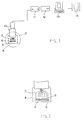
- Fig. 1 is a schematic diagram of a bioluminescence image analysis system to be used according to the present invention.
- Fig. 2 is an enlarged partial view of Fig. 1.
- the hydrophobic filtration membrane is made of a commonly known hydrophobic material, such as, polyvinylidene fluoride (PVDF), polytetrafluoroethylene (PTFE) or polyethylene (PE), or of a relatively hydrophobic hydrophilic material, such as polycarbonate (PC), polypropylene (PP), polyamide (PA), polysulfone (PS) or polyether sulfone.
- PVDF polyvinylidene fluoride
- PTFE polytetrafluoroethylene
- PE polyethylene
- a relatively hydrophobic hydrophilic material such as polycarbonate (PC), polypropylene (PP), polyamide (PA), polysulfone (PS) or polyether sulfone.
- PC polycarbonate
- PP polypropylene
- PA polyamide
- PS polysulfone
- polyether sulfone polyether sulfone
- hydrophobic filtration membrane refers to those membranes which, when a final spray is applied, retain the reagents in a fine droplet form, and which substantially do not absorb the reagents.
- the hydrophobic filtration membrane may be produced by any means for forming micropores in a sheet selected from any hydrophobic materials.
- the micropores may be formed by directing an electron beam to the sheet.
- the hydrophobic filtration membrane may be treated with a hydrophilic material such as polyvinylpyrrolidone to impart a hydrophilic nature to the membrane, which is easily washed out when a liquid which contains microbes is filtered with thusly treated membrane.
- the hydrophobic filtration membrane used is a hydrophobic filtration membrane having hydrophobic barriers.
- the detectable number of viable microbes in a sample solution to be entrapped on the filtration membrane 1 may be usually less than 100 cells/membrane, often less than 50 cells, and possibly less than 20 cells/membrane.
- various processes may optionally be employed, including those wherein the hydrophobic membrane is temporarily allowed to be hydrophilic, then subjected to vaccum filtration of the sample solution, and thereafter dried to resume its hydrophobicity.
- the microbes themselves should remain hydrophilic.
- Those microbes which can effectively be detected using the method according to the present invention include any microorganisms, especially bacteria and molds.
- Molds can be detected with relative ease, and, in most cases, bacteria also can be detected by directly applying the method according to the present invention. In some cases, it might be necessary to cultivate the microbes. In such cases, however, the time period for cultivation can be reduced, as compared with the method described in the above PCT International Application W0 92/14,898.
- the luminescent ingredient which can be extracted from the microbes is adenosine triphosphate (ATP).
- Liquid extracting reagents for the luminescent ingredient, ATP include alcohols, ethers, esters, and halogenated derivatives of methane, ethane, or ethylene, as well as acetonitrile, triethylamine and others. Extracting agents which have boiling point equal to or below 120° C and can readily be evaporated off are especially preferable. Residual extracting agents, for instance a surfactant, also release ATP, but will indirectly exert an inhibitory effect on the luminescence-inducing enzyme by not destroying ATPases like the alcohol extracting reagent would.
- the luminescence inducing reagent a composition of luciferin and luciferase
- the luminescence inducing reagent is preferably used in an increased concentration by twice to ten times, particularly three to six times, of the standard concentration.
- an increased concentration of the reagent By using an increased concentration of the reagent, the rate of luminescent reaction is accelerated, resulting in an increase both in the luminescence level of the bright spots and in the speed of detection.
- standard concentration as used herein is defined as those specified for regular use of conventional luminescence-inducing reagents (for example, Lucifer LUTM, a reagent of luciferin/luciferase type from Kikkoman Co., Ltd.).
- a standard solution consists of 70 mg of freeze dried product which contains 0.15 mg of luciferine and 0.1mm of luciferase and is reconstituted in 5ml of water.
- these liquid reagents are applied in a fine spray, i.e. a mist-like spray of fine particles or droplets having a size of 20 ⁇ m or less, preferably from 5 to 10 ⁇ m.
- a fine spray i.e. a mist-like spray of fine particles or droplets having a size of 20 ⁇ m or less, preferably from 5 to 10 ⁇ m.
- ultrasonic fine-particle sprayers especially automatic ones are desired. It is important not to wet the hydrophobic membrane completely, because these situations lead to diffusion of the luminescent components out of their respective restricted areas with the concomitant loss in the ability to detect the point sources of light emanating from individual microbes.
- the invention it is possible to allow ATP to exist with a high concentration at locations very close to the points of entrapping of microbes owing to the large surface tension of the ATP containing solution with respect to the hydrophobic membrane. Further, fine droplets of the luminescence-inducing reagent having a concentration of from 2-10 times and preferably from 3-6 times as high as the standard concentration are placed on the hydrophobic membrane which retains the ATP in a condition such that the diffusion is restricted. Accordingly, the luminescent level of the spots is increased and the sensitivity of detection is increased almost ten times as high as compared to the methods using a hydrophilic membrane.
- a sample solution is filtered using a filtration apparatus, which is a cup-shaped vessel, such as Milliflex Filter Unit (brand name SterifilTM) available from Nippon Millipore Co., Ltd., with the above hydrophobic filtration membrane having been mounted on to entrap viable microbes in the solution thereon.
- the hydrophobic filtration membrane is then removed from the apparatus, dried up, and thereafter mounted on a preparation holder to be subjected to a gentle fine spray of the ATP extracting reagent, for example, NBRTM from Lumac Co., Ltd., onto the membrane for 10 seconds, using an ultrasonic sprayer (available from Matsushita Electric. Industry Co., Ltd.).
- the membrane is subjected to another gentle fine spray of a luciferin-luciferase luminescence-inducing reagent (Lumit-PMTM, Lumac Co., Ltd.) for 10 seconds, using the same sprayer as above, to induce bioluminescence.
- a luciferin-luciferase luminescence-inducing reagent Liit-PMTM, Lumac Co., Ltd.
- the filtration membrane which has been prepared to emit luminescence (hereafter referred to as "preparation") is placed on a preparation holder, and, after being covered with a total reflection plate, the preparation is subjected to counting the number of point source bright spots to determine the viable count.
- bioluinescence image analysis system for example, ARGUS-50/CL(tradename), Hamamatsu Photonics Co., Ltd.
- ARGUS-50/CL(tradename), Hamamatsu Photonics Co., Ltd. a bioluinescence image analysis system
- an image processing is carried out after the accumulation of luminescence for a time period of, for example, two minutes, then a further image processing is carried out to erase any luminescence to be considered as background noise, and finally the remaining bright spots are counted.
- the bioluminescence analysis system to be used herein is a novel and innovative device, which can detect with high sensitivity even such faint luminescence as could hardly be detected by conventional instruments, and significantly intensify the signal for processing. Furthermore, the processing and analysis are carried out more rapidly and conveniently.
- the system When combined with the effects caused by the fine sprays using the sprayer of particular reagents onto the hydrophobic filtration membrane according to the present invention, the system enables detection of even a single microbial cell, contributing to provide an extremely excellent method of determining a viable count.
- the outline of the system is as shown in Figs. 1 and 2.
- This system comprises a preparation holder 9 for supporting the filtration membrane (preparation) 5, which has been treated with the extracting and luminescence-inducing reagents as stated above; a total reflection plate 6; a housing for shading 8; tapered fibers 7 juxtaposed as closely as possible to the filtration membrane for detecting the luminescence in a two-dimensional mode; an ultrahigh-sensitivity TV camera 10 consisting of a photoamplifier component and a camera to be; a camera controller 11; an image processor 12; a data analysis device 13; and a monitor TV 14.
- ARGUS-50/CLTM of tapered -fiber input type from Hamamatsu Photonics, Co., Ltd., or those components having an equivalent performance of measurement.
- a TV camera equipped with cooled solid-state camera device may be employed, in which the CCD is cooled to a temperature from -30° C to -120° C to restrain the background noise from the camera itself, enabling to accumulate even very faint light.
- a cooled CCD digital imaging system is available from Hamamatsu Photonics.
- the system may be operated by inverting the relative position of tapered fibers 7 in the camera tube component to the ultrahigh-sensitivity TV camera 10, and placing the preparation holder 9, with a preparation (membrane 5) mounted thereon, on the tapered fibers 7.
- the preparation 5 may be placed as closely as possible to the tapered fibers 7, thereby to significantly enhance the sensitivity of measurement and to eliminate the conventional necessity of scanning.
- sprayer(s) for extracting and luminescence-inducing reagents, and other associated equipments such as preparation carrier may be arranged in a set.
- the preparation holder 9 bearing a preparation (the filtration membrane retaining microbes to be counted) after the above mentioned luminescence-inducing process is placed on the surface of the tapered fibers 7 in close contact therewith.
- the camera controller 11, and the image processor 12 the photons emitted from the preparation 5 are accumulated for 30 to 180 seconds, such as 120 seconds, in a two-dimensional mode to pick up an image of the luminescence from microbial bodies, which is then processed with the data analysis device 13 to be displayed on the monitor TV 14, with bright luminescence originated from viable microbes only remaining and faint noise luminescence having been erased. Any luminescence originating from other than the microbial bodies are erased by this processing, resulting in substantial correspondence between the number of the bright spots detected and the viable count.
- the ingredient to be extracted from viable microbes is adenosine triphosphate (ATP).
- the extracting reagent is that for ATP (for example, NRBTM from Lumac), which is applied in a fine spray, using a sprayer (for example, Ultrasonic AspiratorTM from Matsushita Electric Inc.), for extracting ATP from microbes entrapped in the filtration membrane.
- a luminescence-inducing reagent for example, Lumit-PM from Lumac Co. is then applied in a similar manner, for inducing luminescence.
- the preparation thus obtained is then subjected to the above bioluminescence image analysis system, in which the luminescence is accumulated for 30 to 180 seconds, and thereafter bright spots only having higher luminance than that of background luminescence are left in the monitor TV and displayed thereon.
- the threshold luminance is defined as the highest luminance of a preparation which has been obtained from sterilizing an aliquot of the sample solution and inducing luminescence by the same treatment as done to the testing sample.
- viable microbes are entrapped on a hydrophobic filtration membrane.
- a suitable amount each of an ATP extracting solution and a solution of luminescence-inducing reagent (particularly a luciferin-luciferase reagent) in a fine spray enables the applied particles of reagents to retain their particulate forms by virtue of their intrinsic surface tension without any diffusion, displacement, or dilution.
- the bioluminescence image analysis system to which the preparation (filtration membrane) is subjected after luminescence induction, enables detection of even very faint luminescence from a single microbial cell in a two-dimensional mode, thus making it possible to determine the viable count, even if it should be an extremely small number, automatically, rapidly, and conveniently, and with a high sensitivity.
- a TV camera consisting of tapered fibers, photoamplifier component, and imaging tube, has enabled to indicate (recognize) the luminescence originated from viable microbes as very bright spots, so that any noise luminescence from other materials than viable microbes can readily be eliminated by comparing it with a threshold luminance obtained from a sterilized sample solution, thereby enabling to determine the viable count, even if it should be an extremely small number (for example, several cells/100 ml of sample solution) automatically, as well as rapidly and conveniently.
- microbes bacteria
- a hydrophobic filtration membrane with microbes (bacteria) having been entrapped by filtering the sample solution, on a pad or a nutrient agar plate containing the most suitable nutrients for their growth, to cultivate them for a short time period (for example, less than three hours), thereby increasing the viable count by forming colonies of microbes within the same sections, and thereafter to subject the filtration membrane to determination.
- a hydrophobic filtration membrane with microbes (bacteria) having been entrapped by filtering the sample solution, on a pad or a nutrient agar plate containing the most suitable nutrients for their growth, to cultivate them for a short time period (for example, less than three hours), thereby increasing the viable count by forming colonies of microbes within the same sections, and thereafter to subject the filtration membrane to determination.
- Employing such a procedure enables one to obtain significantly luminous bright spots, providing means for more accurate determination.
- Cited as one example of the most preferred hydrophobic filtration membranes is a polycarbonate filtration film (e.g. 0.4 ⁇ m ISOPORETM, sold by Millipore Corp.) having pores of very uniform diameter which has been treated with a water-soluble hydrophilic polymer such as polyvinyl pyrrolidone to make the surface of the hydrophobic polycarbonate membrane hydrophilic.
- a polycarbonate filtration film e.g. 0.4 ⁇ m ISOPORETM, sold by Millipore Corp.
- a water-soluble hydrophilic polymer such as polyvinyl pyrrolidone
- a series of 0.5 ⁇ l of aqueous ATP solutions each containing ATP in the amount of 10 -12 g, 5 x 10 -13 g, or 5 x 10 -14 g were prepared.
- Hydrophobic filtration membranes according to the present invention HVHPTM, manufactured by Nippon Millipore Limited
- HVHPTM Hydrophobic filtration membranes according to the present invention
- a series of 0.5 ⁇ l of aqueous ATP solutions each containing ATP in the amount of 5 x 10 -13 g, 5 x 10 -14 g, or 2 x 10 -14 g were prepared. Hydrophobic filtration membranes (HVHPTM) were spotted with one of the above solutions, and air-dried.
- a solution of luminescence-inducing reagent (Lucifer-LU) of five-fold concentration was prepared by dissolving the reagent in 1ml, i.e., one fifth of the prescribed volume, of the solvent of the reagent. Induction of luminescence and measurement of the luminescence level were carried out as in Example 1.
- a platinum loop of Escherichia coli (IFO 13898) was inoculated into a test tube containing 5 ml of SCD medium (Nippon Pharmaceutical Co., Ltd.), and cultivated at 37° C overnight.
- the medium was diluted with HEPES buffer solution (pH 7.75, Sigma Co.), so that a sample solution containing about 100 CFU/ml of bacteria was prepared.
- the membrane was then subjected to a particulate spray of methanol for 30 seconds, using a pressurized sprayer (Shin'ei Kogyo Co.), and, after standing for 5 minutes to evaporate methanol off, the membrane was subjected to another particulate spray of luminescence-inducing reagent with five-fold concentration as used in Example 2 to induce luminescence.
- a pressurized sprayer Shin'ei Kogyo Co.
- Escherichia coli (IFO 13898) was cultivated in 300 ml of commercially available canned beer (A----Co.) which had been filtered under sterile condition, and the beer was diluted with HEPES buffer to prepare a sample solution containing about 100 CFU/ml of the bacteria.
- Lactobacillus brevis (IF0 3345) was cultivated for overnight in 300 ml of commercially available canned beer (B-- Co.) which had been filtrated under sterile condition, and the beer was diluted with HEPES buffer to prepare a sample solution containing about 100 CFU/ml of the bacteria. After 0.2 ml of the sample solution were filtered through a polycarbonate membrane (Isopore 0.4, ⁇ m, 47 mm diameter, Nippon Milllpore Limited), the membrane was placed on a SCD agar plate and cultivated at 30° C for 8 hours.
- a polycarbonate membrane Isopore 0.4, ⁇ m, 47 mm diameter, Nippon Milllpore Limited
- Example 3 After air-drying, extracting ATP, and inducing luminescence, as in Example 3, the membrane was subjected to measurement on the bright spots using a bioluminescence image analysis system, to obtain results as shown in Table 5. 0.2 ml of the solution were spread on a SCD agar plate and cultivated at 30° C for 5 days to count the colonies formed. Results obtained from both experiments are also shown in Table 5. Exp. No. Hydrophobic membrane Agar Plate CFU/0.2ml No. Lumi. 1 22 541 18 2 17 494 23 3 20 612 24 This example shows good correlation beween the hydrophobic membrane and the conventional detection method of Lactobacillus brevis in beer.
- the present invention provides the following advantageous effects.
Landscapes
- Chemical & Material Sciences (AREA)
- Life Sciences & Earth Sciences (AREA)
- Health & Medical Sciences (AREA)
- Organic Chemistry (AREA)
- Engineering & Computer Science (AREA)
- Zoology (AREA)
- Wood Science & Technology (AREA)
- Proteomics, Peptides & Aminoacids (AREA)
- Analytical Chemistry (AREA)
- Toxicology (AREA)
- Immunology (AREA)
- Microbiology (AREA)
- Molecular Biology (AREA)
- Biophysics (AREA)
- Physics & Mathematics (AREA)
- Biotechnology (AREA)
- Biochemistry (AREA)
- Bioinformatics & Cheminformatics (AREA)
- General Engineering & Computer Science (AREA)
- General Health & Medical Sciences (AREA)
- Genetics & Genomics (AREA)
- Measuring Or Testing Involving Enzymes Or Micro-Organisms (AREA)
- Investigating Or Analysing Materials By The Use Of Chemical Reactions (AREA)
Description
| ATP | HVHP | HVWP™ | |
| 10-12 | 28,860 | 20,940 | |
| 5 x 10-13 | 21,930 | 17,270 | |
| 10-13 | 6,020 | 3,530 | |
| 5 x 10-14 | 2,410 | 620 |
| Concentration of the Luminescence-Inducing Reagent | ||
| ATP | 5-fold | standard |
| 5 x 10 -12 | 22,050 | 17,375 |
| 5 x 10 -14 | 2,320 | 710 |
| 2 x 10 -14 | 1,970 | 50 |
| Exp. No. | Hydrophobic Membrane (bright spots/membrane) | Agar Plate Method (CFU/0.2ml) |
| 1 | 22 | 18 |
| 2 | 19 | 23 |
| 3 | 16 | 19 |
Results obtained from both experiments are also shown in Table 4
| Table 4 Exp. No. | Hydrophobic Membrane (br spots/mem.) | Agar Plate (CFU/0.2ml) |
| 1 | 17 | 20 |
| 2 | 15 | 15 |
| 3 | 11 | 12 |
| Exp. No. | Hydrophobic membrane | Agar Plate CFU/0.2ml | |
| No. | Lumi. | ||
| 1 | 22 | 541 | 18 |
| 2 | 17 | 494 | 23 |
| 3 | 20 | 612 | 24 |
Claims (11)
- A method of determining the number of living microorganisms in a sample solution suspected of containing same, comprising:filtering said sample solution through a hydrophobic filtration membrane thereby entrapping said microbes thereon,spraying a solution of an ATP extracting reagent onto said microbe-containing membrane to extract ATP from said microbes contained on said hydrophobic membrane,spraying a solution of a luminescence-inducing reagent onto said membrane to induce luminescence, andmeasuring the level of said luminescence, using means for measuring said luminescence level.
- The method of claim 1, wherein said luminescence-inducing reagent comprises luciferin/luciferase.
- The method of claim 1, wherein said extracting reagent is selected from the group consisting of alcohols, ethers, esters, halogenated derivatives of methane, ethane, ethylene, acetonitrile and triethylamine, said extracting reagent having a boiling point equal to or below 120°C.
- The method of claim 1, wherein said extracting reagent is methanol.
- The method of claim 1, wherein said extracting reagent is ethanol.
- The method of claim 1, wherein said filtration membrane is selected from the group consisting of polyvinylidene fluoride , polytetrafluoroethylene, polyethylene, polycarbonate, polypropylene, polyamide, and polysulfone.
- The method of claim 1, wherein said hydrophobic filtration membrane is treated with a hydrophilic agent which can be readily removed during or after filtering said sample solution.
- The method of claim 1, wherein said means for measuring said luminescence level is a bioluminescence image analysis system comprising a dark box, tapered fibers, a photoamplification device and an imaging tube.
- The method of claim 1, wherein said means for measuring said luminescence level is a tapered fiber-input CCD television camera.
- The method of claim 1, wherein said luminescence-inducing reagent is sprayed in the form of a mist, and the particle size of said mist is 20 µm or less.
- The method of claim 1, wherein an additional step of culturing the microbe-containing membrane to create colony forming units on said membrane is performed.
Applications Claiming Priority (3)
| Application Number | Priority Date | Filing Date | Title |
|---|---|---|---|
| JP04439793A JP3228812B2 (en) | 1993-02-10 | 1993-02-10 | How to measure viable cell count |
| JP44397/93 | 1993-02-10 | ||
| JP4439793 | 1993-02-10 |
Publications (3)
| Publication Number | Publication Date |
|---|---|
| EP0612850A2 EP0612850A2 (en) | 1994-08-31 |
| EP0612850A3 EP0612850A3 (en) | 1995-06-28 |
| EP0612850B1 true EP0612850B1 (en) | 1999-08-11 |
Family
ID=12690383
Family Applications (1)
| Application Number | Title | Priority Date | Filing Date |
|---|---|---|---|
| EP94102084A Expired - Lifetime EP0612850B1 (en) | 1993-02-10 | 1994-02-10 | Method of determining a viable count using a hydrophobic membrane filter |
Country Status (4)
| Country | Link |
|---|---|
| US (1) | US5766868A (en) |
| EP (1) | EP0612850B1 (en) |
| JP (1) | JP3228812B2 (en) |
| DE (1) | DE69419948T2 (en) |
Cited By (1)
| Publication number | Priority date | Publication date | Assignee | Title |
|---|---|---|---|---|
| WO2007140752A1 (en) | 2006-06-06 | 2007-12-13 | Eads Deutschland Gmbh | Micromechanical filter for microparticles, in particular for pathogenic bacteria and viruses, and also process for production thereof |
Families Citing this family (38)
| Publication number | Priority date | Publication date | Assignee | Title |
|---|---|---|---|---|
| US5897993A (en) * | 1995-03-28 | 1999-04-27 | Idemitsu Kosan Company Limited | Method of determining the number of bacteria quickly and a device for determining the number of bacteria |
| US6792132B1 (en) * | 1998-02-03 | 2004-09-14 | Hakuju Institute For Health Science Co., Ltd. | Inspection method for microorganisms and the like, and unit therefor |
| CA2322072A1 (en) | 1998-12-28 | 2000-07-06 | Sapporo Breweries Ltd. | Method of apparatus for enumerating microbes by counting luminous points on a digitized pixilated image |
| EP1185616B1 (en) | 1999-05-25 | 2011-07-06 | Millipore Corporation | Method for rapidly detecting and enumerating microorganisms in mammalian cell preparations using atp bioluminescence |
| US6485962B1 (en) | 2000-04-05 | 2002-11-26 | Echo Technologies | Methods for signal enhancement in optical microorganism sensors |
| CA2459320C (en) * | 2001-09-06 | 2016-07-05 | Genomic Profiling Systems, Inc. | Rapid detection of replicating cells |
| JPWO2003102224A1 (en) * | 2002-05-30 | 2005-09-29 | 富士電機ホールディングス株式会社 | Microbe or cell counting method |
| AU2003274412A1 (en) * | 2002-06-07 | 2003-12-22 | Millipore Corporation | Kit and process for microbiological for on-site examination of a liquid sample |
| NL1021258C2 (en) * | 2002-08-12 | 2004-02-17 | Tno | Method and device for determining the number of living cells in a test fluid and the use thereof. |
| US20050070701A1 (en) * | 2003-09-29 | 2005-03-31 | Hochstetler Spencer Erich | Detection of living cells in polymers or pigments |
| JP4373947B2 (en) * | 2004-05-04 | 2009-11-25 | ミリポア・コーポレイション | Method for counting and identifying microorganisms |
| CN100462714C (en) * | 2005-05-23 | 2009-02-18 | 西安交通大学 | A method for rapid screening of multi-sample microbial contamination |
| GB0513535D0 (en) * | 2005-07-01 | 2005-08-10 | Iseao Technologies Ltd | Improved methods of detecting microbes |
| CA2623408C (en) | 2005-09-26 | 2014-04-01 | Rapid Micro Biosystems, Inc. | Cassette containing growth medium |
| FR2897783B1 (en) * | 2006-02-24 | 2008-05-30 | Millipore Corp | DEVICE FOR MICROBIOLOGICAL CONTROL, CONTROL AND INCUBATION ASSEMBLIES COMPRISING THE SAME, AND METHOD FOR CARRYING OUT THE SAME |
| FR2897872B1 (en) * | 2006-02-24 | 2008-08-15 | Millipore Corp | METHOD FOR RAPID MICROBIOLOGICAL ANALYSIS |
| FR2897873B1 (en) * | 2006-02-24 | 2008-05-30 | Millipore Corp | METHOD FOR RAPID MICROBIOLOGICAL ANALYSIS |
| FR2897941B1 (en) * | 2006-02-24 | 2009-01-16 | Millipore Corp | DEVICE AND METHOD FOR RAPID MICROBIOLOGICAL ANALYSIS. |
| US7851177B2 (en) * | 2006-07-31 | 2010-12-14 | Biotechnologias Del Agua Ltda | Method for detecting presence of acidophilic microorganisms in bioleaching solution |
| FR2911801B1 (en) * | 2007-01-29 | 2009-04-24 | Millipore Corp | DEVICE FOR SPRAYING A REAGENT FOR RAPID MICROBIOLOGICAL ANALYSIS |
| FR2915487B1 (en) | 2007-04-26 | 2009-06-05 | Millipore Corp | ASSEMBLY AND METHOD FOR MICROBIOLOGICAL ANALYSIS |
| AU2009296526B2 (en) | 2008-09-24 | 2015-11-19 | First Light Diagnostics, Inc. | Method for detecting analytes |
| JP5218153B2 (en) * | 2009-02-26 | 2013-06-26 | 株式会社日立プラントテクノロジー | Microorganism detection apparatus, detection method, and sample container used therefor |
| EP2576812A1 (en) | 2010-06-07 | 2013-04-10 | 3M Innovative Properties Company | Filtration methods and devices |
| DE102011077238B4 (en) * | 2011-06-09 | 2016-03-31 | Bayerische Motoren Werke Aktiengesellschaft | Method of detecting microorganisms in a cavity preservative |
| DK3327110T3 (en) | 2011-11-07 | 2020-04-27 | Rapid Micro Biosystems Inc | Kassette til sterilitetstest |
| JP5960421B2 (en) * | 2011-12-05 | 2016-08-02 | 株式会社日立ハイテクノロジーズ | Cell measuring method and cell measuring reagent |
| WO2013132630A1 (en) * | 2012-03-08 | 2013-09-12 | 株式会社日立製作所 | Method and device for detecting microorganisms in liquid |
| EP2839021B1 (en) | 2012-04-16 | 2022-02-23 | Rapid Micro Biosystems, Inc. | Cell culturing device |
| EP2780707B1 (en) | 2012-05-02 | 2016-02-24 | Charles River Laboratories, Inc. | Method of detecting viable cells in a cell sample |
| US8993259B2 (en) | 2012-05-02 | 2015-03-31 | Charles River Laboratories, Inc. | Method of viability staining with membrane permeable fluorescent dye and membrane impermeable fluorescence quencher |
| CN104685346B (en) | 2012-05-02 | 2018-05-29 | 查尔斯河实验室公司 | Cell capture system and its use |
| CN119804399A (en) | 2018-04-19 | 2025-04-11 | 曙光诊断学公司 | Target Detection |
| CA3110851A1 (en) * | 2018-08-29 | 2020-03-05 | Rapid Micro Biosystems, Inc. | Use of clean and dry gas for particle removal and assembly therefor |
| AU2019353145B2 (en) | 2018-10-04 | 2025-12-04 | First Light Diagnostics, Inc. | Microbial analysis without cell purification |
| EP3865583A1 (en) * | 2020-02-14 | 2021-08-18 | Testo bioAnalytics GmbH | Method for detecting microorganisms and disk-shaped sample carriers |
| CN112630246B (en) * | 2020-11-30 | 2022-12-23 | 广东省微生物研究所(广东省微生物分析检测中心) | Method for capturing and imaging long and medium linear microorganisms in sediment |
| CN112980729A (en) * | 2021-03-11 | 2021-06-18 | 济南市疾病预防控制中心 | Strain source for evaluating culture medium or disinfectant, preparation method and use method |
Family Cites Families (7)
| Publication number | Priority date | Publication date | Assignee | Title |
|---|---|---|---|---|
| US4385113A (en) * | 1978-03-20 | 1983-05-24 | Nasa | Rapid, quantitative determination of bacteria in water |
| US4618533A (en) * | 1984-11-30 | 1986-10-21 | Millipore Corporation | Porous membrane having hydrophilic surface and process |
| DK258787D0 (en) * | 1987-05-21 | 1987-05-21 | Foss Electric As N | PROCEDURE FOR DETERMINING BACTERY CONCENTRATION IN A TEST |
| JPH0430798A (en) * | 1990-05-28 | 1992-02-03 | Fuji Electric Co Ltd | Counting of viable microorganism and device therefor |
| JPH0728758B2 (en) * | 1990-07-11 | 1995-04-05 | 出光興産株式会社 | Method and kit for rapid measurement of viable bacterial count |
| WO1992014838A1 (en) * | 1991-02-13 | 1992-09-03 | Nihon Millipore Kogyo Kabushiki Kaisha | Method of determining viable count |
| EP0563858B1 (en) * | 1992-04-01 | 1997-07-09 | Nihon Millipore Kogyo Kabushiki Kaisha | Method of determining viable count |
-
1993
- 1993-02-10 JP JP04439793A patent/JP3228812B2/en not_active Expired - Fee Related
-
1994
- 1994-02-10 EP EP94102084A patent/EP0612850B1/en not_active Expired - Lifetime
- 1994-02-10 DE DE69419948T patent/DE69419948T2/en not_active Expired - Lifetime
-
1995
- 1995-05-18 US US08/443,654 patent/US5766868A/en not_active Expired - Lifetime
Cited By (1)
| Publication number | Priority date | Publication date | Assignee | Title |
|---|---|---|---|---|
| WO2007140752A1 (en) | 2006-06-06 | 2007-12-13 | Eads Deutschland Gmbh | Micromechanical filter for microparticles, in particular for pathogenic bacteria and viruses, and also process for production thereof |
Also Published As
| Publication number | Publication date |
|---|---|
| EP0612850A2 (en) | 1994-08-31 |
| JP3228812B2 (en) | 2001-11-12 |
| DE69419948T2 (en) | 1999-12-23 |
| US5766868A (en) | 1998-06-16 |
| DE69419948D1 (en) | 1999-09-16 |
| EP0612850A3 (en) | 1995-06-28 |
| JPH06237793A (en) | 1994-08-30 |
Similar Documents
| Publication | Publication Date | Title |
|---|---|---|
| US5766868A (en) | Method of determining a viable count using a hydrophobic membrane | |
| US5366867A (en) | Method of determining viable microbial cell count | |
| JP3133328B2 (en) | Viable count method | |
| US5736351A (en) | Method for detection of contaminants | |
| JPWO1992014838A1 (en) | Viable Bacteria Count Method | |
| US7947224B2 (en) | Device for calibrating a microorganism quantifying apparatus | |
| US6203900B1 (en) | Pressure sensitive adhesive sheet for detection of microorganism and method for detection of microorganism | |
| US8679828B2 (en) | Microbial detection apparatus, microbial detection method, and sample container used therein | |
| US5624810A (en) | Method for detection of surfaces contaminants | |
| JP3998782B2 (en) | Rapid measurement method of microbial count and filtration membrane used for it | |
| JP7478443B2 (en) | Method and device for detecting at least one microorganism according to its staining kinetics, and detection support - Patents.com | |
| Takahashi et al. | Rapid single cell detection of lactic acid bacteria in the beer using bioluminescence method | |
| WO2010151131A2 (en) | Apparatus for detecting viable microorganisms or spores in a sample and use thereof. | |
| JP2006284604A (en) | Filter for collecting microorganism | |
| JP2016174581A (en) | Microbe detection apparatus, microbe detection program, and microbe detection method | |
| JP3208892B2 (en) | Method for measuring viable cell count | |
| US12416568B2 (en) | Fluid sample biological activity analyzing method by 3D imaging of a filter after passing the sample therethrough | |
| JP3466735B2 (en) | A rapid screening method for clinical bacterial drug sensitivity | |
| JP2003180395A (en) | Method for detecting microorganism | |
| JP3453168B2 (en) | How to measure fire bacteria | |
| JPS6035262A (en) | ATP decomposition and measurement and cell decomposition and concentration method | |
| JP3529453B2 (en) | Method for selective detection of coliform bacteria | |
| JP4145073B2 (en) | Method for removing malt fermented beverage remaining in membrane filter and method for rapid detection of microorganisms in fermented malt beverage | |
| JP2024541849A (en) | Methods for detecting microorganisms | |
| JP2007093614A (en) | Method of measuring microorganisms |
Legal Events
| Date | Code | Title | Description |
|---|---|---|---|
| PUAI | Public reference made under article 153(3) epc to a published international application that has entered the european phase |
Free format text: ORIGINAL CODE: 0009012 |
|
| AK | Designated contracting states |
Kind code of ref document: A2 Designated state(s): DE FR GB |
|
| PUAL | Search report despatched |
Free format text: ORIGINAL CODE: 0009013 |
|
| AK | Designated contracting states |
Kind code of ref document: A3 Designated state(s): DE FR GB |
|
| 17P | Request for examination filed |
Effective date: 19950809 |
|
| 17Q | First examination report despatched |
Effective date: 19980703 |
|
| GRAG | Despatch of communication of intention to grant |
Free format text: ORIGINAL CODE: EPIDOS AGRA |
|
| GRAG | Despatch of communication of intention to grant |
Free format text: ORIGINAL CODE: EPIDOS AGRA |
|
| GRAG | Despatch of communication of intention to grant |
Free format text: ORIGINAL CODE: EPIDOS AGRA |
|
| GRAH | Despatch of communication of intention to grant a patent |
Free format text: ORIGINAL CODE: EPIDOS IGRA |
|
| GRAH | Despatch of communication of intention to grant a patent |
Free format text: ORIGINAL CODE: EPIDOS IGRA |
|
| GRAA | (expected) grant |
Free format text: ORIGINAL CODE: 0009210 |
|
| AK | Designated contracting states |
Kind code of ref document: B1 Designated state(s): DE FR GB |
|
| REF | Corresponds to: |
Ref document number: 69419948 Country of ref document: DE Date of ref document: 19990916 |
|
| ET | Fr: translation filed | ||
| PLBE | No opposition filed within time limit |
Free format text: ORIGINAL CODE: 0009261 |
|
| STAA | Information on the status of an ep patent application or granted ep patent |
Free format text: STATUS: NO OPPOSITION FILED WITHIN TIME LIMIT |
|
| 26N | No opposition filed | ||
| REG | Reference to a national code |
Ref country code: GB Ref legal event code: IF02 |
|
| PGFP | Annual fee paid to national office [announced via postgrant information from national office to epo] |
Ref country code: FR Payment date: 20100303 Year of fee payment: 17 |
|
| PGFP | Annual fee paid to national office [announced via postgrant information from national office to epo] |
Ref country code: GB Payment date: 20100224 Year of fee payment: 17 Ref country code: DE Payment date: 20100226 Year of fee payment: 17 |
|
| GBPC | Gb: european patent ceased through non-payment of renewal fee |
Effective date: 20110210 |
|
| REG | Reference to a national code |
Ref country code: FR Ref legal event code: ST Effective date: 20111102 |
|
| REG | Reference to a national code |
Ref country code: DE Ref legal event code: R119 Ref document number: 69419948 Country of ref document: DE Effective date: 20110901 |
|
| PG25 | Lapsed in a contracting state [announced via postgrant information from national office to epo] |
Ref country code: FR Free format text: LAPSE BECAUSE OF NON-PAYMENT OF DUE FEES Effective date: 20110228 |
|
| PG25 | Lapsed in a contracting state [announced via postgrant information from national office to epo] |
Ref country code: GB Free format text: LAPSE BECAUSE OF NON-PAYMENT OF DUE FEES Effective date: 20110210 |
|
| PG25 | Lapsed in a contracting state [announced via postgrant information from national office to epo] |
Ref country code: DE Free format text: LAPSE BECAUSE OF NON-PAYMENT OF DUE FEES Effective date: 20110901 |