EP0589753B2 - Verfahren um zusammen mit einen Befehl zum Wechsel der Basisstation in einem zellularen System ein Laufzeitkorrektursignal an eine Mobilstation auszusenden - Google Patents
Verfahren um zusammen mit einen Befehl zum Wechsel der Basisstation in einem zellularen System ein Laufzeitkorrektursignal an eine Mobilstation auszusenden Download PDFInfo
- Publication number
- EP0589753B2 EP0589753B2 EP93402233A EP93402233A EP0589753B2 EP 0589753 B2 EP0589753 B2 EP 0589753B2 EP 93402233 A EP93402233 A EP 93402233A EP 93402233 A EP93402233 A EP 93402233A EP 0589753 B2 EP0589753 B2 EP 0589753B2
- Authority
- EP
- European Patent Office
- Prior art keywords
- station
- base transceiver
- information
- mobile
- timing advance
- Prior art date
- Legal status (The legal status is an assumption and is not a legal conclusion. Google has not performed a legal analysis and makes no representation as to the accuracy of the status listed.)
- Expired - Lifetime
Links
- 238000000034 method Methods 0.000 title claims description 39
- 230000001413 cellular effect Effects 0.000 title claims description 20
- 230000005540 biological transmission Effects 0.000 claims description 17
- 101150080339 BTS1 gene Proteins 0.000 abstract description 27
- 102100034243 Solute carrier family 12 member 2 Human genes 0.000 description 21
- 230000008859 change Effects 0.000 description 14
- 230000001360 synchronised effect Effects 0.000 description 9
- 238000004891 communication Methods 0.000 description 8
- 230000008569 process Effects 0.000 description 7
- 238000004364 calculation method Methods 0.000 description 5
- 108091006621 SLC12A1 Proteins 0.000 description 3
- 108091006620 SLC12A2 Proteins 0.000 description 3
- 238000005259 measurement Methods 0.000 description 3
- 230000008901 benefit Effects 0.000 description 2
- 238000012508 change request Methods 0.000 description 2
- 238000010586 diagram Methods 0.000 description 2
- 230000010363 phase shift Effects 0.000 description 2
- 230000004044 response Effects 0.000 description 2
- 230000011664 signaling Effects 0.000 description 2
- 241000238876 Acari Species 0.000 description 1
- 238000013459 approach Methods 0.000 description 1
- 239000000470 constituent Substances 0.000 description 1
- 230000001934 delay Effects 0.000 description 1
- 238000001514 detection method Methods 0.000 description 1
- 238000000605 extraction Methods 0.000 description 1
- 238000013213 extrapolation Methods 0.000 description 1
- 230000002452 interceptive effect Effects 0.000 description 1
- 230000000873 masking effect Effects 0.000 description 1
- 238000010295 mobile communication Methods 0.000 description 1
- 238000012545 processing Methods 0.000 description 1
- 230000001902 propagating effect Effects 0.000 description 1
- 238000011084 recovery Methods 0.000 description 1
- 238000012552 review Methods 0.000 description 1
- 230000033764 rhythmic process Effects 0.000 description 1
- 230000008054 signal transmission Effects 0.000 description 1
Images



Classifications
-
- H—ELECTRICITY
- H04—ELECTRIC COMMUNICATION TECHNIQUE
- H04B—TRANSMISSION
- H04B7/00—Radio transmission systems, i.e. using radiation field
- H04B7/24—Radio transmission systems, i.e. using radiation field for communication between two or more posts
- H04B7/26—Radio transmission systems, i.e. using radiation field for communication between two or more posts at least one of which is mobile
- H04B7/2662—Arrangements for Wireless System Synchronisation
- H04B7/2671—Arrangements for Wireless Time-Division Multiple Access [TDMA] System Synchronisation
- H04B7/2678—Time synchronisation
- H04B7/2684—Synchronisation of a mobile station with more than one base station
-
- H—ELECTRICITY
- H04—ELECTRIC COMMUNICATION TECHNIQUE
- H04W—WIRELESS COMMUNICATION NETWORKS
- H04W36/00—Hand-off or reselection arrangements
- H04W36/0005—Control or signalling for completing the hand-off
- H04W36/0055—Transmission or use of information for re-establishing the radio link
- H04W36/0072—Transmission or use of information for re-establishing the radio link of resource information of target access point
-
- H—ELECTRICITY
- H04—ELECTRIC COMMUNICATION TECHNIQUE
- H04W—WIRELESS COMMUNICATION NETWORKS
- H04W56/00—Synchronisation arrangements
- H04W56/004—Synchronisation arrangements compensating for timing error of reception due to propagation delay
- H04W56/0045—Synchronisation arrangements compensating for timing error of reception due to propagation delay compensating for timing error by altering transmission time
-
- H—ELECTRICITY
- H04—ELECTRIC COMMUNICATION TECHNIQUE
- H04W—WIRELESS COMMUNICATION NETWORKS
- H04W56/00—Synchronisation arrangements
Definitions
- the field of the invention is that of transmission of time information to mobiles operating in a cellular radio network, such as for example a GSM network (Special Group Mobile) when these mobiles move from a cell to a other.
- a GSM network Special Group Mobile
- These mobiles are for example made up of radiotelephones in vehicles and time information should allow a mobile going from one cell to another, to advance in time the transmission of digital information that it must transmit, in order to be in synchronism with the station new cell transceiver.
- GSM Global System for Mobile
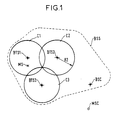
- Figure 1 shows the structure of a cellular radio network, such as a GSM type.
- a mobile noted MS and for example made up by radiotelephone, evolves in a C1 cell constituted by the geographic coverage of a station basic transceiver, rated BTS1.
- Other cells C2, C3 each include a transceiver station basic BTS2, BTS3.
- Each of these stations BTS1 to BTS3 constitutes one of the components GSM network and includes one or more transceivers, each associated with an antenna and processing equipment. Geographic coverage partially overlap.
- BTS1 stations to BTS3 are managed by a station controller base, noted BSC.
- the BSC controller has in particular for function of managing station frequency channels BTS.
- a BSC controller associated with a number BTS is a station system base (BSS).
- BSS station system base
- controllers may also be provided, each driving a number of BTS stations predetermined, and each being connected to a switching center, noted MSC, which is the master structure of a GSM network.
- MSC switching center
- a given MSC can therefore control the operation of several BSS systems constituting a public field mobile network, commonly called PLMN.
- MS mobile sends digital data streams in the form of packets at the station BTS1 also as long as it is in cell C1 and the station BTS1 retransmits these trains to the BSC controller which transmits them to their recipient via the MSC switch.
- the recipient can be constituted by another mobile station or by a fixed station.
- Each data packet constituting by example of speech data, is transmitted in a time interval of duration 577 ⁇ s, eight intervals of successive times constituting a frame.
- Eight stations MS mobiles can therefore communicate on the same radio channel, i.e. with the same carrier frequency, thanks to the multiple access to distribution in the time (AMRT or English TDMA).
- two to four channels are assigned to each station BTS and 16 to 32 radio channels are therefore available at transmission (as for reception) at each level cell.
- One of the problems of the GSM system is the synchronization of the time intervals allocated to a mobile MS with respect to the master clock located at the BTS station. Indeed, it is necessary to take into account the propagation time of radio waves between a mobile MS and its base station BTS since the mobiles and the BTS station on which they depend each have their own internal bit clock. As a time interval lasts 577 ⁇ s, and knowing that a radio wave travels 300 m in 1 ⁇ s (3 ⁇ 10 8 m / s), the time base of the mobile MS must take into account this time offset, of 1 ⁇ s by 300 m of distance separating the mobile MS from its BTS station, so as not to transmit data during the time interval allocated to another mobile MS.
- Figure 2 is a correlative timing diagram of signals transmitted by the station BTS1 and by the mobile MS and shows how the proper time difference is communicated to the mobile.
- the station BTS1 which manages the cell in which the mobile MS is located, transmits regularly, at times referenced T 0 , T 1 , T 2 , T 3 and T 4 , and on a synchronization channel SCH (Synchronization CHannel) belonging a specific common channel called BCCH (Broadcast Common CHannel) intended generally to transmit synchronization information to mobiles, a clock signal H 0 , H 1 , H 2 , H 3 , H 4 .
- This signal is used when the mobile MS must be attached to a cell in the GSM network, for example when it is powered up or, as will be explained below, in the event of a handover.
- the mobile MS connects to the network for the first time after being powered up, it can only receive the clock signal from the moment, noted MS ON , when it is powered up.
- the first clock signal that it receives after the instant MS ON is offset by a time noted ⁇ with respect to its transmission instant T 1 by the base station BTS1.
- the signal H 1 is therefore received by the mobile at the instant T 1 + ⁇ .
- the mobile MS which wishes to connect to the station BTS1 sends to the latter, on a signaling channel, an access message called Random Access and constituted by an Access Burst.
- this message is called Handover Access and noted HA.
- Each Handover Access has a duration shorter than that of a constituent burst a normal signal (called Normal Burst) containing for example speech data, so it doesn't may interfere with signals from another mobile in another time interval.
- the station BTS1 can determine the time TA (for Timing Advance or in French time advance) separating this reception from the transmission of the clock signal H 1 .
- This time TA corresponds to twice the time of transmission of a signal between the mobile MS and the station BTS1, that is to say twice the time 7.
- AGCH Access Grant CHannel
- the station BTS1 then sends, on a signaling channel called AGCH (Access Grant CHannel), a message to the mobile MS to indicate that it must transmit its signals with an advance of TA compared to its clock signal: the mobile can then transmit normal signals without risk of overlapping with those transmitted by other mobiles. As a result, it is ensured that the signals transmitted by the various mobiles on a given transmission channel do indeed arrive successively at the station BTS1.
- AGCH Access Grant CHannel
- a known problem is that of managing the passage of the MS mobile from one cell to another.
- the mobile MS not only receives signals of BTS1, but also of BTS2 and BTS3, and, when the strength of the signals received from BTS1 becomes lower than that of the signals received for example from BTS2, the BSC connects the MS mobile to the BTS2 station which will ensure the continuation of the transmission.
- This typical situation when the MS mobile moves away from BTS1 and approaches BTS2. It is then necessary modify the TA time advance information to that the mobile synchronizes with the BTS2 station of the new cell C2.
- Synchronous handover consists in controlling the clocks of different BTS stations in a system GSM given so that their clock signals are synchronous. So when a mobile goes from one cell to another, there is no need to provide it new time advance information, since this is immediately deducted from the one he used previously. However, this solution assumes, to be generalized, to synchronize all the stations BTS and its implementation is therefore expensive.
- Stage 1 is that during which the mobile MS sends a MEAS message to station BTS1 REP, similar to a request to change cell, containing measurement results that are used by the BSC controller to trigger a handover. These measurement results indicate for example that the mobile receives better signals transmitted periodically by the BTS2 station than those transmitted by the BTS1 station. This message is sent every 0.5s to the station BTS1 by mobile MS.
- the station BTS1 transmits this information (MEAS RES message) to BSC controller who judges if a handover is necessary.
- the decision criteria include quality and strength of received signals. Other types of information are available at MSC or BSC level to decide if a handover should be performed. We assume that this case does arise.
- the BSC controller activates a station channel BTS2 (CHAN ACT message) and this acknowledges the allocation (CHAN ACT ACK message).
- the controller BSC sends a handover order (message HANDOVER CMD) at station BTS1 which retransmits it immediately to the mobile MS transparently.
- the handover procedure at the level of the mobile MS (step 5) which sends HA messages successive (HANDOVER ACCESS) to BTS2 with a zero time advance, i.e. without taking into account remoteness.
- PHYS INFO message containing among others the indication TA.
- step 6 the mobile MS send a SABM connection message to the station BTS2 taking note of the new synchronization.
- the BTS2 station informs the BSC controller (message ESTABLISH INDICATION) and signals to the mobile MS (message UA) that it has been heard.
- step 7 the MS mobile sends a HANDOVER COM-PLT message to the BTS2 station to inform it that the procedure of handover is over and this station retransmits immediately this message to the BSC controller.
- the BSC controller then informs the switching center MSC (HANDOVER PERFORMED message).
- the BSC controller addresses the station BTS1 (RF CHAN REL message) to make available the time interval previously allocated to the MS mobile and it responds to it (RF CHAN REL ACK message).
- the MS mobile communicates with the BTS2 station which allocated it a time interval in a frame carried by a given carrier, thus that TA time advance information.
- the main disadvantage of the asynchronous handover is that sending the time advance information RT on mobile is long and requires around 40 ms, to which must be added approximately 10 ms of calculation TA and Ile mobile cannot continue to transmit data Meanwhile.
- the emission of signals HA is imposed by GSM and requires 5 ms per signal.
- Other delays contribute to delaying the handover and it is frequent that the communication is cut off during more than 100 ms.
- the present invention has in particular for objective of overcoming these drawbacks.
- one of the objectives of the invention is to provide a handover process which can be applied to a cellular radio network where the base stations are not synchronized, for example to an asynchronous network, the least expensive and most common, reducing the time during which communication is actually cut when a handover is made.
- Another object of the invention is to provide a mobile, a station controller and a system exchange of information to reduce the speech interruption time when a handover is realized.
- the method also consists of to be transmitted from the first station to the mobile a cell change order in response to a cell change request made by the mobile, time advance information of predetermined value then being transmitted to the mobile by the first station at the same time as the order of cell change.
- the time advance information is preferably issued by the controller of the first station, received by this first station and retransmitted by this first station to mobile seamlessly.
- the cell change order can be transmitted to the first station by the controller of this first station, the time advance information of predetermined value then being transmitted so transparent to the mobile by the first station in same time as the cell change order.
- This process is advantageously implemented works in a cellular radio network where the stations are asynchronous with each other.
- the time advance information corresponds at the time of transmission of a radio signal between the second station and a mobile located on the radius of maximum size of the second cell.
- the time advance information is equal to: YOUR M + TA m 2 where TA M corresponds to the maximum time advance of the mobiles when they connect to the second station and where TA m corresponds to the minimum time advance of these mobiles.
- This process can be applied to a procedure internal or external handover.
- the cellular radio network can be GSM type.
- the invention also relates to a mobile intended to communicate by distributed multiple access over time with transceiver stations of a cellular radio network, the mobile comprising means for extracting information time advance included in a transmitted message by one of the stations when it passes from a first cell, corresponding to geographic coverage from a first station, to a second cell, corresponding to the geographic coverage of a second station, this message being an order of cell change transmitted to it by the first station.
- the invention also relates to a controller. of transceiver stations in a network of cellular radiotelephony, this controller comprising a table in which time advance information is assigned to each station and when the mobile passes from a first cell, corresponding to the geographic coverage of a first of the stations, to a second cell, corresponding to the coverage of a second station, the controller transmits a cell change order at the first station, this cell change order including affected time advance information at the second station.
- the invention also relates to a system exchange of information between a mobile in particular, at least two transceiver stations and at minus a station controller included in a cellular radio network where exchanges between the mobile and the stations are of the type time division multiple access, mobile comprising means for extracting information time advance of predetermined value included in a message transmitted by one of the stations when it passes from a first cell, corresponding to the geographic coverage of a first of the stations, to a second cell, corresponding to the coverage geographic of a second station.
- This message is advantageously an order cell change issued in response to a cell change request made by the mobile, time advance information of predetermined value being transmitted to the mobile by the first station together with this change order cell.
- the controller used in such a system preferably includes a table in which predetermined time advance information is assigned to each station and when the mobile passes a first cell, corresponding to the coverage geographic of a first of the stations, to a second cell, corresponding to geographic coverage from a second station, the controller transmits a cell change order to the first station, this cell change order including the time advance information assigned to the second station.
- the value of the time advance information which is given to it transmitted corresponds to the distance separating it from the station which it receives best (station BTS2). This value is transmitted to it by the BTS1 station with which the mobile is communicating.
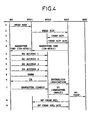
- Figure 4 shows a procedure for handover according to the invention. This handover is internal because the stations are controlled by the same controller.
- steps 1 to 3 are identical to those of FIG. 3, that is to say that the mobile MS sends measurement results to the controller BSC which decides whether a handover procedure should be launched. This controller then activates of a BTS2 channel and this station pays the allocation channel.
- step 4 the BSC controller sent a specific order to station BTS1, which is always in communication with the MS mobile, this order specific being the known CMD HANDOVER to which added TA time advance information of predetermined value.
- This order specific being the known CMD HANDOVER to which added TA time advance information of predetermined value.
- the full information is below noted “HANDOVER CMD (TA-BTS2)” and means that the MS mobile is ordered to connect to the BTS2 station with associated TA advance.
- the station BTS1 transmits this HANDOVER order transparently CMD (TA-BTS2) to mobile MS which is then informed of the time limit with which he will have to advance the transmission of its data.
- step 5 the mobile MS sends at least one HANDOVER ACCESS message to the attention of the station BTS2 (here four successive messages are sent to make the connection more reliable, as in the case of synchronous handover) so that it measures the effective TA which will be communicated to the mobile during the next SACCH message, without interfering with speech transmission.
- the HANDOVER CMD signal previously used in the state of the art has bits which are available for issuing the time advance YOUR.
- Steps 6 to 8 are identical to those previously described in relation to Figure 3.
- the BSC controller has a table (fig. 7) in which time advance information of predetermined value is assigned to each station BTS. So when any mobile tells him that it receives synchronization signals from a second given station, or station in a cell target, with a power higher than those of the first station with which it communicates, the controller BSC is able to provide it with the corresponding TA value at this second station.
- This TA value corresponds for example to the time taken by a radio signal (propagating to the speed of light) emitted by a mobile located at the target cell boundary to reach the target station.
- a radio signal propagating to the speed of light
- Each station indeed knows the maximum radius of its cell (noted R2 in Figure 1 for cell C2) which is a function of the traffic in this cell.
- This TA value can also take into account on-call time available at each BTS station, as it will be described later.
- the present invention applies in particular to the handover procedure carried out when the mobile MS is trying to communicate with the station BTS of a small cell.
- a mobile must be able to correspond with a BTS station when multi-path signals it transmits is less than 16 ⁇ s.
- This value corresponds to the delay maximum of a signal transmitted by the mobile to the station compared to the time when this signal should theoretically reach the BTS station and it is necessary to be able to, at the BTS station, correctly receive this signal, whether or not affected by a delay which may range up to this value.
- Large multipaths occur especially in mountainous areas but are almost nonexistent in urban areas, especially if the ground is flat. Buildings introduce little multi-path and tend to weaken the signal or create interference.
- the station When the multi-path is weak, for example of the order of 6 ⁇ s, the station has therefore a 10 ⁇ s guard time which authorizes the mobile not to transmit its data at the moment exact indicated to him using information from TA time offset. Consequently, we can tolerate a relatively large error on the transmitted TA by the BTS station to the mobile when the multi-path is weak, i.e. in urban areas where cells are reduced in size.
- This error can be easily calculated by knowing the maximum multi-path it is possible to get to each BTS station. Taking as an example a BTS station which measures a multi-path maximum of 6 ⁇ s, there is a guard time of 10 ⁇ s which allows to authorize a distance error.
- This distance error is the difference between the actual distance from the mobile which requires connect to the station and the corresponding distance to the TA assigned to this mobile. Or 10 ⁇ s correspond to a distance of 3000 m and if we assume that the cell candidate has a radius of 1500 m, the time advance assigned to the mobile by its BTS station will correspond to this distance of 1500 m.
- the distance error will be 1500 m (error on TA of 10 ⁇ s) but will be transparent to the BTS station which will receive still correctly the signal from the mobile thanks to on-call time.
- the error authorized on the TA is of (16-Tmt) where Tmt corresponds to the time of maximum multi-path measured by the second station.
- the process handover according to the invention is applicable to any cell whose limit furthest from the station BTS is 1500 m (for a multi-path of 6 ⁇ s), when a handover procedure requested by a mobile located in the immediate vicinity of another station BTS must be able to be honored.
- the method of the invention also applies for large target cells when the multi-path is low.
- TA time advance information corresponds at the maximum radius of the target cell.
- the cells have a radius less than or equal to the error made on TA (multi-path function)
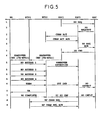
- the present invention applies not only to a handover carried out in the same BSS (handover internal), but also for inter-BSS handovers (external handover) as shown in Figure 5.
- step 1 the BSC1 controller transmits to the MSC switch HO REQ message indicating that the MS mobile wishes to communicate with the BTS2 station.
- step 2 the MSC transmits this ask BSC2 (HO REQUEST message) which proceeds to a channel allocation of BTS2 (message CHAN ACT).
- BTS2 station responds with a message CHAN ACT ACK and BSC2 transmit HO message REQ ACK to the MSC switch.
- step 3 the switch generates a handover order (HO message CMD) for BSC1.
- BSC1 which is the controller of the station with which the mobile MS communicates, sends the message HANDOVER CMD (TA-BTS2) previously defined at MS.
- MS mobile interrupts its communication in progress and generates for example four successive HO ACCESS (step 5).
- the station BTS2 detects the first HO ACCESS 1 message and sends a HO DETECTION message to BSC2 which retransmits to MSC.
- the rest of the procedure (steps 7 and 8) is identical to that of FIG. 4.
- Steps 4 and 5 of the invention correspond to those of a synchronous handover which does not include not the provision of the TA time advance by the BTS addressee. So we see that the handover procedure of the invention makes it possible to carry out an effective handover than a synchronous handover, but in a network GSM transmission stations where the BTS stations are asynchronous. The same performance as a handover synchronous are achieved but the cost is highly reduced since there is no need to synchronize the network.
- Figure 6 shows a simplified structure of a mobile used in the present invention.
- the mobile MS includes transmission-reception means 60, synchronization extraction means 61 and means 62 for extracting time advance information.
- Means of transmission-reception 60 are connected to an antenna 63 and include in particular a modulator and a demodulator, the means 61 ensuring the recoveries of rhythm (hourly ticks issued by the base station) as well that the control of the different functions at the level of mobile.
- Means 62 extract information in advance time of the received signal (HANDOVER CMD) and control the means 60 so that these ensure the emission speech data in the time slot assigned to the mobile.
- Means 61 and 62 are essentially constituted by software.
- FIG. 7 represents a table 70 in which a value time advance information is assigned to each possible target station.
- This table is advantageously included in the target station controller level in a case of external handover and in the station controller common in an internal handover case. The communications however go through the station controller with which the mobile communicates.
- the table has TA-BTS1 preset time advance information TA-BTSn corresponding to n possible target stations connected to this controller. If the target station is for example BTS3, the value of advance information time which will be communicated to the mobile is TA-BTS3.
- the main advantage of the invention is that it does not require calculation of the time advance value since this is predetermined. On the other hand, the emission of this value can be carried out in a existing message and therefore does not take significant time on the communication in progress.
Landscapes
- Engineering & Computer Science (AREA)
- Computer Networks & Wireless Communication (AREA)
- Signal Processing (AREA)
- Mobile Radio Communication Systems (AREA)
- Exchange Systems With Centralized Control (AREA)
- Arrangements For Transmission Of Measured Signals (AREA)
Claims (30)
- Verfahren zum Austausch von Informationen zwischen insbesondere einem Mobilgerät (MS), wenigstens zwei Sender-Empfänger-Stationen (BTS) und wenigstens einem Stationscontroller (BSC), enthalten in einem zellularen Funktelefonnetz, wo die Informationsaustäusche zwischen dem Mobilgerät (MS) und den Stationen (BTS) vom Typ mit Vielfachzugriff im Zeitmultiplex sind, wobei das Verfahren die Übertragung, an das Mobilgerät (MS), einer Laufzeit- bzw. Zeitvorsprunginformation (TA) umfasst, wenn dieses von einer ersten Zelle (C1), die der geographischen Abdeckung einer ersten (BTS1) der Stationen entspricht, in eine zweite Zelle (C2) übergeht, die der geographischen Abdeckung einer zweiten (BTS2) der Stationen entspricht, dadurch gekennzeichnet, dass die Laufzeitinformation (TA) einen vorgegebenen Wert hat, und an das Mobilgerät (MS) über die erste Station (BTS1) übertragen wird.
- Verfahren nach Anspruch 1, dadurch gekennzeichnet, dass es ferner die Übertragung eines Zellenwechselbefehls (HANDOVER CMD) von der ersten Station (BTS1) an das Mobilgerät (MS) umfasst, wobei die Laufzeitinformation (TA) von vorgegebenem Wert an das Mobilgerät (MS) von der ersten Station (BTS1) in dem Zellenwechselbefehl (HANDOVER CMD) übertagen wird.
- Verfahren nach einem der Ansprüche 1 bis 2, dadurch gekennzeichnet, dass die Laufzeitinformation (TA) vom Controller der ersten Station (BTS1) gesendet und von der ersten Station (BTS1) empfangen wird, und dass die erste Station (BTS1 ) die Laufzeitinformation (TA) an das Mobilgerät (MS) transparent weitersendet.
- Verfahren nach Anspruch 2, dadurch gekennzeichnet, dass der Zellenwechselbefehl (HANDOVER CMD) an die erste Station (BTS1) von dem Controller der ersten Station (BTS1) übertragen wird, wobei die Laufzeitinformation (TA) von vorgegebenem Wert transparent an das Mobilgerät (MS) über die erste Station (BTS1) in dem Zellenwechselbefehl (HANDOVER CMD) übertragen wird.
- Verfahren nach einem der Ansprüche 1 bis 4, dadurch gekennzeichnet, dass das Mobilgerät (MS) wenigstens eine Zugriffsmeldung (HANDOVER ACCESS) an die zweite Station (BTS2) sendet, bevor es die Laufzeitinformation (TA) von vorgegebenem Wert verwendet.
- Verfahren nach einem der Ansprüche 1 bis 5, dadurch gekennzeichnet, dass es in einem zellularen Funktelefonnetz eingesetzt wird, wo die Stationen (BTS) untereinander asynchron sind.
- Verfahren nach einem der Ansprüche 1 bis 6, dadurch gekennzeichnet, dass die Laufzeitinformation (TA) der Übertragungszeit eines Funksignals zwischen der zweiten Station (BTS2) und einem Mobilgerät (MS) entspricht, das sich auf dem Radius maximaler Größe der zweiten Zelle (C2) befindet.
- Verfahren nach einem der Ansprüche 1 bis 7, dadurch gekennzeichnet, dass die Laufzeitinformation (TA) gleich
- Verfahren nach einem der Ansprüche 1 bis 8, dadurch gekennzeichnet. dass es für eine interne Handover-Prozedur angewendet wird.
- Verfahren nach einem der Ansprüche 1 bis 8, dadurch gekennzeichnet, dass es für eine externe Handover-Prozedur angewendet wird.
- Verfahren nach einem der Ansprüche 1 bis 10, dadurch gekennzeichnet, dass das zellulare Funktelefonnetz vom GSM-Typ ist.
- Mobilgerät (MS), das vorgesehen ist, um durch Vielfachzugriff im Zeitmultiplex mit Sender-Empfänger-Stationen (BTS) eines zellularen Funktelefonnetzes zu kommunizieren, wobei das Mobilgerät (MS) Mittel (62) zum Extrahieren einer Laufzeit- bzw. Zeitvorsprunginformation (TA) von vorgegebenem Wert umfasst, die in einer Meldung enthalten ist, die von einer ersten Station (BTS1) an es übertragen wird, wenn es von einer ersten Zelle (C1), die der geographischen Abdeckung der ersten Station (BTS1) entspricht, in eine zweite Zelle (C2) übergeht, die der geographischen Abdeckung einer zweiten (BTS2) der Stationen entspricht.
- Mobilgerät nach Anspruch 12, mit Mitteln zum Extrahieren der Laufzeitinformation (TA) von vorgegebenem Wert aus einer Meldung, die an es von der erste Station (BTS1) übertragen wird.
- Mobilgerät nach einem der Ansprüche 12 oder 13, mit Mitteln zum Extrahieren der Laufzeitinformation (TA) von vorgegebenem Wert aus einem Zellenwechselbefehl (HANDOVER CMD), der an es von der ersten Station (BTS1) übertragen wird.
- Mobilgerät nach einem der Ansprüche 12 bis 14, mit Mitteln zum Senden wenigstens einer Zugriffsmeldung (HANDOVER ACCESS) an die zweite Station (BTS2), bevor es die Laufzeitinformation (TA) von vorgegebenem Wert verwendet.
- Controller (BSC) für Sender-Empfänger-Stationen eines zellularen Funktelefonnetzes. dadurch gekennzeichnet, dass er Mittel umfasst, um an eine als erste Station (BTS1) bezeichnete Station eine Meldung zu übertragen, die eine Laufzeit- bzw. Zeitvorsprunginformation (TA) von vorgegebenem Wert enthält, wenn ein Mobilgerät (MS) von einer ersten Zelle (C1), die der geographischen Abdeckung der ersten Station (BTS1) entspricht, in eine zweite Zelle (C2) übergeht, die der geographischen Abdeckung einer zweiten Station (BTS2) entspricht.
- Controller nach Anspruch 16, dadurch gekennzeichnet, dass er Mittel umfasst. um die Laufzeitinformation (TA) von vorgegebenem Wert an die erste Station (BTS1) in einem Zellenwechselbefehl (HANDOVER CMD) zu übertragen.
- Controller nach einem der Ansprüche 16 oder 17, dadurch gekennzeichnet, dass er eine Tabelle (70) aufweist, in der eine vorgegebene Laufzeitinformation (TA) jeder Station (BTS) zugewiesen ist.
- Sender-Empfänger-Station eines zellularen Funktelefonnetzes, dadurch gekennzeichnet, dass sie Mittel umfasst, um von einem Stationscontroller (BSC) eine Meldung zu empfangen, die eine Laufzeit- bzw. Zeitvorsprunginformation (TA) von vorgegebenem Wert enthält, wenn ein Mobilgerät (MS) von einer ersten Zelle (C1), die der geographischen Abdeckung der Station, als erste Station (BTS1) bezeichnet entspricht. in eine zweite Zelle (C2) übergeht, die der geographischen Abdeckung einer zweiten Station (BTS2) entspricht, und um diese Meldung an das Mobilgerät transparent weiterzuübertragen.
- Sender-Empfänger-Station nach Anspruch 19, dadurch gekennzeichnet, dass sie Mittel umfasst, um die Laufzeitinformation (TA) von vorgegebenem Wert in einem Zellenwechselbefehl (HANDOVER CMD) zu empfangen, und die Laufzeitinformation (TA) transparent an das Mobilgerät in dem Zellenwechselbefehl weiterzuübertragen.
- System zum Austausch von Informationen zwischen insbesondere einem Mobilgerät (MS), wenigstens zwei Sender-Empfänger-Stationen (BTS) und wenigstens einem Stationscontroller (BSC), enthalten in einem zellularen Funktelefonnetz, wo die Informationsaustäusche zwischen dem Mobilgerät (MS) und den Stationen (BTS) vom Typ mit Vielfachzugriff im Zeitmultiplex sind, dadurch gekennzeichnet, dass das Mobilgerät (MS) Mittel zum Extrahieren einer Laufzeit- bzw. Zeitvorsprunginformation (TA) von vorgegebenem Wert aufweist, die in einer Meldung enthalten ist, die an es durch eine erste Station (BTS1) übertragen wird, wenn es von einer ersten Zelle (C1), die der geographischen Abdeckung der ersten Station (BTS1) entspricht, in eine zweite Zelle (C2) übergeht, die der geographischen Abdeckung einer zweiten (BTS2) Station entspricht.
- System nach Anspruch 21, dadurch gekennzeichnet, dass das Mobilgerät (MS) Mittel umfasst, um die Laufzeitinformation (TA) von vorgegebenem Wert aus einer Meldung zu extrahieren, die an es durch die erste Station (BTS1) übertragen wird.
- System nach einem der Ansprüche 21 oder 22, dadurch gekennzeichnet, dass das Mobilgerät Mittel umfasst. um die Laufzeitinformation (TA) von vorgegebenem Wert aus einem Zellenwechselbefehl (HANDOVER CMD) zu extrahieren, der an es von der ersten Station (BTS1) übertragen wird.
- System nach einem der Ansprüche 21 bis 23, dadurch gekennzeichnet, dass das Mobilgerät Mittel umfasst, um wenigstens eine Zugriffsmeldung (HANDOVER ACCESS) an die zweite Station (BTS2) zu senden, bevor es die Laufzeitinformation (TA) von vorgegebenem Wert (TA) verwendet.
- System zum Informationsaustausch zwischen insbesondere einem Mobilgerät (MS), wenigstens zwei Sender-Empfänger-Stationen (BTS) und wenigstens einem Stationscontroller (BSC), enthalten in einem zellularen Funktelefonnetz, wo die Informationsaustäusche zwischen dem Mobilgerät (MS) und den Stationen (BTS) vom Typ mit Vielfachzugriff im Zeitmultiplex sind, dadurch gekennzeichnet. dass der Controller (BSC) Mittel umfasst, um eine Meldung, die eine Laufzeit- bzw. Zeitvorsprunginformation (TA) von vorgegebenem Wert enthält, an eine erste (BTS1) Station zu übertragen, wenn das Mobilgerät (MS) von einer ersten Zelle (C1), die der geographischen Abdeckung der ersten Station (BTS1) entspricht, in eine zweite Zelle (C2) übergeht, die der geographischen Abdeckung einer zweiten (BTS2) Station entspricht.
- System nach Anspruch 25, dadurch gekennzeichnet, dass der Controller (BSC) Mittel umfasst, um die Laufzeitinformation (TA) von vorgegebenem Wert an die erste Station (BTS1) in einem Zellenwechselbefehl (HANDOVER CMD) zu übertragen.
- System zum Austausch von Informationen zwischen insbesondere einem Mobilgerät (MS), wenigstens zwei Sender-Empfänger-Stationen (BTS) und wenigstens einem Stationscontroller (BSC), enthalten in einem zellularen Funktelefonsystem, wo die Informationsaustäusche zwischen dem Mobilgerät (MS) und den Stationen (BTS) vom Typ mit Vielfachzugriff im Zeitmultiplex sind, dadurch gekennzeichnet, dass eine Sender-Empfänger-Station, als erste Station (BTS1) bezeichnet. Mittel umfasst, um von einem Stationscontroller (BSC) eine Meldung zu empfangen, die eine Laufzeit- bzw. Zeitvorsprunginformation (TA) von vorgegebenem Wert enthält, wenn das Mobilgerät (MS) von einer ersten Zelle (C1), die der geographischen Abdeckung der ersten Station (BTS1) entspricht, in eine zweite Zelle (C2) übergeht, die der geographischen Abdeckung einer zweiten (BTS2) der Stationen entspricht, und sie transparent an das Mobilgerät weiter zu übertragen.
- System nach Anspruch 27, dadurch gekennzeichnet, dass die erste Station (BTS1) Mittel umfasst, um die Laufzeitinformation (TA) von vorgegebenem Wert in einem Zellenwechselbefehl (HANDOVER CMDI) zu empfangen, und sie transparent an das Mobilgerät in dem Zellenwechselbefehl weiter zu übertragen.
- System nach einem der Ansprüche 21 bis 28, dadurch gekennzeichnet, dass die Laufzeitinformation (TA) der Übertragungszeit eines Funksignales zwischen der zweiten Station (BTS2) und einem Mobilgerät (MS) entspricht, dass sich auf dem Radius von maximaler Größe der zweiten Zelle (C2) befindet.
- System nach einem der Ansprüche 21 bis 28, dadurch gekennzeichnet, dass die Laufzeitinformation (TA) gleich
Priority Applications (1)
| Application Number | Priority Date | Filing Date | Title |
|---|---|---|---|
| EP00106019A EP1032234A1 (de) | 1992-09-15 | 1993-09-14 | Verfahren zu vorzeitigen Übermittlung einer Information an ein sich bewegendes Mobiltelefon in einem zellularen Mobiltelefon, Basisstation sowie entsprechendes Übertragungssystem |
Applications Claiming Priority (2)
| Application Number | Priority Date | Filing Date | Title |
|---|---|---|---|
| FR9210995 | 1992-09-15 | ||
| FR9210995A FR2695776B1 (fr) | 1992-09-15 | 1992-09-15 | Procédé de transmission d'une information d'avance temporelle à un mobile évoluant dans des cellules d'un réseau GSM à BTS asynchrones. |
Related Child Applications (1)
| Application Number | Title | Priority Date | Filing Date |
|---|---|---|---|
| EP00106019A Division EP1032234A1 (de) | 1992-09-15 | 1993-09-14 | Verfahren zu vorzeitigen Übermittlung einer Information an ein sich bewegendes Mobiltelefon in einem zellularen Mobiltelefon, Basisstation sowie entsprechendes Übertragungssystem |
Publications (3)
| Publication Number | Publication Date |
|---|---|
| EP0589753A1 EP0589753A1 (de) | 1994-03-30 |
| EP0589753B1 EP0589753B1 (de) | 2000-06-07 |
| EP0589753B2 true EP0589753B2 (de) | 2003-12-17 |
Family
ID=9433527
Family Applications (2)
| Application Number | Title | Priority Date | Filing Date |
|---|---|---|---|
| EP00106019A Withdrawn EP1032234A1 (de) | 1992-09-15 | 1993-09-14 | Verfahren zu vorzeitigen Übermittlung einer Information an ein sich bewegendes Mobiltelefon in einem zellularen Mobiltelefon, Basisstation sowie entsprechendes Übertragungssystem |
| EP93402233A Expired - Lifetime EP0589753B2 (de) | 1992-09-15 | 1993-09-14 | Verfahren um zusammen mit einen Befehl zum Wechsel der Basisstation in einem zellularen System ein Laufzeitkorrektursignal an eine Mobilstation auszusenden |
Family Applications Before (1)
| Application Number | Title | Priority Date | Filing Date |
|---|---|---|---|
| EP00106019A Withdrawn EP1032234A1 (de) | 1992-09-15 | 1993-09-14 | Verfahren zu vorzeitigen Übermittlung einer Information an ein sich bewegendes Mobiltelefon in einem zellularen Mobiltelefon, Basisstation sowie entsprechendes Übertragungssystem |
Country Status (15)
| Country | Link |
|---|---|
| EP (2) | EP1032234A1 (de) |
| JP (1) | JPH06205460A (de) |
| CN (1) | CN1077389C (de) |
| AT (1) | ATE193795T1 (de) |
| AU (1) | AU4737793A (de) |
| DE (1) | DE69328809T3 (de) |
| DK (1) | DK0589753T3 (de) |
| ES (1) | ES2147193T5 (de) |
| FI (1) | FI108198B (de) |
| FR (1) | FR2695776B1 (de) |
| GR (1) | GR3033788T3 (de) |
| NO (1) | NO307537B1 (de) |
| NZ (1) | NZ248564A (de) |
| PT (1) | PT589753E (de) |
| SG (1) | SG49019A1 (de) |
Families Citing this family (23)
| Publication number | Priority date | Publication date | Assignee | Title |
|---|---|---|---|---|
| FR2724281B1 (fr) * | 1994-09-05 | 1996-12-20 | Alcatel Mobile Comm France | Procede de detection de la derive frequentielle d'un oscillateur de station de base dans un reseau cellulaire de radiocommunications avec des mobiles, et equipement d'infrastructure pour la mise en oeuvre du procede |
| US5642355A (en) * | 1995-09-29 | 1997-06-24 | Telefonaktiebolaget Lm Ericsson | Method of supporting extended range in a TDMA system |
| CA2206624A1 (en) * | 1996-06-10 | 1997-12-10 | Krzysztof Duch | Method of establishing a spatially normalized communication path in a networked communications system |
| FI109513B (fi) | 1997-05-13 | 2002-08-15 | Nokia Corp | Solun kuormitukseen perustuva kanavanvaihto matkaviestinjärjestelmässä |
| GB2328837B (en) * | 1997-08-29 | 2002-12-18 | Motorola Ltd | Synchronisation apparatus and method therefor |
| GB9819482D0 (en) | 1998-09-07 | 1998-10-28 | Nokia Telecommunications Oy | Communication system |
| AU1743600A (en) * | 1998-11-24 | 2000-06-13 | Hughes Electronics Corporation | Transmit timing control messages rate reduction in a communication system by using the rate of change of a timing information |
| FI112841B (fi) * | 1999-06-01 | 2004-01-15 | Nokia Corp | Menetelmä ja järjestely yhteyden muodostamiseksi tukiaseman ja matkaviestimen välille sekä matkaviestin |
| US6675015B1 (en) * | 1999-09-15 | 2004-01-06 | Nokia Corporation | Apparatus, and associated method, for facilitating communication handovers in a bluetooth-public-access radio communication system |
| FR2807589B1 (fr) * | 2000-04-07 | 2003-08-29 | Cit Alcatel | Procede d'ajustement des instants d'emission dans un systeme de radiocommunications mobiles |
| WO2002032183A1 (en) * | 2000-10-13 | 2002-04-18 | Blue2Space Ab | A method and an arrangement for implementing communication between distributed radio modules and a single baseband |
| AU2002305404A1 (en) * | 2001-05-02 | 2002-11-11 | Linkair Communications, Inc. | Pre-synchronization handoff mechanisms for wireless communication networks |
| US6847630B2 (en) * | 2001-11-09 | 2005-01-25 | Qualcomm, Incorporated | Communications in an asynchronous cellular wireless network |
| FR2832897B1 (fr) * | 2001-11-23 | 2004-02-27 | Evolium Sas | Procede pour le changement de cellule dans un systeme cellulaire de radiocommunications mobiles en mode paquet |
| JP2004357015A (ja) * | 2003-05-29 | 2004-12-16 | Matsushita Electric Ind Co Ltd | 通信装置及び同期方法 |
| US7212821B2 (en) | 2003-12-05 | 2007-05-01 | Qualcomm Incorporated | Methods and apparatus for performing handoffs in a multi-carrier wireless communications system |
| US7047009B2 (en) * | 2003-12-05 | 2006-05-16 | Flarion Technologies, Inc. | Base station based methods and apparatus for supporting break before make handoffs in a multi-carrier system |
| TW200729990A (en) * | 2005-12-22 | 2007-08-01 | Interdigital Tech Corp | Method and system for adjusting uplink transmission timing immediately for long term evolution handover |
| KR101283406B1 (ko) | 2006-06-30 | 2013-07-08 | 삼성전자주식회사 | 기지국과의 거리 팩터를 이용하여 셀 셀렉션/리셀렉션을수행하는 이동통신단말기 및 그 방법 |
| US8259688B2 (en) | 2006-09-01 | 2012-09-04 | Wi-Lan Inc. | Pre-allocated random access identifiers |
| KR101506171B1 (ko) * | 2009-01-09 | 2015-03-27 | 삼성전자주식회사 | 이동통신 시스템에서 단말의 랜덤 액세스 제어장치 및 방법 |
| CN103369606B (zh) * | 2012-04-09 | 2018-09-25 | 南京中兴软件有限责任公司 | 用于gsm终端分组交换域切换的方法和系统 |
| US10382238B2 (en) | 2015-07-05 | 2019-08-13 | Ofinno, Llc | Uplink signal transmission in a wireless device |
Citations (1)
| Publication number | Priority date | Publication date | Assignee | Title |
|---|---|---|---|---|
| FR2646302A1 (fr) † | 1989-04-25 | 1990-10-26 | Matra Communication | Procede de pseudo-synchronisation d'un reseau de communication a multiplexage dans le temps et applications |
Family Cites Families (2)
| Publication number | Priority date | Publication date | Assignee | Title |
|---|---|---|---|---|
| US4829554A (en) * | 1985-01-31 | 1989-05-09 | Harris Corporation | Cellular mobile telephone system and method |
| US5355515A (en) * | 1991-06-12 | 1994-10-11 | Telefonaktiebolaget L M Ericsson | Method and apparatus for estimating initial time alignment in a cellular communications network |
-
1992
- 1992-09-15 FR FR9210995A patent/FR2695776B1/fr not_active Expired - Lifetime
-
1993
- 1993-09-02 NZ NZ248564A patent/NZ248564A/en unknown
- 1993-09-13 NO NO933254A patent/NO307537B1/no not_active IP Right Cessation
- 1993-09-13 FI FI934006A patent/FI108198B/fi not_active IP Right Cessation
- 1993-09-14 PT PT93402233T patent/PT589753E/pt unknown
- 1993-09-14 JP JP5228819A patent/JPH06205460A/ja active Pending
- 1993-09-14 DK DK93402233T patent/DK0589753T3/da active
- 1993-09-14 EP EP00106019A patent/EP1032234A1/de not_active Withdrawn
- 1993-09-14 DE DE69328809T patent/DE69328809T3/de not_active Expired - Lifetime
- 1993-09-14 EP EP93402233A patent/EP0589753B2/de not_active Expired - Lifetime
- 1993-09-14 AT AT93402233T patent/ATE193795T1/de not_active IP Right Cessation
- 1993-09-14 SG SG1996005241A patent/SG49019A1/en unknown
- 1993-09-14 ES ES93402233T patent/ES2147193T5/es not_active Expired - Lifetime
- 1993-09-15 AU AU47377/93A patent/AU4737793A/en not_active Abandoned
- 1993-09-15 CN CN93119206A patent/CN1077389C/zh not_active Expired - Lifetime
-
2000
- 2000-06-27 GR GR20000401487T patent/GR3033788T3/el not_active IP Right Cessation
Patent Citations (1)
| Publication number | Priority date | Publication date | Assignee | Title |
|---|---|---|---|---|
| FR2646302A1 (fr) † | 1989-04-25 | 1990-10-26 | Matra Communication | Procede de pseudo-synchronisation d'un reseau de communication a multiplexage dans le temps et applications |
Also Published As
| Publication number | Publication date |
|---|---|
| EP0589753B1 (de) | 2000-06-07 |
| ES2147193T3 (es) | 2000-09-01 |
| CN1092228A (zh) | 1994-09-14 |
| NO933254L (no) | 1994-03-16 |
| NO933254D0 (no) | 1993-09-13 |
| EP0589753A1 (de) | 1994-03-30 |
| FI934006A0 (fi) | 1993-09-13 |
| DK0589753T3 (da) | 2000-10-09 |
| ES2147193T5 (es) | 2004-07-01 |
| JPH06205460A (ja) | 1994-07-22 |
| FI108198B (fi) | 2001-11-30 |
| EP1032234A1 (de) | 2000-08-30 |
| AU4737793A (en) | 1994-03-24 |
| DE69328809T2 (de) | 2001-01-11 |
| CN1077389C (zh) | 2002-01-02 |
| NZ248564A (en) | 1996-05-28 |
| FR2695776A1 (fr) | 1994-03-18 |
| FI934006L (fi) | 1994-03-16 |
| FR2695776B1 (fr) | 1994-10-14 |
| DE69328809T3 (de) | 2004-08-12 |
| HK1007260A1 (en) | 1999-04-09 |
| GR3033788T3 (en) | 2000-10-31 |
| NO307537B1 (no) | 2000-04-17 |
| PT589753E (pt) | 2000-11-30 |
| DE69328809D1 (de) | 2000-07-13 |
| ATE193795T1 (de) | 2000-06-15 |
| SG49019A1 (en) | 1998-05-18 |
Similar Documents
| Publication | Publication Date | Title |
|---|---|---|
| EP0593320B1 (de) | Verfahren zur Übertragung einer Zeitverschiebungsnachricht an ein Fahrzeug das sich in einem zellularen Funkfernsprechnetz bewegt sowie Fahrzeug, Steuerungsvorrichtung, und Nachrichtenaustauschanordnung die dieses Verfahren verwenden | |
| EP0589753B1 (de) | Verfahren um zusammen mit einen Befehl zum Wechsel der Basisstation in einem zellularen System ein Laufzeitkorrektursignal an eine Mobilstation auszusenden | |
| EP0698318B1 (de) | Verfahren zum interzellularen umlegen oder weiterreichen zwischen zwei zellen eines zellenmobilfunknetzwerkes | |
| EP0627828B1 (de) | Verfahren zum Datenaustausch zwischen Basisstation eines Mobilfunkkommunikationsnetzes und Mobilstation dieses Netzes | |
| EP0398773B1 (de) | Pseudo-Synchronisierungsverfahren für ein Zeitmultiplexiertes Übertragungsnetz und Verwendungen | |
| EP0955784B1 (de) | Verfahren zum Weiterreichen zwischen zwei Relays einer Zelle eines digitalen zellularen Funkkommunikationssystems mittels eines gemeinsamen Übergangskanals. | |
| EP0645903B2 (de) | Burstfüllstruktur in einer digitalen TDMA zellularen Funkanordnung, und Basisstation, die diese Struktur aufbaut | |
| FR2766996A1 (fr) | Procede et dispositif permettant de reduire le blocage de signaux dans un systeme de telecommunications par satellites | |
| EP0893931A1 (de) | Verfahren zur Bestimmung der Laufzeitkorrektur in einem zellularen funkkommunikationssystem | |
| FR2725086A1 (fr) | Procede et appareil pour augmenter l'efficacite du spectre | |
| CA2439566C (fr) | Procede de transfert intercellulaire dans un systeme de radiocommunications avec les mobiles | |
| EP0651587A1 (de) | Verfahren zur Weiterreichen in einem TDMA zellularen Funkkommunikationssystem | |
| FR2770731A1 (fr) | Procede de transfert d'une unite eloignee fonde sur les heures de debut des informations de tete | |
| EP1315392A1 (de) | Verfahren für Zellenwechsel in einem Paketvermittelten zellularen Funksystem | |
| EP1449315B1 (de) | Synchronisationsverfahren in einem zellularen kommunikationssystem, übergabeverfahren und endgerät | |
| EP1201046B1 (de) | Kommunikationssystem und verfahren für satelliten mit niedriger umlaufbahn mit weiterreichen einer kommunikation zwischen satelliten | |
| WO1999013671A1 (fr) | Procede de transfert de communication entre deux cellules d'un reseau de radio-communication cellulaire numerique | |
| EP2190131B1 (de) | Verfahren zur antennensteuerung für ein dect-funkübertragungssystem und das entsprechende system | |
| EP1176841A1 (de) | Verfahren für Kommunikation Zwischen einer Basisstation und einer Mobilfunkstation, und eine Mobilfunkstation für die Verwendung dieses Verfahren | |
| HK1007260B (en) | Method of transmitting, together with a handover command in a cellular system, a timing advance signal to a mobile |
Legal Events
| Date | Code | Title | Description |
|---|---|---|---|
| PUAI | Public reference made under article 153(3) epc to a published international application that has entered the european phase |
Free format text: ORIGINAL CODE: 0009012 |
|
| AK | Designated contracting states |
Kind code of ref document: A1 Designated state(s): AT BE CH DE DK ES FR GB GR IE IT LI NL PT SE |
|
| 17P | Request for examination filed |
Effective date: 19940412 |
|
| RAP1 | Party data changed (applicant data changed or rights of an application transferred) |
Owner name: ALCATEL MOBILE COMMUNICATION FRANCE |
|
| 17Q | First examination report despatched |
Effective date: 19991111 |
|
| GRAG | Despatch of communication of intention to grant |
Free format text: ORIGINAL CODE: EPIDOS AGRA |
|
| RIC1 | Information provided on ipc code assigned before grant |
Free format text: 7H 04Q 7/38 A, 7H 04B 7/26 B |
|
| 17Q | First examination report despatched |
Effective date: 19991111 |
|
| GRAG | Despatch of communication of intention to grant |
Free format text: ORIGINAL CODE: EPIDOS AGRA |
|
| GRAH | Despatch of communication of intention to grant a patent |
Free format text: ORIGINAL CODE: EPIDOS IGRA |
|
| GRAH | Despatch of communication of intention to grant a patent |
Free format text: ORIGINAL CODE: EPIDOS IGRA |
|
| GRAA | (expected) grant |
Free format text: ORIGINAL CODE: 0009210 |
|
| RAP1 | Party data changed (applicant data changed or rights of an application transferred) |
Owner name: ALCATEL |
|
| AK | Designated contracting states |
Kind code of ref document: B1 Designated state(s): AT BE CH DE DK ES FR GB GR IE IT LI NL PT SE |
|
| PG25 | Lapsed in a contracting state [announced via postgrant information from national office to epo] |
Ref country code: NL Free format text: LAPSE BECAUSE OF FAILURE TO SUBMIT A TRANSLATION OF THE DESCRIPTION OR TO PAY THE FEE WITHIN THE PRESCRIBED TIME-LIMIT Effective date: 20000607 |
|
| REF | Corresponds to: |
Ref document number: 193795 Country of ref document: AT Date of ref document: 20000615 Kind code of ref document: T |
|
| REG | Reference to a national code |
Ref country code: CH Ref legal event code: EP |
|
| ITF | It: translation for a ep patent filed | ||
| REG | Reference to a national code |
Ref country code: IE Ref legal event code: FG4D Free format text: FRENCH |
|
| REF | Corresponds to: |
Ref document number: 69328809 Country of ref document: DE Date of ref document: 20000713 |
|
| REG | Reference to a national code |
Ref country code: CH Ref legal event code: NV Representative=s name: CABINET ROLAND NITHARDT CONSEILS EN PROPRIETE INDU |
|
| REG | Reference to a national code |
Ref country code: ES Ref legal event code: FG2A Ref document number: 2147193 Country of ref document: ES Kind code of ref document: T3 |
|
| PG25 | Lapsed in a contracting state [announced via postgrant information from national office to epo] |
Ref country code: SE Free format text: LAPSE BECAUSE OF FAILURE TO SUBMIT A TRANSLATION OF THE DESCRIPTION OR TO PAY THE FEE WITHIN THE PRESCRIBED TIME-LIMIT Effective date: 20000907 |
|
| GBT | Gb: translation of ep patent filed (gb section 77(6)(a)/1977) |
Effective date: 20000905 |
|
| REG | Reference to a national code |
Ref country code: DK Ref legal event code: T3 |
|
| REG | Reference to a national code |
Ref country code: PT Ref legal event code: SC4A Free format text: AVAILABILITY OF NATIONAL TRANSLATION Effective date: 20000817 |
|
| PLBQ | Unpublished change to opponent data |
Free format text: ORIGINAL CODE: EPIDOS OPPO |
|
| PLBI | Opposition filed |
Free format text: ORIGINAL CODE: 0009260 |
|
| 26 | Opposition filed |
Opponent name: SAGEM SA Effective date: 20010307 |
|
| PLAV | Examination of admissibility of opposition |
Free format text: ORIGINAL CODE: EPIDOS OPEX |
|
| PLBF | Reply of patent proprietor to notice(s) of opposition |
Free format text: ORIGINAL CODE: EPIDOS OBSO |
|
| NLR1 | Nl: opposition has been filed with the epo |
Opponent name: SAGEM SA |
|
| PGFP | Annual fee paid to national office [announced via postgrant information from national office to epo] |
Ref country code: GR Payment date: 20010830 Year of fee payment: 9 |
|
| PLBF | Reply of patent proprietor to notice(s) of opposition |
Free format text: ORIGINAL CODE: EPIDOS OBSO |
|
| PLBF | Reply of patent proprietor to notice(s) of opposition |
Free format text: ORIGINAL CODE: EPIDOS OBSO |
|
| REG | Reference to a national code |
Ref country code: GB Ref legal event code: IF02 |
|
| PLAW | Interlocutory decision in opposition |
Free format text: ORIGINAL CODE: EPIDOS IDOP |
|
| RIC2 | Information provided on ipc code assigned after grant |
Ipc: 7H 04B 7/26 B Ipc: 7H 04Q 7/38 A |
|
| PG25 | Lapsed in a contracting state [announced via postgrant information from national office to epo] |
Ref country code: GR Free format text: LAPSE BECAUSE OF NON-PAYMENT OF DUE FEES Effective date: 20030404 |
|
| PLAW | Interlocutory decision in opposition |
Free format text: ORIGINAL CODE: EPIDOS IDOP |
|
| PGFP | Annual fee paid to national office [announced via postgrant information from national office to epo] |
Ref country code: NL Payment date: 20030828 Year of fee payment: 11 Ref country code: IE Payment date: 20030828 Year of fee payment: 11 |
|
| PGFP | Annual fee paid to national office [announced via postgrant information from national office to epo] |
Ref country code: AT Payment date: 20030829 Year of fee payment: 11 |
|
| PGFP | Annual fee paid to national office [announced via postgrant information from national office to epo] |
Ref country code: CH Payment date: 20030901 Year of fee payment: 11 |
|
| PGFP | Annual fee paid to national office [announced via postgrant information from national office to epo] |
Ref country code: DK Payment date: 20030903 Year of fee payment: 11 |
|
| PGFP | Annual fee paid to national office [announced via postgrant information from national office to epo] |
Ref country code: PT Payment date: 20030917 Year of fee payment: 11 |
|
| PGFP | Annual fee paid to national office [announced via postgrant information from national office to epo] |
Ref country code: BE Payment date: 20031001 Year of fee payment: 11 |
|
| PUAH | Patent maintained in amended form |
Free format text: ORIGINAL CODE: 0009272 |
|
| STAA | Information on the status of an ep patent application or granted ep patent |
Free format text: STATUS: PATENT MAINTAINED AS AMENDED |
|
| 27A | Patent maintained in amended form |
Effective date: 20031217 |
|
| AK | Designated contracting states |
Kind code of ref document: B2 Designated state(s): AT BE CH DE DK ES FR GB GR IE IT LI NL PT SE |
|
| REG | Reference to a national code |
Ref country code: CH Ref legal event code: AEN Free format text: MAINTIEN DU BREVET DONT L'ETENDUE A ETE MODIFIEE |
|
| GBTA | Gb: translation of amended ep patent filed (gb section 77(6)(b)/1977) |
Effective date: 20040107 |
|
| NLR2 | Nl: decision of opposition |
Effective date: 20031217 |
|
| PG25 | Lapsed in a contracting state [announced via postgrant information from national office to epo] |
Ref country code: DK Free format text: LAPSE BECAUSE OF FAILURE TO SUBMIT A TRANSLATION OF THE DESCRIPTION OR TO PAY THE FEE WITHIN THE PRESCRIBED TIME-LIMIT Effective date: 20040317 |
|
| NLV1 | Nl: lapsed or annulled due to failure to fulfill the requirements of art. 29p and 29m of the patents act | ||
| REG | Reference to a national code |
Ref country code: ES Ref legal event code: DC2A Date of ref document: 20040128 Kind code of ref document: T5 |
|
| PG25 | Lapsed in a contracting state [announced via postgrant information from national office to epo] |
Ref country code: IE Free format text: LAPSE BECAUSE OF NON-PAYMENT OF DUE FEES Effective date: 20040914 Ref country code: AT Free format text: LAPSE BECAUSE OF NON-PAYMENT OF DUE FEES Effective date: 20040914 |
|
| PG25 | Lapsed in a contracting state [announced via postgrant information from national office to epo] |
Ref country code: LI Free format text: LAPSE BECAUSE OF NON-PAYMENT OF DUE FEES Effective date: 20040930 Ref country code: CH Free format text: LAPSE BECAUSE OF NON-PAYMENT OF DUE FEES Effective date: 20040930 Ref country code: BE Free format text: LAPSE BECAUSE OF NON-PAYMENT OF DUE FEES Effective date: 20040930 |
|
| PG25 | Lapsed in a contracting state [announced via postgrant information from national office to epo] |
Ref country code: PT Free format text: LAPSE BECAUSE OF NON-PAYMENT OF DUE FEES Effective date: 20050314 |
|
| BERE | Be: lapsed |
Owner name: *ALCATEL Effective date: 20040930 |
|
| REG | Reference to a national code |
Ref country code: CH Ref legal event code: PL |
|
| REG | Reference to a national code |
Ref country code: PT Ref legal event code: MM4A Free format text: LAPSE DUE TO NON-PAYMENT OF FEES Effective date: 20050314 |
|
| REG | Reference to a national code |
Ref country code: IE Ref legal event code: MM4A |
|
| REG | Reference to a national code |
Ref country code: FR Ref legal event code: CD |
|
| BERE | Be: lapsed |
Owner name: *ALCATEL Effective date: 20040930 |
|
| PLAB | Opposition data, opponent's data or that of the opponent's representative modified |
Free format text: ORIGINAL CODE: 0009299OPPO |
|
| PGFP | Annual fee paid to national office [announced via postgrant information from national office to epo] |
Ref country code: GB Payment date: 20120920 Year of fee payment: 20 |
|
| PGFP | Annual fee paid to national office [announced via postgrant information from national office to epo] |
Ref country code: DE Payment date: 20120921 Year of fee payment: 20 Ref country code: ES Payment date: 20120926 Year of fee payment: 20 |
|
| PGFP | Annual fee paid to national office [announced via postgrant information from national office to epo] |
Ref country code: FR Payment date: 20121010 Year of fee payment: 20 |
|
| PGFP | Annual fee paid to national office [announced via postgrant information from national office to epo] |
Ref country code: IT Payment date: 20120926 Year of fee payment: 20 |
|
| REG | Reference to a national code |
Ref country code: DE Ref legal event code: R071 Ref document number: 69328809 Country of ref document: DE |
|
| REG | Reference to a national code |
Ref country code: DE Ref legal event code: R071 Ref document number: 69328809 Country of ref document: DE |
|
| REG | Reference to a national code |
Ref country code: GB Ref legal event code: PE20 Expiry date: 20130913 |
|
| PG25 | Lapsed in a contracting state [announced via postgrant information from national office to epo] |
Ref country code: DE Free format text: LAPSE BECAUSE OF EXPIRATION OF PROTECTION Effective date: 20130917 |
|
| PG25 | Lapsed in a contracting state [announced via postgrant information from national office to epo] |
Ref country code: GB Free format text: LAPSE BECAUSE OF EXPIRATION OF PROTECTION Effective date: 20130913 |
|
| REG | Reference to a national code |
Ref country code: GB Ref legal event code: 732E Free format text: REGISTERED BETWEEN 20131114 AND 20131120 |
|
| REG | Reference to a national code |
Ref country code: FR Ref legal event code: GC Effective date: 20140717 |
|
| REG | Reference to a national code |
Ref country code: ES Ref legal event code: FD2A Effective date: 20140925 |
|
| PG25 | Lapsed in a contracting state [announced via postgrant information from national office to epo] |
Ref country code: ES Free format text: LAPSE BECAUSE OF EXPIRATION OF PROTECTION Effective date: 20130915 |