EP0589552B1 - Méthode et appareil pour le maintien de la connection des noeuds dans un réseau local sans fil - Google Patents
Méthode et appareil pour le maintien de la connection des noeuds dans un réseau local sans fil Download PDFInfo
- Publication number
- EP0589552B1 EP0589552B1 EP93305323A EP93305323A EP0589552B1 EP 0589552 B1 EP0589552 B1 EP 0589552B1 EP 93305323 A EP93305323 A EP 93305323A EP 93305323 A EP93305323 A EP 93305323A EP 0589552 B1 EP0589552 B1 EP 0589552B1
- Authority
- EP
- European Patent Office
- Prior art keywords
- access point
- node
- handoff
- set forth
- request
- Prior art date
- Legal status (The legal status is an assumption and is not a legal conclusion. Google has not performed a legal analysis and makes no representation as to the accuracy of the status listed.)
- Expired - Lifetime
Links
Images

Classifications
-
- H—ELECTRICITY
- H04—ELECTRIC COMMUNICATION TECHNIQUE
- H04W—WIRELESS COMMUNICATION NETWORKS
- H04W36/00—Hand-off or reselection arrangements
- H04W36/0005—Control or signalling for completing the hand-off
- H04W36/0055—Transmission or use of information for re-establishing the radio link
- H04W36/0064—Transmission or use of information for re-establishing the radio link of control information between different access points
-
- H—ELECTRICITY
- H04—ELECTRIC COMMUNICATION TECHNIQUE
- H04W—WIRELESS COMMUNICATION NETWORKS
- H04W36/00—Hand-off or reselection arrangements
- H04W36/0005—Control or signalling for completing the hand-off
- H04W36/0083—Determination of parameters used for hand-off, e.g. generation or modification of neighbour cell lists
- H04W36/00835—Determination of neighbour cell lists
-
- H—ELECTRICITY
- H04—ELECTRIC COMMUNICATION TECHNIQUE
- H04W—WIRELESS COMMUNICATION NETWORKS
- H04W36/00—Hand-off or reselection arrangements
- H04W36/0005—Control or signalling for completing the hand-off
- H04W36/0083—Determination of parameters used for hand-off, e.g. generation or modification of neighbour cell lists
- H04W36/00837—Determination of triggering parameters for hand-off
-
- H—ELECTRICITY
- H04—ELECTRIC COMMUNICATION TECHNIQUE
- H04W—WIRELESS COMMUNICATION NETWORKS
- H04W36/00—Hand-off or reselection arrangements
- H04W36/08—Reselecting an access point
-
- H—ELECTRICITY
- H04—ELECTRIC COMMUNICATION TECHNIQUE
- H04W—WIRELESS COMMUNICATION NETWORKS
- H04W48/00—Access restriction; Network selection; Access point selection
- H04W48/20—Selecting an access point
-
- H—ELECTRICITY
- H04—ELECTRIC COMMUNICATION TECHNIQUE
- H04W—WIRELESS COMMUNICATION NETWORKS
- H04W84/00—Network topologies
- H04W84/02—Hierarchically pre-organised networks, e.g. paging networks, cellular networks, WLAN [Wireless Local Area Network] or WLL [Wireless Local Loop]
- H04W84/10—Small scale networks; Flat hierarchical networks
- H04W84/12—WLAN [Wireless Local Area Networks]
-
- H—ELECTRICITY
- H04—ELECTRIC COMMUNICATION TECHNIQUE
- H04W—WIRELESS COMMUNICATION NETWORKS
- H04W88/00—Devices specially adapted for wireless communication networks, e.g. terminals, base stations or access point devices
- H04W88/08—Access point devices
-
- H—ELECTRICITY
- H04—ELECTRIC COMMUNICATION TECHNIQUE
- H04W—WIRELESS COMMUNICATION NETWORKS
- H04W92/00—Interfaces specially adapted for wireless communication networks
- H04W92/16—Interfaces between hierarchically similar devices
- H04W92/20—Interfaces between hierarchically similar devices between access points
Definitions
- the present invention relates to the field of wireless local area networks (LANs) and, more particularly, to a method and apparatus for maintaining connectivity of nodes in a wireless LAN.
- LANs wireless local area networks
- the nodes in a wired network communicate with each other by using transmission lines to carry the signals between the nodes.
- the nodes in a wireless network communicate with each other using radio signals or other types of wireless links rather than physical interconnections.
- a wireless local area network is local in the sense that the transceiver nodes are located within a radius of only a few miles of each other. As such, the proximity of the nodes permits the network to operate reliably at low power and at high data rates.
- nodes in a wireless LAN are mobile and transmit information in packets. These nodes, although mobile, may be geographically grouped at any given time into basic service areas (BSAs), otherwise referred to as "cells.”
- BSAs basic service areas
- the nodes within a cell communicate with each other either directly or through a cell coordinator that relays messages among the nodes of the cell.
- the coordinator itself may be implemented either within a regular node or in a node that only performs the coordination function.
- AP access point
- each cell must contain at least one AP.
- the coordinator and the AP are often implemented in the same node. Communication among the APs may take place over the same or different radio channels or via a separate wired network.
- each node is associated with a coordinator in a cell (if one exists), and in a multi-cell system each node is also associated with at least one AP in a cell.
- the association of a node with a particular AP may be based on criteria such as the quality of the link between the node and the AP, and the load carried by the AP.
- the self-organization procedure is considered complete when a node has acquired the parameters that will enable it to effectively communicate within the cell with peer nodes or relay points.
- the network must be reconfigured to maintain connectivity between communicating nodes.
- This reconfiguration or topological change requires the reassociation of a node with another coordinator or another AP or both.
- the process of ceasing communications between a node and a coordinator or between a node and an access point and reassociating the node with another coordinator or access point is known as "handoff".
- a handoff is typically required when a node has moved away from one AP towards another, either within a cell or across cells.
- Network reconfiguration may also arise as a result of a change in the quality of reception between a node and an AP, or because an AP has become overloaded.
- the handoff process is controlled solely by the base stations (corresponding to APs). Because the node does not participate at all (or participates only minimally) in the handoff process, cellular telephone systems require a considerable amount of cooperation among the base stations. This cooperation entails identifying those base stations that are in radio contact with the node as well as determining the most suitable new base stations.
- radio links are asymmetric, and the signal characteristics transmitted are not necessarily the same as those received.
- a base station cannot determine how well a node receives a signal transmitted by the base station based upon how well the base station receives a signal from the node. This phenomenon makes the base station selection even more complex.
- any messages destined for the node must be rerouted to the new base station.
- each node can conduct only one conversation at a time with another node in the network.
- a conversation is routed through a series of switches located between the two nodes at the ends of the communication path.
- the path must be reconfigured, usually requiring that the message pass through a path consisting of a different set of switches.
- a node in a computer network communicates at high data rates and has the capability to carry on multiple conversations simultaneously with other nodes.
- the nodes in a computer network typically communicate via packets, wherein each packet may represent a portion of a conversation, and each such packet can be interleaved in any manner with other packets that contain portions of other conversations. Because of the large number of conversations carried on by a node, reconfiguration of all of the communication paths carrying those conversations is understandably a very complex process.
- computers communicate in this manner renders the technique used by cellular telephone systems inadequate to accomplish the handoff of a computer node because of the inordinate amount of time that would be required to reconfigure the entire communication path to reroute all of these conversations.
- LAN wireless local area network
- the present invention provides a method as in claim 1 and claim 11 and apparatus as in claim 12 for maintaining connectivity in a wireless LAN.
- the LAN is divided into a plurality of cells. Each cell is occupied by at least one access point for communicating information between the cells, and at least one node for communicating via the LAN through the access points.
- the node To initiate a handoff from a first access point with which the node is currently communicating, the node first selects a second access point as a candidate for handoff. The node then communicates an instruction to the first access point instructing the first access point to relay a request to the second access point that the second access point accept a handoff of the node from the first access point. The first access point then relays the request to the second access point. In response, the second access point transmits its operating parameters to the node through the first access point, and the node adjusts its own parameters in response so as to establish communication between the node and the second access point, thereby accomplishing handoff.
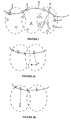
- Figure 1 is an illustration of a wireless LAN.
- Figures 2A and 2B illustrate the handoff of a node in a wireless LAN.
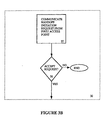
- Figure 3A is a flow chart illustrating the method of the present invention.
- Figure 3B illustrates an alternative implementation of one of the steps of the method of Figure 3A.
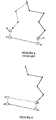
- Figure 4 illustrates the reconfiguration of a prior art cellular network telephone after handoff.
- Figure 5 illustrates the reconfiguration of a wireless LAN after handoff according to the present invention.
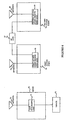
- Figure 6 illustrates an apparatus implementing the present invention.
- the present invention provides a method and apparatus for maintaining connectivity of nodes in a wireless LAN. Unlike prior art systems, in the present invention the node participates in the decision as to whether it will be handed off and, if so, to which access point. Moreover, the invention applies not only to a node maintaining a single conversation, but it also supports multiplexed communication among nodes operating at high data rates in a packet switching environment.
- FIG. 1 illustrates a typical wireless LAN.
- Nodes 10 are organized into geographic regions called “basic service areas” (BSAs) or “cells" 11. Note that a node can belong to more than one cell.
- BSAs basic service areas
- the nodes within a cell communicate with each other either directly or through a coordinator 12, which relays messages among the nodes of the cell.
- a node within one cell cannot communicate directly with a node in another cell. Rather, the message must be relayed through a series of access points (APs) 13, which are linked together either through a separate radio channel or a wired network 14.
- APs access points
- Each cell contains at most one coordinator and at least one access point, and each node within a cell is associated with at most one coordinator and at least one access point.
- the functionality of the coordinator and the access point may be combined in a single device 15.
- more than one node may be associated with a given AP.
- two nodes 10 are associated with AP 13, as indicated by the dotted lines.
- the determination of which AP is to be associated with a particular node is based upon criteria such as the quality of the signal transmitted between the node and the AP, and the load carried by the AP.
- This process of associating a node with an AP is known as "self-organization,” and is well known in the art.
- the invention utilizes the self-organization process described in copending U.S. Patent application Serial No. 07/915,433, filed July 17, 1992, titled “METHOD AND APPARATUS FOR IMPLEMENTING SELF-ORGANIZATION IN A WIRELESS LOCAL AREA NETWORK.”
- Figures 2A and 2B generally illustrate the handoff process in a wireless LAN.
- Figures 2A and 2B show a node 20 traveling from one BSA to another. Initially, node 20 is associated with an access point 21. As node 20 moves away from AP 21 and towards AP 22, the quality of the radio link between AP 21 and node 20 deteriorates. Thus, it is desirable to sever the link between node 20 and AP 21, and reassociate node 20 with an AP that would offer a higher quality of message transmission to node 20.
- node 20 As node 20 approaches the cell occupied by access point 22, AP 22 becomes a potential candidate for reassociation because it is now closer to node 20, and thus is likely to offer a better communications link to the node. Therefore, node 20 is handed off to AP 22, as shown in Figure 2B.
- FIG. 3A is a flow chart illustrating the method of the present invention.
- the node To initiate the process, the node first determines whether handoff is necessary, as shown in step 30. For example, the node may measure the quality of the signal received from the access point with which it is communicating, and determine that handoff is necessary when received signal quality drops below a predetermined threshold. In one embodiment, the determination by the node of whether a handoff is necessary may be made in response to a request from the access point with which the node is currently communicating, as shown in Figure 3B.
- the current access point communicates a request to the node that it initiate the reassociation process in order to be handed off to another access point, step 37.
- the node has the option of accepting or rejecting this request, step 38.
- the determination of whether handoff is necessary may be made solely by the current access point.
- the node When handoff is deemed necessary, acquires parameters from other access points. These parameters may include, for example, information concerning administrative domain and access point load. (The administrative domain represents the particular authority which operates a given access point.) Based upon this information and the quality of the signals received from the other access points, the node determines an AP to select for reassociation, step 31.
- parameters may include, for example, information concerning administrative domain and access point load. (The administrative domain represents the particular authority which operates a given access point.) Based upon this information and the quality of the signals received from the other access points, the node determines an AP to select for reassociation, step 31.
- the selection of the new access point by the node represents a significant advantage over prior art systems in which the node does not actively participate in the reassociation process.
- the access points must determine, through communications among themselves, which AP will be associated with the node for handoff, using such criteria as which AP receives the highest quality signal from the node.
- the node due to the asymmetric nature of radio links, the node itself can best determine the quality of the signal received at the node.
- the present invention achieves a substantial improvement in the quality of the node-access point association.
- the node After selecting a new access point, the node communicates an instruction to the current access point instructing it to relay a message to the selected access point, requesting that the selected access point accept the handoff of the node, step 32. This request is relayed to the selected access point by the current access point, along with a transfer of certain node parameters representing characteristics of the node, step 33. These node parameters may include, for example, an identification of the user occupying the node.
- the selected access point responds automatically to the node's request by transferring its operating parameters to the node through the old access point.
- the operating parameters typically include, but are not limited to, the frequency of the channel on which the selected access point communicates with nodes, spreading codes (in spread spectrum systems) and data encryption information required to access the selected access point.
- the node Based upon these access point parameters, the node adjusts its own parameters and commences communication with the new access point, thereby accomplishing handoff, step 35.
- the selected access point does not automatically transfer its operating parameters in response to the request of the node. Rather, the selected access point determines whether to accept the handoff based upon predetermined criteria, including the node parameters, step 34. For example, the selected access point may examine whether its load is light enough to accommodate communication with another node, whether the quality of the signal received from the node is satisfactory, and whether the identification of the node reveals that it is authorized to communicate with the selected access point. If the selected access point accepts the handoff, then it transmits its operating parameters to the node through the old AP, so that handoff may be accomplished, step 35.
- predetermined criteria including the node parameters
- the selected access point rejects the request of the node, then the node repeats the reassociation process, steps 31, 32, 33, 34, to select a different access point with which to establish communications.
- the present invention avoids this degree of complexity. This is illustrated by Figure 5 . Instead of reconfiguring in advance every point throughout the path, the communication path remains intact except that the message is now forwarded from the old access point 61 to the new access point 62. For example, when a message intended for the node 60 is received at access point 61, AP 61 forwards the message to the new access point 62. In this manner, the invention establishes connectivity of the node with network through the second access point, step 36.
- the old access point 61 may inform other nodes and access points that node 60 is now associated with new access point 62, thus allowing the other access points to adjust their parameters and communicate directly with access point 62.
- This process of informing other nodes and access points may be performed at a time convenient to do so, i.e., when there is a break in communications and need not be done immediately.
- the present invention achieves a significant advantage over conventional systems.
- the conventional method is top slow to accommodate the handoff of a node that may be engaged in multiple conversations with other nodes.
- the manner in which the present invention establishes connectivity between the node through the new access point and the rest of the network is much simpler and faster than the full scale reconfiguration required by conventional means.
- Figure 6 is a simplified block diagram of a node 70 and two access points 74 and 78, which may be used to implement the present invention. Note that although the combination of functions featured in the invention is novel and unique, the construction of an apparatus to implement each of these functions individually is well known to one skilled in the art.
- Each node 70 includes a node processing unit 71 which communicates with a device 72 and is connected to an antenna 73 to permit communication between the node and the network.
- the device 72 represents any apparatus that occupies a node, e.g., a computer, a peripheral device or communications hardware.
- Access point 74 includes an AP processing unit 75, which is linked to antenna 76 to allow AP 74 to communicate with node 70 and other nodes in the network.
- AP link 77 which may be implemented as a radio transceiver or as an interface to a separate wired network of access points.
- Access point 74 is connected to other access points, such as access point 78.
- Access point 78 like access point 74, includes an AP processing unit 79 connected to AP link 77 and an antenna 80.
- the node processing unit 71 through antenna 73, communicates via radio with first access point processing unit 75 through antenna 76.
- the node processing unit 71 may decide that the node 70 should establish communications with another access point if, for example, the quality of signal received by the node processing 71 from the first access point 74 falls below a predetermined signal quality threshold, or if the traffic load being carried by the first access point processing unit 75 exceeds a predetermined load threshold.
- the node processing unit 71 acquires parameters from other access points. For example, second access point processing unit 79, through antenna 80, may transmit information regarding administrative domain and access point load. Based upon this information and the quality of the signals received from the other access points, the node processing unit 71 selects an AP, such as second access point 78, for reassociation.
- an AP such as second access point 78
- the node processing unit 71 After selecting an AP, the node processing unit 71 communicates an instruction to first access point processing unit 75 to relay a request over AP link 77 to second access point processing unit 79, requesting that second access point 78 accept a handoff of the node 70. The request is relayed to second access point processing unit 79 along with a transfer of certain node parameters representing characteristics of the node 70.
- the AP processing unit 79 determines whether to accept the handoff. If so, then through AP link 77, second access point processing unit 79 transmits operating parameters across AP link 77 to first access point processing unit 75 to be relayed to the node 70.
- the node processing unit 71 adjusts the operating parameters of the node so that it can communicate across a radio link through antennas 73 and 80 to the second access point processing unit 79, thereby accomplishing handoff.
- the first access point processing unit 75 forwards messages intended for node 70 across AP link 77 to the second access point processing unit 79 upon receipt of those messages at the first access point 74.
- the first access point processing unit 75 may inform other access points over AP link 77 that node 70 is now associated with second access point 78, thus allowing the other access points to communicate directly with access point 78.
Landscapes
- Engineering & Computer Science (AREA)
- Computer Networks & Wireless Communication (AREA)
- Signal Processing (AREA)
- Computer Security & Cryptography (AREA)
- Mobile Radio Communication Systems (AREA)
- Small-Scale Networks (AREA)
Claims (21)
- Un procédé permettant le maintien de la connectivité d'un noeud dans un réseau local, LAN, sans fil, le réseau comprenant une pluralité de cellules (11), chaque cellule comprenant au moins un point d'accès (13) pour communiquer des informations entre les cellules et au moins un noeud (10) pour communiquer sur le réseau local, par l'intermédiaire desdits points d'accès, le procédé comprenant les étapes consistant à :(a) sélectionner par le noeud un second point d'accès (31) en tant que candidat pour accepter un transfert intercellulaire du noeud à partir d'un premier point d'accès ;(b) communiquer une instruction émanant du noeud pour le premier point d'accès (32), enjoignant au premier point d'accès de retransmettre une requête au second point d'accès, demandant au second point d'accès d'accepter un transfert intercellulaire du noeud à partir du premier point d'accès vers le second point d'accès ;(c) retransmettre ladite requête émanant du premier point d'accès vers le second point d'accès (33) ; et(d) réaliser le transfert intercellulaire (35), de sorte que le noeud communique avec le second point d'accès.
- Le procédé comme énoncé dans la revendication 1, comprenant de plus l'étape permettant de déterminer si ledit second point d'accès acceptera la requête de transfert intercellulaire (34).
- Le procédé comme énoncé dans la revendication 2, comprenant de plus l'étape de répétition desdites étapes permettant de sélectionner, communiquer, retransmettre et déterminer, si ledit second point d'accès décide de ne pas accepter ladite requête de transfert intercellulaire.
- Le procédé comme énoncé dans la revendication 1, dans lequel l'étape de réalisation du transfert intercellulaire (35) comprend les étapes consistant à :(a) transmettre des paramètres de fonctionnement du second point d'accès à partir dudit second point d'accès vers le premier point d'accès ;(b) retransmettre lesdits paramètres de fonctionnement du second point d'accès vers ledit noeud à partir dudit premier point d'accès ; et(c) ajuster les paramètres du noeud en réponse auxdits paramètres du second point d'accès, afin d'établir la communication entre ledit noeud et ledit second point d'accès.
- Le procédé selon la revendication 4, dans lequel un desdits paramètres de fonctionnement du second point d'accès comprend un code d'étalement utilisé par ledit second point d'accès.
- Le procédé selon la revendication 1, comprenant de plus l'étape consistant, une fois ledit transfert intercellulaire réalisé (35), à transférer un message destiné audit noeud et émanant dudit premier point d'accès vers ledit second point d'accès, sur réception dudit message audit premier point d'accès, dans lequel le second point d'accès communique le message audit noeud.
- Le procédé comme énoncé dans la revendication 1, comprenant de plus l'étape consistant, une fois ledit transfert intercellulaire réalisé (35), à signaler aux autres points d'accès que ledit noeud a été transféré audit second point d'accès, de sorte que les communications vers ledit noeud sont réalisées par l'intermédiaire dudit second point d'accès.
- Le procédé comme énoncé dans la revendication 1, avant ladite étape de sélection, comprenant de plus l'étape consistant à ce que le noeud décide s'il doit établir la connectivité avec un autre point d'accès.
- Le procédé comme énoncé dans la revendication 8, comprenant de plus les étapes consistant à :communiquer un message d'amorçage d'un transfert intercellulaire, émanant dudit premier point d'accès vers ledit noeud, demandant audit noeud d'établir la connectivité avec un autre point d'accès ; etce que ledit noeud décide s'il doit établir la connectivité avec un autre point d'accès en réponse à la requête du premier point d'accès.
- Le procédé selon la revendication 1, avant ladite étape de sélection, comprenant de plus l'étape consistant à ce que le premier point d'accès décide si le noeud doit établir la connectivité avec un autre point d'accès.
- Un procédé permettant le maintien de la connectivité d'un noeud dans un réseau local, LAN, sans fil, le LAN comprenant une pluralité de cellules (11), chaque cellule comprenant au moins un point d'accès (13) pour communiquer les informations entre les cellules et au moins un noeud (10) pour communiquer sur le réseau local, par l'intermédiaire desdits points d'accès, ledit procédé comprenant les étapes consistant à :ce que ledit noeud décide s'il doit établir la connectivité avec un autre point d'accès ; etsi ledit noeud décide d'établir la connectivité avec un autre point d'accès :sélectionner par ledit noeud un second point d'accès (31) en tant que candidat pour accepter un transfert intercellulaire dudit noeud à partir d'un premier point d'accès ;communiquer une instruction émanant dudit noeud vers ledit premier point d'accès (32), enjoignant audit premier point d'accès de retransmettre une requête audit second point d'accès, demandant audit second point d'accès d'accepter un transfert intercellulaire dudit noeud à partir dudit premier point d'accès vers ledit second point d'accès ;retransmettre ladite requête émanant dudit premier point d'accès vers ledit second point d'accès (33) ;déterminer si ledit second point d'accès acceptera ledit transfert intercellulaire (34) ;si ledit second point d'accès décide d'accepter ledit transfert intercellulaire :transmettre les paramètres de fonctionnement du second point d'accès à partir dudit second point d'accès vers ledit premier point d'accès, dans lesquels l'un desdits paramètres de fonctionnement comprend un code d'étalement utilisé par ledit second point d'accès ;retransmettre lesdits paramètres de fonctionnement du second point d'accès audit noeud à partir dudit premier point d'accès ;ajuster les paramètres du noeud en fonction desdits paramètres de fonctionnement du second point d'accès, afin d'établir la communication entre ledit noeud et ledit second point d'accès, réalisant ainsi un transfert intercellulaire (36) ; etsi ledit second point d'accès décide de ne pas accepter ledit transfert intercellulaire, répéter lesdites étapes de sélection, communication, retransmission et détermination.
- Un appareil permettant le maintien de la connectivité dans un réseau local, LAN, sans fil, comprenant une pluralité de cellules (11), l'appareil comprenant :chaque noeud comprenant :une pluralité de points d'accès (13) pour communiquer les informations entre les cellules ;un moyen de liaison connecté entre les premier et second points d'accès pour permettre les communications entre lesdits premier et second points d'accès ; etau moins un noeud (10) pour communiquer sur le réseau local par l'intermédiaire desdits points d'accès ;un moyen de sélection pour sélectionner un second point d'accès en tant que candidat pour le transfert intercellulaire dudit noeud à partir d'un premier point d'accès ;un moyen d'instruction pour former et communiquer une instruction audit premier point d'accès enjoignant audit premier point d'accès de retransmettre une requête audit second point d'accès, demandant audit second point d'accès d'accepter un transfert intercellulaire dudit noeud à partir dudit premier point d'accès ; etun moyen de transfert intercellulaire pour transférer ledit noeud vers ledit second point d'accès, de sorte que le noeud communique avec le second point d'accès.
- L'appareil comme énoncé dans la revendication 12, dans lequel ledit second point d'accès comprend un moyen de détermination de point d'accès pour décider si ledit second point d'accès acceptera ledit transfert intercellulaire.
- L'appareil comme énoncé dans la revendication 13, dans lequel, si ledit moyen de détermination de point d'accès permet de décider de rejeter ledit transfert intercellulaire, ledit moyen de sélection est adapté pour sélectionner un autre point d'accès et ledit moyen d'instruction permet de communiquer une instruction audit premier point d'accès, enjoignant au premier point d'accès de retransmettre une requête à l'autre point d'accès, demandant à cet autre point d'accès d'accepter le transfert intercellulaire du noeud.
- L'appareil comme énoncé dans la revendication 12, dans lequel :ledit second point d'accès comprend un moyen pour retransmettre les paramètres de fonctionnement du second point d'accès audit noeud par l'intermédiaire dudit moyen de liaison et dudit premier point d'accès ; etledit moyen de transfert intercellulaire comprend un moyen pour ajuster les paramètres du noeud en fonction desdits paramètres de fonctionnement du second point d'accès, afin d'établir les communications entre ledit noeud et ledit second point d'accès.
- L'appareil comme énoncé dans la revendication 15, dans lequel l'un desdits paramètres de fonctionnement du second point d'accès comprend un code d'étalement utilisé par ledit second point d'accès.
- L'appareil comme énoncé dans la revendication 12, ledit premier point d'accès comprenant de plus un moyen de transfert pour transférer un message destiné audit noeud à partir dudit premier point d'accès vers ledit second point d'accès, sur réception dudit message audit premier point d'accès.
- L'appareil comme énoncé dans la revendication 12, ledit premier point d'accès comprenant de plus un moyen pour signaler à d'autres points d'accès que ledit noeud a été transféré audit second point d'accès, de sorte que les communications vers ledit noeud sont réalisées directement par l'intermédiaire dudit second point d'accès.
- L'appareil comme énoncé dans la revendication 12, dans lequel ledit noeud comprend de plus un moyen de détermination d'amorçage pour déterminer si ledit noeud établira la connectivité avec un autre point d'accès.
- L'appareil comme énoncé dans la revendication 19, dans lequel :ledit premier point d'accès comprend de plus un moyen de requête de transfert intercellulaire pour communiquer un message informant de l'amorçage d'un transfert intercellulaire à partir dudit premier point d'accès vers ledit noeud, demandant audit noeud d'établir la connectivité avec un autre point d'accès, etledit moyen de détermination d'amorçage comprend de plus un moyen pour déterminer si ledit noeud établira la connectivité avec un autre point d'accès en réponse à la requête dudit premier point d'accès.
- L'appareil selon la revendication 19, dans lequel ledit premier point d'accès comprend de plus un moyen pour déterminer si le noeud doit établir la connectivité avec un autre point d'accès.
Applications Claiming Priority (2)
| Application Number | Priority Date | Filing Date | Title |
|---|---|---|---|
| US94173592A | 1992-09-08 | 1992-09-08 | |
| US941735 | 1992-09-08 |
Publications (3)
| Publication Number | Publication Date |
|---|---|
| EP0589552A2 EP0589552A2 (fr) | 1994-03-30 |
| EP0589552A3 EP0589552A3 (en) | 1995-09-27 |
| EP0589552B1 true EP0589552B1 (fr) | 2002-10-23 |
Family
ID=25476988
Family Applications (1)
| Application Number | Title | Priority Date | Filing Date |
|---|---|---|---|
| EP93305323A Expired - Lifetime EP0589552B1 (fr) | 1992-09-08 | 1993-07-07 | Méthode et appareil pour le maintien de la connection des noeuds dans un réseau local sans fil |
Country Status (5)
| Country | Link |
|---|---|
| US (1) | US6360264B1 (fr) |
| EP (1) | EP0589552B1 (fr) |
| JP (1) | JP3412639B2 (fr) |
| KR (1) | KR100289631B1 (fr) |
| DE (1) | DE69332431T2 (fr) |
Cited By (3)
| Publication number | Priority date | Publication date | Assignee | Title |
|---|---|---|---|---|
| US7496363B2 (en) | 2003-12-17 | 2009-02-24 | Motorola, Inc. | Method of changing access point for a mobile node in a wireless access network |
| US9549367B2 (en) | 2007-11-16 | 2017-01-17 | Qualcomm Incorporated | Utilizing broadcast signals to convey restricted association information |
| US9603062B2 (en) | 2007-11-16 | 2017-03-21 | Qualcomm Incorporated | Classifying access points using pilot identifiers |
Families Citing this family (69)
| Publication number | Priority date | Publication date | Assignee | Title |
|---|---|---|---|---|
| US6088591A (en) * | 1996-06-28 | 2000-07-11 | Aironet Wireless Communications, Inc. | Cellular system hand-off protocol |
| FI103162B (fi) | 1996-12-20 | 1999-04-30 | Nokia Mobile Phones Ltd | Verkkorakenne langattoman ATM-järjestelmän osan toteuttamiseen ja mene telmä kytkinten välisen tukiasemanvaihdon suorittamiseksi tällaisessa verkkorakenteessa |
| CA2221948A1 (fr) * | 1996-12-30 | 1998-06-30 | Lucent Technologies Inc. | Systeme et methode de transfert d'appels a mise en memoire tampon des donnees au second point d'acces pour reseau local sans fil |
| US6044271A (en) * | 1997-12-23 | 2000-03-28 | Ericsson Inc. | System and method for handing off a cellular call with system and capability change indication |
| FI106831B (fi) * | 1998-01-14 | 2001-04-12 | Nokia Networks Oy | Pääsyn kontrollointimenetelmä matkaviestinjärjestelmää varten |
| DE19834634C2 (de) | 1998-07-31 | 2002-06-20 | Siemens Ag | Kommunikationsanordnung mit zumindest einer zentralen Kommunikationseinrichtung, an die drahtlose Netzabschlußeinrichtungen für den Anschluß von Kommunikationsendgeräten anschließbar sind |
| US7039674B1 (en) * | 1999-07-14 | 2006-05-02 | Samsung Electronics Co., Ltd | Method of changing program of network node remote from network management system |
| US6671737B1 (en) * | 1999-09-24 | 2003-12-30 | Xerox Corporation | Decentralized network system |
| AU4712901A (en) * | 1999-12-13 | 2001-07-03 | Ericsson Inc. | Re-selection for real time packet data networks |
| EP1139606A1 (fr) * | 2000-03-28 | 2001-10-04 | Lucent Technologies Inc. | Communication sans fil dans un réseau local avec des seuils variables pour les niveaux de signal |
| US6492897B1 (en) | 2000-08-04 | 2002-12-10 | Richard A. Mowery, Jr. | System for coupling wireless signals to and from a power transmission line communication system |
| GB0023425D0 (en) * | 2000-09-25 | 2000-11-08 | Koninkl Philips Electronics Nv | Portable device interaction with beacons |
| US7313628B2 (en) | 2001-06-28 | 2007-12-25 | Nokia, Inc. | Protocol to determine optimal target access routers for seamless IP-level handover |
| US6961774B1 (en) * | 2001-08-02 | 2005-11-01 | Cisco Technology, Inc. | System and method for performing hand-offs between internet protocol (IP) core networks in the wireless domain |
| KR100431471B1 (ko) * | 2001-09-04 | 2004-05-14 | 아이피원(주) | 섹터화된 무선 lan을 이용한 인터넷 서비스 장치와그의 섹터간 핸드오버 및 로밍 방법 |
| EP1292073A1 (fr) * | 2001-09-05 | 2003-03-12 | Z-Com, Inc. | Méthode pour connecter les points d'accès de deux résaux locaux sans fil |
| KR100463067B1 (ko) * | 2001-12-29 | 2004-12-23 | 하나로통신 주식회사 | 무선랜 기반의 액세스망에서 핸드오프 방법 |
| KR20020023918A (ko) * | 2001-12-29 | 2002-03-29 | 박재홍 | 무선랜 기반에서 비콘 메시지를 사용한 고속 핸드오프 방법 |
| KR20030063502A (ko) * | 2002-01-22 | 2003-07-31 | 프로모바일테크 주식회사 | 이동통신단말기의 인터넷 서비스 로밍을 처리하는 무선랜시스템 및 그 방법 |
| KR100424620B1 (ko) * | 2002-03-27 | 2004-03-25 | 삼성전자주식회사 | 무선 근거리 네트워크에서 이동단말의 서브네트워크간이동성을 지원하기 위한 장치 및 방법 |
| US7103359B1 (en) | 2002-05-23 | 2006-09-05 | Nokia Corporation | Method and system for access point roaming |
| US20040014422A1 (en) * | 2002-07-19 | 2004-01-22 | Nokia Corporation | Method and system for handovers using service description data |
| US6990342B2 (en) * | 2002-08-29 | 2006-01-24 | Motorola, Inx. | Method and apparatus for cell reselection within a communications system |
| US20040053624A1 (en) * | 2002-09-17 | 2004-03-18 | Frank Ed H. | Method and system for optimal load balancing in a hybrid wired/wireless network |
| US7752329B1 (en) * | 2002-10-31 | 2010-07-06 | Aol Inc. | Migrating configuration information based on user identity information |
| US7313384B1 (en) | 2002-10-31 | 2007-12-25 | Aol Llc, A Delaware Limited Liability Company | Configuring wireless devices |
| US7283505B1 (en) * | 2002-10-31 | 2007-10-16 | Aol Llc, A Delaware Limited Liability Company | Configuring wireless access points |
| US7792527B2 (en) * | 2002-11-08 | 2010-09-07 | Ntt Docomo, Inc. | Wireless network handoff key |
| KR100448318B1 (ko) * | 2002-11-08 | 2004-09-16 | 삼성전자주식회사 | 무선망에서의 핸드오프방법 |
| US7133386B2 (en) * | 2002-11-18 | 2006-11-07 | Cisco Technology, Inc. | Method and system for service portability across disjoint wireless networks |
| US7079521B2 (en) * | 2002-11-18 | 2006-07-18 | Cisco Technology, Inc. | Method and system for voice calls in a wireless local area network (WLAN) |
| KR100580244B1 (ko) | 2003-01-23 | 2006-05-16 | 삼성전자주식회사 | 무선랜상의 핸드오프 방법 |
| US20040236939A1 (en) * | 2003-02-20 | 2004-11-25 | Docomo Communications Laboratories Usa, Inc. | Wireless network handoff key |
| TWI353753B (en) | 2003-03-27 | 2011-12-01 | Lenovo Singapore Pte Ltd | Access to a wireless local area network |
| US7058030B2 (en) * | 2003-07-17 | 2006-06-06 | Motorola, Inc. | Method for performing a seamless handoff in a communication system |
| TW200511868A (en) * | 2003-07-22 | 2005-03-16 | Pctel Inc | Method and apparatus for automatic configuration of wireless networks |
| ATE435544T1 (de) * | 2003-08-01 | 2009-07-15 | Nxp Bv | Bss schaltmodul für mobilgeräte |
| US7072652B2 (en) * | 2003-12-15 | 2006-07-04 | Intel Corporation | Handoff apparatus, systems, and methods |
| US20050135310A1 (en) * | 2003-12-19 | 2005-06-23 | International Business Machines Corporation | Autonomic client reassociation in a wireless local area network |
| US7836189B2 (en) * | 2004-01-26 | 2010-11-16 | Avaya Inc. | Multiple simultaneous wireless connections in a wireless local area network |
| AU2005219974A1 (en) * | 2004-03-03 | 2005-09-15 | The Trustees Of Columbia University In The City Of New York | Methods and systems for reducing MAC layer handoff latency in wireless networks |
| DE602004001455T2 (de) * | 2004-05-24 | 2006-12-21 | Alcatel | Drahtlose Datenweiterleitung zwischen Zugangspunkten für eine Eisenbahn |
| US7894823B2 (en) | 2004-06-07 | 2011-02-22 | Nokia Inc. | System for enhanced capacity and quality over WLAN |
| US7706326B2 (en) | 2004-09-10 | 2010-04-27 | Interdigital Technology Corporation | Wireless communication methods and components that implement handoff in wireless local area networks |
| CN101390407B (zh) * | 2004-09-10 | 2013-01-23 | 美商内数位科技公司 | 无线区域网络中实施交接的无线通信方法及组件 |
| WO2006044672A2 (fr) * | 2004-10-15 | 2006-04-27 | Meshnetworks, Inc. | Systeme et procede destines a faciliter le transfert inter-frequence de terminaux mobiles dans un reseau de communication sans fil |
| KR100677604B1 (ko) * | 2005-07-27 | 2007-02-02 | 삼성전자주식회사 | Gps 위치정보를 이용한 무선 랜에서의 빠른 핸드오버방법 및 그 방법을 수행하는 모바일 기기, 그리고 gps위치정보를 이용한 서비스 전환 방법 |
| KR100739725B1 (ko) * | 2005-08-29 | 2007-07-13 | 삼성전자주식회사 | 무선 랜의 링크 계층에서 신속하고 효율적으로핸드오버하는 방법 및 장치 |
| US20070064660A1 (en) * | 2005-09-16 | 2007-03-22 | Qi Emily H | Techniques for enhanced transition from access point to access point by a mobile wireless device |
| US20070192489A1 (en) * | 2006-02-14 | 2007-08-16 | Motorola, Inc. | Method and apparatus to facilitate automatic selection of sotware programs to be distributed to network elements |
| FR2898009A1 (fr) * | 2006-02-27 | 2007-08-31 | France Telecom | Procede de communication entre un terminal utilisateur sans fil et un point d'acces d'un reseau sans fil, terminal, point d'acces et programmes d'ordinateur associes |
| US7688793B2 (en) * | 2006-04-05 | 2010-03-30 | Motorola, Inc. | Wireless sensor node group affiliation method and apparatus |
| US7676805B2 (en) * | 2006-04-05 | 2010-03-09 | Motorola, Inc. | Wireless sensor node executable code request facilitation method and apparatus |
| US20110044290A1 (en) * | 2006-04-28 | 2011-02-24 | Panasonic Corporation | Communication terminal apparatus and handover method |
| GB0612438D0 (en) | 2006-06-23 | 2006-08-02 | Siemens Ag | Network selection |
| US8131839B2 (en) * | 2007-08-01 | 2012-03-06 | Motorola Solutions, Inc. | Method and apparatus for resource assignment in a sensor network |
| US20090137228A1 (en) * | 2007-11-16 | 2009-05-28 | Qualcomm Incorporated | Utilizing restriction codes in wireless access point connection attempts |
| US8902867B2 (en) | 2007-11-16 | 2014-12-02 | Qualcomm Incorporated | Favoring access points in wireless communications |
| US8737295B2 (en) | 2007-11-16 | 2014-05-27 | Qualcomm Incorporated | Sector identification using sector parameters signatures |
| EP2220891B1 (fr) * | 2007-11-21 | 2018-11-14 | BlackBerry Limited | Calcul d'un temps d'action pour l'attribution de ressources à une station mobile qui est en cours de transfert intercellulaire d'une station de base source à une station de base cible |
| US8588773B2 (en) | 2008-08-04 | 2013-11-19 | Qualcomm Incorporated | System and method for cell search and selection in a wireless communication system |
| CN102415208A (zh) * | 2009-04-27 | 2012-04-11 | 株式会社Ntt都科摩 | 移动通信系统 |
| US8631368B2 (en) | 2010-03-30 | 2014-01-14 | Qualcomm Incorporated | Method and circuit to generate race condition test data at multiple supply voltages |
| US8660097B2 (en) * | 2010-03-30 | 2014-02-25 | Qualcomm Incorporated | Methods and apparatus for service continuity in a communication network |
| US9148846B2 (en) * | 2011-06-30 | 2015-09-29 | Motorola Solutions, Inc. | Methods for intelligent network selection |
| US9049173B2 (en) | 2013-06-05 | 2015-06-02 | Fortinet, Inc. | Cloud based logging service |
| US20150172988A1 (en) * | 2013-12-18 | 2015-06-18 | Telefonaktiebolaget L M Erisson (Publ) | Reduced wireless communication handover command size during handover execution |
| US10080166B2 (en) * | 2014-04-29 | 2018-09-18 | Hewlett Packard Enterprise Development Lp | Software defined wireless device management |
| US10820266B2 (en) * | 2018-04-13 | 2020-10-27 | Cisco Technology, Inc. | Method and device for dynamic and seamless link selection |
Family Cites Families (22)
| Publication number | Priority date | Publication date | Assignee | Title |
|---|---|---|---|---|
| US4549302A (en) * | 1981-06-15 | 1985-10-22 | Hayes Microcomputer Products, Inc. | Modem with improved escape sequence mechanism to prevent escape in response to random occurrence of escape character in transmitted data |
| FR2584884B1 (fr) * | 1985-07-09 | 1987-10-09 | Trt Telecom Radio Electr | Procede et dispositif de recherche de canal libre pour un systeme de radio mobile |
| DE3607687A1 (de) * | 1986-03-08 | 1987-09-10 | Philips Patentverwaltung | Verfahren und schaltungsanordnung zum weiterschalten einer funkverbindung in eine andere funkzelle eines digitalen funkuebertragungssystems |
| US4718081A (en) * | 1986-11-13 | 1988-01-05 | General Electric Company | Method and apparatus for reducing handoff errors in a cellular radio telephone communications system |
| EP0283683B1 (fr) * | 1987-03-20 | 1994-01-12 | Hitachi, Ltd. | Système de communication sans-fil portable et méthode |
| US4797947A (en) * | 1987-05-01 | 1989-01-10 | Motorola, Inc. | Microcellular communications system using macrodiversity |
| EP0292182B1 (fr) | 1987-05-15 | 1996-07-24 | Securicor Datatrak Limited | Emetteur-récepteur mobile |
| US4958341A (en) | 1988-03-31 | 1990-09-18 | At&T Bell Laboratories | Integrated packetized voice and data switching system |
| DE3889221T2 (de) | 1988-10-20 | 1994-11-17 | Ibm | Kommunikationsnetzwerk. |
| US5042082A (en) * | 1989-06-26 | 1991-08-20 | Telefonaktiebolaget L. M. Ericsson | Mobile assisted handoff |
| US5101501A (en) * | 1989-11-07 | 1992-03-31 | Qualcomm Incorporated | Method and system for providing a soft handoff in communications in a cdma cellular telephone system |
| US5119397A (en) | 1990-04-26 | 1992-06-02 | Telefonaktiebolaget L M Ericsson | Combined analog and digital cellular telephone system having a secondary set of control channels |
| US5179559A (en) * | 1990-07-27 | 1993-01-12 | Motorola, Inc. | Handoff method for a cellular system |
| US5199031A (en) | 1990-08-31 | 1993-03-30 | Telefonaktiebolaget L M Ericsson | Method and system for uniquely identifying control channel time slots |
| CA2052466C (fr) * | 1990-10-02 | 2001-05-08 | Masayuki Sakamoto | Methode de transfert et de diversification d'acheminement pour les communications radio mobiles |
| US5212806A (en) | 1990-10-29 | 1993-05-18 | International Business Machines Corporation | Distributed control methods for management of migrating data stations in a wireless communications network |
| JP2511591B2 (ja) | 1990-10-29 | 1996-06-26 | インターナショナル・ビジネス・マシーンズ・コーポレイション | 無線光通信システムの動作方法および光通信システム |
| US5181200A (en) * | 1990-10-29 | 1993-01-19 | International Business Machines Corporation | Handoff method and apparatus for mobile wireless workstation |
| US5068916A (en) | 1990-10-29 | 1991-11-26 | International Business Machines Corporation | Coordination of wireless medium among a plurality of base stations |
| US5222249A (en) * | 1990-11-08 | 1993-06-22 | Motorola, Inc. | Dynamic rf communication resource access by roving mobile units |
| JP2679442B2 (ja) * | 1991-04-17 | 1997-11-19 | 日本電気株式会社 | ディジタル移動通信方式 |
| US5123029A (en) * | 1991-06-21 | 1992-06-16 | International Business Machines Corporation | Broadcast-initiated bipartite frame multi-access protocol |
-
1993
- 1993-07-07 DE DE69332431T patent/DE69332431T2/de not_active Expired - Fee Related
- 1993-07-07 EP EP93305323A patent/EP0589552B1/fr not_active Expired - Lifetime
- 1993-08-17 JP JP22277993A patent/JP3412639B2/ja not_active Expired - Lifetime
- 1993-09-06 KR KR1019930017792A patent/KR100289631B1/ko not_active Expired - Fee Related
-
1995
- 1995-10-02 US US08/537,408 patent/US6360264B1/en not_active Expired - Lifetime
Cited By (3)
| Publication number | Priority date | Publication date | Assignee | Title |
|---|---|---|---|---|
| US7496363B2 (en) | 2003-12-17 | 2009-02-24 | Motorola, Inc. | Method of changing access point for a mobile node in a wireless access network |
| US9549367B2 (en) | 2007-11-16 | 2017-01-17 | Qualcomm Incorporated | Utilizing broadcast signals to convey restricted association information |
| US9603062B2 (en) | 2007-11-16 | 2017-03-21 | Qualcomm Incorporated | Classifying access points using pilot identifiers |
Also Published As
| Publication number | Publication date |
|---|---|
| EP0589552A2 (fr) | 1994-03-30 |
| EP0589552A3 (en) | 1995-09-27 |
| KR100289631B1 (ko) | 2001-05-02 |
| JP3412639B2 (ja) | 2003-06-03 |
| US6360264B1 (en) | 2002-03-19 |
| DE69332431D1 (de) | 2002-11-28 |
| JPH0723042A (ja) | 1995-01-24 |
| KR940008311A (ko) | 1994-04-29 |
| DE69332431T2 (de) | 2003-06-18 |
Similar Documents
| Publication | Publication Date | Title |
|---|---|---|
| US6360264B1 (en) | Method and apparatus for maintaining connectivity of nodes in a wireless local area network | |
| US5515509A (en) | Method and apparatus for implementing self-organization in a wireless local area network | |
| US7986660B2 (en) | Channel allocation for communication system | |
| EP2157808B1 (fr) | Procédé de gestion adaptative pour réseau de transfert sans fil à station de base et stations relais sans fil | |
| US7515568B2 (en) | Neighborhood wireless protocol with switchable ad hoc and wide area network coverage | |
| EP1071305B1 (fr) | Procédé et dispositif pour un transfert d'appel commandé par une station de base | |
| JP4268634B2 (ja) | ワイヤレス通信システムにおいてtddとfddとの間でのリソース割り当てを統合する方法及びシステム | |
| US5528583A (en) | Method and apparatus for supporting mobile communications in mobile communications networks | |
| JP4581067B2 (ja) | 移動体通信システムで測定報告を伝送する方法 | |
| EP0986929B1 (fr) | Structures cellulaires hierarchiques personnalisees dans un systeme de communication | |
| US6011971A (en) | Handover method and cellular communications system | |
| EP0953264B1 (fr) | Gestion centralisee du reseau radio dans un systeme de communication mobile | |
| GB2322522A (en) | Call set-up method in a radio communication system | |
| CA2346919A1 (fr) | Procede et dispositif permettant d'etablir un systeme de telecommunications mobiles cellulaire ou sans fil | |
| KR20010034721A (ko) | 무선 통신 시스템에서 데이터 신호를 전달하는 방법 | |
| EP3606180B1 (fr) | Procédé de fixation d'une liaison terrestre sans fil, station de base enfant, station de base parent et procédés dans les stations de base parent et enfant | |
| EP1444853B1 (fr) | Optimisation du transfert de donnees dans un systeme radio | |
| EP1698186B1 (fr) | Fourniture d'une connexion sans fil continue au moyen d'une station mobile utilisee comme relais | |
| US8358628B2 (en) | Wireless handoffs based upon activity correlation | |
| MXPA06003302A (es) | Metodo y sistema para integrar asignacion de recursos entre modo duplex de division de tiempo y modo duplex de division de frecuencia en sistemas inalambricos de comunicacion. | |
| KR100994917B1 (ko) | 무선 통신 시스템, 무선 통신 장치, 및 그 모니터링 방법 | |
| EP1106023B1 (fr) | Systeme et procede de communication sans fil, a couches | |
| US20090258639A1 (en) | Method, system and device for providing a robust wireless connection | |
| US6620014B1 (en) | Communicating radio planning information among control nodes in a cellular communication network | |
| NO325602B1 (no) | Fremgangsmate til styring av belastning i et kommunikasjonssystem |
Legal Events
| Date | Code | Title | Description |
|---|---|---|---|
| PUAI | Public reference made under article 153(3) epc to a published international application that has entered the european phase |
Free format text: ORIGINAL CODE: 0009012 |
|
| AK | Designated contracting states |
Kind code of ref document: A2 Designated state(s): DE FR GB NL |
|
| PUAL | Search report despatched |
Free format text: ORIGINAL CODE: 0009013 |
|
| AK | Designated contracting states |
Kind code of ref document: A3 Designated state(s): DE FR GB NL |
|
| 17P | Request for examination filed |
Effective date: 19960312 |
|
| 17Q | First examination report despatched |
Effective date: 20010221 |
|
| GRAG | Despatch of communication of intention to grant |
Free format text: ORIGINAL CODE: EPIDOS AGRA |
|
| RIC1 | Information provided on ipc code assigned before grant |
Free format text: 7H 04L 12/28 A, 7H 04Q 7/20 B |
|
| GRAG | Despatch of communication of intention to grant |
Free format text: ORIGINAL CODE: EPIDOS AGRA |
|
| GRAH | Despatch of communication of intention to grant a patent |
Free format text: ORIGINAL CODE: EPIDOS IGRA |
|
| GRAH | Despatch of communication of intention to grant a patent |
Free format text: ORIGINAL CODE: EPIDOS IGRA |
|
| GRAA | (expected) grant |
Free format text: ORIGINAL CODE: 0009210 |
|
| AK | Designated contracting states |
Kind code of ref document: B1 Designated state(s): DE FR GB NL |
|
| REG | Reference to a national code |
Ref country code: GB Ref legal event code: FG4D |
|
| REF | Corresponds to: |
Ref document number: 69332431 Country of ref document: DE Date of ref document: 20021128 |
|
| ET | Fr: translation filed | ||
| PLBE | No opposition filed within time limit |
Free format text: ORIGINAL CODE: 0009261 |
|
| STAA | Information on the status of an ep patent application or granted ep patent |
Free format text: STATUS: NO OPPOSITION FILED WITHIN TIME LIMIT |
|
| 26N | No opposition filed |
Effective date: 20030724 |
|
| PG25 | Lapsed in a contracting state [announced via postgrant information from national office to epo] |
Ref country code: NL Free format text: LAPSE BECAUSE OF NON-PAYMENT OF DUE FEES Effective date: 20040201 |
|
| NLV4 | Nl: lapsed or anulled due to non-payment of the annual fee |
Effective date: 20040201 |
|
| PGFP | Annual fee paid to national office [announced via postgrant information from national office to epo] |
Ref country code: FR Payment date: 20040708 Year of fee payment: 12 |
|
| PG25 | Lapsed in a contracting state [announced via postgrant information from national office to epo] |
Ref country code: FR Free format text: LAPSE BECAUSE OF NON-PAYMENT OF DUE FEES Effective date: 20060331 |
|
| REG | Reference to a national code |
Ref country code: FR Ref legal event code: ST Effective date: 20060331 |
|
| PGFP | Annual fee paid to national office [announced via postgrant information from national office to epo] |
Ref country code: DE Payment date: 20070705 Year of fee payment: 15 |
|
| PG25 | Lapsed in a contracting state [announced via postgrant information from national office to epo] |
Ref country code: DE Free format text: LAPSE BECAUSE OF NON-PAYMENT OF DUE FEES Effective date: 20090203 |
|
| PGFP | Annual fee paid to national office [announced via postgrant information from national office to epo] |
Ref country code: GB Payment date: 20120704 Year of fee payment: 20 |
|
| REG | Reference to a national code |
Ref country code: GB Ref legal event code: PE20 Expiry date: 20130706 |
|
| PG25 | Lapsed in a contracting state [announced via postgrant information from national office to epo] |
Ref country code: GB Free format text: LAPSE BECAUSE OF EXPIRATION OF PROTECTION Effective date: 20130706 |