EP0578663B1 - Method for the isolation and/or testing of genes and promoters involved in plant-nematode interactions using plants of the genus arabidopsis - Google Patents
Method for the isolation and/or testing of genes and promoters involved in plant-nematode interactions using plants of the genus arabidopsis Download PDFInfo
- Publication number
- EP0578663B1 EP0578663B1 EP92906979A EP92906979A EP0578663B1 EP 0578663 B1 EP0578663 B1 EP 0578663B1 EP 92906979 A EP92906979 A EP 92906979A EP 92906979 A EP92906979 A EP 92906979A EP 0578663 B1 EP0578663 B1 EP 0578663B1
- Authority
- EP
- European Patent Office
- Prior art keywords
- plant
- nematode
- ecotype
- root
- gene
- Prior art date
- Legal status (The legal status is an assumption and is not a legal conclusion. Google has not performed a legal analysis and makes no representation as to the accuracy of the status listed.)
- Expired - Lifetime
Links
Images


Classifications
-
- C—CHEMISTRY; METALLURGY
- C12—BIOCHEMISTRY; BEER; SPIRITS; WINE; VINEGAR; MICROBIOLOGY; ENZYMOLOGY; MUTATION OR GENETIC ENGINEERING
- C12N—MICROORGANISMS OR ENZYMES; COMPOSITIONS THEREOF; PROPAGATING, PRESERVING, OR MAINTAINING MICROORGANISMS; MUTATION OR GENETIC ENGINEERING; CULTURE MEDIA
- C12N15/00—Mutation or genetic engineering; DNA or RNA concerning genetic engineering, vectors, e.g. plasmids, or their isolation, preparation or purification; Use of hosts therefor
- C12N15/09—Recombinant DNA-technology
- C12N15/63—Introduction of foreign genetic material using vectors; Vectors; Use of hosts therefor; Regulation of expression
- C12N15/79—Vectors or expression systems specially adapted for eukaryotic hosts
- C12N15/82—Vectors or expression systems specially adapted for eukaryotic hosts for plant cells, e.g. plant artificial chromosomes (PACs)
- C12N15/8241—Phenotypically and genetically modified plants via recombinant DNA technology
- C12N15/8261—Phenotypically and genetically modified plants via recombinant DNA technology with agronomic (input) traits, e.g. crop yield
- C12N15/8271—Phenotypically and genetically modified plants via recombinant DNA technology with agronomic (input) traits, e.g. crop yield for stress resistance, e.g. heavy metal resistance
- C12N15/8279—Phenotypically and genetically modified plants via recombinant DNA technology with agronomic (input) traits, e.g. crop yield for stress resistance, e.g. heavy metal resistance for biotic stress resistance, pathogen resistance, disease resistance
- C12N15/8285—Phenotypically and genetically modified plants via recombinant DNA technology with agronomic (input) traits, e.g. crop yield for stress resistance, e.g. heavy metal resistance for biotic stress resistance, pathogen resistance, disease resistance for nematode resistance
-
- A—HUMAN NECESSITIES
- A01—AGRICULTURE; FORESTRY; ANIMAL HUSBANDRY; HUNTING; TRAPPING; FISHING
- A01H—NEW PLANTS OR NON-TRANSGENIC PROCESSES FOR OBTAINING THEM; PLANT REPRODUCTION BY TISSUE CULTURE TECHNIQUES
- A01H4/00—Plant reproduction by tissue culture techniques ; Tissue culture techniques therefor
-
- C—CHEMISTRY; METALLURGY
- C12—BIOCHEMISTRY; BEER; SPIRITS; WINE; VINEGAR; MICROBIOLOGY; ENZYMOLOGY; MUTATION OR GENETIC ENGINEERING
- C12N—MICROORGANISMS OR ENZYMES; COMPOSITIONS THEREOF; PROPAGATING, PRESERVING, OR MAINTAINING MICROORGANISMS; MUTATION OR GENETIC ENGINEERING; CULTURE MEDIA
- C12N15/00—Mutation or genetic engineering; DNA or RNA concerning genetic engineering, vectors, e.g. plasmids, or their isolation, preparation or purification; Use of hosts therefor
- C12N15/09—Recombinant DNA-technology
- C12N15/63—Introduction of foreign genetic material using vectors; Vectors; Use of hosts therefor; Regulation of expression
- C12N15/79—Vectors or expression systems specially adapted for eukaryotic hosts
- C12N15/82—Vectors or expression systems specially adapted for eukaryotic hosts for plant cells, e.g. plant artificial chromosomes (PACs)
- C12N15/8216—Methods for controlling, regulating or enhancing expression of transgenes in plant cells
- C12N15/8237—Externally regulated expression systems
- C12N15/8239—Externally regulated expression systems pathogen inducible
-
- Y—GENERAL TAGGING OF NEW TECHNOLOGICAL DEVELOPMENTS; GENERAL TAGGING OF CROSS-SECTIONAL TECHNOLOGIES SPANNING OVER SEVERAL SECTIONS OF THE IPC; TECHNICAL SUBJECTS COVERED BY FORMER USPC CROSS-REFERENCE ART COLLECTIONS [XRACs] AND DIGESTS
- Y02—TECHNOLOGIES OR APPLICATIONS FOR MITIGATION OR ADAPTATION AGAINST CLIMATE CHANGE
- Y02A—TECHNOLOGIES FOR ADAPTATION TO CLIMATE CHANGE
- Y02A40/00—Adaptation technologies in agriculture, forestry, livestock or agroalimentary production
- Y02A40/10—Adaptation technologies in agriculture, forestry, livestock or agroalimentary production in agriculture
- Y02A40/146—Genetically Modified [GMO] plants, e.g. transgenic plants
Definitions
- This invention concerns a method for the culturing of nematodes on plants.
- the method finds specific use in the screening and isolation of nematode resistance genes and feeding-structure-specific genes and promoters.
- the hypersensitive response that is observed in cultivars that are resistant against a particular nematode species and for which the resistance has been mapped to a single dominant locus indicates that gene-for-gene relationships may also function in plant-nematode interactions.
- the presence in soil of a resistance against nematodes in a particular variety persists under monoxenic culture conditions (e.g. Müller, 1978; Paul et al. 1990, Sanft and Wyss, 1990).
- Dominant resistance genes are being mapped in some of these varieties (e.g. potato, Barone et al. , 1990; tomato, Williamson, 1990) but the complexity of the genomes of these crop plants as well as the complexity of the plant-nematode interaction under laboratory conditions has prevented isolation of such genes to the present day.
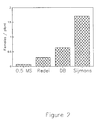
- FIG. 1 Effects of Agar type on infection of Heterodera schachtii on Arabidopsis thaliana .
- the inoculation with nematodes was done 10 d after germination.
- DA Daichin Agar
- BA Difco Bacto agar
- TGA technical grade agar
- GR Gelrite. All agar concentrations were 0.8% (w/v). Gelrite was at 0.25% because of its higher water-retaining capacity.
- Figure 3 Effect of Daichin agar concentration on infection of Arabidopsis thaliana type Landsberg erecta with Heterodera schachtii .
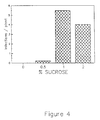
- Figure 4 Effect of sucrose concentration on infection of Arabidopsis thaliana type Landsberg erecta with Heterodera schachtii .
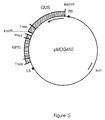
- Binary vector pMOG452. This plasmid is a derivative of pMOG23 and contains a promoterless GUS construct to 'fish' for promoters that can be used for expression of genes in a nematode feeding structure.
- the invention provides a method for infecting a root of a plant of the genus Arabidopsis with a plant parasitic nematode under monoxenic conditions, comprising the steps of:
- Another embodiment of the invention is a method for the screening of an ecotype or a mutant of Arabidopsis for its relative resistance to a plant parasitic nematode, comprising the steps of:
- a further preferred embodiment of the invention is a monoxenic plant root system of a plant of the genus Arabidopsis , comprising a root supporting substance in a suitable nutrient medium which is devoid of nematode inhibiting substances, and a root which is infected with a plant parasitic nematode, whereby said root has at least one nematode feeding structure.
- a more preferred embodiment comprises a monoxenic plant root system, wherein the root supporting substance is a highly purified gelling matrix.
- a still further preferred embodiment is a monoxenic plant root system according to the invention, wherein said highly purified gelling matrix comprises 0.8% Daichin agar solution in a nutrient medium, more preferably, wherein the medium contains 1% sucrose.
- the invention finds specific use in a method for the isolation of a gene involved in resistance to a plant parasitic nematode from an ecotype of Arabidopsis , comprising the steps of:
- Yet another embodiment of the invention comprises a method for the isolation of a promoter that is capable of driving the expression of a gene in a nematode feeding structure from a plant of the genus Arabidopsis , comprising the steps of:
- nematode species (among which the cyst nematodes Heterodera schachtii , H. trifolii, H. cajani , the root-knot nematodes Meloidogyne incognita and M. arenaria and the migratory nematode Pratylenchus penetrans ) can be grown on roots of Arabidonsis thaliana under monoxenic conditions if the medium at least comprises a root supporting substance, which preferably comprises a highly purified gelling matrix (such as a tissue-culture-quality agar) that meets the following requirements;
- a preliminary screen of 74 different ecotypes of Arabidopsis for resistance against H. schachtii resulted in a range of infection rates (between 1.7 and 11.1 females / plant).
- the number of successful infections can be scored easily (without staining or destructive root analysis) under monoxenic conditions. This eliminates the use of soil during screening and further adds to the potential of the monoxenic culture system. Plants that score favourably when assayed for nematode resistance can immediately be brought to flowering conditions for seed harvest.
- Feeding-structures that develop inside the roots can be seen at low magnification and are easy to isolate with a minimum of contaminating cells.
- These feeding-structures are an excellent source for RNA's that are specifically expressed in these structures. This allows the isolation, preferably using molecular enrichment procedures (Dickinson et al. , 1991) of genes corresponding to these RNA's.
- RNA's that are specifically expressed in these structures.
- This allows the isolation, preferably using molecular enrichment procedures (Dickinson et al. , 1991) of genes corresponding to these RNA's.
- Using an (anti)sense approach where the (anti)sense gene is directed against an essential gene for the development or maintenance of feeding structures can be specifically inhibited.
- the promoters that are associated with such essential genes can be used to drive the expression of genes inhibiting normal feeding-structure development or a normal feeding behaviour of the nematode.
- Arabidopsis seeds were soaked 2 min in 70% EtOH and surface sterilized either for 5 min in 0.8% Ca(OCl2), 0.05% Tween 20 or for 8 min in 5% Ca(OCl2), 0.05% Tween 20, depending on the degree of contamination of the seeds. Sterilized seeds were washed at least 3 times in sterile water and transferred to agar containing growth media.
- the optimal medium for monoxenic development of nematodes contained: 2.5 mM K+, 1.27 mM Ca2+, 0.2 mM Mg2+, 2.54 mM NO3 ⁇ , 0.5 mM H2PO4 ⁇ , 0.2 mM SO42 ⁇ , 2 ⁇ M Na+, 1.8 ⁇ M Mn2+, 0.14 ⁇ M Zn2+, 60 nM Cu2+, 24 nM Co2+, 24 ⁇ M Cl ⁇ , 9 ⁇ M BO33 ⁇ , 60 nM MoO42 ⁇ .
- Fe was added as 20 ⁇ M Fe3+NaEDTA. The pH was adjusted to 6.4 with 1 N KOH.
- Egg-suspensions were prepared from crushed fresh cysts or hand-picked egg masses in the case of Meloidogyne .
- the suspension was placed on a sterile Swinnex disc filter holder with a cellulose nitrate membrane (schleicher & Schuell, pore size 5 ⁇ m) or on 20 ⁇ m nylon gauze fixed in a plastic ring.
- the eggs on the filter were exposed to 0.1% HgCl2 for 4 min and washed 4 times with 5 ml sterile water (Grundler, 1989).
- the sterile eggs were scooped off the membrane onto the agar surface.
- Binary vector pMOG23 has been deposited in E. coli K-12 strain DH5 ⁇ , deposited at the Centraal Bureau voor Schimmel-cultures on January 29, 1990 under accession number CBS 102.90).
- Aseptic cysts of H. schachtii containing J2 were either cut open directly in the vicinity of growing root tips, or transferred on a 200 ⁇ m mesh plastic sieve and placed in a sealed glass funnel containing a 3 mM ZnCl2 hatching stimulant solution. After 3 d dark incubation (25 °C), hatched J2 could be harvested, washed 3 times with sterile water and suspended in 0.5% Gelrite for reproducible inoculations. Inoculations were done 7-10 days after sowing, either with crushed cysts or with 25-70 juveniles per plant, depending on the type of experiment. All procedures were performed under aseptic conditions on a minimum of 45 plants.
- the codes are according to the population codes of the AIS-Seed bank listings (Kranz and Kirchheim, 1987).
- the most resistant ecotypes i.e. the lowest mean number of developing females per plant
- the most susceptible ecotypes were Gre-0 and La-0.
- Sah-0 and Lan-0 are the best candidates for mapping resistance genes. We predict that upon further screening of ecotypes more, putatively even absolutely, resistant ecotypes will be found, which will be most preferred for use in mapping NR-genes.
- the different nematode species that were tested for infectivity and completion of life cycles are mentioned in Table 1. Except for G. rostochiensis and H. goettingiana , all other nematode species mentioned in Table 1 did have complete life cycles on Arabidopsis roots using medium according to the invention. The medium was optimized for H. schachtii and need not be the most optimal for the other species tested. Specific ion- and sucrose-concentrations, buffer types and gelling matrices may be optimized further according to specific requirements of a plant-parasitic nematode species. The nematode species mentioned in Table 1 are offered by way of illustration and not by way of limitation.
- a binary vector system was used to transfer gene constructs into Arabidopsis plants.
- the helper plasmid conferring the Agrobacterium tumefaciens virulence functions was derived from the octopine Ti-plasmid pTiB6.
- MOG101 is a Agrobacterium tumefaciens strain carrying a non-oncogenic Ti-plasmid (Koekman et al. 1982, Plasmid 7 , 119-132) from which the entire T-region was deleted and substituted by a bacterial Spectinomycin resistance marker from transposon Tn 1831 (Hooykaas et al. , 1980 Plasmid 4 , 64-75).
- the Ti-plasmid pTiB6 contains two adjacent T-regions, TL (T-left) and TR (T-right).
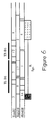
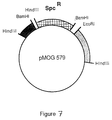
- Plasmid pMOG579 is a pBR322 derivative, which contains the 2 Ti-plasmid fragments that are located to the left and right, outside the T-regions. ( Figure 6). The 2 fragments (shown in dark) are separated in pMOG579 by a 2.5 kb Bam HI - Hin dIII fragment from transposon Tn1831 (Hooykaas et al.
- Plasmid 4 , 64-75 carrying the spectinomycin resistance marker ( Figure 7).
- the plasmid was introduced into Agrobacterium tumefaciens strain LBA1010 [C58-C9 (pTiB6) which is a cured C58 strain in which pTiB6 was introduced (Koekman et al. (1982), supra ), by triparental mating from E.coli , using HB101 pRK2013) as a helper.
- Transconjugants were selected for resistance to Rifampicin (20 mg/l) and spectinomycin (250 mg/l).
- Arabidopsis is transformed with Agrobacterium strain MOG101 containing the binary vector pMOG452. Transformation is carried out using co-cultivation of Arabidopsis thaliana (ecotype C24) root segments as described by Valvekens et al. (1988, Proc. Nat. Acad. Sci. USA 85 , 5536-5540). Transgenic plants are regenerated from shoots that grow on selection medium (50 mg/l kanamycin), rooted and transferred to germination medium or soil.
- selection medium 50 mg/l kanamycin
- Transgenic plant lines (T2 or later generations) are used for infection with plant parasitic nematodes and subsequently used for GUS analysis in the feeding structures.
- the GUS assay in the feeding structures can be carried out substantially the same way as described for plant leaves (Jefferson, 1987, Plant Mol. Biol. Reporter 5 , 387-405).
- the dissected roots containing a feeding structure are assayed while still inside the agar; alternatively the agar can be removed before staining.
- Transgenic plant lines that express GUS activity inside the feeding structure are selected and used for isolation of genomic DNA. Regulatory sequences upstream (5') of the integrated GUS gene is isolated using inverted PCR (Does et al. 1991, Plant Mol. Biol. 17 , 151-153) with the primers 5'-CCAGACTGAATGCCCACAGGC-3' and 5'-GGTGACGCATGTCGCGCAAG-3'. The amplified fragment is used to screen a genomic library of Arabidopsis for the isolation of a genomic clone that contains a suitable promoter for expression of a gene inside the feeding structure.
- the first 200 bp of the GUS gene are used to probe a genomic bank made from the selected plants.
Landscapes
- Health & Medical Sciences (AREA)
- Life Sciences & Earth Sciences (AREA)
- Genetics & Genomics (AREA)
- Engineering & Computer Science (AREA)
- Biotechnology (AREA)
- Wood Science & Technology (AREA)
- Biomedical Technology (AREA)
- Organic Chemistry (AREA)
- General Engineering & Computer Science (AREA)
- Chemical & Material Sciences (AREA)
- Bioinformatics & Cheminformatics (AREA)
- Zoology (AREA)
- Molecular Biology (AREA)
- Cell Biology (AREA)
- Plant Pathology (AREA)
- Microbiology (AREA)
- Physics & Mathematics (AREA)
- Biochemistry (AREA)
- General Health & Medical Sciences (AREA)
- Biophysics (AREA)
- Developmental Biology & Embryology (AREA)
- Communicable Diseases (AREA)
- Botany (AREA)
- Environmental Sciences (AREA)
- Breeding Of Plants And Reproduction By Means Of Culturing (AREA)
- Measuring Or Testing Involving Enzymes Or Micro-Organisms (AREA)
- Investigating Or Analysing Biological Materials (AREA)
- Agricultural Chemicals And Associated Chemicals (AREA)
- Catching Or Destruction (AREA)
Applications Claiming Priority (3)
| Application Number | Priority Date | Filing Date | Title |
|---|---|---|---|
| EP91200698 | 1991-03-26 | ||
| EP91200698 | 1991-03-26 | ||
| PCT/EP1992/000662 WO1992017054A1 (en) | 1991-03-26 | 1992-03-24 | Method for the isolation and/or testing of genes and promoters involved in plant-nematode interactions using plants of the genus arabidopsis |
Publications (2)
| Publication Number | Publication Date |
|---|---|
| EP0578663A1 EP0578663A1 (en) | 1994-01-19 |
| EP0578663B1 true EP0578663B1 (en) | 1996-06-19 |
Family
ID=8207572
Family Applications (1)
| Application Number | Title | Priority Date | Filing Date |
|---|---|---|---|
| EP92906979A Expired - Lifetime EP0578663B1 (en) | 1991-03-26 | 1992-03-24 | Method for the isolation and/or testing of genes and promoters involved in plant-nematode interactions using plants of the genus arabidopsis |
Country Status (9)
| Country | Link |
|---|---|
| US (1) | US5770786A (enExample) |
| EP (1) | EP0578663B1 (enExample) |
| JP (1) | JP3354929B2 (enExample) |
| AT (1) | ATE139413T1 (enExample) |
| DE (1) | DE69211687T2 (enExample) |
| DK (1) | DK0578663T3 (enExample) |
| ES (1) | ES2090618T3 (enExample) |
| GR (1) | GR3020743T3 (enExample) |
| WO (1) | WO1992017054A1 (enExample) |
Families Citing this family (16)
| Publication number | Priority date | Publication date | Assignee | Title |
|---|---|---|---|---|
| US6262344B1 (en) | 1995-06-13 | 2001-07-17 | Syngenta Mogen B.V. | Nematode-inducible plant gene promoter |
| AU707563B2 (en) * | 1996-06-04 | 1999-07-15 | Syngenta Mogen Bv | Nematode-inducible plant gene promoter |
| HUP0000922A3 (en) * | 1997-01-20 | 2002-03-28 | Plant Genetic Systems Nv | Pathogen-induced plant promoters |
| US6271437B1 (en) * | 1998-05-18 | 2001-08-07 | Pioneer Hi-Bred International, Inc. | Soybean gene promoters |
| AU3736900A (en) * | 1999-03-12 | 2000-09-28 | Exelixis Plant Sciences, Inc. | Trait-associated gene identification method |
| US6593513B2 (en) * | 2000-01-28 | 2003-07-15 | North Carolina State University | Endoglucanase gene promoter upregulated by the root-knot nematode |
| US7250553B2 (en) * | 2000-05-01 | 2007-07-31 | Exelixis Plant Sciences, Inc. | System for functional gene discovery in plants |
| WO2001096584A2 (en) * | 2000-06-12 | 2001-12-20 | Akkadix Corporation | Materials and methods for the control of nematodes |
| WO2003033651A2 (en) * | 2001-10-16 | 2003-04-24 | Pioneer Hi-Bred International, Inc. | Compositions and methods for promoting nematode resistance in plants |
| CA2583722C (en) * | 2004-10-13 | 2012-04-24 | University Of Georgia Research Foundation, Inc. | Nematode resistant transgenic plants |
| BRPI0706368A2 (pt) * | 2006-01-06 | 2011-03-22 | Univ Georgia | composição, vetor, método para fornecer resistência ao cisto nematódeo a uma planta, proteìna de fusão, método para inibir atividade biológica, ácido nucléico isolado |
| CN101679995A (zh) | 2007-03-15 | 2010-03-24 | 巴斯福植物科学有限公司 | 线虫几丁质酶基因用于控制植物寄生性线虫的用途 |
| US8455685B2 (en) * | 2009-07-07 | 2013-06-04 | Celanese International Corporation | Acetic anhydride production by way of carbonylation with enhanced reaction and flashing |
| US8168822B2 (en) * | 2009-07-07 | 2012-05-01 | Celanese International Corporation | Acetic acid production by way of carbonylation with enhanced reaction and flashing |
| CN114391431B (zh) * | 2022-01-11 | 2023-05-12 | 广东省科学院生物与医学工程研究所 | 一种寄生植物与寄主植物的共培养方法 |
| CN116171864B (zh) * | 2023-03-27 | 2024-01-19 | 湖南大学 | 一种根结线虫皿上同步侵染拟南芥的方法及应用 |
Family Cites Families (2)
| Publication number | Priority date | Publication date | Assignee | Title |
|---|---|---|---|---|
| EP0191066B1 (en) * | 1984-08-14 | 1993-02-24 | Ecogen-Bio Inc. | Liquid culture of nematodes |
| WO1988010066A1 (en) * | 1987-06-24 | 1988-12-29 | Hardy Research Laboratories, Inc. | Stress tolerant plants and method for their production |
-
1992
- 1992-03-24 AT AT92906979T patent/ATE139413T1/de not_active IP Right Cessation
- 1992-03-24 ES ES92906979T patent/ES2090618T3/es not_active Expired - Lifetime
- 1992-03-24 EP EP92906979A patent/EP0578663B1/en not_active Expired - Lifetime
- 1992-03-24 DK DK92906979.7T patent/DK0578663T3/da active
- 1992-03-24 JP JP50652792A patent/JP3354929B2/ja not_active Expired - Fee Related
- 1992-03-24 US US08/122,456 patent/US5770786A/en not_active Expired - Fee Related
- 1992-03-24 DE DE69211687T patent/DE69211687T2/de not_active Expired - Fee Related
- 1992-03-24 WO PCT/EP1992/000662 patent/WO1992017054A1/en not_active Ceased
-
1996
- 1996-08-07 GR GR960402109T patent/GR3020743T3/el unknown
Non-Patent Citations (2)
| Title |
|---|
| HANDBOOK OF PLANT CELL CULTURE, Vol. 1, techniques for propagation and breeding, 1983, Macmillan Publishing Co., New York; Chapter 32, pages 880-903, R.M. RIEDEL et al.: "Establishment of nematode germplasm banks" & Chapter 33, pages 902-923, H. MEDINA-FILHO & S.D. TANKSLEY: "Breeding for nematode resistance" * |
| THE PLANT JOURNAL, vol. 1(2), 1991, pages 245-254. * |
Also Published As
| Publication number | Publication date |
|---|---|
| JP3354929B2 (ja) | 2002-12-09 |
| ATE139413T1 (de) | 1996-07-15 |
| JPH06508504A (ja) | 1994-09-29 |
| ES2090618T3 (es) | 1996-10-16 |
| DK0578663T3 (da) | 1996-10-21 |
| WO1992017054A1 (en) | 1992-10-15 |
| DE69211687T2 (de) | 1996-11-28 |
| GR3020743T3 (en) | 1996-11-30 |
| DE69211687D1 (de) | 1996-07-25 |
| US5770786A (en) | 1998-06-23 |
| EP0578663A1 (en) | 1994-01-19 |
Similar Documents
| Publication | Publication Date | Title |
|---|---|---|
| Wang et al. | Novel insect resistance in Brassica napus developed by transformation of chitinase and scorpion toxin genes | |
| US5770786A (en) | Method for the isolation and/or testing of genes and promoters involved in plant-nematode interactions using plants of the genus arabidopsis | |
| US7138273B2 (en) | Method of identifying non-host plant disease resistance genes | |
| RU2143000C1 (ru) | Способ получения растения с пониженной восприимчивостью к растительным паразитическим нематодам (варианты), рекомбинантная днк (варианты), трансформирующий растение вектор, штамм agrobacterium и способ снижения ущерба урожаю | |
| AU2464592A (en) | Proteins with insecticidal properties against homopteran insects and their use in plant protection | |
| Li et al. | Coexpression of potato PVYo coat protein and cryV-Bt genes in potato | |
| Lee et al. | Partial resistance to bacterial wilt in transgenic tomato plants expressing antibacterial lactoferrin gene | |
| US6294712B1 (en) | Nematode-resistant gene | |
| Narayanan et al. | Expression of soybean cyst nematode resistance in transgenic hairy roots of soybean | |
| AU747514B2 (en) | A method for the production of transgenic plants using apical shoot tips | |
| US20150203866A1 (en) | Methods and compositions for plant pest control | |
| CN112322651B (zh) | 番茄自噬基因在提高植物根结线虫抗性中的应用 | |
| CN110714023B (zh) | 番茄cti1基因在提高植物根结线虫抗性中的应用 | |
| HUP0000493A2 (hu) | Nematódával indukálható, szabályozó DNS-szekvencia | |
| EP0902089B1 (en) | Method to produce a disease resistant plant including a thionin gene | |
| Niebel et al. | Arabidopsis thaliana as a model host plant to study molecular interactions with root-knot and cyst nematodes | |
| Kapoor | Agrobacterium mediated defensin gene transfer studies in tomato (Solanum lycopersicum L.) | |
| Hale | Identification and Analysis of Nematode-Induced Cis-Regulatory Regions from Solanum sisymbriifolium | |
| US6262338B1 (en) | Resistance genes | |
| Schnabel et al. | Increased resistance of plants to pathogens from multiple higher-order phylogenetic lineages | |
| Ledeganckstraat | Karimi, Isabelle Vercauteren, Marc Van Montagu, and Godelieve Gheysen | |
| Nyaboga et al. | METHODS ARTICLE published: 15 September 2014 | |
| AU1600895A (en) | Tfda gene selectable markers in plants and the use thereof | |
| HK1018908B (en) | Method to produce a disease resistant plant including a thionin gene |
Legal Events
| Date | Code | Title | Description |
|---|---|---|---|
| PUAI | Public reference made under article 153(3) epc to a published international application that has entered the european phase |
Free format text: ORIGINAL CODE: 0009012 |
|
| 17P | Request for examination filed |
Effective date: 19930927 |
|
| AK | Designated contracting states |
Kind code of ref document: A1 Designated state(s): AT BE CH DE DK ES FR GB GR IT LI LU MC NL SE |
|
| 17Q | First examination report despatched |
Effective date: 19950518 |
|
| GRAH | Despatch of communication of intention to grant a patent |
Free format text: ORIGINAL CODE: EPIDOS IGRA |
|
| GRAA | (expected) grant |
Free format text: ORIGINAL CODE: 0009210 |
|
| AK | Designated contracting states |
Kind code of ref document: B1 Designated state(s): AT BE CH DE DK ES FR GB GR IT LI LU MC NL SE |
|
| REF | Corresponds to: |
Ref document number: 139413 Country of ref document: AT Date of ref document: 19960715 Kind code of ref document: T |
|
| ITF | It: translation for a ep patent filed | ||
| REG | Reference to a national code |
Ref country code: CH Ref legal event code: NV Representative=s name: A. BRAUN, BRAUN, HERITIER, ESCHMANN AG PATENTANWAE |
|
| REF | Corresponds to: |
Ref document number: 69211687 Country of ref document: DE Date of ref document: 19960725 |
|
| GRAH | Despatch of communication of intention to grant a patent |
Free format text: ORIGINAL CODE: EPIDOS IGRA |
|
| ET | Fr: translation filed | ||
| RIN2 | Information on inventor provided after grant (corrected) |
Free format text: SIJMONS, PETER, CHRISTIAAN * BURROWS, PAUL, DR. * GRUNDLER, FLORIAN, DR. |
|
| REG | Reference to a national code |
Ref country code: ES Ref legal event code: FG2A Ref document number: 2090618 Country of ref document: ES Kind code of ref document: T3 |
|
| REG | Reference to a national code |
Ref country code: DK Ref legal event code: T3 |
|
| REG | Reference to a national code |
Ref country code: GR Ref legal event code: FG4A Free format text: 3020743 |
|
| REG | Reference to a national code |
Ref country code: ES Ref legal event code: FG2A Ref document number: 2090618 Country of ref document: ES Kind code of ref document: T3 |
|
| NLV1 | Nl: lapsed or annulled due to failure to fulfill the requirements of art. 29p and 29m of the patents act | ||
| NLXE | Nl: other communications concerning ep-patents (part 3 heading xe) |
Free format text: A REQUEST FOR RESTORATION TO THE PRIOR STATE HAS BEEN FILED ON 961119 |
|
| PLBE | No opposition filed within time limit |
Free format text: ORIGINAL CODE: 0009261 |
|
| NLXE | Nl: other communications concerning ep-patents (part 3 heading xe) |
Free format text: THE REQUEST FOR RESTORATION TO THE PRIOR STATE AS PROVIDED FOR IN ART.23 OF THE PATENTS ACT 1995(SEE PUBLICATION IN HEADING XE OF THE PATENT BULLETIN OF 030297/02)HAS BEEN GRANTED;THE RESTORATION OF THE PATENT HAS BEEN ENTERED IN THE PATENT REGISTER |
|
| 26N | No opposition filed | ||
| PG25 | Lapsed in a contracting state [announced via postgrant information from national office to epo] |
Ref country code: MC Effective date: 19970930 |
|
| REG | Reference to a national code |
Ref country code: CH Ref legal event code: PFA Free format text: MOGEN INTERNATIONAL N.V. TRANSFER- SYNGENTA MOGEN B.V. |
|
| BECN | Be: change of holder's name |
Effective date: 20011108 |
|
| REG | Reference to a national code |
Ref country code: GB Ref legal event code: IF02 |
|
| NLS | Nl: assignments of ep-patents |
Owner name: ZENECA MOGEN B.V. |
|
| NLT1 | Nl: modifications of names registered in virtue of documents presented to the patent office pursuant to art. 16 a, paragraph 1 |
Owner name: SYNGENTA MOGEN B.V. |
|
| PGFP | Annual fee paid to national office [announced via postgrant information from national office to epo] |
Ref country code: FR Payment date: 20020304 Year of fee payment: 11 |
|
| PGFP | Annual fee paid to national office [announced via postgrant information from national office to epo] |
Ref country code: SE Payment date: 20020305 Year of fee payment: 11 Ref country code: NL Payment date: 20020305 Year of fee payment: 11 Ref country code: AT Payment date: 20020305 Year of fee payment: 11 |
|
| PGFP | Annual fee paid to national office [announced via postgrant information from national office to epo] |
Ref country code: DK Payment date: 20020306 Year of fee payment: 11 Ref country code: CH Payment date: 20020306 Year of fee payment: 11 |
|
| PGFP | Annual fee paid to national office [announced via postgrant information from national office to epo] |
Ref country code: ES Payment date: 20020315 Year of fee payment: 11 |
|
| PGFP | Annual fee paid to national office [announced via postgrant information from national office to epo] |
Ref country code: LU Payment date: 20020320 Year of fee payment: 11 Ref country code: GB Payment date: 20020320 Year of fee payment: 11 Ref country code: DE Payment date: 20020320 Year of fee payment: 11 |
|
| PGFP | Annual fee paid to national office [announced via postgrant information from national office to epo] |
Ref country code: BE Payment date: 20020327 Year of fee payment: 11 |
|
| PGFP | Annual fee paid to national office [announced via postgrant information from national office to epo] |
Ref country code: GR Payment date: 20020329 Year of fee payment: 11 |
|
| REG | Reference to a national code |
Ref country code: FR Ref legal event code: CJ Ref country code: FR Ref legal event code: CD |
|
| REG | Reference to a national code |
Ref country code: ES Ref legal event code: PC2A |
|
| PG25 | Lapsed in a contracting state [announced via postgrant information from national office to epo] |
Ref country code: LU Free format text: LAPSE BECAUSE OF NON-PAYMENT OF DUE FEES Effective date: 20030324 Ref country code: GB Free format text: LAPSE BECAUSE OF NON-PAYMENT OF DUE FEES Effective date: 20030324 Ref country code: AT Free format text: LAPSE BECAUSE OF NON-PAYMENT OF DUE FEES Effective date: 20030324 |
|
| PG25 | Lapsed in a contracting state [announced via postgrant information from national office to epo] |
Ref country code: SE Free format text: LAPSE BECAUSE OF NON-PAYMENT OF DUE FEES Effective date: 20030325 Ref country code: ES Free format text: LAPSE BECAUSE OF NON-PAYMENT OF DUE FEES Effective date: 20030325 |
|
| PG25 | Lapsed in a contracting state [announced via postgrant information from national office to epo] |
Ref country code: LI Free format text: LAPSE BECAUSE OF NON-PAYMENT OF DUE FEES Effective date: 20030331 Ref country code: DK Free format text: LAPSE BECAUSE OF NON-PAYMENT OF DUE FEES Effective date: 20030331 Ref country code: CH Free format text: LAPSE BECAUSE OF NON-PAYMENT OF DUE FEES Effective date: 20030331 Ref country code: BE Free format text: LAPSE BECAUSE OF NON-PAYMENT OF DUE FEES Effective date: 20030331 |
|
| BERE | Be: lapsed |
Owner name: *SYNGENTA MOGEN B.V. Effective date: 20030331 |
|
| PG25 | Lapsed in a contracting state [announced via postgrant information from national office to epo] |
Ref country code: NL Free format text: LAPSE BECAUSE OF NON-PAYMENT OF DUE FEES Effective date: 20031001 Ref country code: DE Free format text: LAPSE BECAUSE OF NON-PAYMENT OF DUE FEES Effective date: 20031001 |
|
| PG25 | Lapsed in a contracting state [announced via postgrant information from national office to epo] |
Ref country code: GR Free format text: LAPSE BECAUSE OF NON-PAYMENT OF DUE FEES Effective date: 20031002 |
|
| EUG | Se: european patent has lapsed | ||
| GBPC | Gb: european patent ceased through non-payment of renewal fee |
Effective date: 20030324 |
|
| REG | Reference to a national code |
Ref country code: CH Ref legal event code: PL |
|
| PG25 | Lapsed in a contracting state [announced via postgrant information from national office to epo] |
Ref country code: FR Free format text: LAPSE BECAUSE OF NON-PAYMENT OF DUE FEES Effective date: 20031127 |
|
| NLV4 | Nl: lapsed or anulled due to non-payment of the annual fee |
Effective date: 20031001 |
|
| REG | Reference to a national code |
Ref country code: FR Ref legal event code: ST |
|
| REG | Reference to a national code |
Ref country code: ES Ref legal event code: FD2A Effective date: 20030325 |
|
| PG25 | Lapsed in a contracting state [announced via postgrant information from national office to epo] |
Ref country code: IT Free format text: LAPSE BECAUSE OF NON-PAYMENT OF DUE FEES;WARNING: LAPSES OF ITALIAN PATENTS WITH EFFECTIVE DATE BEFORE 2007 MAY HAVE OCCURRED AT ANY TIME BEFORE 2007. THE CORRECT EFFECTIVE DATE MAY BE DIFFERENT FROM THE ONE RECORDED. Effective date: 20050324 |