EP0577377B1 - Bildverarbeitungsvorrichtung und -verfahren - Google Patents
Bildverarbeitungsvorrichtung und -verfahren Download PDFInfo
- Publication number
- EP0577377B1 EP0577377B1 EP93305051A EP93305051A EP0577377B1 EP 0577377 B1 EP0577377 B1 EP 0577377B1 EP 93305051 A EP93305051 A EP 93305051A EP 93305051 A EP93305051 A EP 93305051A EP 0577377 B1 EP0577377 B1 EP 0577377B1
- Authority
- EP
- European Patent Office
- Prior art keywords
- compression
- moving
- image processing
- picture
- differences
- Prior art date
- Legal status (The legal status is an assumption and is not a legal conclusion. Google has not performed a legal analysis and makes no representation as to the accuracy of the status listed.)
- Expired - Lifetime
Links
- 238000000034 method Methods 0.000 title claims description 96
- 238000012545 processing Methods 0.000 title claims description 46
- 230000006835 compression Effects 0.000 claims description 92
- 238000007906 compression Methods 0.000 claims description 92
- 238000003672 processing method Methods 0.000 claims 8
- 238000012546 transfer Methods 0.000 description 9
- 238000010586 diagram Methods 0.000 description 4
- 238000010276 construction Methods 0.000 description 3
- 230000005540 biological transmission Effects 0.000 description 1
- 238000007796 conventional method Methods 0.000 description 1
- 238000012544 monitoring process Methods 0.000 description 1
Images


Classifications
-
- H—ELECTRICITY
- H04—ELECTRIC COMMUNICATION TECHNIQUE
- H04N—PICTORIAL COMMUNICATION, e.g. TELEVISION
- H04N7/00—Television systems
- H04N7/24—Systems for the transmission of television signals using pulse code modulation
- H04N7/52—Systems for transmission of a pulse code modulated video signal with one or more other pulse code modulated signals, e.g. an audio signal or a synchronizing signal
- H04N7/54—Systems for transmission of a pulse code modulated video signal with one or more other pulse code modulated signals, e.g. an audio signal or a synchronizing signal the signals being synchronous
-
- H—ELECTRICITY
- H04—ELECTRIC COMMUNICATION TECHNIQUE
- H04N—PICTORIAL COMMUNICATION, e.g. TELEVISION
- H04N19/00—Methods or arrangements for coding, decoding, compressing or decompressing digital video signals
- H04N19/10—Methods or arrangements for coding, decoding, compressing or decompressing digital video signals using adaptive coding
-
- H—ELECTRICITY
- H04—ELECTRIC COMMUNICATION TECHNIQUE
- H04N—PICTORIAL COMMUNICATION, e.g. TELEVISION
- H04N19/00—Methods or arrangements for coding, decoding, compressing or decompressing digital video signals
- H04N19/10—Methods or arrangements for coding, decoding, compressing or decompressing digital video signals using adaptive coding
- H04N19/102—Methods or arrangements for coding, decoding, compressing or decompressing digital video signals using adaptive coding characterised by the element, parameter or selection affected or controlled by the adaptive coding
- H04N19/132—Sampling, masking or truncation of coding units, e.g. adaptive resampling, frame skipping, frame interpolation or high-frequency transform coefficient masking
-
- H—ELECTRICITY
- H04—ELECTRIC COMMUNICATION TECHNIQUE
- H04N—PICTORIAL COMMUNICATION, e.g. TELEVISION
- H04N19/00—Methods or arrangements for coding, decoding, compressing or decompressing digital video signals
- H04N19/50—Methods or arrangements for coding, decoding, compressing or decompressing digital video signals using predictive coding
- H04N19/503—Methods or arrangements for coding, decoding, compressing or decompressing digital video signals using predictive coding involving temporal prediction
-
- H—ELECTRICITY
- H04—ELECTRIC COMMUNICATION TECHNIQUE
- H04N—PICTORIAL COMMUNICATION, e.g. TELEVISION
- H04N19/00—Methods or arrangements for coding, decoding, compressing or decompressing digital video signals
- H04N19/50—Methods or arrangements for coding, decoding, compressing or decompressing digital video signals using predictive coding
- H04N19/503—Methods or arrangements for coding, decoding, compressing or decompressing digital video signals using predictive coding involving temporal prediction
- H04N19/507—Methods or arrangements for coding, decoding, compressing or decompressing digital video signals using predictive coding involving temporal prediction using conditional replenishment
-
- H—ELECTRICITY
- H04—ELECTRIC COMMUNICATION TECHNIQUE
- H04N—PICTORIAL COMMUNICATION, e.g. TELEVISION
- H04N19/00—Methods or arrangements for coding, decoding, compressing or decompressing digital video signals
- H04N19/50—Methods or arrangements for coding, decoding, compressing or decompressing digital video signals using predictive coding
- H04N19/587—Methods or arrangements for coding, decoding, compressing or decompressing digital video signals using predictive coding involving temporal sub-sampling or interpolation, e.g. decimation or subsequent interpolation of pictures in a video sequence
-
- H—ELECTRICITY
- H04—ELECTRIC COMMUNICATION TECHNIQUE
- H04N—PICTORIAL COMMUNICATION, e.g. TELEVISION
- H04N21/00—Selective content distribution, e.g. interactive television or video on demand [VOD]
- H04N21/40—Client devices specifically adapted for the reception of or interaction with content, e.g. set-top-box [STB]; Operations thereof
- H04N21/43—Processing of content or additional data, e.g. demultiplexing additional data from a digital video stream; Elementary client operations, e.g. monitoring of home network or synchronising decoder's clock; Client middleware
- H04N21/432—Content retrieval operation from a local storage medium, e.g. hard-disk
- H04N21/4325—Content retrieval operation from a local storage medium, e.g. hard-disk by playing back content from the storage medium
-
- H—ELECTRICITY
- H04—ELECTRIC COMMUNICATION TECHNIQUE
- H04N—PICTORIAL COMMUNICATION, e.g. TELEVISION
- H04N21/00—Selective content distribution, e.g. interactive television or video on demand [VOD]
- H04N21/40—Client devices specifically adapted for the reception of or interaction with content, e.g. set-top-box [STB]; Operations thereof
- H04N21/43—Processing of content or additional data, e.g. demultiplexing additional data from a digital video stream; Elementary client operations, e.g. monitoring of home network or synchronising decoder's clock; Client middleware
- H04N21/433—Content storage operation, e.g. storage operation in response to a pause request, caching operations
- H04N21/4334—Recording operations
-
- H—ELECTRICITY
- H04—ELECTRIC COMMUNICATION TECHNIQUE
- H04N—PICTORIAL COMMUNICATION, e.g. TELEVISION
- H04N21/00—Selective content distribution, e.g. interactive television or video on demand [VOD]
- H04N21/40—Client devices specifically adapted for the reception of or interaction with content, e.g. set-top-box [STB]; Operations thereof
- H04N21/43—Processing of content or additional data, e.g. demultiplexing additional data from a digital video stream; Elementary client operations, e.g. monitoring of home network or synchronising decoder's clock; Client middleware
- H04N21/44—Processing of video elementary streams, e.g. splicing a video clip retrieved from local storage with an incoming video stream or rendering scenes according to encoded video stream scene graphs
- H04N21/44008—Processing of video elementary streams, e.g. splicing a video clip retrieved from local storage with an incoming video stream or rendering scenes according to encoded video stream scene graphs involving operations for analysing video streams, e.g. detecting features or characteristics in the video stream
-
- H—ELECTRICITY
- H04—ELECTRIC COMMUNICATION TECHNIQUE
- H04N—PICTORIAL COMMUNICATION, e.g. TELEVISION
- H04N5/00—Details of television systems
- H04N5/76—Television signal recording
- H04N5/91—Television signal processing therefor
- H04N5/92—Transformation of the television signal for recording, e.g. modulation, frequency changing; Inverse transformation for playback
- H04N5/926—Transformation of the television signal for recording, e.g. modulation, frequency changing; Inverse transformation for playback by pulse code modulation
- H04N5/9261—Transformation of the television signal for recording, e.g. modulation, frequency changing; Inverse transformation for playback by pulse code modulation involving data reduction
- H04N5/9264—Transformation of the television signal for recording, e.g. modulation, frequency changing; Inverse transformation for playback by pulse code modulation involving data reduction using transform coding
Definitions
- the present invention relates to an image processing apparatus and method which records or transfers moving-picture information, and reproduces the recorded or transferred information.
- the above image processing apparatus compresses a frame or a plurality of frames comprising moving-picture information by a predetermined single type of compression method, and records or transfers the compressed information. Then, the recorded or transferred information is returned to as before in accordance with the method that the information has been compressed.
- this method when the compression is performed by thinning frames of the moving picture, this method is suitable to an inactive moving picture, however, the reproducibility of an active moving picture is inferior.
- this method when the compression is performed by recording the difference between frames, this method is suitable to active moving picture, while the compression efficiency for inactive moving picture is insufficient.
- EP-A-0420627A It is known from EP-A-0420627A to provide selection of compression procedure based on the operation of an apparatus which produces predicted frames using each procedure and compares the results with the actual new frame.
- an object of the present invention to provide an image processing apparatus and method having a mechanism such that image information is efficiently compressed, recorded, and transferred without losing necessary image information.
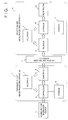
- Fig. 1 is a block diagram of an image transfer system of the present embodiment.
- a moving-picture information source 1 generates a moving-picture information which is subjected to the processing.
- a transmission-side image processing apparatus 2 compresses and transmits the moving-picture information.
- An information transfer apparatus 3 is an apparatus which transfers information, e.g. LAN (Local Area Network).
- a reception-side image processing apparatus 4 receives and expands the compressed information and reproduces a moving picture. Furthermore, the transmission-side and reception-side image processing apparatuses are respectively constructed as following.
- the compressor 5 selects the most appropriate compression method for characteristic of each image scene inputted from the moving-picture information source 1 and executes the compression processing.
- a storage 6 stores a plurality of procedures of compression methods which are selected and executed by the compressor 5.
- a recorder 7 records the compressed image information (including the information concerning the selected compression method) on a magnetic disk.
- a transmitter 8 transmits the image information which is processed by the compressor 5.
- a receiver 9 receives the image information which is transmitted via the information transfer apparatus 3.
- An expander 10 selects the expansion method corresponding to the received moving-picture information and executes the processing.
- a storage 11 stores a plurality of expansion methods which are selected and executed by the expander 10.
- a reproducer 12 reproduces an original moving picture before the compression from the expanded image. Furthermore, the recorder 7 records the compressed information in the same way as the transmission side.
- the moving picture is transferred and reproduced as following.
- the moving-picture information inputted from the moving-picture information source 1 is inputted to the transmission-side image processing apparatus 2 and compressed by the compressor 5.
- the compressor 5 selects the most appropriate compression method from the compression methods stored in the storage 6 in accordance with the characteristic of the moving-picture information.
- the storage 6 prepares two types of procedures. One is a compression procedure 1 to compress the information by thinning frames. The other is a compression procedure 2 to compress the information by determining the information of the frame which is contiguous to/different from the frame of a first picture as difference information.
- step S301 when the moving-picture information is received from the moving-picture information source 1, the movement of the moving picture is examined at step S302.
- the process proceeds to step S308 where the compressor 5 selects the compression procedure 1 from the storage 6.
- a parameter indicative of the ratio for thinning the frames is determined at step S309.
- This compression method is well known and the parameter is determined by a well-known method.
- the process proceeds to step S303 where characteristic of the movement is determined.
- the compression procedure 2 is selected at step S304. In this case also, the parameter indicating the number of frames compressed is determined at step S305.
- the information is not compressed.
- the storage 6 can be a memory storing the program which executes the determined procedure or electric circuit.
- the compressor 5 reads out the program which executes the selected procedure from the storage 6 and the processor processes the image information as data.
- the selected circuit is activated, the image data is inputted to the circuit, and the compression processing is executed.
- Selection of the compression method of steps S302 to S303 can be performed by a user by monitoring the moving picture.
- the transmission-side image processing apparatus 2 automatically performs the selection as following.
- a difference between the frames for a predetermined number of frames of the moving picture which is subject to the compression is respectively obtained for each pixel by the compression procedure 2. For example, on the obtained differences, the number of the pixels for which the sum of differences is not zero is examined. When the sum of the differences of each pixel concerning to the predetermined number of frames (or over the predetermined number of frames) is less than a first threshold, the difference between the frames is small. That is, the movement is inactive and the image is compressed by the compression procedure 1 that is thinning a frame. On the other hand, when the number of pixels whose the difference is not zero is less than a second threshold, the difference between the frames is limited to a partial area of the frame.
- the parameter indicative of thinning intervals in the compression procedure 1 can be determined in accordance with the difference value.
- the first and second thresholds can be set by the user.
- the compressor 5 performs compression by the compression procedures 1 and 2 in parallel.
- a processor executes a plurality of programs simultaneously.
- the compression is performed by each dedicated circuit, the moving-picture information is inputted into the circuits and compressed in parallel. Accordingly, the result of compression corresponding to the selected compression procedure is selected and recorded.
- Selection of the compression procedure is performed as following.
- the difference between the frames obtained by the compression procedure 2 is determined. If the difference is smaller than a predetermined threshold for a predetermined number of frames continuously, the result of the compression procedure 1, that is thinning a frame, is selected. If the difference is larger than the predetermined threshold, the result of the compression procedure 2 is selected. If the difference is continuously larger than the threshold, compression is not performed.
- the difference and threshold can be compared whenever the difference is obtained, or once in a predetermined number of operations, or in a predetermined duration.
- the compressed image information is outputted from the compressor 5 and inputted to the transmitter 8.
- Fig. 2 is a diagram illustrating a data format of the data of the compressed moving-picture information at recording or transferring. Concerning the data whose compression method and parameter are the same, a method field 21, parameter field 22, and data field 23 are grouped into one, and this arrangement is repeated until the image information is all formatted. The data format ends-with an end code 24.
- the information indicating the procedure to expand the data stored in the data field 23 is stored in the method field 21.
- a processing which compensates the thinned-out frames is designated in the method field 21 as an expansion method.
- the common portion with the previous frame is taken out and the processing to compensate by the difference information is designated.
- Information indicating that an expansion processing is not necessary on the image which is not compressed is stored in the method field 21. These designations can be performed by coding each compression method and designating the code.
- the parameter field 22 stores the information indicative of a parameter value required for the expansion processing.
- the parameter value is a value which designates if a frame is thinned out every other frame or every two frames.
- the most appropriate parameter value which is suitable to the characteristic of the moving picture is selected in the same way as the selection of the compression method and stored in the parameter field 22.
- the data field 23 stores the compressed moving-picture data which is expanded by the expansion method indicated by the method field 21.
- the moving-picture information compressed by the compressor 5 can be directly transmitted by the transmitter 8, or once stored in a recording medium such as memory, disk, or tape by the recorder 7 and read out and transmitted from the recording medium.
- the compressed moving-picture information which is transmitted from the transmitter 8 is received by the receiver 9 of the reception-side image processing apparatus 4 via the information transfer apparatus 3.
- the expansion processing can be immediately performed by the expander 10, or the information can be once stored in the recording medium by the recorder 7, and then the expansion processing can be performed.
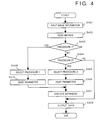
- the reception-side image processing apparatus 4 receives the compressed image information, the expansion processing is performed on it, and a moving picture is reproduced. The procedure is described along with the flowchart of Fig. 4.
- the expander 10 receives the compressed moving-picture information in the format of Fig. 2.
- the method field 21 is read out of the information and the expansion method corresponding to the content of the method field 21 is selected from the storage 11.
- the expansion method stored in the storage 11 at least includes an expansion method corresponding to the compression method stored in the storage 6.
- Means for executing this expansion method can be such that the expander 10 selectively reads and executes the program stored in the memory.
- An expansion processing which is executed by appropriately connecting the expansion procedure prepared in a hardware such as an electric circuit can be considered. Note that the compression procedures 1 and 2 correspond to expansion procedures 1 and 2 respectively.
- step S409 the expansion procedure 1 is selected so as to execute the procedure 1. If the written information is the procedure 2, the process proceeds to step S405 where the expansion procedure 2 is selected. If it is determined that the received data is not compressed in either case, then the expansion processing is not performed.
- the parameter field 22 is read at step S410 or S406 and a parameter value is obtained in accordance with each expansion method when the processing by the selected expansion method is executed.
- the data field 23 is read and the expansion processing is performed by using the expansion method selected by the previous step and the parameter value with respect to the data.
- the moving-picture information is returned to an original form (an original moving-picture) before the compression and the information is transferred to the reproducer 12 at step S408.
- the reproducer 12 reproduces the moving-picture information transferred from the expander 10 and the reproduced picture is displayed on a CRT display or the like.
- the moving picture inputted from the moving-picture information source 1 is reproduced through the compression and expansion processings. The above processings are repeated until the end code 24 is read out.
- a single moving picture can be compressed by a single type of compression method or the compression processing can be performed by changing an arbitrary frame such as a scene whose characteristic of the moving picture has been changed.
- Information can be transferred from the transmission-side image processing apparatus 2 to the reception-side image processing apparatus 4 via a detachable medium (such as a flexible disk) recorded by the recorder 7 of the transmission-side image processing apparatus 2 and data can be read out of the media and reproduced in the reception side.
- a plurality of compression/expansion methods are prepared in the transmission-side and reception-side apparatuses beforehand, an information compression procedure and parameter which are suitable to the characteristic is selected to compress an moving picture, whenever the characteristic of the inputted moving picture has been changed. Furthermore, for the reproduction, information loss caused by compression is prevented and a moving picture which is faithful to the master picture can be reproduced by the expansion procedure in accordance with the compression procedure of the received data.
- the present invention can be applied to a system constituted by a plurality of devices, or to an apparatus comprising a single device.
Landscapes
- Engineering & Computer Science (AREA)
- Multimedia (AREA)
- Signal Processing (AREA)
- Databases & Information Systems (AREA)
- Compression Or Coding Systems Of Tv Signals (AREA)
Claims (16)
- Bildverarbeitungsgerät mitgekennzeichnet durcheiner Eingabeeinrichtung (1) zur Eingabe von Bewegtbildinformationen einer Vielzahl von Vollbildern,einer ersten Komprimierungseinrichtung (5) zur Komprimierung der Bewegtbildinformationen,einer zweiten Komprimierungseinrichtung (5) zur Komprimierung der Bewegtbildinformationen durch einen Komprimierungsvorgang, der zu dem durch die erste Komprimierungseinrichtung durchgeführten Komprimierungsvorgang unterschiedlich ist,einer Auswahleinrichtung (5, S303) zur Auswahl der ersten oder der zweiten Komprimierungseinrichtung, undeiner Ausgabeeinrichtung (8) zur Ausgabe der komprimierten Bewagtbildinformationen von der Komprimierungseinrichtung, die von der Auswahleinrichtung ausgewählt wurde,eine Bestimmungseinrichtung (5, S302, S303) zur Bestimmung einer Bewegung des Bewegtbildes durch Erfassung von Unterschieden zwischen Vollbildern,wobei die erste Komprimierungseinrichtung die Unterschiede zwischen Vollbildern als komprimierte Infomationen verwendet und die Auswahleinrichtung zur Auswahl (S304, S308) entweder der ersten oder der zweiten Komprimierungseinrichtung in Übereinstimmung mit der von der Bestimmungseinrichtung bestimmten Bewegung des Bewegtbildes dient.
- Bildverarbeitungsgerät nach Anspruch 1, wobei die zweite Komprimierungseinrichtung eine Ausdünneinrichtung zur Ausdünnung von Vollbildern der Bewegtbildinformationen umfaßt.
- Bildverarbeitungsgerät nach Anspruch 1, wobei die Bestimmungseinrichtung eine Summierungseinrichtung zur Summierung der Unterschiede zwischen entsprechenden Bildelementwerten benachbarter Vollbilder als Maß der Bewegung des Bewegtbildes umfaßt und die Auswahleinrichtung eine erste Beurteilungseinrichtung zur Beurteilung, ob die Summe der Unterschiede kleiner als ein vorbestimmter Schwellwert ist, umfaßt.
- Bildverarbeitungsgerät nach Anspruch 3, wobei die Auswahleinrichtung die zweite Komprimierungseinrichtung auswählt, wenn die erste Beurteilungseinrichtung beurteilt, daß die Summe der Unterschiede kleiner als der erste vorbestimmte Schwellwert ist.
- Bildverarbeitungsgerät nach Anspruch 1, wobei die Bestimmungseinrichtung eine Zähleinrichtung zur Zählung der Anzahl der Bildelemente, die hinsichtlich ihrer Bildelementwerte keinen Unterschied zu entsprechenden Bildelementen eines benachbarten Vollbildes aufweisen, als ein Index der Bewegung des Bewegtbildes umfaßt und die Bestimmungseinrichtung eine zweite Beurteilungseinrichtung zur Beurteilung, ob die Anzahl der Bildelemente, die hinsichtlich ihrer Bildelementwerte keinen Unterschied zu entsprechenden Bildelementen eines benachbarten Vollbildes aufweisen, kliener als ein zweiter vorbestimmter Schwellwert ist, umfaßt.
- Bildverarbeitungsgerät nach Anspruch 5, wobei die Auswahleinrichtung die erste Komprimierungseinrichtung auswählt, wenn die zweite Beurteilungseinrichtung beurteilt, daß die Anzahl der Bildelemente, die hinsichtlich ihrer Bildelementwerte keinen Unterschied zu entsprechenden Bildelementen eines benachbarten Vollbildes aufweisen, kleiner als der zweite Schwellwert ist.
- Bildverarbeitungsgerät nach einem der vorhergehenden Ansprüche, mit einer ersten Steuerungseinrichtung zur Steuerung der ersten und der zweiten Komprimierungseinrichtung zur gleichzeitigen Komprimierung der gleichen Bewegtbildinformationen.
- Bildverarbeitungsgerät nach einem der vorhergehenden Ansprüche, mit einer zweiten Steuerungseinrichtung zur Steuerung der Bestimmungseinrichtung, um während der Eingabe der Bewegtbildinformationen von der Eingabeeinrichtung eine periodischen Bestimmung der Bewegung auszuführen, und zur Steuerung der Auswahleinrichtung, um die Auswahl dynamisch in Übereinstimmung mit dem Ergebnis der Bestimmung der Bestimmungseinrichtung auszuüben.
- Bildverarbeitungsverfahren mitgekennzeichnet durcheinem Eingabeschritt (S301) zur Eingabe von Bewegtbildinformationen mit einer Vielzahl von Vollbildern,einen ersten Komprimierungsschritt (S308, S309, S306) zur Komprimierung der Bewegtbildinformationen,einem zweiten Komprimierungsschritt (S304, S305, S306) zur Komprimierung der Bewegtbildinformationen durch einen Komprimierungsvorgang der zu dem im ersten Komprimierungsschritt durchgeführten Komprimierungsvorgang unterschiedlich ist,einem Auswahlschritt (S302, S303) zur Auswahl des ersten oder des zweiten Komprimierungsschrittes, undeinem Ausgabeschritt (S307) zur Ausgabe der im Komprimierungsschritt, der im Auswahlschritt ausgewählt wurde, komprimierten Bewegtbildinformationen,einen Bestimmungsschritt (S302, S303) zur Bestimmung der Bewegung des Bewegtbildes durch Erfassung von Unterschieden zwischen Vollbildern,wobei die Unterschiede zwischen Vollbildern als komprimierte Informationen in dem ersten Komprimierungsschritt verwendet werden und entweder der erste oder der zweite Komprimierungsschritt in dem Auswahlschritt in Übereinstimmung mit der in dem Bestimmungsschritt bestimmten Bewegung der Bewegtbilder ausgewählt wird.
- Bildverarbeitungsverfahren nach Anspruch 9, wobei in dem zweiten Komprimierungsschritt die Bewegtbildinformationen durch Ausdünnung von vollbildern der Bewegtbildinformationen komprimiert werden.
- Bildverarbeitungsverfahren nach Anspruch 9, wobei eine Summe der Unterschiede zwischen entsprechenden Bildelementwerten benachbarter Vollbilder als Bewegung der Bewegtbilder in dem Bestimmungsschritt erhalten wird, und weiterhin beurteilt wird, ob die Summe der Unterschiede kleiner als ein erster im Auswahlschritt vorbestimmter Schwellwert ist oder nicht.
- Bildverarbeitungsverfahren nach Anspruch 11, wobei in dem Auswahlschritt der zweite Komprimierungsschritt ausgewählt wird, wenn beurteilt wird, daß die Summe der Unterschiede kleiner als der erste vorherbestimmte Schwellwert ist.
- Bildverarbeitungsverfahren nach Anspruch 9, wobei die Anzahl der Bildelemente, die hinsichtlich ihrer Bildelementwerte keinen Unterschied zu entsprechenden Bildelementen eines angrenzenden Vollbildes aufweisen, in dem Bestimmungsschritt als ein Index der Bewegung des Bewegtbildes gezählt wird und beurteilt wird, ob die Anzahl der Bildelemente, die hinsichtlich ihrer Bildelementwerte keinen Unterschied zu entsprechenden Bildelementen in einem angrenzenden Vollbild aufweisen, kleiner als ein zweiter vorbestimmter Schwellwert ist.
- Bildverarbeitungsverfahren nach Anspruch 13, wobei in dem Auswahlschritt der erste Komprimierungsschritt ausgewählt wird, wenn beurteilt wird, daß die Anzahl der Bildelemente, die hinsichtlich ihrer Bildelementwerte keinen Unterschied zu entsprechenden Bildelementen in einem angrenzenden Vollbild aufweisen, kleiner als der zweite Schwellwert ist.
- Bildverarbeitungsverfahren nach einem der Ansprüche 9 bis 14, wobei im ersten und zweiten Komprimierungsschritt die gleiche Bewegtbildinformation gleichzeitig komprimiert wird und die im ersten oder zweiten Kompressionsschritt komprimierten Bewegtbildinformationen wahlweise in Übereinstimmung mit einer Auswahl im Auswahlschritt ausgegeben werden.
- Bildverarbeitungsverfahren nach einem der Ansprüche 9 bis 15, wobei die Bestimmung in dem Bestimmungsschritt während der Eingabe der in dem Eingabeschritt eingegebenen Bewegtbildinformationen periodisch ausgführt wird und die Auswahl im Auswahlschritt dynamisch in Übereinstimmung mit dem Ergebnis der Bestimmung des Bestimmungsschrittes durchgeführt wird.
Applications Claiming Priority (2)
| Application Number | Priority Date | Filing Date | Title |
|---|---|---|---|
| JP170608/92 | 1992-06-29 | ||
| JP4170608A JPH0614313A (ja) | 1992-06-29 | 1992-06-29 | 画像処理装置 |
Publications (3)
| Publication Number | Publication Date |
|---|---|
| EP0577377A2 EP0577377A2 (de) | 1994-01-05 |
| EP0577377A3 EP0577377A3 (en) | 1994-08-31 |
| EP0577377B1 true EP0577377B1 (de) | 1999-04-07 |
Family
ID=15908010
Family Applications (1)
| Application Number | Title | Priority Date | Filing Date |
|---|---|---|---|
| EP93305051A Expired - Lifetime EP0577377B1 (de) | 1992-06-29 | 1993-06-28 | Bildverarbeitungsvorrichtung und -verfahren |
Country Status (4)
| Country | Link |
|---|---|
| US (1) | US5517246A (de) |
| EP (1) | EP0577377B1 (de) |
| JP (1) | JPH0614313A (de) |
| DE (1) | DE69324301T2 (de) |
Families Citing this family (21)
| Publication number | Priority date | Publication date | Assignee | Title |
|---|---|---|---|---|
| US5886743A (en) * | 1994-12-28 | 1999-03-23 | Hyundai Electronics Industries Co. Ltd. | Object-by information coding apparatus and method thereof for MPEG-4 picture instrument |
| US5666487A (en) * | 1995-06-28 | 1997-09-09 | Bell Atlantic Network Services, Inc. | Network providing signals of different formats to a user by multplexing compressed broadband data with data of a different format into MPEG encoded data stream |
| US5802315A (en) * | 1995-09-04 | 1998-09-01 | Sharp Kabushiki Kaisha | Picture reproducing apparatus |
| GB2305797B (en) * | 1995-09-27 | 2000-03-01 | Sony Uk Ltd | Video data compression |
| US5987181A (en) * | 1995-10-12 | 1999-11-16 | Sharp Kabushiki Kaisha | Coding and decoding apparatus which transmits and receives tool information for constructing decoding scheme |
| US6219097B1 (en) * | 1996-05-08 | 2001-04-17 | Olympus Optical Co., Ltd. | Image pickup with expanded dynamic range where the first exposure is adjustable and second exposure is predetermined |
| US5861920A (en) * | 1996-11-08 | 1999-01-19 | Hughes Electronics Corporation | Hierarchical low latency video compression |
| US6538688B1 (en) * | 1998-07-02 | 2003-03-25 | Terran Interactive | Method and apparatus for performing an automated inverse telecine process |
| JP2000224470A (ja) * | 1999-02-02 | 2000-08-11 | Minolta Co Ltd | カメラシステム |
| WO2001037573A1 (en) * | 1999-11-12 | 2001-05-25 | General Instrument Corporation | Mpeg-4 video specific control packet for providing a customized set of coding tools |
| US7076103B2 (en) * | 2000-08-28 | 2006-07-11 | Fuji Photo Film Co., Ltd. | Method, apparatus, and program for image data compression |
| US7599434B2 (en) * | 2001-09-26 | 2009-10-06 | Reynolds Jodie L | System and method for compressing portions of a media signal using different codecs |
| US7457359B2 (en) * | 2001-09-26 | 2008-11-25 | Mabey Danny L | Systems, devices and methods for securely distributing highly-compressed multimedia content |
| US7302102B2 (en) * | 2001-09-26 | 2007-11-27 | Reynolds Jodie L | System and method for dynamically switching quality settings of a codec to maintain a target data rate |
| CN1568466A (zh) * | 2001-09-26 | 2005-01-19 | 交互设备有限公司 | 用于传递媒体信号的系统和方法 |
| US7457358B2 (en) | 2001-09-26 | 2008-11-25 | Interact Devices, Inc. | Polymorphic codec system and method |
| US7916782B2 (en) * | 2004-08-18 | 2011-03-29 | Panasonic Corporation | Picture coding method, picture decoding method, picture coding apparatus, picture decoding apparatus, and program thereof |
| US8160160B2 (en) * | 2005-09-09 | 2012-04-17 | Broadcast International, Inc. | Bit-rate reduction for multimedia data streams |
| US8149469B2 (en) * | 2007-08-03 | 2012-04-03 | Canon Kabushiki Kaisha | Image reading apparatus and image reading method |
| US8160137B2 (en) * | 2010-03-03 | 2012-04-17 | Mediatek Inc. | Image data compression apparatus for referring to at least one characteristic value threshold to select target compression result from candidate compression results of one block and related method thereof |
| WO2012050832A1 (en) * | 2010-09-28 | 2012-04-19 | Google Inc. | Systems and methods utilizing efficient video compression techniques for providing static image data |
Citations (4)
| Publication number | Priority date | Publication date | Assignee | Title |
|---|---|---|---|---|
| EP0417914A2 (de) * | 1989-08-15 | 1991-03-20 | Sony Corporation | Dekodierungs- und Kodierungsgerät für komprimierte digitale Videodaten |
| EP0420627A2 (de) * | 1989-09-27 | 1991-04-03 | Sony Corporation | Videosignalkodierungsverfahren |
| EP0430631A2 (de) * | 1989-11-28 | 1991-06-05 | Sony Corporation | Kodiervorrichtung mit hoher Wirksamkeit |
| EP0473284A2 (de) * | 1990-08-14 | 1992-03-04 | Nalco Chemical Company | Bekämpfung von Blistering in FCC-Anlagen |
Family Cites Families (6)
| Publication number | Priority date | Publication date | Assignee | Title |
|---|---|---|---|---|
| CA1287161C (en) * | 1984-09-17 | 1991-07-30 | Akihiro Furukawa | Apparatus for discriminating a moving region and a stationary region in a video signal |
| JPH082106B2 (ja) * | 1986-11-10 | 1996-01-10 | 国際電信電話株式会社 | 動画像信号のハイブリツド符号化方式 |
| EP0330455A3 (de) * | 1988-02-22 | 1990-07-04 | Kabushiki Kaisha Toshiba | Vorrichtung zum Kodieren von Bildern |
| CA2016641C (en) * | 1989-05-12 | 1995-07-11 | Toshiyuki Tanoi | Adaptive interframe prediction coded video communications system |
| US5166987A (en) * | 1990-04-04 | 1992-11-24 | Sony Corporation | Encoding apparatus with two stages of data compression |
| JP2969867B2 (ja) * | 1990-08-31 | 1999-11-02 | ソニー株式会社 | ディジタル画像信号の高能率符号化装置 |
-
1992
- 1992-06-29 JP JP4170608A patent/JPH0614313A/ja not_active Withdrawn
-
1993
- 1993-06-25 US US08/081,148 patent/US5517246A/en not_active Expired - Fee Related
- 1993-06-28 DE DE69324301T patent/DE69324301T2/de not_active Expired - Fee Related
- 1993-06-28 EP EP93305051A patent/EP0577377B1/de not_active Expired - Lifetime
Patent Citations (4)
| Publication number | Priority date | Publication date | Assignee | Title |
|---|---|---|---|---|
| EP0417914A2 (de) * | 1989-08-15 | 1991-03-20 | Sony Corporation | Dekodierungs- und Kodierungsgerät für komprimierte digitale Videodaten |
| EP0420627A2 (de) * | 1989-09-27 | 1991-04-03 | Sony Corporation | Videosignalkodierungsverfahren |
| EP0430631A2 (de) * | 1989-11-28 | 1991-06-05 | Sony Corporation | Kodiervorrichtung mit hoher Wirksamkeit |
| EP0473284A2 (de) * | 1990-08-14 | 1992-03-04 | Nalco Chemical Company | Bekämpfung von Blistering in FCC-Anlagen |
Also Published As
| Publication number | Publication date |
|---|---|
| EP0577377A2 (de) | 1994-01-05 |
| US5517246A (en) | 1996-05-14 |
| DE69324301T2 (de) | 1999-09-30 |
| DE69324301D1 (de) | 1999-05-12 |
| JPH0614313A (ja) | 1994-01-21 |
| EP0577377A3 (en) | 1994-08-31 |
Similar Documents
| Publication | Publication Date | Title |
|---|---|---|
| EP0577377B1 (de) | Bildverarbeitungsvorrichtung und -verfahren | |
| US5493345A (en) | Method for detecting a scene change and image editing apparatus | |
| US5517583A (en) | Image encoding method and apparatus | |
| EP0522123B1 (de) | Verfahren und gerät für anpassbare fehlerkorrektur | |
| AU641726B2 (en) | Transmission system for digitised television images | |
| EP0838766B1 (de) | Bildanzeigeeinheit, Bildanzeigesystem und Wiederauffindungssystem für bewegte Bilder | |
| US4797741A (en) | Information signal transmission system | |
| JPH0678269A (ja) | 多重画像圧縮記録及び再生制御回路 | |
| US20020141617A1 (en) | Image search apparatus | |
| JP2002112257A (ja) | 映像圧縮伝送装置および方法 | |
| US5808682A (en) | Picture data processing system for processing picture data representing foreground and background | |
| US6002835A (en) | Method of recording and reproducing reduced image data correlated with original image data | |
| US5862272A (en) | Image detector | |
| JP2971724B2 (ja) | 動画像のカット点検出装置 | |
| EP0502708B1 (de) | Digitales Aufzeichnungs-/Wiedergabegerät für eine MUSE-Signal und Verfahren zum Betreiben des Gerätes | |
| JP2003069832A (ja) | 画像処理装置及び方法及びプログラム及びコンピュータ読み取り可能な記録媒体 | |
| US6965728B1 (en) | Digital recording apparatus | |
| US7236522B2 (en) | Surveillance system and image signal processing apparatus | |
| US7076103B2 (en) | Method, apparatus, and program for image data compression | |
| JP3138552B2 (ja) | 公衆網用端末装置およびその制御方法 | |
| JP2003134514A (ja) | 画像符号化装置及び画像復号化装置 | |
| JP2994047B2 (ja) | 情報記録再生装置 | |
| JPH08181999A (ja) | 動画像処理装置 | |
| JPH07184198A (ja) | ビデオ信号圧縮/伸張処理装置 | |
| JP2000013741A (ja) | 映像記録装置、映像再生装置 |
Legal Events
| Date | Code | Title | Description |
|---|---|---|---|
| PUAI | Public reference made under article 153(3) epc to a published international application that has entered the european phase |
Free format text: ORIGINAL CODE: 0009012 |
|
| AK | Designated contracting states |
Kind code of ref document: A2 Designated state(s): DE FR GB NL |
|
| PUAL | Search report despatched |
Free format text: ORIGINAL CODE: 0009013 |
|
| AK | Designated contracting states |
Kind code of ref document: A3 Designated state(s): DE FR GB NL |
|
| 17P | Request for examination filed |
Effective date: 19950117 |
|
| 17Q | First examination report despatched |
Effective date: 19960624 |
|
| GRAG | Despatch of communication of intention to grant |
Free format text: ORIGINAL CODE: EPIDOS AGRA |
|
| GRAG | Despatch of communication of intention to grant |
Free format text: ORIGINAL CODE: EPIDOS AGRA |
|
| GRAH | Despatch of communication of intention to grant a patent |
Free format text: ORIGINAL CODE: EPIDOS IGRA |
|
| GRAH | Despatch of communication of intention to grant a patent |
Free format text: ORIGINAL CODE: EPIDOS IGRA |
|
| GRAA | (expected) grant |
Free format text: ORIGINAL CODE: 0009210 |
|
| AK | Designated contracting states |
Kind code of ref document: B1 Designated state(s): DE FR GB NL |
|
| REF | Corresponds to: |
Ref document number: 69324301 Country of ref document: DE Date of ref document: 19990512 |
|
| ET | Fr: translation filed | ||
| PLBE | No opposition filed within time limit |
Free format text: ORIGINAL CODE: 0009261 |
|
| STAA | Information on the status of an ep patent application or granted ep patent |
Free format text: STATUS: NO OPPOSITION FILED WITHIN TIME LIMIT |
|
| 26N | No opposition filed | ||
| REG | Reference to a national code |
Ref country code: GB Ref legal event code: IF02 |
|
| PGFP | Annual fee paid to national office [announced via postgrant information from national office to epo] |
Ref country code: GB Payment date: 20030616 Year of fee payment: 11 |
|
| PGFP | Annual fee paid to national office [announced via postgrant information from national office to epo] |
Ref country code: FR Payment date: 20030620 Year of fee payment: 11 |
|
| PGFP | Annual fee paid to national office [announced via postgrant information from national office to epo] |
Ref country code: DE Payment date: 20030626 Year of fee payment: 11 |
|
| PGFP | Annual fee paid to national office [announced via postgrant information from national office to epo] |
Ref country code: NL Payment date: 20030630 Year of fee payment: 11 |
|
| PG25 | Lapsed in a contracting state [announced via postgrant information from national office to epo] |
Ref country code: GB Free format text: LAPSE BECAUSE OF NON-PAYMENT OF DUE FEES Effective date: 20040628 |
|
| PG25 | Lapsed in a contracting state [announced via postgrant information from national office to epo] |
Ref country code: NL Free format text: LAPSE BECAUSE OF NON-PAYMENT OF DUE FEES Effective date: 20050101 Ref country code: DE Free format text: LAPSE BECAUSE OF NON-PAYMENT OF DUE FEES Effective date: 20050101 |
|
| GBPC | Gb: european patent ceased through non-payment of renewal fee |
Effective date: 20040628 |
|
| PG25 | Lapsed in a contracting state [announced via postgrant information from national office to epo] |
Ref country code: FR Free format text: LAPSE BECAUSE OF NON-PAYMENT OF DUE FEES Effective date: 20050228 |
|
| NLV4 | Nl: lapsed or anulled due to non-payment of the annual fee |
Effective date: 20050101 |
|
| REG | Reference to a national code |
Ref country code: FR Ref legal event code: ST |