EP0568480A2 - Verfahren und Vorrichtung zur Erkennung von Anwesenheit - Google Patents
Verfahren und Vorrichtung zur Erkennung von Anwesenheit Download PDFInfo
- Publication number
- EP0568480A2 EP0568480A2 EP93480039A EP93480039A EP0568480A2 EP 0568480 A2 EP0568480 A2 EP 0568480A2 EP 93480039 A EP93480039 A EP 93480039A EP 93480039 A EP93480039 A EP 93480039A EP 0568480 A2 EP0568480 A2 EP 0568480A2
- Authority
- EP
- European Patent Office
- Prior art keywords
- user
- event
- physical
- proximity
- interval
- Prior art date
- Legal status (The legal status is an assumption and is not a legal conclusion. Google has not performed a legal analysis and makes no representation as to the accuracy of the status listed.)
- Withdrawn
Links
Images

Classifications
-
- G—PHYSICS
- G06—COMPUTING OR CALCULATING; COUNTING
- G06F—ELECTRIC DIGITAL DATA PROCESSING
- G06F11/00—Error detection; Error correction; Monitoring
- G06F11/30—Monitoring
- G06F11/3058—Monitoring arrangements for monitoring environmental properties or parameters of the computing system or of the computing system component, e.g. monitoring of power, currents, temperature, humidity, position, vibrations
-
- G—PHYSICS
- G06—COMPUTING OR CALCULATING; COUNTING
- G06F—ELECTRIC DIGITAL DATA PROCESSING
- G06F11/00—Error detection; Error correction; Monitoring
- G06F11/30—Monitoring
- G06F11/34—Recording or statistical evaluation of computer activity, e.g. of down time, of input/output operation ; Recording or statistical evaluation of user activity, e.g. usability assessment
- G06F11/3438—Recording or statistical evaluation of computer activity, e.g. of down time, of input/output operation ; Recording or statistical evaluation of user activity, e.g. usability assessment monitoring of user actions
-
- G—PHYSICS
- G06—COMPUTING OR CALCULATING; COUNTING
- G06F—ELECTRIC DIGITAL DATA PROCESSING
- G06F11/00—Error detection; Error correction; Monitoring
- G06F11/30—Monitoring
- G06F11/34—Recording or statistical evaluation of computer activity, e.g. of down time, of input/output operation ; Recording or statistical evaluation of user activity, e.g. usability assessment
- G06F11/3466—Performance evaluation by tracing or monitoring
- G06F11/3476—Data logging
-
- G—PHYSICS
- G06—COMPUTING OR CALCULATING; COUNTING
- G06F—ELECTRIC DIGITAL DATA PROCESSING
- G06F2201/00—Indexing scheme relating to error detection, to error correction, and to monitoring
- G06F2201/86—Event-based monitoring
Definitions
- This invention relates in general to data processing systems, and in particular to a method of, and apparatus for, providing automatic detection of the physical presence of a user of a data processing system.
- Conventional data processing systems may provide commands for inquiring about the status of a user of the data processing system.
- the types of status information typically provided may include which users are logged on to a system, when a user logged on, which workstation the user is logged onto, which programs are being executed by a user, and how long such programs have been executing.
- no capability is provided by conventional systems. If one desires to ask if someone is at his workstation, or in his office, or in his department, or in his building, or in any other physical area, then conventional systems cannot answer. This is a problem when the first user desires to initiate an "action on the system which either requires, depends upon, or would be furthered by the physical presence of the second user.
- the IBM VM* Operating System QUERY USERS command gives the number of users logged on to the system.
- the QUERY NAMES command lists the userids of all logged on users.
- the QUERY USERID command tells if a specific user is logged on to the system. Although these commands tell whether a user is logged on to a system, they do do not provide any information on the physical presence of a user. This is due to the fact that a user may be logged onto a system, but still not be physically present at the logged on terminal device. In addition, these commands do not provide any information about users relative to remote systems in a network.
- commands also do not provide any information about the user relative to a terminal device if such terminal device is an intelligent terminal executing its own operating system and applications in addition to being logged on to the system.
- these commands only provide a query for a single user or for all users on a system.
- These commands do not provide a query for a group of users sharing a common characteristic.
- the DEC VMS* Operating System SHOW USER command provides a list of the users currently logged on to the system and their terminal device numbers. Again, this command does not provide any information on the physical presence of a user; nor does it provide any information about users relative to remote systems in a network; nor does it provide a query for a group of users sharing a common characteristic.
- the USL UNIX* System V Operating System USERS command provides a list of the users currently logged on to the system.
- the WHO command provides the names of the users currently "logged on to the system, their terminal device numbers, the times they logged on, and the duration of time that their terminal devices have been inactive.
- the WHODO command provides for each logged on user or for a single named user their terminal device numbers and how long they have been logged on.
- WHODO provides for each program process that a user is executing at the time of the inquiry, the name of the program process, the terminal device on which the program process is executing, its process ID number, and the amount of CPU (central processing unit) seconds consumed so far by the process.
- the RWHO command and the FINGER command provide the same information as the WHO command on remote users on other systems in a network, and in addition identify the remote system on which a user is logged on. Again, althoughthese commands tell whether a user is logged on to a system, they do do not provide any information on the physical presence of a user. Also, although these commands do provide information about users relative to remote systems in a network, this information is limited to remote systems which are also executing a UNIX operating system. In addition, these commands do not provide a query for a group of users sharing a common characteristic.
- a first user may wish to verify that a second user is in his office. If the second user is not answering his phone or system messages for whatever reasons, the first user may be unable to verify the second user's physical presence unless he or someone else actually goes to the second user's office .
- Another situation may be when the first user wishes to fax a confidential or sensitive document to the second user, but is unwilling to do so if the receiving fax device is unattended.
- Still another situation may be when a first user wishes to call on short notice a meeting of a group of users.
- the first user has to check on each potential attendee by either calling them on the phone, sending them a system message, or going to their offices.
- Still another situation may be when a user wishes to communicate with any member of a group that is physically present, without having to check on a number of members of the group before "finding a member that is physically present. For example, the user may have a system problem and wishes to speak with anyone in the system support organization.
- Still another situation may be when a user wishes to verify that a physical area is clear and that no one is physically present in the physical area. Since a user in the physical area may not respond to the phone or system messages, the requesting user may have to physically check the entire physical area.
- the prior art approaches described above fail to meet the needs of the above situations and present the user with three difficulties.
- the first difficulty is that the prior art approaches detect if a user is logged on to a system. They do not detect the physical presence of a user.
- the second difficulty is that if a user attempts to rely on the prior art to detect the physical presence of another user, the user may receive presence false alarms.
- a presence false alarm is an indication that a user is physically present when the user is not actually physically present.
- a presence false alarm may result when a user first logs on to a system and then leaves the area leaving the logon active.
- a presence false alarm may also result when a user logs on to a system from a remote location other than his normal workstation in his office.
- the third difficulty is that if a user attempts to rely on the prior art to detect the physical presence of another user, the user may receive presence errors.
- a presence error is an indication that a user is not physically present when the user is actually physically present.
- a presence error may result when the user is physically present in his office, but not logged on to a system.
- the invention disclosed herein comprises a method of, and apparatus for, providing automatic detection of the physicalpresence of a user of a data processing system.
- the method and apparatus described herein substantially eliminate or reduce the difficulties of attempting to determine the physical presence of a user of a data processing system by providing automatic detection of the physical presence of a user of a data processing system.
- Another aspect of this invention is automatic detection of the physical presence of a user of a remote data processing system different from the requesting user's data processing system.
- Yet another aspect of this invention is automatic detection of the physical presence of a user of a remote data processing system executing a different operating- system from that of the requesting user's data processing system.
- Presence Event Table comprises a list of events which may occur in a system and which indicate the physical presence of a user within a physical area in proximity to the system.
- the events may be described or represented by parameters, including, but not limited to, interrupt levels, interrupt priorities, semaphore content, or interprocess communication content.
- the parameters are sufficient to discriminate presence indicating events from events which do not indicate the physical presence of a user.
- Yet another aspect of this invention is automatic detection of the physical presence of a user provided by monitoring interprocess communications from device drivers in a data processing system and by recognizing presence indicating events.
- Yet another aspect of this invention is automatic detection of the physical presence of a user provided by logging presence indicating events in a Presence Detection Database whose entries include a description of the presence"indicating events and a time of occurrence of the presence indicating events.
- Yet another aspect of this invention is automatic detection of the physical presence of a user provided by a Proximity Table for each user that contains proximity intervals and corresponding physical areas for that user.
- the proximity interval is the interval of time required for the user to leave the corresponding physical area.
- Yet another aspect of this invention is automatic detection of the physical presence of a user provided by determining if a proximity interval is greater than the time interval since the last event logged for a user in the Presence Detection Database. If the proximity interval is greater than the time interval since the last logged event, then an event has occurred indicating the physical presence of someone in the physical area corresponding to that proximity interval.
- Yet another aspect of this invention is automatic detection of the physical presence of a user provided by determining if a verified event is logged for a user.
- a verified event is an event which requires the user's physical presence and is verified by that user.
- Yet another aspect of this invention is automatic detection of the physical presence of a user provided by determining if a user was physically present since a verified event by determining that there are no time intervals between logged events since the occurrence of the verified event greater than a proximity interval.
- Yet another aspect of this invention is automatic detection of the physical presence of someone, but not necessarily the user, in the physical area corresponding to the proximity interval provided by determining that there is a time interval between logged events since the occurrence of the verified event greater than a proximity interval.
- Yet another aspect of this invention is automatic detection of the physical presence of someone, but not necessarily the user, in a physical area corresponding to a proximity interval provided by determining that there is no verified event logged for that user.
- queries may be of the form of a single user query, a multiple user query, a group query, or a physical area query.
- Yet another aspect of this invention is that the appropriate parameters for formulating each user query that comprise either a single user query, a multiple user query, a group query, or a physical area query are extracted from a user directory.
- Yet another aspect of this invention is providing the establishment of an appropriate network connection to and communications with an appropriate Presence Detection Process whether such Presence Detection Process resides on the same data processing system or resides on another system in a network.
- Yet another aspect of this invention is automatic detection of the physical presence of someone, but not necessarily the user, provided by determining if a presence indicating event occurs during a proximity interval by direct monitoring of a device driver.
- Yet another aspect of this invention is automatic detection of the physical presence of a user provided by determining if a verified event occurs during a proximity interval by direct monitoring of a device driver.
- the present invention has the advantage of allowing a first user of a data processing system to detect the physical presence of a second user of the data processing system or a second user of another data processing processing connected to the same network as the data processing system.
- the present invention has the further advantage of allowing a first user to initiate an action that requires, depends upon, or would be furthered by a second user's physical presence.
- the present invention has the still further advantage of allowing a first user to detect the physical presence of a "second user within a particular physical area in proximity of the second user's data processing system.
- the present invention has the still further advantage of allowing a first user to detect the physical presence of any or all user members of a group sharing a common characteristic.
- the present invention has the still further advantage of allowing a first user to detect the physical presence of any users within a specified physical area in proximity of a data processing system.
- the present invention has the still further advantage of substantially eliminating or reducing presence false alarms.
- the present invention has the still further advantage of of substantially eliminating or reducing presence errors.
- the present invention has the still further advantage of allowing queries of the form of a single user query, a multiple user query, a group query, or a physical area query.
- the present invention has the still further advantage of allowing a first user to detect the physical presence of one or more users within a specified physical area in proximity of a data processing system, without the one or more users being aware of the detection of their physical presence.
- the operations preferred in carrying out the present invention are implemented as three processes or programs comprising an Event Detection Process, a Presence DetectionProcess, and an Interrogator Process.
- the Event Detection Process illustrated in Figure 1, detects presence indicating events.
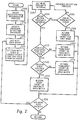
- the Presence Detection Process illustrated in Figure 2, evaluates the presence indicating events to determine the physical presence of a user or someone else other than a user.
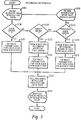
- the Interrogator Process illustrated in Figure 3, provides an interface to a requesting user and formulates appropriate queries to be sent to one or more Presence Detection Processes.
- Process block 110 accesses a Presence Event Table.
- the Presence Event Table comprises a list of events which may occur in a system and which may indicate the physical presence of a user, or someone else other than a user, within a physical area in proximity to the system. These events may occur in a data processing system, in devices attached to a data processing system, in device drivers servicing such devices, or in programs other than such device drivers.
- These devices may include input/output devices such as keyboards, mouse, light pens, touch screens, track balls, displays, telephones, printers, scanners, multimedia input/output devices, and other devices which may require the physical presence of a user, or someone else other than a user, for their operation.
- These devices may also include sensors such as infrared detectors, visible light detectors, radio frequency detectors, electrostatic detectors, magnetic detectors, other electromagnetic detectors, and other sensors which may detect "the physical presence of a user or someone else other than a user.
- the events may be described or represented by parameters, including, but not limited to, interrupt levels, interrupt priorities, semaphore content, or interprocess communication content.
- the Presence Event Table may include a description of an event such as a printer status changing from not ready to ready. This event occurs when someone pushes the ready button on the printer, and therefore, this event indicates the physical presence of someone near the printer.
- the Presence Event Table does not include an event comprising the printer status changing from ready to not ready, as this event may be caused by something other than a user's physical presence.
- the printer status may change to not ready due to the printer running out of paper, ink, or ribbon.
- process block 120 monitors interprocess communications and waits until an interprocess communication is sent by a device driver or a non-device driver program in the system. If such an interprocess communication is recognized by process block 120, then decision block 130 is used to determine whether the interprocess communication is an event described in the Presence Event Table. If the interprocess communication is an event described in the Presence Event Table, then processblock 140 logs the event in a Presence Detection Database. The log entry will include a description of the event and a time of occurrence of the event. Logged entries over a configurable time interval may be stored for history information, if desired. The preferred embodiment only stores entries since, and including, the last verified event for a user, thereby reducing the use of storage for information which may be unnecessary.
- decision block 150 determines whether the event is a kill process. If the event is a kill process, then the program stops. If the event is not a kill process, then the program loops back to processing block 120 to await the next interprocess communication.
- process block 205 awaits the receipt of a query from the Interrogator Process portion of the present invention.
- a query may comprise one or more user queries.
- process block 210 accesses the Presence Detection Database (described above).
- process block 215 gets the next user query from the query received by process block 205.
- process block 220 gets a Proximity Table for the user specified in the user query and a sequence of logged events for the user specified in the user query from the Presence Detection Database.
- the logged events are events logged in the Presence Detection Database for that user by process block 140 of Figure 1 as described above.
- the Proximity Table for that user contains proximity intervals and corresponding physical areas for that user. The proximity interval is the interval of time required for the user to leave the corresponding physical area. ""For example, the Proximity Table for a user may consist of the following entries: Entry Number Proximity Interval Corresponding Physical Area 1 1.0 workstation 2 3.0 desk 3 10.0 office 4 30.0 department 5 45.0 floor 6 60.0 building 7 300.0 site
- the first Proximity Table entry, entry number 1 means that one second is required for the user to leave the immediate physical area of his workstation. This entry also means that if a presence indicating event has occurred in the preceding one second time interval, then the user may be at his workstation. Alternatively, this entry means that if a presence indicating event has not occurred in the preceding one second time interval, then the user may not be at his workstation.
- the third Proximity Table entry, entry number 3 means that ten seconds are required for the user to leave his office. This entry also means that if a presence indicating event has occurred in the preceding ten second time interval, then the user may be in his office. Alternatively, this entry means that if a presence indicating event has not occurred in the preceding ten second time interval, then the user may not be in his office.
- the remaining entries in the Proximity Table have similar meanings.
- process block 225 gets from the Proximity Table the next entry comprising a proximity interval and its corresponding physical area. For example, in its first execution, process block 225 gets entry number one whose proximity interval is one second in the sample Proximity Table described above. Thereafter, decision block 230 determines if the proximity interval is greater than the time interval since the last event logged for that user in the Presence Detection Database. If the proximity interval is greater than the time interval since the last logged event, then an event has occurred indicating "the physical presence of someone in the physical area corresponding to that proximity interval. For example, assume the first proximity interval is one second for the user's workstation. Also assume that the time interval since the last logged event occurred is one half second.
- the proximity interval for the workstation is greater than the time interval since the last logged event, and therefore, someone is still at the user's workstation.
- detectingsomeone at the user's workstation is not necessarily detecting the user at his workstation.
- decision block 235 determines if a verified event is logged for that user.
- a verified event is an event which requires a user's physical presence and is verified by that user.
- An example of a verified event is the user successfully unlocking, by the entry of a secret password known only to the user; the workstationhardware, workstation operating system, workstation application software, workstation network access, access to other connected workstations or hosts, or the operating systems or application software of such connected workstations or hosts.
- decision block 240 determines if the user was physically present since the verified event. Alternatively, decision block 240 determines if there are no time intervals between logged events since the occurrence of the verified event greater than the proximity interval.
- process block 245 sets the return status for that user to indicate that the user is in the corresponding physical area. For example, process block 245 may set the return status for user John Doe to "John Doe is in his office".
- decision block 250 determines if there are any more user queries to be processed from the query received from the Interrogator Process. If there are not any more user queries, then the program returns to the Interrogator Process which called the program. Alternatively, the program may stop "if it were a separate program process invoked by the Interrogator Process. Alternatively, the program could become dormant awaiting the next query if it is an active process in a multi-process system.
- process block 270 sets the return status for that user to indicate that someone, but not necessarily the user, is in the physical area corresponding to the proximity interval. For example, the status may be set to "Someone is in John Doe's office, but may not be John Doe". Thereafter, the program proceeds to decision block 250.
- processing block 265 sets the return status for that user to indicate that someone, but not necessarily the user, is in the physical area corresponding to the proximity interval. For example, the status may be set to "Someone is in John Doe's office, but may not be John Doe". Thereafter, the program proceeds to decision block 250.
- decision block 255 determines if the end of the Proximity Table has been reached and if no proximity intervals remain to be processed. If the end of the Proximity Table has not been reached and there are proximity intervals remaining to be processed, then the program loops back to process block 225 to get and process the next proximity interval.
- processing block 260 sets the return status for that user to indicate that no one is there. For example, the status may be set to "Nobody there". Thereafter, the program proceeds to decision block 250.
- process block 305 awaits the receipt of a query from a requesting user.
- the requesting user is that user wishing to detect the physical presence of a user.
- the query may be of the form of a single user query, a multiple user query, a group query, or a physical area query.
- the query may ask if John Doe is present, or if anyone in John Doe's department is present, or if anyne in John Doe's building is present.
- decision block 310 determines if the query is a user query.
- processing block 315 extracts appropriate parameters for each user in the query from a user directory. These parameters may include the systems on which the user is authorized, the user's system ID(s), the location of such systems, the network paths to such systems, the terminals or workstations the user uses to access such systems, and the Presence Detection Processes for such systems.
- processing block 335 calls appropriate Presence Detection Processes, passing appropriate parameters, for each user specified in the query. If the Presence Detection Process resides on another system in a network, then processing block 335 also establishes appropriate network connection and handles the communication of the query to the other system and the receipt of the return status from the other system.
- processing block 340 provides to the requesting user the return status and other results of the query as returned from the Presence Detection Process.
- Embodiments of the return status and other results include status strings or status codes which may be mapped to local user friendly interfaces.
- the program stops.
- the program may return to another process which called the program.
- the program may become dormant awaiting the next query if it is an active process in a multi-process system.
- decision block 320 determines if the query is a group query.
- a group is a collection of users who share a common characteristic. This common characteristic may be the same department, the same surname, the same job title, using "the same device, executing the same process or application, etc.
- processing block 325 accesses the user directory and determines which users are contained in the group. Thereafter, processing block 330 extracts appropriate parameters for each user contained in the group from the user directory. These parameters may include the systems on which the users are authorized, the users' system ID(s), the location of such systems, the network paths to such systems, the terminals or workstations the users use to access such systems, and the Presence Detection Processes for such systems. Thereafter, the program proceeds to processing block 335 which calls the Presence Detection Process as described above.
- decision block 345 determines if the query is a physical area query.
- a physical area query requests presence detection on all users who reside in that physical area. This physical area may be the same office, department area, floor, building, complex, site, etc.
- processing block 350 accesses the user directory and determines which users are contained in the physical area. Thereafter, processing block 355 extracts appropriate parameters for each user contained in the physical area from the user directory. These parameters may include the systems on which the users are authorized, the users' system ID(s), the location of such systems, the network paths to such systems, the terminals or workstations the users use to access such systems, and the Presence Detection Processes for such systems. Thereafter, the program proceeds to processing block 335 which calls the Presence Detection Process as described above.
- processing block 360 informs the requesting user that an invalid query has been requested. Thereafter, the program proceeds to processing block 305 to await another query from the requesting user.
- the Interrogator Process may "also generate other types of queries, other than presence detection queries, seeking other types of user-specific information or system-specific information.
- the Interrogator Process may generate a group query based on a common characteristic of using a particular device, and request information on users using that device, information on the device, or other system information related to the group or the device.
- the Interrogator Process also may generate a group query based on a common characteristic of using a particular application program, and request information on users using that application program, information on the application program, or other system information related to the group or the application program.
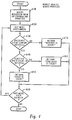
- FIG. 4 a flowchart illustrating operations for an alternative embodiment for carrying out the present invention is shown.
- This alternative embodiment does not contain either the Event Detection Process or the Presence Detection Process.
- a single Direct Device Query Process is provided.
- this alternative embodiment comprises a Direct Query Process and an Interrogator Process.
- -process block 410 awaits the receipt of a query from the Interrogator Process portion of the present invention.
- a query may comprise one or more user queries.
- process block 420 gets the next user query from the query received by process block 410.
- decision block 430 determines if a presence indicating event occurs during a proximity interval.
- This proximity interval may either be a default value or a value specified by the requesting user.
- decision block 430 determines if a verified event occurred during the proximity interval.
- process block 450 sets the return status for that user to indicate that the user is there.
- decision block 460 determines if there are any more user queries to be processed from the query received from the Interrogator Process. If there are not any more user queries, then the program returns to the Interrogator Process "which called the program. Alternatively, the program may stop if it were a separate program process invoked by the Interrogator Process. Alternatively, the program may become dormant awaiting the next query if it is an active process in a multi-process system.
- process block 480 sets the return status for that user to indicate that someone, but not necessarily the user, is there. Thereafter, the program proceeds to decision block 460 to process any additional user queries.
- processing block 470 sets the return status for that user to indicate that no one is there. Thereafter, the program proceeds to decision block 460 to process any additional user queries.
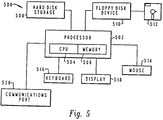
- the data processing system 500 includes a processor 502, which includes a central processing unit (CPU) 504, and a memory 506. Additional memory, in the form of a hard disk file storage 508 and a floppy disk device 510, is connected to the processor 502. Floppy disk device 510 receives a diskette 512 which has computer program code recorded thereon that implements the present invention in the data processing system 500.
- the data processing system 500 may include user interface hardware, including a mouse 514 and a keyboard 516 for allowing user input to the processor 502 and a display 518 for presenting visual data to the user.
- the data processing system may also include a communications port 520 for communicatingwith a network or other data processing systems.
Landscapes
- Engineering & Computer Science (AREA)
- Theoretical Computer Science (AREA)
- General Engineering & Computer Science (AREA)
- Quality & Reliability (AREA)
- Physics & Mathematics (AREA)
- General Physics & Mathematics (AREA)
- Computing Systems (AREA)
- Computer Hardware Design (AREA)
- Computer And Data Communications (AREA)
- Facsimiles In General (AREA)
Applications Claiming Priority (2)
| Application Number | Priority Date | Filing Date | Title |
|---|---|---|---|
| US877908 | 1992-05-01 | ||
| US07/877,908 US5471616A (en) | 1992-05-01 | 1992-05-01 | Method of and apparatus for providing existential presence acknowledgement |
Publications (2)
| Publication Number | Publication Date |
|---|---|
| EP0568480A2 true EP0568480A2 (de) | 1993-11-03 |
| EP0568480A3 EP0568480A3 (de) | 1995-07-12 |
Family
ID=25370968
Family Applications (1)
| Application Number | Title | Priority Date | Filing Date |
|---|---|---|---|
| EP93480039A Withdrawn EP0568480A3 (de) | 1992-05-01 | 1993-04-06 | Verfahren und Vorrichtung zur Erkennung von Anwesenheit. |
Country Status (3)
| Country | Link |
|---|---|
| US (1) | US5471616A (de) |
| EP (1) | EP0568480A3 (de) |
| JP (1) | JPH0619841A (de) |
Cited By (3)
| Publication number | Priority date | Publication date | Assignee | Title |
|---|---|---|---|---|
| EP0637807A3 (de) * | 1993-07-26 | 1995-08-16 | Rank Xerox Ltd | Aufnahme und Wiederauffindung von für Aktivitäten des Benutzers relevanter Information. |
| WO1998059326A1 (en) * | 1997-06-23 | 1998-12-30 | Burrington, Alan, Graham, Headford | Data entry system |
| WO2000025565A3 (en) * | 1998-11-03 | 2000-11-09 | British Telecomm | Apparatus for identifying user activities |
Families Citing this family (30)
| Publication number | Priority date | Publication date | Assignee | Title |
|---|---|---|---|---|
| US6448978B1 (en) * | 1996-09-26 | 2002-09-10 | Intel Corporation | Mechanism for increasing awareness and sense of proximity among multiple users in a network system |
| JPH10268959A (ja) * | 1997-03-24 | 1998-10-09 | Canon Inc | 情報処理装置及びその方法 |
| US6367020B1 (en) * | 1998-03-09 | 2002-04-02 | Micron Technology, Inc. | System for automatically initiating a computer security and/or screen saver mode |
| US6304905B1 (en) * | 1998-09-16 | 2001-10-16 | Cisco Technology, Inc. | Detecting an active network node using an invalid protocol option |
| US6374145B1 (en) * | 1998-12-14 | 2002-04-16 | Mark Lignoul | Proximity sensor for screen saver and password delay |
| US6687750B1 (en) | 1999-04-14 | 2004-02-03 | Cisco Technology, Inc. | Network traffic visualization |
| US7016675B1 (en) | 1999-09-27 | 2006-03-21 | 3Com Corporation | System and method for controlling telephone service using a wireless personal information device |
| US6744759B1 (en) | 1999-09-27 | 2004-06-01 | 3Com Corporation | System and method for providing user-configured telephone service in a data network telephony system |
| US6937699B1 (en) | 1999-09-27 | 2005-08-30 | 3Com Corporation | System and method for advertising using data network telephone connections |
| US6914897B1 (en) | 1999-09-27 | 2005-07-05 | 3 Com Corporation | System and method for accessing radio programs using a data network telephone in a network based telecommunication system |
| US6650901B1 (en) | 2000-02-29 | 2003-11-18 | 3Com Corporation | System and method for providing user-configured telephone service in a data network telephony system |
| US6804224B1 (en) | 2000-02-29 | 2004-10-12 | 3Com Corporation | System and method for providing telephone service having private branch exchange features in a voice-over-data network telephony system |
| US6856616B1 (en) | 2000-02-29 | 2005-02-15 | 3Com Corporation | System and method for providing service provider configurations for telephones using a central server in a data network telephony system |
| US7324635B2 (en) | 2000-05-04 | 2008-01-29 | Telemaze Llc | Branch calling and caller ID based call routing telephone features |
| US6918039B1 (en) * | 2000-05-18 | 2005-07-12 | International Business Machines Corporation | Method and an apparatus for detecting a need for security and invoking a secured presentation of data |
| US6741586B1 (en) | 2000-05-31 | 2004-05-25 | 3Com Corporation | System and method for sharing computer screens over a telephony network |
| US7606864B2 (en) * | 2000-11-10 | 2009-10-20 | At&T Intellectual Property I, L.P. | Setting and display of communication receipt preferences by users of multiple communication devices |
| US7847675B1 (en) | 2002-02-28 | 2010-12-07 | Kimball International, Inc. | Security system |
| US6965294B1 (en) | 2002-02-28 | 2005-11-15 | Kimball International, Inc. | Workspace security system |
| JP4196584B2 (ja) * | 2002-03-18 | 2008-12-17 | 富士機械製造株式会社 | 管理調整モードプロテクション機能を備えた回路基板製造装置及びその運転方法 |
| US7437765B2 (en) * | 2002-06-04 | 2008-10-14 | Sap Aktiengesellschaft | Sensitive display system |
| US7945035B2 (en) * | 2003-02-28 | 2011-05-17 | Siemens Enterprise Communications, Inc. | Dynamic presence proxy for call sessions |
| US20070130323A1 (en) * | 2005-12-02 | 2007-06-07 | Landsman Richard A | Implied presence detection in a communication system |
| JP2007257086A (ja) * | 2006-03-20 | 2007-10-04 | Fujitsu Ltd | 行動記録支援プログラム、システム、装置、および方法 |
| US8122491B2 (en) * | 2006-05-18 | 2012-02-21 | Microsoft Corporation | Techniques for physical presence detection for a communications device |
| JP4760612B2 (ja) * | 2006-08-28 | 2011-08-31 | 富士ゼロックス株式会社 | 画像形成装置、画像形成システム及びプログラム |
| US20080215318A1 (en) * | 2007-03-01 | 2008-09-04 | Microsoft Corporation | Event recognition |
| US20080318592A1 (en) * | 2007-06-22 | 2008-12-25 | International Business Machines Corporation | Delivering telephony communications to devices proximate to a recipient after automatically determining the recipient's location |
| US8472972B2 (en) * | 2007-11-21 | 2013-06-25 | International Business Machines Corporation | Device, system, and method of physical context based wireless communication |
| WO2011149558A2 (en) | 2010-05-28 | 2011-12-01 | Abelow Daniel H | Reality alternate |
Family Cites Families (8)
| Publication number | Priority date | Publication date | Assignee | Title |
|---|---|---|---|---|
| US4420751A (en) * | 1981-10-29 | 1983-12-13 | Ncr Corporation | Detection method and apparatus for a user device or automatic teller bank machine |
| US4805222A (en) * | 1985-12-23 | 1989-02-14 | International Bioaccess Systems Corporation | Method and apparatus for verifying an individual's identity |
| US4901223A (en) * | 1986-04-30 | 1990-02-13 | International Business Machines Corporation | Method and apparatus for application software control of echo response |
| JPH0267668A (ja) * | 1988-09-02 | 1990-03-07 | Hitachi Ltd | 端末装置 |
| JPH03129546A (ja) * | 1989-10-16 | 1991-06-03 | Nippon Telegr & Teleph Corp <Ntt> | 在席状況通知装置 |
| US5201033A (en) * | 1990-01-17 | 1993-04-06 | International Business Machines Corporation | Method for controlling cursor movements on certain computer workstations |
| US5197124A (en) * | 1990-01-17 | 1993-03-23 | International Business Machines Corporation | Method for constructing selection cursors on dependent workstations |
| US5272754A (en) * | 1991-03-28 | 1993-12-21 | Secure Computing Corporation | Secure computer interface |
-
1992
- 1992-05-01 US US07/877,908 patent/US5471616A/en not_active Expired - Fee Related
-
1993
- 1993-04-05 JP JP5077834A patent/JPH0619841A/ja active Pending
- 1993-04-06 EP EP93480039A patent/EP0568480A3/de not_active Withdrawn
Non-Patent Citations (1)
| Title |
|---|
| PROCEEDINGS OF THE SUMMER 1991 USENIX CONFERENCE, 10 June 1991, NASHVILLE, TN, USA pages 299 - 311 S. MANANDHAR 'Activity Server: You can run but you can't hide' * |
Cited By (4)
| Publication number | Priority date | Publication date | Assignee | Title |
|---|---|---|---|---|
| EP0637807A3 (de) * | 1993-07-26 | 1995-08-16 | Rank Xerox Ltd | Aufnahme und Wiederauffindung von für Aktivitäten des Benutzers relevanter Information. |
| US5539665A (en) * | 1993-07-26 | 1996-07-23 | Xerox Corporation | Recording and retrieval of information relevant to the activities of a user |
| WO1998059326A1 (en) * | 1997-06-23 | 1998-12-30 | Burrington, Alan, Graham, Headford | Data entry system |
| WO2000025565A3 (en) * | 1998-11-03 | 2000-11-09 | British Telecomm | Apparatus for identifying user activities |
Also Published As
| Publication number | Publication date |
|---|---|
| US5471616A (en) | 1995-11-28 |
| JPH0619841A (ja) | 1994-01-28 |
| EP0568480A3 (de) | 1995-07-12 |
Similar Documents
| Publication | Publication Date | Title |
|---|---|---|
| US5471616A (en) | Method of and apparatus for providing existential presence acknowledgement | |
| US5349662A (en) | Method of and apparatus for providing automatic detection of user activity | |
| US5485605A (en) | Method of and apparatus for providing a group query | |
| US6327613B1 (en) | Method and apparatus for sharing peripheral devices over a network | |
| US4805134A (en) | Electronic system for accessing graphical and textual information | |
| US8824643B2 (en) | System, method and computer program product for conveying presence information via voice mail | |
| US6005928A (en) | Method and system for automatic distribution addressing | |
| US7231640B2 (en) | Changing user identities without closing applications | |
| US6826700B1 (en) | Method and apparatus for a web application server to automatically solicit a new password when an existing password has expired | |
| CA2069119C (en) | Data processing system | |
| US6225997B1 (en) | Communication system and communication apparatus | |
| US5490271A (en) | Remote interrupt processing over a network | |
| US6226659B1 (en) | Method and apparatus for processing reports | |
| US5825358A (en) | Process and system for forming multiple preemptive modeless dialog boxes | |
| EP0371608A2 (de) | Objektüberwachung in einem Netzwerk | |
| JP2003216260A (ja) | データ処理装置、及びプログラム | |
| WO2001027724A1 (en) | Computer use privacy protector and method | |
| US20030074496A1 (en) | Information processing apparatus having simplified user switching function and program for use therewith | |
| JP3509785B2 (ja) | ワークフロー処理方法、ワークフロー処理プログラムが記録された記録媒体およびワークフロー処理システム | |
| US7386551B1 (en) | Method and apparatus for providing an availability message to a remote user | |
| JP2005037977A (ja) | 情報処理装置、情報処理装置のタイムアウト回避方法、タイムアウト回避ソフトウェア及び記憶媒体 | |
| JP2778061B2 (ja) | 複数通信路接続制御方式 | |
| JPH0212462A (ja) | コンピユータ・システムにおけるレコードの検索方法 | |
| JPH05233106A (ja) | コンピュータ管理装置 | |
| JPH09153013A (ja) | ネットワークシステムの負荷制御方式 |
Legal Events
| Date | Code | Title | Description |
|---|---|---|---|
| PUAI | Public reference made under article 153(3) epc to a published international application that has entered the european phase |
Free format text: ORIGINAL CODE: 0009012 |
|
| AK | Designated contracting states |
Kind code of ref document: A2 Designated state(s): AT BE CH DE ES FR GB IT LI NL SE |
|
| 17P | Request for examination filed |
Effective date: 19940324 |
|
| PUAL | Search report despatched |
Free format text: ORIGINAL CODE: 0009013 |
|
| AK | Designated contracting states |
Kind code of ref document: A3 Designated state(s): AT BE CH DE ES FR GB IT LI NL SE |
|
| STAA | Information on the status of an ep patent application or granted ep patent |
Free format text: STATUS: THE APPLICATION IS DEEMED TO BE WITHDRAWN |
|
| 18D | Application deemed to be withdrawn |
Effective date: 19961102 |
|
| R18D | Application deemed to be withdrawn (corrected) |
Effective date: 19961101 |