EP0540585B1 - Competitive pcr for quantitation of dna - Google Patents
Competitive pcr for quantitation of dna Download PDFInfo
- Publication number
- EP0540585B1 EP0540585B1 EP91913251A EP91913251A EP0540585B1 EP 0540585 B1 EP0540585 B1 EP 0540585B1 EP 91913251 A EP91913251 A EP 91913251A EP 91913251 A EP91913251 A EP 91913251A EP 0540585 B1 EP0540585 B1 EP 0540585B1
- Authority
- EP
- European Patent Office
- Prior art keywords
- dna
- competitor
- pcr
- sample
- amplified
- Prior art date
- Legal status (The legal status is an assumption and is not a legal conclusion. Google has not performed a legal analysis and makes no representation as to the accuracy of the status listed.)
- Expired - Lifetime
Links
- 230000002860 competitive effect Effects 0.000 title description 5
- 238000003752 polymerase chain reaction Methods 0.000 claims abstract description 57
- 238000000034 method Methods 0.000 claims abstract description 52
- 238000000137 annealing Methods 0.000 claims abstract description 5
- 108020004414 DNA Proteins 0.000 claims description 131
- 238000010790 dilution Methods 0.000 claims description 18
- 239000012895 dilution Substances 0.000 claims description 18
- 238000003556 assay Methods 0.000 claims description 17
- 230000027455 binding Effects 0.000 claims description 9
- 238000000338 in vitro Methods 0.000 claims description 9
- 239000000872 buffer Substances 0.000 claims description 7
- 238000003745 diagnosis Methods 0.000 claims description 6
- 239000007787 solid Substances 0.000 claims description 6
- 102000004190 Enzymes Human genes 0.000 claims description 5
- 108090000790 Enzymes Proteins 0.000 claims description 5
- 239000002299 complementary DNA Substances 0.000 claims description 5
- 238000006243 chemical reaction Methods 0.000 claims description 4
- 238000002703 mutagenesis Methods 0.000 claims description 4
- 231100000350 mutagenesis Toxicity 0.000 claims description 4
- 102000052510 DNA-Binding Proteins Human genes 0.000 claims description 3
- 101710096438 DNA-binding protein Proteins 0.000 claims description 3
- 108010006785 Taq Polymerase Proteins 0.000 claims description 3
- 230000001580 bacterial effect Effects 0.000 claims description 3
- 208000035143 Bacterial infection Diseases 0.000 claims description 2
- 206010017533 Fungal infection Diseases 0.000 claims description 2
- 108010054278 Lac Repressors Proteins 0.000 claims description 2
- 108020005196 Mitochondrial DNA Proteins 0.000 claims description 2
- 208000031888 Mycoses Diseases 0.000 claims description 2
- 206010037075 Protozoal infections Diseases 0.000 claims description 2
- 208000036142 Viral infection Diseases 0.000 claims description 2
- 208000022362 bacterial infectious disease Diseases 0.000 claims description 2
- 230000003612 virological effect Effects 0.000 claims description 2
- 238000002372 labelling Methods 0.000 abstract description 4
- 239000000523 sample Substances 0.000 description 35
- 244000045947 parasite Species 0.000 description 17
- 108090000623 proteins and genes Proteins 0.000 description 13
- 238000001514 detection method Methods 0.000 description 11
- 238000003199 nucleic acid amplification method Methods 0.000 description 10
- 108091032973 (ribonucleotides)n+m Proteins 0.000 description 9
- 230000003321 amplification Effects 0.000 description 9
- 108020001507 fusion proteins Proteins 0.000 description 9
- 102000037865 fusion proteins Human genes 0.000 description 9
- 239000011324 bead Substances 0.000 description 8
- 239000012634 fragment Substances 0.000 description 8
- YBJHBAHKTGYVGT-ZKWXMUAHSA-N (+)-Biotin Chemical compound N1C(=O)N[C@@H]2[C@H](CCCCC(=O)O)SC[C@@H]21 YBJHBAHKTGYVGT-ZKWXMUAHSA-N 0.000 description 6
- 239000000463 material Substances 0.000 description 6
- 102000004169 proteins and genes Human genes 0.000 description 6
- KUWPCJHYPSUOFW-SCWFEDMQSA-N (2r,3r,4s,5r)-2-(hydroxymethyl)-6-(2-nitrophenoxy)oxane-3,4,5-triol Chemical compound O[C@@H]1[C@@H](O)[C@@H](O)[C@@H](CO)OC1OC1=CC=CC=C1[N+]([O-])=O KUWPCJHYPSUOFW-SCWFEDMQSA-N 0.000 description 5
- 108091028043 Nucleic acid sequence Proteins 0.000 description 5
- 239000013612 plasmid Substances 0.000 description 5
- 238000011002 quantification Methods 0.000 description 5
- 238000013207 serial dilution Methods 0.000 description 5
- 108010090804 Streptavidin Proteins 0.000 description 4
- 230000008859 change Effects 0.000 description 4
- 108020004999 messenger RNA Proteins 0.000 description 4
- 230000004044 response Effects 0.000 description 4
- 238000000926 separation method Methods 0.000 description 4
- 102100034343 Integrase Human genes 0.000 description 3
- 108091034117 Oligonucleotide Proteins 0.000 description 3
- 238000012408 PCR amplification Methods 0.000 description 3
- 238000002944 PCR assay Methods 0.000 description 3
- 241000223960 Plasmodium falciparum Species 0.000 description 3
- 108010092799 RNA-directed DNA polymerase Proteins 0.000 description 3
- 239000002253 acid Substances 0.000 description 3
- 150000007513 acids Chemical class 0.000 description 3
- 238000004458 analytical method Methods 0.000 description 3
- 230000008901 benefit Effects 0.000 description 3
- 229960002685 biotin Drugs 0.000 description 3
- 235000020958 biotin Nutrition 0.000 description 3
- 239000011616 biotin Substances 0.000 description 3
- 238000010367 cloning Methods 0.000 description 3
- 230000000694 effects Effects 0.000 description 3
- 238000001962 electrophoresis Methods 0.000 description 3
- 125000000524 functional group Chemical group 0.000 description 3
- 125000002887 hydroxy group Chemical group [H]O* 0.000 description 3
- 239000000203 mixture Substances 0.000 description 3
- 239000002773 nucleotide Substances 0.000 description 3
- 125000003729 nucleotide group Chemical group 0.000 description 3
- 244000052769 pathogen Species 0.000 description 3
- 229920000642 polymer Polymers 0.000 description 3
- 230000008569 process Effects 0.000 description 3
- 239000000758 substrate Substances 0.000 description 3
- 108091033380 Coding strand Proteins 0.000 description 2
- 230000006820 DNA synthesis Effects 0.000 description 2
- TWRXJAOTZQYOKJ-UHFFFAOYSA-L Magnesium chloride Chemical compound [Mg+2].[Cl-].[Cl-] TWRXJAOTZQYOKJ-UHFFFAOYSA-L 0.000 description 2
- 229920001213 Polysorbate 20 Polymers 0.000 description 2
- 239000004793 Polystyrene Substances 0.000 description 2
- FAPWRFPIFSIZLT-UHFFFAOYSA-M Sodium chloride Chemical compound [Na+].[Cl-] FAPWRFPIFSIZLT-UHFFFAOYSA-M 0.000 description 2
- 238000002835 absorbance Methods 0.000 description 2
- 125000003277 amino group Chemical group 0.000 description 2
- 102000005936 beta-Galactosidase Human genes 0.000 description 2
- 108010005774 beta-Galactosidase Proteins 0.000 description 2
- 230000015572 biosynthetic process Effects 0.000 description 2
- 239000008280 blood Substances 0.000 description 2
- 210000004369 blood Anatomy 0.000 description 2
- 238000010804 cDNA synthesis Methods 0.000 description 2
- 125000003178 carboxy group Chemical group [H]OC(*)=O 0.000 description 2
- 239000001913 cellulose Substances 0.000 description 2
- 229920002678 cellulose Polymers 0.000 description 2
- 239000013611 chromosomal DNA Substances 0.000 description 2
- 238000000576 coating method Methods 0.000 description 2
- 201000010099 disease Diseases 0.000 description 2
- 208000037265 diseases, disorders, signs and symptoms Diseases 0.000 description 2
- 239000003112 inhibitor Substances 0.000 description 2
- 230000003993 interaction Effects 0.000 description 2
- 108020004707 nucleic acids Proteins 0.000 description 2
- 102000039446 nucleic acids Human genes 0.000 description 2
- 150000007523 nucleic acids Chemical class 0.000 description 2
- 230000001717 pathogenic effect Effects 0.000 description 2
- 230000001575 pathological effect Effects 0.000 description 2
- 239000000256 polyoxyethylene sorbitan monolaurate Substances 0.000 description 2
- 235000010486 polyoxyethylene sorbitan monolaurate Nutrition 0.000 description 2
- 229920002223 polystyrene Polymers 0.000 description 2
- 238000012205 qualitative assay Methods 0.000 description 2
- 238000004445 quantitative analysis Methods 0.000 description 2
- 238000012207 quantitative assay Methods 0.000 description 2
- 239000011541 reaction mixture Substances 0.000 description 2
- 101150089906 resA gene Proteins 0.000 description 2
- 230000035945 sensitivity Effects 0.000 description 2
- 239000007790 solid phase Substances 0.000 description 2
- 238000004448 titration Methods 0.000 description 2
- 238000000954 titration curve Methods 0.000 description 2
- SMZOUWXMTYCWNB-UHFFFAOYSA-N 2-(2-methoxy-5-methylphenyl)ethanamine Chemical compound COC1=CC=C(C)C=C1CCN SMZOUWXMTYCWNB-UHFFFAOYSA-N 0.000 description 1
- NIXOWILDQLNWCW-UHFFFAOYSA-N 2-Propenoic acid Natural products OC(=O)C=C NIXOWILDQLNWCW-UHFFFAOYSA-N 0.000 description 1
- QKNYBSVHEMOAJP-UHFFFAOYSA-N 2-amino-2-(hydroxymethyl)propane-1,3-diol;hydron;chloride Chemical compound Cl.OCC(N)(CO)CO QKNYBSVHEMOAJP-UHFFFAOYSA-N 0.000 description 1
- FHVDTGUDJYJELY-UHFFFAOYSA-N 6-{[2-carboxy-4,5-dihydroxy-6-(phosphanyloxy)oxan-3-yl]oxy}-4,5-dihydroxy-3-phosphanyloxane-2-carboxylic acid Chemical compound O1C(C(O)=O)C(P)C(O)C(O)C1OC1C(C(O)=O)OC(OP)C(O)C1O FHVDTGUDJYJELY-UHFFFAOYSA-N 0.000 description 1
- 229920000936 Agarose Polymers 0.000 description 1
- 102000002260 Alkaline Phosphatase Human genes 0.000 description 1
- 108020004774 Alkaline Phosphatase Proteins 0.000 description 1
- 108090001008 Avidin Proteins 0.000 description 1
- 241000606161 Chlamydia Species 0.000 description 1
- 208000035473 Communicable disease Diseases 0.000 description 1
- 102000053602 DNA Human genes 0.000 description 1
- 108010017826 DNA Polymerase I Proteins 0.000 description 1
- 102000004594 DNA Polymerase I Human genes 0.000 description 1
- 108020003215 DNA Probes Proteins 0.000 description 1
- 239000003298 DNA probe Substances 0.000 description 1
- 238000001712 DNA sequencing Methods 0.000 description 1
- 206010018612 Gonorrhoea Diseases 0.000 description 1
- 108091005904 Hemoglobin subunit beta Proteins 0.000 description 1
- 101100297421 Homarus americanus phc-2 gene Proteins 0.000 description 1
- XQFRJNBWHJMXHO-RRKCRQDMSA-N IDUR Chemical compound C1[C@H](O)[C@@H](CO)O[C@H]1N1C(=O)NC(=O)C(I)=C1 XQFRJNBWHJMXHO-RRKCRQDMSA-N 0.000 description 1
- CERQOIWHTDAKMF-UHFFFAOYSA-N Methacrylic acid Chemical compound CC(=C)C(O)=O CERQOIWHTDAKMF-UHFFFAOYSA-N 0.000 description 1
- YNLCVAQJIKOXER-UHFFFAOYSA-N N-[tris(hydroxymethyl)methyl]-3-aminopropanesulfonic acid Chemical compound OCC(CO)(CO)NCCCS(O)(=O)=O YNLCVAQJIKOXER-UHFFFAOYSA-N 0.000 description 1
- 102000003992 Peroxidases Human genes 0.000 description 1
- 108020004682 Single-Stranded DNA Proteins 0.000 description 1
- 239000004809 Teflon Substances 0.000 description 1
- 229920006362 Teflon® Polymers 0.000 description 1
- 208000034953 Twin anemia-polycythemia sequence Diseases 0.000 description 1
- 241000700605 Viruses Species 0.000 description 1
- 229940072056 alginate Drugs 0.000 description 1
- 235000010443 alginic acid Nutrition 0.000 description 1
- 229920000615 alginic acid Polymers 0.000 description 1
- 238000013459 approach Methods 0.000 description 1
- 244000052616 bacterial pathogen Species 0.000 description 1
- 239000013592 cell lysate Substances 0.000 description 1
- 230000006037 cell lysis Effects 0.000 description 1
- 238000005119 centrifugation Methods 0.000 description 1
- 238000012512 characterization method Methods 0.000 description 1
- 239000003795 chemical substances by application Substances 0.000 description 1
- 239000003593 chromogenic compound Substances 0.000 description 1
- 230000002759 chromosomal effect Effects 0.000 description 1
- 238000003776 cleavage reaction Methods 0.000 description 1
- 239000012568 clinical material Substances 0.000 description 1
- 239000011248 coating agent Substances 0.000 description 1
- 238000007398 colorimetric assay Methods 0.000 description 1
- 238000010276 construction Methods 0.000 description 1
- 229920001577 copolymer Polymers 0.000 description 1
- 125000004122 cyclic group Chemical group 0.000 description 1
- 230000001351 cycling effect Effects 0.000 description 1
- 230000003247 decreasing effect Effects 0.000 description 1
- 238000004925 denaturation Methods 0.000 description 1
- 230000036425 denaturation Effects 0.000 description 1
- 230000014670 detection of bacterium Effects 0.000 description 1
- 230000010460 detection of virus Effects 0.000 description 1
- 238000002405 diagnostic procedure Methods 0.000 description 1
- 238000010586 diagram Methods 0.000 description 1
- 239000003814 drug Substances 0.000 description 1
- 238000011156 evaluation Methods 0.000 description 1
- 238000002474 experimental method Methods 0.000 description 1
- 238000001914 filtration Methods 0.000 description 1
- 125000002485 formyl group Chemical group [H]C(*)=O 0.000 description 1
- 230000002068 genetic effect Effects 0.000 description 1
- 238000010438 heat treatment Methods 0.000 description 1
- 208000006454 hepatitis Diseases 0.000 description 1
- 231100000283 hepatitis Toxicity 0.000 description 1
- 229940094991 herring sperm dna Drugs 0.000 description 1
- 230000007062 hydrolysis Effects 0.000 description 1
- 238000006460 hydrolysis reaction Methods 0.000 description 1
- 238000011534 incubation Methods 0.000 description 1
- BPHPUYQFMNQIOC-NXRLNHOXSA-N isopropyl beta-D-thiogalactopyranoside Chemical compound CC(C)S[C@@H]1O[C@H](CO)[C@H](O)[C@H](O)[C@H]1O BPHPUYQFMNQIOC-NXRLNHOXSA-N 0.000 description 1
- 229940059904 light mineral oil Drugs 0.000 description 1
- 230000000670 limiting effect Effects 0.000 description 1
- 229910001629 magnesium chloride Inorganic materials 0.000 description 1
- 239000006249 magnetic particle Substances 0.000 description 1
- 201000004792 malaria Diseases 0.000 description 1
- 238000005259 measurement Methods 0.000 description 1
- 238000002844 melting Methods 0.000 description 1
- 230000008018 melting Effects 0.000 description 1
- 230000002906 microbiologic effect Effects 0.000 description 1
- 230000009871 nonspecific binding Effects 0.000 description 1
- 239000002777 nucleoside Substances 0.000 description 1
- 150000003833 nucleoside derivatives Chemical class 0.000 description 1
- 239000002245 particle Substances 0.000 description 1
- 108040007629 peroxidase activity proteins Proteins 0.000 description 1
- 150000008300 phosphoramidites Chemical class 0.000 description 1
- 229920000151 polyglycol Polymers 0.000 description 1
- 239000010695 polyglycol Substances 0.000 description 1
- 229920002635 polyurethane Polymers 0.000 description 1
- 239000004814 polyurethane Substances 0.000 description 1
- 239000013641 positive control Substances 0.000 description 1
- 238000001556 precipitation Methods 0.000 description 1
- 238000004393 prognosis Methods 0.000 description 1
- 244000079416 protozoan pathogen Species 0.000 description 1
- 230000002829 reductive effect Effects 0.000 description 1
- 238000011160 research Methods 0.000 description 1
- 230000001177 retroviral effect Effects 0.000 description 1
- 230000007017 scission Effects 0.000 description 1
- 210000002966 serum Anatomy 0.000 description 1
- 239000011780 sodium chloride Substances 0.000 description 1
- 241000894007 species Species 0.000 description 1
- 239000012089 stop solution Substances 0.000 description 1
- 238000003786 synthesis reaction Methods 0.000 description 1
- 208000006379 syphilis Diseases 0.000 description 1
- 125000003396 thiol group Chemical group [H]S* 0.000 description 1
- 238000013518 transcription Methods 0.000 description 1
- 230000035897 transcription Effects 0.000 description 1
- 238000011144 upstream manufacturing Methods 0.000 description 1
- 230000009385 viral infection Effects 0.000 description 1
- 244000052613 viral pathogen Species 0.000 description 1
- 230000000007 visual effect Effects 0.000 description 1
- 238000005406 washing Methods 0.000 description 1
- DGVVWUTYPXICAM-UHFFFAOYSA-N β‐Mercaptoethanol Chemical compound OCCS DGVVWUTYPXICAM-UHFFFAOYSA-N 0.000 description 1
Images
Classifications
-
- C—CHEMISTRY; METALLURGY
- C12—BIOCHEMISTRY; BEER; SPIRITS; WINE; VINEGAR; MICROBIOLOGY; ENZYMOLOGY; MUTATION OR GENETIC ENGINEERING
- C12Q—MEASURING OR TESTING PROCESSES INVOLVING ENZYMES, NUCLEIC ACIDS OR MICROORGANISMS; COMPOSITIONS OR TEST PAPERS THEREFOR; PROCESSES OF PREPARING SUCH COMPOSITIONS; CONDITION-RESPONSIVE CONTROL IN MICROBIOLOGICAL OR ENZYMOLOGICAL PROCESSES
- C12Q1/00—Measuring or testing processes involving enzymes, nucleic acids or microorganisms; Compositions therefor; Processes of preparing such compositions
- C12Q1/68—Measuring or testing processes involving enzymes, nucleic acids or microorganisms; Compositions therefor; Processes of preparing such compositions involving nucleic acids
- C12Q1/6813—Hybridisation assays
- C12Q1/6816—Hybridisation assays characterised by the detection means
-
- C—CHEMISTRY; METALLURGY
- C12—BIOCHEMISTRY; BEER; SPIRITS; WINE; VINEGAR; MICROBIOLOGY; ENZYMOLOGY; MUTATION OR GENETIC ENGINEERING
- C12Q—MEASURING OR TESTING PROCESSES INVOLVING ENZYMES, NUCLEIC ACIDS OR MICROORGANISMS; COMPOSITIONS OR TEST PAPERS THEREFOR; PROCESSES OF PREPARING SUCH COMPOSITIONS; CONDITION-RESPONSIVE CONTROL IN MICROBIOLOGICAL OR ENZYMOLOGICAL PROCESSES
- C12Q1/00—Measuring or testing processes involving enzymes, nucleic acids or microorganisms; Compositions therefor; Processes of preparing such compositions
- C12Q1/68—Measuring or testing processes involving enzymes, nucleic acids or microorganisms; Compositions therefor; Processes of preparing such compositions involving nucleic acids
- C12Q1/6813—Hybridisation assays
- C12Q1/6834—Enzymatic or biochemical coupling of nucleic acids to a solid phase
-
- C—CHEMISTRY; METALLURGY
- C12—BIOCHEMISTRY; BEER; SPIRITS; WINE; VINEGAR; MICROBIOLOGY; ENZYMOLOGY; MUTATION OR GENETIC ENGINEERING
- C12Q—MEASURING OR TESTING PROCESSES INVOLVING ENZYMES, NUCLEIC ACIDS OR MICROORGANISMS; COMPOSITIONS OR TEST PAPERS THEREFOR; PROCESSES OF PREPARING SUCH COMPOSITIONS; CONDITION-RESPONSIVE CONTROL IN MICROBIOLOGICAL OR ENZYMOLOGICAL PROCESSES
- C12Q1/00—Measuring or testing processes involving enzymes, nucleic acids or microorganisms; Compositions therefor; Processes of preparing such compositions
- C12Q1/68—Measuring or testing processes involving enzymes, nucleic acids or microorganisms; Compositions therefor; Processes of preparing such compositions involving nucleic acids
- C12Q1/6844—Nucleic acid amplification reactions
- C12Q1/6851—Quantitative amplification
Definitions
- This invention relates to a method of quantifying DNA in particular a method of solid phase diagnosis of medical conditions by the identification of specific DNA.
- Target DNA molecules are often present in cell lysates or other source materials in extremely small quantities and in order to amplify such DNA selectively, the polymerase chain reaction (PCR) method has been developed.
- PCR polymerase chain reaction
- a pair of polymerisation primers specific to known sequences of the target DNA are selected, one hybridising at or near the 5' end of the coding strand and the other at or near the 5' end of the non-coding strand such that in the presence of a polymerase, each primer produces a DNA sequence extending the full length of the target DNA template.
- the DNA so produced is then subjected to strand separation, typically by melting at a temperature of about 90°C, the newly formed single stranded DNA sequences will hybridise to excess primer present in the mixture, usually after reducing the temperature to the range suitable for annealing, whereupon in the presence of the polymerase, further DNA strands are synthesised, this time extending only between the termini of the two primers.
- the polymerase is preferably capable of surviving the high temperature used in the strand separation step, a suitable thermophilic polymerase, namely Taq, having recently become available.
- PCR In the detection of bacteria, virus and parasites for example PCR has several advantages compared to conventional diagnostic methods, i.e. the generality and speed of the assay.
- conventional PCR assays are only qualitative limits their use to diagnostic applications where only the presence or absence of the pathogen is to be determined.
- a quantitative measurement is need to make a proper diagnosis and advantageously it would be useful to be able to measure the amount of pathogen during treatment to make a relevant prognosis.
- a quantitative assay e.g. one suitable for clinical assays, which overcomes the drawbacks associated with conventional PCR assays.
- PCR aided transcript titration assay PATTY
- PATTY PCR aided transcript titration assay
- DIANA immobilized amplified nucleic acids
- the assay is based on the use of a biotinylated or otherwise functionalised PCR primer, which is used to capture in vitro amplified material on, for example, streptavidin-coated magnetic beads.
- the other PCR primer contains a "handle", such as a lac operator sequence, allowing colorimetric detection of the captured DNA using a Lac I repressor- ⁇ -galactosidase fusion protein.
- the preferred form of the qualitative DIANA assay combines the advantages of the PCR method with the high specificity and stability of the biotin-streptavidin system and the simplicity of a colorimetric detection based on ⁇ -galactosidase.
- the magnetic beads as solid support ensure that no centrifugations, filtrations or precipitations are needed. (T. Hultman, S. St ⁇ hl, E. Hornes and M. Uhlén Nucl. Acids Res. 17, 4937 (1989).
- a method of determining the amount of target DNA in a sample which comprises the steps of
- target DNA is intended to encompass inter alia cDNA e.g. from retroviral RNA, genomic DNA, mitochondrial DNA etc.
- Performance of the method according to the invention produces a set of label values which, when plotted against the known amounts of added competitor DNA give a characteristic sigmoid curve (as will be more fully appreciated from the examples which follow); the point of inflection on the curve is defined by the sharp change in the amount of labelled DNA between those aliquots in which added competitor DNA predominated and those in which target DNA predominated and is approximately proportional to the amount of target DNA in the initial sample.
- the competitor DNA is most conveniently added to the aliquots as a series of equally stepped dilutions, eg 1:3 or, for a more accurate result, 1:1.5.
- much higher dilutions may be useful, for example, as high as 1:100, for some purposes.
- About 6-10 such dilutions normally give an adequate range and 8x12 microlitre wells may be used for this purpose.
- Two-stage PCR (using nested primers), as described in our co-pending application PCT/EP90/00454, may be used to enhance the signal to noise ratio and thereby increase the sensitivity of the method according to the invention.
- the efficiency of the PCR is not critical since the invention relies on the sharp change in the amount of labelled DNA between different aliquots.
- PCR may be effected on a single sample to which a known amount of the competitor DNA is added at the known critical level. Where the amount of target DNA is significantly greater than the amount of competitor DNA, the signal from the amplified and labelled competitor DNA will be characteristically low.
- Immobilisation of the co-amplified DNA may either take place as part of the PCR amplification itself, as where one or more primers are attached to a support, or alternatively one or more of the primers may carry a functional group permitting subsequent immobilisation, eg. a biotin or thiol group. Where a subsequent immobilisation step is used, this may be effected before labelling, thus permitting washing of the immobilised amplified DNA prior to labelling, or after the labelling step. In either case, unattached label will be removed from the immobilisation labelled DNA prior to assessment.
- a functional group permitting subsequent immobilisation eg. a biotin or thiol group.
- the solid support may conveniently take the form of microtitre wells, which are advantageously in the conventional 8 x 12 format, or dipsticks which may be made of polystyrene activated to bind the primer DNA (K Almar, Doctoral Theses, Royal Institute of Technology, Sweden, 1988).
- the support may also comprise particles, fibres or capillaries made, for example, of agarose, cellulose, alginate, Teflon or polystyrene.
- the support may also comprise magnetic particles eg the superparamagnetic beads produced by Dynal AS (Oslo, Norway).
- the amplified DNA contains substantially the same ratio of target DNA to competitor DNA as that present before PCR.
- the target DNA may be part of chromosomal DNA in the initial cycles, while the competitor DNA may be, for example, in the form of a small plasmid. Thus it might be necessary to adjust for the relative amplification efficiencies of these early PCR cycles.
- the quantitative method according to the invention may be used for general quantification of RNA and DNA both for research and clinical applications, including diagnosis of viral, bacterial and protozoan pathogens. It may also find applications in forensic medicine.
- the assay technique is very simple and rapid, thus making it easy to automate by using a robot apparatus where a large number of samples may be rapidly analysed. Since the preferred detection and quantification is based on a colorimetric reaction a visual analysis is often sufficient for evaluation.
- thermophilic enzyme such as Taq polymerase to permit the repeated temperature cycling without having to add further polymerase, e.g. Klenow fragment, in each cycle.
- the target DNA may be cDNA synthesised from mRNA in the sample and the method of the invention is thus applicable to diagnosis on the basis of characteristic mRNA.
- Such preliminary synthesis can be carried out by a preliminary treatment with a reverse transcriptase, conveniently in the same system of buffers and bases to be used in the subsequent PCR steps. Since the PCR procedure requires heating to effect strand separation, the reverse transcriptase will be inactivated in the first PCR cycle.
- mRNA is the target nucleic acid
- a specific oligonucleotide sequence may be used to retrieve the RNA via a specific RNA sequence.
- the oligonucleotide can then serve as a primer for cDNA synthesis, as described in International Patent Application WO-A-90/11446.
- the recognition site may be introduced into the competitor DNA by in vitro mutagenesis of a sample of the target DNA, e.g. by the method described in International Application WO-A-90/06043.
- the recognition site on the competitor DNA is preferably small and exhibits a high binding specificity with the detector molecule which directly or indirectly attaches the label.
- the recognition site could be a unique sequence recognised by a DNA probe.
- a probe could be radio-labelled, for example, or be 5' end labelled using fluorescence. It is preferred however, to insert a site into the competitor DNA which is recognised by a protein.
- a number of proteins are known which bind to specific DNA sequences and are often involved in genetic processes such as switching operons on and off.
- One such protein is the lac repressor Lac I which reacts with the lac operon ( lac Op) to inhibit transcription.
- the recognition site is the DNA sequence lac Op
- the label can be attached via the protein Lac I.
- a fusion protein of a DNA binding protein such as Lac I with a further protein which can be subsequently used for detection for example using methods based on colour fluorescence or chemiluminescence.
- proteins are ⁇ -galactosidase, alkaline phosphatase and peroxidase.
- Lac I repressor- ⁇ -galactosidase fusion protein which recognises a 21 base pair lac operator sequence introduced into the competitor DNA, e.g. near the middle.
- the fusion protein will bind to the competitive DNA and the addition of ONPG will lead to a colour formation which can be assessed spectrophotometrically.
- Use of this fusion protein and IPTG allows for a fast simple colorimetric assay which does not have the safety problems associated with using radio-labels.
- the specificity of the process for the target DNA is greatly increased by including a first-stage PCR amplification step.
- concentration of target DNA is greatly increased with respect to other DNA which may be present in the sample and a second-stage amplification with at least one primer specific to a different sequence of the target DNA, as described in WO-A-9011369, significantly enhances the signal due to the target DNA relative to the 'background noise'.
- the method of the present invention is particularly advantageous in diagnosis of pathological conditions characterised by the presence of specific DNA, particularly latent infectious diseases such as viral infection by herpes, hepatitis or HIV.
- the method can be used with advantage to characterise or serotype and quantify bacterial, protozoal and fungal infections where samples of the infecting organism maybe difficult to obtain or where an isolated organism is difficult to grow in vitro for subsequent characterisation as in the case of P. falciparum or chlamydia species. Due to the method's simplicity and speed it may also be used to detect other pathological agents which cause diseases such as gonorrhoea and syphilis. Even in cases where samples of the infecting organism may be easily obtained, the speed of the PCR technique compared with overnight incubation of a culture may make the method according to the invention preferable over conventional microbiological techniques.
- the solid support may carry functional groups such as hydroxyl, carboxyl, aldehyde or amino groups, or other moieties such as avidin or streptavidin, for the attachment of primers. These may in general be provided by treating the support to provide a surface coating of a polymer carrying one of such functional groups, e.g. polyurethane together with a polyglycol to provide hydroxyl groups, or a cellulose derivative to provide hydroxyl groups, a polymer or copolymer of acrylic acid or methacrylic acid to provide carboxyl groups or an aminoalkylated polymer to provide amino groups.
- a polymer carrying one of such functional groups e.g. polyurethane together with a polyglycol to provide hydroxyl groups, or a cellulose derivative to provide hydroxyl groups, a polymer or copolymer of acrylic acid or methacrylic acid to provide carboxyl groups or an aminoalkylated polymer to provide amino groups.
- US patent No. 4654267 describes the introduction of many such
- kits for carrying out the method of the invention which will normally include at least the following components:
- the kit will advantageously contain a substrate for the enzyme and other components of a detection system.
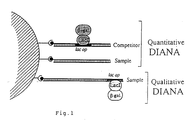
- Figure 1 schematically shows a preferred embodiment of the principle of the quantitative DIANA according to the invention, in which a solid support is used to immobilise biotinylated DNA fragment obtained after PCR and a Lac I repressor- ⁇ -galactosidase fusion protein is used for the subsequent colorimetric detection.
- a lac operator sequence is incorporated into the in vitro amplified material using a "handle" sequence in one of the PCR primers.
- a lac operator sequence is instead introduced into a cloned version of the target sequence that is competitive DNA and a known amount of this cloned DNA is co-amplified with the target DNA.
- the detection is based on the specific interaction of the Lac I- ⁇ -galactosidase fusion protein (J. Wahlberg et al. supra ), with the lac operator sequence and the subsequent hydrolysis of the substrate orthonitrophenyl- ⁇ -D-galactoside (ONPG), to give the colorimetric response.
- the Pf155 gene was chosen as target DNA since amplification of this gene had been shown to accurately detect the presence of parasite in clinical material (J. Lundeberg, J. Wahlberg, M. Holmberg, U. Pettersson and M. Uhlén DNA Cell Biol. 9(4), 289 (1990)).
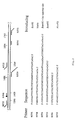
- the primers used to clone and assay the Pf155 gene are shown in figure 2.
- Primers RIT52, 53, 54 and RIT55 were used to clone the whole fragment by PCR.
- Template for the cloning competitive DNA was a clinical sample from The Gambia (M. Holmberg et al . Trans. R. Soc. Trop. Med. Hyg. 84 , 202 (1990) and a 21 base pair lac operator sequence was simultaneously introduced into the cloned fragment, replacing 21 nucleotides from 1519 to 1539 of the gene.
- Figure 2 shows the structure of the Pf155/RESA target gene of P. falciparum and the primers used for the detection, quantification and cloning.
- the numbers refer to the published sequence by J.M. Favaloro et al ., Nucl. Acids Res 14 , 8265 (1986).
- the primers were synthesized by phosphoramidite chemistry on an automated DNA synthesis machine (Gene Assembler Plus, Pharmacia, Sweden).
- the PCR cloning and in vitro mutagenesis was performed by subcloning the upstream fragment of Pf155/RESA gene generated by PCR with primers RIT52 and RIT54 and cleaved with BamHI and EcoRI and ligated into pUC8 digested with the same enzymes.
- the resulting construction was digested with BamHI and HindII to enable ligation with the downstream fragment generated by PCR and RIT53 and RIT55, digested with BamHI and HindIII.
- the mutant clone was verified by DNA sequencing as described by T Hultman et al ., Nuc Acids Res 17 , 4937 1989.
- RIT48 and RIT36 were used, while primers RIT48 and RIT61 were used for the quantitative DIANA.
- the nucleotides shown in italics correspond to sequences introduced by in vitro mutagenesis.
- a two step nested primer PCR was performed using the outer primers RIT25 and RIT53 for an initial 35 cycles and then, after dilution of the amplified material, an additional 25 cycles with the inner primers RIT48 and RIT61.
- the cloned competitor DNA was added in serial dilutions before the first PCR cycle to tubes containing same amount of the initial target DNA.
- a standard qualitative DIANA was run in parallel without the addition of competitor DNA.
- the downstream primer RIT61 was replaced with primer RIT36 (figure 2) containing a lac operator "handle" sequence.
- a qualitative assay to detect the presence or absence of the Pf155 gene is performed in parallel with the quantitative assay.
- the in vitro amplification was performed using a Techne Programmable Dri-Block PHC-2 (Techne, U.K.). The amplification was run in two consecutive steps; first 35 cycles with RIT52 and RIT53, followed by a 1/100 dilution and a second amplification for 25 cycles with RIT48 and RIT61 for the quantitative DIANA assay and RIT48 and RIT36 for the qualitative DIANA assay.
- the PCR buffer used contained 20 mM TAPS (3-[tris(hydroxymethyl)methylamino]-1-propanesulfonic acid)(pH 9.3), 8 mM MgCl2, 50 mM KCl and 0.1% Tween 20.
- the PCR mixture was immobilized to 300 ⁇ g of magnetic beads with covalently coupled streptavidin, Dynabeads M280-Streptavidin (Dynal AS, Norway) and incubated for 20 minutes at room temperature.
- the beads, with the immobilized DNA were mixed with 200 ⁇ l of fusion protein (Lac I- ⁇ -galactosidase, 0.2 mg/ml and 200 ⁇ g of sonicated herring sperm DNA in a Eppendorf tube for 20 minutes.
- the beads were washed four times with 250 ⁇ l TST buffer (0.1 M Tris-HCl, pH 7.5, 0.15 M NaCl, 0.1% Tween 20) containing 10 mM ⁇ -mercaptoethanol.
- the substrate orthonitrophenyl- ⁇ -D-galactoside (ONPG) was added (200 ⁇ l) and the change of absorbance at room temperature was measured.
- the reaction was stopped by taking half of the reaction mixture to a microtitre plate with stop solution. The result is presented as the change of absorbance per minute at 405 nm.
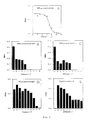
- A is a titration curve with 1:1.5 serial dilution of competitor DNA using a sample containing 500 parasites and B,C,D,E each show quantitative DIANA of samples using a 1:3 serial dilution of the competitor DNA with the amount of parasites per sample determined by the microscopical method indicated. Lane "+/-" represents the qualitative DIANA detection of the respective sample.
- the assay was modified by performing 1-to-3 dilutions. Due to the two-fold lower efficiency for plasmid target DNA as compared to genomic DNA (figure 3A), 300000 plasmid molecules were added to the sample (dilution 0).
- Several clinical human blood samples from The Gambia (Holmberg supra ) were assayed in this manner and independently determined by a microscopical method (Holmberg supra ). The results for four independent and representative samples are shown in figure 3B,C,D and E. The qualitative DIANA show that samples B,C and D contain parasites, while sample E is negative.
- the quantitative DIANA for sample B shows a cut-off point between dilutions 3 and 4, which represents 5550 and 1850 parasites, respectively. This result is in good agreement with the microscopical method which suggested that the sample contained approximately 2600 malaria parasites.
- Sample C has a cut-off point between dilutions 4 and 5 representing 1850 and 620 molecules, respectively, which is in good agreement with the 900 parasites detected with the microscopic method.
- Sample D which contain 40 parasites, has a cut-off point at dilution 7 and 8 containing competitor molecules corresponding to 70 and 20 parasites, respectively. This shows that as few as 40 parasites can be detected with the assay.
- a positive control e.g. ⁇ -globin gene
- a positive control should be run in parallel to demonstrate that the amplification efficiencies have not been reduced due to presence of inhibitors in the sample.
Landscapes
- Chemical & Material Sciences (AREA)
- Organic Chemistry (AREA)
- Life Sciences & Earth Sciences (AREA)
- Health & Medical Sciences (AREA)
- Wood Science & Technology (AREA)
- Proteomics, Peptides & Aminoacids (AREA)
- Zoology (AREA)
- Engineering & Computer Science (AREA)
- Immunology (AREA)
- Biochemistry (AREA)
- Microbiology (AREA)
- Molecular Biology (AREA)
- Analytical Chemistry (AREA)
- Biotechnology (AREA)
- Physics & Mathematics (AREA)
- Biophysics (AREA)
- Bioinformatics & Cheminformatics (AREA)
- General Engineering & Computer Science (AREA)
- General Health & Medical Sciences (AREA)
- Genetics & Genomics (AREA)
- Chemical Kinetics & Catalysis (AREA)
- Measuring Or Testing Involving Enzymes Or Micro-Organisms (AREA)
- Saccharide Compounds (AREA)
- Agricultural Chemicals And Associated Chemicals (AREA)
Applications Claiming Priority (3)
| Application Number | Priority Date | Filing Date | Title |
|---|---|---|---|
| GB909016163A GB9016163D0 (en) | 1990-07-24 | 1990-07-24 | Chemical method |
| GB9016163 | 1990-07-24 | ||
| PCT/EP1991/001398 WO1992001812A1 (en) | 1990-07-24 | 1991-07-23 | Competitive pcr for quantitation of dna |
Publications (2)
| Publication Number | Publication Date |
|---|---|
| EP0540585A1 EP0540585A1 (en) | 1993-05-12 |
| EP0540585B1 true EP0540585B1 (en) | 1994-12-28 |
Family
ID=10679528
Family Applications (1)
| Application Number | Title | Priority Date | Filing Date |
|---|---|---|---|
| EP91913251A Expired - Lifetime EP0540585B1 (en) | 1990-07-24 | 1991-07-23 | Competitive pcr for quantitation of dna |
Country Status (9)
| Country | Link |
|---|---|
| EP (1) | EP0540585B1 (enExample) |
| JP (1) | JP3138471B2 (enExample) |
| AT (1) | ATE116376T1 (enExample) |
| AU (1) | AU648330B2 (enExample) |
| CA (1) | CA2087982A1 (enExample) |
| DE (1) | DE69106366T2 (enExample) |
| DK (1) | DK0540585T3 (enExample) |
| GB (1) | GB9016163D0 (enExample) |
| WO (1) | WO1992001812A1 (enExample) |
Cited By (1)
| Publication number | Priority date | Publication date | Assignee | Title |
|---|---|---|---|---|
| US10881840B2 (en) | 2006-08-07 | 2021-01-05 | W. L. Gore & Associates, Inc. | Inflatable imbibed polymer devices |
Families Citing this family (37)
| Publication number | Priority date | Publication date | Assignee | Title |
|---|---|---|---|---|
| FR2683827B1 (fr) * | 1991-11-15 | 1994-03-04 | Institut Nal Sante Recherc Medic | Procede de determination de la quantite d'un fragment d'adn d'interet par une methode d'amplification enzymatique. |
| ZA936015B (en) * | 1992-08-24 | 1994-03-10 | Akzo Nv | Elimination of false negatives in nuleic acid detection. |
| ATE220114T1 (de) * | 1993-03-19 | 2002-07-15 | Sequenom Inc | Dns-sequenzbestimmung durch massenspektrometrie auf dem weg des abbaus mit exonuklease |
| US5457027A (en) * | 1993-05-05 | 1995-10-10 | Becton, Dickinson And Company | Internal controls for isothermal nucleic acid amplification reactions |
| GB9311386D0 (en) * | 1993-06-02 | 1993-07-21 | Pna Diagnostics As | Nucleic acid analogue assay procedures |
| US5837501A (en) * | 1993-07-09 | 1998-11-17 | Akzo Nobel N.V. | Nucleic acid quantitation by co-amplification of target with multiple internal controls |
| GB9314394D0 (en) * | 1993-07-12 | 1993-08-25 | Slater James H | A security device using an ultrasensitive microtrace for protecting materials,articles and items |
| US5547861A (en) * | 1994-04-18 | 1996-08-20 | Becton, Dickinson And Company | Detection of nucleic acid amplification |
| GB9519638D0 (en) * | 1995-09-26 | 1995-11-29 | Dynal As | Method |
| EP0929696A2 (fr) * | 1996-09-09 | 1999-07-21 | Eppendorf Array Technologies (E.A.T.) | Procede et trousse de diagnostic et/ou de quantification par hybridation de type sandwich de sequences d'acides nucleiques sur support solide |
| US6143496A (en) | 1997-04-17 | 2000-11-07 | Cytonix Corporation | Method of sampling, amplifying and quantifying segment of nucleic acid, polymerase chain reaction assembly having nanoliter-sized sample chambers, and method of filling assembly |
| JP2001147230A (ja) | 1999-11-19 | 2001-05-29 | Hitachi Software Eng Co Ltd | バイオチップ読取装置及び標識試薬 |
| US7041481B2 (en) | 2003-03-14 | 2006-05-09 | The Regents Of The University Of California | Chemical amplification based on fluid partitioning |
| US8858855B2 (en) | 2006-04-20 | 2014-10-14 | Boston Scientific Scimed, Inc. | High pressure balloon |
| US8772046B2 (en) | 2007-02-06 | 2014-07-08 | Brandeis University | Manipulation of fluids and reactions in microfluidic systems |
| US12090480B2 (en) | 2008-09-23 | 2024-09-17 | Bio-Rad Laboratories, Inc. | Partition-based method of analysis |
| EP3964821B1 (en) | 2008-09-23 | 2024-11-06 | Bio-Rad Laboratories, Inc. | Droplet-based assay system |
| US9417190B2 (en) | 2008-09-23 | 2016-08-16 | Bio-Rad Laboratories, Inc. | Calibrations and controls for droplet-based assays |
| US9399215B2 (en) | 2012-04-13 | 2016-07-26 | Bio-Rad Laboratories, Inc. | Sample holder with a well having a wicking promoter |
| US9492797B2 (en) | 2008-09-23 | 2016-11-15 | Bio-Rad Laboratories, Inc. | System for detection of spaced droplets |
| US8951939B2 (en) | 2011-07-12 | 2015-02-10 | Bio-Rad Laboratories, Inc. | Digital assays with multiplexed detection of two or more targets in the same optical channel |
| US10512910B2 (en) | 2008-09-23 | 2019-12-24 | Bio-Rad Laboratories, Inc. | Droplet-based analysis method |
| US9156010B2 (en) | 2008-09-23 | 2015-10-13 | Bio-Rad Laboratories, Inc. | Droplet-based assay system |
| US11130128B2 (en) | 2008-09-23 | 2021-09-28 | Bio-Rad Laboratories, Inc. | Detection method for a target nucleic acid |
| US9194861B2 (en) | 2009-09-02 | 2015-11-24 | Bio-Rad Laboratories, Inc. | Method of mixing fluids by coalescence of multiple emulsions |
| US12162008B2 (en) | 2008-09-23 | 2024-12-10 | Bio-Rad Laboratories, Inc. | Partition-based method of analysis |
| US9764322B2 (en) | 2008-09-23 | 2017-09-19 | Bio-Rad Laboratories, Inc. | System for generating droplets with pressure monitoring |
| US9132394B2 (en) | 2008-09-23 | 2015-09-15 | Bio-Rad Laboratories, Inc. | System for detection of spaced droplets |
| JP2011062119A (ja) | 2009-09-16 | 2011-03-31 | Seiko Epson Corp | 生体試料定量用チップ |
| US8399198B2 (en) | 2010-03-02 | 2013-03-19 | Bio-Rad Laboratories, Inc. | Assays with droplets transformed into capsules |
| CA2767182C (en) | 2010-03-25 | 2020-03-24 | Bio-Rad Laboratories, Inc. | Droplet generation for droplet-based assays |
| JP6155419B2 (ja) | 2010-03-25 | 2017-07-05 | バイオ−ラッド・ラボラトリーズ・インコーポレーテッド | 検出用の液滴輸送システム |
| CA3024250C (en) | 2010-11-01 | 2022-01-04 | Bio-Rad Laboratories, Inc. | System for forming emulsions |
| US12097495B2 (en) | 2011-02-18 | 2024-09-24 | Bio-Rad Laboratories, Inc. | Methods and compositions for detecting genetic material |
| AU2012231098B2 (en) | 2011-03-18 | 2016-09-29 | Bio-Rad Laboratories, Inc. | Multiplexed digital assays with combinatorial use of signals |
| EP3789498B1 (en) | 2011-04-25 | 2025-08-13 | Bio-Rad Laboratories, Inc. | Methods for nucleic acid analysis |
| WO2021029391A1 (ja) * | 2019-08-09 | 2021-02-18 | 国立研究開発法人産業技術総合研究所 | 人工遺伝子及び遺伝子変異方法 |
Family Cites Families (1)
| Publication number | Priority date | Publication date | Assignee | Title |
|---|---|---|---|---|
| US5219727A (en) * | 1989-08-21 | 1993-06-15 | Hoffmann-Laroche Inc. | Quantitation of nucleic acids using the polymerase chain reaction |
-
1990
- 1990-07-24 GB GB909016163A patent/GB9016163D0/en not_active Ceased
-
1991
- 1991-07-23 DE DE69106366T patent/DE69106366T2/de not_active Expired - Fee Related
- 1991-07-23 EP EP91913251A patent/EP0540585B1/en not_active Expired - Lifetime
- 1991-07-23 AU AU82386/91A patent/AU648330B2/en not_active Ceased
- 1991-07-23 AT AT91913251T patent/ATE116376T1/de not_active IP Right Cessation
- 1991-07-23 CA CA002087982A patent/CA2087982A1/en not_active Abandoned
- 1991-07-23 JP JP03512534A patent/JP3138471B2/ja not_active Expired - Fee Related
- 1991-07-23 DK DK91913251.4T patent/DK0540585T3/da active
- 1991-07-23 WO PCT/EP1991/001398 patent/WO1992001812A1/en not_active Ceased
Cited By (1)
| Publication number | Priority date | Publication date | Assignee | Title |
|---|---|---|---|---|
| US10881840B2 (en) | 2006-08-07 | 2021-01-05 | W. L. Gore & Associates, Inc. | Inflatable imbibed polymer devices |
Also Published As
| Publication number | Publication date |
|---|---|
| JPH05508545A (ja) | 1993-12-02 |
| AU648330B2 (en) | 1994-04-21 |
| DE69106366D1 (de) | 1995-02-09 |
| EP0540585A1 (en) | 1993-05-12 |
| AU8238691A (en) | 1992-02-18 |
| GB9016163D0 (en) | 1990-09-05 |
| DE69106366T2 (de) | 1995-05-11 |
| DK0540585T3 (da) | 1995-03-20 |
| ATE116376T1 (de) | 1995-01-15 |
| JP3138471B2 (ja) | 2001-02-26 |
| WO1992001812A1 (en) | 1992-02-06 |
| CA2087982A1 (en) | 1992-01-25 |
Similar Documents
| Publication | Publication Date | Title |
|---|---|---|
| US5712125A (en) | Competitive PCR for quantitation of DNA | |
| AU648330B2 (en) | Competitive PCR for quantitation of DNA | |
| CA2135607C (en) | Chemical method for the analysis of dna sequences | |
| EP0728198B1 (en) | Isolation of nucleic acid | |
| JP2846018B2 (ja) | 核酸配列の増幅および検出 | |
| EP0932700B1 (en) | Method of sequencing dna | |
| US5795722A (en) | Method and kit for quantitation and nucleic acid sequencing of nucleic acid analytes in a sample | |
| EP0777747B1 (en) | Nucleotide sequencing method | |
| EP0946752B1 (en) | Method of sequencing dna based on the detection of the release of pyrophosphate | |
| US5106727A (en) | Amplification of nucleic acid sequences using oligonucleotides of random sequences as primers | |
| JP3109810B2 (ja) | 単一プライマーを用いる核酸の増幅 | |
| US20030157499A1 (en) | Method of assessing the amount of nucleic acid in a sample | |
| AU3141293A (en) | Rapid assays for amplification products | |
| WO1997012058A1 (en) | Method for quantifying nucleic acid using multiple competitor nucleic acids | |
| CA2135606A1 (en) | Loop structures | |
| JPH04211400A (ja) | 修飾核酸の製造方法 | |
| JP2002521036A (ja) | 多数のオリゴマーの結紮によるポリヌクレオチドの合成法 | |
| US20130115616A1 (en) | Detection of nucleic acids by agglutination | |
| WO2009014561A2 (en) | Methods and compositions for rapid amplification, capture and detection of nucleic acids and proteins | |
| GB2704594A (en) | A method for detecting nucleotide variants in a nucleic acid sequence |
Legal Events
| Date | Code | Title | Description |
|---|---|---|---|
| PUAI | Public reference made under article 153(3) epc to a published international application that has entered the european phase |
Free format text: ORIGINAL CODE: 0009012 |
|
| 17P | Request for examination filed |
Effective date: 19930119 |
|
| AK | Designated contracting states |
Kind code of ref document: A1 Designated state(s): AT BE CH DE DK ES FR GB GR IT LI LU NL SE |
|
| 17Q | First examination report despatched |
Effective date: 19940203 |
|
| GRAA | (expected) grant |
Free format text: ORIGINAL CODE: 0009210 |
|
| PG25 | Lapsed in a contracting state [announced via postgrant information from national office to epo] |
Ref country code: GR Free format text: LAPSE BECAUSE OF FAILURE TO SUBMIT A TRANSLATION OF THE DESCRIPTION OR TO PAY THE FEE WITHIN THE PRESCRIBED TIME-LIMIT Effective date: 19941228 Ref country code: ES Free format text: THE PATENT HAS BEEN ANNULLED BY A DECISION OF A NATIONAL AUTHORITY Effective date: 19941228 |
|
| REF | Corresponds to: |
Ref document number: 116376 Country of ref document: AT Date of ref document: 19950115 Kind code of ref document: T |
|
| ITF | It: translation for a ep patent filed | ||
| REF | Corresponds to: |
Ref document number: 69106366 Country of ref document: DE Date of ref document: 19950209 |
|
| ET | Fr: translation filed | ||
| REG | Reference to a national code |
Ref country code: DK Ref legal event code: T3 |
|
| PLBE | No opposition filed within time limit |
Free format text: ORIGINAL CODE: 0009261 |
|
| STAA | Information on the status of an ep patent application or granted ep patent |
Free format text: STATUS: NO OPPOSITION FILED WITHIN TIME LIMIT |
|
| 26N | No opposition filed | ||
| REG | Reference to a national code |
Ref country code: GB Ref legal event code: IF02 |
|
| PGFP | Annual fee paid to national office [announced via postgrant information from national office to epo] |
Ref country code: LU Payment date: 20020710 Year of fee payment: 12 |
|
| PGFP | Annual fee paid to national office [announced via postgrant information from national office to epo] |
Ref country code: GB Payment date: 20020711 Year of fee payment: 12 |
|
| PGFP | Annual fee paid to national office [announced via postgrant information from national office to epo] |
Ref country code: SE Payment date: 20020715 Year of fee payment: 12 |
|
| PGFP | Annual fee paid to national office [announced via postgrant information from national office to epo] |
Ref country code: DK Payment date: 20020716 Year of fee payment: 12 |
|
| PGFP | Annual fee paid to national office [announced via postgrant information from national office to epo] |
Ref country code: FR Payment date: 20020717 Year of fee payment: 12 |
|
| PGFP | Annual fee paid to national office [announced via postgrant information from national office to epo] |
Ref country code: BE Payment date: 20020718 Year of fee payment: 12 |
|
| PGFP | Annual fee paid to national office [announced via postgrant information from national office to epo] |
Ref country code: CH Payment date: 20020725 Year of fee payment: 12 |
|
| PGFP | Annual fee paid to national office [announced via postgrant information from national office to epo] |
Ref country code: AT Payment date: 20020730 Year of fee payment: 12 |
|
| PGFP | Annual fee paid to national office [announced via postgrant information from national office to epo] |
Ref country code: NL Payment date: 20020731 Year of fee payment: 12 |
|
| PGFP | Annual fee paid to national office [announced via postgrant information from national office to epo] |
Ref country code: DE Payment date: 20020930 Year of fee payment: 12 |
|
| PG25 | Lapsed in a contracting state [announced via postgrant information from national office to epo] |
Ref country code: LU Free format text: LAPSE BECAUSE OF NON-PAYMENT OF DUE FEES Effective date: 20030723 Ref country code: GB Free format text: LAPSE BECAUSE OF NON-PAYMENT OF DUE FEES Effective date: 20030723 Ref country code: AT Free format text: LAPSE BECAUSE OF NON-PAYMENT OF DUE FEES Effective date: 20030723 |
|
| PG25 | Lapsed in a contracting state [announced via postgrant information from national office to epo] |
Ref country code: SE Free format text: LAPSE BECAUSE OF NON-PAYMENT OF DUE FEES Effective date: 20030724 |
|
| PG25 | Lapsed in a contracting state [announced via postgrant information from national office to epo] |
Ref country code: LI Free format text: LAPSE BECAUSE OF NON-PAYMENT OF DUE FEES Effective date: 20030731 Ref country code: DK Free format text: LAPSE BECAUSE OF NON-PAYMENT OF DUE FEES Effective date: 20030731 Ref country code: CH Free format text: LAPSE BECAUSE OF NON-PAYMENT OF DUE FEES Effective date: 20030731 Ref country code: BE Free format text: LAPSE BECAUSE OF NON-PAYMENT OF DUE FEES Effective date: 20030731 |
|
| BERE | Be: lapsed |
Owner name: *CEMU BIOTEKNIK A.B. Effective date: 20030731 |
|
| PG25 | Lapsed in a contracting state [announced via postgrant information from national office to epo] |
Ref country code: NL Free format text: LAPSE BECAUSE OF NON-PAYMENT OF DUE FEES Effective date: 20040201 |
|
| PG25 | Lapsed in a contracting state [announced via postgrant information from national office to epo] |
Ref country code: DE Free format text: LAPSE BECAUSE OF NON-PAYMENT OF DUE FEES Effective date: 20040203 |
|
| EUG | Se: european patent has lapsed | ||
| REG | Reference to a national code |
Ref country code: CH Ref legal event code: PL Ref country code: DK Ref legal event code: EBP |
|
| GBPC | Gb: european patent ceased through non-payment of renewal fee |
Effective date: 20030723 |
|
| PG25 | Lapsed in a contracting state [announced via postgrant information from national office to epo] |
Ref country code: FR Free format text: LAPSE BECAUSE OF NON-PAYMENT OF DUE FEES Effective date: 20040331 |
|
| NLV4 | Nl: lapsed or anulled due to non-payment of the annual fee |
Effective date: 20040201 |
|
| REG | Reference to a national code |
Ref country code: FR Ref legal event code: ST |
|
| PG25 | Lapsed in a contracting state [announced via postgrant information from national office to epo] |
Ref country code: IT Free format text: LAPSE BECAUSE OF NON-PAYMENT OF DUE FEES Effective date: 20050723 |