EP0519596B1 - A method for reducing the immunogenicity of antibody variable domains - Google Patents
A method for reducing the immunogenicity of antibody variable domains Download PDFInfo
- Publication number
- EP0519596B1 EP0519596B1 EP92304225A EP92304225A EP0519596B1 EP 0519596 B1 EP0519596 B1 EP 0519596B1 EP 92304225 A EP92304225 A EP 92304225A EP 92304225 A EP92304225 A EP 92304225A EP 0519596 B1 EP0519596 B1 EP 0519596B1
- Authority
- EP
- European Patent Office
- Prior art keywords
- human
- antibody
- murine
- immunoglobulin
- dna
- Prior art date
- Legal status (The legal status is an assumption and is not a legal conclusion. Google has not performed a legal analysis and makes no representation as to the accuracy of the status listed.)
- Expired - Lifetime
Links
Images











Classifications
-
- C—CHEMISTRY; METALLURGY
- C07—ORGANIC CHEMISTRY
- C07K—PEPTIDES
- C07K16/00—Immunoglobulins [IG], e.g. monoclonal or polyclonal antibodies
- C07K16/46—Hybrid immunoglobulins
- C07K16/461—Igs containing Ig-regions, -domains or -residues form different species
- C07K16/467—Igs with modifications in the FR-residues only
-
- C—CHEMISTRY; METALLURGY
- C07—ORGANIC CHEMISTRY
- C07K—PEPTIDES
- C07K2317/00—Immunoglobulins specific features
- C07K2317/20—Immunoglobulins specific features characterized by taxonomic origin
- C07K2317/24—Immunoglobulins specific features characterized by taxonomic origin containing regions, domains or residues from different species, e.g. chimeric, humanized or veneered
Definitions
- FIG. 4 Primers used to isolate DNA encoding murine kappa light chain variable region and murine IgG2a heavy chain variable region using PCR. Oligodeoxynucleotides used as PCR primers to generate a shortened IgG4 heavy chain. Oligodeoxynucleotides used in PCR to re-engineer the thymidine kinase (TK) promoter to facilitate the expression of the neomycin resistance gene. Oligodeoxynucleotide primers used in PCR to clone the IgH enhancer sequence. Oligodeoxynucleotides used as PCR primers to generate a human kappa light chain constant region.
- TK thymidine kinase
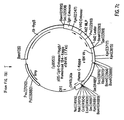
- Figure 7 Outline of the insertion of the "veneered" kappa light chain variable region and kappa constant region into the light chain expression vector.
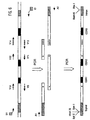
- Figure 8 PCR-recombination strategy used in the veneering of the 1B4 heavy chain variable region.
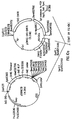
- Figure 10 Outline of the construction of neomycin selectable expression vector.
- the identification and production of murine monoclonal antibodies has lead to numerous therapeutic applications of these extraordinarly specific molecules in human disease.
- the technologies of molecular biology have further expanded the utility of many antibodies by allowing for the creation of class switched molecules whose functionality has been improved by the acquisition or loss of complement fixation.
- the size of the bioactive molecule may also be reduced so as to increase the tissue target availability of the antibody by either changing the class from an IgM to an IgG, removing most of the heavy chain constant region in the creation of a F(ab) 2 or both heavy and light chain constant regions may be dispensed with in the formation of a Fv antibody.
- Monoclonal antibody producing hybridomas have been most readily obtained from immunized rodents. Development of similar reagents from human sources has been frustrated by the current inability to maintain long term cultures of cells which produce sufficient quantities of antibody. Additional problems arise from the regulatory standpoint when cells of human origin are employed for the production of agents to be used in man. These considerations have lead to the widespread use of rodent monoclonal antibodies for the imaging and treatment of malignancy, prophylactic administration to guard against toxic shock, modification of graft rejection episodes, and to temper acute inflammatory reactions. In all scenarios where completely rodent or partially rodent (ie, rodent - human chimeras) antibodies have been used for therapy the recipients have often elicited an immune response directed toward the antibody. These reactions have limited the duration and effectiveness of the therapy.
- the ligand binding characteristics of an antibody combining site are determined primarily by the structure and relative disposition of the CDRs, although some neighboring residues also have been found to be involved in antigen binding (Davies et al ., Ann. Rev. Biochem. 59 : 439-473 [1990]). Fine specificity can be perserved in a "humanized” antibody only if the CDR structures, their interaction with each other, and their interaction with the rest of the variable domains are strictly maintained.
- the key residues represent "interior" and interdomain contact residues, hence those surface exposed residues which are immediately available for immune surveillance should be non- inclusive of the structural residues.
- EP-A-438312 discloses the incorporation of a CDR from a first species into a second species which has similar variable heavy and light chain frameworks to the first species.
- Tempest et al ., Bio/Technology 9 , 266-271 (1991) discloses transferring CDRs from a murine monoclonal antibody to a human monoclonal antibody, then making additional alterations to one of the framework regions to restore binding affinity and specificity.
- WO-A-9007861 discloses a humanized immunoglobulin having a human framework and CDRs from a second species. At least one framework amino acid is substituted by the corresponding amino acid from the donor Ig where the human amino acid is rare for that position but the donor amino acid in that position is common in humans.
- a unique method for identifying and replacing immunoglobulin surface amino acid residues which converts the antigenicity of a first mammalian species to that of a second mammalian species.
- the method will simultaneously change immunogenicity and strictly preserve ligand binding properties.
- the judicious replacement of exterior amino acid residues has no effect on the ligand binding properties but greatly alters immunogenicity.
- the present invention relates to a "humanization" procedure which simultaneously reduces the immunogenicity of the rodent monoclonal antibody while preserving its ligand binding properties in their entirety. Since the antigenicity of a protein is primarily dependent on the nature of its surface, the immunogenicity of an xenogenic or allogenic antibody could be reduced by replacing the exposed residues which differ from those usually found in another mammalian species antibodies. This judicious replacement of exterior residues should have little, or no, effect on the interior domains, or on the interdomain contacts. Thus, ligand binding properties should be unaffected as a consequence of alterations which are limited to the variable region framework residues. The process is refered to as “veneering" since only the outer surface or skin of the antibody is altered, the supporting residues remain undisturbed.
- variable domains are compared with those corresponding frameworks of a second animal species, e.g. human. It is intended that this invention will allow the antigenic alteration of any animal species antibody.
- the present invention illustrates the conversion of murine antibody to human antibody, but this is for illustrative purposes only.
- the most homologous human variable regions are then compared residue for residue to the corresponding murine regions. This will also define the human subgroup to which each mouse sequence most closely resembles.
- those residues in the mouse framework which differ from its human counterpart are replaced by the residues present in the human counterpart.
- N-termini Human and murine sequences frequently differ at the N-terminus of both heavy and light chains.
- the N-termini are contiguous with the CDR surface and are in position to be involved in ligand binding. Thus, wisdom would dictate that these murine termini be retained in its "veneered” version.
- recombinant DNA sequences which incorporate the CDRs of a first mammalian species, animal, mMAb, both light and heavy chains, into a second mammalian species, human, appearing frameworks that can be used to transfect mammalian cells for the expression of recombinant human antibody with the antigen specificity of the animal monoclonal antibody.
- the recombinant immunoglobulins will be recognized as self proteins when administered for threapeutic purposes. This method of "veneering" will render the recombinant antibodies useful as therapeutic agents because they will be either weakly immunogenic or non-immunogenic when administered to humans.
- the invention is further contemplated to include the recombinant conversion of any animal monoclonal antibody into a recombinant "human-appearing" monoclonal antibody providing that a suitable framework region can be identified (as described below).
- the animal monoclonals may include, but are not limited to, those murine monoclonal antibodies described by VanVoorhis et al., J. Exp. Med. 158: 126-145 (1983) which bind to human leukocytes and the appropriate mMAbs produced by hybridomas deposited in the Hybridoma Cell Bank maintained by the American Type Culture Collection (ATCC) and described in the ATCC Catalog of Cell Lines 8 Hybridomas, No. 6, 1988.
- ATCC American Type Culture Collection
- the CDR sequences from the animal monoclonal antibody are derived as follows. Total RNA is extracted from the murine hybridomas, for exampe the 1B4 myeloma cells described by Wright et al., Proc. Natl. Acad. Sci. USA 80: 5699-5703 (1983), the 60.3 cells described by Beatty et al., J. Immunol. 131:2913-2918 (1983), the TS1/18 cells described by Sanchez-Madrid et al., J. Exp. Med.
- the murine 1B4 mMAb will be used as the primary example of animal MAb that can be "veneered” by the unique process being disclosed.
- the invention is intended to include the conversion of any animal immunoglobulin to a "human-appearing" immunoglobulin.
- immunoglobulin can contain either kappa or lambda light chains or be one of any of the following heavy chain isotypes (alpha, delta, epsilon, gamma and mu).
- Pairs of degenerate oligodeoxynucleotide primers representing sequences within framework 1 of the murine kappa light chain variable region and light chain constant domain, or those within framework 1 of the murine IgG2a heavy chain variable region and heavy chain constant CH1 domain are synthesized on an Applied Biosystem 381A DNA synthesizer, removed from the resin by treatment with concentrated NH 4 0H and desalted on a NAP-5 column eluted with H 2 0.
- Total RNA, about 2 ⁇ g is reverse transcribed for 30 min at 42°C using Moloney MLV reverse transcriptase, about 200 units (BRL), and about 10 pmoles of the constant region complementary strand primers for either the heavy or light chain.
- the reverse transcriptase is heat inactivated, at about 95° C for about 5 min, and the reactions are made to contain in about 100 ⁇ l of PCR buffer about 50 pmoles of each of the paired primers and and 2.5 units of Taq polymerase. About 45 cycles of amplification (2', 94° C; 2', 55° C; 2' 72° C) are followed by gel purification of the anticipated 400+ base pair (bp) DNA fragments. Prior to subcloning those DNAs into a blunt-ended intermediate plasmid such as pSP72 (Promega) they are terminally phosphorylated using T4 polynucleotide kinase.
- pSP72 Promega
- a unique DNA sequence representing a murine IgG2a heavy chain variable region is obtained by analysis of the derived amino acid sequences. Replacement of the "murine-appearing" framework residues with those residues compatible with a human variable region is accomplished utilizing the following unique processes.
- An appropriate human framework is determined utilizing the criteria discussed below.
- the light chain variable region framework with sufficient homology to the the m1B4 framework was determined to be the human LEN framework (FR).
- the Len FR shows a similarity of 90% and an identity of 81% when compared to murine 1B4.
- oligodeoxynucleotide primers were those sequences corresponding to the veneered MAb 1B4 light chain, with its unaltered CDRs, and at least 15 bases of 5'-terminal complementarity to allow for the subsequent PCR- directed recombination of these four fragments.
- the LEN light chain variable region already containing an engrafted set of CDRs representing those within the light chain of murine 1B4 was used as the template into which mutations were placed so as to easily create the "veneered" framework sequence.
- the appropriate primer pair (S1 & V9, V10 & V11, etc.), about 50 pmole each, was combined with about 10 ng of plasmid DNA representing the LEN CDR- grafted framework, about 2.5 units of Taq DNA polymerase and about twenty-five (25) cycles of PCR amplification ensued (cycle periods: 1', 94° C; 1', 55° C; 2' 72° C).
- the products of the four reactions, purified by agarose gel electrophoresis, are combined, about 10 ng of each DNA fragment, along with terminal oligodeoxynucleotide primers (A1 &A2, Figure 6) and Taq DNA polymerase.
- the combined fragments were PCR amplified (25 cycles of: 2', 94° C; 2', 55° C; 2' 72° C). Following restriction endonuclease digestion with Hind lll and Xba I the amplified DNA is purified by agarose gel electrophoresis and subcloned into compatible sites of an intermediate vector pSP72 (Promega) which contains the human kappa light chain constant region (see Figure 7).
- Genomic DNA about 1 ⁇ g, purified from a human B cell line (GM0108A: NIGMS Human Genetic Mutant Cell Repository, Institute for Medical Research, Camden, NJ) is used as a template for PCR amplification ( Figure 4) of about a 920 base pair fragment containing the splice acceptor for the kappa light chain constant domain, the exon and a portion of its 3'-untranslated region.
- the PCR product is purified by agarose gel electrophoresis, digested with Bam H1 endonuclease, and subcloned into pSP72 previously linearized with Bam H1.
- the individual clones representing the pSP72 intermediate vector containing both the 1B4 "veneered” light chain variable region and the human kappa constant region derived by PCR amplification of human DNA are used to determine the DNA sequence of the "veneered” light chain varisble region.
- the "veneered” heavy chain portion of the recombinant antibody is derived from the mutated version of the murine 1B4 heavy chain variable region fused to the human constant region of a gamma 4 subtype obtained from a lambda library constructed by Flanagan and Rabbits, Nature 300: 709-713 (1982).
- the variable region of the "veneered” heavy chain is constructed from five DNA fragments representing a signal sequence, portions of the mutated murine heavy chain variable region, and an intronic sequence (Figure 8).
- Oligodeoxynucleotide primer pairs ( Figure 5) are synthesized representing the primers necessary to generate by PCR amplification these five DNA fragments from about 10 ng of plasmid DNA template obtained from a pSP72 intermediate vector containing the heavy chain variable region previously used to determine the murine 1B4 CDR sequence. Amplification of the signal fragment, variable region fragments, and intron-containing fragment was as described above. The agarose gel purified products are combined, about 10 ng of each product, with terminal oligodeoxynucleotide primer pairs ( Figure 8) and the PCR-generated in vitro recombined template is amplified using the standard procedures described above.
- Expression vectors are defined herein as DNA sequences that are required for the transcription of cloned copies of genes and the translation of their mRNAs in an appropriate host.
- Such vectors can be used to express eukaryotic genes in a variety of hosts such as bacteria, blue-green algae, plant cells, yeast cells, insect cells and animal cells.
- the immunoglobulins may also be expressed in a number of virus systems. Specifically designed vectors allow the shuttling of DNA between host such as bacteria-yeast or bacteria-animal cells.
- An appropriately constructed expression vector should contain: an origin of replication for autonomous replication in host cells, selectable markers, a limited number of useful restriction enzyme sites, a potential for high copy number, and strong promoters.
- a promoter is defined as a DNA sequence that directs RNA polymerase to bind to DNA and initiate RNA synthesis.
- a strong promoter is one which causes mRNAs to be initiated at high frequency.
- Expression vectors may include, but are not limited to, cloning vectors, modified cloning vectors, specifically designed plasmids or viruses.
- the heavy chain immunoglobulin molecule is transcribed from a plasmid carrying the neomycin (G418) resistance marker while the light chain immunoglobulin is transcribed from a plasmid carrying the hygromycin B resistance marker. With the exception of the drug resistance portion of these plasmids they are identical.
- the preferred progenitor of the immunoglobulin expression vectors is the pD5 (Berkner and Sharp, Nucl. Acids Res. 13 : 841-857 [1985]) eukaryotic expression vector which contains the origin of adenovirus replication, the SV40 enhancer domain, the adenovirus major late promoter, the adenovirus 2 tripartite leader, a 5' splice donor from the adenovirus third leader and a 3' splice acceptor derived from an immunoglobulin locus, a multiple cloning site placed in the Bam H1 site subsequent to receipt of the vector, and the SV40 late polyadenylation signal ( Figure 10).
- the origin of replication is removed by digestion with Eco R1 and Kpn I and replaced by two fragments representing the neo selectable marker gene (derived from plasmid pCMVIE-AK1-DHFR as an Eco R1/Bam H1 about1.8 Kb fragment) and the Ig heavy chain enhancer (obtained as a PCR amplified fragment using human DNA as the template, and the oligodeoxynudeotides listed in Figure 4 as the primer pair, following its digestion with Bgl ll and Kpn 1).
- the resultant expression vector is found to lack a small portion of the TK promoter responsible for the transcription of the neomycin gene.
- the resultant heavy chain expression vector (p8941) is modified by removal of the indicated Hind lll and Xba I sites using standard procedures. To convert this vector into one expressing the hyg romycin B selectable marker the neomycin-resistance cassette is removed by digestion first with Eco R1 followed by DNA polymerase-directed fill in of the 5' overhand, then subsequent Sal I digestion.
- the about 1.9 Kb hygromycin B expression cassette, TK promoter and TK polyadenylation signal flanking the hygromycin B gene, (obtained as a 1.8 kb Bam H1 fragment in plasmid pL690, Gritz and Davies, Gene 25: 179-188 [1981]) is removed from the plasmid pAL-2 by Bam H1 digestion and subcloned into the Bam H1 site of the intermediate vector pSP72.
- the hygromycin B cassette is removed from this vector by digestion with Sma I and Sal I and cloned into the expression vector linearized as described above to create a blunt end and Sal I end DNA fragment ( Figure 11).
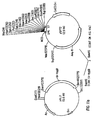
- Expression of the 1B4 "veneered" kappa light chain is accomplished by transferring this cistron from the pSP72-based intermediate cloning vector (p8952), containing the human kappa constant region, to the hygromycin B selectable eukaryotic expression vector ( Figure 7).
- p8952 pSP72-based intermediate cloning vector
- Figure 7 hygromycin B selectable eukaryotic expression vector
- An about 1.5 kb DNA fragment resulting from the endonuclease digestion of p8952 with Spe I and Cla I is purified by agarose gel electrophoresis and ligated into the expression vector which has previously been linearized, following digestion with the same two restriction enzymes; and agarose gel purified.
- the heavy chain eukaryotic expression vector is constructed in two steps.
- the p8950 vector containing the modified heavy chain variable region of murine 1B4 fragment is digested with Bgl ll and Bam H1.
- the agarose gel purified 0.75 kb fragment is ligated into the Bam H1 site of the p8941 vector and recombinant clones containing this fragment in the proper orientation are identified.
- Plasmid DNA from one such clone is linearized by Bam H1 digestion and ligated with a 1.78 Kb Bam H1 fragment representing a short version of the human gamma 4 constant region, derived from plasmid pAT84 by PCR amplification.
- plasmid DNAs are grown and purified for transfection into recipient mammalian cells. Equal amounts, about 10 ⁇ g, of the plasmids encoding the 1B4 "veneered” IgG4 heavy chain and the 1B4 "veneered” kappa light chain are transfected by standard calcium phosphate precipitation procedures into the monkey kidney cell line CV-1P or the human embryonic kidney cell line 293. The culture supernants, assayed by a trapping ELISA (described below), were found to contain a human kappa light chain / human IgG4 immuno-globulin.
- Immulon-2 (Dynatech Labs.) 96-well plates are coated overnight with about a 5 ⁇ g/ml solution of mouse anti-human kappa chain constant domain monoclonal antibody (cat. #MC009, The Binding Site, Inc., San Diego, CA) in about 0.1 M NaHCO 3 buffer (pH 8.2) at about 4° C, and blocked with about 1% bovine serum (BSA) in about 0.1 M NaHCO 3 for about 1 hour at about 25° C. After this and all subsequent steps, washing was performed with phosphate buffered saline (PBS).
- PBS phosphate buffered saline
- the wells are then challenged with conditioned medium containing recombinant anti-CD18 antibody, or with predetermined quantities of human IgG4/kappa purified by protein A Sepharose® (Pharmacia Fine Chemicals) chromatography from human IgG4 myeloma serum (cat. # BP026, The Binding Site, Inc.) All samples are diluted in PBS containing about 0.05% Tween®-20. About 100 ⁇ l aliquots are incubated for about 1 hour at about 37° C in triplicate, and standard calibration curves are constructed using IgG4 concentrations ranging from about 10 ng/ml to about 100 ng/ml.
- Bound and fully assembled human IgG4 are detected with about 100 ⁇ l aliquots of a 1:500 dilution of mouse anti-human IgG4 Fc monoclonal antibody conjugated to alkaline phosphatase (cat #05-3822, Zymed Laboratories, Inc.) in phosphate buffered saline (PBS) containing about 1 % BSA.
- PBS phosphate buffered saline
- the quantities of bound conjugate are detected by incubating all samples with a 1 mg/ml solution of p-nitrophenyl phosphate in 0.1 M 2,2' amino methyl-propanediol buffer, pH 10.3, for about 30 minutes at about 25° C.
- the adsorbance of the wells is determined with a UV Max ELISA plate reader (Molecular Devices) set at 405 nm.
- the antibody secreted by the transfected human 293 cells or monkey kidney CV1 P cells is isolated by protein A chromatography, the concentration of recombinant human anti-CD18 antibodies determined by the trapping Elisa described above, and used to compete with the binding of radiolabeled murine 1B4 to the CD18 ligand on the surface of activated human PMNs. Affinities of r-anti-CD18 antibody constructs are determined using a competitive 125 I-1 B4 soluble binding assay with stimulated human polymorpho-nuclear leukocytes (PMNs).
- PMNs polymorpho-nuclear leukocytes
- Purified murine anti-CD18 monoclonal antibody (50 ug) is iodinated using chloramine-T (Hunter, W.M. and Greenwood, F.C., Nature 194: 495-496, 1962), and the radiolabeled antibody purified using a Bio-Sil® TSK250 (Biorad, Richmond, CA) gel filtration HPLC column (which fractionates proteins in the range of 1-300 x 103 daltons) equilibrated in 0.1 M phosphate buffer, pH 7.0.
- Effluent radioactivity is monitored with an in-line detector (Beckman Model 170; Beckman, Fullerton,CA) and total protein measured at OD 280 with a Kratos Spectroflow 757 detector (Kratos, Mawah, N.J.).
- a single 125 l-1B4 peak composed of coincident OD 280 and radioactivity tracings characteristically elutes at about 6 minutes, 30 seconds following sample injection.
- Specific activity of the product is generally about 10 ⁇ Ci/ ⁇ g protein, and 97-99% of the counts are precipitable with 10% trichloroacetic acid.
- the binding of this radiolabeled antibody is assessed on human PMNs purified on a discontinuous Ficoll/Hypaque gradient (English, D.
- a buffer such as Hanks balanced salt solution containing about 20 mM Hepes (pH 7.2), about 0.14 units aprotinin (Sigma Chemical Co.) and about 2% human serum albumin (binding buffer) containing about 1.3 ng 125 I-1B4 (2.8 x 10 -11 M) in the presence of increasing concentrations of unlabeled 1B4 antibody (about 10 -7 to 10- 15 M) in about a 300 ⁇ l reaction volume for about 1 hour at about 4°C with constant agitation.
- a buffer such as Hanks balanced salt solution containing about 20 mM Hepes (pH 7.2), about 0.14 units aprotinin (Sigma Chemical Co.) and about 2% human serum albumin (binding buffer) containing about 1.3 ng 125 I-1B4 (2.8 x 10 -11 M) in the presence of increasing concentrations of unlabeled 1B4 antibody (about 10 -7 to 10- 15 M) in about a 300 ⁇ l reaction volume for about 1 hour at about 4
- Cell bound 1B4 is separated from the unbound antibody by centrifugation through a 0.5 M sucrose cushion ( 4,800 x g, 3 minutes); the tubes are frozen on dry ice, and the tips cut off and counted with an LKB gamma counter.
- the IC 50 of the anti-CD18 antibody for the inhibition of 125 I-1B4 antibody binding is calculated using a four parameter fitter program (Rodbard et al., In, "Radioimmunoassay and Related Procedures in Medicine", International Atomic Energy Agency, Vienna, vol 1,469 - 504, 1978).
- the affinity of the "veneered” r-anti-CD18 antibody for the CD18 ligand is determined in a similar manner using murine 125 I-1B4 antibody and increasing quantities, as determined by the trapping Elisa, of unlabeled r-anti-CD18.
- the results of the binding assays are shown in Figure 13 and indicate that the avidity of the "veneered” recombinant 1B4 antibody is equal to that of the murine 1B4 monoclonal antibody.
- This result shows that an antibody with presumptive human isotype may be recombinantly constructed from the murine parent antibody by the introduction of numerous point mutations in its framework residues and expressed fused to human kappa and gamma 4 constant domains without loss in avidity for the antigen.
- human frameworks with a high degree of sequence similarity to those of murine 1B4 are identified. Sequence similarity is measured using identical residues as well as evolutionarily conservative amino acid substitutions. Similarity searches are performed using the murine 1B4 framework sequence from which the CDR sequences had been removed. This sequence is used to query a database of human immunoglobulin sequences that had been derived from multiple sources. Sequences with a high degree of sequence similarity are examined individually for their potential as humanizing framework sequences. In this way, the human homologue providing the murine CDRs with the structure most similar to their native murine framework is selected as the template for the construction of the "veneered" variable regions ( Figure 12).
- a degenerate 5' upstream oligodeoxynucleotide primer may be designed from the conserved sequences within the amino-terminus of each of the various human FR1 regions and paired with a degenerate 3' downstream oligodeoxynucleotide primers fashioned from the FR sequence determined from the murine monoclonal whose CDRs one wishes to transfer into a human context. These primer pairs are then used to PCR amplify from a human genomic template those DNA sequences which are flanked by the primer pair. The resulting DNAs may then be cloned and the DNA sequence derived from individual members will describe various murine-related human variable regions. The paucity of somatic mutations in framework residues and the conservation of amino acid sequence between mouse and man make this approach possible.
- the construction of a complete recombinant human IgG4 antibody, whose heavy and light chain variable domains contain the CDR residues of the murine monoclonal antibody, with complete retention of the specificity and avidity of the parent murine monoclonal antibody is disclosed.
- the construction of the "veneered" light chain framework derived from the human sequence of LEN fused with a human kappa light chain constant region is described above.
- the murine variable region framework sequence devoid of CDR sequences, is used to query a database of complete human variable region sequences. The human sequences that are most similar to the murine framework region are then analyzed individually to determine both their sequence identity and similarity to the murine framework region.
- a set of ten short oligodeoxynucleotides are synthesized. Each pair is combined in a separate PCR reaction with the DNA template representing the murine 1B4 heavy chain variable region, amplified and isolated following PCR of the RNA of the murine hybridoma 1B4 as described above. Thus, about 50 pmole of each primer pair was combined with about 10 ng of plasmid DNA representing the murine 1B4 heavy chain variable region, about 2.5 units of Taq DNA polymerase and about twenty- five (25) cycles of PCR amplification ensued (cycle periods: 1', 94°C; 1', 55°C; 2' 72°C).
- the polymerization/denaturation/polymerization cycles of the polymerase chain reaction result in the formation, and subsequent amplification, of the combined sequences.
- the combined 0.8 Kb fragment is electrophoretically purified from an agarose gel and was digested with restriction enzymes Spe I and Bam H1.
- the purified DNA fragment is ligated into the heavy chain expression vector, p8958 (see Figure 9), in place of the chimaeric variable region existing in this vector.
- Each "veneered” variable region, with its associated human constant region, residing within a pD5-based expression vector plasmid was co-transfected into 293 cells and CV1 P cells and recombinant human antibody is found to be present in the conditioned medium 48 hours post transfection.
- the "veneered” recombinant antibody is isolated by protein A chromatography.
- the avidity of this antibody for the CD18 ligand displayed on the surface of activated human PMNs is compared with that of the murine 1B4 monoclonal antibody parent.
- Figure 13 shows that although each antibody contains the same set of six CDRs within different framework domains, they exhibit identical avidity for the ligand.
- the avidity of an antibody molecule does not rely upon the variable region framework residues which are surface exposed, rather the proper structure in which the CDRs are presented must be significantly influenced by the buried and inter/intra active residues.
- the parent murine monoclonal antibody demonstrates an IC 50 of about 1.0 to about 0.7 nM, the "veneered" molecule has a similar IC 50 .
- leukocytes capable of expressing CD18 antigen capable of expressing CD18 antigen (leukocyte integrin, beta subunit) on their surface into a site of inflammation or a tissue area or organ that will become inflamed following an influx of the cells
- the inflammation may result from an infection with pathogenic microorganisms such as gram-positive and gram-negative bacteria, parasites and fungi.
- pathogenic microorganisms such as gram-positive and gram-negative bacteria, parasites and fungi.
- the response may also be induced by viruses and non-infectious means such as trauma or reperfusion following myocardial infarction or stroke, immune responses to foreign antigen and autoimmune responses.
- the recombinant human anti-CD18 antibodies are useful in the treatment of inflammation in lung, central nervous system, kidney, joints, endocardium, eyes, ears, skin, gastrointestinal tract and urogenital system.
- Disease states in which the recombinant human anti-CD18 antibodies are useful as therapeutic agents include, but are not limited to: infectious diseases where active infection exists at any body site, such as meningitis; conditions such as chronic or acute secondary inflammations caused by antigen deposition; and other conditions such as, encephalitis; arthritis; uveitis; colitis; glomerulonephritis; dermatitis; psoriasis; and respiratory distress syndrome associated with sepsis and/or trama.
- inflammatory diseases which may be responsive to recombinant human anti-CD18 antibody include, but are not limited to, immune disorders and conditions involving T-cell and/or macrophage attachment/recognition, such as acute and delayed hypersensitivity, graft vs. host disease; primary autoimmune conditions such as pernicious anemia; infection related autoimmune conditions such as Type I diabetes mellitis; flares during rheumatoid arthritis; diseases that involve leukocyte diapedesis, such as multiple sclerosis; antigen-antibody complex mediated diseases including certain of the secondary infection states listed above; immunosuppression; and transplant rejection.
- immune disorders and conditions involving T-cell and/or macrophage attachment/recognition such as acute and delayed hypersensitivity, graft vs. host disease
- primary autoimmune conditions such as pernicious anemia
- infection related autoimmune conditions such as Type I diabetes mellitis
- flares during rheumatoid arthritis diseases that involve leukocyte diapedesis, such as multiple s
- Inhibition of leukocyte-endothelial attachment for diagnostic and therapeutic purposes; such as the iatrogenic opening of the endothelium to prevent the ingress of leukocytes during the ingress of a therapeutic drug in the instance of chemotherapy; or to enhance the harvesting of leukocytes from patients is also anticipated.
- Recombinant human anti-CD18 antibodies or an active fragment thereof can be used to treat the above mentioned diseases.
- An active fragment will include the F(ab')2, the Fab and any other fragment that can bind to the CD18 antigen.
- Recombinant human anti-CD18 antibodies can be administered alone for non-infectious disease states or combined with antibiotics or other anti-infective agents for the treatment of infectious diseases for reasons discussed above. Administration will generally include the antibodies and possibly other substances in a physiologically acceptable medium or pharmaceutical carrier.
- physiologically acceptable media or phamaceutical carriers include, but are not limited to, physiological saline, phosphate buffered saline, phosphate buffered saline glucose, buffered saline and the like.
- the antibodies and any anti-infective agent will be administered by parenteral routes which include intravenous, intramuscular, subcutaneous and intraperitoneal injection or delivery.
- the amount of the antibodies and the mixture in the dosage form is dependent upon the particular disease state being treated.
- the amount of the recombinant human anti-CD18 antibody utilized in a dosage form can range from about 1 to about 1,000 mg, with a range of from about 10 mg to about 100 mg being preferred.
- the antibodies can be administered daily or less than daily as determined by the treating physician. The following examples illustrate the present invention without, however, limiting the same thereto.
- variable domain of the light chain comprises the framework region of a murine light chain modified to contain surface exposed amino acids of human derivation.
- variable domain of the heavy chain is similarly derived from the murine heavy chain with point mutations which replace murine exposed residues with human-appearing residues.
- the light chain human framework region was derived from human myeloma protein LEN.
- the CDR and framework sequences from the murine monoclonal antibody 1B4 which binds to CD18 (the beta subunit of the leukocyte integrin B-2 family which includes: LFA-1, Mac-1, and p150.95) were derived as follows.
- the hybridoma designated 1B4 which produces 1B4 monoclonal antibody was deposited under the Budapest Treaty at the International Depository Authority: American Type Culture Collection, 12301 Parklawn Drive, Rockville, MD, 20852. Viability was determined on June 6, 1989 and the hybridoma was designated HB 10164. Previous experiments had determined this antibody to be an IgG 2a with a kappa light chain (Wright et al ., Proc. Natl. Acal. Sci. USA 80 : 5699-5703 [1983]).
- Sets of degenerate oligodeoxynucleotide primers ( Figure 4) representing sequences within framework 1 of the murine kappa light chain variable region and kappa light chain constant domain, or those within framework 1 of the murine IgG2a heavy chain variable region and heavy chain constant CH1 domain were synthesized by standard phosphoramidite procedures on an Applied Biosystem 381A DNA synthesizer.
- oligodeoxy-nucleotides oligos
- Removal of the oligodeoxy-nucleotides (oligos) from the resin was accomplished by treatment with concentrated NH 4 OH followed by desalting on a NAP-5 column (Pharmacia) with H 2 O elution (when the oligos were ⁇ 45 bases in length), or by use of an OPC column (Applied Biosystems Inc) with 20% acetonitrile elution (when the oligos were >45 bases in length), as recommended by the manufacturers.
- RNA (2 ⁇ g) was reversed transcribed for 30' at 42°C using Moloney MLV reverse transcriptase (200 units, BRL) and 10 pmoles of the constant region complementary strand primers representing either heavy or light chain in a buffer (final volume of 20 ⁇ l) containing 50 mM Tris HCl, pH 8.3, 75 mM KCl, 3 mM MgCl 2 , 10 mM DTT, and 20 units of RNAsin (Pharmacia).
- the reverse transcriptase was heat inactivated (95°C, 5') and the reactions were made to contain in 100 ⁇ l of PCR buffer (10 mM Tris HCI, pH 8.3, 50 mM KCI, 1.5 mM MgCl 2 , 0.01% gelatin, 200 ⁇ M each dNTP), 50 pmoles of each of the paired primers, and 2.5 units of Taq polymerase (Perkin Elmer/Cetus).
- Polymerase chain reaction (PCR) amplification was carried out essentially as described by Saiki et al ., Science 230 : 1350-1354 (1985) and others (Mullis et al ., Cold Srping Harbor Symp. Quant. Biol.
- terminal oligodeoxynucleotides were those sequences corresponding to the MAb 1B4 light chain variable region framework residues to be point mutated and at least 15 bases of 5'-terminal complementarity (see Figure 6).
- the appropriate primer pair 50 pmole each
- 10 ng of a 1B4 CDR-grafted LEN framework-containing plasmid DNA was combined with 10 ng of a 1B4 CDR-grafted LEN framework-containing plasmid DNA, 2.5 units of Taq DNA polymerase, PCR reaction components and buffer, and twenty-five (25) cycles of PCR amplification ensued (cycle periods: 1', 94°C; 1', 55°C; 2' 72°C).
- DNA (1 ⁇ g) purified from a human B cell line (GM01018A; NIGMS Human Genetic Mutant Cell Repository, Institute for Medical Research, Camden, N.J. 08103) was used as a template for the oligodeoxynucleotide primers described in Figure 4 to PCR amplify a 920 base pair fragment containing the splice acceptor for the human kappa light chain constant domain, the exon and a portion of its 3'-untranslated region (PCR primer pair choice was selected based on the kappa constant region sequence described by Hieter et al ., Cell 22 : 197-207 (1980).
- the PCR product was purified by agarose gel electrophoresis, digested with Bam H1 endonuclease, and subcloned into pSP72 (Promega) previously linearized with Bam H1.
- the "veneered” heavy chain portion of the recombinant antibody was derived from a point mutated murine 1B4 heavy chain variable region fused to the human constant region of gamma 4 subtype obtained from a lambda library constructed by Flanagan and Rabbitts, Nature 300 : 709-713 (1982).
- variable region of the "veneered” heavy chain was constructed from five DNA fragments representing a signal sequence, mutated portions of the murine 1B4 heavy chain variable region, and an intronic sequence ( Figure 8).
- Oligodeoxy-nucleotide primer pairs ( Figure 5) were synthesized representing the primers necessary to generate by PCR amplification these five DNA fragments from 10 ng of plasmid DNA template containing the murine 1B4 heavy chain variable region previously used to determine the murine 1B4 CDR and framework sequences. Amplification of the five fragments was performed as described above for the four light chain variable region fragments.
- agarose gel purified products were combined (10 ng of each product) with terminal primer pairs ( Figure 5) and the PCR-generated in vitro recombined template was amplified using the standard procedure also described above for recombining the fragments comprising the "veneered" light chain variable region. Prior to subcloning into a Hind III and Bam HI digested expression vector this recombined product was similarly digested and agarose gel purified. DNA was obtained following growth of individual bacterial clones and submitted to DNA sequence determination using Sequenase® and T7 and SP6 specific sequencing primers in order to verify the sequence of the reconstructed variable region and its flanking domains.
- the gamma 4 heavy chain constant region had been subcloned as a 6.7 Kb Hind III fragment derived from the plasmid pAT84 (Flanagan and Rabbitts, supra) into the Hind III site of the intermediate vector pSP72 (Promega). This plasmid was then used as the template DNA from which a shortened version of the gamma 4 constant region was obtained using the standard PCR amplification procedures described above and the primer pairs indicated in Figure 4.
- Eukaryotic expression vectors were constructed as described below such that the heavy chain immunoglobulin molecule was transcribed from a plasmid carrying the neomycin (G418) (Rothstein and Reznikoff, Cell 23 : 191-199 [1981]) resistance marker, while the light chain immunoglobulin was transcribed from a plasmid carrying the hygromycin B resistance marker (Gritz and Davies, Gene 25 : 179-188 [1983]). With the exception of the drug resistance portion of these plasmids they are identical.
- the progenitor of the immunoglobulin expression vectors was the pD5 eukaryotic expression vector (Berkner and Sharp, Nucl. Acids Res. 13 : 841-857 [1985]) which contained the origin of adenovirus replication, the SV40 enhancer domain, the adenovirus major late promoter, the adenovirus 2 tripartite leader, a 5' splice donor from the adenovirus third leader and a 3' splice acceptor derived from an immunoglobulin locus, a multiple cloning site, and the SV40 late polyadenylation signal (Figure 10).
- pD5 eukaryotic expression vector (Berkner and Sharp, Nucl. Acids Res. 13 : 841-857 [1985]) which contained the origin of adenovirus replication, the SV40 enhancer domain, the adenovirus major late promoter, the adenovirus 2 tripartite leader, a 5'
- the origin of replication was removed by digestion with Eco R1 and Kpn I and replaced by two fragments representing the neo selectable marker gene (derived from plasmid pCMVIE-AK1-DHFR (Silberklang et al ., Modem Approaches to Animal Cell Technology, Ed. Spier et al ., Butterworth, U.K., [1987]) as an Eco R1/Bam H1 1.8 Kb fragment) and the Ig heavy chain enhancer (obtained as a PCR amplified fragment using standard procedures described above and human DNA as the template; the oligodeoxynucleotide primer pair is listed in Figure 4) following its digestion with Bgl II and Kpn I.
- the neo selectable marker gene derived from plasmid pCMVIE-AK1-DHFR (Silberklang et al ., Modem Approaches to Animal Cell Technology, Ed. Spier et al ., Butterworth, U.K., [1987
- the resultant expression vector was found to lack a small portion of the TK promoter responsible for the transcription of the neomycin gene. This was replaced by insertion into the Eco RI site of a 0.14 kb PCR amplified fragment derived from the CMVIE-AK1-DHFR DNA using the primer pair also listed in Figure 4.
- the resultant heavy chain expression vector was subsequently modified by removal of the indicated Hind III and Xba I sites. To convert this neomycin selectable vector into one expressing the hygromycin B selectable marker ( Figure 11) the neomycin-resistance cassette was removed by digestion first with Eco R1 followed by DNA polymerase-directed fill in of the 5' overhang, then subsequent Sal I digestion.
- the 1.9 kb hygromycin B expression cassette [TK promoter and TK polyadenylation signal flanking the hygromycin B gene obtained from Gritz and Davies, Gene 25 : 179-188 (1983), as the 1.9 kb Bam H1 fragment in plasmid (pLG90)] was removed from the plasmid pAL-2 by Bam H1 digestion and subcloned into the Bam H1 site of the intermediate vector pSP72 (Promega).
- the hygromycin B cassette was removed from this vector by digestion with Sma I and Sal I and cloned into the expression vector linearized as described above to create a blunt end and Sal I end DNA fragment.
- the 1B4 "veneered" heavy chain eukaryotic expression vector was constructed in one step ( Figure 9) from an existing vector previously constructed to express a chimaeric form of the 1B4 heavy chain.
- the "veneered” heavy chain variable region created by PCR amplifcation ( Figure 8) was digested with Hind III and Bam H1.
- the agarose gel purified 0.8 kb fragment was ligated into the Hind III and Bam H1 sites of the pD5/IgH-Enhancer/Neo/1B4 VH-Short Human C-Gamma 4 expression vector following its endonuclease digestion with these two enzymes and subsequent purification by agarose gel electrophoresesis (Figure 9).
- Plasmid DNAs were grown (Maniatis et al ., supra) and purified for transfection into recipient mammalian cells (Maniatis et al ., supra; Birbion and Doly, supra.).
- Equal amounts (10 ⁇ g) of the plasmids encoding the "veneered” IgG4 heavy chain and the "veneered” kappa light chain were transfected by standard calcium phosphate precipitation procedures into human 293 cells and african green monkey kidney CV-1P cells.
- the culture supernatant fluids were assayed by a trapping Elisa (described below) for the secretion of a human kappa light chain containing IgG4 immunoglobulin.
- the wells are then challenged with conditioned medium containing recombinant anti-CD18 antibody, or with predetermined quantities of human IgG4 purified by protein A Sepharose® (Pharmacia Fine Chemicals) chromatography from human IgG4 myeloma serum (cat. # BP026,The Binding Site, Inc.). All samples are diluted in PBS containing 0.05% Tween®-20. 100 ⁇ l aliquots are incubated for 1h at 37°C in triplicate, and standard calibration curves are constructed using IgG4 concentrations ranging from 10 ng/ml to 100 ng/ml.
- Bound and fully assembled human IgG4 are detected with 100 ⁇ l aliquots of a 1:500 dilution of mouse anti-human IgG4 Fc monoclonal antibody conjugated to alkaline phosphatase (cat #05-3822, Zymed Laboratories, Inc.) in phosphate buffered saline (PBS) containing 1% BSA.
- PBS phosphate buffered saline
- the quantities of bound conjugate are detected by incubating all samples with a 1 mg/ml solution of p-nitrophenyl phosphate in 0.1M 2,2'amino-methyl-propanediol buffer, pH 10.3, for 30 min at 25°C.
- the adsorbance of the wells is determined with a UV Max ELISA plate reader (Molecular Devices) set at 405 nm. All supernatant fluids contain this immunoglobulin, though in various amounts.
- the antibody secreted by the transfected 293 cells is concentrated by protein A chromatography and the concentrations of the recombinant human "veneered" anti-CD18 antibody determined by the trapping Elisa described above, is used to compete with the binding of radiolabeled murine 1B4 to the CD18 ligand on the surface of activated human PMNs. Affinities of various anti-CD18 antibody constructs are determined using a competitive 125 I-m1B4 soluble binding assay with stimulated human polymorphonuclear leukocytes (PMNs). Purified murine anti-CD18 monoclonal antibody (50 ug; m1B4) is iodinated using chloramine-T (Hunter, W.M.
- the binding of this radiolabeled antibody is assessed on human PMNs purified on a discontinuous Ficoll/Hypaque gradient (English, D. and Anderson, B.R., J. Immunol. Methods 5 : 249-255, 1974) and activated with 100 ng/ml phorbol myristate for 20 minutes at 37°C (Lo et al ., J. Exp. Med.
- Cell bound 1B4 is separated from the unbound antibody by centrifugation through a 0.5M sucrose cushion (4,800 x g, 3 minutes); the tubes are frozen on dry ice, and the tips cut off and counted with an LKB gamma counter.
- the IC 50 of the anti-CD18 antibody for the inhibition of 125 I-m1B4 antibody binding is calculated using a four parameter fitter program (Rodbard, D, Munson, P.J., and DeLean, In, "Radioimmunoassay and Related Procedures in Medicine", International Atomic Energy Agency, Vienna, vol I,469-504, 1978).
- the affinity of the "veneered” anti-CD18 antibody for the CD18 ligand is determined in a similar manner using murine 125 I-mlB4 antibody and increasing quantities, as determined by the trapping Elisa, of unlabeled "veneered” anti-CD18 antibody.
- the results of the binding assays are shown in Figure 13 and indicate that the avidity of the "veneered” heavy chain and light chain recombinant 1B4 antibody is equivalent to that of the murine 1B4 monoclonal antibody.
- the "veneered" heavy and light chain expression vectors were co-transfected into CV1P monkey kidney cells using 20 ⁇ g of each plasmid to prepare 2 mL of the calcium phosphate precipitated solution. One mL was placed in the medium overlaying each 100 mm dish of CV1P cells. After 4 hr at 37°C the medium was replaced with 1 mL of 15% glycerol in 1 x HBS (Hepes buffered salt).
Landscapes
- Health & Medical Sciences (AREA)
- Chemical & Material Sciences (AREA)
- Immunology (AREA)
- Organic Chemistry (AREA)
- Medicinal Chemistry (AREA)
- Biophysics (AREA)
- General Health & Medical Sciences (AREA)
- Genetics & Genomics (AREA)
- Biochemistry (AREA)
- Molecular Biology (AREA)
- Proteomics, Peptides & Aminoacids (AREA)
- Life Sciences & Earth Sciences (AREA)
- Preparation Of Compounds By Using Micro-Organisms (AREA)
- Peptides Or Proteins (AREA)
- Micro-Organisms Or Cultivation Processes Thereof (AREA)
- Medicines Containing Antibodies Or Antigens For Use As Internal Diagnostic Agents (AREA)
- Measuring Or Testing Involving Enzymes Or Micro-Organisms (AREA)
Description
-
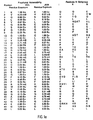
- Figure 1. Solvent exposure of sidechains of framework residues in KOL and J539 Fvs and the residues which occur most frequently at these positions in the various human VH subgroups.
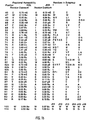
- Figure 2. Solvent exposure of sidechains of framework residues in KOL VL and the residues which occur most frequently at these positions in the various human V-lambda subgroups.
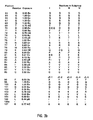
- Figure 3. Solvent exposure of sidechains of framework residues in J539 VL and the residues which occur most frequently at these positions in the various human V-kappa subgroups.
-
- Figure 4. Primers used to isolate DNA encoding murine kappa light chain variable region and murine IgG2a heavy chain variable region using PCR. Oligodeoxynucleotides used as PCR primers to generate a shortened IgG4 heavy chain. Oligodeoxynucleotides used in PCR to re-engineer the thymidine kinase (TK) promoter to facilitate the expression of the neomycin resistance gene. Oligodeoxynucleotide primers used in PCR to clone the IgH enhancer sequence. Oligodeoxynucleotides used as PCR primers to generate a human kappa light chain constant region.
- Figure 5. Oligodeoxynucleotides used in the construction of the "veneered" 1B4 heavy and light chain variable regions plus those necessary to fuse the human signal and intronic sequenceds onto these variable regions.
- Figure 6. PCR-recombination strategy used in the veneering of the 1B4 kappa light chain variable region.
- Figure 7. Outline of the insertion of the "veneered" kappa light chain variable region and kappa constant region into the light chain expression vector.
- Figure 8. PCR-recombination strategy used in the veneering of the 1B4 heavy chain variable region.
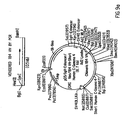
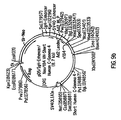
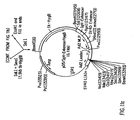
- Figure 9. Outline of the insertion of the "veneered" heavy chain variable region into the heavy chain expression vector.
- Figure 10. Outline of the construction of neomycin selectable expression vector.
- Figure 11. Outline of the construction of the hygromycin selectable expression vector.
- Figure 12. Amino acid sequence completion of the "veneered"-1B4, murine 1B4 and human Gal heavy chain variable regions and the "veneered" 1B4, murine 1B4 and human Len kappa light chain variable regions. Check marks indicate the individual amino acid residues converted.
- Figure 13. Competitive binding assay of native murine 1B4 (open diamonds) and recombinant "veneered" 1B4 (closed diamonds).
- The identification and production of murine monoclonal antibodies has lead to numerous therapeutic applications of these exquisitely specific molecules in human disease. The technologies of molecular biology have further expanded the utility of many antibodies by allowing for the creation of class switched molecules whose functionality has been improved by the acquisition or loss of complement fixation. The size of the bioactive molecule may also be reduced so as to increase the tissue target availability of the antibody by either changing the class from an IgM to an IgG, removing most of the heavy chain constant region in the creation of a F(ab)2 or both heavy and light chain constant regions may be dispensed with in the formation of a Fv antibody. Common to all of these potentially therapeutic forms of antibody are the requisite CDRs (complementary determining regions) which guide the molecule to its ligand and the framework residues (FRs) which support these latter structures and dictate the disposition of the CDRs relative to one another, Winter European Patent Application, Publication No. 239,400; Riechmann et al., Nature 332: 323-327 (1988). Crystallographic analyses of numerous antibody structures reveal that the combining site is composed almost entirely of the CDR residues arranged in a limited number of loop motifs, Padlan and Sheriff, 1990. The necessity of the CDRs to form these structures combined with the appreciated hypervariablity of their primary sequence leads to a great diversity in the antigen combining site, but one which has a finite number of possibilities. Thus, hypermutability and a limited primary sequence repetoire for each CDR would suggest that the CDRs derived for a given antigen from one species of animal would be the same derived from another species. Hence, they should be poorly immunogenic, if at all, when presented to a recipient organism in a non-foreign context.
- Monoclonal antibody producing hybridomas have been most readily obtained from immunized rodents. Development of similar reagents from human sources has been frustrated by the current inability to maintain long term cultures of cells which produce sufficient quantities of antibody. Additional problems arise from the regulatory standpoint when cells of human origin are employed for the production of agents to be used in man. These considerations have lead to the widespread use of rodent monoclonal antibodies for the imaging and treatment of malignancy, prophylactic administration to guard against toxic shock, modification of graft rejection episodes, and to temper acute inflammatory reactions. In all scenarios where completely rodent or partially rodent (ie, rodent - human chimeras) antibodies have been used for therapy the recipients have often elicited an immune response directed toward the antibody. These reactions have limited the duration and effectiveness of the therapy.
- Various attempts have been made to minimize or eliminate the immunogenicity of non-human antibodies while perserving their antigen- binding properties. Initially, chimeric antibodies were constructed containing the rodent varible regions and their associated CDRs fused to human constant domains. The following references generally describe chimaeric antibody technology: Lobuglio et al., Proc. Natl. Acad. Sci. USA 86: 4220-4224 (1989); United States Patent 4,816,567; PCT International Publication No. WO 87/02671, published May 7,1987; European Patent Publication No. 255,694, published February 10 1988; European Patent Publication No. 274,394, published July 13, 1988; European Patent Publication No. 323,806, published July 12, 1989; PCT International Publication No. WO/89/00999, published February 9, 1989; European Patent Publication No. 327,000, published August 9, 1989; European Patent Publication No. 328,404, published August 16,1989; and European Patent Publication No. 332,424, published September 13, 1989. These proved to be less immunogenic but still approximately half of the recipients mounted an immune response to the rodent variable region framework residues. Further reduction of the "foreign" nature of the chimeric antibodies has been achieved by grafting only the CDRs from the rodent monoclonal into a human supporting framework prior to its subsequent fusion with an appropriate constant domain, Winter European Patent Application, Publication No. 239,400; Riechmann et al., Nature 332: 323-327 (1988). The procedures employed to accomplish CDR-grafting often result in imperfectly "humanized" antibodies. That is to say, the resultant antibody has either lost avidity (usually 2-3 fold, at best) or in an attempt to retain its original avidity a significant number of the murine framework residues have replaced the corresponding ones of the chosen human framework. In this later case, the immunogenicity of the modified "humanized" antibody is difficult to anticipate a priori.
- The ligand binding characteristics of an antibody combining site are determined primarily by the structure and relative disposition of the CDRs, although some neighboring residues also have been found to be involved in antigen binding (Davies et al., Ann. Rev. Biochem. 59: 439-473 [1990]). Fine specificity can be perserved in a "humanized" antibody only if the CDR structures, their interaction with each other, and their interaction with the rest of the variable domains are strictly maintained. One may anticipate that the key residues represent "interior" and interdomain contact residues, hence those surface exposed residues which are immediately available for immune surveillance should be non- inclusive of the structural residues.
- EP-A-438312 discloses the incorporation of a CDR from a first species into a second species which has similar variable heavy and light chain frameworks to the first species.
- Tempest et al., Bio/Technology 9, 266-271 (1991) discloses transferring CDRs from a murine monoclonal antibody to a human monoclonal antibody, then making additional alterations to one of the framework regions to restore binding affinity and specificity.
- WO-A-9007861 discloses a humanized immunoglobulin having a human framework and CDRs from a second species. At least one framework amino acid is substituted by the corresponding amino acid from the donor Ig where the human amino acid is rare for that position but the donor amino acid in that position is common in humans.
- It is, accordingly, an objective of the present invention to provide a method of producing immunoglobulin according to
claim 1. - A unique method is disclosed for identifying and replacing immunoglobulin surface amino acid residues which converts the antigenicity of a first mammalian species to that of a second mammalian species. The method will simultaneously change immunogenicity and strictly preserve ligand binding properties. The judicious replacement of exterior amino acid residues has no effect on the ligand binding properties but greatly alters immunogenicity.
- The present invention relates to a "humanization" procedure which simultaneously reduces the immunogenicity of the rodent monoclonal antibody while preserving its ligand binding properties in their entirety. Since the antigenicity of a protein is primarily dependent on the nature of its surface, the immunogenicity of an xenogenic or allogenic antibody could be reduced by replacing the exposed residues which differ from those usually found in another mammalian species antibodies. This judicious replacement of exterior residues should have little, or no, effect on the interior domains, or on the interdomain contacts. Thus, ligand binding properties should be unaffected as a consequence of alterations which are limited to the variable region framework residues. The process is refered to as "veneering" since only the outer surface or skin of the antibody is altered, the supporting residues remain undisturbed.
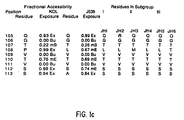
- The procedure for "veneering" makes use of the available sequence data for human antibody variable domains complied by Kabat et al., "Sequences of Proteins of Immunological Interest", 4th ed., Bethesda, Maryland: National Institutes of Health, 1987, updates to this database, and other accessible U.S. and foreign databases (both nucleic acid and protein). The subgroups into which the various sequences have been combined are presented in Figures 1 - 3, indicating the most frequently occurring amino acid at each framework position. Also presented are the sequences of the various J-minigenes. The solvent accessibilities of the amino acids, as deduced from the known three-dimensional structure for human and mouse antibody fragments, are included in these figures.
- High resolution X-ray crystallography of the variable domains of the antibodies KOL and J539 have been subjected to extensive refinement beginning with the structures available from the Protein Data Bank (Bernstein et al., J. Mol. Biol. 112: 535-542 1977; file 2FB4 for KOL and file 2FBJ for J529). The solvent accessibilities were computed as described by Padlan Proteins: Struct. Funct. Genet. 7: 112-124 (1990).
- There are two steps in the process of "veneering". First, the framework of a first animal species, e.g. the mouse, variable domains are compared with those corresponding frameworks of a second animal species, e.g. human. It is intended that this invention will allow the antigenic alteration of any animal species antibody. The present invention illustrates the conversion of murine antibody to human antibody, but this is for illustrative purposes only. The most homologous human variable regions are then compared residue for residue to the corresponding murine regions. This will also define the human subgroup to which each mouse sequence most closely resembles. Second, those residues in the mouse framework which differ from its human counterpart are replaced by the residues present in the human counterpart. This switching occurs only with those residues which are at least partially exposed (mE and Ex; Figures 1-3) (i.e. those having a fractional accessibility of at least 0.61). One retains in the "veneered" mouse antibody: its CDRs, the residues neighboring the CDRs, those residues defined as buried or mostly buried (mB and Bu; Figures 1-3), and those residues believed to be involved with interdomain contacts (boldface, Figures 1-3).
- Human and murine sequences frequently differ at the N-terminus of both heavy and light chains. The N-termini are contiguous with the CDR surface and are in position to be involved in ligand binding. Thus, wisdom would dictate that these murine termini be retained in its "veneered" version.
- Finally, replacement of some amino acid types could have a significant effect on the tertiary structure or electrostatic interactions of the variable region domains. Hence, care should be exercised in the replacement of proline, glycine, and charged amino acids.
- These criteria and the following procedures are used to prepare recombinant DNA sequences which incorporate the CDRs of a first mammalian species, animal, mMAb, both light and heavy chains, into a second mammalian species, human, appearing frameworks that can be used to transfect mammalian cells for the expression of recombinant human antibody with the antigen specificity of the animal monoclonal antibody. Preferrably the recombinant immunoglobulins will be recognized as self proteins when administered for threapeutic purposes. This method of "veneering" will render the recombinant antibodies useful as therapeutic agents because they will be either weakly immunogenic or non-immunogenic when administered to humans. The invention is further contemplated to include the recombinant conversion of any animal monoclonal antibody into a recombinant "human-appearing" monoclonal antibody providing that a suitable framework region can be identified (as described below). The animal monoclonals may include, but are not limited to, those murine monoclonal antibodies described by VanVoorhis et al., J. Exp. Med. 158: 126-145 (1983) which bind to human leukocytes and the appropriate mMAbs produced by hybridomas deposited in the Hybridoma Cell Bank maintained by the American Type Culture Collection (ATCC) and described in the ATCC Catalog of
Cell Lines 8 Hybridomas, No. 6, 1988. - The CDR sequences from the animal monoclonal antibody are derived as follows. Total RNA is extracted from the murine hybridomas, for exampe the 1B4 myeloma cells described by Wright et al., Proc. Natl. Acad. Sci. USA 80: 5699-5703 (1983), the 60.3 cells described by Beatty et al., J. Immunol. 131:2913-2918 (1983), the TS1/18 cells described by Sanchez-Madrid et al., J. Exp. Med. 158: 1785-1803 (1983), and other anti-CD18 or CD11 monoclonal antibodies and hybridomas as described in Leukocyte Typing lll, Springer-Verlag, New York (1988), using standard methods involving cellular solubilization with guanidinium isothiocyanate (Chirgwin et al., Biochem. 18: 5294-5299 [1979]). The murine 1B4 mMAb will be used as the primary example of animal MAb that can be "veneered" by the unique process being disclosed. The invention is intended to include the conversion of any animal immunoglobulin to a "human-appearing" immunoglobulin. It is further intended that "human-appearing" immunoglobulin (Ig) can contain either kappa or lambda light chains or be one of any of the following heavy chain isotypes (alpha, delta, epsilon, gamma and mu).
- Pairs of degenerate oligodeoxynucleotide primers (Figure 4) representing sequences within
framework 1 of the murine kappa light chain variable region and light chain constant domain, or those withinframework 1 of the murine IgG2a heavy chain variable region and heavy chain constant CH1 domain are synthesized on an Applied Biosystem 381A DNA synthesizer, removed from the resin by treatment with concentrated NH40H and desalted on a NAP-5 column eluted withH 20. Total RNA, about 2 µg, is reverse transcribed for 30 min at 42°C using Moloney MLV reverse transcriptase, about 200 units (BRL), and about 10 pmoles of the constant region complementary strand primers for either the heavy or light chain. The reverse transcriptase is heat inactivated, at about 95° C for about 5 min, and the reactions are made to contain in about 100 µl of PCR buffer about 50 pmoles of each of the paired primers and and 2.5 units of Taq polymerase. About 45 cycles of amplification (2', 94° C; 2', 55° C; 2' 72° C) are followed by gel purification of the anticipated 400+ base pair (bp) DNA fragments. Prior to subcloning those DNAs into a blunt-ended intermediate plasmid such as pSP72 (Promega) they are terminally phosphorylated using T4 polynucleotide kinase. Multiple clones representing these PCR amplified sequences are grown and submitted to DNA sequence determinations using Sequenase® and T7 and SP6 specific sequencing primers. A unique DNA sequence representing a murine IgG2a heavy chain variable region is obtained by analysis of the derived amino acid sequences. Replacement of the "murine-appearing" framework residues with those residues compatible with a human variable region is accomplished utilizing the following unique processes. An appropriate human framework is determined utilizing the criteria discussed below. The light chain variable region framework with sufficient homology to the the m1B4 framework was determined to be the human LEN framework (FR). The Len FR shows a similarity of 90% and an identity of 81% when compared to murine 1B4. This sequence, with its leader, 3' intronic sequences and engrafted m1B4 CDRs had been subcloned into the intermediate vector pGEM3Z (Promega), as described in Daugherty et al. Nucleic Acids Res. 19: (1991). About eight oligodeoxynucleotide primers (Figure 5) are synthesized representing the primers necessary to generate by polymerase chain reaction (PCR) amplification four DNA fragments. Incorporated into all but the terminal oligodeoxynucleotide primers were those sequences corresponding to the veneered MAb 1B4 light chain, with its unaltered CDRs, and at least 15 bases of 5'-terminal complementarity to allow for the subsequent PCR- directed recombination of these four fragments. For the purposes of exemplifying the "veneering" process the LEN light chain variable region already containing an engrafted set of CDRs representing those within the light chain of murine 1B4 was used as the template into which mutations were placed so as to easily create the "veneered" framework sequence. The appropriate primer pair (S1 & V9, V10 & V11, etc.), about 50 pmole each, was combined with about 10 ng of plasmid DNA representing the LEN CDR- grafted framework, about 2.5 units of Taq DNA polymerase and about twenty-five (25) cycles of PCR amplification ensued (cycle periods: 1', 94° C; 1', 55° C; 2' 72° C). The products of the four reactions, purified by agarose gel electrophoresis, are combined, about 10 ng of each DNA fragment, along with terminal oligodeoxynucleotide primers (A1 &A2, Figure 6) and Taq DNA polymerase. The combined fragments were PCR amplified (25 cycles of: 2', 94° C; 2', 55° C; 2' 72° C). Following restriction endonuclease digestion with Hind lll and Xba I the amplified DNA is purified by agarose gel electrophoresis and subcloned into compatible sites of an intermediate vector pSP72 (Promega) which contains the human kappa light chain constant region (see Figure 7). Genomic DNA, about 1 µg, purified from a human B cell line (GM0108A: NIGMS Human Genetic Mutant Cell Repository, Institute for Medical Research, Camden, NJ) is used as a template for PCR amplification (Figure 4) of about a 920 base pair fragment containing the splice acceptor for the kappa light chain constant domain, the exon and a portion of its 3'-untranslated region. The PCR product is purified by agarose gel electrophoresis, digested with Bam H1 endonuclease, and subcloned into pSP72 previously linearized with Bam H1. The individual clones representing the pSP72 intermediate vector containing both the 1B4 "veneered" light chain variable region and the human kappa constant region derived by PCR amplification of human DNA are used to determine the DNA sequence of the "veneered" light chain varisble region. - The "veneered" heavy chain portion of the recombinant antibody is derived from the mutated version of the murine 1B4 heavy chain variable region fused to the human constant region of a
gamma 4 subtype obtained from a lambda library constructed by Flanagan and Rabbits, Nature 300: 709-713 (1982). The variable region of the "veneered" heavy chain is constructed from five DNA fragments representing a signal sequence, portions of the mutated murine heavy chain variable region, and an intronic sequence (Figure 8). Oligodeoxynucleotide primer pairs (Figure 5) are synthesized representing the primers necessary to generate by PCR amplification these five DNA fragments from about 10 ng of plasmid DNA template obtained from a pSP72 intermediate vector containing the heavy chain variable region previously used to determine the murine 1B4 CDR sequence. Amplification of the signal fragment, variable region fragments, and intron-containing fragment was as described above. The agarose gel purified products are combined, about 10 ng of each product, with terminal oligodeoxynucleotide primer pairs (Figure 8) and the PCR-generated in vitro recombined template is amplified using the standard procedures described above. Prior to subcloning into a Hind III and Bam HI digested expression vector containing the humanheavy chain gamma 4 constant region (Figure 9), this recombined product is similarly digested and agarose gel purified. Individual clones are submitted to DNA sequence determination using Sequenase® and T7 and SP6 specific sequencing primers and one is chosen for subsequent expression. Thegamma 4 heavy chain constant region is subcloned as about a 6.7Kb Hind 111 fragment derived from the plasmid pAT84 into the Hind lll site of the intermediate vector pSP72. This plasmid is then used as the template DNA from which a shortened version of thegamma 4 constant region is subcloned using PCR amplification and the primer pairs indicated in Figure 4. Eukaryotic expression vectors are constructed as described below. - Expression vectors are defined herein as DNA sequences that are required for the transcription of cloned copies of genes and the translation of their mRNAs in an appropriate host. Such vectors can be used to express eukaryotic genes in a variety of hosts such as bacteria, blue-green algae, plant cells, yeast cells, insect cells and animal cells. The immunoglobulins may also be expressed in a number of virus systems. Specifically designed vectors allow the shuttling of DNA between host such as bacteria-yeast or bacteria-animal cells. An appropriately constructed expression vector should contain: an origin of replication for autonomous replication in host cells, selectable markers, a limited number of useful restriction enzyme sites, a potential for high copy number, and strong promoters. A promoter is defined as a DNA sequence that directs RNA polymerase to bind to DNA and initiate RNA synthesis. A strong promoter is one which causes mRNAs to be initiated at high frequency. Expression vectors may include, but are not limited to, cloning vectors, modified cloning vectors, specifically designed plasmids or viruses. The heavy chain immunoglobulin molecule is transcribed from a plasmid carrying the neomycin (G418) resistance marker while the light chain immunoglobulin is transcribed from a plasmid carrying the hygromycin B resistance marker. With the exception of the drug resistance portion of these plasmids they are identical. The preferred progenitor of the immunoglobulin expression vectors is the pD5 (Berkner and Sharp, Nucl. Acids Res. 13: 841-857 [1985]) eukaryotic expression vector which contains the origin of adenovirus replication, the SV40 enhancer domain, the adenovirus major late promoter, the
adenovirus 2 tripartite leader, a 5' splice donor from the adenovirus third leader and a 3' splice acceptor derived from an immunoglobulin locus, a multiple cloning site placed in the Bam H1 site subsequent to receipt of the vector, and the SV40 late polyadenylation signal (Figure 10). The origin of replication is removed by digestion with Eco R1 and Kpn I and replaced by two fragments representing the neo selectable marker gene (derived from plasmid pCMVIE-AK1-DHFR as an Eco R1/Bam H1 about1.8 Kb fragment) and the Ig heavy chain enhancer (obtained as a PCR amplified fragment using human DNA as the template, and the oligodeoxynudeotides listed in Figure 4 as the primer pair, following its digestion with Bgl ll and Kpn 1). The resultant expression vector is found to lack a small portion of the TK promoter responsible for the transcription of the neomycin gene. This is replaced by insertion into the Eco Rl site about a 0.14 Kb PCR amplified fragment derived from the CMVIE-AK1-DHFR DNA using the primer pair listed in Figure 4. The resultant heavy chain expression vector (p8941) is modified by removal of the indicated Hind lll and Xba I sites using standard procedures. To convert this vector into one expressing the hyg romycin B selectable marker the neomycin-resistance cassette is removed by digestion first with Eco R1 followed by DNA polymerase-directed fill in of the 5' overhand, then subsequent Sal I digestion. The about 1.9 Kb hygromycin B expression cassette, TK promoter and TK polyadenylation signal flanking the hygromycin B gene, (obtained as a 1.8 kb Bam H1 fragment in plasmid pL690, Gritz and Davies, Gene 25: 179-188 [1981]) is removed from the plasmid pAL-2 by Bam H1 digestion and subcloned into the Bam H1 site of the intermediate vector pSP72. The hygromycin B cassette is removed from this vector by digestion with Sma I and Sal I and cloned into the expression vector linearized as described above to create a blunt end and Sal I end DNA fragment (Figure 11). - Expression of the 1B4 "veneered" kappa light chain is accomplished by transferring this cistron from the pSP72-based intermediate cloning vector (p8952), containing the human kappa constant region, to the hygromycin B selectable eukaryotic expression vector (Figure 7). An about 1.5 kb DNA fragment resulting from the endonuclease digestion of p8952 with Spe I and Cla I is purified by agarose gel electrophoresis and ligated into the expression vector which has previously been linearized, following digestion with the same two restriction enzymes; and agarose gel purified. The heavy chain eukaryotic expression vector is constructed in two steps. First, the p8950 vector containing the modified heavy chain variable region of murine 1B4 fragment is digested with Bgl ll and Bam H1. The agarose gel purified 0.75 kb fragment is ligated into the Bam H1 site of the p8941 vector and recombinant clones containing this fragment in the proper orientation are identified. Plasmid DNA from one such clone is linearized by Bam H1 digestion and ligated with a 1.78 Kb Bam H1 fragment representing a short version of the
human gamma 4 constant region, derived from plasmid pAT84 by PCR amplification. Following the identification of clones containing these inserts in the appropriate orientation, plasmid DNAs (one which is referred to as p8953) are grown and purified for transfection into recipient mammalian cells. Equal amounts, about 10 µg, of the plasmids encoding the 1B4 "veneered" IgG4 heavy chain and the 1B4 "veneered" kappa light chain are transfected by standard calcium phosphate precipitation procedures into the monkey kidney cell line CV-1P or the human embryonic kidney cell line 293. The culture supernants, assayed by a trapping ELISA (described below), were found to contain a human kappa light chain / human IgG4 immuno-globulin. Immulon-2 (Dynatech Labs.) 96-well plates are coated overnight with about a 5 µg/ml solution of mouse anti-human kappa chain constant domain monoclonal antibody (cat. #MC009, The Binding Site, Inc., San Diego, CA) in about 0.1 M NaHCO3 buffer (pH 8.2) at about 4° C, and blocked with about 1% bovine serum (BSA) in about 0.1 M NaHCO3 for about 1 hour at about 25° C. After this and all subsequent steps, washing was performed with phosphate buffered saline (PBS). The wells are then challenged with conditioned medium containing recombinant anti-CD18 antibody, or with predetermined quantities of human IgG4/kappa purified by protein A Sepharose® (Pharmacia Fine Chemicals) chromatography from human IgG4 myeloma serum (cat. # BP026, The Binding Site, Inc.) All samples are diluted in PBS containing about 0.05% Tween®-20. About 100 µl aliquots are incubated for about 1 hour at about 37° C in triplicate, and standard calibration curves are constructed using IgG4 concentrations ranging from about 10 ng/ml to about 100 ng/ml. Bound and fully assembled human IgG4 (either native or the recombinant 1B4 human "veneered" IgG4 constructs) are detected with about 100 µl aliquots of a 1:500 dilution of mouse anti-human IgG4 Fc monoclonal antibody conjugated to alkaline phosphatase (cat #05-3822, Zymed Laboratories, Inc.) in phosphate buffered saline (PBS) containing about 1 % BSA. After incubation for about 1 hour at about 37°C and subsequent washing, the quantities of bound conjugate are detected by incubating all samples with a 1 mg/ml solution of p-nitrophenyl phosphate in 0.1M 2,2' amino methyl-propanediol buffer, pH 10.3, for about 30 minutes at about 25° C. The adsorbance of the wells is determined with a UV Max ELISA plate reader (Molecular Devices) set at 405 nm. The antibody secreted by the transfected human 293 cells or monkey kidney CV1 P cells, either following transient expression or subsequent to stable clone isolation, is isolated by protein A chromatography, the concentration of recombinant human anti-CD18 antibodies determined by the trapping Elisa described above, and used to compete with the binding of radiolabeled murine 1B4 to the CD18 ligand on the surface of activated human PMNs. Affinities of r-anti-CD18 antibody constructs are determined using a competitive 125I-1 B4 soluble binding assay with stimulated human polymorpho-nuclear leukocytes (PMNs). Purified murine anti-CD18 monoclonal antibody (50 ug) is iodinated using chloramine-T (Hunter, W.M. and Greenwood, F.C., Nature 194: 495-496, 1962), and the radiolabeled antibody purified using a Bio-Sil® TSK250 (Biorad, Richmond, CA) gel filtration HPLC column (which fractionates proteins in the range of 1-300 x 103 daltons) equilibrated in 0.1 M phosphate buffer, pH 7.0. Effluent radioactivity is monitored with an in-line detector (Beckman Model 170; Beckman, Fullerton,CA) and total protein measured at OD280 with a Kratos Spectroflow 757 detector (Kratos, Mawah, N.J.). A single 125l-1B4 peak composed of coincident OD280 and radioactivity tracings characteristically elutes at about 6 minutes, 30 seconds following sample injection. Specific activity of the product is generally about 10 µCi/µg protein, and 97-99% of the counts are precipitable with 10% trichloroacetic acid. The binding of this radiolabeled antibody is assessed on human PMNs purified on a discontinuous Ficoll/Hypaque gradient (English, D. and Anderson, B.R., J. Immunol. Methods 5: 249-255, 1974) and activated with about 100 ng/ml phorbol myristate acetate for about 20 minutes at about 37°C (Lo et al., J. Exp. Med. 169: 1779-1793, 1989). To determine the avidity of antibodies for CD18 molecules on the PMN surface, about 1 x 10⁵ activated PMNs are incubated in a buffer such as Hanks balanced salt solution containing about 20 mM Hepes (pH 7.2), about 0.14 units aprotinin (Sigma Chemical Co.) and about 2% human serum albumin (binding buffer) containing about 1.3 ng 125I-1B4 (2.8 x 10⁻¹¹ M) in the presence of increasing concentrations of unlabeled 1B4 antibody (about 10-7 to 10-15M) in about a 300 µl reaction volume for about 1 hour at about 4°C with constant agitation. Cell bound 1B4 is separated from the unbound antibody by centrifugation through a 0.5 M sucrose cushion ( 4,800 x g, 3 minutes); the tubes are frozen on dry ice, and the tips cut off and counted with an LKB gamma counter. The IC50 of the anti-CD18 antibody for the inhibition of 125I-1B4 antibody binding is calculated using a four parameter fitter program (Rodbard et al., In, "Radioimmunoassay and Related Procedures in Medicine", International Atomic Energy Agency, Vienna, vol 1,469 - 504, 1978). The affinity of the "veneered" r-anti-CD18 antibody for the CD18 ligand is determined in a similar manner using murine 125I-1B4 antibody and increasing quantities, as determined by the trapping Elisa, of unlabeled r-anti-CD18. The results of the binding assays are shown in Figure 13 and indicate that the avidity of the "veneered" recombinant 1B4 antibody is equal to that of the murine 1B4 monoclonal antibody. This result shows that an antibody with presumptive human isotype may be recombinantly constructed from the murine parent antibody by the introduction of numerous point mutations in its framework residues and expressed fused to human kappa andgamma 4 constant domains without loss in avidity for the antigen. It can be inferred from this result that the point mutations within the framework regions do not alter the presentation of the murine 1B4 light chain and heavy chain CDRs. Many of the examples of construction of recombinant human antibodies containing complementary regions replaced by those found within murine monoclonal antibodies have resulted in loss of avidity for the ligand or antigen. Thus, although these latter transmutations are possible, the successful maintenance of avidity is not assured. This procedure described above demonstrates that when strict attention is paid to the framework regions, and the nature of the amino acids within each framework, "humanization" may potentially be achieved without the loss of avidity which accompanies the transfer of CDRs to the "generic" human frameworks ("humanization") employed by Winter, European Patent Publication No. 239,400, published September 30, 1987. - To identify human framework sequences compatible with the CDRs of, say, murine 1B4, human frameworks with a high degree of sequence similarity to those of murine 1B4 are identified. Sequence similarity is measured using identical residues as well as evolutionarily conservative amino acid substitutions. Similarity searches are performed using the murine 1B4 framework sequence from which the CDR sequences had been removed. This sequence is used to query a database of human immunoglobulin sequences that had been derived from multiple sources. Sequences with a high degree of sequence similarity are examined individually for their potential as humanizing framework sequences. In this way, the human homologue providing the murine CDRs with the structure most similar to their native murine framework is selected as the template for the construction of the "veneered" variable regions (Figure 12). Should human frameworks of sufficient similarity not be identifiable from compiled sequences, it is possible to isolate from human genomic DNA a group of closely related variable regions using recombinant technology. Thus, a
degenerate 5' upstream oligodeoxynucleotide primer may be designed from the conserved sequences within the amino-terminus of each of the various human FR1 regions and paired with a degenerate 3' downstream oligodeoxynucleotide primers fashioned from the FR sequence determined from the murine monoclonal whose CDRs one wishes to transfer into a human context. These primer pairs are then used to PCR amplify from a human genomic template those DNA sequences which are flanked by the primer pair. The resulting DNAs may then be cloned and the DNA sequence derived from individual members will describe various murine-related human variable regions. The paucity of somatic mutations in framework residues and the conservation of amino acid sequence between mouse and man make this approach possible. - The construction of a complete recombinant human IgG4 antibody, whose heavy and light chain variable domains contain the CDR residues of the murine monoclonal antibody, with complete retention of the specificity and avidity of the parent murine monoclonal antibody is disclosed. The construction of the "veneered" light chain framework derived from the human sequence of LEN fused with a human kappa light chain constant region is described above. The murine variable region framework sequence, devoid of CDR sequences, is used to query a database of complete human variable region sequences. The human sequences that are most similar to the murine framework region are then analyzed individually to determine both their sequence identity and similarity to the murine framework region. In the case of murine 1B4 these sequences include, but are not limited to, "Gal", chosen because of its high degree of both similarity and identity with the 1B4 heavy chain sequence. The Gal FR has been found to be 85% similar and 79% identical to murine 1B4. These values are based upon the Dayhoff similarity matrix of evolutionarily conserved amino acid substitutions (R. M. Schwartz, M. O. Dayhoff, in Atlas of Protein sequence and structure M. O. Dayhoff, Eds. (National Biomedical Research Foundation, Washington, DC [1979]) (Figure 12). To prepare a recombinant DNA encoding the murine heavy chain CDRs in the context of a human-appearing framework the following procedures are performed. A set of ten short oligodeoxynucleotides are synthesized. Each pair is combined in a separate PCR reaction with the DNA template representing the murine 1B4 heavy chain variable region, amplified and isolated following PCR of the RNA of the murine hybridoma 1B4 as described above. Thus, about 50 pmole of each primer pair was combined with about 10 ng of plasmid DNA representing the murine 1B4 heavy chain variable region, about 2.5 units of Taq DNA polymerase and about twenty- five (25) cycles of PCR amplification ensued (cycle periods: 1', 94°C; 1', 55°C; 2' 72°C). The products of the five reactions (Figure 8) encoded portions of the 1B4 heavy chain variable region, beginning with the signal peptide encoding region and ending with the 3' intronic sequence which resides between the variable region coding domain and the IgG4 constant region sequence, with the desired point mutations to create a "veneered" variable region framework. These five fragments are purified by agarose gel electrophoresis, combined, about 10 ng of each DNA fragment, along with terminal oligodeoxynucleotide primers (A1 &A2, Figure 5) and Taq DNA polymerase. The combined fragments were PCR amplified (25 cycles of: 2', 94°C; 2', 55°C; 2' 72°C). By virtue of the complementary ends of the five fragments, the polymerization/denaturation/polymerization cycles of the polymerase chain reaction result in the formation, and subsequent amplification, of the combined sequences. Following 25 cycles of amplification the combined 0.8 Kb fragment is electrophoretically purified from an agarose gel and was digested with restriction enzymes Spe I and Bam H1. Following agarose gel electrophoresis, the purified DNA fragment is ligated into the heavy chain expression vector, p8958 (see Figure 9), in place of the chimaeric variable region existing in this vector. Each "veneered" variable region, with its associated human constant region, residing within a pD5-based expression vector plasmid was co-transfected into 293 cells and CV1 P cells and recombinant human antibody is found to be present in the conditioned medium 48 hours post transfection. The "veneered" recombinant antibody is isolated by protein A chromatography. The avidity of this antibody for the CD18 ligand displayed on the surface of activated human PMNs is compared with that of the murine 1B4 monoclonal antibody parent. Figure 13 shows that although each antibody contains the same set of six CDRs within different framework domains, they exhibit identical avidity for the ligand. Thus, the avidity of an antibody molecule does not rely upon the variable region framework residues which are surface exposed, rather the proper structure in which the CDRs are presented must be significantly influenced by the buried and inter/intra active residues. The parent murine monoclonal antibody demonstrates an IC50 of about 1.0 to about 0.7 nM, the "veneered" molecule has a similar IC50.
- Further a method of inhibiting the influx or migration of leukocytes capable of expressing CD18 antigen (leukocyte integrin, beta subunit) on their surface into a site of inflammation or a tissue area or organ that will become inflamed following an influx of the cells is disclosed. The inflammation may result from an infection with pathogenic microorganisms such as gram-positive and gram-negative bacteria, parasites and fungi. The response may also be induced by viruses and non-infectious means such as trauma or reperfusion following myocardial infarction or stroke, immune responses to foreign antigen and autoimmune responses. The recombinant human anti-CD18 antibodies are useful in the treatment of inflammation in lung, central nervous system, kidney, joints, endocardium, eyes, ears, skin, gastrointestinal tract and urogenital system. Disease states in which the recombinant human anti-CD18 antibodies are useful as therapeutic agents include, but are not limited to: infectious diseases where active infection exists at any body site, such as meningitis; conditions such as chronic or acute secondary inflammations caused by antigen deposition; and other conditions such as, encephalitis; arthritis; uveitis; colitis; glomerulonephritis; dermatitis; psoriasis; and respiratory distress syndrome associated with sepsis and/or trama. Other inflammatory diseases which may be responsive to recombinant human anti-CD18 antibody include, but are not limited to, immune disorders and conditions involving T-cell and/or macrophage attachment/recognition, such as acute and delayed hypersensitivity, graft vs. host disease; primary autoimmune conditions such as pernicious anemia; infection related autoimmune conditions such as Type I diabetes mellitis; flares during rheumatoid arthritis; diseases that involve leukocyte diapedesis, such as multiple sclerosis; antigen-antibody complex mediated diseases including certain of the secondary infection states listed above; immunosuppression; and transplant rejection. Inflammatory conditions due to toxic shock or trauma such as adult respiratory distress syndrome and reperfusion injury; and disease states due to leukocyte dyscrasias and metastasis, are foreseen. Inhibition of leukocyte-endothelial attachment for diagnostic and therapeutic purposes; such as the iatrogenic opening of the endothelium to prevent the ingress of leukocytes during the ingress of a therapeutic drug in the instance of chemotherapy; or to enhance the harvesting of leukocytes from patients is also anticipated.
- Recombinant human anti-CD18 antibodies or an active fragment thereof can be used to treat the above mentioned diseases. An active fragment will include the F(ab')2, the Fab and any other fragment that can bind to the CD18 antigen. Recombinant human anti-CD18 antibodies can be administered alone for non-infectious disease states or combined with antibiotics or other anti-infective agents for the treatment of infectious diseases for reasons discussed above. Administration will generally include the antibodies and possibly other substances in a physiologically acceptable medium or pharmaceutical carrier. Such physiologically acceptable media or phamaceutical carriers include, but are not limited to, physiological saline, phosphate buffered saline, phosphate buffered saline glucose, buffered saline and the like. The antibodies and any anti-infective agent will be administered by parenteral routes which include intravenous, intramuscular, subcutaneous and intraperitoneal injection or delivery. The amount of the antibodies and the mixture in the dosage form is dependent upon the particular disease state being treated. The amount of the recombinant human anti-CD18 antibody utilized in a dosage form can range from about 1 to about 1,000 mg, with a range of from about 10 mg to about 100 mg being preferred. The antibodies can be administered daily or less than daily as determined by the treating physician. The following examples illustrate the present invention without, however, limiting the same thereto.
- An antibody was produced in which the variable domain of the light chain comprises the framework region of a murine light chain modified to contain surface exposed amino acids of human derivation. The variable domain of the heavy chain is similarly derived from the murine heavy chain with point mutations which replace murine exposed residues with human-appearing residues. The light chain human framework region was derived from human myeloma protein LEN. The CDR and framework sequences from the murine monoclonal antibody 1B4 which binds to CD18 (the beta subunit of the leukocyte integrin B-2 family which includes: LFA-1, Mac-1, and p150.95) were derived as follows. The hybridoma designated 1B4 which produces 1B4 monoclonal antibody was deposited under the Budapest Treaty at the International Depository Authority: American Type Culture Collection, 12301 Parklawn Drive, Rockville, MD, 20852. Viability was determined on June 6, 1989 and the hybridoma was designated HB 10164. Previous experiments had determined this antibody to be an IgG 2a with a kappa light chain (Wright et al., Proc. Natl. Acal. Sci. USA 80: 5699-5703 [1983]).
- Total RNA was extracted from the 1B4 myeloma cells using standard methods involving cellular solubilization with guanidinium isothiocyanate (Chirgwin et al., Biochem. 18:5294-5299 [1979]). Sets of degenerate oligodeoxynucleotide primers (Figure 4) representing sequences within
framework 1 of the murine kappa light chain variable region and kappa light chain constant domain, or those withinframework 1 of the murine IgG2a heavy chain variable region and heavy chain constant CH1 domain were synthesized by standard phosphoramidite procedures on an Applied Biosystem 381A DNA synthesizer. Removal of the oligodeoxy-nucleotides (oligos) from the resin was accomplished by treatment with concentrated NH4OH followed by desalting on a NAP-5 column (Pharmacia) with H2O elution (when the oligos were <45 bases in length), or by use of an OPC column (Applied Biosystems Inc) with 20% acetonitrile elution (when the oligos were >45 bases in length), as recommended by the manufacturers. Total RNA (2µg) was reversed transcribed for 30' at 42°C using Moloney MLV reverse transcriptase (200 units, BRL) and 10 pmoles of the constant region complementary strand primers representing either heavy or light chain in a buffer (final volume of 20 µl) containing 50 mM Tris HCl, pH 8.3, 75 mM KCl, 3 mM MgCl2, 10 mM DTT, and 20 units of RNAsin (Pharmacia). The reverse transcriptase was heat inactivated (95°C, 5') and the reactions were made to contain in 100µl of PCR buffer (10 mM Tris HCI, pH 8.3, 50 mM KCI, 1.5 mM MgCl2, 0.01% gelatin, 200 µM each dNTP), 50 pmoles of each of the paired primers, and 2.5 units of Taq polymerase (Perkin Elmer/Cetus). Polymerase chain reaction (PCR) amplification was carried out essentially as described by Saiki et al., Science 230: 1350-1354 (1985) and others (Mullis et al., Cold Srping Harbor Symp. Quant. Biol.51: 263-273 [1986], Dawasaki and Wang, PCR Technology, Princples and Applications for DNA Amplification, Erlich, Ed., Stockton Press, NY, pp. 89-97 [1989], Tung et al., ibid. pp. 99-104 [1989]). Forty five cycles of amplification by a DNA Thermal Cycler (Perkin Elmer Cetus Instruments)(2', 94°C; 2', 55°C; 2' 72°C) were followed by gel purification of the anticipated 400+ base pair (bp) DNA fragments. Prior to subcloning the DNAs into a blunt-ended intermediate plasmid (pSP72, Promega) they were terminally phosphorylated using T4 polynucleotide kinase (Boehringer Mannheim). Multiple clones representing these PCR amplified sequences were isolated form DH5 transformed E.coli plated on LB agar plates containing 50 µg/ml ampicillin, grown by described procedures (Maniatis et al., Molecular Cloning, A Laboratory Manual, Cold Spring Harbor Laboratory, Cold Spring Harbor, NY, 1982), plasmid DNAs were extracted from the bacteria using the DNA preparation procedures of Birnboin and Doly, Nucleic Acid Res. 7: 1515 (1979), and the double-stranded plasmid DNAs were submitted to DNA sequence determinations using Sequenase® (United States Biochemicals) and T7 and SP6 specific sequencing primers (Boehringer Mannheim) using the protocols recommended by the manufacturer. A unique DNA sequence representing a murine IgG2a heavy chain variable region was obtained, as was a kappa light chain variable region sequence. - To give the final appearance of a "veneered" murine light chain, several residues within a template composed of the human LEN framework, into which had been grafted the CDRs described for 1B4, were replaced by corresponding residues found in the murine 1B4 light chain framework. Replacement of the human LEN variable region residues with those unique to MAb 1B4 took place as follows. Eight oligodeoxynucleotides (Figure 5) were synthesized representing the primers necessary to generate by PCR amplification four DNA fragments. Incorporated into all but the terminal oligodeoxynucleotides were those sequences corresponding to the MAb 1B4 light chain variable region framework residues to be point mutated and at least 15 bases of 5'-terminal complementarity (see Figure 6). The appropriate primer pair (50 pmole each) was combined with 10 ng of a 1B4 CDR-grafted LEN framework-containing plasmid DNA, 2.5 units of Taq DNA polymerase, PCR reaction components and buffer, and twenty-five (25) cycles of PCR amplification ensued (cycle periods: 1', 94°C; 1', 55°C; 2' 72°C). The products of the four reactions, purified by agarose gel electrophoresis, were combined (10 ng of each DNA fragment) along with a terminal oligodeoxynucleotide primer pair (amplifier) (Figures 5 & 6), Taq DNA polymerase, PCR reaction components and buffer, and the subsequent recombined fragments were amplified, as described above, for twenty-five (see Figure 6). Following restriction endonuclease digestion with HindIII and XbaI the amplified DNA was purified from an agarose gel and subcloned into these same sites of an intermediate vector pSP72 (Promega) which contained the human kappa light chain constant region, obtained as follows. DNA (1µg) purified from a human B cell line (GM01018A; NIGMS Human Genetic Mutant Cell Repository, Institute for Medical Research, Camden, N.J. 08103) was used as a template for the oligodeoxynucleotide primers described in Figure 4 to PCR amplify a 920 base pair fragment containing the splice acceptor for the human kappa light chain constant domain, the exon and a portion of its 3'-untranslated region (PCR primer pair choice was selected based on the kappa constant region sequence described by Hieter et al., Cell 22: 197-207 (1980). The PCR product was purified by agarose gel electrophoresis, digested with Bam H1 endonuclease, and subcloned into pSP72 (Promega) previously linearized with Bam H1.
- The individual clones representing the pSP72 intermediate vector containing both the 1B4 "veneered" light chain variable region derived as described above, and the human kappa constant region, derived by PCR amplification of human DNA, were used to verify the DNA sequence of the "veneered" light chain variable region. The "veneered" heavy chain portion of the recombinant antibody was derived from a point mutated murine 1B4 heavy chain variable region fused to the human constant region of
gamma 4 subtype obtained from a lambda library constructed by Flanagan and Rabbitts, Nature 300: 709-713 (1982). - The variable region of the "veneered" heavy chain was constructed from five DNA fragments representing a signal sequence, mutated portions of the murine 1B4 heavy chain variable region, and an intronic sequence (Figure 8). Oligodeoxy-nucleotide primer pairs (Figure 5) were synthesized representing the primers necessary to generate by PCR amplification these five DNA fragments from 10 ng of plasmid DNA template containing the murine 1B4 heavy chain variable region previously used to determine the murine 1B4 CDR and framework sequences. Amplification of the five fragments was performed as described above for the four light chain variable region fragments. The agarose gel purified products were combined (10 ng of each product) with terminal primer pairs (Figure 5) and the PCR-generated in vitro recombined template was amplified using the standard procedure also described above for recombining the fragments comprising the "veneered" light chain variable region. Prior to subcloning into a Hind III and Bam HI digested expression vector this recombined product was similarly digested and agarose gel purified. DNA was obtained following growth of individual bacterial clones and submitted to DNA sequence determination using Sequenase® and T7 and SP6 specific sequencing primers in order to verify the sequence of the reconstructed variable region and its flanking domains.
- The
gamma 4 heavy chain constant region had been subcloned as a 6.7 Kb Hind III fragment derived from the plasmid pAT84 (Flanagan and Rabbitts, supra) into the Hind III site of the intermediate vector pSP72 (Promega). This plasmid was then used as the template DNA from which a shortened version of thegamma 4 constant region was obtained using the standard PCR amplification procedures described above and the primer pairs indicated in Figure 4. Eukaryotic expression vectors were constructed as described below such that the heavy chain immunoglobulin molecule was transcribed from a plasmid carrying the neomycin (G418) (Rothstein and Reznikoff, Cell 23: 191-199 [1981]) resistance marker, while the light chain immunoglobulin was transcribed from a plasmid carrying the hygromycin B resistance marker (Gritz and Davies, Gene 25: 179-188 [1983]). With the exception of the drug resistance portion of these plasmids they are identical. - The progenitor of the immunoglobulin expression vectors was the pD5 eukaryotic expression vector (Berkner and Sharp, Nucl. Acids Res. 13: 841-857 [1985]) which contained the origin of adenovirus replication, the SV40 enhancer domain, the adenovirus major late promoter, the
adenovirus 2 tripartite leader, a 5' splice donor from the adenovirus third leader and a 3' splice acceptor derived from an immunoglobulin locus, a multiple cloning site, and the SV40 late polyadenylation signal (Figure 10). The origin of replication was removed by digestion with Eco R1 and Kpn I and replaced by two fragments representing the neo selectable marker gene (derived from plasmid pCMVIE-AK1-DHFR (Silberklang et al., Modem Approaches to Animal Cell Technology, Ed. Spier et al., Butterworth, U.K., [1987]) as an Eco R1/Bam H1 1.8 Kb fragment) and the Ig heavy chain enhancer (obtained as a PCR amplified fragment using standard procedures described above and human DNA as the template; the oligodeoxynucleotide primer pair is listed in Figure 4) following its digestion with Bgl II and Kpn I. The resultant expression vector was found to lack a small portion of the TK promoter responsible for the transcription of the neomycin gene. This was replaced by insertion into the Eco RI site of a 0.14 kb PCR amplified fragment derived from the CMVIE-AK1-DHFR DNA using the primer pair also listed in Figure 4. The resultant heavy chain expression vector was subsequently modified by removal of the indicated Hind III and Xba I sites. To convert this neomycin selectable vector into one expressing the hygromycin B selectable marker (Figure 11) the neomycin-resistance cassette was removed by digestion first with Eco R1 followed by DNA polymerase-directed fill in of the 5' overhang, then subsequent Sal I digestion. The 1.9 kb hygromycin B expression cassette [TK promoter and TK polyadenylation signal flanking the hygromycin B gene obtained from Gritz and Davies, Gene 25: 179-188 (1983), as the 1.9 kb Bam H1 fragment in plasmid (pLG90)] was removed from the plasmid pAL-2 by Bam H1 digestion and subcloned into the Bam H1 site of the intermediate vector pSP72 (Promega). The hygromycin B cassette was removed from this vector by digestion with Sma I and Sal I and cloned into the expression vector linearized as described above to create a blunt end and Sal I end DNA fragment. - Expression of the 1B4 "veneered" kappa light chain was accomplished by transferring this cistron from its position within the pSP72 intermediate vector to the hygromycin B selectable eukaryotic expression vector (Figure 7). A 1.5 kb DNA fragment resulting from the endonuclease digestion of v1B4 VK/pSP72 intermediate vector with Spe I and ClaI was purified by agarose gel electro-phoresis and ligated into the expression vector which had previously been linearized, by digestion with the same two restriction enzymes and agarose gel purified.
- The 1B4 "veneered" heavy chain eukaryotic expression vector was constructed in one step (Figure 9) from an existing vector previously constructed to express a chimaeric form of the 1B4 heavy chain. The "veneered" heavy chain variable region created by PCR amplifcation (Figure 8) was digested with Hind III and Bam H1. The agarose gel purified 0.8 kb fragment was ligated into the Hind III and Bam H1 sites of the pD5/IgH-Enhancer/Neo/1B4 VH-Short Human C-
Gamma 4 expression vector following its endonuclease digestion with these two enzymes and subsequent purification by agarose gel electrophoresesis (Figure 9). Transformants containing both variable and constant regions were identified. Plasmid DNAs were grown (Maniatis et al., supra) and purified for transfection into recipient mammalian cells (Maniatis et al., supra; Birbion and Doly, supra.). - Equal amounts (10µg) of the plasmids encoding the "veneered" IgG4 heavy chain and the "veneered" kappa light chain were transfected by standard calcium phosphate precipitation procedures into human 293 cells and african green monkey kidney CV-1P cells. The culture supernatant fluids were assayed by a trapping Elisa (described below) for the secretion of a human kappa light chain containing IgG4 immunoglobulin.
- An Elisa was developed for the quantitation of the amounts of a 1B4 recombinant antibody expressed in conditioned mammalian cell growth medium. Immulon-2 (Dynatech Labs.) 96-well plates are coated overnight with a 5µg/ml solution of mouse anti-human k chain constant domain monoclonal antibody (cat. #MC009, The Binding Site, Inc., San Diego, CA) in 0.1M NaHCO3 buffer (pH 8.2) at 4°C, and blocked with 1% bovine serum (BSA) in 0.1M NaHCO3 for 1h at 25°C. After this and all subsequent steps, washing was performed with phosphate buffered saline (PBS). The wells are then challenged with conditioned medium containing recombinant anti-CD18 antibody, or with predetermined quantities of human IgG4 purified by protein A Sepharose® (Pharmacia Fine Chemicals) chromatography from human IgG4 myeloma serum (cat. # BP026,The Binding Site, Inc.). All samples are diluted in PBS containing 0.05% Tween®-20. 100µl aliquots are incubated for 1h at 37°C in triplicate, and standard calibration curves are constructed using IgG4 concentrations ranging from 10 ng/ml to 100 ng/ml. Bound and fully assembled human IgG4 (either native or recombinant "veneered"1B4 human IgG4 constructs) are detected with 100µl aliquots of a 1:500 dilution of mouse anti-human IgG4 Fc monoclonal antibody conjugated to alkaline phosphatase (cat #05-3822, Zymed Laboratories, Inc.) in phosphate buffered saline (PBS) containing 1% BSA. After incubation for 1h at 37°C and subsequent washing, the quantities of bound conjugate are detected by incubating all samples with a 1 mg/ml solution of p-nitrophenyl phosphate in 0.1
M 2,2'amino-methyl-propanediol buffer, pH 10.3, for 30 min at 25°C. The adsorbance of the wells is determined with a UV Max ELISA plate reader (Molecular Devices) set at 405 nm. All supernatant fluids contain this immunoglobulin, though in various amounts. The antibody secreted by the transfected 293 cells is concentrated by protein A chromatography and the concentrations of the recombinant human "veneered" anti-CD18 antibody determined by the trapping Elisa described above, is used to compete with the binding of radiolabeled murine 1B4 to the CD18 ligand on the surface of activated human PMNs. Affinities of various anti-CD18 antibody constructs are determined using a competitive 125I-m1B4 soluble binding assay with stimulated human polymorphonuclear leukocytes (PMNs). Purified murine anti-CD18 monoclonal antibody (50 ug; m1B4) is iodinated using chloramine-T (Hunter, W.M. and Greenwood, F.C., Nature 194: 495-496, 1962), and the radiolabeled antibody purified using a Bio-Sil® TSK250 (Biorad, Richmond, CA) gel filtration HPLC column (which fractionates proteins in the range of 1-300 x 103 daltons) equilibrated in 0.1M phosphate buffer, pH 7.0. Effluent radioactivity is monitored with an in-line detector (Beckman Model 170; Beckman, Fullerton,CA) and total protein measured at OD280 with a Kratos Spectroflow 757 detector (Kratos, Mawah, N.J.). A single 125I-m1B4 peak composed of coincident OD280 and radioactivity tracings characteristically elutes 6 minutes, 30 seconds following sample injection. Specific activity of the product is generally about 10µCi/µg protein, and 97-99% of the counts are precipitable with 10% trichloroacetic acid. The binding of this radiolabeled antibody is assessed on human PMNs purified on a discontinuous Ficoll/Hypaque gradient (English, D. and Anderson, B.R., J. Immunol. Methods 5: 249-255, 1974) and activated with 100 ng/ml phorbol myristate for 20 minutes at 37°C (Lo et al., J. Exp. Med. 169: 1779-1793, 1989). To determine the avidity of antibodies for CD18 molecules on the PMN surface, about 1 x 10⁵ activated PMNs are incubated in a buffer such as Hanks balanced salt solution containing 20 mM Hepes (pH 7.2), 0.14 units aprotinin (Sigma Chemical Co.) and 2% human serum albumin (binding buffer) containing 1.3 ng 125I-m1B4 (2.8 x 10⁻¹¹M) in the presence of increasing concentrations of unlabeled m1B4 antibody (10-7 to 10-15M) in a 300 ul reaction volume for about 1 h at about 4°C with constant agitation. Cell bound 1B4 is separated from the unbound antibody by centrifugation through a 0.5M sucrose cushion (4,800 x g, 3 minutes); the tubes are frozen on dry ice, and the tips cut off and counted with an LKB gamma counter. The IC50 of the anti-CD18 antibody for the inhibition of 125I-m1B4 antibody binding is calculated using a four parameter fitter program (Rodbard, D, Munson, P.J., and DeLean, In, "Radioimmunoassay and Related Procedures in Medicine", International Atomic Energy Agency, Vienna, vol I,469-504, 1978). The affinity of the "veneered" anti-CD18 antibody for the CD18 ligand is determined in a similar manner using murine 125I-mlB4 antibody and increasing quantities, as determined by the trapping Elisa, of unlabeled "veneered" anti-CD18 antibody. The results of the binding assays are shown in Figure 13 and indicate that the avidity of the "veneered" heavy chain and light chain recombinant 1B4 antibody is equivalent to that of the murine 1B4 monoclonal antibody. - The "veneered" heavy and light chain expression vectors were co-transfected into CV1P monkey kidney cells using 20 µg of each plasmid to prepare 2 mL of the calcium phosphate precipitated solution. One mL was placed in the medium overlaying each 100 mm dish of CV1P cells. After 4 hr at 37°C the medium was replaced with 1 mL of 15% glycerol in 1 x HBS (Hepes buffered salt). Following the 3 min glycerol shock, 10 mL of PBS as added, the cell monolayers were aspirated, washed once with 10 mL of PBS, and re-fed with fresh medium (DMEM + 10% heat inactivated new born calf serum) containing 200 µg of hygromycin B and 800 µg of G418 per mL. Cloning cylinders (Fishney, In, Culture of Animal Cells, Alan R. Liss, Inc. New York, 1983) were used to isolate individual colonies prior to their expansion and subsequent assay for productivity. Two clones, #11 and #48, were found to express sufficient amounts of v1B4 to warrant their expansion and ultimate accessioning.
Claims (1)
- A method of producing an immunoglobulin having the ligand binding properties of an immunoglobulin from a first mammalian species and the immunogenicity of an immunoglobulin from a second mammalian species comprising:a. comparing a variable domain of an immunoglobulin of the first mammalian species with the variable domains immunoglobulins of the second mammalian species at corresponding framework amino acid sequences;b. selecting from the variable domains of the second mammalian species the variable domain which is most similar to the first mammalian species variable domain at corresponding framework amino acid sequences;c. identifying framework amino acid residues of the first mammalian species vaxiable domain which differ from the amino acid residues at the corresponding position of the variable domain selected in section b, said differing amino acid residues being limited to those having a fractional accessibility of at least 0.61 which are not adjacent to a complementarity-determining region;d. replacing only the amino acid residues identified in section c with the corresponding residues present in the sequence selected in section b;e. preparing a DNA sequence encoding the immunoglobulin produced by section d;f. inserting the RNA sequence into a replicable expression vector operably linked to a suitable promoter compatible with a host cell;g. transforming a host cell with the vector of section f;h. culturing the host cell; andi. recovering the immunoglobulin from the host cell culture.
Applications Claiming Priority (2)
| Application Number | Priority Date | Filing Date | Title |
|---|---|---|---|
| US70221791A | 1991-05-17 | 1991-05-17 | |
| US702217 | 1991-05-17 |
Publications (2)
| Publication Number | Publication Date |
|---|---|
| EP0519596A1 EP0519596A1 (en) | 1992-12-23 |
| EP0519596B1 true EP0519596B1 (en) | 2005-02-23 |
Family
ID=24820297
Family Applications (1)
| Application Number | Title | Priority Date | Filing Date |
|---|---|---|---|
| EP92304225A Expired - Lifetime EP0519596B1 (en) | 1991-05-17 | 1992-05-12 | A method for reducing the immunogenicity of antibody variable domains |
Country Status (4)
| Country | Link |
|---|---|
| EP (1) | EP0519596B1 (en) |
| JP (1) | JP3426615B2 (en) |
| CA (1) | CA2068593C (en) |
| DE (1) | DE69233482T2 (en) |
Cited By (141)
| Publication number | Priority date | Publication date | Assignee | Title |
|---|---|---|---|---|
| US7252822B2 (en) | 2002-10-08 | 2007-08-07 | Rinat Neuroscience Corp. | Methods for treating post-surgical pain by administering an anti-nerve growth factor antagonist |
| US7255860B2 (en) | 2002-10-08 | 2007-08-14 | Rinat Neuroscience Corp. | Methods for treating post-surgical pain by administering an anti-nerve growth factor antagonist antibody |
| US7425329B2 (en) | 2004-04-07 | 2008-09-16 | Rinat Neuroscience Corp. | Methods for treating bone cancer pain by administering a nerve growth factor antagonist |
| US7429645B2 (en) | 2002-07-01 | 2008-09-30 | Biogen Idec Ma Inc. | Humanized anti-lymphotoxin beta receptor antibodies |
| US7429644B2 (en) | 2000-10-13 | 2008-09-30 | Biogen Idec Ma Inc. | Humanized anti-LT-β-R antibodies |
| US7449616B2 (en) | 2002-12-24 | 2008-11-11 | Pfizer Inc. | Anti-NGF antibodies and methods using same |
| US7494788B2 (en) | 2005-07-11 | 2009-02-24 | Molecular Kinetics, Inc. | Entropic bristle domain sequences and their use in recombinant protein production |
| US7534605B2 (en) | 1999-06-08 | 2009-05-19 | Yissum Research Development Company Of The Hebrew University Of Jerusalem | CD44 polypeptides, polynucleotides encoding same, antibodies directed thereagainst and method of using same for diagnosing and treating inflammatory diseases |
| US7563882B2 (en) | 2002-06-10 | 2009-07-21 | University Of Rochester | Polynucleotides encoding antibodies that bind to the C35 polypeptide |
| US7569672B2 (en) | 2005-02-04 | 2009-08-04 | Raven Biotechnologies, Inc. | Antibodies that bind to EphA2 and methods of use thereof |
| US7572896B2 (en) | 2005-02-03 | 2009-08-11 | Raven Biotechnologies, Inc. | Antibodies to oncostatin M receptor |
| US7572895B2 (en) | 2004-06-07 | 2009-08-11 | Raven Biotechnologies, Inc. | Transferrin receptor antibodies |
| US7576193B2 (en) | 1997-12-08 | 2009-08-18 | Merck Patent Gmbh | Heterodimeric fusion proteins useful for targeted immune therapy and general immune stimulation |
| US7589179B2 (en) | 2004-12-09 | 2009-09-15 | Merck Patent Gmbh | IL-7 variants with reduced immunogenicity |
| US7655231B2 (en) | 2003-02-19 | 2010-02-02 | Pfizer Inc. | Methods for treating pain by administering a nerve growth factor antagonist and an NSAID |
| US7674619B2 (en) | 2005-02-02 | 2010-03-09 | Mather Jennie P | ADAM-9 modulators |
| US7700739B2 (en) | 2005-06-30 | 2010-04-20 | Abbott Laboratories | IL-12/p40 binding proteins |
| US7718774B2 (en) | 2006-11-08 | 2010-05-18 | Macrogenics, Inc. | TES7 and antibodies that bind thereto |
| US7763250B2 (en) | 2005-04-29 | 2010-07-27 | Rinat Neuroscience Corp. | Antibodies directed against amyloid-beta peptide and nucleic acids encoding same |
| US7799902B2 (en) | 2004-03-23 | 2010-09-21 | Biogen Idec Ma Inc. | Receptor coupling agents and compositions thereof |
| US7803618B2 (en) | 2001-05-03 | 2010-09-28 | Merck Patent Gmbh | Recombinant tumor specific antibody and use thereof |
| US7807165B2 (en) | 2004-07-30 | 2010-10-05 | Rinat Neuroscience Corp. | Antibodies directed against amyloid-beta peptide and methods using same |
| US7847070B2 (en) | 2005-01-31 | 2010-12-07 | Raven Biotechnologies, Inc. | LUCA2 and antibodies that bind thereto |
| US7888071B2 (en) | 2001-12-04 | 2011-02-15 | Merck Patent Gmbh | DNA encoding IL-2 fusion proteins with modulated selectivity |
| US7915388B2 (en) | 2006-09-08 | 2011-03-29 | Abbott Laboratories | Interleukin-13 binding proteins |
| US7960514B2 (en) | 2003-12-30 | 2011-06-14 | Merck Patent Gmbh | IL-7 fusion proteins |
| US7989415B2 (en) | 2005-05-25 | 2011-08-02 | Curedm Group Holdings, Llc | Peptides, derivatives and analogs thereof, and methods of using same |
| US8058406B2 (en) | 2008-07-09 | 2011-11-15 | Biogen Idec Ma Inc. | Composition comprising antibodies to LINGO or fragments thereof |
| US8084026B2 (en) | 2005-01-05 | 2011-12-27 | Biogen Idec Ma Inc. | Multispecific binding molecules comprising connecting peptides |
| US8097425B2 (en) | 2006-03-10 | 2012-01-17 | Tethys Bioscience, Inc. | Multiplex protein fractionation |
| US8128926B2 (en) | 2007-01-09 | 2012-03-06 | Biogen Idec Ma Inc. | Sp35 antibodies and uses thereof |
| US8258268B2 (en) | 2005-08-19 | 2012-09-04 | Abbott Laboratories | Dual variable domain immunoglobulin and uses thereof |
| US8313916B2 (en) | 2005-01-12 | 2012-11-20 | Macrogenics West, Inc. | KID31 and antibodies that bind thereto |
| US8323651B2 (en) | 2008-05-09 | 2012-12-04 | Abbott Laboratories | Antibodies to receptor of advanced glycation end products (RAGE) and uses thereof |
| US8383778B2 (en) | 2009-01-29 | 2013-02-26 | Abbvie Inc. | IL-1 binding proteins |
| US8420083B2 (en) | 2009-10-31 | 2013-04-16 | Abbvie Inc. | Antibodies to receptor for advanced glycation end products (RAGE) and uses thereof |
| US8470991B2 (en) | 2002-12-17 | 2013-06-25 | Merck Patent Gmbh | Immunocytokine sequences and uses thereof |
| US8486893B2 (en) | 2004-06-24 | 2013-07-16 | Biogen Idec Ma Inc. | Treatment of conditions involving demyelination |
| US8497072B2 (en) | 2005-11-30 | 2013-07-30 | Abbott Laboratories | Amyloid-beta globulomer antibodies |
| US8551476B2 (en) | 2005-07-08 | 2013-10-08 | Biogen Idec Ma Inc. | SP35 antibodies and uses thereof |
| US8586714B2 (en) | 2009-09-01 | 2013-11-19 | Abbvie, Inc. | Dual variable domain immunoglobulins and uses thereof |
| US8603473B2 (en) | 2003-06-27 | 2013-12-10 | Biogen Idec Ma Inc. | Modified binding molecules comprising connecting peptides |
| US8617554B2 (en) | 2009-05-13 | 2013-12-31 | Genzyme Corporation | Anti-human CD52 immunoglobulins |
| US8664367B2 (en) | 2010-05-14 | 2014-03-04 | Abbvie, Inc. | IL-I binding proteins |
| US8691224B2 (en) | 2005-11-30 | 2014-04-08 | Abbvie Inc. | Anti-Aβ globulomer 5F7 antibodies |
| US8716450B2 (en) | 2009-10-15 | 2014-05-06 | Abbvie Inc. | Dual variable domain immunoglobulins and uses thereof |
| US8722855B2 (en) | 2009-10-28 | 2014-05-13 | Abbvie Inc. | Dual variable domain immunoglobulins and uses thereof |
| US8735546B2 (en) | 2010-08-03 | 2014-05-27 | Abbvie Inc. | Dual variable domain immunoglobulins and uses thereof |
| US8779101B2 (en) | 2009-03-05 | 2014-07-15 | Abbvie, Inc. | IL-17 binding proteins |
| US8816047B2 (en) | 2007-08-30 | 2014-08-26 | Cure DM Group Holdings, LLC | Compositions and methods of using proislet peptides and analogs thereof |
| US8822645B2 (en) | 2008-07-08 | 2014-09-02 | Abbvie Inc. | Prostaglandin E2 dual variable domain immunoglobulins and uses thereof |
| US8852608B2 (en) | 2009-02-02 | 2014-10-07 | Medimmune, Llc | Antibodies against and methods for producing vaccines for respiratory syncytial virus |
| US8877190B2 (en) | 2006-11-30 | 2014-11-04 | Abbvie Inc. | Aβ conformer selective anti-Aβ globulomer monoclonal antibodies |
| US8895004B2 (en) | 2007-02-27 | 2014-11-25 | AbbVie Deutschland GmbH & Co. KG | Method for the treatment of amyloidoses |
| US8937169B2 (en) | 1996-01-11 | 2015-01-20 | Human Genome Sciences, Inc. | Human G-protein chemokine receptor HSATU68 |
| US8957195B2 (en) | 2005-12-30 | 2015-02-17 | Merck Patent Gmbh | Anti-CD19 antibodies with reduced immunogenicity |
| US8962803B2 (en) | 2008-02-29 | 2015-02-24 | AbbVie Deutschland GmbH & Co. KG | Antibodies against the RGM A protein and uses thereof |
| US8987419B2 (en) | 2010-04-15 | 2015-03-24 | AbbVie Deutschland GmbH & Co. KG | Amyloid-beta binding proteins |
| US8987418B2 (en) | 2013-03-15 | 2015-03-24 | Abbvie Inc. | Dual specific binding proteins directed against IL-1β and/or IL-17 |
| US9029508B2 (en) | 2008-04-29 | 2015-05-12 | Abbvie Inc. | Dual variable domain immunoglobulins and uses thereof |
| US9035027B2 (en) | 2008-06-03 | 2015-05-19 | Abbvie Inc. | Dual variable domain immunoglobulins and uses thereof |
| US9046513B2 (en) | 2010-08-26 | 2015-06-02 | Abbvie Inc. | Dual variable domain immunoglobulins and uses thereof |
| US9045551B2 (en) | 2012-11-01 | 2015-06-02 | Abbvie Inc. | Anti-DLL4/VEGF dual variable domain immunoglobulin and uses thereof |
| US9062101B2 (en) | 2010-08-14 | 2015-06-23 | AbbVie Deutschland GmbH & Co. KG | Amyloid-beta binding proteins |
| US9096877B2 (en) | 2009-10-07 | 2015-08-04 | Macrogenics, Inc. | Fc region-containing polypeptides that exhibit improved effector function due to alterations of the extent of fucosylation, and methods for their use |
| US9102722B2 (en) | 2012-01-27 | 2015-08-11 | AbbVie Deutschland GmbH & Co. KG | Composition and method for the diagnosis and treatment of diseases associated with neurite degeneration |
| US9109026B2 (en) | 2008-06-03 | 2015-08-18 | Abbvie, Inc. | Dual variable domain immunoglobulins and uses thereof |
| US9115195B2 (en) | 2010-03-02 | 2015-08-25 | Abbvie Inc. | Therapeutic DLL4 binding proteins |
| US9120858B2 (en) | 2011-07-22 | 2015-09-01 | The Research Foundation Of State University Of New York | Antibodies to the B12-transcobalamin receptor |
| US9120870B2 (en) | 2011-12-30 | 2015-09-01 | Abbvie Inc. | Dual specific binding proteins directed against IL-13 and IL-17 |
| US9132190B2 (en) | 2009-08-29 | 2015-09-15 | Abbvie Inc. | Therapeutic DLL4 binding proteins |
| USRE45763E1 (en) | 2009-02-24 | 2015-10-20 | Abbott Laboratories | Antibodies to troponin I and methods of use thereof |
| US9176150B2 (en) | 2003-01-31 | 2015-11-03 | AbbVie Deutschland GmbH & Co. KG | Amyloid beta(1-42) oligomers, derivatives thereof and antibodies thereto, methods of preparation thereof and use thereof |
| US9221907B2 (en) | 2011-11-01 | 2015-12-29 | Bionomics Inc. | Anti-GPR49 monoclonal antibodies |
| US9221906B2 (en) | 2011-11-01 | 2015-12-29 | Bionomics Inc. | Methods of inhibiting solid tumor growth by administering GPR49 antibodies |
| US9244074B2 (en) | 2011-06-07 | 2016-01-26 | University Of Hawaii | Biomarker of asbestos exposure and mesothelioma |
| US9362094B2 (en) | 2010-09-22 | 2016-06-07 | The Board Of Trustees Of The University Of Arkansas | Biomarkers for determining breast cancer bone metastasis |
| US9365638B2 (en) | 2009-08-13 | 2016-06-14 | Crucell Holland B. V. | Antibodies against human respiratory syncytial virus (RSV) and methods of use |
| US9371374B2 (en) | 2013-03-14 | 2016-06-21 | Abbott Laboratories | HCV core lipid binding domain monoclonal antibodies |
| US9399676B2 (en) | 2013-05-06 | 2016-07-26 | Scholar Rock, Inc. | Compositions and methods for growth factor modulation |
| US9546214B2 (en) | 2014-04-04 | 2017-01-17 | Bionomics, Inc. | Humanized antibodies that bind LGR5 |
| US9550986B2 (en) | 2012-12-21 | 2017-01-24 | Abbvie Inc. | High-throughput antibody humanization |
| US9561274B2 (en) | 2011-06-07 | 2017-02-07 | University Of Hawaii | Treatment and prevention of cancer with HMGB1 antagonists |
| US9592289B2 (en) | 2012-03-26 | 2017-03-14 | Sanofi | Stable IgG4 based binding agent formulations |
| US9598489B2 (en) | 2012-10-05 | 2017-03-21 | The Trustees Of The Univeristy Of Pennsylvania | Human alpha-folate receptor chimeric antigen receptor |
| US9617345B2 (en) | 2012-11-20 | 2017-04-11 | Sanofi | Anti-CEACAM5 antibodies and uses thereof |
| US9670276B2 (en) | 2012-07-12 | 2017-06-06 | Abbvie Inc. | IL-1 binding proteins |
| US9765156B2 (en) | 2012-07-13 | 2017-09-19 | The Trustees Of The University Of Pennsylvania | Enhancing activity of CAR T cells by co-introducing a bispecific antibody |
| US9809653B2 (en) | 2012-12-27 | 2017-11-07 | Sanofi | Anti-LAMP1 antibodies and antibody drug conjugates, and uses thereof |
| US9815893B2 (en) | 2012-11-30 | 2017-11-14 | Abbvie Biotherapeutics Inc. | Anti-VEGF antibodies and their uses |
| US9840554B2 (en) | 2015-06-15 | 2017-12-12 | Abbvie Inc. | Antibodies against platelet-derived growth factor (PDGF) |
| US9908945B2 (en) | 2007-06-25 | 2018-03-06 | Esbatech, An Alcon Biomedical Research Unit Llc | Sequence based engineering and optimization of single chain antibodies |
| US9938336B2 (en) | 2007-03-12 | 2018-04-10 | Esbatech, An Alcon Biomedical Research Unit Llc | Sequence based engineering and optimization of single chain antibodies |
| US10011657B2 (en) | 2014-10-31 | 2018-07-03 | Abbvie Biotherapeutics Inc. | Anti-CS1 antibodies and antibody drug conjugates |
| US10080790B2 (en) | 2014-09-19 | 2018-09-25 | The Regents Of The University Of Michigan | Staphylococcus aureus materials and methods |
| US10093733B2 (en) | 2014-12-11 | 2018-10-09 | Abbvie Inc. | LRP-8 binding dual variable domain immunoglobulin proteins |
| US10100123B2 (en) | 2013-06-06 | 2018-10-16 | Pierre Fabre Medicament | Anti-C10orf54 antibodies and uses thereof |
| US10179814B2 (en) | 2014-07-17 | 2019-01-15 | Novo Nordisk A/S | Site directed mutagenesis of TREM-1 antibodies for decreasing viscosity |
| US10342869B2 (en) | 2012-12-07 | 2019-07-09 | The Regents Of The University Of California | Compositions comprising anti-CD38 antibodies and lenalidomide |
| US10465007B2 (en) | 2017-01-20 | 2019-11-05 | Tayu Huaxia Biotech Medical Group Co., Ltd. | Anti-PD-1 antibodies and uses thereof |
| US10537618B2 (en) | 2014-05-26 | 2020-01-21 | Academisch Ziekenhuis Leiden | Prohemostatic proteins for the treatment of bleeding |
| US10640563B2 (en) | 2016-06-08 | 2020-05-05 | Abbvie Inc. | Anti-B7-H3 antibodies and antibody drug conjugates |
| US10766959B2 (en) | 2014-12-11 | 2020-09-08 | Pierre Fabre Medicament | Anti-C10ORF54 antibodies and uses thereof |
| US10844122B2 (en) | 2015-05-06 | 2020-11-24 | Janssen Biotech, Inc. | Prostate specific membrane antigen (PSMA) bispecific binding agents and uses thereof |
| US10906978B2 (en) | 2015-01-23 | 2021-02-02 | Sanofi | Anti-CD3 antibodies, anti-CD123 antibodies and bispecific antibodies specifically binding to CD3 and/or CD123 |
| US10906975B2 (en) | 2012-02-15 | 2021-02-02 | Novo Nordisk A/S | Methods of treating autoimmune disease or chronic inflammation with antibodies that bind and block triggering receptor expressed on myeloid cells-1 (TREM-1) |
| WO2021060439A1 (en) | 2019-09-26 | 2021-04-01 | 日油株式会社 | Heterobifunctional monodispersed polyethylene glycol having peptide linker |
| US11130802B2 (en) | 2018-10-10 | 2021-09-28 | Tilos Therapeutics, Inc. | Anti-lap antibody variants |
| US11155618B2 (en) | 2018-04-02 | 2021-10-26 | Bristol-Myers Squibb Company | Anti-TREM-1 antibodies and uses thereof |
| US11208495B2 (en) | 2017-08-28 | 2021-12-28 | Angiex, Inc. | Anti-TM4SF1 antibodies and methods of using same |
| US11215618B2 (en) | 2017-10-04 | 2022-01-04 | Hesperix SA | Articles and methods directed to personalized therapy of cancer |
| US11230601B2 (en) | 2017-10-10 | 2022-01-25 | Tilos Therapeutics, Inc. | Methods of using anti-lap antibodies |
| US11253609B2 (en) | 2017-03-03 | 2022-02-22 | Seagen Inc. | Glycan-interacting compounds and methods of use |
| US11253590B2 (en) | 2015-12-02 | 2022-02-22 | Stsciences, Inc. | Antibodies specific to glycosylated BTLA (B- and T- lymphocyte attenuator) |
| US11384140B2 (en) | 2016-05-11 | 2022-07-12 | Amgen Inc. | Direct selection of cells expressing high levels of heteromeric proteins using glutamine synthetase intragenic complementation vectors |
| US11401330B2 (en) | 2016-11-17 | 2022-08-02 | Seagen Inc. | Glycan-interacting compounds and methods of use |
| US11401345B2 (en) | 2017-11-27 | 2022-08-02 | Purdue Pharma L.P. | Humanized antibodies targeting human tissue factor |
| US11434292B2 (en) | 2018-05-23 | 2022-09-06 | Pfizer Inc. | Antibodies specific for CD3 and uses thereof |
| US11525010B2 (en) | 2018-05-23 | 2022-12-13 | Pfizer Inc. | Antibodies specific for GUCY2c and uses thereof |
| US11542331B2 (en) | 2017-06-06 | 2023-01-03 | Stcube & Co., Inc. | Methods of treating cancer using antibodies and molecules that bind to BTN1A1 or BTN1A1-ligands |
| US11561225B2 (en) | 2017-03-30 | 2023-01-24 | Progastrine Et Cancers S.À R.L. | Compositions and methods for treating lung cancer |
| USRE49435E1 (en) | 2014-11-12 | 2023-02-28 | Seagen Inc. | Glycan-interacting compounds and methods of use |
| US11614448B2 (en) | 2017-03-30 | 2023-03-28 | Ecs-Progastrin Sa | Compositions and methods for detecting prostate cancer |
| US11725247B2 (en) | 2016-02-29 | 2023-08-15 | Foundation Medicine, Inc. | Methods of treating cancer |
| US11759527B2 (en) | 2021-01-20 | 2023-09-19 | Abbvie Inc. | Anti-EGFR antibody-drug conjugates |
| US11879004B2 (en) | 2020-02-28 | 2024-01-23 | Genzyme Corporation | Modified binding polypeptides for optimized drug conjugation |
| US11884729B2 (en) | 2018-06-29 | 2024-01-30 | ApitBio, Inc | Anti-L1CAM antibodies and uses thereof |
| US11897950B2 (en) | 2019-12-06 | 2024-02-13 | Augusta University Research Institute, Inc. | Osteopontin monoclonal antibodies |
| US11965012B2 (en) | 2015-05-18 | 2024-04-23 | TCR2 Therapeutics Inc. | Compositions and methods for TCR reprogramming using fusion proteins |
| US11970532B2 (en) | 2018-05-10 | 2024-04-30 | Neuracle Science Co., Ltd. | Anti-family with sequence similarity 19, member A5 antibodies and method of use thereof |
| US11981932B2 (en) | 2020-06-17 | 2024-05-14 | Janssen Biotech, Inc. | Materials and methods for the manufacture of pluripotent stem cells |
| US12065486B2 (en) | 2014-12-10 | 2024-08-20 | Trustees Of Tufts College | VHH based binding antibodies for anthrax and botulinum toxins and methods of making and using therefor |
| US12084519B2 (en) | 2007-02-20 | 2024-09-10 | Trustees Of Tufts College | Methods, compositions and kits for treating a subject using a recombinant heteromultimeric neutralizing binding protein |
| US12134658B2 (en) | 2020-08-03 | 2024-11-05 | Janssen Biotech, Inc. | Materials and methods for multidirectional biotransportation in virotherapeutics |
| US12215151B2 (en) | 2017-05-31 | 2025-02-04 | Stcube & Co., Inc. | Methods of treating cancer using antibodies and molecules that immunospecifically bind to BTN1A1 |
| US12240916B2 (en) | 2018-09-21 | 2025-03-04 | National Research Council Of Canada | Intrabodies for reducing FUT8 activity |
| US12258407B2 (en) | 2018-07-19 | 2025-03-25 | Tayu Huaxia Biotech Medical Group Co., Ltd. | Anti-PD-1 antibodies, dosages and uses thereof |
| US12391957B2 (en) | 2018-08-17 | 2025-08-19 | Icahn School Of Medicine At Mount Sinai | Recombinant Newcastle disease viruses and uses thereof for the prevention of RSV disease or human metapneumovirus disease |
| US12422441B2 (en) | 2018-12-07 | 2025-09-23 | Georgia Tech Research Corporation | Antibodies that bind to natively folded myocilin |
| US12428477B2 (en) | 2019-02-27 | 2025-09-30 | Angiex, Inc. | Antibody-drug conjugates comprising anti-TM4SF1 antibodies and methods of using the same |
| US12497417B2 (en) | 2015-06-19 | 2025-12-16 | Ladrx Corporation | Delivery systems for controlled drug release |
Families Citing this family (1048)
| Publication number | Priority date | Publication date | Assignee | Title |
|---|---|---|---|---|
| US6054561A (en) * | 1984-02-08 | 2000-04-25 | Chiron Corporation | Antigen-binding sites of antibody molecules specific for cancer antigens |
| US5530101A (en) | 1988-12-28 | 1996-06-25 | Protein Design Labs, Inc. | Humanized immunoglobulins |
| US5811267A (en) * | 1990-10-29 | 1998-09-22 | Chiron Corporation | Isolated nucleic acid molecules encoding antigen binding sites of antibody molecules specific for cancer antigens |
| US5849877A (en) * | 1990-10-29 | 1998-12-15 | Chiron Corporation | Antigen-binding sites of antibody molecules specific for cancer antigens |
| US5948647A (en) * | 1990-10-29 | 1999-09-07 | Chiron Corporation | Nucleic acids encoding antigen-binding sites specific for cancer antigens |
| ATE255131T1 (en) | 1991-06-14 | 2003-12-15 | Genentech Inc | HUMANIZED HEREGULIN ANTIBODIES |
| WO1994004679A1 (en) * | 1991-06-14 | 1994-03-03 | Genentech, Inc. | Method for making humanized antibodies |
| US6800738B1 (en) | 1991-06-14 | 2004-10-05 | Genentech, Inc. | Method for making humanized antibodies |
| US5837491A (en) * | 1991-11-04 | 1998-11-17 | Xoma Corporation | Polynucleotides encoding gelonin sequences |
| US5621083A (en) * | 1991-11-04 | 1997-04-15 | Xoma Corporation | Immunotoxins comprising ribosome-inactivating proteins |
| US6146850A (en) * | 1991-11-04 | 2000-11-14 | Xoma Corporation | Proteins encoding gelonin sequences |
| JP4157160B2 (en) * | 1991-12-13 | 2008-09-24 | ゾーマ テクノロジー リミテッド | Methods for the preparation of modified antibody variable regions |
| US5869619A (en) * | 1991-12-13 | 1999-02-09 | Xoma Corporation | Modified antibody variable domains |
| US5639641A (en) * | 1992-09-09 | 1997-06-17 | Immunogen Inc. | Resurfacing of rodent antibodies |
| US6270766B1 (en) | 1992-10-08 | 2001-08-07 | The Kennedy Institute Of Rheumatology | Anti-TNF antibodies and methotrexate in the treatment of arthritis and crohn's disease |
| NZ261259A (en) | 1993-01-12 | 1996-12-20 | Biogen Inc | Humanised recombinant anti-vla4 antibody and diagnostic compositions and medicaments |
| CU22615A1 (en) * | 1994-06-30 | 2000-02-10 | Centro Inmunologia Molecular | PROCEDURE FOR OBTAINING LESS IMMUNOGENIC MONOCLONAL ANTIBODIES. MONOCLONAL ANTIBODIES OBTAINED |
| US7820798B2 (en) | 1994-11-07 | 2010-10-26 | Human Genome Sciences, Inc. | Tumor necrosis factor-gamma |
| US7597886B2 (en) | 1994-11-07 | 2009-10-06 | Human Genome Sciences, Inc. | Tumor necrosis factor-gamma |
| US7429646B1 (en) | 1995-06-05 | 2008-09-30 | Human Genome Sciences, Inc. | Antibodies to human tumor necrosis factor receptor-like 2 |
| US6440418B1 (en) | 1995-11-07 | 2002-08-27 | Idec Pharmaceuticals Corporation | Methods of treating autoimmune diseases with gp39-specific antibodies |
| US6001358A (en) * | 1995-11-07 | 1999-12-14 | Idec Pharmaceuticals Corporation | Humanized antibodies to human gp39, compositions containing thereof |
| US6635743B1 (en) | 1996-03-22 | 2003-10-21 | Human Genome Sciences, Inc. | Apoptosis inducing molecule II and methods of use |
| US7964190B2 (en) | 1996-03-22 | 2011-06-21 | Human Genome Sciences, Inc. | Methods and compositions for decreasing T-cell activity |
| WO1998052976A1 (en) * | 1997-05-21 | 1998-11-26 | Biovation Limited | Method for the production of non-immunogenic proteins |
| US20020147143A1 (en) | 1998-03-18 | 2002-10-10 | Corixa Corporation | Compositions and methods for the therapy and diagnosis of lung cancer |
| EP1093457B8 (en) | 1998-03-19 | 2011-02-02 | Human Genome Sciences, Inc. | Cytokine receptor common gamma chain like |
| US6228360B1 (en) * | 1998-08-19 | 2001-05-08 | Ajinomoto Co., Inc. | Antithrombotic agent and humanized anti-von Willebrand factor monoclonal antibody |
| US20030235557A1 (en) | 1998-09-30 | 2003-12-25 | Corixa Corporation | Compositions and methods for WT1 specific immunotherapy |
| US6818749B1 (en) | 1998-10-31 | 2004-11-16 | The United States Of America As Represented By The Department Of Health And Human Services | Variants of humanized anti carcinoma monoclonal antibody cc49 |
| CZ20012925A3 (en) | 1999-02-12 | 2002-01-16 | Genetics Institute, Inc. | Humanized immunoglobulin reacting with B7 molecules and method of therapy |
| US6972125B2 (en) | 1999-02-12 | 2005-12-06 | Genetics Institute, Llc | Humanized immunoglobulin reactive with B7-2 and methods of treatment therewith |
| EP2357192A1 (en) | 1999-02-26 | 2011-08-17 | Human Genome Sciences, Inc. | Human endokine alpha and methods of use |
| US6849425B1 (en) * | 1999-10-14 | 2005-02-01 | Ixsys, Inc. | Methods of optimizing antibody variable region binding affinity |
| EP1228214A2 (en) | 1999-11-12 | 2002-08-07 | MERCK PATENT GmbH | Erythropoietin forms with improved properties |
| JP5179689B2 (en) | 2000-02-11 | 2013-04-10 | メルク パテント ゲゼルシャフト ミット ベシュレンクテル ハフツング | Enhancing the half-life of antibody-based fusion proteins in the circulation |
| EP1274720A4 (en) | 2000-04-12 | 2004-08-18 | Human Genome Sciences Inc | ALBUMIN FUSED PROTEINS |
| US20010046496A1 (en) | 2000-04-14 | 2001-11-29 | Brettman Lee R. | Method of administering an antibody |
| ES2259030T3 (en) * | 2000-05-19 | 2006-09-16 | Scancell Limited | HUMANIZED ANTIBODIES AGAINST THE RECEIVER OF THE EPIDERMAL GROWTH FACTOR. |
| US20030031675A1 (en) | 2000-06-06 | 2003-02-13 | Mikesell Glen E. | B7-related nucleic acids and polypeptides useful for immunomodulation |
| WO2001096528A2 (en) | 2000-06-15 | 2001-12-20 | Human Genome Sciences, Inc. | Human tumor necrosis factor delta and epsilon |
| AU2001268427B2 (en) | 2000-06-16 | 2007-03-29 | Glaxosmithkline Intellectual Property Limited | Antibodies that immunospecifically bind to blys |
| EP1319069B1 (en) | 2000-06-28 | 2008-05-21 | Corixa Corporation | Compositions and methods for the therapy and diagnosis of lung cancer |
| JP5390055B2 (en) | 2000-06-29 | 2014-01-15 | メルク パテント ゲゼルシャフト ミット ベシュレンクテル ハフツング | Enhancement of antibody-cytokine fusion protein-mediated immune response by combined therapy with immune cytokine uptake enhancer |
| AU1994402A (en) | 2000-11-28 | 2002-06-11 | Mediummune Inc | Methods of administering/dosing anti-rsv antibodies for prophylaxis and treatment |
| JP4336498B2 (en) | 2000-12-12 | 2009-09-30 | メディミューン,エルエルシー | Molecules with extended half-life and compositions and uses thereof |
| ES2390425T3 (en) | 2000-12-22 | 2012-11-12 | MAX-PLANCK-Gesellschaft zur Förderung der Wissenschaften e.V. | Use of repulsive targeting molecules (RGM) and their modulators |
| WO2002064612A2 (en) | 2001-02-09 | 2002-08-22 | Human Genome Sciences, Inc. | Human g-protein chemokine receptor (ccr5) hdgnr10 |
| HUP0303428A2 (en) | 2001-03-07 | 2004-01-28 | Merck Patent Gmbh. | Expression technology for proteins containing a hybrid isotype antibody moiety |
| US8981061B2 (en) | 2001-03-20 | 2015-03-17 | Novo Nordisk A/S | Receptor TREM (triggering receptor expressed on myeloid cells) and uses thereof |
| US8231878B2 (en) | 2001-03-20 | 2012-07-31 | Cosmo Research & Development S.P.A. | Receptor trem (triggering receptor expressed on myeloid cells) and uses thereof |
| WO2002079415A2 (en) | 2001-03-30 | 2002-10-10 | Lexigen Pharmaceuticals Corp. | Reducing the immunogenicity of fusion proteins |
| DE60236646D1 (en) | 2001-04-13 | 2010-07-22 | Human Genome Sciences Inc | Anti-VEGF-2 antibodies |
| CA2446788A1 (en) | 2001-05-09 | 2002-11-14 | Corixa Corporation | Compositions and methods for the therapy and diagnosis of prostate cancer |
| US20110313230A1 (en) | 2001-05-11 | 2011-12-22 | Terrance Grant Johns | Specific binding proteins and uses thereof |
| US7589180B2 (en) | 2001-05-11 | 2009-09-15 | Abbott Laboratories Inc. | Specific binding proteins and uses thereof |
| US20100056762A1 (en) | 2001-05-11 | 2010-03-04 | Old Lloyd J | Specific binding proteins and uses thereof |
| CN100594935C (en) | 2001-05-25 | 2010-03-24 | 人体基因组科学有限公司 | Antibodies that immunospecifically bind to the TRAIL receptor |
| JP4619651B2 (en) | 2001-06-01 | 2011-01-26 | コーネル・リサーチ・ファンデーション・インコーポレイテッド | Modified antibodies against prostate-specific membrane antigen and uses thereof |
| WO2002102829A2 (en) | 2001-06-15 | 2002-12-27 | Inhibitex, Inc. | Cross-reactive monoclonal and polyclonal antibodies which recognize surface proteins from coagulase-negative staphylococci and staphylococcus aureus |
| US6867189B2 (en) | 2001-07-26 | 2005-03-15 | Genset S.A. | Use of adipsin/complement factor D in the treatment of metabolic related disorders |
| US20040142325A1 (en) | 2001-09-14 | 2004-07-22 | Liat Mintz | Methods and systems for annotating biomolecular sequences |
| WO2003035887A1 (en) | 2001-09-20 | 2003-05-01 | Immunex Corporation | Selection of cells expressing heteromeric polypeptides |
| EP1441766B1 (en) | 2001-10-16 | 2011-09-14 | MacroGenics West, Inc. | Antibodies that bind to cancer-associated antigen cd46 and methods of use thereof |
| EP1581119B1 (en) | 2001-12-17 | 2013-01-30 | Corixa Corporation | Compositions and methods for the therapy and diagnosis of inflammatory bowel disease |
| PT1463751E (en) | 2001-12-21 | 2013-08-26 | Human Genome Sciences Inc | ALBUMINE FUSION PROTEINS |
| AU2003218350A1 (en) | 2002-03-21 | 2003-10-08 | Sagres Discovery, Inc. | Novel compositions and methods in cancer |
| JP2005535572A (en) | 2002-04-12 | 2005-11-24 | メディミューン,インコーポレーテッド | Recombinant anti-interleukin-9 antibody |
| US7425618B2 (en) | 2002-06-14 | 2008-09-16 | Medimmune, Inc. | Stabilized anti-respiratory syncytial virus (RSV) antibody formulations |
| ATE488530T1 (en) | 2002-06-19 | 2010-12-15 | Raven Biotechnologies Inc | INTERNALIZING ANTIBODIES SPECIFIC TO THE RAAG10 CELL SURFACE TARGET |
| EP1532162B1 (en) | 2002-06-28 | 2013-08-07 | THE GOVERNMENT OF THE UNITED STATES OF AMERICA, as represented by THE SECRETARY, DEPARTMENT OF HEALTH AND HUMAN SERVICES | Humanized anti-tag-72 cc49 for diagnosis and therapy of human tumors |
| WO2004016750A2 (en) | 2002-08-14 | 2004-02-26 | Macrogenics, Inc. | FcϜRIIB-SPECIFIC ANTIBODIES AND METHODS OF USE THEREOF |
| EP1539947A4 (en) * | 2002-08-15 | 2006-09-06 | Epitomics Inc | Humanized rabbit antibodies |
| US8071321B2 (en) | 2002-08-29 | 2011-12-06 | Cytocure Llc | Methods for up-regulating antigen expression in tumors |
| UA80447C2 (en) | 2002-10-08 | 2007-09-25 | Methods for treating pain by administering nerve growth factor antagonist and opioid analgesic | |
| SI1551876T1 (en) | 2002-10-16 | 2011-07-29 | Purdue Pharma Lp | Antibodies that bind cell-associated ca 125/0722p and methods of use thereof |
| US7405061B2 (en) | 2002-11-13 | 2008-07-29 | Raven Biotechnologies, Inc. | Antigen PIPA and antibodies that bind thereto |
| EP1575516B1 (en) | 2002-11-26 | 2012-05-30 | Abbott Biotherapeutics Corp. | Chimeric and humanized antibodies to alpha5 beta1 integrin that modulate angiogenesis |
| ES2388280T3 (en) | 2002-12-20 | 2012-10-11 | Abbott Biotherapeutics Corp. | Antibodies that react to GPR64 and use them |
| US7569364B2 (en) | 2002-12-24 | 2009-08-04 | Pfizer Inc. | Anti-NGF antibodies and methods using same |
| US9498530B2 (en) | 2002-12-24 | 2016-11-22 | Rinat Neuroscience Corp. | Methods for treating osteoarthritis pain by administering a nerve growth factor antagonist and compositions containing the same |
| EP2368578A1 (en) | 2003-01-09 | 2011-09-28 | Macrogenics, Inc. | Identification and engineering of antibodies with variant Fc regions and methods of using same |
| JP2007524362A (en) | 2003-02-14 | 2007-08-30 | サイグレス ディスカバリー, インコーポレイテッド | Therapeutic GPCR targets in cancer |
| US20040248798A1 (en) | 2003-02-14 | 2004-12-09 | Peter Sutovsky | Contraceptive methods and compositions related to proteasomal interference |
| US7767387B2 (en) | 2003-06-13 | 2010-08-03 | Sagres Discovery, Inc. | Therapeutic targets in cancer |
| US20040170982A1 (en) | 2003-02-14 | 2004-09-02 | Morris David W. | Novel therapeutic targets in cancer |
| DK1594542T3 (en) | 2003-02-20 | 2010-10-11 | Seattle Genetics Inc | Anti-CD70 antibody-drug conjugates and their use in the treatment of cancer |
| PL2248899T3 (en) | 2003-03-19 | 2015-10-30 | Biogen Ma Inc | NOGO receptor binding protein |
| KR20110094361A (en) | 2003-04-11 | 2011-08-23 | 메디뮨 엘엘씨 | Recombinant IL-1 antibodies and uses thereof |
| WO2005010040A1 (en) | 2003-07-15 | 2005-02-03 | Barros Research Institute | Eimeria tenella antigen for immunotherapy of coccidiosis |
| EP1668111A4 (en) | 2003-08-08 | 2008-07-02 | Genenews Inc | Osteoarthritis biomarkers and uses thereof |
| US7589181B2 (en) | 2003-08-29 | 2009-09-15 | The United States Of America As Represented By The Secretary Of The Department Of Health And Human Services | Minimally immunogenic variants of SDR-grafted humanized antibody CC49 and their use |
| NZ545968A (en) | 2003-09-18 | 2010-01-29 | Raven Biotechnologies Inc | KID3 and KID3 antibodies that bind thereto |
| JP2007521248A (en) | 2003-12-10 | 2007-08-02 | ミレニアム ファーマシューティカルズ, インコーポレイテッド | Humanized anti-CCR2 antibody and methods of using the antibody |
| JP4943161B2 (en) | 2003-12-23 | 2012-05-30 | ジェネンテック, インコーポレイテッド | Treatment of cancer with a novel anti-IL13 monoclonal antibody |
| BRPI0417916A (en) | 2003-12-31 | 2007-04-10 | Merck Patent Gmbh | fc-erythropoietin fusion protein with improved pharmacokinetics |
| AU2005206277B2 (en) | 2004-01-22 | 2011-06-23 | Merck Patent Gmbh | Anti-cancer antibodies with reduced complement fixation |
| EP2857418B1 (en) | 2004-02-06 | 2017-07-26 | University of Massachusetts | Antibodies against Clostridium difficile toxins and uses thereof |
| JP5010923B2 (en) | 2004-02-09 | 2012-08-29 | ヒューマン ジノーム サイエンシーズ, インコーポレイテッド | Albumin fusion protein |
| EP2275445A3 (en) | 2004-03-12 | 2012-02-29 | Vasgene Therapeutics, Inc. | Antibodies binding to ephb4 for inhibiting angiogenesis and tumor growth |
| EP1786463A4 (en) | 2004-03-26 | 2009-05-20 | Human Genome Sciences Inc | ANTIBODIES AGAINST NOGO RECEPTOR |
| US7794713B2 (en) | 2004-04-07 | 2010-09-14 | Lpath, Inc. | Compositions and methods for the treatment and prevention of hyperproliferative diseases |
| US20060024677A1 (en) | 2004-07-20 | 2006-02-02 | Morris David W | Novel therapeutic targets in cancer |
| WO2006017673A2 (en) | 2004-08-03 | 2006-02-16 | Biogen Idec Ma Inc. | Taj in neuronal function |
| JP4468989B2 (en) | 2004-08-16 | 2010-05-26 | クアーク・ファーマスーティカルス、インコーポレイテッド | Use of RTP801 inhibitors for therapy |
| US20060045877A1 (en) | 2004-08-30 | 2006-03-02 | Goldmakher Viktor S | Immunoconjugates targeting syndecan-1 expressing cells and use thereof |
| AU2005286770A1 (en) | 2004-09-21 | 2006-03-30 | Medimmune, Llc | Antibodies against and methods for producing vaccines for respiratory syncytial virus |
| SG156672A1 (en) | 2004-10-22 | 2009-11-26 | Amgen Inc | Methods for refolding of recombinant antibodies |
| AU2005306997B2 (en) * | 2004-10-25 | 2012-07-05 | Merck Sharp & Dohme Corp. | Anti-ADDL antibodies and uses thereof |
| WO2006047639A2 (en) | 2004-10-27 | 2006-05-04 | Medimmune, Inc. | Modulation of antibody specificity by tailoring the affinity to cognate antigens |
| GB0426146D0 (en) | 2004-11-29 | 2004-12-29 | Bioxell Spa | Therapeutic peptides and method |
| EP1819732A2 (en) | 2004-12-06 | 2007-08-22 | Kirin Beer Kabushiki Kaisha | Human monoclonal antibodies to influenza m2 protein and methods of making and using same |
| CN103497993A (en) | 2005-02-07 | 2014-01-08 | 基因信息公司 | Mild osteoarthritis biomarkers and uses thereof |
| HUE025945T2 (en) | 2005-02-15 | 2016-07-28 | Univ Duke | Anti-cd19 antibodies and uses in oncology |
| EP1858545A2 (en) | 2005-03-04 | 2007-11-28 | Curedm Inc. | Methods and pharmaceutical compositions for treating type 1 diabetes mellitus and other conditions |
| CA2601400A1 (en) | 2005-03-19 | 2006-09-28 | Medical Research Council | Improvements in or relating to treatment and prevention of viral infections |
| WO2006102243A2 (en) | 2005-03-21 | 2006-09-28 | Applera Corporation | Alpha ketoamide compounds as cysteine protease inhibitors |
| US8323645B2 (en) | 2005-03-24 | 2012-12-04 | Millennium Pharmaceuticals, Inc. | Antibodies that bind OV064 and methods of use therefor |
| EP2083088A3 (en) | 2005-04-07 | 2009-10-14 | Novartis Vaccines and Diagnostics, Inc. | Cancer-related genes |
| CA2604885A1 (en) | 2005-04-07 | 2006-10-19 | Guoying Yu | Cacna1e in cancer diagnosis, detection and treatment |
| ES2707152T3 (en) | 2005-04-15 | 2019-04-02 | Macrogenics Inc | Covalent diabodies and uses thereof |
| EP1871418B1 (en) | 2005-04-19 | 2014-03-19 | Seattle Genetics, Inc. | Humanized anti-cd70 binding agents and uses thereof |
| AU2006244445B2 (en) | 2005-05-05 | 2013-04-18 | Duke University | Anti-CD19 antibody therapy for autoimmune disease |
| BRPI0611069A2 (en) | 2005-05-06 | 2010-11-09 | Zymogenetics Inc | monoclonal antibody, humanized antibody, antibody fragment, use of an antagonist, and hybridoma |
| EP2298813A3 (en) | 2005-06-06 | 2012-03-21 | Wyeth LLC | Anti-TRKB monoclonal antibodies and uses thereof |
| EP1899376A2 (en) | 2005-06-16 | 2008-03-19 | The Feinstein Institute for Medical Research | Antibodies against hmgb1 and fragments thereof |
| KR20080025174A (en) | 2005-06-23 | 2008-03-19 | 메디뮨 인코포레이티드 | Antibody Preparations with Optimized Aggregation and Fragmentation Profiles |
| EP1904652A2 (en) | 2005-07-08 | 2008-04-02 | Brystol-Myers Squibb Company | Single nucleotide polymorphisms associated with dose-dependent edema and methods of use thereof |
| WO2007014169A2 (en) | 2005-07-22 | 2007-02-01 | Y's Therapeutics Co, Ltd. | Anti-cd26 antibodies and methods of use thereof |
| HUE029465T2 (en) | 2005-08-10 | 2017-02-28 | Macrogenics Inc | Identification and preparation of antibodies with variant fc regions and methods for their use |
| EP2500353A3 (en) | 2005-08-19 | 2012-10-10 | Abbott Laboratories | Dual variable domain immunoglobulin and uses thereof |
| JP5364870B2 (en) | 2005-08-19 | 2013-12-11 | アッヴィ・インコーポレイテッド | Dual variable domain immunoglobulins and uses thereof |
| US20090162374A1 (en) | 2005-09-14 | 2009-06-25 | Geraghty Daniel E | Specific removal of activated immune cells |
| CN101277974A (en) | 2005-09-30 | 2008-10-01 | 阿伯特有限及两合公司 | Binding domains of proteins of the Repulsive Guide Molecule (RGM) protein family, functional fragments thereof and their uses |
| JP5237817B2 (en) | 2005-10-21 | 2013-07-17 | ジーンニュース インコーポレーティッド | Method and apparatus for correlating biomarker product levels with disease |
| PT2500030E (en) | 2005-11-04 | 2015-09-24 | Genentech Inc | Use of complement pathway inhibitors to treat ocular diseases |
| WO2007056161A1 (en) | 2005-11-04 | 2007-05-18 | Biogen Idec Ma Inc. | Methods for promoting neurite outgrowth and survival of dopaminergic neurons |
| ZA200804082B (en) | 2005-11-07 | 2010-02-24 | Scripps Research Inst | Compositions and methods for controlling tissue factor signaling specificity |
| ES2433251T5 (en) | 2005-11-14 | 2020-03-13 | Teva Pharmaceuticals Int Gmbh | Antagonistic antibodies directed against a peptide related to the calcitonin gene and procedures using them |
| TWI461436B (en) | 2005-11-25 | 2014-11-21 | Kyowa Hakko Kirin Co Ltd | Human CD134 (OX40) human monoclonal antibody and method of making and using same |
| EP1965827B1 (en) | 2005-12-02 | 2015-02-25 | Biogen Idec MA Inc. | Treatment of conditions involving demyelination |
| US20070264687A1 (en) | 2005-12-15 | 2007-11-15 | Min-Yuan Chou | Recombinant triplex scaffold-based polypeptides |
| US10183986B2 (en) | 2005-12-15 | 2019-01-22 | Industrial Technology Research Institute | Trimeric collagen scaffold antibodies |
| UY30097A1 (en) | 2006-01-20 | 2007-08-31 | Atugen Ag | THERAPEUTIC USES OF RTP801 INHIBITORS |
| CA2640423C (en) | 2006-01-27 | 2016-03-15 | Biogen Idec Ma Inc. | Nogo receptor antagonists |
| WO2007103469A2 (en) | 2006-03-06 | 2007-09-13 | Aeres Biomedical Ltd. | Humanized anti-cd22 antibodies and their use in treatment of oncology, transplantation and autoimmune disease |
| US8796429B2 (en) | 2006-05-31 | 2014-08-05 | Lpath, Inc. | Bioactive lipid derivatives, and methods of making and using same |
| US20080138334A1 (en) | 2006-05-31 | 2008-06-12 | Sabbadini Roger A | Immune-Derived Moieties Reactive Against Bioactive Lipids, and Methods of Making and Using Same |
| US9274129B2 (en) | 2006-05-31 | 2016-03-01 | Lpath, Inc. | Methods and reagents for detecting bioactive lipids |
| US7862812B2 (en) | 2006-05-31 | 2011-01-04 | Lpath, Inc. | Methods for decreasing immune response and treating immune conditions |
| US9274130B2 (en) | 2006-05-31 | 2016-03-01 | Lpath, Inc. | Prevention and treatment of pain using antibodies to lysophosphatidic acid |
| AT503690A1 (en) | 2006-06-09 | 2007-12-15 | Biomay Ag | HYPOALLERGENIC MOLECULES |
| MX2008015771A (en) | 2006-06-14 | 2009-01-27 | Macrogenics Inc | Methods for the treatment of autoimmune disorders using monoclonal antibodies with reduced toxicity. |
| CA2656224C (en) | 2006-06-26 | 2018-01-09 | Macrogenics, Inc. | Combination of fc.gamma.riib antibodies and cd20-specific antibodies and methods of use thereof |
| AU2007281876B2 (en) | 2006-06-26 | 2013-09-05 | Macrogenics, Inc. | FcgammaRIIB-specific antibodies and methods of use thereof |
| US7572618B2 (en) | 2006-06-30 | 2009-08-11 | Bristol-Myers Squibb Company | Polynucleotides encoding novel PCSK9 variants |
| EA020324B1 (en) | 2006-07-18 | 2014-10-30 | Санофи-Авентис | ANTIBODIES TO EphA2 EFRIN RECEPTOR AND THEIR APPLICATION |
| EA021255B1 (en) | 2006-08-28 | 2015-05-29 | Киова Хакко Кирин Ко., Лимитед | Antagonistic human light-specific human monoclonal antibodies |
| CN103044550A (en) | 2006-09-01 | 2013-04-17 | 津莫吉尼蒂克斯公司 | IL-31 monoclonal antibodies and methods of use |
| MX353340B (en) | 2006-09-13 | 2018-01-09 | Abbvie Inc | Cell culture improvements. |
| EP2500414A1 (en) | 2006-09-13 | 2012-09-19 | Abbott Laboratories | Cell culture improvements |
| EP2064335A4 (en) | 2006-10-16 | 2011-03-30 | Medimmune Llc | MOLECULES HAVING REDUCED HALF LIVES, COMPOSITIONS AND USES THEREOF |
| EP1914242A1 (en) | 2006-10-19 | 2008-04-23 | Sanofi-Aventis | Novel anti-CD38 antibodies for the treatment of cancer |
| DK2087002T3 (en) | 2006-10-27 | 2014-10-27 | Lpath Inc | Compositions and Methods for Binding Sphingosine-1-Phosphate |
| CA2667706A1 (en) | 2006-10-27 | 2008-05-08 | Lpath, Inc. | Compositions and methods for treating ocular diseases and conditions |
| WO2008064306A2 (en) | 2006-11-22 | 2008-05-29 | Curedm, Inc. | Methods and compositions relating to islet cell neogenesis |
| WO2008152446A2 (en) | 2006-11-27 | 2008-12-18 | Patrys Limited | Novel glycosylated peptide target in neoplastic cells |
| DK2099823T4 (en) | 2006-12-01 | 2022-05-09 | Seagen Inc | Target binding agent variants and uses thereof |
| EP2687232A1 (en) | 2006-12-06 | 2014-01-22 | MedImmune, LLC | Methods of treating systemic lupus erythematosus |
| RU2493167C2 (en) | 2006-12-18 | 2013-09-20 | Дженентек, Инк. | ANTIBODIES-ANTAGONISTS AGAINST Notch3 AND THEIR APPLICATION FOR PREVENTION AND TREATMENT OF Notch3-RELATED DISEASES |
| CN101636168B (en) | 2007-01-09 | 2013-05-29 | 比奥根艾迪克Ma公司 | Sp35 antibodies and uses thereof |
| EP2126127B1 (en) | 2007-01-25 | 2016-09-28 | Dana-Farber Cancer Institute, Inc. | Use of anti-egfr antibodies in treatment of egfr mutant mediated disease |
| EP1958645A1 (en) | 2007-02-13 | 2008-08-20 | Biomay AG | Peptides derived from the major allergen of ragweed (Ambrosia artemisiifolia) and uses thereof |
| WO2008101184A2 (en) | 2007-02-16 | 2008-08-21 | The Board Of Trustees Of Southern Illinois University | Arl-1 specific antibodies |
| WO2008103292A1 (en) | 2007-02-16 | 2008-08-28 | Genzyme Corporation | Method of identifying risk for thyroid disorder |
| US8685666B2 (en) | 2007-02-16 | 2014-04-01 | The Board Of Trustees Of Southern Illinois University | ARL-1 specific antibodies and uses thereof |
| CA2680854C (en) | 2007-03-15 | 2017-02-14 | Ludwig Institute For Cancer Research | Treatment method using egfr antibodies and src inhibitors and related formulations |
| SG196697A1 (en) | 2007-03-22 | 2014-02-13 | Biogen Idec Inc | Binding proteins, including antibodies, antibody derivatives and antibody fragments, that specifically bind cd154 and uses thereof |
| US20100209434A1 (en) | 2007-03-30 | 2010-08-19 | Medimmune, Llc | Antibody formulation |
| EP2164868B1 (en) | 2007-05-04 | 2015-03-25 | Technophage, Investigação E Desenvolvimento Em Biotecnologia, SA | Engineered rabbit antibody variable domains and uses thereof |
| US8962273B2 (en) | 2007-05-11 | 2015-02-24 | Genzyme Corporation | Methods of producing a secreted protein |
| DK3072525T3 (en) | 2007-05-14 | 2018-04-30 | Astrazeneca Ab | PROCEDURES FOR REDUCING BASOFILE CELL LEVELS |
| CA2724432A1 (en) | 2007-05-30 | 2008-12-11 | Lpath, Inc. | Compositions and methods for binding lysophosphatidic acid |
| US9163091B2 (en) | 2007-05-30 | 2015-10-20 | Lpath, Inc. | Compositions and methods for binding lysophosphatidic acid |
| CA2691434C (en) | 2007-06-21 | 2020-07-21 | Macrogenics, Inc. | Covalent diabodies and uses thereof |
| DK2158315T3 (en) * | 2007-06-25 | 2016-06-06 | Esbatech Alcon Biomed Res Unit | Methods of modifying antibodies and modified antibodies with improved functional properties |
| US9283276B2 (en) | 2007-08-14 | 2016-03-15 | Ludwig Institute For Cancer Research Ltd. | Monoclonal antibody 175 targeting the EGF receptor and derivatives and uses thereof |
| PE20090993A1 (en) | 2007-08-29 | 2009-07-08 | Sanofi Aventis | ANTI-CXCR5 ANTIBODIES HUMANIZED AND DERIVED THEREOF |
| MX2010002683A (en) | 2007-09-14 | 2010-03-26 | Amgen Inc | POPULATIONS OF HOMOGENEO ANTIBODIES. |
| EP3750554A3 (en) | 2007-09-18 | 2021-07-28 | La Jolla Institute for Allergy and Immunology | Light inhibitors for asthma, lung and airway inflammation, respiratory, interstitial, pulmonary and fibrotic disease treatment |
| EP2193196B1 (en) | 2007-09-28 | 2016-07-13 | Portola Pharmaceuticals, Inc. | Antidotes for factor xa inhibitors and methods of using the same |
| EP2050764A1 (en) | 2007-10-15 | 2009-04-22 | sanofi-aventis | Novel polyvalent bispecific antibody format and uses thereof |
| US8361465B2 (en) | 2007-10-26 | 2013-01-29 | Lpath, Inc. | Use of anti-sphingosine-1-phosphate antibodies in combination with chemotherapeutic agents |
| BRPI0819195A2 (en) | 2007-11-05 | 2017-05-23 | Medimmune Llc | methods for treating scleroderma in a patient in need of such treatment and for alleviating one or more of the symptoms associated with scleroderma in a patient in need of such treatment. |
| WO2009070642A1 (en) | 2007-11-28 | 2009-06-04 | Medimmune, Llc | Protein formulation |
| WO2009079242A2 (en) | 2007-12-05 | 2009-06-25 | Massachusetts Institute Of Technology | Aglycosylated immunoglobulin mutants |
| KR101603109B1 (en) | 2007-12-07 | 2016-03-25 | 지모제넥틱스, 인코포레이티드 | Humanized antibody molecules specific for il-31 |
| EP2238169A1 (en) | 2007-12-26 | 2010-10-13 | Biotest AG | Method of decreasing cytotoxic side-effects and improving efficacy of immunoconjugates |
| JP5817034B2 (en) | 2007-12-26 | 2015-11-18 | バイオテスト・アクチエンゲゼルシヤフト | Immune complex targeting CD138 and use thereof |
| HRP20140604T1 (en) | 2007-12-26 | 2014-09-12 | Biotest Ag | Agents targeting cd138 and uses thereof |
| BRPI0821417A2 (en) | 2007-12-26 | 2015-06-16 | Biotest Ag | Method for decreasing stromal cell adhesion to cd138-expressing tumor cells in tumor cells of an individual in need thereof |
| AU2009204467B2 (en) | 2008-01-11 | 2012-09-06 | Adheron Therapeutics, Inc. | Cadherin-11 ECl domain antagonists for treating inflammatory joint disorders |
| WO2009088105A1 (en) | 2008-01-11 | 2009-07-16 | Gene Techno Science Co., Ltd. | HUMANIZED ANTI-α9 INTEGRIN ANTIBODIES AND THE USES THEREOF |
| ES2613963T3 (en) | 2008-01-18 | 2017-05-29 | Medimmune, Llc | Cysteine manipulated antibodies for site specific conjugation |
| US20100303828A1 (en) | 2008-01-31 | 2010-12-02 | INSERM Institut National de la Sante et de la Recherche Medicale) | Antibodies Against Human CD39 and Use Thereof for Inhibiting T Regulatory Cells Activity |
| CN101952454B (en) | 2008-02-08 | 2014-06-04 | 米迪缪尼有限公司 | Anti-IFNAR1 antibodies with reduced Fc ligand affinity |
| US20110020368A1 (en) | 2008-03-25 | 2011-01-27 | Nancy Hynes | Treating cancer by down-regulating frizzled-4 and/or frizzled-1 |
| CA2721716C (en) | 2008-04-24 | 2019-09-24 | Gene Techno Science Co., Ltd. | Humanized antibodies specific for amino acid sequence rgd of an extracellular matrix protein and the uses thereof |
| CN102076865B (en) | 2008-05-02 | 2016-03-16 | 西雅图基因公司 | The antibody reduced for the manufacture of core fucosylation and the method and composition of antibody derivatives |
| EP2304439A4 (en) | 2008-05-29 | 2012-07-04 | Nuclea Biotechnologies Llc | ANTI-PHOSPHO-AKT ANTIBODIES |
| WO2009150623A1 (en) | 2008-06-13 | 2009-12-17 | Pfizer Inc | Treatment of chronic prostatitis |
| ES2595362T3 (en) | 2008-06-16 | 2016-12-29 | Patrys Limited | LM antibodies, functional fragments, LM-1 target antigen and methods to prepare and use them |
| JP5756751B2 (en) | 2008-06-26 | 2015-07-29 | エータイアー ファーマ, インコーポレイテッド | Compositions and methods comprising glycyl-tRNA synthetase with non-canonical biological activity |
| RU2559525C2 (en) | 2008-07-08 | 2015-08-10 | Эббви Инк | Proteins binding prostaglandin e2 and using them |
| KR101442323B1 (en) | 2008-09-07 | 2014-09-25 | 글라이코넥스 인코포레이티드 | Anti-extended type i glycosphingolipid antibody, derivatives thereof and use |
| TWI516501B (en) | 2008-09-12 | 2016-01-11 | 禮納特神經系統科學公司 | Pcsk9 antagonists |
| CA2736864C (en) | 2008-09-19 | 2020-10-13 | Pfizer Inc. | Stable liquid antibody formulation |
| EP2346525A4 (en) | 2008-10-02 | 2012-05-09 | Celtaxsys Inc | Methods of modulating the negative chemotaxis of immune cells |
| WO2010040766A1 (en) | 2008-10-07 | 2010-04-15 | INSERM (Institut National de la Santé et de la Recherche Médicale) | Neutralizing antibodies and fragments thereof directed against platelet factor-4 variant 1 (pf4v1) |
| US8871202B2 (en) | 2008-10-24 | 2014-10-28 | Lpath, Inc. | Prevention and treatment of pain using antibodies to sphingosine-1-phosphate |
| CA2741523C (en) | 2008-10-24 | 2022-06-21 | Jonathan S. Towner | Human ebola virus species and compositions and methods thereof |
| EP3199553B1 (en) | 2008-10-29 | 2019-04-24 | Circular Commitment Company | Methods and agents for the diagnosis and treatment of hepatocellular carcinoma |
| WO2010052288A1 (en) | 2008-11-07 | 2010-05-14 | Novartis Forschungsstiftung, Zweigniederlassung, Friedrich Miescher Institute For Biomedical Research | Teneurin and cancer |
| EP2191840A1 (en) | 2008-11-28 | 2010-06-02 | Sanofi-Aventis | Antitumor combinations containing antibodies recognizing specifically CD38 and melphalan |
| EP2191841A1 (en) | 2008-11-28 | 2010-06-02 | Sanofi-Aventis | Antitumor combinations containing antibodies recognizing specifically CD38 and vincristine |
| EP2191842A1 (en) | 2008-11-28 | 2010-06-02 | Sanofi-Aventis | Antitumor combinations containing antibodies recognizing specifically CD38 and cytarabine |
| EP2191843A1 (en) | 2008-11-28 | 2010-06-02 | Sanofi-Aventis | Antitumor combinations containing antibodies recognizing specifically CD38 and cyclophosphamide |
| US8401799B2 (en) | 2008-12-05 | 2013-03-19 | Lpath, Inc. | Antibody design using anti-lipid antibody crystal structures |
| EP2198884A1 (en) | 2008-12-18 | 2010-06-23 | Centre National de la Recherche Scientifique (CNRS) | Monoclonal antibodies directed against LG4-5 domain of alpha3 chain of human laminin-5 |
| ES2733067T3 (en) | 2008-12-19 | 2019-11-27 | Macrogenics Inc | Covalent diabodies and uses thereof |
| EP2382238A1 (en) | 2008-12-31 | 2011-11-02 | Biogen Idec MA Inc. | Anti-lymphotoxin antibodies |
| EP2387584A1 (en) | 2009-01-14 | 2011-11-23 | IQ Therapeutics BV | Combination antibodies for the treatment and prevention of disease caused by bacillus anthracis and related bacteria and their toxins |
| WO2010085510A1 (en) | 2009-01-20 | 2010-07-29 | Zadeh Homayoun H | Antibody mediated osseous regeneration |
| WO2010086828A2 (en) | 2009-02-02 | 2010-08-05 | Rinat Neuroscience Corporation | Agonist anti-trkb monoclonal antibodies |
| WO2010093993A2 (en) | 2009-02-12 | 2010-08-19 | Human Genome Sciences, Inc. | Use of b lymphocyte stimulator protein antagonists to promote transplantation tolerance |
| WO2010096658A1 (en) | 2009-02-19 | 2010-08-26 | The Cleveland Clinic Foundation | Corin as a marker for heart failure |
| GB0902916D0 (en) | 2009-02-20 | 2009-04-08 | Fusion Antibodies Ltd | Antibody therapy |
| ES2552773T3 (en) | 2009-02-27 | 2015-12-02 | Atyr Pharma, Inc. | Structural reasons for polypeptides associated with cell signaling activity |
| WO2010100247A1 (en) | 2009-03-06 | 2010-09-10 | Novartis Forschungsstiftung, Zweigniederlassung, Friedrich Miescher Institute For Biomedical Research | Novel therapy for anxiety |
| KR101667227B1 (en) | 2009-03-10 | 2016-10-18 | 가부시키가이샤 진 테크노 사이언스 | Generation, expression and characterization of the humanized k33n monoclonal antibody |
| EP2408905B1 (en) | 2009-03-16 | 2017-05-10 | Pangu Biopharma Limited | Compositions and methods comprising histidyl-trna synthetase splice variants having non-canonical biological activities |
| EP3002296B1 (en) | 2009-03-17 | 2020-04-29 | Université d'Aix-Marseille | Btla antibodies and uses thereof |
| WO2010111180A1 (en) | 2009-03-24 | 2010-09-30 | Teva Biopharmaceuticals Usa, Inc. | Humanized antibodies against light and uses thereof |
| LT3604510T (en) | 2009-03-30 | 2025-07-10 | Alexion Pharmaceuticals, Inc. | Antidotes for factor xa inhibitors and methods of using the same |
| AU2010236913B2 (en) | 2009-03-31 | 2016-03-24 | Atyr Pharma, Inc. | Compositions and methods comprising aspartyl-tRNA synthetases having non-canonical biological activities |
| EP2416799B1 (en) | 2009-04-10 | 2017-11-01 | Tufts Medical Center, Inc. | Par-1 activation by metalloproteinase-1 (mmp-1) |
| ES2571235T3 (en) | 2009-04-10 | 2016-05-24 | Kyowa Hakko Kirin Co Ltd | Procedure for the treatment of a blood tumor that uses the anti-TIM-3 antibody |
| EP2241323A1 (en) | 2009-04-14 | 2010-10-20 | Novartis Forschungsstiftung, Zweigniederlassung Friedrich Miescher Institute For Biomedical Research | Tenascin-W and brain cancers |
| AU2010236256C1 (en) | 2009-04-16 | 2015-10-22 | Abbvie Biotherapeutics Inc. | Anti-TNF-alpha antibodies and their uses |
| WO2010121093A2 (en) | 2009-04-17 | 2010-10-21 | Lpath, Inc. | Humanized antibody compositions and methods for binding lysophosphatidic acid |
| JP5694923B2 (en) | 2009-04-27 | 2015-04-01 | 協和発酵キリン株式会社 | Anti-IL-3Rα antibody for blood tumor treatment |
| EP2427479B1 (en) | 2009-05-07 | 2018-11-21 | The Regents of The University of California | Antibodies and methods of use thereof |
| FR2945538B1 (en) | 2009-05-12 | 2014-12-26 | Sanofi Aventis | HUMANIZED ANTIBODIES SPECIFIC TO THE PROTOFIBRILLARY FORM OF THE BETA-AMYLOID PEPTIDE. |
| BRPI1012321A8 (en) | 2009-06-17 | 2016-09-27 | Abbott Biotherapeutics Corp | ANTI-VEGF ANTIBODIES AND THEIR USES |
| WO2010146511A1 (en) | 2009-06-17 | 2010-12-23 | Pfizer Limited | Treatment of overactive bladder |
| US9090690B2 (en) | 2009-06-18 | 2015-07-28 | Pfizer Inc. | Anti Notch-1 antibodies |
| CA2766405A1 (en) | 2009-06-22 | 2011-01-13 | Medimmune, Llc | Engineered fc regions for site-specific conjugation |
| CA2766152A1 (en) | 2009-06-24 | 2011-01-13 | Lpath, Inc. | Methods of increasing neuronal differentiation using antibodies to lysophosphatidic acid |
| JP6163304B2 (en) | 2009-07-15 | 2017-07-12 | ポートラ ファーマシューティカルズ, インコーポレイテッド | Unit dose formulations of factor Xa inhibitor antidote and methods of use thereof |
| AU2010282340B2 (en) | 2009-08-13 | 2016-12-22 | The Johns Hopkins University | Methods of modulating immune function |
| EP2292266A1 (en) | 2009-08-27 | 2011-03-09 | Novartis Forschungsstiftung, Zweigniederlassung | Treating cancer by modulating copine III |
| EP2473851A1 (en) | 2009-08-31 | 2012-07-11 | Abbott Biotherapeutics Corp. | Use of an immunoregulatory nk cell population for monitoring the efficacy of anti-il-2r antibodies in multiple sclerosis patients |
| US20120244170A1 (en) | 2009-09-22 | 2012-09-27 | Rafal Ciosk | Treating cancer by modulating mex-3 |
| US20110076232A1 (en) | 2009-09-29 | 2011-03-31 | Ludwig Institute For Cancer Research | Specific binding proteins and uses thereof |
| UY32914A (en) | 2009-10-02 | 2011-04-29 | Sanofi Aventis | ANTIBODIES SPECIFICALLY USED TO THE EPHA2 RECEIVER |
| WO2011045352A2 (en) | 2009-10-15 | 2011-04-21 | Novartis Forschungsstiftung | Spleen tyrosine kinase and brain cancers |
| UA106771C2 (en) | 2009-10-16 | 2014-10-10 | Ле Лаборатуар Сервьє | Monoclonal antibodies to PROGastrin and their use |
| MX366890B (en) | 2009-10-23 | 2019-07-30 | Millennium Pharm Inc | Anti-gcc antibody molecules and related compositions and methods. |
| EP2493929B1 (en) | 2009-10-28 | 2017-08-16 | AbbVie Biotherapeutics Inc. | Anti-egfr antibodies and their uses |
| AU2010313318A1 (en) | 2009-10-30 | 2012-04-12 | Abbott Biotherapeutics Corp. | Use of immunoregulatory nk cell populations for predicting the efficacy of anti-il-2r antibodies in multiple sclerosis patients |
| US20120213801A1 (en) | 2009-10-30 | 2012-08-23 | Ekaterina Gresko | Phosphorylated Twist1 and cancer |
| WO2011057188A1 (en) | 2009-11-06 | 2011-05-12 | Idexx Laboratories, Inc. | Canine anti-cd20 antibodies |
| US9872905B2 (en) | 2009-12-01 | 2018-01-23 | President And Fellows Of Harvard College | Modulation of NK cell antigen specific effector activity by modulation of CXCR6 (CD186) |
| KR20120118002A (en) | 2009-12-08 | 2012-10-25 | 애보트 게엠베하 운트 콤파니 카게 | Monoclonal antibodies against the rgm a protein for use in the treatment of retinal nerve fiber layer degeneration |
| WO2011072266A2 (en) | 2009-12-11 | 2011-06-16 | Atyr Pharma, Inc. | Aminoacyl trna synthetases for modulating hematopoiesis |
| WO2011072265A1 (en) | 2009-12-11 | 2011-06-16 | Atyr Pharma, Inc. | Aminoacyl trna synthetases for modulating inflammation |
| WO2011084496A1 (en) | 2009-12-16 | 2011-07-14 | Abbott Biotherapeutics Corp. | Anti-her2 antibodies and their uses |
| US9217032B2 (en) | 2010-01-08 | 2015-12-22 | Les Laboratoires Servier | Methods for treating colorectal cancer |
| US9487582B2 (en) | 2010-01-08 | 2016-11-08 | Institut National De La Sante Et De La Recherche Medicale (Inserm) | Methods for treating pancreatic cancer |
| US8900817B2 (en) | 2010-01-08 | 2014-12-02 | Les Laboratories Servier | Progastrin and liver pathologies |
| AR080291A1 (en) | 2010-02-24 | 2012-03-28 | Rinat Neuroscience Corp | ANTI-BODIES ANTAGONISTS ANTI RECEIVER OF IL-7 AND PROCEDURES |
| PH12018501083A1 (en) | 2010-03-04 | 2019-02-18 | Macrogenics Inc | Antibodies reactive with b7-h3, immunologically active fragments thereof and uses thereof |
| WO2011107586A1 (en) | 2010-03-05 | 2011-09-09 | Novartis Forschungsstiftung, Zweigniederlassung, Friedrich Miescher Institute For Biomedical Research, | Smoc1, tenascin-c and brain cancers |
| BR112012022917A2 (en) | 2010-03-11 | 2017-01-10 | Pfizer | ph-dependent antigen binding antibodies |
| KR101570404B1 (en) | 2010-03-24 | 2015-11-20 | 르 라보레또레 쎄르비에르 | Prophylaxis of colorectal and gastrointestinal cancer |
| US8986689B2 (en) | 2010-04-14 | 2015-03-24 | National Research Council Of Canada | Compositions and methods for brain delivery of analgesic peptides |
| US20130034543A1 (en) | 2010-04-19 | 2013-02-07 | Novartis Forschungsstiftung, Zweigniederlassung Friedrich Miescher Institute For Biomedical Resear | Modulating xrn1 |
| AU2011248625B2 (en) | 2010-04-26 | 2017-01-05 | Pangu Biopharma Limited | Innovative discovery of therapeutic, diagnostic, and antibody compositions related to protein fragments of cysteinyl-tRNA synthetase |
| JP6294074B2 (en) | 2010-04-27 | 2018-03-14 | エータイアー ファーマ, インコーポレイテッド | Innovative discovery of therapeutic, diagnostic and antibody compositions related to protein fragments of isoleucyl-tRNA synthetase |
| CN103097524B (en) | 2010-04-28 | 2016-08-03 | Atyr医药公司 | The innovation for the treatment of, diagnosis and the antibody compositions relevant to the protein fragments of Alanyl-tRNA synthetase finds |
| CA2797374C (en) | 2010-04-29 | 2021-02-16 | Pangu Biopharma Limited | Innovative discovery of therapeutic, diagnostic, and antibody compositions related to protein fragments of asparaginyl trna synthetases |
| WO2011150279A2 (en) | 2010-05-27 | 2011-12-01 | Atyr Pharma, Inc. | Innovative discovery of therapeutic, diagnostic, and antibody compositions related to protein fragments of glutaminyl-trna synthetases |
| AU2011248457B2 (en) | 2010-04-29 | 2017-02-16 | Pangu Biopharma Limited | Innovative discovery of therapeutic, diagnostic, and antibody compositions related to protein fragments of valyl tRNA synthetases |
| JP6022441B2 (en) | 2010-04-30 | 2016-11-09 | アレクシオン ファーマシューティカルズ, インコーポレイテッド | Anti-C5a antibodies and methods for use of the antibodies |
| WO2011140135A2 (en) | 2010-05-03 | 2011-11-10 | Atyr Pharma, Inc. | Innovative discovery of therapeutic, diagnostic, and antibody compositions related to protein fragments of methionyl-trna synthetases |
| CA2797977C (en) | 2010-05-03 | 2019-08-20 | Atyr Pharma, Inc. | Innovative discovery of therapeutic, diagnostic, and antibody compositions related to protein fragments of phenylalanyl-alpha-trna synthetases |
| WO2011139986A2 (en) | 2010-05-03 | 2011-11-10 | Atyr Pharma, Inc. | Innovative discovery of therapeutic, diagnostic, and antibody compositions related to protein fragments of arginyl-trna synthetases |
| CA2798139C (en) | 2010-05-04 | 2019-09-24 | Atyr Pharma, Inc. | Innovative discovery of therapeutic, diagnostic, and antibody compositions related to protein fragments of p38 multi-trna synthetase complex |
| CN103200953B (en) | 2010-05-14 | 2017-02-15 | Atyr 医药公司 | Innovative discovery of therapeutic, diagnostic, and antibody compositions related to protein fragments of phenylalanyl-beta-trna synthetases |
| WO2011154485A1 (en) | 2010-06-10 | 2011-12-15 | Novartis Forschungsstiftung, Zweigniederlassung Friedrich Miescher Institute For Biomedical Research | Treating cancer by modulating mammalian sterile 20-like kinase 3 |
| DK3459558T3 (en) | 2010-06-25 | 2020-11-02 | Univ Aston | GLYCOPROTEINS WITH LIPID MOBILIZING PROPERTIES AND THERAPEUTIC APPLICATIONS |
| WO2012006500A2 (en) | 2010-07-08 | 2012-01-12 | Abbott Laboratories | Monoclonal antibodies against hepatitis c virus core protein |
| UY33492A (en) | 2010-07-09 | 2012-01-31 | Abbott Lab | IMMUNOGLOBULINS WITH DUAL VARIABLE DOMAIN AND USES OF THE SAME |
| EP2591000B1 (en) | 2010-07-09 | 2017-05-17 | Janssen Vaccines & Prevention B.V. | Anti-human respiratory syncytial virus (rsv) antibodies and methods of use |
| AU2011289831C1 (en) | 2010-07-12 | 2017-06-15 | Pangu Biopharma Limited | Innovative discovery of therapeutic, diagnostic, and antibody compositions related to protein fragments of glycyl-tRNA synthetases |
| MX343376B (en) | 2010-07-15 | 2016-11-03 | Adheron Therapeutics Inc | Humanized antibodies targeting the ec1 domain of cadherin-11 and related compositions and methods. |
| EP2596025B1 (en) | 2010-07-23 | 2018-06-20 | INSERM (Institut National de la Santé et de la Recherche Médicale) | Methods for cancer management targeting co-029 |
| EA028515B1 (en) | 2010-07-26 | 2017-11-30 | Ле Лаборатуар Сервье | METHODS AND COMPOSITIONS FOR LIVER CANCER THERAPY |
| EP2598126A2 (en) | 2010-07-30 | 2013-06-05 | Saint Louis University | Methods of treating pain |
| MX339622B (en) | 2010-08-02 | 2016-06-02 | Macrogenics Inc | Covalent diabodies and uses thereof. |
| WO2012024650A2 (en) | 2010-08-19 | 2012-02-23 | Abbott Laboratories | Anti-ngf antibodies and their use |
| WO2012027328A2 (en) | 2010-08-23 | 2012-03-01 | Board Of Regents, The University Of Texas System | Anti-ox40 antibodies and methods of using the same |
| CN103108650A (en) | 2010-08-25 | 2013-05-15 | Atyr医药公司 | Innovative discovery of therapeutic, diagnostic, and antibody compositions related to protein fragments of tyrosyl-trna synthetases |
| EP2614080A1 (en) | 2010-09-10 | 2013-07-17 | Novartis Forschungsstiftung, Zweigniederlassung Friedrich Miescher Institute For Biomedical Research | Phosphorylated twist1 and metastasis |
| CA2813133C (en) | 2010-10-01 | 2023-10-31 | National Research Council Of Canada | Anti-ceacam6 antibodies and uses thereof |
| US9771416B2 (en) | 2010-10-25 | 2017-09-26 | National Research Council Of Canada | Clostridium difficile-specific antibodies and uses thereof |
| PL2634194T3 (en) | 2010-10-29 | 2018-12-31 | Perseus Proteomics Inc | Anti-cdh3 antibody having high internalization capacity |
| WO2012065937A1 (en) | 2010-11-15 | 2012-05-24 | Novartis Forschungsstiftung, Zweigniederlassung, Friedrich Miescher Institute For Biomedical Research | Anti-fungal agents |
| WO2012068463A2 (en) | 2010-11-18 | 2012-05-24 | Beth Israel Deaconess Medicall Center, Inc. | Methods of treating obesity by inhibiting nicotinamide n-methyl transferase (nnmt) |
| AR084141A1 (en) | 2010-11-19 | 2013-04-24 | Imai Toshio | ANTI-CCL20 NEUTRALIZING ANTIBODIES |
| UA112170C2 (en) | 2010-12-10 | 2016-08-10 | Санофі | ANTI-TUMOR COMBINATION CONTAINING AN ANTIBODY SPECIFICALLY RECOGNIZING CD38 AND BORTESOMB |
| RU2622083C2 (en) | 2010-12-15 | 2017-06-09 | ВАЙЕТ ЭлЭлСи | Anti-notch1 antibodies |
| WO2012080769A1 (en) | 2010-12-15 | 2012-06-21 | INSERM (Institut National de la Santé et de la Recherche Médicale) | Anti-cd277 antibodies and uses thereof |
| TW201307388A (en) | 2010-12-21 | 2013-02-16 | Abbott Lab | IL-1 binding proteins |
| WO2012121775A2 (en) | 2010-12-21 | 2012-09-13 | Abbott Laboratories | Dual variable domain immunoglobulins and uses thereof |
| WO2012085132A1 (en) | 2010-12-22 | 2012-06-28 | Orega Biotech | Antibodies against human cd39 and use thereof |
| CA2824279A1 (en) | 2010-12-22 | 2012-06-28 | Cephalon Australia Pty Ltd | Modified antibody with improved half-life |
| US20120171195A1 (en) | 2011-01-03 | 2012-07-05 | Ravindranath Mepur H | Anti-hla-e antibodies, therapeutic immunomodulatory antibodies to human hla-e heavy chain, useful as ivig mimetics and methods of their use |
| WO2012101125A1 (en) | 2011-01-24 | 2012-08-02 | INSERM (Institut National de la Santé et de la Recherche Médicale) | Specific antibodies against human cxcl4 and uses thereof |
| EP3763740A1 (en) | 2011-01-26 | 2021-01-13 | Celldex Therapeutics, Inc. | Anti-kit antibodies and uses thereof |
| ES2763087T3 (en) | 2011-02-11 | 2020-05-27 | Univ Rockefeller | Method for the identification of nucleic acids that regulate metastasis |
| AR085302A1 (en) | 2011-02-24 | 2013-09-18 | Sanofi Sa | METHOD OF PRODUCTION OF STIRATED ANTIBODIES |
| TWI719112B (en) | 2011-03-16 | 2021-02-21 | 賽諾菲公司 | Uses of a dual v region antibody-like protein |
| MX373443B (en) | 2011-03-31 | 2020-05-20 | Inst Nat Sante Rech Med | ANTIBODIES DIRECTED AGAINST ICOS AND THEIR USES. |
| SI2699264T1 (en) | 2011-04-20 | 2018-08-31 | Medimmune Llc | Antibodies and other molecules that bind B7-H1 and PD-1 |
| CA2835094C (en) * | 2011-05-06 | 2020-12-22 | David Gearing | Anti-nerve growth factor antibodies and methods of preparing and using the same |
| US20140086827A1 (en) | 2011-05-09 | 2014-03-27 | The Cleveland Clinic Foundation | Serum S100B And Uses Thereof |
| JP2014516960A (en) | 2011-05-19 | 2014-07-17 | インサーム(インスティテュ ナシオナル ドゥ ラ サンテ エ ドゥ ラ ルシェルシェ メディカル) | Anti-human HER3 antibody and use thereof |
| US9587021B2 (en) | 2011-05-21 | 2017-03-07 | Macrogenics, Inc. | CD3-binding molecules capable of binding to human and non-human CD3 |
| EA201391753A1 (en) | 2011-05-21 | 2014-08-29 | Макродженикс, Инк. | DOMAINS CONNECTING WITH DEIMMUNIZED SERUM AND THEIR APPLICATION TO INCREASE THE TIME OF HALF-DURATION |
| AR086543A1 (en) | 2011-05-25 | 2014-01-08 | Bg Medicine Inc | GALECTIN-3 INHIBITORS AND METHODS OF USE OF THE SAME, PHARMACEUTICAL COMPOSITION |
| EP2717911A1 (en) | 2011-06-06 | 2014-04-16 | Novartis Forschungsstiftung, Zweigniederlassung | Protein tyrosine phosphatase, non-receptor type 11 (ptpn11) and triple-negative breast cancer |
| WO2012167346A1 (en) | 2011-06-10 | 2012-12-13 | Her Majesty The Queen In Right Of Canada, As Represented By The Minister Of National Defence | Anti-ricin antibodies and uses thereof |
| RS57024B1 (en) | 2011-06-10 | 2018-05-31 | Medimmune Ltd | Anti-pseudomonas psl binding molecules and uses thereof |
| CN103608030A (en) | 2011-06-21 | 2014-02-26 | 昂科发克特公司 | Compositions and methods for treating and diagnosing cancer |
| JP6033293B2 (en) | 2011-06-22 | 2016-11-30 | インサーム(インスティテュ ナシオナル ドゥ ラ サンテ エ ドゥ ラ ルシェルシェ メディカル)Inserm(Institut National Dela Sante Et De La Recherche Medicale) | Anti-Axl antibody and use thereof |
| US9409988B2 (en) | 2011-06-22 | 2016-08-09 | Inserm (Institut National De La Sante Et De La Recherche Medicale) | Anti-Axl antibodies and uses thereof |
| PT2726101T (en) | 2011-06-30 | 2018-11-21 | Genzyme Corp | Inhibitors of t-cell activation |
| EP2543677A1 (en) | 2011-07-08 | 2013-01-09 | INSERM (Institut National de la Santé et de la Recherche Médicale) | Antibodies for the treatment and prevention of thrombosis |
| EP2543679A1 (en) | 2011-07-08 | 2013-01-09 | INSERM (Institut National de la Santé et de la Recherche Médicale) | Antibodies for the treatment and prevention of thrombosis |
| EP2543678A1 (en) | 2011-07-08 | 2013-01-09 | INSERM (Institut National de la Santé et de la Recherche Médicale) | Antibodies for the treatment and prevention of thrombosis |
| RU2640025C2 (en) | 2011-07-13 | 2017-12-25 | Эббви Инк. | Methods and compositions for asthma treatment using antibodies against il-13 |
| WO2013025779A1 (en) | 2011-08-15 | 2013-02-21 | Amplimmune, Inc. | Anti-b7-h4 antibodies and their uses |
| BR112014004162A2 (en) | 2011-08-22 | 2018-04-24 | Cangene Corp | antibodies to clostridium difficile |
| US20140234328A1 (en) | 2011-09-09 | 2014-08-21 | Amgen Inc. | Use of c-met protein for predicting the efficacy of anti-hepatocyte growth factor ("hgf") antibodies in esophageal and gastric cancer patients |
| UY34317A (en) | 2011-09-12 | 2013-02-28 | Genzyme Corp | T cell antireceptor antibody (alpha) / ß |
| WO2013039954A1 (en) | 2011-09-14 | 2013-03-21 | Sanofi | Anti-gitr antibodies |
| BR112014006405A2 (en) | 2011-09-21 | 2017-04-04 | Fujirebio Kk | antibody, pool, and method for measuring an affinity complex |
| EP2758422A1 (en) | 2011-09-23 | 2014-07-30 | Technophage, Investigação E Desenvolvimento Em Biotecnologia, SA | Modified albumin-binding domains and uses thereof to improve pharmacokinetics |
| US10378060B2 (en) | 2011-10-14 | 2019-08-13 | Dana-Farber Cancer Institute, Inc. | ZNF365/ZFP365 biomarker predictive of anti-cancer response |
| EP2771360A1 (en) | 2011-10-24 | 2014-09-03 | AbbVie Inc. | Immunobinders directed against sclerostin |
| EP2771688B1 (en) | 2011-10-25 | 2018-09-26 | Memorial Sloan-Kettering Cancer Center | Free psa antibodies as diagnostics, prognostics and therapeutics for prostate cancer |
| US9272002B2 (en) | 2011-10-28 | 2016-03-01 | The Trustees Of The University Of Pennsylvania | Fully human, anti-mesothelin specific chimeric immune receptor for redirected mesothelin-expressing cell targeting |
| EP2773373B1 (en) | 2011-11-01 | 2018-08-22 | Bionomics, Inc. | Methods of blocking cancer stem cell growth |
| EP2773664A1 (en) | 2011-11-01 | 2014-09-10 | Bionomics, Inc. | Anti-gpr49 antibodies |
| US9422351B2 (en) | 2011-11-03 | 2016-08-23 | The Trustees Of The University Of Pennsylvania | Isolated B7-H4 specific compositions and methods of use thereof |
| WO2013070821A1 (en) | 2011-11-08 | 2013-05-16 | Quark Pharmaceuticals, Inc. | Methods and compositions for treating diseases, disorders or injury of the nervous system |
| EP2776022A1 (en) | 2011-11-08 | 2014-09-17 | Novartis Forschungsstiftung, Zweigniederlassung Friedrich Miescher Institute For Biomedical Research | New treatment for neurodegenerative diseases |
| US20140322216A1 (en) | 2011-11-08 | 2014-10-30 | The Trustees Of The University Of Pennsylvania | Glypican-3-specific antibody and uses thereof |
| US20140294732A1 (en) | 2011-11-08 | 2014-10-02 | Novartis Forschungsstiftung, Zweigniederlassung, Friedrich Miescher Institute | Early diagnostic of neurodegenerative diseases |
| US8871908B2 (en) | 2011-11-11 | 2014-10-28 | Rinat Neuroscience Corp. | Antibodies specific for Trop-2 and their uses |
| WO2013085972A1 (en) | 2011-12-05 | 2013-06-13 | X-Body, Inc. | Pdgf receptor beta binding polypeptides |
| SG11201402887SA (en) | 2011-12-08 | 2014-07-30 | Biotest Ag | Uses of immunoconjugates targeting cd138 |
| EP3539982B1 (en) | 2011-12-23 | 2025-02-19 | Pfizer Inc. | Engineered antibody constant regions for site-specific conjugation and methods and uses therefor |
| EP2800583A1 (en) | 2012-01-02 | 2014-11-12 | Novartis AG | Cdcp1 and breast cancer |
| US20130177574A1 (en) | 2012-01-11 | 2013-07-11 | Paul I. Terasaki Foundation Laboratory | ANTI-HLA CLASS-Ib ANTIBODIES MIMIC IMMUNOREACTIVITY AND IMMUNOMODULATORY FUNCTIONS OF INTRAVENOUS IMMUNOGLOBULIN (IVIg) USEFUL AS THERAPEUTIC IVIg MIMETICS AND METHODS OF THEIR USE |
| US10800847B2 (en) | 2012-01-11 | 2020-10-13 | Dr. Mepur Ravindranath | Anti-HLA class-IB antibodies mimic immunoreactivity and immunomodulatory functions of intravenous immunoglobulin (IVIG) useful as therapeutic IVIG mimetics and methods of their use |
| DK2804878T3 (en) | 2012-01-20 | 2018-12-17 | Genzyme Corp | ANTI-CXCR3 ANTIBODIES |
| CN108324943B (en) | 2012-02-10 | 2024-03-08 | 思进股份有限公司 | Detection and treatment of CD30+ cancers |
| ES2640268T3 (en) | 2012-02-15 | 2017-11-02 | Novo Nordisk A/S | Antibodies that bind to and block a trigger receptor expressed in myeloid cells 1 (TREM-1) |
| LT2814842T (en) | 2012-02-15 | 2018-11-12 | Novo Nordisk A/S | Antibodies that bind peptidoglycan recognition protein 1 |
| US9228006B2 (en) | 2012-03-16 | 2016-01-05 | University Health Network | Methods and compositions for modulating Toso activity |
| AR090352A1 (en) | 2012-03-28 | 2014-11-05 | Sanofi Sa | ANTIBODIES AGAINST BRADICININE B1 RECEIVER LIGANDS |
| EP2831112A1 (en) | 2012-03-29 | 2015-02-04 | Friedrich Miescher Institute for Biomedical Research | Inhibition of interleukin- 8 and/or its receptor cxcrl in the treatment her2/her3 -overexpressing breast cancer |
| WO2013151649A1 (en) | 2012-04-04 | 2013-10-10 | Sialix Inc | Glycan-interacting compounds |
| WO2013158485A1 (en) | 2012-04-18 | 2013-10-24 | Massachusetts Institute Of Technology | Menainv and cancer invasion and metastasis |
| US9156915B2 (en) | 2012-04-26 | 2015-10-13 | Thomas Jefferson University | Anti-GCC antibody molecules |
| US9980942B2 (en) | 2012-05-02 | 2018-05-29 | Children's Hospital Medical Center | Rejuvenation of precursor cells |
| WO2013166290A1 (en) | 2012-05-04 | 2013-11-07 | Abbvie Biotherapeutics Inc. | P21 biomarker assay |
| MX381731B (en) | 2012-05-14 | 2025-03-13 | Biogen Ma Inc | Leucine-rich repeat-containing immunoglobulin domain (LINGO-2) receptor-interacting protein antagonists for the treatment of conditions involving motor neurons. |
| WO2013172951A1 (en) | 2012-05-15 | 2013-11-21 | Morphotek, Inc. | Methods for treatment of gastric cancer |
| WO2013175276A1 (en) | 2012-05-23 | 2013-11-28 | Argen-X B.V | Il-6 binding molecules |
| WO2013177386A1 (en) | 2012-05-24 | 2013-11-28 | Abbvie Biotherapeutics Inc. | Biomarkers for predicting response to tweak receptor (tweakr) agonist therapy |
| EP2864355B1 (en) | 2012-06-25 | 2016-10-12 | Orega Biotech | Il-17 antagonist antibodies |
| WO2014001482A1 (en) | 2012-06-29 | 2014-01-03 | Novartis Forschungsstiftung, Zweigniererlassung, Friedrich Miescher Institute For Biomedical Research | Treating diseases by modulating a specific isoform of mkl1 |
| WO2014006114A1 (en) | 2012-07-05 | 2014-01-09 | Novartis Forschungsstiftung, Zweigniederlassung Friedrich Miescher Institute For Biomedical Research | New treatment for neurodegenerative diseases |
| US10656156B2 (en) | 2012-07-05 | 2020-05-19 | Mepur Ravindranath | Diagnostic and therapeutic potential of HLA-E monospecific monoclonal IgG antibodies directed against tumor cell surface and soluble HLA-E |
| US20150224190A1 (en) | 2012-07-06 | 2015-08-13 | Mohamed Bentires-Alj | Combination of a phosphoinositide 3-kinase inhibitor and an inhibitor of the IL-8/CXCR interaction |
| CN104812775B (en) | 2012-07-25 | 2019-05-03 | 塞尔德克斯医疗公司 | Anti-KIT antibodies and their uses |
| ES2765573T3 (en) | 2012-08-13 | 2020-06-09 | Univ Rockefeller | Melanoma treatment and diagnosis |
| DK2885010T3 (en) | 2012-08-16 | 2020-02-03 | Ipierian Inc | METHODS OF TREATING TAUOPATHY |
| EP2892928B1 (en) | 2012-09-03 | 2018-05-30 | INSERM - Institut National de la Santé et de la Recherche Médicale | Antibodies directed against icos for treating graft-versus-host disease |
| AR092745A1 (en) | 2012-10-01 | 2015-04-29 | Univ Pennsylvania | COMPOSITIONS THAT INCLUDE AN ANTI-FAP UNION DOMAIN AND METHODS TO MAKE WHITE IN STROMAL CELLS FOR THE TREATMENT OF CANCER |
| NO2760138T3 (en) | 2012-10-01 | 2018-08-04 | ||
| EP2903692B1 (en) | 2012-10-08 | 2019-12-25 | St. Jude Children's Research Hospital | Therapies based on control of regulatory t cell stability and function via a neuropilin-1:semaphorin axis |
| CN104870014A (en) | 2012-10-09 | 2015-08-26 | 比奥根Ma公司 | Combination therapy and use for treating demyelinating disorders |
| CN104870472A (en) | 2012-10-24 | 2015-08-26 | 加拿大国家研究委员会 | Anti-Campylobacter jejuni antibodies and uses thereof |
| WO2014066744A2 (en) | 2012-10-25 | 2014-05-01 | True North Therapeutics, Inc. | Anti-complement c1s antibodies and uses thereof |
| JP6109951B2 (en) | 2012-10-31 | 2017-04-05 | ザ ロックフェラー ユニバーシティー | Treatment and diagnosis of colon cancer |
| PL2914291T3 (en) | 2012-11-02 | 2022-10-03 | Bioverativ Usa Inc. | Anti-complement c1s antibodies and uses thereof |
| WO2014074218A1 (en) | 2012-11-12 | 2014-05-15 | Redwood Bioscience, Inc. | Compounds and methods for producing a conjugate |
| EP2733153A1 (en) | 2012-11-15 | 2014-05-21 | INSERM (Institut National de la Santé et de la Recherche Médicale) | Methods for the preparation of immunoconjugates and uses thereof |
| US9310374B2 (en) | 2012-11-16 | 2016-04-12 | Redwood Bioscience, Inc. | Hydrazinyl-indole compounds and methods for producing a conjugate |
| EP2920148B1 (en) | 2012-11-16 | 2019-06-12 | The Regents of the University of California | Pictet-spengler ligation for protein chemical modification |
| WO2014083379A1 (en) | 2012-11-30 | 2014-06-05 | Institut Pasteur | Use of anti-fcyri and/or anti-fcyriia antibodies for treating arthritis, inflammation, thrombocytopenia and allergic shock |
| UA118255C2 (en) | 2012-12-07 | 2018-12-26 | Санофі | Compositions comprising anti-cd38 antibodies and lenalidomide |
| JP2016509582A (en) | 2012-12-19 | 2016-03-31 | アンプリミューン, インコーポレイテッド | Anti-human B7-H4 antibody and use thereof |
| US10024844B2 (en) | 2012-12-20 | 2018-07-17 | Hospital For Special Surgery | Identification of an inhibitor of iRhom1 or an inhibitor of iRhom2 |
| BR112015014621A2 (en) | 2012-12-21 | 2017-10-03 | Amplimmune Inc | ANTI-H7CR ANTIBODIES |
| EP2951199A4 (en) | 2013-01-31 | 2016-07-20 | Univ Jefferson | FUSION PROTEINS FOR MODULATING LYMPHOCYTES T REGULATORS AND EFFECTORS |
| LT2958943T (en) | 2013-02-20 | 2020-01-27 | The Trustees Of The University Of Pennsylvania | CANCER TREATMENT USING HUMANIZED ANTI-EGFRVIII CHIMERY ANTIGEN RECEPTOR |
| US9573988B2 (en) | 2013-02-20 | 2017-02-21 | Novartis Ag | Effective targeting of primary human leukemia using anti-CD123 chimeric antigen receptor engineered T cells |
| US10023608B1 (en) | 2013-03-13 | 2018-07-17 | Amgen Inc. | Protein purification methods to remove impurities |
| JP6279065B2 (en) | 2013-03-13 | 2018-02-14 | サノフイ | Composition comprising anti-CD38 antibody and carfilzomib |
| JP6505076B2 (en) | 2013-03-14 | 2019-04-24 | アボット・ラボラトリーズAbbott Laboratories | HCV antigen-antibody combination assay and methods and compositions for use therein |
| EP2970947A4 (en) | 2013-03-14 | 2016-10-12 | Abbott Lab | Hcv ns3 recombinant antigens and mutants thereof for improved antibody detection |
| AR095199A1 (en) | 2013-03-15 | 2015-09-30 | Genzyme Corp | ANTI-CD52 ANTIBODIES |
| JP2016515524A (en) | 2013-03-15 | 2016-05-30 | アッヴィ バイオテクノロジー リミテッド | Anti-CD25 antibodies and their use |
| EP2970426B1 (en) | 2013-03-15 | 2019-08-28 | Michael C. Milone | Targeting cytotoxic cells with chimeric receptors for adoptive immunotherapy |
| US20150010538A1 (en) | 2013-03-15 | 2015-01-08 | Abbvie Biotherapeutics Inc. | Anti-cd25 antibodies and their uses |
| US9446105B2 (en) | 2013-03-15 | 2016-09-20 | The Trustees Of The University Of Pennsylvania | Chimeric antigen receptor specific for folate receptor β |
| BR112015022119A2 (en) | 2013-03-15 | 2017-08-29 | Abbvie Biotherapeutics Inc | POLYPEPTIDE, CONJUGATE COMPOUND, PHARMACEUTICAL COMPOSITION, NUCLEIC ACID, VECTOR, PROKARYOTIC AND EUKARYOTIC HOST CELLS, METHOD OF PRODUCTION OF A POLYPEPTIDE, AND, METHOD OF TREATMENT |
| TWI654206B (en) | 2013-03-16 | 2019-03-21 | 諾華公司 | Treatment of cancer with a humanized anti-CD19 chimeric antigen receptor |
| TWI679019B (en) | 2013-04-29 | 2019-12-11 | 法商賽諾菲公司 | Anti-il-4/anti-il-13 bispecific antibody formulations |
| WO2014183885A1 (en) | 2013-05-17 | 2014-11-20 | INSERM (Institut National de la Santé et de la Recherche Médicale) | Antagonist of the btla/hvem interaction for use in therapy |
| MX376808B (en) | 2013-05-24 | 2025-03-07 | Medimmune Llc | ANTI-B7-H5 ANTIBODIES AND THEIR USES. |
| LT3007726T (en) | 2013-06-10 | 2020-09-10 | Ipierian, Inc. | METHODS OF TREATMENT OF TAUTOPATHY |
| US9499628B2 (en) | 2013-06-14 | 2016-11-22 | Children's Hospital Medical Center | Method of boosting the immune response in neonates |
| EP3159695A3 (en) | 2013-06-20 | 2017-07-05 | The Trustees of The University of Pennsylvania | Methods for diagnosing pancreatic cancer |
| KR101809072B1 (en) | 2013-08-02 | 2017-12-14 | 화이자 인코포레이티드 | Anti-cxcr4 antibodies and antibody-drug conjugates |
| ES2761587T3 (en) | 2013-08-07 | 2020-05-20 | Friedrich Miescher Institute For Biomedical Res | New screening method for the treatment of Friedreich's ataxia |
| TW201734054A (en) | 2013-08-13 | 2017-10-01 | 賽諾菲公司 | Antibody to plasminogen activin inhibitor-1 (PAI-1) and use thereof |
| EA033403B1 (en) | 2013-08-13 | 2019-10-31 | Sanofi Sa | ANTIBODIES TO PLASMINOGEN 1 (PAI-1) ACTIVATOR INHIBITOR AND WAYS OF THEIR APPLICATION |
| WO2015035044A2 (en) | 2013-09-04 | 2015-03-12 | Abbvie Biotherapeutics Inc. | Fc VARIANTS WITH IMPROVED ANTIBODY-DEPENDENT CELL-MEDIATED CYTOTOXICITY |
| CN104418947A (en) | 2013-09-11 | 2015-03-18 | 香港大学 | Anti-HER2 and anti-IGF-IR bispecific antibodies and uses thereof |
| EP3049438B1 (en) | 2013-09-24 | 2018-07-25 | The Feinstein Institute for Medical Research | Peptides inhibiting cold-inducible rna binding protein activity |
| PT3049085T (en) | 2013-09-26 | 2021-10-01 | Beth Israel Deaconess Medical Ct Inc | Inhibition of sgk1 in the treatment of heart conditions |
| CN111443069A (en) | 2013-10-28 | 2020-07-24 | 多茨技术公司 | Allergen detection |
| EP3063173B1 (en) | 2013-10-31 | 2020-07-29 | Sanofi | Specific anti-cd38 antibodies for treating human cancers |
| CA2929386C (en) | 2013-11-07 | 2023-01-03 | Inserm (Institut National De La Sante Et De La Recherche Medicale) | Neuregulin allosteric anti-her3 antibody |
| CN111569063A (en) | 2013-11-27 | 2020-08-25 | 伊皮埃里安股份有限公司 | Methods of treating tauopathy |
| CN105744935B (en) | 2013-11-27 | 2022-09-30 | 雷德伍德生物科技股份有限公司 | Hydrazino-pyrrolo compounds and methods for forming conjugates |
| WO2015087187A1 (en) | 2013-12-10 | 2015-06-18 | Rinat Neuroscience Corp. | Anti-sclerostin antibodies |
| US9944694B2 (en) | 2013-12-13 | 2018-04-17 | Rijksuniversiteit Groningen | Antibodies against Staphylococcus aureus and uses therof |
| EP3087101B1 (en) | 2013-12-20 | 2024-06-05 | Novartis AG | Regulatable chimeric antigen receptor |
| EP2893939A1 (en) | 2014-01-10 | 2015-07-15 | Netris Pharma | Anti-netrin-1 antibody |
| WO2015112626A1 (en) | 2014-01-21 | 2015-07-30 | June Carl H | Enhanced antigen presenting ability of car t cells by co-introduction of costimulatory molecules |
| CA2935423C (en) | 2014-01-24 | 2023-11-07 | Dana-Farber Cancer Institute, Inc. | Antibody molecules to pd-1 and uses thereof |
| CA2938590C (en) | 2014-02-11 | 2023-10-17 | Visterra, Inc. | Antibody molecules to dengue virus and uses thereof |
| EP3107567A4 (en) | 2014-02-19 | 2017-10-25 | Cangene Corporation | Methods of modulating an immune response |
| GB201403775D0 (en) | 2014-03-04 | 2014-04-16 | Kymab Ltd | Antibodies, uses & methods |
| NZ724868A (en) | 2014-03-06 | 2022-07-01 | Nat Res Council Canada | Insulin-like growth factor 1 receptor -specific antibodies and uses thereof |
| AU2014385799B2 (en) | 2014-03-06 | 2020-10-22 | National Research Council Of Canada | Insulin-like growth factor 1 receptor -specific antibodies and uses thereof |
| NZ724869A (en) | 2014-03-06 | 2022-07-01 | Nat Res Council Canada | Insulin-like growth factor 1 receptor -specific antibodies and uses thereof |
| US20150252434A1 (en) | 2014-03-07 | 2015-09-10 | University Health Network | Methods and compositions for detection of targets involved in cancer metastasis |
| WO2015138920A1 (en) | 2014-03-14 | 2015-09-17 | Novartis Ag | Antibody molecules to lag-3 and uses thereof |
| US9738702B2 (en) | 2014-03-14 | 2017-08-22 | Janssen Biotech, Inc. | Antibodies with improved half-life in ferrets |
| US20170081411A1 (en) | 2014-03-15 | 2017-03-23 | Novartis Ag | Regulatable chimeric antigen receptor |
| EP3593812A3 (en) | 2014-03-15 | 2020-05-27 | Novartis AG | Treatment of cancer using chimeric antigen receptor |
| KR102399028B1 (en) | 2014-03-21 | 2022-05-17 | 엑스-바디 인코포레이티드 | Bi-specific antigen-binding polypeptides |
| MX378344B (en) | 2014-03-21 | 2025-03-10 | Teva Pharmaceuticals Int Gmbh | ANTAGONIST ANTIBODIES DIRECTED AGAINST CALCITONIN GENE-RELATED PEPTIDE AND METHODS USING THEM. |
| IL322264A (en) | 2014-04-07 | 2025-09-01 | Novartis Ag | Treatment of cancer using anti-cd19 chimeric antigen receptor |
| CA3104268A1 (en) | 2014-04-10 | 2015-10-15 | Obi Pharma Inc. | Antibodies, pharmaceutical compositions and uses thereof |
| WO2015158851A1 (en) | 2014-04-16 | 2015-10-22 | INSERM (Institut National de la Santé et de la Recherche Médicale) | Antibodies for the prevention or the treatment of bleeding episodes |
| JP2017518737A (en) | 2014-04-21 | 2017-07-13 | ミレニアム ファーマシューティカルズ, インコーポレイテッドMillennium Pharmaceuticals, Inc. | Anti-pSYK antibody molecules and their use for SYK targeted therapeutics |
| WO2015164743A2 (en) | 2014-04-24 | 2015-10-29 | Dana-Farber Cancer Institute, Inc. | Tumor suppressor and oncogene biomarkers predictive of anti-immune checkpoint inhibitor response |
| EP3804745A1 (en) | 2014-04-25 | 2021-04-14 | The Brigham and Women's Hospital, Inc. | Methods to manipulate alpha-fetoprotein (afp) |
| ES2913205T3 (en) | 2014-05-13 | 2022-06-01 | Bioatla Inc | Conditionally active biological proteins |
| EP3142700B1 (en) | 2014-05-16 | 2021-03-03 | Medimmune, LLC | Molecules with altered neonate fc receptor binding having enhanced therapeutic and diagnostic properties |
| DK3148579T3 (en) | 2014-05-28 | 2021-03-08 | Agenus Inc | ANTI-GITR ANTIBODIES AND METHODS OF USING IT |
| SG10201913680PA (en) | 2014-05-29 | 2020-03-30 | Macrogenics Inc | Tri-specific binding molecules that specifically bind to multiple cancer antigens and methods of use thereof |
| KR102486180B1 (en) | 2014-06-06 | 2023-01-11 | 레드우드 바이오사이언스 인코포레이티드 | Anti-her2 antibody-maytansine conjugates and methods of use thereof |
| EP3154579A1 (en) | 2014-06-13 | 2017-04-19 | Friedrich Miescher Institute for Biomedical Research | New treatment against influenza virus |
| US10308935B2 (en) | 2014-06-23 | 2019-06-04 | Friedrich Miescher Institute For Biomedical Research | Methods for triggering de novo formation of heterochromatin and or epigenetic silencing with small RNAS |
| US20170165261A1 (en) | 2014-07-01 | 2017-06-15 | Brian Arthur Hemmings | Combination of a brafv600e inhibitor and mertk inhibitor to treat melanoma |
| ES2799404T3 (en) | 2014-07-15 | 2020-12-17 | Yissum Research And Development Company Of The Hebrew Univ Of Jerusalem Ltd | Isolated CD44 polypeptides and uses thereof |
| EP3808756A1 (en) | 2014-07-17 | 2021-04-21 | The Trustees of The University of Pennsylvania | Methods for using exosomes to monitor transplanted organ status |
| MY181834A (en) | 2014-07-21 | 2021-01-08 | Novartis Ag | Treatment of cancer using humanized anti-bcma chimeric antigen receptor |
| US9777061B2 (en) | 2014-07-21 | 2017-10-03 | Novartis Ag | Treatment of cancer using a CD33 chimeric antigen receptor |
| US11542488B2 (en) | 2014-07-21 | 2023-01-03 | Novartis Ag | Sortase synthesized chimeric antigen receptors |
| WO2016014530A1 (en) | 2014-07-21 | 2016-01-28 | Novartis Ag | Combinations of low, immune enhancing. doses of mtor inhibitors and cars |
| ES2715413T3 (en) | 2014-07-29 | 2019-06-04 | Cellectis | Specific chimeric antigen receptors for ROR1 (NTRKR1) for cancer immunotherapy |
| JP2017522893A (en) | 2014-07-31 | 2017-08-17 | セレクティスCellectis | ROR1-specific multi-chain chimeric antigen receptor |
| US20170209492A1 (en) | 2014-07-31 | 2017-07-27 | Novartis Ag | Subset-optimized chimeric antigen receptor-containing t-cells |
| WO2016025880A1 (en) | 2014-08-14 | 2016-02-18 | Novartis Ag | Treatment of cancer using gfr alpha-4 chimeric antigen receptor |
| SG11201700770PA (en) | 2014-08-19 | 2017-03-30 | Novartis Ag | Anti-cd123 chimeric antigen receptor (car) for use in cancer treatment |
| AU2015311951B2 (en) | 2014-09-02 | 2021-04-08 | Immunogen, Inc. | Methods for formulating antibody drug conjugate compositions |
| CA2959694C (en) | 2014-09-04 | 2023-11-21 | Cellectis | Trophoblast glycoprotein (5t4, tpbg) specific chimeric antigen receptors for cancer immunotherapy |
| WO2016040882A1 (en) | 2014-09-13 | 2016-03-17 | Novartis Ag | Combination therapies of egfr inhibitors |
| WO2016043577A1 (en) | 2014-09-16 | 2016-03-24 | Academisch Medisch Centrum | Ig-like molecules binding to bmp4 |
| ES2891332T3 (en) | 2014-09-17 | 2022-01-27 | Novartis Ag | Targeting cytotoxic cells with chimeric receptors for adoptive immunotherapy |
| EP3197557A1 (en) | 2014-09-24 | 2017-08-02 | Friedrich Miescher Institute for Biomedical Research | Lats and breast cancer |
| KR20170066546A (en) | 2014-10-03 | 2017-06-14 | 노파르티스 아게 | Combination therapies |
| US20170248603A1 (en) | 2014-10-06 | 2017-08-31 | Dana-Farber Cancer Institute, Inc. | Angiopoiten-2 biomarkers predictive of anti-immune checkpoint response |
| US10806773B2 (en) | 2014-10-09 | 2020-10-20 | Dana-Farber Cancer Institute, Inc. | Multiple-variable IL-2 dose regimen for treating immune disorders |
| US10098973B2 (en) | 2014-10-10 | 2018-10-16 | National Research Council Of Canada | Anti-tau antibody and uses thereof |
| WO2016061142A1 (en) | 2014-10-14 | 2016-04-21 | Novartis Ag | Antibody molecules to pd-l1 and uses thereof |
| KR20170065662A (en) | 2014-10-18 | 2017-06-13 | 화이자 인코포레이티드 | Anti-il-7r antibody compositions |
| WO2016065329A1 (en) | 2014-10-24 | 2016-04-28 | The Board Of Trustees Of The Leland Stanford Junior University | Compositions and methods for inducing phagocytosis of mhc class i positive cells and countering anti-cd47/sirpa resistance |
| KR20170075013A (en) | 2014-10-31 | 2017-06-30 | 더 트러스티스 오브 더 유니버시티 오브 펜실바니아 | Altering gene expression in cart cells and uses thereof |
| ES2910227T3 (en) | 2014-10-31 | 2022-05-12 | Univ Pennsylvania | Composition and methods for the stimulation and expansion of T cells |
| AU2015338984A1 (en) | 2014-10-31 | 2017-04-27 | The Trustees Of The University Of Pennsylvania | Methods and compositions for modified T cells |
| US11072644B2 (en) | 2014-11-12 | 2021-07-27 | Allogene Therapeutics, Inc. | Inhibitory chimeric antigen receptors |
| US9879087B2 (en) | 2014-11-12 | 2018-01-30 | Siamab Therapeutics, Inc. | Glycan-interacting compounds and methods of use |
| US20180334490A1 (en) | 2014-12-03 | 2018-11-22 | Qilong H. Wu | Methods for b cell preconditioning in car therapy |
| CA2969908A1 (en) | 2014-12-09 | 2016-06-16 | Abbvie Inc. | Antibody drug conjugates with cell permeable bcl-xl inhibitors |
| CN111620861A (en) | 2014-12-09 | 2020-09-04 | 艾伯维公司 | BCL-XL inhibitory compound having low cell permeability and antibody drug conjugate including the same |
| EP3233918A1 (en) | 2014-12-19 | 2017-10-25 | Novartis AG | Combination therapies |
| EP3233897B1 (en) | 2014-12-19 | 2021-02-17 | Universite de Nantes | Anti il-34 antibodies |
| EP3789039A1 (en) | 2014-12-22 | 2021-03-10 | The Rockefeller University | Anti-mertk agonistic antibodies and uses thereof |
| EP3237000A1 (en) | 2014-12-23 | 2017-11-01 | Pfizer Inc | Stable aqueous antibody formulation for anti tnf alpha antibodies |
| JP2018504400A (en) | 2015-01-08 | 2018-02-15 | バイオジェン・エムエイ・インコーポレイテッドBiogen MA Inc. | LINGO-1 antagonist and use for treatment of demyelinating disorders |
| CA2973978A1 (en) | 2015-01-14 | 2016-07-21 | The Brigham And Women's Hospital, Inc. | Treatment of cancer with anti-lap monoclonal antibodies |
| WO2016120218A1 (en) | 2015-01-26 | 2016-08-04 | Cellectis | ANTI-CLL1 SPECIFIC SINGLE-CHAIN CHIMERIC ANTIGEN RECEPTORS (scCARS) FOR CANCER IMMUNOTHERAPY |
| AU2016210918A1 (en) | 2015-01-28 | 2017-07-13 | Pfizer Inc., | Stable aqueous anti- vascular endothelial growth factor (VEGF) antibody formulation |
| EP4223873A3 (en) | 2015-01-31 | 2023-09-06 | The Trustees of the University of Pennsylvania | Compositions and methods for t cell delivery of therapeutic molecules |
| US11161907B2 (en) | 2015-02-02 | 2021-11-02 | Novartis Ag | Car-expressing cells against multiple tumor antigens and uses thereof |
| WO2016128349A1 (en) | 2015-02-09 | 2016-08-18 | INSERM (Institut National de la Santé et de la Recherche Médicale) | Antibodies specific to glycoprotein (gp) of ebolavirus and uses for the treatment and diagnosis of ebola virus infection |
| KR102740384B1 (en) | 2015-03-03 | 2024-12-06 | 키맵 리미티드 | Antibodies, Uses and Methods |
| AU2016229238B2 (en) | 2015-03-06 | 2022-06-02 | Dana-Farber Cancer Institute, Inc. | PD-L2 biomarkers predictive of PD-1 pathway inhibitor responses in esophagogastric cancers |
| CA2978374A1 (en) | 2015-03-06 | 2016-09-15 | Csl Behring Recombinant Facility Ag | Modified von willebrand factor having improved half-life |
| CA2979976A1 (en) | 2015-03-17 | 2016-09-22 | Memorial Sloan Kettering Cancer Center | Anti-muc16 antibodies and uses thereof |
| PL3280440T3 (en) | 2015-04-06 | 2023-06-19 | Bioverativ Usa Inc. | HUMANIZED ANTI-C1S ANTIBODIES AND THEIR USE |
| EP3280795B1 (en) | 2015-04-07 | 2021-03-24 | Novartis AG | Combination of chimeric antigen receptor therapy and amino pyrimidine derivatives |
| US20180071413A1 (en) | 2015-04-07 | 2018-03-15 | Inserm (Institut National De La Sante Et De La Recherche Medicale) | Non-invasive imaging of tumor pd-l1 expression |
| MX2017012939A (en) | 2015-04-08 | 2018-05-22 | Novartis Ag | CD20 THERAPIES, CD22 THERAPIES AND COMBINATION THERAPIES WITH A CELL THAT EXPRESSES AN ANTIGEN (CAR) CHEMICAL RECEIVER OF CD19. |
| IL310723A (en) | 2015-04-13 | 2024-04-01 | Pfizer | Therapeutic antibodies and their uses |
| EP3286211A1 (en) | 2015-04-23 | 2018-02-28 | Novartis AG | Treatment of cancer using chimeric antigen receptor and protein kinase a blocker |
| AU2016256911B2 (en) | 2015-05-07 | 2022-03-31 | Agenus Inc. | Anti-OX40 antibodies and methods of use thereof |
| CA2985816A1 (en) | 2015-05-15 | 2016-11-24 | The General Hospital Corporation | Antagonistic anti-tumor necrosis factor receptor superfamily antibodies |
| WO2016185035A1 (en) | 2015-05-20 | 2016-11-24 | Cellectis | Anti-gd3 specific chimeric antigen receptors for cancer immunotherapy |
| MX383614B (en) | 2015-05-21 | 2025-03-14 | Harpoon Therapeutics Inc | TRISPECIFIC BINDING PROTEINS AND METHODS OF USE. |
| RU2715597C2 (en) | 2015-05-29 | 2020-03-02 | Эббви Инк. | Antibodies to cd40 and methods of use thereof |
| CA2986765A1 (en) | 2015-05-29 | 2016-12-08 | Agenus Inc. | Anti-ctla-4 antibodies and methods of use thereof |
| TWI773646B (en) | 2015-06-08 | 2022-08-11 | 美商宏觀基因股份有限公司 | Lag-3-binding molecules and methods of use thereof |
| CA2988912C (en) | 2015-06-10 | 2023-09-12 | National Research Council Of Canada | Carbonic anhydrase ix-specific antibodies and uses thereof |
| EP3307772B1 (en) | 2015-06-12 | 2020-09-09 | Ludwig Institute For Cancer Research Limited | Tgf-beta 3 specific antibodies and methods and uses thereof |
| CN108026172B (en) | 2015-06-26 | 2022-04-29 | 赛诺菲生物技术公司 | Monoclonal anti-IL-1RCP antibody |
| EA037092B1 (en) | 2015-07-06 | 2021-02-04 | Юсб Биофарма Срл | TAU-BINDING ANTIBODIES |
| MX2017015908A (en) | 2015-07-06 | 2018-03-15 | Ucb Biopharma Sprl | Tau-binding antibodies. |
| WO2017005847A1 (en) | 2015-07-07 | 2017-01-12 | INSERM (Institut National de la Santé et de la Recherche Médicale) | Antibodies having specificity to myosin 18a and uses thereof |
| WO2017011275A1 (en) | 2015-07-10 | 2017-01-19 | Nersissian Aram M | Factor viii protein compositions and methods of treating hemophilia a |
| US10877045B2 (en) | 2015-07-21 | 2020-12-29 | Saint Louis University | Compositions and methods for diagnosing and treating endometriosis-related infertility |
| WO2017019897A1 (en) | 2015-07-29 | 2017-02-02 | Novartis Ag | Combination therapies comprising antibody molecules to tim-3 |
| ES2878188T3 (en) | 2015-07-29 | 2021-11-18 | Novartis Ag | Combination therapies comprising antibody molecules against LAG-3 |
| EP4378957A3 (en) | 2015-07-29 | 2024-08-07 | Novartis AG | Combination therapies comprising antibody molecules to pd-1 |
| AU2016298227B9 (en) | 2015-07-30 | 2019-10-31 | Macrogenics, Inc. | PD-1-binding molecules and methods of use thereof |
| CA2993009A1 (en) | 2015-07-31 | 2017-02-09 | Research Institute At Nationwide Children's Hospital | Peptides and antibodies for the removal of biofilms |
| WO2017023861A1 (en) | 2015-08-03 | 2017-02-09 | The Regents Of The University Of California | Compositions and methods for modulating abhd2 activity |
| US11667691B2 (en) | 2015-08-07 | 2023-06-06 | Novartis Ag | Treatment of cancer using chimeric CD3 receptor proteins |
| EP3331569A1 (en) | 2015-08-07 | 2018-06-13 | Gamamabs Pharma | Antibodies, antibody drug conjugates and methods of use |
| MX2018001776A (en) | 2015-08-11 | 2018-06-06 | Cellectis | GENETICALLY MODIFIED IMMUNOTHERAPY CELLS TO ADDRESS TO THE CD38 ANTIGEN AND FOR THE CD38 GEN INACTIVATION. |
| EP3344656A1 (en) | 2015-09-01 | 2018-07-11 | Agenus Inc. | Anti-pd-1 antibodies and methods of use thereof |
| MX2018002610A (en) | 2015-09-02 | 2018-09-27 | Immutep Sas | ANTI-LAG-3 ANTIBODIES. |
| HUE056769T2 (en) | 2015-09-04 | 2022-03-28 | Primatope Therapeutics Inc | Humanized anti-cd40 antibodies and uses thereof |
| JP2018536628A (en) | 2015-10-07 | 2018-12-13 | オービーアイ ファーマ インコーポレイテッド | Novel carbohydrate antibody, pharmaceutical composition and use thereof |
| CN108136010A (en) | 2015-10-08 | 2018-06-08 | 宏观基因有限公司 | For the conjoint therapy for the treatment of cancer |
| WO2017060397A1 (en) | 2015-10-09 | 2017-04-13 | INSERM (Institut National de la Santé et de la Recherche Médicale) | Methods for predicting the survival time of subjects suffering from melanoma metastases |
| WO2017066719A2 (en) | 2015-10-14 | 2017-04-20 | Research Institute At Nationwide Children's Hospital | Hu specific interfering agents |
| US10149887B2 (en) | 2015-10-23 | 2018-12-11 | Canbas Co., Ltd. | Peptides and peptidomimetics in combination with t cell activating and/or checkpoint inhibiting agents for cancer treatment |
| CN108463247B (en) | 2015-10-28 | 2022-04-12 | 耶鲁大学 | Humanized anti-DKK2 antibodies and uses thereof |
| US20180348224A1 (en) | 2015-10-28 | 2018-12-06 | Friedrich Miescher Institute For Biomedical Resear Ch | Tenascin-w and biliary tract cancers |
| AR106543A1 (en) | 2015-11-02 | 2018-01-24 | Netris Pharma | NTN1 NEUTRALIZING AGENT COMBINATION THERAPY WITH DRUGS THAT INHIBIT EPIGENTICAL CONTROL |
| AU2016349152A1 (en) | 2015-11-03 | 2018-06-14 | Merck Patent Gmbh | Bi-specific antibodies for enhanced tumor selectivity and inhibition and uses thereof |
| EP3370764A4 (en) | 2015-11-05 | 2019-07-17 | The Regents of The University of California | CELLS MARKED BY LIPID CONJUGATES AND METHODS OF USING THE SAME |
| ES2908470T3 (en) | 2015-11-09 | 2022-04-29 | Scherer Technologies Llc R P | Anti-CD22-maytansine antibody conjugates and methods of using the same |
| US11168131B2 (en) | 2015-11-10 | 2021-11-09 | Visterra, Inc. | Antibody molecule-drug conjugates and uses thereof |
| CN108463248B (en) | 2015-11-12 | 2022-10-21 | 西雅图基因公司 | Glycan interactive compounds and methods of use |
| DK3380522T5 (en) | 2015-11-25 | 2024-09-30 | Visterra Inc | ANTIBODY MOLECULES TO APRIL AND USES THEREOF |
| SG11201804413XA (en) | 2015-11-25 | 2018-06-28 | Academisch Ziekenhuis Leiden | Recombinant serine proteases |
| US20170189548A1 (en) | 2015-11-25 | 2017-07-06 | Immunogen, Inc. | Pharmaceutical formulations and methods of use thereof |
| EP3383910A1 (en) | 2015-11-30 | 2018-10-10 | AbbVie Inc. | ANTI-huLRRC15 ANTIBODY DRUG CONJUGATES AND METHODS FOR THEIR USE |
| ES2810755T3 (en) | 2015-11-30 | 2021-03-09 | Abbvie Inc | Anti-human lrrc15 drug-antibody conjugates and methods for their use |
| MX2018006613A (en) | 2015-12-02 | 2019-01-30 | Stcube & Co Inc | Antibodies and molecules that immunospecifically bind to btn1a1 and the therapeutic uses thereof. |
| US11052111B2 (en) | 2015-12-08 | 2021-07-06 | Chimera Bioengineering, Inc. | Smart CAR devices and DE CAR polypeptides for treating disease and methods for enhancing immune responses |
| JP6955507B2 (en) | 2015-12-14 | 2021-10-27 | マクロジェニクス,インコーポレーテッド | Bispecificity with immune responsiveness to PD-1 and CTLA-4 and how to use it |
| SI3389699T1 (en) | 2015-12-15 | 2024-07-31 | OncoC4, Inc. | Chimeric and humanized anti-human ctla4 monoclonal antibodies and uses thereof |
| EP3389712B1 (en) | 2015-12-17 | 2024-04-10 | Novartis AG | Antibody molecules to pd-1 and uses thereof |
| RU2018125603A (en) | 2015-12-17 | 2020-01-21 | Новартис Аг | COMBINATION OF C-MET INHIBITOR WITH ANTIBODY MOLECULE TO PD-1 AND ITS APPLICATIONS |
| EP3184544A1 (en) | 2015-12-23 | 2017-06-28 | Julius-Maximilians-Universität Würzburg | Glycoprotein v inhibitors for use as coagulants |
| TN2018000197A1 (en) | 2015-12-31 | 2019-10-04 | Syncerus S A R L | Compositions and methods for assessing the risk of cancer occurrence |
| EP3954999B9 (en) | 2015-12-31 | 2025-03-12 | ECS-Progastrin SA | Compositions and methods for detecting and treating ovarian cancer |
| WO2017114976A1 (en) | 2015-12-31 | 2017-07-06 | Progastrine Et Cancers S.À R.L. | Compositions and methods for detecting and treating esophageal cancer |
| CA3193501A1 (en) | 2015-12-31 | 2017-07-06 | Progastrine Et Cancers S.A R.L. | Compositions and methods for detecting and treating gastric cancer |
| EP3405492B1 (en) | 2016-01-21 | 2020-10-21 | Novartis AG | Multispecific molecules targeting cll-1 |
| CN109219618B (en) | 2016-01-21 | 2022-08-09 | 辉瑞大药厂 | Monospecific and bispecific antibodies against epidermal growth factor receptor variants III and CD3 and uses thereof |
| TW201730212A (en) | 2016-02-17 | 2017-09-01 | 宏觀基因股份有限公司 | ROR1-binding molecules, and methods of use thereof |
| CA3013333A1 (en) | 2016-02-26 | 2017-08-31 | Inserm (Institut National De La Sante Et De La Recherche Medicale) | Antibodies having specificity for btla and uses thereof |
| CN109196121B (en) | 2016-02-29 | 2022-01-04 | 基因泰克公司 | Methods for treatment and diagnosis of cancer |
| ES2970868T3 (en) | 2016-03-02 | 2024-05-31 | Idexx Lab Inc | Methods and compositions for the detection and diagnosis of kidney disease and periodontal disease |
| CA3016287A1 (en) | 2016-03-04 | 2017-09-08 | Novartis Ag | Cells expressing multiple chimeric antigen receptor (car) molecules and uses therefore |
| US10443054B2 (en) | 2016-03-06 | 2019-10-15 | Massachusetts Institute Of Technology | Methods for identifying and treating invasive/metastatic breast cancers |
| WO2017156263A1 (en) | 2016-03-09 | 2017-09-14 | Memorial Sloan-Kettering Cancer Center | Enigma and cdh18 as companion diagnostics for cdk4 inhibitors |
| WO2017158079A1 (en) | 2016-03-17 | 2017-09-21 | Numab Innovation Ag | Anti-tnfalpha-antibodies and functional fragments thereof |
| PT3219727T (en) | 2016-03-17 | 2021-01-21 | Tillotts Pharma Ag | Anti-tnf alpha-antibodies and functional fragments thereof |
| EP3219726B1 (en) | 2016-03-17 | 2020-12-02 | Tillotts Pharma AG | Anti-tnf alpha-antibodies and functional fragments thereof |
| KR102571700B1 (en) | 2016-03-17 | 2023-08-29 | 누맙 세러퓨틱스 아게 | Anti-TNFα antibodies and functional fragments thereof |
| JP7184746B2 (en) | 2016-03-17 | 2022-12-06 | ヌマブ イノヴェイション アーゲー | Anti-TNFα antibodies and functional fragments thereof |
| JP7082604B2 (en) | 2016-03-21 | 2022-06-08 | マレンゴ・セラピューティクス,インコーポレーテッド | Multispecific and multifunctional molecules and their use |
| KR20180138205A (en) | 2016-03-22 | 2018-12-28 | 바이오노믹스 리미티드 | Administration of anti-LGR5 monoclonal antibody |
| US11549099B2 (en) | 2016-03-23 | 2023-01-10 | Novartis Ag | Cell secreted minibodies and uses thereof |
| JP7155009B2 (en) | 2016-03-25 | 2022-10-18 | ビステラ, インコーポレイテッド | Preparation of antibody molecules against dengue virus |
| WO2017172981A2 (en) | 2016-03-29 | 2017-10-05 | University Of Southern California | Chimeric antigen receptors targeting cancer |
| WO2017176651A1 (en) | 2016-04-04 | 2017-10-12 | True North Therapeutics, Inc. | Anti-complement factor bb antibodies and uses thereof |
| WO2017181098A2 (en) | 2016-04-15 | 2017-10-19 | Visterra, Inc. | Antibody molecules to zika virus and uses thereof |
| EP3443096B1 (en) | 2016-04-15 | 2023-03-01 | Novartis AG | Compositions and methods for selective expression of chimeric antigen receptors |
| CA3020864A1 (en) | 2016-04-15 | 2017-10-19 | Macrogenics, Inc. | Novel b7-h3-binding molecules, antibody drug conjugates thereof and methods of use thereof |
| KR20240052871A (en) | 2016-04-27 | 2024-04-23 | 애브비 인코포레이티드 | Methods of treatment of diseases in which il-13 activity is detrimental using anti-il-13 antibodies |
| TW201808336A (en) | 2016-05-11 | 2018-03-16 | 賽諾菲公司 | Treatment regimen using anti-MUC1 maytansinoid immunoconjugate antibody for the treatment of tumors |
| HUE053332T2 (en) | 2016-05-17 | 2021-06-28 | Abbvie Biotherapeutics Inc | Anti-cMet antibody-drug conjugates and methods for their use |
| US10100106B2 (en) | 2016-05-20 | 2018-10-16 | Harpoon Therapeutics, Inc. | Single domain serum albumin binding protein |
| US11623958B2 (en) | 2016-05-20 | 2023-04-11 | Harpoon Therapeutics, Inc. | Single chain variable fragment CD3 binding proteins |
| US11649291B2 (en) | 2016-05-24 | 2023-05-16 | Insmed Incorporated | Antibodies and methods of making same |
| MX389710B (en) | 2016-05-27 | 2025-03-20 | Agenus Inc | Antibodies to T-cell immunoglobulin protein and mucin domain 3 (TIM-3) and methods of using them. |
| UA123111C2 (en) | 2016-05-27 | 2021-02-17 | Еббві Байотерапьютікс Інк. | ANTIBODY TO CD40 AND ITS APPLICATION |
| US10875921B2 (en) | 2016-05-27 | 2020-12-29 | Abbvie Biotherapeutics Inc. | Anti-4-1BB antibodies and their uses |
| US20210177896A1 (en) | 2016-06-02 | 2021-06-17 | Novartis Ag | Therapeutic regimens for chimeric antigen receptor (car)- expressing cells |
| CA3027044A1 (en) | 2016-06-08 | 2017-12-14 | Abbvie Inc. | Anti-b7-h3 antibodies and antibody drug conjugates |
| BR112018075649A2 (en) | 2016-06-08 | 2019-04-09 | Abbvie Inc. | anti-b7-h3 antibodies and antibody drug conjugates |
| GB201610198D0 (en) | 2016-06-10 | 2016-07-27 | Ucb Biopharma Sprl | Anti-ige antibodies |
| US10059769B2 (en) | 2016-06-13 | 2018-08-28 | I-Mab | Anti-PD-L1 antibodies and uses thereof |
| EP3481864A1 (en) | 2016-07-08 | 2019-05-15 | Staten Biotechnology B.V. | Anti-apoc3 antibodies and methods of use thereof |
| US20200031924A1 (en) | 2016-07-13 | 2020-01-30 | Biogen Ma Inc. | Dosage Regimens of Lingo-1 Antagonists and Uses for Treatment of Demyelinating Disorders |
| SG11201900344YA (en) | 2016-07-15 | 2019-02-27 | Novartis Ag | Treatment and prevention of cytokine release syndrome using a chimeric antigen receptor in combination with a kinase inhibitor |
| CA3031289A1 (en) | 2016-07-18 | 2018-01-25 | Helix Biopharma Corp. | Car immune cells to treat cancer |
| CN109641947B (en) | 2016-07-20 | 2023-04-14 | 犹他大学研究基金会 | CD229 CAR T cells and methods of use thereof |
| US20200148750A1 (en) | 2016-07-21 | 2020-05-14 | Emory University | Ebola Virus Antibodies and Binding Agents Derived Therefrom |
| CN110214150A (en) | 2016-07-28 | 2019-09-06 | 诺华股份有限公司 | Combination therapy of chimeric antigen receptor and PD-1 inhibitor |
| US11186634B2 (en) | 2016-07-29 | 2021-11-30 | INSERM (Institut National de la Santé et de la Recherche Médicale) | Antibodies targeting tumor associated macrophages and uses thereof |
| EP3490590A2 (en) | 2016-08-01 | 2019-06-05 | Novartis AG | Treatment of cancer using a chimeric antigen receptor in combination with an inhibitor of a pro-m2 macrophage molecule |
| WO2018026953A1 (en) | 2016-08-02 | 2018-02-08 | TCR2 Therapeutics Inc. | Compositions and methods for tcr reprogramming using fusion proteins |
| FI3494134T3 (en) | 2016-08-02 | 2026-02-19 | Visterra Inc | MODIFIED POLYPEPTIDES AND THEIR USES |
| HRP20201993T1 (en) | 2016-09-14 | 2021-02-05 | Abbvie Biotherapeutics Inc. | Anti-pd-1 antibodies |
| PL3328887T3 (en) | 2016-09-19 | 2021-12-27 | I-Mab Biopharma (Hangzhou) Co., Ltd. | Anti-gm-csf antibodies and uses thereof |
| ES3033182T3 (en) | 2016-09-20 | 2025-07-31 | Dana Farber Cancer Inst Inc | Compositions and methods for identification, assessment, prevention, and treatment of aml using usp10 biomarkers and modulators |
| EP4360714A3 (en) | 2016-09-21 | 2024-07-24 | Nextcure, Inc. | Antibodies for siglec-15 and methods of use thereof |
| DK3515478T3 (en) | 2016-09-21 | 2024-05-21 | Nextcure Inc | Antibodies to SIGLEC-15 and methods of use thereof |
| CN109906232B (en) | 2016-09-23 | 2023-11-07 | 马伦戈治疗公司 | Multispecific antibody molecules containing lambda light chains and kappa light chains |
| WO2018067992A1 (en) | 2016-10-07 | 2018-04-12 | Novartis Ag | Chimeric antigen receptors for the treatment of cancer |
| MX2019003899A (en) | 2016-10-07 | 2019-08-14 | Tcr2 Therapeutics Inc | Compositions and methods for t-cell receptors reprogramming using fusion proteins. |
| KR102576042B1 (en) | 2016-10-11 | 2023-09-07 | 아게누스 인코포레이티드 | Anti-LAG-3 Antibodies and Methods of Using The Same |
| EP4652926A3 (en) | 2016-10-12 | 2026-03-18 | Bioverativ USA Inc. | Anti-c1s antibodies and methods of use thereof |
| KR102613430B1 (en) | 2016-10-19 | 2023-12-18 | 더 스크립스 리서치 인스티튜트 | Chimeric antigen receptor effector cell switches with humanized targeting moieties and/or optimized chimeric antigen receptor-interacting domains and uses thereof |
| RU2019114863A (en) | 2016-11-02 | 2020-12-03 | Иммуноджен, Инк. | COMBINED TREATMENT WITH ANTIBODY-DRUG CONJUGATES AND PARP INHIBITORS |
| US11779604B2 (en) | 2016-11-03 | 2023-10-10 | Kymab Limited | Antibodies, combinations comprising antibodies, biomarkers, uses and methods |
| KR102431830B1 (en) | 2016-11-07 | 2022-08-16 | 주식회사 뉴라클사이언스 | Anti-family 19, member A5 antibodies with sequence similarity and methods of use thereof |
| WO2018091720A1 (en) | 2016-11-21 | 2018-05-24 | INSERM (Institut National de la Santé et de la Recherche Médicale) | Methods and pharmaceutical compositions for the prophylactic treatment of metastases |
| AU2017363311A1 (en) | 2016-11-22 | 2019-06-13 | TCR2 Therapeutics Inc. | Compositions and methods for TCR reprogramming using fusion proteins |
| US10844134B2 (en) | 2016-11-23 | 2020-11-24 | Harpoon Therapeutics, Inc. | PSMA targeting trispecific proteins and methods of use |
| KR102275008B1 (en) | 2016-11-23 | 2021-07-13 | 하푼 테라퓨틱스, 인크. | prostate specific membrane antigen binding protein |
| CN118634323A (en) | 2016-12-07 | 2024-09-13 | 艾吉纳斯公司 | Antibodies and methods of use thereof |
| FI3551660T3 (en) | 2016-12-07 | 2023-12-11 | Agenus Inc | Anti-ctla-4 antibodies and methods of use thereof |
| BR112019012328A2 (en) | 2016-12-15 | 2019-11-19 | Abbvie Biotherapeutics Inc | anti-ox40 antibodies and their uses |
| RU2019123063A (en) | 2016-12-23 | 2021-01-26 | Вистерра, Инк. | BINDING POLYPEPTIDES AND METHODS FOR THEIR PREPARATION |
| AU2017382234B2 (en) | 2016-12-23 | 2025-01-30 | Macrogenics, Inc. | ADAM9-binding molecules, and methods of use thereof |
| SI3558391T1 (en) | 2016-12-23 | 2022-06-30 | Immunogen, Inc. | Immunoconjugates targeting ADAM9 and methods of use thereof |
| JP7514621B2 (en) | 2017-01-04 | 2024-07-11 | リサーチ インスティチュート アット ネイションワイド チルドレンズ ホスピタル | DNA BII vaccines and antibodies with enhanced activity |
| CA3049114A1 (en) | 2017-01-04 | 2018-07-12 | Lauren O. Bakaletz | Antibody fragments for the treatment of biofilm-related disorders |
| JP7211952B2 (en) | 2017-01-05 | 2023-01-24 | ネトリス ファーマ | Combination treatment with netrin-1 inhibitors and immune checkpoint inhibitors |
| KR102646046B1 (en) | 2017-01-06 | 2024-03-08 | 바이오션, 인코포레이티드 | ERBB2 antibody and uses thereof |
| WO2018132768A1 (en) | 2017-01-13 | 2018-07-19 | Sanna Pietro P | Methods and compositions for treating hpa hyperactivity |
| ES2994374T3 (en) | 2017-01-18 | 2025-01-23 | Visterra Inc | Antibody molecule-drug conjugates and uses thereof |
| UA126571C2 (en) | 2017-01-24 | 2022-11-02 | Ай-Маб Байофарма Юес Лімітед | Anti-cd73 antibodies and uses thereof |
| EP3574005B1 (en) | 2017-01-26 | 2021-12-15 | Novartis AG | Cd28 compositions and methods for chimeric antigen receptor therapy |
| JP2020506700A (en) | 2017-01-31 | 2020-03-05 | ノバルティス アーゲー | Cancer treatment using multispecific chimeric T cell receptor protein |
| EP3354278A1 (en) | 2017-01-31 | 2018-08-01 | Sanofi | Neuronal cell protective effect of antibodies specific for the protofibrillar form of the beta-amyloid peptide |
| WO2018151820A1 (en) | 2017-02-16 | 2018-08-23 | Elstar Therapeutics, Inc. | Multifunctional molecules comprising a trimeric ligand and uses thereof |
| JP7132232B2 (en) | 2017-02-24 | 2022-09-06 | マクロジェニクス,インコーポレーテッド | Bispecific binding molecules capable of binding CD137 and tumor antigens and uses thereof |
| WO2018160754A2 (en) | 2017-02-28 | 2018-09-07 | Harpoon Therapeutics, Inc. | Inducible monovalent antigen binding protein |
| EP3589654A1 (en) | 2017-03-02 | 2020-01-08 | INSERM (Institut National de la Santé et de la Recherche Médicale) | Antibodies having specificity to nectin-4 and uses thereof |
| CN110382529B (en) | 2017-03-02 | 2024-03-08 | 诺华股份有限公司 | Engineered heterodimeric proteins |
| BR112019018950A2 (en) | 2017-03-14 | 2020-04-22 | Bioverativ Usa Inc. | methods for treating complement-mediated diseases and disorders |
| IL269000B2 (en) | 2017-03-15 | 2024-06-01 | Cue Biopharma Inc | Methods for modulating an immune response |
| AU2018236271B2 (en) | 2017-03-15 | 2023-12-21 | Research Institute At Nationwide Children's Hospital | Composition and methods for disruption of bacterial biofilms without accompanying inflammation |
| CN110382544B (en) | 2017-03-16 | 2023-12-22 | 先天制药公司 | Compositions and methods for treating cancer |
| TWI808963B (en) | 2017-03-22 | 2023-07-21 | 法商賽諾菲公司 | Treatment of lupus using humanized anti-cxcr5 antibodies |
| KR20190133198A (en) | 2017-03-27 | 2019-12-02 | 셀진 코포레이션 | Methods and Compositions for Reducing Immunogenicity |
| EP3604385B1 (en) | 2017-03-30 | 2024-05-01 | NOF Corporation | Heterobifunctional monodispersed polyethylene glycol and conjugate using the same |
| US11319408B2 (en) | 2017-03-30 | 2022-05-03 | Nof Corporation | Hydrophilic polymer derivative having self-immolative acetal linker and conjugate using same |
| KR20200020662A (en) | 2017-04-03 | 2020-02-26 | 온콜로지, 인크. | How to Treat Cancer Using PS-Targeted Antibodies with Immuno-Oncology Agent |
| JP7297672B2 (en) | 2017-04-13 | 2023-06-26 | アジェナス インコーポレイテッド | ANTI-CD137 ANTIBODY AND METHODS OF USE THEREOF |
| MX2019012136A (en) | 2017-04-14 | 2020-07-20 | Gamamabs Pharma | Amhrii-binding compounds for preventing or treating lung cancers. |
| CA3058282A1 (en) | 2017-04-14 | 2018-10-18 | Gamamabs Pharma | Amhrii-binding compounds for preventing or treating cancers |
| JP2020517256A (en) | 2017-04-19 | 2020-06-18 | エルスター セラピューティクス, インコーポレイテッド | Multispecific molecules and uses thereof |
| CA3059133A1 (en) | 2017-04-21 | 2018-10-25 | Staten Biotechnology B.V. | Anti-apoc3 antibodies and methods of use thereof |
| US12569497B2 (en) | 2017-04-27 | 2026-03-10 | The University Of Hong Kong | Use of HCN inhibitors for treatment of cancer |
| US20200055948A1 (en) | 2017-04-28 | 2020-02-20 | Novartis Ag | Cells expressing a bcma-targeting chimeric antigen receptor, and combination therapy with a gamma secretase inhibitor |
| US20200179511A1 (en) | 2017-04-28 | 2020-06-11 | Novartis Ag | Bcma-targeting agent, and combination therapy with a gamma secretase inhibitor |
| EP4328241A3 (en) | 2017-04-28 | 2024-06-05 | Marengo Therapeutics, Inc. | Multispecific molecules comprising a non-immunoglobulin heterodimerization domain and uses thereof |
| RS64576B1 (en) | 2017-05-01 | 2023-10-31 | Agenus Inc | Anti-tigit antibodies and methods of use thereof |
| JOP20190256A1 (en) | 2017-05-12 | 2019-10-28 | Icahn School Med Mount Sinai | Newcastle disease viruses and uses thereof |
| AU2018265856B2 (en) | 2017-05-12 | 2023-04-27 | Harpoon Therapeutics, Inc. | Mesothelin binding proteins |
| CA3063362A1 (en) | 2017-05-12 | 2018-11-15 | Harpoon Therapeutics, Inc. | Msln targeting trispecific proteins and methods of use |
| WO2018222901A1 (en) | 2017-05-31 | 2018-12-06 | Elstar Therapeutics, Inc. | Multispecific molecules that bind to myeloproliferative leukemia (mpl) protein and uses thereof |
| KR20250036941A (en) | 2017-05-31 | 2025-03-14 | 주식회사 에스티큐브앤컴퍼니 | Antibodies and molecules that immunospecifically bind to btn1a1 and the therapeutic uses thereof |
| PE20242042A1 (en) | 2017-06-02 | 2024-10-10 | Pfizer | FLT3-SPECIFIC ANTIBODIES AND THEIR USES |
| US11820822B2 (en) | 2017-06-06 | 2023-11-21 | Dana-Farber Cancer Institute, Inc. | Methods for sensitizing cancer cells to T cell-mediated killing by modulating molecular pathways |
| EP3638295A1 (en) | 2017-06-13 | 2020-04-22 | TCR2 Therapeutics Inc. | Compositions and methods for tcr reprogramming using fusion proteins |
| CA3068256A1 (en) | 2017-06-21 | 2018-12-27 | The University Of North Carolina At Chapel Hill | Methods and compositions for chimeric antigen receptor targeting cancer cells |
| US11312783B2 (en) | 2017-06-22 | 2022-04-26 | Novartis Ag | Antibody molecules to CD73 and uses thereof |
| WO2018237173A1 (en) | 2017-06-22 | 2018-12-27 | Novartis Ag | Antibody molecules to cd73 and uses thereof |
| JP7076059B2 (en) | 2017-06-27 | 2022-05-27 | ニューラクル サイエンス カンパニー リミテッド | Anti-FAM19A5 antibody and its uses |
| US20200223924A1 (en) | 2017-06-27 | 2020-07-16 | Novartis Ag | Dosage regimens for anti-tim-3 antibodies and uses thereof |
| CA3068672A1 (en) | 2017-06-28 | 2019-01-03 | The Rockefeller University | Anti-mertk agonistic antibody-drug conjugates and uses thereof |
| US20210145828A1 (en) | 2017-06-29 | 2021-05-20 | Rutgers, The State University Of New Jersey | Compositions And Methods Targeting G12 Signaling For Bronchodilator Therapy |
| EP3431496A1 (en) | 2017-07-19 | 2019-01-23 | Fraunhofer-Gesellschaft zur Förderung der angewandten Forschung e.V. | Anti- isoasp7 amyloid beta antibodies and uses thereof |
| KR20200031659A (en) | 2017-07-20 | 2020-03-24 | 노파르티스 아게 | Dosage regimen of anti-LAG-3 antibody and use thereof |
| WO2019020480A1 (en) | 2017-07-24 | 2019-01-31 | INSERM (Institut National de la Santé et de la Recherche Médicale) | Antibodies and peptides to treat hcmv related diseases |
| EP3625254B1 (en) | 2017-07-31 | 2023-12-13 | F. Hoffmann-La Roche AG | Three-dimensional structure-based humanization method |
| WO2019035938A1 (en) | 2017-08-16 | 2019-02-21 | Elstar Therapeutics, Inc. | Multispecific molecules that bind to bcma and uses thereof |
| CN118909118A (en) | 2017-09-07 | 2024-11-08 | 奥古斯塔大学研究所公司 | Programming cell death protein 1 antibodies |
| AU2018335955B2 (en) | 2017-09-21 | 2024-12-12 | Centre National De La Recherche Scientifique - Cnrs - | Antibodies having specificity for BTN2 and uses thereof |
| MY205689A (en) | 2017-10-02 | 2024-11-06 | Visterra Inc | Antibody molecules to cd138 and uses thereof |
| ES2759622T3 (en) | 2017-10-02 | 2020-05-11 | Certest Biotec S L | Anti-Dps antibodies and test devices for the detection of bacteria of the genus Campylobacter |
| EP3694883A1 (en) | 2017-10-12 | 2020-08-19 | Keio University | Anti aqp3 monoclonal antibody specifically binding to extracellular domain of aquaporin 3 (aqp3) and use thereof |
| IL315737A (en) | 2017-10-13 | 2024-11-01 | Harpoon Therapeutics Inc | B cell maturation antigen binding proteins |
| SI3694529T1 (en) | 2017-10-13 | 2024-10-30 | Harpoon Therapeutics, Inc. | Trispecific proteins and methods of use |
| MX2020004074A (en) | 2017-10-19 | 2020-10-16 | Debiopharm Int Sa | Combination product for the treatment of cancer. |
| US20190160089A1 (en) | 2017-10-31 | 2019-05-30 | Immunogen, Inc. | Combination treatment with antibody-drug conjugates and cytarabine |
| CA3080103A1 (en) | 2017-10-31 | 2019-05-09 | Staten Biotechnology B.V. | Anti-apoc3 antibodies and methods of use thereof |
| US11591385B2 (en) | 2017-11-09 | 2023-02-28 | Pinteon Therapeutics Inc. | Methods and compositions for the generation and use of humanized conformation-specific phosphorylated tau antibodies |
| WO2019099440A1 (en) | 2017-11-14 | 2019-05-23 | Arcellx, Inc. | Multifunctional immune cell therapies |
| CN111655288A (en) | 2017-11-16 | 2020-09-11 | 诺华股份有限公司 | combination therapy |
| AU2018373028A1 (en) | 2017-11-21 | 2020-04-30 | Inspirna, Inc. | Polymorphs and uses thereof |
| CN111712263B (en) | 2017-11-30 | 2024-12-17 | 拉德克斯公司 | Maytansinoids-based drug delivery systems |
| DK3717503T3 (en) | 2017-11-30 | 2024-01-22 | Ladrx Corp | Albumin-binding prodrugs of auristatin E derivatives |
| ES2920283T3 (en) | 2017-12-05 | 2022-08-02 | Progastrine Et Cancers S A R L | Combination therapy between an antiprogastrin antibody and immunotherapy to treat cancer |
| EP3720881A1 (en) | 2017-12-08 | 2020-10-14 | Elstar Therapeutics, Inc. | Multispecific molecules and uses thereof |
| JP2021505637A (en) | 2017-12-12 | 2021-02-18 | マクロジェニクス,インコーポレーテッド | Bispecific CD16 binding molecule, and its use in the treatment of disease |
| WO2019139987A1 (en) | 2018-01-09 | 2019-07-18 | Elstar Therapeutics, Inc. | Calreticulin binding constructs and engineered t cells for the treatment of diseases |
| TW201940881A (en) | 2018-01-26 | 2019-10-16 | 瑞士商Ecs前胃泌激素公司 | Combining progastrin detection with other cancer biomarkers in cancer diagnosis |
| TW201936633A (en) | 2018-02-01 | 2019-09-16 | 美商輝瑞大藥廠 | Chimeric antigen receptors targeting CD70 |
| TWI878213B (en) | 2018-02-01 | 2025-04-01 | 美商輝瑞大藥廠 | Antibodies specific for cd70 and their uses |
| EP3746123A4 (en) | 2018-02-01 | 2021-12-01 | Memorial Sloan-Kettering Cancer Center | ANTIBODIES TO GALECTIN-3 AND METHOD OF USING THEREOF |
| SG11202007572VA (en) | 2018-02-15 | 2020-09-29 | Macrogenics Inc | Variant cd3-binding domains and their use in combination therapies for the treatment of disease |
| CN111727058A (en) | 2018-02-23 | 2020-09-29 | 卡瑟里克斯私人有限公司 | T-cell disease therapy targeting TAG-72 |
| EP3759492A1 (en) | 2018-02-27 | 2021-01-06 | ECS-Progastrin SA | Progastrin as a biomarker for immunotherapy |
| CA3090305A1 (en) | 2018-02-28 | 2019-09-06 | Dana-Farber Cancer Institute, Inc. | Methods for treating cancer using combinations of anti-btnl2 and immune checkpoint blockade agents |
| WO2019169229A1 (en) | 2018-03-01 | 2019-09-06 | Nextcure, Inc. | Klrg1 binding compositions and methods of use thereof |
| US12091502B2 (en) | 2018-03-13 | 2024-09-17 | Nof Corporation | Heterobifunctional compound having monodispersed polyethylene glycol in main chain and side chain |
| CA3093838A1 (en) | 2018-03-14 | 2019-09-19 | Memorial Sloan Kettering Cancer Center | Anti-polysialic acid antibodies and uses thereof |
| US12152073B2 (en) | 2018-03-14 | 2024-11-26 | Marengo Therapeutics, Inc. | Multifunctional molecules that bind to calreticulin and uses thereof |
| EP3765516A2 (en) | 2018-03-14 | 2021-01-20 | Elstar Therapeutics, Inc. | Multifunctional molecules and uses thereof |
| GB201804701D0 (en) | 2018-03-23 | 2018-05-09 | Gammadelta Therapeutics Ltd | Lymphocytes expressing heterologous targeting constructs |
| US12103972B2 (en) | 2018-04-06 | 2024-10-01 | Dana-Farber Cancer Institute, Inc. | KIR3DL3 as an HHLA2 receptor, anti-HHLA2 antibodies, and uses thereof |
| EP3773739A1 (en) | 2018-04-12 | 2021-02-17 | MediaPharma S.r.l. | Lgals3bp antibody-drug-conjugate and its use for the treatment of cancer |
| US20210147547A1 (en) | 2018-04-13 | 2021-05-20 | Novartis Ag | Dosage Regimens For Anti-Pd-L1 Antibodies And Uses Thereof |
| WO2019204912A1 (en) | 2018-04-24 | 2019-10-31 | National Research Council Of Canada | Blood-brain barrier transmigrating therapeutic compounds and uses thereof |
| WO2019207159A1 (en) | 2018-04-27 | 2019-10-31 | Fondazione Ebri Rita Levi-Montalcini | Antibody directed against a tau-derived neurotoxic peptide and uses thereof |
| EP3784351A1 (en) | 2018-04-27 | 2021-03-03 | Novartis AG | Car t cell therapies with enhanced efficacy |
| EP3788369A1 (en) | 2018-05-01 | 2021-03-10 | Novartis Ag | Biomarkers for evaluating car-t cells to predict clinical outcome |
| BR112020023330A2 (en) | 2018-05-14 | 2021-04-20 | Harpoon Therapeutics, Inc. | binding portion for conditional activation of immunoglobulin molecules |
| TW202003048A (en) | 2018-05-15 | 2020-01-16 | 美商伊繆諾金公司 | Combination treatment with antibody-drug conjugates and FLT3 inhibitors |
| WO2019227003A1 (en) | 2018-05-25 | 2019-11-28 | Novartis Ag | Combination therapy with chimeric antigen receptor (car) therapies |
| US20210214459A1 (en) | 2018-05-31 | 2021-07-15 | Novartis Ag | Antibody molecules to cd73 and uses thereof |
| AU2019277029C1 (en) | 2018-06-01 | 2024-01-04 | Novartis Ag | Binding molecules against BCMA and uses thereof |
| US12458705B2 (en) | 2018-06-12 | 2025-11-04 | Angiex, Inc. | Antibody-oligonucleotide conjugates |
| US12428490B2 (en) | 2018-06-13 | 2025-09-30 | The University Of North Carolina At Chapel Hill | Methods and compositions for chimeric antigen receptor targeting cancer cells |
| AU2019289646B2 (en) | 2018-06-18 | 2025-10-23 | Innate Pharma | Compositions and methods for treating cancer |
| KR20210035173A (en) | 2018-06-19 | 2021-03-31 | 아타르가, 엘엘씨 | Antibody molecule against complement component 5 and use thereof |
| JP2021527693A (en) | 2018-06-21 | 2021-10-14 | ユマニティ セラピューティクス,インコーポレーテッド | Compositions and Methods for the Treatment and Prevention of Neurological Disorders |
| TW202016144A (en) | 2018-06-21 | 2020-05-01 | 日商第一三共股份有限公司 | Compositions including cd3 antigen binding fragments and uses thereof |
| MX2020013466A (en) | 2018-06-26 | 2021-04-19 | Immunogen Inc | Immunoconjugates targeting adam9 and methods of use thereof. |
| WO2020002579A1 (en) | 2018-06-29 | 2020-01-02 | Stichting Het Nederlands Kanker Instituut - Antoni Van Leeuwenhoek Ziekenhuis | Tweak-receptor agonists for use in combination with immunotherapy of a cancer |
| WO2020010250A2 (en) | 2018-07-03 | 2020-01-09 | Elstar Therapeutics, Inc. | Anti-tcr antibody molecules and uses thereof |
| IL280199B2 (en) | 2018-07-20 | 2025-08-01 | Pf Medicament | Vista receptor |
| CN112739340B (en) | 2018-07-23 | 2025-05-13 | 海德堡医药研究有限责任公司 | Use of anti-CD5 antibody drug conjugates (ADCs) in allogeneic cell therapy |
| AU2019312200B2 (en) | 2018-07-23 | 2024-11-14 | Heidelberg Pharma Research Gmbh | Use of anti-CD137 antibody drug conjugate (ADC) in allogeneic cell therapy |
| JP2021531306A (en) | 2018-07-25 | 2021-11-18 | アドバンスド アクセラレーター アプリケーションズ エスエー | How to treat neuroendocrine tumors |
| CN112566936B (en) | 2018-08-21 | 2024-07-12 | 阿尔伯特爱因斯坦医学院 | Monoclonal antibody against human TIM-3 |
| CA3109999A1 (en) | 2018-08-21 | 2020-02-27 | Abl Bio Inc. | Anti-pd-l1/anti-lag3 bispecific antibodies and uses thereof |
| MX2021002225A (en) | 2018-08-30 | 2021-07-16 | Tcr2 Therapeutics Inc | COMPOSITIONS AND METHODS FOR TCR REPROGRAMMING THROUGH THE USE OF FUSION PROTEINS. |
| US12398402B2 (en) | 2018-09-12 | 2025-08-26 | Fred Hutchinson Cancer Center | Reducing CD33 expression to selectively protect therapeutic cells |
| CA3153959A1 (en) | 2018-09-18 | 2020-03-26 | Merrimack Pharmaceuticals, Inc. | Anti-tnfr2 antibodies and uses thereof |
| US12195544B2 (en) | 2018-09-21 | 2025-01-14 | Harpoon Therapeutics, Inc. | EGFR binding proteins and methods of use |
| EP3856771A4 (en) | 2018-09-25 | 2022-06-29 | Harpoon Therapeutics, Inc. | Dll3 binding proteins and methods of use |
| CN113164777B (en) | 2018-09-27 | 2024-12-13 | 马伦戈治疗公司 | CSF1R/CCR2 multispecific antibody |
| US20210347851A1 (en) | 2018-09-28 | 2021-11-11 | Novartis Ag | Cd19 chimeric antigen receptor (car) and cd22 car combination therapies |
| EP3856773A1 (en) | 2018-09-28 | 2021-08-04 | Kyowa Kirin Co., Ltd. | Il-36 antibodies and uses thereof |
| WO2020069405A1 (en) | 2018-09-28 | 2020-04-02 | Novartis Ag | Cd22 chimeric antigen receptor (car) therapies |
| AU2019352017A1 (en) | 2018-10-03 | 2021-05-06 | Staten Biotechnology B.V. | Antibodies specific for human and cynomolgus ApoC3 and methods of use thereof |
| EP3861021B1 (en) | 2018-10-05 | 2025-02-12 | Research Institute at Nationwide Children's Hospital | Compositions and methods for enzymatic disruption of bacterial biofilms |
| US12129305B2 (en) | 2018-10-25 | 2024-10-29 | The Medical College Of Wisconsin, Inc. | Targeting CLPTM1L for treatment and prevention of cancer |
| WO2020092455A2 (en) | 2018-10-29 | 2020-05-07 | The Broad Institute, Inc. | Car t cell transcriptional atlas |
| CA3118026A1 (en) | 2018-10-31 | 2020-05-07 | Intocell, Inc. | Fused heterocyclic benzodiazepine derivatives and uses thereof |
| AU2019374496B2 (en) | 2018-11-05 | 2026-02-05 | Centre Hospitalier Universitaire Vaudois | Humanized and variant TGF-β3 specific antibodies and methods and uses thereof |
| CA3118186A1 (en) | 2018-11-05 | 2020-05-14 | Ludwig Institute For Cancer Research Ltd | Humanized and variant tgf-.beta.1 specific antibodies and methods and uses thereof |
| US20220025058A1 (en) | 2018-11-06 | 2022-01-27 | INSERM (Institut National de la Santé et de la Recherche Médicale) | Methods and pharmaceutical compositions for the treatment of acute myeloid leukemia by eradicating leukemic stem cells |
| WO2020102779A1 (en) | 2018-11-16 | 2020-05-22 | Albert Einstein College Of Medicine | MONOCLONAL ANTIBODIES AGAINST IgV DOMAIN OF B7-H3 AND USES THEREOF |
| US12227548B2 (en) | 2018-11-19 | 2025-02-18 | Dana-Farber Cancer Institute, Inc. | Use of IRE1α-XBP1 signaling pathway biomarkers for modulating immune responses |
| PE20211778A1 (en) | 2018-11-30 | 2021-09-08 | Abl Bio Inc | ANTI-PD-L1 / ANTI-4-1BB BI-SPECIFIC ANTIBODIES AND USES OF THEM |
| MX2021006930A (en) | 2018-12-11 | 2021-11-17 | Q32 Bio Inc | Fusion protein constructs for complement associated disease. |
| JP7609775B2 (en) | 2018-12-14 | 2025-01-07 | インセルム(インスティチュート ナショナル デ ラ サンテ エ デ ラ リシェルシェ メディカル) | Isolated MHC-derived human peptides and their use for stimulating and activating the suppressive function of CD8+CD45RC Low Tregs - Patent application |
| EP3898687A1 (en) | 2018-12-20 | 2021-10-27 | Kyowa Kirin Co., Ltd. | Fn14 antibodies and uses thereof |
| JP2022514280A (en) | 2018-12-20 | 2022-02-10 | ノバルティス アーゲー | Extended low-dose regimen for MDM2 inhibitors |
| CN113195533B (en) | 2019-01-02 | 2024-04-26 | 纽洛可科学有限公司 | Antibodies against sequence similarity family 19 member A5 and methods of using the same |
| US10871640B2 (en) | 2019-02-15 | 2020-12-22 | Perkinelmer Cellular Technologies Germany Gmbh | Methods and systems for automated imaging of three-dimensional objects |
| WO2020169472A2 (en) | 2019-02-18 | 2020-08-27 | INSERM (Institut National de la Santé et de la Recherche Médicale) | Methods of inducing phenotypic changes in macrophages |
| AU2020226893B2 (en) | 2019-02-21 | 2025-02-27 | Marengo Therapeutics, Inc. | Multifunctional molecules that bind to T cell related cancer cells and uses thereof |
| EP3927745A1 (en) | 2019-02-21 | 2021-12-29 | Marengo Therapeutics, Inc. | Multifunctional molecules that bind to t cells and uses thereof to treat autoimmune disorders |
| AU2020226904B2 (en) | 2019-02-21 | 2025-05-01 | Marengo Therapeutics, Inc. | Anti-TCR antibody molecules and uses thereof |
| GB2597851B (en) | 2019-02-21 | 2024-05-29 | Marengo Therapeutics Inc | Antibody molecules that bind to NKP30 and uses thereof |
| JP7706373B2 (en) | 2019-02-21 | 2025-07-11 | マレンゴ・セラピューティクス,インコーポレーテッド | Multifunctional molecules that bind to calreticulin and uses thereof |
| KR20210142638A (en) | 2019-02-22 | 2021-11-25 | 우한 이지 바이오파마 씨오., 엘티디. | CD3 antigen-binding fragment and applications thereof |
| WO2020168554A1 (en) | 2019-02-22 | 2020-08-27 | 武汉友芝友生物制药有限公司 | Modified fc fragment, antibody comprising same, and application thereof |
| US20220088075A1 (en) | 2019-02-22 | 2022-03-24 | The Trustees Of The University Of Pennsylvania | Combination therapies of egfrviii chimeric antigen receptors and pd-1 inhibitors |
| ES2978570T3 (en) | 2019-02-26 | 2024-09-16 | Inspirna Inc | High-affinity anti-MERTK antibodies and their uses |
| CA3131953A1 (en) | 2019-03-01 | 2020-09-10 | Merrimack Pharmaceuticals, Inc. | Anti-tnfr2 antibodies and uses thereof |
| KR20210152472A (en) | 2019-03-11 | 2021-12-15 | 메모리얼 슬로안 케터링 캔서 센터 | CD22 antibody and methods of using the same |
| EP3941524A1 (en) | 2019-03-19 | 2022-01-26 | Albert Einstein College of Medicine | Monoclonal antibodies for prevention and treatment of herpes simplex viral infections |
| AU2020243076A1 (en) | 2019-03-20 | 2021-10-14 | Centre National De La Recherche Scientifique - Cnrs - | Antibodies having specificity for BTN2 and uses thereof |
| EP3947446A1 (en) | 2019-03-25 | 2022-02-09 | INSERM (Institut National de la Santé et de la Recherche Médicale) | Treatment of taupathy disorders by targeting new tau species |
| US20220169706A1 (en) | 2019-03-28 | 2022-06-02 | Danisco Us Inc | Engineered antibodies |
| JP2022527790A (en) | 2019-03-29 | 2022-06-06 | アターガ,エルエルシー | Anti-FGF23 antibody molecule |
| MA55529A (en) | 2019-04-03 | 2022-02-09 | Genzyme Corp | REDUCED FRAGMENTATION ANTI-ALPHA BETA TCR BINDING POLYPEPTIDES |
| WO2020213084A1 (en) | 2019-04-17 | 2020-10-22 | Keio University | Anti aqp3 monoclonal antibody specifically binding to extracellular domain of aquaporin 3 (aqp3) and use thereof |
| US20220289854A1 (en) | 2019-04-30 | 2022-09-15 | Dana-Farber Cancer Institute, Inc. | Methods for treating cancer using combinations of anti-cx3cr1 and immune checkpoint blockade agents |
| WO2020223445A1 (en) | 2019-04-30 | 2020-11-05 | Senti Biosciences, Inc. | Chimeric receptors and methods of use thereof |
| KR20220008866A (en) | 2019-05-14 | 2022-01-21 | 하푼 테라퓨틱스, 인크. | EpCAM binding proteins and methods of use |
| UY38701A (en) | 2019-05-21 | 2020-12-31 | Novartis Ag | MOLECULES OF BINDING TO CD19, CONJUGATES, COMPOSITIONS THAT INCLUDE THEM AND USES OF THE SAME |
| WO2020236797A1 (en) | 2019-05-21 | 2020-11-26 | Novartis Ag | Variant cd58 domains and uses thereof |
| CA3142021A1 (en) | 2019-06-17 | 2020-12-24 | Visterra, Inc. | Humanized antibody molecules to cd138 and uses thereof |
| JP2022539248A (en) | 2019-07-02 | 2022-09-07 | フレッド ハッチンソン キャンサー リサーチ センター | Recombinant AD35 vectors and related gene therapy improvements |
| JP7627255B2 (en) | 2019-07-08 | 2025-02-05 | リサーチ インスティチュート アット ネイションワイド チルドレンズ ホスピタル | ANTIBODY COMPOSITIONS FOR DISRUPTION OF BIOFILM - Patent application |
| AU2019456113A1 (en) | 2019-07-11 | 2022-03-03 | Wuhan Yzy Biopharma Co., Ltd. | Tetravalent symmetric bispecific antibody |
| TW202535924A (en) | 2019-07-17 | 2025-09-16 | 大陸商南京傳奇生物科技有限公司 | Anti-dll3 chimeric antigen receptors and uses thereof |
| PH12022550165A1 (en) | 2019-07-26 | 2023-05-08 | Visterra Inc | Interleukin-2 agents and uses thereof |
| EP4004050A2 (en) | 2019-07-30 | 2022-06-01 | QLSF Biotherapeutics Inc. | Multispecific binding compound that bind to lfrrc15 and cd3 |
| US20220281967A1 (en) | 2019-08-02 | 2022-09-08 | Orega Biotech | Novel il-17b antibodies |
| MX2022001882A (en) | 2019-08-12 | 2022-05-30 | Aptevo Res & Development Llc | 4-1bb and ox40 binding proteins and related compositions and methods, antibodies against 4-1bb, antibodies against ox40. |
| EP4013402B1 (en) | 2019-08-16 | 2024-11-06 | Children's Hospital Medical Center | Cdc-42 inhibitors for use in the treatment of age-related depression, sarcopenia or frailty |
| WO2021035170A1 (en) | 2019-08-21 | 2021-02-25 | Precision Biosciences, Inc. | Compositions and methods for tcr reprogramming using fusion proteins |
| KR20220053007A (en) | 2019-08-30 | 2022-04-28 | 아게누스 인코포레이티드 | Anti-CD96 antibodies and methods of use thereof |
| CN114206929B (en) | 2019-09-03 | 2023-12-22 | 百奥泰生物制药股份有限公司 | An anti-TIGIT immunosuppressant and its application |
| EP3792632A1 (en) | 2019-09-16 | 2021-03-17 | Vito NV | Immunotherapy markers |
| CN114729045B (en) | 2019-09-26 | 2025-09-09 | 斯特库比公司 | Antibodies specific for glycosylated CTLA-4 and methods of use thereof |
| WO2021058729A1 (en) | 2019-09-27 | 2021-04-01 | INSERM (Institut National de la Santé et de la Recherche Médicale) | Anti-müllerian inhibiting substance type i receptor antibodies and uses thereof |
| CN114450304B (en) | 2019-09-27 | 2023-12-12 | 国家医疗保健研究所 | Anti-Müllerian inhibitory substance antibodies and their uses |
| CN114829404B (en) | 2019-10-09 | 2025-09-09 | 斯特库比公司 | Antibodies specific for glycosylated LAG3 and methods of use thereof |
| TW202128191A (en) | 2019-10-21 | 2021-08-01 | 瑞士商諾華公司 | Tim-3 inhibitors and uses thereof |
| CA3158298A1 (en) | 2019-10-21 | 2021-04-29 | Novartis Ag | Combination therapies with venetoclax and tim-3 inhibitors |
| EP3812008A1 (en) | 2019-10-23 | 2021-04-28 | Gamamabs Pharma | Amh-competitive antagonist antibody |
| US11802151B2 (en) | 2019-11-04 | 2023-10-31 | Code Biotherapeutics, Inc. | Brain-specific angiogenesis inhibitor 1 (BAI1) antibodies and uses thereof |
| EP3825330A1 (en) | 2019-11-19 | 2021-05-26 | International-Drug-Development-Biotech | Anti-cd117 antibodies and methods of use thereof |
| WO2021099600A1 (en) | 2019-11-22 | 2021-05-27 | INSERM (Institut National de la Santé et de la Recherche Médicale) | Inhibitors of adrenomedullin for the treatment of acute myeloid leukemia by eradicating leukemic stem cells |
| US12577324B2 (en) | 2019-12-09 | 2026-03-17 | Inserm (Institut National De La Sante Et De La Recherche Medicale) | Antibodies having specificity to HER4 and uses thereof |
| US20230227559A1 (en) | 2019-12-10 | 2023-07-20 | Institut Pasteur | New antibody blocking human fcgriiia and fcgriiib |
| EP4073025B1 (en) | 2019-12-13 | 2024-03-27 | Inspirna, Inc. | Metal salts and uses thereof |
| KR20220116257A (en) | 2019-12-20 | 2022-08-22 | 노파르티스 아게 | Combination of anti-TIM-3 antibody MBG453 and anti-TGF-beta antibody NIS793 with or without decitabine or anti-PD-1 antibody spartalizumab for treating myelofibrosis and myelodysplastic syndrome |
| TWI877278B (en) | 2019-12-30 | 2025-03-21 | 美商思進公司 | Methods of treating cancer with nonfucosylated anti-cd70 antibodies |
| WO2021138407A2 (en) | 2020-01-03 | 2021-07-08 | Marengo Therapeutics, Inc. | Multifunctional molecules that bind to cd33 and uses thereof |
| AU2020416273A1 (en) | 2020-01-03 | 2022-07-28 | Marengo Therapeutics, Inc. | Anti-TCR antibody molecules and uses thereof |
| EP4087657A1 (en) | 2020-01-08 | 2022-11-16 | Synthis Therapeutics, Inc. | Alk5 inhibitor conjugates and uses thereof |
| TWI869528B (en) | 2020-01-13 | 2025-01-11 | 美商威特拉公司 | Antibody molecules to c5ar1 and uses thereof |
| US20230058489A1 (en) | 2020-01-17 | 2023-02-23 | Novartis Ag | Combination comprising a tim-3 inhibitor and a hypomethylating agent for use in treating myelodysplastic syndrome or chronic myelomonocytic leukemia |
| EP4093513A4 (en) | 2020-01-24 | 2024-05-08 | Dana-Farber Cancer Institute, Inc. | USE OF BIOMARKERS TO IMPROVE IMMUNOTHERAPY |
| EP4100435A1 (en) | 2020-02-05 | 2022-12-14 | Larimar Therapeutics, Inc. | Tat peptide binding proteins and uses thereof |
| CA3170833A1 (en) | 2020-02-21 | 2021-08-26 | Harpoon Therapeutics, Inc. | Flt3 binding proteins and methods of use |
| JP7745556B2 (en) | 2020-02-21 | 2025-09-29 | マクロジェニクス,インコーポレーテッド | CD137-binding molecules and uses thereof |
| WO2021175954A1 (en) | 2020-03-04 | 2021-09-10 | Imcheck Therapeutics Sas | Antibodies having specificity for btnl8 and uses thereof |
| US20230126689A1 (en) | 2020-03-06 | 2023-04-27 | Go Therapeutics, Inc. | Anti-glyco-cd44 antibodies and their uses |
| US20230203191A1 (en) | 2020-03-30 | 2023-06-29 | Danisco Us Inc | Engineered antibodies |
| EP4130035A4 (en) | 2020-03-31 | 2024-06-26 | Bio-Thera Solutions, Ltd. | ANTIBODIES AND FUSION PROTEIN TO TREAT CORONAVIRUS AND THEIR USE |
| EP4126064A1 (en) | 2020-04-03 | 2023-02-08 | Visterra, Inc. | Antibody molecule-drug conjugates and uses thereof |
| US20230272056A1 (en) | 2020-04-09 | 2023-08-31 | Merck Sharp & Dohme Llc | Affinity matured anti-lap antibodies and uses thereof |
| AU2021258465A1 (en) | 2020-04-24 | 2023-01-05 | Sanofi | Antitumor combinations containing anti-CEACAM5 antibody conjugates and cetuximab |
| BR112022020497A2 (en) | 2020-04-24 | 2022-12-06 | Sanofi Sa | ANTITUMOR COMBINATIONS CONTAINING ANTI-CEACAM5 ANTIBODY AND FOLFOX CONJUGATES |
| AU2021258464A1 (en) | 2020-04-24 | 2023-01-05 | Sanofi | Antitumor combinations containing anti-CEACAM5 antibody conjugates, trifluridine and tipiracil |
| KR20230028242A (en) | 2020-04-24 | 2023-02-28 | 마렝고 테라퓨틱스, 인크. | Multifunctional molecules that bind to T cell-associated cancer cells and their uses |
| WO2021214221A1 (en) | 2020-04-24 | 2021-10-28 | Sanofi | Antitumor combinations containing anti-ceacam5 antibody conjugates and folfiri |
| CN113637082A (en) | 2020-04-27 | 2021-11-12 | 启愈生物技术(上海)有限公司 | Bispecific antibody targeting human claudin and human PDL1 protein and application thereof |
| US20230167193A1 (en) | 2020-05-01 | 2023-06-01 | Novartis Ag | Immunoglobulin variants |
| US20230242647A1 (en) | 2020-05-01 | 2023-08-03 | Novartis Ag | Engineered immunoglobulins |
| EP3909601A1 (en) | 2020-05-11 | 2021-11-17 | LeukoCom GmbH | A novel antibody binding specifically to human ceacam1/3/5 and use thereof |
| KR20230008751A (en) | 2020-05-12 | 2023-01-16 | 인쎄름 (엥스띠뛰 나씨오날 드 라 쌍떼 에 드 라 흐쉐르슈 메디깔) | Novel methods of treating cutaneous T-cell lymphoma and TFH derived lymphoma |
| EP3915641A1 (en) | 2020-05-27 | 2021-12-01 | International-Drug-Development-Biotech | Anti-cd5 antibodies and methods of use thereof |
| CN116096862A (en) | 2020-06-11 | 2023-05-09 | 诺华股份有限公司 | ZBTB32 inhibitors and uses thereof |
| CA3187823A1 (en) | 2020-06-24 | 2021-12-30 | Visterra, Inc. | Antibody molecules to april and uses thereof |
| US12077576B2 (en) | 2020-07-02 | 2024-09-03 | Trustees Of Tufts College | VHH polypeptides that bind to Clostridium difficile toxin b and methods of use thereof |
| WO2022012680A1 (en) | 2020-07-16 | 2022-01-20 | Nanjing Legend Biotech Co., Ltd. | Cd20 binding molecules and uses thereof |
| WO2022026592A2 (en) | 2020-07-28 | 2022-02-03 | Celltas Bio, Inc. | Antibody molecules to coronavirus and uses thereof |
| IL300376A (en) | 2020-08-06 | 2023-04-01 | Bioverativ Usa Inc | Inflammatory cytokines and fatigue in subject with a complement mediated disease |
| JP7823021B2 (en) | 2020-08-07 | 2026-03-03 | バイオ-テラ ソリュ-ションズ,エルティーディー. | Anti-PD-L1 antibody and its applications |
| CA3190987A1 (en) | 2020-08-10 | 2022-02-17 | Janssen Biotech, Inc. | Materials and methods for producing bioengineered virus specific lymphocytes |
| CN116249718A (en) | 2020-08-26 | 2023-06-09 | 马伦戈治疗公司 | Multifunctional molecules binding to calreticulin and uses thereof |
| KR20230074144A (en) | 2020-08-26 | 2023-05-26 | 마렝고 테라퓨틱스, 인크. | Antibody molecules that bind to NKp30 and uses thereof |
| GB2616354A (en) | 2020-08-26 | 2023-09-06 | Marengo Therapeutics Inc | Methods of detecting TRBC1 or TRBC2 |
| WO2022043557A1 (en) | 2020-08-31 | 2022-03-03 | Advanced Accelerator Applications International Sa | Method of treating psma-expressing cancers |
| EP4204020A1 (en) | 2020-08-31 | 2023-07-05 | Advanced Accelerator Applications International S.A. | Method of treating psma-expressing cancers |
| MX2023002330A (en) | 2020-09-04 | 2023-03-21 | Merck Patent Gmbh | Anti-ceacam5 antibodies and conjugates and uses thereof. |
| EP3981789A1 (en) | 2020-10-12 | 2022-04-13 | Commissariat À L'Énergie Atomique Et Aux Énergies Alternatives | Anti-lilrb antibodies and uses thereof |
| US20240084014A1 (en) | 2020-10-16 | 2024-03-14 | Qlsf Biotherapeutics, Inc. | Multispecific binding compounds that bind to pd-l1 |
| WO2022087274A1 (en) | 2020-10-21 | 2022-04-28 | The United States Of America, As Represented By The Secretary, Department Of Health And Human Services | Antibodies that neutralize type-i interferon (ifn) activity |
| EP4240491A1 (en) | 2020-11-06 | 2023-09-13 | Novartis AG | Cd19 binding molecules and uses thereof |
| EP4242232A4 (en) | 2020-11-06 | 2024-09-11 | Bio-Thera Solutions, Ltd. | BISPECIFIC ANTIBODY AND USE THEREOF |
| AU2021374083A1 (en) | 2020-11-06 | 2023-06-01 | Novartis Ag | Anti-cd19 agent and b cell targeting agent combination therapy for treating b cell malignancies |
| US12564642B2 (en) | 2020-11-10 | 2026-03-03 | Sanofi | CEACAM5 antibody-drug conjugate formulation |
| MX2023005609A (en) | 2020-11-13 | 2023-05-29 | Novartis Ag | Combination therapies with chimeric antigen receptor (car)-expressing cells. |
| MX2023005979A (en) | 2020-11-20 | 2023-08-11 | Scherer Technologies Llc R P | Glycoside dual-cleavage linkers for antibody-drug conjugates. |
| EP4255574A1 (en) | 2020-12-01 | 2023-10-11 | Aptevo Research and Development LLC | Heterodimeric psma and cd3-binding bispecific antibodies |
| AU2021391924A1 (en) | 2020-12-04 | 2023-06-22 | The General Hospital Corporation | Methods of using interleukin-2 agents |
| TW202237638A (en) | 2020-12-09 | 2022-10-01 | 日商武田藥品工業股份有限公司 | Compositions of guanylyl cyclase c (gcc) antigen binding agents and methods of use thereof |
| TW202237639A (en) | 2020-12-09 | 2022-10-01 | 日商武田藥品工業股份有限公司 | Compositions of guanylyl cyclase c (gcc) antigen binding agents and methods of use thereof |
| WO2022143794A1 (en) | 2020-12-30 | 2022-07-07 | 百奥泰生物制药股份有限公司 | Anti-cldn18.2 antibody, and preparation method therefor and use thereof |
| WO2022153194A1 (en) | 2021-01-13 | 2022-07-21 | Memorial Sloan Kettering Cancer Center | Antibody-pyrrolobenzodiazepine derivative conjugate |
| WO2022153195A1 (en) | 2021-01-13 | 2022-07-21 | Memorial Sloan Kettering Cancer Center | Anti-dll3 antibody-drug conjugate |
| US20250282870A1 (en) | 2021-01-20 | 2025-09-11 | Bioentre Llc | Ctla4-binding proteins and methods of treating cancer |
| AU2022211021A1 (en) | 2021-01-20 | 2023-08-03 | Visterra, Inc. | Interleukin-2 mutants and uses thereof |
| EP4284510A1 (en) | 2021-01-29 | 2023-12-06 | Novartis AG | Dosage regimes for anti-cd73 and anti-entpd2 antibodies and uses thereof |
| AU2022229805B2 (en) | 2021-03-02 | 2026-02-05 | Dana-Farber Cancer Institute, Inc. | Methods of treating red blood cell disorders |
| US20240141026A1 (en) | 2021-03-04 | 2024-05-02 | Centre National De La Recherche Scientifique | Use of a periostin antibody for treating inflammation, fibrosis and lung diseases |
| US20250326855A1 (en) | 2021-03-05 | 2025-10-23 | Go Therapeutics, Inc. | Anti-glyco-cd44 antibodies and their uses |
| MX2023010837A (en) | 2021-03-17 | 2023-09-29 | Receptos Llc | Methods of treating atopic dermatitis with anti il-13 antibodies. |
| CN117321418A (en) | 2021-03-18 | 2023-12-29 | 诺华股份有限公司 | Cancer biomarkers and how to use them |
| CN117425484A (en) | 2021-03-26 | 2024-01-19 | 阿奇利克斯股份有限公司 | Multifunctional immunocyte therapy |
| CN117241828A (en) | 2021-03-31 | 2023-12-15 | 美国比奥维拉迪维股份有限公司 | Reducing surgery-related hemolysis in patients with cold agglutinin disease |
| EP4314068A1 (en) | 2021-04-02 | 2024-02-07 | The Regents Of The University Of California | Antibodies against cleaved cdcp1 and uses thereof |
| TW202304979A (en) | 2021-04-07 | 2023-02-01 | 瑞士商諾華公司 | USES OF ANTI-TGFβ ANTIBODIES AND OTHER THERAPEUTIC AGENTS FOR THE TREATMENT OF PROLIFERATIVE DISEASES |
| JP2024515591A (en) | 2021-04-08 | 2024-04-10 | マレンゴ・セラピューティクス,インコーポレーテッド | Multifunctional molecules that bind to TCRs and uses thereof |
| EP4334353A1 (en) | 2021-05-04 | 2024-03-13 | Regeneron Pharmaceuticals, Inc. | Multispecific fgf21 receptor agonists and their uses |
| US20240262917A1 (en) | 2021-05-06 | 2024-08-08 | Dana-Farber Cancer Institute, Inc. | Antibodies against alk and methods of use thereof |
| WO2022261183A2 (en) | 2021-06-08 | 2022-12-15 | Dana-Farber Cancer Institute, Inc. | Compositions and methods for treating and/or identifying an agent for treating intestinal cancers |
| CA3218481A1 (en) | 2021-06-14 | 2022-12-22 | argenx BV | Anti-il-9 antibodies and methods of use thereof |
| US12043671B2 (en) | 2021-06-16 | 2024-07-23 | Gundersen Lutheran Medical Foundation, Inc. | Antibodies targeting an amphiregulin-derived cell surface neo-epitope |
| WO2022269473A1 (en) | 2021-06-23 | 2022-12-29 | Janssen Biotech, Inc. | Materials and methods for hinge regions in functional exogenous receptors |
| EP4362977A1 (en) | 2021-06-29 | 2024-05-08 | Seagen Inc. | Methods of treating cancer with a combination of a nonfucosylated anti-cd70 antibody and a cd47 antagonist |
| US20240368260A1 (en) | 2021-07-29 | 2024-11-07 | Institut National De La Sante Et De La Recherche Medicale | HUMANIZED ANTI-HUMAN ßIG-H3 PROTEIN AND USES THEREOF |
| CN117642421A (en) | 2021-07-29 | 2024-03-01 | 武田药品工业株式会社 | Engineered immune cells that specifically target mesothelin and their uses |
| US20250101126A1 (en) | 2021-08-05 | 2025-03-27 | Go Therapeutics, Inc. | Anti-glyco-muc4 antibodies and their uses |
| CN118019548A (en) | 2021-08-06 | 2024-05-10 | 蒙彼利埃癌症研究所 | Methods for treating cancer |
| AU2022325950A1 (en) | 2021-08-11 | 2024-02-22 | Viela Bio, Inc. | Inebilizumab and methods of using the same in the treatment or prevention of igg4-related disease |
| US12467921B2 (en) | 2021-08-31 | 2025-11-11 | Versitech Limited | Antibodies and assays for detection of Burkholderia mallei |
| WO2023034569A1 (en) | 2021-09-03 | 2023-03-09 | Go Therapeutics, Inc. | Anti-glyco-cmet antibodies and their uses |
| AU2022339819A1 (en) | 2021-09-03 | 2024-04-11 | Go Therapeutics, Inc. | Anti-glyco-lamp1 antibodies and their uses |
| EP4405396A2 (en) | 2021-09-20 | 2024-07-31 | Voyager Therapeutics, Inc. | Compositions and methods for the treatment of her2 positive cancer |
| JP2024534661A (en) | 2021-09-30 | 2024-09-20 | バイオ-テラ ソリュ-ションズ,エルティーディー. | Anti-B7-H3 antibody and its applications |
| WO2023056069A1 (en) | 2021-09-30 | 2023-04-06 | Angiex, Inc. | Degrader-antibody conjugates and methods of using same |
| CN118119642A (en) | 2021-10-28 | 2024-05-31 | 诺华股份有限公司 | Engineered Fc variants |
| EP4426736A1 (en) | 2021-11-05 | 2024-09-11 | Sanofi | Antitumor combinations containing anti-ceacam5 antibody-drug conjugates and anti-vegfr-2 antibodies |
| WO2023081471A1 (en) | 2021-11-05 | 2023-05-11 | Dana-Farber Cancer Institute, Inc. | Human broadly crossreactive influenza monoclonal antibodies and methods of use thereof |
| US20250034559A1 (en) | 2021-11-17 | 2025-01-30 | Voyager Therapeutics, Inc. | Compositions and methods for the treatment of tau-related disorders |
| WO2023097254A1 (en) | 2021-11-24 | 2023-06-01 | Visterra, Inc. | Engineered antibody molecules to cd138 and uses thereof |
| EP4436998A1 (en) | 2021-11-24 | 2024-10-02 | Dana-Farber Cancer Institute, Inc. | Antibodies against ctla-4 and methods of use thereof |
| EP4440594A2 (en) | 2021-11-29 | 2024-10-09 | Dana-Farber Cancer Institute, Inc. | Methods and compositions to modulate riok2 |
| CN120131911A (en) | 2021-12-01 | 2025-06-13 | 威特拉公司 | Methods of using interleukin-2 agents |
| WO2023114544A1 (en) | 2021-12-17 | 2023-06-22 | Dana-Farber Cancer Institute, Inc. | Antibodies and uses thereof |
| US20250051755A1 (en) | 2021-12-17 | 2025-02-13 | Dana-Farber Cancer Institute, Inc. | Platform for antibody discovery |
| CN116333135A (en) | 2021-12-24 | 2023-06-27 | 百奥泰生物制药股份有限公司 | Anti-FRα antibody and its antibody drug conjugate and application |
| UY40097A (en) | 2022-01-07 | 2023-07-14 | Johnson & Johnson Entpr Innovation Inc | MATERIALS AND METHODS FOR IL-1B BINDING PROTEINS |
| JP2025504020A (en) | 2022-01-28 | 2025-02-06 | ジョージアミューン・インコーポレイテッド | Antibodies against programmed cell death protein 1, which are PD-1 agonists |
| TW202342548A (en) | 2022-02-07 | 2023-11-01 | 美商威特拉公司 | Anti-idiotype antibody molecules and uses thereof |
| CN119487076A (en) | 2022-03-09 | 2025-02-18 | 默克专利股份公司 | Anti-CEACAM5 antibodies and conjugates thereof and uses thereof |
| EP4489791A1 (en) | 2022-03-09 | 2025-01-15 | Merck Patent GmbH | Anti-gd2 antibodies, immunoconjugates and therapeutic uses thereof |
| EP4245772A1 (en) | 2022-03-18 | 2023-09-20 | Netris Pharma | Anti-netrin-1 antibody to treat liver inflammation |
| EP4249509A1 (en) | 2022-03-22 | 2023-09-27 | Netris Pharma | Anti-netrin-1 antibody against arthritis-associated pain |
| AU2023242470A1 (en) | 2022-03-29 | 2024-10-10 | Netris Pharma | Novel mcl-1 inhibitor and combination of mcl-1 and a bh3 mimetic, such as a bcl-2 inhibitor |
| US20240092921A1 (en) | 2022-04-25 | 2024-03-21 | Visterra, Inc. | Antibody molecules to april and uses thereof |
| WO2023215498A2 (en) | 2022-05-05 | 2023-11-09 | Modernatx, Inc. | Compositions and methods for cd28 antagonism |
| EP4522757A2 (en) | 2022-05-13 | 2025-03-19 | Voyager Therapeutics, Inc. | Compositions and methods for the treatment of her2 positive cancer |
| US20250333498A1 (en) | 2022-06-01 | 2025-10-30 | Bio-Thera Solutions, Ltd. | Anti-cldn18.2 antibody, and antibody-drug conjugate and use thereof |
| EP4536290A1 (en) | 2022-06-08 | 2025-04-16 | Angiex, Inc. | Anti-tm4sf1 antibody-drug conjugates comprising cleavable linkers and methods of using same |
| US20260053913A1 (en) | 2022-06-10 | 2026-02-26 | Bioentre Llc | Combinations of ctla4 binding proteins and methods of treating cancer |
| TW202417039A (en) | 2022-06-15 | 2024-05-01 | 美商百歐維拉提夫美國公司 | Anti-complement c1s antibody formulation |
| EP4296279A1 (en) | 2022-06-23 | 2023-12-27 | Fraunhofer-Gesellschaft zur Förderung der angewandten Forschung e.V. | Anti-transthyretin (ttr) binding proteins and uses thereof |
| AU2023286689A1 (en) | 2022-06-24 | 2025-02-06 | Bioverativ Usa Inc. | Methods for treating complement-mediated diseases |
| CN119546339A (en) | 2022-07-15 | 2025-02-28 | 丹尼斯科美国公司 | Methods for producing monoclonal antibodies |
| EP4554969A1 (en) | 2022-07-15 | 2025-05-21 | Janssen Biotech, Inc. | Material and methods for improved bioengineered pairing of antigen-binding variable regions |
| US20250188492A1 (en) | 2022-07-22 | 2025-06-12 | Janssen Biotech, Inc. | Enhanced Transfer of Genetic Instructions to Effector Immune Cells |
| JP2025528068A (en) | 2022-08-03 | 2025-08-26 | ボイジャー セラピューティクス インコーポレイテッド | Compositions and methods for crossing the blood-brain barrier |
| AU2023324667A1 (en) | 2022-08-15 | 2025-02-13 | Dana-Farber Cancer Institute, Inc. | Antibodies against cldn4 and methods of use thereof |
| WO2024039672A2 (en) | 2022-08-15 | 2024-02-22 | Dana-Farber Cancer Institute, Inc. | Antibodies against msln and methods of use thereof |
| CN120129696A (en) | 2022-09-01 | 2025-06-10 | 乔治亚大学研究基金公司 | Compositions and methods for directing apolipoprotein L1 to induce cell death in mammals |
| JPWO2024053742A1 (en) | 2022-09-09 | 2024-03-14 | ||
| CN120225559A (en) | 2022-09-12 | 2025-06-27 | 国家健康与医学研究院 | Novel anti-ITGB 8 antibody and application thereof |
| EP4587123A1 (en) | 2022-09-15 | 2025-07-23 | Avidicure IP B.V. | Multispecific antigen binding proteins for tumor-targeting of nk cells and use thereof |
| EP4590704A1 (en) | 2022-09-21 | 2025-07-30 | Sanofi Biotechnology | Humanized anti-il-1r3 antibody and methods of use |
| WO2024068996A1 (en) | 2022-09-30 | 2024-04-04 | Centre Hospitalier Universitaire Vaudois (C.H.U.V.) | Anti-sars-cov-2 antibodies and use thereof in the treatment of sars-cov-2 infection |
| WO2024097639A1 (en) | 2022-10-31 | 2024-05-10 | Modernatx, Inc. | Hsa-binding antibodies and binding proteins and uses thereof |
| WO2024118866A1 (en) | 2022-12-01 | 2024-06-06 | Modernatx, Inc. | Gpc3-specific antibodies, binding domains, and related proteins and uses thereof |
| WO2024133052A1 (en) | 2022-12-19 | 2024-06-27 | Universität Basel Vizerektorat Forschung | T-cell receptor fusion protein |
| CN120530134A (en) | 2022-12-22 | 2025-08-22 | 朱利叶斯-马克西米利维尔茨堡大学 | Antibodies used as coagulants |
| WO2024152014A1 (en) | 2023-01-13 | 2024-07-18 | Regeneron Pharmaceuticals, Inc. | Fgfr3 binding molecules and methods of use thereof |
| WO2024168061A2 (en) | 2023-02-07 | 2024-08-15 | Ayan Therapeutics Inc. | Antibody molecules binding to sars-cov-2 |
| TW202448960A (en) | 2023-02-07 | 2024-12-16 | 美商Go治療公司 | Antibody fusion proteins comprising anti-glyco-muc4 antibodies and mic protein α1-α2 domains, and their uses |
| WO2024178305A1 (en) | 2023-02-24 | 2024-08-29 | Modernatx, Inc. | Compositions of mrna-encoded il-15 fusion proteins and methods of use thereof for treating cancer |
| CN120858111A (en) | 2023-02-27 | 2025-10-28 | 奈特里斯药物公司 | Anti-axon guidance factor-1 monoclonal antibodies for the treatment of endometriosis and associated pain |
| AU2024228735A1 (en) | 2023-03-01 | 2025-10-16 | Sanofi | Use of anti-ceacam5 immunoconjugates for treating neuroendocrine cancers expressing ceacam5 |
| EP4427763A1 (en) | 2023-03-06 | 2024-09-11 | Sanofi | Antitumor combinations containing anti-ceacam5 antibody-drug conjugates, anti-vegfr-2 antibodies and anti-pd1/pd-l1 antibodies |
| EP4431526A1 (en) | 2023-03-16 | 2024-09-18 | Emfret Analytics GmbH & Co. KG | Anti-gpvi antibodies and functional fragments thereof |
| EP4680344A1 (en) | 2023-03-16 | 2026-01-21 | Inmagene Pte. Ltd. | Ilt7-targeting antibodies and uses thereof |
| WO2024194685A2 (en) | 2023-03-17 | 2024-09-26 | Oxitope Pharma B.V. | Anti-phosphocholine antibodies and methods of use thereof |
| AU2024240129A1 (en) | 2023-03-17 | 2025-10-09 | Oxitope Pharma B.V. | Anti-phosphocholine antibodies and methods of use thereof |
| WO2024194455A1 (en) | 2023-03-23 | 2024-09-26 | Sanofi | CEACAM5 mRNA ASSAY FOR PATIENT SELECTION IN CANCER THERAPY |
| WO2024206329A1 (en) | 2023-03-27 | 2024-10-03 | Modernatx, Inc. | Nucleic acid molecules encoding bi-specific secreted engagers and uses thereof |
| WO2024206126A1 (en) | 2023-03-27 | 2024-10-03 | Modernatx, Inc. | Cd16-binding antibodies and uses thereof |
| EP4688830A1 (en) | 2023-04-07 | 2026-02-11 | Commissariat à l'Energie Atomique et aux Energies Alternatives | Use of antibody against the endothelin receptor b for diagnostic and therapeutic applications |
| AU2024286132A1 (en) | 2023-06-05 | 2026-01-22 | Sanofi | Antitumor combinations containing anti-ceacam5 antibody-drug conjugates, anti-pd1/pd-l1 antibodies and anti-ctla4 antibodies |
| EP4727586A1 (en) | 2023-06-13 | 2026-04-22 | Synthis Therapeutics, Inc. | Anti-cd5 antibodies and their uses |
| WO2024259305A1 (en) | 2023-06-14 | 2024-12-19 | The Broad Institute, Inc. | Vhh polypeptides that bind to mesothelin, compositions and methods of use thereof |
| EP4731681A1 (en) | 2023-06-23 | 2026-04-29 | Imcheck Therapeutics | Bispecific antibodies targeting btn3a and the pd-1/pd-l1 inhibitory axis |
| WO2025012417A1 (en) | 2023-07-13 | 2025-01-16 | Institut National de la Santé et de la Recherche Médicale | Anti-neurotensin long fragment and anti-neuromedin n long fragment antibodies and uses thereof |
| WO2025027529A1 (en) | 2023-07-31 | 2025-02-06 | Advesya | Anti-il-1rap antibody drug conjugates and methods of use thereof |
| WO2025034542A1 (en) | 2023-08-04 | 2025-02-13 | Cornell University | Gene signature panel predicting cancer response to immune checkpoint blockade and radiation therapy |
| WO2025032158A1 (en) | 2023-08-08 | 2025-02-13 | Institut National de la Santé et de la Recherche Médicale | Method to treat tauopathies |
| WO2025049272A1 (en) | 2023-08-25 | 2025-03-06 | The Broad Institute, Inc. | Card9 variant polypeptide and antibodies directed thereto |
| WO2025072888A2 (en) | 2023-09-28 | 2025-04-03 | Novavax, Inc. | Anti-sars-cov-2 spike (s) antibodies and their use in treating covid-19 |
| WO2025073890A1 (en) | 2023-10-06 | 2025-04-10 | Institut National de la Santé et de la Recherche Médicale | Method to capture circulating tumor extracellular vesicles |
| WO2025085805A1 (en) | 2023-10-20 | 2025-04-24 | OncoC4, Inc. | Anti-cd24/anti-cd3 bispecific binding proteins and uses thereof |
| GB202316777D0 (en) | 2023-11-01 | 2023-12-13 | Cambridge Entpr Ltd | New therapeutic use |
| WO2025122634A1 (en) | 2023-12-05 | 2025-06-12 | Voyager Therapeutics, Inc. | Compositions and methods for the treatment of tau-related disorders |
| AR134580A1 (en) | 2023-12-08 | 2026-01-28 | Janssen Biotech Inc | CD33 ANTIBODIES, CD33/Vd2 MULTISPECIFIC ANTIBODIES AND THEIR USES |
| WO2025126157A1 (en) | 2023-12-15 | 2025-06-19 | Advesya | Anti-il-1rap binding domains and antibody-drug conjugates thereof |
| WO2025133707A1 (en) | 2023-12-19 | 2025-06-26 | Vectory Therapeutics B.V. | Anti-tdp-43 antibodies and uses thereof |
| WO2025149633A1 (en) | 2024-01-12 | 2025-07-17 | Laigo Bio B.V. | Bispecific antigen binding proteins |
| TW202600175A (en) | 2024-02-15 | 2026-01-01 | 德商馬克專利公司 | Anti-gd2 antibodies and immunoconjugates for the treatment of gd2 positive cancer |
| US20250361320A1 (en) | 2024-02-27 | 2025-11-27 | Bristol-Myers Squibb Company | Anti-ceacam5 antibodies and uses thereof |
| WO2025191137A1 (en) | 2024-03-15 | 2025-09-18 | Avidicure Ip B.V. | Conjugates of trop2-specific antigen binding proteins and cytokines |
| WO2025191133A1 (en) | 2024-03-15 | 2025-09-18 | Avidicure Ip B.V. | Il-21 muteins, fusion proteins comprising the same and uses thereof |
| WO2025191136A1 (en) | 2024-03-15 | 2025-09-18 | Avidicure Ip B.V. | Muteins of 4-1bb ligand extracellular domain, fusion proteins comprising the same and uses thereof |
| WO2025210264A1 (en) | 2024-04-04 | 2025-10-09 | Merck Patent Gmbh | Antibody-drug-conjugates binding napi2b |
| EP4635983A1 (en) | 2024-04-15 | 2025-10-22 | Ymmunobio AG | A novel antibody binding specifically to nptxr and use thereof |
| WO2025240335A1 (en) | 2024-05-13 | 2025-11-20 | Regeneron Pharmaceuticals, Inc. | Fgfr3 binding molecules and methods of use thereof |
| WO2025242732A1 (en) | 2024-05-21 | 2025-11-27 | Institut National de la Santé et de la Recherche Médicale | Pan antibodies against sars-cov-2 spike protein and uses thereof for therapeutical purposes |
| WO2025242845A1 (en) | 2024-05-22 | 2025-11-27 | Merck Patent Gmbh | Colorectal cancer treatment |
| WO2025248097A2 (en) | 2024-05-31 | 2025-12-04 | Gamamabs Pharma | Humanized anti-human her3 antibodies and uses thereof |
| WO2025257181A1 (en) | 2024-06-11 | 2025-12-18 | Institut National de la Santé et de la Recherche Médicale | Antibodies targeting trans-active response dna-binding protein-43 (tdp-43) |
| WO2026011013A1 (en) | 2024-07-02 | 2026-01-08 | Epibiologics, Inc. | Binding agents and uses thereof |
| WO2026019976A1 (en) | 2024-07-17 | 2026-01-22 | The Broad Institute, Inc. | Universal covalent crosslinker for antibody-oligo conjugates |
| WO2026033259A1 (en) | 2024-08-05 | 2026-02-12 | Lys Therapeutics | Antibodies for treating neurological and neurovascular disorders |
| WO2026036047A1 (en) | 2024-08-08 | 2026-02-12 | Altus Enterprises, Inc. | Antibody molecules to fixa and fx and uses thereof |
| WO2026037841A1 (en) | 2024-08-12 | 2026-02-19 | ONA Therapeutics S.L. | Anti-fgfr4 molecules and uses thereof |
| WO2026044177A1 (en) | 2024-08-23 | 2026-02-26 | Janssen Biotech, Inc. | Methods of treatment with gprc5d antibodies with enhanced effector function |
| WO2026050572A2 (en) | 2024-08-29 | 2026-03-05 | Marengo Therapeutics, Inc. | Multifunctional molecules binding to tcr and uses thereof |
| WO2026076388A1 (en) | 2024-10-03 | 2026-04-09 | The Broad Institute, Inc. | Vhh polypeptides that bind to claudin-18, compositions and methods of use thereof |
| CN121896173A (en) | 2024-10-21 | 2026-04-21 | 深圳市湾岛细胞科技有限公司 | Eukaryotic cells expressing exogenous inosine monophosphate dehydrogenase |
| WO2026087748A1 (en) | 2024-10-24 | 2026-04-30 | Avidicure Ip B.V. | Multispecific antigen binding proteins for the expansion of γδ t cells and use thereof |
| WO2026087747A1 (en) | 2024-10-24 | 2026-04-30 | Avidicure Ip B.V. | Multispecific antigen binding proteins for tumor-targeting of γδ1 t cells and use thereof |
| WO2026096383A1 (en) | 2024-10-28 | 2026-05-07 | The Broad Institute, Inc. | Compositions and methods for inducing phagocytosis |
Citations (1)
| Publication number | Priority date | Publication date | Assignee | Title |
|---|---|---|---|---|
| WO1990007861A1 (en) * | 1988-12-28 | 1990-07-26 | Protein Design Labs, Inc. | CHIMERIC IMMUNOGLOBULINS SPECIFIC FOR p55 TAC PROTEIN OF THE IL-2 RECEPTOR |
Family Cites Families (1)
| Publication number | Priority date | Publication date | Assignee | Title |
|---|---|---|---|---|
| EP0438312A3 (en) * | 1990-01-19 | 1992-07-01 | Merck & Co. Inc. | Recombinant human anti-cd18 antibodies |
-
1992
- 1992-05-12 DE DE1992633482 patent/DE69233482T2/en not_active Expired - Lifetime
- 1992-05-12 EP EP92304225A patent/EP0519596B1/en not_active Expired - Lifetime
- 1992-05-13 CA CA 2068593 patent/CA2068593C/en not_active Expired - Lifetime
- 1992-05-18 JP JP12492392A patent/JP3426615B2/en not_active Expired - Lifetime
Patent Citations (1)
| Publication number | Priority date | Publication date | Assignee | Title |
|---|---|---|---|---|
| WO1990007861A1 (en) * | 1988-12-28 | 1990-07-26 | Protein Design Labs, Inc. | CHIMERIC IMMUNOGLOBULINS SPECIFIC FOR p55 TAC PROTEIN OF THE IL-2 RECEPTOR |
Non-Patent Citations (2)
| Title |
|---|
| Padlan E.A., Proteins: Structure, Function and Genetics, 7: 112-124 (1990) * |
| Tempest P.R. et al.: Bio/Technology, 9: 266-271 (March 1991) * |
Cited By (220)
| Publication number | Priority date | Publication date | Assignee | Title |
|---|---|---|---|---|
| US8937169B2 (en) | 1996-01-11 | 2015-01-20 | Human Genome Sciences, Inc. | Human G-protein chemokine receptor HSATU68 |
| US7576193B2 (en) | 1997-12-08 | 2009-08-18 | Merck Patent Gmbh | Heterodimeric fusion proteins useful for targeted immune therapy and general immune stimulation |
| US7879319B2 (en) | 1997-12-08 | 2011-02-01 | Merk Patent Gmbh | Heterodimeric fusion proteins useful for targeted immune therapy and general immune stimulation |
| US7534605B2 (en) | 1999-06-08 | 2009-05-19 | Yissum Research Development Company Of The Hebrew University Of Jerusalem | CD44 polypeptides, polynucleotides encoding same, antibodies directed thereagainst and method of using same for diagnosing and treating inflammatory diseases |
| US8193311B2 (en) | 1999-06-08 | 2012-06-05 | Yissum Research Development Company Of The Hebrew University Of Jerusalem | CD44 polypeptides, polynucleotides encoding same, antibodies directed thereagainst and method of using same for diagnosing and treating inflammatory diseases |
| US7429644B2 (en) | 2000-10-13 | 2008-09-30 | Biogen Idec Ma Inc. | Humanized anti-LT-β-R antibodies |
| US7803618B2 (en) | 2001-05-03 | 2010-09-28 | Merck Patent Gmbh | Recombinant tumor specific antibody and use thereof |
| US7888071B2 (en) | 2001-12-04 | 2011-02-15 | Merck Patent Gmbh | DNA encoding IL-2 fusion proteins with modulated selectivity |
| US7750125B2 (en) | 2002-06-10 | 2010-07-06 | University Of Rochester | Antibodies that bind to the C35 polypeptide |
| US7879990B2 (en) | 2002-06-10 | 2011-02-01 | University Of Rochester | Polynucleotides encoding antibodies that bind to the C35 polypeptide |
| US7563882B2 (en) | 2002-06-10 | 2009-07-21 | University Of Rochester | Polynucleotides encoding antibodies that bind to the C35 polypeptide |
| US7968688B2 (en) | 2002-06-10 | 2011-06-28 | University Of Rochester | Antibodies that bind to the C35 polypeptide |
| US7429645B2 (en) | 2002-07-01 | 2008-09-30 | Biogen Idec Ma Inc. | Humanized anti-lymphotoxin beta receptor antibodies |
| US7252822B2 (en) | 2002-10-08 | 2007-08-07 | Rinat Neuroscience Corp. | Methods for treating post-surgical pain by administering an anti-nerve growth factor antagonist |
| US7255860B2 (en) | 2002-10-08 | 2007-08-14 | Rinat Neuroscience Corp. | Methods for treating post-surgical pain by administering an anti-nerve growth factor antagonist antibody |
| US8470991B2 (en) | 2002-12-17 | 2013-06-25 | Merck Patent Gmbh | Immunocytokine sequences and uses thereof |
| US8088384B2 (en) | 2002-12-24 | 2012-01-03 | Rinat Neuroscience Corp. | Anti-NGF antibodies and methods using same |
| US7655232B2 (en) | 2002-12-24 | 2010-02-02 | Pfizer Inc. | Anti-NGF antibodies and methods using same |
| US7449616B2 (en) | 2002-12-24 | 2008-11-11 | Pfizer Inc. | Anti-NGF antibodies and methods using same |
| US9176150B2 (en) | 2003-01-31 | 2015-11-03 | AbbVie Deutschland GmbH & Co. KG | Amyloid beta(1-42) oligomers, derivatives thereof and antibodies thereto, methods of preparation thereof and use thereof |
| US8034346B2 (en) | 2003-02-19 | 2011-10-11 | Rinat Neuroscience Corp. | Methods for treating pain by administering a nerve growth factor antagonist and an NSAID and compositions containing the same |
| US7655231B2 (en) | 2003-02-19 | 2010-02-02 | Pfizer Inc. | Methods for treating pain by administering a nerve growth factor antagonist and an NSAID |
| US8603473B2 (en) | 2003-06-27 | 2013-12-10 | Biogen Idec Ma Inc. | Modified binding molecules comprising connecting peptides |
| US7960514B2 (en) | 2003-12-30 | 2011-06-14 | Merck Patent Gmbh | IL-7 fusion proteins |
| US8338575B2 (en) | 2003-12-30 | 2012-12-25 | Merck Patent Gmbh | IL-7 fusion proteins |
| US7947271B2 (en) | 2004-03-23 | 2011-05-24 | Biogen Idec Ma Inc. | Methods of decreasing tumor volume and reducing tumor burden using TNF-receptor-coupling agents |
| US7799902B2 (en) | 2004-03-23 | 2010-09-21 | Biogen Idec Ma Inc. | Receptor coupling agents and compositions thereof |
| US7425329B2 (en) | 2004-04-07 | 2008-09-16 | Rinat Neuroscience Corp. | Methods for treating bone cancer pain by administering a nerve growth factor antagonist |
| US8226951B2 (en) | 2004-04-07 | 2012-07-24 | Pfizer Inc. | Methods for treating bone cancer by administering a nerve growth factor antagonist antibody |
| US8007800B2 (en) | 2004-04-07 | 2011-08-30 | Pfizer Inc. | Methods for treating bone cancer pain by administering a nerve growth factor antagonist antibody |
| US7572895B2 (en) | 2004-06-07 | 2009-08-11 | Raven Biotechnologies, Inc. | Transferrin receptor antibodies |
| US8486893B2 (en) | 2004-06-24 | 2013-07-16 | Biogen Idec Ma Inc. | Treatment of conditions involving demyelination |
| US9068992B2 (en) | 2004-06-24 | 2015-06-30 | Biogen Ma Inc. | Screening methods for identifying Sp35 antagonists |
| US8268593B2 (en) | 2004-07-30 | 2012-09-18 | Rinat Neuroscience Corp. | Polynucleotides encoding antibodies directed against amyloid-beta peptide |
| US7927594B2 (en) | 2004-07-30 | 2011-04-19 | Rinat Neuroscience Corp. | Antibodies directed against amyloid-beta peptide |
| US7807165B2 (en) | 2004-07-30 | 2010-10-05 | Rinat Neuroscience Corp. | Antibodies directed against amyloid-beta peptide and methods using same |
| US7589179B2 (en) | 2004-12-09 | 2009-09-15 | Merck Patent Gmbh | IL-7 variants with reduced immunogenicity |
| US8084026B2 (en) | 2005-01-05 | 2011-12-27 | Biogen Idec Ma Inc. | Multispecific binding molecules comprising connecting peptides |
| US8313916B2 (en) | 2005-01-12 | 2012-11-20 | Macrogenics West, Inc. | KID31 and antibodies that bind thereto |
| US7847070B2 (en) | 2005-01-31 | 2010-12-07 | Raven Biotechnologies, Inc. | LUCA2 and antibodies that bind thereto |
| US7674619B2 (en) | 2005-02-02 | 2010-03-09 | Mather Jennie P | ADAM-9 modulators |
| US8216578B2 (en) | 2005-02-03 | 2012-07-10 | Macrogenics, Inc. | Antibodies to oncostatin M receptor |
| US7572896B2 (en) | 2005-02-03 | 2009-08-11 | Raven Biotechnologies, Inc. | Antibodies to oncostatin M receptor |
| US7569672B2 (en) | 2005-02-04 | 2009-08-04 | Raven Biotechnologies, Inc. | Antibodies that bind to EphA2 and methods of use thereof |
| US7763250B2 (en) | 2005-04-29 | 2010-07-27 | Rinat Neuroscience Corp. | Antibodies directed against amyloid-beta peptide and nucleic acids encoding same |
| US8398978B2 (en) | 2005-04-29 | 2013-03-19 | Rinat Neuroscience Corp. | Antibodies directed against amyloid-beta peptide and methods using same |
| US8383578B2 (en) | 2005-05-25 | 2013-02-26 | Curedm Group Holdings, Llc | Peptides, derivatives and analogs thereof, and methods of using same |
| US8829158B2 (en) | 2005-05-25 | 2014-09-09 | Curedm Group Holdings, Llc | Peptides, derivatives and analogs thereof, and methods of using same |
| US7989415B2 (en) | 2005-05-25 | 2011-08-02 | Curedm Group Holdings, Llc | Peptides, derivatives and analogs thereof, and methods of using same |
| US7700739B2 (en) | 2005-06-30 | 2010-04-20 | Abbott Laboratories | IL-12/p40 binding proteins |
| US8629257B2 (en) | 2005-06-30 | 2014-01-14 | Abbvie Inc. | IL-12/p40 binding proteins |
| US9066984B2 (en) | 2005-07-08 | 2015-06-30 | Biogen Ma Inc. | Sp35 antibodies and uses thereof |
| US8551476B2 (en) | 2005-07-08 | 2013-10-08 | Biogen Idec Ma Inc. | SP35 antibodies and uses thereof |
| US7494788B2 (en) | 2005-07-11 | 2009-02-24 | Molecular Kinetics, Inc. | Entropic bristle domain sequences and their use in recombinant protein production |
| US8258268B2 (en) | 2005-08-19 | 2012-09-04 | Abbott Laboratories | Dual variable domain immunoglobulin and uses thereof |
| US10323084B2 (en) | 2005-11-30 | 2019-06-18 | Abbvie Inc. | Monoclonal antibodies against amyloid beta protein and uses thereof |
| US10208109B2 (en) | 2005-11-30 | 2019-02-19 | Abbvie Inc. | Monoclonal antibodies against amyloid beta protein and uses thereof |
| US10538581B2 (en) | 2005-11-30 | 2020-01-21 | Abbvie Inc. | Anti-Aβ globulomer 4D10 antibodies |
| US8497072B2 (en) | 2005-11-30 | 2013-07-30 | Abbott Laboratories | Amyloid-beta globulomer antibodies |
| US9540432B2 (en) | 2005-11-30 | 2017-01-10 | AbbVie Deutschland GmbH & Co. KG | Anti-Aβ globulomer 7C6 antibodies |
| US8691224B2 (en) | 2005-11-30 | 2014-04-08 | Abbvie Inc. | Anti-Aβ globulomer 5F7 antibodies |
| US8957195B2 (en) | 2005-12-30 | 2015-02-17 | Merck Patent Gmbh | Anti-CD19 antibodies with reduced immunogenicity |
| US8097425B2 (en) | 2006-03-10 | 2012-01-17 | Tethys Bioscience, Inc. | Multiplex protein fractionation |
| US9592293B2 (en) | 2006-09-08 | 2017-03-14 | Abbvie Inc. | Interleukin-13 binding proteins |
| US7915388B2 (en) | 2006-09-08 | 2011-03-29 | Abbott Laboratories | Interleukin-13 binding proteins |
| US10086076B2 (en) | 2006-09-08 | 2018-10-02 | Abbvie Inc. | Interleukin-13 binding proteins |
| US8604177B2 (en) | 2006-09-08 | 2013-12-10 | Abbvie Inc. | Interleukin-13 binding proteins |
| US8216570B2 (en) | 2006-11-08 | 2012-07-10 | Macrogenics, Inc. | TES7 and antibodies that bind thereto |
| US7718774B2 (en) | 2006-11-08 | 2010-05-18 | Macrogenics, Inc. | TES7 and antibodies that bind thereto |
| US8877190B2 (en) | 2006-11-30 | 2014-11-04 | Abbvie Inc. | Aβ conformer selective anti-Aβ globulomer monoclonal antibodies |
| US9951125B2 (en) | 2006-11-30 | 2018-04-24 | Abbvie Inc. | Aβ conformer selective anti-Aβ globulomer monoclonal antibodies |
| US9394360B2 (en) | 2006-11-30 | 2016-07-19 | Abbvie Inc. | Aβ conformer selective anti-Aβ globulomer monoclonal antibodies |
| US9359430B2 (en) | 2006-11-30 | 2016-06-07 | Abbvie Inc. | Abeta conformer selective anti-Abeta globulomer monoclonal antibodies |
| US8609407B2 (en) | 2007-01-09 | 2013-12-17 | Biogen Idec Ma Inc. | Sp35 antibodies and uses thereof |
| US8128926B2 (en) | 2007-01-09 | 2012-03-06 | Biogen Idec Ma Inc. | Sp35 antibodies and uses thereof |
| US12084519B2 (en) | 2007-02-20 | 2024-09-10 | Trustees Of Tufts College | Methods, compositions and kits for treating a subject using a recombinant heteromultimeric neutralizing binding protein |
| US8895004B2 (en) | 2007-02-27 | 2014-11-25 | AbbVie Deutschland GmbH & Co. KG | Method for the treatment of amyloidoses |
| US9938336B2 (en) | 2007-03-12 | 2018-04-10 | Esbatech, An Alcon Biomedical Research Unit Llc | Sequence based engineering and optimization of single chain antibodies |
| US9908945B2 (en) | 2007-06-25 | 2018-03-06 | Esbatech, An Alcon Biomedical Research Unit Llc | Sequence based engineering and optimization of single chain antibodies |
| US8816047B2 (en) | 2007-08-30 | 2014-08-26 | Cure DM Group Holdings, LLC | Compositions and methods of using proislet peptides and analogs thereof |
| US9605069B2 (en) | 2008-02-29 | 2017-03-28 | AbbVie Deutschland GmbH & Co. KG | Antibodies against the RGM a protein and uses thereof |
| US8962803B2 (en) | 2008-02-29 | 2015-02-24 | AbbVie Deutschland GmbH & Co. KG | Antibodies against the RGM A protein and uses thereof |
| US9029508B2 (en) | 2008-04-29 | 2015-05-12 | Abbvie Inc. | Dual variable domain immunoglobulins and uses thereof |
| US9394363B2 (en) | 2008-05-09 | 2016-07-19 | AbbVie Deutschland GmbH & Co. KG | Antibodies to receptor of advanced glycation end products (RAGE) and uses thereof |
| US8323651B2 (en) | 2008-05-09 | 2012-12-04 | Abbott Laboratories | Antibodies to receptor of advanced glycation end products (RAGE) and uses thereof |
| US9109026B2 (en) | 2008-06-03 | 2015-08-18 | Abbvie, Inc. | Dual variable domain immunoglobulins and uses thereof |
| US9035027B2 (en) | 2008-06-03 | 2015-05-19 | Abbvie Inc. | Dual variable domain immunoglobulins and uses thereof |
| US8822645B2 (en) | 2008-07-08 | 2014-09-02 | Abbvie Inc. | Prostaglandin E2 dual variable domain immunoglobulins and uses thereof |
| US8058406B2 (en) | 2008-07-09 | 2011-11-15 | Biogen Idec Ma Inc. | Composition comprising antibodies to LINGO or fragments thereof |
| US8425910B2 (en) | 2008-07-09 | 2013-04-23 | Biogen Idec Ma Inc. | Composition comprising antibodies to LINGO or fragments thereof |
| US8383778B2 (en) | 2009-01-29 | 2013-02-26 | Abbvie Inc. | IL-1 binding proteins |
| US9499590B2 (en) | 2009-02-02 | 2016-11-22 | Medimmune, Llc | Antibodies against and methods for producing vaccines for respiratory syncytial virus |
| US8852608B2 (en) | 2009-02-02 | 2014-10-07 | Medimmune, Llc | Antibodies against and methods for producing vaccines for respiratory syncytial virus |
| USRE45763E1 (en) | 2009-02-24 | 2015-10-20 | Abbott Laboratories | Antibodies to troponin I and methods of use thereof |
| US9663587B2 (en) | 2009-03-05 | 2017-05-30 | Abbvie Inc. | IL-17 binding proteins |
| US9481736B2 (en) | 2009-03-05 | 2016-11-01 | Abbvie, Inc. | IL-17 binding proteins |
| US8779101B2 (en) | 2009-03-05 | 2014-07-15 | Abbvie, Inc. | IL-17 binding proteins |
| US8835610B2 (en) | 2009-03-05 | 2014-09-16 | Abbvie Inc. | IL-17 binding proteins |
| US9481735B2 (en) | 2009-03-05 | 2016-11-01 | Abbvie Inc. | IL-17 binding proteins |
| US8617554B2 (en) | 2009-05-13 | 2013-12-31 | Genzyme Corporation | Anti-human CD52 immunoglobulins |
| US11945874B2 (en) | 2009-05-13 | 2024-04-02 | Genzyme Corporation | Anti-human CD52 immunoglobulins |
| US9365638B2 (en) | 2009-08-13 | 2016-06-14 | Crucell Holland B. V. | Antibodies against human respiratory syncytial virus (RSV) and methods of use |
| US9132190B2 (en) | 2009-08-29 | 2015-09-15 | Abbvie Inc. | Therapeutic DLL4 binding proteins |
| US9469688B2 (en) | 2009-08-29 | 2016-10-18 | Abbvie Inc. | Therapeutic DLL4 binding proteins |
| US8586714B2 (en) | 2009-09-01 | 2013-11-19 | Abbvie, Inc. | Dual variable domain immunoglobulins and uses thereof |
| US9096877B2 (en) | 2009-10-07 | 2015-08-04 | Macrogenics, Inc. | Fc region-containing polypeptides that exhibit improved effector function due to alterations of the extent of fucosylation, and methods for their use |
| US8716450B2 (en) | 2009-10-15 | 2014-05-06 | Abbvie Inc. | Dual variable domain immunoglobulins and uses thereof |
| US8722855B2 (en) | 2009-10-28 | 2014-05-13 | Abbvie Inc. | Dual variable domain immunoglobulins and uses thereof |
| US8420083B2 (en) | 2009-10-31 | 2013-04-16 | Abbvie Inc. | Antibodies to receptor for advanced glycation end products (RAGE) and uses thereof |
| US9115195B2 (en) | 2010-03-02 | 2015-08-25 | Abbvie Inc. | Therapeutic DLL4 binding proteins |
| US9469689B2 (en) | 2010-03-02 | 2016-10-18 | Abbvie Inc. | Therapeutic DLL4 binding proteins |
| US8987419B2 (en) | 2010-04-15 | 2015-03-24 | AbbVie Deutschland GmbH & Co. KG | Amyloid-beta binding proteins |
| US8664367B2 (en) | 2010-05-14 | 2014-03-04 | Abbvie, Inc. | IL-I binding proteins |
| US8841417B2 (en) | 2010-05-14 | 2014-09-23 | Abbvie Inc. | IL-1 binding proteins |
| US9409986B2 (en) | 2010-05-14 | 2016-08-09 | Abbvie Inc. | IL-1 binding proteins |
| US9441038B2 (en) | 2010-05-14 | 2016-09-13 | Abbvie Inc. | IL-1 binding proteins |
| US9447183B2 (en) | 2010-05-14 | 2016-09-20 | Abbvie Inc. | IL-1 binding proteins |
| US9447184B2 (en) | 2010-05-14 | 2016-09-20 | Abbvie Inc. | IL-1 binding proteins |
| US9303085B2 (en) | 2010-05-14 | 2016-04-05 | Abbvie Inc. | IL-1 binding proteins |
| US8735546B2 (en) | 2010-08-03 | 2014-05-27 | Abbvie Inc. | Dual variable domain immunoglobulins and uses thereof |
| US9493560B2 (en) | 2010-08-03 | 2016-11-15 | Abbvie Inc. | Dual variable domain immunoglobulins and uses thereof |
| US9062101B2 (en) | 2010-08-14 | 2015-06-23 | AbbVie Deutschland GmbH & Co. KG | Amyloid-beta binding proteins |
| US10047121B2 (en) | 2010-08-14 | 2018-08-14 | AbbVie Deutschland GmbH & Co. KG | Amyloid-beta binding proteins |
| US9046513B2 (en) | 2010-08-26 | 2015-06-02 | Abbvie Inc. | Dual variable domain immunoglobulins and uses thereof |
| US9362094B2 (en) | 2010-09-22 | 2016-06-07 | The Board Of Trustees Of The University Of Arkansas | Biomarkers for determining breast cancer bone metastasis |
| US9244074B2 (en) | 2011-06-07 | 2016-01-26 | University Of Hawaii | Biomarker of asbestos exposure and mesothelioma |
| US9561274B2 (en) | 2011-06-07 | 2017-02-07 | University Of Hawaii | Treatment and prevention of cancer with HMGB1 antagonists |
| US9120858B2 (en) | 2011-07-22 | 2015-09-01 | The Research Foundation Of State University Of New York | Antibodies to the B12-transcobalamin receptor |
| US9221907B2 (en) | 2011-11-01 | 2015-12-29 | Bionomics Inc. | Anti-GPR49 monoclonal antibodies |
| US9221906B2 (en) | 2011-11-01 | 2015-12-29 | Bionomics Inc. | Methods of inhibiting solid tumor growth by administering GPR49 antibodies |
| US9120870B2 (en) | 2011-12-30 | 2015-09-01 | Abbvie Inc. | Dual specific binding proteins directed against IL-13 and IL-17 |
| US9102722B2 (en) | 2012-01-27 | 2015-08-11 | AbbVie Deutschland GmbH & Co. KG | Composition and method for the diagnosis and treatment of diseases associated with neurite degeneration |
| US9365643B2 (en) | 2012-01-27 | 2016-06-14 | AbbVie Deutschland GmbH & Co. KG | Antibodies that bind to repulsive guidance molecule A (RGMA) |
| US10106602B2 (en) | 2012-01-27 | 2018-10-23 | AbbVie Deutschland GmbH & Co. KG | Isolated monoclonal anti-repulsive guidance molecule A antibodies and uses thereof |
| US10906975B2 (en) | 2012-02-15 | 2021-02-02 | Novo Nordisk A/S | Methods of treating autoimmune disease or chronic inflammation with antibodies that bind and block triggering receptor expressed on myeloid cells-1 (TREM-1) |
| US9592289B2 (en) | 2012-03-26 | 2017-03-14 | Sanofi | Stable IgG4 based binding agent formulations |
| US9670276B2 (en) | 2012-07-12 | 2017-06-06 | Abbvie Inc. | IL-1 binding proteins |
| US10696749B2 (en) | 2012-07-13 | 2020-06-30 | The Trustees Of The University Of Pennsylvania | Enhancing activity of CAR T cells by co-introducing a bispecific antibody |
| US9765156B2 (en) | 2012-07-13 | 2017-09-19 | The Trustees Of The University Of Pennsylvania | Enhancing activity of CAR T cells by co-introducing a bispecific antibody |
| US11795240B2 (en) | 2012-07-13 | 2023-10-24 | The Trustees Of The University Of Pennsylvania | Enhancing activity of CAR T cells by co-introducing a bispecific antibody |
| US12122829B2 (en) | 2012-10-05 | 2024-10-22 | The Trustees Of The University Of Pennsylvania | Human alpha-folate receptor chimeric antigen receptor |
| US9598489B2 (en) | 2012-10-05 | 2017-03-21 | The Trustees Of The Univeristy Of Pennsylvania | Human alpha-folate receptor chimeric antigen receptor |
| US10844117B2 (en) | 2012-10-05 | 2020-11-24 | The Trustees Of The University Of Pennsylvania | Human alpha-folate receptor chimeric antigen receptor |
| US9944720B2 (en) | 2012-11-01 | 2018-04-17 | Abbvie Inc. | Anti-DLL4/VEGF dual variable domain immunoglobulin and uses thereof |
| US9045551B2 (en) | 2012-11-01 | 2015-06-02 | Abbvie Inc. | Anti-DLL4/VEGF dual variable domain immunoglobulin and uses thereof |
| US9617345B2 (en) | 2012-11-20 | 2017-04-11 | Sanofi | Anti-CEACAM5 antibodies and uses thereof |
| US10457739B2 (en) | 2012-11-20 | 2019-10-29 | Sanofi | Anti-CEACAM5 antibodies and uses thereof |
| US9815893B2 (en) | 2012-11-30 | 2017-11-14 | Abbvie Biotherapeutics Inc. | Anti-VEGF antibodies and their uses |
| US10342869B2 (en) | 2012-12-07 | 2019-07-09 | The Regents Of The University Of California | Compositions comprising anti-CD38 antibodies and lenalidomide |
| US9550986B2 (en) | 2012-12-21 | 2017-01-24 | Abbvie Inc. | High-throughput antibody humanization |
| US9809653B2 (en) | 2012-12-27 | 2017-11-07 | Sanofi | Anti-LAMP1 antibodies and antibody drug conjugates, and uses thereof |
| US9371374B2 (en) | 2013-03-14 | 2016-06-21 | Abbott Laboratories | HCV core lipid binding domain monoclonal antibodies |
| US9062108B2 (en) | 2013-03-15 | 2015-06-23 | Abbvie Inc. | Dual specific binding proteins directed against IL-1 and/or IL-17 |
| US8987418B2 (en) | 2013-03-15 | 2015-03-24 | Abbvie Inc. | Dual specific binding proteins directed against IL-1β and/or IL-17 |
| US9399676B2 (en) | 2013-05-06 | 2016-07-26 | Scholar Rock, Inc. | Compositions and methods for growth factor modulation |
| US9573995B2 (en) | 2013-05-06 | 2017-02-21 | Scholar Rock, Inc. | Compositions and methods for growth factor modulation |
| US10100123B2 (en) | 2013-06-06 | 2018-10-16 | Pierre Fabre Medicament | Anti-C10orf54 antibodies and uses thereof |
| US10414823B2 (en) | 2013-06-06 | 2019-09-17 | Pierre Fabre Medicament | Anti-C10orf54 antibodies and uses thereof |
| US10421818B2 (en) | 2013-06-06 | 2019-09-24 | Pierre Fabre Medicament | Anti-C10orf54 antibodies and uses thereof |
| US9546214B2 (en) | 2014-04-04 | 2017-01-17 | Bionomics, Inc. | Humanized antibodies that bind LGR5 |
| US11304995B2 (en) | 2014-05-26 | 2022-04-19 | Academisch Ziekenhuis Leiden | Prohemostatic proteins for the treatment of bleeding |
| US10537618B2 (en) | 2014-05-26 | 2020-01-21 | Academisch Ziekenhuis Leiden | Prohemostatic proteins for the treatment of bleeding |
| US12083170B2 (en) | 2014-05-26 | 2024-09-10 | Academisch Ziekenhuis Leiden | Prohemostatic proteins for the treatment of bleeding |
| US11357836B2 (en) | 2014-05-26 | 2022-06-14 | Academisch Ziekenhuis Leiden | Prohemostatic proteins for the treatment of bleeding |
| US10179814B2 (en) | 2014-07-17 | 2019-01-15 | Novo Nordisk A/S | Site directed mutagenesis of TREM-1 antibodies for decreasing viscosity |
| US11072654B2 (en) | 2014-07-17 | 2021-07-27 | Novo Nordisk A/S | Site directed mutagenesis of TREM-1 antibodies for decreasing viscosity |
| US10596245B2 (en) | 2014-09-19 | 2020-03-24 | The Regents Of The University Of Michigan | Staphylococcus aureus materials and methods |
| US10080790B2 (en) | 2014-09-19 | 2018-09-25 | The Regents Of The University Of Michigan | Staphylococcus aureus materials and methods |
| US10011657B2 (en) | 2014-10-31 | 2018-07-03 | Abbvie Biotherapeutics Inc. | Anti-CS1 antibodies and antibody drug conjugates |
| US10308713B2 (en) | 2014-10-31 | 2019-06-04 | Abbvie Biotherapeutics Inc. | Anti-CS1 antibodies and antibody drug conjugates |
| USRE49435E1 (en) | 2014-11-12 | 2023-02-28 | Seagen Inc. | Glycan-interacting compounds and methods of use |
| US12065486B2 (en) | 2014-12-10 | 2024-08-20 | Trustees Of Tufts College | VHH based binding antibodies for anthrax and botulinum toxins and methods of making and using therefor |
| US10766959B2 (en) | 2014-12-11 | 2020-09-08 | Pierre Fabre Medicament | Anti-C10ORF54 antibodies and uses thereof |
| US10093733B2 (en) | 2014-12-11 | 2018-10-09 | Abbvie Inc. | LRP-8 binding dual variable domain immunoglobulin proteins |
| US11873339B2 (en) | 2014-12-11 | 2024-01-16 | Pierre Fabre Medicament | Anti-C10orf54 antibodies and uses thereof |
| US10906978B2 (en) | 2015-01-23 | 2021-02-02 | Sanofi | Anti-CD3 antibodies, anti-CD123 antibodies and bispecific antibodies specifically binding to CD3 and/or CD123 |
| US10844122B2 (en) | 2015-05-06 | 2020-11-24 | Janssen Biotech, Inc. | Prostate specific membrane antigen (PSMA) bispecific binding agents and uses thereof |
| US11965012B2 (en) | 2015-05-18 | 2024-04-23 | TCR2 Therapeutics Inc. | Compositions and methods for TCR reprogramming using fusion proteins |
| US9840554B2 (en) | 2015-06-15 | 2017-12-12 | Abbvie Inc. | Antibodies against platelet-derived growth factor (PDGF) |
| US12497417B2 (en) | 2015-06-19 | 2025-12-16 | Ladrx Corporation | Delivery systems for controlled drug release |
| US11253590B2 (en) | 2015-12-02 | 2022-02-22 | Stsciences, Inc. | Antibodies specific to glycosylated BTLA (B- and T- lymphocyte attenuator) |
| US11725247B2 (en) | 2016-02-29 | 2023-08-15 | Foundation Medicine, Inc. | Methods of treating cancer |
| US11384140B2 (en) | 2016-05-11 | 2022-07-12 | Amgen Inc. | Direct selection of cells expressing high levels of heteromeric proteins using glutamine synthetase intragenic complementation vectors |
| US12516111B2 (en) | 2016-05-11 | 2026-01-06 | Amgen Inc. | Direct selection of cells expressing high levels of heteromeric proteins using glutamine synthetase intragenic complementation vectors |
| US10640563B2 (en) | 2016-06-08 | 2020-05-05 | Abbvie Inc. | Anti-B7-H3 antibodies and antibody drug conjugates |
| US11401330B2 (en) | 2016-11-17 | 2022-08-02 | Seagen Inc. | Glycan-interacting compounds and methods of use |
| US10465007B2 (en) | 2017-01-20 | 2019-11-05 | Tayu Huaxia Biotech Medical Group Co., Ltd. | Anti-PD-1 antibodies and uses thereof |
| US11560430B2 (en) | 2017-01-20 | 2023-01-24 | Tayu Huaxia Biotech Medical Group Co., LTD | Anti-PD-1 antibodies and uses thereof |
| US11253609B2 (en) | 2017-03-03 | 2022-02-22 | Seagen Inc. | Glycan-interacting compounds and methods of use |
| US11913958B2 (en) | 2017-03-30 | 2024-02-27 | Ecs-Progastrin Sa | Compositions and methods for detecting lung cancer |
| US11561225B2 (en) | 2017-03-30 | 2023-01-24 | Progastrine Et Cancers S.À R.L. | Compositions and methods for treating lung cancer |
| US11614448B2 (en) | 2017-03-30 | 2023-03-28 | Ecs-Progastrin Sa | Compositions and methods for detecting prostate cancer |
| US11644468B2 (en) | 2017-03-30 | 2023-05-09 | Progastrine et Cancers S.à r.L | Compositions and methods for detecting and treating prostate cancer using progastrin binding molecule |
| US12215151B2 (en) | 2017-05-31 | 2025-02-04 | Stcube & Co., Inc. | Methods of treating cancer using antibodies and molecules that immunospecifically bind to BTN1A1 |
| US11542331B2 (en) | 2017-06-06 | 2023-01-03 | Stcube & Co., Inc. | Methods of treating cancer using antibodies and molecules that bind to BTN1A1 or BTN1A1-ligands |
| US11208495B2 (en) | 2017-08-28 | 2021-12-28 | Angiex, Inc. | Anti-TM4SF1 antibodies and methods of using same |
| US11215618B2 (en) | 2017-10-04 | 2022-01-04 | Hesperix SA | Articles and methods directed to personalized therapy of cancer |
| US11230601B2 (en) | 2017-10-10 | 2022-01-25 | Tilos Therapeutics, Inc. | Methods of using anti-lap antibodies |
| US11401345B2 (en) | 2017-11-27 | 2022-08-02 | Purdue Pharma L.P. | Humanized antibodies targeting human tissue factor |
| US11155618B2 (en) | 2018-04-02 | 2021-10-26 | Bristol-Myers Squibb Company | Anti-TREM-1 antibodies and uses thereof |
| US11919954B2 (en) | 2018-04-02 | 2024-03-05 | Bristol-Myers Squibb Company | Anti-TREM-1 antibodies and uses thereof |
| US11952420B2 (en) | 2018-04-02 | 2024-04-09 | Bristol-Myers Squibb Company | Nucleic acids encoding anti-TREM-1 antibodies |
| US11970532B2 (en) | 2018-05-10 | 2024-04-30 | Neuracle Science Co., Ltd. | Anti-family with sequence similarity 19, member A5 antibodies and method of use thereof |
| US11525010B2 (en) | 2018-05-23 | 2022-12-13 | Pfizer Inc. | Antibodies specific for GUCY2c and uses thereof |
| US12269896B2 (en) | 2018-05-23 | 2025-04-08 | Pfizer Inc. | Antibodies specific for GUCY2c and uses thereof |
| US11434292B2 (en) | 2018-05-23 | 2022-09-06 | Pfizer Inc. | Antibodies specific for CD3 and uses thereof |
| US11884729B2 (en) | 2018-06-29 | 2024-01-30 | ApitBio, Inc | Anti-L1CAM antibodies and uses thereof |
| US12509513B2 (en) | 2018-06-29 | 2025-12-30 | ApitBio, Inc. | Anti-L1CAM antibodies and uses thereof |
| US12258407B2 (en) | 2018-07-19 | 2025-03-25 | Tayu Huaxia Biotech Medical Group Co., Ltd. | Anti-PD-1 antibodies, dosages and uses thereof |
| US12391957B2 (en) | 2018-08-17 | 2025-08-19 | Icahn School Of Medicine At Mount Sinai | Recombinant Newcastle disease viruses and uses thereof for the prevention of RSV disease or human metapneumovirus disease |
| US12240916B2 (en) | 2018-09-21 | 2025-03-04 | National Research Council Of Canada | Intrabodies for reducing FUT8 activity |
| US11130802B2 (en) | 2018-10-10 | 2021-09-28 | Tilos Therapeutics, Inc. | Anti-lap antibody variants |
| US12422441B2 (en) | 2018-12-07 | 2025-09-23 | Georgia Tech Research Corporation | Antibodies that bind to natively folded myocilin |
| US12428477B2 (en) | 2019-02-27 | 2025-09-30 | Angiex, Inc. | Antibody-drug conjugates comprising anti-TM4SF1 antibodies and methods of using the same |
| WO2021060439A1 (en) | 2019-09-26 | 2021-04-01 | 日油株式会社 | Heterobifunctional monodispersed polyethylene glycol having peptide linker |
| US11897950B2 (en) | 2019-12-06 | 2024-02-13 | Augusta University Research Institute, Inc. | Osteopontin monoclonal antibodies |
| US11879004B2 (en) | 2020-02-28 | 2024-01-23 | Genzyme Corporation | Modified binding polypeptides for optimized drug conjugation |
| US11981932B2 (en) | 2020-06-17 | 2024-05-14 | Janssen Biotech, Inc. | Materials and methods for the manufacture of pluripotent stem cells |
| US12134658B2 (en) | 2020-08-03 | 2024-11-05 | Janssen Biotech, Inc. | Materials and methods for multidirectional biotransportation in virotherapeutics |
| US11759527B2 (en) | 2021-01-20 | 2023-09-19 | Abbvie Inc. | Anti-EGFR antibody-drug conjugates |
Also Published As
| Publication number | Publication date |
|---|---|
| EP0519596A1 (en) | 1992-12-23 |
| DE69233482T2 (en) | 2006-01-12 |
| CA2068593C (en) | 2003-07-08 |
| CA2068593A1 (en) | 1992-11-18 |
| JP3426615B2 (en) | 2003-07-14 |
| DE69233482D1 (en) | 2005-03-31 |
| JPH09191900A (en) | 1997-07-29 |
Similar Documents
| Publication | Publication Date | Title |
|---|---|---|
| CA2068593C (en) | Method for reducing the immunogenicity of antibody variable domains | |
| US6797492B2 (en) | Method for reducing the immunogenicity of antibody variable domains | |
| JP3946256B2 (en) | Antibody to human interleukin 5 receptor α chain | |
| US7541438B2 (en) | Monoclonal antibody against connective tissue growth factor and medicinal uses thereof | |
| JP3081641B2 (en) | Preparation of antibodies | |
| EP0699755B1 (en) | Method for obtaining modified immunoglobulins with reduced immunogenicity of murine antibody variable domains, compositions containing them | |
| DE69233104T2 (en) | Antibody production | |
| US7332582B2 (en) | Humanized immunomodulatory monoclonal antibodies for the treatment of neoplastic disease or immunodeficiency | |
| EP0438310A1 (en) | Method for producing recombinant immunoglobuline | |
| JPH04502408A (en) | Chimeric immunoglobulin specific for p55 Tac protein of IL-2 receptor | |
| KR101589135B1 (en) | Humanized anti-EMAPII antibodies and uses thereof | |
| KR20010043470A (en) | Antibodies to cd23, derivatives thereof, and their therapeutic uses | |
| JPH09512705A (en) | Antibodies to E-selectin | |
| JPH11228600A (en) | Improvements in or on antibodies | |
| NZ276745A (en) | Antibodies recognising a tumour related antigen ca55.1 its production and use | |
| JP2000506723A (en) | Antibody variant | |
| EP0440351A2 (en) | Recombinant human anti-CD18 antibodies | |
| EP0438312A2 (en) | Recombinant human anti-CD18 antibodies | |
| CA2450828A1 (en) | Humanized antibodies derived from dd-3b6/22, specific for the d-dimer fragment of fibrin | |
| JP4537507B2 (en) | Monoclonal antibody against connective tissue growth factor and pharmaceutical use thereof | |
| EP1249456A1 (en) | Novel peptide and screening method by using the same | |
| CZ20004164A3 (en) | Anti-CD23 antibodies, their derivatives and their therapeutic use | |
| JPWO2001051507A1 (en) | Novel peptide and screening method using same | |
| NO316023B1 (en) | Method for Preparation of a Therapeutically Active Antibody or Post-Therapeutically Active Fragment thereof selective for TAG-72 |
Legal Events
| Date | Code | Title | Description |
|---|---|---|---|
| PUAI | Public reference made under article 153(3) epc to a published international application that has entered the european phase |
Free format text: ORIGINAL CODE: 0009012 |
|
| AK | Designated contracting states |
Kind code of ref document: A1 Designated state(s): CH DE FR GB IT LI NL |
|
| 17P | Request for examination filed |
Effective date: 19930510 |
|
| 17Q | First examination report despatched |
Effective date: 19960326 |
|
| GRAP | Despatch of communication of intention to grant a patent |
Free format text: ORIGINAL CODE: EPIDOSNIGR1 |
|
| GRAS | Grant fee paid |
Free format text: ORIGINAL CODE: EPIDOSNIGR3 |
|
| GRAA | (expected) grant |
Free format text: ORIGINAL CODE: 0009210 |
|
| AK | Designated contracting states |
Kind code of ref document: B1 Designated state(s): CH DE FR GB IT LI NL |
|
| PG25 | Lapsed in a contracting state [announced via postgrant information from national office to epo] |
Ref country code: CH Free format text: LAPSE BECAUSE OF FAILURE TO SUBMIT A TRANSLATION OF THE DESCRIPTION OR TO PAY THE FEE WITHIN THE PRESCRIBED TIME-LIMIT Effective date: 20050223 Ref country code: NL Free format text: LAPSE BECAUSE OF FAILURE TO SUBMIT A TRANSLATION OF THE DESCRIPTION OR TO PAY THE FEE WITHIN THE PRESCRIBED TIME-LIMIT Effective date: 20050223 Ref country code: LI Free format text: LAPSE BECAUSE OF FAILURE TO SUBMIT A TRANSLATION OF THE DESCRIPTION OR TO PAY THE FEE WITHIN THE PRESCRIBED TIME-LIMIT Effective date: 20050223 |
|
| REG | Reference to a national code |
Ref country code: GB Ref legal event code: FG4D |
|
| REG | Reference to a national code |
Ref country code: CH Ref legal event code: EP |
|
| REF | Corresponds to: |
Ref document number: 69233482 Country of ref document: DE Date of ref document: 20050331 Kind code of ref document: P |
|
| NLV1 | Nl: lapsed or annulled due to failure to fulfill the requirements of art. 29p and 29m of the patents act | ||
| REG | Reference to a national code |
Ref country code: CH Ref legal event code: PL |
|
| PLBE | No opposition filed within time limit |
Free format text: ORIGINAL CODE: 0009261 |
|
| STAA | Information on the status of an ep patent application or granted ep patent |
Free format text: STATUS: NO OPPOSITION FILED WITHIN TIME LIMIT |
|
| 26N | No opposition filed |
Effective date: 20051124 |
|
| ET | Fr: translation filed | ||
| REG | Reference to a national code |
Ref country code: FR Ref legal event code: CA Ref country code: FR Ref legal event code: CD |
|
| PGFP | Annual fee paid to national office [announced via postgrant information from national office to epo] |
Ref country code: FR Payment date: 20110511 Year of fee payment: 20 |
|
| PGFP | Annual fee paid to national office [announced via postgrant information from national office to epo] |
Ref country code: GB Payment date: 20110421 Year of fee payment: 20 |
|
| PGFP | Annual fee paid to national office [announced via postgrant information from national office to epo] |
Ref country code: IT Payment date: 20110523 Year of fee payment: 20 Ref country code: DE Payment date: 20110531 Year of fee payment: 20 |
|
| REG | Reference to a national code |
Ref country code: DE Ref legal event code: R071 Ref document number: 69233482 Country of ref document: DE |
|
| REG | Reference to a national code |
Ref country code: DE Ref legal event code: R071 Ref document number: 69233482 Country of ref document: DE |
|
| REG | Reference to a national code |
Ref country code: GB Ref legal event code: PE20 Expiry date: 20120511 |
|
| PG25 | Lapsed in a contracting state [announced via postgrant information from national office to epo] |
Ref country code: DE Free format text: LAPSE BECAUSE OF EXPIRATION OF PROTECTION Effective date: 20120515 |
|
| REG | Reference to a national code |
Ref country code: GB Ref legal event code: 732E Free format text: REGISTERED BETWEEN 20120726 AND 20120801 |
|
| PG25 | Lapsed in a contracting state [announced via postgrant information from national office to epo] |
Ref country code: GB Free format text: LAPSE BECAUSE OF EXPIRATION OF PROTECTION Effective date: 20120511 |
|
| REG | Reference to a national code |
Ref country code: FR Ref legal event code: TP Owner name: SCHERING CORPORATION, US Effective date: 20130318 Ref country code: FR Ref legal event code: CD Owner name: SCHERING CORPORATION, US Effective date: 20130319 |